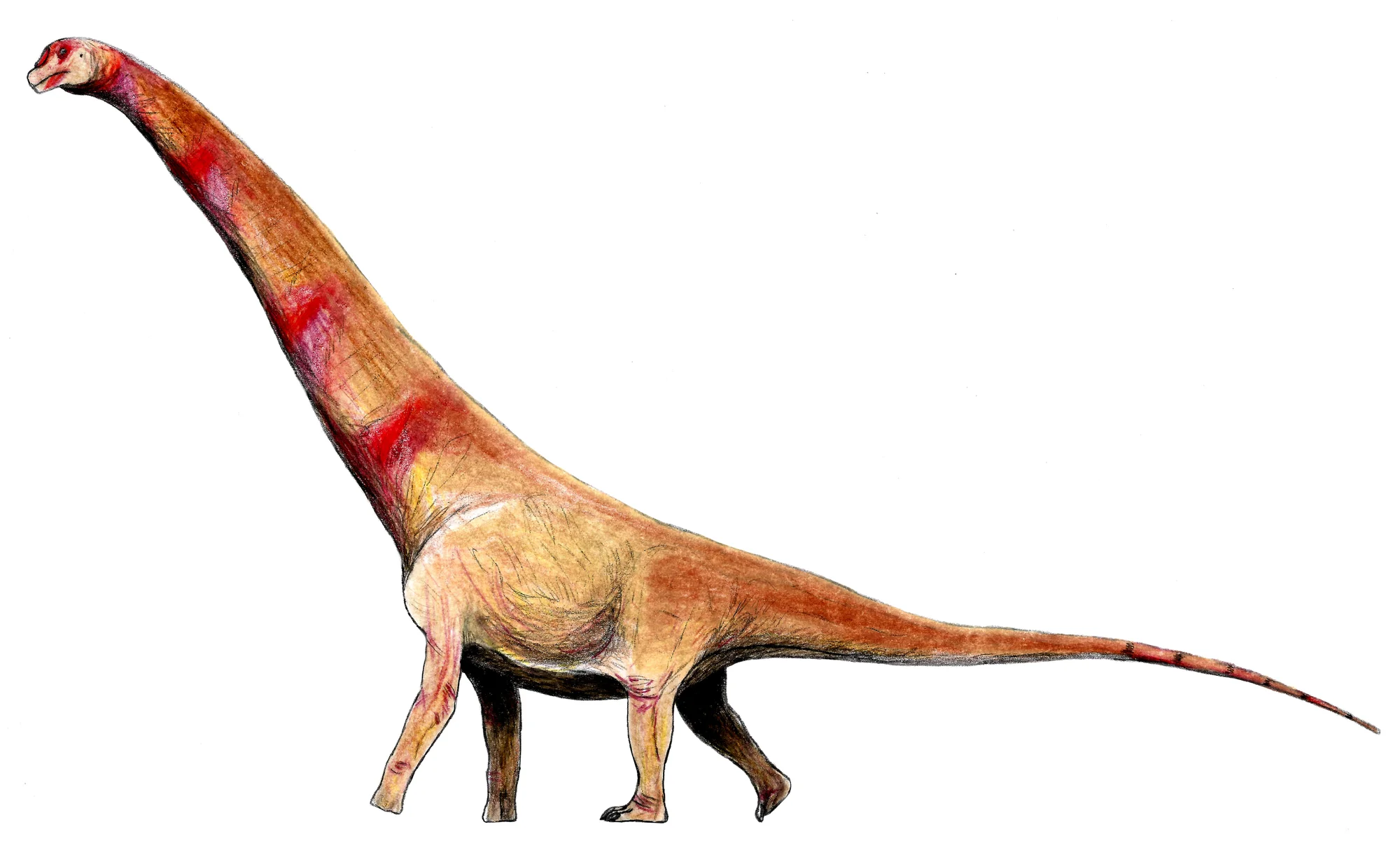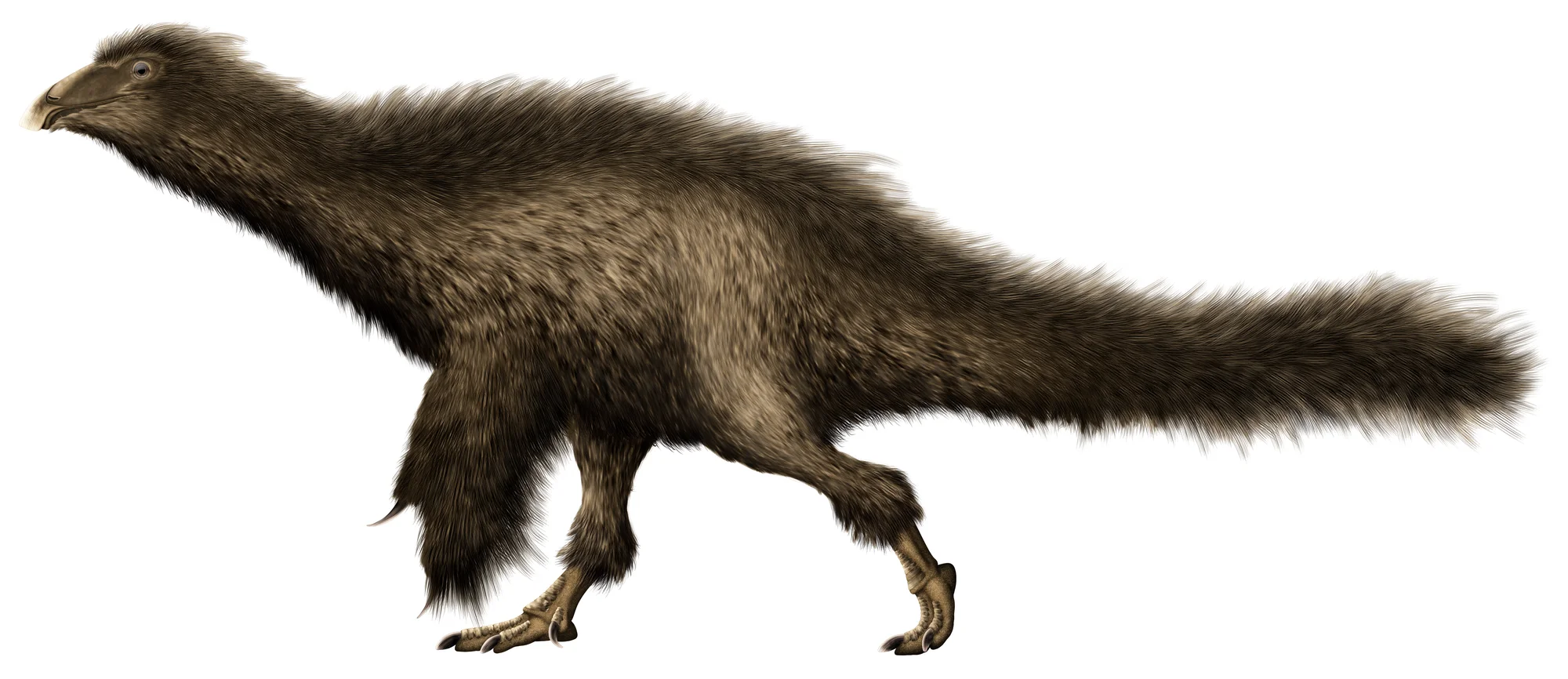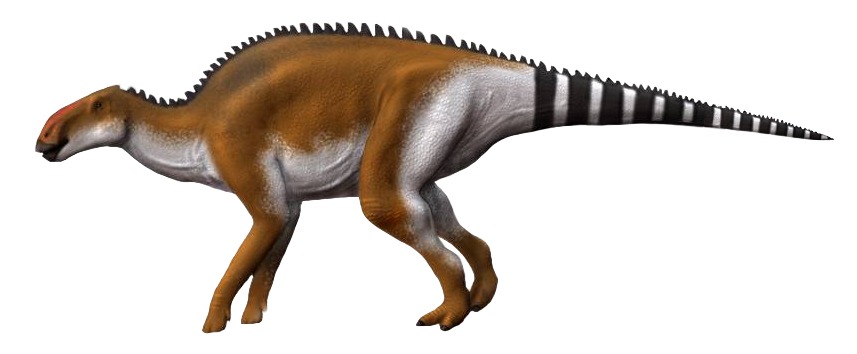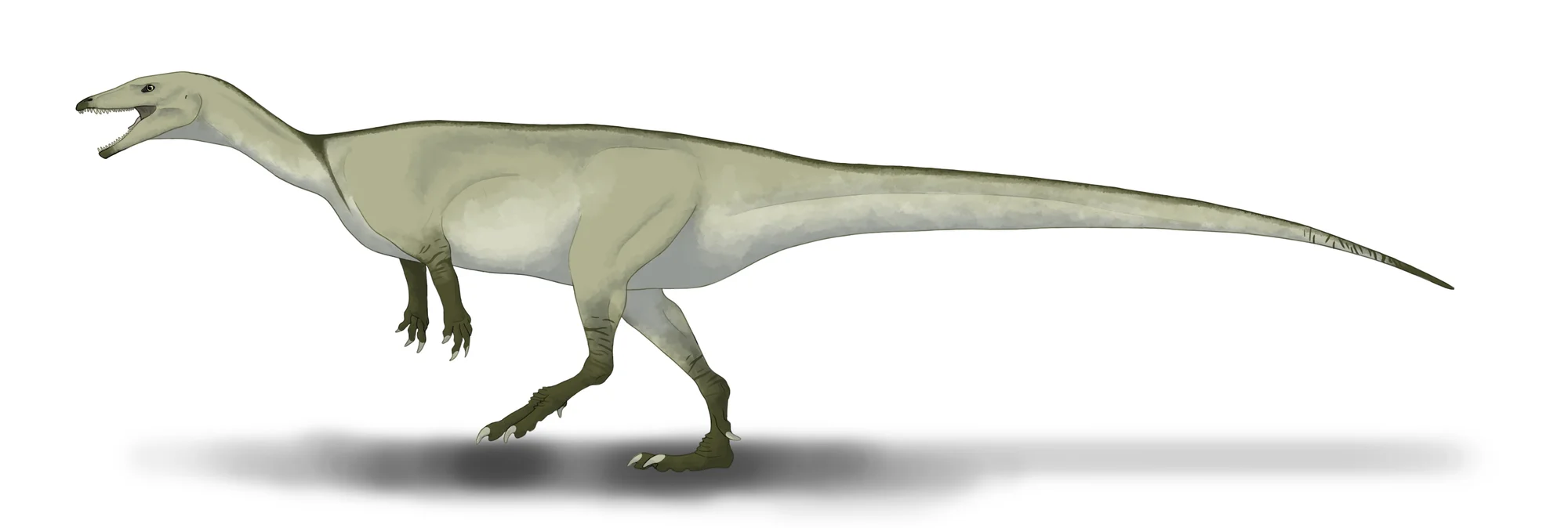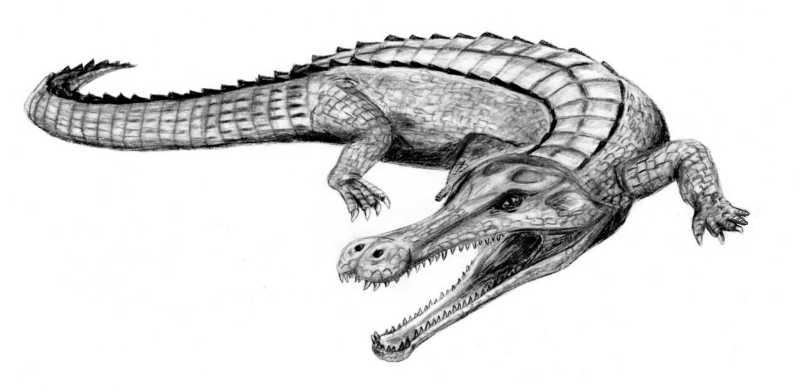
Dinos 101

132 species curated from the paleontological literature. Where they lived, which bones were found, and how our understanding evolved.

132
Species
3
Periods
22
Countries
29
South American
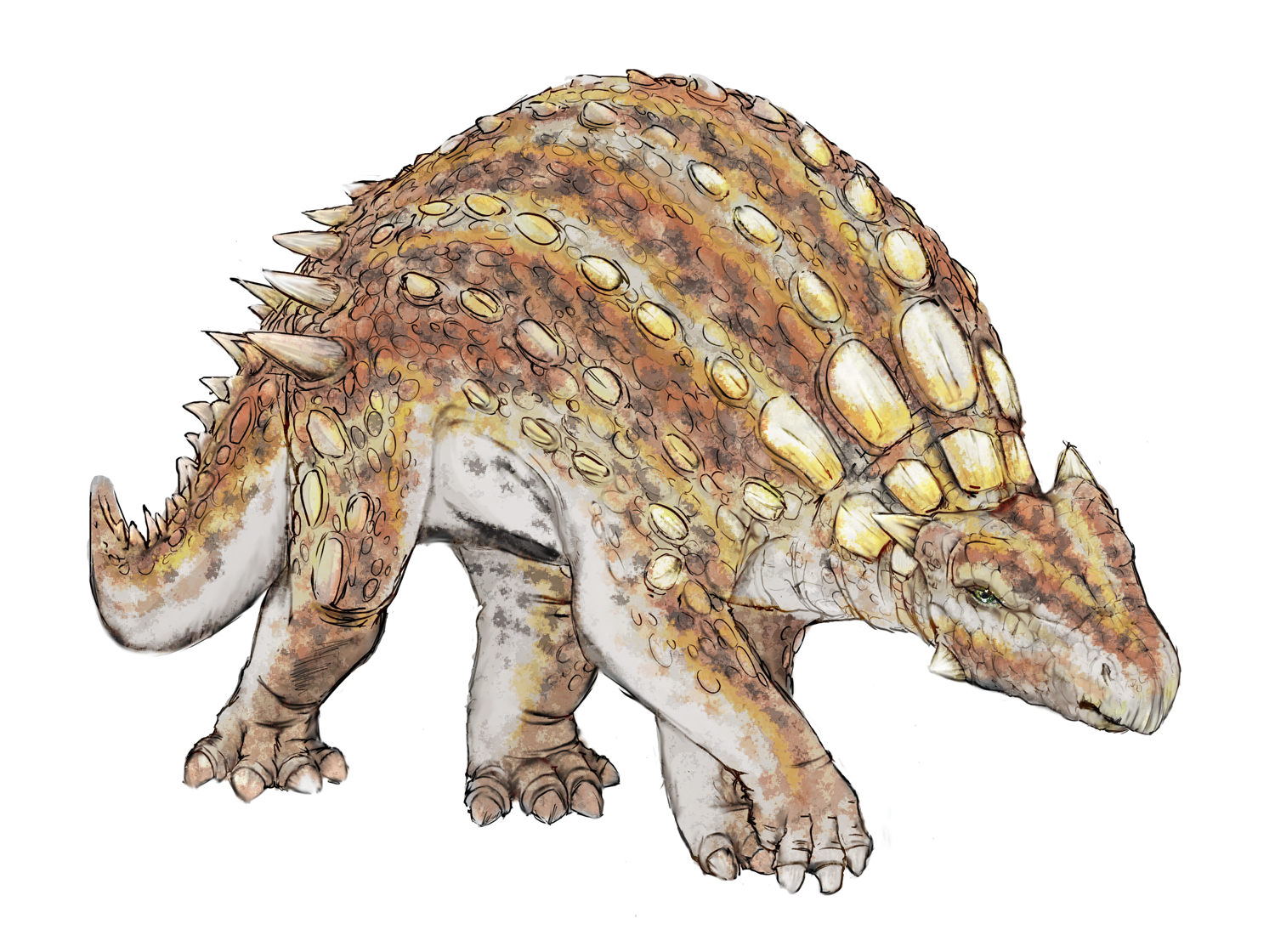
Pinacosaurus grangeri
FEATURED SPECIES
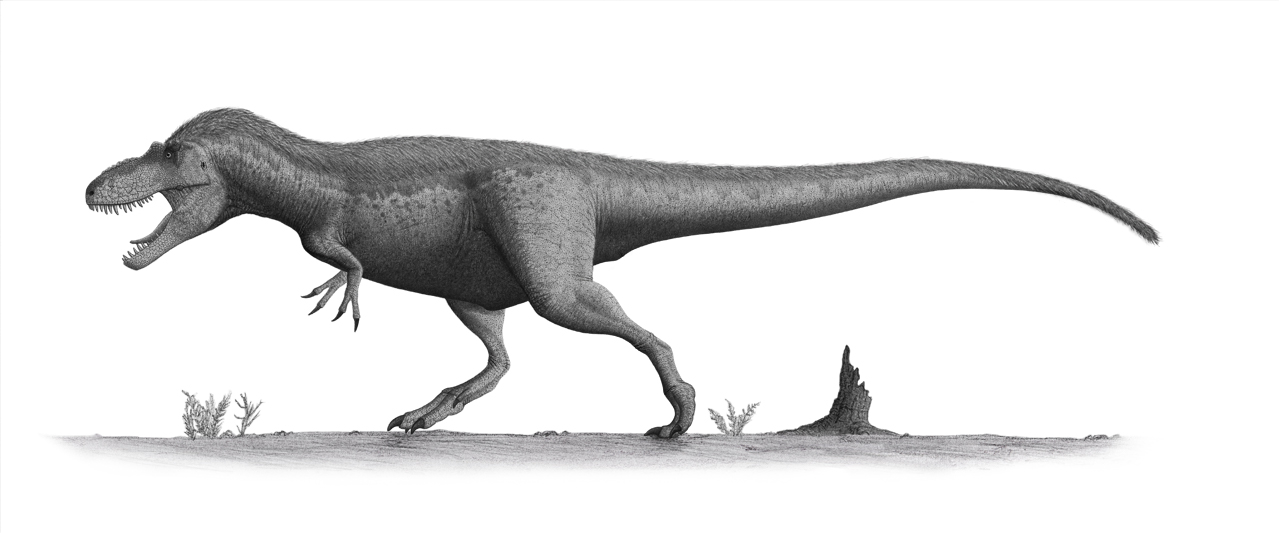
Pinacosaurus

Pinacosaurus grangeri

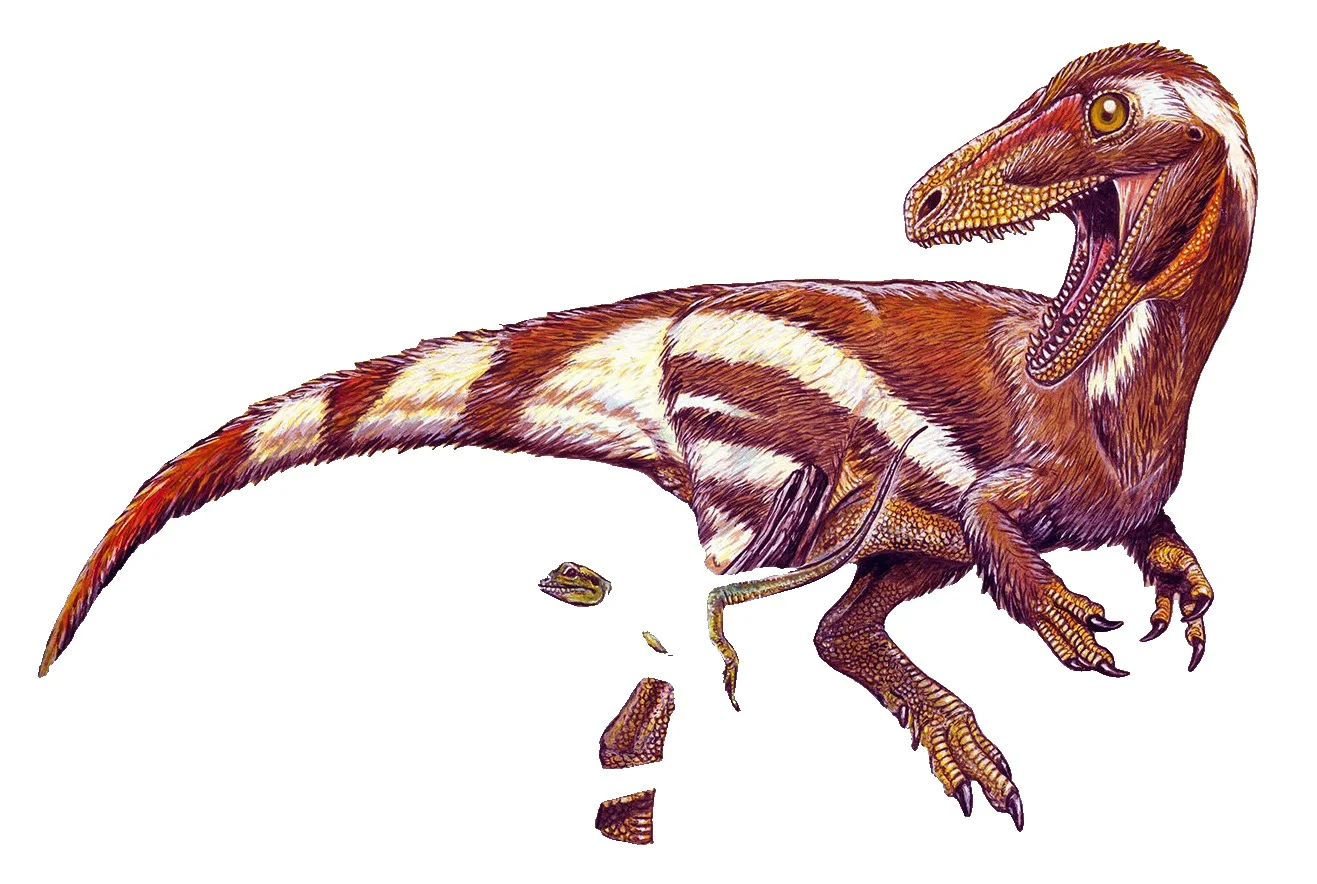
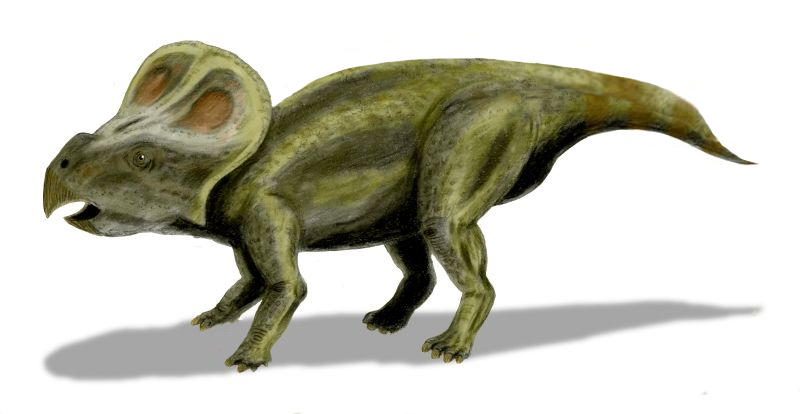
Pinacosaurus grangeri is a medium-sized ankylosaurid from the Late Cretaceous (Campanian, about 80 to 75 million years ago) of the Djadokhta Formation of Mongolia and the Bayan Mandahu Formation of Inner Mongolia, China, with older records from the Alagteeg Formation. It was described by Charles W.

Cretaceous MN · 80–75 Ma 5m · 1.9t
Filter by: 132 species
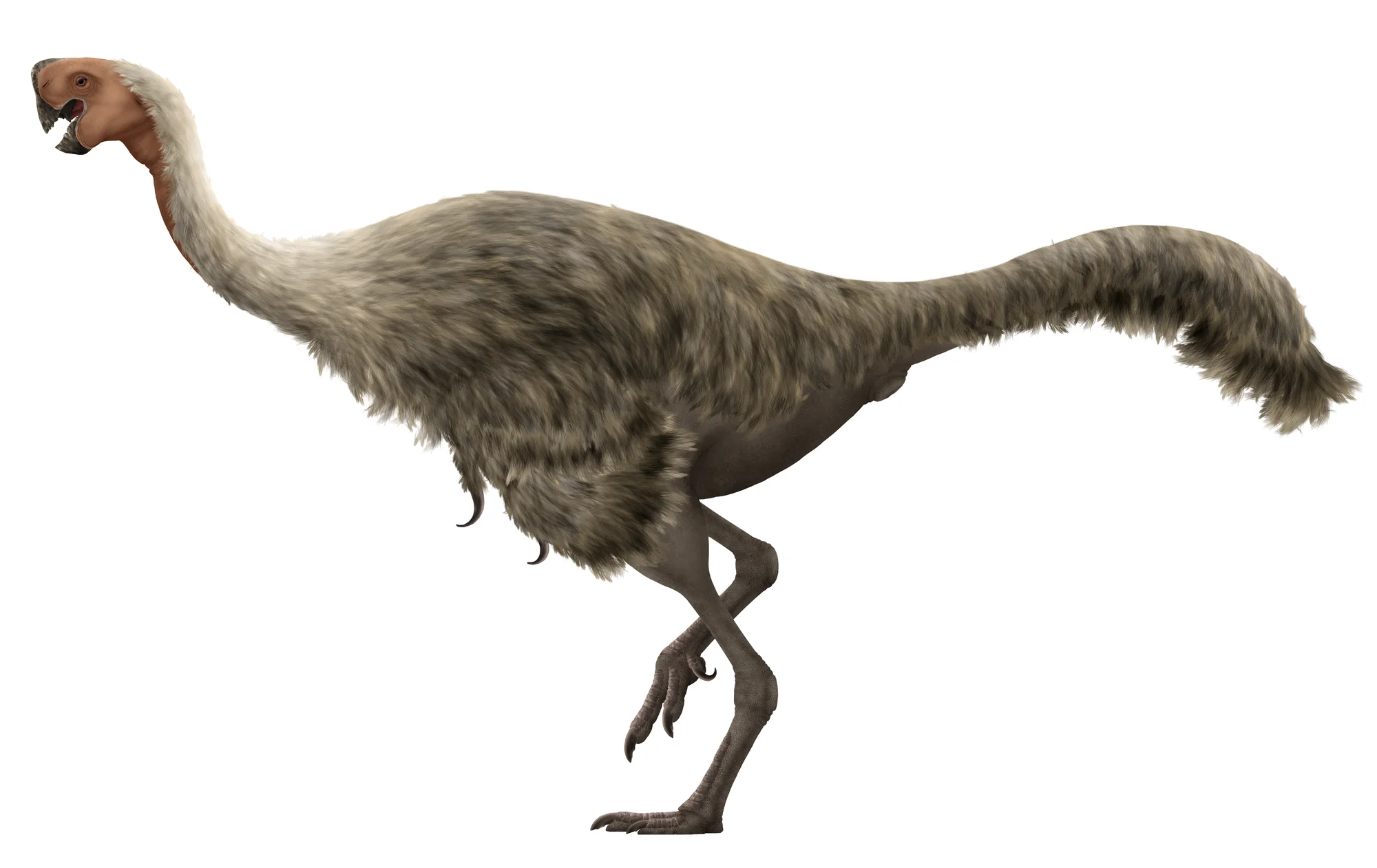
Anzu wyliei

US · 67–66 Ma

Chicken from Hell

Anzu wyliei

"Wylie's winged demon"

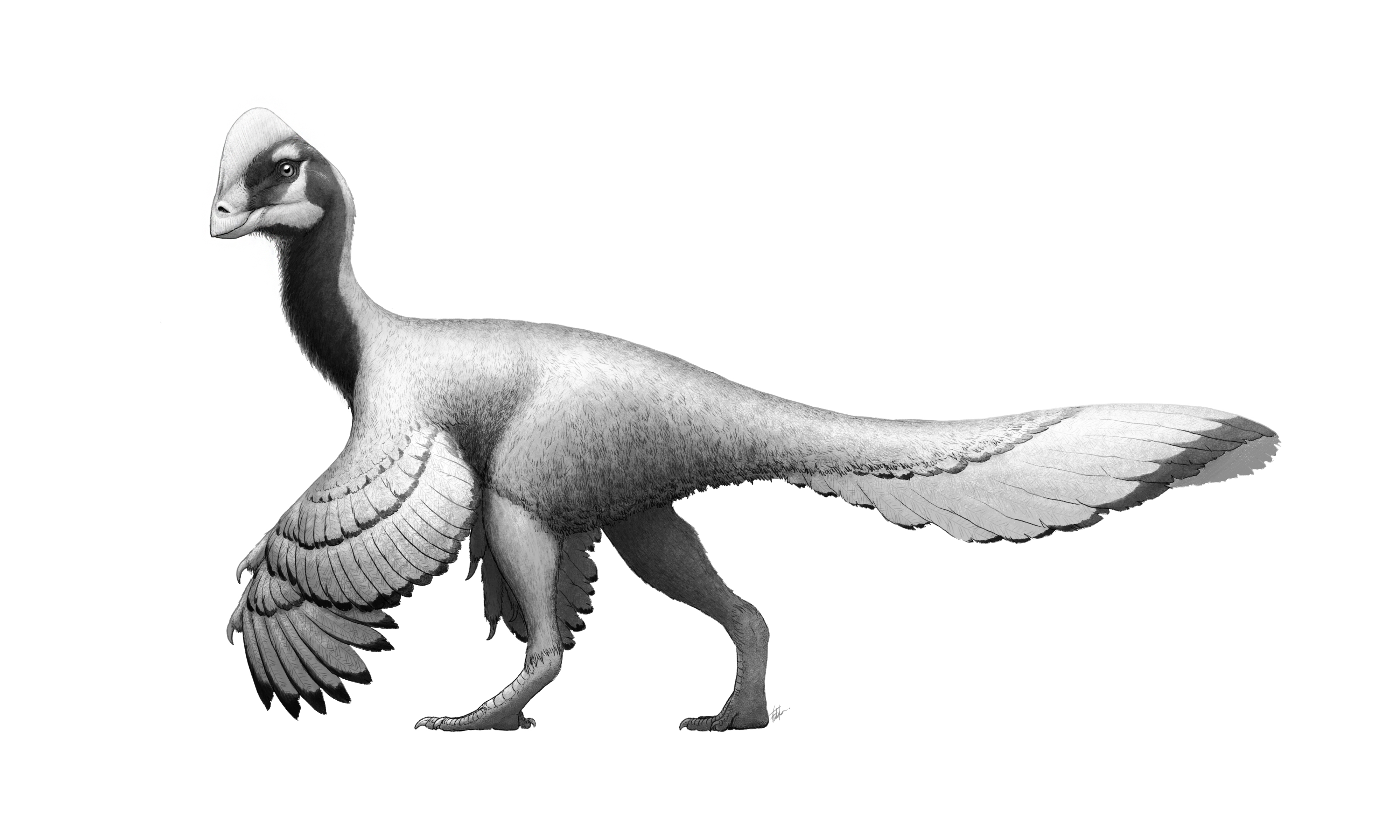
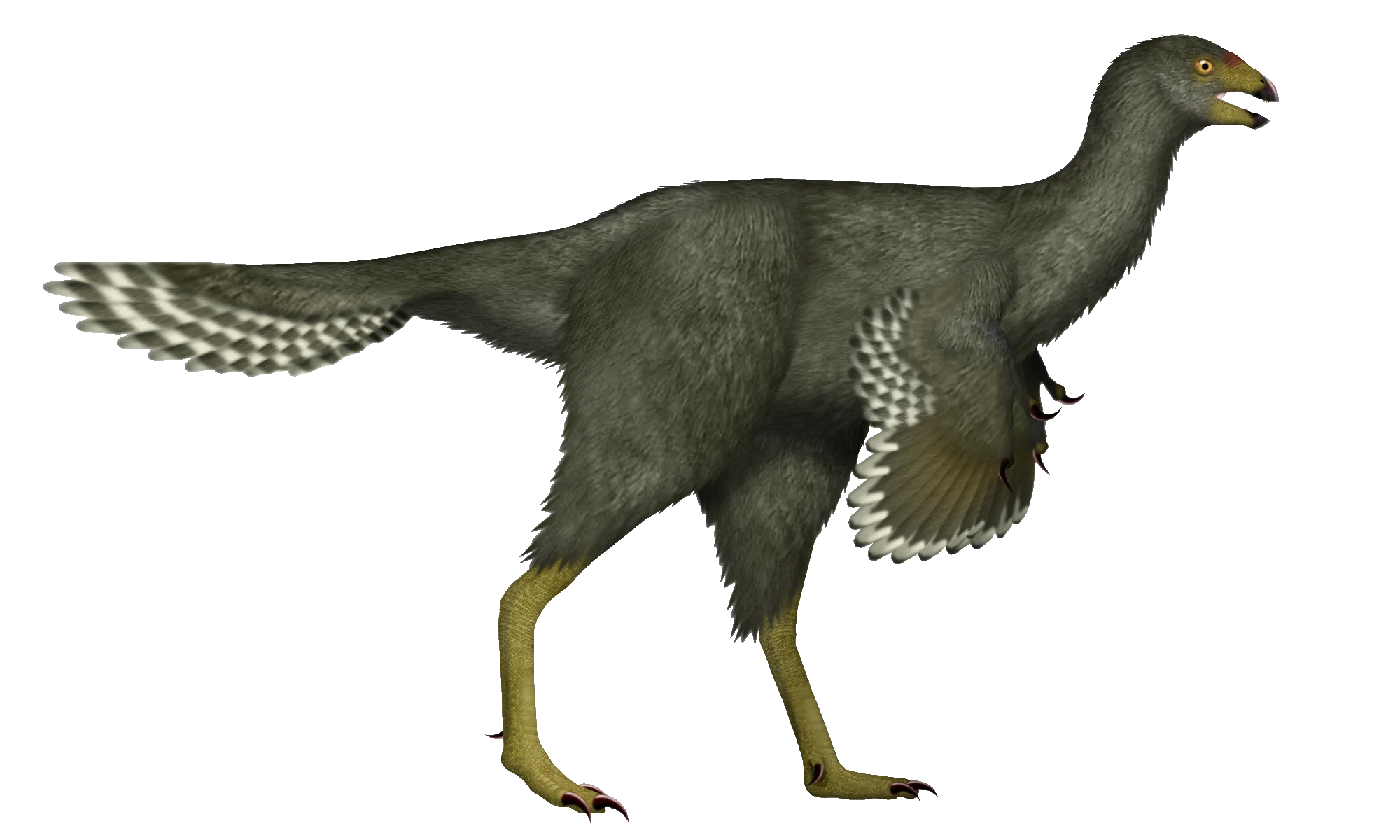
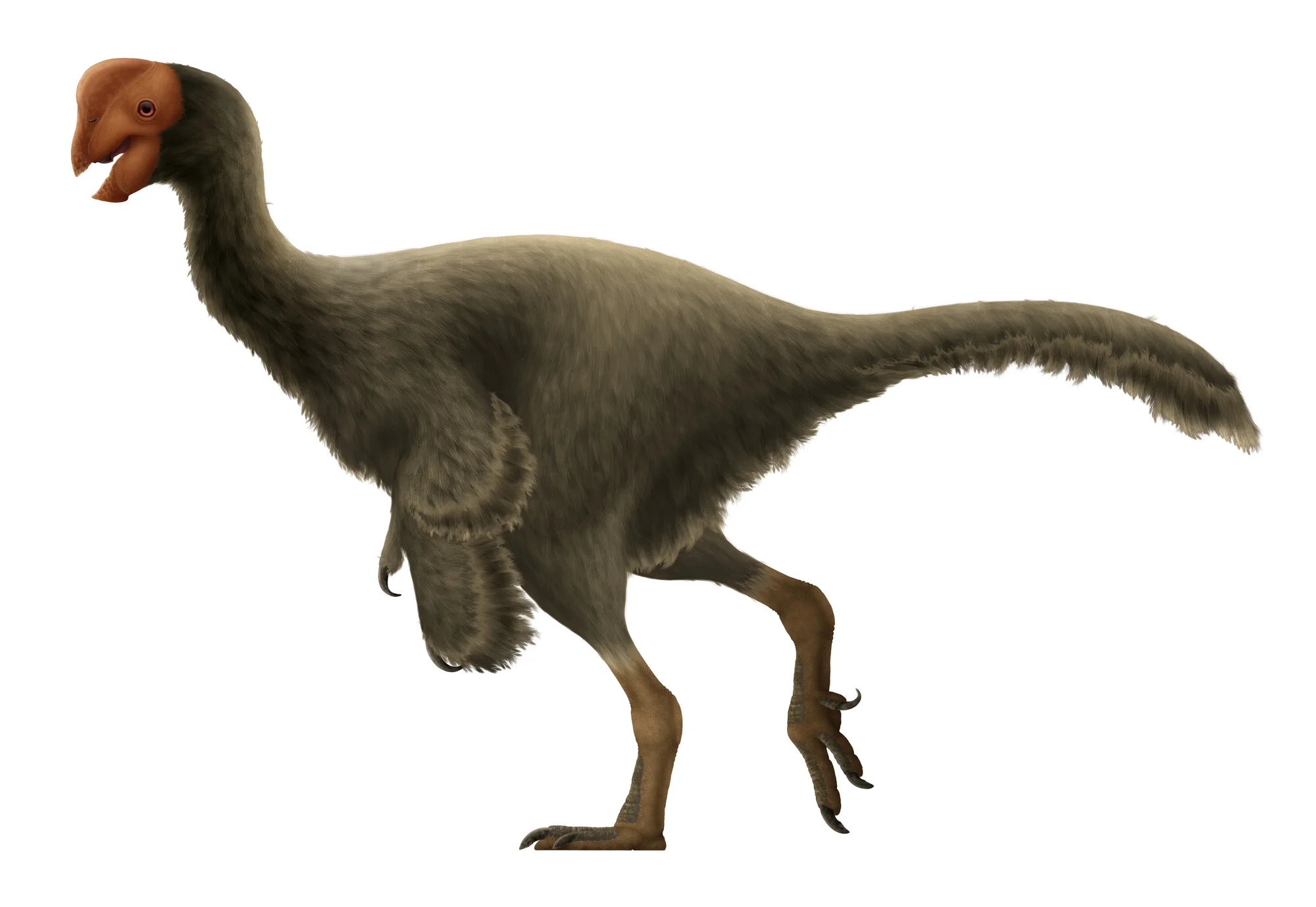
Anzu wyliei is a large caenagnathid oviraptorosaur from the Late Cretaceous, Maastrichtian (about 67.2 to 66.0 Ma), collected in the Hell Creek Formation of North Dakota and South Dakota, United States. Reaching roughly 3.5 to 3.75 metres in length, about 1.5 metres at the hips and 200 to 300 kg in body mass, Anzu is one of the largest known caenagnathids and one of the largest North American oviraptorosaurs, in size only behind the giant Gigantoraptor erlianensis of Cretaceous China. The animal combines a rather peculiar set of features: a tall, delicate skull, toothless jaws sheathed in a horny beak (rhamphotheca), a pronounced sagittal crest atop the head, a long flexible neck, elongated arms ending in three-clawed hands, long slender running-adapted legs and a proportionally short tail. By phylogenetic inference it was almost certainly covered in feathers and bore remiges on the forelimbs, in line with the pattern documented for close relatives such as Caudipteryx, Avimimus and Gigantoraptor. It was discovered in 1998 by Fred Nuss and team on private land in South Dakota, and formally described in 2014 by Matthew C. Lamanna, Hans-Dieter Sues, Emma R. Schachner and Tyler R. Lyson in the open access journal PLoS ONE. The type material comprises three complementary specimens (CM 78000, CM 78001 and MRF 319) that together offer the most complete documentation of a North American caenagnathid to date, allowing much of the group's anatomy to be reconstructed for the first time. Thanks to the nickname 'Chicken from Hell', coined by the discoverers in reference to the apocalyptic late-Cretaceous setting, Anzu quickly became one of the most popular images in recent North American palaeontology, sharing Hell Creek with Tyrannosaurus rex, Triceratops, Edmontosaurus, Pachycephalosaurus and Dakotaraptor until the K-Pg mass extinction.

Cretaceous Omnivore 3.5m
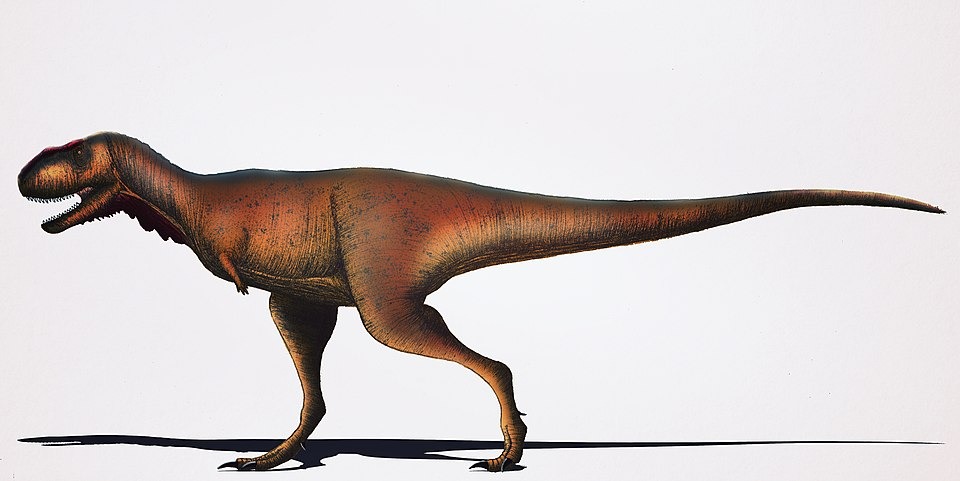
Australovenator wintonensis

AU · 95–93 Ma

Southern hunter

Australovenator wintonensis

"southern hunter of Winton"

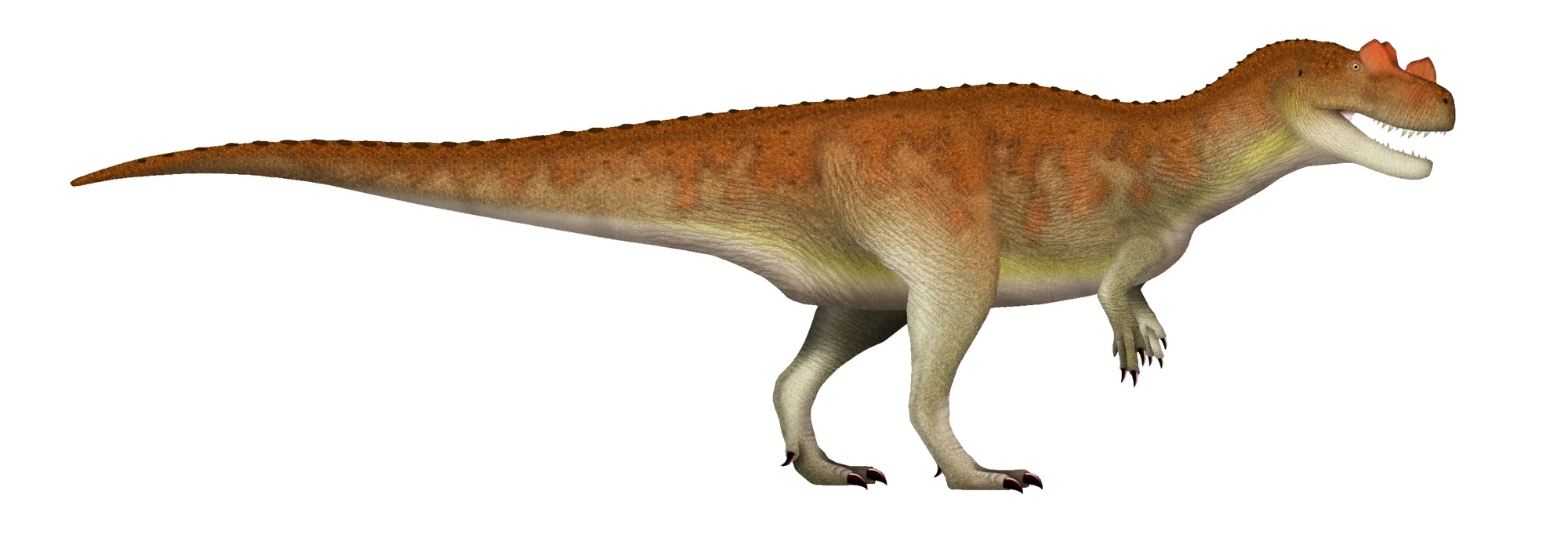
Australovenator wintonensis was a medium-sized theropod from the Cretaceous, latest Albian to Cenomanian (approximately 95 to 93 million years ago), found in the Winton Formation of central-west Queensland, Australia. About 6 meters long with an estimated weight of 310 to 500 kilograms, it was nicknamed Banjo by its discoverers in honor of Andrew Banjo Paterson, the Australian poet who wrote Waltzing Matilda. The holotype AODF 604 was excavated in 2006 by the Australian Age of Dinosaurs Museum team at locality AODL 85, within Elderslie Station, at the same site that yielded the titanosauriform sauropod Diamantinasaurus matildae, nicknamed Matilda. The association of the two skeletons in the same Cretaceous mud pocket gave the site its informal name, Matilda site, and produced a rare snapshot of a Gondwanan community at full body scale: a large herbivore alongside its potential predator. Australovenator remains the best-preserved Australian theropod, with a dentary, vertebrae, fore and hind limbs, pelvic girdle, and foot elements recovered across successive field seasons. The formal description came in 2009, in a paper published by Scott Hocknull and colleagues in PLoS ONE, which introduced the taxon together with Diamantinasaurus matildae and Wintonotitan wattsi, naming three new Winton species in a single study. In the original phylogenetic analysis, the authors placed Australovenator within Carcharodontosauria, in the family Neovenatoridae, alongside Neovenator and Fukuiraptor. This placement would be contested years later by works such as Novas and colleagues (2013), Bell and colleagues (2016), Coria and Currie (2016), and Morrison and colleagues (2025), which recover Megaraptora, the clade containing Australovenator, within Coelurosauria, close to Tyrannosauroidea. The debate is still open, and it is largely a debate about what Australovenator is: a late allosauroid or a long-armed Gondwanan tyrannosauroid. Anatomically, the animal stands out for its long forelimbs and large, recurved manual claws, which are atypical in medium and large-bodied tetanuran theropods, a group that tends to reduce its arms. White and colleagues published a sequence of papers between 2012 and 2015 describing new forearm elements, hindlimb bones, forelimb range of motion, and the dentary with its elongate, serrated teeth. This combination, long arms, enormous hands, and a slicing jaw, helped consolidate a cohesive picture of a megaraptorid: a predator that immobilizes prey with its hands and slices with its teeth, a role distinct from that of Northern Hemisphere tyrannosaurids, which relied mainly on the skull. Australovenator lived in a still partly connected Gondwana, in which Australia maintained a land link with Antarctica and, through it, dispersal routes to South America. This geography explains why Megaraptoridae has representatives both in Patagonia (Megaraptor, Aerosteon, Murusraptor, Maip) and in Australia (Australovenator, Lightning Claw). For the contemporary community, the Winton Formation yields titanosauriform sauropods such as Diamantinasaurus, Wintonotitan, and Savannasaurus, ornithopods, turtles, crocodylomorphs, and freshwater fish, depicting a warm-temperate, high-latitude floodplain of the mid-Cretaceous. In this setting Australovenator is a central piece for understanding the evolution of Gondwanan theropods and the biogeography of the group.

Cretaceous Carnivore 6m
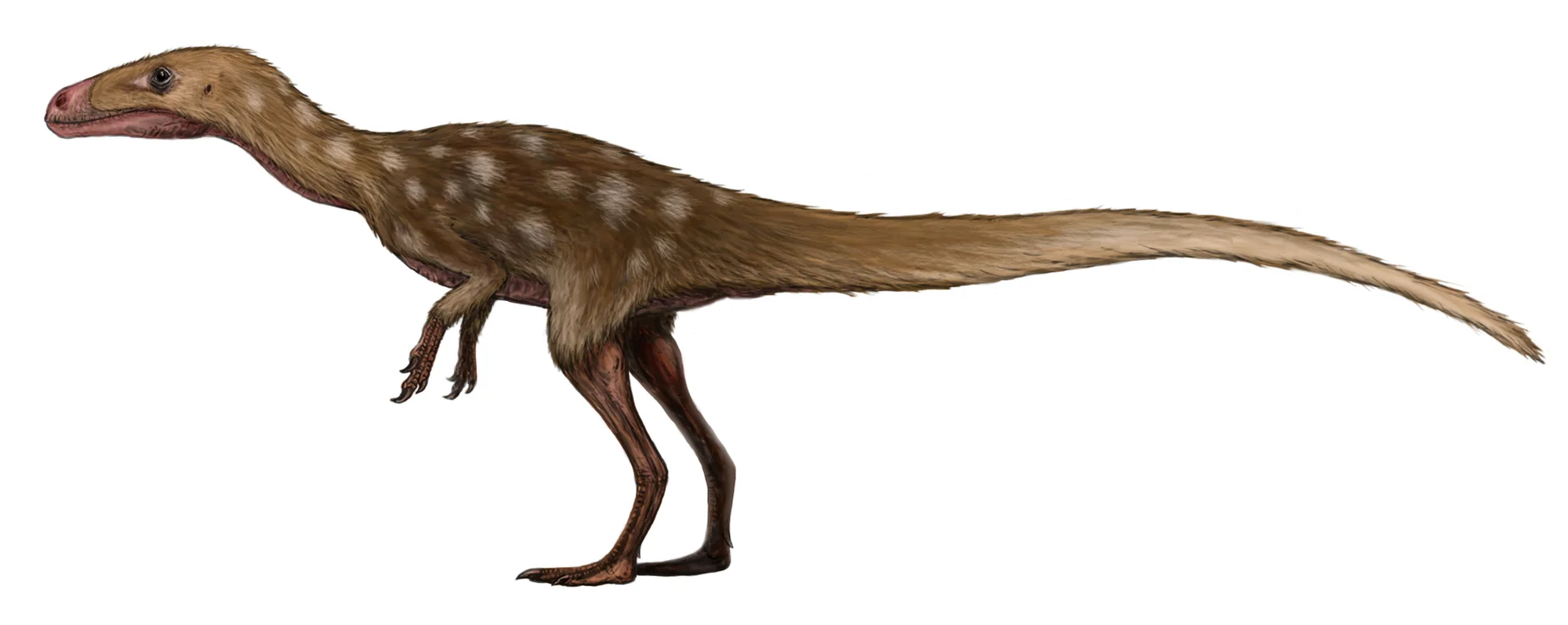
Caihong juji

CN · 161–160 Ma

Rainbow with a big crest

Caihong juji

"rainbow with a big crest"

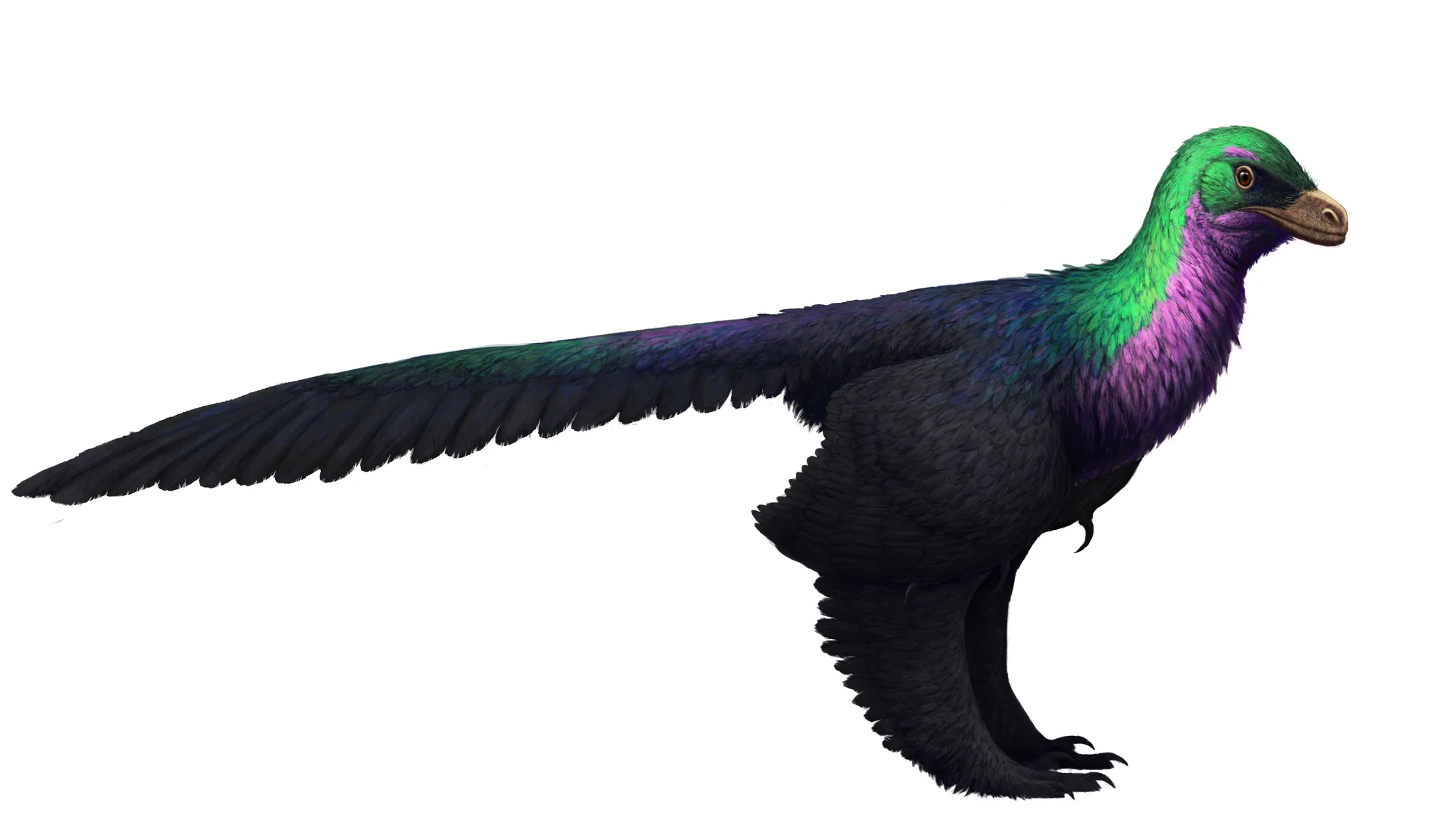
Caihong juji is a small paravian theropod from the Late Jurassic of China whose name comes from Mandarin and means rainbow with a big crest. It measures about 40 centimeters in length and weighs approximately 475 grams, placing it among the smallest known non-avian dinosaurs. The holotype PMoL-B00175, a nearly complete skeleton preserved on slab and counterslab, was found by a local farmer in 2014 in rocks of the Tiaojishan Formation, in the Qinglong Manchu Autonomous County, Hebei Province, and formally described in 2018 by an international team led by Dongyu Hu and Julia Clarke, with Xing Xu, Matthew Shawkey, and other Chinese, American, and European co-authors. Its surprising anatomy includes an elongated bony crest on the snout, formed by expanded lacrimal bones, combined with long asymmetrical pennaceous feathers on the forelimbs and along the entire tail, a morphological package without parallel in the Jurassic record. This geometry suggests Caihong already displayed elaborate ornamental surfaces long before it was capable of sustained powered flight. The most remarkable feature was revealed by scanning electron microscopy: thousands of fossilized melanosomes in feathers of the neck, chest, and base of the tail show a platelet shape, a nanostructure virtually identical to that found in living hummingbirds. In modern birds, this arrangement produces structural iridescence that shifts with the angle of incident light, so that the same individual may appear metallic green, blue, or red with subtle movements. Applying the same principle to the fossil, the authors concluded that parts of Caihong's body shimmered in metallic tones, likely in blue, green, and reddish bands, indeed recalling the rainbow that gives the genus its name. This is the first direct evidence of iridescent plumage in a non-avian dinosaur, pushing back the minimum record of this kind of coloration by roughly 40 million years, which had previously been known only in the Early Cretaceous Microraptor. The simultaneous presence of a bony crest and ornamental feathers indicates that complex visual signals, most likely linked to sexual display or species recognition, were already established at the base of Paraves. Positioned phylogenetically as an anchiornithid close to Anchiornis, Xiaotingia, and Aurornis, Caihong reinforces the idea that the origin of birds was not a linear sequence of aerodynamic innovations, but a parallel evolutionary experiment with multiple small, feathered, visually striking lineages across the Jurassic of Asia. The find also consolidates the Qinglong and Liaoning region as a global epicenter of soft-tissue paleobiology, thanks to exceptional preservation in the volcanic tuffs of the Yanliao Biota, where periodic ashfalls blanketed anoxic lakes and locked feathers, melanosomes, and even subcellular nanostructures into the sediment. For science, Caihong juji marks the moment when we stopped imagining dinosaurs in faded earth tones and began to recognize that some of them competed for mates and chased off rivals by flashing optical sparks very similar to those that today glint on the chests of hummingbirds.

Jurassic Carnivore 0.4m
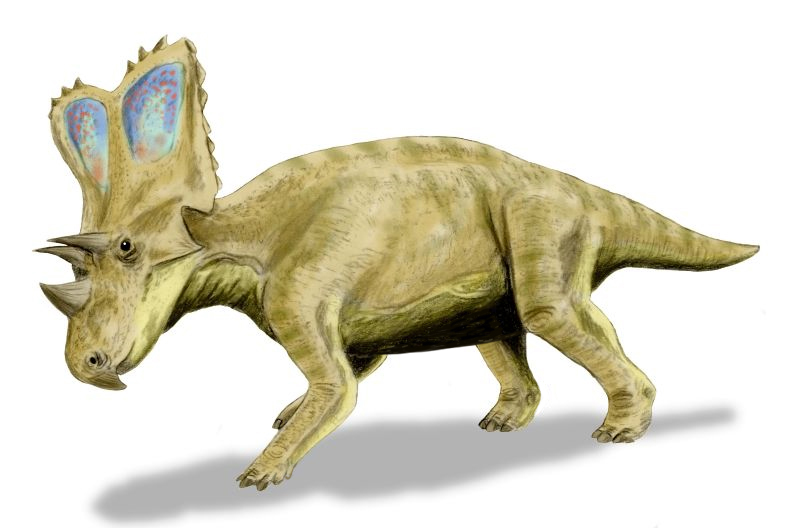
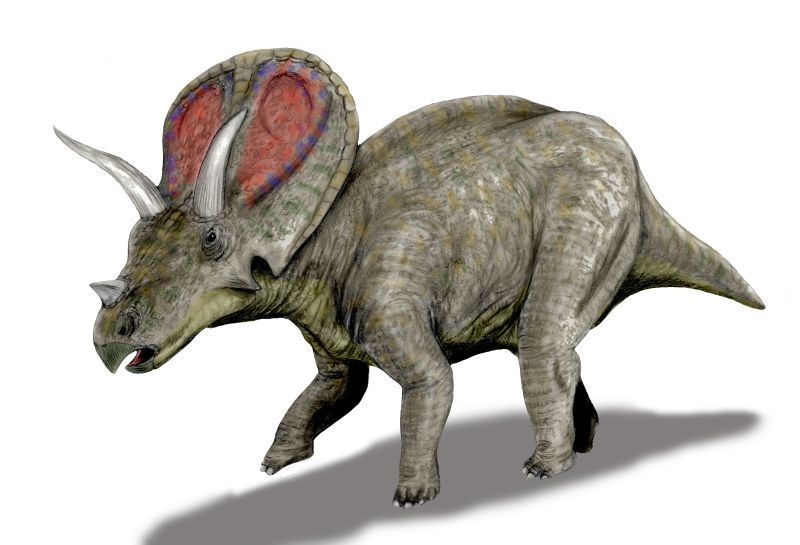
Chasmosaurus belli

CA · 76.5–75 Ma

Chasmosaurus

Chasmosaurus belli

"Bell's opening lizard"

Chasmosaurus belli is the prototype ceratopsid of the subfamily Chasmosaurinae, which bears its name. It lived in the late Campanian of the Cretaceous, approximately 76.5 to 75 million years ago, in Alberta, Canada, and is one of the first large ceratopsids described by science. Its most distinctive feature is the parieto-squamosal frill that is extraordinarily large relative to the skull, with two large oval openings (the parietal fenestrae) that substantially reduced the weight of the structure. The genus name Chasmosaurus refers precisely to these openings: 'khasma' in Greek means opening or chasm. This long frill, which could exceed 60% of the total skull length, is the morphological signature of the entire subfamily. The animal was originally described by Lawrence Lambe in 1902 based on fragmentary material from the Dinosaur Park Formation, but the species was only definitively established by Lambe in 1914. Subsequent studies by Brown and Schlaikjer (1940) and Dodson (1990, 1996) substantially refined the anatomy and systematics of the taxon. Chasmosaurus belli is distinguished from other species in the genus (such as C. russelli and C. irvinensis, now reclassified as Vagaceratops) mainly by the dimensions and proportions of the frill and by the relatively short facial horns. The nasal horn is low and laterally compressed, while the supraorbital horns range from short to moderate. In 2010, a juvenile specimen of Chasmosaurus belli was discovered by Brian Campione at Dinosaur Provincial Park and studied by Phillip Bell and colleagues. The importance of this fossil goes beyond the rarity of juveniles in ceratopsids: it preserved mummified skin impressions in different regions of the body, including large hexagonal scales on the flanks, smaller scales on the neck and face, and scales organized in a differentiated pattern around the eye. Pigmentation analyses preserved through scanning electron microscopy revealed melanosomes suggesting contrasting pigmentation, possibly with a counter-shading pattern (dark dorsum, pale ventrum), which would be the first direct evidence of coloration in a ceratopsid. Chasmosaurus belli's position as the founding taxon of Chasmosaurinae makes it fundamental for understanding the evolution of the entire subfamily. Modern phylogenetic analyses consistently position C. belli as one of the most basal chasmosaurines, from which more derived forms with even more elaborate frills radiate, including Pentaceratops, Anchiceratops, Torosaurus, and Triceratops. The fossil record of Chasmosaurus belli in the Dinosaur Park Formation is one of the richest of any ceratopsid, with dozens of specimens collected over more than a century of systematic excavations.

Cretaceous Herbivore 4.9m
Confuciusornis sanctus

CN · 125–120 Ma

Confuciusornis

Confuciusornis sanctus

"Sacred Confucius bird"

Confuciusornis sanctus is the most abundant Mesozoic bird in the world fossil record: hundreds of specimens, many exquisitely preserved with feathers, have been extracted from the Yixian and Jiufotang formations of Liaoning, northeastern China. This unparalleled abundance made Confuciusornis the most studied extinct bird taxon in the world, capable of providing data on morphology, ontogeny, coloration, paleoecology, and social behavior simply not accessible for rarer birds. It lived during the Barremian to Aptian of the Early Cretaceous, approximately 125 to 120 million years ago, and represents one of the most important morphological innovations in bird history: it was the first toothless Mesozoic bird with a true horny beak and a fused tail bone forming a pygostyle. Confuciusornis morphology combines primitive and derived features remarkably. On one hand, the forelimbs retain three functional clawed fingers, and the skull retains some primitive skeletal features relative to modern birds. On the other, the complete absence of teeth, the horny beak, and the pygostyle are innovations we know mainly from modern birds, making Confuciusornis much more externally similar to a modern bird than Archaeopteryx or other contemporaries. The tail, short due to the pygostyle, accommodated in long-tailed forms a pair of very long, narrow ribbon-like rectrices whose function was probably social display. The presence or absence of these tail feathers in different specimens has historically been interpreted as sexual dimorphism, but recent analyses with ontogenetically comparable specimens question this simple interpretation. Confuciusornis flight is considered truly active, not just gliding: the sternum morphology, with well-developed keel for flight muscle insertion, and wing proportions suggest sustained powered flight capability. However, biomechanical analyses indicate the flight pattern would differ from modern birds: the shoulder joint, clavicle position, and relative proportions of humerus and ulna suggest an aerodynamically less efficient flight style compared to neornithean birds. Bone histology studies show Confuciusornis had slower growth rates than modern birds of comparable size, reaching skeletal maturity in one or two years, closer to reptiles than to modern birds.

Cretaceous Omnivore 0.5m
Dakotaraptor steini

US · 67–66 Ma

Dakotaraptor

Dakotaraptor steini

"Dakota raider, of Stein"

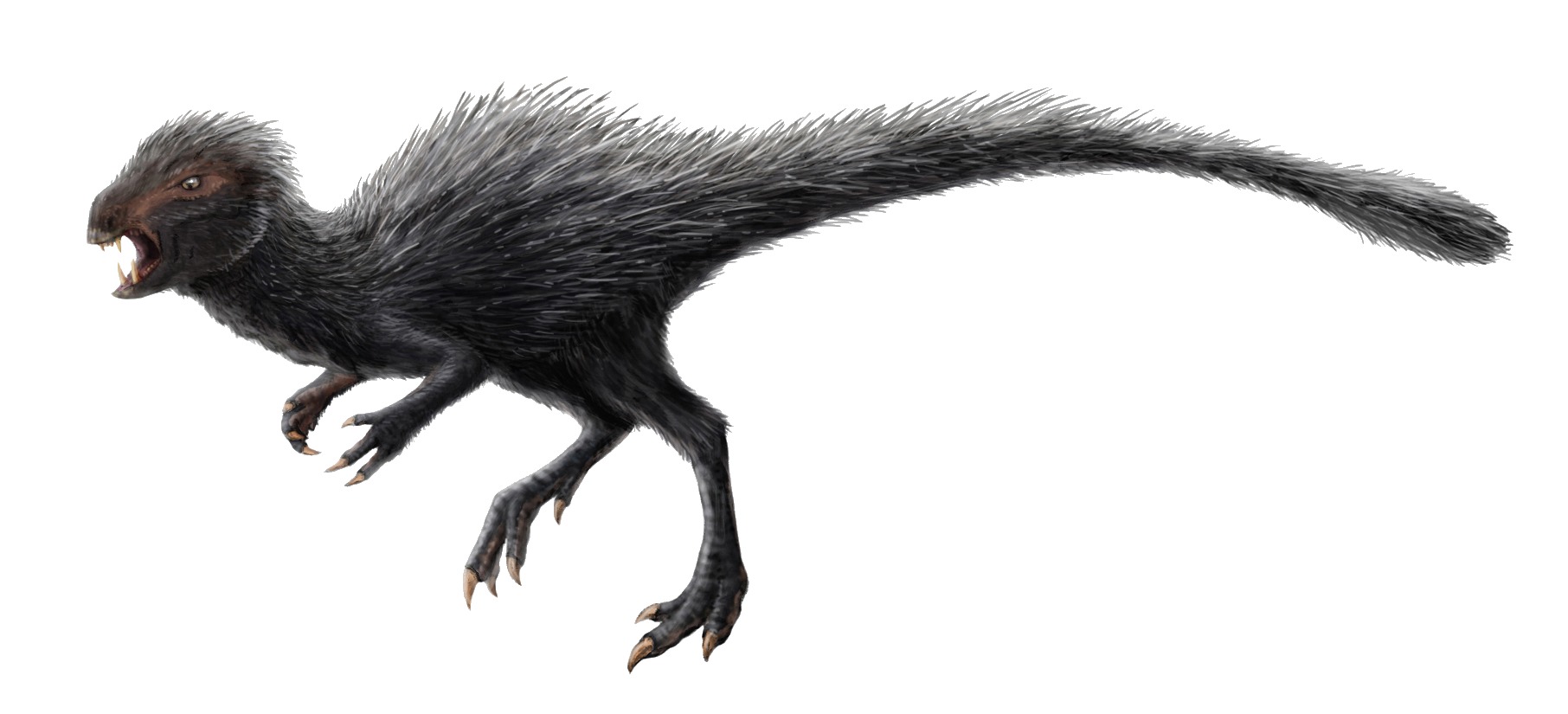
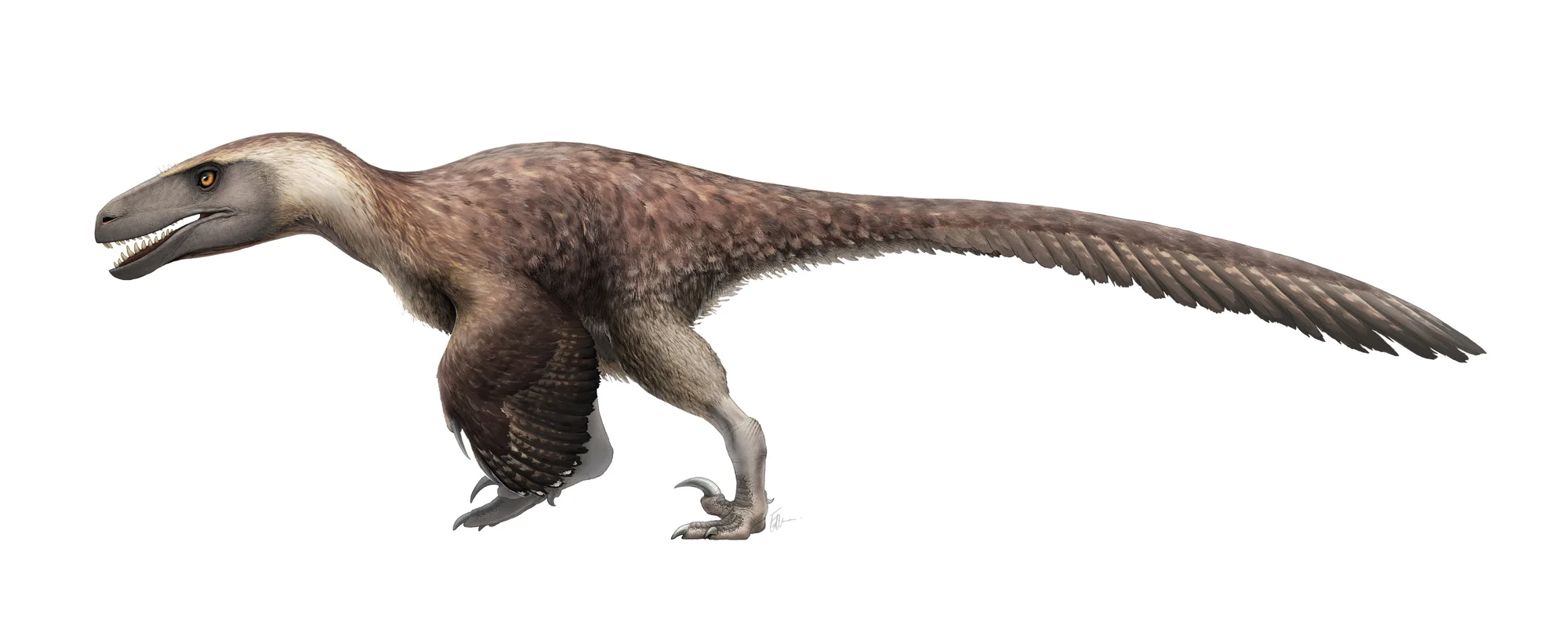
Dakotaraptor steini is a large dromaeosaurid from the Late Cretaceous (late Maastrichtian, about 66 to 67 million years ago) of the Hell Creek Formation, Harding County, South Dakota. Described by Robert DePalma, David Burnham, Larry Martin, Peter Larson and Robert Bakker in 2015, it reached 4.35 to 6 metres in length with an estimated body mass of 220 to 350 kilograms, making it the largest known Maastrichtian dromaeosaurid of North America and one of the largest of the family, alongside Utahraptor and Achillobator. The holotype PBMNH.P.10.113.T consists of a partial skeleton of a subadult to adult individual lacking a skull, discovered by Robert DePalma in 2005 in a Hell Creek fluvial channel no more than 20 metres below the Cretaceous-Palaeogene boundary. The ulna preserves about 15 ulnar papillae (quill knobs) of 8 to 10 millimetres in diameter, indicating attachment of large pennaceous feathers, and the second-toe 'sickle claws' typical of dromaeosaurids reach 24 centimetres along the outer curve. The tibia, 678 millimetres long, is the longest known in any dromaeosaurid, suggesting surprisingly gracile limb proportions for an animal of this size. In 2016, Arbour and colleagues demonstrated that the furculae originally described as part of the holotype were in fact entoplastra (parts of the shell) of the trionychid turtle Axestemys splendida, and DePalma et al. (2016) issued a corrigendum excluding those elements. The validity of the taxon remains debated: Cau (2023 and 2024) argued, in blog and phylogenetic analyses, that the remaining material may be a chimera combining ornithomimosaur, oviraptorosaur and therizinosaur elements, but this hypothesis has not yet been published in a peer-reviewed article.

Cretaceous Carnivore 5m
Dracorex hogwartsia

US · 66–66 Ma

Dracorex

Dracorex hogwartsia

"Dragon king of Hogwarts"

Dracorex hogwartsia is one of the dinosaurs with the most peculiar story in paleontology: it was named by children, in honor of a fictional school of witchcraft, and its status as a valid species is one of the most contentious taxonomic debates of the Late Cretaceous. Described in 2006 by Robert Bakker and collaborators based on a nearly complete skull discovered in the Hell Creek of South Dakota by a group of amateur fossil hunters, the animal presented a cranial morphology radically different from other known pachycephalosaurids: the skull was long, low, and flat, without any trace of a bony dome, but decorated with an impressive series of horns and nodules along the frontoparietal and temporal region. The visual result is, in fact, remarkably similar to medieval descriptions of dragons, which inspired the specimen's donors, children from the Children's Museum of Indianapolis, to propose the name to the paleontologist. The main scientific controversy surrounding Dracorex was raised in 2009, when Jack Horner and Mark Goodwin published a detailed histological analysis of the skull. Upon examining the microstructure of the frontoparietal bone, they found immature bone tissue (fibrolamellar, with abundant vasculature and without complete remodeling) characteristic of young individuals, not adults with completed bone growth. Horner and Goodwin's hypothesis is that Dracorex hogwartsia is not a distinct species, but rather a juvenile of Pachycephalosaurus wyomingensis: the flat skull with horns would be the initial state, and the dome would form progressively during growth, similar to the development of horns in sheep. This interpretation would also unify Stygimoloch spinifer as a teenager of Pachycephalosaurus, consolidating three names into a single taxon. The synonymy proposal, while widely accepted by many specialists, remains formally controversial. Other researchers, such as Robert Sullivan (2006) and David Evans and collaborators (2013), argue that the morphological differences between the skulls are too pronounced to be explained by ontogeny alone, and that Dracorex may represent a distinct lineage of flat-skulled pachycephalosaurids that lived in sympatry with Pachycephalosaurus. The question is complicated by the rarity of specimens: only one Dracorex skull is known with certainty, making it impossible to establish complete ontogenetic series. Regardless of taxonomic resolution, the Dracorex skull is one of the most extraordinary known among ornithischian dinosaurs. The tubercles, spines, and nodules covering the cranial surface have no parallel in any other pachycephalosaurid, and their function continues to be debated: they may have served for intraspecific recognition, surface thermoregulation, sexual display, or passive defense. The preservation of the specimen, with unusually well-conserved cranial surface details, has made Dracorex one of the most studied and artistically represented dinosaurs of the last twenty years.

Cretaceous Herbivore 2.4m
Edmontonia rugosidens

CA · 76–73 Ma

Edmonton's tank

Edmontonia rugosidens

"Edmonton lizard with wrinkled teeth"

Edmontonia rugosidens was a large-bodied nodosaurid that lived in the Late Cretaceous, during the Campanian, approximately 76 to 73 million years ago, across the coastal plains of western North America that formed the island continent of Laramidia. About 6.5 meters long and with an estimated mass of three metric tons, it was a massive quadrupedal herbivore covered by impressive dermal armor composed of rows of osteoderms along the back, flanks, and base of the tail. The taxonomic history of the species begins in 1930, when Charles W. Gilmore described material recovered by George Fryer Sternberg in 1928 from the Two Medicine Formation of Montana. Gilmore coined the epithet rugosidens in reference to the wrinkled surface of the small leaf-shaped teeth of the animal, assigning the species to the genus Palaeoscincus, then used as a dumping ground for isolated ankylosaur teeth. A decade later, in 1940, Loris S. Russell reexamined the material and erected the new genus Edmontonia, named after the Edmonton Formation, a stratigraphic unit that also preserved related specimens in southern Alberta. Edmontonia belongs to the family Nodosauridae, the sister group of Ankylosauridae within Ankylosauria. The most striking anatomical difference between the two families lies in the tail. Ankylosaurids such as Ankylosaurus and Euoplocephalus evolved the famous tail club formed by fused osteoderms at the tip of the tail, used as an impact weapon. Edmontonia and other nodosaurids never evolved this structure. Instead, both passive and active defense were concentrated in its body armor and, above all, in a set of enormous spikes projecting laterally from the shoulders, a structure particularly developed in Edmontonia and interpreted as a possible weapon in intraspecific contests between males, in addition to defense against predators such as the tyrannosaurids Gorgosaurus and Daspletosaurus. The ecological context of Edmontonia rugosidens is the Dinosaur Park Formation ecosystem of Alberta, one of the richest dinosaur-bearing sedimentary units of the Cretaceous. The environment consisted of moist coastal plains under the influence of the Western Interior Seaway, with meandering rivers, wetlands, and dense vegetation of conifers, cycads, and early flowering plants. The contemporary fauna included ceratopsids such as Centrosaurus and Styracosaurus, hadrosaurids such as Corythosaurus and Lambeosaurus, and the predators Gorgosaurus and Daspletosaurus. The fossil record of the species is remarkably rich compared with that of other ankylosaurs. Several specimens preserve the dermal armor near its original position, allowing detailed reconstructions of the arrangement of cervical, dorsal, and lateral osteoderms. The holotype USNM 11868, the AMNH 5381 skull and partial skeleton, and the complete AMNH 5665 material are the central anatomical references. The historical documentation by William Diller Matthew in 1922 at the American Museum of Natural History produced some of the first systematic reconstructions of the armor of a nodosaurid, an iconography that shaped how Edmontonia was depicted in museums and popular literature for decades.

Cretaceous Herbivore 6.5m
Euoplocephalus tutus

CA · 76.5–66 Ma

Euoplocephalus

Euoplocephalus tutus

"Well-armored and protected head"

Euoplocephalus tutus is the best-documented ankylosaur in the history of paleontology: more than 40 specimens have been collected since the original description in 1902, including several complete skulls, dermal armor in association, and at least one complete tail with preserved bony club. It lived in the late Campanian of the Cretaceous, approximately 76.5 to 66 million years ago, in North America, with records in Alberta (Canada) and possibly Montana (USA). It is the only ankylosaur for which sufficient material exists to characterize individual and ontogenetic morphological variation within the species with any degree of confidence. The animal had extensive dermal armor composed of osteoderms of multiple types: large flat plates on the back, cones or spines along the flanks, smaller scales filling the spaces between larger ones, and a hardened skin covering over the skull. Notably, Euoplocephalus had ossified eyelids, a unique adaptation protecting the eyes from predatory attacks. The tail terminated in a bony club (fused tail osteoderm, the 'golf club') whose size and robustness were analyzed by Arbour (2009) as sufficient to generate impact forces capable of fracturing bones of large predators like Tyrannosaurus and Gorgosaurus. In terms of systematics, the history of Euoplocephalus is complex. Many ankylosaur specimens from Alberta were originally referred to E. tutus based on the assumption that there would be only one ankylosaur species per formation. More recent research by Arbour and Currie (2013, 2015) reassessed this material and concluded that several specimens previously referred to E. tutus belong to distinct genera and species (such as Scolosaurus cutleri, Anodontosaurus lambei, and Dyoplosaurus acutosquameus). After this revision, the number of specimens truly referable to E. tutus decreased, but the taxon remains the best-characterized ankylosaur of the Campanian of North America. Arbour's (2009) biomechanical analysis of the tail club is one of the most cited results in ankylosaur paleobiology: using structural mechanics models and comparisons with modern hammers, Arbour demonstrated that the E. tutus club could generate impact forces of 2-6 kN, sufficient to fracture the ribs or tibiae of Tyrannosaurus or Gorgosaurus. Tail musculature, inferred from well-developed transverse processes, was capable of moving the club in high-speed lateral arcs. This analysis changed the scientific understanding of the tail club from a possible display ornament to an active and effective defensive weapon.

Cretaceous Herbivore 6m
Gargoyleosaurus parkpinorum

US · 152–148 Ma

Gargoyle lizard

Gargoyleosaurus parkpinorum

"gargoyle lizard of the Parkpins (fossil-donating family)"

Gargoyleosaurus parkpinorum was one of the oldest and most primitive ankylosaurs ever described by science. It lived near the end of the Late Jurassic, approximately 152 to 148 million years ago, in interior Laurasia, in a region that today corresponds to the state of Wyoming, United States. Its partial skeleton, including an almost complete skull, was found in 1995 at Bone Cabin Quarry West, in Albany County, within rocks of the Morrison Formation. The fossil was prepared by the Western Paleontological Laboratories team and formally described in 1998 by Kenneth Carpenter, Clifford Miles and Karen Cloward, in the volume The Armored Dinosaurs, published by Indiana University Press. Under the plural rule of the International Code of Zoological Nomenclature (ICZN), the original specific epithet, parkpini, was emended to parkpinorum, honoring siblings Tyler and Jolene Parkpin, whose family donated the specimen to the Denver Museum of Nature and Science. About 3.5 meters long and roughly 600 kilograms in weight, it was a quadrupedal herbivore with a low-slung body, a back covered by conical osteoderms, and elongated lateral spines. It preserved ancestral traits that set it apart from later ankylosaurs, including an open antorbital fenestra, simple dentition with seven conical teeth per premaxilla, and dermal armor less elaborate than that of Cretaceous forms such as Ankylosaurus or Euoplocephalus. The rough skull shows pronounced deltoid bosses and moderate dermal ornamentation, and the broad premaxilla appears without the full fusion of cranial plates, an ancestral state that would only be abandoned in the Late Cretaceous. The shoulder region bore the insertion of two pairs of long conical spines, whose arrangement has inspired several paleoartistic reconstructions of the genus. Its phylogenetic position is debated: different analyses recover it either as a basal ankylosaur close to Mymoorapelta, or as a member of Nodosauridae, always outside the crown group, and the Wiersma and Irmis (2018) cladogram has become the modern reference for this discussion. It shared its world with gigantic sauropods such as Apatosaurus, Diplodocus, Camarasaurus and Brachiosaurus, with stegosaurs like Stegosaurus, with ornithopods like Camptosaurus and Dryosaurus, and with predatory theropods such as Allosaurus and Ceratosaurus, composing one of the best-documented dinosaur faunas on the planet. In that setting, Gargoyleosaurus occupied the niche of a low, well-protected herbivore, grazing on ferns, horsetails and ground-level foliage while relying on its armor to deter attacks. The name Gargoyleosaurus, gargoyle lizard, refers to the rough and angular appearance of the skull, which resembles the stone carvings on medieval European cathedrals.

Jurassic Herbivore 3.5m
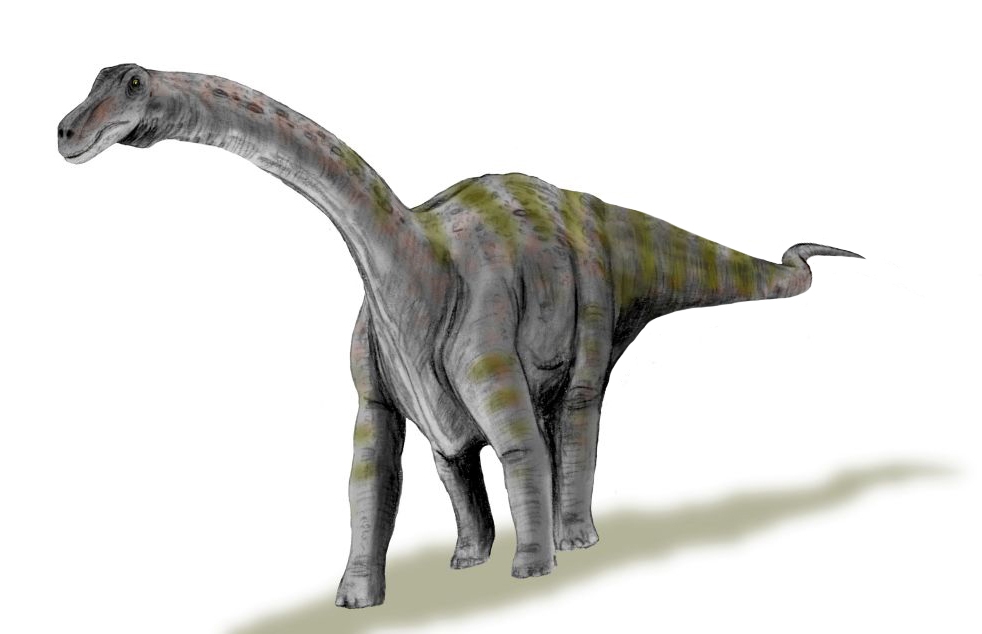
Giraffatitan brancai

TZ · 154–150 Ma

Giraffatitan

Giraffatitan brancai

"Giraffe titan"

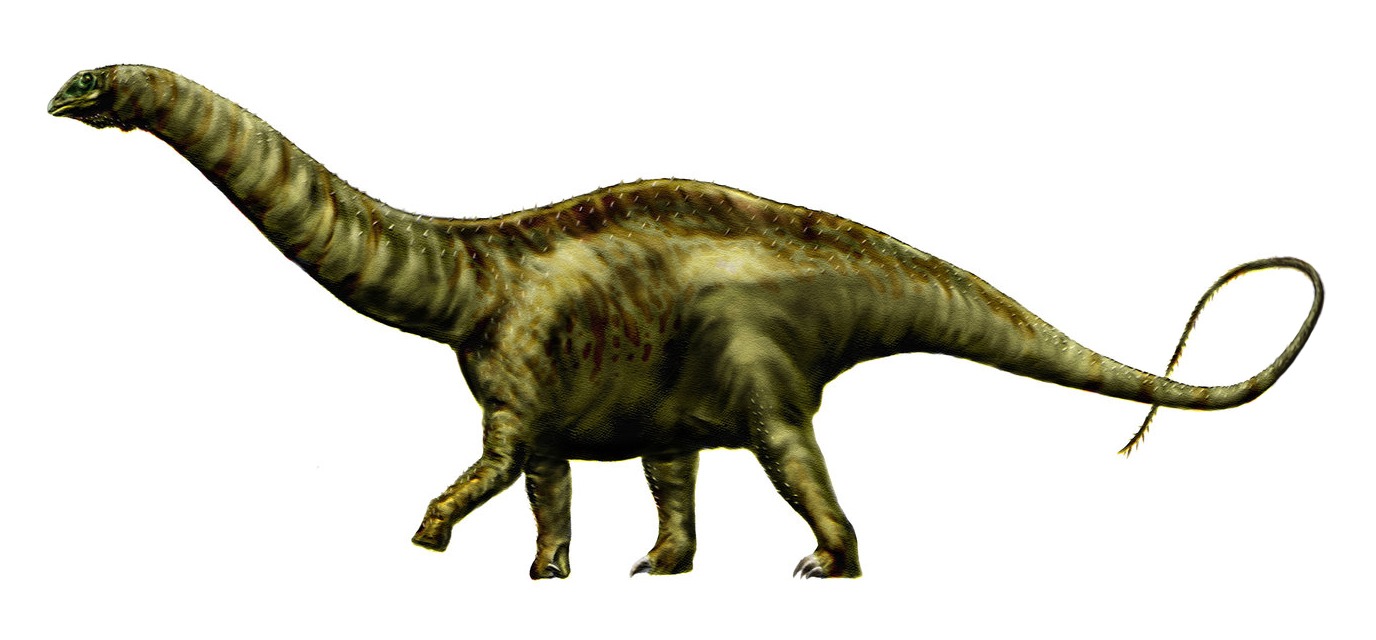
Giraffatitan brancai was a giant brachiosaurid sauropod that lived during the Kimmeridgian to Tithonian of the Late Jurassic, approximately 154 to 150 million years ago, in what is now Tanzania. At 26 meters in length and estimated body mass of 35,000 to 40,000 kg, it was one of the largest land animals of its time. Giraffatitan's morphology is characterized by forelimbs significantly longer than the hindlimbs, resulting in a forward-sloping back and an extremely long and high neck that allowed the animal to reach the vegetation of tree canopies in the East African Jurassic forest. Unlike many sauropods that held the neck horizontally, Giraffatitan's skeletal proportions indicate the neck was raised at a steep angle, giving the animal a vertical silhouette reminiscent of a giraffe, hence the name. The separation of Giraffatitan from Brachiosaurus as a distinct genus was proposed by Paul (1988) and confirmed by Taylor (2009) after detailed cladistic analysis. Key anatomical differences include skull configuration, taller and with a more prominent nasofrontal crest in Giraffatitan, and cervical vertebrae proportions, more elongate and with lower robustness index in Giraffatitan than in Brachiosaurus altithorax from North America. The validity of Giraffatitan as a separate genus is currently consensus in the paleontological community, though some authors have suggested both could belong to the same genus with subgenus status. Fossil material of Giraffatitan brancai is exceptionally rich for a giant sauropod: German expeditions to Tanzania between 1909 and 1913, led by Werner Janensch, recovered remains of dozens of individuals, including materials from at least five partially articulated individuals. The composite specimen HMN SII, mounted at the Museum für Naturkunde in Berlin, is the tallest mounted dinosaur skeleton in the world, at 13.27 meters. The logistical operation of the Tendaguru expeditions was one of the largest paleontological endeavors in history: more than 250 African workers transported hundreds of tons of fossilized material over 60 kilometers from the East African coast under extremely adverse conditions.

Jurassic Herbivore 26m
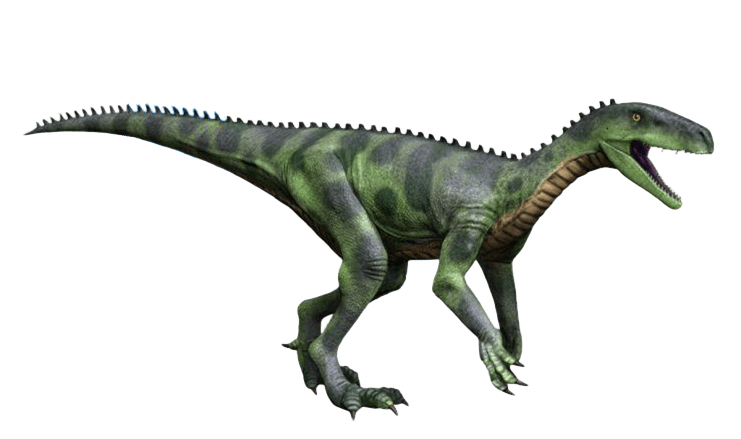
Heterodontosaurus tucki

ZA · 201–196 Ma

Heterodontosaurus

Heterodontosaurus tucki

"Tuck's different-toothed lizard"

Heterodontosaurus tucki is one of the most primitive ornithischians known and certainly the most anatomically surprising of its time. It lived in the Early Jurassic, approximately 201 to 196 million years ago, on the semi-arid plains of what is now South Africa, in the Upper Elliot Formation. At only 1.2 meters in length and under 2 kg, it was an agile biped with long hind limbs and relatively robust forelimbs, likely using its hands to manipulate vegetation or small prey. Its skeleton is extraordinarily well preserved, with the skull SAM-PK-K1332 being one of the most complete among primitive Triassic-Jurassic dinosaurs. The defining feature of the genus, reflected in its name, is its radically heterogeneous dentition: unlike the vast majority of herbivorous dinosaurs, Heterodontosaurus possessed three distinct types of teeth. At the front of the upper jaw were small incisor-like teeth for cropping vegetation, followed by large canine-like tusks at the corners of the maxilla and dentary, and taller, laterally compressed cheek teeth with crushing edges for processing plant food. This combination of three distinct dental morphologies in a single animal is unique among Dinosauria and generated decades of debate about function and diet. The question of the tusks is the most controversial aspect of Heterodontosaurus biology. Crompton and Charig, when describing the species in 1962, suggested omnivorous use. Later studies, especially those of Santa Luca (1980) and Sereno (2012), raised the hypothesis of sexual dimorphism: the tusks would be exclusive to males and would function in display or intraspecific combat, analogous to modern deer and suids. Norman et al. (2011), upon reexamining the material, concluded that the canine teeth were not related to carnivory but rather to social behavior. Porro et al. (2011) performed biomechanical analysis of the jaw and confirmed that its structure was highly adapted to processing hard plant material. Heterodontosaurus is also notable for its phylogeny. For decades it was placed at the base of ornithopods, but modern analyses position it at the base of Ornithischia or as a member of a lineage sister to Genasauria. This makes it a valuable window into the early stages of ornithischian dinosaur evolution, before the great diversification that produced hadrosaurs, ceratopsians, ankylosaurs, and stegosaurs. Additionally, possible evidence of keratin on the anterior teeth suggests a partial horny beak, as in many modern birds and turtles.

Jurassic Omnivore 1.2m
Huayangosaurus taibaii

CN · 169–164 Ma

Huayangosaurus taibaii

Huayangosaurus taibaii

"Huayang lizard (poet Li Bai)"

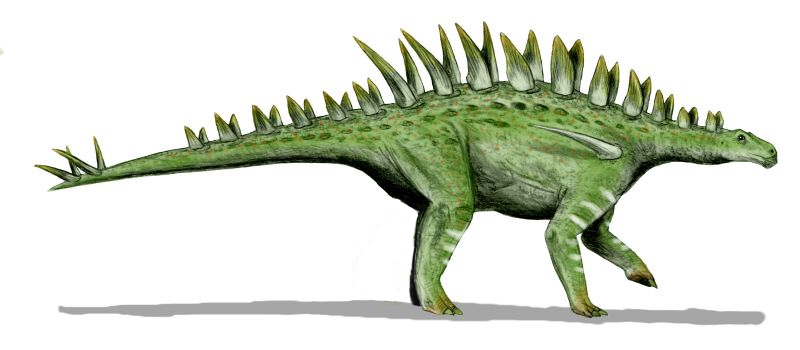
Huayangosaurus taibaii was a small Middle Jurassic stegosaur from southern China, collected at the Dashanpu Quarry near Zigong, Sichuan Province. At roughly 4.5 meters long and about 300 kg, it was much smaller than the famous North American Stegosaurus, yet it carries enormous scientific weight: it is the oldest well-known stegosaur recovered from abundant remains, serving as a key reference for understanding the origin and early diversification of the group. The genus name refers to Huayang, an ancient place name for Sichuan Province, while the specific epithet honors the Tang dynasty poet Li Taibai, also known as Li Bai. Described in 1982 by Dong Zhiming, Tang Zilu, and Zhou Shiwu, the holotype IVPP V6728 includes a relatively complete skull, vertebrae, ribs, caudals, and osteoderms, belonging to one of twelve individuals recovered from the site. This material made Huayangosaurus the best-documented Middle Jurassic stegosaur and the anatomical baseline for comparisons with derived forms such as Stegosaurus and Kentrosaurus. Several traits preserved in Huayangosaurus are regarded as primitive for Stegosauria: it still has teeth in the premaxilla (lost in later stegosaurs), retains open antorbital and mandibular fenestrae (both closed in derived forms), and has a shorter, broader skull. Its dorsal armor consisted of 17 pairs of plates and spikes arranged in two rows, intermediate in shape between the flat plates of Stegosaurus and the long spines of Kentrosaurus, plus a thagomizer with two terminal spike pairs and a distinctive parascapular spine on each shoulder. The forelimbs were proportionally longer relative to the hindlimbs than in Stegosaurus, giving it a less extreme body profile. The animal lived on the warm, humid floodplains of the Lower Shaximiao Formation alongside the sauropods Shunosaurus and Omeisaurus, the small ornithopod Xiaosaurus, and the carnivorous theropod Gasosaurus. Its herbivorous diet, based on ferns, cycads, and low conifers, was consistent with leaf-shaped teeth and a robust lower jaw. As a key early stegosaur on the phylogenetic tree, Huayangosaurus is a genuine link between basal thyreophorans and the Late Jurassic radiation of stegosaurids.

Jurassic Herbivore 4.5m
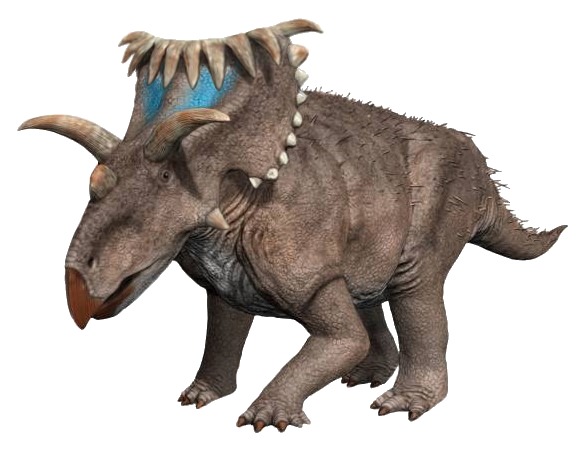
Kosmoceratops richardsoni

US · 76.4–75.5 Ma

Kosmoceratops

Kosmoceratops richardsoni

"Richardson's ornate horned face"

Kosmoceratops richardsoni is the ceratopsian with the most elaborate cranial ornamentation ever documented in dinosaur history: a total of 15 horns and bony structures on the skull, including a large downward-curved nasal horn, two supraorbital horns above the eyes, two jugal horns, two laterally-directed epijugal horns, and ten forward-curving apical processes on the parieto-squamosal frill. No other known dinosaur or fossil vertebrate has such dense and diversified cranial ornamentation. The animal lived approximately 76 to 75.5 million years ago during the late Campanian stage of the Cretaceous, in the region corresponding to the present-day state of Utah in the United States. Kosmoceratops belonged to the fauna of the southern portion of Laramidia Island, a large continental island that existed during the Late Cretaceous when the Western Interior Seaway divided North America into two landmasses. Notably, the southern and northern portions of Laramidia were separated by a shallow internal sea and presented completely distinct dinosaur faunas: while the south (where Kosmoceratops lived) had short-frilled ceratopsians with elaborate ornamentation, the north produced forms with longer frills. This geographic faunal difference was one of the central arguments presented by Sampson et al. (2010) in the paper describing the species. The holotype and referred specimens were collected from the Kaiparowits Formation in southern Utah, one of the most productive Late Cretaceous geological units in North America. The formation dates from the late Campanian (~76.6 to 74.5 Ma) and preserves a rich subtropical ecosystem with multiple species of dinosaurs, crocodilians, turtles, lizards, mammals, and amphibians. Kosmoceratops fossils were collected by the Utah Museum of Natural History between 2004 and 2006 at sites within the Grand Staircase-Escalante National Monument. The function of the extravagant cranial ornamentation is a subject of ongoing scientific debate. Sampson et al. (2010) argue that the structures were primarily for intraspecific display and species recognition, analogous to the horns of modern antelopes and cervids. The fact that the supraorbital horns and frill processes face laterally and forward rather than forward in combat position supports the display hypothesis over the defensive one. Later biomechanical analyses by Mallon and Anderson (2013) suggest that ceratopsids used their horns in ritualized intraspecific combat, not as defense against large predators.

Cretaceous Herbivore 4.5m
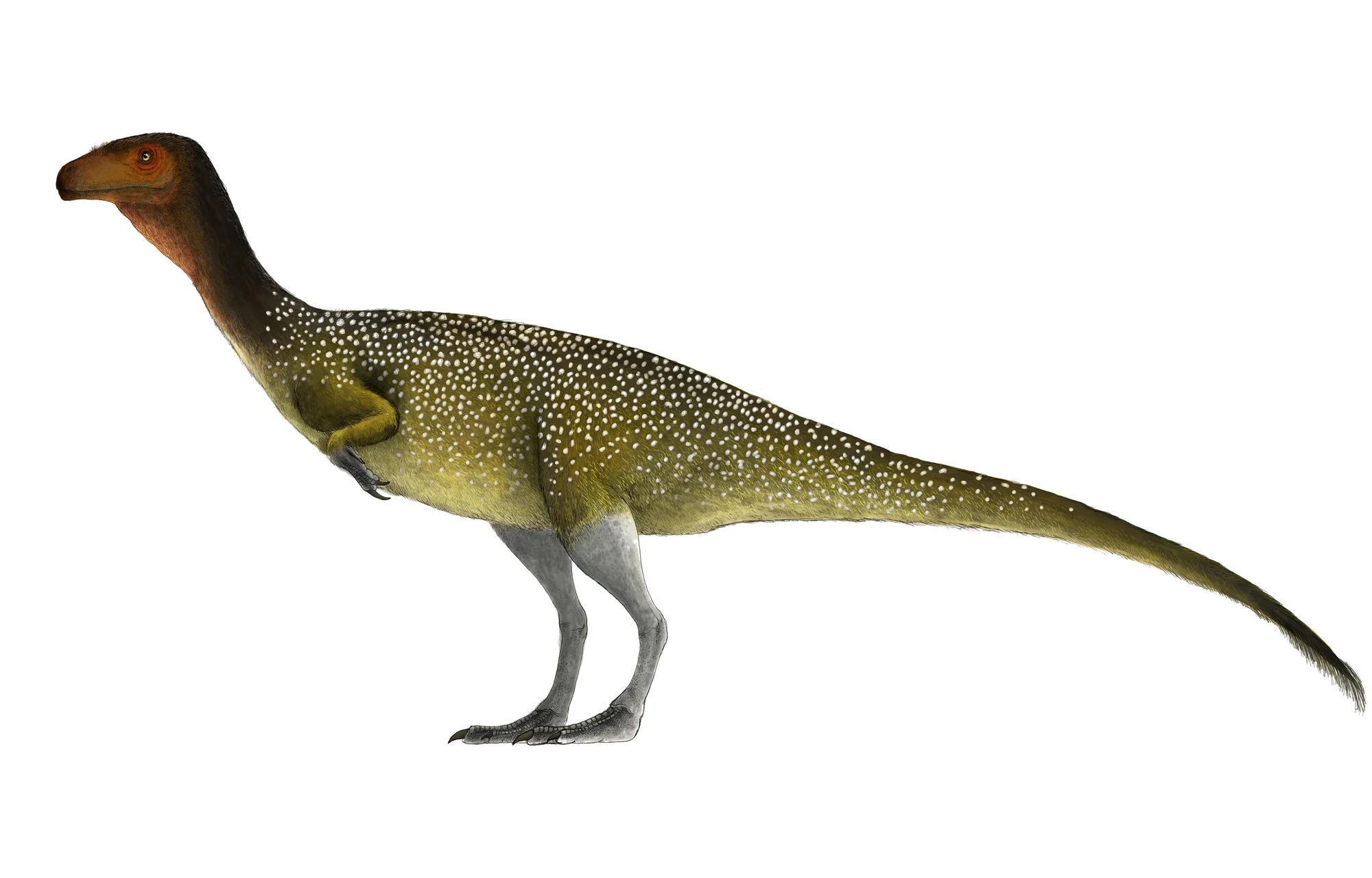
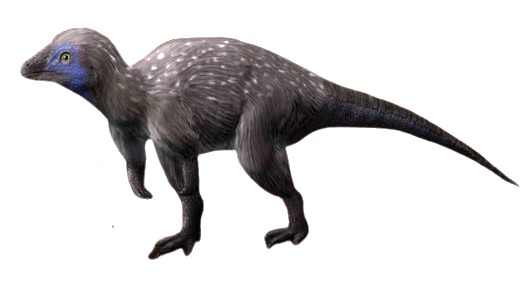
Kulindadromeus zabaikalicus

RU · 168–166 Ma

Kulindadromeus

Kulindadromeus zabaikalicus

"Kulinda runner from Transbaikalia"

Kulindadromeus zabaikalicus is a basal neornithischian from the Middle Jurassic (Bathonian, about 168 to 166 million years ago according to Cincotta et al. 2019) Ukureyskaya Formation, also spelled Ukurey, at the Kulinda locality in the Olov Depression, Chernyshevsky District, Zabaikalsky Krai, southeastern Siberia, Russia. A small bipedal herbivore about 1.5 m long with an estimated mass of 2 kg, it became famous as the first ornithischian with clearly documented complex integumentary cover, a find that unsettled the consensus that feathers were an exclusive trait of coelurosaurian theropods. Godefroit and colleagues, in 2014 in Science, described three types of feather-like filaments at Kulinda: monofilament fuzz covering head and trunk, with simple fibres of constant width comparable to the earliest generation of feather-like structures in Sinosauropteryx; compound tufts of 6 to 7 filaments arising from hexagonal base plates on arms and legs, a previously unknown morphology without exact parallel in theropods; and ribbon-like structures on thigh and tibia, broad, flattened and lacking a defined rachis. Added to these filaments are three scale types: imbricated hexagonal scales on the shins, small rounded scales on hands and feet, and arched rectangular scales on the tail. The simultaneous presence of filaments and scales in the same individual shows that the integumentary morphology of basal dinosaurs was mosaic and suggests that feather-like integument may be plesiomorphic for Dinosauria as a whole rather than restricted to Coelurosauria, radically changing the classical reading that confined feathers to carnivorous theropods. The find overturned the precedent that only Tianyulong and Psittacosaurus bore filamentous structures in Ornithischia, extending the condition to a much older basal ornithischian and geographically anchoring the record in Siberia, outside the Chinese Jehol stage that had dominated feathered fossils. U-Pb dating on detrital zircons and monazites combined with palynology by Cincotta et al. (2019) refined the original age of Godefroit et al. (2014), which pointed to a Bajocian to Tithonian interval (169 to 144 Ma), to Bathonian (168.3 ± 1.3 to 166.1 ± 1.2 Ma), making Kulindadromeus the oldest known dinosaur with unequivocal 'feather-like' structures. The same study synonymised Kulindapteryx ukureica, Daurosaurus olovus and Lepidocheirosaurus natalis, taxa erected by Alifanov and Saveliev in 2014 and 2015 on material from the same bone beds, as nomina dubia likely junior synonyms of Kulindadromeus, simplifying the site's systematics to a single dominant ornithischian taxon. The holotype INREC K3/109, a partial skull with mandibles, is housed at the Institute of Natural Resources, Ecology and Cryology SB RAS in Chita, with referred material distributed across INREC, the Institute of Earth's Crust SB RAS in Irkutsk and the Royal Belgian Institute of Natural Sciences in Brussels, where Paul Spagna prepared the blocks bearing integument. Together, the type skull and the hundreds of disarticulated elements from three bone beds allowed Godefroit and colleagues to reconstruct the animal's nearly complete anatomy and to document the richest record of body cover in a basal ornithischian of the Mesozoic.

Jurassic Herbivore 1.5m
Miragaia longicollum

PT · 152–148 Ma

Long-necked stegosaur

Miragaia longicollum

"Miragaia (Portuguese village), long neck"

Miragaia longicollum was a Late Jurassic stegosaurid from Portugal, discovered in 1999 by Estevão Dias and the Museu da Lourinhã team during the excavation of a road cutting between the villages of Miragaia and Sobral da Lagoa, in the Lourinhã municipality, Leiria district. The holotype ML 433 was described in 2009 by Octávio Mateus, Susannah Maidment, and Nicolai Christiansen, and immediately drew scientific attention for an unparalleled feature among known stegosaurs: an extraordinarily long neck with at least 17 preserved cervical vertebrae. Most stegosaurids have between 12 and 13 cervicals, a count close to that of many theropods and ornithopods. Miragaia breaks this rule. With its 17 cervicals, it approaches the body plan of a basal sauropodomorph more than the archetypal short-necked, low-headed stegosaur. This independent, parallel convergent evolution with sauropods is one of the most frequently cited examples of convergence among Jurassic herbivores. The animal measured about 6 meters long and weighed roughly 2 tonnes. It belongs to the subfamily Dacentrurinae, which also groups European Dacentrurus and, in some analyses, African Kentrosaurus. The holotype includes a partial skull, lower jaw, a long cervical series, dorsal vertebrae, ribs, pectoral girdle, right humerus, and paired dermal plates along the back. The ecological context is equally remarkable: Miragaia lived in the Iberian archipelago of the Late Jurassic, a mosaic of islands and alluvial plains recorded by the Lourinhã Formation, where it coexisted with the stegosaur Dacentrurus armatus, the large theropods Torvosaurus gurneyi and Allosaurus europaeus, Lourinhanosaurus, and the giant sauropod Lusotitan. The elongated neck suggests exploration of a vegetative stratum distinct from the sympatric Dacentrurus, a niche partitioning hypothesis that helps explain how two stegosaurs of similar size coexisted in the same ecosystem. Miragaia is today one of the most emblematic Portuguese dinosaurs, a symbol of the rich Jurassic record of the Lusitanian Basin and a centerpiece of the Museu da Lourinhã collection.

Jurassic Herbivore 6m
Mussaurus patagonicus

AR · 221–205 Ma

Mussaurus

Mussaurus patagonicus

"Mouse lizard from Patagonia"

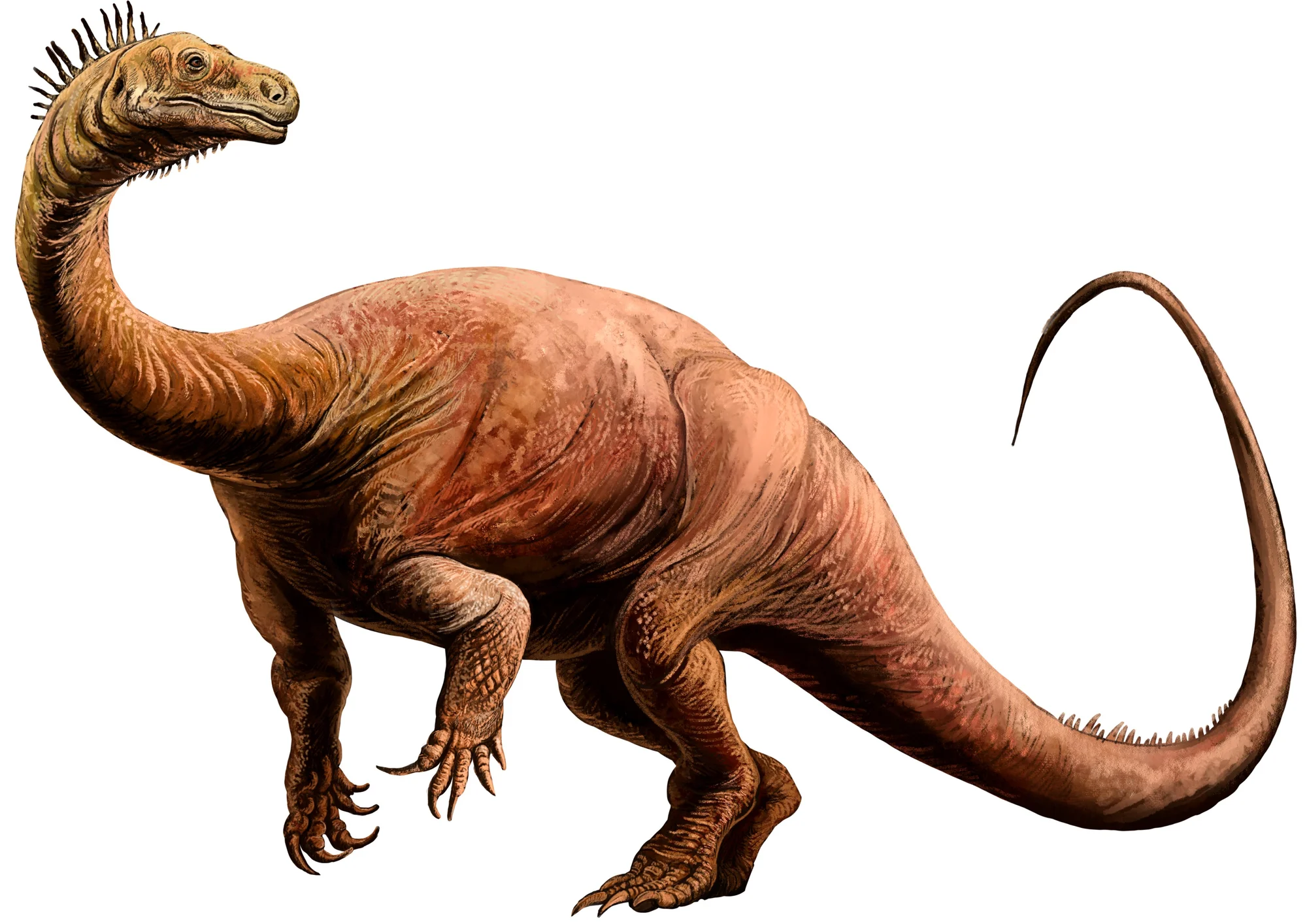
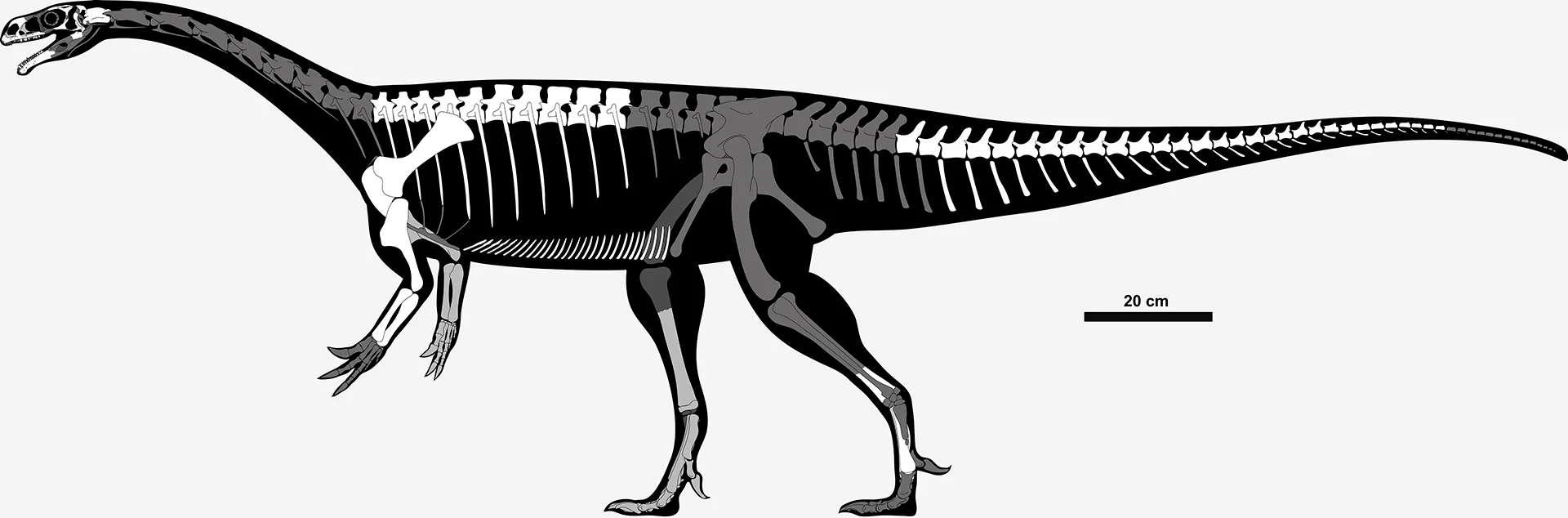
Mussaurus patagonicus is a Late Triassic sauropodomorph that stars in one of paleontology's most unusual stories: it was named the 'mouse lizard' because the first discovered specimens were tiny hatchlings only 20 centimeters long, small enough to fit in the palm of a hand. When José Bonaparte and Martín Vince described the species in 1979, based on these hatchlings from the Los Colorados Formation of Argentine Patagonia, they imagined a modestly sized adult. Decades later, when adult specimens were found and described in detail, it was revealed that Mussaurus grew to 6 meters in length and 1.5 tonnes: one of the largest terrestrial animals of the Late Triassic in South America. This discrepancy between hatchlings and adults is biologically significant. It demonstrates that basal sauropodomorphs underwent dramatic ontogenetic changes not only in size but also in locomotor posture. Mussaurus hatchlings were facultative bipeds, with proportionally similar fore and hind limbs, while adults had more robust forelimbs and likely transitioned to a quadrupedal posture upon reaching large sizes. This pattern echoes what later became obligatory in the giant sauropods of the Jurassic and Cretaceous. The most impactful publication on Mussaurus in recent years was the 2021 study by Otero et al. published in Scientific Reports. Analysis of multiple nests with eggs, neonatal hatchlings, and spatially grouped juveniles revealed strong evidence of gregarious behavior: the animals gathered in age-segregated groups, suggesting some form of parental care or structured social behavior. Mussaurus eggs were preserved in communal nests at a depth suggesting they were buried for incubation, similar to the behavior of crocodiles and some extant birds. This finding pushes the origin of gregarious behavior in sauropodomorphs back to the Triassic, more than 50 million years earlier than previously thought. Phylogenetically, Mussaurus occupies a key position in the transition between solitary basal sauropodomorphs and the large gregarious sauropods of the Mesozoic. The most recent analyses place it within Massopoda, near the base of the clade that will give rise to true Sauropoda. Its body still preserves plesiomorphic features such as a moderately long neck, more robust hind limbs than forelimbs, and simple leaf-shaped teeth, but already shows derived features such as elongated cervical vertebrae and a sauropod-like tarsal formula. The exceptional fossil record of the Los Colorados Formation, with multiple age classes preserved together, makes Mussaurus the most important Triassic sauropodomorph for studies of growth, ontogeny, and social behavior.

Triassic Herbivore 6m
Nasutoceratops titusi

US · 76–75 Ma

Nasutoceratops titusi

Nasutoceratops titusi

"Big-nosed horned face, honoring Alan Titus"

Nasutoceratops titusi is a centrosaurine ceratopsid dinosaur that lived approximately 76 to 75 million years ago, during the late Campanian of the Cretaceous, in what is now southern Utah in the United States. The animal is immediately recognizable by two extraordinary diagnostic features: supraorbital horns that are extremely long, oriented laterally and curved upward and forward over the eye sockets in a pattern that researchers frequently compare to Texas Longhorn cattle, and a hypertrophied nasal cavity that gives the skull a bulbous, short-snouted appearance. No other known ceratopsid combines these two traits so strikingly, and it was precisely this anatomy without parallel that led the describers to erect not only a new genus and species but a new tribe within Centrosaurinae, the tribe Nasutoceratopsini. The genus name comes from the Latin nasutus, meaning big-nosed, combined with the Greek keratops, horned face. The specific epithet titusi honors Alan L. Titus, the paleontologist at Grand Staircase-Escalante National Monument who supported the field expeditions that led to the discovery. The holotype, catalogued as UMNH VP 16800, was excavated in 2006 by then graduate student Eric K. Lund in the Kaiparowits Formation, within the national monument in Kane County, Utah. The specimen includes a sub-complete skull with mandible, with both supraorbital horns and the nasal region preserved, plus fused cervical vertebrae (syncervical) and associated post-cranial elements. The formal description was published on 10 July 2013 in Proceedings of the Royal Society B by Scott D. Sampson, Eric K. Lund, Mark A. Loewen, Andrew A. Farke, and Katherine E. Clayton. The evolutionary significance of Nasutoceratops extends far beyond its unusual appearance. The species occupies a basal position within Centrosaurinae, retaining the long supraorbital horns characteristic of the common ancestor of Ceratopsidae, while derived centrosaurines such as Centrosaurus, Styracosaurus, and Pachyrhinosaurus dramatically reduced those horns above the eyes and developed, in their place, prominent nasal horns or bosses. This reverses the traditional intuition that long eye horns would be exclusive to chasmosaurines like Triceratops and Kosmoceratops. The tribe Nasutoceratopsini, formalized by Ryan, Holmes, Mallon, and colleagues in 2017, groups Nasutoceratops titusi, Avaceratops lammersi, and Xenoceratops foremostensis, all sharing this combination of short centrosaurine frill with long supraorbital horns and reduced nasal horn. Nasutoceratops titusi is also a central piece in the debate over the intracontinental endemism of Laramidia, the island continent formed in the western portion of North America during the Late Cretaceous, when the Western Interior Seaway divided the continent into two landmasses. The fauna of the Kaiparowits Formation, in southern Utah, contains multiple endemic species that do not appear in contemporary northern formations in Alberta and Montana, and Nasutoceratops is, together with Kosmoceratops richardsoni and Utahceratops gettyi, one of the clearest markers of this pattern. The holotype and the mounted skeleton are on permanent display in the Past Worlds gallery of the Natural History Museum of Utah in Salt Lake City.

Cretaceous Herbivore 4.5m
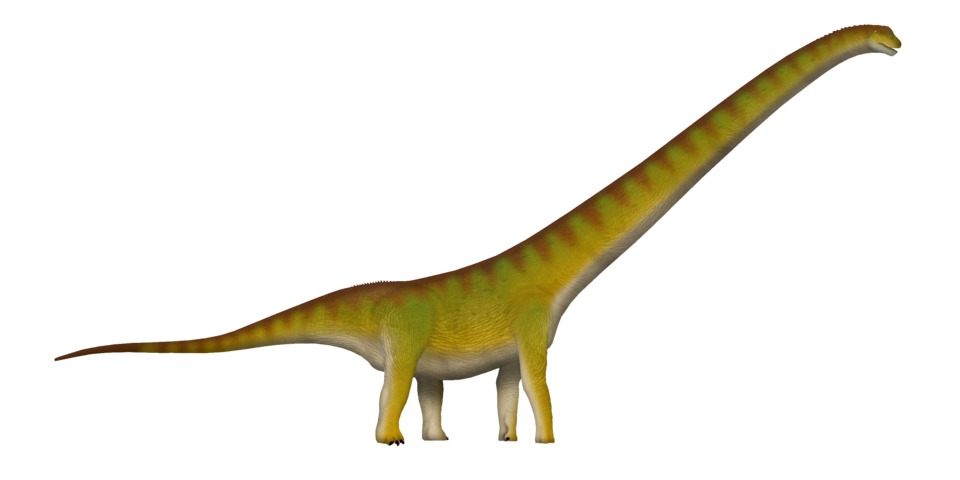
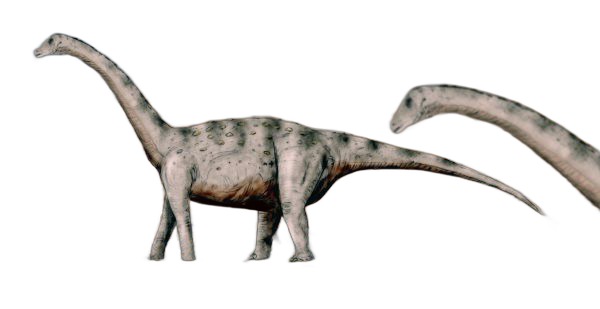
Paralititan stromeri

EG · 95–94 Ma

Bahariya titan

Paralititan stromeri

"Stromer's tidal titan"

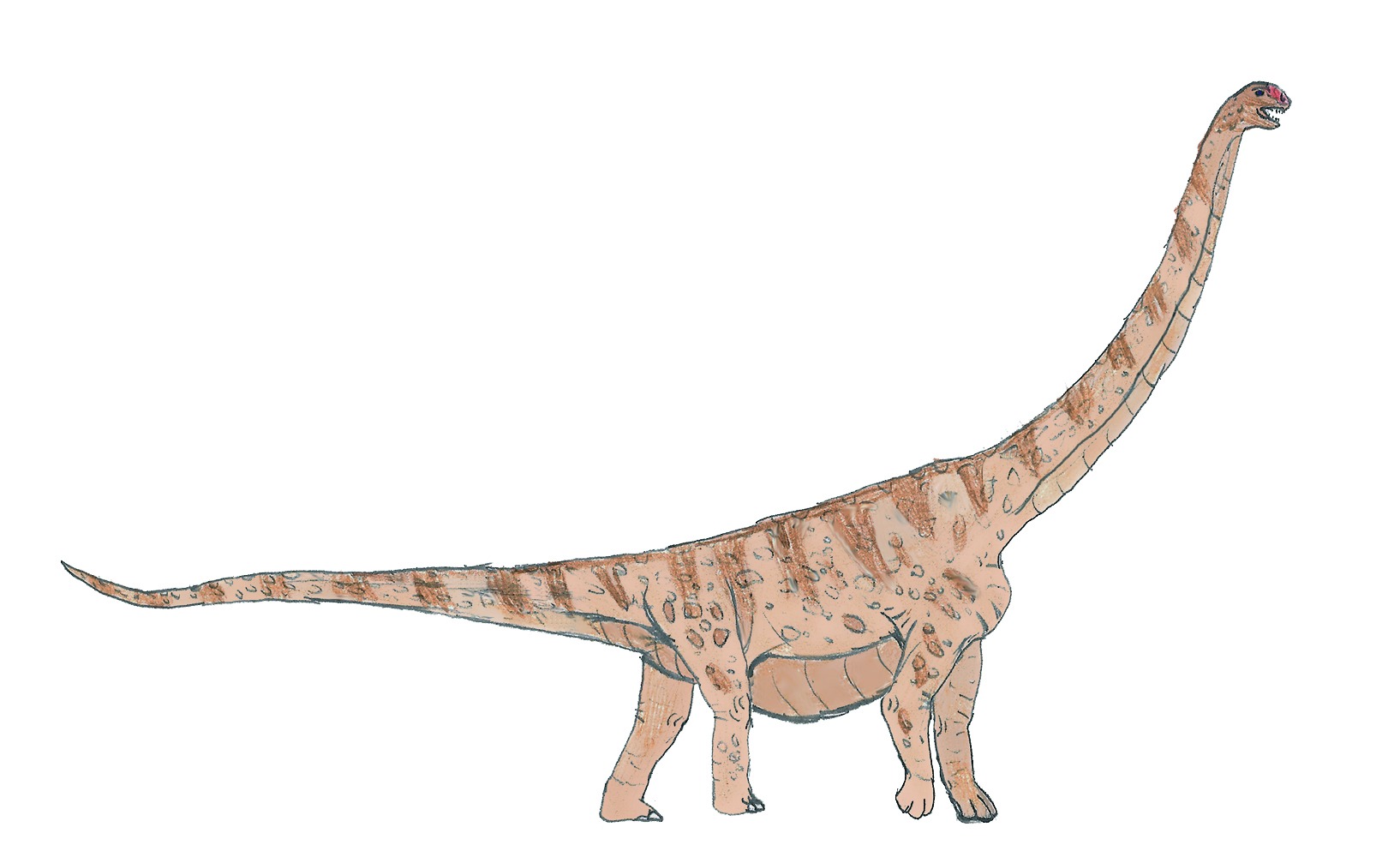
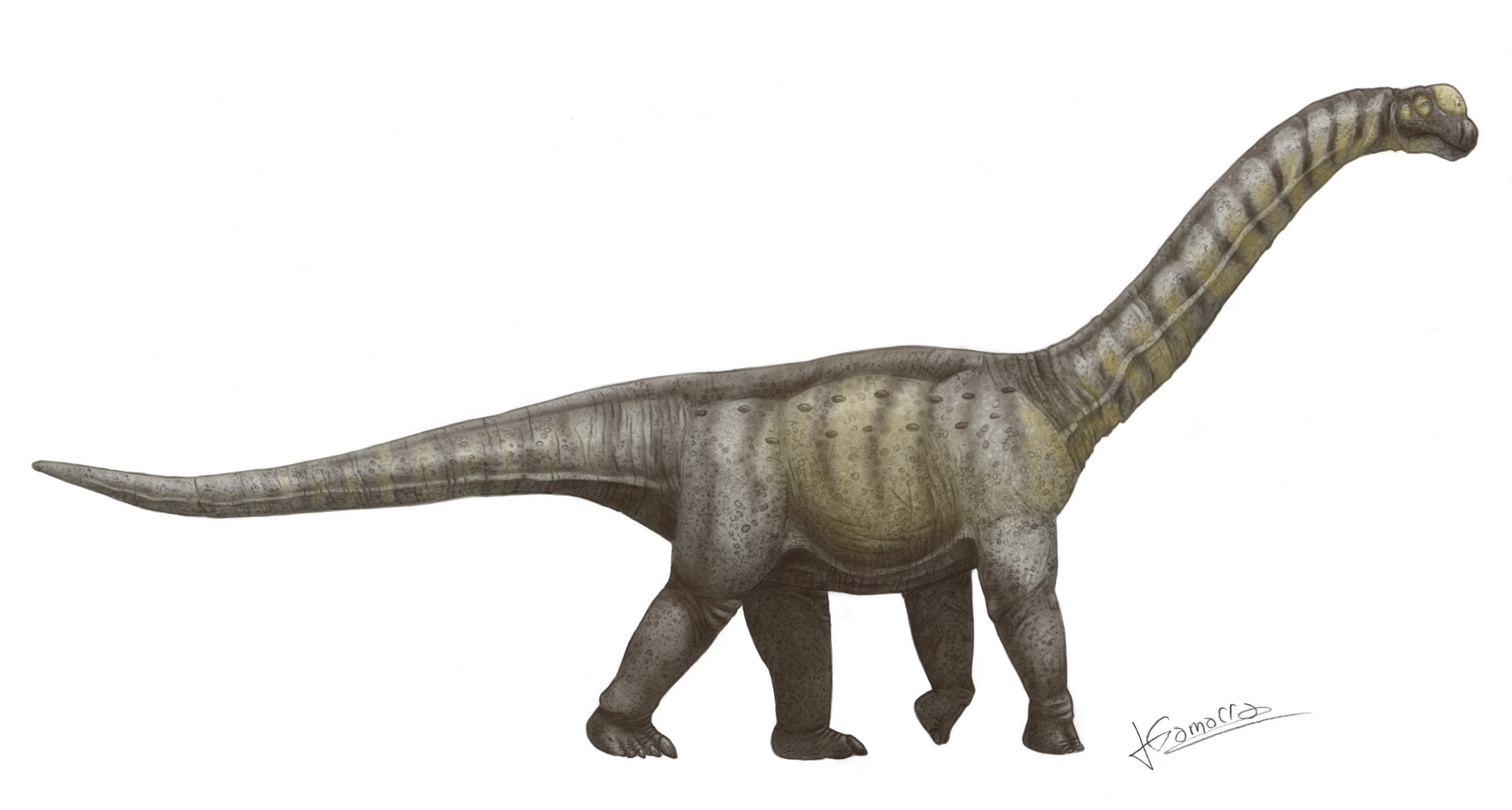
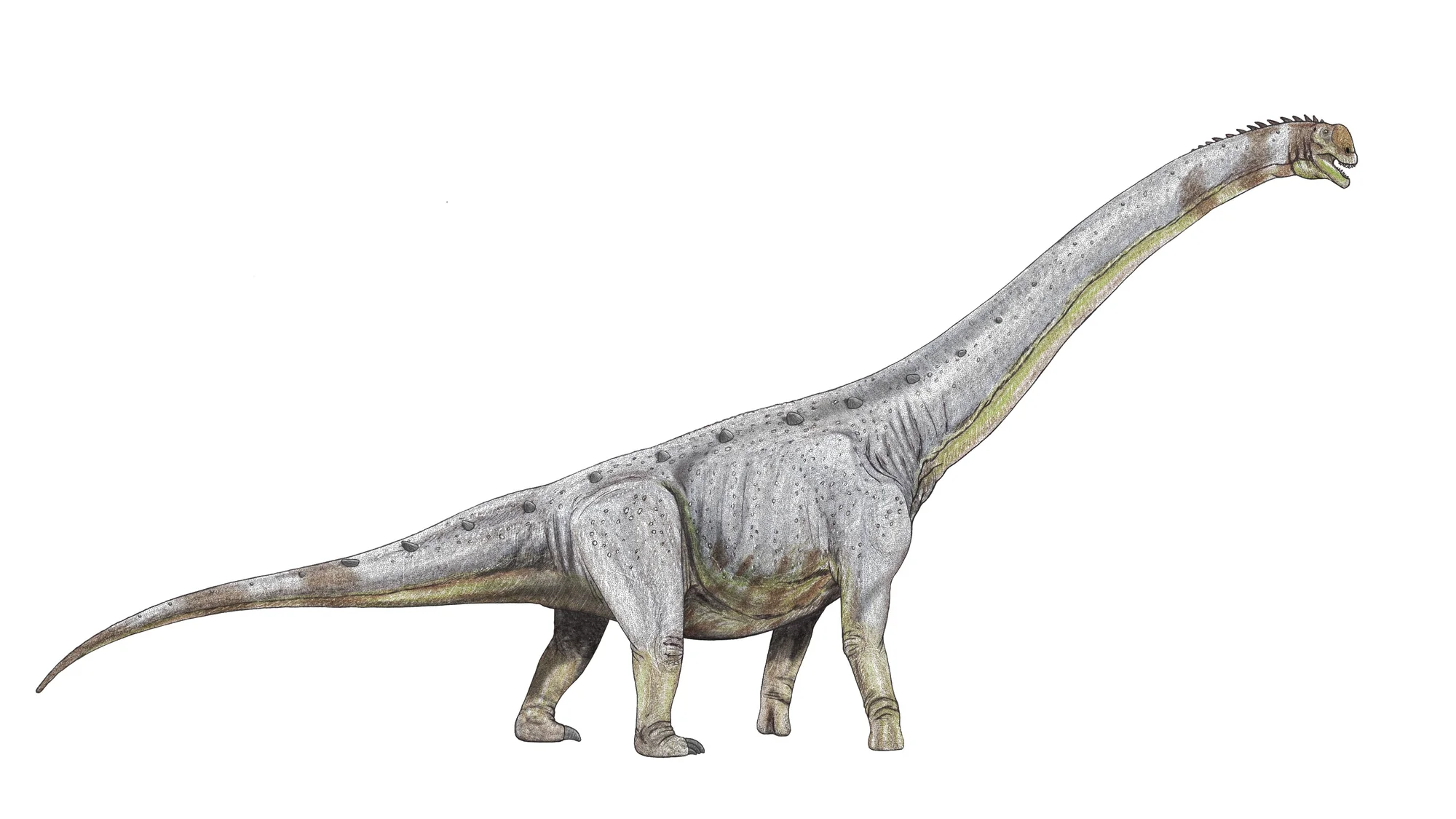
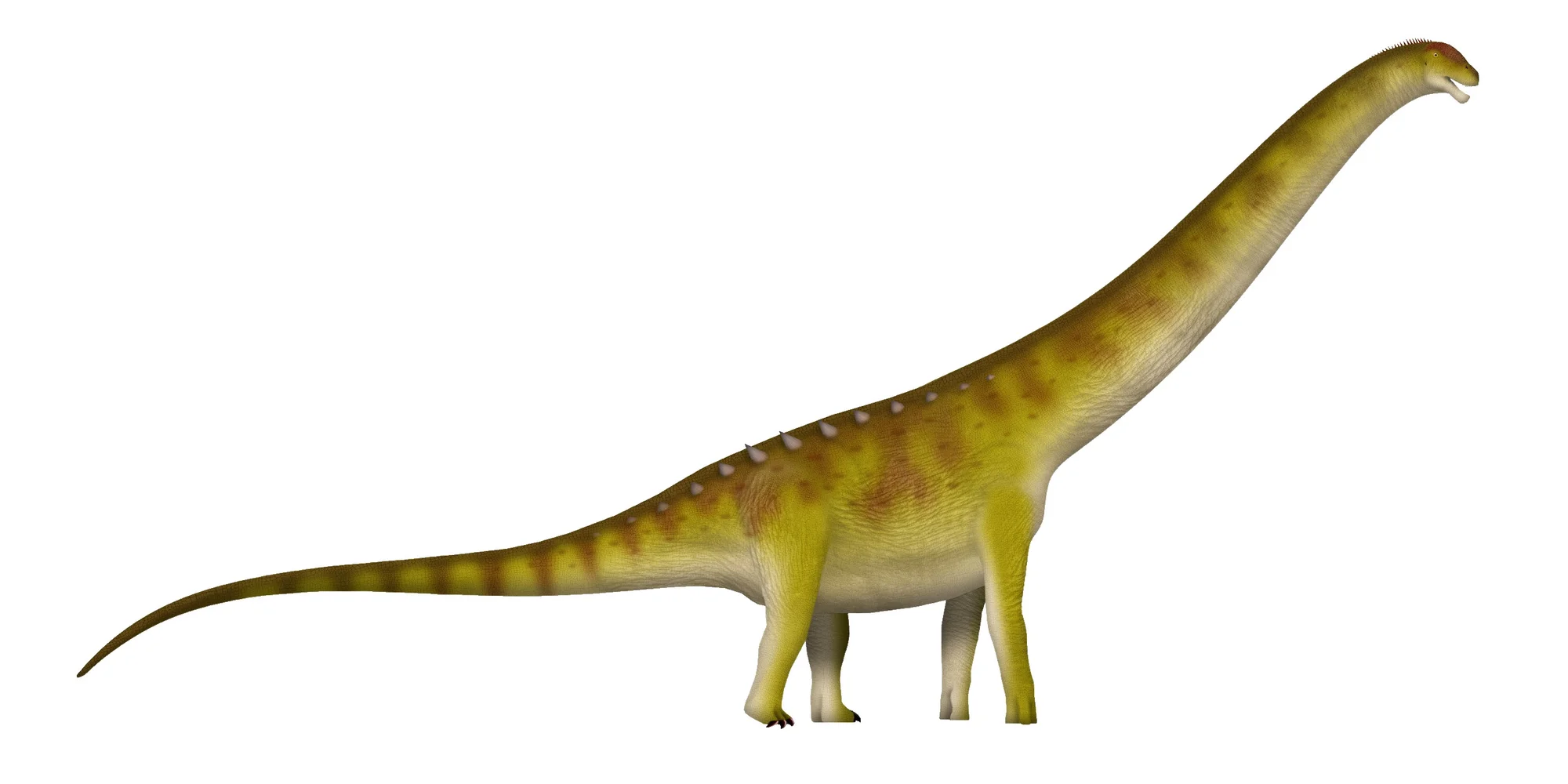
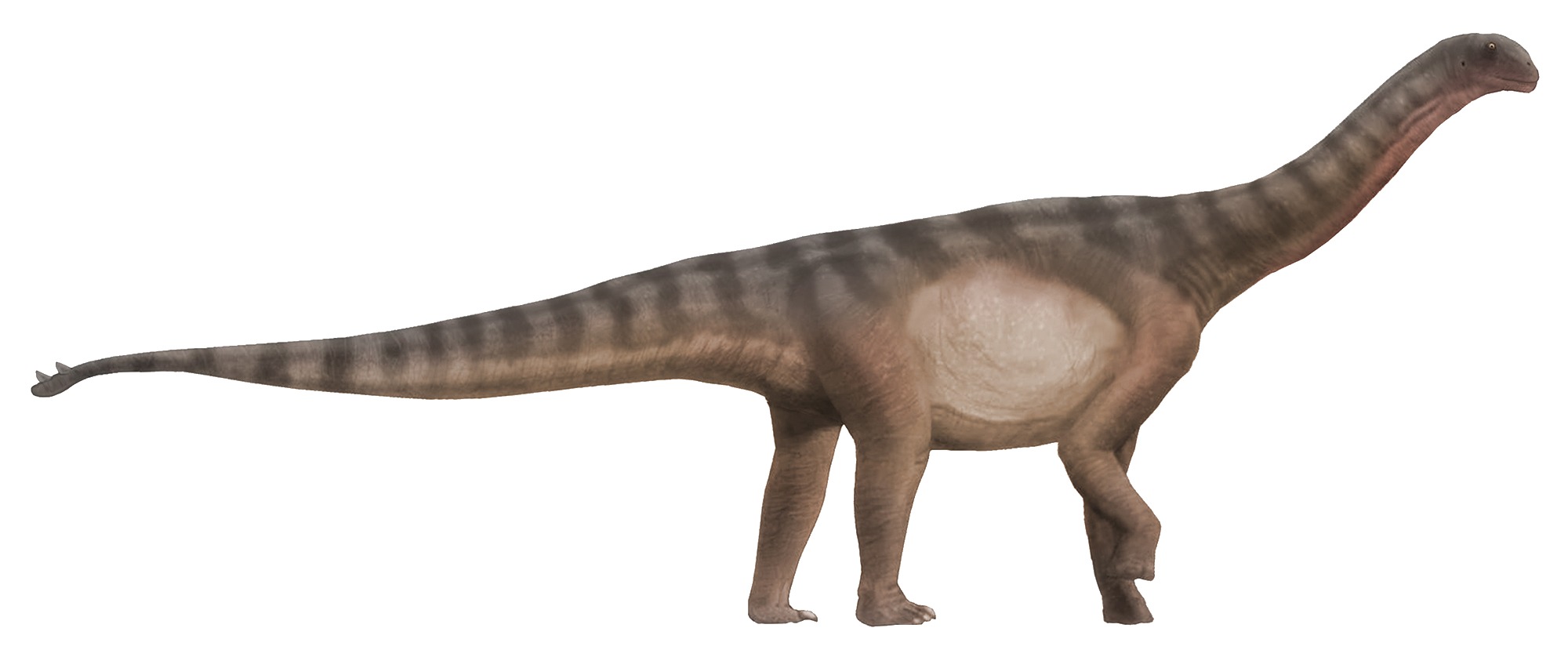
Paralititan stromeri is a giant titanosaur from the Cenomanian (about 95 to 94 million years ago) of the Bahariya Formation in the Bahariya Oasis of Egypt's Western Desert. It was described in 2001 by Joshua B. Smith, Matthew C. Lamanna, Kenneth J. Lacovara, Peter Dodson and colleagues in Science, based on holotype CGM 81119, a fragmentary but significant skeleton including two humeri (the right complete, at 1.69 metres long among the largest ever recovered in a Cretaceous sauropod at the time of description), two sacral vertebrae likely the fifth and sixth, an anterior caudal vertebra, dorsal and sacral ribs, incomplete scapulae and the distal end of a metacarpal. With only around 5 per cent of the skeleton preserved, Paralititan's dimensions are estimated by comparison with more complete relatives. Carpenter (2006) calculated about 26 metres in length using Saltasaurus as guide, while mass estimates vary widely depending on method, between 20 tonnes (Paul 2010), roughly 30 tonnes (Wikipedia, April 2026 revision), 50 tonnes (Gonzalez Riga et al. 2016, via humerus and femur circumference), 30 to 55 tonnes (Paul 2019) and 59 tonnes (2011 estimate). All these values are approximate and reflect the uncertainty intrinsic to fragmentary preservation. The animal lived in a coastal mangrove ecosystem, the first dinosaur scientifically demonstrated to inhabit this type of environment. The deposit preserving the holotype is a tidal flat dominated by the seed fern Weichselia reticulata, and a Carcharodontosaurus tooth associated with the skeleton suggests immediate scavenging of the carcass by a giant predator. Villa et al. (2022), in the description of Abditosaurus kuehnei, recovered Paralititan in an Afro-European clade within Saltasaurinae with Abditosaurus, sister to the South American Saltasaurini clade including Neuquensaurus and Saltasaurus; earlier analyses, such as Curry Rogers (2005) and Mannion and Upchurch (2011), had interpreted the genus as a more basal titanosaur. The Bahariya Oasis is the same site where Austro-Hungarian collector Richard Markgraf gathered fossils between 1912 and 1914, later described by Ernst Stromer in Munich; the rediscovery of the site by Joshua Smith's team in 2000 marked the return of palaeontology to North Africa after nearly 70 years of silence.

Cretaceous Herbivore 26m
Pinacosaurus grangeri

MN · 80–75 Ma

Pinacosaurus

Pinacosaurus grangeri

"Plank lizard of Granger"

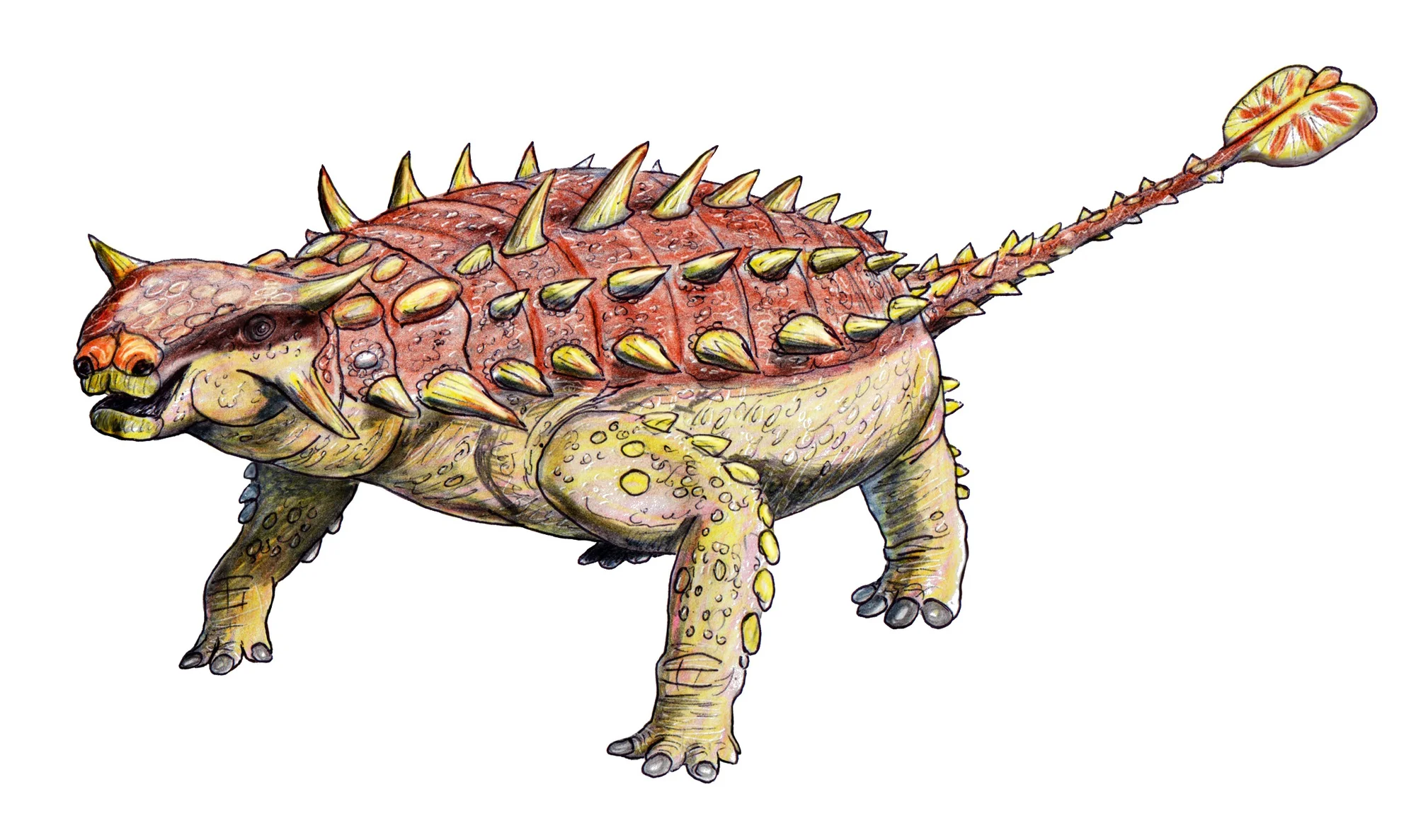
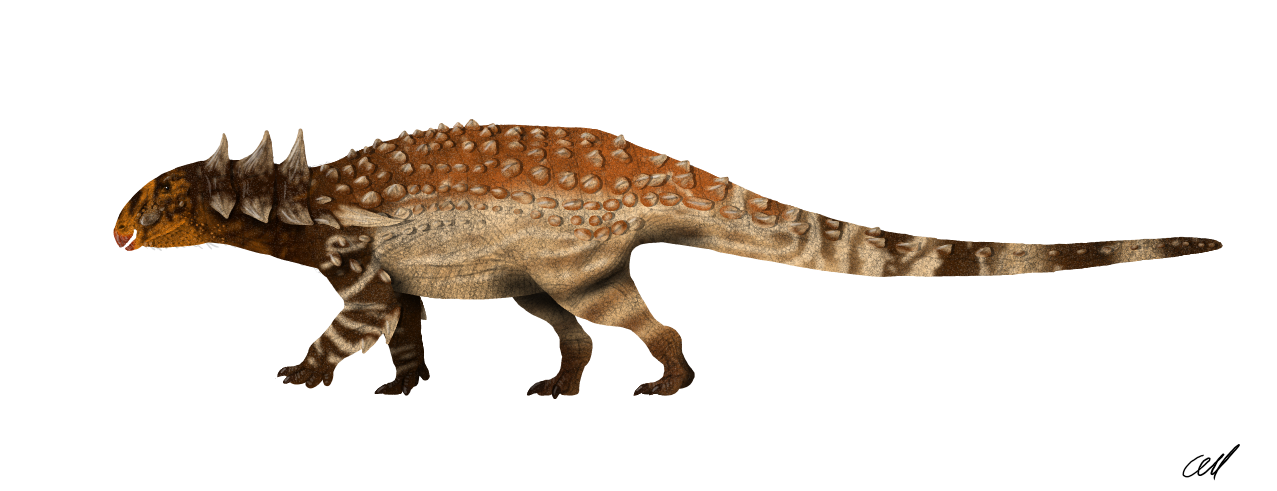
Pinacosaurus grangeri is a medium-sized ankylosaurid from the Late Cretaceous (Campanian, about 80 to 75 million years ago) of the Djadokhta Formation of Mongolia and the Bayan Mandahu Formation of Inner Mongolia, China, with older records from the Alagteeg Formation. It was described by Charles W. Gilmore in 1933 based on holotype AMNH 6523, collected in 1923 at Shabarakh Usu (today Bayn Dzak, 'Flaming Cliffs') by palaeontologist Walter Granger during the Central Asiatic Expeditions led by Roy Chapman Andrews. It reached about 5 metres in length and 1.9 tonnes in body mass. The skull was low and broad, with a toothless beak, weakly developed squamosal horns, four pyramidal occipital horns and a series of accessory narial openings perforating the premaxilla, a diagnostic feature of the genus. The body was covered with keeled polygonal osteoderms, with two cervical half rings protecting the neck and a tail ending in a bony club. The genus contains two valid species: P. grangeri (Mongolia and China) and P. mephistocephalus (Godefroit et al., 1999), distinguished by 'devil-like' squamosal horns projecting far beyond the skull roof. Pinacosaurus is best known for the extraordinary juvenile bonebeds of Alag Teeg (Mongolia) and Bayan Mandahu (China), with about 100 partially articulated immature skeletons preserved together, direct evidence of gregarious behaviour in young ankylosaurs. In 2023, Yoshida, Kobayashi and Norell described in Communications Biology the first preserved laryngeal apparatus in a non-avian dinosaur, also in Pinacosaurus, suggesting bird-like vocalisation.

Cretaceous Herbivore 5m
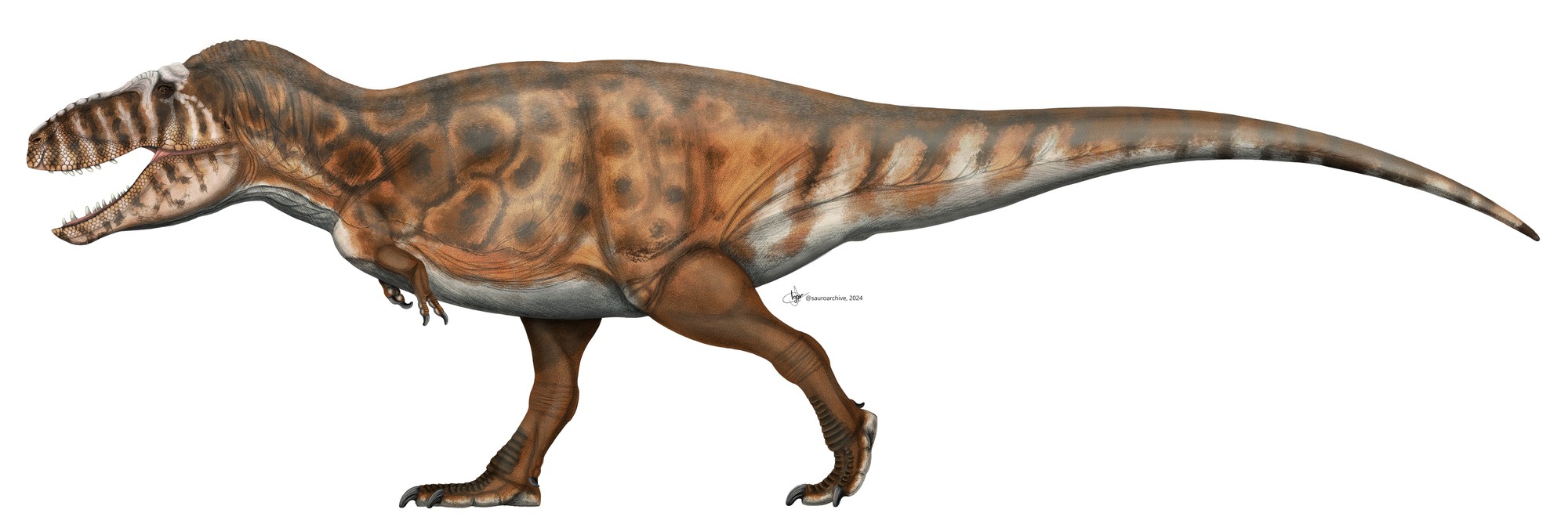
Qianzhousaurus sinensis

CN · 72–66 Ma

Pinocchio rex

Qianzhousaurus sinensis

"Chinese lizard of Qianzhou"

Qianzhousaurus sinensis is a long-snouted tyrannosaurid from the end of the Cretaceous, recovered in 2010 during excavation at a construction site near the city of Ganzhou, in Jiangxi Province, southern China. The species was formally described in 2014 by Lü Junchang, Yi Laiping, Stephen L. Brusatte, Yang Ling, Hu Hailu and Chen Liu, in a paper published in Nature Communications. The type material, catalogued as GM F10004 and housed at the Ganzhou Museum, includes a nearly complete skull and part of the postcranial skeleton, comprising cervical, sacral and caudal vertebrae, along with hindlimb elements. The holotype individual, still a subadult, reached about 6.3 metres in length and approximately 2 metres in hip height, with an estimated mass between 750 and 757 kilograms; estimates based on allometric comparison with Tarbosaurus bataar and Alioramus suggest that full adults could have reached 7.5 or even 9 metres, although this figure is inferred and not directly supported by fossils. The animal's most striking feature is its extremely elongated and shallow skull, with a narrow premaxilla, rows of long banana-shaped teeth, paired nasal crests forming bumps on top of the snout and a pneumatic opening on the maxilla, features that clearly distinguish it from short-snouted tyrannosaurines such as Tyrannosaurus and Tarbosaurus. Lü et al. 2014 erected the tribe Alioramini to group Qianzhousaurus, Alioramus altai and Alioramus remotus, all gracile long-snouted tyrannosaurines from the Late Cretaceous of Asia. The phylogenetic analysis of Brusatte and Carr 2016, published in Scientific Reports, confirmed this grouping and placed Alioramini as the sister lineage to the massive tyrannosaurines represented by Tarbosaurus and Tyrannosaurus, showing that there was significant ecological diversity among Asian apex predators at the end of the Cretaceous. The set of dental features, with 18 or more teeth in the dentary and narrower teeth than those of the robust tyrannosaurines, suggests a differentiated diet, possibly focused on smaller, nimbler or softer-bodied prey, in contrast to the bone-crushing strategy documented in Tarbosaurus. The animal lived at the same time and broadly in the same region as Tarbosaurus bataar in Mongolia, which supports the hypothesis of ecological niche partitioning between long-snouted and short-snouted tyrannosaurines. The Nanxiong Formation, where the holotype was recovered, also preserves dinosaur eggs, tracks and a rich fauna of oviraptorosaurs, titanosaurs and small theropods, suggesting warm humid fluvial plains in a continental setting of southern China. The nickname 'Pinocchio rex', coined by the international press, popularly summarises the anatomical difference between the slender snout of Qianzhousaurus and the massive snout of its North American cousins. The discovery also reinforced the view that Tyrannosauridae was an ecologically diverse clade, with lineages specialised in different predation strategies, and not only in bone-crushing bites. As of 2026, no referred specimens have been published in peer-reviewed literature, so all known anatomy of the taxon derives exclusively from the holotype, which makes new discoveries in southern China particularly relevant for testing estimates of maximum size and ontogenetic variation of Qianzhousaurus sinensis.

Cretaceous Carnivore 6.3m
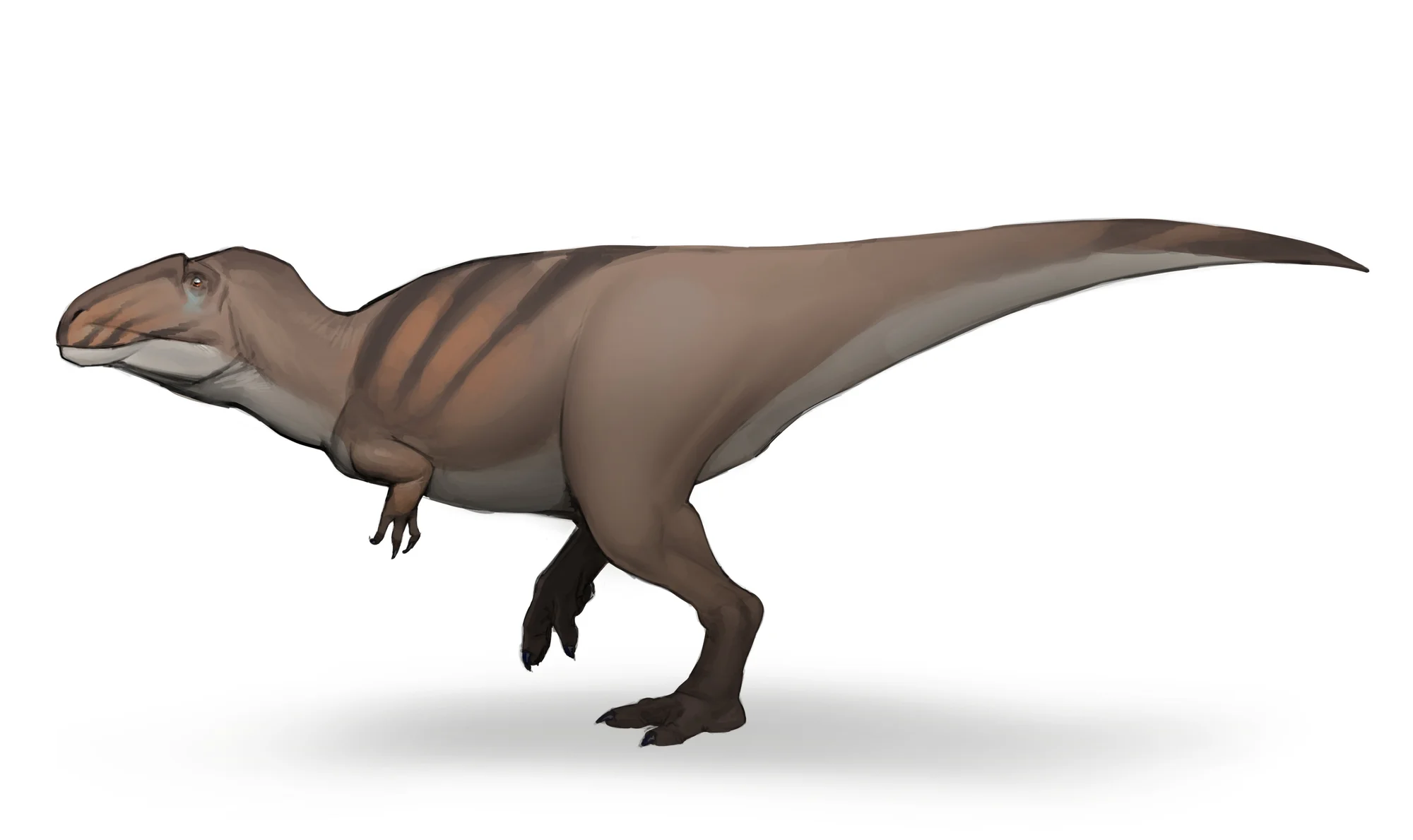
Sauroposeidon proteles

US · 115–108 Ma

Sauroposeidon proteles

Sauroposeidon proteles

"Poseidon lizard, before-complete"

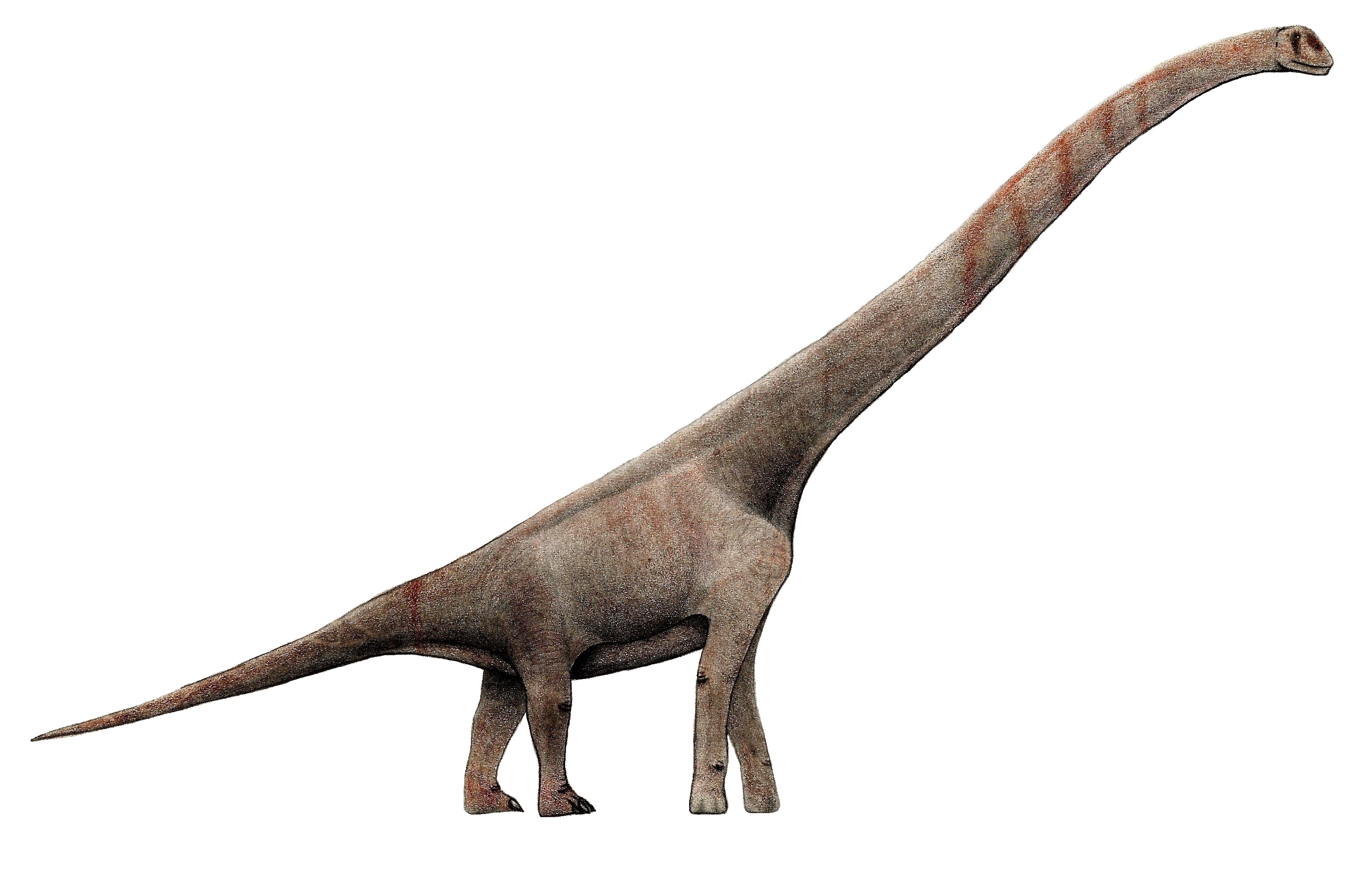
Sauroposeidon proteles was a giant titanosauriform sauropod that lived in the Early Cretaceous of North America, between approximately 115 and 108 million years ago, during the Aptian and Albian stages. The name, chosen by Mathew Wedel in 2000, combines the Greek sauros (lizard) with Poseidon, the Greek god of the seas and also known as the Earth-shaker, in reference to the seismic impact that an animal of this mass would produce while walking. The specific epithet proteles means complete before the end and was chosen because Sauroposeidon is the last large brachiosaur-grade sauropod known from North America before the sauropod hiatus that marks most of the mid-Early Cretaceous on the continent. Length estimates range between 27 and 34 meters, with typical values near 30 meters, while body mass is estimated between 40,000 and 60,000 kg, with 45,000 kg being the most frequently cited figure. All these estimates are extrapolated from a partial cervical series, as no complete skeleton of the taxon exists. The holotype OMNH 53062 consists of four articulated cervical vertebrae (C5 to C8), each approximately 1.25 to 1.4 meters long, the longest sauropod cervical vertebrae ever measured at the time of the original description. The vertebrae show extreme pneumaticity, with more than 89% of internal volume occupied by air chambers, an adaptation that drastically reduced neck mass and made an animal with cervical bones of this dimension biomechanically viable. Matthew Wedel, a graduate student at the University of Oklahoma when he recognized the material in 1999, used Sauroposeidon's pneumaticity as the basis for two decades of research on air sacs and respiratory physiology of sauropods, with implications for understanding the origin of bird airways. The taxon's phylogenetic position has been significantly revised since its original description. Wedel, Cifelli and Sanders initially classified Sauroposeidon as a derived brachiosaurid, the youngest of the group in North America. Later cladistic analyses by D'Emic (2012) and D'Emic and Foreman (2012), confirmed by Mannion et al. (2013), repositioned the genus within basal Somphospondyli, outside Brachiosauridae, as a taxon close to the base of Titanosauria. D'Emic and Foreman (2012) also synonymized Paluxysaurus jonesi Rose (2007), from the Twin Mountains Formation in Texas, with Sauroposeidon, substantially expanding the known material of the taxon. The Fort Worth Museum of Science and History mount, originally displayed as Paluxysaurus, is today the only substantially complete mounted skeleton attributed to Sauroposeidon. Sauroposeidon's paleoecology is associated with the Antlers Formation, in Oklahoma, and contemporary formations such as Twin Mountains (Texas) and Cloverly (Wyoming). The environment was one of humid subtropical coastal plains, with conifer and cycad forests near a shallow epicontinental sea. Contemporaries included the giant theropod Acrocanthosaurus atokensis, the main predator of the ecosystem, the dromaeosaurid Deinonychus antirrhopus and the ornithopod Tenontosaurus tilletti, its preferred prey. Another titanosauriform sauropod, Astrodon, occurred in nearby Early Cretaceous formations. Sauroposeidon's maximum foraging height, estimated at 17 to 18 meters with the neck raised, would position it among the tallest dinosaurs ever documented, possibly the tallest known.

Cretaceous Herbivore 30m
Tenontosaurus tilletti

US · 115–108 Ma

Tenontosaurus

Tenontosaurus tilletti

"Tillett's sinew lizard"

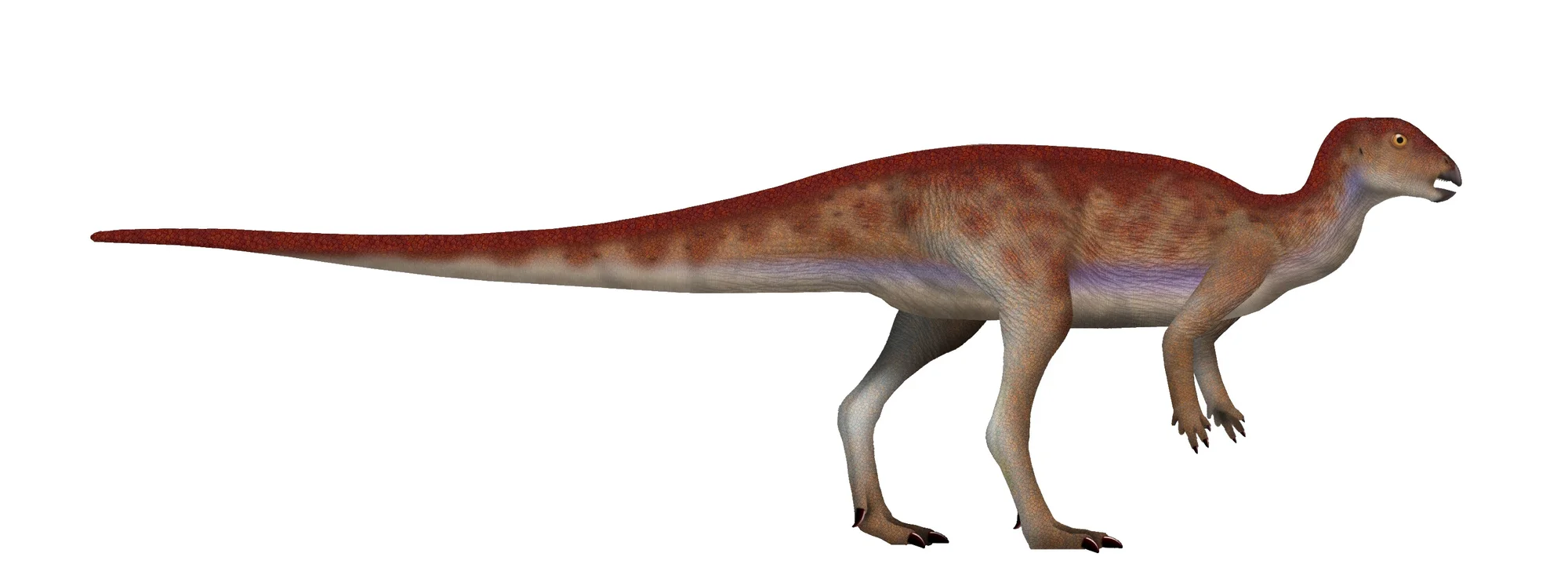
Tenontosaurus tilletti was a medium-sized iguanodontian ornithopod that lived during the Aptian-Albian of the Early Cretaceous, approximately 115 to 108 million years ago, in what is now the western United States. At 6 to 7.5 meters in length and estimated body mass of 700 to 1,000 kg, it was one of the most common and abundant herbivores of its time and region. The genus is morphologically distinct from other ornithopods by its extraordinarily long and robust tail, which in adults could represent more than half the total length of the animal. The caudal vertebrae are reinforced by ossified tendons, hence the name 'sinew lizard', which provided rigidity to the tail and possibly functioned as a counterweight to maintain balance during bipedal or quadrupedal locomotion. Tenontosaurus was capable of moving both on two and four legs depending on speed and terrain. The paleontological importance of Tenontosaurus extends far beyond its intrinsic morphology: the animal is the center of the longest and most influential debate in paleontology about cooperative predatory behavior in dinosaurs. When John Ostrom described Deinonychus antirrhopus in 1969 and 1970, he based much of his argument about pack hunting on the recurring spatial association of multiple Deinonychus teeth with Tenontosaurus carcasses in the Cloverly Formation. Ostrom inferred that groups of Deinonychus cooperatively attacked much larger Tenontosaurus individuals, similarly to the behavior of modern lions. This hypothesis became enormously influential and directly inspired the representation of Velociraptors as cooperative hunters in Jurassic Park (1993). However, subsequent analyses questioned the cooperative hunting interpretation. Roach and Brinkman (2007) argued that the association of Deinonychus with Tenontosaurus carcasses is more consistent with competitive scavenging behavior, like that observed in modern Komodo dragons feeding on the same carcass without true cooperation and frequently attacking each other during the feast. Evidence of multiple dead Deinonychus at the same localities as Tenontosaurus would suggest Tenontosaurus was capable of actively defending itself, killing some of its attackers. This debate about cooperative hunting versus competitive feeding in Deinonychus, centered on Tenontosaurus carcasses, remains without definitive resolution and continues to be one of the most stimulating problems in dinosaur behavior.

Cretaceous Herbivore 6.5m
Wuerhosaurus homheni

CN · 132–125 Ma

Wuerho stegosaur

Wuerhosaurus homheni

"Wuerho lizard"

Wuerhosaurus homheni was a large stegosaurid from the Early Cretaceous of northwestern China, collected in the Wuerho (Urho) region of the Junggar Basin in the Xinjiang Uygur Autonomous Region. Roughly 7 meters long and an estimated 4 tonnes in weight, it occupies an unusual spot in stegosaur history: it lived between about 132 and 125 million years ago, tens of millions of years after the group's Late Jurassic peak. Most well-known stegosaurs, such as Stegosaurus, Kentrosaurus, Dacentrurus, and Miragaia, had vanished before the end of the Jurassic, making Wuerhosaurus one of the last well-documented representatives of the clade. The genus name refers directly to the town of Wuerho in the prefecture of Karamay, where the type material was collected, combined with the Greek suffix sauros, meaning lizard. The specific epithet homheni was coined by Dong Zhiming in the original publication. The holotype, catalogued as IVPP V4006, was collected in 1964 by a team from the Institute of Vertebrate Paleontology and Paleoanthropology (IVPP) led by Dong Zhiming and described in 1973 in the volume Dinosaurs from Wuerho, published in the Memoirs of the IVPP. The material includes dorsal vertebrae, pelvic girdle, and fragments of dorsal plates; the skull was not preserved, which limits some fine anatomical comparisons. The specimen comes from the Tugulu Group, probably from the Lianmuqin Formation, a unit whose precise age is still debated but generally placed in the Early Cretaceous, somewhere between the Valanginian and Albian depending on the study. Wikipedia and regional surveys favor a Hauterivian to Barremian position, which we adopt here. The anatomy of Wuerhosaurus is marked by low, broad, rectangular dorsal plates, distinct from the famous tall triangular plates of Stegosaurus. This geometry changed the way paleontologists imagined the diversity of stegosaur armor and was one of the main reasons Dong erected a new genus. Robust femora, a wide pelvis, and vertebrae with low neural spines complete the profile of a heavy stegosaurid, adapted to slow quadrupedal locomotion. Like other stegosaurs, the animal likely carried a thagomizer, the set of terminal caudal spikes used in defense, though those elements were not recovered in the holotype. The systematic status of Wuerhosaurus has been debated. Maidment et al. (2008), in a broad cladistic review of Stegosauria, proposed that W. homheni was a junior synonym of Stegosaurus and should be renamed Stegosaurus homheni. The proposal was not universally accepted: most subsequent reviews, including Raven and Maidment (2017) and regional Chinese syntheses, continue to recognize Wuerhosaurus as a valid genus, given the distinctive combination of low rectangular plates and the survival of the clade into the Early Cretaceous. Dong also described, in 1993, a second species, Wuerhosaurus ordosensis, from the Ordos Basin in Inner Mongolia, which expanded the geographic range of the genus across Asia. Wuerhosaurus therefore remains a key piece for understanding how the stegosaur lineage survived beyond the Jurassic, before the clade's final extinction in the mid-Cretaceous.

Cretaceous Herbivore 7m
Yi qi

CN · 163–159 Ma

Yi qi

Yi qi

"Strange wings"

Yi qi (pronounced approximately 'ee chee') was a diminutive scansoriopterygid dinosaur that lived during the Middle to Late Jurassic, Oxfordian stage, approximately 163 to 159 million years ago, in the region of present-day Hebei, northern China. At only 0.6 meters in length with an estimated body mass of 380 grams, it was smaller than most modern pigeons. The most extraordinary feature of Yi qi is the styliform elongate bony rod projecting from the wrist: a long, pointed skeletal element that, together with a skin membrane (patagium), formed a wing of morphology entirely unlike any other known flying bird or dinosaur. This combination of a membrane wing supported by an accessory bony rod is unique among Dinosauria and finds functional parallels only in bats and flying squirrels among modern vertebrates. The holotype specimen (STM 31-2) was preserved with impressions of contour feathers on the body and filamentous plumage, plus portions of carbonized wing membrane visible around the forelimbs. Histological analysis of the feathers and bones indicates the animal had not reached full skeletal maturity at death, making adult size estimates slightly uncertain. Yi qi had long recurved foot claws consistent with arboreal habits, and simple conical teeth suggesting insectivorous or generalist carnivorous diet. The skull is relatively large in proportion to the body, with broad orbital openings, suggesting acute vision in a forest canopy environment. The phylogeny of Yi qi within Scansoriopterygidae is well-supported, but the placement of that clade within Coelurosauria remains debated: recent analyses alternate between positioning them as basal members of Pennaraptora or as an independent branch of theropods that developed gliding flight convergently and independently from modern birds. If Yi qi's patagium permitted active flight, it would represent a third independent origin of flight among feathered Jurassic dinosaurs, alongside the lineages leading to modern birds (Avialae) and possibly the gliding of Microraptor. Alternatively, aerodynamic analyses suggest the wing morphology was better suited to descending gliding from elevated perches than to sustained flapping. The discovery was announced in April 2015 in Nature by Xu Xing and collaborators, immediately becoming one of the most impactful paleontological finds of the decade.

Jurassic Carnivore 0.6m
Zuul crurivastator

US · 76–75 Ma

Zuul, 'destroyer of shins'

Zuul crurivastator

"Zuul, destroyer of shins"

Zuul crurivastator is a large ankylosaurid from the Late Cretaceous (Campanian, about 76 million years ago) of the Coal Ridge Member of the Judith River Formation in Montana, United States. It was described in 2017 by Victoria M. Arbour and David C. Evans in Royal Society Open Science, based on holotype ROM 75860, housed at the Royal Ontario Museum in Toronto. The skeleton, initially exposed by chance in 2014 by a commercial team from Theropoda Expeditions LLC that was excavating a nearby tyrannosaur, turned out to be the most complete ankylosaurid ever found in North America: a whole skull, a complete tail with its terminal club, much of the postcranium, osteoderms preserved in situ, skin impressions, and even dark films interpreted as fossilised keratin sheaths of the spikes. The animal reached about six metres in length and weighed around 2.5 tonnes, with the typical low, broad ankylosaurid body, robust limbs, a neck guarded by cervical half rings of fused osteoderms, and a back covered by a complex carapace of polygonal plates, some forming pronounced lateral spikes over the flanks. The genus name Zuul, a nod to the Gatekeeper of Gozer in Ghostbusters (1984), was chosen because the short, rounded snout and two large backward-projecting squamosal horns immediately recall the film's demonic hound. The species epithet crurivastator, Latin for 'destroyer of shins', is a direct reference to the tail: the last seven caudal vertebrae are co-ossified into a rigid 'handle', and the tip ends in a huge bony club of fused osteoderms, heavy enough in theory to shatter the lower limbs of a large attacking theropod such as Daspletosaurus. Zuul also became a worldwide reference in a long-running debate in ankylosaur palaeontology: what was the tail club actually for? The holotype preserves, along its flanks near the pelvic girdle, osteoderms with pathologies (healed fractures, bone resorption) whose distribution is incompatible with predator bites but is consistent with lateral strikes delivered by another individual of the same species. In 2022, Arbour, Zanno and Evans presented this evidence in Biology Letters and concluded that the ankylosaurid tail club evolved largely as a weapon for intraspecific combat, probably tied to mate competition and sexual selection. Another extraordinary dimension of the holotype is the preservation of soft tissue: dark films over the osteoderms indicate keratin sheaths on the spikes, and there are scale impressions on the neck and tail. Together with Borealopelta markmitchelli (a nodosaurid preserved in three dimensions), Zuul is today the best material available to study what an ankylosaur's skin, armour and, in some cases, colouration may have looked like in life. It was also the first ankylosaurid described from the Judith River Formation, enriching the already famous portrait of Campanian Laramidia, which it shared with tyrannosaurids, ceratopsids and hadrosaurids on a warm, humid coastal plain on the western margin of the Western Interior Seaway.

Cretaceous Herbivore 6m

Other Animals of the Mesozoic

Not dinosaurs, but they dominated the oceans, the skies, and parts of the continents during the same period.
Anhanguera blittersdorffi

BR · 112–108 Ma

Anhanguera blittersdorffi

Anhanguera blittersdorffi

"Blittersdorff's evil spirit"

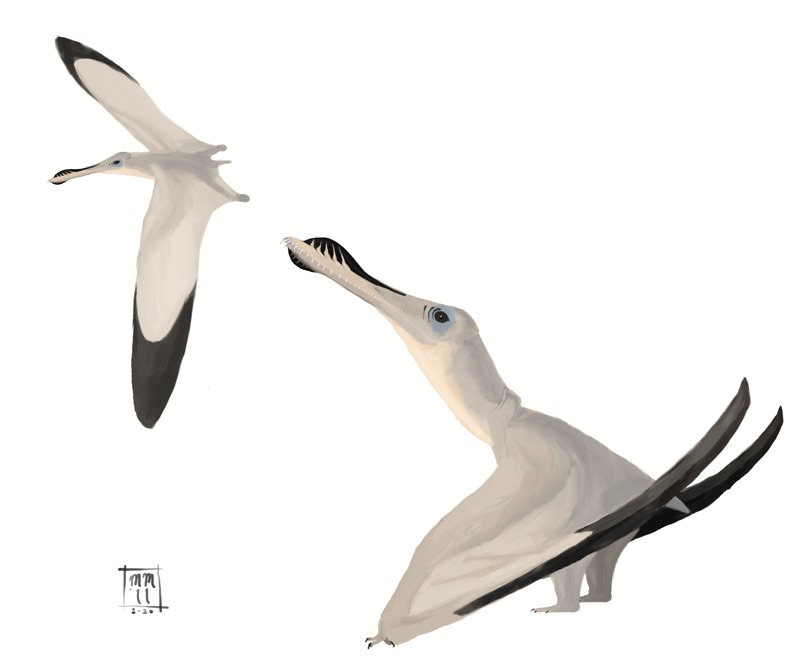
Anhanguera blittersdorffi is an anhanguerid pterosaur from the Lower Cretaceous of Brazil, described by Campos and Kellner in 1985 from an extraordinarily preserved three-dimensional skull. With an estimated wingspan of 4 to 4.5 meters, it was an aerial predator specialized in fish capture, bearing characteristic premaxillary crests, curved coniform teeth, and a rosette-shaped mandible. Originating from the calcareous nodules of the Romualdo Formation, Araripe Basin, in Ceará, it is one of the most studied Brazilian pterosaurs and an emblem of the Cretaceous fauna of northeastern Brazil.

Cretaceous Piscivore 4.5m
Cretoxyrhina mantelli

US · 100–72 Ma

Ginsu Shark

Cretoxyrhina mantelli

"Mantell's sharp tooth from the Cretaceous"

Cretoxyrhina mantelli, popularly known as the Ginsu shark, was one of the largest and most feared marine predators of the Late Cretaceous. It lived approximately 100 to 72 million years ago in the Western Interior Seaway, a vast body of water that divided North America. Up to 6.5 meters long with anatomy similar to modern mako sharks, it preyed on mosasaurs, plesiosaurs, sea turtles, and pterosaurs. Several near-complete skeletons have been found in the Cretaceous of Kansas, making it one of the best-documented extinct sharks in science.
Cretaceous Carnivore 6.5m
Dakosaurus maximus

DE · 157–137 Ma

Dakosaurus

Dakosaurus maximus

"Maximum biter lizard"

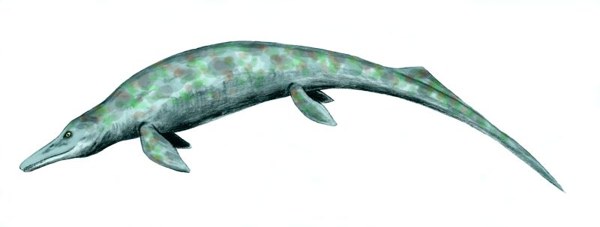
Dakosaurus maximus was the most fearsome marine crocodyliform of the Late Jurassic. Belonging to the family Metriorhynchidae, it stood apart from all other members of the group by possessing laterally compressed, serrated teeth convergent with those of terrestrial theropods, indicating specialization in large prey. Without osteoderm armor and with limbs transformed into flippers and a lunate bifurcated tail, it was fully adapted to pelagic life. Its fossils were found in Europe (France, Germany, Switzerland, Poland, England) and Argentina, where the D. andiniensis specimen was nicknamed 'Godzilla' by Argentine paleontologists. It was the apex predator of the European Jurassic seas.

Jurassic Carnivore 4.5m
Elasmosaurus platyurus

US · 80.5–77 Ma

Elasmosaurus

Elasmosaurus platyurus

"Thin-plate flat-tailed reptile"

Elasmosaurus platyurus was one of the largest and most distinctive plesiosaurs of the Late Cretaceous, famous for its extraordinarily long neck that accounted for more than half of its total length of approximately 14 meters. With 71 cervical vertebrae, it holds the record for the greatest number of neck vertebrae of any known vertebrate. It was not a dinosaur but a marine reptile of the group Sauropterygia. It lived in the Western Interior Seaway that covered central North America, feeding on fish and cephalopods with sharp teeth. It became famous for a historic error: when Edward Drinker Cope described it in 1868, he assembled the skeleton with the skull at the wrong end, placing it at the tip of the tail. The mistake was corrected in 1870 following the intervention of Joseph Leidy.

Cretaceous Piscivore 14m
Hybodus hauffianus

DE · 183–174 Ma

Hybodus Shark

Hybodus hauffianus

"Hauff's humped shark"

Hybodus hauffianus is one of the best-documented extinct sharks of the Mesozoic. It lived in the Early Jurassic, approximately 183 to 174 million years ago, in the shallow warm seas that covered central Europe. Up to 2 meters long, it had two types of teeth: pointed at the front for catching slippery prey and flattened toward the back for crushing hard-shelled prey. Exceptional specimens preserved in the Posidonia Shale of Germany reveal rare anatomical details, including stomach contents with belemnite rostra, confirming its diet of cephalopods.

Jurassic Carnivore 2m
Kronosaurus queenslandicus

AU · 115–100 Ma

Kronosaurus

Kronosaurus queenslandicus

"Kronos lizard from Queensland"

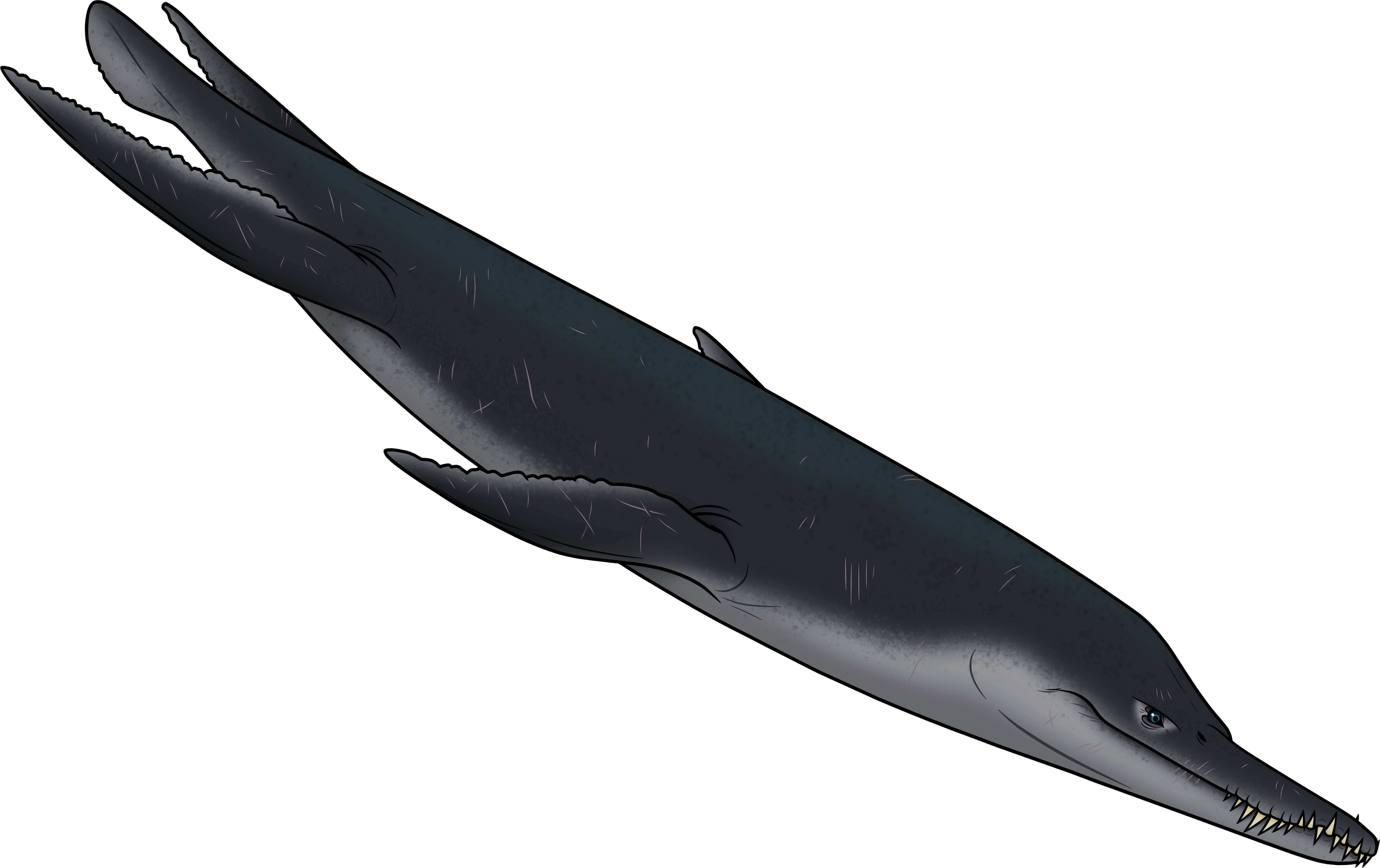
Kronosaurus queenslandicus was one of the largest pliosaurids of the Early Cretaceous, with an estimated length of 9 to 11 meters and a skull 2.2 meters long, one of the largest of any prehistoric reptile. It was not a dinosaur but a marine reptile of the clade Pliosauridae. It lived in the Eromanga Sea that covered inland Australia during the Aptian-Albian (~115-100 Ma). The nickname 'Plasterosaurus' reflects the controversial Harvard reconstruction (MCZ 1285), where eight extra plaster vertebrae were added to the specimen, inflating the length from 10.5 to 12.8 meters. With conical teeth up to 7 centimeters, it was the dominant apex predator of its environment, capable of attacking plesiosaurs, sea turtles, and large fish.
Cretaceous Carnivore 10.5m
Lystrosaurus murrayi

ZA · 252–249 Ma

Lystrosaurus

Lystrosaurus murrayi

"Murray's shovel lizard"

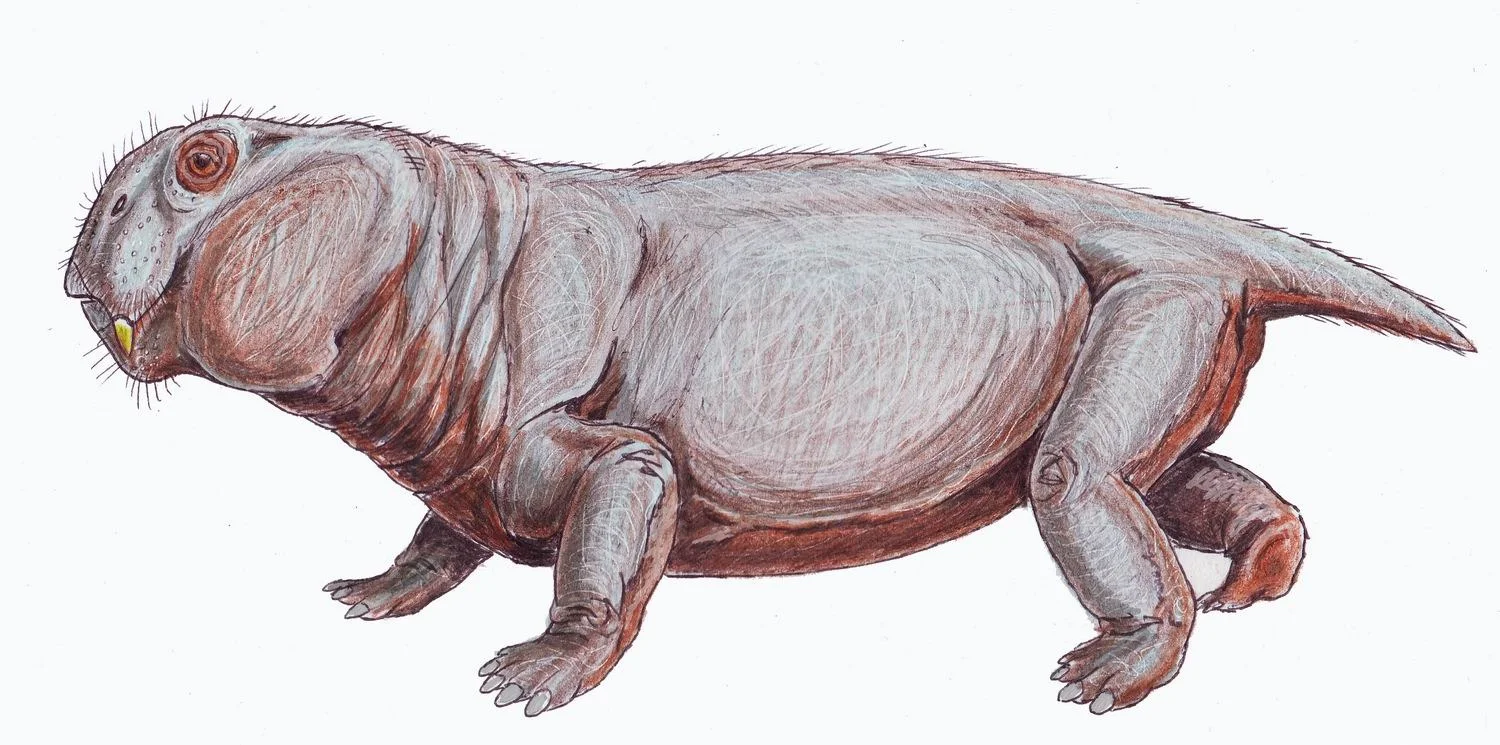
Lystrosaurus murrayi is a dicynodont (non-mammalian synapsid) that survived the greatest mass extinction in the history of life, the end-Permian catastrophe approximately 252 million years ago. In the Early Triassic it constituted more than 90% of terrestrial vertebrates, a dominance unparalleled in tetrapod history. Its massive skull bore a horny beak for cutting vegetation and two small upper tusks. Roughly the size of a medium pig, Lystrosaurus murrayi has become a symbol of post-extinction resilience and continental drift, with fossils found in South Africa, Antarctica, India, China, and Russia.
Triassic Herbivore 0.9m
Mosasaurus hoffmannii

NL · 82–66 Ma

Mosasaurus

Mosasaurus hoffmannii

"Hoffmann's Meuse River lizard"

Mosasaurus hoffmannii was the largest known mosasaur and one of the greatest marine predators of all time. At up to 13 meters long (recent estimates revised from earlier 17-meter values) and an estimated weight of 10 tonnes, it dominated the oceans of the Late Cretaceous. It was not a dinosaur but a squamate reptile (Squamata), closely related to monitor lizards and snakes. It possessed a double-hinged jaw similar to snakes, allowing it to swallow large prey. Its robust, conical teeth were adapted for a generalist diet: fish, sharks, cephalopods, sea turtles, seabirds, and other mosasaurs. The first Mosasaurus fossil, found in Maastricht (Netherlands) in 1764, was one of the first giant marine reptiles described by science, even before Darwin. The holotype skull was confiscated by French soldiers during the Siege of Maastricht in 1794 and taken to Paris, where Georges Cuvier used it as evidence that species could go extinct, a revolutionary concept at the time.
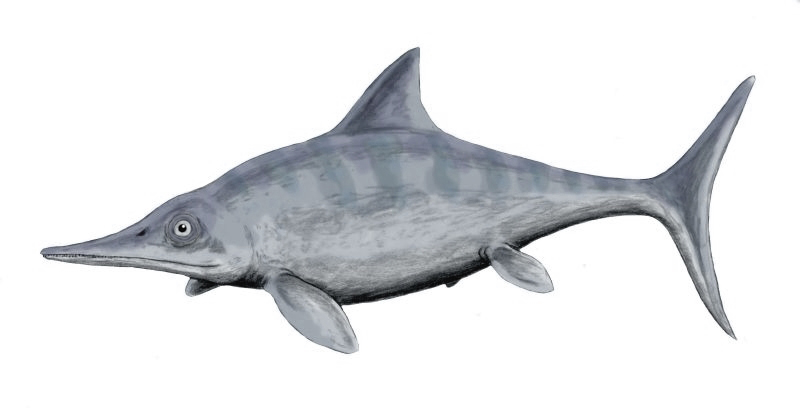
Cretaceous Carnivore 13m
Ophthalmosaurus icenicus

GB · 165–150 Ma

Giant-Eyed Ichthyosaur

Ophthalmosaurus icenicus

"Eye lizard (from Greek: ophthalmos = eye, sauros = lizard)"

Ophthalmosaurus icenicus was a Middle-Late Jurassic ichthyosaur, famous for having the largest eyes relative to body size of any known vertebrate: the sclerotic ring measured up to 23 centimeters in outer diameter. Found primarily in the Oxford Clay Formation of Peterborough, England, it was an agile oceanic swimmer with a hydrodynamic body of about 6 meters and paddle-shaped fins. Although not a dinosaur, it was strictly contemporary with many of them. Its enormous eyes were adapted for deep dives in dark mesopelagic zones, likely in pursuit of squid and cephalopods. Harry Govier Seeley described the species in 1874, and since then it has become one of the best-documented ichthyosaurs of the Jurassic, with dozens of excellent preserved specimens.
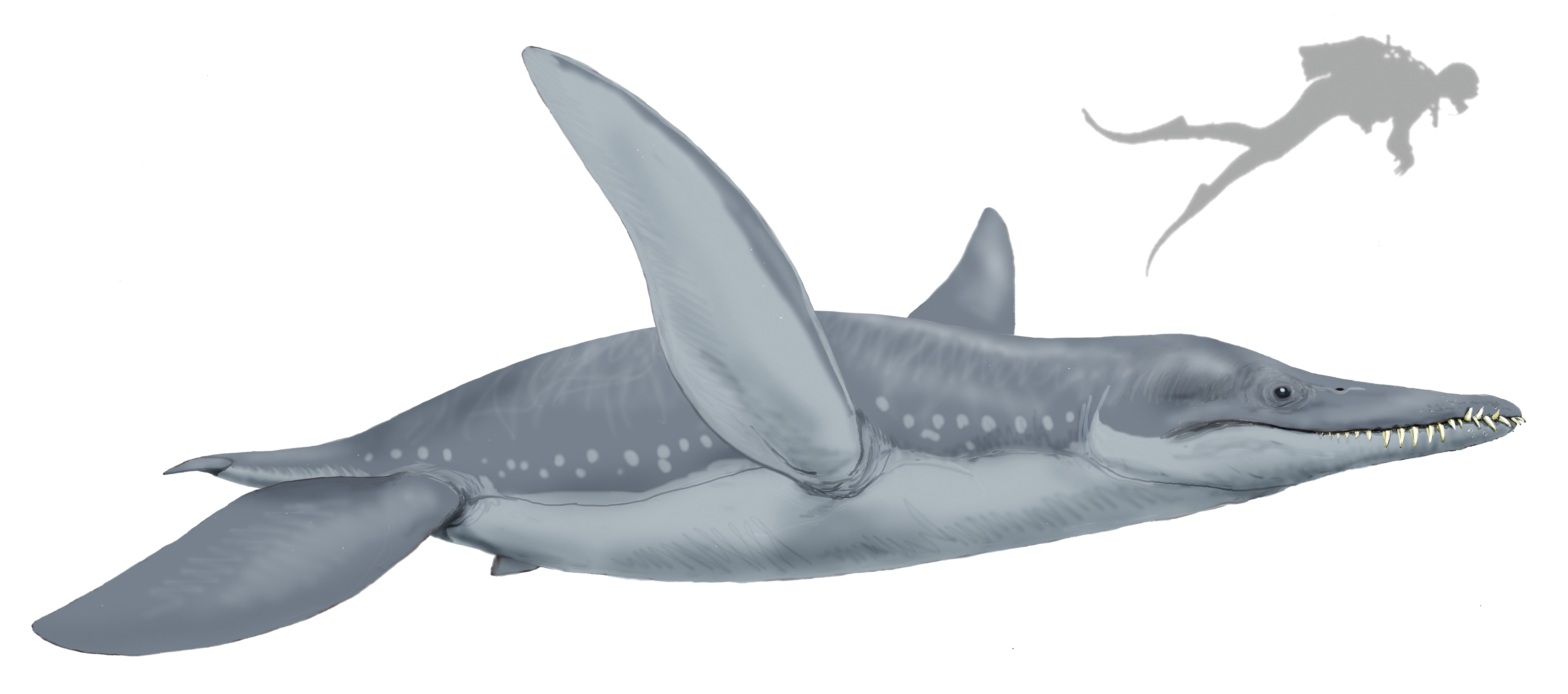
Jurassic Piscivore 6m
Postosuchus kirkpatricki

US · 228–201 Ma

Postosuchus

Postosuchus kirkpatricki

"Crocodile from Post (Post, Texas)"

Postosuchus kirkpatricki was one of the largest terrestrial predators of the Late Triassic in North America. A crurotarsal archosaur belonging to the family Rauisuchidae, it was not a dinosaur but rather a distant relative of modern crocodilians. Estimated at 4 to 6 meters in length, it had an erect posture, laterally compressed serrated teeth, and a robust skull. Locomotion was predominantly bipedal in adults, with the forelimbs progressively reduced with growth. It lived in the tropical humid and semiarid environments of the Late Triassic, coexisting with the first dinosaurs and the rhynchosaurs it would eventually replace.
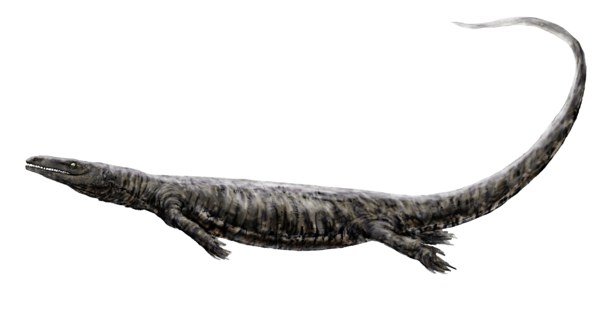
Triassic Carnivore 5m
Pteranodon longiceps

US · 88–80 Ma

Pteranodon

Pteranodon longiceps

"Toothless wing with long head"

Pteranodon longiceps is the most studied pterosaur in the history of paleontology, with over 1,200 known specimens. It flew over the Western Interior Seaway, a shallow waterway that covered the center of North America in the Cretaceous. Adult males reached wingspans of 5.6 to 7.6 meters, while females were smaller, at approximately 3.8 meters. The long backward-pointing head crest was more prominent in males. Despite its imposing appearance, it was a specialized piscivore, capturing fish at the sea surface with its long, toothless beak.

Cretaceous Piscivore 1.8m
Quetzalcoatlus northropi

US · 68–66 Ma

Quetzalcoatlus northropi

Quetzalcoatlus northropi

"Feathered serpent of Northrop"

Quetzalcoatlus northropi is the largest known pterosaur and one of the largest flying animals in Earth's history. With a wingspan estimated at 10 to 11 meters, it was as wide as a single-engine aircraft. It lived during the late Maastrichtian, 68 to 66 million years ago, in the Javelina Formation of Texas, in the basin of what is now Big Bend National Park. Despite its colossal size, it weighed only 150 to 250 kg thanks to hollow bones reinforced with internal struts. Biomechanical studies show it was capable of active flight, taking off with a quadrupedal vault using its forelimbs. On land, it walked quadrupedally and hunted small vertebrates in the manner of a giant stork.

Cretaceous Carnivore 5m
Repenomamus robustus

CN · 125–123 Ma

Repenomamus

Repenomamus robustus

"Robust reptile mammal"

Repenomamus robustus was one of the largest Mesozoic mammals and living proof that mammals of the Age of Dinosaurs were not all small and harmless. Belonging to the order Eutriconodonta and family Gobiconodontidae, it lived during the Aptian of the Early Cretaceous in Liaoning, China, in the same fauna as Microraptor gui. At approximately 50 cm in body length and an estimated weight of 4.5 kg, it was as large as a modern Virginia opossum. The most notable find is a specimen with bones of a juvenile Psittacosaurus fossilized in the stomach, the only direct evidence of a Mesozoic mammal preying on dinosaurs. The robust mandible and heterodont teeth confirm frankly carnivorous habits.
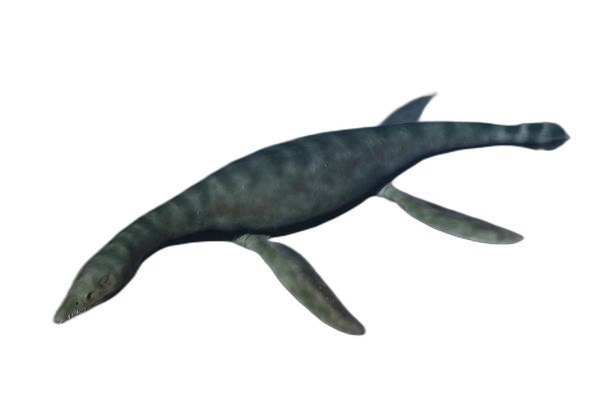
Cretaceous Carnivore 0.5m
Smilosuchus gregorii

US · 221–205 Ma

Sabre-tooth phytosaur

Smilosuchus gregorii

"Gregory's knife-crocodile (honoring geologist Herbert E. Gregory)"

Smilosuchus gregorii was one of the largest semiaquatic predators of the Late Triassic of North America. Up to 6 meters long, it occupied the same ecological niche as modern crocodiles: ambush predation along the margins of rivers and lakes in the Chinle Formation of what is now Arizona. Its key distinction from true crocodilians lies in nostril position: instead of opening at the tip of the snout, phytosaur nostrils open in a bony mound between the eyes. The skull of S. gregorii can exceed 1.5 meters in length, with heterodontic dentition, large anterior tusks for impaling prey and more blade-like posterior teeth for slicing flesh. The species was originally described by Camp (1930) and transferred to the genus Smilosuchus by Long and Murry (1995).

Triassic Carnivore 6m
Squalicorax falcatus

US · 100–72 Ma

Crow Shark

Squalicorax falcatus

"Falcate crow shark (from the curved, sickle-like teeth)"

Squalicorax falcatus was a medium-sized lamniform shark that inhabited the shallow seas of the Late Cretaceous, including the extensive Western Interior Seaway of North America. About 2.5 meters in length, it had a fusiform body similar to the modern reef shark, but its strongly serrated teeth resembled those of today's tiger shark. The genus Squalicorax, commonly called the crow shark, was a generalist predator and opportunistic scavenger. Fossil evidence includes teeth embedded in bones of terrestrial hadrosaurs, mosasaurs, and sea turtles, revealing that it fed on carcasses washed into the sea. The species S. falcatus is known from nearly complete skeletons found in Kansas, making it one of the best-documented Mesozoic sharks.
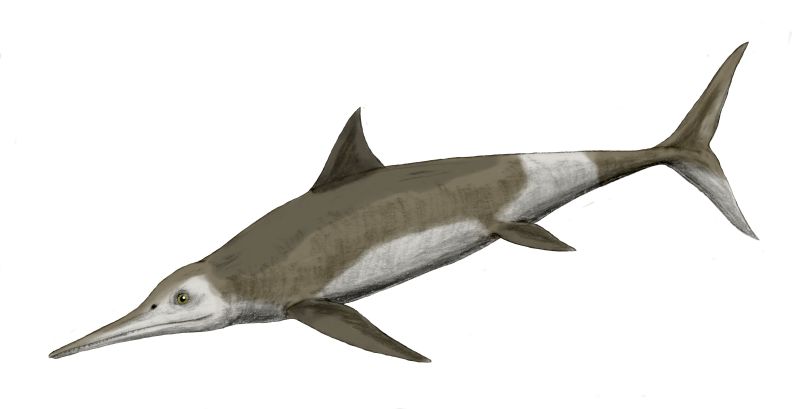
Cretaceous Carnivore 2.5m