
Carnotaurus
Carnotaurus sastrei
"Meat-eating bull of Sastre"
About this species
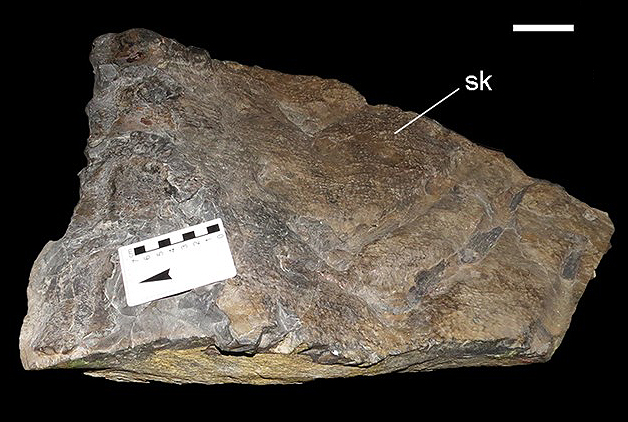
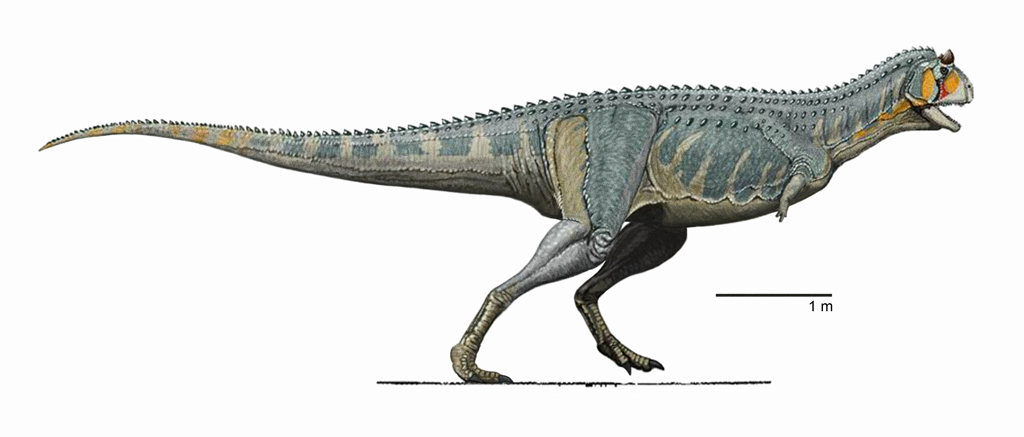
Carnotaurus sastrei is one of the most distinctive predators of the Late Cretaceous of Patagonian Argentina. It stands apart from all other carnivorous dinosaurs by its pair of robust bony horns above the eyes, a feature that gave it the name 'meat-eating bull'. At approximately 8 meters long and 1.5 metric tons, it had a deep, compressed skull, extremely reduced vestigial forelimbs, and long muscular hind legs adapted for speed. It is the only theropod with extensive preserved skin impressions, revealing a mosaic of ~5 mm scales with no evidence of feathers.
Geological formation & environment
The La Colonia Formation, in Chubut, Patagonian Argentina, dates to the latest Maastrichtian to earliest Danian (~69–64 Ma), spanning the Cretaceous-Paleogene boundary. During the Maastrichtian, the region was dominated by coastal and tidal facies with episodic flooding by the Kawas Sea. The environment was a mosaic of coastal zones, alluvial plains with rivers and ponds, and elevated areas with pteridophyte, gymnosperm, and early angiosperm vegetation. Associated fauna included titanosaurs, turtles, plesiosaurs, lungfish, birds, and mammals, making the La Colonia one of the most diverse formations of the South American Cretaceous.
Image gallery







Current scientific reconstruction of Carnotaurus sastrei by Fred Wierum (2022), based on skin impressions documented by Delcourt (2018).
Fred Wierum — CC BY-SA 4.0
Ecology and behavior
Habitat
Carnotaurus inhabited the coastal and semi-arid environment of Patagonian Argentina during the Maastrichtian, approximately 72–69 million years ago. The La Colonia Formation records a mosaic of habitats: coastal zones with episodic marine influence from the Kawas Sea, alluvial plains with rivers and ponds, and higher areas covered by pteridophyte, gymnosperm, and early angiosperm vegetation. The climate was warm and seasonal. Carnotaurus coexisted with titanosaurian sauropods, turtles, plesiosaurs, lungfish, birds, and a rich mammal fauna.
Feeding
Carnotaurus skull biomechanics reveal an unusual feeding strategy for a large theropod. The deep, shortened skull with relatively weak but extremely fast-closing jaws suggests specialization in rapid bites on small to medium prey, rather than subduing large herbivores by force. Studies estimate maximum speed of 48–56 km/h, suggesting active pursuit hunting. Likely prey included small ornithopods, young titanosaurs, and other medium-sized vertebrates from the La Colonia Formation ecosystem.
Behavior and senses
Carnotaurus may have exhibited intraspecific combat behavior using its supraorbital horns. Finite element analysis of the skull shows superior resistance to lateral forces than dorsoventral forces, consistent with lateral head blows or slow pushes between rivals — analogous to combat among modern bovids. The horns were solid bony structures with no equivalent in other theropods. Skin impressions across the body suggest the larger feature scales on the flanks may have served a visual signaling function. There is no evidence of social behavior or group living.
Physiology and growth
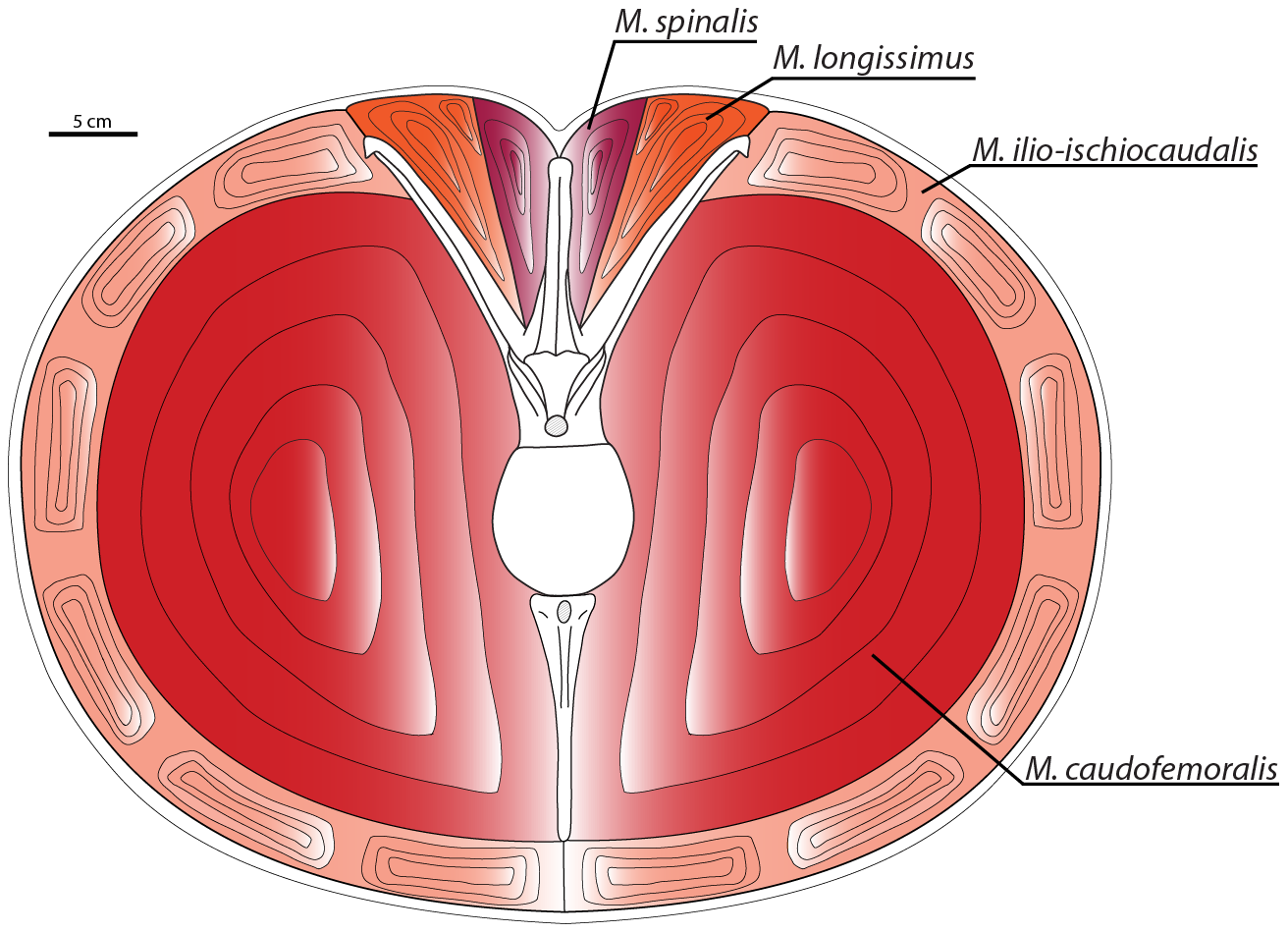
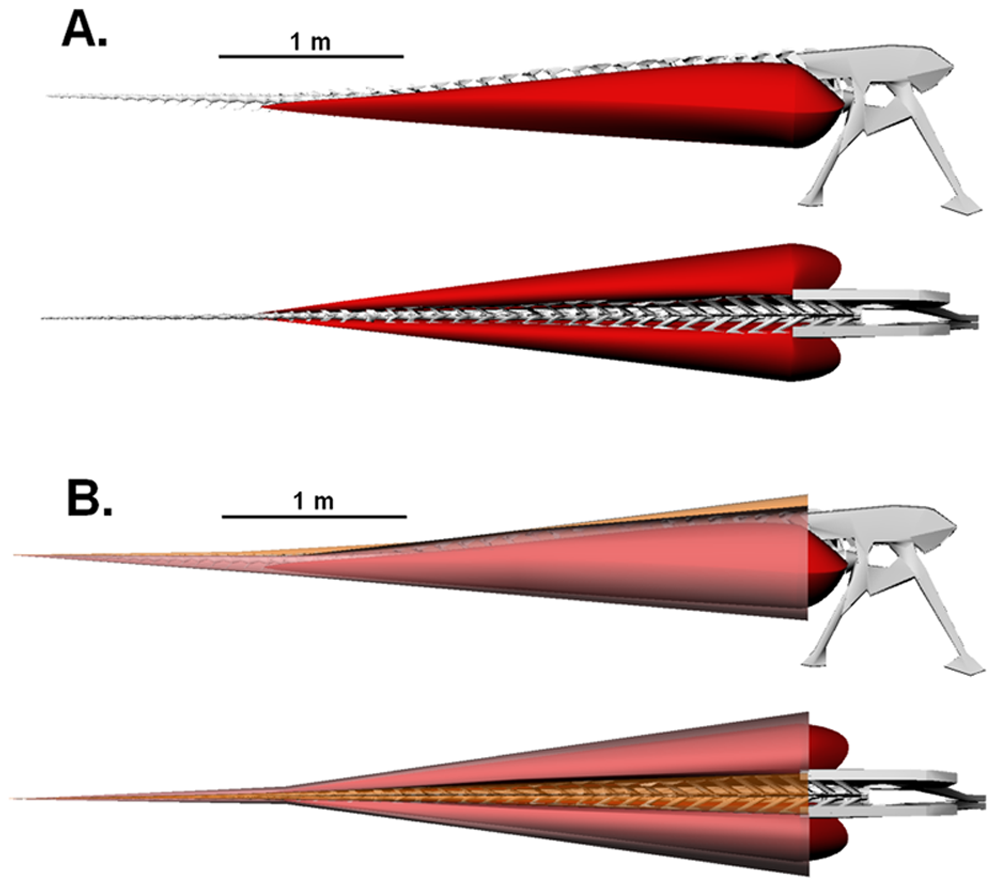
As an abelisaurid, Carnotaurus was almost certainly endothermic, with the elevated metabolism typical of non-avian theropods. The long, slender hind limbs, the exceptionally developed caudofemoralis (estimated at 111–137 kg per leg), and skeletal architecture indicate a physiologically active and fast animal. Without feather evidence, thermoregulation likely relied on skin coloration and behavior. Bone histological studies of closely related abelisaurids suggest rapid growth during the juvenile phase, reaching adult size relatively early.
Paleogeography
Continental configuration

Scotese & Vérard · CC BY 4.0 · Cretaceous, ~105 Ma
Fossil sites
IJReid · CC BY 4.0
During the Maastrichtiano (~72–69 Ma), Carnotaurus sastrei inhabited Laramidia, the western half of present-day North America, separated from the east by the Western Interior Seaway, a shallow sea dividing the continent. The continents were in very different positions: India was drifting toward Asia, Antarctica was still connected to Australia, and South America was an isolated island.
Bone Inventory
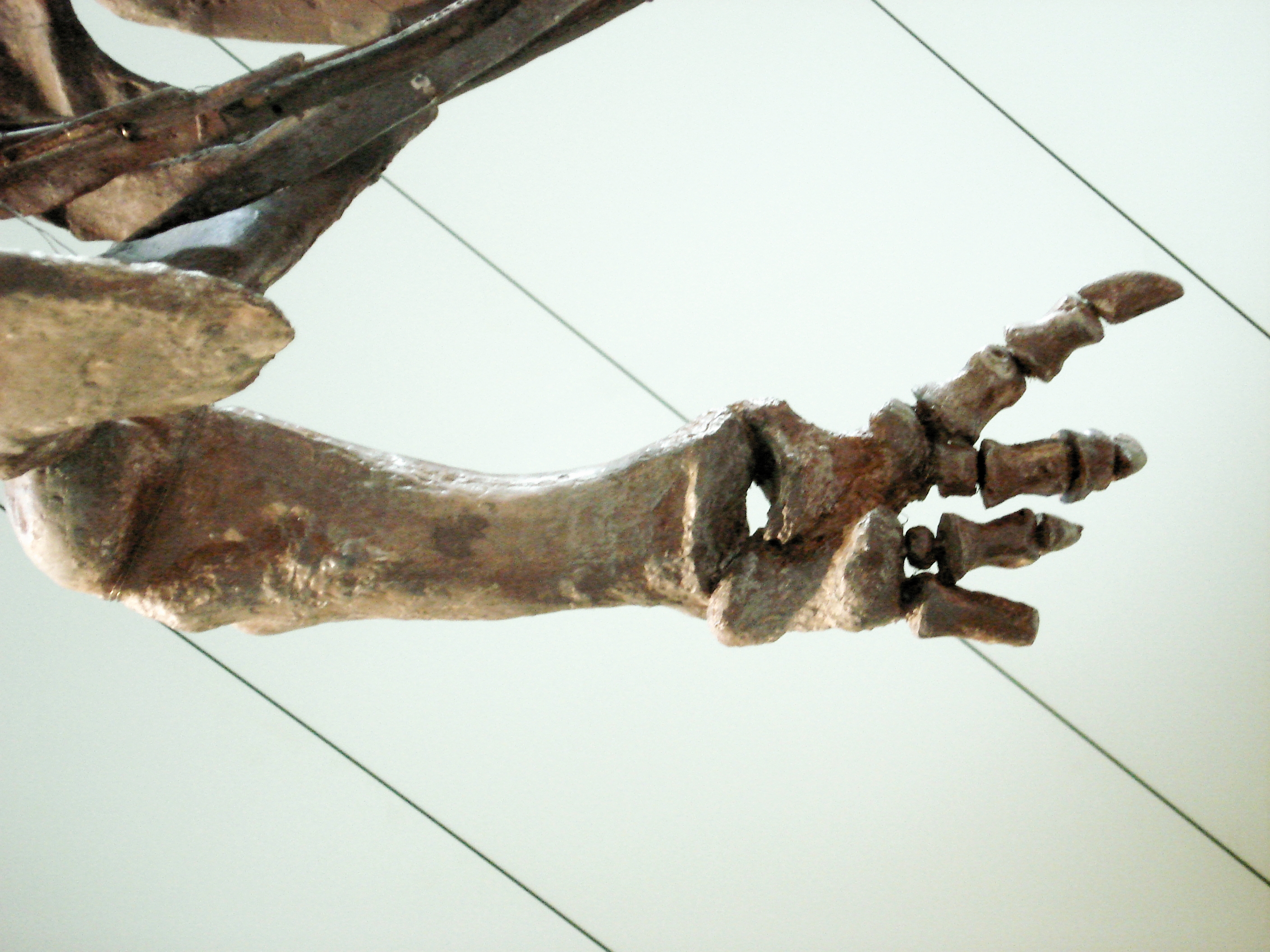
The holotype MACN-CH 894, collected by Bonaparte in 1984, is a well-preserved and articulated specimen. The posterior tail and hind feet were damaged prior to excavation. The specimen includes exceptional skin impressions across much of the body, making Carnotaurus the theropod with the most complete tegument record ever discovered.
Found elements
Inferred elements
Scientific Literature
15 papers in chronological order — from the original description to recent research.
A horned Cretaceous carnosaur from Patagonia
Bonaparte, J.F. · National Geographic Research
Bonaparte's preliminary note announcing the discovery of Carnotaurus sastrei based on holotype MACN-CH 894, collected from the La Colonia Formation, Chubut, Argentina. Bonaparte briefly describes the main diagnostic characters: the pair of robust bony horns above the eye orbits — unique among carnivorous theropods — the extremely reduced forelimbs, and the preserved skin impressions. The species is named in honor of rancher Angel Sastre, owner of the land where the fossil was found. This paper introduces an animal with no morphological equivalent among known theropods, initiating decades of research into South American abelisaurid paleobiology.
Carnotaurus sastrei Bonaparte, the horned, lightly built carnosaur from the Middle Cretaceous of Patagonia
Bonaparte, J.F., Novas, F.E. & Coria, R.A. · Contributions in Science
Foundational osteological monograph on Carnotaurus sastrei, systematically describing every skeletal element of holotype MACN-CH 894. Bonaparte, Novas and Coria document the extremely deep and shortened skull, the two robust supraorbital horns with no parallel in theropods, the forelimbs reduced to four fused and immobile digits, and the slender hind limbs. The work includes detailed analysis of skin impressions: non-overlapping ~5 mm scales in a mosaic pattern across much of the body, interrupted by larger 'feature scales' along the neck, back and tail flanks. Published as a 41-page monograph in the Los Angeles County Museum Contributions in Science, it became the primary anatomical reference for the species for three decades.
The Gondwanian theropod families Abelisauridae and Noasauridae
Bonaparte, J.F. · Historical Biology
Bonaparte formally revises the gondwanan theropod families Abelisauridae and Noasauridae, establishing Carnotaurus as an abelisaurid based on shared derived characters: reduced forelimbs, distinctive cranial morphology with deep skull, and thickened nasal and parietal bones. The work discusses the gondwanan distribution of these families — India, Madagascar, South America and possibly Africa — as a result of Gondwana supercontinent fragmentation in the Cretaceous. This pioneering biogeographic analysis established the framework for understanding how abelisaurids dispersed across southern hemisphere continents, making Carnotaurus part of an evolutionary radiation that spanned multiple isolated continents.
On the palaeobiology of the South American horned theropod Carnotaurus sastrei Bonaparte
Mazzetta, G.V., Fariña, R.A. & Vizcaíno, S.F. · Gaia
First quantitative biomechanical analysis of Carnotaurus jaws. Mazzetta, Fariña and Vizcaíno reconstruct the jaw musculature and demonstrate that the extremely deep and shortened skull of Carnotaurus was not adapted for strong biting, but rather for rapid biting. The masticatory apparatus was unusual among large theropods: relatively weak jaws but with exceptional closing speed, suggesting a prey capture strategy of smaller animals via rapid movements. The authors also analyze locomotor biomechanics based on hind limb morphology, concluding Carnotaurus was likely one of the fastest large theropods of the South American Cretaceous, with estimated maximum speed of 48–56 km/h.

The phylogeny of Ceratosauria (Dinosauria: Theropoda)
Carrano, M.T. & Sampson, S.D. · Journal of Systematic Palaeontology
Comprehensive phylogenetic analysis of Ceratosauria with 103 characters and 26 taxa, becoming the standard cladistic reference for abelisaurids for a decade. Carrano and Sampson recover Abelisauridae as a monophyletic group within Neoceratosauria, placing Carnotaurus sastrei within a derived clade alongside Aucasaurus and Abelisaurus — the future Carnotaurini. Synapomorphies uniting Carnotaurus with its close relatives include: supraorbital cornual processes, extreme forelimb reduction, thickened nasal bone, and distinctive pelvic morphology. The work resolves previous controversies about South American abelisaurid relationships and establishes the phylogenetic context for interpreting the evolution of Carnotaurus's extreme cranial morphology.

Tail musculature in Carnotaurus sastrei (Dinosauria: Abelisauridae): functional implications for speed and locomotion
Persons, W.S. & Currie, P.J. · The Anatomical Record
Revealing biomechanical study on Carnotaurus caudal musculature. Persons and Currie demonstrate that Carnotaurus's caudal ribs form an unusual V-shape, unlike the horizontal orientation typical of theropods. This architecture created additional space for an extremely developed caudofemoralis muscle, estimated at 111–137 kg per leg. The caudofemoralis was the primary driver of bipedal locomotion in dinosaurs, pulling the femur backward with each stride. With such a robust caudofemoralis, Carnotaurus would have been an exceptionally fast runner among large theropods, with estimated speed of 48–56 km/h. The trade-off was a stiffer tail, reducing maneuverability while turning.
The braincase anatomy of Carnotaurus sastrei (Dinosauria: Abelisauridae) from the Late Cretaceous of Patagonia
Paulina-Carabajal, A. · Journal of Vertebrate Paleontology
Detailed neuroanatomical analysis of Carnotaurus sastrei based on physical examination and CT scanning of holotype MACN-CH 894. Paulina-Carabajal describes the complete cerebral endocast and reveals: relatively large olfactory bulbs, suggesting keen olfaction as the primary sense; relatively small optic lobes, indicating less developed vision than tyrannosaurids; and inner ear morphology consistent with slow head movements. Comparison with other abelisaurids (Majungasaurus, Indosaurus) reveals a conserved neuroanatomical pattern in the family, suggesting Carnotaurus's hunting strategy relied more on olfaction than binocular vision to locate prey.

Allometry and body length of abelisauroid theropods: Pycnonemosaurus nevesi is the new king
Grillo, O.N. & Delcourt, R. · Cretaceous Research
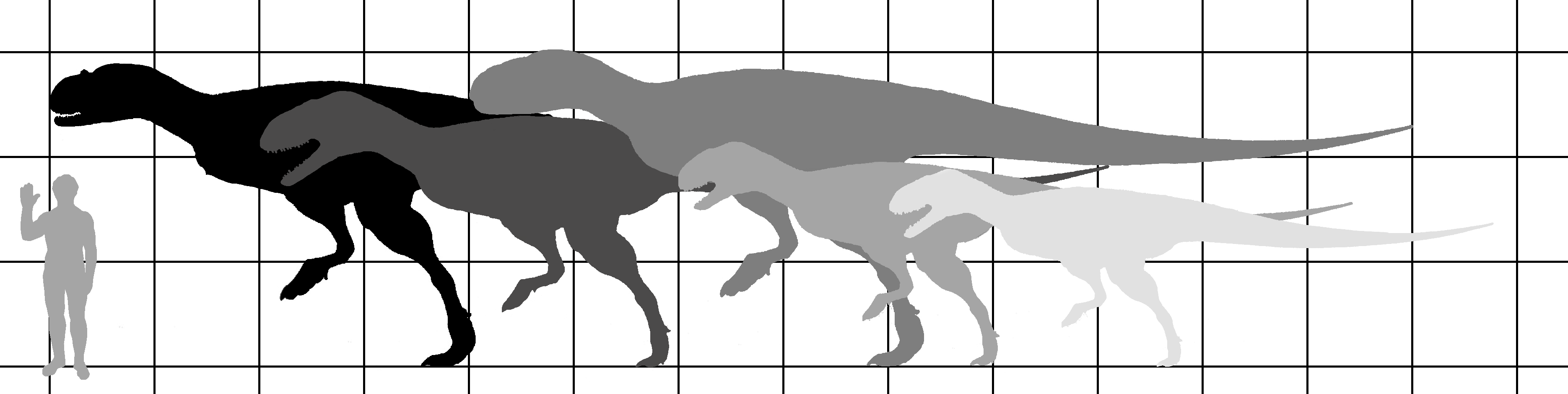
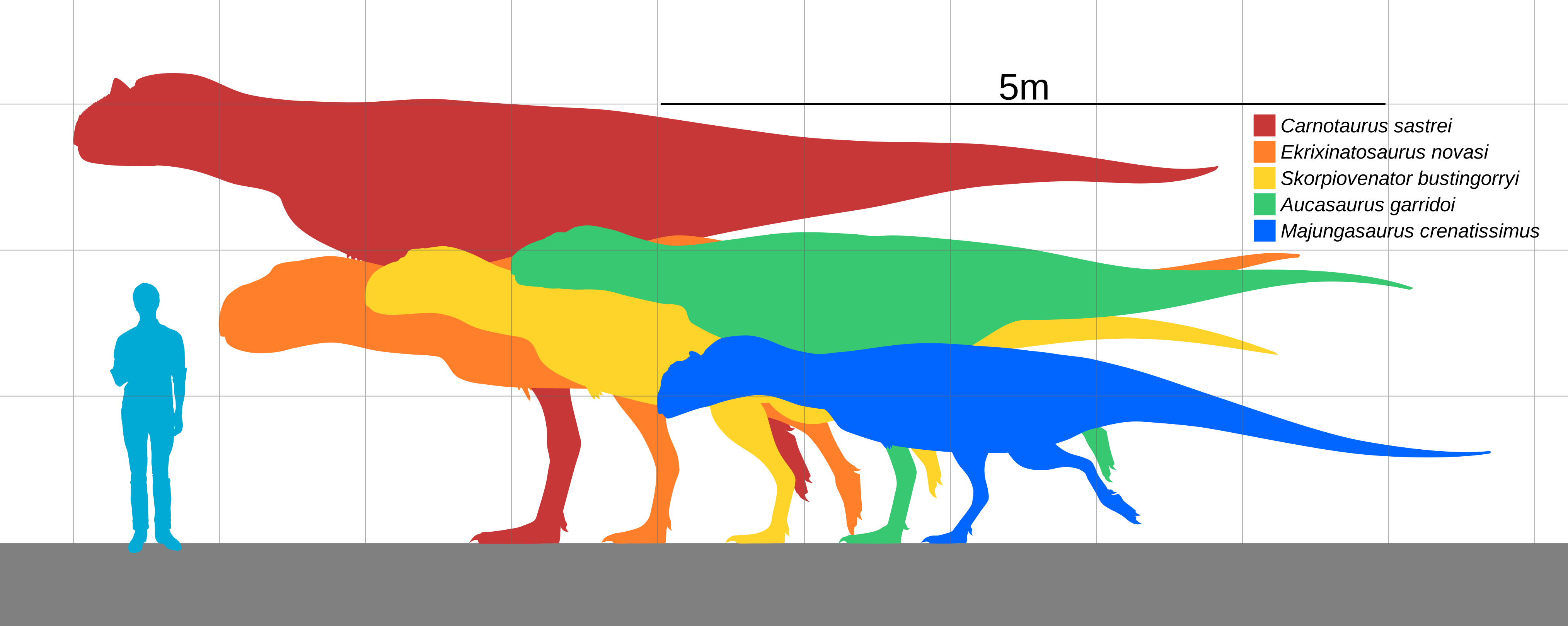
Systematic revision of body size estimates for abelisauroid theropods using allometric equations based on femoral length. Grillo and Delcourt revisit previous Carnotaurus estimates and calculate total length of 7.5–8.0 m and body mass of 1,306–2,100 kg, significantly lower than earlier estimates of 9 m. The study identifies Pycnonemosaurus nevesi from Brazil as the largest known abelisauroid, surpassing Carnotaurus. Comparative analysis reveals significant size variation within South American abelisauroids, with noasaurid species being much smaller. This work became the reference for Carnotaurus mass and length estimates used in all subsequent studies.

Ceratosaur palaeobiology: new insights on evolution and ecology of the southern kings
Delcourt, R. · Scientific Reports
Comprehensive analysis of ceratosaurian paleobiology with special emphasis on abelisaurids and Carnotaurus sastrei. Delcourt documents in unprecedented detail the skin impressions of holotype MACN-CH 894: small mosaic scales (~5 mm) covering most of the body, with larger feature scales distributed non-randomly along the flanks. The work demonstrates that regional scale differentiation in Carnotaurus is not a result of differential preservation, but reflects a real tegument pattern. There is no evidence of feathers anywhere on the body, positioning Carnotaurus as a fully scaled abelisaurid. The paper also discusses ecological implications and convergent evolution of morphological traits among gondwanan ceratosaurians.
The skull of Carnotaurus sastrei Bonaparte 1985 revisited: insights from new material and the value of the palpebral in abelisaurid taxonomy
Cerroni, M.A., Canale, J.I. & Novas, F.E. · Historical Biology
Detailed revision of the Carnotaurus skull based on new preparation and examination of holotype MACN-CH 894. Cerroni, Canale and Novas describe previously unrecognized or misinterpreted cranial elements: notably, a palpebral bone — rare among abelisaurids — identified for the first time in Carnotaurus. The revision corrects the anatomy around the supraorbital horns and rediscusses their function: biomechanical analysis suggests they served for intraspecific combat through lateral head blows or slow pushes, not for hunting. Phylogenetic analysis recovers Carnotaurus within Carnotaurini with Aucasaurus and Abelisaurus, within Furileusauria. The work became the updated anatomical reference for the species skull.

Giants and bizarres: body size of some southern South American Cretaceous dinosaurs
Mazzetta, G.V., Christiansen, P. & Fariña, R.A. · Historical Biology
Body mass estimates for several South American Cretaceous dinosaurs using volumetric methods and allometric equations. For Carnotaurus sastrei, Mazzetta, Christiansen and Fariña estimate body mass of approximately 1,500 kg based on femoral dimensions. The study analyzes comparative locomotor biomechanics and estimates Carnotaurus running speed at 48–56 km/h, placing it among the fastest large theropods of its time. The work includes analysis of Argentinosaurus, Giganotosaurus, Mapusaurus and other South American giants, demonstrating that Cretaceous Patagonia harbored both the largest herbivores and extremely fast predators. The mass and speed estimates for Carnotaurus from this study became the most cited in the literature.

New South American record of the Cretaceous–Paleogene boundary interval (La Colonia Formation, Patagonia, Argentina)
Clyde, W.C. et al. · Cretaceous Research
Magnetostratigraphic and palynological analysis of the La Colonia Formation, Chubut, Argentina, constraining the age of this unit to the latest Maastrichtian to earliest Danian (~69–64 Ma). This work is fundamental for Carnotaurus because it confirms the geological age of the holotype and demonstrates that the La Colonia Formation spans the Cretaceous-Paleogene boundary — the mass extinction event that wiped out non-avian dinosaurs. Carnotaurus therefore lived very close to the K-Pg boundary, potentially being among the last large terrestrial predators before the extinction. Clyde et al. also document the paleoenvironment: coastal and tidal facies with episodic Kawas sea floods, creating a habitat mosaic ranging from shoreline strips to continental environments with rivers and ponds.
Biomechanics and palaeobiology of Carnotaurus: jaw force, bite and feeding ecology
Mazzetta, G.V. et al. · Ameghiniana
Revised biomechanical analysis of Carnotaurus skull and jaw mechanics using finite element analysis. Mazzetta et al. apply simulated loads to the Carnotaurus skull and reveal unusual adaptations: the skull was more resistant to lateral forces than dorsoventral bite forces. This is consistent with horn use in intraspecific combat via lateral head pushes, not for subduing prey. Estimated bite force is relatively weak for skull size, supporting a feeding ecology based on rapid multiple bites on medium to small prey. The study integrates previous analyses and proposes a coherent model of Carnotaurus feeding behavior: agile hunter of smaller prey, using sprint speed and rapid bites rather than brute force.

Extreme Ontogenetic Changes in a Ceratosaurian Theropod
Napoli, J.G. et al. · Current Biology
Bone histological analysis of multiple abelisaurid specimens revealing extreme ontogenetic changes in cranial morphology during growth. Napoli et al. demonstrate that juvenile abelisaurids had proportionally longer and lower skulls that became progressively more compressed and deeper with advancing age. This means the extreme cranial morphology of adults like Carnotaurus — the ultra-deep skull, shortened snout, supraorbital horns — was acquired gradually during development, not simply a fixed feature of the adult species. Abelisaurid growth rates were relatively rapid compared to non-ceratosaurian theropods, with intense bone remodeling during the juvenile-to-adult phase.


New giant carnivorous dinosaur reveals convergent evolutionary trends in theropod arm reduction
Canale, J.I. et al. · Current Biology
Description of Meraxes gigas, a new giant theropod from Argentina, with comparative analysis clarifying the evolution of forelimb reduction in multiple theropod lineages, including Carnotaurus. Canale et al. demonstrate that forelimb reduction in large theropods — independently observed in tyrannosaurids, abelisaurids like Carnotaurus, and now Meraxes — was a convergent biomechanical release process: as hind limbs became the primary locomotor and predatory tools, forelimbs were progressively freed from functional constraints and underwent miniaturization. In Carnotaurus, this process reached its extreme, with four fused and immobile digits. The study uses Carnotaurus as a central case study for the evolution of extreme vestigial arms.


Famous museum specimens
MACN-CH 894 (holótipo)
Museo Argentino de Ciencias Naturales Bernardino Rivadavia, Buenos Aires
The only known specimen of Carnotaurus sastrei and one of the most complete among South American abelisaurids. Includes skull, mandible, much of the postcranial skeleton, and extensive skin impressions. The posterior tail and hind feet were damaged prior to excavation.
Réplica expositiva — Museu de História Natural da Universidade de Pisa
Museo di Storia Naturale, Università di Pisa, Pisa
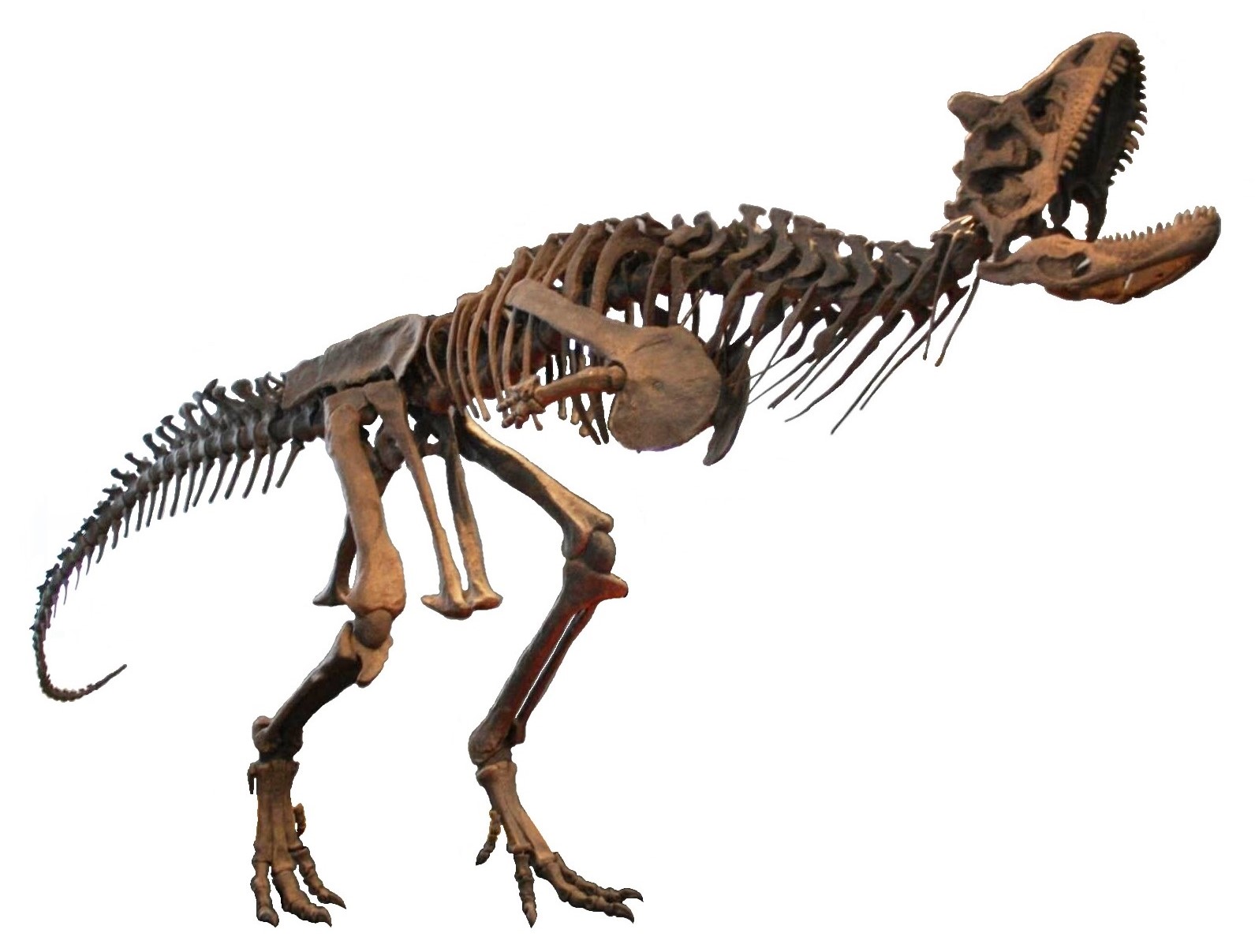
Complete skeleton replica of Carnotaurus on permanent display at the Natural History Museum of the University of Pisa. Replicas of holotype MACN-CH 894 are present in museums worldwide, allowing the public to observe the unique morphology of this dinosaur, including the supraorbital horns and vestigial forelimbs.
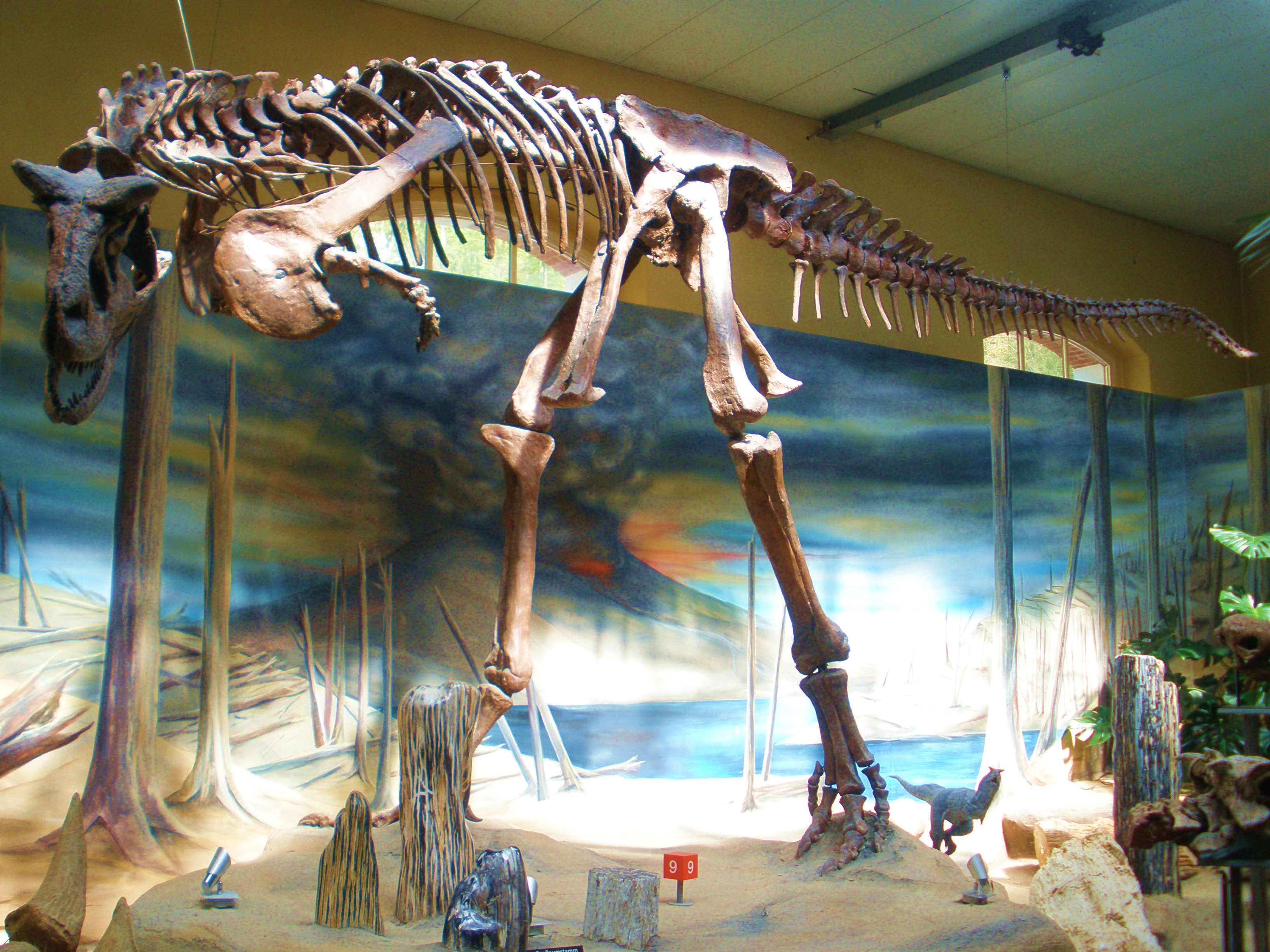
Montagem esquelética — Dinosaurierland Rügen, Bonn
Exposição em Bonn, Alemanha
Carnotaurus skeletal mount photographed at an exhibition in Bonn. Museum-quality Carnotaurus replicas are common at European exhibitions, reflecting the animal's cultural popularity following its film and television appearances.
In cinema and popular culture
Carnotaurus is one of the most recognizable dinosaurs in popular culture, thanks to its unique horns and extremely singular body morphology. Its most culturally impactful debut was in Disney's 'Dinosaur' (2000), where it served as the main antagonist. That production pioneered the use of fossil skin impressions as reference for the animal's texture, becoming one of the first cinematic dinosaur depictions based on real tegument evidence. Decades later, Carnotaurus returned to screens in 'Jurassic World: Fallen Kingdom' (2018), as part of Isla Nublar's fauna, and became even more popular with the animated series 'Jurassic World: Camp Cretaceous', where 'Toro' — a scarred Carnotaurus — is one of the most iconic antagonists. The documentary 'Prehistoric Planet' (2022), narrated by David Attenborough, presented Carnotaurus with careful scientific detail, showing plausible display behaviors based on analogies with modern horned animals. This combination of visual rigor and cultural popularity has made Carnotaurus an ambassador of South American paleontology to global audiences.
Classification

Discovery
Fun fact
Carnotaurus is the only large carnivorous dinosaur with horns above its eyes — and also the only theropod with the most complete skin impressions ever found, revealing a mosaic of 5 mm scales with absolutely no trace of feathers. On top of that, its forelimbs were so reduced that the four fingers of the hand were completely fused and immobile: Carnotaurus had the most useless arms of any large predator in dinosaur history.
Last reviewed: April 24, 2026