
Australovenator
Australovenator wintonensis
"southern hunter of Winton"
About this species
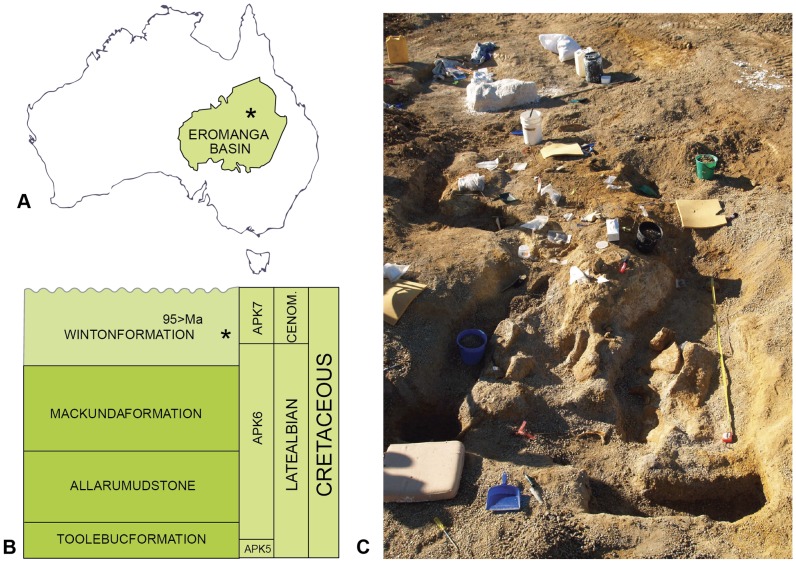
Australovenator wintonensis was a medium-sized theropod from the Cretaceous, latest Albian to Cenomanian (approximately 95 to 93 million years ago), found in the Winton Formation of central-west Queensland, Australia. About 6 meters long with an estimated weight of 310 to 500 kilograms, it was nicknamed Banjo by its discoverers in honor of Andrew Banjo Paterson, the Australian poet who wrote Waltzing Matilda. The holotype AODF 604 was excavated in 2006 by the Australian Age of Dinosaurs Museum team at locality AODL 85, within Elderslie Station, at the same site that yielded the titanosauriform sauropod Diamantinasaurus matildae, nicknamed Matilda. The association of the two skeletons in the same Cretaceous mud pocket gave the site its informal name, Matilda site, and produced a rare snapshot of a Gondwanan community at full body scale: a large herbivore alongside its potential predator. Australovenator remains the best-preserved Australian theropod, with a dentary, vertebrae, fore and hind limbs, pelvic girdle, and foot elements recovered across successive field seasons. The formal description came in 2009, in a paper published by Scott Hocknull and colleagues in PLoS ONE, which introduced the taxon together with Diamantinasaurus matildae and Wintonotitan wattsi, naming three new Winton species in a single study. In the original phylogenetic analysis, the authors placed Australovenator within Carcharodontosauria, in the family Neovenatoridae, alongside Neovenator and Fukuiraptor. This placement would be contested years later by works such as Novas and colleagues (2013), Bell and colleagues (2016), Coria and Currie (2016), and Morrison and colleagues (2025), which recover Megaraptora, the clade containing Australovenator, within Coelurosauria, close to Tyrannosauroidea. The debate is still open, and it is largely a debate about what Australovenator is: a late allosauroid or a long-armed Gondwanan tyrannosauroid. Anatomically, the animal stands out for its long forelimbs and large, recurved manual claws, which are atypical in medium and large-bodied tetanuran theropods, a group that tends to reduce its arms. White and colleagues published a sequence of papers between 2012 and 2015 describing new forearm elements, hindlimb bones, forelimb range of motion, and the dentary with its elongate, serrated teeth. This combination, long arms, enormous hands, and a slicing jaw, helped consolidate a cohesive picture of a megaraptorid: a predator that immobilizes prey with its hands and slices with its teeth, a role distinct from that of Northern Hemisphere tyrannosaurids, which relied mainly on the skull. Australovenator lived in a still partly connected Gondwana, in which Australia maintained a land link with Antarctica and, through it, dispersal routes to South America. This geography explains why Megaraptoridae has representatives both in Patagonia (Megaraptor, Aerosteon, Murusraptor, Maip) and in Australia (Australovenator, Lightning Claw). For the contemporary community, the Winton Formation yields titanosauriform sauropods such as Diamantinasaurus, Wintonotitan, and Savannasaurus, ornithopods, turtles, crocodylomorphs, and freshwater fish, depicting a warm-temperate, high-latitude floodplain of the mid-Cretaceous. In this setting Australovenator is a central piece for understanding the evolution of Gondwanan theropods and the biogeography of the group.
Geological formation & environment
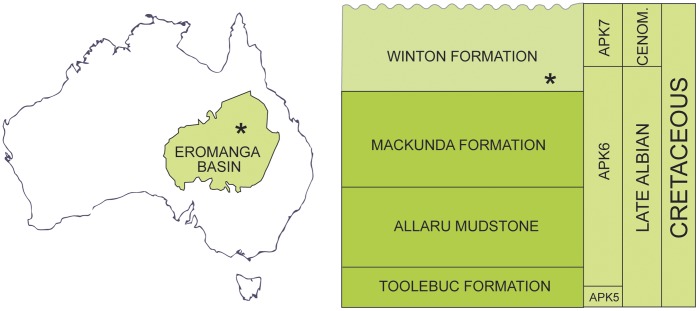
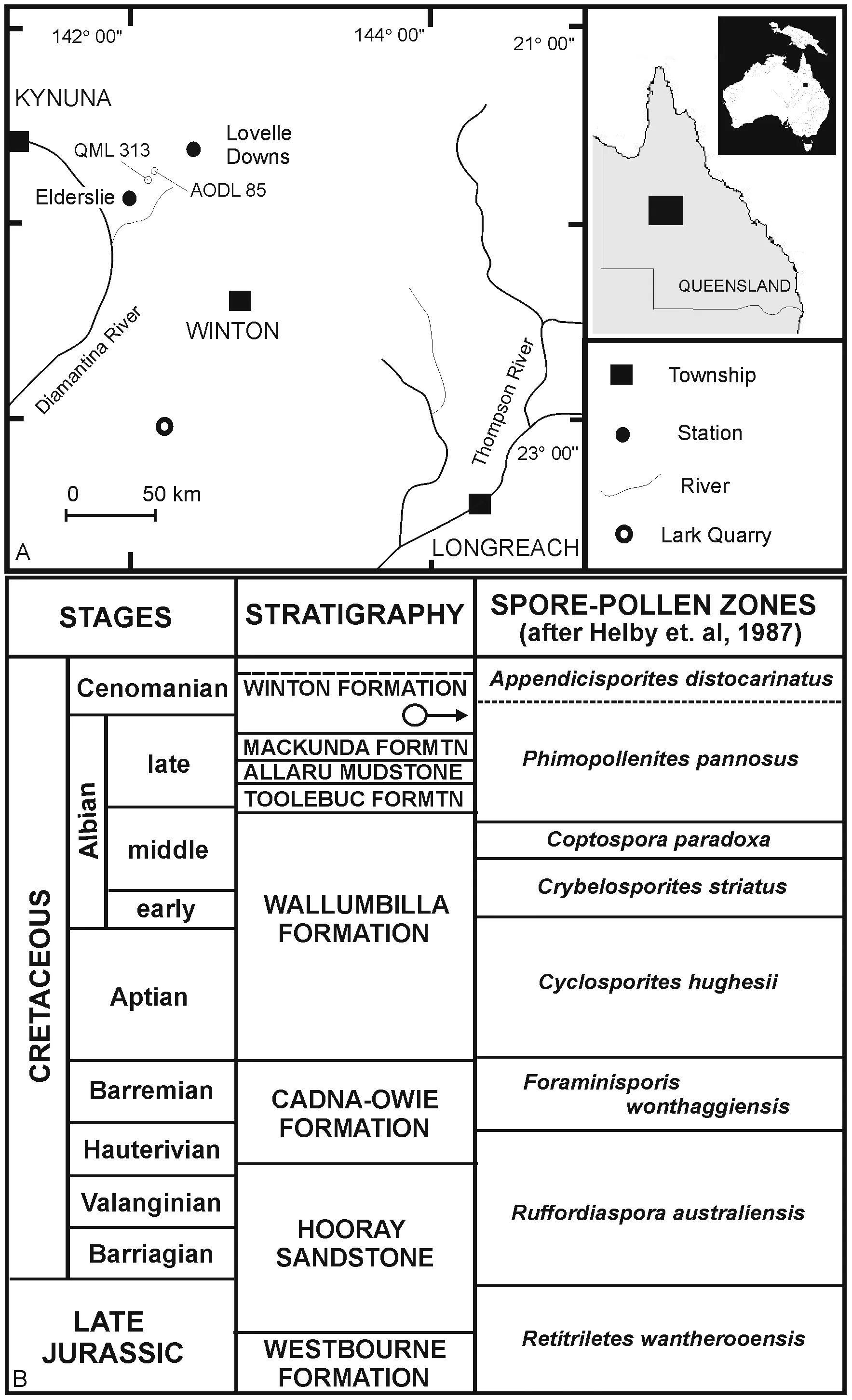
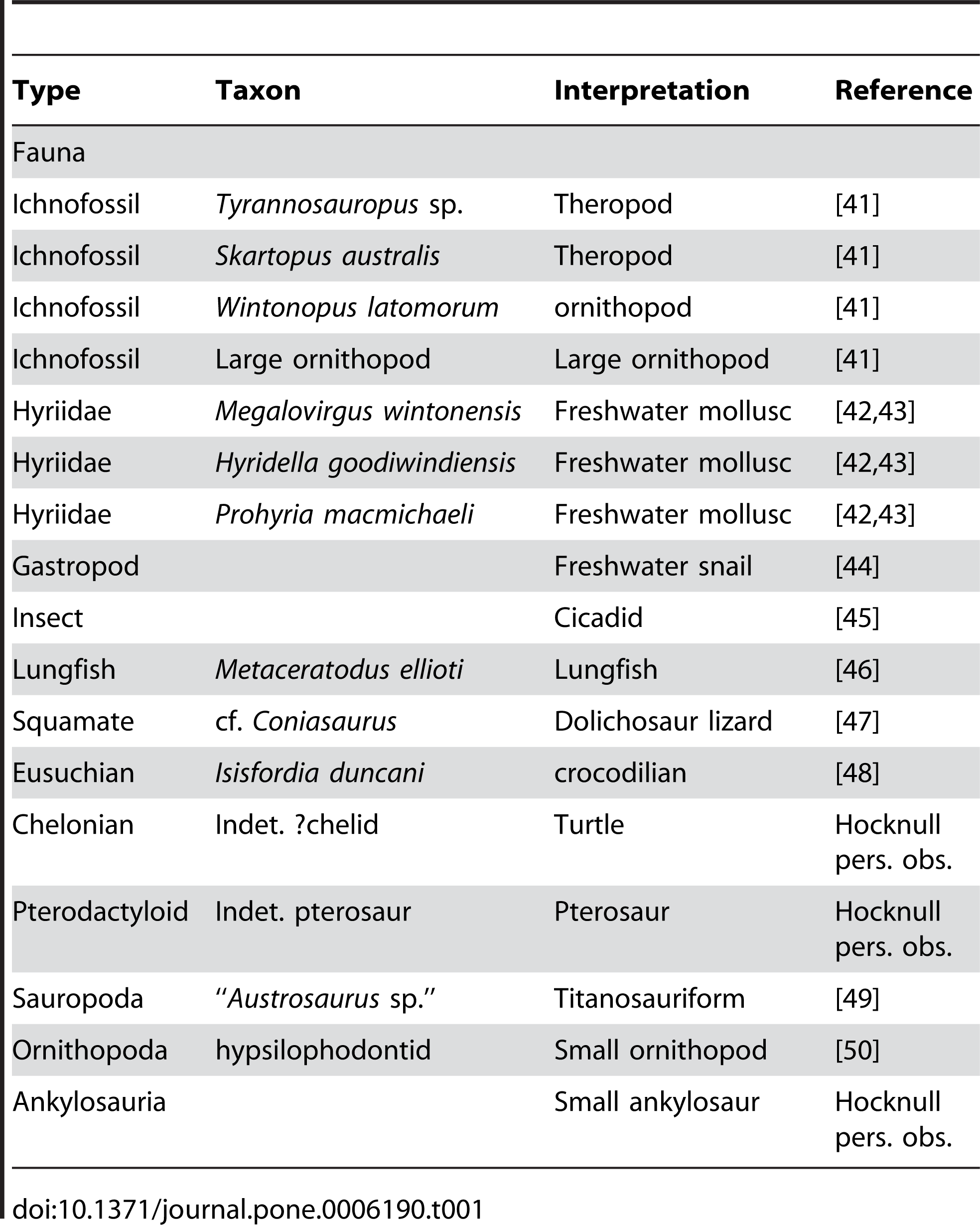
The Winton Formation, latest Albian to Cenomanian, covers much of central-western Queensland and is one of the richest dinosaur deposits in Australia. It represents a system of meandering rivers, shallow lakes, and floodplains under a warm, seasonal temperate climate. The most productive sites lie around Winton, including AODL 85 at Elderslie Station, where Australovenator and Diamantinasaurus were found in association. The contemporary fauna includes the sauropods Diamantinasaurus matildae, Wintonotitan wattsi, and Savannasaurus elliottorum, described in Hocknull 2009 and Poropat 2016, ornithopods, turtles, crocodylomorphs, and freshwater fishes, forming a late Gondwanan picture.
Image gallery


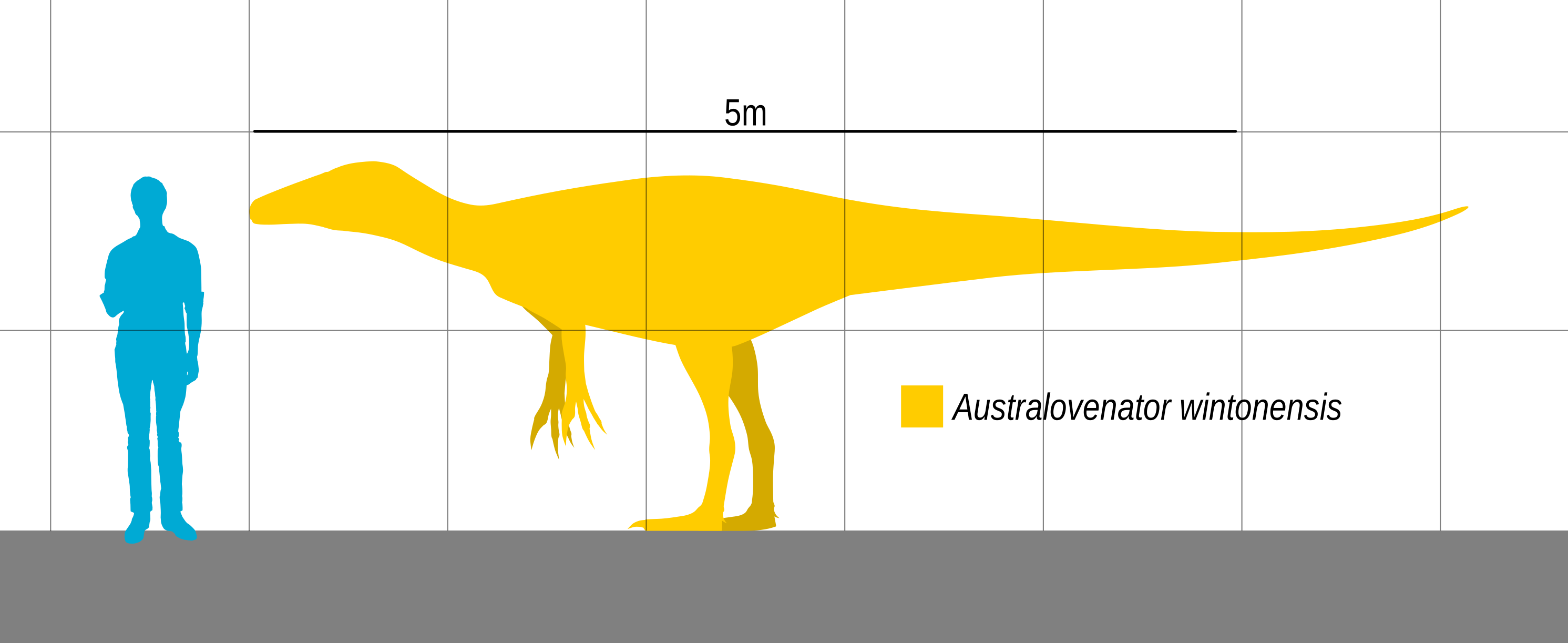


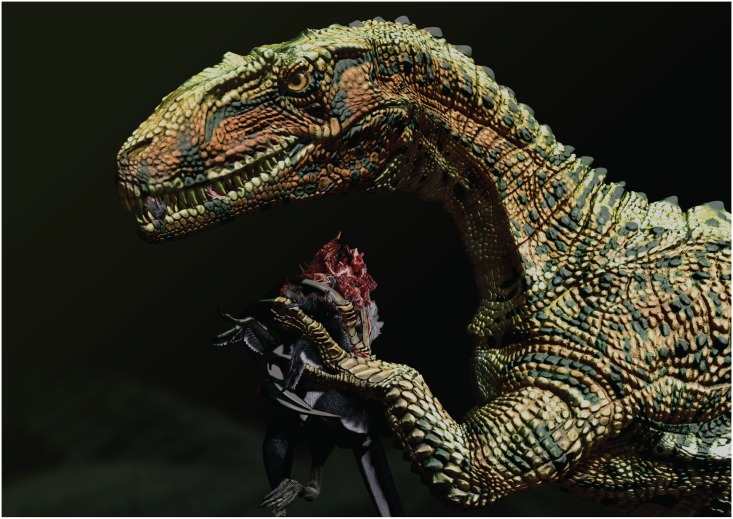


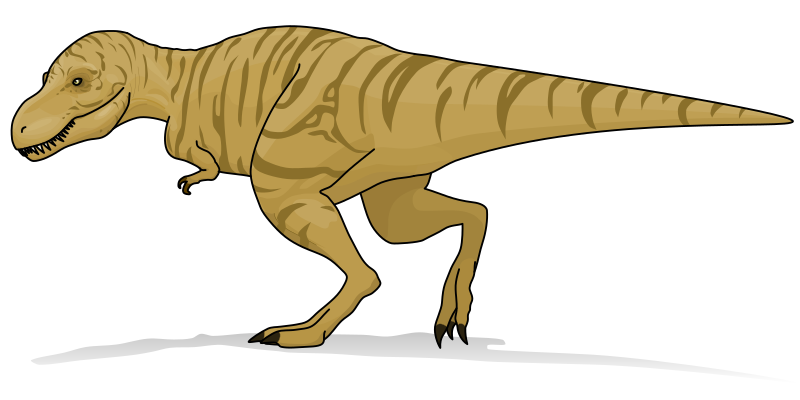
Life reconstruction of Australovenator wintonensis by PaleoEquii, with adjustments of proportions, skull, and silhouette by Paleocolour. Lateral view showing the medium build and the long arms characteristic of megaraptorids.
PaleoEquii, CC BY-SA 4.0
Ecology and behavior
Habitat
Australovenator wintonensis inhabited the floodplains of the Winton Formation in the Cenomanian, a landscape of meandering rivers, shallow lakes, and riparian forests covering the interior of southern Gondwana. The climate was warm-temperate, with marked seasons, typical of a subpolar latitude, since at that time Australia remained attached to Antarctica and lay much farther south than today. Conifers, ginkgoales, ferns, and the earliest angiosperms formed dense vegetation along the river channels, and the sediments that preserved Banjo correspond to a mud pocket on a flooded plain, where a young sauropod died and was buried together with the theropod.
Feeding
Australovenator was an agile, medium-sized predator, with large, recurved manual claws on the first and second fingers, used to hold prey, and an elongate jaw with long serrated teeth, better adapted to slicing flesh than to crushing bone. The combination of long arms, a mobile wrist (White et al. 2015), and hook-like claws is typical of megaraptorids: rather than relying primarily on the skull like northern tyrannosaurids, Australovenator immobilized prey with its hands and sliced with its teeth. The most likely prey were medium-sized Winton ornithopods and hatchlings or juveniles of titanosauriform sauropods, such as young Diamantinasaurus.
Behavior and senses
The biomechanics of the forelimb suggest active hunting behavior, with the animal pursuing or ambushing prey and using its hands to bring down and immobilize targets of its own size or smaller. Long, slender legs (White et al. 2013) support cursorial locomotion in the open or semi-open terrain of the floodplain, with the capacity for rapid bursts in the final approach. There is no direct evidence of group living in Australovenator.
Physiology and growth
Australovenator is a gracile megaraptorid, with long, well-developed arms and enormous manual claws, an atypical combination for most tetanuran theropods, which tend to reduce forelimbs in large-bodied groups. The presence of rapidly growing bone tissues, inferred by analogy with the juvenile Megaraptor described in Porfiri et al. (2014), is consistent with high metabolism and endothermy, a common pattern in Coelurosauria. The animal likely had a filamentous feather covering over at least parts of the body, as suggested by most modern reconstructions of the group.
Paleogeography
Continental configuration

Scotese & Vérard · CC BY 4.0 · Cretaceous, ~105 Ma
During the Cenomaniano (~95–93 Ma), Australovenator wintonensis inhabited Laramidia, the western half of present-day North America, separated from the east by the Western Interior Seaway, a shallow sea dividing the continent. The continents were in very different positions: India was drifting toward Asia, Antarctica was still connected to Australia, and South America was an isolated island.
Bone Inventory
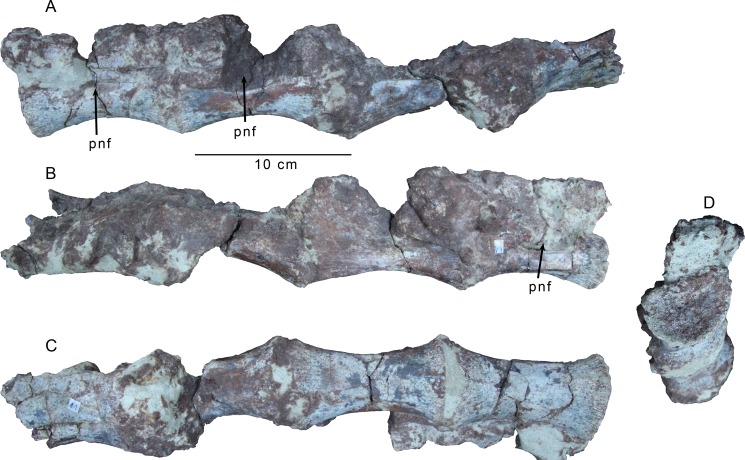
The partial skeleton of Australovenator wintonensis is estimated at about 20 to 25 percent of the total, combining the original 2006 material described by Hocknull and colleagues in 2009 with additional elements recovered in later field seasons by White and colleagues between 2012 and 2015, including new forearm and hindlimb bones and the detailed dentary. It is the most complete Australian theropod known.
Found elements
Inferred elements
Scientific Literature
15 papers in chronological order — from the original description to recent research.
New Mid-Cretaceous (latest Albian) Dinosaurs from Winton, Queensland, Australia
Hocknull, S.A., White, M.A., Tischler, T.R., Cook, A.G., Calleja, N.D., Sloan, T., Elliott, D.A. · PLoS ONE
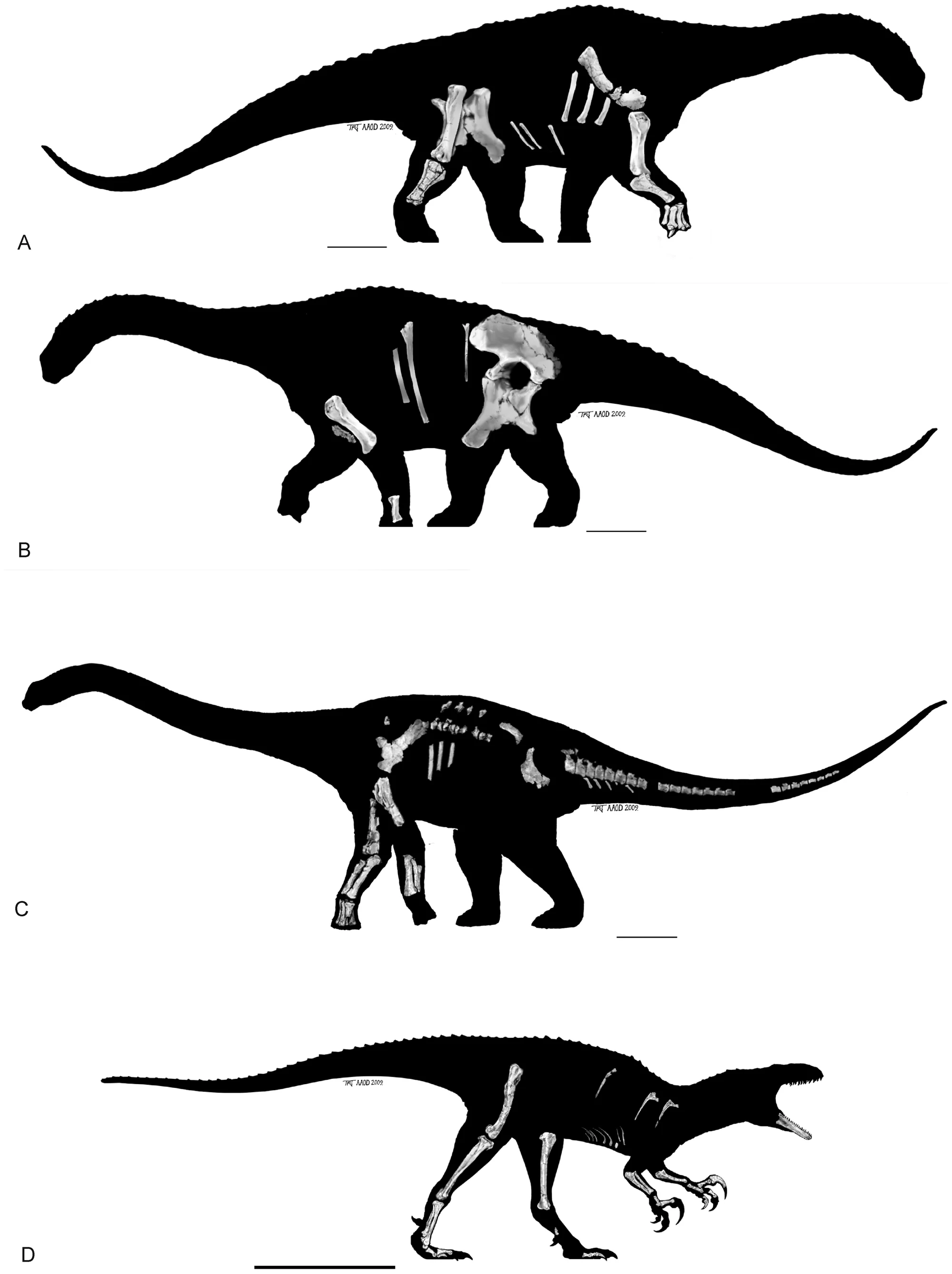
Founding paper of Australovenator wintonensis, published in PLoS ONE 4(7): e6190. Hocknull and colleagues describe three new Winton, Queensland dinosaurs from material collected in 2006 at Elderslie Station: the theropod Australovenator, the titanosauriform sauropod Diamantinasaurus, and the sauropod Wintonotitan. Holotype AODF 604 preserves dentary, cervical, dorsal, and caudal vertebrae, forelimb and hindlimb elements, pelvic girdle, and foot bones, representing the most complete Australian theropod ever described. The original phylogenetic analysis places the taxon within Carcharodontosauria (Neovenatoridae), a hypothesis later revised by other authors who recover Megaraptora within Coelurosauria. The paper also presents a locality map, stratigraphic section of the Winton, and body silhouettes with the recovered bones.
New Forearm Elements Discovered of Holotype Specimen Australovenator wintonensis from Winton, Queensland, Australia
White, M.A., Cook, A.G., Hocknull, S.A., Sloan, T., Sinapius, G.H.K., Elliott, J.A., Elliott, D.A. · PLoS ONE
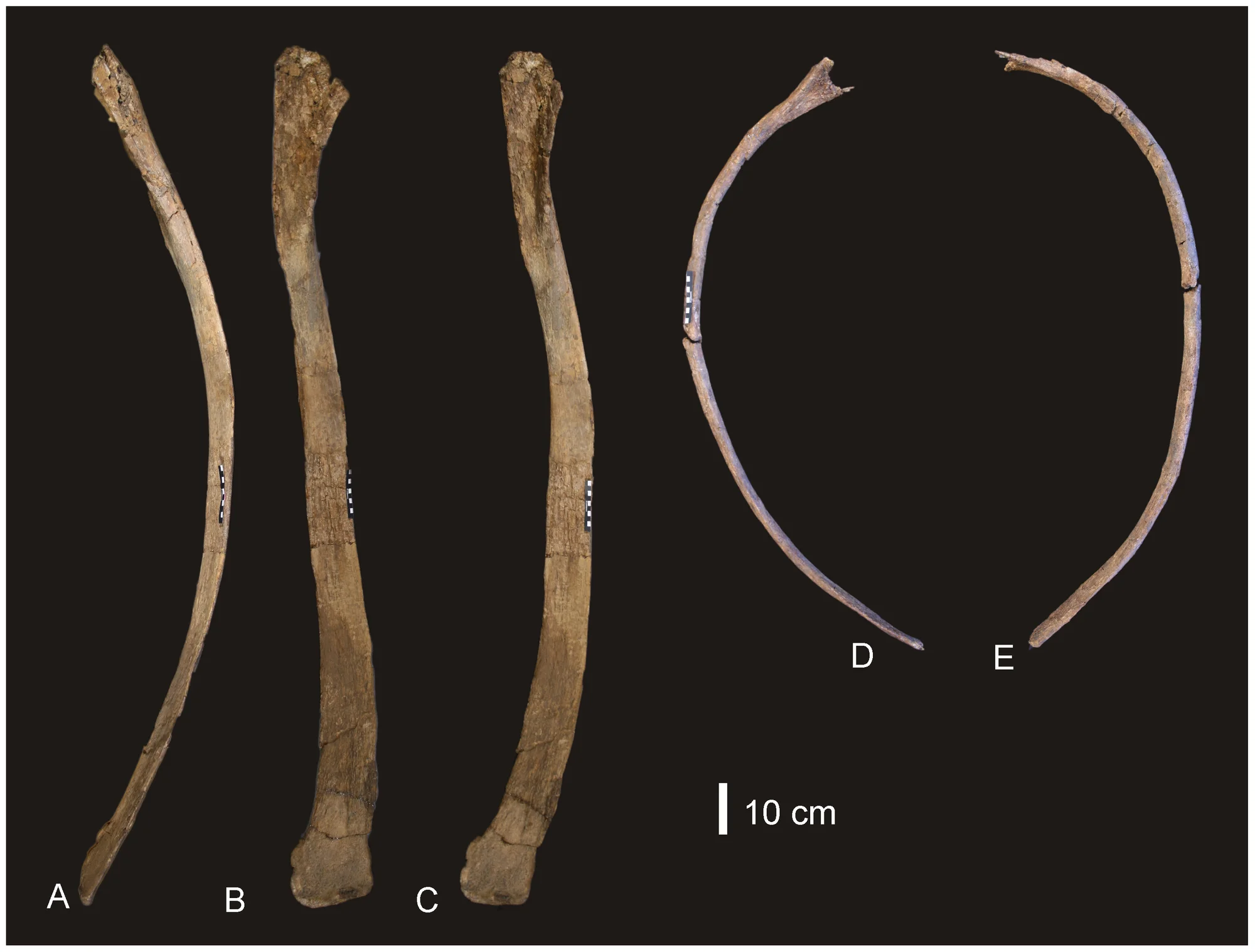
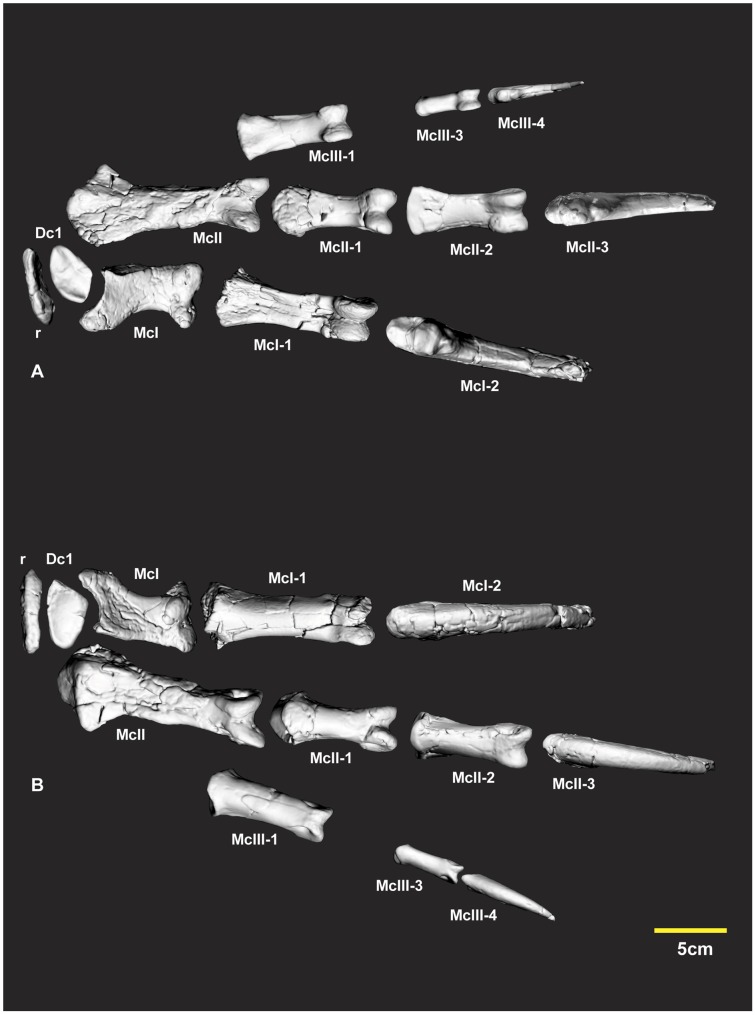
White and colleagues describe new forearm elements of the holotype, excavated in field seasons subsequent to the 2009 paper. The material includes radius, ulna, carpals, metacarpals, and manual phalanges, allowing the most complete reconstruction yet of the forelimb of an Australian theropod. The bones confirm long arms relative to the trunk and large, recurved manual unguals, a pattern typical of megaraptorans. The work reinforces the hypothesis that Australovenator relied on its hands as its primary predation tool.
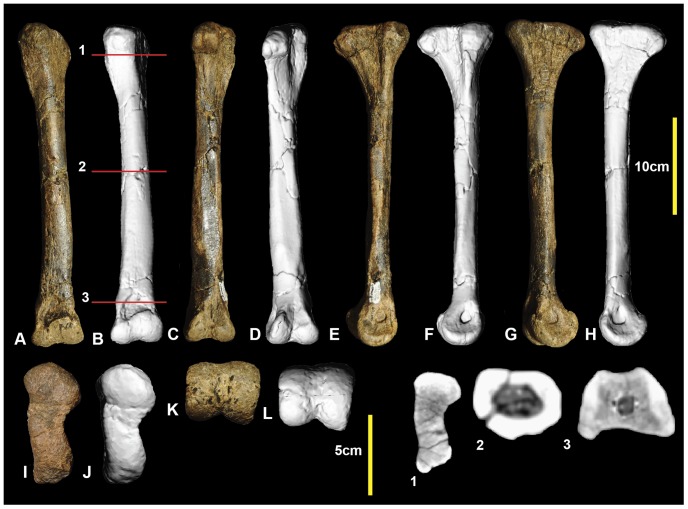
New Australovenator Hind Limb Elements Pertaining to the Holotype Reveal the Most Complete Neovenatorid Leg
White, M.A., Cook, A.G., Hocknull, S.A., Sloan, T., Sinapius, G.H.K., Elliott, J.A., Elliott, D.A. · PLoS ONE
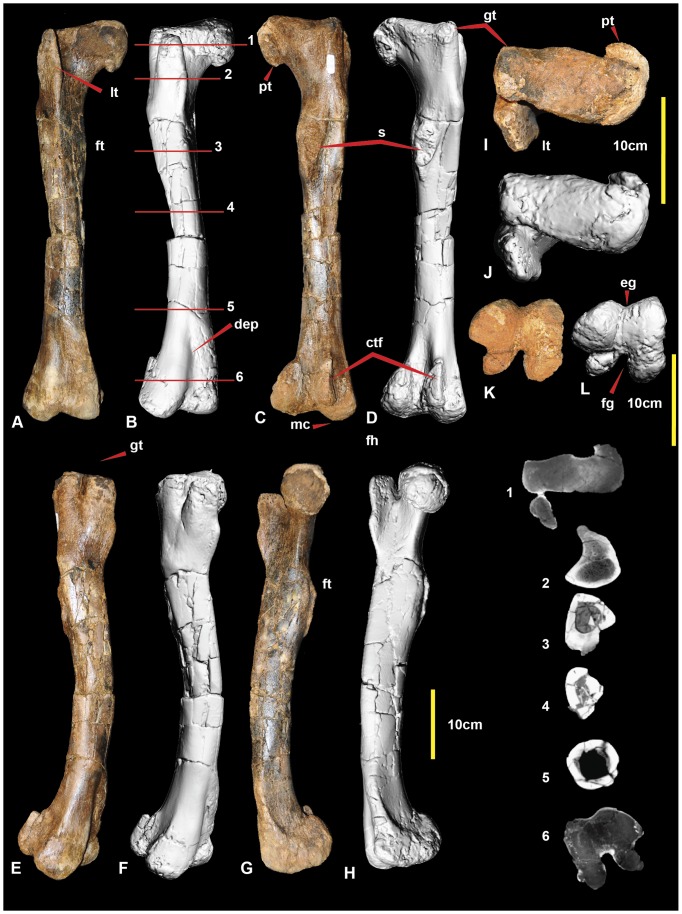
Second paper by White and colleagues on additional holotype material, now focused on the hindlimb. Tibia, fibula, astragalus, metatarsals, and pedal phalanges are described in detail, making Australovenator the most complete leg ever recovered for the family. Proportions suggest long, agile legs, consistent with a pursuit predator in relatively open terrain. This set also allows Australovenator to be compared with Fukuiraptor from Japan and with other megaraptorans, providing a solid anatomical basis for subsequent phylogenetic analyses.
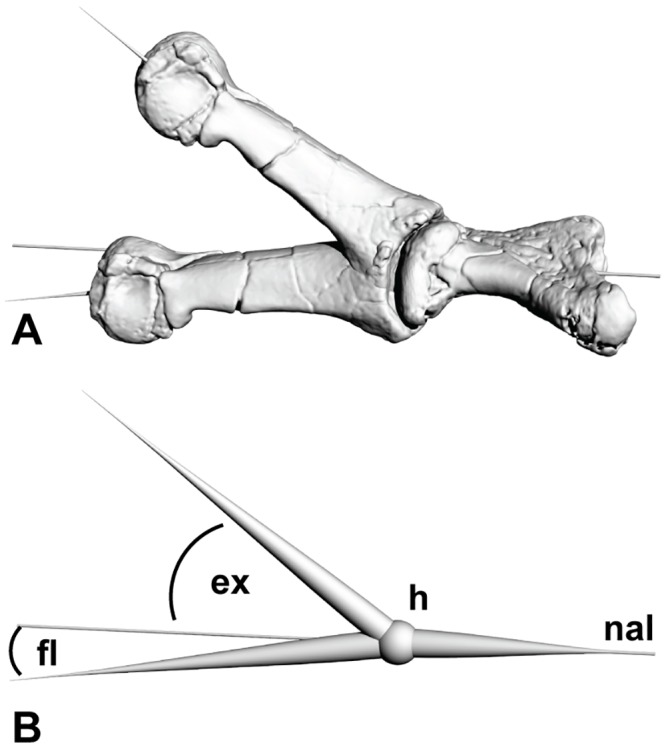
Forearm Range of Motion in Australovenator wintonensis (Theropoda, Megaraptoridae)
White, M.A., Bell, P.R., Cook, A.G., Barnes, D.G., Tischler, T.R., Bassam, B.J., Elliott, D.A. · PLoS ONE
Biomechanical study that digitally models the holotype forelimb and tests its range of motion. Shoulder, elbow, and manus were reconstructed from surface scans and CT data, revealing an arm capable of prolonged flexion and supination, consistent with prey-grappling behavior. The study supports the interpretation of Australovenator as a predator that relied on its hands, with manual claws acting as hooks to hold active animals.
The dentary of Australovenator wintonensis (Theropoda, Megaraptoridae); implications for megaraptorid dentition
White, M.A., Bell, P.R., Cook, A.G., Poropat, S.F., Elliott, D.A. · PeerJ
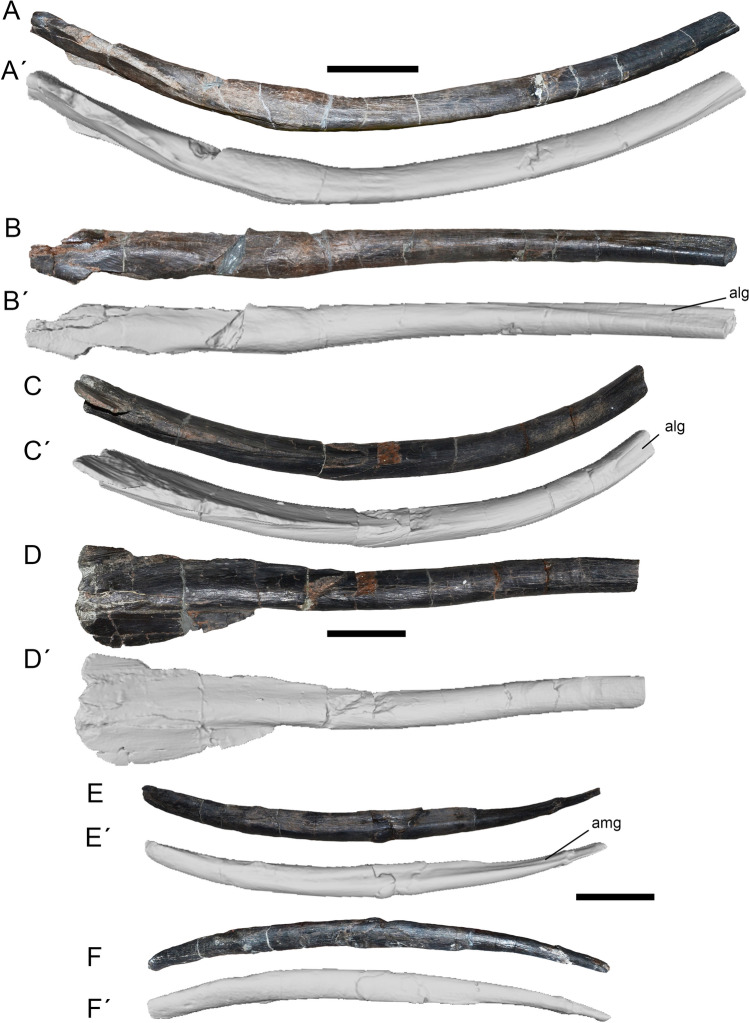
Detailed description of the holotype's dentary, with analysis of tooth morphology and replacement pattern. Teeth are serrated, elongate, and laterally compressed, typical of a flesh-slicing theropod. Comparison with Murusraptor and Megaraptor supports a shared megaraptorid dentition pattern marked by elongate jaws and slicing rather than crushing teeth. This morphological set indicates that megaraptorids captured prey with their hands and sliced tissue with the skull, a functional division distinct from that of northern tyrannosaurids.

A large-clawed theropod (Dinosauria: Tetanurae) from the Lower Cretaceous of Australia and the Gondwanan origin of megaraptorid theropods
Bell, P.R., Cau, A., Fanti, F., Smith, E.T. · Gondwana Research
Bell, Cau, Fanti, and Smith describe a gigantic manual claw and associated phalanges recovered at Lightning Ridge, New South Wales, in the Griman Creek Formation. The specimen, informally nicknamed Lightning Claw, is phylogenetically analyzed and recovered as a close relative of Australovenator wintonensis, supporting a Gondwanan origin for Megaraptoridae. The combination of Lightning Claw and Australovenator becomes the main evidence that the oldest known megaraptorids are Australian, and that the group dispersed from there to South America and Antarctica. As the paper is published in a commercial journal without open figures on the PMC CDN, images in this entry are replaced with equivalent figures from a contemporary open-access article on Megaraptora biogeography (Morrison et al. 2025), marked as comparative.

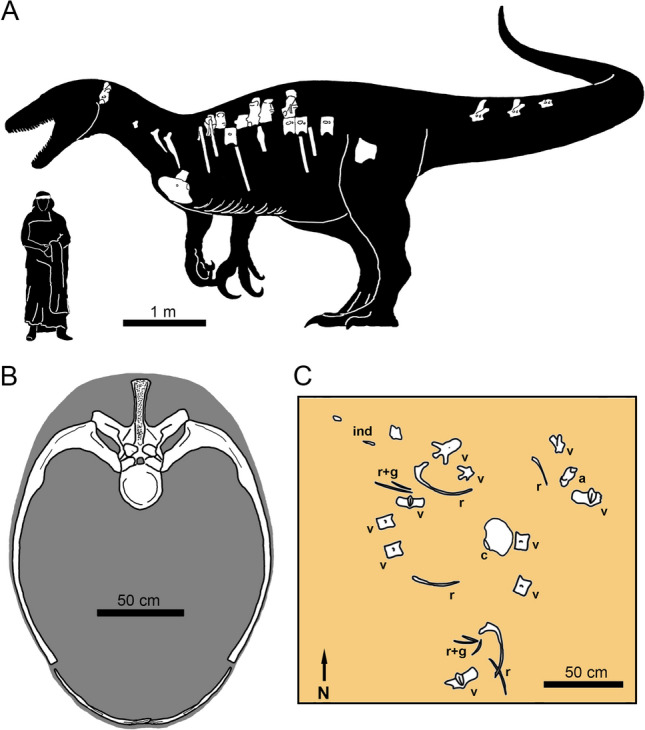
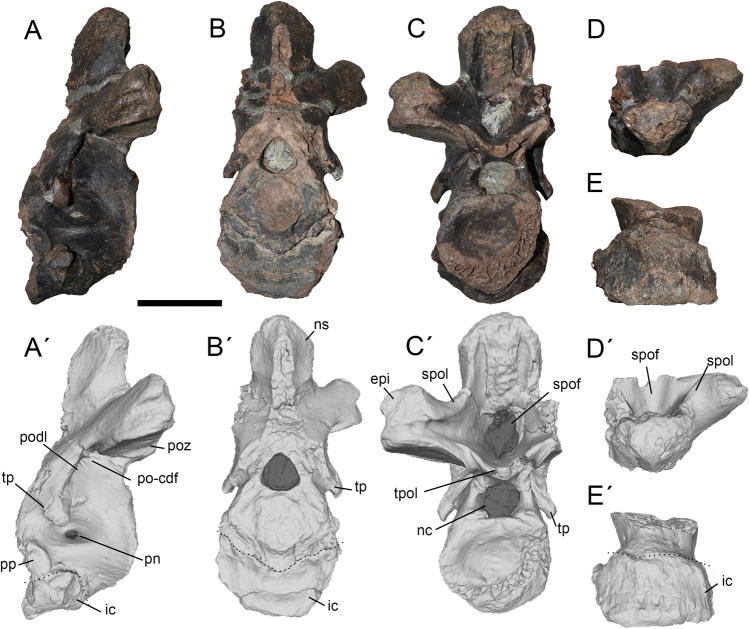
Evolution of the carnivorous dinosaurs during the Cretaceous: The evidence from Patagonia
Novas, F.E., Agnolin, F.L., Ezcurra, M.D., Porfiri, J., Canale, J.I. · Cretaceous Research
Novas and colleagues review Cretaceous carnivorous theropods from Patagonia and present a new phylogenetic analysis that recovers Megaraptora within Coelurosauria, close to Tyrannosauroidea, rather than within Allosauroidea as in the original 2009 hypothesis on Australovenator. This reinterpretation radically changes the evolutionary scenario: megaraptorids are now seen as Gondwanan tyrannosauroids with well-developed arms, in contrast with the arm reduction of northern tyrannosaurids. The paper is commercial, without open figures on the CDN; images here are replaced with equivalent figures from Rolando et al. (2022), on Maip macrothorax, which discusses the same topology.
Juvenile specimen of Megaraptor (Dinosauria, Theropoda) sheds light about tyrannosauroid radiation
Porfiri, J.D., Novas, F.E., Calvo, J.O., Agnolin, F.L., Ezcurra, M.D., Cerda, I.A. · Cretaceous Research
Porfiri and colleagues describe a juvenile specimen of Megaraptor with previously unknown cranial parts and histological growth data. The phylogenetic analysis reinforces the position of Megaraptora within Tyrannosauroidea, a hypothesis that also applies to Australovenator wintonensis, the sister taxon of Patagonian megaraptors in several topologies. The work allows, for the first time, the reconstruction of a megaraptorid's ontogeny and provides a reference for estimating how Australovenator grew from hatchling to adult. Commercial article; images replaced with figures from Coria and Currie (2016) on Murusraptor, an open-access Patagonian megaraptorid.
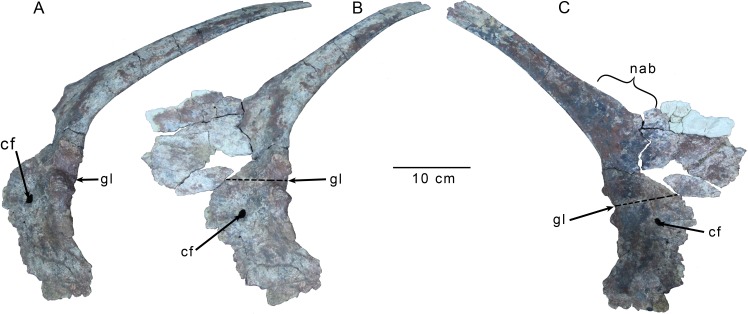
A New Megaraptoran Dinosaur (Dinosauria, Theropoda, Megaraptoridae) from the Late Cretaceous of Patagonia
Coria, R.A., Currie, P.J. · PLoS ONE
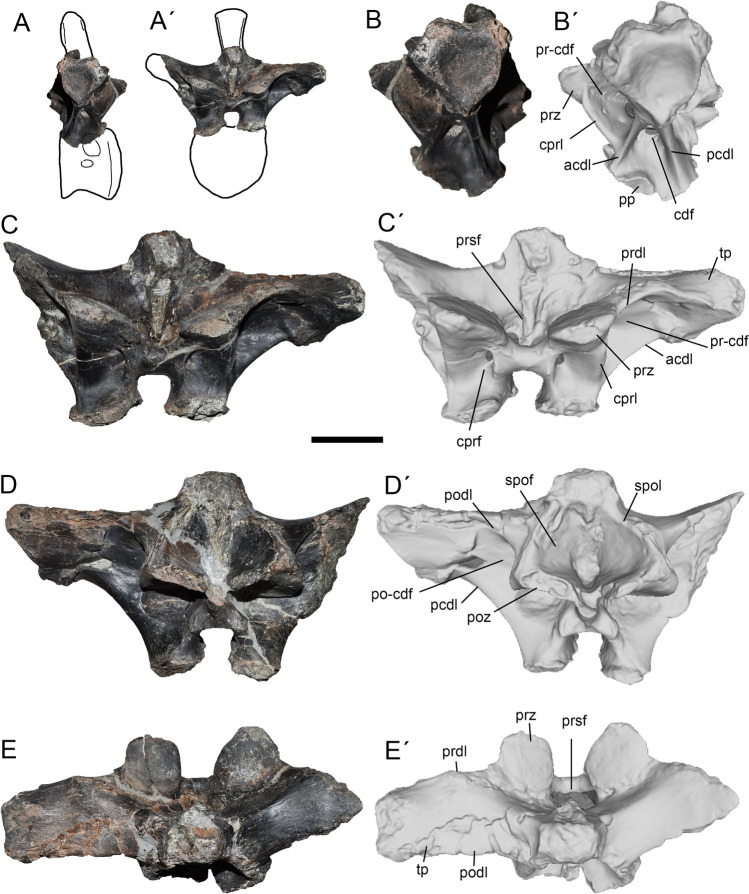
Coria and Currie describe Murusraptor barrosaensis, a Late Cretaceous Patagonian megaraptorid theropod, with a partial skull, vertebrae, and appendicular elements. The phylogenetic analysis recovers Megaraptoridae as a cohesive clade within Coelurosauria, including Australovenator wintonensis among the most basal species. The article is a key reference for understanding Australovenator because Murusraptor is the megaraptorid with the most complete known skull, allowing inference of what the Australovenator skull may have looked like, known only from the dentary. Both share elongate jaws and serrated teeth.
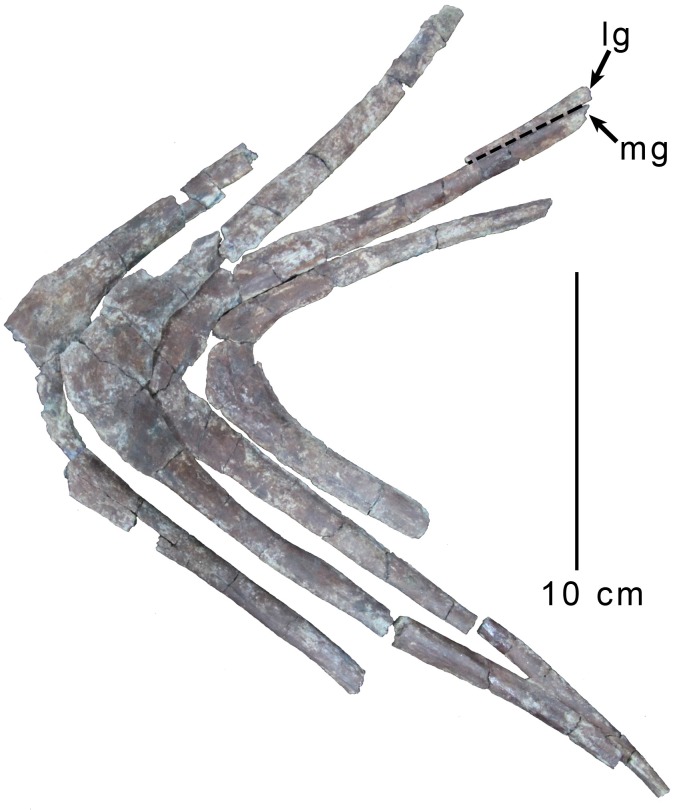
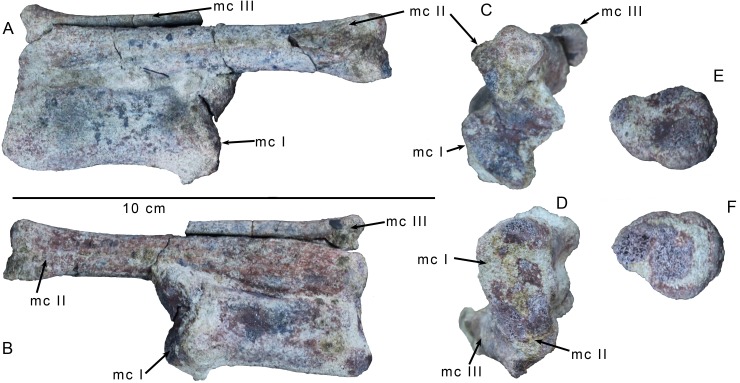
A new carnosaur (Dinosauria: Theropoda) from the Lower Cretaceous of Japan
Azuma, Y., Currie, P.J. · Canadian Journal of Earth Sciences
Azuma and Currie describe Fukuiraptor kitadaniensis, a theropod from the Lower Cretaceous of Japan. Initially treated as a carnosaur, Fukuiraptor is recovered in several subsequent phylogenetic analyses, such as Hocknull et al. (2009) and Rolando et al. (2022), as the sister taxon or a close relative of Australovenator wintonensis, supporting the idea of a megaraptoran lineage distributed across Japan, Australia, South America, and Antarctica. The article is published in a commercial journal; figures here are replaced by the Hocknull 2009 cladogram and by a comparative figure from Rolando 2022 that places Fukuiraptor in the phylogenetic context.
An allosaurid theropod dinosaur from the Early Cretaceous of Victoria, Australia
Molnar, R.E., Flannery, T.F., Rich, T.H.V. · Alcheringa
Molnar, Flannery, and Rich describe a theropod astragalus recovered at Dinosaur Cove, Victoria, in the Australian Lower Cretaceous. Originally compared with allosaurids, the bone was later reinterpreted by Benson et al. (2010) as belonging to Megaraptoridae, which would make it, together with Lightning Claw, one of the earliest indications that the group has deep roots in the Australian record. The paper predates the formal description of Australovenator by nearly three decades and forms the historical basis for the debate on Australian large theropods. Commercial article; figures replaced with material from Rolando 2022.
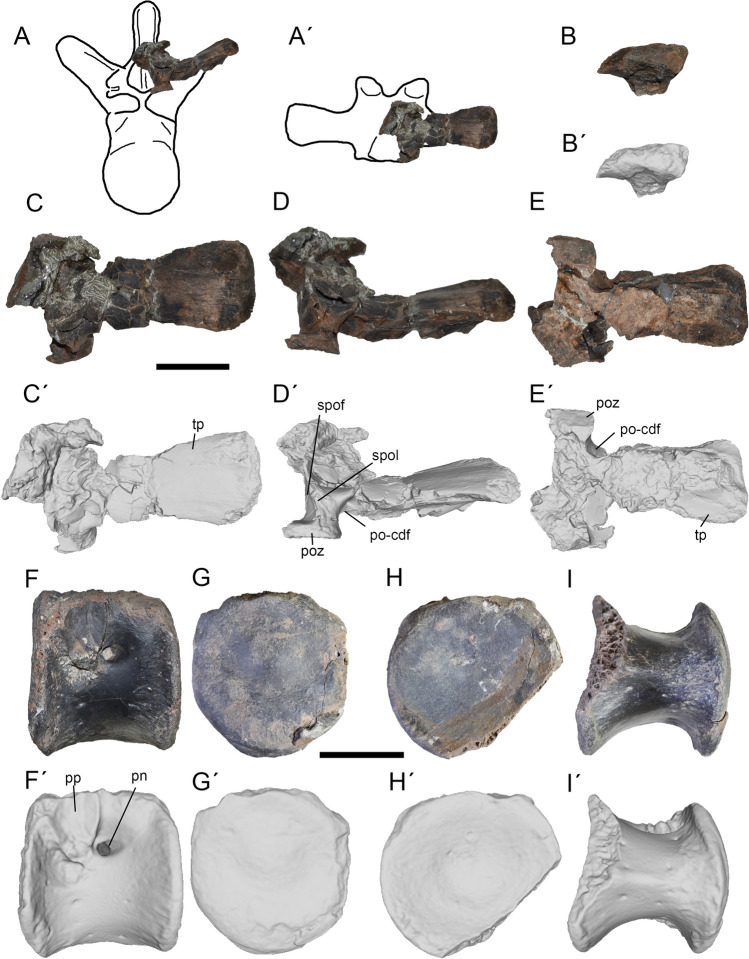
Reassessment of Allosaurus? from Dinosaur Cove, Victoria (with historical review)
Rich, T.H., Vickers-Rich, P. · Records of the Australian Museum / Alcheringa
Rich and Vickers-Rich synthesize a series of works that revised the Dinosaur Cove astragalus NMV P150070 over the years, reinterpreting the material in light of new Australian discoveries. The discussion anticipated the formal reassignment to Megaraptoridae in Benson et al. (2010) and prepared the ground for the description of Australovenator in 2009. Commercial material; figures replaced with Rolando 2022 and an additional figure from Hocknull 2009.

A new clade of archaic large-bodied predatory dinosaurs (Theropoda: Allosauroidea) that survived to the latest Mesozoic
Benson, R.B.J., Carrano, M.T., Brusatte, S.L. · Naturwissenschaften
Benson, Carrano, and Brusatte propose Neovenatoridae, a new clade of large-bodied allosauroids that persisted into the Late Cretaceous, explicitly including Australovenator wintonensis, Neovenator salerii, and Gondwanan taxa such as Megaraptor. The work also refers the Dinosaur Cove astragalus NMV P150070 to Megaraptoridae, integrating the oldest Australian record into the new clade. This is the allosauroid hypothesis competing with the tyrannosauroid hypothesis presented by Novas et al. (2013). Commercial article; figures replaced with open-access material from Hocknull 2009 and White 2013.

New Australian sauropods shed light on Cretaceous dinosaur palaeobiogeography
Poropat, S.F., Mannion, P.D., Upchurch, P., Hocknull, S.A., Kear, B.P., Kundrát, M., Tischler, T.R., Sloan, T., Sinapius, G.H.K., Elliott, J.A., Elliott, D.A. · Scientific Reports
Poropat and colleagues describe new sauropod material from the Winton Formation and analyze the biogeography of Cretaceous Australian dinosaurs. For Australovenator wintonensis, the work is relevant because it updates the list of contemporary fauna, with titanosauriform sauropods such as Diamantinasaurus and Savannasaurus, and discusses how Australia, South America, and Antarctica maintained continental connections in the mid-Cretaceous, consistent with the distribution of Megaraptoridae. Article with open figures in Nature; here we use additional figures from Hocknull 2009 related to the same formation.
A reappraisal of the Cretaceous non-avian dinosaur faunas from Australia and New Zealand: evidence for their Gondwanan affinities
Agnolin, F.L., Ezcurra, M.D., Pais, D.F., Salisbury, S.W. · Journal of Systematic Palaeontology
Agnolin, Ezcurra, Pais, and Salisbury review Cretaceous non-avian dinosaur faunas from Australia and New Zealand and support strong Gondwanan affinities for the Australian record. Australovenator is treated within Megaraptora, reinforcing the link with South American taxa such as Megaraptor and Aerosteon. The article is commercial; images replaced with complementary material from Hocknull 2009.


Famous museum specimens
AODF 604 (Banjo)
Australian Age of Dinosaurs Museum, Winton
Holotype of Australovenator wintonensis, nicknamed Banjo in honor of Australian poet Andrew Banjo Paterson. It was found at site AODL 85, on Elderslie Station, associated with the skeleton of the titanosauriform sauropod Diamantinasaurus matildae, known as Matilda, in 2006. The material includes dentary, cervical, dorsal, and caudal vertebrae, forelimb elements (humerus, radius, ulna, carpals, metacarpals, phalanges, unguals), ilium, tibia, fibula, astragalus, metatarsals, and pedal phalanges. Subsequent field seasons between 2012 and 2015 recovered new bones, consolidating Australovenator as the most complete Australian theropod. Preserved and displayed at the Australian Age of Dinosaurs Museum of Natural History, in Winton, Queensland.
Classification
Discovery
Fun fact
Nicknamed 'Banjo' after Andrew 'Banjo' Paterson, the Australian poet who wrote 'Waltzing Matilda', the song the local farmer was humming at the time of discovery. It is one of the most complete carnivorous dinosaurs ever found in Australia.
Last reviewed: April 24, 2026