
Muttaburrasaurus
Muttaburrasaurus langdoni
"Muttaburra lizard (of Langdon)"
About this species
Muttaburrasaurus langdoni was a large herbivorous ornithopod that inhabited eastern Australia during the Early Cretaceous, approximately 112 to 100 million years ago. About 8 meters long and weighing 2.8 tonnes, it was one of Australia's largest dinosaurs. Its most distinctive feature was a hollow, inflatable nasal projection, the bulla nasalis, probably used for vocalizations or display. Its teeth were powerful with shearing edges, adapted for cutting through tough vegetation such as ferns and cycads. It is one of the most complete Australian dinosaurs ever found, with approximately 60% of the skeleton preserved, and became the official fossil emblem of Queensland state in 2022.
Geological formation & environment
Muttaburrasaurus langdoni is found mainly in the Mackunda Formation and Allaru Mudstone, both Albian-Cenomanian (~112-100 Ma) from the Eromanga Basin, Queensland, Australia. The Mackunda Formation consists of volcaniclastic feldspathic sandstones interbedded with siltstones and shales, deposited in shallow to marginal marine environments during the final regression of the Eromanga Sea. The Allaru Mudstone represents the deeper-water equivalent, deposited under oxic to sub-oxic conditions at less than 100 meters depth, with estimated water temperature of 19°C. The ecosystem included plesiosaurs, turtles, fish, and on land other dinosaurs such as the sauropod Wintonotitan. The fact that the Muttaburrasaurus holotype was found in marine deposits indicates the animal lived near the coast and was carried by a river to the marine environment before fossilizing.
Image gallery


Skull and mandible of Muttaburrasaurus langdoni holotype QM F6140 in left lateral view. The hollow nasal prominence (bulla nasalis) is visible at the front of the skull. Scale = 10 cm.
Poropat, Bell, Hart, Salisbury e Kear, CC BY-SA 4.0
Ecology and behavior
Habitat
Muttaburrasaurus inhabited riverbanks and coastal plains of eastern Australia during the Albian-Cenomanian (112-100 Ma), at the margins of the Eromanga Epicontinental Sea. This great inland sea covered much of central Australia, creating a low-lying shoreline with araucaria groves, fern forests, and extensive seasonally flooded marshes. The climate was warm and humid, with an estimated mean temperature of around 19°C for adjacent marine waters. Contemporary fauna included marine plesiosaurs, turtles, fish, and other dinosaurs such as the sauropod Wintonotitan. The holotype was carried by a river to the marginal marine environment before fossilizing, indicating the animal lived near watercourses.
Feeding
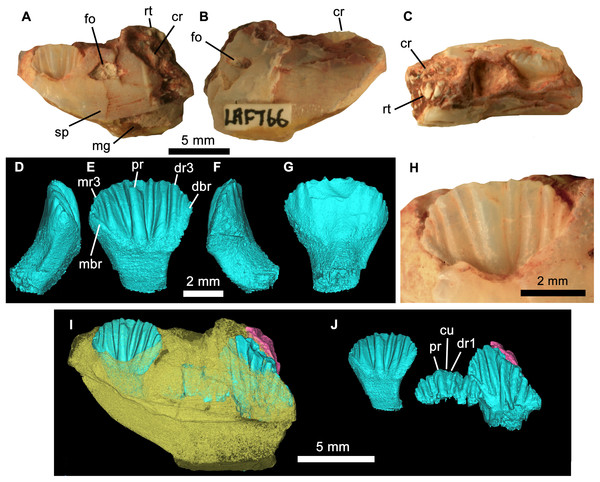
Muttaburrasaurus was strictly herbivorous, with teeth specialized in shearing for processing tough vegetation such as cycads, ferns, and other fibrous Cretaceous Australian plants. Unlike hadrosaurs, which had tooth batteries for grinding, Muttaburrasaurus had a single erupted tooth generation with eleven secondary ridges on the enamel and no primary ridge, producing efficient cutting edges. Molnar (1995) proposed convergence with ceratopsian shearing systems, suggesting both groups independently evolved to process tough vegetation. Teeth were continuously replaced, growing directly beneath the previous generation rather than alternating.
Behavior and senses
Evidence from Walking with Dinosaurs Episode 5 and paleontological interpretations suggest Muttaburrasaurus was gregarious, migrating in seasonal herds. The hollow nasal prominence (bulla nasalis) was probably used for producing low-frequency vocalizations for intraspecific communication within the herd, possible display between rival males, and attracting mates. The structure is functionally analogous to the hollow crests of some hadrosaurs like Parasaurolophus. The ability for both bipedal and quadrupedal locomotion is debated. Large adults likely used all four limbs for browsing, while smaller individuals and juveniles mainly maintained bipedal posture.
Physiology and growth
At approximately 8 meters long and 2.8 tonnes, Muttaburrasaurus was a medium-to-large ornithopod by Cretaceous standards. The skull was relatively flat with a triangular cross-section when seen from above, and the bulla nasalis was a hollow inflatable structure on the rostral region. Hind limbs were larger than forelimbs, suggesting bipedal locomotion capability, but quadrupedal posture was also possible for large adults. The foot was long and broad with four toes. No specific bone histology data exists for Muttaburrasaurus, but by comparison with similarly-sized ornithopods, metabolism was probably intermediate between ectothermic reptiles and modern birds and mammals.
Paleogeography
Continental configuration

Scotese & Vérard · CC BY 4.0 · Cretaceous, ~105 Ma
Fossil sites
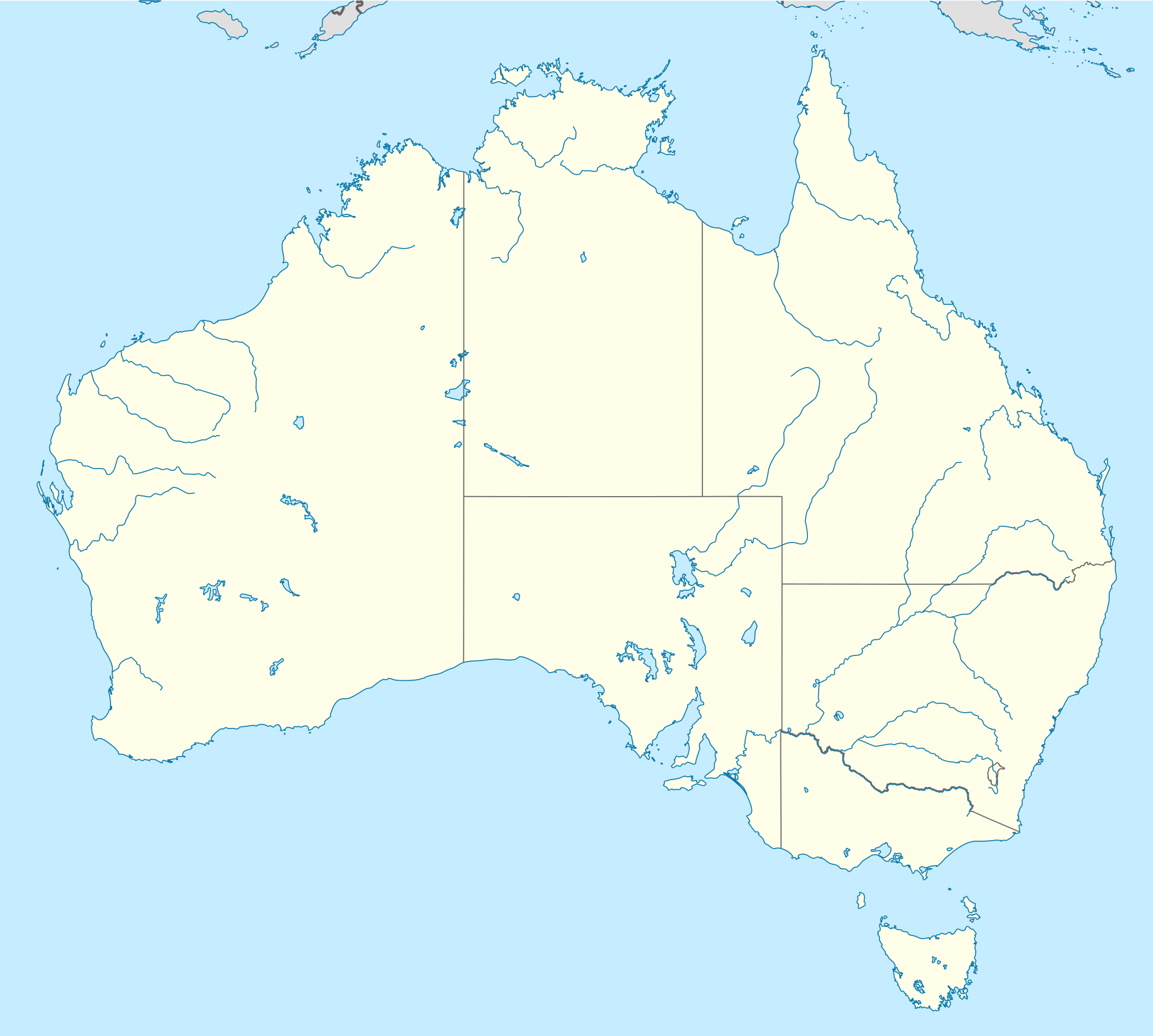
NordNordWest, CC BY-SA 3.0
During the Albiano-Cenomaniano (~112–100 Ma), Muttaburrasaurus langdoni inhabited Laramidia, the western half of present-day North America, separated from the east by the Western Interior Seaway, a shallow sea dividing the continent. The continents were in very different positions: India was drifting toward Asia, Antarctica was still connected to Australia, and South America was an isolated island.
Bone Inventory
The holotype QM F6140 preserves approximately 60% of the skeleton, including skull, mandible, vertebrae, parts of the pelvis, and limbs. A second skull (QM F14921, the 'Dunluce Skull', 1987) may represent a distinct species. It is the second most complete Australian dinosaur known, after Kunbarrasaurus.
Found elements
Inferred elements
Scientific Literature
15 papers in chronological order — from the original description to recent research.
Muttaburrasaurus, a new Iguanodontid (Ornithischia: Ornithopoda) dinosaur from the Lower Cretaceous of Queensland
Bartholomai, A. e Molnar, R.E. · Memoirs of the Queensland Museum
Founding paper of Muttaburrasaurus paleontology. Bartholomai and Molnar describe the holotype QM F6140, found in 1963 in the Mackunda Formation by Doug Langdon. The material includes skull, mandible, vertebrae, parts of the pelvis, and limbs. The authors classify the animal as a basal iguanodontid based on dental and cranial characters. The hollow nasal prominence is described for the first time, and the shearing teeth are compared to Iguanodon. Estimated size is 7 to 8 meters. This paper establishes the foundation for all subsequent studies on the species and positions it as one of the most complete ornithopods from Australia.
Observations on the Australian ornithopod dinosaur, Muttaburrasaurus
Molnar, R.E. · Memoirs of the Queensland Museum
Molnar revisits Muttaburrasaurus material in light of new specimens and discusses the detailed anatomy of the dental system. The holotype skull differs from a second, older skull from the Allaru Mudstone in ways suggesting an evolutionary trend in the dental enamel. The author rejects classification as a true iguanodontid and proposes a more basal position in the ornithopod tree. The work also addresses the possible use of the nasal prominence for sound production, structurally comparing it to parasauroloph crests. The previously suggested facultative carnivory is dismissed; the animal is recognized as strictly herbivorous with a specialization for tough vegetation.
Possible convergence in the jaw mechanisms of ceratopians and Muttaburrasaurus
Molnar, R.E. · Sixth Symposium on Mesozoic Terrestrial Ecosystems and Biota, short papers
Molnar proposes a remarkable evolutionary convergence hypothesis: Muttaburrasaurus and North American ceratopsians (like Triceratops) independently developed similar dental shearing systems for processing tough vegetation such as cycads and ferns. The analysis compares tooth wear surface geometry, dental arch angle, and mandibular kinematics in both groups. Despite belonging to very distinct lineages separated by thousands of kilometers, both groups arrived at analogous biomechanical solutions under similar ecological pressures. This paper anticipates decades of research on functional convergence in herbivorous dinosaurs and is a reference for any paleodietary analysis of the species.

Phylogeny of Basal Iguanodonts (Dinosauria: Ornithischia): An Update
McDonald, A.T. · PLOS ONE
McDonald conducts a comprehensive phylogenetic analysis of basal iguanodontians, including Muttaburrasaurus langdoni as one of the central taxa. The character matrix includes almost all known valid genera of basal Iguanodontia and is analyzed in TNT. Muttaburrasaurus is positioned outside typical iguanodontids and Ankylopollexia, in a basal position within Iguanodontia. The analysis reinforces the need to revise Bartholomai and Molnar's original classification. The paper provides the morphological foundation that subsequent studies like Dieudonné et al. (2016) will use to propose the clade Rhabdodontomorpha. It is the reference phylogenetic study for basal ornithopods in the second decade of the 21st century.
An Unexpected Early Rhabdodontid from Europe (Lower Cretaceous of Salas de los Infantes, Burgos Province, Spain) and a Re-Examination of Basal Iguanodontian Relationships
Dieudonné, P.E. et al. · PLOS ONE
Dieudonné and colleagues describe new rhabdodontid material from the Lower Cretaceous of Spain and perform a phylogenetic re-examination of basal relationships within Iguanodontia. The most important result is the formalization of the clade Rhabdodontomorpha, a node that includes Muttaburrasaurus langdoni as the sister taxon of European Rhabdodontidae. This position implies that Muttaburrasaurus shares common ancestry with European rhabdodontids, suggesting Gondwana or Laurasia-Gondwana dispersal in the Early Cretaceous. The paper reformulates the biogeography of basal Cretaceous ornithopods and is the primary reference for Muttaburrasaurus's modern classification as a member of Rhabdodontomorpha.
Fostoria dhimbangunmal, gen. et sp. nov., a new iguanodontian (Dinosauria, Ornithopoda) from the mid-Cretaceous of Lightning Ridge, New South Wales, Australia
Bell, P.R. et al. · Journal of Vertebrate Paleontology
Bell and colleagues describe Fostoria dhimbangunmal, a new opalized iguanodontian from the Cenomanian of Lightning Ridge, New South Wales, represented by at least four individuals from an ornithopod-dominated bone bed. Phylogenetic analysis recovers Fostoria as the sister taxon of a Gondwanan clade that includes Muttaburrasaurus and South American taxa such as Anabisetia and Talenkauen. This result supports a biogeographic hypothesis of Gondwanan radiation of basal ornithopods during the Cretaceous. The paper provides the most comprehensive paleobiogeographic context for understanding the relationships among Australian ornithopods and their distribution across Gondwana.
Ornithopod diversity in the Griman Creek Formation (Cenomanian), New South Wales, Australia
Bell, P.R. et al. · PeerJ
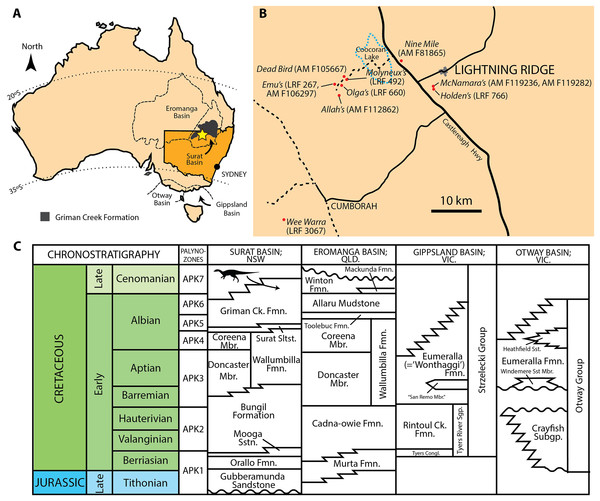
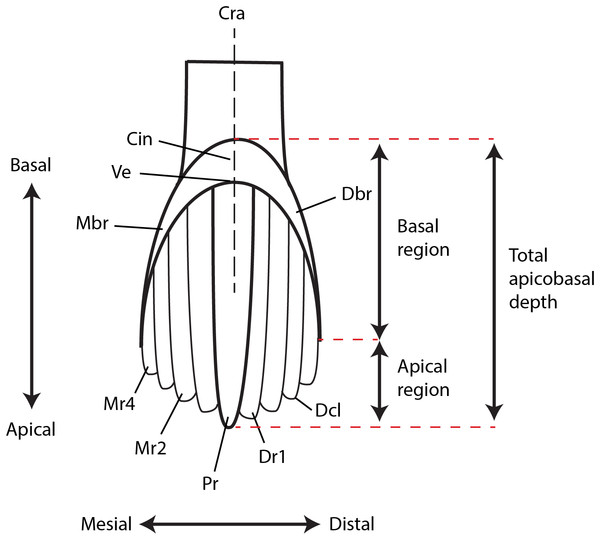
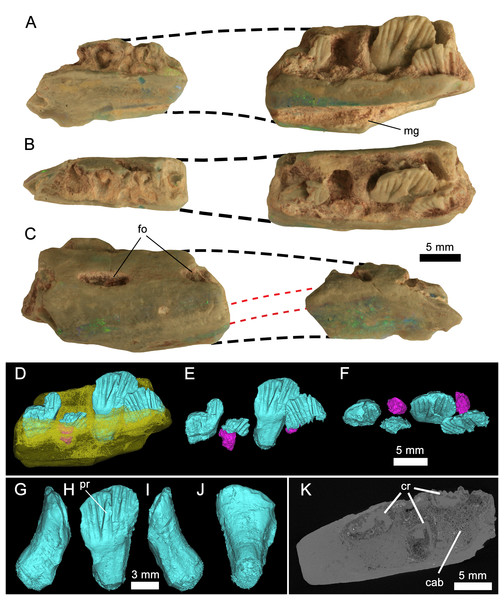
Bell and colleagues examine ornithopod diversity in the Griman Creek Formation (Cenomanian) of Lightning Ridge, New South Wales, describing a new taxon (Weewarrasaurus pobeni) and analyzing isolated teeth attributed to an indeterminate possible iguanodontian. The work compares dental morphology in detail with Muttaburrasaurus langdoni, noting differences in secondary enamel ridge numbers. Results indicate a diverse ornithopod fauna in the Cenomanian of Australia, with Lightning Ridge acting as a transitional zone between Queensland's iguanodontian-rich faunas and Victoria's basal ornithopod-dominated deposits. The study expands the biogeographic context of Muttaburrasaurus and suggests that Australian ornithopod diversity may have been underestimated.
Phylogeny of iguanodontian dinosaurs and the evolution of quadrupedality
Poole, K.E. · Palaeontologia Electronica
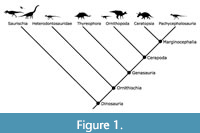
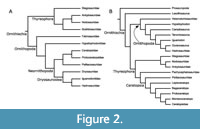
Poole conducts the most comprehensive phylogenetic analysis of Iguanodontia up to 2022, combining parsimony and Bayesian analyses in a matrix of 106 taxa. Muttaburrasaurus langdoni is included as a focal taxon and consistently positioned among the most basal iguanodontians, outside Ankylopollexia. The paper explores the evolution of quadrupedality within Iguanodontia, demonstrating that four-legged locomotion arose multiple times independently. Poole's analyses contribute to the debate on Muttaburrasaurus's position relative to Rhabdodontomorpha and Elasmaria. The article, published open access in Palaeontologia Electronica, is a reference for current Iguanodontia systematics.

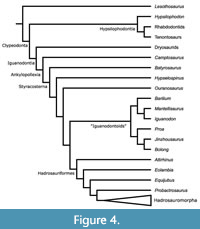
A comprehensive phylogenetic analysis on early ornithischian evolution
Fonseca, A.O. et al. · Journal of Systematic Palaeontology
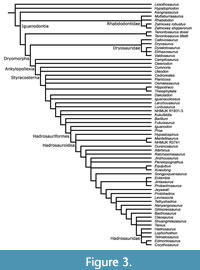
Fonseca and colleagues publish the most comprehensive phylogenetic analysis ever conducted for early ornithischians, with an unprecedented character matrix. The result for Muttaburrasaurus langdoni is surprising: the animal is positioned within Elasmaria, a clade of Gondwanan ornithopods previously considered distinct from Rhabdodontomorpha. This partially contradicts Dieudonné et al. (2016). The analysis suggests that Elasmaria contains all non-Dryomorpha Gondwanan ornithopods, with members displaying multiple distinct body plans. The paper establishes the current state of the taxonomic debate about Muttaburrasaurus and is the most recent reference on the species' systematic position.


An annotated checklist of Australian Mesozoic tetrapods
Poropat, S.F. et al. · Alcheringa: An Australasian Journal of Palaeontology
Poropat and colleagues compile the most comprehensive checklist ever produced of Australian Mesozoic tetrapods, with complete synonymies, type material, source locality, geological age, and bibliographic references for 111 species. For Muttaburrasaurus langdoni, the work consolidates the record of all known specimens, including holotype QM F6140, the 'Dunluce Skull' QM F14921, and isolated teeth from Hughenden and Lightning Ridge. The checklist is the most recent authoritative taxonomic reference for the species and serves as the starting point for any discussion of its validity and geographic distribution. The paper inaugurates the Australian Fossil National Species List (auFNSL) series in Alcheringa.


The Muttaburra Lizard
Cannon, L. · Australian Age of Dinosaurs
Cannon presents an accessible yet scientifically grounded review of Muttaburrasaurus langdoni's history, from discovery by Doug Langdon in 1963 to the most recent paleoecological interpretations. The article describes in detail the preparation process of the holotype at the Queensland Museum, the morphology of the bulla nasalis, and hypotheses about its function (vocalization, display, thermoregulation). Cannon also discusses the exceptional preservation of the specimen for an Australian dinosaur. The paper was published in Australian Age of Dinosaurs, an important regional journal for Australian Mesozoic paleontology.


High-latitude neonate and perinate ornithopods from the mid-Cretaceous of southeastern Australia
Kitchener, J.L. et al. · Scientific Reports
Kitchener and colleagues describe material from neonate and perinate ornithopods from the mid-Cretaceous of southeastern Australia, providing the first direct evidence of reproductive strategies in high-latitude Australian ornithopods. The study is contextually relevant to Muttaburrasaurus because it demonstrates that mid-sized ornithopods nested and raised young at extreme latitudes during the Australian Cretaceous, when the continent was still close to the southern polar circle. The growth and ontogeny data discussed in the paper provide a comparative framework for understanding the life biology of ornithopods like Muttaburrasaurus, which inhabited the more temperate latitudes of Queensland.


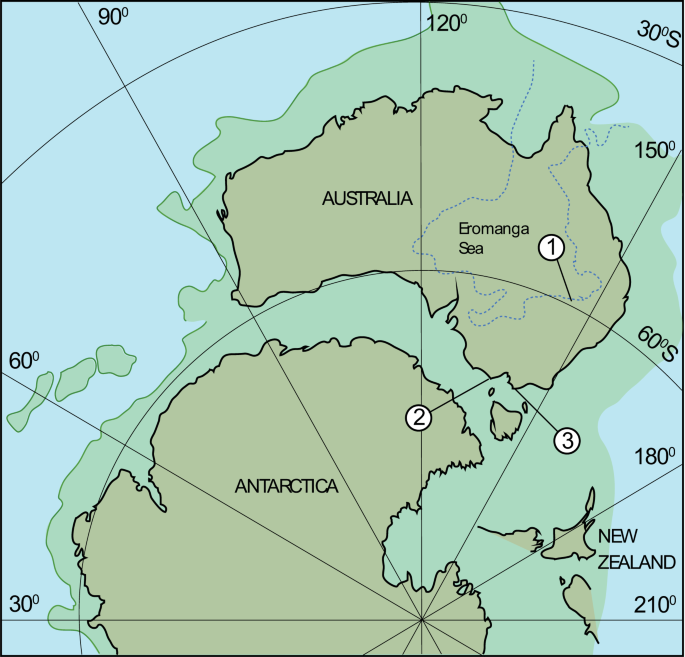
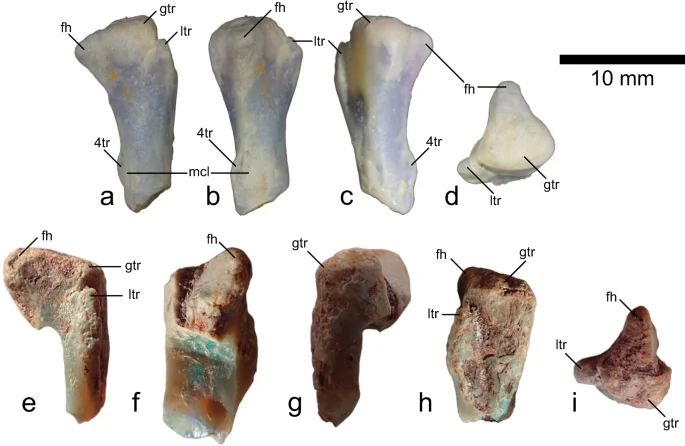
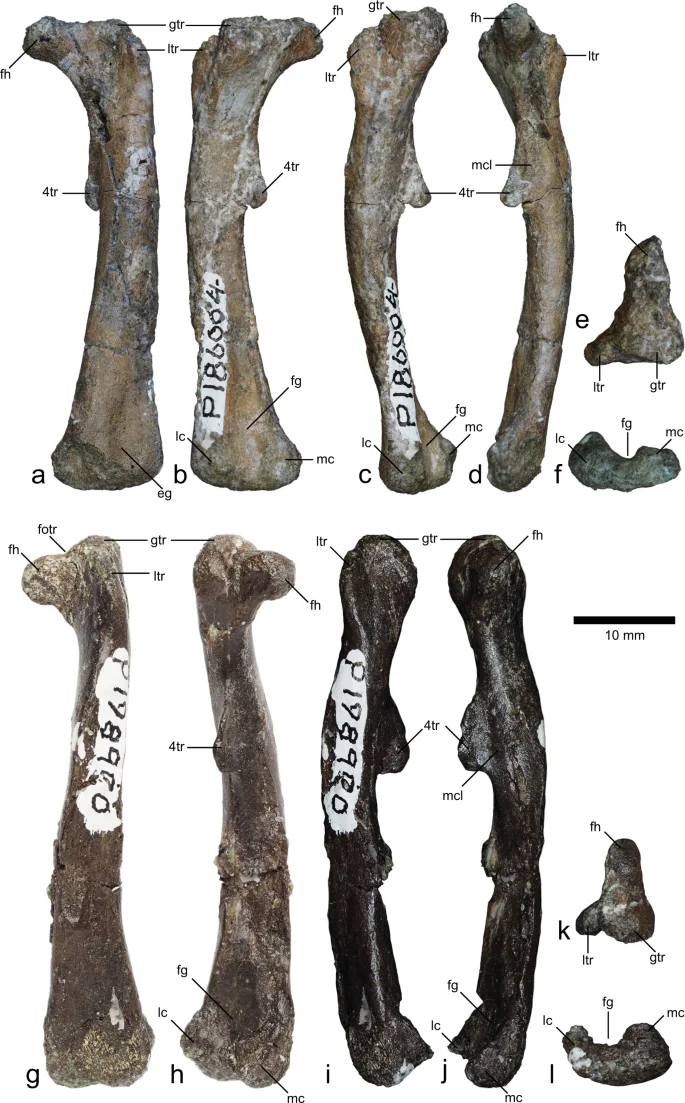
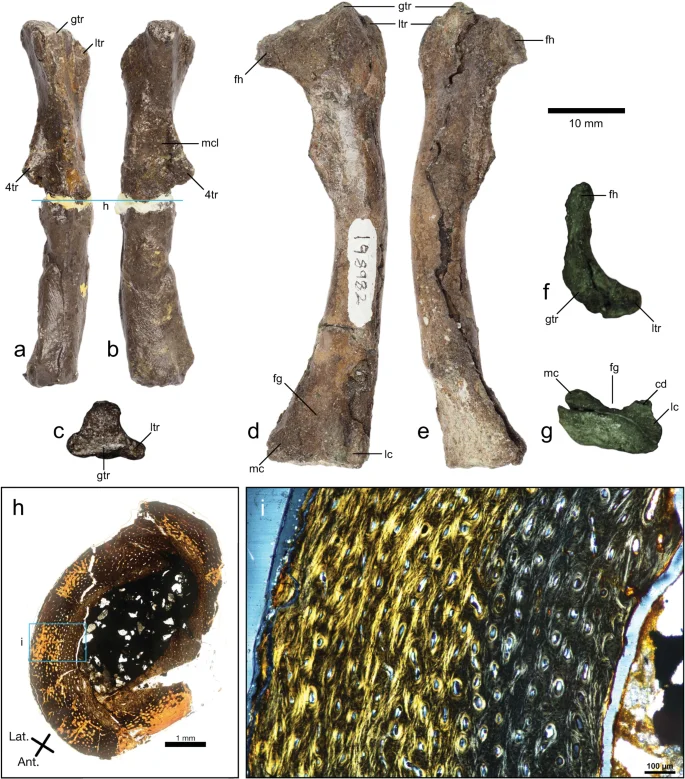
Paleoecology of the Mackunda Formation and associated Cretaceous vertebrate faunas of Queensland
Bartholomai, A. e Molnar, R.E. · Memoirs of the Queensland Museum
This work, complementary to the original Muttaburrasaurus description, describes the paleoenvironment of the Mackunda Formation in Cretaceous Queensland. The formation represents shallow to marginal marine deposits from the Eromanga Epicontinental Sea, which covered much of central Australia during the Early-Middle Cretaceous. The environment consisted of coastal plains adjacent to araucaria and pteridophyte forests, with an estimated sea temperature of 19°C. Associated vertebrates included plesiosaurs, turtles, and fish, indicating that the Muttaburrasaurus holotype was carried by a river to the marginal marine environment before fossilizing. The paper defines the taphonomic and paleoecological context of the species.

Reappraisal of sauropod dinosaur diversity in the Upper Cretaceous Winton Formation of Queensland, Australia, through 3D digitisation and description of new specimens
Poropat, S.F. et al. · PeerJ
Poropat and colleagues revise sauropod diversity in the Winton Formation of Queensland using 3D digitization of new and existing specimens. While focused on sauropods, the work is relevant to Muttaburrasaurus because it characterizes the Australian Cretaceous fauna in which the ornithopod lived. The Winton Formation and the Mackunda/Allaru formations are geologically close and represent similar mid-to-Late Cretaceous environments in Queensland. The study demonstrates the diversity of Australian megaherbivores of the period, positioning Muttaburrasaurus as the main ornithopod in an ecosystem dominated by large sauropods such as Diamantinasaurus and Wintonotitan.


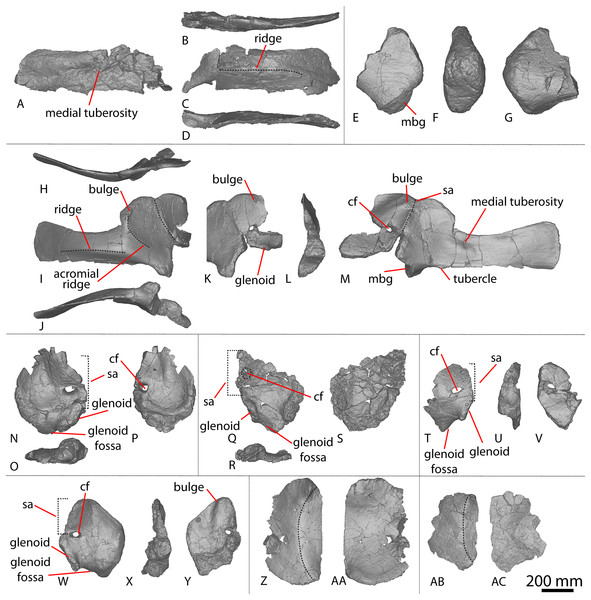
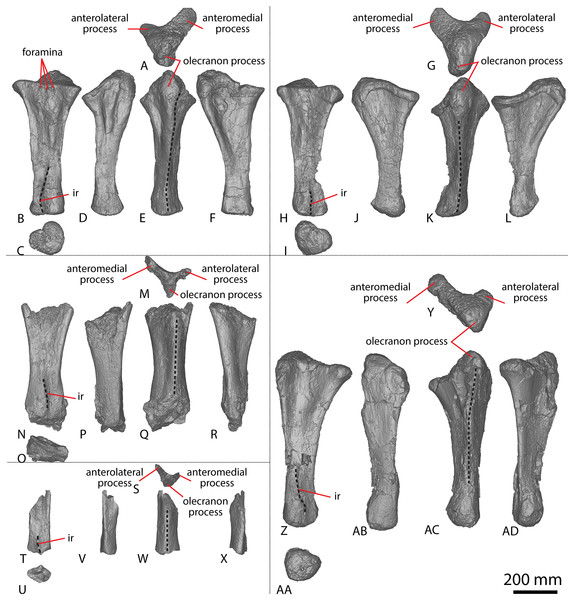
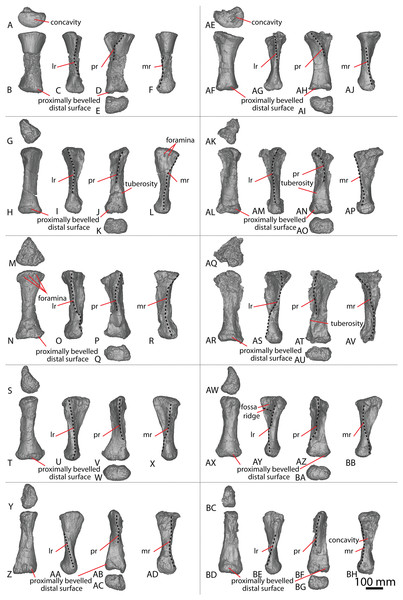
New mid-Cretaceous (latest Albian) dinosaurs from Winton, Queensland, Australia
Hocknull, S.A. et al. · PLOS ONE
Hocknull and colleagues describe three new mid-Cretaceous dinosaurs from Winton, Queensland, from fossil sites close to Muttaburrasaurus localities: the titanosaurian sauropod Diamantinasaurus matildae, the megaraptorid Australovenator wintonensis, and the basal sauropod Wintonotitan wattsi. These animals coexisted with Muttaburrasaurus in the same Cretaceous Queensland ecosystem during the latest Albian. The paper contextualizes Muttaburrasaurus as the only large ornithopod in an ecosystem dominated by sauropods, with Australovenator as the main predator. The work establishes the Winton fauna as one of the best-documented dinosaurian ecosystems in Australia.

Famous museum specimens
QM F6140 (holótipo)
Queensland Museum, Brisbane
Holotype of the species, found at Rosebery Downs Station on the banks of the Thomson River near Muttaburra. Includes skull, mandible, vertebrae, pelvis, and partial limbs. It is the foundational specimen for all research on the species and is on display at the Queensland Museum.
QM F14921 ('Dunluce Skull')
Queensland Museum, Brisbane
Second known skull of Muttaburrasaurus, found at Dunluce Station between Hughenden and Richmond. It differs from the holotype in dental enamel characteristics, possibly suggesting a distinct species not yet formally described. The skull was collected in 1987 when Robert Walker was only 14 years old.
In cinema and popular culture
Muttaburrasaurus langdoni is Australia's most famous dinosaur in popular culture, largely thanks to the BBC's 1999 series Walking with Dinosaurs, which introduced it to global audiences in the episode 'Spirits of the Ice Forest'. The scene of Muttaburrasaurus herds migrating through the Cretaceous polar forest was one of the series' most memorable, even if scientifically questionable: the animal's fossils come from tropical Queensland, not polar latitudes. Its first media appearance was the Australian documentary 'Muttaburrasaurus: Life in Gondwana' (1993), produced with stop-motion and distributed internationally. Inclusion in the Jurassic World Evolution game franchise (2018, 2021, and 2024) expanded its reach to a global gaming audience, making it one of the few non-North American dinosaurs with a consolidated presence in the Jurassic universe. The game Prehistoric Kingdom also included the species, with one of the most careful scientific representations ever made. In 2022, when it was elected official fossil emblem of Queensland, international media coverage increased interest in the species. Over the decades, the inflatable nasal prominence became the animal's visual trademark, consistently depicted as a vocalization instrument.
Classification
Discovery
Fun fact
Muttaburrasaurus langdoni was chosen by popular vote as the official fossil emblem of Queensland state in 2022, defeating eleven other candidates. The hollow nasal prominence that made it famous was probably used as a biological trombone to produce low-frequency vocalizations audible from kilometers away.
Last reviewed: April 24, 2026