Heterodontosaurus
Heterodontosaurus tucki
"Tuck's different-toothed lizard"
About this species
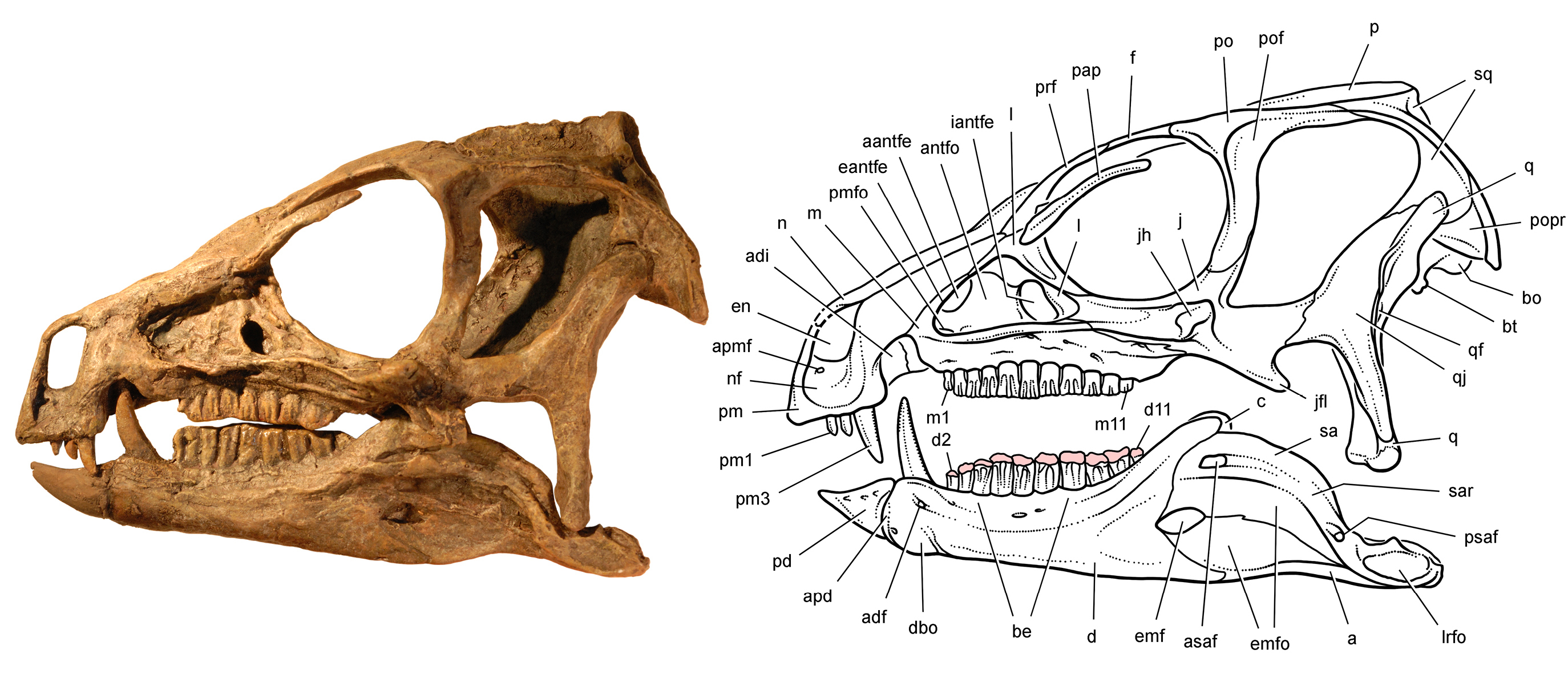
Heterodontosaurus tucki is one of the most primitive ornithischians known and certainly the most anatomically surprising of its time. It lived in the Early Jurassic, approximately 201 to 196 million years ago, on the semi-arid plains of what is now South Africa, in the Upper Elliot Formation. At only 1.2 meters in length and under 2 kg, it was an agile biped with long hind limbs and relatively robust forelimbs, likely using its hands to manipulate vegetation or small prey. Its skeleton is extraordinarily well preserved, with the skull SAM-PK-K1332 being one of the most complete among primitive Triassic-Jurassic dinosaurs. The defining feature of the genus, reflected in its name, is its radically heterogeneous dentition: unlike the vast majority of herbivorous dinosaurs, Heterodontosaurus possessed three distinct types of teeth. At the front of the upper jaw were small incisor-like teeth for cropping vegetation, followed by large canine-like tusks at the corners of the maxilla and dentary, and taller, laterally compressed cheek teeth with crushing edges for processing plant food. This combination of three distinct dental morphologies in a single animal is unique among Dinosauria and generated decades of debate about function and diet. The question of the tusks is the most controversial aspect of Heterodontosaurus biology. Crompton and Charig, when describing the species in 1962, suggested omnivorous use. Later studies, especially those of Santa Luca (1980) and Sereno (2012), raised the hypothesis of sexual dimorphism: the tusks would be exclusive to males and would function in display or intraspecific combat, analogous to modern deer and suids. Norman et al. (2011), upon reexamining the material, concluded that the canine teeth were not related to carnivory but rather to social behavior. Porro et al. (2011) performed biomechanical analysis of the jaw and confirmed that its structure was highly adapted to processing hard plant material. Heterodontosaurus is also notable for its phylogeny. For decades it was placed at the base of ornithopods, but modern analyses position it at the base of Ornithischia or as a member of a lineage sister to Genasauria. This makes it a valuable window into the early stages of ornithischian dinosaur evolution, before the great diversification that produced hadrosaurs, ceratopsians, ankylosaurs, and stegosaurs. Additionally, possible evidence of keratin on the anterior teeth suggests a partial horny beak, as in many modern birds and turtles.
Geological formation & environment
The Upper Elliot Formation is a sedimentary unit of the Stormberg Group, deposited during the Hettangian to Sinemurian (approximately 201 to 196 Ma) in the current Karoo Basin of South Africa and Lesotho. The formation is composed predominantly of red sandstones, siltstones, and claystones of fluvial and aeolian origin, indicating an environment of floodplains with seasonal rivers in a hot, semi-arid climate. It is one of the richest fossiliferous units of the Early Jurassic in the Southern Hemisphere, preserving basal theropods such as Coelophysis rhodesiensis (Syntarsus), prosauropods such as Massospondylus carinatus, and ornithischians such as Heterodontosaurus tucki and Lesothosaurus diagnosticus. Deposition in the Upper Elliot occurred in a paleogeographic scenario of intact Gondwana, before the opening of the South Atlantic Ocean. The formation's rocks record wetting and drying cycles that define the internal stratigraphy of the unit. The abundance of dinosaur, turtle, and cynodont fossils in the formation has made the Karoo Basin one of the most important paleontological windows for understanding Early Jurassic terrestrial fauna in Gondwana, with implications for biotic recovery after the Triassic-Jurassic mass extinction.
Image gallery
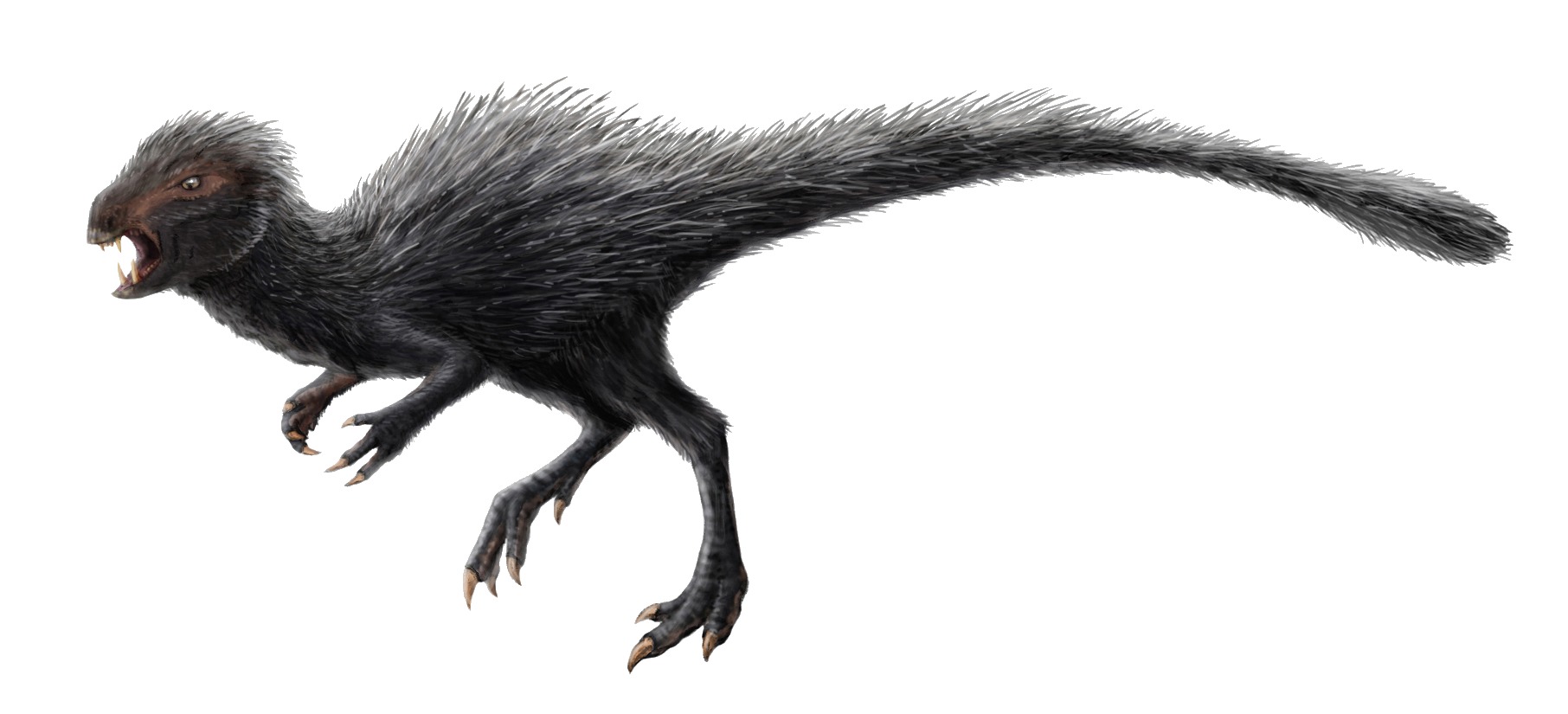






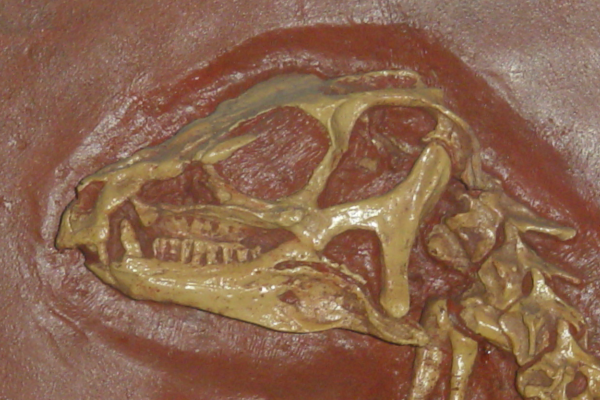
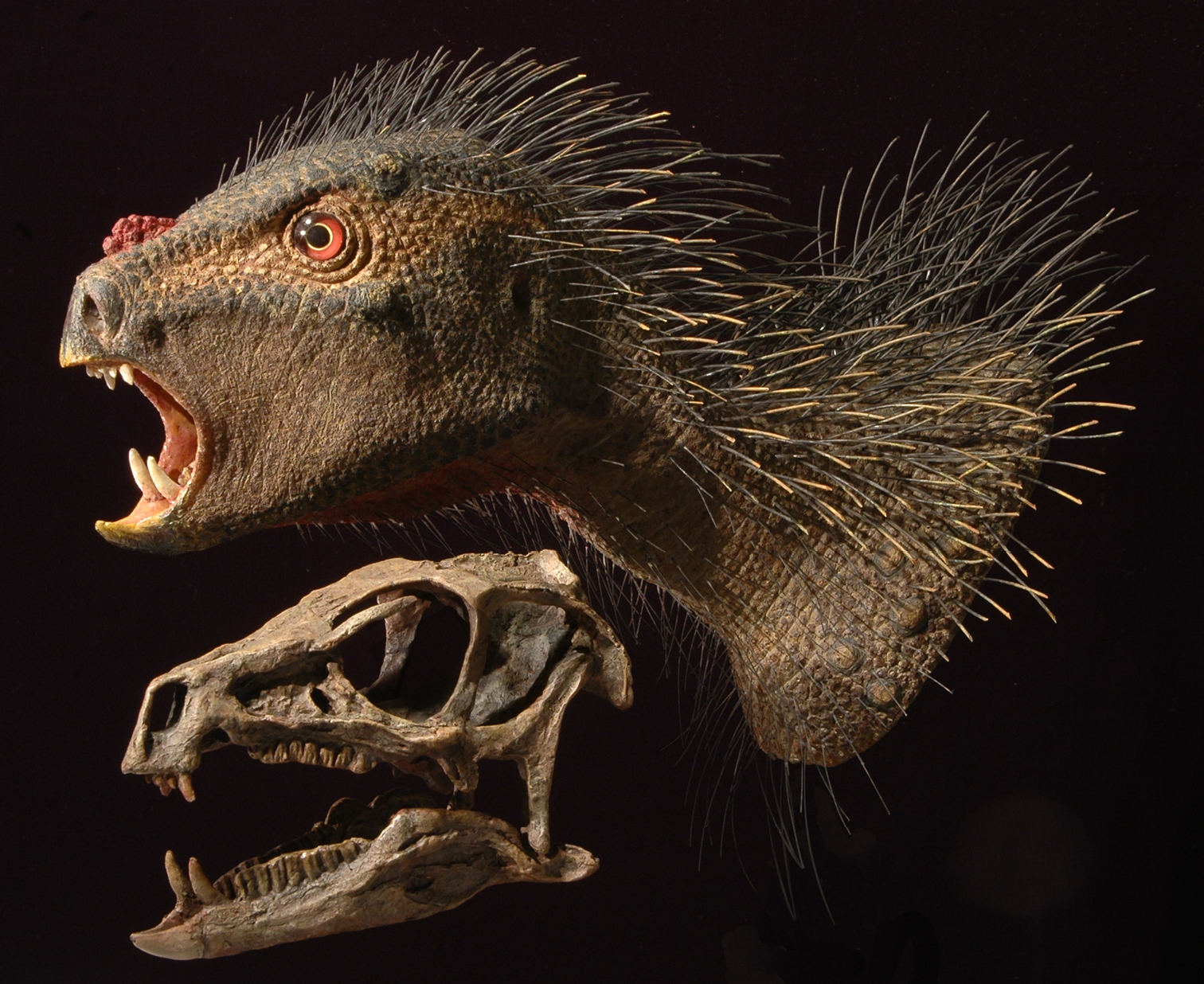
Life restoration of Heterodontosaurus tucki, a small Early Jurassic ornithischian from South Africa, with integument based on the related Tianyulong.
FunkMonk (Julian Johnson-Mortimer), Wikimedia Commons, CC BY-SA 3.0
Ecology and behavior
Habitat
Heterodontosaurus tucki inhabited the semi-arid plains and river valleys of the Upper Elliot Formation, in what is now the Karoo Basin region of southern Africa. The Hettangian-Sinemurian environment in this region was characterized by seasonal alternation between wet and dry periods, with vegetation composed of pteridophytes, cycads, conifers, and ginkgoales. The climate was warmer and drier than the preceding Late Triassic, and the animal likely sought shelter and water in seasonal river valleys.
Feeding
The heterodont dentition of Heterodontosaurus tucki suggests a flexible, opportunistic diet. The molariform lateral teeth with grinding cusps were highly efficient for processing hard vegetation such as cycad leaves, seeds, and fibrous stems. The prominent canines may have been used to dig up roots and tubers or, according to more currently accepted hypotheses, for intraspecific display and combat. The combination of robust forelimbs with grasping hands suggests active food manipulation capability, possibly including soil invertebrates, eggs, or small prey.
Behavior and senses
Based on canine morphology and comparisons with modern analogs such as cervids and suids, the social behavior of Heterodontosaurus likely included display rituals with the tusks as a central element. Males (or the tusked sex) would compete for territory, mates, or food resources through visual confrontations and possibly ritualized combat. Fast bipedal locomotion, demonstrated by cursorial hindlimb proportions, would be useful both for escaping predators such as Syntarsus (Coelophysis rhodesiensis) and for chasing prey or competing intraspecifically.
Physiology and growth
The discovery of integumentary filaments in Tianyulong confuciusi, a close member of the same clade, raises the possibility that Heterodontosaurus tucki also possessed some form of insulating covering. If confirmed, this would indicate that the animal was endothermic (warm-blooded) or at least mesothermic, with a faster metabolism than contemporary ectothermic reptiles. The cursorial limb proportions and potentially protein-rich diet reinforce the high metabolism hypothesis. Bone histology of correlative specimens suggests rapid growth consistent with endothermy.
Paleogeography
Continental configuration

Scotese & Vérard · CC BY 4.0 · Jurassic, ~155 Ma
Fossil sites

Wikimedia Commons
During the Hetangiano-Sinemuriano (~201–196 Ma), Heterodontosaurus tucki inhabited the fragmenting Pangea. North America and Europe were still close, and the North Atlantic was just beginning to open. Climate was warm and humid globally, with no polar ice caps.
Bone Inventory
The holotype SAM-PK-K1332, housed at the South African Museum (Iziko) in Cape Town, consists of a nearly complete skull with mandible, teeth in situ, and partial postcranial elements. A second specimen, SAM-PK-K10487, preserves a more complete articulated skeleton including detailed forelimb and hindlimb elements. Preservation quality is exceptional for the South African Lower Jurassic, allowing precise biomechanical and histological analyses.

Found elements
Inferred elements
Scientific Literature
10 papers in chronological order — from the original description to recent research.
A new ornithischian from the Upper Triassic of South Africa
Crompton, A.W.; Charig, A.J. · Nature
Founding paper describing Heterodontosaurus tucki based on the holotype SAM-PK-K1332 recovered from the Upper Elliot Formation of the Eastern Cape, South Africa. Crompton and Charig identify the heterodont dentition as the most important diagnostic character: frontal incisor teeth, large canine-like tusks at the corners of the maxilla and dentary, and lateral molariform teeth with grinding cusps. The authors briefly discuss the possibility of an omnivorous function, given that canine teeth are typical of carnivores or omnivores among vertebrates generally. The specific name tucki honors Mr. G.C. Tuck, who financially supported the expeditions. This two-page Nature paper launches a century of debate about dentition, diet, sexual dimorphism, and phylogeny in one of the most primitive ornithischians known.
The postcranial skeleton of Heterodontosaurus tucki (Reptilia, Ornithischia) from the Stormberg of South Africa
Santa Luca, A.P. · Annals of the South African Museum
Detailed description of the postcranial skeleton of Heterodontosaurus tucki based on a nearly complete articulated specimen. Santa Luca documents elongated cursorial hind limbs typical of a fast biped, but also robust forelimbs with large hands and strong claws suggesting facultative quadrupedal locomotion or active object manipulation. The study reveals vertebrae with relatively low neural spines, a primitive sacrum, and a well-developed manual digital formula. Santa Luca discusses the hypothesis of sexual dimorphism to explain the presence of canine teeth in only certain specimens, anticipating debates that would persist for decades. This work remains a fundamental reference for appendicular skeleton anatomy of heterodontosaurids and establishes the morphological foundation for subsequent phylogenetic analyses.
Heterodontosauridae
Weishampel, D.B.; Witmer, L.M. · The Dinosauria (University of California Press)
Systematic review chapter on heterodontosaurids published in the first edition of the reference book The Dinosauria. Weishampel and Witmer evaluate the taxa known at the time, discuss the phylogenetic position of the group at the base of Ornithischia or as basal ornithopods, and synthesize knowledge on heterodont dental morphology. The authors compare the dentition of Heterodontosaurus with other primitive ornithischians such as Lesothosaurus, concluding that the combination of three tooth types represents a clear autapomorphy. The chapter also discusses the Gondwanan geographic distribution of the group and the limited stratigraphic record, concentrated mainly in South Africa and possibly South America. This review established the dominant interpretive framework for heterodontosaurids for more than a decade.

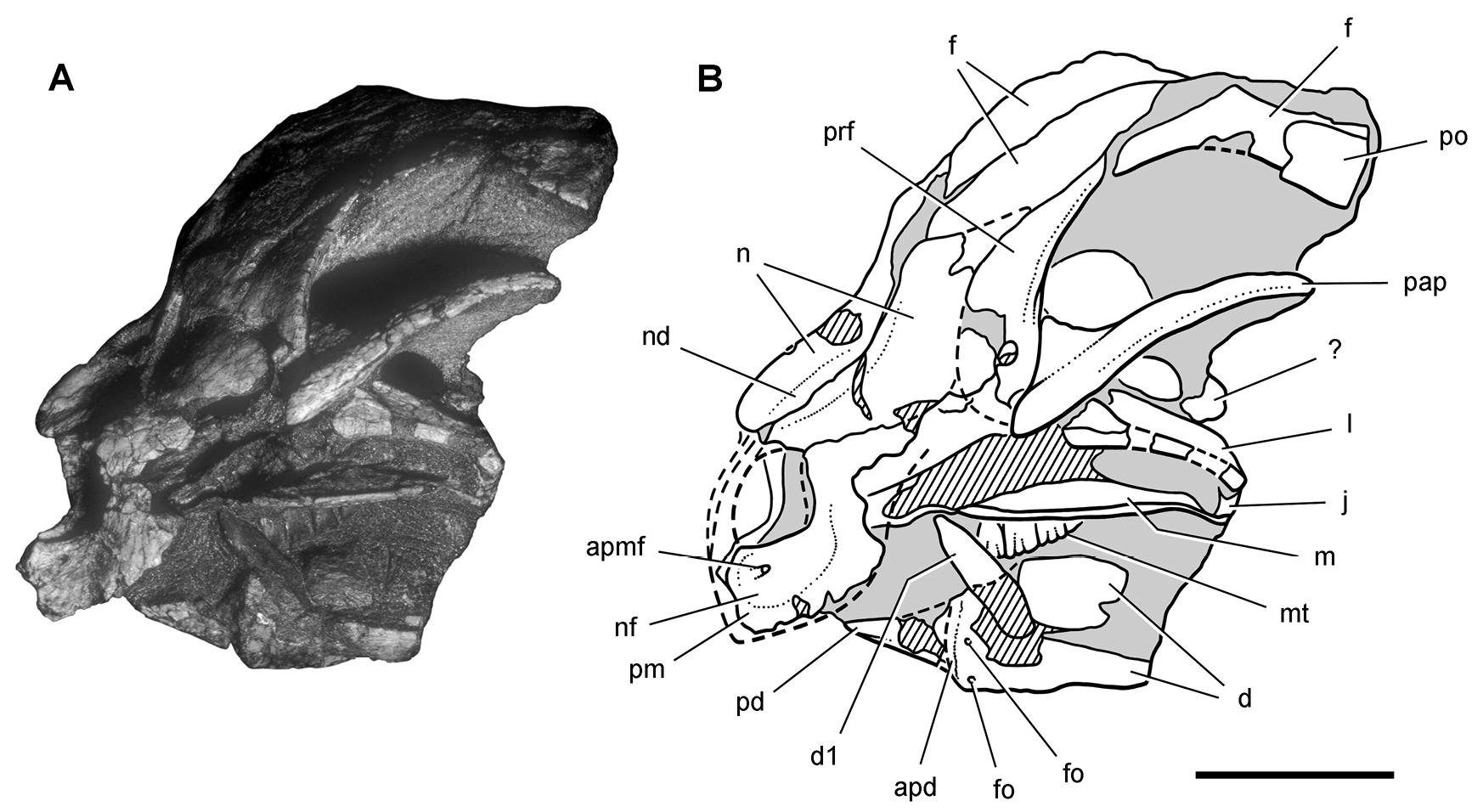
The Lower Jurassic ornithischian dinosaur Heterodontosaurus tucki Crompton & Charig, 1962: cranial anatomy, functional morphology, taxonomy, and relationships
Norman, D.B.; Crompton, A.W.; Butler, R.J.; Porro, L.B.; Charig, A.J. · Zoological Journal of the Linnean Society
Comprehensive redescription of the cranial anatomy of Heterodontosaurus tucki, incorporating new specimens and modern imaging techniques. Norman and collaborators describe the skull morphology, tooth structure, and bone sutures in unprecedented detail. A central conclusion is that the canine teeth (tusks) are not related to predatory behavior: analysis of mandibular biomechanics indicates that a lateral bite would be ineffective for capturing mobile prey. Instead, the authors propose that the tusks functioned in intraspecific display, possibly as a dominance indicator or in ritualized combat between males, similar to the behavior of deer, wild boars, and some modern lizards. The phylogenetic analysis positions Heterodontosauridae at the base of Ornithischia, before the divergence of Genasauria. This work is today the primary reference for cranial anatomy of the species.
Descriptive anatomy and three-dimensional reconstruction of the skull of the early dinosaur Heterodontosaurus tucki (Ornithischia: Heterodontosauridae) from the Lower Jurassic of South Africa
Porro, L.B.; Rayfield, E.J.; Clack, J.A. · PLOS ONE
Pioneering study using computed tomography and three-dimensional reconstruction of the skull of Heterodontosaurus tucki. Porro and collaborators reveal internal cranial anatomy in unprecedented detail, including the braincase structure, inner ear cavity, cranial nerve canals, and tooth attachment mode in the maxilla and dentary. Finite element analysis of masticatory biomechanics demonstrates that the Heterodontosaurus mandible was capable of generating significant bite forces at the lateral crushing teeth but relatively weak forces at the canines. This reinforces the interpretation that the lateral teeth were the primary food-processing instrument and that the canines served a non-alimentary function. The work also documents a partially developed secondary palate, suggesting more advanced separation of air and food flow than in other basal ornithischians.


Taxonomy, morphology, masticatory function and phylogeny of heterodontosaurid dinosaurs
Sereno, P.C. · ZooKeys
Monographic revision of heterodontosaurids by Paul Sereno, one of the most comprehensive works ever published on the group. Sereno presents a morphological dataset with more than 400 characters and a phylogenetic analysis that firmly positions Heterodontosauridae at the base of Ornithischia, as sister group to Genasauria. One of the most cited contributions is the reappraisal of the canine teeth: Sereno argues, based on comparison of multiple specimens, that the tusks may be restricted to adults of one sex, constituting a case of sexual dimorphism. The work also describes new heterodontosaurid specimens from China and South America, considerably expanding the paleobiogeographic distribution of the group beyond South Africa. The monograph includes detailed skeletal reconstructions and comparative analysis of all known dentition of the group.


The phylogeny of the ornithischian dinosaurs
Butler, R.J.; Upchurch, P.; Norman, D.B. · Journal of Systematic Palaeontology
Comprehensive phylogenetic analysis of ornithischian dinosaurs representing a milestone in understanding relationships among the major clades. Butler, Upchurch, and Norman use a matrix of 228 taxa and 252 characters to recover the topology of Ornithischia. The most relevant result for Heterodontosaurus is the positioning of Heterodontosauridae as the most basal clade of the entire group, sister to all other ornithischians. This position suggests that the lineage diverged very early in the evolutionary history of Ornithischia, possibly already in the Triassic, and that the derived characters of heterodontosaurids, such as the heterodont dentition, are autapomorphies of the group and do not represent an ancestral condition. The work has implications for understanding the timing and biogeography of the initial radiation of ornithischians in Gondwana.


New heterodontosaurid specimens from the Lower Jurassic of southern Africa and the early ornithischian dinosaur radiation
Porro, L.B.; Butler, R.J.; Barrett, P.M.; Moore-Fay, S.; Abel, R.L. · Earth and Environmental Science Transactions of the Royal Society of Edinburgh
Description of new heterodontosaurid specimens from the Lower Jurassic Upper Elliot and Clarens Formations of southern Africa. Porro and collaborators expand knowledge of taxonomic diversity and anatomical variation within the group, documenting previously unknown postcranial elements and providing new information on the initial radiation of ornithischians in Gondwana. The work is particularly important for confirming that heterodontosaurids were more diverse in southern Africa than the fossil record previously suggested, and for documenting variations in dental morphology that illuminate the debate about sexual dimorphism versus ontogenetic variation in the presence of canine teeth. The authors also discuss paleobiogeographic implications: the concentration of basal heterodontosaurids in southern Gondwana suggests the group originated in that region before dispersing to other continents.


An Early Cretaceous heterodontosaurid dinosaur with filamentous integumentary structures
Zheng, X.-T.; You, H.-L.; Xu, X.; Dong, Z.-M. · Nature
Description of Tianyulong confuciusi, a heterodontosaurid from the Early Cretaceous of China that preserves filamentous dermal structures along the dorsal midline and tail. This is one of the most impactful papers for understanding the evolutionary history of heterodontosaurids, as it demonstrates that members of the group possessed complex integumentary coverings, possibly homologous to theropod feathers. Although Tianyulong is a different taxon from Heterodontosaurus, both belong to the clade Heterodontosauridae, and the finding raises the fascinating question of whether Heterodontosaurus tucki might also have had some form of filamentous covering. Zheng et al. discuss the implications for reconstructing the common ancestor of Dinosauria: if both ornithischians and saurischians possessed filaments, this covering may be primitive for the entire clade.


Prosauropod dinosaurs and iguanas: speculation on the diets of extinct reptiles
Barrett, P.M. · Evolution of Herbivory in Terrestrial Vertebrates (Cambridge University Press)
Review of dietary strategies in primitive dinosaurs, with special attention to Heterodontosaurus tucki as a key taxon for understanding the evolution of complex dentition in Dinosauria. Barrett evaluates morphological, biochemical, and contextual evidence to determine whether different groups of basal dinosaurs were strict herbivores, omnivores, or occasional carnivores. For Heterodontosaurus, the author argues that the combination of highly developed lateral grinding teeth with prominent canines is more consistent with an omnivorous diet than with strict herbivory. The presence of canines in other omnivorous reptiles and the apparent manual capacity to manipulate objects reinforce this interpretation. The chapter contextualizes Heterodontosaurus in the evolutionary transition between primitive carnivory of basal archosaurs and the specialized herbivory of the major ornithischian groups of the Jurassic and Cretaceous.
Famous museum specimens

SAM-PK-K1332
Iziko South African Museum, Cape Town, África do Sul
Species holotype. Nearly complete skull with mandible and teeth in situ, including large canine teeth and lateral crushing teeth. Collected from the Upper Elliot Formation of the Eastern Cape.
SAM-PK-K10487
Iziko South African Museum, Cape Town, África do Sul
Nearly complete and articulated postcranial specimen, basis of Santa Luca's (1980) study. Includes well-preserved forelimbs and hindlimbs that revealed the cursorial locomotor anatomy and robust hands.
NHMUK RU B17
Natural History Museum, Londres, Reino Unido
Referred specimen of Heterodontosaurus tucki composed of cranial and postcranial fragments. Used in comparative phylogenetic analyses and in Norman et al.'s (2011) review.
BP/1/4522
Bernard Price Institute for Palaeontological Research (Wits), Joanesburgo, África do Sul
Referred heterodontosaurid material from the Upper Elliot Formation, used in comparative studies of taxonomic diversity of the group in southern Africa. Part of the Institute's historical collection.
In cinema and popular culture
Heterodontosaurus tucki has a modest presence in popular culture compared to more imposing dinosaurs. Its most notable appearance is in the Discovery Channel documentary series Dinosaur Revolution (2011), where it is portrayed with complex social behavior and tusks used in display rituals, reflecting the most recent scientific research. The BBC series Walking with Dinosaurs (1999) does not include it directly, though it covers the Early Jurassic southern African environment. In books and educational materials, Heterodontosaurus frequently appears as a paradigmatic example of heterodonty in dinosaurs, a subject that fascinates researchers and science communicators by contrasting with the popular image of dinosaurs as simplistic creatures. Its unique dentition and the tusk debate continue to appear in scientific and popular science articles, making the animal better known among paleontology enthusiasts than in mass popular culture generally.
Classification

Discovery
Fun fact
Heterodontosaurus is the only known dinosaur with a complete combination of three distinct tooth types: incisors, canines, and crushing teeth. This level of dental specialization is more typical of mammals than reptiles. The animal's tusks likely functioned as a display ornament and weapon in fights between males, much like the large canines of modern musk deer.
Last reviewed: April 24, 2026