
Eoraptor
Eoraptor lunensis
"Dawn thief (of the moon)"
About this species
Eoraptor lunensis is one of the oldest dinosaurs known to science. It lived approximately 231 million years ago during the Late Triassic (Carnian stage) in what is now San Juan Province, Argentina. At only 1.2 meters long and roughly 10 kg, it was a small, agile biped with heterodont dentition: serrated recurved teeth at the front of the jaw and leaf-shaped teeth toward the back, suggesting an omnivorous diet. Described by Sereno et al. in 1993 from a nearly complete skeleton, Eoraptor offers a unique window into dinosaur origins and the Triassic ecosystem of Gondwana.
Geological formation & environment
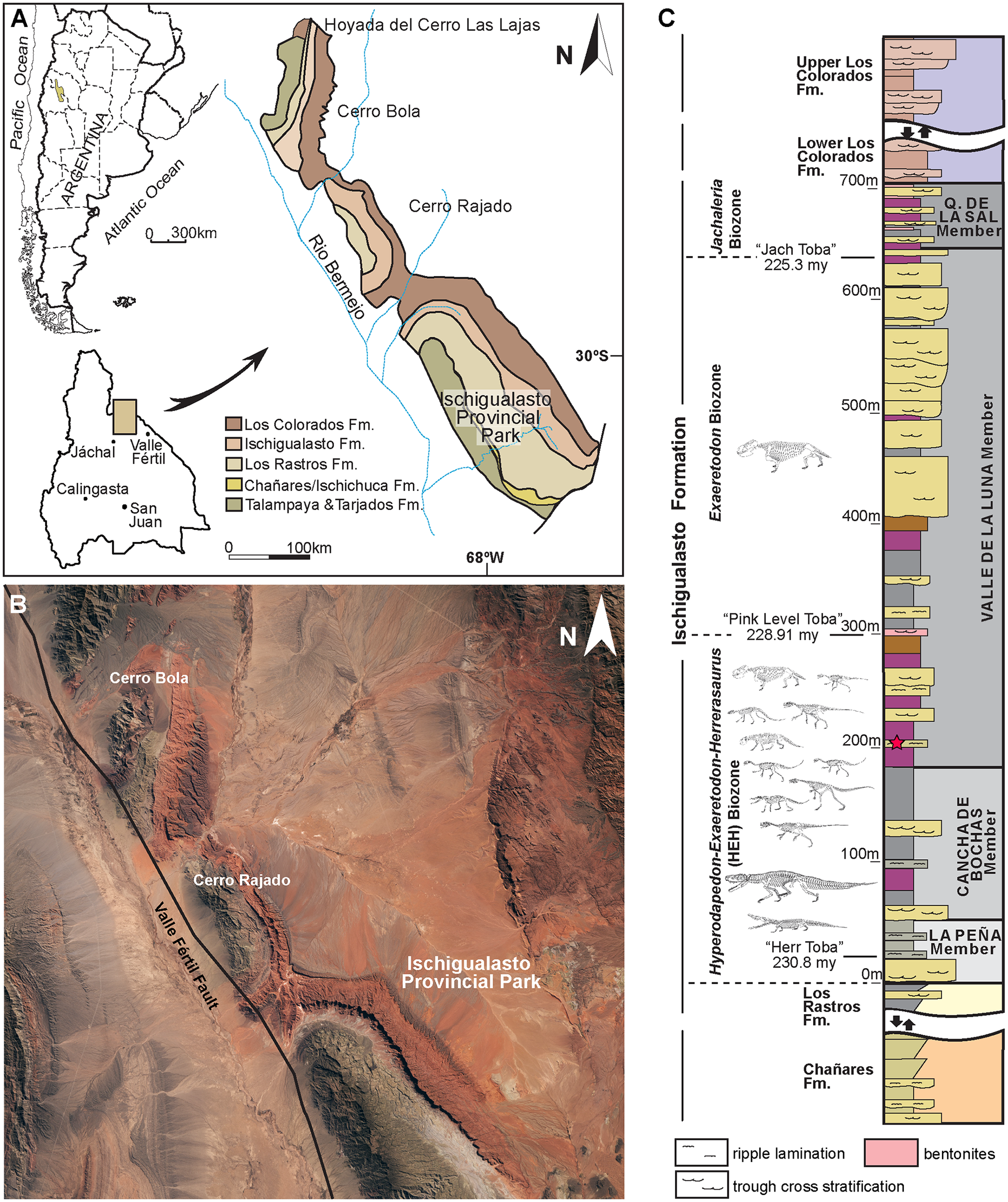
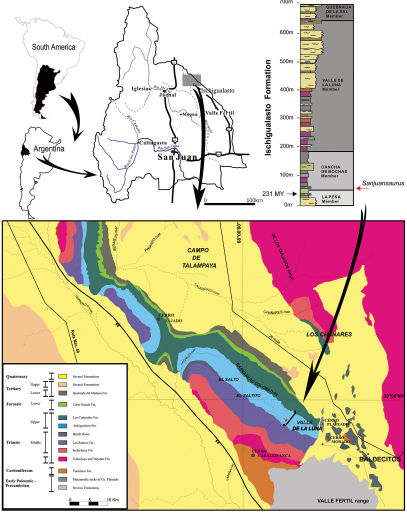
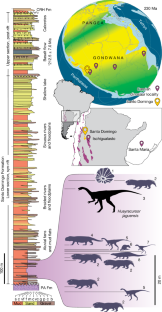
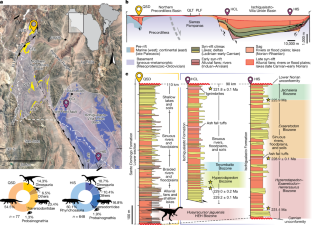
The Ischigualasto Formation, also known as Valle de la Luna, is an Upper Triassic (Carnian, ~231-228 Ma) geological unit located in northwestern Argentina, in San Juan Province. Deposited in a continental environment with seasonal rivers and floodplains, the formation contains one of the world's oldest and richest dinosaur records, including Eoraptor lunensis, Herrerasaurus ischigualastensis, Eodromaeus murphi, and Pisanosaurus mertii. The formation is part of a UNESCO World Heritage Site (Ischigualasto and Talampaya Parks) and is fundamental for understanding the origin and initial diversification of dinosaurs in Gondwana.
Image gallery


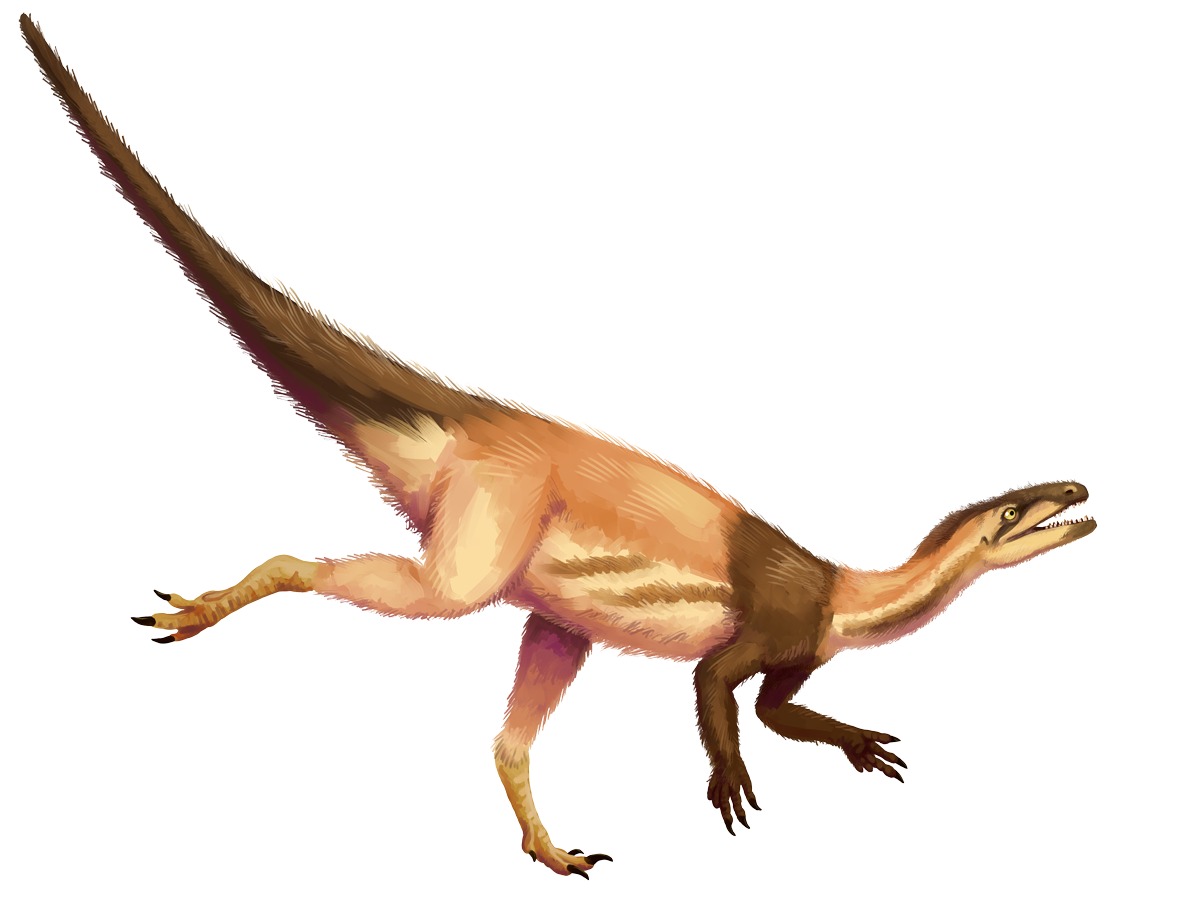
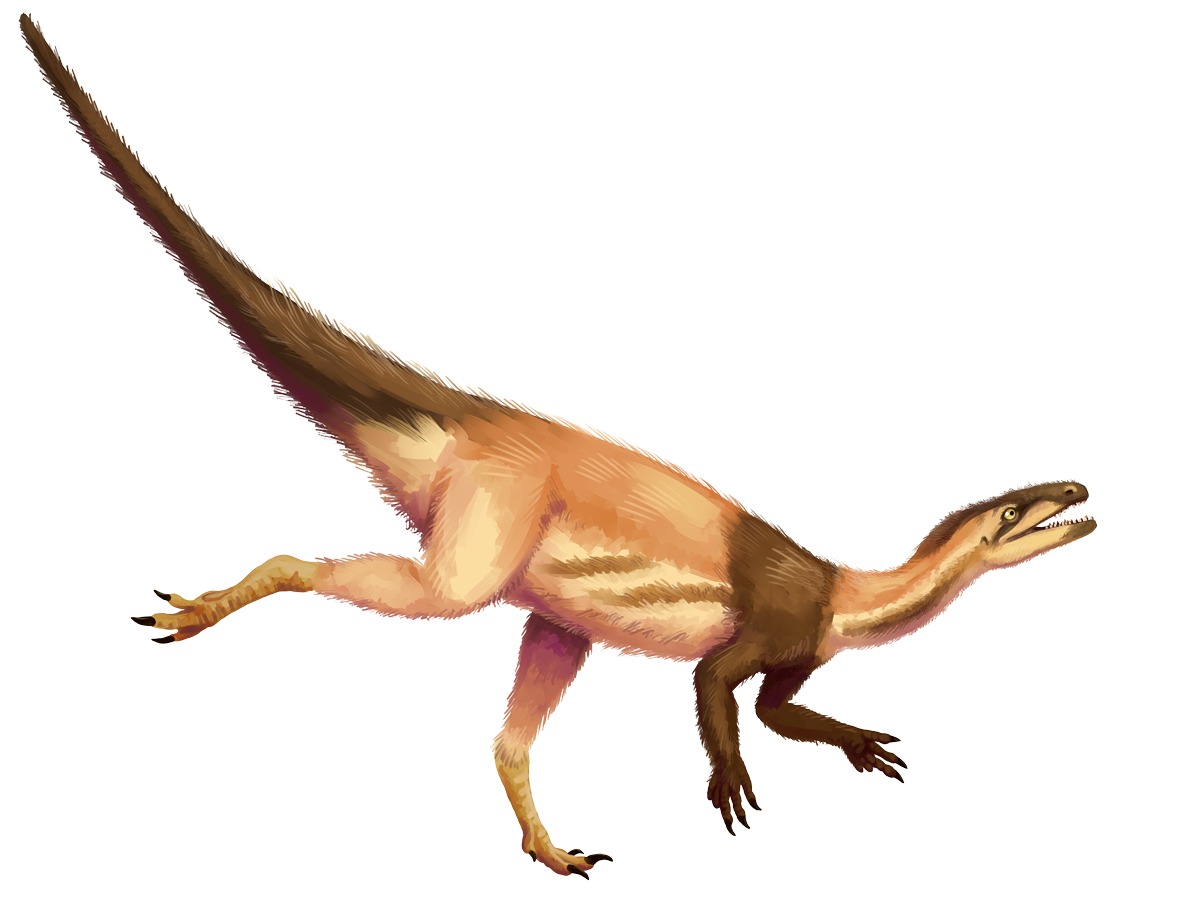
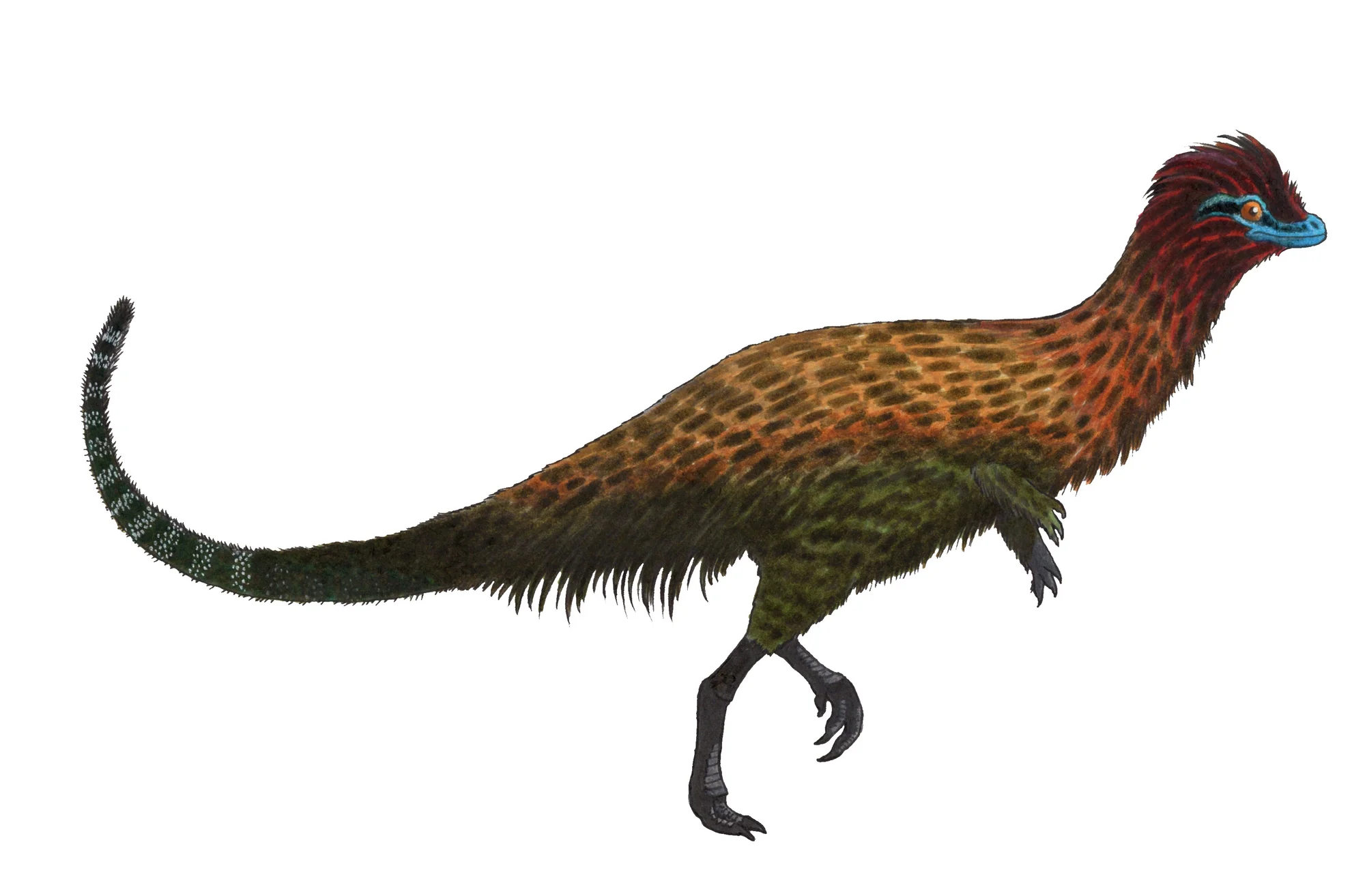
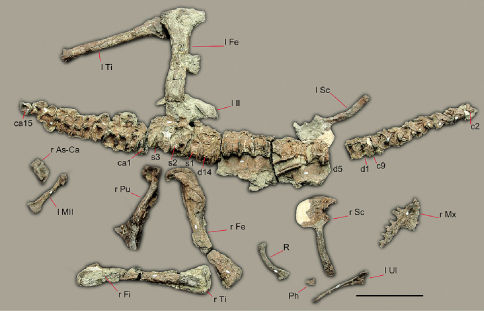
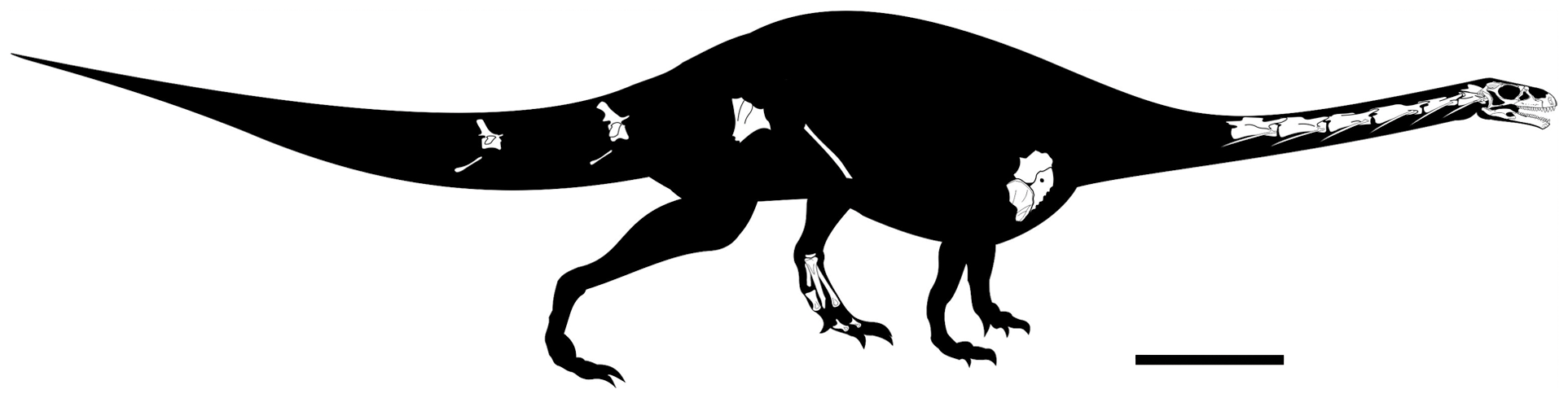
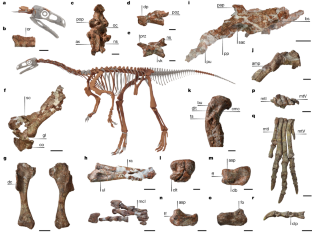
Skeletal diagram of Eoraptor lunensis showing known (white) and inferred (gray) bone elements, based on holotype PVSJ 512. One of the most completely known Triassic dinosaurs.
Maurissauro, CC BY-SA 4.0
Ecology and behavior
Habitat
Eoraptor lived in the Late Carnian (~231 Ma) in the Ischigualasto Formation, in northwestern Argentina, then part of the interior of the supercontinent Pangaea. The paleoclimate was semi-arid with strong seasonality: prolonged dry seasons alternated with intense monsoon rains. The environment was dominated by seasonal floodplains with ephemeral rivers, vegetation of conifers, ferns, and primitive seed plants. Eoraptor coexisted with other dinosaurs such as Herrerasaurus ischigualastensis and Eodromaeus murphi, as well as non-dinosaurian reptiles like rauisuchians, rhynchosaurs, and aetosaurs.
Feeding
Eoraptor's diet is inferred primarily from its dental heterodontia: the anterior teeth are serrated and recurved, typical of predators, while the posterior teeth are leaf-shaped with denticulate edges, characteristic of herbivores. This combination suggests opportunistic omnivory, with the animal feeding on small vertebrates, insects, eggs, and plant material depending on seasonal availability. Its small size (~10 kg) meant that Eoraptor could not prey on medium or large animals, concentrating on small prey and accessible plant sources.
Behavior and senses
Few direct data on Eoraptor's social behavior are available in the fossil record. Bone histology analysis (Curry Rogers et al., 2024) indicates relatively rapid growth compared to contemporary reptiles, suggesting a higher metabolism than that of modern crocodilians. The bipedal posture and relatively long hindlimbs indicate agile locomotion and running capacity. There is no evidence of gregarious or parental behavior in Eoraptor, but the rapid growth rate suggests possible parental care similar to that of birds.
Physiology and growth
Bone histology analysis of Eoraptor specimens from the Ischigualasto Formation (Curry Rogers et al., 2024) revealed a faster growth pattern than that of contemporary non-dinosaurian reptiles, indicating that a more active physiology may be a primitive dinosaurian feature. Eoraptor's long bones show accelerated growth lines with fibrolamellar vascularization, indicative of metabolism superior to that of ectothermic reptiles. The pneumatized skeleton, with relatively light bones, foreshadows the respiratory adaptations that would be more developed in avian theropods.
Paleogeography
Continental configuration

Scotese & Vérard · CC BY 4.0 · Triassic, ~225 Ma
Fossil sites
Curry Rogers et al. · CC BY 4.0
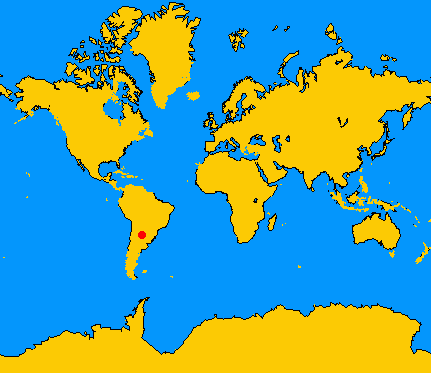
During the Carniano (~231–228 Ma), Eoraptor lunensis inhabited Pangea, the single supercontinent joining all modern continents. Climate was dry and hot across much of the continental interior.
Bone Inventory
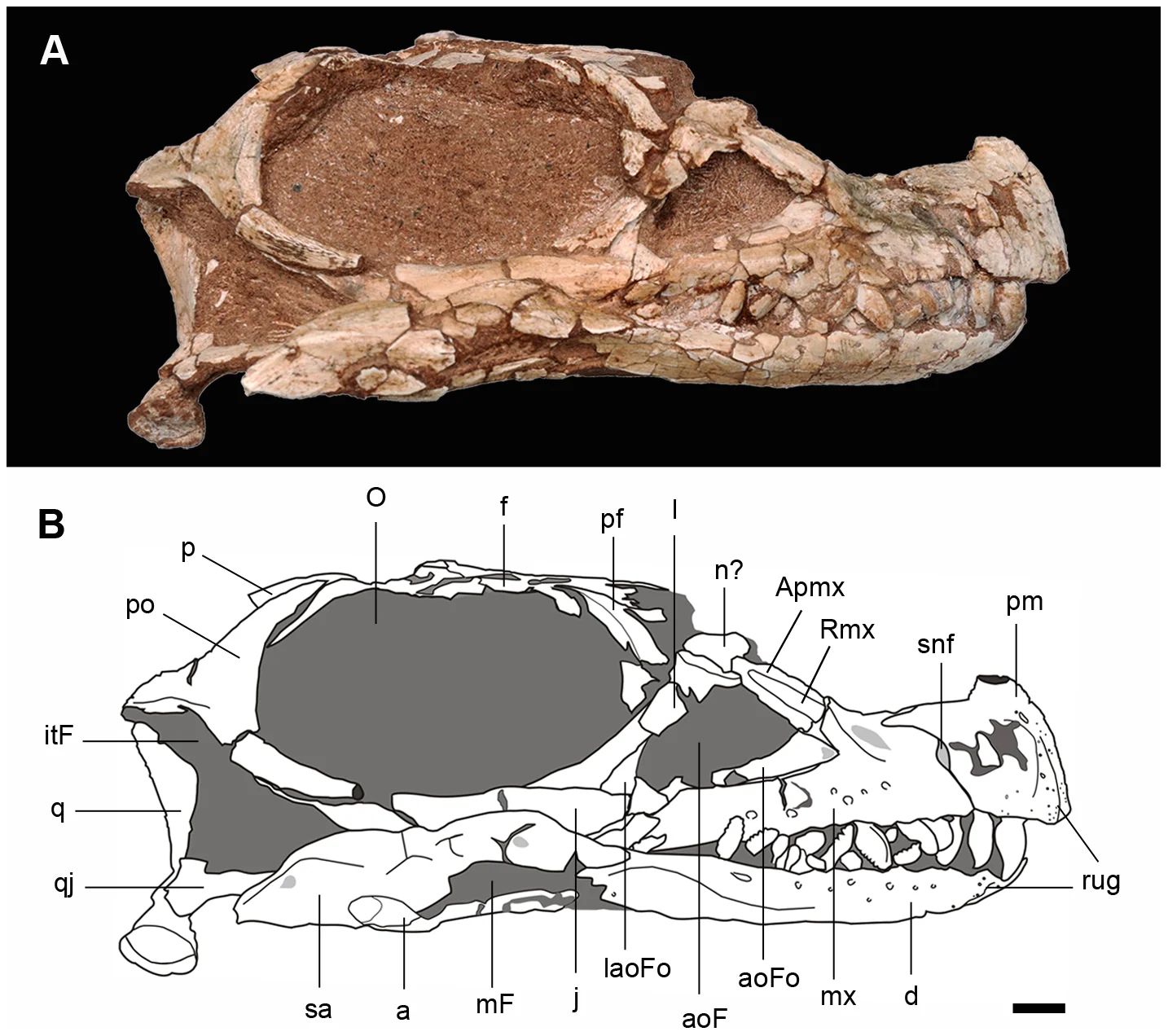
The holotype PVSJ 512, housed at the Museo de Ciencias Naturales de San Juan, Argentina, is a nearly complete and articulated skeleton of a subadult individual. Virtually all postcranial and cranial anatomy is preserved, making Eoraptor one of the best anatomically documented Triassic dinosaurs.
Found elements
Inferred elements
Scientific Literature
15 papers in chronological order — from the original description to recent research.
Primitive dinosaur skeleton from Argentina and the early evolution of the Dinosauria
Sereno, P.C., Forster, C.A., Rogers, R.R., Monetta, A.M. · Nature
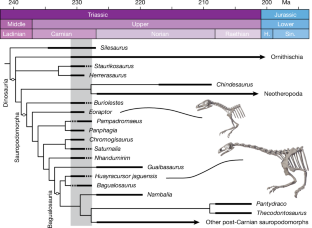
This is the founding paper on Eoraptor lunensis. Paul Sereno and colleagues describe holotype PVSJ 512, a nearly complete skeleton from Argentina's Ischigualasto Formation dated to approximately 231 Ma. The authors argue that Eoraptor represents a dinosaur very close to the common ancestor of all Dinosauria, combining primitive features such as five digits on the hand with derived characters. The phylogenetic analysis places Eoraptor at the base of the dinosaur tree, before the Saurischia-Ornithischia split. The work established Ischigualasto as one of the world's most important paleontological sites for understanding dinosaur origins in the Late Triassic.
The Ischigualasto Tetrapod Assemblage (Late Triassic, Argentina) and 40Ar/39Ar Dating of Dinosaur Origins
Rogers, R.R., Swisher, C.C., Sereno, P.C., Monetta, A.M., Forster, C.A., Martínez, R.N. · Science
Rogers and colleagues present precise radiometric dating of the Ischigualasto Formation using the 40Ar/39Ar method, establishing that the faunal assemblage including Eoraptor dates to approximately 231 Ma (Late Carnian). This paper is fundamental because it provides the temporal framework placing Eoraptor among the oldest known dinosaurs. The Ischigualasto fauna also includes Herrerasaurus and Pisanosaurus, and the precise dating allowed correlation of these findings with Triassic records on other continents, strengthening the hypothesis that dinosaurs originated in Gondwana during the Carnian.
Osteology of Eoraptor lunensis (Dinosauria, Sauropodomorpha)
Sereno, P.C., Martínez, R.N., Alcober, O.A. · Journal of Vertebrate Paleontology Memoir
This 97-page monograph is the definitive osteological description of Eoraptor lunensis, published as a memoir supplement to the Journal of Vertebrate Paleontology. Sereno, Martínez, and Alcober systematically describe all skeletal elements of holotype PVSJ 512 based on additional preparation and computational reconstruction. A central contribution of the work is the reclassification of Eoraptor: contrary to the original 1993 hypothesis placing it as a basal pre-Saurischia dinosaur, the authors argue that Eoraptor is a basal sauropodomorph. This reclassification had profound implications for understanding the origin and early diversification of dinosaurs in the Late Triassic of Gondwana.
Early dinosaurs: a phylogenetic study
Langer, M.C., Benton, M.J. · Journal of Systematic Palaeontology
Langer and Benton conduct a comprehensive phylogenetic analysis of the earliest dinosaurs, reviewing the anatomical characters used to define relationships among basal groups. Eoraptor occupies a central position in this analysis: the authors consider different hypotheses about its placement, either as a pre-Saurischia dinosaur or as a basal member of one of the major groups. The work introduces a critical evaluation of synapomorphic characters for the main Triassic dinosaur clades, contributing to the debate over whether Eoraptor is a primitive theropod or a basal sauropodomorph, a question that would remain contested for over a decade.


A basal dinosaur from the dawn of the dinosaur era in southwestern Pangaea
Martínez, R.N., Sereno, P.C., Alcober, O.A., Colombi, C.E., Renne, P.R., Montañez, I.P., Currie, B.S. · Science
Martínez and colleagues describe Eodromaeus murphi, a new basal dinosaur from the Ischigualasto Formation sharing the same stratigraphic horizon as Eoraptor. The work has direct relevance for Eoraptor research because, by comparing the two animals, the authors clarify which characters are unique to each taxon and which are primitive for dinosaurs in general. The phylogenetic analysis places Eoraptor as a basal sauropodomorph while Eodromaeus is recovered as one of the earliest theropods, reinforcing the hypothesis that the initial saurischian radiation in Late Triassic Argentina was rapid and produced two major clades nearly simultaneously.
A new herrerasaurid (Dinosauria, Saurischia) from the Upper Triassic Ischigualasto Formation of northwestern Argentina
Alcober, O.A., Martínez, R.N. · ZooKeys
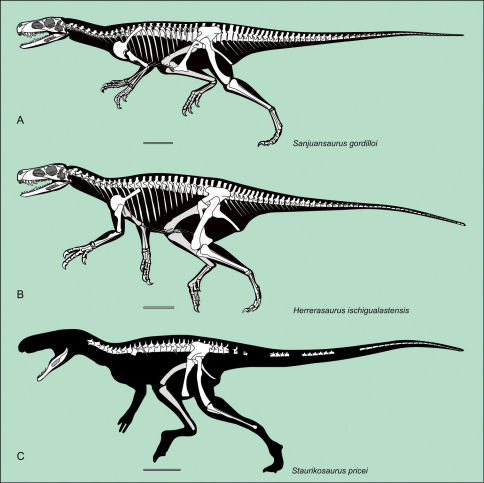
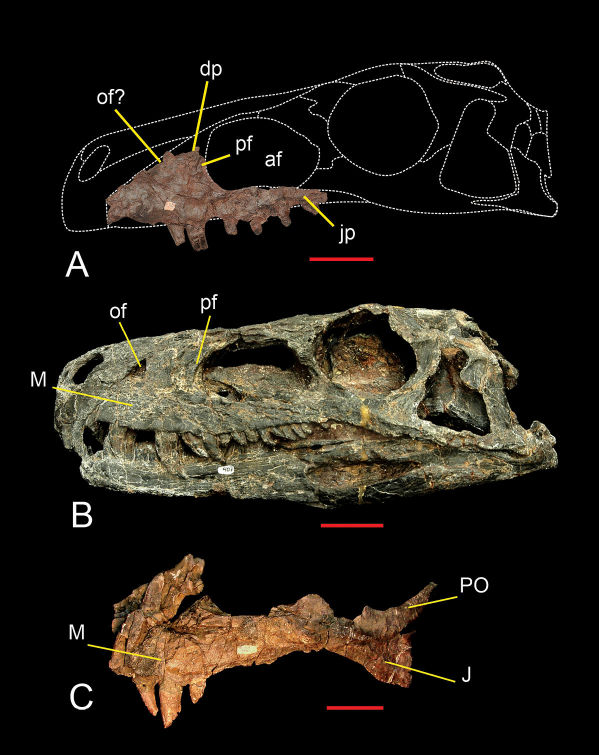
Alcober and Martínez describe Sanjuansaurus gordilloi, a new herrerasaurid from the Ischigualasto Formation. This work is relevant to Eoraptor research because it contextualizes the diversity of saurischian dinosaurs in the same environment and geological moment. The authors conclude that saurischian dinosaurs in southwestern Pangaea were already widely diversified in the Carnian, implying that dinosaur origins may be even older than Ischigualasto records suggest. The coexistence of Eoraptor, Herrerasaurus, and Sanjuansaurus at the same site evidences a rapid initial radiation.
A new hypothesis of dinosaur relationships and early dinosaur evolution
Baron, M.G., Norman, D.B., Barrett, P.M. · Nature
Baron, Norman, and Barrett propose a radical revision of dinosaur phylogenetic relationships based on a new analysis of 457 characters in 74 taxa. The most controversial hypothesis is the dissolution of the clade Saurischia: the authors propose that theropods and ornithischians form a group called Ornithoscelida, while sauropods and herrerasaurids form a separate clade. In this scenario, Eoraptor would be recovered as a basal member of a group near the root of Dinosauria. Although the hypothesis generated enormous debate, the work stimulated reanalyses across the field and remains one of the most cited papers in modern paleontology.

Early evolution of sauropodomorphs: anatomy and phylogenetic relationships of a remarkably well-preserved dinosaur from the Upper Triassic of southern Brazil
Müller, R.T., Langer, M.C., Bronzati, M., Pacheco, C.P., Cabreira, S.F., Dias-Da-Silva, S. · Zoological Journal of the Linnean Society
Müller and colleagues describe an exceptionally preserved specimen of Buriolestes schultzi from the Upper Triassic of Brazil. The work has direct importance for Eoraptor research because the authors make extensive comparisons between the two taxa: the Buriolestes specimen is compared as 'as complete as the best-known early dinosaurs, such as Eoraptor lunensis and Herrerasaurus ischigualastensis'. The phylogenetic analysis confirms that certain South American Carnian taxa form a distinct monophyletic group within Sauropodomorpha. The work contributes to understanding the phylogeography of the clade in the Late Triassic of Gondwana.

A complete skeleton of a Late Triassic saurischian and the early evolution of dinosaurs
Nesbitt, S.J., Smith, N.D., Irmis, R.B., Turner, A.H., Downs, A., Norell, M.A. · Science
Nesbitt and colleagues describe Tawa hallae, a new Late Triassic saurischian from New Mexico, and conduct a comprehensive phylogenetic analysis. The work is fundamental to the Eoraptor context because the analysis includes Eoraptor as a central comparison point, allowing testing of different hypotheses about its position in the dinosaur tree. The authors recover Tawa as a basal theropod distinct from Eoraptor and argue that the paleobiogeographic distribution of primitive dinosaurs suggests multiple dispersals from a center of origin in Gondwana or Laurasia.

Triassic environments, climates, and reptile evolution
Tucker, M.E., Benton, M.J. · Palaeogeography, Palaeoclimatology, Palaeoecology
Tucker and Benton review the climatic and environmental conditions of the Triassic across Pangaea, providing fundamental paleoenvironmental context for understanding the ecosystem in which the first dinosaurs evolved. The work describes the Triassic as a period of hot, dry climate with marked seasonality, especially in the intercontinental regions where Eoraptor lived. Vegetation was dominated by conifers, ferns, and primitive seed plants, and dinosaurs coexisted with rhynchosaurs, aetosaurs, rauisuchians, and other reptiles. This paleoclimatic context is essential for interpreting Eoraptor's ecological adaptations.
A New Basal Sauropodomorph (Dinosauria: Saurischia) from Quebrada del Barro Formation (Marayes-El Carrizal Basin), Northwestern Argentina
Apaldetti, C., Martínez, R.N., Alcober, O.A., Pol, D. · PLOS ONE
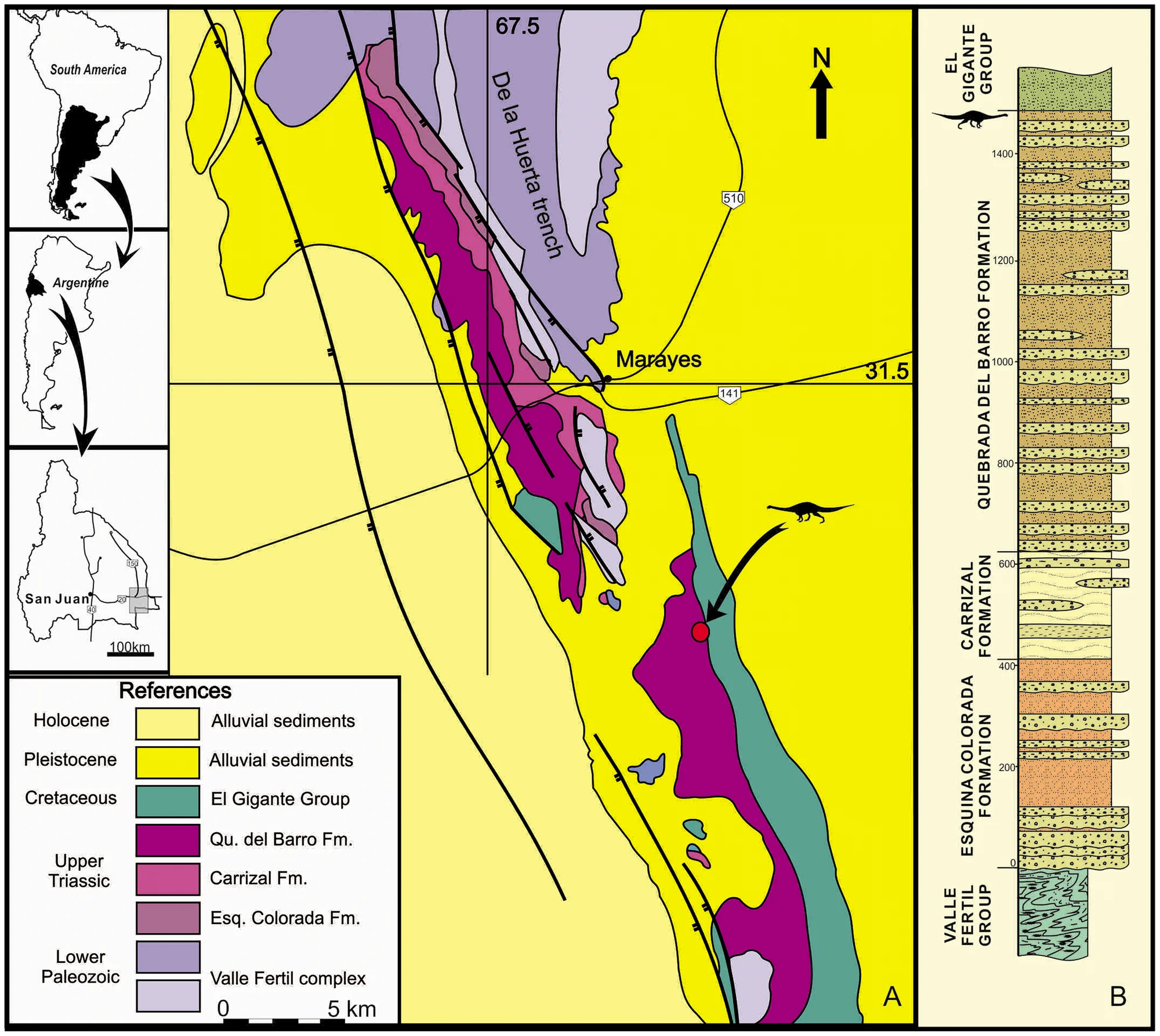
Apaldetti and colleagues describe Leyesaurus marayensis, a new basal sauropodomorph from Argentina, and conduct a phylogenetic analysis that includes Eoraptor as a comparison point. The work is relevant because it documents the diversity of basal sauropodomorphs in northwestern Argentina across different stratigraphic horizons, providing context for understanding the evolution of the group that includes Eoraptor. The diversity of forms in the Argentine record suggests that Argentina was an important center of saurischian dinosaur diversification during the Late Triassic and Early Jurassic.

Osteohistological insight into the growth dynamics of early dinosaurs and their contemporaries from the Late Triassic Ischigualasto Formation of Argentina
Curry Rogers, K., Martínez, R.N., Colombi, C., Rogers, R.R., Alcober, O. · PLOS ONE
Curry Rogers and colleagues conduct bone histology analysis of Eoraptor lunensis and other animals from the Ischigualasto Formation, revealing growth rates and life history strategies of early dinosaurs. The work demonstrates that Eoraptor grew relatively rapidly compared to contemporary non-dinosaurian reptiles, indicating that elevated metabolism may be a primitive dinosaurian feature rather than a later evolution. The histological analysis provides a direct window into the animal's biology in life, complementing external morphological data.


A New Sauropodomorph Dinosaur from the Early Jurassic of Patagonia and the Origin and Evolution of the Sauropod-type Sacrum
Pol, D., Garrido, A., Cerda, I.A. · PLOS ONE
Pol and colleagues describe Leonerasaurus taquetrensis from the Early Jurassic of Patagonia, demonstrating that the sauropod-type sacral configuration evolved independently of body size increases. The work is relevant to Eoraptor's evolutionary context because it documents how the sauropodomorph body plan transformed from primitive forms like Eoraptor to Jurassic giants. Leonerasaurus, with derived sacral features but small size, suggests that the group's evolution was gradual and modular, with different characters evolving at distinct times.


A new dinosaur with theropod affinities from the Late Triassic Santa Maria Formation of south Brazil and the early diversification of Dinosauria
Marsola, J.C.A., Bittencourt, J.S., Butler, R.J., Da Rosa, A.A.S., Sayão, J.M., Langer, M.C. · Journal of Vertebrate Paleontology
Marsola and colleagues describe a new dinosaur with theropod affinities from the Late Triassic Santa Maria Formation of southern Brazil. The work is relevant to Eoraptor research because it documents the diversity of the oldest dinosaurs in South America and expands the biogeographic picture of the initial dinosaur radiation in Gondwana. Direct comparison with Eoraptor and other Ischigualasto taxa demonstrates faunal connections between Triassic deposits in Argentina and Brazil, reinforcing the hypothesis of a rapid initial dinosaur radiation in southwestern Pangaea.


A long-necked early dinosaur from a newly discovered Upper Triassic basin in the Andes
Hechenleitner, E.M., Leuzinger, L., Taborda, J.R.A., Salgado, L., Fiorelli, L.E. · Nature
Hechenleitner and colleagues describe a new long-necked dinosaur from the Upper Triassic of a newly discovered basin in the Argentine Andes. The work is directly relevant to Eoraptor's context because it extends the geographic distribution of primitive sauropodomorphs and demonstrates that Late Triassic dinosaur diversity in Argentina was greater than previously recognized. The new taxon, contemporary with Eoraptor, suggests that sauropodomorphs had already diverged significantly in morphology and ecology during the Carnian, including long-necked forms that foreshadow the adaptations of Jurassic giants.


Famous museum specimens
PVSJ 512 (Holótipo)
Museo de Ciencias Naturales, San Juan, Argentina
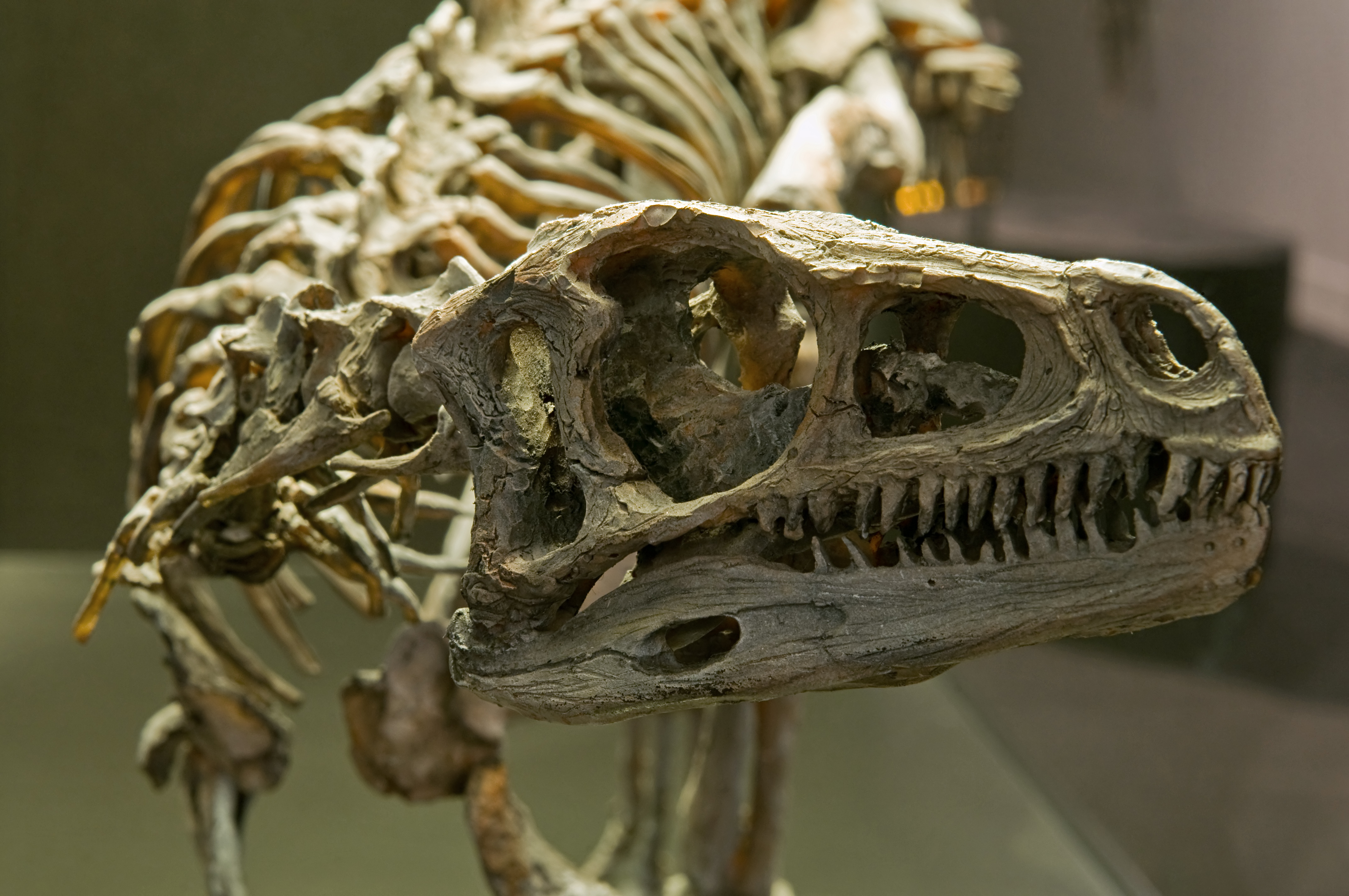
Holotype PVSJ 512 is a nearly complete and articulated skeleton of a subadult individual found in the Ischigualasto Formation. It is the most important specimen for Eoraptor knowledge and the basis of all published anatomical descriptions.
Réplica exposta
Royal Belgian Institute of Natural Sciences (RBINS), Bruxelas, Bélgica
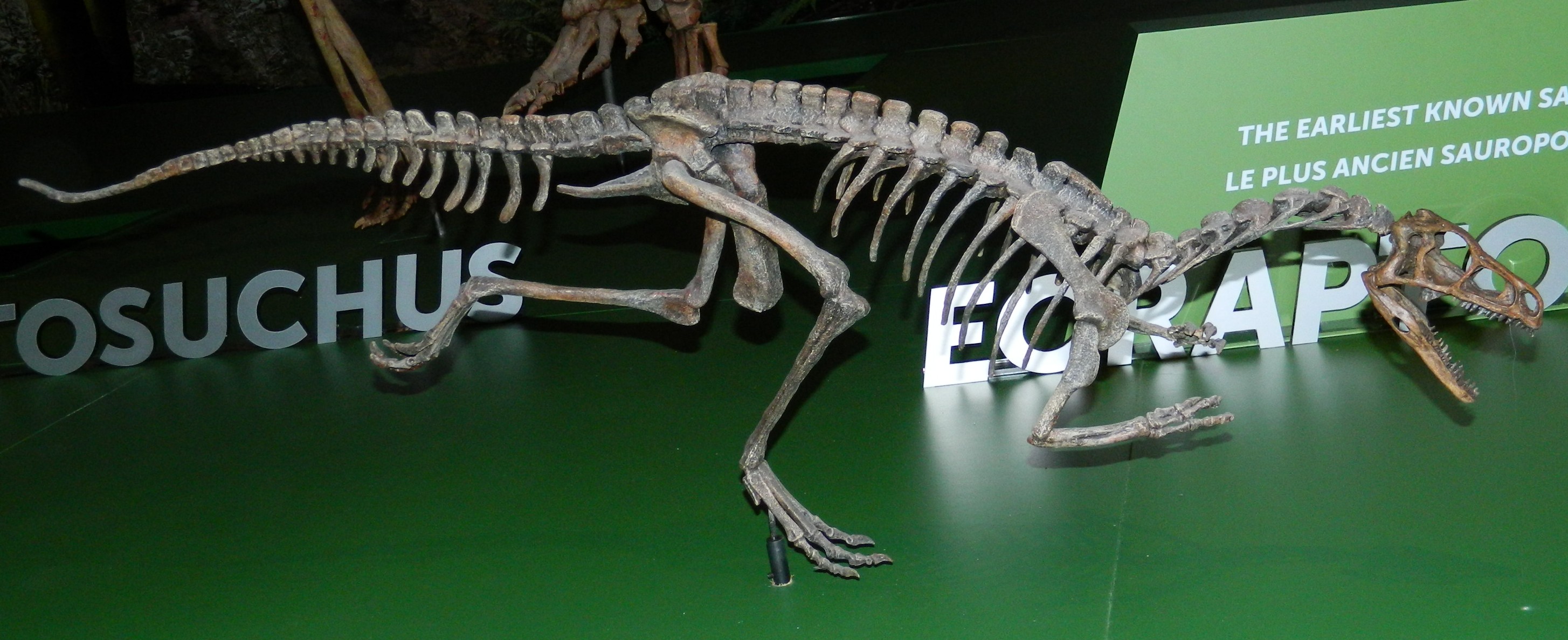
High-fidelity replica of holotype PVSJ 512, displayed at the Royal Belgian Institute of Natural Sciences in Brussels. One of the first museum replicas to circulate worldwide, contributing to the international popularization of Eoraptor.
Montagem em exposição permanente
Smithsonian National Museum of Natural History, Washington D.C., EUA
Eoraptor lunensis replica on display in the Deep Time fossil hall of the Smithsonian National Museum of Natural History, Washington D.C. The exhibition contextualizes Eoraptor as one of the oldest dinosaurs in the fossil record.
In cinema and popular culture
Eoraptor lunensis has never starred in a major blockbuster film, but its presence in popular culture is solid and growing. As one of the oldest known dinosaurs, Eoraptor has become a constant presence in scientific documentaries covering dinosaur origins in the Triassic. Series such as Walking with Dinosaurs (BBC, 1999), Planet Dinosaur (BBC, 2011), and Prehistoric Planet (Apple TV+, 2022) do not show it directly, but establish the paleontological context in which Eoraptor is invariably cited. In the Jurassic Park and Jurassic World franchise, Eoraptor's absence is symptomatic of the series' bias toward large Cretaceous carnivores: the franchise's writers and consulting paleontologists chose species with greater visual appeal. Eoraptor is, however, widely represented in natural history museums around the world, from Washington D.C. to Chile, from Japan to Belgium, where its replicas educate the public about the humble beginnings of a group that dominated the continents for 165 million years.
Classification
Discovery
Fun fact
The name 'lunensis' refers to the Valle de la Luna (Valley of the Moon), the nickname given to Ischigualasto Provincial Park in Argentina due to the lunar, desolate landscape created by the erosion of Triassic volcanic rocks. When Paul Sereno and Ricardo Martínez found the holotype in 1991, it was literally outcropping from the surface of a riverbank, exposed by natural erosion, as if the Moon itself were delivering it to the paleontologists.
Last reviewed: April 24, 2026