
Oxalaia
Oxalaia quilombensis
"Oxalaia: deity of the waters in Afro-Brazilian religion; quilombensis: from the quilombos of Maranhão"
About this species
Oxalaia quilombensis was one of the largest predators of the Late Cretaceous of South America, with an estimated length of 12 to 14 meters. A member of the family Spinosauridae and subfamily Spinosaurinae, it was closely related to the African Spinosaurus aegyptiacus. Known only from jaw fragments collected on Cajual Island, Maranhão, it possessed conical teeth without serrations, a sculptured secondary palate, and a rosette-shaped anterior snout expansion. Its name honors the deity of the waters in Afro-Brazilian religion and the historical quilombos of Maranhão, acknowledging the cultural heritage of the region where it was discovered.
Geological formation & environment
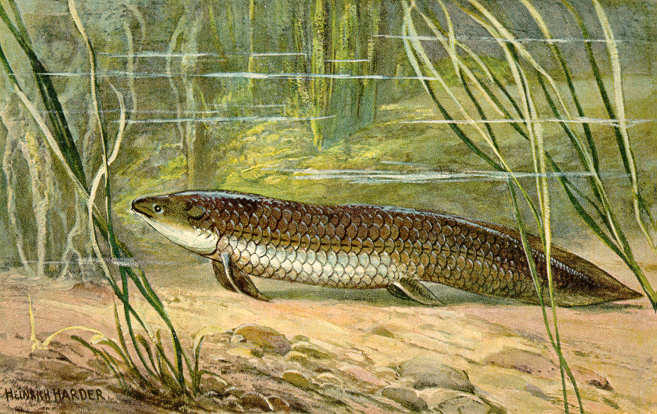
The Alcântara Formation (Laje do Coringa Member) is a Cenomanian (Late Cretaceous, ~100-94 Ma) geological unit deposited in the São Luís-Grajaú Basin, northeastern Brazil. The main outcrop, the Laje do Coringa site on Cajual Island, Maranhão, consists of sandstones and mudstones deposited in a coastal-estuarine environment with tidal flats. The formation preserved one of the most diverse Cenomanian faunas in South America, including theropod dinosaurs (Oxalaia quilombensis), titanosaurs, pterosaurs, crocodiliformes, sea turtles, and giant fish like Mawsonia gigas and Onchopristis. The faunal affinities with the North African Cretaceous suggest a paleobiogeographic connection between the two continents before the complete opening of the South Atlantic.
Image gallery


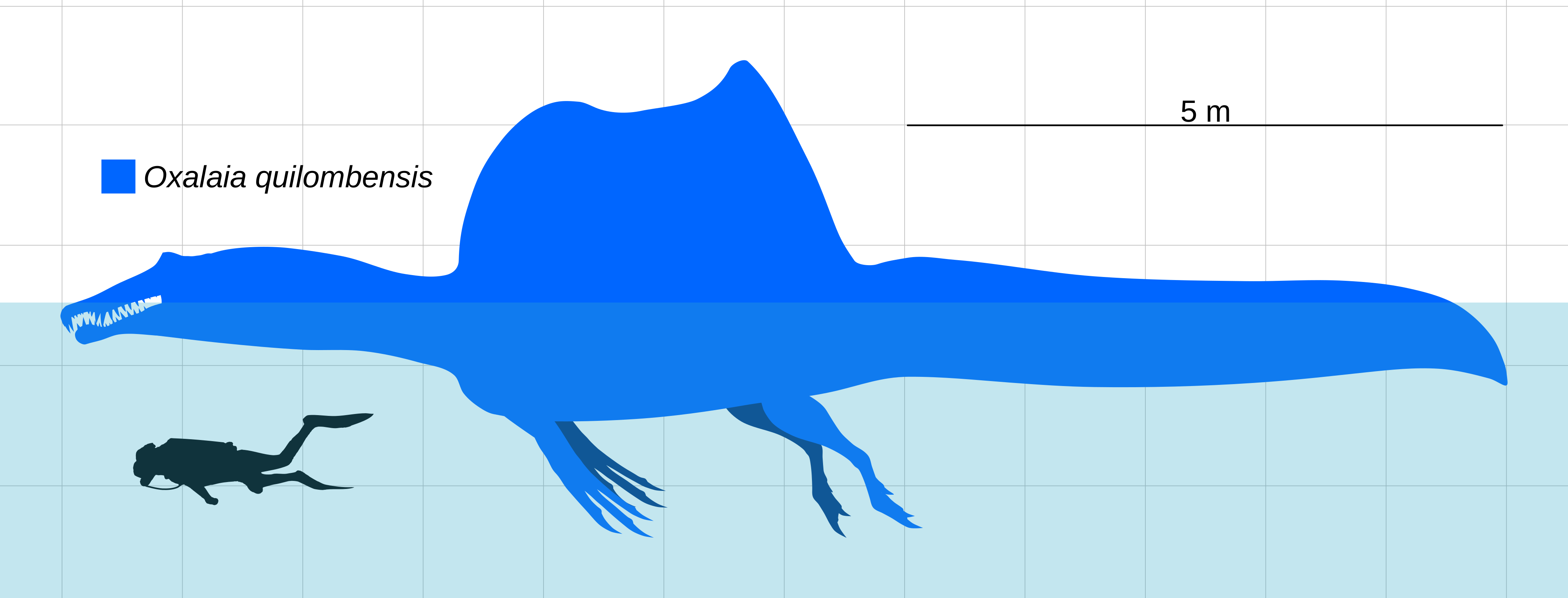


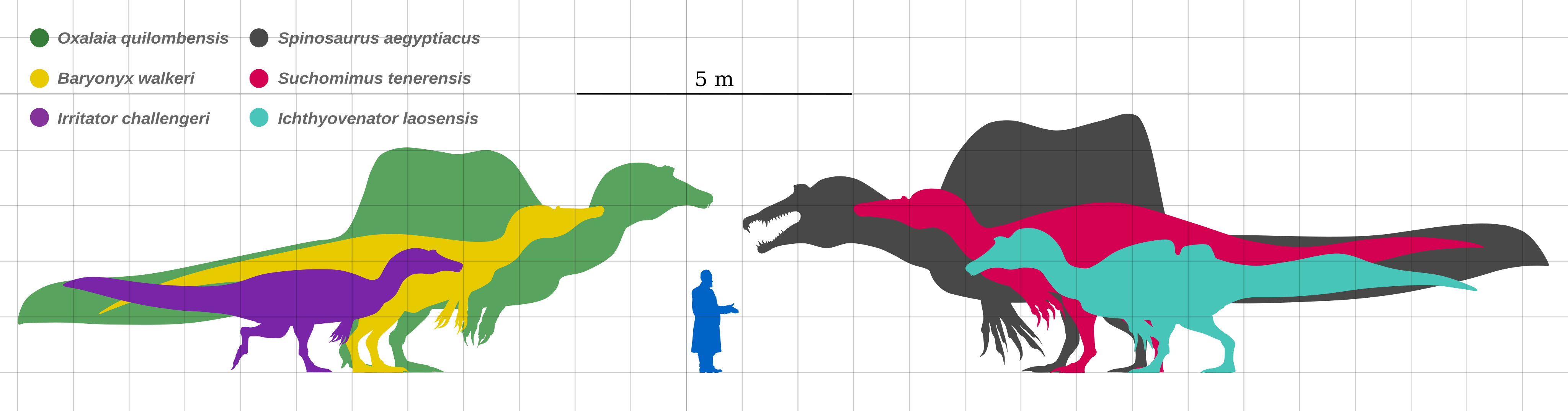


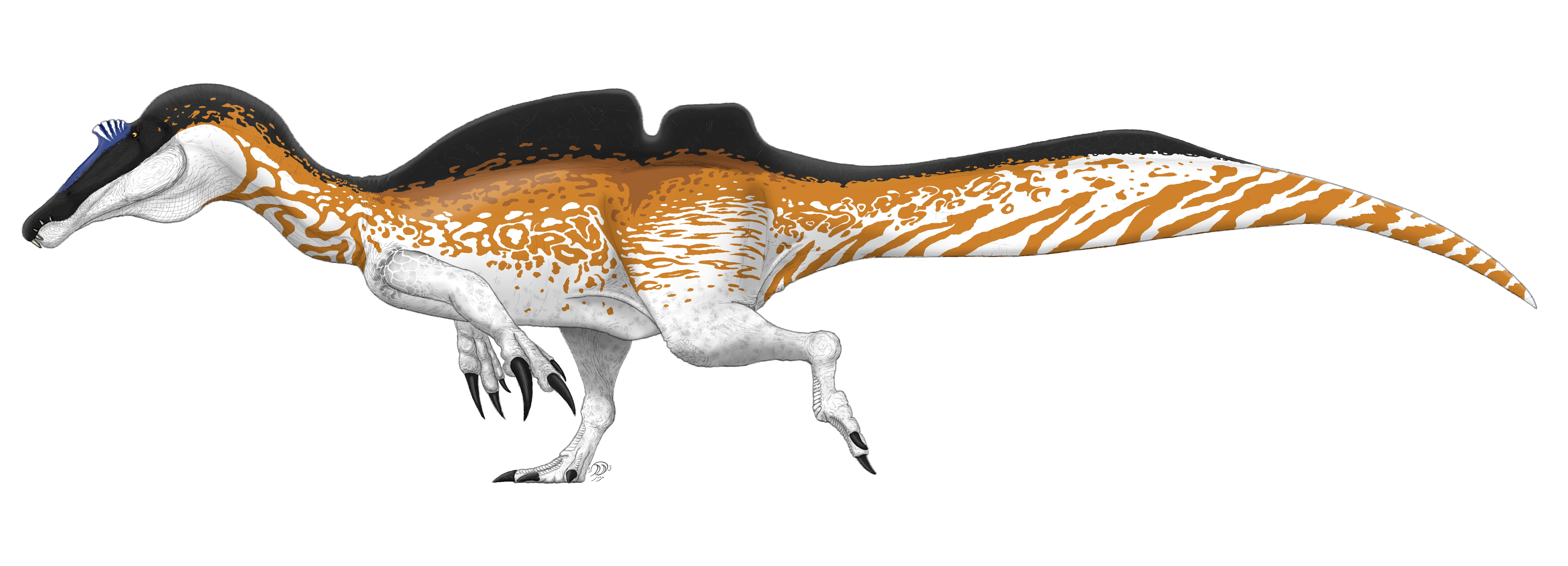
Life reconstruction of Oxalaia quilombensis by PaleoGeek, showing the semi-aquatic predator with elaborate coloration pattern and the rosette-shaped snout characteristic of Spinosaurinae. White background.
PaleoGeek / CC BY-SA 4.0 via Wikimedia Commons
Ecology and behavior
Habitat
Oxalaia quilombensis inhabited the coastal-estuarine paleoenvironment of the Alcântara Formation in the Cenomanian (~95 Ma), in what is now the northern coast of Maranhão, Brazil. The environment was characterized by a low-gradient coastal plain with tidal flat, estuarine, and lagoon sub-environments, under a hot, semi-arid climate with humid forested areas. Associated fauna included the giant coelacanth Mawsonia gigas, onchopristis, pterosaurs, crocodiliformes, and turtles, indicating a diverse coastal ecosystem. The São Luís-Grajaú basin was adjacent to North Africa before the complete opening of the South Atlantic.
Feeding
As a Spinosaurinae spinosaurid, Oxalaia quilombensis was likely a fish-specialized predator, as indicated by the low, elongated skull morphology, conical unserrated teeth (absence of serrations is efficient for holding slippery prey like fish), and the rosette-shaped anterior snout expansion. The sculptured secondary palate allowed maintaining functional nostrils even with the snout submerged. The abundant fish in the Alcântara Formation, including the giant Mawsonia gigas of several meters, were large potential prey appropriate for a predator of Oxalaia's size.
Behavior and senses
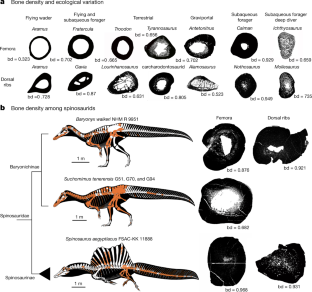
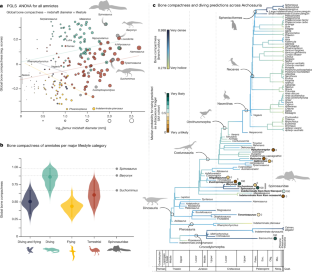
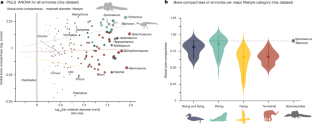
The behavior of Oxalaia quilombensis is inferred primarily by analogy with its spinosaurid relatives. Bone density analyses in Spinosaurus (Fabbri et al. 2022) suggest that spinosaurids could be active underwater foragers, using water not just for feeding but as a primary habitat. Caudal locomotion studies (Ibrahim et al. 2020) indicate active aquatic propulsion via the tail. Social behavior is unknown, but the absence of evidence for group living and the ecological specialization in aquatic resources suggest a solitary lifestyle or low social interaction, similar to large modern crocodilians.
Physiology and growth
The physiology of Oxalaia quilombensis is reconstructed primarily by comparison with Spinosaurus aegyptiacus. The compact, dense bone structure observed in spinosaurids suggests elevated metabolism and possible partial endothermy, typical of large non-avian dinosaurs. The sculptured secondary palate is an advanced physiological structure that allowed breathing with the snout partially submerged during feeding. The unserrated, continuously replaced (polyphyodont) teeth ensured efficiency in aquatic foraging throughout the animal's life.
Paleogeography
Continental configuration

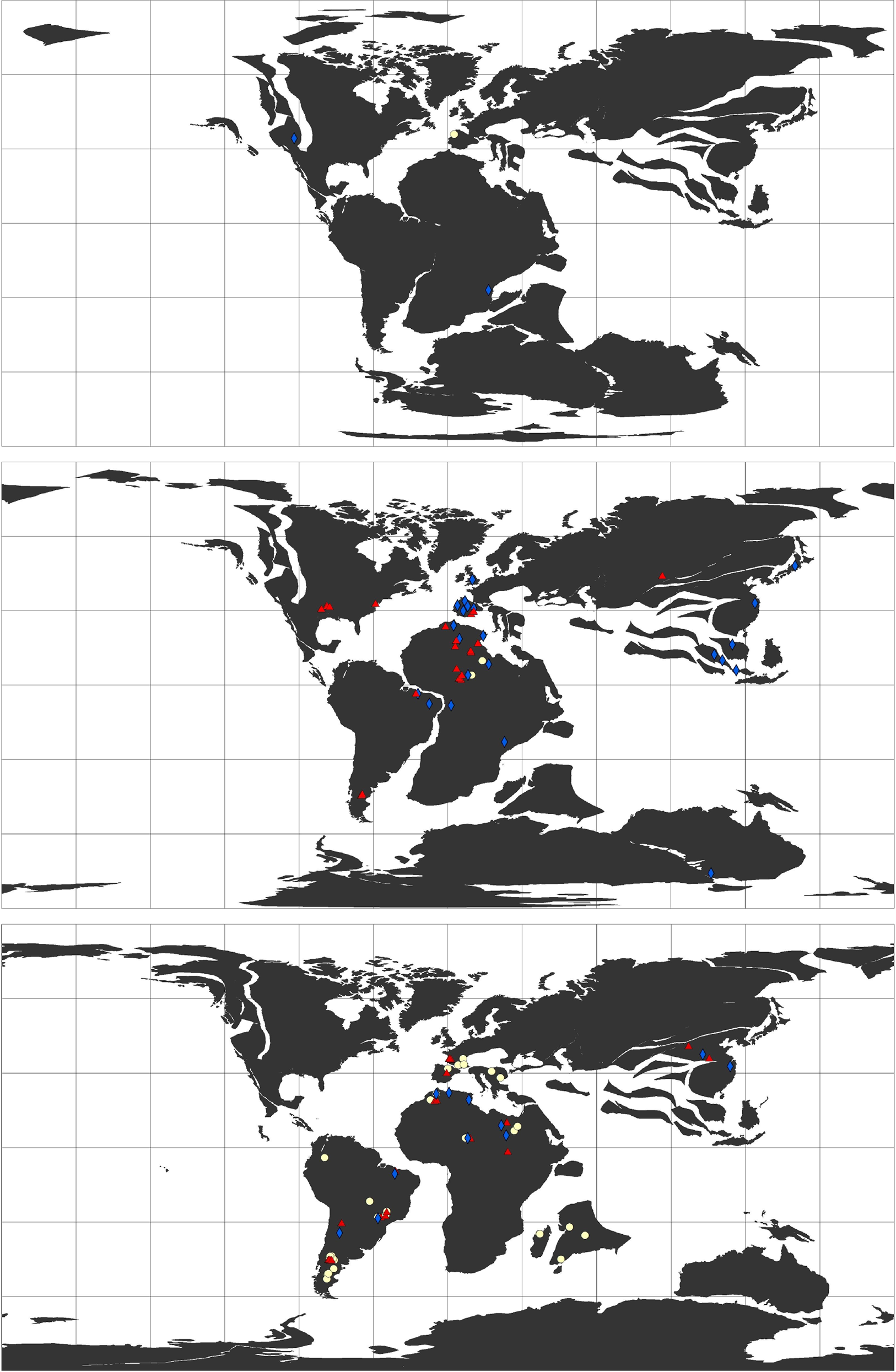
Scotese & Vérard · CC BY 4.0 · Cretaceous, ~105 Ma
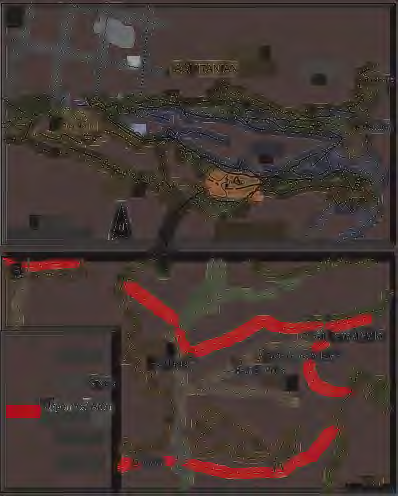
Fossil sites
Wikimedia Commons · CC BY-SA 4.0
During the Cenomaniano (~100.5–93.9 Ma), Oxalaia quilombensis inhabited Laramidia, the western half of present-day North America, separated from the east by the Western Interior Seaway, a shallow sea dividing the continent. The continents were in very different positions: India was drifting toward Asia, Antarctica was still connected to Australia, and South America was an isolated island.
Bone Inventory
The holotype (MN 6117-V) consists only of the anterior portion of the fused premaxillary region, while the referred specimen (MN 6119-V) is an incomplete fragment of the left maxilla. This represents one of the most fragmentary fossil records among large spinosaurids, making precise size and body mass estimates difficult.
Found elements
Inferred elements
Scientific Literature
15 papers in chronological order — from the original description to recent research.
A new dinosaur (Theropoda, Spinosauridae) from the Cretaceous (Cenomanian) Alcântara Formation, Cajual Island, Brazil
Kellner, A.W.A., Azevedo, S.A.K., Machado, E.B., Carvalho, L.B. e Henriques, D.D.R. · Anais da Academia Brasileira de Ciências
Original description paper of Oxalaia quilombensis, published by Brazilian paleontologists Alexander Kellner and colleagues. The study analyzes two jaw fragments collected at the Laje do Coringa site, identifying the new taxon by its conical unserrated teeth, sculptured secondary palate, and expanded anterior premaxillary region. The authors place Oxalaia as a spinosaurid within Spinosaurinae, related to the African Spinosaurus aegyptiacus, reinforcing paleobiogeographic connections between northeastern Brazil and North Africa in the Cenomanian.
Spinosaur taxonomy and evolution of craniodental features: Evidence from Brazil
Sales, M.A.F. e Schultz, C.L. · PLOS ONE
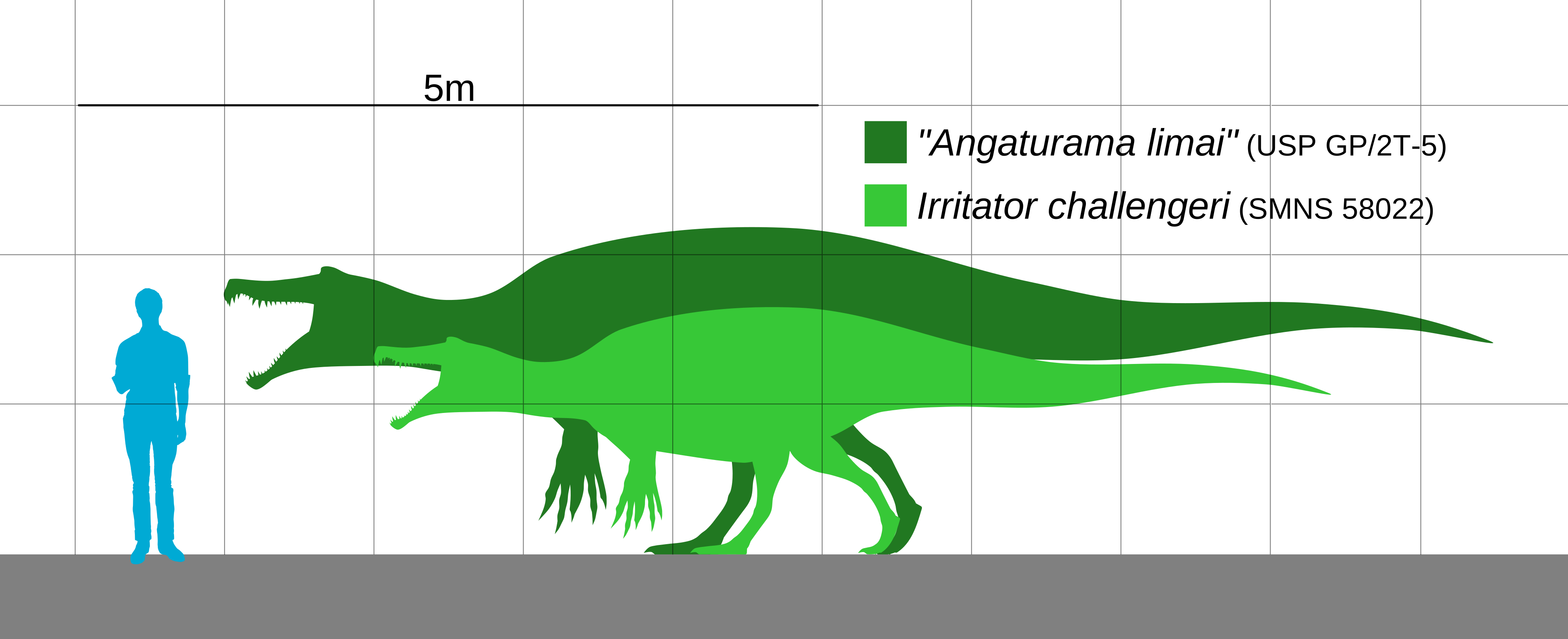
Systematic study that reassesses the taxonomy of Brazilian spinosaurids, including detailed analysis of the holotype of Oxalaia quilombensis compared with Irritator challengeri and Angaturama limai. The authors conduct cladistic analysis and conclude that the three Brazilian taxa are valid and distinct. The paper discusses the evolution of craniodental features within Spinosaurinae, positioning Oxalaia as the largest Brazilian spinosaurid and confirming its affinity with Spinosaurus aegyptiacus.
The Cretaceous (Cenomanian) continental record of the Laje do Coringa flagstone (Alcântara Formation), northeastern South America
Medeiros, M.A., Lindoso, R.M., Mendes, I.D. e Carvalho, I.S. · Journal of South American Earth Sciences
Comprehensive paleontological study of the Laje do Coringa site, the main fossiliferous outcrop of the Alcântara Formation on Cajual Island, Maranhão. The paper documents a Cenomanian paleocommunity composed of dinosaurs, pterosaurs, crocodiliformes, turtles, fish, and plants. The authors discuss the coastal-estuarine paleoenvironment and paleobiogeographic affinities between northeastern Brazil and North Africa, fundamental for understanding the distribution and ecological context of Oxalaia quilombensis.
Tail-propelled aquatic locomotion in a theropod dinosaur
Ibrahim, N., Maganuco, S., Dal Sasso, C., Fabbri, M., Auditore, M., Bindellini, G., Martill, D.M., Zouhri, S., Mattarelli, D.A., Unwin, D.M., Wiemann, J., Bonadonna, D., Amane, A., Jakubczak, J., Joger, U., Lauder, G.V. e Pierce, S.E. · Nature
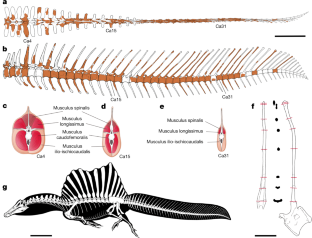
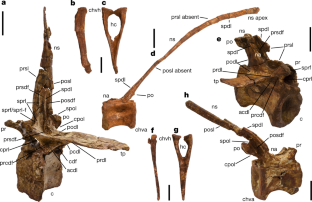
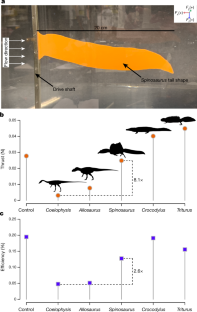
Groundbreaking study presenting evidence of aquatic locomotion in Spinosaurus aegyptiacus, the closest relative of Oxalaia. The authors describe a tail with extremely tall neural spines and elongated chevrons forming a fin-like caudal structure capable of extensive lateral excursion. Robotic model experiments demonstrated that this caudal morphology generates propulsive force 8 times greater and 2.6 times more efficient in water than terrestrial forms. The implications extend to Oxalaia quilombensis, which shares the same subfamily Spinosaurinae.
New information on the skull of the enigmatic theropod Spinosaurus, with remarks on its size and affinities
Sasso, C.D., Maganuco, S., Buffetaut, E. e Mendez, M.A. · Journal of Vertebrate Paleontology
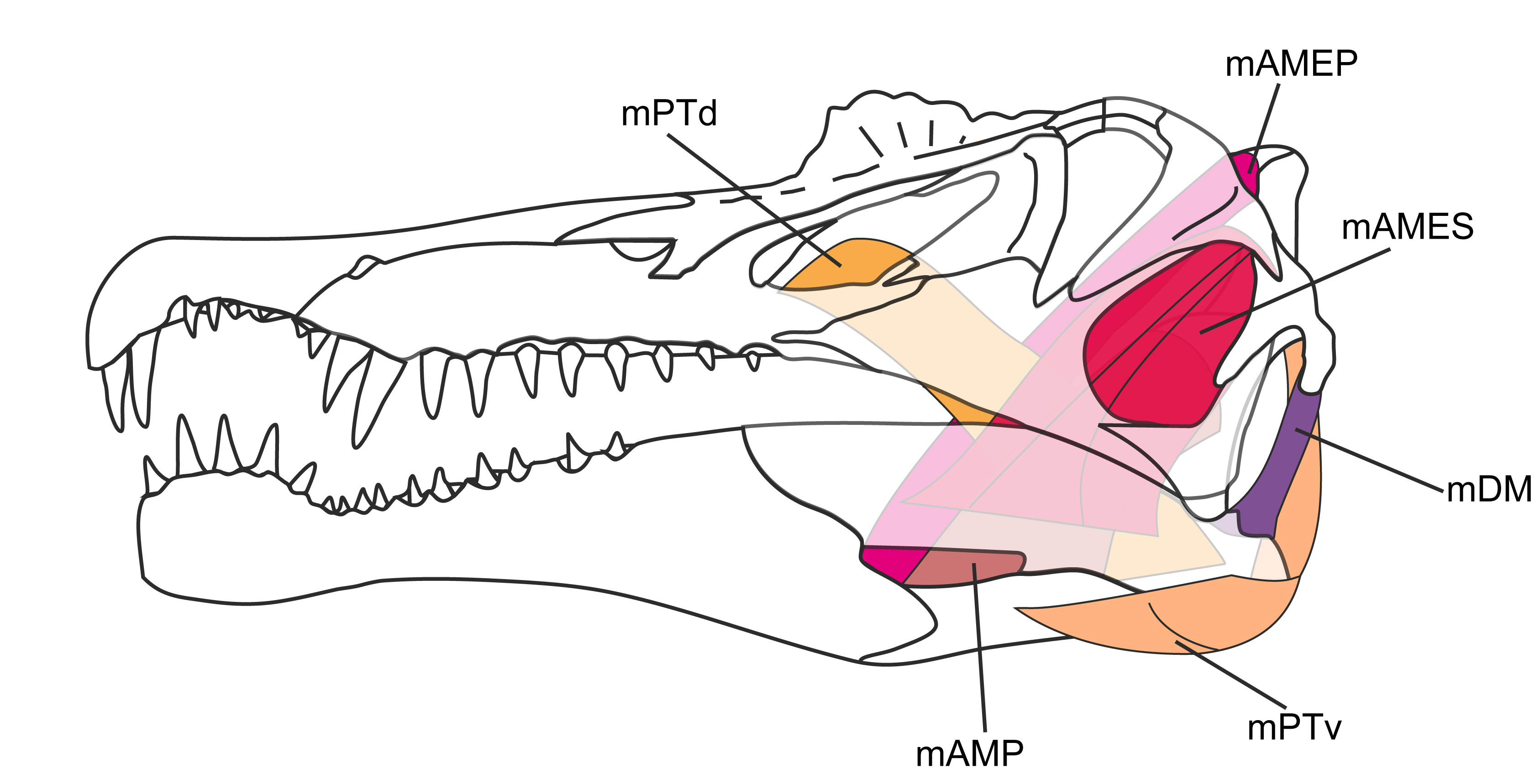
Analysis of the skull of Spinosaurus aegyptiacus based on new material, with discussion of morphological affinities with other Spinosaurinae members. The paper provides skull length estimates of approximately 175 cm and discusses characteristics uniting spinosaurines, including the low, elongated skull with conical unserrated teeth, features shared with Oxalaia quilombensis. The study is a fundamental reference for understanding relationships among large Late Cretaceous spinosaurids.

Semiaquatic adaptations in a giant predatory dinosaur
Ibrahim, N., Sereno, P.C., Sasso, C.D., Maganuco, S., Fabbri, M., Martill, D.M., Zouhri, S., Myhrvold, N. e Iurino, D.A. · Science
Study that revolutionized the understanding of Spinosaurus aegyptiacus based on new material from Morocco, revealing robust forelimbs, short hindlimbs, tall neural spines, and broad feet with ventral projections on phalanges, all interpreted as semiaquatic adaptations. Ibrahim et al. propose that Spinosaurus was fundamentally aquatic, a lifestyle that aligns with the paleoenvironmental evidence from the Alcântara Formation, where Oxalaia quilombensis was found in fish-rich coastal-estuarine deposits.

New spinosaurids from the Wessex Formation (Early Cretaceous, UK) and the European origins of Spinosauridae
Barker, C.T., Hone, D.W.E., Naish, D., Cau, A., Lockwood, J.A.F., Foster, B., Clarkin, C.E., Schneider, P. e Gostling, N.J. · Scientific Reports
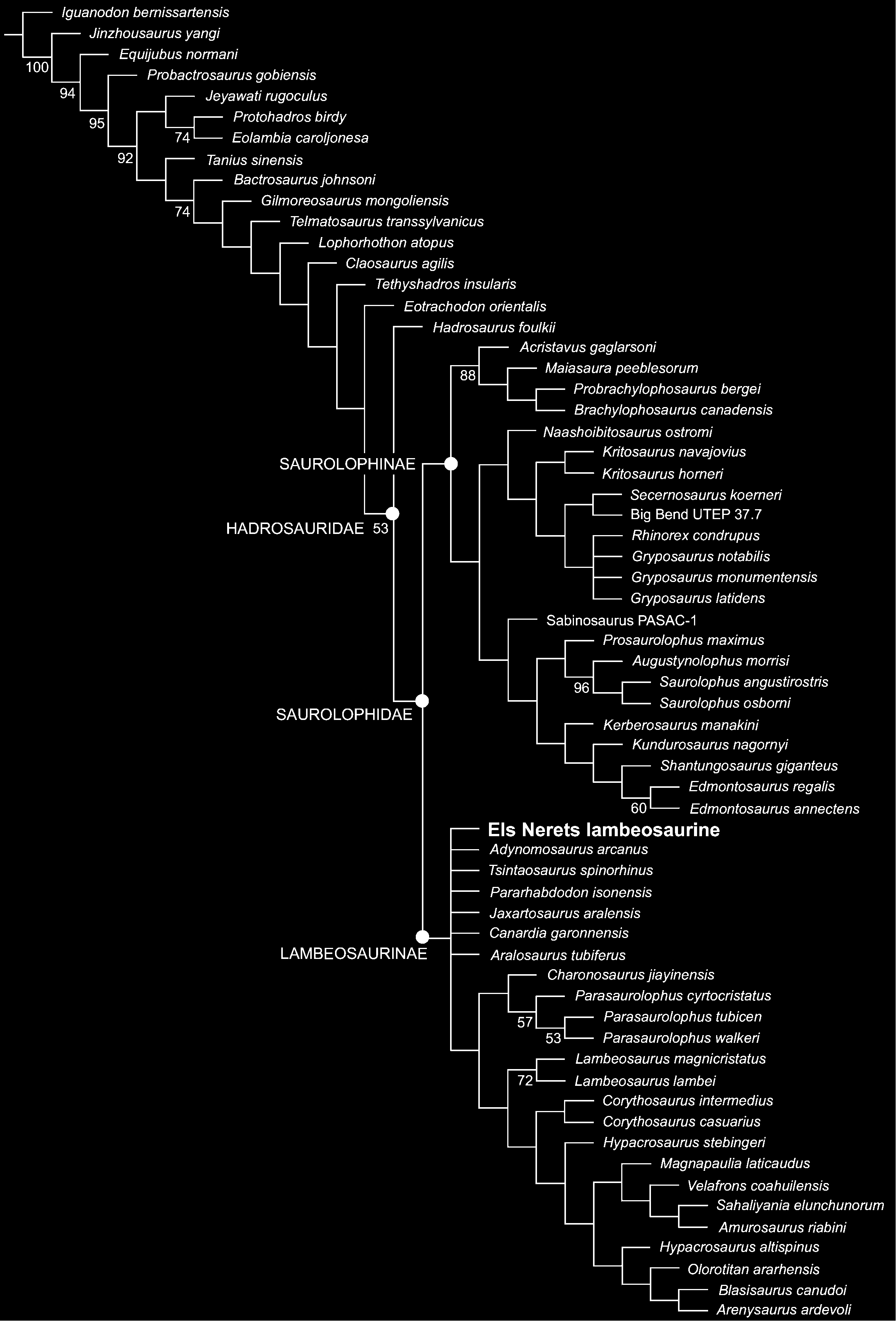
Paper describing Ceratosuchops inferodios and Riparovenator milnerae, two new spinosaurids from the Wessex Formation (Early Cretaceous, UK), and conducting broad Bayesian phylogenetic analysis of Spinosauridae. The study includes Oxalaia quilombensis among the analyzed taxa and proposes a European origin for spinosaurids, with at least two dispersal events from Europe to Africa, resulting in South American and African spinosaurines. The time-calibrated analysis places Oxalaia as one of the last spinosaurids to diverge.

Remarks on Brazilian dinosaurs
Kellner, A.W.A. · Memoirs of the Queensland Museum
Review of Brazilian dinosaurs up to the mid-1990s, including spinosaurids from the Santana Formation (Ceará). Kellner discusses the available material of Irritator challengeri and Angaturama limai, establishing the phylogenetic and paleobiogeographic context that decades later guided the identification of Oxalaia quilombensis. The paper is a fundamental reference for understanding the history of the study of Brazilian spinosaurids and their relationship with those of North Africa.

Ergebnisse der Forschungsreisen Prof. E. Stromers in den Wüsten Ägyptens. II. Wirbeltier-Reste der Baharîje-Stufe (unterstes Cenoman). 3. Das Original des Theropoden Spinosaurus aegyptiacus nov. gen. et spec.
Stromer, E. · Abhandlungen der Königlich Bayerischen Akademie der Wissenschaften
Original description of Spinosaurus aegyptiacus by Ernst Stromer, based on Cenomanian material from Egypt destroyed during World War II. The paper establishes the type genus of Spinosauridae and Spinosaurinae, the subfamily that includes Oxalaia quilombensis. The temporal and biogeographic correlation between Spinosaurus and Oxalaia, both from the Cenomanian, is fundamental for understanding the dispersal of spinosaurids between Africa and South America before the complete separation of the South Atlantic.


New data on spinosaurid dinosaurs from the Early Cretaceous of the Sahara
Taquet, P. e Russell, D.A. · Comptes Rendus de l'Académie des Sciences
Study describing new spinosaurid materials from the Sahara (Cristatusaurus lapparenti, Niger), including comparative analysis with South American forms. Taquet and Russell discuss relationships between African and Brazilian spinosaurids, anticipating the paleobiogeographic connections later confirmed by the discovery of Oxalaia quilombensis in 2011. The paper is a reference for understanding the diversity and distribution of Baryonychinae in the Cretaceous of Gondwana.


Morphofunctional Analysis of the Quadrate of Spinosauridae (Dinosauria: Theropoda) and the Presence of Spinosaurus and a Second Spinosaurine Taxon in the Cenomanian of North Africa
Hendrickx, C., Mateus, O., Buffetaut, E. e Sander, M. · PLOS ONE
Morphofunctional study of the quadrate bone in all known spinosaurids, including comparative analysis with Oxalaia quilombensis. The authors identify two distinct quadrate morphotypes in Cenomanian material from North Africa, suggesting the presence of Spinosaurus and a second spinosaurine taxon. The temporal coexistence of two large spinosaurids in the Cenomanian of Africa is directly analogous to the situation in Brazil, where Oxalaia and Irritator/Angaturama coexist in the same period.

Bone histology and ecology of titanosaur sauropods and other dinosaurs from the Upper Cretaceous of Brazil
Aureliano, T., Ghilardi, A.M., Müller, R.T., Kerber, L., Pretto, F.A., Ezcurra, M.D. e Müller, R.T. · Cretaceous Research
Histological analysis of bones of Upper Cretaceous dinosaurs from Brazil, with implications for the growth and ecology of large contemporaneous predators like Oxalaia quilombensis. The study reveals rapid growth patterns in Brazilian Cretaceous dinosaurs, with fibrolamellar bone tissue indicative of elevated metabolism. Although focused on sauropods, the ecological context established is directly relevant for understanding the evolutionary pressures on large Cretaceous predators from Brazil.

The oldest Brazilian Abelisauridae from the Cenomanian and their ecological relationship with contemporary spinosaurids
Motta, M.J., Novas, F.E. e Aranciaga Rolando, A.M. · Cretaceous Research
Study describing new abelisaurid remains from the Cenomanian of Brazil and analyzing the ecological niche partitioning among large theropods of the period. The authors discuss how Oxalaia quilombensis and abelisaurids coexisted in the same ecosystem with distinct ecological roles: Oxalaia as a semi-aquatic predator specialized in fish, and abelisaurids as terrestrial predators of medium-sized prey. This coexistence model reflects the predator community structure observed in the Cretaceous of North Africa.

A new theropod dinosaur from the Cenomanian (Late Cretaceous) of the Alcântara Formation, São Luís Basin, Brazil
Kellner, A.W.A., Azevedo, S.A.K., Machado, E.B., Carvalho, L.B. e Henriques, D.D.R. · Zootaxa
Study of additional theropod material from the Alcântara Formation, collected in the same layers as the holotype of Oxalaia quilombensis at the Laje do Coringa site. The authors describe complementary skeletal elements that expand knowledge of the Cenomanian theropod fauna of Maranhão. The paper is important for contextualizing the degree of dinosaur diversity at this outcrop and provides fundamental sedimentological and taphonomic information for interpreting the fossilization mode of Oxalaia quilombensis.

Subaqueous foraging among carnivorous dinosaurs
Fabbri, M., Navalón, G., Benson, R.B.J., Pol, D., O'Connor, J., Bhullar, B.-A.S., Turner, A.H., Novas, F.E., Martill, D.M., Zouhri, S., Pittman, M., Xu, X. e Ibrahim, N. · Nature
Study using cortical bone density analysis to investigate aquatic habits in theropods, finding that Spinosaurus aegyptiacus and Baryonyx walkeri exhibit significantly higher bone density than terrestrial theropods, consistent with ballast of underwater divers. The phylogenetic and functional analysis implies that subaqueous habits emerged independently in Spinosaurinae. For Oxalaia quilombensis, a member of Spinosaurinae, the results suggest it may also have possessed dense bones and adaptations for subaqueous foraging.
Famous museum specimens
MN 6117-V (Holótipo)
Museu Nacional, Universidade Federal do Rio de Janeiro, Rio de Janeiro, Brasil
Holotype of Oxalaia quilombensis, consisting of the anterior portion of the fused premaxillary region, measuring 201 mm long, 115 mm wide, and 103 mm tall. Collected at the Laje do Coringa site, Cajual Island, Maranhão, in the Alcântara Formation. The specimen was partially damaged before its scientific identification.
MN 6119-V (Espécime referido)
Museu Nacional, Universidade Federal do Rio de Janeiro, Rio de Janeiro, Brasil
Referred specimen of Oxalaia quilombensis, consisting of an incomplete fragment of the left maxilla, bearing seven alveoli (tooth sockets). The specimen complements the holotype and reinforces the diagnostic characteristics of the species: conical unserrated teeth and sculptured secondary palate. Deposited at the Museu Nacional do Rio de Janeiro.
In cinema and popular culture
Oxalaia quilombensis is a dinosaur little known to the general public, partly because it was described only in 2011 and partly because the extremely fragmentary fossil record makes detailed reconstructions difficult. Its relative Spinosaurus aegyptiacus, however, achieved global fame with Jurassic Park III (2001), where it destroyed the T-Rex in an iconic scene, and inspired documentaries like Walking with Dinosaurs (1999) and Prehistoric Planet (2022). The growing fascination with semi-aquatic spinosaurids, driven by Ibrahim et al.'s discoveries in 2014 and 2020, opened space for greater recognition of Oxalaia in paleoart and science communication media. Modern reconstructions like those by PaleoGeek show Oxalaia with exuberant coloration patterns inspired by tropical aquatic fauna and active semi-aquatic predator postures, reflecting the new understanding of the group. In Brazil, Oxalaia holds additional cultural significance: it is a dinosaur whose name celebrates Candomblé and the quilombos of Maranhão, making it a symbol of Brazilian paleontology and Afro-Brazilian heritage.
Classification
Discovery
Fun fact
Oxalaia quilombensis is the only dinosaur whose name simultaneously honors a deity from the Afro-Brazilian religion (Oxalaia, the water deity of Candomblé) and the resistance of enslaved people (quilombensis, from the quilombos of Maranhão). Discovered in 1999 and described in 2011, it spent a decade in drawers at the Museu Nacional before being identified as a new species, possibly the largest terrestrial predator of the South American Cretaceous.
Last reviewed: April 24, 2026