
Dakosaurus
Dakosaurus maximus
"Maximum biter lizard"
About this species
Dakosaurus maximus was the most fearsome marine crocodyliform of the Late Jurassic. Belonging to the family Metriorhynchidae, it stood apart from all other members of the group by possessing laterally compressed, serrated teeth convergent with those of terrestrial theropods, indicating specialization in large prey. Without osteoderm armor and with limbs transformed into flippers and a lunate bifurcated tail, it was fully adapted to pelagic life. Its fossils were found in Europe (France, Germany, Switzerland, Poland, England) and Argentina, where the D. andiniensis specimen was nicknamed 'Godzilla' by Argentine paleontologists. It was the apex predator of the European Jurassic seas.
Geological formation & environment
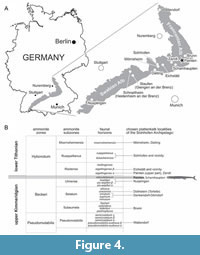
Dakosaurus maximus was found primarily in the European Kimmeridgian and Tithonian, especially in the Upper Jurassic carbonate sequences of the Swabian Jura in Germany (Nusplingen and Torleite formations) and the Solnhofen Limestone fissures in Bavaria. In Argentina, the D. andiniensis specimen comes from the Vaca Muerta Formation of the Upper Tithonian, a unit world-famous for its hydrocarbon deposits and for preserving exceptional marine reptile fauna. These environments represented shallow epicontinental seas with carbonate floors, rich fauna of cephalopods (ammonites), fish and marine reptiles.
Image gallery


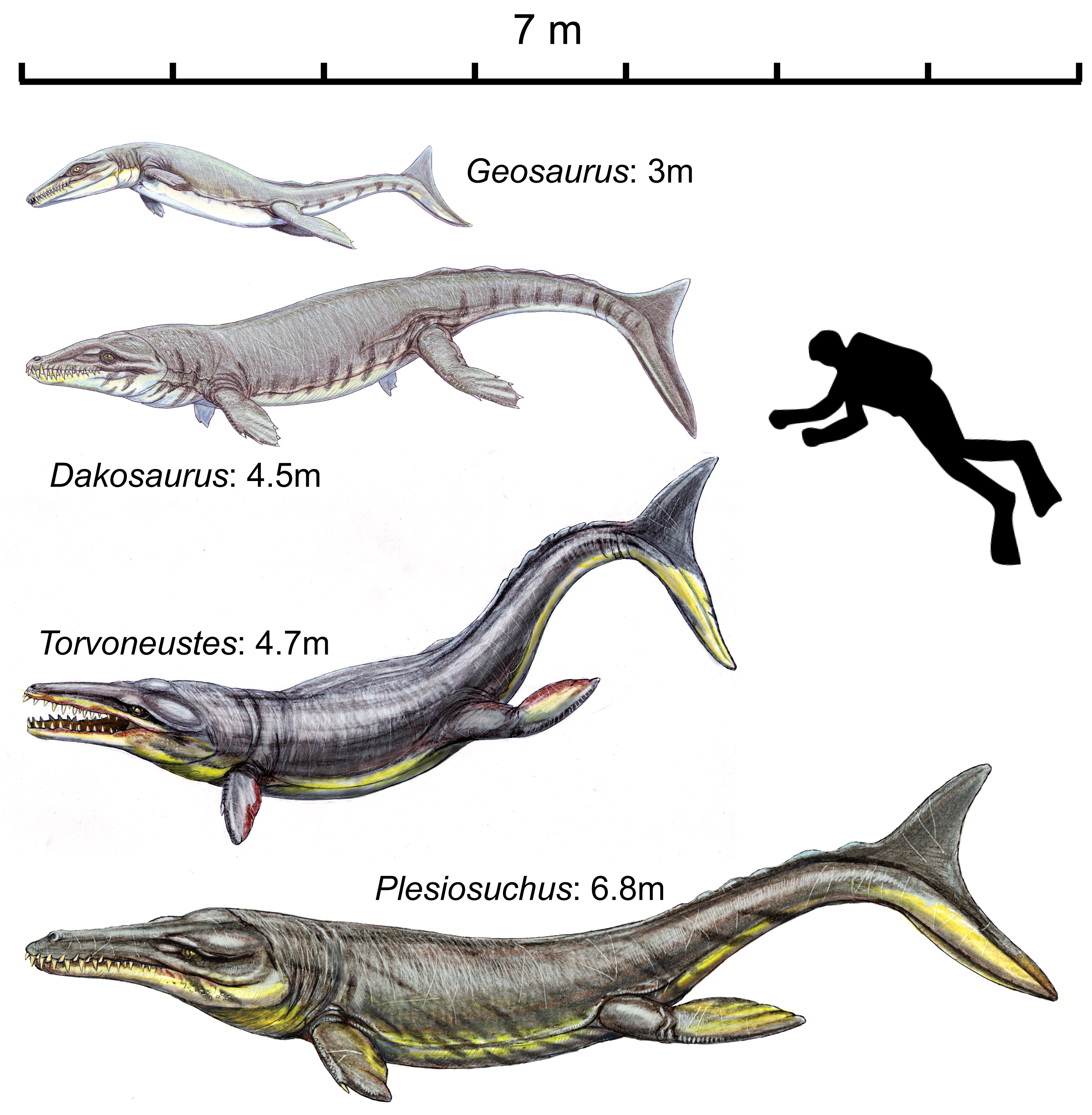


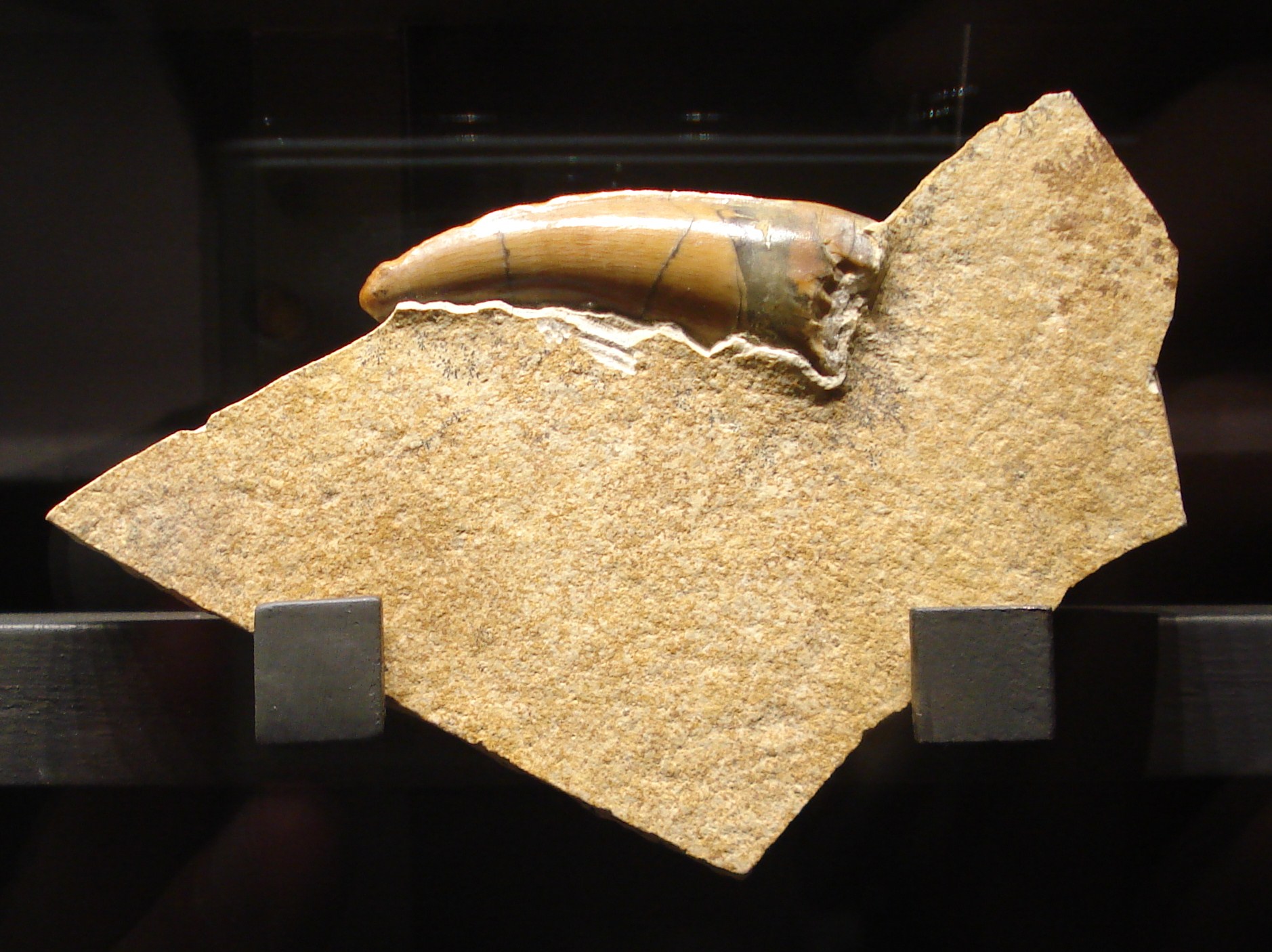

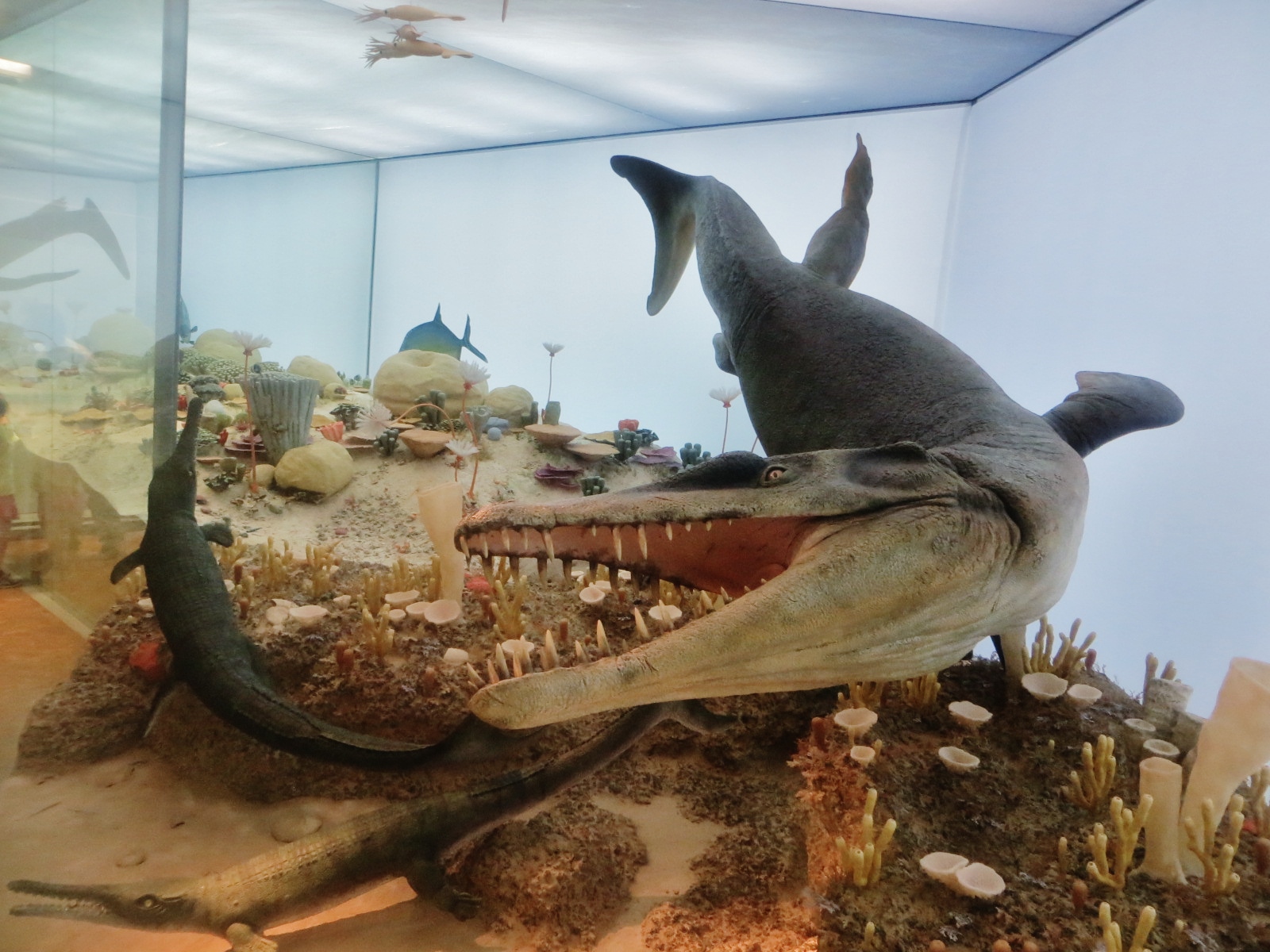


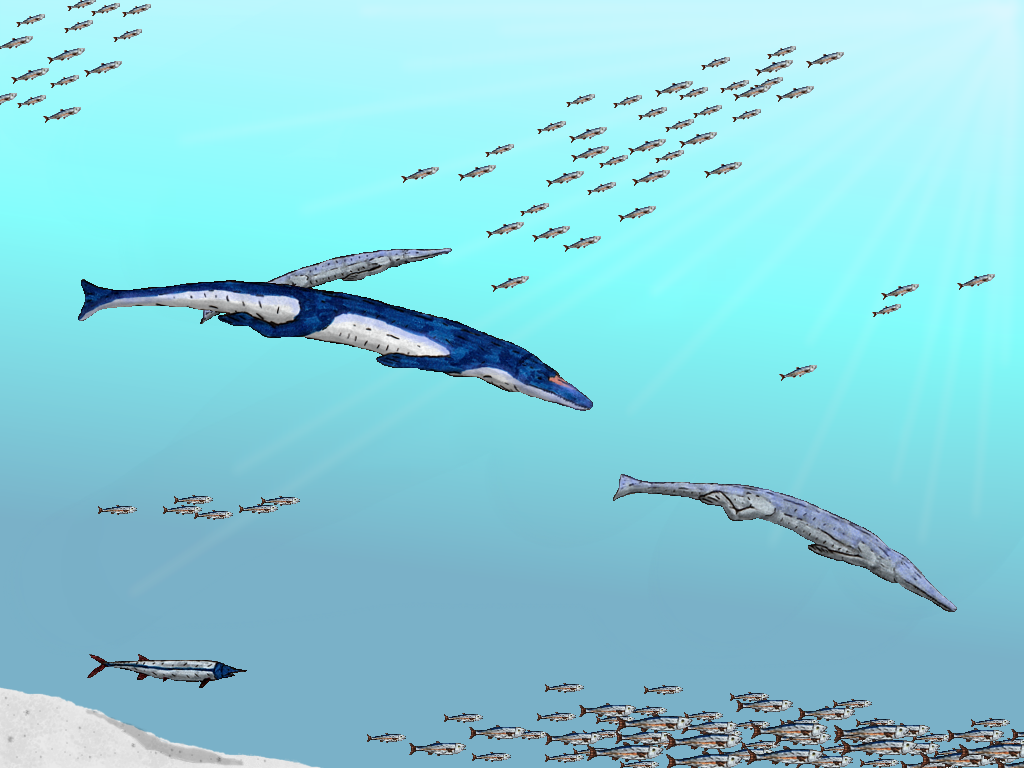
Artistic reconstruction of Dakosaurus maximus by Nobu Tamura (2007), showing the hydrodynamic body, flippers, and bifurcated tail characteristic of metriorhynchids.
Nobu Tamura — CC BY-SA 3.0
Ecology and behavior
Habitat
Dakosaurus maximus inhabited the shallow epicontinental seas of the Late Jurassic of Europe, known as the Tethys Sea and its northward and westward extensions. These seas had tropical to subtropical temperatures, with clear waters rich in marine life. Jurassic Europe was an archipelago of low islands surrounded by shallow seas, and Dakosaurus navigated these open waters as a pelagic predator. Paleolatitudinal distribution evidence indicates the species preferred latitudes between 25 and 45°N, avoiding cooler northern waters.
Feeding
Dakosaurus maximus was a hypercarnivore specialized in large prey. Its macroziphodont teeth, laterally compressed with serrations on both carinae, were ideal for cutting flesh from large animals such as ichthyosaurs, plesiosaurs, and large fish. The interlocking occlusion between upper and lower teeth indicates it bit prey and shook them laterally to cut. The reduced tooth count (compared to other metriorhynchids) and tall, robust skull suggest Dakosaurus captured prey that could not be swallowed whole, unlike piscivorous metriorhynchids.
Behavior and senses
As a fully marine-adapted crocodyliform, Dakosaurus almost certainly spent its entire life in the open sea. The absence of osteoderms, typical of metriorhynchids, indicates that thermal insulation was provided in other ways (possibly a subcutaneous fat layer). Reproduction was likely ovoviviparous or viviparous, as in other metriorhynchids, since leaving the sea to deposit eggs would be incompatible with flipper morphology. Dakosaurus may have hunted solitarily, like most large marine predators, using vision (large orbits) and possibly electroreception to detect prey.
Physiology and growth
Dakosaurus physiology was likely intermediate between ectothermy and partial endothermy. Studies on the paleolatitudinal distribution of metriorhynchids (Young et al. 2023) indicate they were more latitudinally restricted than ichthyosaurs and plesiosaurs, suggesting a metabolism lower than those groups but higher than modern crocodilians. The absence of osteoderms, which in modern crocodilians function as thermoreceptors and solar heat collectors, indicates Dakosaurus relied less on external heating. Considerable body size (4.5 m) would also contribute to heat retention via gigantothermy.
Paleogeography
Continental configuration

Scotese & Vérard · CC BY 4.0 · Jurassic, ~155 Ma
During the Oxfordiano-Titoniano (~157–137 Ma), Dakosaurus maximus inhabited the fragmenting Pangea. North America and Europe were still close, and the North Atlantic was just beginning to open. Climate was warm and humid globally, with no polar ice caps.
Bone Inventory
The original holotype (an isolated tooth described by Plieninger in 1846) is lost. The neotype SMNS 8203, designated by Young & Andrade (2009), consists of an incomplete skull, dorsal, sacral and caudal vertebrae, ribs, partial shoulder and pelvic girdles and incomplete limbs, from Staufen, Baden-Württemberg, Germany. Other specimens from Europe and Argentina complement knowledge of the species, but no complete skeleton has been found.
Found elements
Inferred elements
Scientific Literature
15 papers in chronological order — from the original description to recent research.
Über ein neues Saurier-Genus aus dem Keupersandstein von Stuttgart
Plieninger, T. · Jahreshefte des Vereins für vaterländische Naturkunde in Württemberg
The founding paper in the taxonomic history of Dakosaurus maximus. Theodor Plieninger describes isolated serrated teeth from the Kimmeridgian of Stuttgart under the name Geosaurus maximus, establishing the specific epithet that remains valid today. The laterally compressed teeth with serrations on mesial and distal edges were recognized as distinct from typical crocodilians of the era. The assignment to Geosaurus reflected perception of a marine reptile, but precise phylogenetic position remained unresolved for decades. Friedrich August von Quenstedt would rename the genus to Dakosaurus in 1856. This historical paper is the mandatory starting point for understanding the species' nomenclature and the evolution of the marine crocodyliform concept in the 19th century.

Die Meer-Krocodilier (Thalattosuchia) des oberen Jura unter specieller Berücksichtigung von Dacosaurus und Geosaurus
Fraas, E. · Palaeontographica
Classic monograph by Eberhard Fraas that laid the foundations of Thalattosuchia systematics. Fraas describes the skull and postcranial skeleton of Dacosaurus and Geosaurus from specimens of the Swabian Jura, providing the first detailed anatomical reconstructions of the group. Particularly important is the documentation of Dakosaurus cranial morphology: tall, robust skull, dorsally positioned orbits, large teeth few in number. Fraas compares metriorhynchids with ichthyosaurs and plesiosaurs, concluding they represent an independent lineage of marine adaptation among crocodilians. Fraas's work served as the primary anatomical reference for over a century until superseded by Young et al. (2012), and the SMNS 8203 specimen he described was later designated the species' neotype.

New Dakosaurus (Crocodylomorpha, Thalattosuchia) from the Upper Jurassic of Argentina
Vignaud, P. & Gasparini, Z.B. · Comptes Rendus de l'Académie des Sciences de Paris
Fundamental work that expanded the geographic record of Dakosaurus to the Southern Hemisphere. Vignaud and Gasparini describe cranial and postcranial material from the Upper Tithonian of the Neuquén Basin, Patagonia, provisionally erecting the combination Dakosaurus andiniensis based on morphological characters distinct from European material. The discovery demonstrated that metriorhynchids crossed the Proto-Atlantic and colonized Gondwana seas, with enormous biogeographic implications. The D. andiniensis skull morphology is even more extreme than D. maximus: taller skull, larger teeth in lesser number, very robust mandible. This work prepared the ground for Gasparini, Pol & Spalletti (2006) in Science, which would reveal the full extent of D. andiniensis cranial specializations.
Skull anatomy of Dakosaurus andiniensis (Thalattosuchia: Crocodylomorpha) and the phylogenetic position of Thalattosuchia
Pol, D. & Gasparini, Z. · Journal of Systematic Palaeontology
Detailed redescription of the D. andiniensis skull (specimen MOZ-PV 6146P, Museo Olsacher, Zapala) combined with phylogenetic analysis placing Thalattosuchia as sister group to more derived Crocodyliformes. Pol and Gasparini document in detail the extraordinary cranial morphology of D. andiniensis: tall, short skull (length-to-height ratio much lower than any other metriorhynchid), laterally expanded premaxillae, macroziphodont teeth with denticulations on both carinae. The cladistic analysis includes 31 taxa and 173 characters, one of the most complete datasets published to that point for Crocodyliformes. The position of Thalattosuchia as basal crocodyliformes with mesoeucocrodilian affinities is robustly established. This work was the catalyst for Young et al.'s (2012) research on D. maximus and P. manselii.
An Unusual Marine Crocodyliform from the Jurassic-Cretaceous Boundary of Patagonia
Gasparini, Z., Pol, D. & Spalletti, L.A. · Science
One of the highest-impact papers on metriorhynchids, published in Science. Gasparini, Pol and Spalletti describe specimen MOZ-PV 6146P of Dakosaurus andiniensis from the Vaca Muerta Formation of Patagonia and reveal a degree of cranial specialization unparalleled among marine crocodyliformes: tall, robust skull with deep mandible and only a few large, serrated teeth, convergent with those of large terrestrial theropods like Allosaurus. The convergence with terrestrial predators indicates an ecological niche of extreme macrophagy in the marine environment, and the authors postulate that D. andiniensis fed on large marine reptiles such as ichthyosaurs and plesiosaurs. The nickname 'Godzilla' applied to the specimen by Argentine paleontologists well captures the perception of an exceptional predator. The paper transformed understanding of metriorhynchid ecological diversity.

What is Geosaurus? Redescription of Geosaurus giganteus (Thalattosuchia: Metriorhynchidae) from the Upper Jurassic of Bayern, Germany
Young, M.T. & Andrade, M.B. · Zoological Journal of the Linnean Society
Paper that formalized the separation of Geosaurus and Dakosaurus as distinct genera and designated the SMNS 8203 neotype of Dakosaurus maximus, resolving a long-standing nomenclatural problem caused by the loss of the original holotype (an isolated tooth described by Plieninger). Young & Andrade redescribe Geosaurus giganteus from Bavarian material and perform phylogenetic analysis of Geosaurinae, placing Dakosaurus as the sister group of Plesiosuchus within a clade of large macrophagous metriorhynchids. The neotype SMNS 8203, from Staufen, Baden-Württemberg, consists of an incomplete skull, vertebrae, ribs, and partial limbs. The neotype designation stabilized species taxonomy and allowed more precise comparisons between European and South American specimens.

The evolution of Metriorhynchoidea (Mesoeucrocodylia, Thalattosuchia): an integrated approach using geometric morphometrics, analysis of disparity, and biomechanics
Young, M.T., Brusatte, S.L., Ruta, M. & Andrade, M.B. · Zoological Journal of the Linnean Society
Comprehensive macroevolutionary study analyzing the evolution of Metriorhynchoidea using geometric morphometrics (cranial shape analysis), morphological disparity analysis, and biomechanical modeling. Young et al. demonstrate that metriorhynchids diversified into two distinct ecomorphs: Geosaurinae (large macrophages with tall skull and serrated teeth, including Dakosaurus) and Metriorhynchinae (piscivores with low skull and smooth teeth). The evolutionary trajectories of the two groups were radically different: Geosaurinae expanded both cranial form and function in an uncorrelated manner, while Metriorhynchinae maintained stable form with directional functional change. Dakosaurus represents the extreme of Geosaurine specialization, with the fewest teeth and greatest skull height-to-length ratio in the group. The paper establishes the essential evolutionary context for understanding why Dakosaurus evolved theropod-convergent teeth.

The evolution of extreme hypercarnivory in Metriorhynchidae (Mesoeucrocodylia: Thalattosuchia) based on evidence from microscopic denticle morphology
Andrade, M.B. de, Young, M.T., Desojo, J.B. & Brusatte, S.L. · Journal of Vertebrate Paleontology
Study of microscopic denticle morphology in metriorhynchid teeth, revealing that Dakosaurus developed true ziphodont dentition convergent with carnivorous dinosaurs such as Allosaurus and Megalosaurus. Andrade et al. analyze denticle ultrastructure via SEM (Scanning Electron Microscopy) and demonstrate that Dakosaurus teeth bear symmetrical denticles on both carinae (mesial and distal), morphologically indistinguishable from those of theropods, while other metriorhynchids have simplified or absent denticles. This convergence results from selective pressure for macrophagy in a marine environment: ziphodont teeth are ideal for cutting flesh of large prey. The paper provides direct evidence that Dakosaurus was a specialized hypercarnivore capable of consuming prey much larger than any other metriorhynchid, confirming the ecological hypotheses of Gasparini et al. (2006).
Craniofacial form and function in Metriorhynchidae (Crocodylomorpha: Thalattosuchia): modelling phenotypic evolution with maximum-likelihood methods
Young, M.T., Bell, M.A. & Brusatte, S.L. · Biology Letters
Maximum-likelihood analysis applied to the co-evolution of cranial form and function in metriorhynchids. Young, Bell & Brusatte test alternative evolutionary models (Brownian, Ornstein-Uhlenbeck, directional) for cranial shape and biomechanical variables derived from finite element analysis. Central result: in Geosaurinae (including Dakosaurus), form and function co-evolve in an uncorrelated manner, suggesting ecological niche competition through morphological differentiation even when biomechanical functions are similar. In Metriorhynchinae, function changes directionally without shape change. This pattern implies that Geosaurinae were under selection for morphological differentiation even within the same macrophagous trophic niche, possibly to avoid interspecific competition between Dakosaurus, Plesiosuchus and Torvoneustes that coexisted in the same fauna.
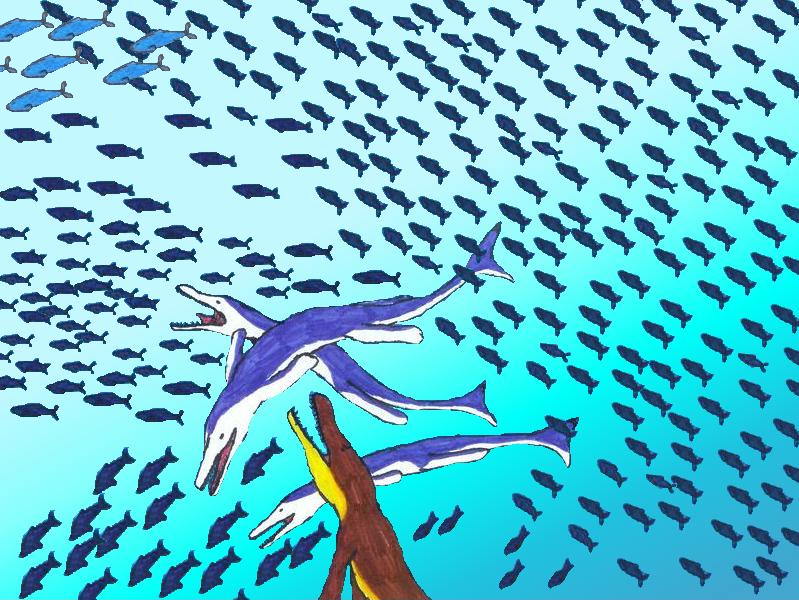

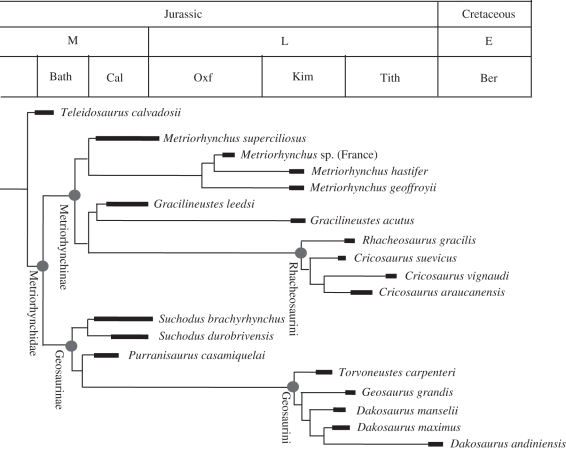
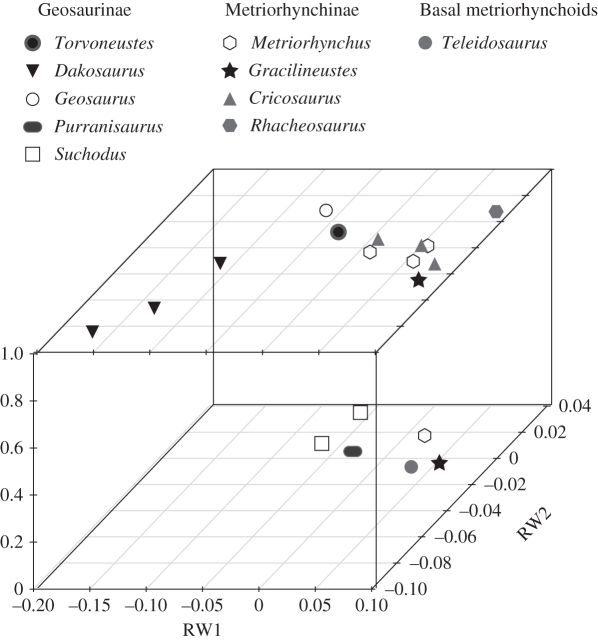
The Cranial Osteology and Feeding Ecology of the Metriorhynchid Crocodylomorph Genera Dakosaurus and Plesiosuchus from the Late Jurassic of Europe
Young, M.T., Brusatte, S.L., Andrade, M.B. de, Desojo, J.B., Beatty, B.L., Steel, L., Fernández, M.S., Sakamoto, M., Ruiz-Omeñaca, J.I. & Schoch, R.R. · PLOS ONE
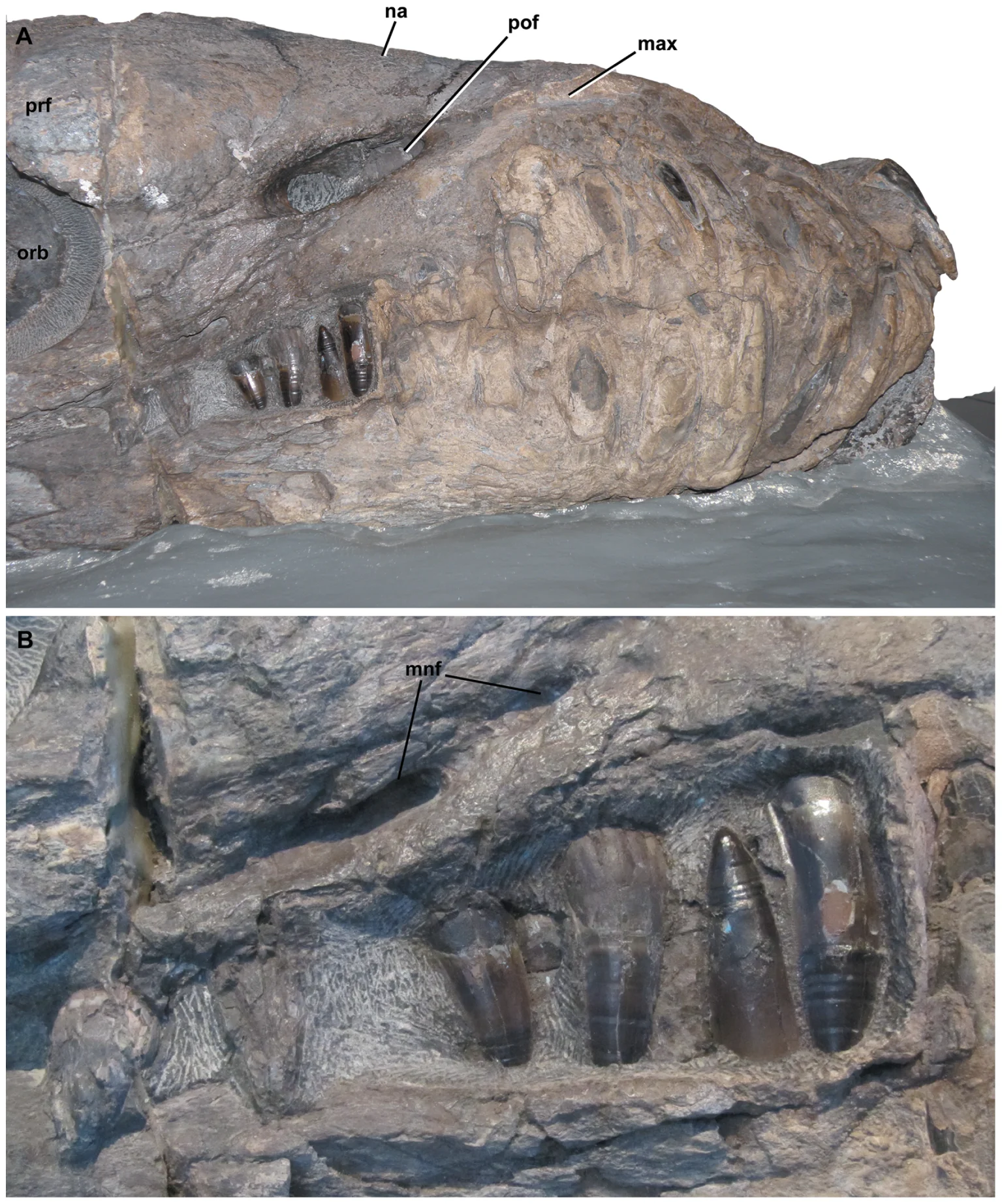
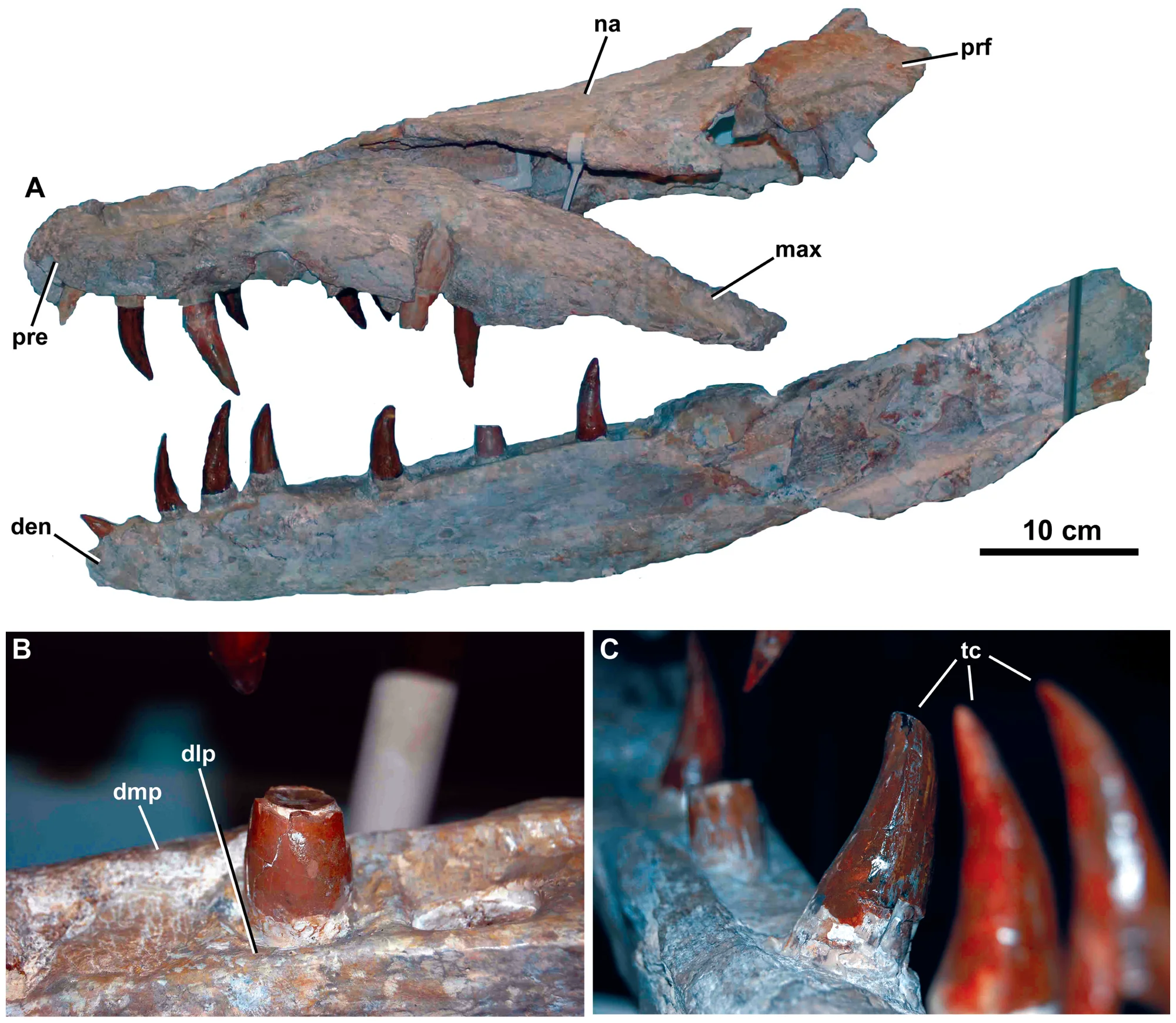
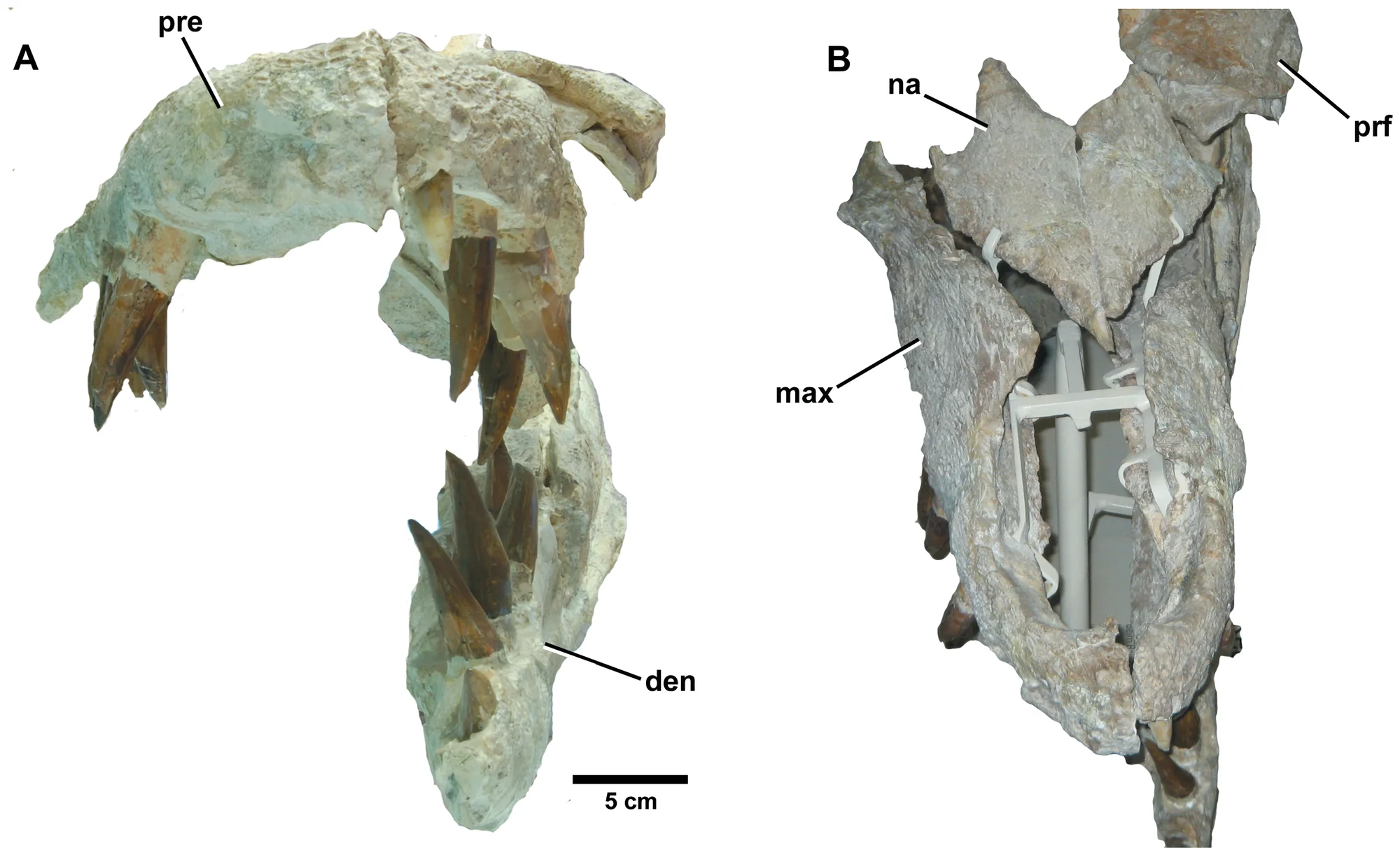
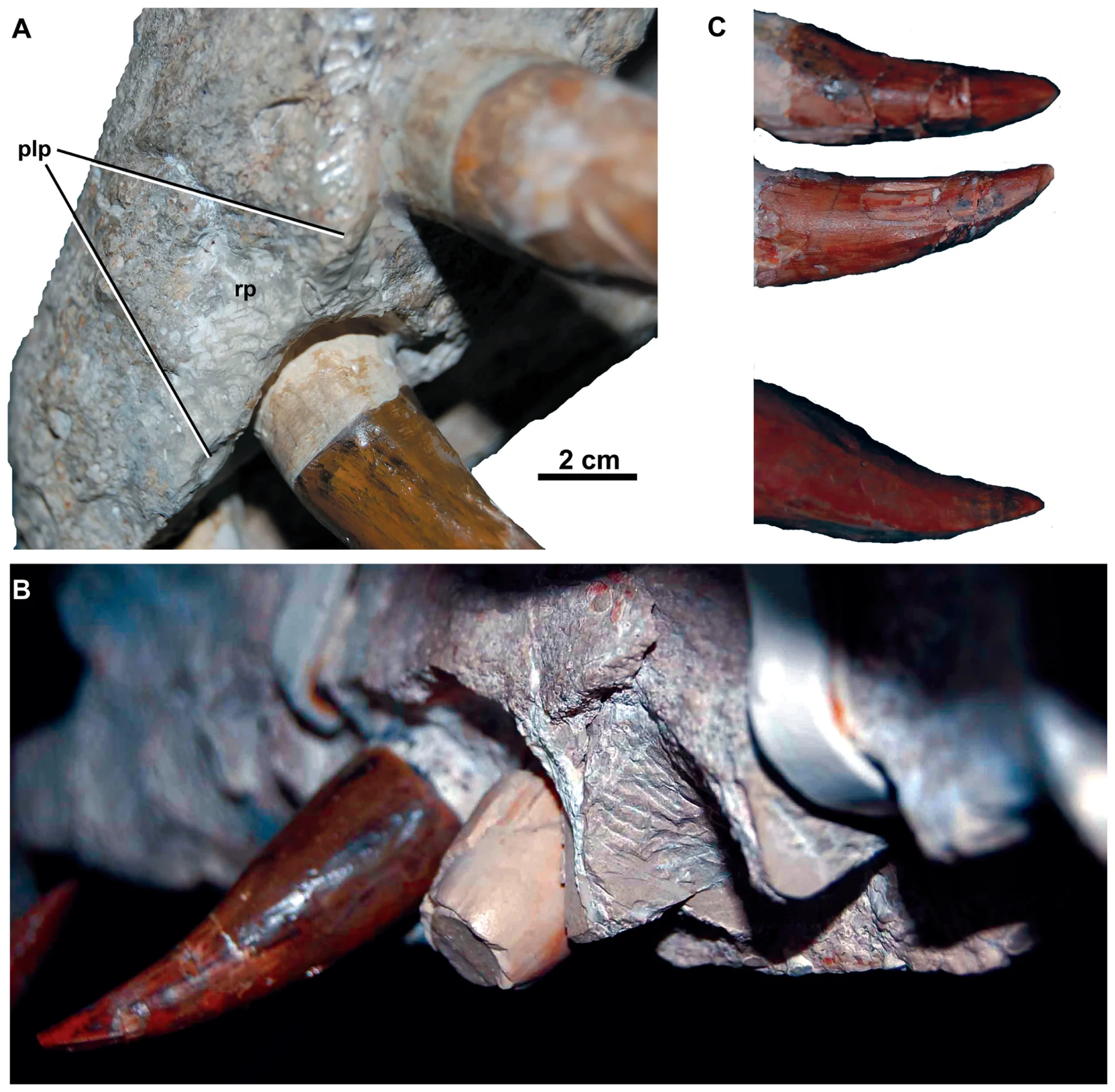
The most comprehensive osteological monograph ever published on Dakosaurus maximus, based primarily on neotype SMNS 8203. Young et al. provide detailed anatomical description of all preserved cranial elements, documenting for the first time the premaxillary 'lateral plates,' maxillary ornamentation, macroziphodont dentition with interlocking occlusion, and extensive macrowear on tooth carinae. Resurrection of genus Plesiosuchus for material previously referred to Dakosaurus manselii is proposed and substantiated. Feeding ecology analysis demonstrates that D. maximus and P. manselii were apex predators with distinct strategies: D. maximus was a macrophage of large prey (marine reptiles), while P. manselii was likely a generalist predator capable of suction feeding. Coexistence was enabled by trophic niche partitioning. With 31 figures and 3 tables, it is the mandatory anatomical reference for the species.

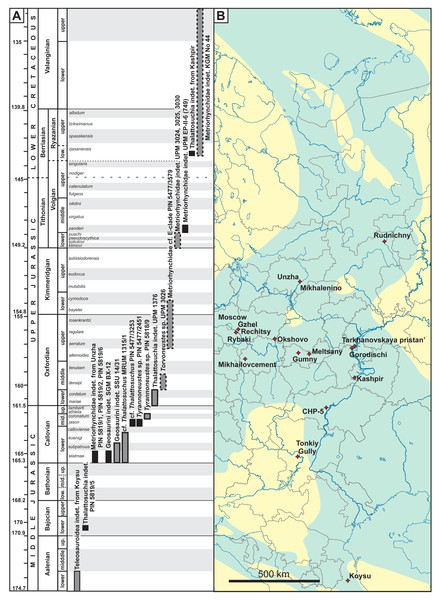
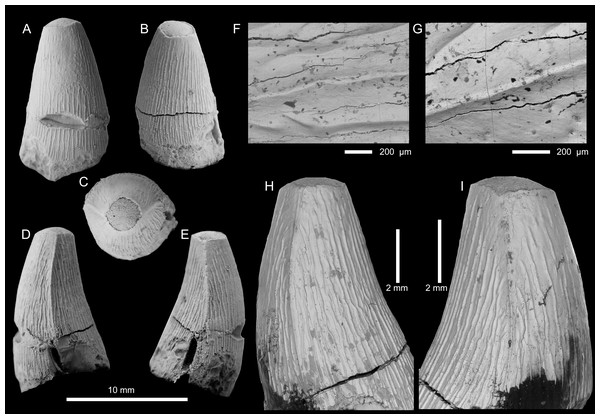
Thalattosuchian crocodylomorphs from European Russia, and new insights into metriorhynchid tooth serration evolution and their palaeolatitudinal distribution
Young, M.T., Zverkov, N.G., Arkhangelsky, M.S., Ippolitov, A.P., Meleshin, I.A., Mirantsev, G.V., Shmakov, A.S. & Stenshin, I.M. · PeerJ
Study significantly expanding the geographic record of metriorhynchids into European Russia. Young et al. describe eleven isolated tooth crowns and six vertebrae from the Callovian to Valanginian of European Russia, representing metriorhynchids with variable serration morphology. Paleolatitude calculations reveal that Russian specimens are among the most northerly documented for the group (44–50°N), and that metriorhynchids are rare above 44°N and absent above 50°N. This distribution contrasts with ichthyosaurs and plesiosaurs that reached much higher latitudes, suggesting metriorhynchids had intermediate metabolism, not fully ectothermic but also not fully endothermic. Implications for Dakosaurus are direct: the species lived at low to middle latitudes of the European Tethys, well within the 30–45°N range where Jurassic oceanic temperatures were adequate for its metabolic level.

Revision of the Late Jurassic teleosauroid thalattosuchians from the Museo Civico di Storia Naturale di Milano and the Musée des Sciences de la Terre de Marrakech
Young, M.T., Hua, S., Steel, L., Foffa, D., Brusatte, S.L., Thüring, S., Mateus, O., Ruiz-Omeñaca, J.I., Havlik, P., Lepage, Y. & Andrade, M.B. de · Acta Palaeontologica Polonica
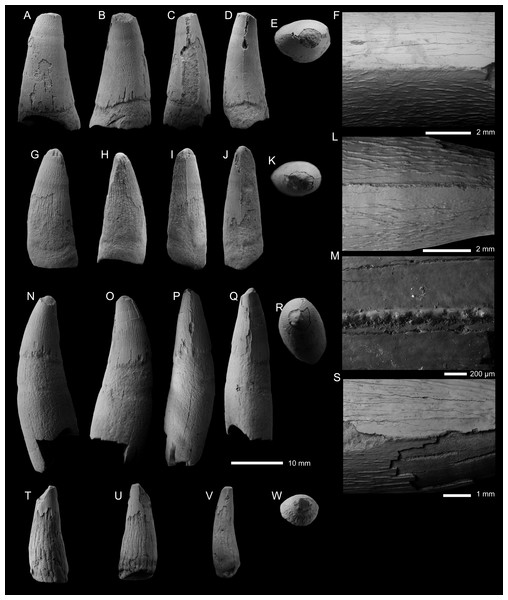
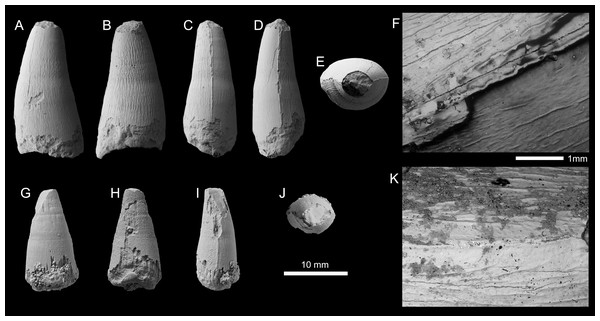
Systematic revision of teleosauroid thalattosuchians from Italian and Moroccan museum collections, providing essential context for understanding metriorhynchid diversity and paleoecology in the same ecosystem. Young et al. redescribe and revise several Upper Jurassic teleosauroid specimens, establishing emended diagnoses and updated phylogenetic relationships. The work is relevant to Dakosaurus as it demonstrates the coexistence of multiple marine crocodyliform lineages in the same temporal and geographic interval: while teleosauroids were long-snouted piscivores, metriorhynchids like Dakosaurus occupied the apex predator niche. This resource partitioning in the Jurassic marine ecosystem is a widely documented pattern, and the present work contributes taxonomic and morphological data that refine understanding of the group's biodiversity.

The first definitive Middle Jurassic atoposaurid crocodyliform, and a discussion on the atoposaurid body plan
Young, M.T., Tennant, J.P., Brusatte, S.L., Challands, T.J., Fraser, N.C., Clark, N.D.L. & Ross, D.A. · Zoological Journal of the Linnean Society
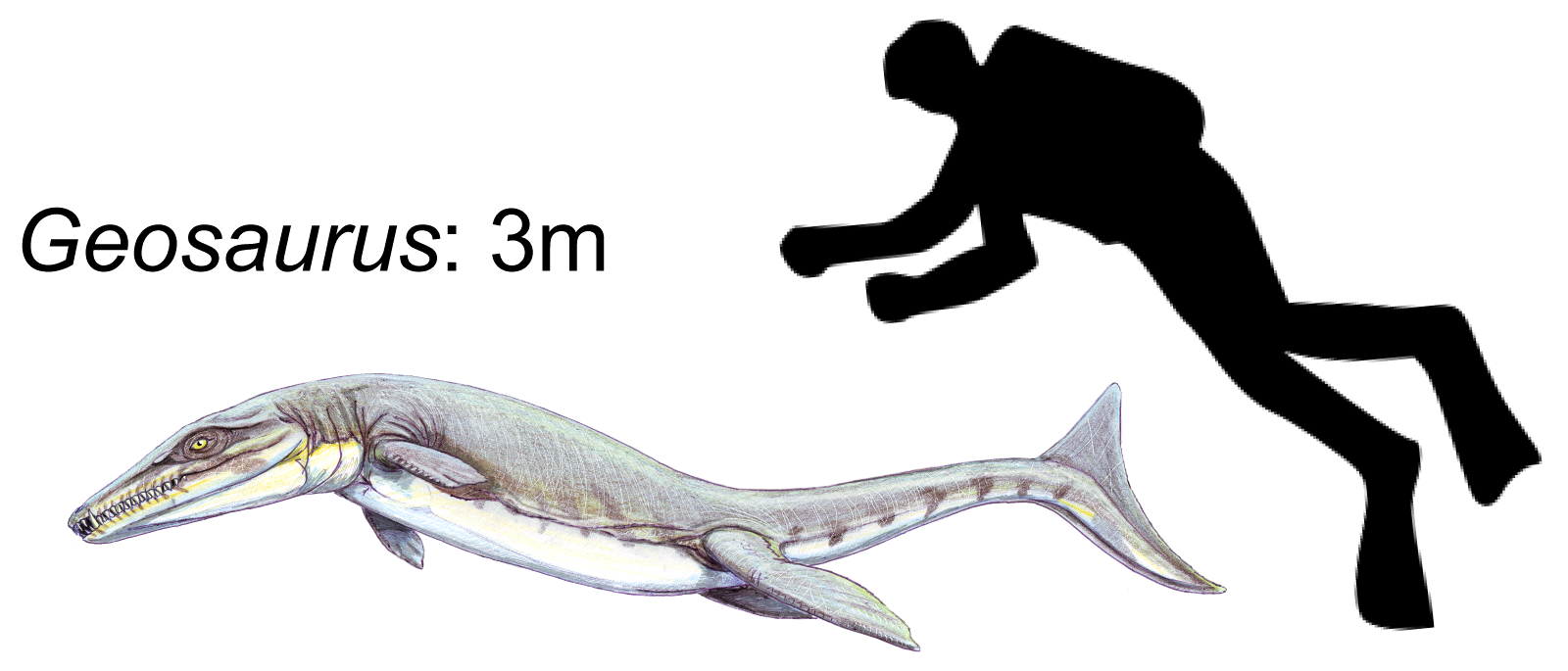
Description of new atoposaurid material from the Middle Jurassic of Scotland, with discussion of body plan diversity in Crocodyliformes. Young et al. describe the oldest definitive Atoposauridae specimen and discuss implications for understanding how different crocodyliform groups morphologically diverged. Although focused on terrestrial atoposaurids, the paper provides important phylogenetic context for Dakosaurus and Metriorhynchidae by mapping crocodyliform body plan transformations through the Jurassic. The discussion of aquatic character acquisition in different crocodyliform lineages is directly relevant to understanding how Dakosaurus reached its extremely specialized marine morphology.

A complete morphological description of Dakosaurus maximus (Crocodyliformes: Thalattosuchia) with further insights into their palaeoecology
Herrera, Y., Spindler, F. & Bronzati, M. · Palaeontologia Electronica
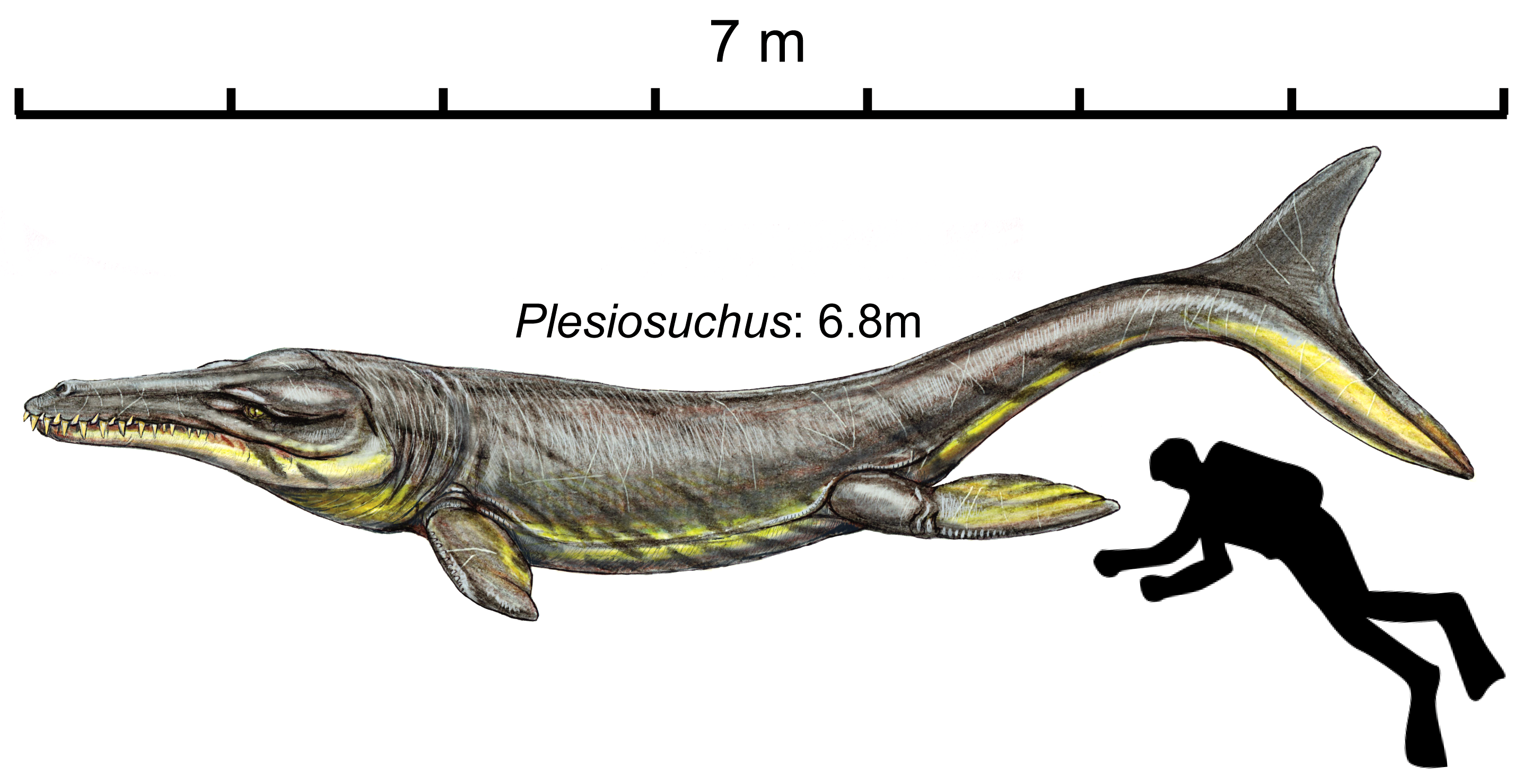
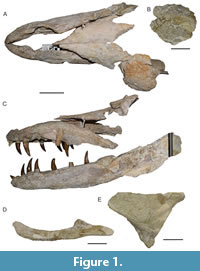
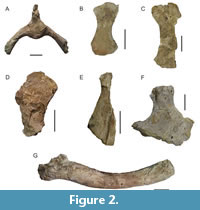
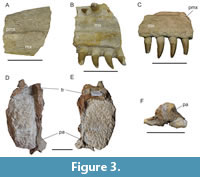
The most comprehensive morphological description of Dakosaurus maximus published to date, based on a specimen with a largely complete skull and mostly articulated postcranial skeleton from the Torleite Formation of Bavaria, Germany. Herrera, Spindler and Bronzati provide new information on cranial and postcranial anatomy, including elements never before documented in D. maximus such as palate bones, braincase details, and fore- and hindflipperplate elements. The updated phylogenetic analysis places D. maximus within Geosaurini with robust support, confirming its close relationship with Plesiosuchus. New postcranial observations reveal details of marine adaptation: modified vertebrae, flipper structure, and bifurcated tail anatomy. Paleoecological interpretations are refined based on the new morphology, confirming Dakosaurus's role as an apex predator specialized on large prey.


The history, systematics, and nomenclature of Thalattosuchia (Archosauria: Crocodylomorpha)
Young, M.T., Foffa, D., Steel, L., Andrade, M.B. de, Brusatte, S.L., Desojo, J.B. & Schoch, R.R. · Zoological Journal of the Linnean Society
Comprehensive review of the history, systematics, and nomenclature of Thalattosuchia, the group including Dakosaurus maximus. Young et al. review the entire nomenclatural history of the group from the earliest 19th-century works, including Plieninger's (1846) and Quenstedt's (1856) contributions that established Dakosaurus nomenclature. The paper proposes important nomenclatural corrections and presents an updated phylogenetic analysis of all Thalattosuchia taxa based on data published between 2009 and 2024. For Dakosaurus maximus, the authors confirm species validity and discuss the status of D. andiniensis as a valid separate species. The study represents the most complete taxonomic synthesis on Thalattosuchia published to date and serves as the definitive nomenclatural reference for the group.

Famous museum specimens
SMNS 8203 (Neótipo)
Staatliches Museum für Naturkunde Stuttgart, Stuttgart, Alemanha
Official neotype of Dakosaurus maximus, designated by Young & Andrade in 2009 to replace the lost holotype (an isolated tooth described by Plieninger in 1846). Consists of an incomplete skull, dorsal, sacral and caudal vertebrae, ribs and partial limbs from Staufen, Baden-Württemberg. The skull is on display in the museum's permanent exhibition.
MOZ-PV 6146P
Museo Olsacher de Zapala, Zapala, Neuquén, Argentina
Referred specimen of Dakosaurus andiniensis from the Vaca Muerta Formation of the Upper Tithonian of Argentine Patagonia. Described by Gasparini, Pol & Spalletti (2006) in Science and the specimen nicknamed 'Godzilla' by Argentine paleontologists due to its extreme cranial morphology. It is the most complete Dakosaurus specimen from the Southern Hemisphere.
Espécime de Painten
Bayerische Staatssammlung für Paläontologie und Geologie, Munique, Alemanha
Bavarian specimen of Dakosaurus sp. with preserved skull parts and postcranial skeleton. Referenced in the literature as comparative material for D. maximus, it contributes to understanding intraspecific variability and geographic distribution of Dakosaurus in Germany.
In cinema and popular culture
Dakosaurus maximus is virtually absent from major film productions, in contrast to ichthyosaurs and plesiosaurs that frequently appear as marine threats in adventure films. Its absence from major blockbusters is likely due to its most impactful scientific discovery, the Argentine 'Godzilla' specimen, having occurred only in 2005, too late to influence the wave of 1990s and 2000s productions. In science documentaries, Dakosaurus appears with increasing frequency from 2008 onward, with particular prominence in 3D museum productions exploring Jurassic seas. Comparisons to great white sharks and to the real 'Godzilla' are the most commonly used narrative hooks. With the recent 2026 discoveries making Dakosaurus the most complete and studied metriorhynchid, the animal is likely to gain more cultural visibility in coming decades.
Classification

Discovery
Fun fact
Dakosaurus is the only known crocodyliform with both serrated and laterally compressed teeth simultaneously, a trait that evolved convergently in large terrestrial theropods like Allosaurus. The Argentine specimen D. andiniensis was nicknamed 'Godzilla' by the paleontologists who discovered it, impressed by the animal's extreme cranial morphology.
Last reviewed: April 24, 2026