Buriolestes
Buriolestes schultzi
"Raider of Buriol Farm (Schultz)"
About this species
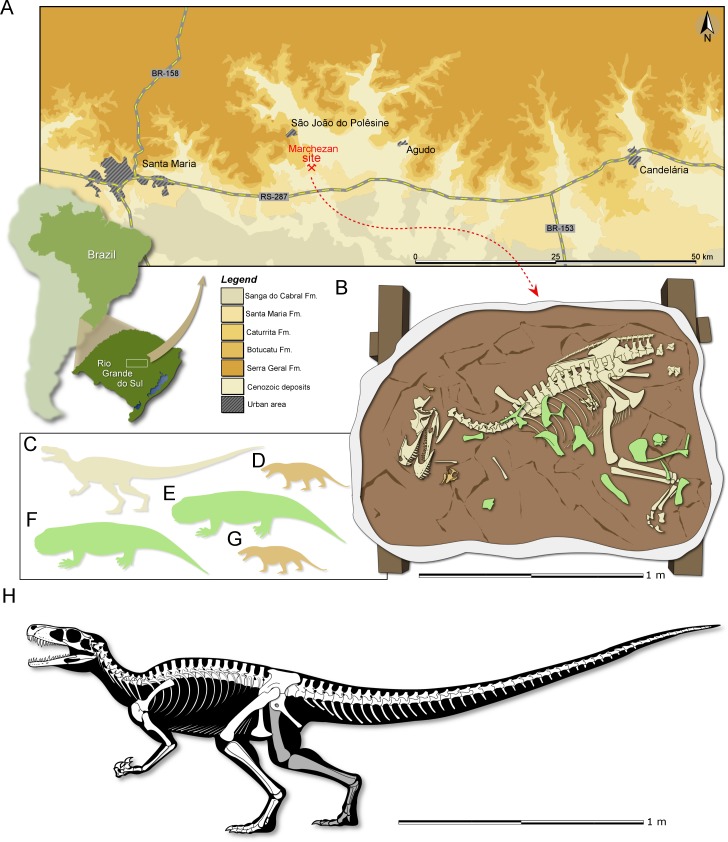
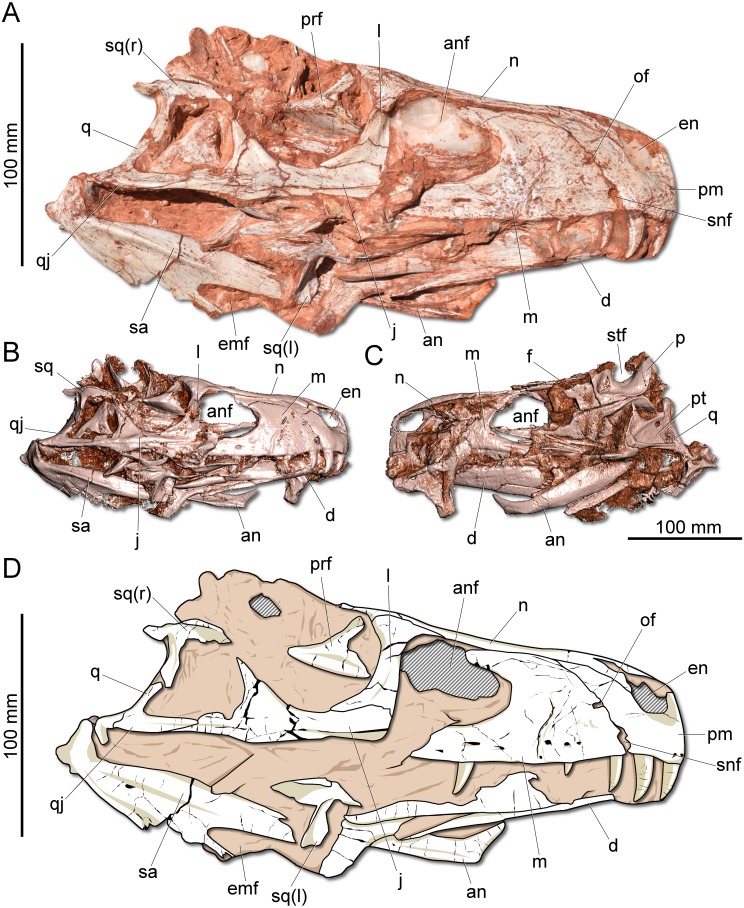
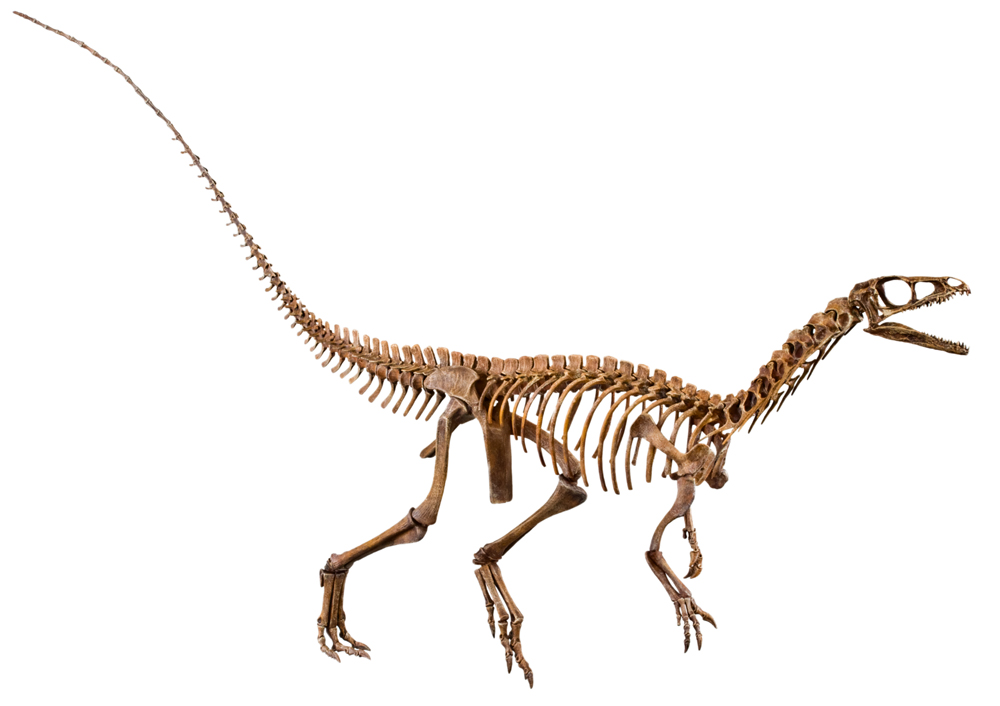
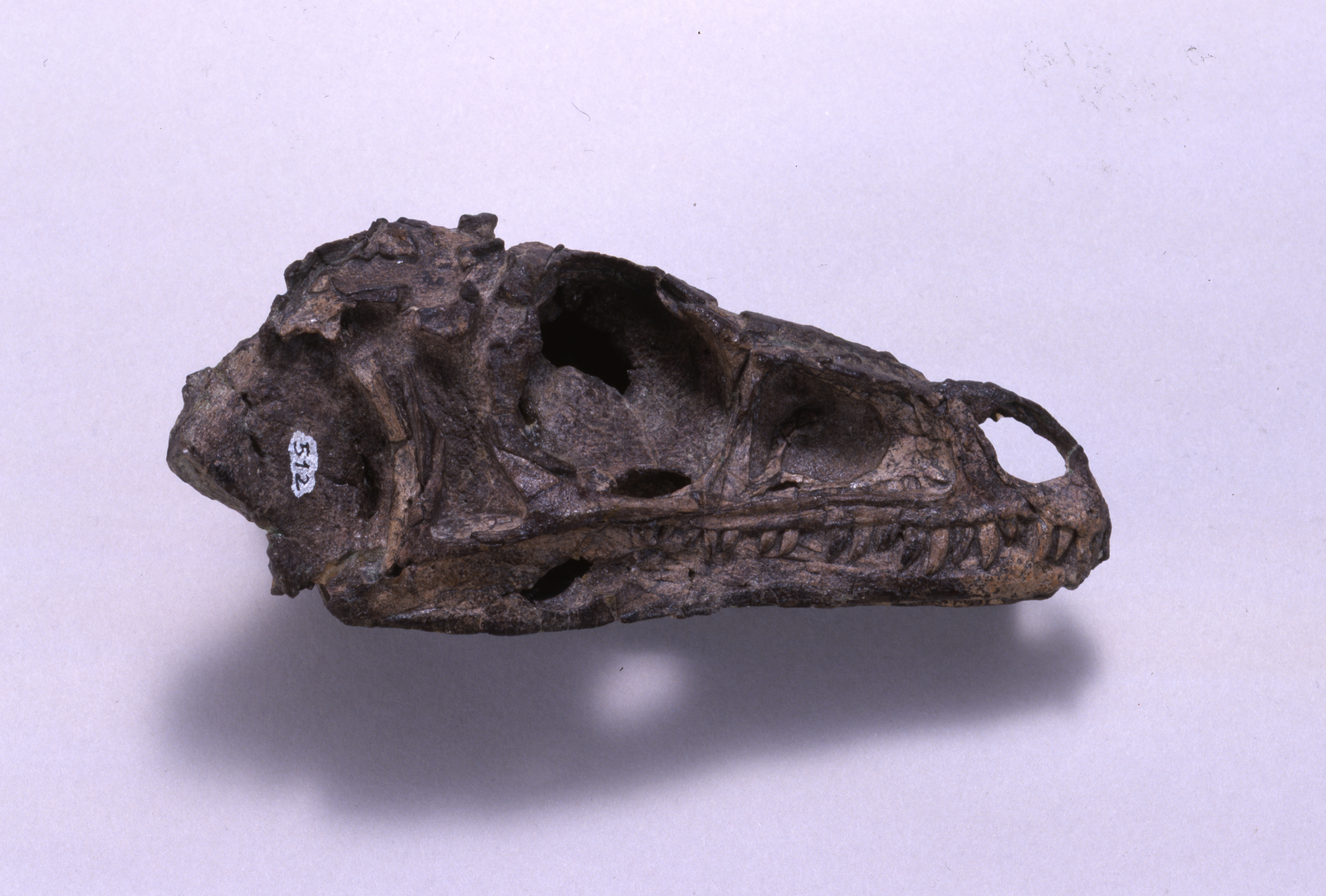
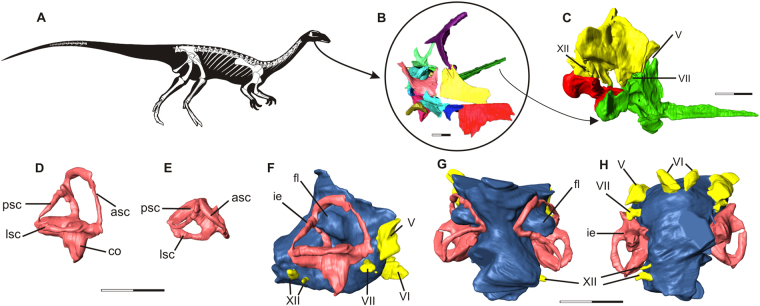
Buriolestes schultzi is one of the oldest dinosaurs in the Brazilian fossil record, from the Carnian (Late Triassic, ~233 million years ago) Santa Maria Formation in Rio Grande do Sul. Although it belongs to the sauropodomorph lineage that later gave rise to the giant herbivorous sauropods, Buriolestes was a small bipedal hunter with serrated predator teeth, a fact that rewrote the understanding of the ancestral diet of sauropodomorph dinosaurs. Specimen CAPPA/UFSM 0035, described by Müller et al. in 2018, preserves a nearly complete skeleton with a fully articulated skull, an extremely rare condition among basal sauropodomorphs. In 2021 Müller and colleagues digitally reconstructed the animal's brain (via micro-CT) and revealed a small brain with a well-developed cerebellar flocculus, consistent with an active predator. Buriolestes is a key piece for understanding the origin of dinosaurs and the transition between ancestral carnivory and derived herbivory in Sauropodomorpha.
Geological formation & environment
Santa Maria Formation, divided into the older Santa Maria Sequence and the younger Candelária Sequence, the latter hosting the Hyperodapedon Assemblage Zone to which Buriolestes belongs. Paraná Basin, Rio Grande do Sul, Brazil, dated to ~233 million years ago (Carnian, Late Triassic). Environment of seasonally dry floodplains with meandering rivers and a semi-arid climate under the influence of the Carnian Pluvial Episode. The fauna includes the dinosaurs Buriolestes schultzi, Saturnalia tupiniquim, Pampadromaeus barberenai, Bagualosaurus agudoensis, Staurikosaurus pricei and Gnathovorax cabreirai, plus rhynchosaurs (Hyperodapedon sp., dominant), cynodonts (Exaeretodon, Trucidocynodon), pseudosuchians (Prestosuchus, Rauisuchus, Decuriasuchus, Aetosauroides) and the lagerpetid Ixalerpeton polesinensis.
Image gallery
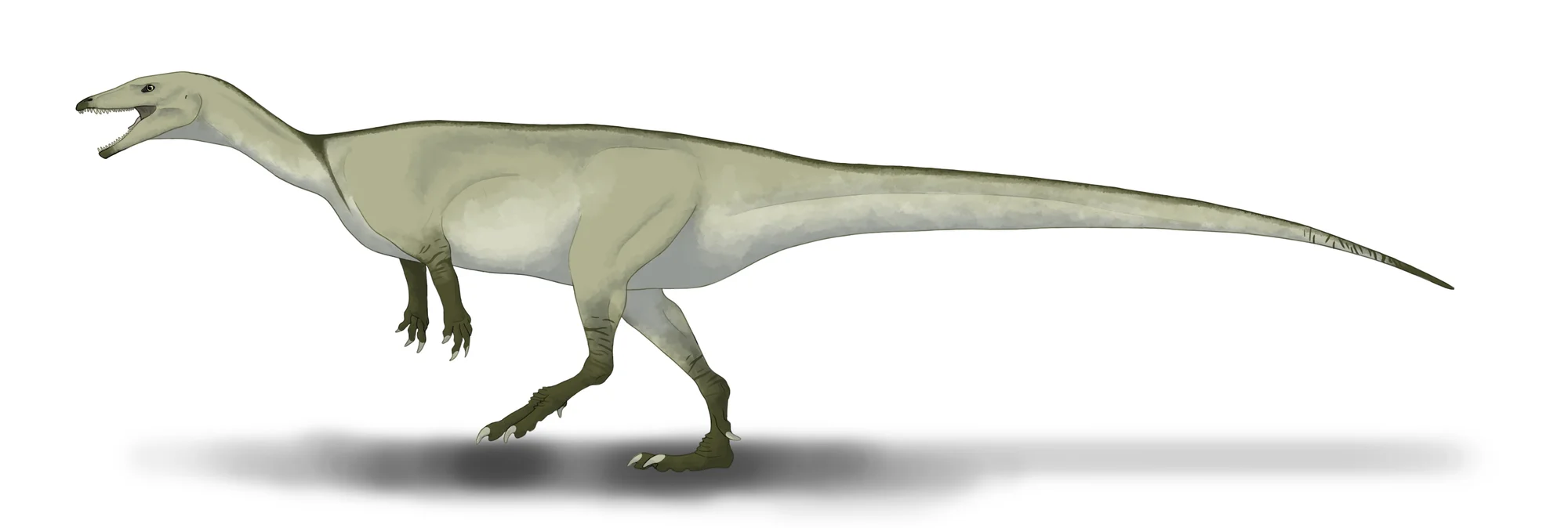


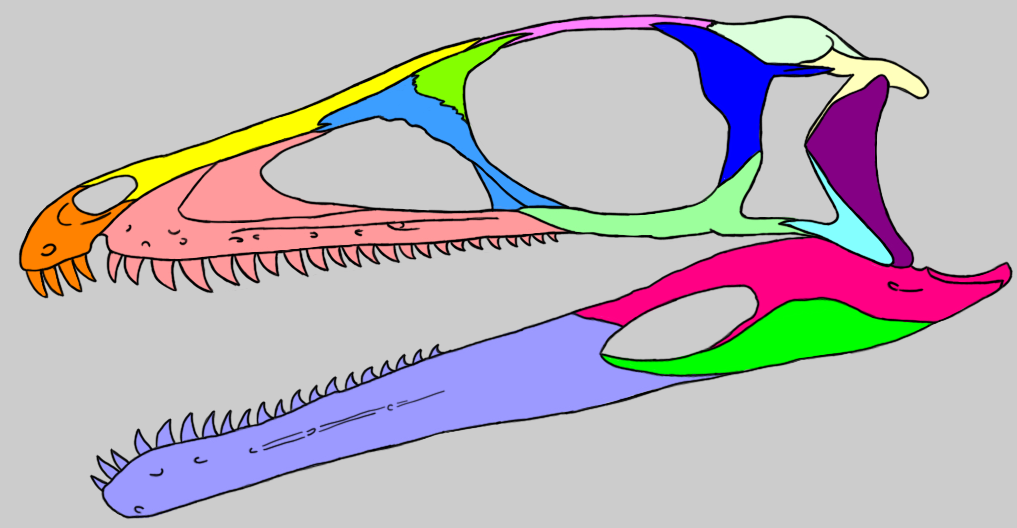


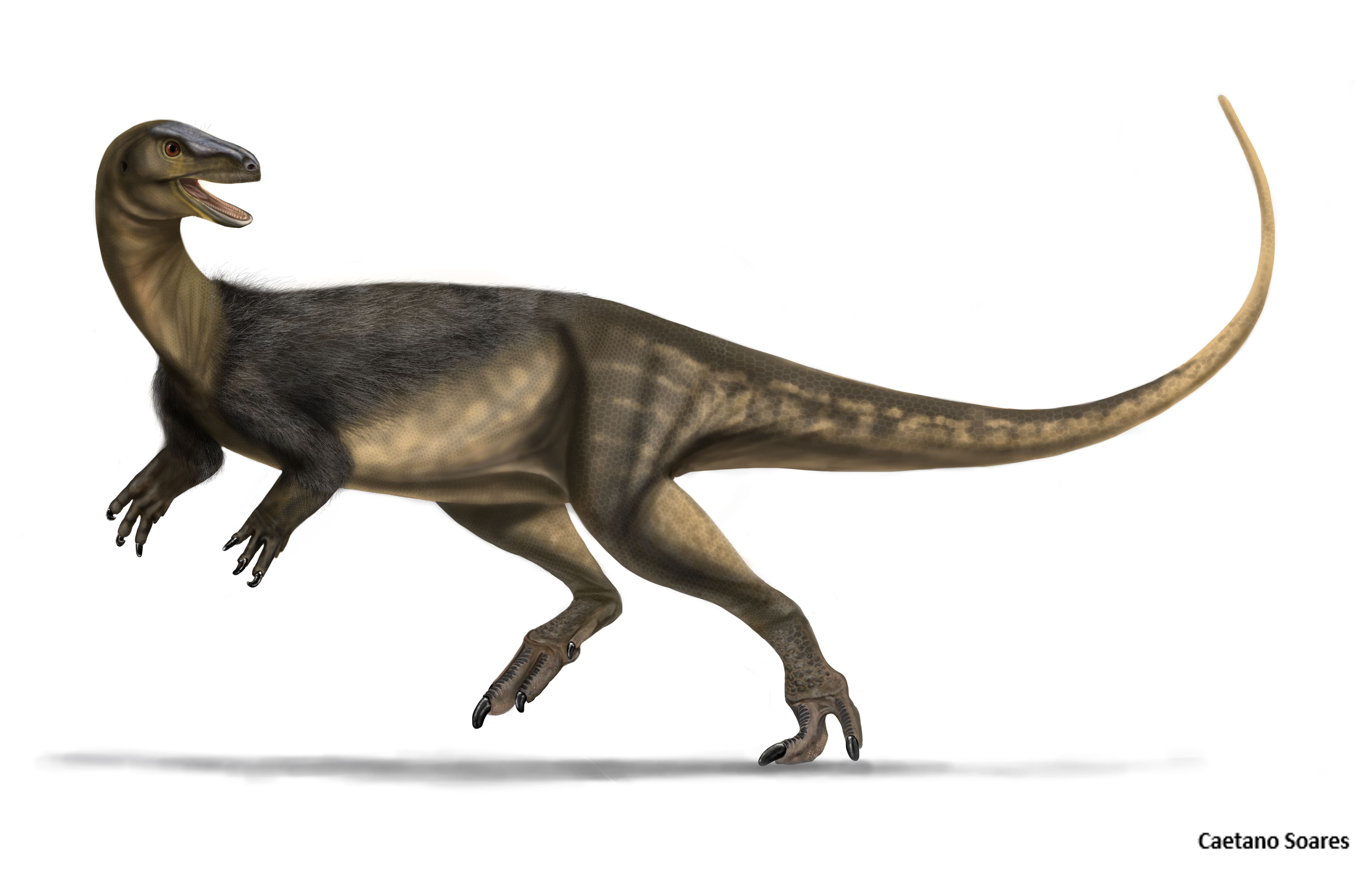


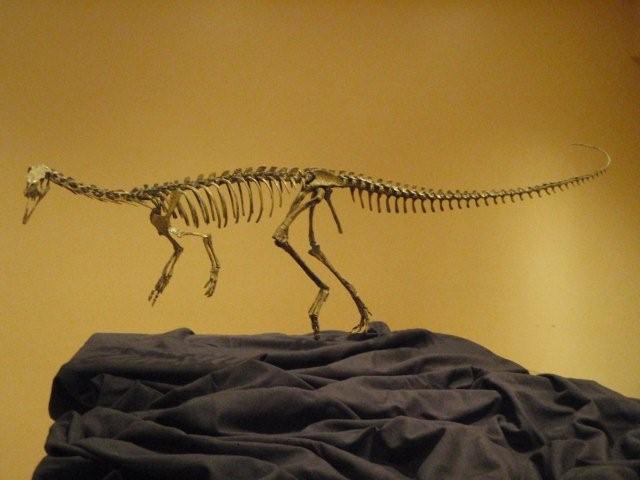
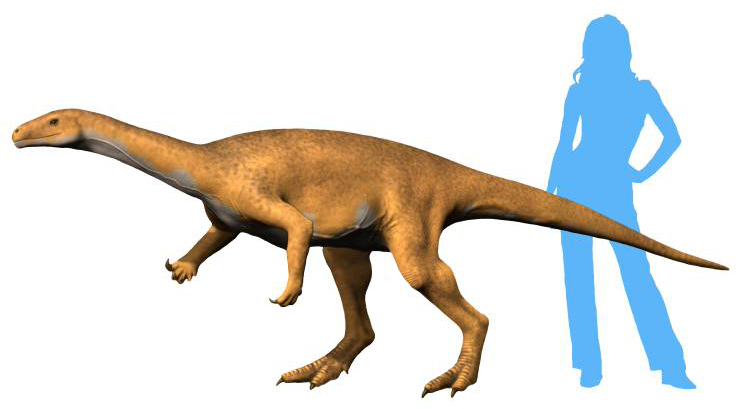
Life reconstruction of Buriolestes schultzi, a small carnivorous sauropodomorph from the Triassic of Rio Grande do Sul, based on casts, fossils and skeletal diagrams.
Audrey.m.horn (Wikimedia Commons, CC BY-SA 4.0)
Ecology and behavior
Habitat
Carnian alluvial floodplains with meandering rivers, shallow lagoons and vegetation dominated by conifers, cycads, tree ferns and lycopods. The climate was semi-arid to semi-humid, with rainfall pulses tied to the Carnian Pluvial Episode (~234–232 Ma), which coincides with the initial radiation of dinosaurs. Palaeolatitude roughly 40°S in the interior of southwestern Gondwana.
Feeding
Small active predator. Teeth are slender, recurved and serrated, typical of a carnivore, adapted to small prey such as vertebrates (lizards, juvenile cynodonts, relatives of the first dinosaurs) and soft-bodied invertebrates. The dentition contrasts with that of herbivorous derived sauropodomorphs and documents the ancestral carnivorous condition of the lineage.
Behavior and senses
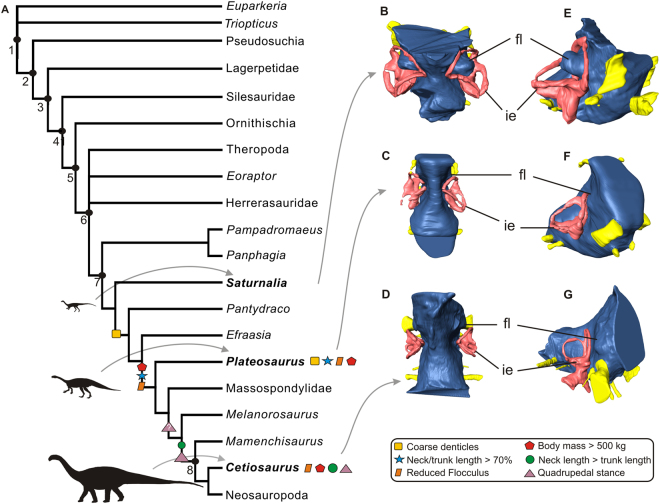
The brain reconstruction indicates small olfactory bulbs, a long olfactory tract and a well-developed cerebellar flocculus, a profile matching an agile predator capable of tracking moving prey and adjusting balance during running or jumping. There is no direct evidence of gregariousness, but the articulated co-occurrence of the holotype with Ixalerpeton suggests shared use of the same habitats.
Physiology and growth
Bone growth, inferred from histology and ontogenetic comparisons, was relatively rapid for a Carnian dinosaur. Bones were not pneumatised (unlike theropods and derived sauropodomorphs, whose vertebrae have air spaces), supporting the hypothesis of multiple independent origins of pneumaticity within Dinosauria.
Paleogeography
Continental configuration

Scotese & Vérard · CC BY 4.0 · Triassic, ~225 Ma
During the Carniano (~233–233 Ma), Buriolestes schultzi inhabited Pangea, the single supercontinent joining all modern continents. Climate was dry and hot across much of the continental interior.
Bone Inventory
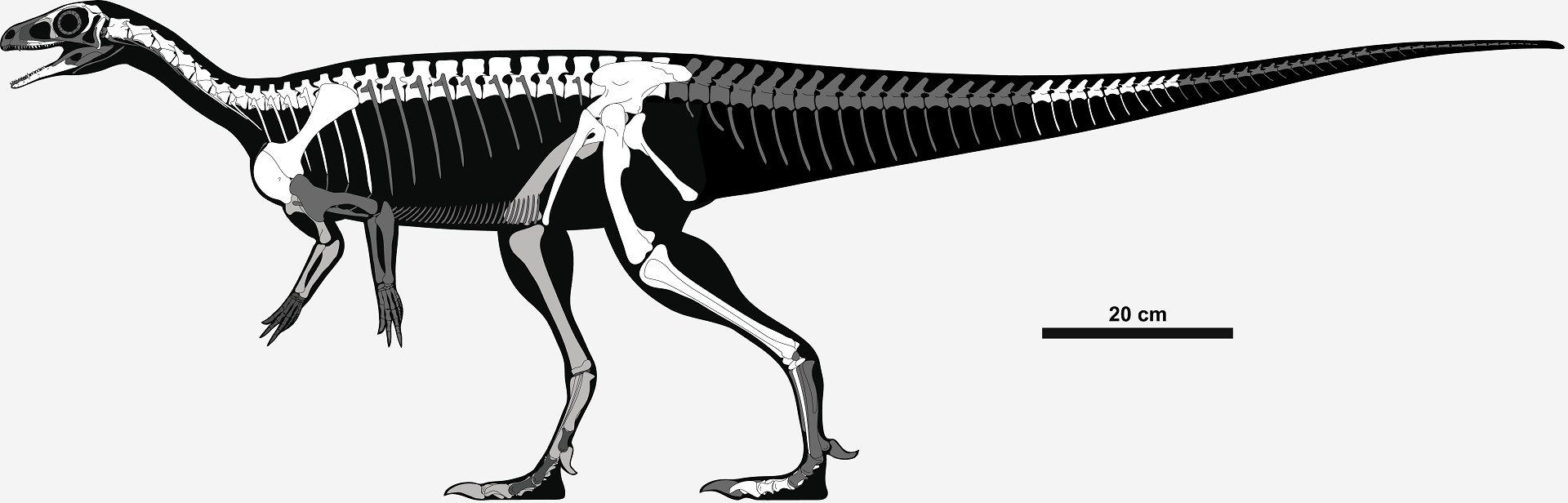
Buriolestes is one of the best-represented dinosaurs from the Brazilian Triassic, with at least five known specimens. CAPPA/UFSM 0035 preserves a fully articulated skull, extremely rare among basal sauropodomorphs. This coverage allows detailed anatomical, endocranial and histological studies.

Found elements
Inferred elements
Scientific Literature
15 papers in chronological order — from the original description to recent research.
A Unique Late Triassic Dinosauromorph Assemblage Reveals Dinosaur Ancestral Anatomy and Diet
Cabreira, S.F., Kellner, A.W.A., Dias-da-Silva, S., Roberto-da-Silva, L., Bronzati, M., Marsola, J.C.A., Müller, R.T., Bittencourt, J.S., Batista, B.J.A., Raugust, T., Carrilho, R., Brodt, A. e Langer, M.C. · Current Biology
Original description of Buriolestes schultzi and Ixalerpeton polesinensis from articulated specimens found together at the Buriol farm. Shows that ancestral sauropodomorphs were small bipedal carnivores with theropod-like teeth, overturning the classical assumption of primitive herbivory in the lineage. Buriolestes is recovered as sister taxon to all other sauropodomorphs and offers a near-complete portrait of the dinosaur predating the herbivorous habit of sauropods.
Early evolution of sauropodomorphs: anatomy and phylogenetic relationships of a remarkably well-preserved dinosaur from the Upper Triassic of southern Brazil
Müller, R.T., Langer, M.C., Bronzati, M., Pacheco, C.P., Cabreira, S.F. e Dias-da-Silva, S. · Zoological Journal of the Linnean Society
Complete anatomical redescription based on specimen CAPPA/UFSM 0035, a near-complete skeleton with an articulated skull, extremely rare among basal sauropodomorphs. Revises characters, updates the phylogenetic matrix and repositions Buriolestes at the base of Sauropodomorpha, reinforcing its status as a basal carnivorous sauropodomorph and its relevance for the study of dinosaur origins.
The endocranial anatomy of Buriolestes schultzi (Dinosauria: Saurischia) and the early evolution of brain tissues in sauropodomorph dinosaurs
Müller, R.T., Ferreira, J.D., Pretto, F.A., Bronzati, M. e Kerber, L. · Journal of Anatomy
First complete brain endocast of a basal dinosaur, obtained via micro-CT of CAPPA/UFSM 0035. Buriolestes had relatively small olfactory bulbs, an elongated olfactory tract, a small pituitary and a well-developed cerebellar flocculus, matching an active predator. Its relative encephalisation quotient was higher than that of derived sauropods, suggesting cognitive decline accompanied gigantism.


Gnathovorax cabreirai: a new early dinosaur and the origin and initial radiation of predatory dinosaurs
Pacheco, C., Müller, R.T., Langer, M., Pretto, F.A., Kerber, L. e Dias-da-Silva, S. · PeerJ
Description of Gnathovorax cabreirai, a herrerasaurid co-occurring with Buriolestes at the same stratigraphic level of the Santa Maria Formation. Includes a broad phylogenetic matrix and CT-scan analysis of the skull, offering comparative data essential to anatomical and phylogenetic studies of Buriolestes. Underpins the reconstruction of the Carnian Brazilian predator paleocommunity.
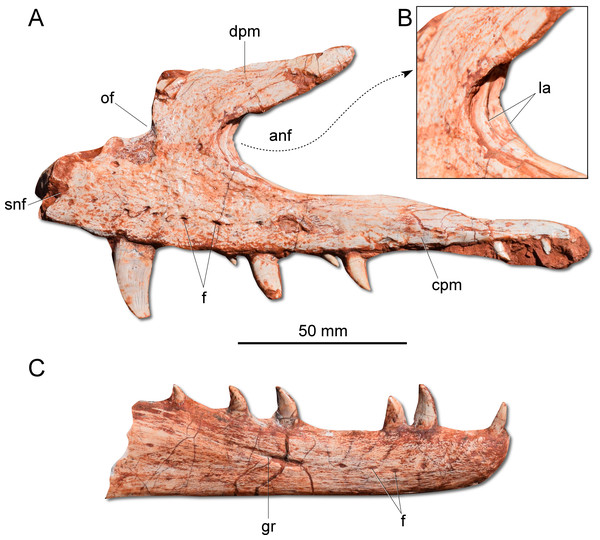
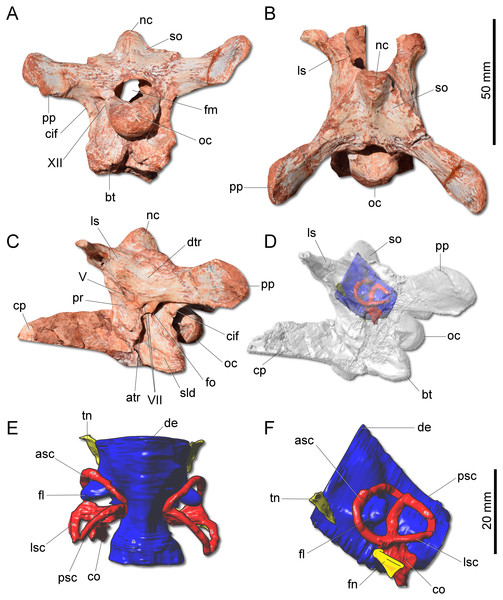
The absence of an invasive air sac system in the earliest dinosaurs suggests multiple origins of vertebral pneumaticity
Aureliano, T., Ghilardi, A.M., Müller, R.T., Kerber, L., Fernandes, M.A., Ricardi-Branco, F. e Wedel, M.J. · Scientific Reports
Micro-CT analysis of vertebrae in Buriolestes, Pampadromaeus and Gnathovorax shows no invasive pneumatic system in the earliest dinosaurs. The authors conclude that vertebral pneumaticity evolved at least three times independently in archosaurs (pterosaurs, theropods, derived sauropodomorphs), not from common inheritance, repositioning Buriolestes as a reference for the ancestral non-pneumatic condition.


An unusually robust specimen attributed to Buriolestes schultzi (Dinosauria: Sauropodomorpha) from the Late Triassic of southern Brazil
Moro, D., Kerber, L., Müller, R.T. e Pretto, F.A. · The Anatomical Record
Describes the first Buriolestes schultzi specimen outside the type locality (Piche site, São João do Polêsine), with an estimated mass of ~15 kg, roughly twice that of other specimens. Shows wide intraspecific variation (likely ontogenetic or dimorphic) and expands the known morphology of the taxon, challenging interpretations of typical body size in basal sauropodomorphs.
A Basal Dinosaur from the Dawn of the Dinosaur Era in Southwestern Pangaea
Martínez, R.N., Sereno, P.C., Alcober, O.A., Colombi, C.E., Renne, P.R., Montañez, I.P. e Currie, B.S. · Science
Describes Eodromaeus murphi and reinterprets Eoraptor lunensis as a basal sauropodomorph rather than a theropod. Provides essential comparative context for Buriolestes, which shares characters with Eoraptor and represents the carnivorous ancestral condition of the South American sauropodomorph lineage.
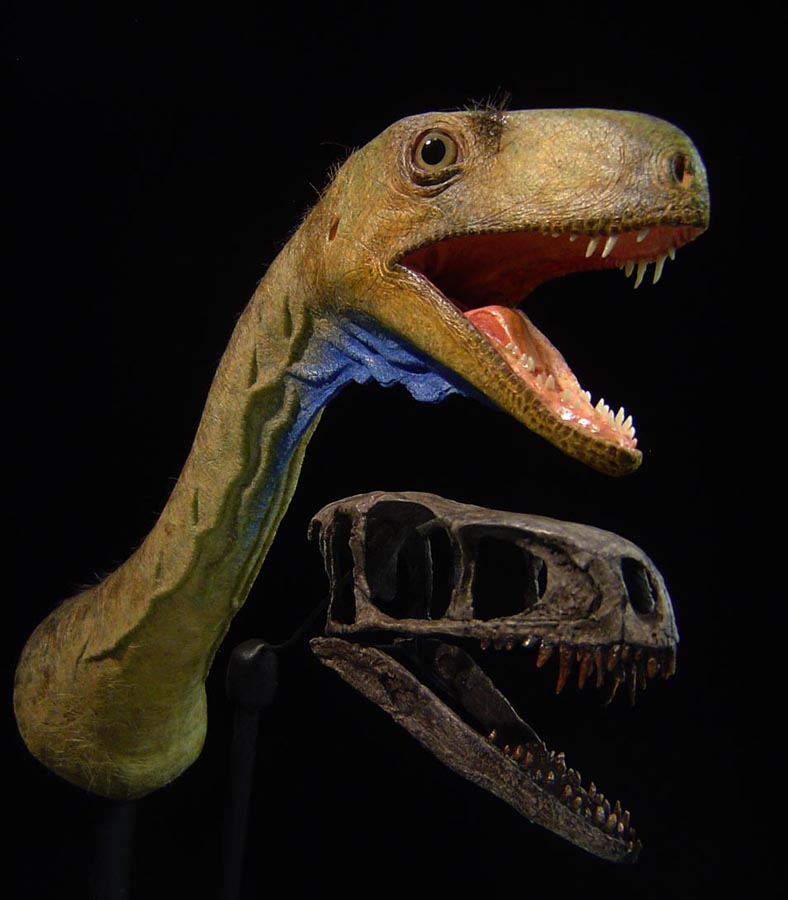
Osteology of Eoraptor lunensis (Dinosauria, Sauropodomorpha)
Sereno, P.C., Martínez, R.N. e Alcober, O.A. · Journal of Vertebrate Paleontology
Detailed osteology of Eoraptor lunensis, a basal sauropodomorph from the Ischigualasto Formation (Argentina). Recovered in several trees as the closest sister taxon to Buriolestes, it provides the comparative baseline for cranial and postcranial characters used in phylogenetic analyses of the Brazilian genus.
New stem-sauropodomorph (Dinosauria, Saurischia) from the Triassic of Brazil
Cabreira, S.F., Schultz, C.L., Bittencourt, J.S., Soares, M.B., Fortier, D.C., Silva, L.R. e Langer, M.C. · Naturwissenschaften
Original description of Pampadromaeus barberenai (ULBRA-PVT016), also from the Santa Maria Formation. Sets the context of Brazilian basal sauropodomorph fauna preceding Buriolestes by five years and documents partially shared diagnostic characters, an unavoidable comparative baseline for later studies.
A new early dinosaur (Saurischia: Sauropodomorpha) from the Late Triassic of Argentina: a reassessment of dinosaur origin and phylogeny
Ezcurra, M.D. · Journal of Systematic Palaeontology
Describes Chromogisaurus novasi and reassesses early dinosaur phylogeny, defining Guaibasauridae (Saturnalia, Panphagia, Chromogisaurus, Guaibasaurus, Agnosphitys). The analytical basis of this review is widely reused in later studies on Buriolestes and other South American basal sauropodomorphs.

The anatomy and phylogenetic position of the Triassic dinosaur Staurikosaurus pricei Colbert, 1970
Bittencourt, J.S. e Kellner, A.W.A. · Zootaxa
Complete redescription of Staurikosaurus pricei, a Brazilian herrerasaurid from the Santa Maria Formation. Provides context for the faunal community co-occurring with Buriolestes and for comparisons of pelvic and postcranial anatomy among basal Brazilian saurischians.

Endocast of the Late Triassic (Carnian) dinosaur Saturnalia tupiniquim: implications for the evolution of brain tissue in Sauropodomorpha
Bronzati, M., Rauhut, O.W.M., Bittencourt, J.S. e Langer, M.C. · Scientific Reports
First reconstructed endocast of a Carnian dinosaur (Saturnalia tupiniquim). Establishes the direct comparative reference for the Buriolestes endocast presented by Müller et al. (2021) and for the discussion of brain evolution in sauropodomorphs.
Review of the fossil record of early dinosaurs from South America, and its phylogenetic implications
Novas, F.E., Agnolin, F.L., Ezcurra, M.D., Müller, R.T., Martinelli, A.G. e Langer, M.C. · Journal of South American Earth Sciences
Comprehensive review of the Carnian South American dinosaur fossil record, including Buriolestes in the continental phylogenetic framework. Discusses origins, palaeobiogeography and stratigraphy, becoming an essential reference to situate the Brazilian genus globally.


A new hypothesis of dinosaur relationships and early dinosaur evolution
Baron, M.G., Norman, D.B. e Barrett, P.M. · Nature
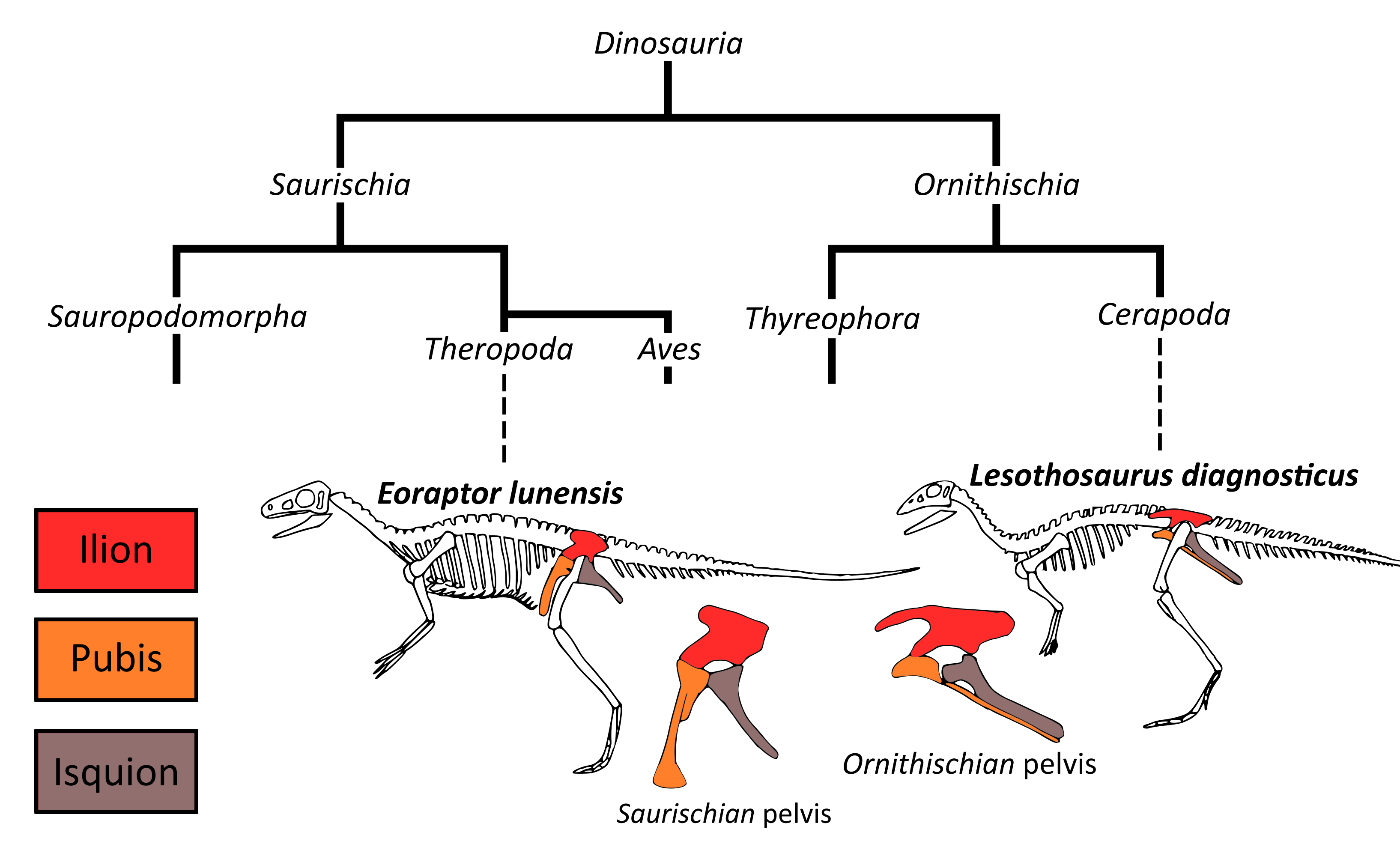
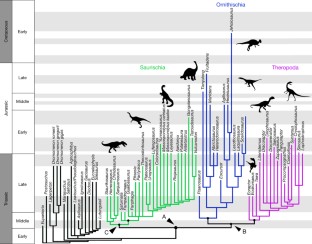
Proposes the Ornithoscelida hypothesis (Theropoda + Ornithischia), challenging the traditional Saurischia/Ornithischia split. Reignites the phylogenetic debate in which Buriolestes is a key data point: if Herrerasauridae and Sauropodomorpha remain in Saurischia, Buriolestes stays basal to that lineage and archives characters of the common ancestor.

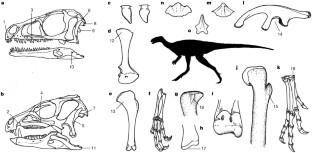
A new dinosaur (Saurischia: Sauropodomorpha) from the Late Triassic of Brazil provides insights on the evolution of sauropodomorph body plan
Pretto, F.A., Langer, M.C. e Schultz, C.L. · Zoological Journal of the Linnean Society
Describes Bagualosaurus agudoensis, another Santa Maria Formation sauropodomorph. Provides direct context on the carnivore-to-omnivore/herbivore transition within Sauropodomorpha, in which Buriolestes represents the basal carnivorous end and Bagualosaurus an intermediate stage.

Famous museum specimens
ULBRA-PVT280 (holótipo)
Universidade Luterana do Brasil (ULBRA), Canoas, Rio Grande do Sul, Brasil
Holotype of Buriolestes schultzi, the basis of Cabreira et al. (2016). Housed in the palaeontology collection of ULBRA in Canoas. Collected together with remains of Ixalerpeton polesinensis in direct association, a rare case of articulated co-occurrence between a dinosaur and a non-dinosaur dinosauromorph.
CAPPA/UFSM 0035
Centro de Apoio à Pesquisa Paleontológica da Quarta Colônia (CAPPA/UFSM), São João do Polêsine, Rio Grande do Sul, Brasil
Key specimen that enabled the full anatomical redescription by Müller et al. (2018) and the endocranial reconstruction by Müller et al. (2021). The fully articulated skull is an exceptional condition for Carnian dinosaurs and made Buriolestes one of the anatomically best-understood basal sauropodomorphs.
Espécime robusto do Sítio Piche (Moro et al. 2024)
Centro de Apoio à Pesquisa Paleontológica da Quarta Colônia (CAPPA/UFSM), São João do Polêsine (RS)
First Buriolestes specimen found outside the type locality. Estimated mass is about twice that of the other specimens, revealing wide intraspecific variation (ontogenetic or dimorphic) in Carnian populations of the Santa Maria Formation. Described by Moro et al. (2024) in The Anatomical Record.
Classification
Discovery
Fun fact
Buriolestes belongs to the lineage that would later produce the largest land animals of all time, sauropods up to 40 metres long, but it measured just 1.5 metres and weighed about 7 kilos, the size of a medium dog. The discovery of its serrated predator teeth rewrote the idea that sauropodomorphs were born herbivores and showed that the vegetarian habit of the Jurassic and Cretaceous giants arose as a secondary innovation, not as an ancestral inheritance.
Last reviewed: April 24, 2026