
Neovenator
Neovenator salerii
"New hunter of Salero"
About this species
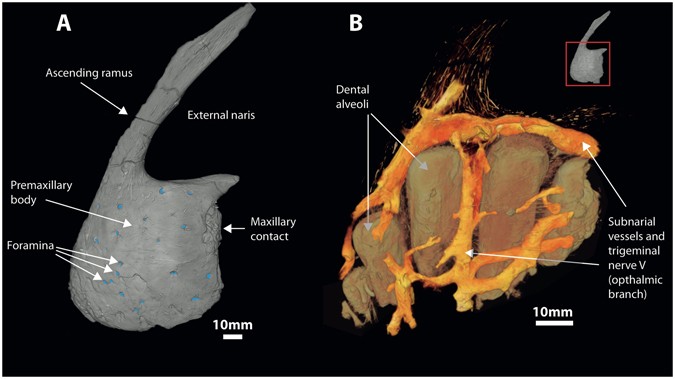
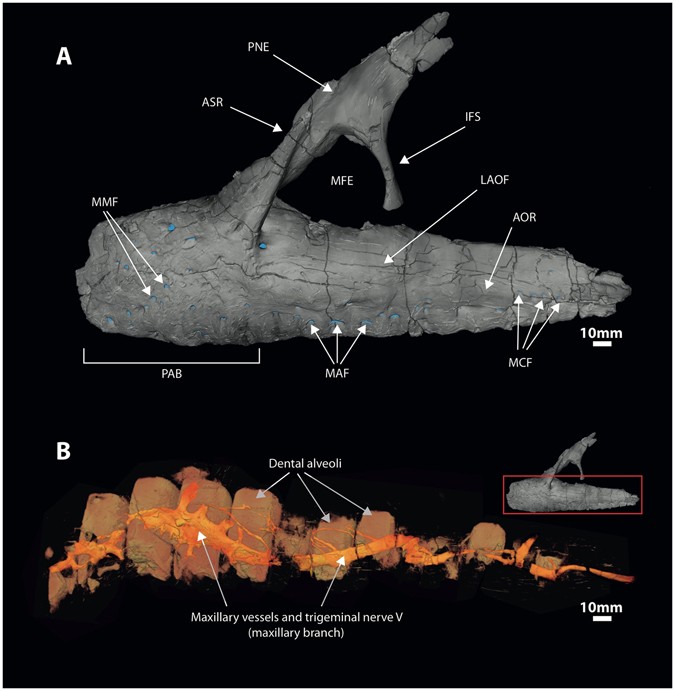
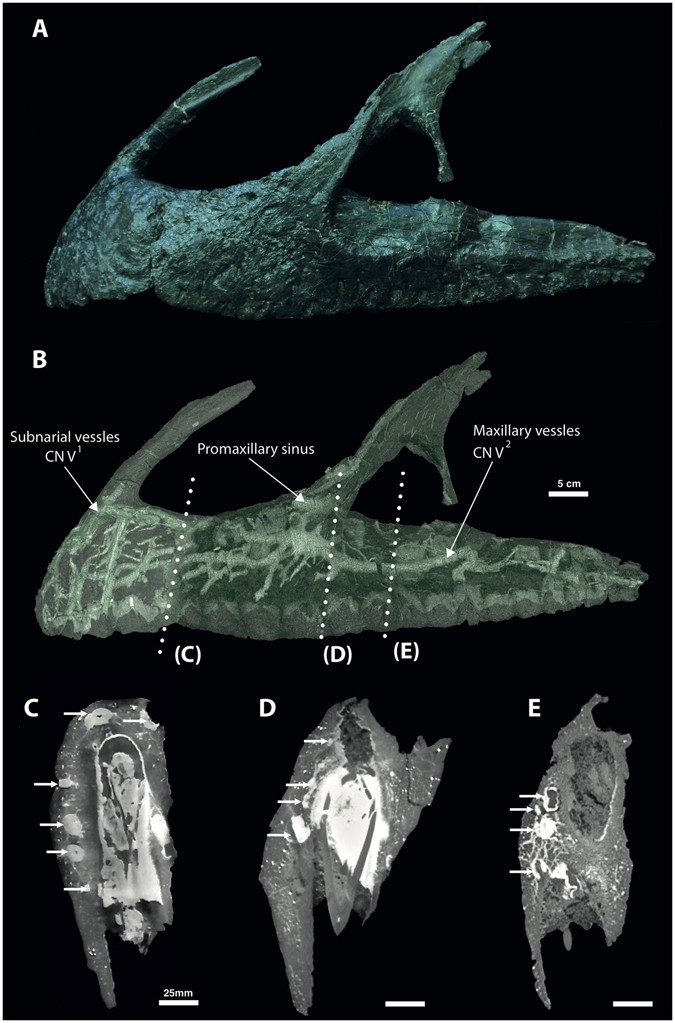
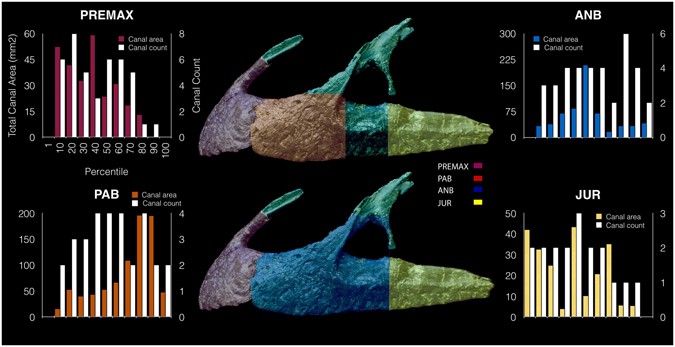
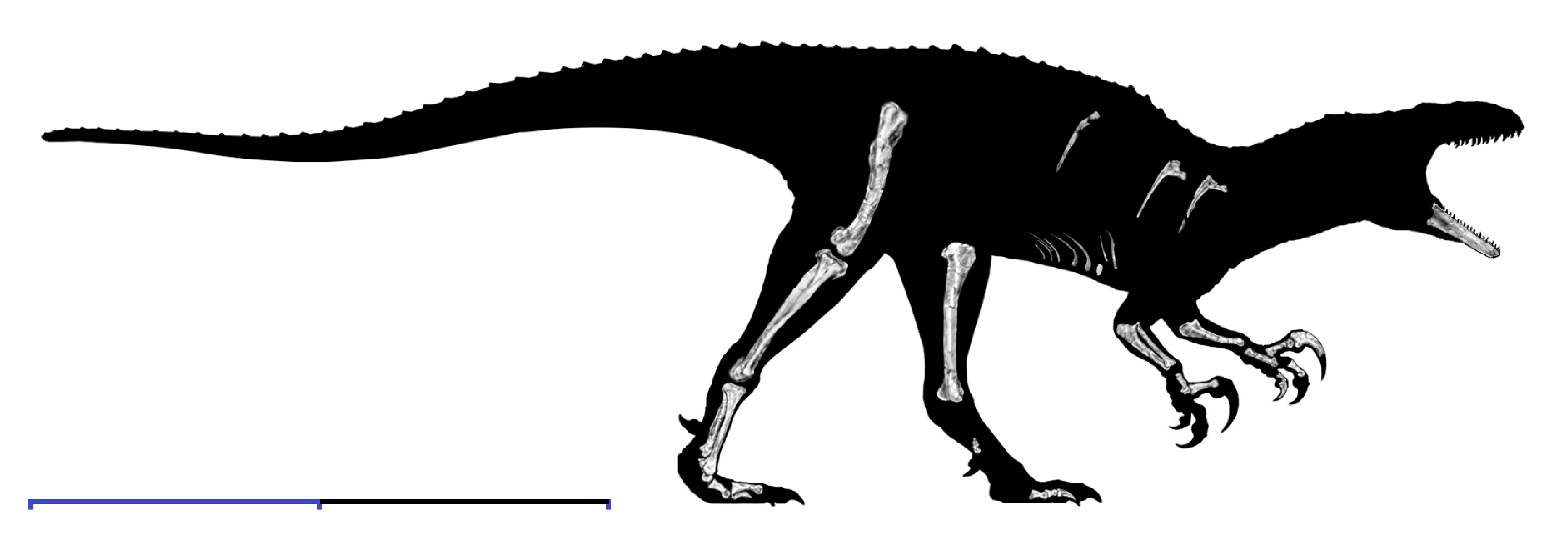
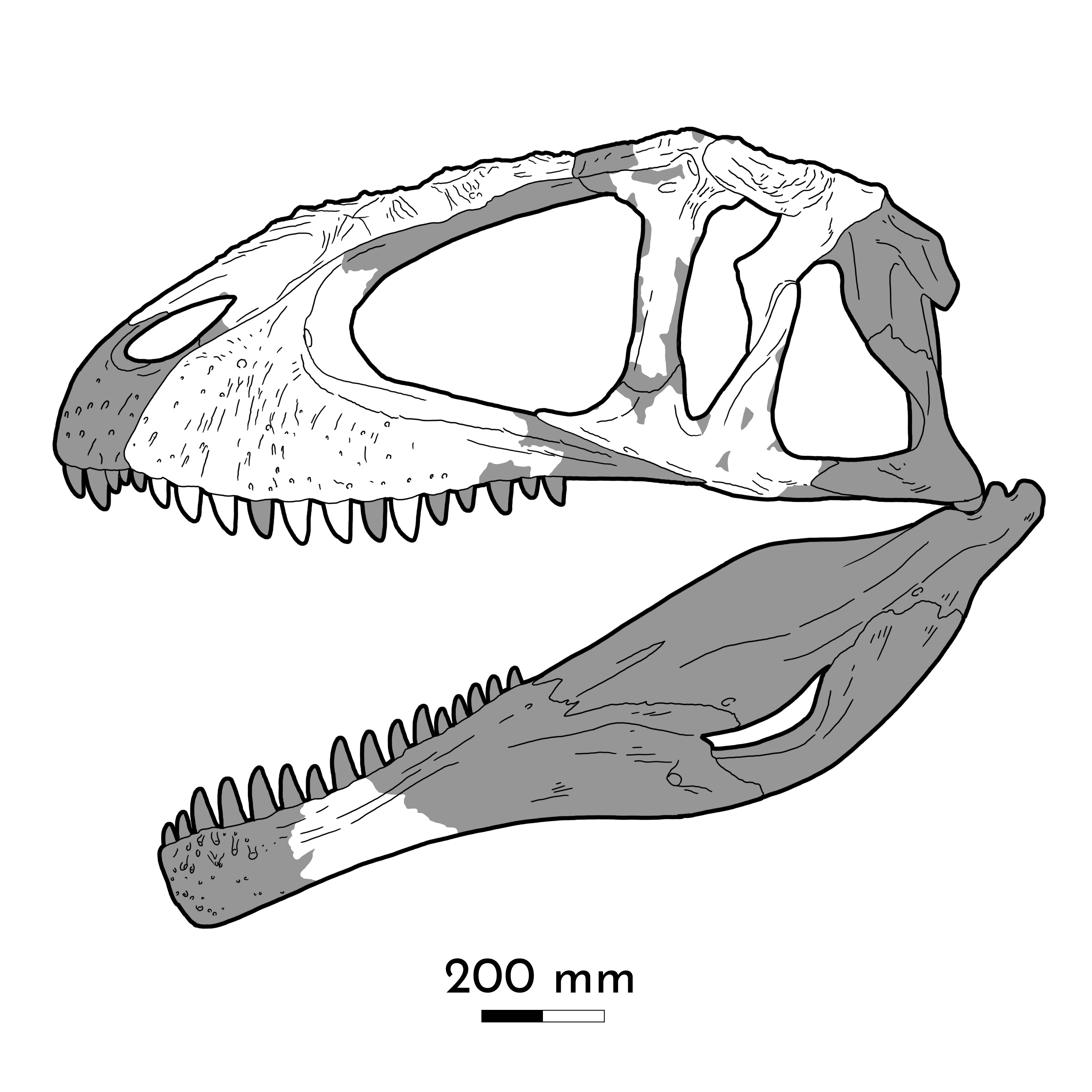
Neovenator salerii was the largest land predator in Europe during the Early Cretaceous, approximately 125 million years ago. Discovered on the Isle of Wight, southern England, it reached 7 to 7.5 meters in length and weighed approximately one metric ton. It is the most complete large theropod known from Europe, with about 70% of the skeleton preserved. As a basal member of Neovenatoridae, a group that includes the enigmatic megaraptors, Neovenator possessed a snout with a complex neurovascular network, indicating high facial sensitivity, possibly used in prey detection.
Geological formation & environment
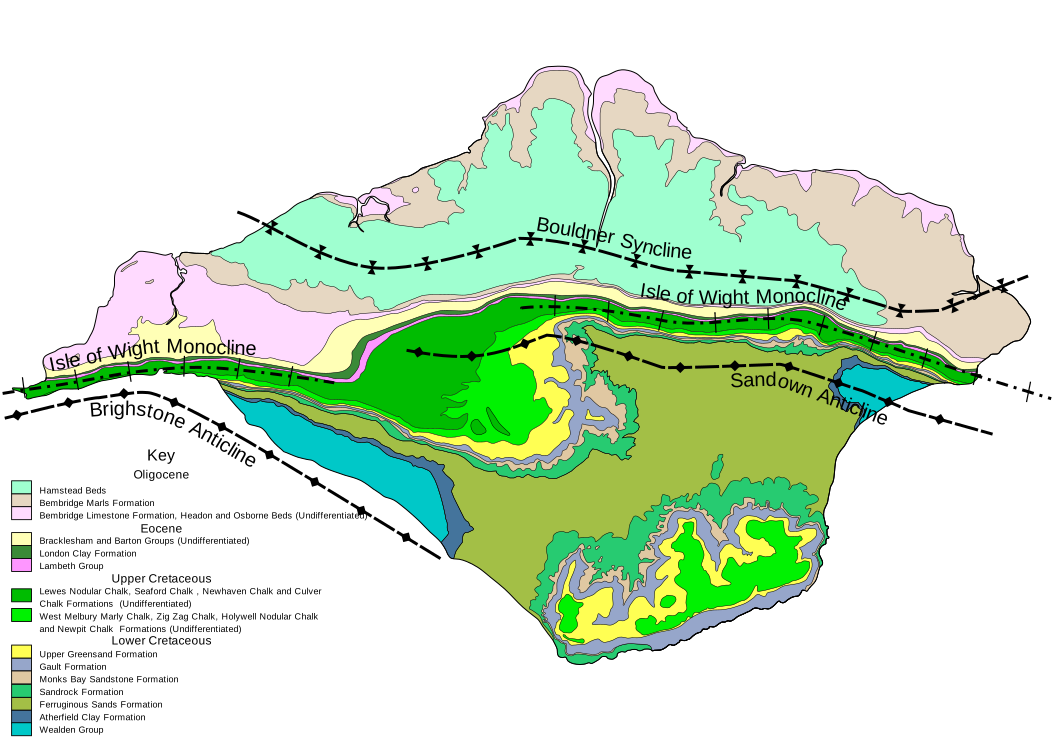
The Wessex Formation (Wealden Group) of the Isle of Wight dates from the Hauterivian to the Barremian of the Early Cretaceous, approximately 130-125 Ma. The deposits represent a low-relief alluvial plain with high-sinuosity meandering rivers, seasonal lakes, and extensive floodplains. The climate was semi-arid and warm, with a paleolatatitude of 30-35° N. Vegetation was dominated by cheirolepidiaceous conifers, with ferns, cycadophytes, and growing angiosperm diversity. Periodic wildfires left charcoal layers in the sediments. The formation has yielded an exceptionally diverse vertebrate fauna: theropods (Neovenator, Eotyrannus, Baryonyx), ornithopods (Mantellisaurus, Hypsilophodon), sauropods (Eucamerotus), crocodilians, turtles, pterosaurs, and primitive mammals.
Image gallery


Skeletal mount of Neovenator salerii at the New Walk Museum in Leicester. This is one of the few complete skeletal mounts of the animal outside the Isle of Wight, showing the predator in a hunting posture.
Lee Haywood, CC BY-SA 2.0
Ecology and behavior
Habitat
Neovenator inhabited the semi-arid floodplains of the Wessex Formation approximately 125 Ma ago, in what is now the Isle of Wight, southern England. The environment was a low-relief alluvial plain crossed by high-sinuosity meandering rivers and covered by vegetation dominated by cheirolepidiaceous conifers, with growing angiosperm presence. The climate was seasonal and warm, with wildfire episodes documented by charcoal layers in sediments. The paleolatatitude corresponded to about 30-35° N. Contemporary fauna included ornithopods like Mantellisaurus and Hypsilophodon, sauropods like Eucamerotus, the spinosaurid Baryonyx, the small tyrannosauroid Eotyrannus, crocodilians, turtles, and primitive mammals.
Feeding
As the largest terrestrial predator of the Wessex Formation, Neovenator likely hunted the large ornithopods abundant in the ecosystem, especially Mantellisaurus atherfieldensis, which could reach 7-8 meters. Direct evidence of predatory interaction was preserved in two dorsal vertebrae of Mantellisaurus found in association with Neovenator remains, showing traumatic injuries consistent with an attack. Neovenator's teeth were laterally compressed and serrated, typical of a carnivore that sliced meat rather than crushing bones. Its snout with dense neurovascular network suggests it could use tactile sensation to detect prey or manipulate food with precision.
Behavior and senses
Neovenator's behavior is inferred mainly by phylogenetic bracketing from its closest living relatives: birds and crocodilians. The complex snout neurovasculature described by Barker et al. (2017) is comparable to that of crocodilians that use tactile sensation to care for offspring with precision and detect movements in water. This may indicate Neovenator had sophisticated facial sensory capabilities. The absence of aquatic adaptations, despite the neurovasculature, suggests the animal was a typical terrestrial predator. No direct evidence of social behavior has been documented, but as a large allosauroid, it was likely predominantly solitary as an adult.
Physiology and growth
Neovenator, like other large non-coelurosaurian theropods, likely had intermediate metabolism between ectothermic reptiles and endothermic birds. Indirect evidence of physiology in close allosauroids suggests elevated growth rates compared to modern reptiles. The estimated weight of approximately one metric ton for the holotype, with robust hindlimbs and forward center of gravity, indicates an animal adapted for fast and efficient movement. The skull structure with broad temporal fenestrae allowed powerful mandibular musculature, while serrated teeth suggest adaptation for slicing meat rather than crushing bones.
Paleogeography
Continental configuration

Scotese & Vérard · CC BY 4.0 · Cretaceous, ~105 Ma
Fossil sites
Eddy e Clarke · CC BY 2.5
During the Barremiano (~130–125 Ma), Neovenator salerii inhabited Laramidia, the western half of present-day North America, separated from the east by the Western Interior Seaway, a shallow sea dividing the continent. The continents were in very different positions: India was drifting toward Asia, Antarctica was still connected to Australia, and South America was an isolated island.
Bone Inventory
Approximately 70% of the skeleton is known, based on holotype BMNH R10001 / MIWG 6348 and referred specimens. The anterior portion of the skull is known, but the forelimbs were not preserved and were reconstructed by comparison with Concavenator and Allosaurus.
Found elements
Inferred elements
Scientific Literature
15 papers in chronological order — from the original description to recent research.
The first European allosauroid dinosaur (Lower Cretaceous, Wealden Group, England)
Hutt, S., Martill, D.M. e Barker, M.J. · Neues Jahrbuch für Geologie und Paläontologie, Monatshefte
The founding paper describing and naming Neovenator salerii, the first formally recognized European allosauroid. Hutt, Martill and Barker present holotype BMNH R10001 / MIWG 6348, collected from Brighstone Bay, Isle of Wight, from material discovered in 1978 after a cliff collapse during a storm. The authors identify the animal as the largest land predator of Early Cretaceous Europe and establish diagnoses based on skull, vertebrae, and hindlimb features. The specimen is named after the Salero family, owners of the land where it was discovered. The paper originally placed Neovenator as a basal allosaurid, a classification revised in subsequent decades.
The osteology of Neovenator salerii (Dinosauria: Theropoda) from the Wealden Group (Barremian) of the Isle of Wight
Brusatte, S.L., Benson, R.B.J. e Hutt, S. · Monographs of the Palaeontographical Society
Definitive osteological monograph on Neovenator salerii, spanning 75 pages and 45 plates. Brusatte, Benson and Hutt systematically describe every known skeletal element, from skull bones to the foot, comparing them with other allosauroids. Phylogenetic analysis places Neovenator as a basal member of Carcharodontosauria, distinct from classic allosaurids. The work estimates a body length of 7.6 meters for the holotype and presents a skeletal reconstruction based on comparisons with Concavenator and Acrocanthosaurus. It is the primary anatomical reference for all subsequent studies on the species, establishing the 70% fossil record completeness.
Phylogeny of Allosauroidea (Dinosauria: Theropoda): comparative analysis and resolution
Brusatte, S.L. e Sereno, P.C. · Journal of Systematic Palaeontology
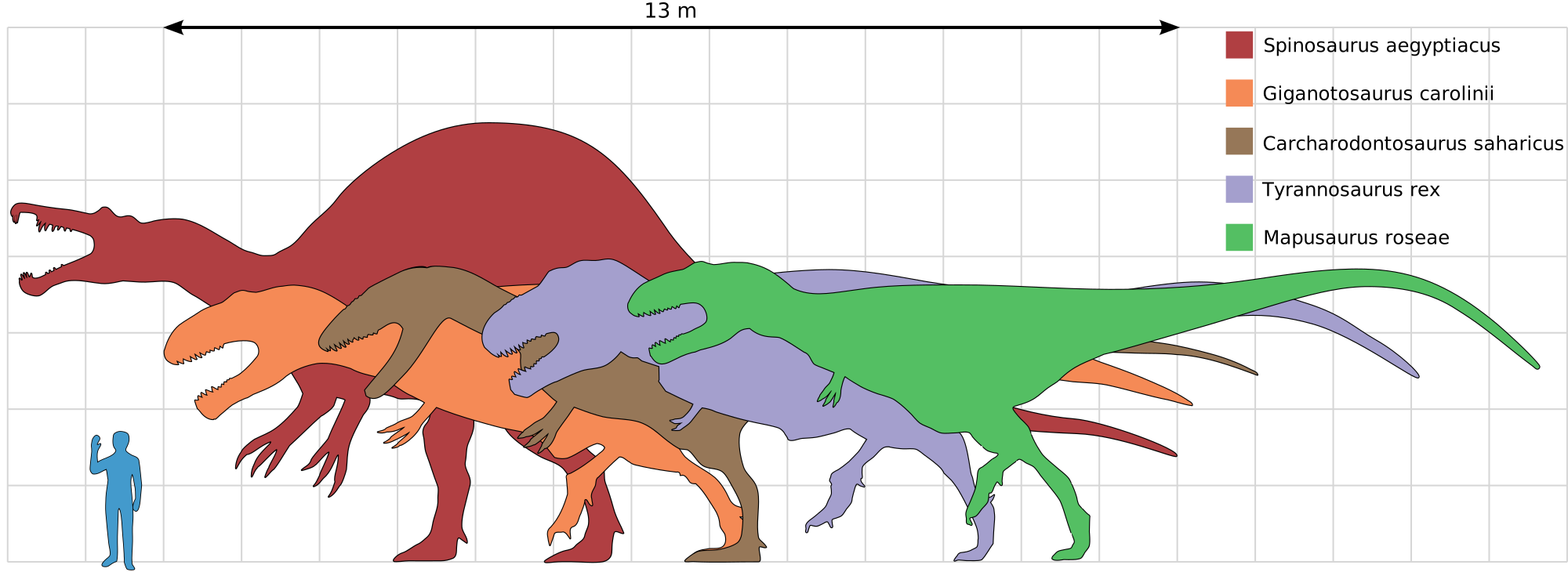
Comprehensive phylogenetic analysis of allosauroids based on 153 morphological characters and 20 taxa. Brusatte and Sereno recover Neovenator as a basal carcharodontosaurian, outside Allosauridae and sister to a clade including Acrocanthosaurus, Carcharodontosaurus, Giganotosaurus, and Mapusaurus. The study resolves a persistent controversy over Neovenator's phylogenetic position and contributes to understanding large theropod diversity in the Mesozoic. The work also analyzes allosauroid biogeography, suggesting the carcharodontosaurian lineage arose in the Jurassic and diversified widely during the Cretaceous.
A new clade of archaic large-bodied predatory dinosaurs (Theropoda: Allosauroidea) that survived to the latest Mesozoic
Benson, R.B.J., Carrano, M.T. e Brusatte, S.L. · Naturwissenschaften
The paper formally establishing Neovenatoridae, grouping Neovenator with previously problematic taxa: Aerosteon, Australovenator, Fukuiraptor, Chilantaisaurus, Megaraptor, and Orkoraptor. Phylogenetic analysis demonstrates this clade diversified globally and survived until the latest Maastrichtian, 66 Ma ago, refuting the idea that allosauroids went extinct before the end of the Mesozoic. Within Neovenatoridae, the authors identify a derived subgroup, Megaraptora, which developed long, raptorial forelimbs, convergently with avian theropod patterns. Neovenator is positioned as the most basal member of the family.
New information on the cranial anatomy of Acrocanthosaurus atokensis and its implications for the phylogeny of Allosauroidea (Dinosauria: Theropoda)
Eddy, D.R. e Clarke, J.A. · PLOS ONE
Re-evaluation of the Acrocanthosaurus atokensis skull (NCSM 14345) with access to previously inaccessible internal views, adding 24 new morphological characters to phylogenetic analysis of Allosauroidea. The combined analysis with 177 characters confirms Neovenator as a basal member of Neovenatoridae within Carcharodontosauria. The work is relevant for Neovenator because it refines understanding of phylogenetic relationships across the allosauroid clade, clarifying which anatomical features are synapomorphies of Neovenatoridae versus Carcharodontosauridae. Published in PLOS ONE, it has been widely cited in subsequent studies on Cretaceous theropods.
Complex neuroanatomy in the rostrum of the Isle of Wight theropod Neovenator salerii
Barker, C.T., Naish, D., Newham, E., Katsamenis, O.L. e Dyke, G. · Scientific Reports
Micro-focus computed tomography (µCT) study of the snout of the Neovenator holotype (MIWG), revealing an extensive anastomosing network of large neurovascular canals in the premaxilla and maxilla. These canals are interpreted as branches of the trigeminal nerve, with terminations on the external bone surface associated with foramina suggesting high facial sensitivity. The finding is comparable to neurovascular anatomy in crocodilians and birds that rely on tactile sensation of the snout for hunting and food manipulation. Despite this complexity, the authors argue Neovenator shows no adaptations for aquatic behavior or specialized feeding, being a typical terrestrial predator with a highly developed tactile snout.

The palaeoecology of the dinosaurs of the Wessex Formation (Wealden Group, Early Cretaceous), Isle of Wight, Southern England
Insole, A.N. e Hutt, S. · Zoological Journal of the Linnean Society
Comprehensive paleoecological analysis of the Wessex Formation (Early Cretaceous, Barremian), Isle of Wight, where Neovenator was found. Insole and Hutt reconstruct the environment from sedimentology, fossil flora, and vertebrate fauna: a semi-arid seasonal floodplain with meandering rivers, cheirolepidiaceous conifer-dominated vegetation, and diverse faunas including large theropods, ornithopods, sauropods, crocodilians, and primitive mammals. The paleoenvironment was low-latitude with seasonal climate and episodes of wildfires. Essential context for understanding Neovenator's ecological niche as apex predator in this ecosystem.


Saurischian dinosaurs 2: Theropods
Naish, D., Hutt, S. e Martill, D.M. · Dinosaurs of the Isle of Wight (Palaeontological Association Field Guide to Fossils)
Monographic chapter on Isle of Wight theropods, with detailed treatment of Neovenator salerii, covering anatomy, systematics, paleobiology, and taphonomy. Naish, Hutt, and Martill synthesize knowledge available through 2001, discussing Neovenator's phylogenetic position, size, inferred diet, and stratigraphic context within the Wessex Formation. The work includes descriptions of referred specimens beyond the holotype and discusses implications of Neovenator for biogeography of large Early Cretaceous European theropods. A fundamental reference for studying British dinosaurs.
Basal Tetanurae
Holtz, T.R. Jr., Molnar, R.E. e Currie, P.J. · The Dinosauria, 2nd edition (University of California Press)
Reference chapter on basal Tetanurae in the second edition of The Dinosauria, the definitive encyclopedic work on dinosaurs. Holtz, Molnar, and Currie place Neovenator salerii in the context of European allosauroid diversity and Early Cretaceous predator faunas, with updated phylogenetic analysis. The work discusses features distinguishing Neovenator from Allosaurus and other allosauroids, and evaluates its position as the most complete large European theropod. The second edition of The Dinosauria became a mandatory reference in dinosaur paleontology, and the Tetanurae chapter is widely cited in subsequent work.


The interrelationships and evolution of basal theropod dinosaurs
Rauhut, O.W.M. · Special Papers in Palaeontology
Comprehensive phylogenetic analysis of basal theropod dinosaurs, with Neovenator recovered within Allosauroidea as a possible carcharodontosaurian. Rauhut discusses carnosaur evolution, their relationships to other theropod groups, and the biogeographic implications of Neovenator's European distribution. The work is important for placing Neovenator in the broader context of theropod evolution, analyzing which anatomical features are primitive versus derived within Allosauroidea. Published as a Palaeontological Association monograph, it became a standard reference in theropod phylogenetics in the early 2000s.


The first record of velociraptorine dinosaurs (Saurischia, Theropoda) from the Wealden (Early Cretaceous, Barremian) of southern England
Sweetman, S.C. · Cretaceous Research
Description of a velociraptorine tooth from the Wessex Formation of the Isle of Wight, representing the first record of this group from the Wealden. Sweetman contextualizes the discovery within the diversity of theropod predators from the Barremian of southern England, including Neovenator salerii as the dominant predator. The work is relevant for understanding the predator ecosystem in which Neovenator lived, revealing that smaller theropods coexisted with the large predator. The Wessex Formation emerges as one of the most diverse Early Cretaceous predator systems in Europe.


The phylogeny of Ceratosauria (Dinosauria: Theropoda)
Carrano, M.T. e Sampson, S.D. · Journal of Systematic Palaeontology
Comprehensive phylogenetic analysis of ceratosaur theropods with Neovenator as a comparative outgroup within Allosauroidea. The Carrano and Sampson matrix provided characters later used to test Neovenatoridae monophyly and its sister-group relationships. The work is methodologically important because it establishes comparative analysis standards allowing evaluation of Neovenator's position relative to non-allosauroid theropods. Frequently cited in theropod phylogeny studies of the 2000s and 2010s, establishing a framework for understanding large Mesozoic predator evolution.

Neovenator salerii (Hutt, Martill, and Barker, 1996)
Mortimer, M. · The Theropod Database
Comprehensive synthesis of all known data on Neovenator salerii, including taxonomy, detailed measurements, phylogenetic analyses, and discussion of referred specimens and tooth material found in France (Angeac-Charente). Mortimer compiles all published references on the taxon and discusses the validity of specimens referred beyond the holotype, including MIWG.5470, MIWG.6352, and IWCMS 2002.186. The database is a fundamental reference tool for researchers working with Neovenator, offering consolidated access to the fossil record and literature.


An overview of non-avian theropod discoveries and classification
Hendrickx, C., Hartman, S.A. e Mateus, O. · PalArch's Journal of Vertebrate Palaeontology
Comprehensive overview of non-avian theropod discoveries and classification updates, including Neovenator salerii within Neovenatoridae. Hendrickx, Hartman, and Mateus synthesize phylogenetic positions and anatomical characteristics for all major theropod lineages, providing an updated reference framework. The work discusses Neovenatoridae synapomorphies and features distinguishing Neovenator from other clade members like Australovenator and Megaraptor. A useful reference for researchers needing a systematic and updated overview of non-avian theropods.

New theropod dinosaur remains from the Early Cretaceous Wessex Formation of the Isle of Wight, UK
Barker, C.T., Hone, D.W.E. e outros · PeerJ
New theropod material from the Wessex Formation includes elements referable to or associated with neovenatorid theropods, adding to the known diversity of large predators from the Barremian of the Isle of Wight. The material provides additional anatomical data for understanding theropod evolution in Early Cretaceous Europe. The work represents the most recent research on Wessex Formation theropods, using modern analytical techniques including computed tomography and Bayesian phylogenetic analysis. Relevant for Neovenator as context for the predator ecosystem it inhabited and for the ongoing understanding of European neovenatorid diversity.


Famous museum specimens
MIWG 6348 / BMNH R10001 (holótipo)
Dinosaur Isle Museum, Sandown, Ilha de Wight, Reino Unido
Holotype of Neovenator salerii, discovered at Brighstone Bay after the collapse of Grange Chine cliff during a storm in 1978. Includes snout fragments, most of the vertebral column, pelvic girdle, and hindlimbs. It is the most complete large theropod ever found in Europe.
MIWG 4199
Museum of Isle of Wight Geology, Sandown, Ilha de Wight, Reino Unido
Specimen possibly larger than the holotype, with left femur dimensions suggesting body length of up to 10 meters. If correctly referred to Neovenator, it would indicate the species could reach considerable sizes, making it the largest Early Cretaceous land predator of Europe.
MIWG.5470
Museum of Isle of Wight Geology, Sandown, Ilha de Wight, Reino Unido
Second specimen referred to Neovenator salerii, preserving additional elements that complement the species' anatomical record. Material collected from the same formation as the holotype, helping expand knowledge of intraspecific variation in Neovenator.
In cinema and popular culture
Neovenator salerii is little known to the general public, yet it is the largest Early Cretaceous theropod of Europe and one of the most important for understanding large predator diversity on the continent. Its most prominent pop culture appearance came in the British documentary Dinosaur Britain (ITV, 2015), where paleontologist Darren Naish presented direct evidence of a predatory interaction with Mantellisaurus, making Neovenator the protagonist of an exciting chapter in British paleontology. The BBC's Planet Dinosaur series (2011) mentioned large Early Cretaceous European theropods in the context of Mesozoic predator faunas. Neovenator appears in game mods like Jurassic World Evolution, where the dinosaur enthusiast community added it as a playable species, and in the Jurassic Park Institute as an educational reference. Despite not appearing in big-budget films, Neovenator has gained increasing prominence in science communication, especially after the 2017 study on its facial neuroanatomy, which revealed a far more sophisticated and sensory predator than previously imagined. The comparison to the British T. rex, frequently used in media, is scientifically imprecise but effective for communicating to general audiences the ecological importance of this European predator.
Classification
Discovery
Fun fact
Neovenator salerii had a snout packed with a complex network of nerve canals, similar to the facial sensors of modern crocodilians. This means its face was likely far more touch-sensitive than any modern land predator, possibly helping it detect hidden prey or handle food and offspring with surprising delicacy.
Last reviewed: April 24, 2026