Gorgosaurus
Gorgosaurus libratus
"Balanced fierce lizard"
About this species
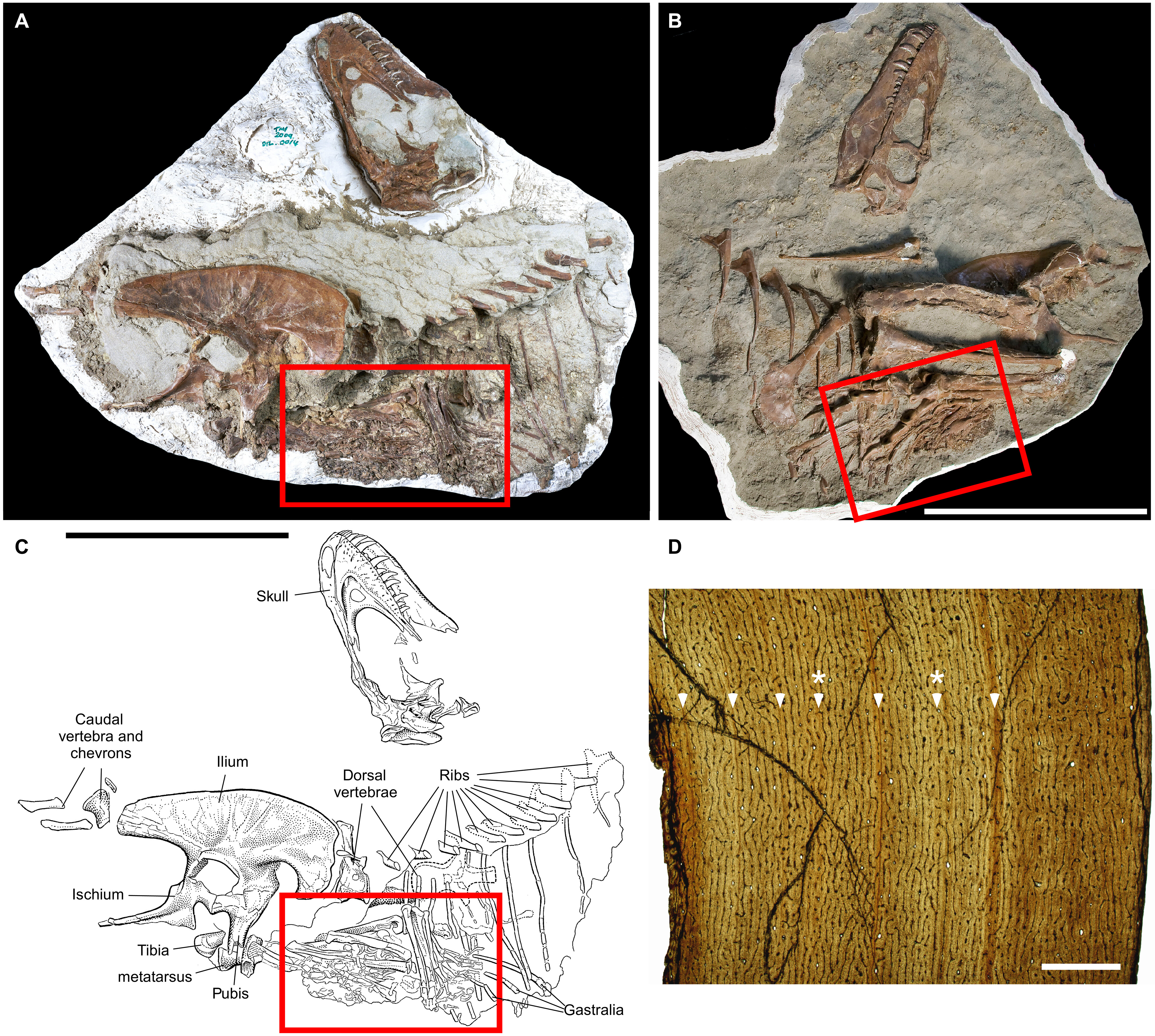
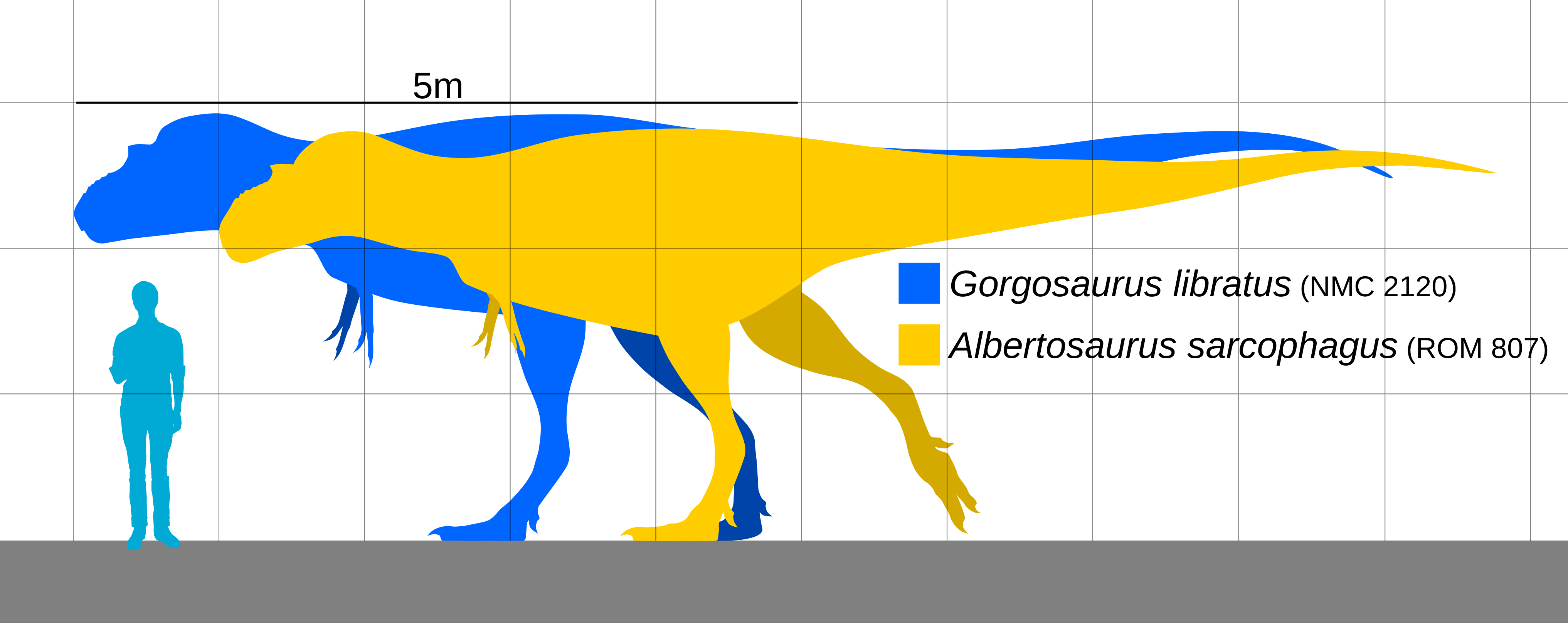
Gorgosaurus libratus was one of the apex predators of the North American Campanian, living 77 to 75 million years ago in what is now Alberta, Canada, and Montana, USA. Measuring roughly 8 to 9 meters in length and weighing approximately 2,400 kg, it was smaller than Tyrannosaurus rex but shared its bipedal stance, reduced forelimbs, and powerful jaws. It is considered the best-represented tyrannosaurid in the fossil record, with dozens of specimens spanning a full ontogenetic series from juvenile to adult. Bone histology studies have revealed detailed growth patterns, and a juvenile with preserved stomach contents demonstrated that young individuals hunted small prey while adults targeted hadrosaurs and ceratopsians.
Geological formation & environment
The Dinosaur Park Formation is one of the richest Late Cretaceous fossil formations in the world, deposited between 76.6 and 75.1 million years ago in what is now Alberta, Canada. It was originally a subtropical coastal plain adjacent to the Western Interior Seaway, with meandering rivers, wetlands, and conifer forests. The formation preserves one of the most complete dinosaurian ecosystems ever documented, with more than 40 described dinosaur species — including ceratopsians, hadrosaurs, ornithomimids, ankylosaurs, and Gorgosaurus libratus itself as the apex predator. The Royal Tyrrell Museum, located in Drumheller, Alberta, was built over this formation and houses the world's largest collection of Dinosaur Park Formation specimens.
Image gallery
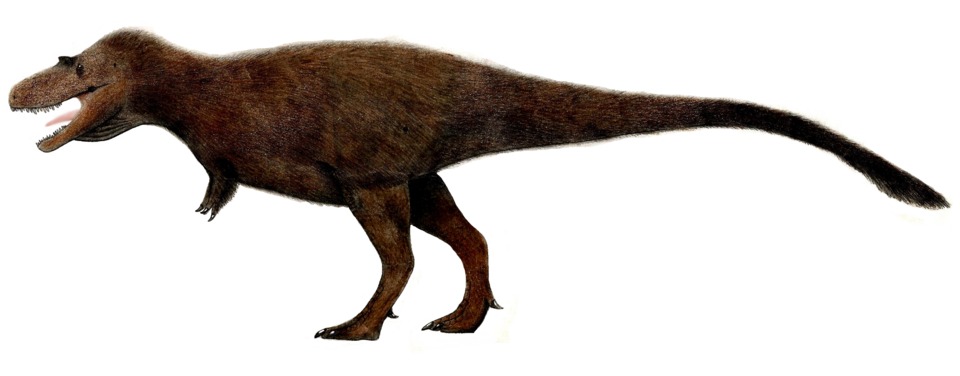





Life reconstruction of Gorgosaurus libratus (2022), with background removed for emphasis. Incorporates modern morphology and paleoecology data from the Dinosaur Park Formation.
Leoomas — CC BY-SA 4.0
Ecology and behavior
Habitat
Gorgosaurus libratus inhabited the subtropical coastal plains adjacent to the Western Interior Seaway, in the region now forming Alberta's Dinosaur Park Formation and Montana's Two Medicine Formation. The environment was characterized by conifer and cycad forests, meandering rivers, and seasonally flooded wetlands, with a subtropical humid climate marked by seasonal droughts. The ecosystem was extraordinarily diverse, hosting hadrosaurs (Corythosaurus, Lambeosaurus), ceratopsians (Chasmosaurus, Centrosaurus), ornithomimids, pachycephalosaurs, and ankylosaurs, plus crocodilians, turtles, and pterosaurs.
Feeding
Apex predator of the Campanian ecosystem, Gorgosaurus primarily hunted medium and large hadrosaurs and ceratopsians. Estimated bite force ranges from 6,000 to 42,000 Newtons depending on methodology, with serrated teeth adapted for piercing bone and tearing flesh. A remarkable ontogenetic dietary shift has been documented: juveniles of 5-7 years hunted small agile prey like oviraptorosaur Citipes (confirmed by preserved stomach contents), while adults developed robust mandibles capable of processing large prey. This age-based niche partitioning reduced intraspecific competition within the population.
Behavior and senses
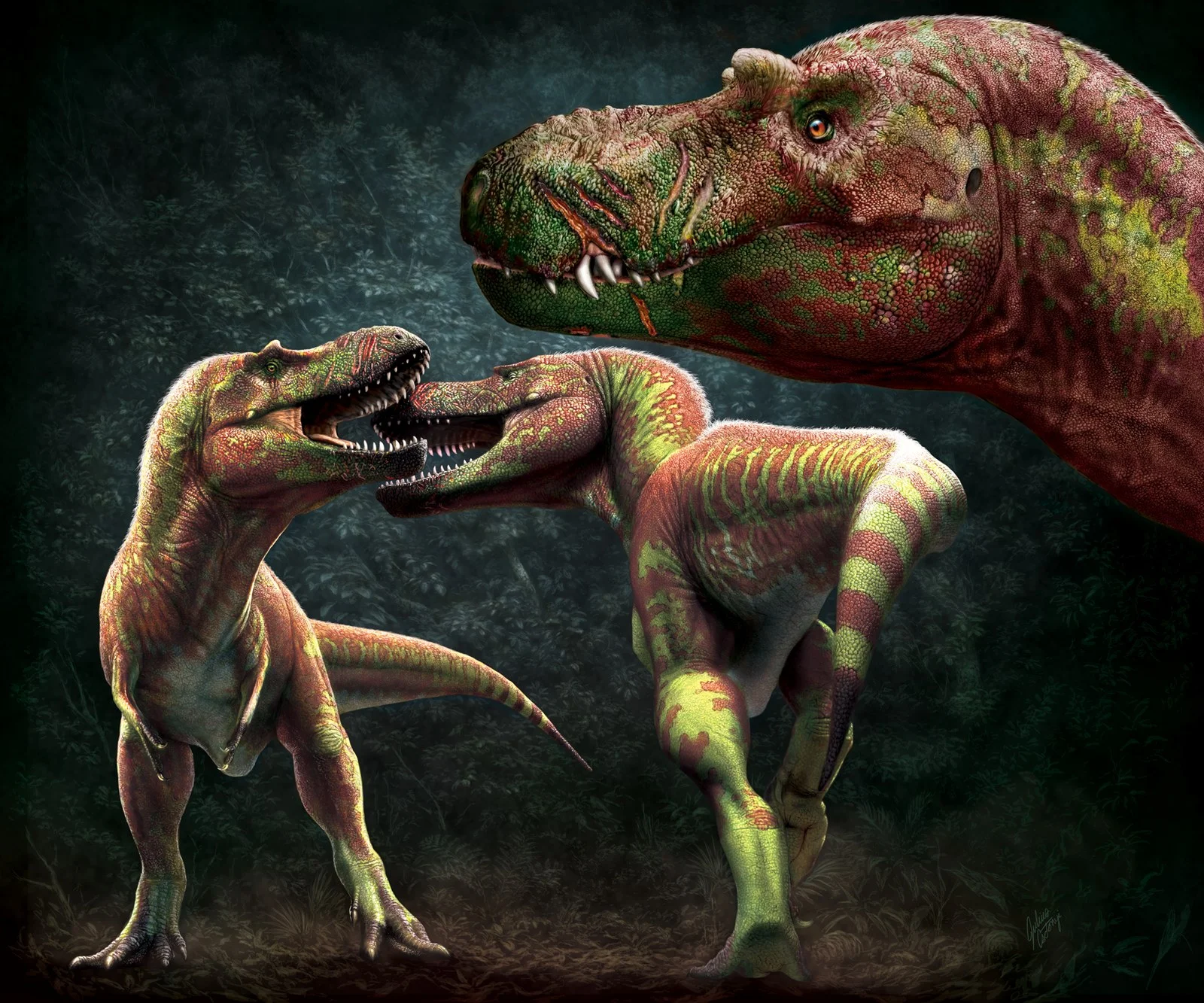
Fossil evidence indicates more complex social behavior than previously imagined. Healed bite marks on the facial region of multiple adult specimens suggest ritualized combats for mates or territory — behavior analogous to modern crocodilians. The discovery of a multi-individual site in the Two Medicine Formation raised the hypothesis of gregarious behavior or cooperative hunting, although this interpretation remains debated. There is no direct evidence of parental care, but ontogenetic niche partitioning demonstrates that different age cohorts used distinct resources within the same ecosystem.
Physiology and growth
Bone histology confirms endothermic (warm-blooded) metabolism in Gorgosaurus, with accelerated growth during adolescence (~50 kg per year at peak) and near-cessation at maturity — a pattern typical of birds and mammals, not ectothermic reptiles. Tail skin impressions reveal small, rounded or hexagonal scales. Gorgosaurus's basal position in Tyrannosauridae suggests that some characteristics of the famous T. rex — including accelerated metabolism — were inherited from ancestors like Gorgosaurus, not late-stage innovations. The highly pneumatized skull (hollow internal bone) combined structural resistance with functional lightness.
Paleogeography
Continental configuration

Scotese & Vérard · CC BY 4.0 · Cretaceous, ~105 Ma
Fossil sites

Sheep81 — Domínio Público / Public Domain
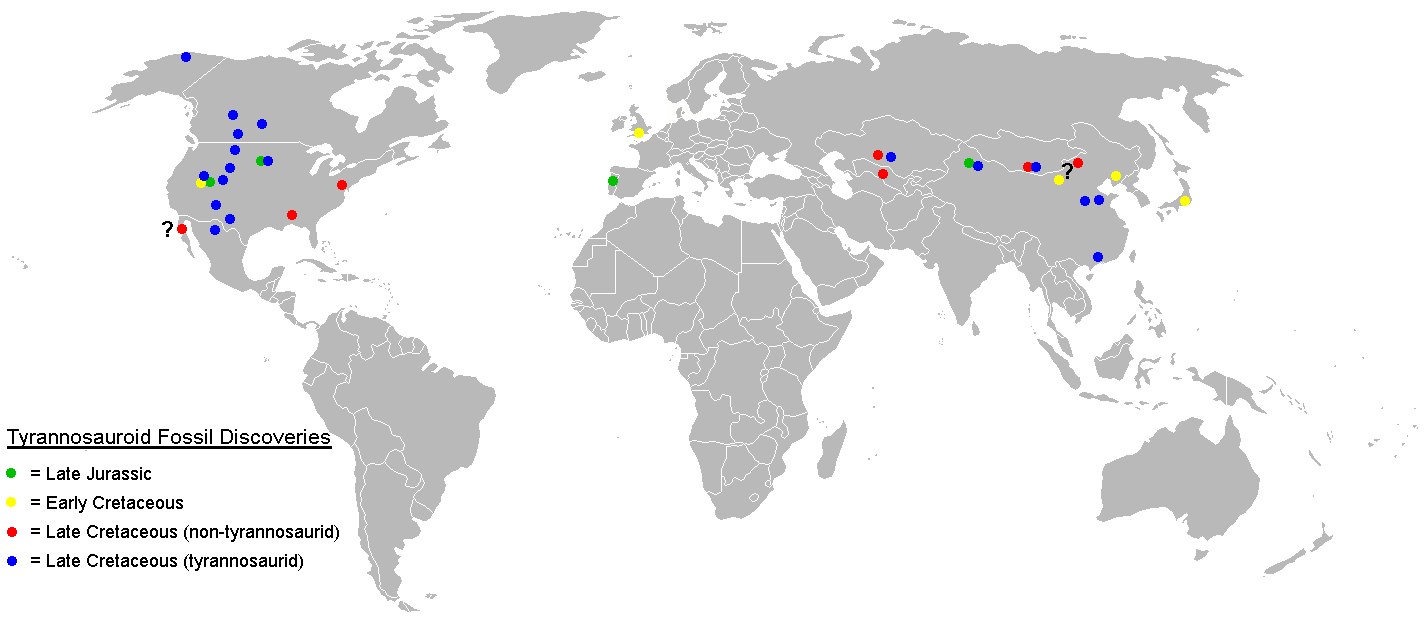
During the Campaniano (~77–75 Ma), Gorgosaurus libratus inhabited Laramidia, the western half of present-day North America, separated from the east by the Western Interior Seaway, a shallow sea dividing the continent. The continents were in very different positions: India was drifting toward Asia, Antarctica was still connected to Australia, and South America was an isolated island.
Bone Inventory
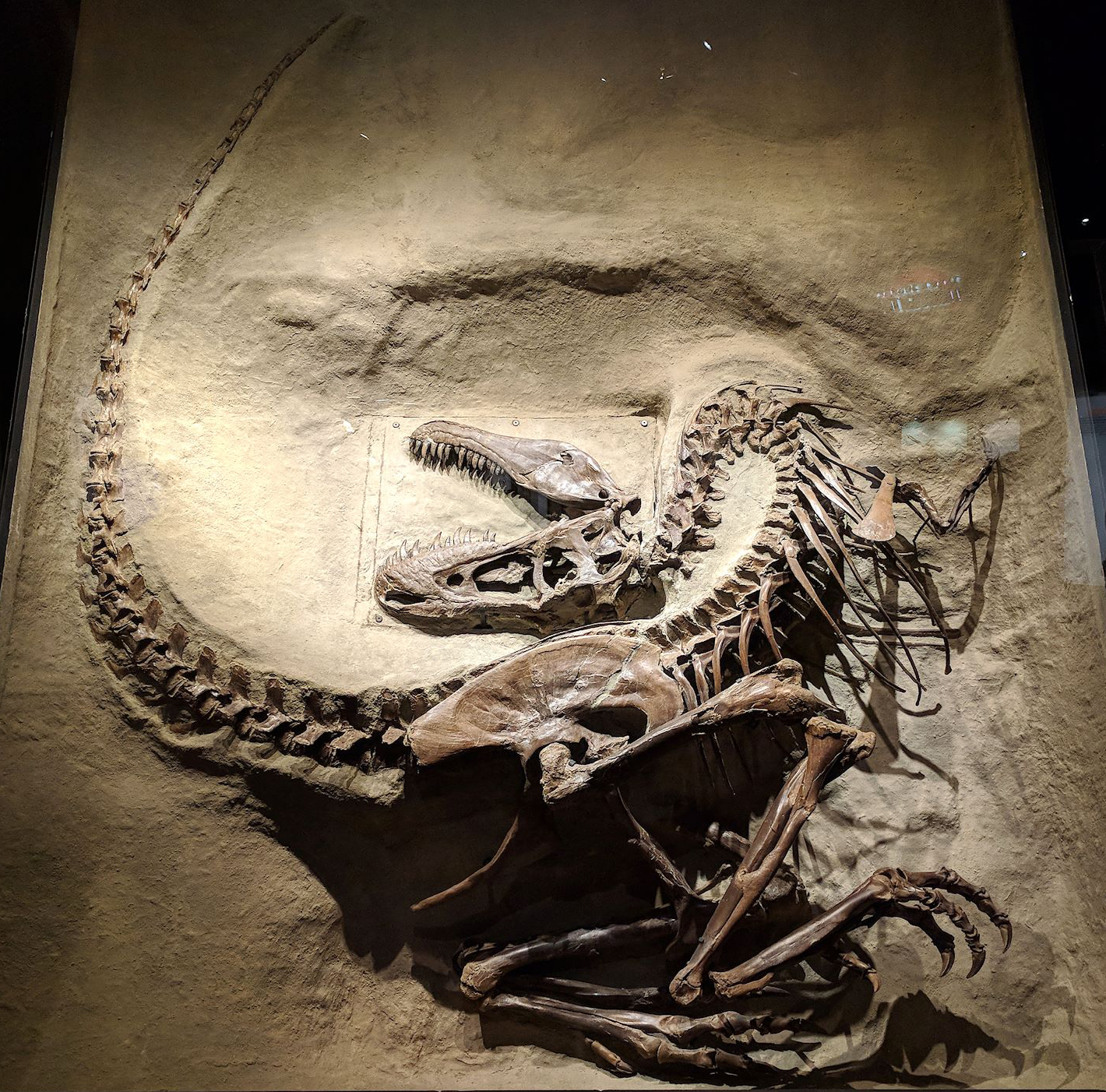
Based on dozens of specimens, Gorgosaurus libratus is the best-represented tyrannosaurid in the fossil record, with specimens covering the full growth series. The holotype (NMC 2120) was the first tyrannosaurid found with a complete hand. Specimen TMP 91.36.500 is preserved in death pose with articulated bones.
Found elements
Inferred elements
Scientific Literature
15 papers in chronological order — from the original description to recent research.
On a new genus and species of carnivorous dinosaur from the Belly River Formation of Alberta, with a description of the skull of Stephanosaurus marginatus from the same horizon
Lambe, L.M. · Ottawa Naturalist
The founding paper establishing the genus and species Gorgosaurus libratus. Lawrence Lambe describes holotype NMC 2120, collected by Charles Sternberg in 1913 from the Belly River Formation (now Dinosaur Park Formation) of Alberta. The specimen was remarkably complete for the era, preserving the skull, intact forelimbs — making Gorgosaurus the first known tyrannosaurid with a complete hand — and much of the postcranial skeleton. Lambe details the diagnostic characters distinguishing the new taxon from then-known tyrannosaurids: a proportionally longer and lower skull, large orbits, and distinctive modifications of the nasal bones. The genus name derives from Greek 'gorgos' (fierce, terrible) and 'sauros' (lizard), while the specific epithet 'libratus' means 'balanced' in Latin. This paper marks the beginning of a century of research on the best-documented of all tyrannosaurids.

Preliminary notices of skeletons and skulls of Deinodontidae from the Cretaceous of Alberta
Matthew, W.D. & Brown, B. · American Museum Novitates
William Diller Matthew and Barnum Brown document multiple tyrannosaurid skulls and skeletons collected during American Museum of Natural History expeditions in the Cretaceous of Alberta. The paper describes specimens including AMNH 5664, referred to as Gorgosaurus sternbergi — later recognized as a juvenile G. libratus — and AMNH 5458, one of the most complete skulls of the species. Matthew and Brown also provisionally named specimens that decades later would be synonymized or transferred to other genera. The paper is fundamental for documenting morphological variation among specimens of different sizes, raising questions about sexual dimorphism and ontogeny that still guide current research. The AMNH collection remains one of the most important for Gorgosaurus study.

Tyrannosaurs from the Late Cretaceous of western Canada
Russell, D.A. · National Museum of Natural Sciences Publications in Paleontology
A comprehensive monograph reclassifying Gorgosaurus libratus as Albertosaurus libratus, proposing the two genera were similar enough to be merged. Dale Russell provides detailed anatomical descriptions of multiple Canadian specimens, analyzes the stratigraphic distribution of species, discusses the paleoecology of Western Interior tyrannosaurids, and proposes hypotheses about ecological niche differentiation: Gorgosaurus (=Albertosaurus sensu Russell) supposedly hunted agile hadrosaurs, while Daspletosaurus preferred more armored ceratopsians. Russell's synonymization was controversial and did not last: most modern paleontologists recognize Gorgosaurus as a valid genus distinct from Albertosaurus, with as many anatomical differences between them as between Daspletosaurus and Tyrannosaurus. The work remains a fundamental reference for its wealth of anatomical and stratigraphic data.

Cranial anatomy of tyrannosaurids from the Late Cretaceous of Alberta
Currie, P.J. · Acta Palaeontologica Polonica
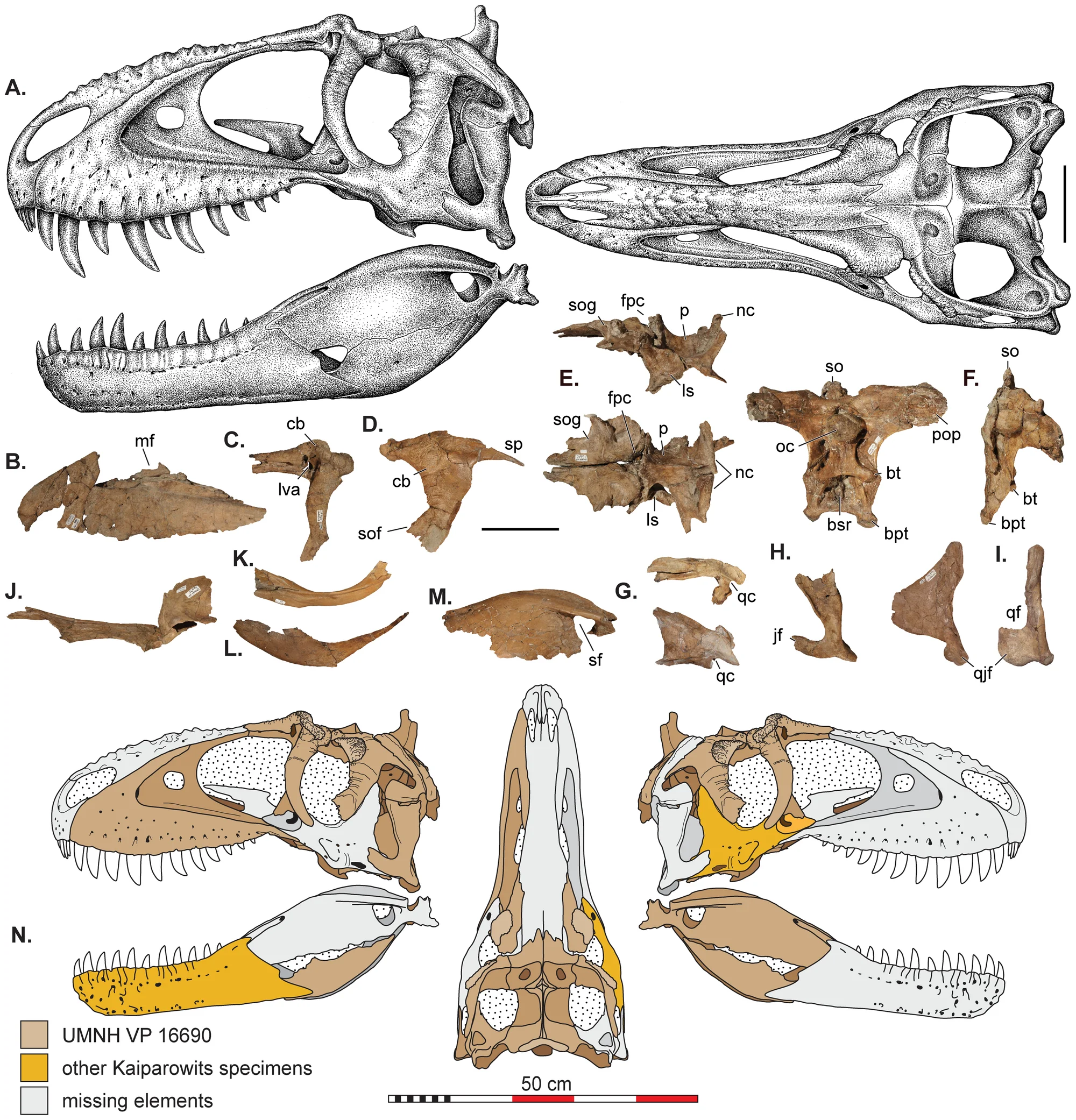
Detailed description of the cranial anatomy of tyrannosaurids from Alberta — primarily Gorgosaurus libratus and Daspletosaurus — based on multiple specimens from the Royal Tyrrell Museum and other collections. Philip Currie documents pneumatic sinus structure in the skull, analyzes cranial fenestra architecture, and provides new data on sensory systems: Gorgosaurus had highly developed olfaction (large olfactory bulbs) and significant binocular vision — both indicative of a highly specialized apex predator. The study also reports skin impressions from the Gorgosaurus tail, revealing rounded or hexagonal scales of relatively small size, similar to those of a Gila monster. Currie confirms the validity of Gorgosaurus as a genus separate from Albertosaurus based on detailed cranial anatomical differences.

Gigantism and comparative life-history parameters of tyrannosaurid dinosaurs
Erickson, G.M. et al. · Nature
Erickson and colleagues perform bone histology on cross-sections of femora and tibiae from multiple tyrannosaurids — including Gorgosaurus libratus — counting annual growth rings (lines of arrested growth, LAGs) to determine ages and reconstruct growth curves. Gorgosaurus grew approximately 50 kg per year during peak adolescent growth, significantly slower than Tyrannosaurus rex (>700 kg/year) but consistent with the family-wide pattern. All tyrannosaurids studied showed explosive growth during adolescence followed by near-cessation at maturity, a pattern typical of endotherms (warm-blooded animals) and radically different from the continuous growth of modern ectothermic reptiles. The work confirms that elevated metabolism was a basal character of Tyrannosauridae, not an innovation of Tyrannosaurus.
Craniofacial ontogeny in Tyrannosauridae (Dinosauria, Coelurosauria)
Carr, T.D. · Journal of Vertebrate Paleontology
Thomas Carr systematically documents ontogenetic transformations in the skull of tyrannosaurids — with special focus on Gorgosaurus libratus and Albertosaurus sarcophagus — describing how more than 60 morphological characters progressively change from juvenile to adult stage. Juvenile Gorgosaurus have relatively longer and more gracile skulls, proportionally larger orbits, and absent or much-reduced cranial rugosities. As the animal grows, the skull becomes more robust, rugosities (bony bumps and crests) progressively develop, and proportions converge on robust adult morphology. This paper established the first rigorous ontogenetic framework for Tyrannosauridae, essential for distinguishing juvenile specimens from potential new gracile species — a question particularly relevant to debates about Nanotyrannus validity versus juvenile T. rex.
Tyrant dinosaur evolution tracks the rise and fall of Late Cretaceous oceans
Loewen, M.A. et al. · PLOS ONE
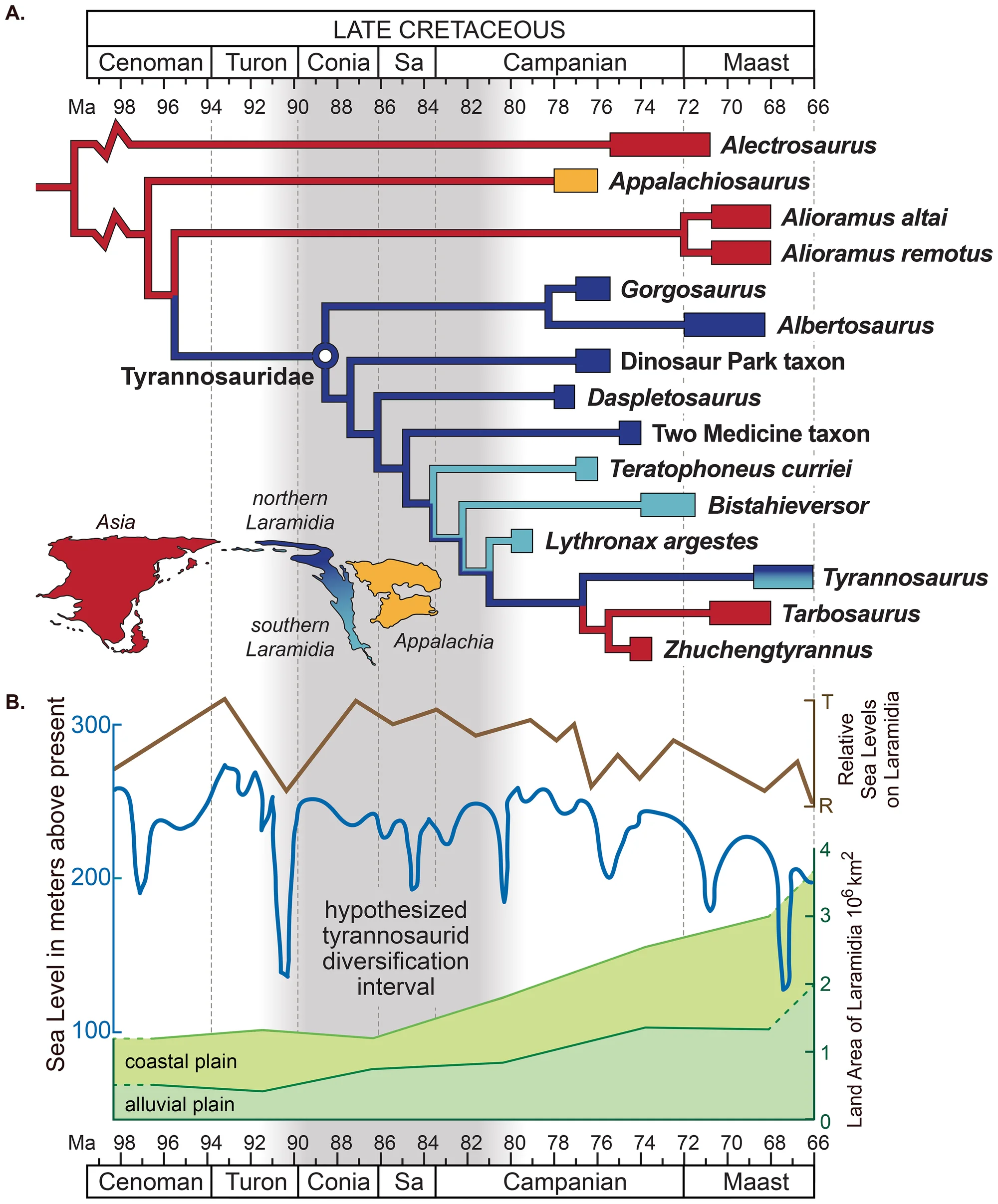
Loewen and colleagues describe the new tyrannosaurid Lythronax argestes and perform the most comprehensive phylogenetic analysis of Tyrannosauridae to that point. Gorgosaurus libratus occupies a well-supported position within Albertosaurinae, as the sister taxon to Albertosaurus sarcophagus. The paper demonstrates that Late Cretaceous sea-level fluctuations — which isolated populations on the island continent of Laramidia — were the primary driver of tyrannosaurid diversification. Gorgosaurus's position in the cladogram is key: together with Albertosaurus, it defines subfamily Albertosaurinae in contrast to Tyrannosaurinae (Tyrannosaurus, Daspletosaurus, Tarbosaurus). The analysis includes data from 26 taxa and 339 morphological characters, making it the standard phylogenetic reference for Tyrannosauridae in modern literature.
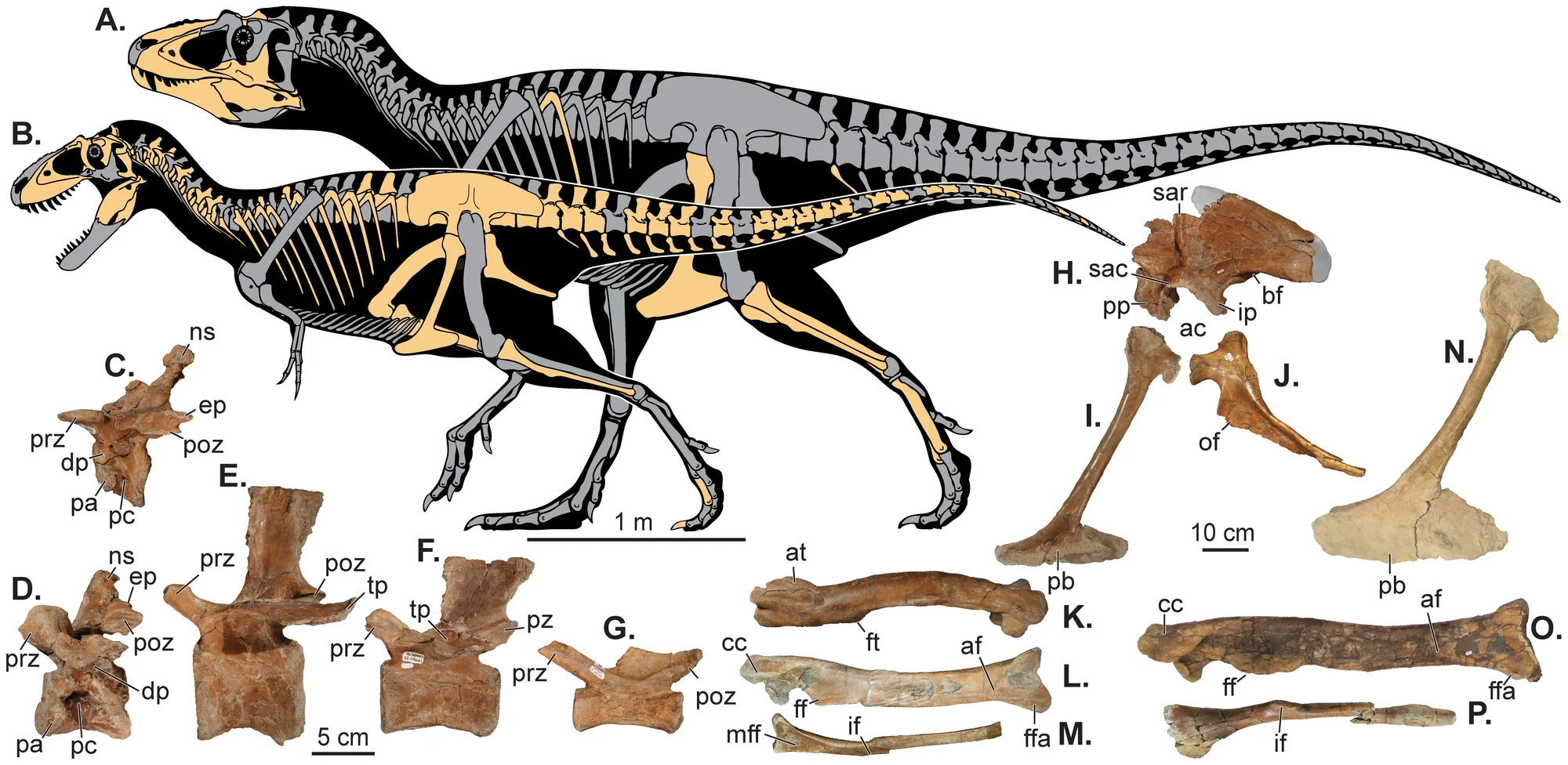
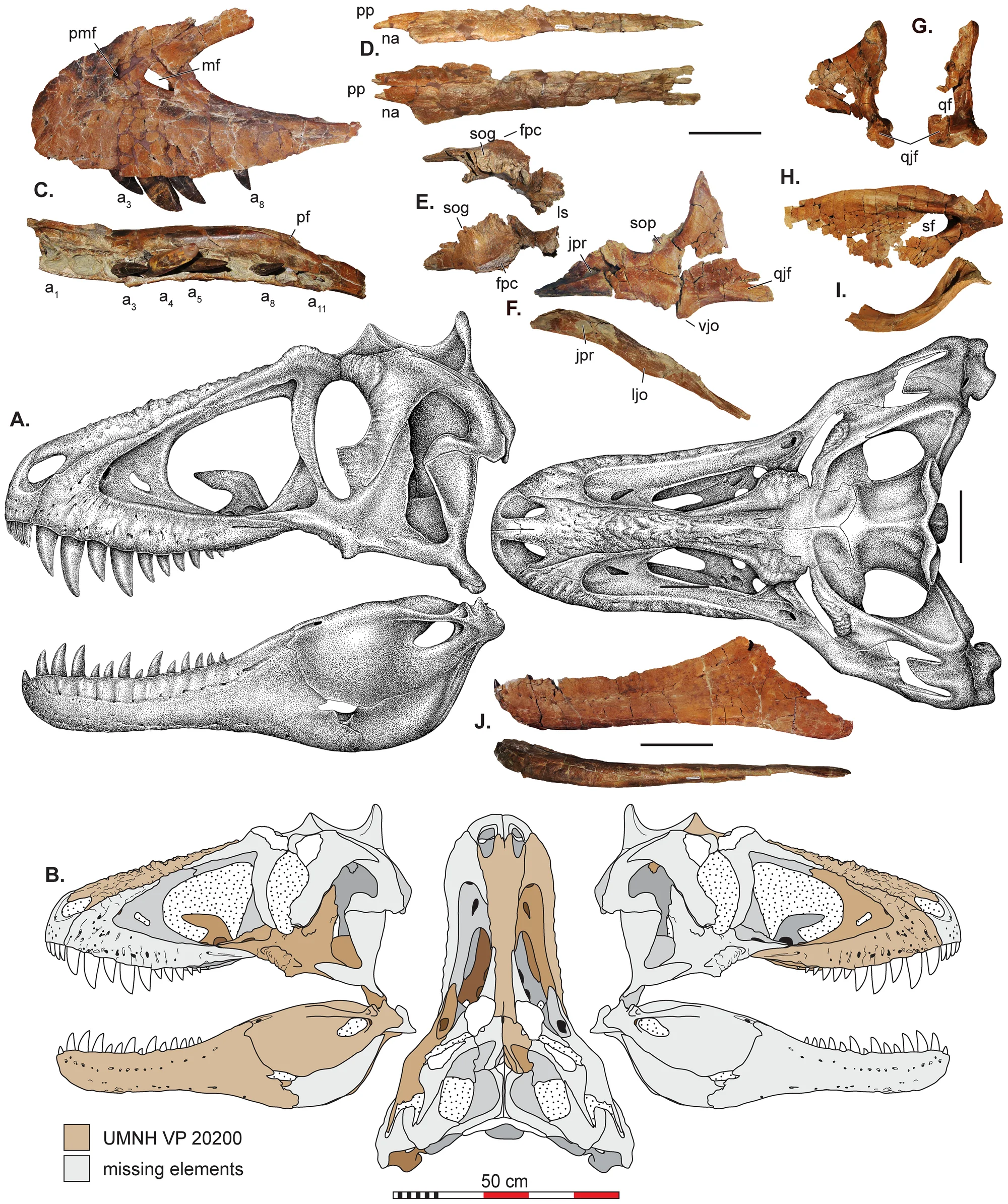
Allometric growth in tyrannosaurids (Dinosauria: Theropoda) from the Upper Cretaceous of North America and Asia
Currie, P.J. · Canadian Journal of Earth Sciences
Philip Currie analyzes allometric relationships — proportional body changes with growth — in tyrannosaurids from North America and Asia, including complete growth series of Gorgosaurus libratus. The study reveals that allometry in tyrannosaurids is pronounced: juveniles have relatively longer skulls relative to body length, more gracile hindlimbs, and overall proportions more similar to a dromaeosaurid than to an adult of their own species. As they grow, individuals develop proportionally more robust skulls, thicker limbs, and higher centers of gravity. These allometric changes imply that juvenile and adult Gorgosaurus likely exploited distinct dietary niches — reducing intraspecific competition within the same population.

Head-biting behavior in theropod dinosaurs: paleopathological evidence
Tanke, D.H. & Currie, P.J. · Gaia
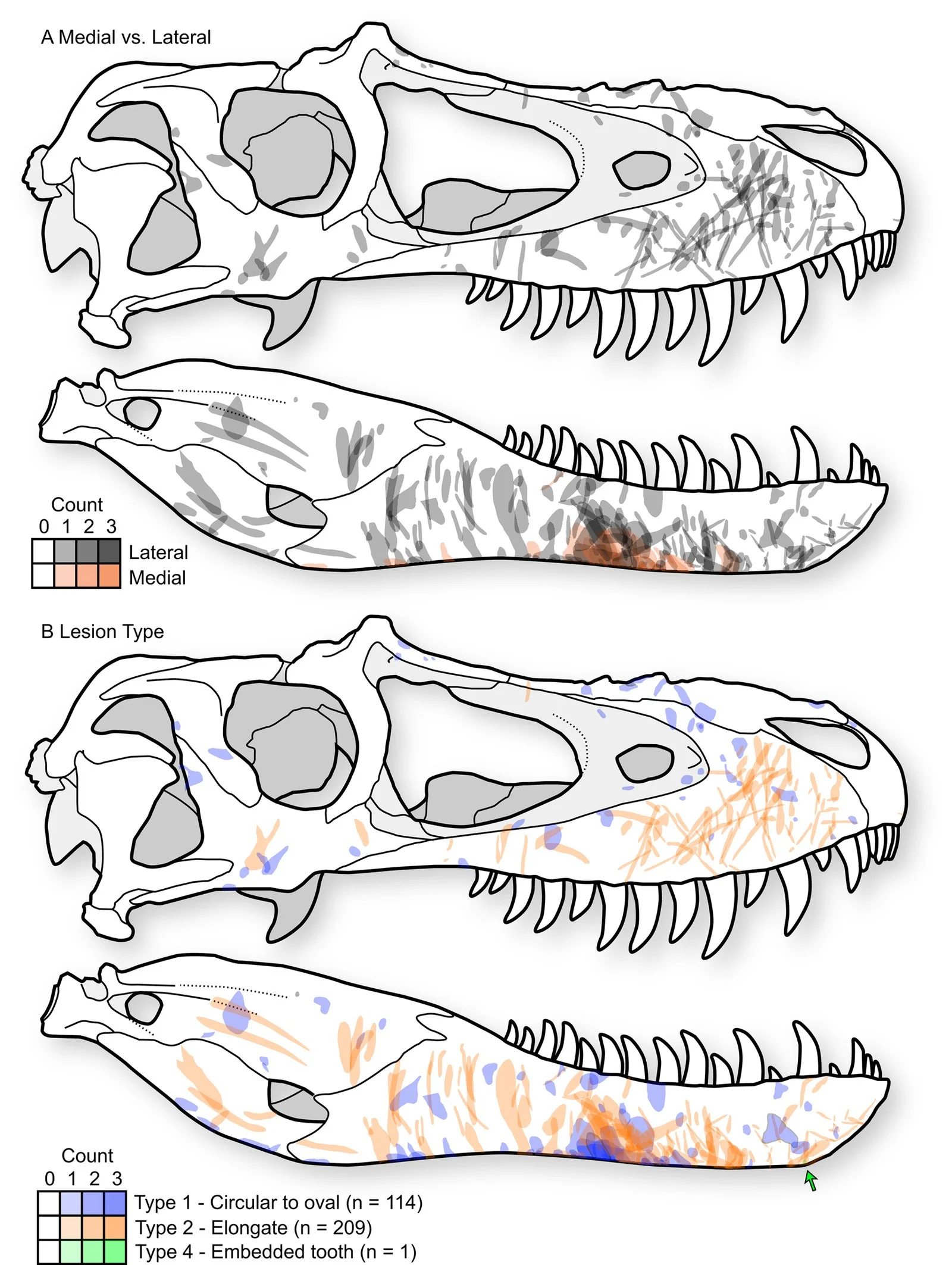
Darren Tanke and Philip Currie examine bite marks on theropod skulls, including Gorgosaurus libratus specimens, identifying evidence of intraspecific facial bite behavior — individuals of the same species biting each other in the head. The marks are concentrated on the facial region (snout, orbits, mandibular rami) and many are healed, indicating the animals survived the event and that these interactions were part of the species' normal social behavior. The authors propose these bites represent agonistic behavior (combat for territory, mates, or hierarchy) — similar to modern crocodilian behavior. The paper was among the first to provide physical evidence of complex social behavior in tyrannosaurids.

An unusual multi-individual tyrannosaurid bonebed in the Two Medicine Formation (Late Cretaceous, Campanian) of Montana (USA)
Currie, P.J. et al. · The Carnivorous Dinosaurs (Indiana University Press)
Philip Currie and colleagues describe an unusual site in the Two Medicine Formation of Montana containing elements of multiple tyrannosaurid individuals — possibly Gorgosaurus or a close relative. The concentration of bones at the same stratigraphic level suggests the animals died together or the site was a carcass accumulation point. The authors discuss two hypotheses: group death during a catastrophic event (drought, flood) or evidence of gregarious behavior — tyrannosaurids living and potentially hunting in groups. Although the gregarious hypothesis remains controversial, the paper provides important fossil evidence for debates about social behavior in large Campanian theropods and is frequently cited as the starting point for research on pack behavior in tyrannosaurids.

Mandibular force profiles and tooth morphology in growth series of Albertosaurus sarcophagus and Gorgosaurus libratus (Tyrannosauridae; Theropoda): implications for ontogenetic niche partitioning
Therrien, F. et al. · Canadian Journal of Earth Sciences
François Therrien and colleagues analyze bite force profiles and tooth morphology across complete growth series of Gorgosaurus libratus and Albertosaurus sarcophagus, revealing a dramatic ontogenetic dietary shift. Juvenile Gorgosaurus have gracile mandibles with relatively longer, compressed teeth — ideal morphology for capturing small, agile prey. Transition to robust adult morphology capable of crushing bone occurs when mandibular length reaches ~58 cm. The data indicate that hatchlings and young individuals operated in a completely different ecological niche from adults, avoiding direct competition with parents within the same population. This ontogenetic niche partitioning is a sophisticated ecological mechanism that may explain how large predator populations remained stable in the Dinosaur Park Formation ecosystem.


Two exceptionally preserved juvenile specimens of Gorgosaurus libratus provide new insight into the timing of ontogenetic changes in tyrannosaurids
Voris, J.T. et al. · Journal of Vertebrate Paleontology
Jared Voris and colleagues describe two exceptionally preserved juvenile Gorgosaurus libratus specimens — including TMP 2009.12.14, the same specimen with preserved stomach contents — and provide the most detailed analysis ever performed of the cranial, endocranial, and histological morphology of juveniles of this species. CT scan data reveal endocast anatomy (brain mold), documenting that olfactory bulbs were proportionally large even in juveniles, indicating olfaction was central to hunting from an early age. The paper establishes precise markers for skull ontogeny: the cranial rugosities characteristic of adults begin appearing in specimens with mandibles of ~40-50 cm. The study is the most comprehensive reference available for early developmental stages of Gorgosaurus libratus.

Intraspecific facial bite marks in tyrannosaurids provide insight into sexual maturity and sociality
Brown, C.M. et al. · Paleobiology
Caleb Brown and colleagues perform a comprehensive analysis of facial bite marks on tyrannosaurid skulls, including Gorgosaurus libratus, documenting 202 bite marks on 202 distinct specimens. Results show that intraspecific facial bites were predominantly restricted to large sexually mature adults, with significantly lower frequency in juveniles and subadults. The pattern is consistent with ritualized combat for reproductive partners, as observed in crocodilians and many modern lizards. The location of marks — concentrated on the snout and orbital region — indicates highly stylized behavior (not random biting), suggesting tyrannosaurids had sophisticated social behavior for dominance recognition. Gorgosaurus emerges as one of the species with the highest number of documented bite-marked specimens, making it a privileged case study for tyrannosaurid sociobiology.
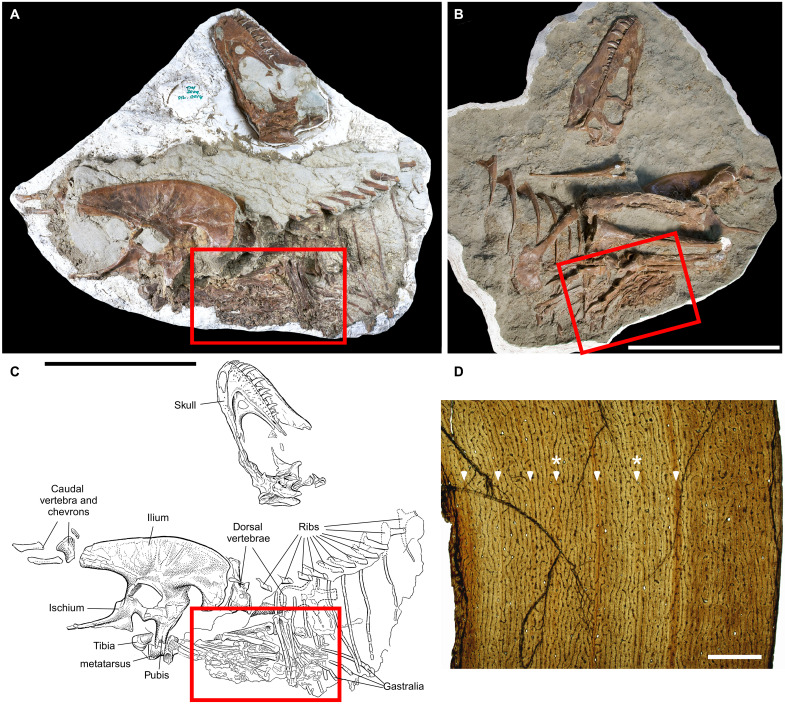
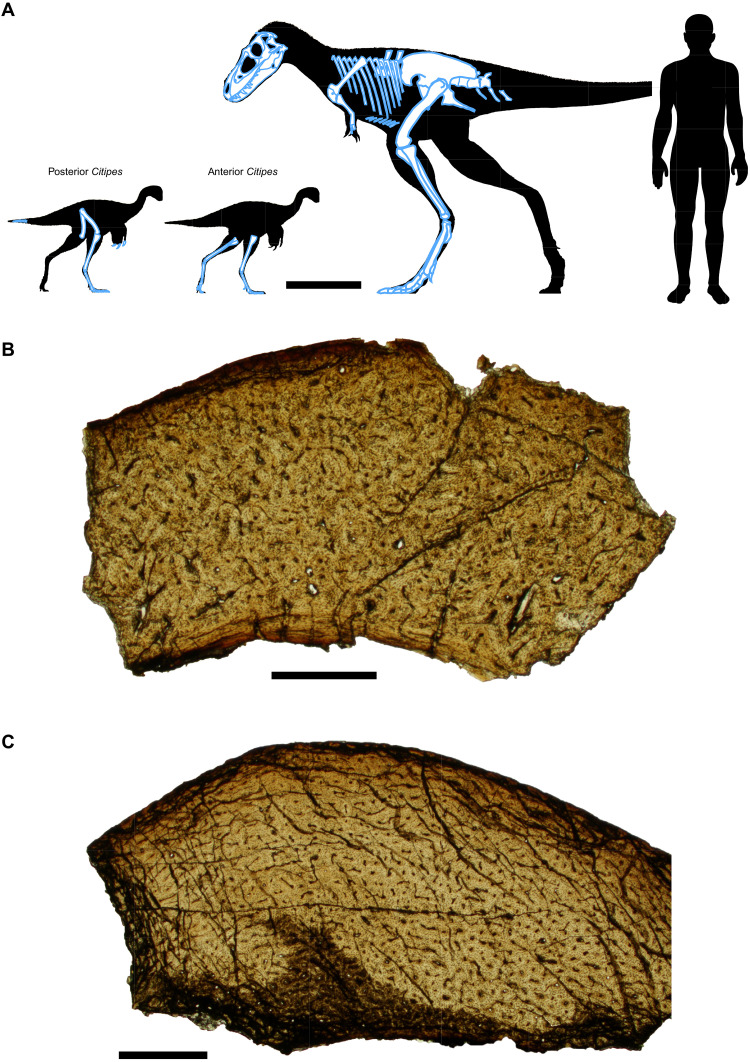
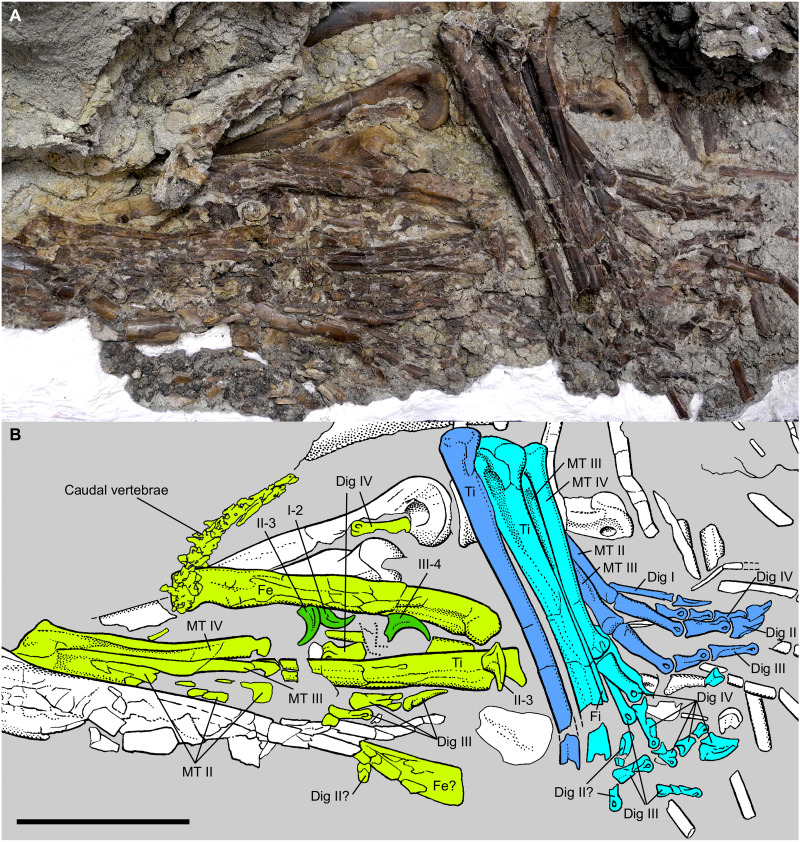
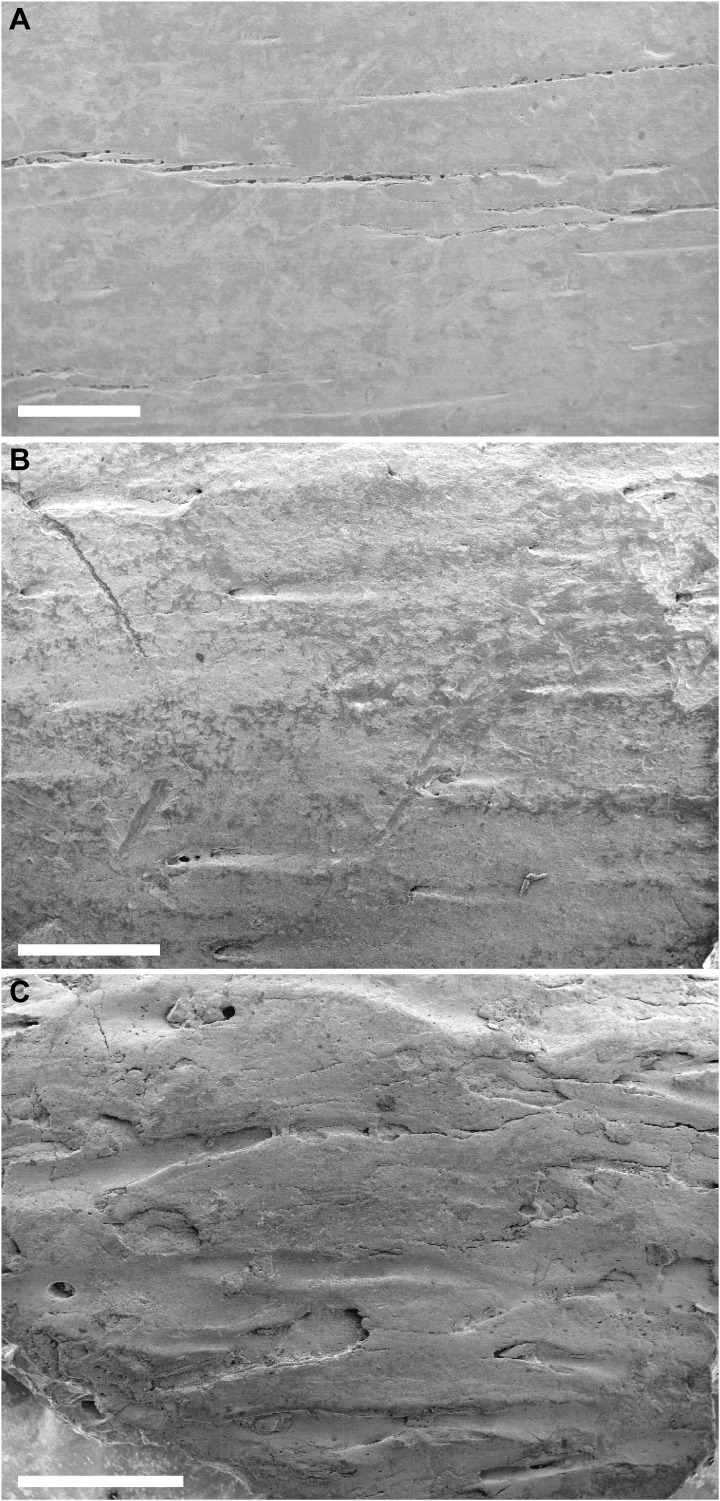
Exceptionally preserved stomach contents of a young tyrannosaurid reveal an ontogenetic dietary shift and trophic ecology of tyrant dinosaurs
Therrien, F. et al. · Science Advances
François Therrien and colleagues describe the most remarkable tyrannosaurid paleontology finding in decades: juvenile specimen TMP 2009.12.14 of Gorgosaurus libratus preserved intact stomach contents — the hind legs of two juvenile Citipes, an oviraptorosaur of approximately 9-12 kg each. This is the first direct evidence of what a tyrannosaurid ate. Data show that young Gorgosaurus (5-7 years old based on bone histology) preferred small, agile prey like oviraptorosaurian avians — exactly the opposite of what adults of the same species hunted. The paper definitively confirms the ontogenetic niche partitioning hypothesis: juvenile and adult Gorgosaurus were functionally different predators, occupying distinct positions in the food chain of the Dinosaur Park Formation ecosystem.


Skull structure and evolution in tyrannosaurid phylogenetics
Currie, P.J. & Hurum, J.H. & Sabath, K. · Acta Palaeontologica Polonica
Philip Currie, Jorn Hurum, and Karol Sabath analyze skull structure across tyrannosaurids to reconstruct the group's phylogeny, providing a revised character list supporting the monophyly of Tyrannosauridae and the placement of Gorgosaurus libratus within Albertosaurinae. The paper examines how key cranial features — such as nasal fusion, rugosity development, cranial fenestra morphology, and degree of pneumatization — evolved from basal tyrannosauroids to derived tyrannosaurids. The authors identify autapomorphies of Gorgosaurus that clearly distinguish it from Albertosaurus, reinforcing the genus's validity. The analysis is published as part of a special volume on tyrannosaurid biology and remains a fundamental reference for the group's phylogeny.


Famous museum specimens
NMC 2120 (Holótipo)
Canadian Museum of Nature, Ottawa, Canadá
Type specimen of the species, collected in 1913 from the Dinosaur Park Formation of Alberta. It was the first tyrannosaurid found with a complete hand, making it fundamental for understanding the forelimb anatomy of this family.
TMP 91.36.500 (Espécime em Pose Mortuária)
Royal Tyrrell Museum of Palaeontology, Drumheller, Alberta, Canadá
Subadult preserved in classic death pose (arched neck), with articulated bones and evidence of injuries healed before death, including leg and vertebral fractures, osteomyelitis, and possibly a brain tumor.
TMP 2009.12.14 ('Blossom')
Royal Tyrrell Museum of Palaeontology, Drumheller, Alberta, Canadá
Juvenile of 5-7 years with preserved stomach contents: the hind legs of two juvenile Citipes (oviraptorosaur). It is the only tyrannosaurid specimen in the world with preserved last meal contents, directly revealing what juveniles of this species ate.
USNM 12814 (anteriormente AMNH 5428)
Smithsonian Institution / National Museum of Natural History, Washington D.C., EUA
One of the most complete specimens with skull associated with the skeleton, collected by the American Museum of Natural History expedition and initially deposited at the AMNH. It is one of the reference specimens for cranial anatomy and general morphology studies of the species.
In cinema and popular culture
Gorgosaurus libratus never achieved the same pop culture stardom as Tyrannosaurus rex, but has gained increasing presence in specialized media and high-quality productions. The documentary series Prehistoric Planet (Apple TV+, 2022), narrated by David Attenborough and acclaimed for its scientific accuracy, introduced Gorgosaurus to a broad global audience with depictions grounded in recent paleontological research — including behavioral differences between juveniles and adults. Jurassic World: Dominion (2022) briefly included it in the expanded species roster of the Jurassic World universe, while documentaries like Dinosaur Revolution (2011) and Walking with Dinosaurs (1999) paved the way for this growing visibility. In Canada, Gorgosaurus holds special cultural significance as a symbol of Alberta's paleontological heritage, being the most represented predatory dinosaur at the Royal Tyrrell Museum — the world's largest paleontology museum. The 2023 discovery of the juvenile with preserved stomach contents generated coverage in The New York Times and The Washington Post, further expanding its public recognition.
Classification

Discovery
Fun fact
In 2023, scientists announced the discovery of the only tyrannosaur in the world with its last meal preserved in its stomach: a 5-7 year old juvenile Gorgosaurus libratus that had devoured the hind legs of two juvenile Citipes — an oviraptorosaur roughly the size of a turkey. The discovery proved what researchers had suspected: juvenile Gorgosaurus were completely different hunters from adults, occupying a distinct ecological niche within the same species.
Last reviewed: April 24, 2026