
Hybodus
Hybodus hauffianus
"Hauff's humped shark"
About this species
Hybodus hauffianus is one of the best-documented extinct sharks of the Mesozoic. It lived in the Early Jurassic, approximately 183 to 174 million years ago, in the shallow warm seas that covered central Europe. Up to 2 meters long, it had two types of teeth: pointed at the front for catching slippery prey and flattened toward the back for crushing hard-shelled prey. Exceptional specimens preserved in the Posidonia Shale of Germany reveal rare anatomical details, including stomach contents with belemnite rostra, confirming its diet of cephalopods.
Geological formation & environment
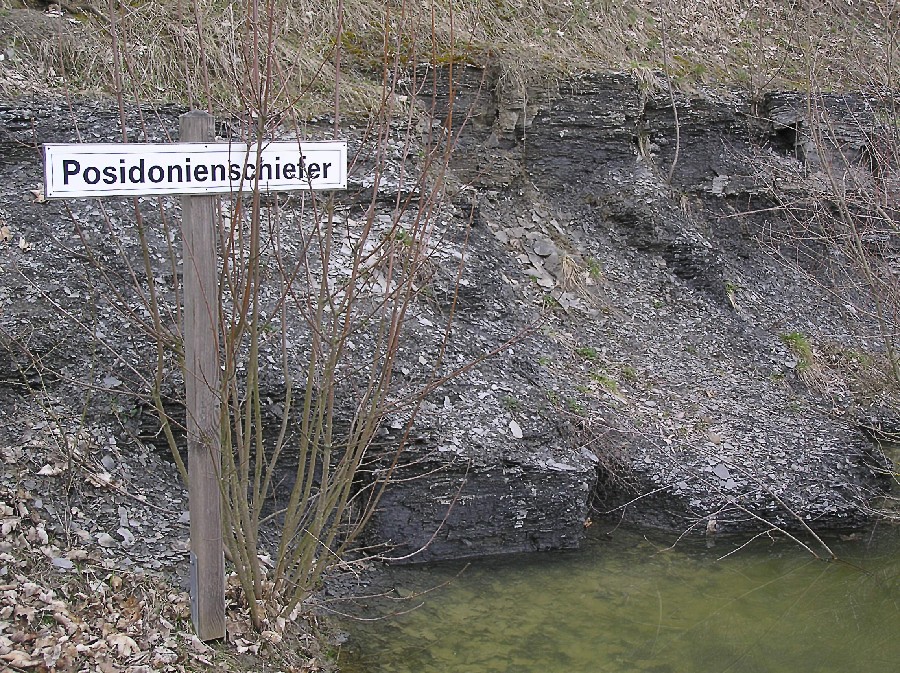
The Posidonia Shale (Posidonienschiefer), from the lower Toarcian, approximately 183-180 million years ago, is one of the world's most important Lagerstätten. Deposited under anoxic conditions at the bottom of a shallow epicontinental sea in southwestern Germany, it preserved an exceptional fauna including articulated ichthyosaurs, plesiosaurs, crocodylomorphs, teleost fish, and elasmobranchs such as Hybodus hauffianus. The formation outcrops mainly in the Holzmaden-Ohmden region of Baden-Württemberg, where for centuries collectors and quarriers have extracted fossils of incomparable beauty.
Image gallery


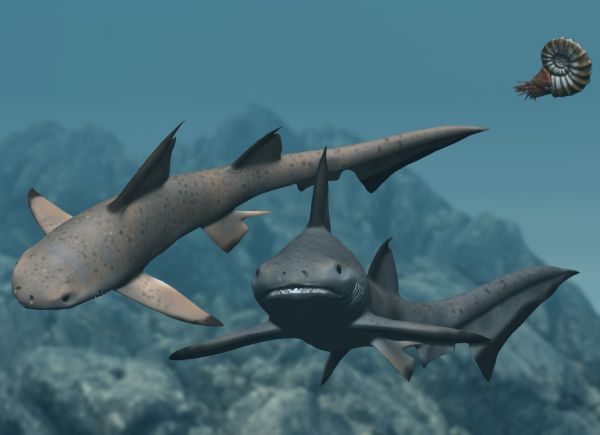


Reconstruction of Hybodus hauffianus by Gasmasque (2023), showing the male (below) with cephalic spines and the female (above) with a more robust body. This is one of the most recent and anatomically informed representations of the species.
Gasmasque — CC BY-SA 4.0
Ecology and behavior
Habitat
Hybodus hauffianus inhabited the shallow, warm epicontinental seas of central Europe during the Toarcian, approximately 183 to 174 million years ago. The Posidonia Shale represents a shallow inland sea, probably with normal to slightly reduced salinity, with an anoxic bottom that preserved fossils in an extraordinary manner. Water temperature was tropical to subtropical, and the sea covered parts of present-day southern Germany, northern Switzerland, and adjacent countries. The ecosystem was rich in cephalopods, fish, and hard-shelled invertebrates.
Feeding
Hybodus hauffianus was an active predator with a mixed diet, as revealed by its functional heterodontia and preserved stomach contents. The pointed anterior teeth were ideal for capturing fast cephalopods such as belemnites (confirmed by the 93 rostra in specimen SMNS 10062). The flatter posterior teeth suggest an ability to crush hard-shelled prey such as ammonites and bivalves. It was probably an opportunistic predator alternating between active prey in the water column and benthic invertebrates.
Behavior and senses
The documented sexual dimorphism in Hybodus, with cephalic spines in males, suggests complex reproductive behavior possibly involving ritualized combat or display to attract females, similar to the modern horn shark (Heterodontus). The presence of calcified claspers in males confirms reproduction by internal fertilization. There is no evidence of schooling behavior, and the species was probably solitary like most modern sharks.
Physiology and growth
As a Mesozoic chondrichthyan, Hybodus hauffianus had an entirely cartilaginous skeleton, without true bone. Metabolism was probably ectothermic, as in modern sharks, with relatively slow growth and tooth renewal rates. The presence of spines on the dorsal fins is considered a defensive adaptation against larger predators and possibly for maintaining hydrodynamic posture. Placoid scales provided protection and drag reduction in water.
Paleogeography
Continental configuration

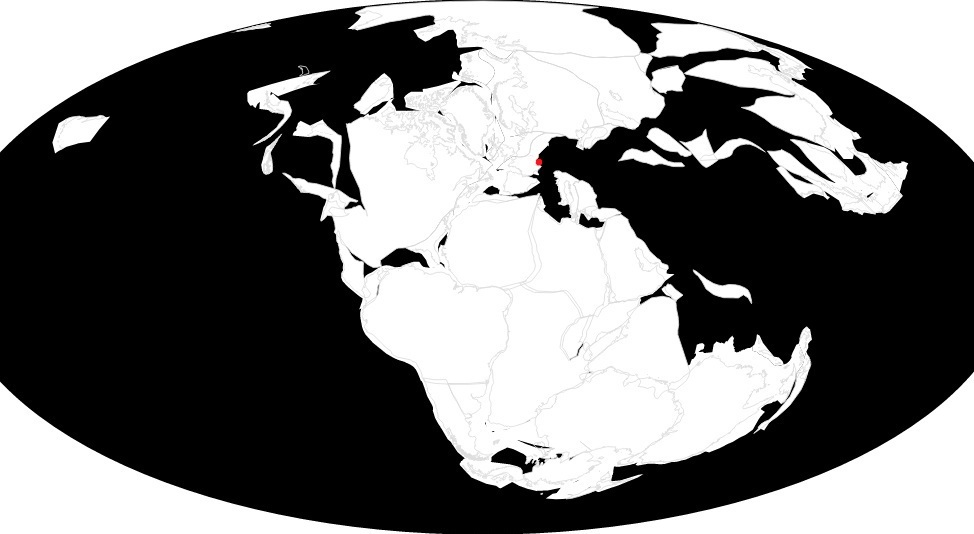
Scotese & Vérard · CC BY 4.0 · Jurassic, ~155 Ma
Fossil sites
Gasmasque — CC BY-SA 4.0
During the Toarciano (~183–174 Ma), Hybodus hauffianus inhabited the fragmenting Pangea. North America and Europe were still close, and the North Atlantic was just beginning to open. Climate was warm and humid globally, with no polar ice caps.
Bone Inventory
Multiple articulated specimens from the Posidonia Shale of Holzmaden allow near-complete reconstruction of the cartilaginous skeleton. The holotype and referred specimens show exceptional preservation of scales, dorsal fin spines, and even stomach contents.
Found elements
Inferred elements
Scientific Literature
15 papers in chronological order — from the original description to recent research.
Neue Selachier-Reste aus dem oberen Lias von Holzmaden in Württemberg
Fraas, E. · Jahreshefte des Vereins für vaterländische Naturkunde in Württemberg
Founding paper for Hybodus hauffianus. Eberhard Fraas formally describes the species based on articulated specimens from the Toarcian Posidonia Shale of Holzmaden, southwestern Germany. The work characterizes the cartilaginous skeleton, multicuspid teeth with a dominant central cusp, and dorsal fin spines ornamented with tubercles in parallel rows. Fraas documents the extraordinary preservation state of the specimens, which includes soft tissue impressions and placoid scales. This paper establishes Hybodus hauffianus as the type species of the elasmobranch fauna from the Posidonia Shale and remains the primary reference for any study of Lower Jurassic European elasmobranchs.
Cranial anatomy of the Lower Jurassic shark Hybodus reticulatus (Chondrichthyes, Elasmobranchii), with comments on hybodontid systematics
Maisey, J.G. · American Museum Novitates
Crucial anatomical monograph for understanding the cranial morphology of hybodontids, with broad implications for the classification of Hybodus hauffianus. Maisey describes in detail the chondrocranial anatomy of Hybodus reticulatus, the type species of the genus, and revises the diagnostic characters of Hybodontidae. The work establishes that hybodontids have cranial morphology distinct from modern neoselachians, with modified ceratohyal, differentiated orbital process, and hyostylic jaw architecture. Comparison with H. hauffianus reveals high morphological conservatism within the genus. Maisey also formally separates the genus Egertonodus from Hybodus based on differences in dorsal spine and dental anatomy. This study is the standard systematic reference for identifying hybodont cranial fragments in Mesozoic deposits.
The dentition of Hybodus hauffianus Fraas, 1895 (Toarcian, Early Jurassic)
Duffin, C.J. · Stuttgarter Beiträge zur Naturkunde, Serie B
First detailed study exclusively of the dentition of Hybodus hauffianus. Duffin examines complete tooth series from multiple specimens of the Posidonia Shale and documents the striking heterodont pattern: anterior teeth with tall sharp central cusp flanked by smaller lateral cusplets, adapted for grasping cephalopods and fish; posterior teeth with lower, wider crowns adapted for crushing hard-shelled invertebrates such as ammonites and bivalves. The work demonstrates that H. hauffianus dentition is more specialized than that of H. reticulatus, suggesting a slightly different feeding niche. Duffin also describes for the first time the dental bone and tooth bases, revealing data on enameloid cytoarchitecture and polyfiodont tooth replacement mode.
A new Pliensbachian elasmobranch (Vertebrata, Chondrichthyes) assemblage from Europe, and its contribution to the understanding of late Early Jurassic elasmobranch diversity and distributional patterns
Stumpf, S. & Kriwet, J. · Paläontologische Zeitschrift
Work that expands the biostratigraphic context of Hybodus hauffianus by describing new elasmobranch fauna from the Pliensbachian of Europe, immediately prior to the Toarcian. Stumpf and Kriwet identify hybodontiform material close to H. hauffianus and demonstrate continuity of elasmobranch diversity throughout the Lower Jurassic of Europe. The study applies modern dental morphometrics methodology to differentiate taxa and track paleogeographic distribution patterns. The authors conclude that hybodontids from the Posidonia Shale derive from lineages already established in the Pliensbachian, with H. hauffianus representing a highly derived form within Hybodontidae. The work also documents the impact of the Toarcian Anoxic Event on European elasmobranch fauna.
Fossilized leftover falls as sources of palaeoecological data: a 'pabulite' comprising a crustacean, a belemnite and a vertebrate from the Early Jurassic Posidonia Shale
Klug, C. et al. · Swiss Journal of Palaeontology
Extraordinary study documenting a 'pabulite' from the Posidonia Shale: a fossilized leftover meal assemblage comprising a crustacean exuvia inside a belemnite, associated with Hybodus hauffianus material. Klug and collaborators interpret this fossilized trophic chain as direct evidence of H. hauffianus feeding behavior: the shark preyed on the belemnite Passaloteuthis laevigata, which in turn had preyed on the crustacean. The specimen SMNS 10062 preserved in the study is one of the most informative for Jurassic paleoecology, demonstrating predator-prey interactions at multiple trophic levels. The work uses X-ray microtomography and high-resolution photography to document the 93 belemnite rostra identified in the shark's stomach. This paper represents the state of the art in the study of Mesozoic food chains.
A unique hybodontiform skeleton provides novel insights into Mesozoic chondrichthyan life
Stumpf, S. et al. · Papers in Palaeontology
Description of an exceptionally preserved hybodontiform skeleton from the Lower Jurassic of France, with direct implications for understanding Hybodus hauffianus. Stumpf and collaborators document soft tissue preservation including fragments of male clasper calcification (reproductive structures), confirming sexual dimorphism in hybodontids and allowing inference of reproductive behavior. The work also describes placoid scales in microscopic detail and performs comparative analysis with H. hauffianus from the Posidonia Shale. The authors revise the phylogeny of Hybodontiformes and conclude the group was more ecologically diversified than previously thought, with distinct dietary specializations among genera and species. This is one of the most informative papers on hybodontid biology published in the 21st century.
A new hybodontid shark (Chondrichthyes, Hybodontiformes) from the Lower Jurassic Posidonienschiefer Formation of Dotternhausen, SW Germany
Maisch, M.W. & Matzke, A.T. · Neues Jahrbuch für Geologie und Paläontologie, Abhandlungen
Description of Crassodus reifi, new genus and species of hybodontid from the lower Toarcian Posidonienschiefer Formation of Dotternhausen, co-occurring with Hybodus hauffianus. Maisch and Matzke demonstrate that the Posidonia Shale harbored greater elasmobranch diversity than previously thought, with at least two distinct hybodontid genera occupying different feeding niches in the same formation. The holotype preserves Meckelian cartilages, palatoquadrates, labial cartilages, and a large portion of the dentition. Direct comparison with H. hauffianus reveals fundamental differences in dental and mandibular morphology, suggesting ecological niche partitioning in the formation. The work is fundamental for understanding the paleoecology of European Mesozoic sharks.
Hybodus hauffianus Fraas, 1895 from the Toarcian (Early Jurassic) of Dormettingen, SW Germany
Duffin, C.J. & Lauer, B. & Lauer, R. · Neues Jahrbuch für Geologie und Paläontologie, Abhandlungen
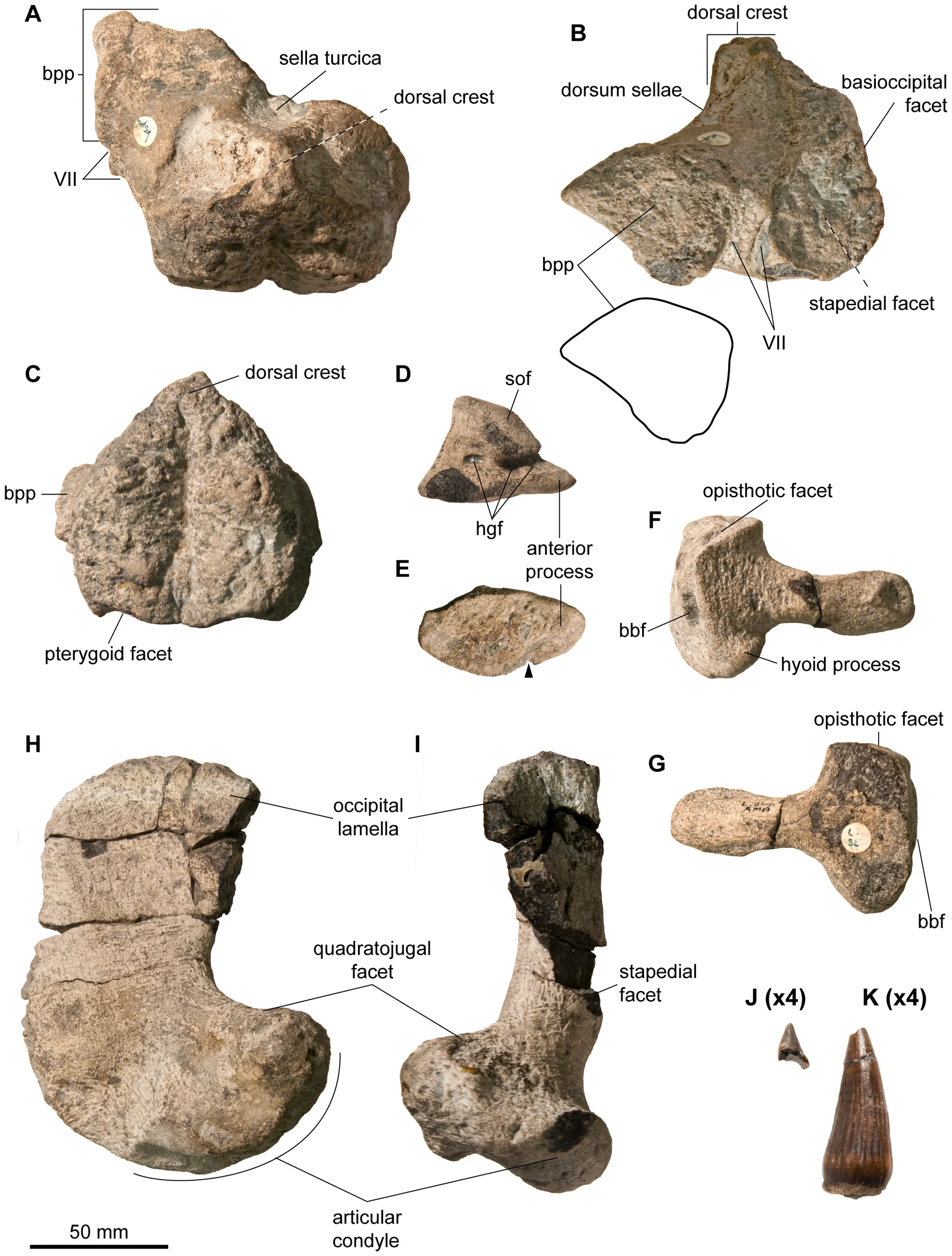
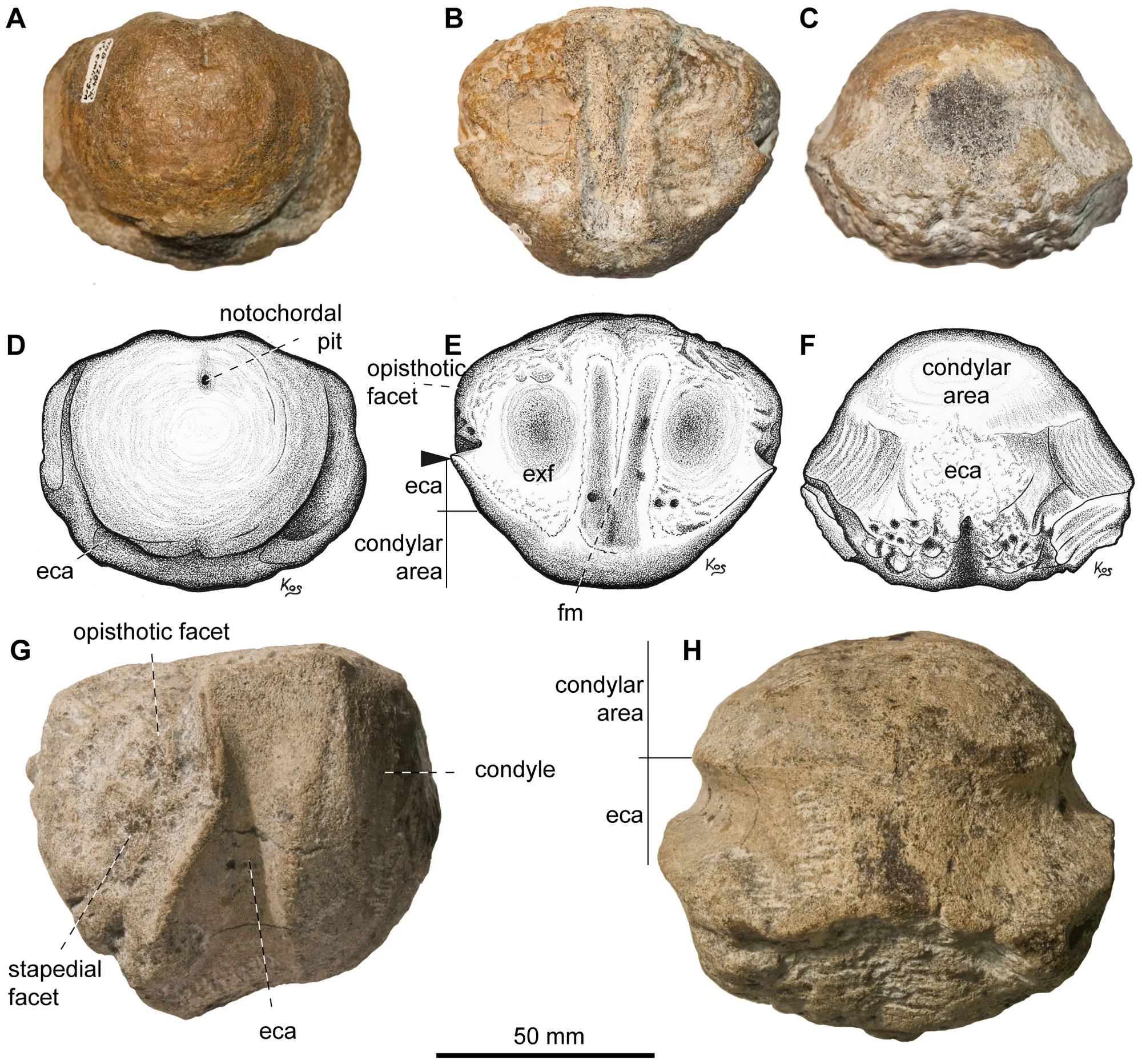
Most recent study on Hybodus hauffianus, describing new material from the Toarcian Posidonienschiefer Formation at Dormettingen, approximately 75 km southwest of Holzmaden, extending the known geographic distribution of the species. Duffin, Lauer and Lauer describe the first partial skull of H. hauffianus from this locality, with detailed anatomical data that complement previous specimens from Holzmaden-Ohmden. The work also includes new dentition analysis and reinterprets some morphological features in light of modern imaging techniques. This is the most recent reference work on the species and synthesizes a century of paleoichthyological research on the Posidonia Shale.


Triassic fishes from East Greenland collected by the Danish expeditions in 1929-1931
Stensi, E.A. · Meddelelser om Grønland
Classic work describing Triassic hybodontids from East Greenland, collected by the Danish expeditions of 1929-1931. Although not directly addressing Hybodus hauffianus, Stensio's study established the comparative framework for understanding Hybodontiformes evolution and provided the first detailed anatomical data on Mesozoic hybodontids. The cranial and dental characteristics described for the Greenland Triassic hybodontids are putative ancestors of European Jurassic forms such as H. hauffianus. Stensio's work influenced all subsequent hybodontid paleoichthyology and continues to be cited as a fundamental historical reference in any revision of the group.


Comments on elasmobranch evolution
Schaeffer, B. · Sharks, Skates and Rays (Johns Hopkins Press)
Comprehensive review of elasmobranch evolution from the Paleozoic to the Mesozoic, placing hybodontids in evolutionary context as the sister group of modern sharks. Schaeffer discusses the morphological innovations distinguishing Hybodontiformes from Neoselachii, including the presence of dorsal fin spines, marked heterodontia, and distinct male claspers. The work provides the first explicit evolutionary model for hybodontid ecological success during the Mesozoic, including the dominance of groups such as Hybodus hauffianus in Jurassic European seas. Schaeffer also discusses possible causes for the final extinction of hybodontids at the end of the Cretaceous, parallel to the emergence of modern neoselachians.

Chondrichthyes II: Mesozoic and Cenozoic Elasmobranchii
Cappetta, H. · Handbook of Paleoichthyology (Gustav Fischer Verlag)
Classic reference work in paleoichthyology, covering all Mesozoic and Cenozoic elasmobranchs with taxonomic and anatomical rigor. The chapter on Hybodontiformes includes the standard taxonomic account of Hybodus hauffianus within the context of the genus and order. Cappetta systematizes the dentition, spines and body morphology of all hybodontids known until 1987 and provides an identification key for the main genera. The work establishes the nomenclatural standard still in use for many hybodontid anatomical features and is cited in virtually all subsequent studies on the group, including all modern studies of H. hauffianus.


Jurazeitliche Neoselachier aus Deutschland und S-England
Thies, D. · Courier Forschungsinstitut Senckenberg
Systematic description of Jurassic neoselachian sharks from Germany and southern England, providing essential comparative context for the hybodontid fauna of the Posidonia Shale, including Hybodus hauffianus. Thies documents for the first time the co-existence of hybodontids and neoselachians in European Jurassic seas, demonstrating that the evolutionary transition between the two groups occurred gradually throughout the Mesozoic. The work identifies several basal neoselachian genera and species in the same formation that houses H. hauffianus, suggesting that the two groups occupied complementary or overlapping ecological niches. This ecological perspective is fundamental for understanding why hybodontids persisted until the end of the Cretaceous despite the proliferation of neoselachians.

Shark tooth root morphology and the evolution of the lingual plate in chondrichthyans
Frobisch, N.B. et al. · Zoological Journal of the Linnean Society
Histological and morphological analysis of shark tooth roots across Chondrichthyes, including specific data on tooth root morphology of Hybodus hauffianus. Frobisch and collaborators demonstrate that H. hauffianus has a modified pleurodont-type dental root, distinct from both more primitive Triassic hybodontids and modern neoselachians. The work documents the microstructure of dental support tissue and polyfiodont replacement mode. Histological data reveal information on tooth growth and replacement rates, with implications for estimating hybodontid metabolism and life expectancy. The study uses scanning electron microscopy and advanced histochemistry techniques applied to European museum specimens including H. hauffianus material from the Posidonia Shale.


Early radiation of the neoselachian sharks in western Europe
Cuny, G. & Benton, M.J. · Geobios
Analysis of the early diversification of neoselachians in Western Europe during the Triassic-Jurassic interval, with comparative data on the hybodontid fauna including Hybodus hauffianus. Cuny and Benton document the gradual increase in neoselachian diversity as hybodontids maintained dominance in Lower Jurassic European seas. The work is fundamental for understanding why H. hauffianus thrived in the Posidonia Shale while primitive neoselachians co-existed in the same environment. The authors propose that the marked heterodontia of hybodontids, especially H. hauffianus, represented an ecological advantage over primitive homodont neoselachians, allowing exploitation of more diverse food resources.


Hybodont sharks in continental freshwater environments of the Late Triassic and earliest Jurassic
Fischer, J. et al. · PLOS ONE
Documentation of hybodont sharks including Hybodus in continental freshwater environments during the Late Triassic and earliest Jurassic, providing important ecological context for understanding hybodontid niche breadth. Fischer and collaborators demonstrate that while H. hauffianus dominated European Jurassic seas, other hybodontids of the same or related genera colonized fluvial and lacustrine environments. This result suggests that Hybodontiformes were more ecologically flexible than previously thought, capable of surviving in freshwater beyond marine environments. The contrast with H. hauffianus, strictly marine, evidences ecological diversification within the group.


Famous museum specimens
SMNS 10062
Staatliches Museum fur Naturkunde Stuttgart, Stuttgart, Alemanha
Most famous specimen of H. hauffianus, preserving stomach contents with 93 identifiable belemnite rostra of the species Passaloteuthis laevigata. It is the central specimen of the paleoecological study by Klug et al. (2021).
SMNS (holotipo)
Urwelt-Museum Hauff, Holzmaden, Alemanha
Type material that served as the basis for Fraas's original description (1896). The Urwelt-Museum Hauff in Holzmaden holds the world's largest collection of H. hauffianus specimens, many with exceptional soft tissue preservation.
Colecao Paleontologia Tubingen
Museum of Paleontology, Universidade de Tubingen, Tubingen, Alemanha
Well-preserved specimen used in numerous comparative studies. Tubingen holds multiple H. hauffianus specimens that have contributed to understanding intraspecific variation in the species.
In cinema and popular culture
Hybodus hauffianus is not a cinema star like T. rex or the megalodon, but it has appeared in prestigious documentaries about prehistoric ocean life. In Walking with Dinosaurs (BBC, 1999) and Sea Monsters (2003), Hybodus was portrayed as a characteristic shark of Mesozoic seas, with visible dorsal spines and active hunting behavior. The Walking with Dinosaurs series, viewed by more than 700 million people worldwide, helped popularize the image of hybodontids as the dominant sharks before the emergence of modern sharks. Compared to the megalodon, which is the protagonist of several horror films, Hybodus remains a secondary character in pop culture, more familiar to audiences of nature documentaries than viewers of shark thrillers. The scientific accuracy of depictions has improved considerably since 1999, with more recent versions correctly showing male cephalic spines and the species' functional heterodontia.
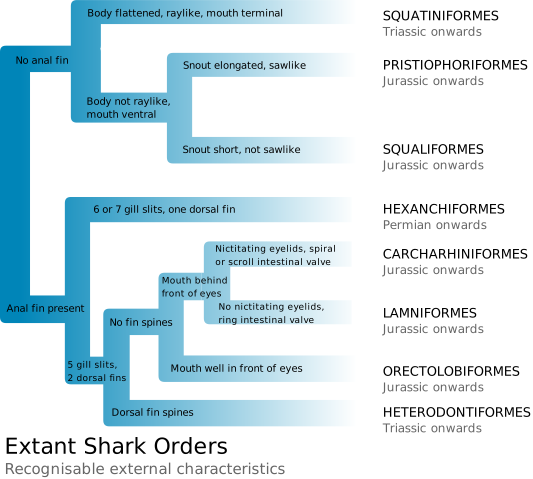
Classification


Discovery
Fun fact
A specimen of Hybodus hauffianus was found with more than 90 belemnite rostra preserved in its stomach, suggesting the shark ingested so many squid-like creatures that it died. It was the Jurassic equivalent of a shark that overate.
Last reviewed: April 24, 2026