
Ophthalmosaurus
Ophthalmosaurus icenicus
"Eye lizard (from Greek: ophthalmos = eye, sauros = lizard)"
About this species
Ophthalmosaurus icenicus was a Middle-Late Jurassic ichthyosaur, famous for having the largest eyes relative to body size of any known vertebrate: the sclerotic ring measured up to 23 centimeters in outer diameter. Found primarily in the Oxford Clay Formation of Peterborough, England, it was an agile oceanic swimmer with a hydrodynamic body of about 6 meters and paddle-shaped fins. Although not a dinosaur, it was strictly contemporary with many of them. Its enormous eyes were adapted for deep dives in dark mesopelagic zones, likely in pursuit of squid and cephalopods. Harry Govier Seeley described the species in 1874, and since then it has become one of the best-documented ichthyosaurs of the Jurassic, with dozens of excellent preserved specimens.
Geological formation & environment
The Oxford Clay Formation (Callovian-Oxfordian, ~165-155 Ma) is a sequence of marine clays deposited in a shallow sea that covered much of Western Europe during the Middle-Late Jurassic. Outcropping mainly in Peterborough, Cambridgeshire, England, it is famous for preserving marine reptiles (ichthyosaurs, plesiosaurs, crocodiles) with exceptional quality. The clay was intensively exploited as building material in the 19th century, and the pits provided most of the Ophthalmosaurus icenicus material and other British Jurassic marine reptiles.
Image gallery

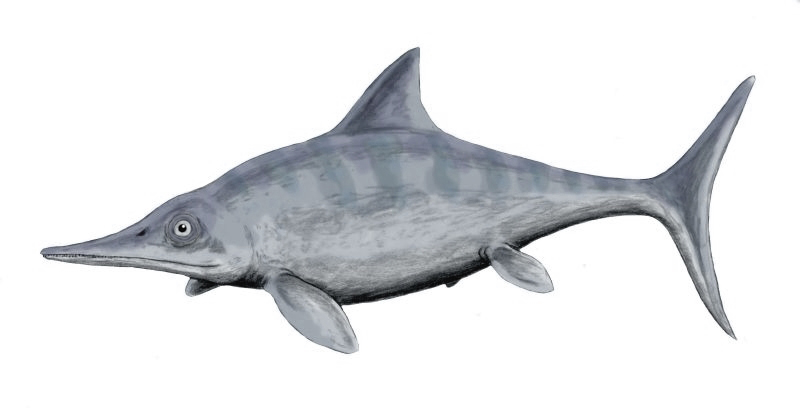


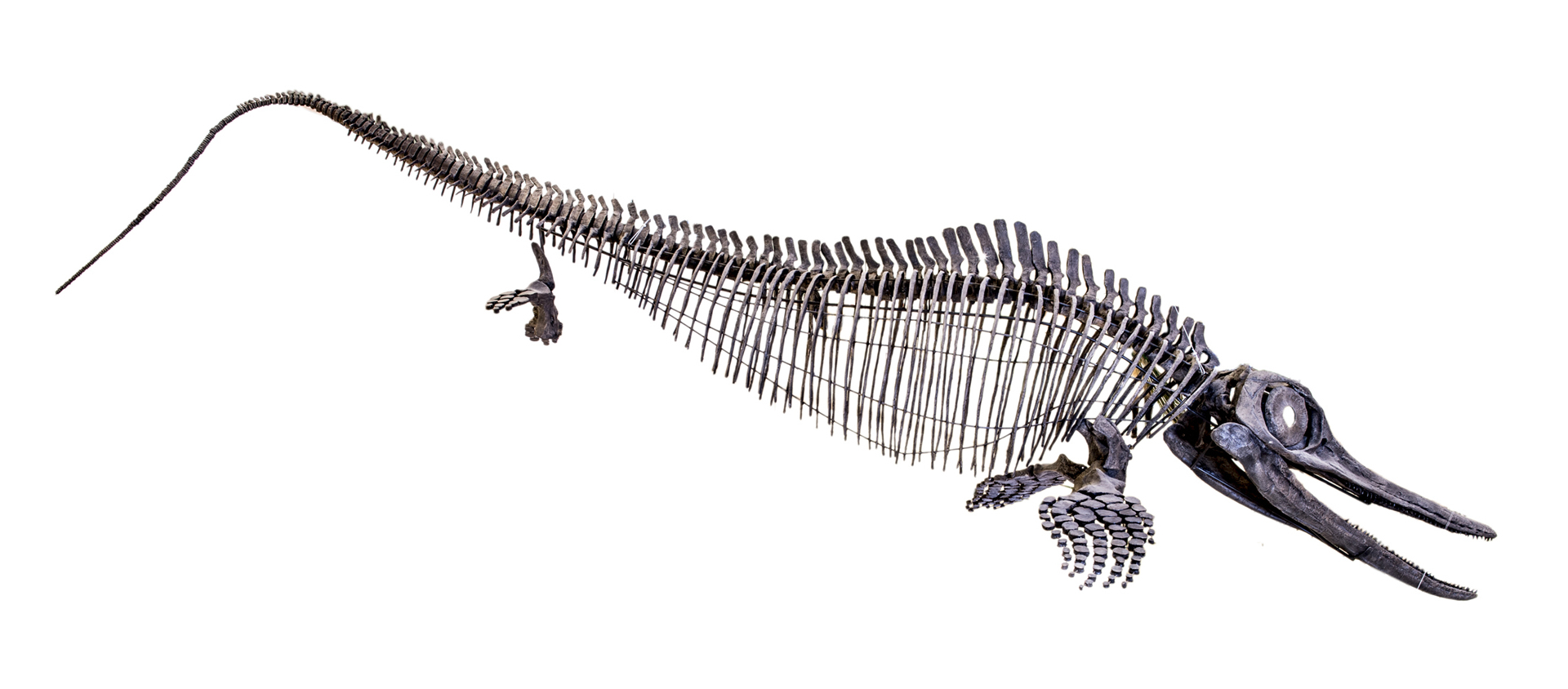


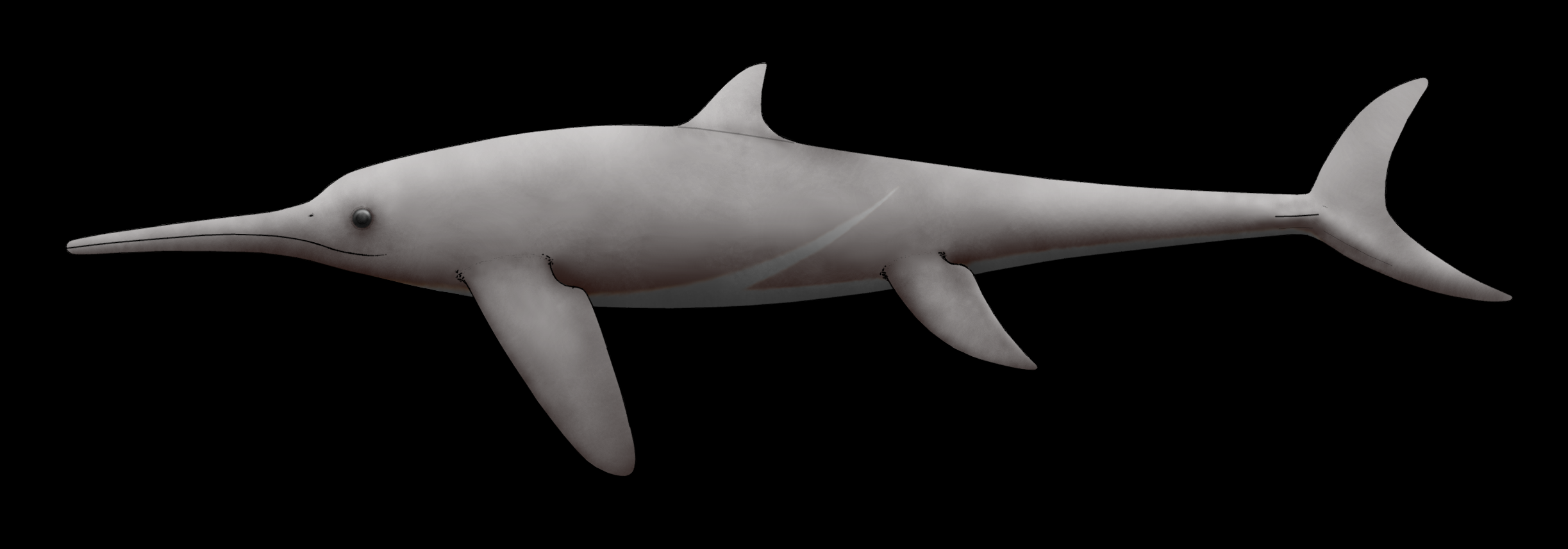
Updated reconstruction of Ophthalmosaurus icenicus based on modern studies, including the Moon and Kirton (2016) monograph. Shows the hydrodynamic body, enormous eyes, and counter-shading coloration.
Wikimedia Commons — CC BY-SA 4.0
Ecology and behavior
Habitat
Ophthalmosaurus icenicus inhabited the shallow epeiric sea that covered much of Europe during the Callovian-Oxfordian (165-150 Ma). The Oxford Clay Formation of Peterborough, the main source of specimens, represents a sea with depths of 30-100 meters, rich in cephalopods, fish, and sea turtles. The Jurassic climate was warm with no polar ice caps. Eye analyses suggest that O. icenicus also exploited the mesopelagic zone (200-1000 m), performing deep nocturnal-crepuscular dives.
Feeding
The main diet of Ophthalmosaurus was probably cephalopods (squid and ammonites) and fish. The teeth were small, conical, and numerous, suitable for catching slippery prey. The absence of teeth in older adults led some researchers to suggest a diet of soft-bodied prey by suction. The enormous eyes are interpreted as adaptation for hunting in dark waters at great depth, potentially pursuing bioluminescent squid in the mesopelagic zone, similar to the behavior of modern sperm whales.
Behavior and senses
Ophthalmosaurus was viviparous: specimens from the Oxford Clay Formation preserved in utero embryos, confirming it gave birth to live young at sea, like modern dolphins. Evidence suggests gregarious behavior, with several individuals of different ages preserved together. It performed periodic deep dives in search of food in the mesopelagic zone, but spent much of its time in shallow food-rich waters. Respiration was aerial, like all marine reptiles.
Physiology and growth
As a Mesozoic marine reptile, Ophthalmosaurus was probably warm-blooded (endothermic) or mesothermic, with elevated metabolism to sustain active swimming. The low f-number of the optical lenses indicates adaptation to low-light environments, with good luminance sensitivity. Ontogenetic growth shows relatively fast maturation for a reptile of its size. The body shape, with larger anterior fins than posterior, is optimized for underwater propulsion.
Paleogeography
Continental configuration

Scotese & Vérard · CC BY 4.0 · Jurassic, ~155 Ma
During the Caloviano-Oxfordiano (~165–150 Ma), Ophthalmosaurus icenicus inhabited the fragmenting Pangea. North America and Europe were still close, and the North Atlantic was just beginning to open. Climate was warm and humid globally, with no polar ice caps.
Bone Inventory
Ophthalmosaurus icenicus is exceptionally well known thanks to dozens of specimens from the Oxford Clay Formation of Peterborough, including adults, juveniles, and in utero embryos. Specimens from the Natural History Museum London (NHMUK PV R3702, R3893, R4124) and the University of Tübingen are particularly complete. The estimated 75% completeness reflects that the tail and caudal fins rarely preserve intact. Embryos preserved in utero confirm the viviparity of the species.
Found elements
Inferred elements
Scientific Literature
15 papers in chronological order — from the original description to recent research.
On the Pectoral Arch and Fore Limb of Ophthalmosaurus, a new Ichthyosaurian Genus from the Oxford Clay
Seeley, H.G. · Quarterly Journal of the Geological Society
Harry Govier Seeley described and named Ophthalmosaurus icenicus based on material from the Oxford Clay Formation of Peterborough, especially the pectoral arch and forelimb. The original work identified the diagnostic characteristics distinguishing the genus from other known ichthyosaurs: pectoral fins with complex bone structure and multiple rows of digital bones. The epithet 'icenicus' refers to the Iceni, a Celtic tribe from the Peterborough region in antiquity. This foundational paper opened decades of research on one of the most spectacular ichthyosaurs of the Jurassic.

Notes on the Osteology of Ophthalmosaurus icenicus, Seeley, an Ichthyosaurian Reptile from the Oxford Clay of Peterborough
Andrews, C.W. · Geological Magazine
Andrews provided the first comprehensive osteological notes on Ophthalmosaurus icenicus based on specimens from the Oxford Clay Formation at the Natural History Museum London. The work describes in detail the cranial, vertebral, and fin structure, establishing anatomical criteria that would serve as a reference for decades. Andrews identified unique body proportions, including more developed anterior fins than posterior ones, an adaptation for high-performance swimming. This work was a precursor to the monumental Oxford Clay marine reptile catalogue published by Andrews in 1910.
The Osteology and Taxonomy of the Fossil Reptile Ophthalmosaurus
Appleby, R.M. · Proceedings of the Zoological Society of London
Appleby conducted the first systematic revision of Ophthalmosaurus taxonomy, describing the skeletal anatomy in detail and attempting to resolve nomenclatural issues in the genus. The work is particularly important for establishing clear diagnostic criteria for the type species O. icenicus and discussing the identification problems of American specimens that would later be described as O. natans. Appleby formalized the genus diagnosis and established standardized anatomical terminology for subsequent studies of Jurassic ichthyosaurs.

Large eyeballs in diving ichthyosaurs
Motani, R., Rothschild, B.M. & Wahl, W. · Nature
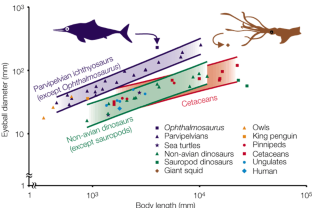
Motani, Rothschild, and Wahl published the quantitative analysis that definitively established Ophthalmosaurus as the vertebrate with the largest proportional eye ever known. The study used optical models based on the sclerotic ring dimensions to calculate visual capacity at depth, demonstrating that Ophthalmosaurus eyes were adapted for dark mesopelagic environments (below 200 m). The results suggest deep diving behavior in pursuit of bioluminescent squid, analogous to modern sperm whales. This paper transformed how ichthyosaurs are ecologically understood.
The Ichthyosauria
Maisch, M.W. & Matzke, A.T. · Stuttgarter Beiträge zur Naturkunde (B)
Maisch and Matzke produced the most comprehensive phylogenetic and systematic review of Ichthyosauria to that point, including a formal cladistic analysis that positioned Ophthalmosaurus icenicus within a revised taxonomic framework for the entire order. The work established Ophthalmosauridae as a monophyletic clade and identified the synapomorphies defining the family. The revision resolved longstanding nomenclatural questions and provided the basis for modern ichthyosaur phylogenetic analyses. The position of O. icenicus as a basal member of subfamily Ophthalmosaurinae was confirmed based on cranial and fin characters.

Ichthyosaurs of the British Middle and Upper Jurassic. Part 1, Ophthalmosaurus
Moon, B.C. & Kirton, A.M. · Monographs of the Palaeontographical Society
Moon and Kirton produced the most comprehensive monograph on Ophthalmosaurus icenicus and related British ichthyosaurs from the Callovian Oxford Clay Formation. The work is based on all known specimens and provides the most detailed osteological description ever published, including CT scans of preserved skulls. The monograph established definitive criteria for distinguishing O. icenicus from related species and provided essential quantitative anatomical data for later studies of phylogeny, biomechanics, and ecology. It is now the standard reference for any research on Ophthalmosaurus.

Revision of Nannopterygius (Ichthyosauria: Ophthalmosauridae): reappraising the 'inaccessible' holotype resolves a 150-year-old taxonomic dispute and reveals a new ophthalmosaurid clade
Zverkov, N.G. & Jacobs, M.L. · Zoological Journal of the Linnean Society
Zverkov and Jacobs carried out a phylogenetic revision of Ophthalmosauridae that redefined the position of Ophthalmosaurus icenicus in the group's phylogeny. The work demonstrated that O. icenicus nests in a clade with Acamptonectes and Mollesaurus, rather than with Aegirosaurus as previous studies suggested. The analysis also resolved a 150-year taxonomic dispute over Nannopterygius, revealing a new ophthalmosaurid clade. This work represents the most up-to-date phylogenetic view of Ophthalmosaurus and is a reference for understanding evolutionary relationships within Ophthalmosauridae.
Evolution of fish-shaped reptiles (Reptilia: Ichthyopterygia) in their physical environments and constraints
Motani, R. · Annual Review of Earth and Planetary Sciences
Motani produced a comprehensive review of ichthyosaur evolution, including an analysis of the physical and environmental constraints that shaped the group's morphology. The work discusses how Ophthalmosaurus and related taxa evolved a fish-like body plan to optimize marine locomotion: bilobed tail, paddle-shaped fins, and fusiform body. The study includes quantitative biomechanical analyses and compares ichthyosaurs with modern sharks and dolphins. The deep-diving capability, related to O. icenicus's enormous eyes, is contextualized within the overall evolution of the group.

A new Jurassic ichthyosaur from Russia reveals that thitherto neglected pachyostosis is not characteristic of tethysian ophthalmosaurids
Fischer, V., Masure, E., Arkhangelsky, M.S. & Godefroit, P. · Naturwissenschaften
Fischer and colleagues described a new Jurassic ichthyosaur from Russia and revised the phylogenetic position of Ophthalmosaurus, demonstrating that the group's geographic distribution was broader than previously believed. The work provides new evidence for the evolutionary history of Ophthalmosauridae and refutes the hypothesis that pachyostosis (bone thickening) was an exclusive characteristic of tethysian ophthalmosaurids. The results expand the paleobiogeographic context of Ophthalmosaurus icenicus and show that the group dispersed widely in Jurassic oceans.


New Ophthalmosaurid Ichthyosaurs from the European Lower Cretaceous Demonstrate Extensive Ichthyosaur Survival across the Jurassic-Cretaceous Boundary
Fischer, V., Maisch, M.W., Naish, D., Kosma, R., Liston, J., Joger, U., Krüger, F.J., Pérez Pérez, J., Tainsh, J. & Appleby, R.M. · PLOS ONE
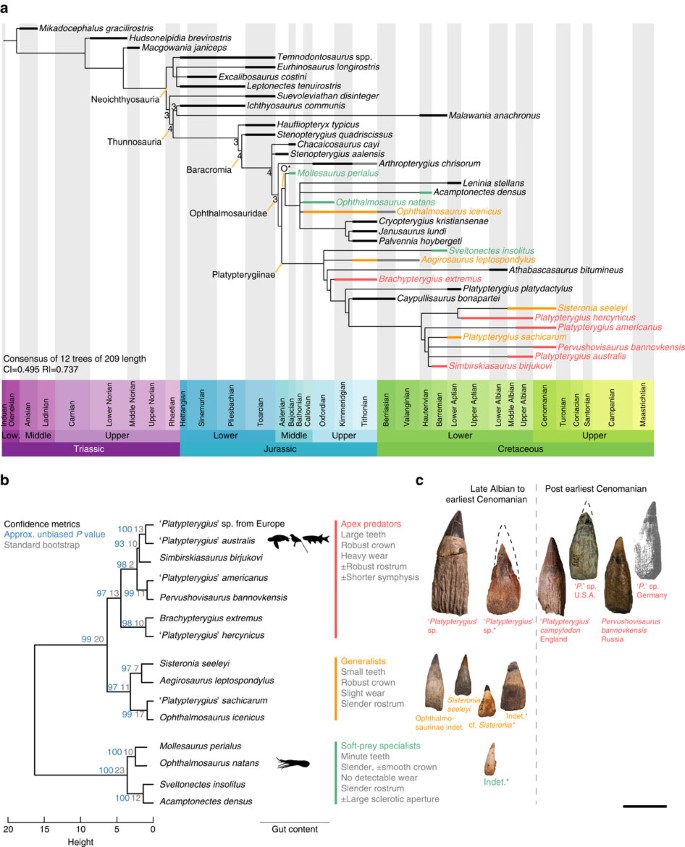
Fischer and colleagues described new ophthalmosaurid ichthyosaurs from the European Lower Cretaceous, demonstrating that the lineage including Ophthalmosaurus survived the Jurassic-Cretaceous transition, challenging previous assumptions about ichthyosaur diversity decline. The work has direct implications for understanding Ophthalmosaurus icenicus as part of an evolutionary radiation that was more long-lived than previously believed. The new taxa described are morphologically close to O. icenicus and suggest that family Ophthalmosauridae maintained considerable diversity into the mid-Cretaceous.

A review of Russian Upper Jurassic ichthyosaurs with an intermedium/humeral superposition: reassessing Grendelius McGowan, 1976
Zverkov, N.G., Arkhangelsky, M.S. & Stenshin, I.M. · Proceedings of the Zoological Institute RAS
Zverkov and colleagues reviewed Russian Late Jurassic ichthyosaurs with limb morphology intermediate/humeral similar to Ophthalmosaurus, providing new data on the geographic distribution and phylogenetic relationships of ophthalmosaurids. The work demonstrates that close relatives of Ophthalmosaurus icenicus inhabited both the Tethys Sea and the boreal oceans during the Late Jurassic, broadening the paleobiogeographic context of the British species. Russian data complement the European record and allow a more complete view of ophthalmosaurid diversity during the Callovian-Oxfordian.


A new phylogeny of ichthyosaurs (Reptilia: Diapsida)
Moon, B.C. · Journal of Systematic Palaeontology
Moon published the most comprehensive cladistic analysis of Ichthyosauria to that point, including a new phylogeny confirming Ophthalmosaurus icenicus within subfamily Ophthalmosaurinae and clarifying its evolutionary relationships with other family species. The work employs an expanded character dataset and modern analytical techniques, resulting in a more resolved phylogeny for the group. Moon's (2017) data is used as a reference phylogenetic framework in most subsequent ichthyosaur studies and establishes the modern classification of Ophthalmosaurus.

The Slottsmøya Marine Reptile Lagerstätte: facies, taphonomy and completeness of large marine reptiles
Delsett, L.L., Novis, L.K., Fletcher, T., Knutsen, E.M., Roberts, A.J., Koevoets, M.J., Hammer, Ø. & Hurum, J.H. · Acta Palaeontologica Polonica
Delsett and colleagues documented a Norwegian Jurassic Lagerstätte with exceptionally preserved marine reptiles, including ophthalmosaurids close to Ophthalmosaurus. The study provides comparative data on taphonomy, completeness, and soft tissue preservation in ichthyosaurs, complementing the record from the Oxford Clay Formation of Peterborough. The Norwegian specimens preserve anatomical features rarely visible in British material, such as soft tissue outlines and dermal pigments, enriching the understanding of the biology of ophthalmosaurids related to O. icenicus.

Extinction of Fish-Shaped Marine Reptiles Associated with Reduced Evolutionary Rates and Global Environmental Volatility
Fischer, V., Gutarra, S., Arkhangelsky, M.S. & Godefroit, P. · Nature Communications
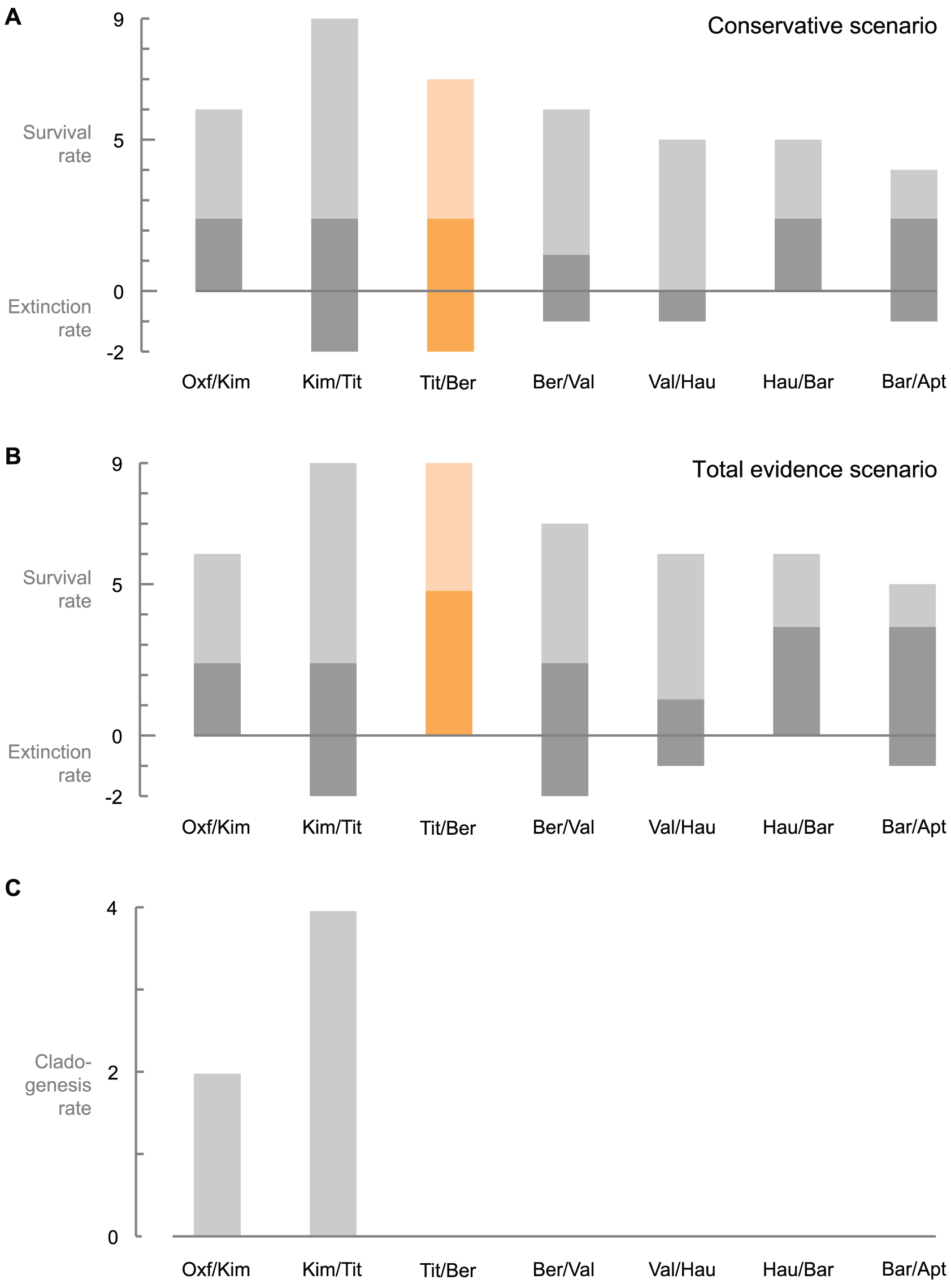
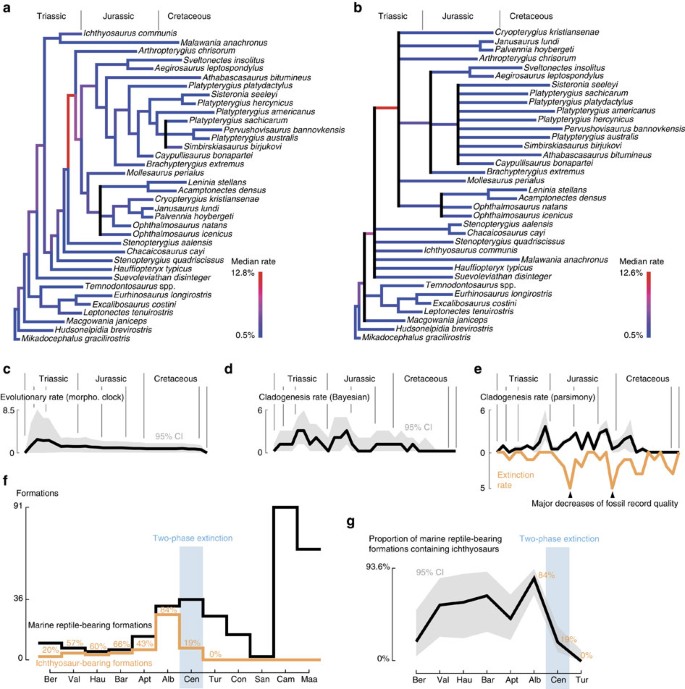
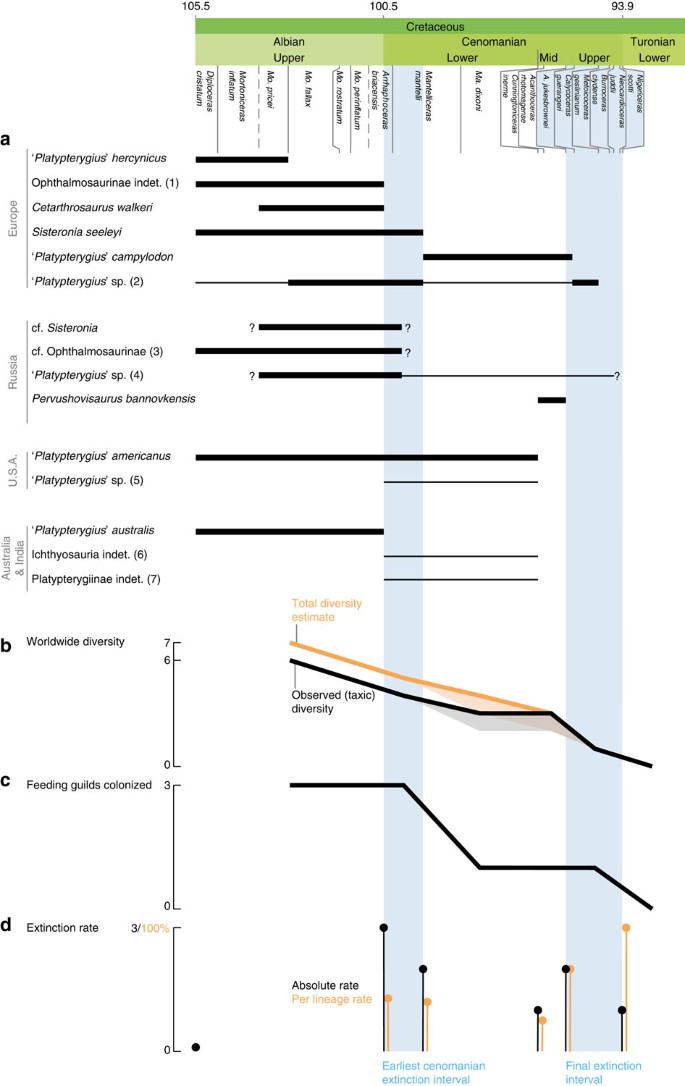
Fischer and colleagues performed a macroevolutionary analysis of ichthyosaur extinction, demonstrating that Late Jurassic ophthalmosaurids including Ophthalmosaurus had reduced diversification rates compared to earlier periods. The work associates the eventual extinction of the group with reduced evolutionary innovation during periods of global environmental instability. The data indicate that O. icenicus belonged to a lineage already in evolutionary decline during its ecological apex, explaining why the group did not recover from subsequent environmental perturbations.


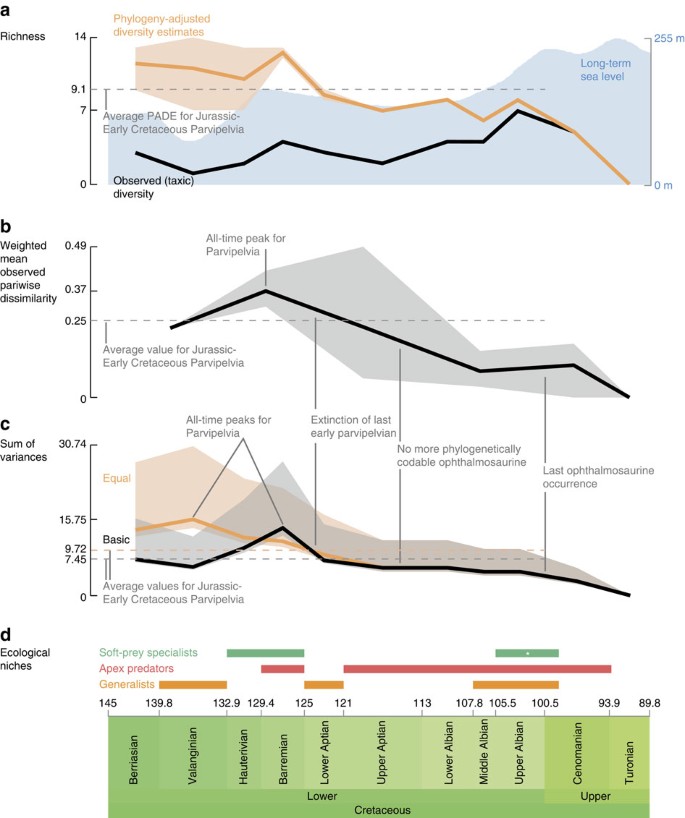
A review of Russian Upper Jurassic ichthyosaurs with an implication to the Tethyan-Boreal connections
Zverkov, N.G., Arkhangelsky, M.S. & Stenshin, I.M. · Proceedings of the Zoological Institute RAS
This work by Zverkov et al. (2015) reviews Upper Jurassic ichthyosaur material from Russia, documenting the presence of Ophthalmosaurus icenicus in European boreal basins. The authors demonstrate that the species was not restricted to the British Oxford Clay Formation but was widely distributed across the Jurassic Epicontinental Sea. Analysis of connections between Tethyan and Boreal provinces reveals that Ophthalmosaurus was a long-distance swimmer capable of crossing different water masses. The study supports the hypothesis that the large eyes were an adaptation to multiple types of marine habitat, from shallow tropical seas to colder boreal basins.


Famous museum specimens
NHMUK PV R3702
Natural History Museum, Londres, Reino Unido
One of the most complete and well-preserved specimens of Ophthalmosaurus icenicus, including skull, vertebral column, ribs, and fins. Collected from Oxford Clay pits in Peterborough in the late 19th century and described by Andrews (1907, 1910). It is the reference specimen for many later studies on the species.
Espécime de Tübingen (IG. Nr. 8)
Institut und Museum für Geologie und Paläontologie, Universidade de Tübingen, Alemanha
Exceptionally well-preserved Ophthalmosaurus icenicus specimen in Tübingen, including skull with preserved sclerotic ring. It is frequently photographed and referenced in scientific literature for clearly showing the species' enormous eyes. Provided essential data for optical morphology studies such as Motani et al. (1999).
In cinema and popular culture
Ophthalmosaurus icenicus gained pop culture relevance mainly through the BBC, which made it the protagonist of one of the most celebrated episodes of the documentary Walking with Dinosaurs (1999). In the 'Cruel Sea' episode, the narrative follows a school of young Ophthalmosaurus in their survival battles against the Liopleurodon, in tense scenes that remained in the memory of a generation. The series returned to the character in the special Chased by Sea Monsters (2003). The scientific representation is reasonably faithful: viviparous reproduction, gregarious behavior, and size are correct; the most critical exaggeration was the Liopleurodon depicted at 25 meters, well above its actual ~7 meters. Ophthalmosaurus also appears in illustrated paleontology books for young readers and natural history museums around the world, where its disproportionate eyes are always highlighted as the central curiosity.
Classification
Discovery
Fun fact
The eyes of Ophthalmosaurus icenicus measured up to 23 centimeters in outer diameter, roughly the size of a baseball. Proportionally to body size, they were the largest eyes of any vertebrate ever discovered, surpassing even modern blue whales. These colossal eyes allowed the animal to see in the darkness of the deep ocean, and scientists believe it dove hundreds of meters to hunt bioluminescent squid at night.
Last reviewed: April 24, 2026