
Anzu
Anzu wyliei
"Wylie's winged demon"
About this species
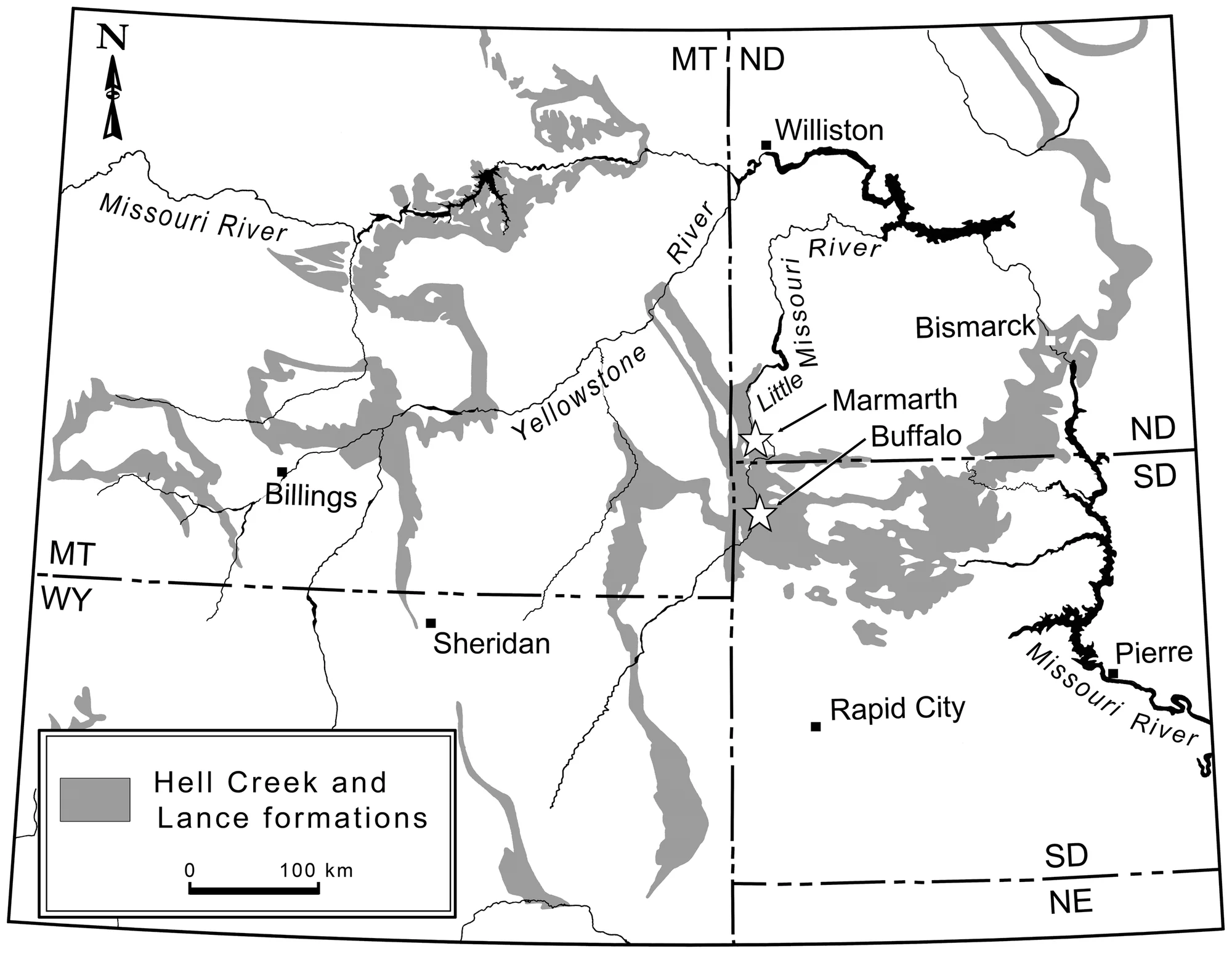
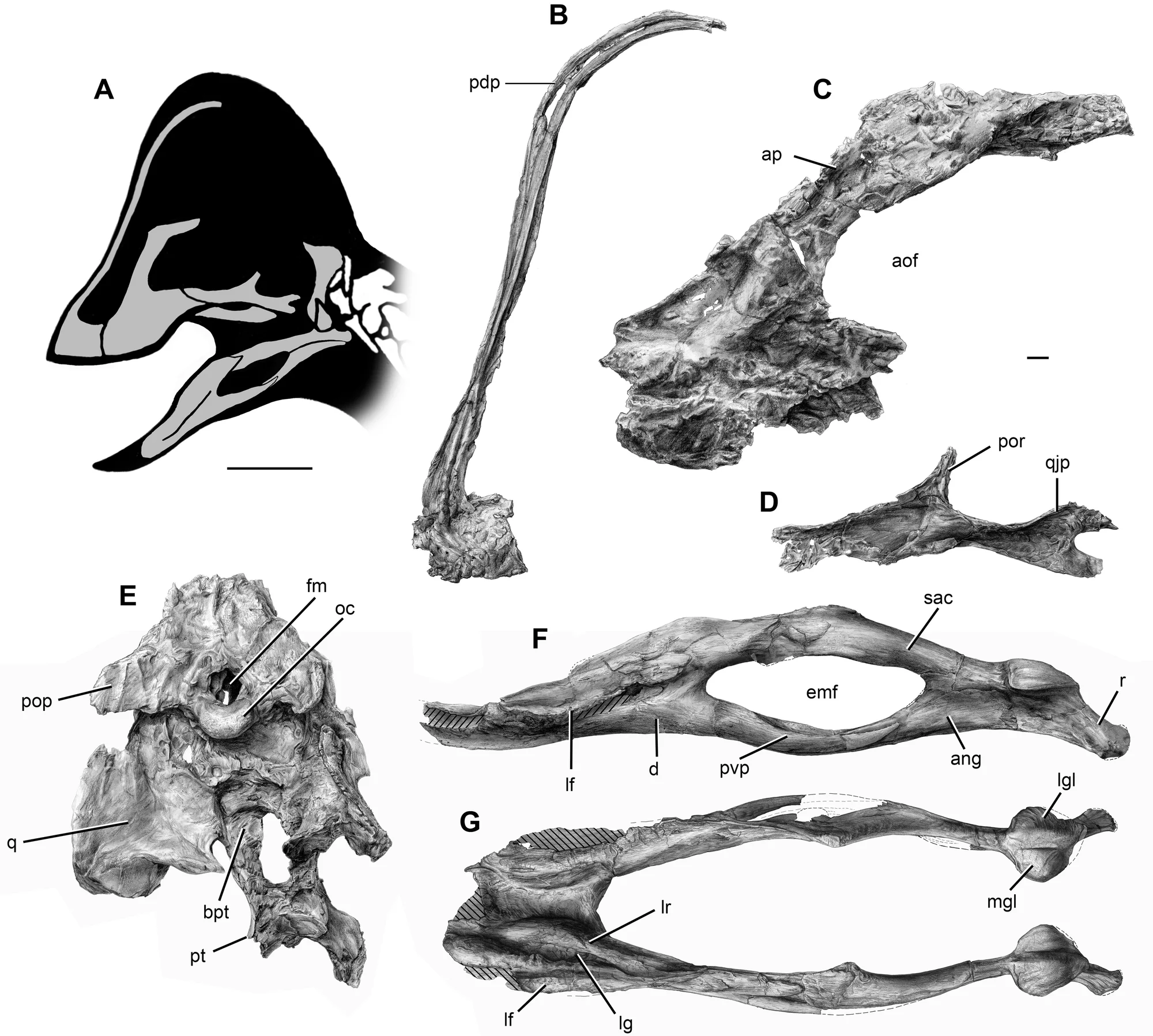
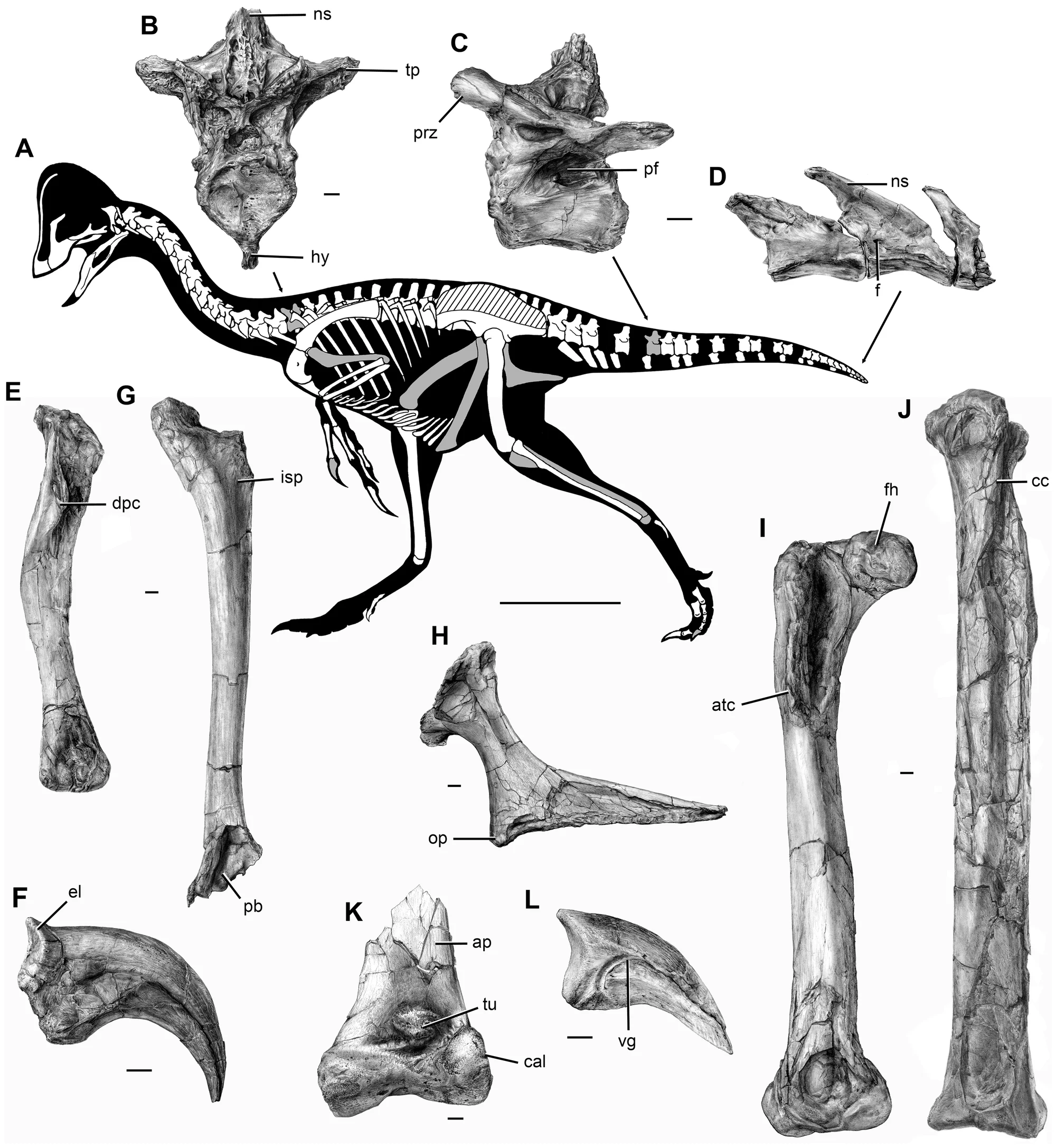
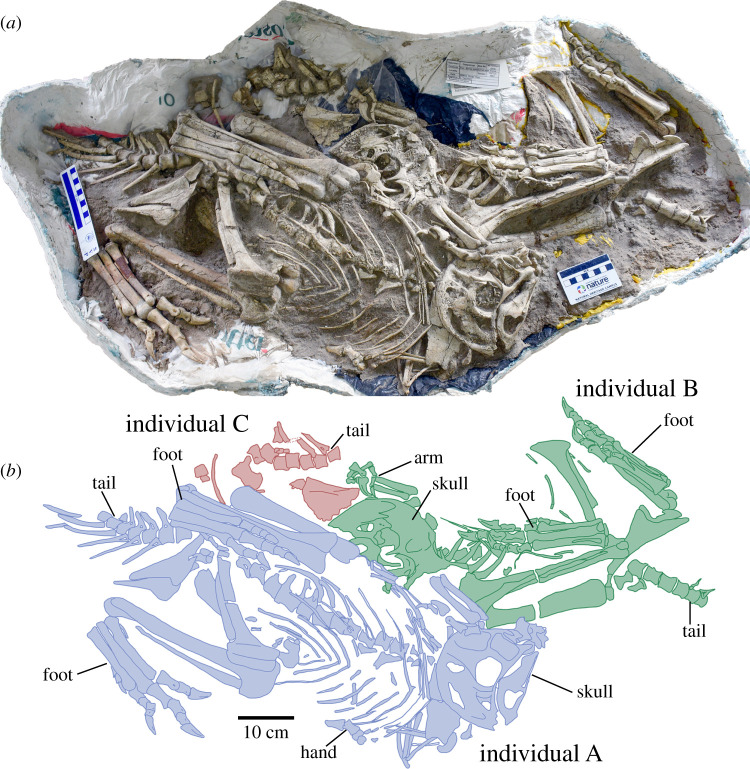
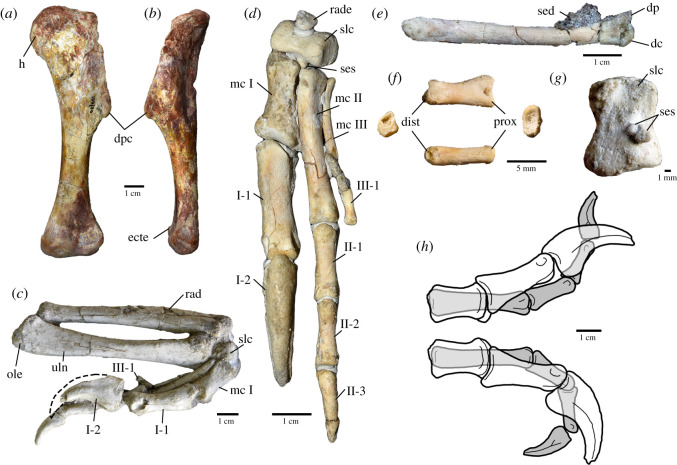
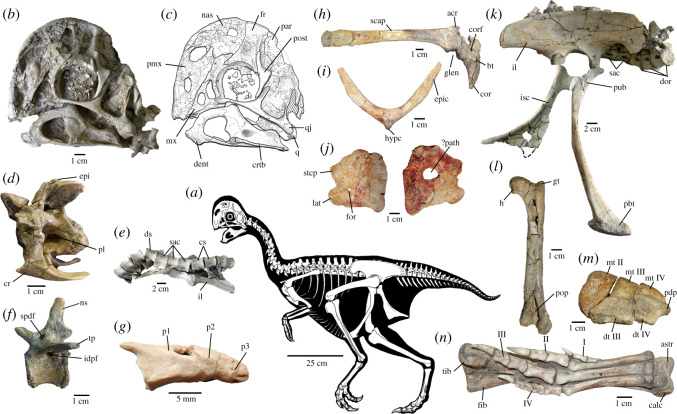
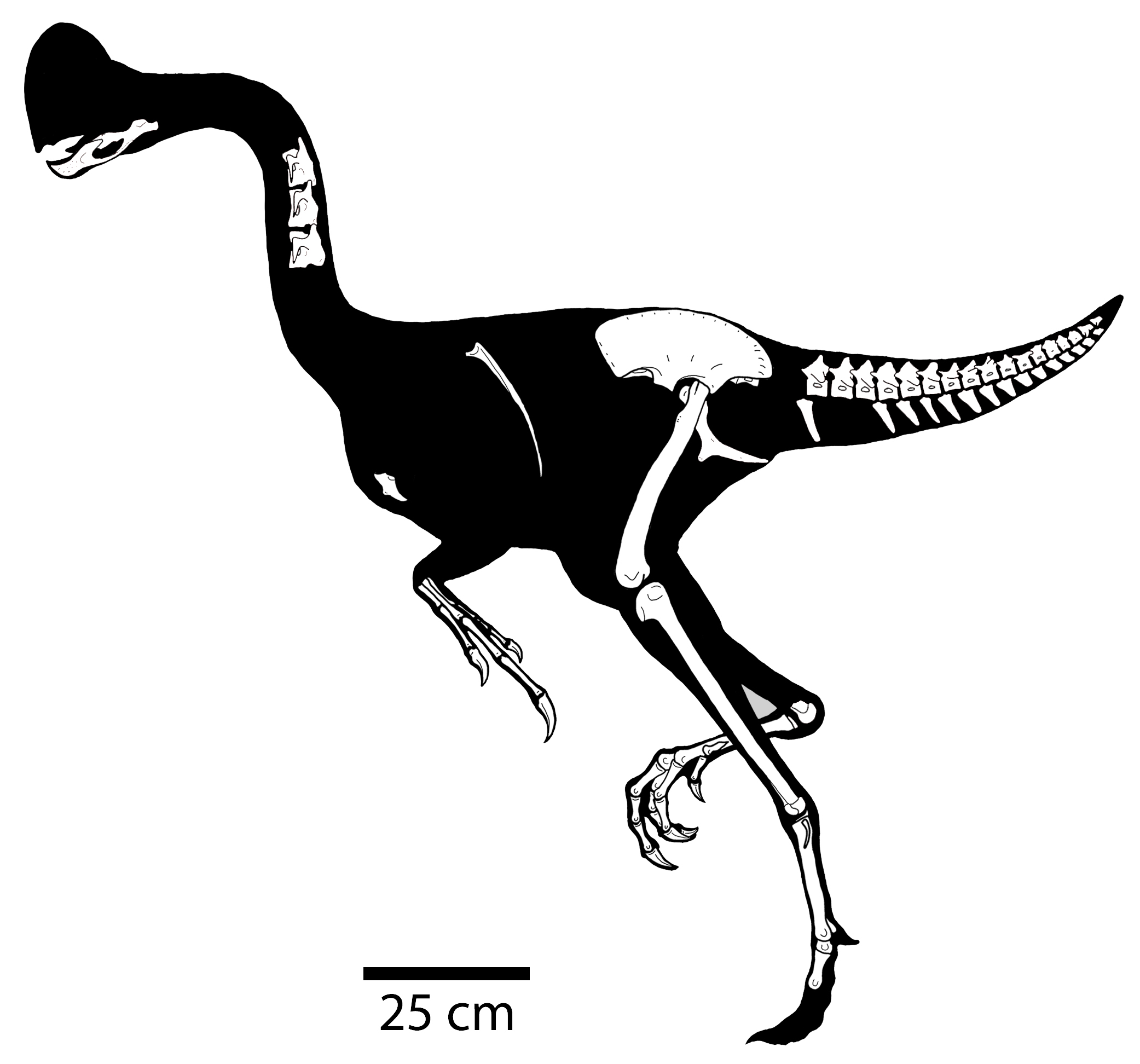
Anzu wyliei is a large caenagnathid oviraptorosaur from the Late Cretaceous, Maastrichtian (about 67.2 to 66.0 Ma), collected in the Hell Creek Formation of North Dakota and South Dakota, United States. Reaching roughly 3.5 to 3.75 metres in length, about 1.5 metres at the hips and 200 to 300 kg in body mass, Anzu is one of the largest known caenagnathids and one of the largest North American oviraptorosaurs, in size only behind the giant Gigantoraptor erlianensis of Cretaceous China. The animal combines a rather peculiar set of features: a tall, delicate skull, toothless jaws sheathed in a horny beak (rhamphotheca), a pronounced sagittal crest atop the head, a long flexible neck, elongated arms ending in three-clawed hands, long slender running-adapted legs and a proportionally short tail. By phylogenetic inference it was almost certainly covered in feathers and bore remiges on the forelimbs, in line with the pattern documented for close relatives such as Caudipteryx, Avimimus and Gigantoraptor. It was discovered in 1998 by Fred Nuss and team on private land in South Dakota, and formally described in 2014 by Matthew C. Lamanna, Hans-Dieter Sues, Emma R. Schachner and Tyler R. Lyson in the open access journal PLoS ONE. The type material comprises three complementary specimens (CM 78000, CM 78001 and MRF 319) that together offer the most complete documentation of a North American caenagnathid to date, allowing much of the group's anatomy to be reconstructed for the first time. Thanks to the nickname 'Chicken from Hell', coined by the discoverers in reference to the apocalyptic late-Cretaceous setting, Anzu quickly became one of the most popular images in recent North American palaeontology, sharing Hell Creek with Tyrannosaurus rex, Triceratops, Edmontosaurus, Pachycephalosaurus and Dakotaraptor until the K-Pg mass extinction.
Geological formation & environment
The Hell Creek Formation (Late Cretaceous, Maastrichtian, about 67 to 66 Ma) crops out in Montana, North Dakota, South Dakota and Wyoming, United States. It was deposited by meandering rivers and floodplains draining eastward toward the already-regressing Western Interior Seaway. Its sandstones, siltstones and mudstones, interbedded with coal seams, preserve one of the richest latest-Cretaceous faunas in the world, including Tyrannosaurus rex, Triceratops horridus, Edmontosaurus annectens, Pachycephalosaurus wyomingensis, Thescelosaurus, Ankylosaurus, Dakotaraptor steini, Acheroraptor temertyorum and Anzu wyliei. The fauna is crowned by the K-Pg boundary, marked by an iridium-rich clay layer recording the Chicxulub impact and the collapse of terrestrial ecosystems at the end of the Cretaceous.
Image gallery
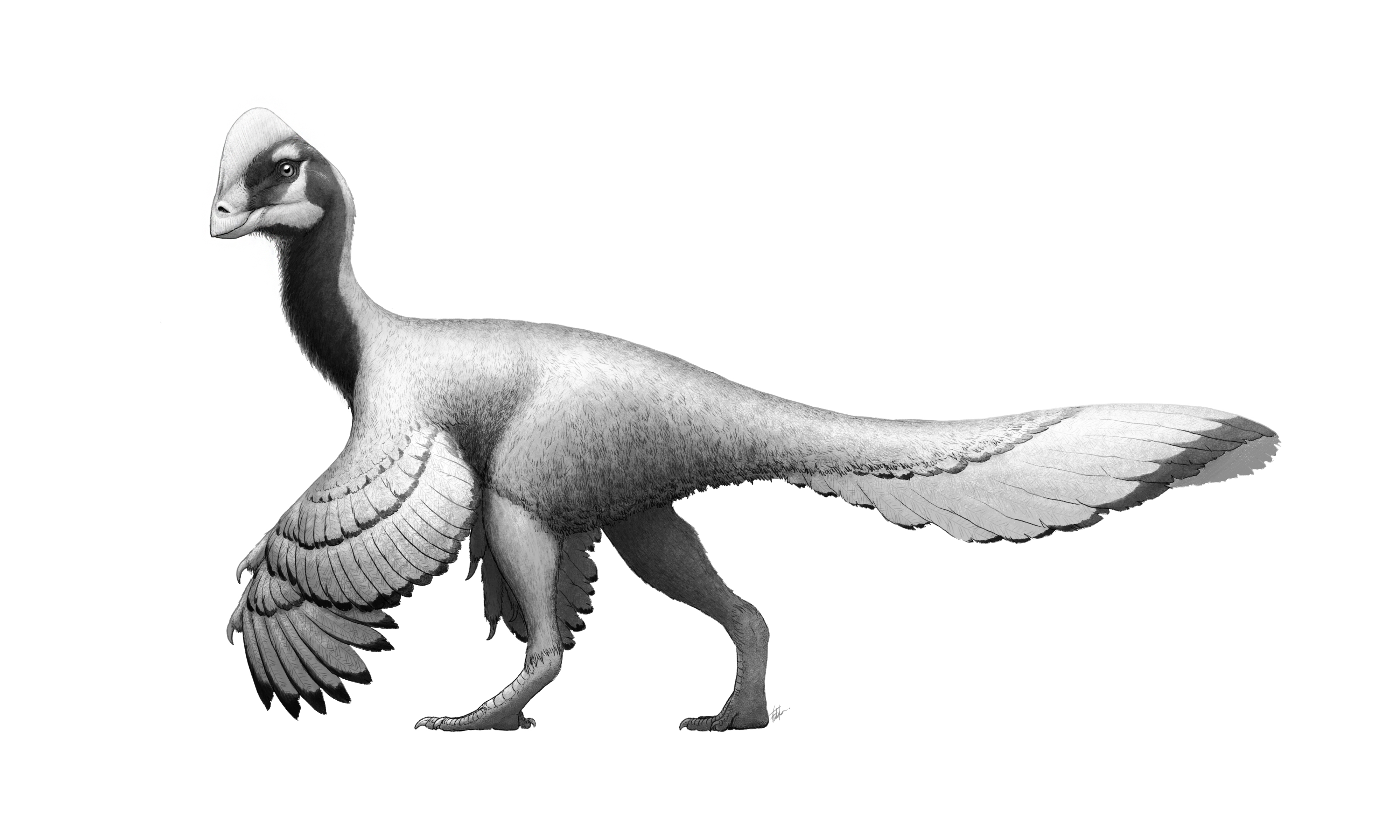


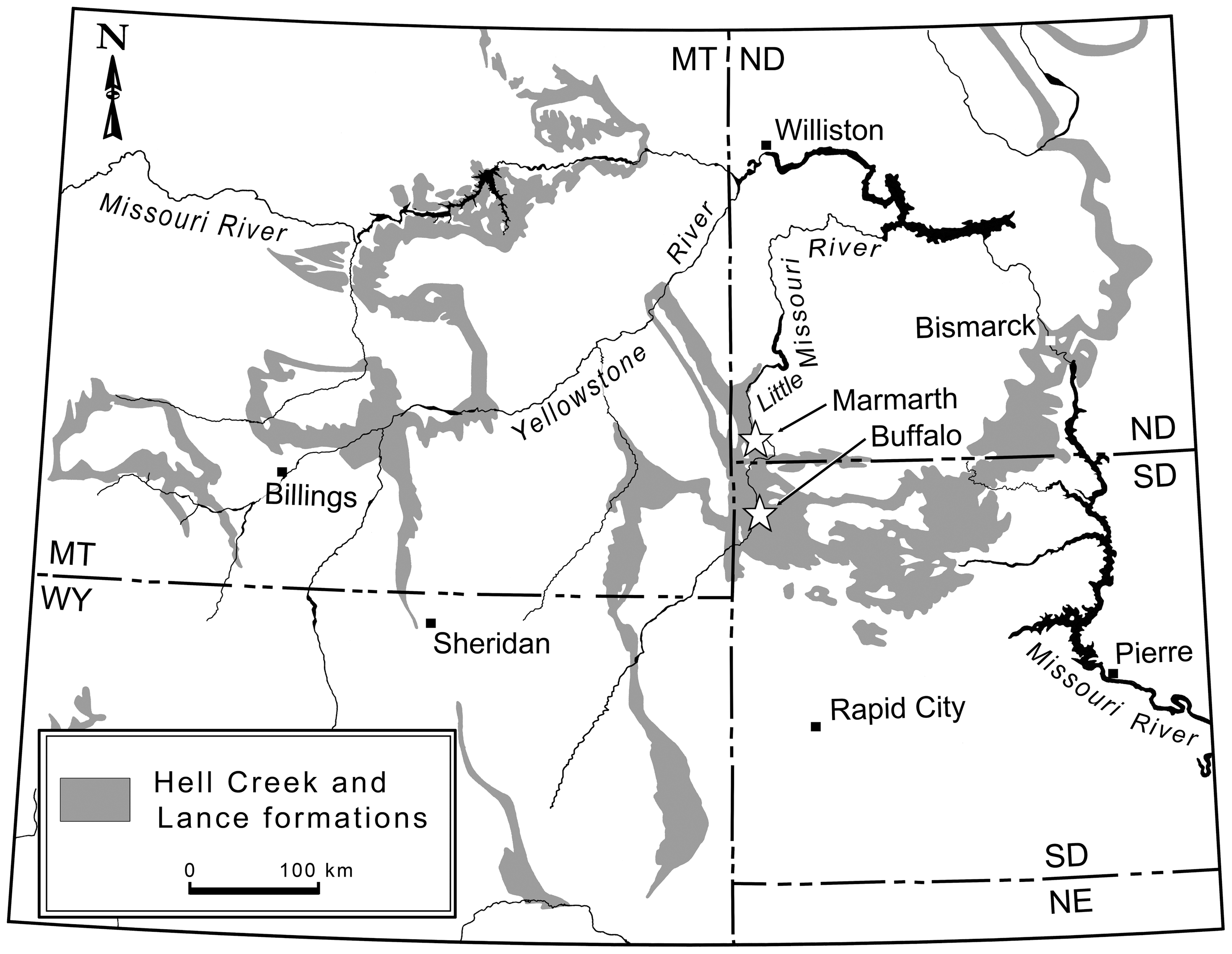


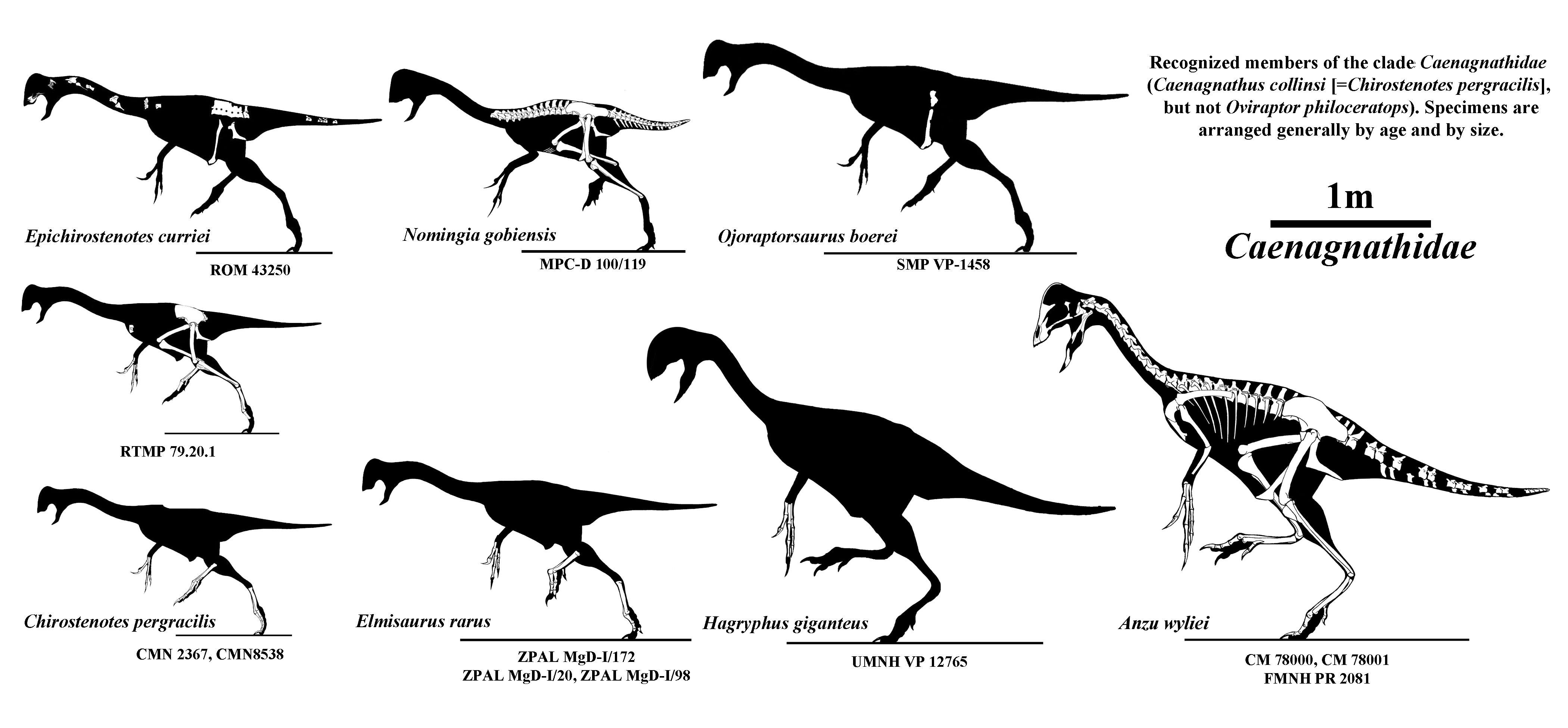
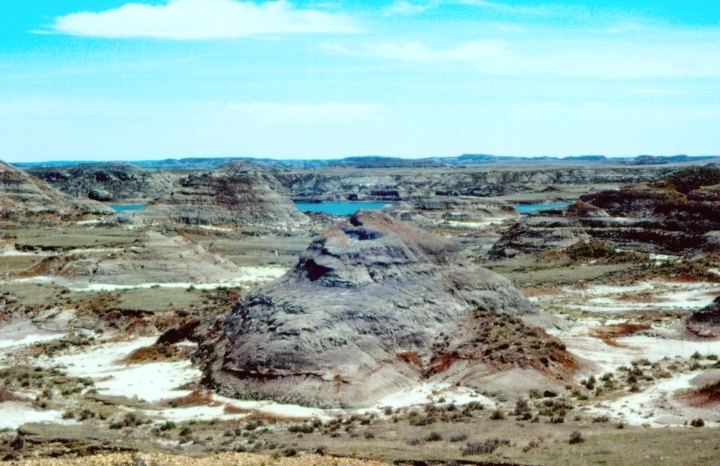
Life reconstruction of Anzu wyliei by Fred Wierum, widely adopted as the standard image of the 'Chicken from Hell' after 2020.
Fred Wierum, Wikimedia Commons, CC BY-SA 4.0
Ecology and behavior
Habitat
The Hell Creek Formation, exposed in Montana, North Dakota, South Dakota and Wyoming, represents the last pulse of North American continental environments before the K-Pg extinction. It was a warm, low-lying coastal plain drained by meandering rivers that flowed into the Western Interior Seaway to the east. The climate was warm and seasonally wet, with forests dominated by conifers, cycadophytes, palms (Sabalites), magnoliids and the first canopy-forming angiosperms. Swampy areas with ferns, turtles and crocodylians alternated with drier floodplain forests. This is the same landscape that hosted Tyrannosaurus rex, Triceratops, Edmontosaurus, Pachycephalosaurus and Dakotaraptor, among others.
Feeding
Diet interpreted as omnivorous. The robust toothless beak, with fused dentaries, could cut tough vegetation, crush seeds, fruits and eggs, and also capture small vertebrates and invertebrates. The inferred jaw musculature and the beak shape suggest a generalist animal functionally similar to modern cassowaries and rheas, able to exploit varied resources throughout the year in a seasonal environment. No fossilised stomach content has been preserved.
Behavior and senses
By inference from close relatives such as Citipati osmolskae and Conchoraptor, Anzu wyliei most likely brooded circular egg nests in a bird-like brooding pose with forelimbs folded over the clutch. It had a relatively large brain for a non-avian theropod, with an expanded telencephalon, consistent with complex behaviour and prolonged parental care. The long legs suggest fast cursorial locomotion over short distances, useful both to flee predators such as Tyrannosaurus rex and to chase small prey.
Physiology and growth
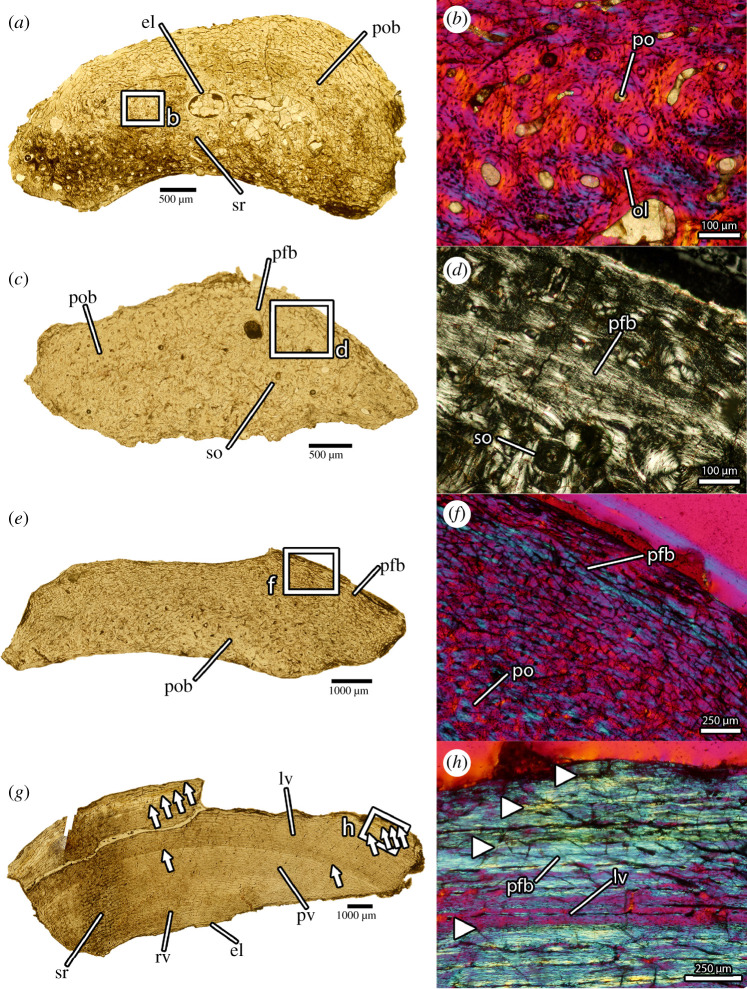
Endothermy is likely, as in other maniraptorans. Feathered body cover is inferred based on Caudipteryx, Avimimus and Gigantoraptor, including remiges on the forelimbs and a tail fan. Extensive bone pneumaticity (cervical and dorsal vertebrae with pneumatic foramina) indicates a bird-like respiratory system. The light skull with tall crest suggests a role in visual display, likely reinforced by a coloured horny cover.
Paleogeography
Continental configuration

Scotese & Vérard · CC BY 4.0 · Cretaceous, ~105 Ma
During the Maastrichtiano (~67–66 Ma), Anzu wyliei inhabited Laramidia, the western half of present-day North America, separated from the east by the Western Interior Seaway, a shallow sea dividing the continent. The continents were in very different positions: India was drifting toward Asia, Antarctica was still connected to Australia, and South America was an isolated island.
Bone Inventory
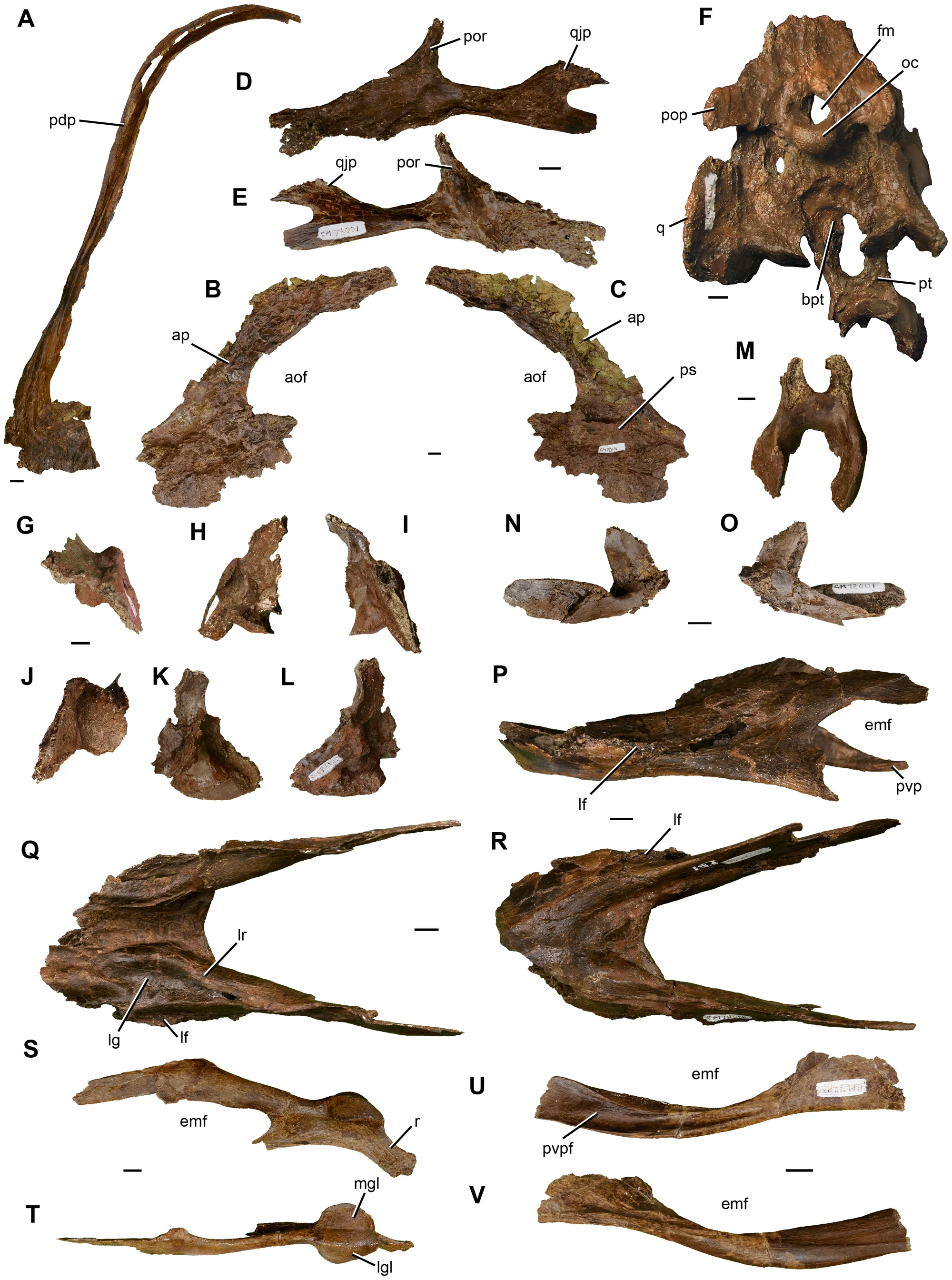
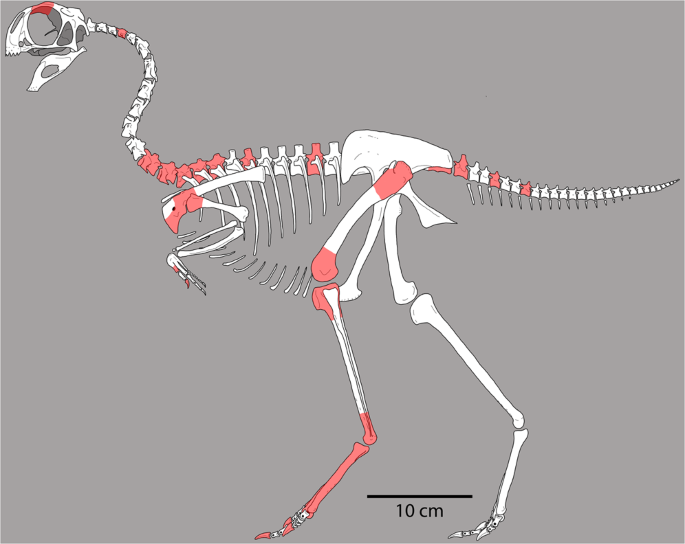
The combination of the three type specimens (CM 78000, CM 78001 and MRF 319) preserves about 75% of Anzu wyliei anatomy, by far the most complete caenagnathid known to date. Holotype CM 78000 contributes a partial skull and diagnostic postcranial elements; paratype CM 78001 adds shoulder girdle, limbs and vertebrae; and paratype MRF 319 preserves articulated hindlimbs and parts of the pelvis. Before 2014, all other North American caenagnathids (Chirostenotes, Caenagnathus, Leptorhynchos, Apatoraptor) were known only from fragmentary material, so Anzu became the anatomical reference for the group across all of North America.
Found elements
Inferred elements
Scientific Literature
15 papers in chronological order — from the original description to recent research.
A new large-bodied oviraptorosaurian theropod dinosaur from the latest Cretaceous of western North America
Lamanna, M.C., Sues, H.-D., Schachner, E.R., Lyson, T.R. · PLoS ONE, 9(3): e92022
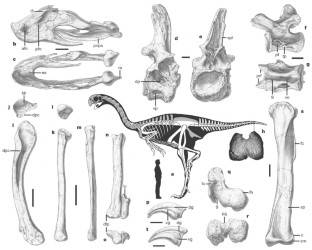
Formal description of Anzu wyliei based on three specimens (CM 78000 holotype, CM 78001 and MRF 319 paratypes) from the Hell Creek Formation. Presents detailed anatomy of the skull, lower jaw, vertebrae, pelvic girdle, hand and foot, and places Anzu within Caenagnathidae as sister to the Asian clade led by Caenagnathasia. It is the first North American caenagnathid known from relatively complete material and nearly doubles anatomical knowledge of the group.


A new two-fingered dinosaur sheds light on the radiation of Oviraptorosauria
Funston, G.F., Chinzorig, T., Tsogtbaatar, K., Kobayashi, Y., Sullivan, C., Currie, P.J. · Royal Society Open Science, 7(10): 201184
Description of the Mongolian oviraptorosaur Oksoko avarsan and a broad phylogenetic revision of Oviraptorosauria, which includes Anzu wyliei as a robust caenagnathid from Hell Creek. The authors reconstruct the group's evolutionary history, progressive reduction of hand digit III and geographical distribution across Asia and North America during the Late Cretaceous.


A new caenagnathid (Dinosauria: Oviraptorosauria) from the Horseshoe Canyon Formation of Alberta, Canada, and a reevaluation of the relationships of Caenagnathidae
Funston, G.F., Currie, P.J. · Journal of Vertebrate Paleontology, 36(4): e1160910
Paper erecting the genus Apatoraptor pennatus based on an articulated skeleton from the Horseshoe Canyon Formation (Alberta). It revisits the phylogeny of Caenagnathidae and places Anzu wyliei among the most robust terminals of the group, sister to the Asian forms Caenagnathasia and Elmisaurus.


Birdlike growth and mixed-age flocks in avimimids (Theropoda, Oviraptorosauria)
Funston, G.F., Currie, P.J., Ryan, M.J., Dong, Z.-M. · Scientific Reports, 9: 18816
Osteohistological study of Avimimus based on Mongolian fossils documenting rapid bird-like growth and possible mixed-age flocks of juveniles and adults. The discussion extends to caenagnathids including Anzu wyliei, reinforcing the hypothesis that oviraptorosaurs had life strategies closer to those of modern birds than to other theropods.
A new oviraptorosaur (Theropoda, Maniraptora) from the Late Cretaceous (Campanian) of Utah
Zanno, L.E., Sampson, S.D. · Journal of Vertebrate Paleontology, 25(4): 897 a 904
Description of Hagryphus giganteus, a Campanian caenagnathid from Utah (Kaiparowits Formation), at the time the southernmost oviraptorosaur in North America. It is one of the closest continental relatives of Anzu wyliei and helps map the group's diversity across Laramidia during the Late Cretaceous.

Osteology and relationships of Chirostenotes pergracilis (Saurischia, Theropoda) from the Judith River (Oldman) Formation of Alberta, Canada
Currie, P.J., Russell, D.A. · Canadian Journal of Earth Sciences, 25(7): 972 a 986
Osteological redescription of Chirostenotes pergracilis based on material from the Judith River (Oldman) Formation of Alberta. It establishes the anatomical baseline for North American Caenagnathidae and serves as a direct reference for the diagnosis of Anzu wyliei 26 years later.
On Chirostenotes, a Late Cretaceous oviraptorosaur (Dinosauria: Theropoda) from western North America
Sues, H.-D. · Journal of Vertebrate Paleontology, 17(4): 698 a 716
Taxonomic and anatomical revision of Chirostenotes pergracilis, consolidating its assignment to Oviraptorosauria and refining the diagnosis of Caenagnathidae. Together with Currie and Russell (1988), it is the main historical reference used by Lamanna's team in 2014 to compare Anzu wyliei with the Canadian caenagnathids.


Caenagnathidae from the Upper Campanian Aguja Formation of West Texas, and a revision of the Caenagnathinae
Longrich, N.R., Barnes, K., Clark, S., Millar, L. · Bulletin of the Peabody Museum of Natural History, 54: 23 a 49
Description of caenagnathid material from the Campanian Aguja Formation of West Texas and revision of subfamily Caenagnathinae. It introduces the genus Leptorhynchos and establishes diagnoses that would be used one year later by Lamanna et al. (2014) to place Anzu wyliei within Caenagnathinae.


Cranial anatomy of Citipati osmolskae (Theropoda, Oviraptorosauria), and a reinterpretation of the holotype of Oviraptor philoceratops
Clark, J.M., Norell, M.A., Rowe, T. · American Museum Novitates, 3364: 1 a 24
Detailed description of the skull of Citipati osmolskae holotype IGM 100/978, the main reference for cranial comparison with Anzu wyliei and other oviraptorosaurs. It uses CT scanning to reinterpret the skull of the historical Oviraptor philoceratops.

Two feathered dinosaurs from northeastern China
Ji, Q., Currie, P.J., Norell, M.A., Ji, S.-A. · Nature, 393: 753 a 761
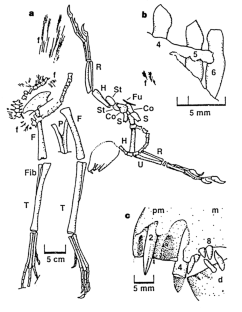
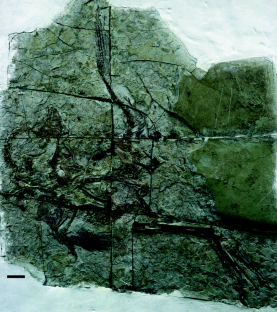
Description of the feathered oviraptorosaurs Caudipteryx zoui and Protarchaeopteryx robusta from the Yixian Formation in Liaoning, China. It documents pennaceous feathers in basal oviraptorosaurs for the first time and provides the basis for inferring plumage in caenagnathids such as Anzu wyliei, which do not preserve feathers directly.
The endocranial cavity of oviraptorosaur theropods and the increasingly complex, deep history of the avian brain
Balanoff, A.M., Norell, M.A., Hogan, A.V.C., Bever, G.S. · Brain, Behavior and Evolution, 91(3): 125 a 135
Study of the endocranial cavities of oviraptorosaurs (including caenagnathids) via CT scanning. It documents forebrain expansion and telencephalic complexity akin to modern birds, reinforcing the hypothesis of high cognitive performance in the group that includes Anzu wyliei.

Caenagnathids of the Dinosaur Park Formation (Campanian) of Alberta, Canada: anatomy, osteohistology, taxonomy, and evolution
Funston, G.F. · Vertebrate Anatomy Morphology Palaeontology, 8: 105 a 153
Monograph on the caenagnathids of the Dinosaur Park Formation (Campanian of Alberta), including Chirostenotes, Caenagnathus and Epichirostenotes, with osteohistological growth analysis. It discusses the evolution of Caenagnathidae in the Laramidian Late Cretaceous and uses Anzu wyliei as a reference terminal for anatomical comparisons.
A gigantic bird-like dinosaur from the Late Cretaceous of China
Xu, X., Tan, Q., Wang, J., Zhao, X., Tan, L. · Nature, 447: 844 a 847
Description of Gigantoraptor erlianensis, an oviraptorosaur about 8 metres long and 1.4 tonnes in mass, found in the Iren Dabasu Formation of Inner Mongolia. It shows that Caenagnathoidea could reach body sizes far larger than Anzu wyliei, expanding the size range of the clade.
A new oviraptorosaur (Dinosauria, Theropoda) from Mongolia: the first dinosaur with a pygostyle
Barsbold, R., Osmólska, H., Watabe, M., Currie, P.J., Tsogtbaatar, K. · Acta Palaeontologica Polonica, 45(2): 97 a 106
Description of Nomingia gobiensis, a Mongolian oviraptorosaur that preserves a pygostyle in the tail, a vertebral fusion analogous to that of modern birds. The find supports interpreting Anzu wyliei as a bird-like theropod with a short tail adapted to support feather fans.
New material of Caenagnathasia martinsoni (Dinosauria: Theropoda: Oviraptorosauria) from the Bissekty Formation (Late Cretaceous: Turonian) of Uzbekistan
Sues, H.-D., Averianov, A. · Cretaceous Research, 54: 50 a 59
Description of new Caenagnathasia martinsoni material from the Turonian of the Bissekty Formation, Uzbekistan. Caenagnathasia is the most primitive caenagnathid known and one of the main external reference points for diagnosing Anzu wyliei within Caenagnathinae.
Famous museum specimens
CM 78000 (holótipo)
Carnegie Museum of Natural History, Pittsburgh, Pensilvânia, Estados Unidos
Formal holotype of Anzu wyliei designated by Lamanna et al. (2014) and housed at the Carnegie Museum of Natural History. Combined with paratypes CM 78001 and MRF 319, it provides the anatomical basis for the species.
CM 78001 (paratípico)
Carnegie Museum of Natural History, Pittsburgh, Pensilvânia, Estados Unidos
Second type specimen described by Lamanna et al. (2014). It complements holotype CM 78000 with additional anatomical elements, especially from the shoulder girdle and forelimb.
MRF 319 (paratípico)
Marmarth Research Foundation, Marmarth, Dakota do Norte, Estados Unidos
Third type specimen of Anzu wyliei, housed at the Marmarth Research Foundation. It preserves articulated hindlimbs that were key to reconstructing the cursorial locomotion of the genus.
Classification

Discovery
Fun fact
The discoverers themselves nicknamed Anzu wyliei the 'Chicken from Hell' while preparing the fossils, in reference to the fact that the animal lived in the apocalyptic late-Cretaceous setting, sharing the landscape with Tyrannosaurus rex, Triceratops and Dakotaraptor on the eve of the K-Pg extinction. The scientific name reinforces the joke: Anzu is a winged feathered demon from Mesopotamian mythology, considered perfect for a 3.5-metre-long, beaked, crested and almost certainly feathered theropod. Even without a confirmed appearance in films or documentaries, the nickname sent the animal into global headlines on the day of its formal description in 2014, turning it into one of the most shared images of recent palaeontology.
Last reviewed: April 24, 2026