
Citipati
Citipati osmolskae
"Lord of the funeral pyre (Osmólska)"
About this species
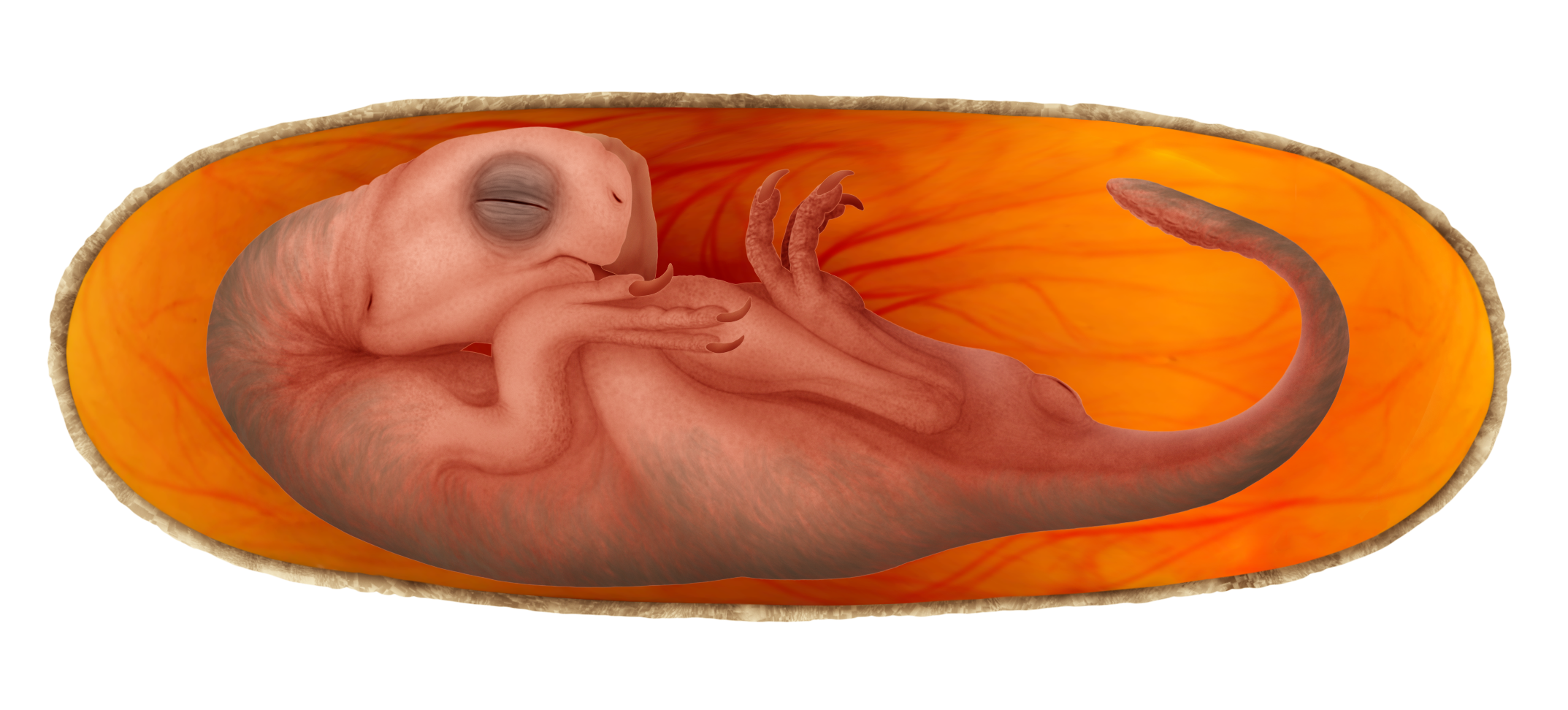
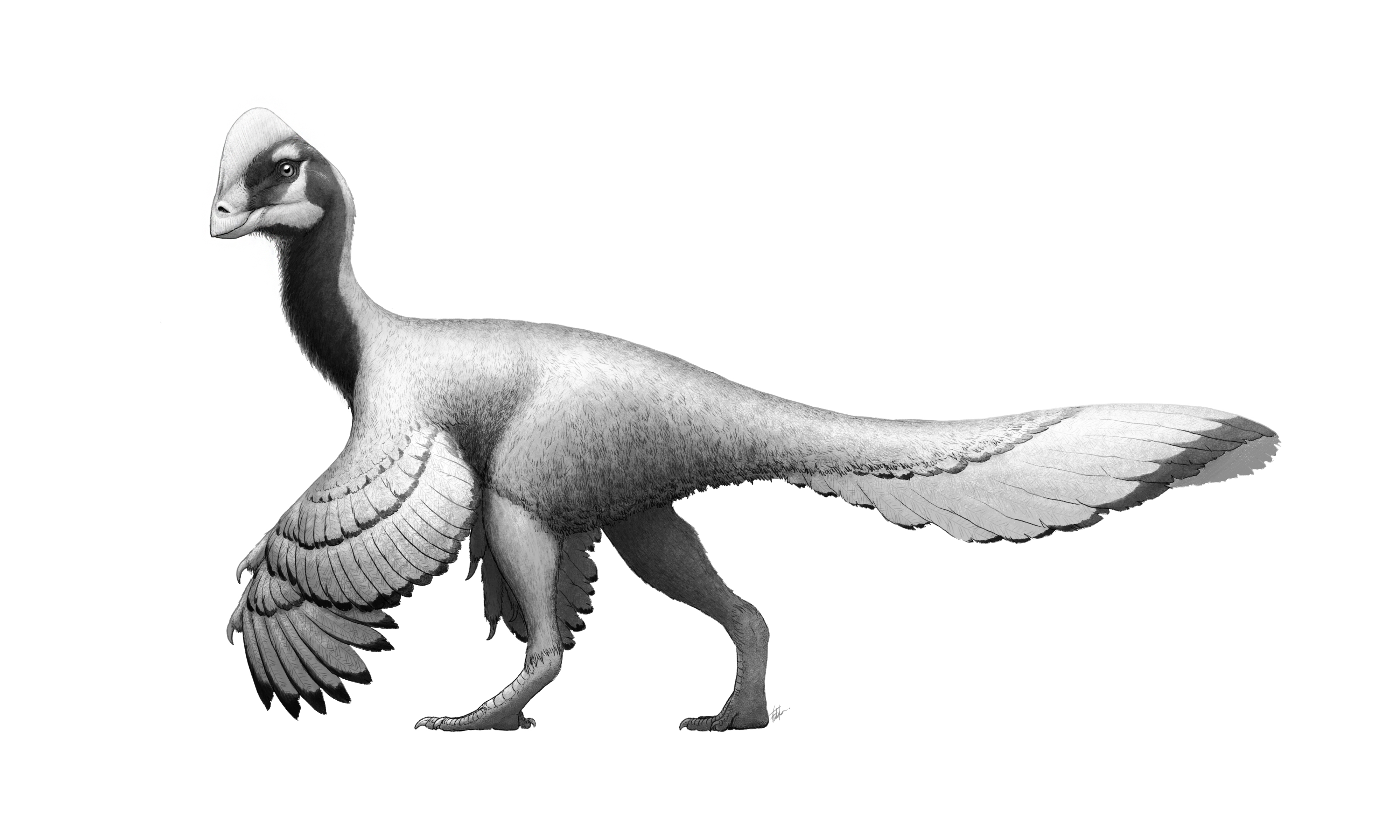
Citipati osmolskae is a large oviraptorid from the Late Cretaceous (Campanian, about 75 to 71 Ma) Djadokhta Formation of the Gobi Desert, Ömnögovi Province, southern Mongolia. It reached roughly 3 metres in length and 75 to 110 kg, with a long neck, short tail, tall compressed skull, toothless jaws sheathed in rhamphotheca (horny beak) and a prominent cranial crest comparable to that of a modern cassowary. It was named in 2001 by James M. Clark, Mark A. Norell and Rinchen Barsbold on the basis of the holotype IGM 100/978, a skeleton with an exceptionally preserved skull. It became world famous for specimens such as 'Big Mama' (IGM 100/979) and 'Big Auntie' (IGM 100/1004), found in brooding posture atop clutches of elongatoolithid eggs, with forelimbs folded over the nest exactly as in modern birds. These fossils are considered some of the most iconic behavioural evidence linking non-avian dinosaurs to modern birds.
Geological formation & environment
The Djadokhta Formation (also spelled Djadochta), Late Cretaceous, Campanian (about 75 to 71 Ma), crops out mainly in Ömnögovi Province of southern Mongolia and in adjacent areas of Inner Mongolia, China. Red-orange aeolian sandstones with calcareous concretions, deposited in a semi-arid dune-field and ephemeral-oasis environment. The Ukhaa Tolgod locality ('brown hills'), rediscovered by the AMNH / Mongolian Academy of Sciences expedition in 1993, is one of the world's richest continental Konservat-Lagerstätten, with three-dimensional preservation of nests, embryos and adults in life position thanks to sand-trap events (sudden collapses of water-saturated dunes). Bayn Dzak ('Flaming Cliffs') is the historical type locality, the same where Roy Chapman Andrews found the first dinosaur eggs in 1923. The fauna includes the oviraptorids Citipati and Khaan, the dromaeosaurids Velociraptor and Tsaagan, the troodontids Byronosaurus and Almas, the alvarezsaurs Shuvuuia and Kol, the ankylosaurid Pinacosaurus, the protoceratopsid Protoceratops andrewsi, the birds Apsaravis and Gobipteryx, multituberculate mammals such as Kryptobaatar, plus diverse lizards and turtles.
Image gallery

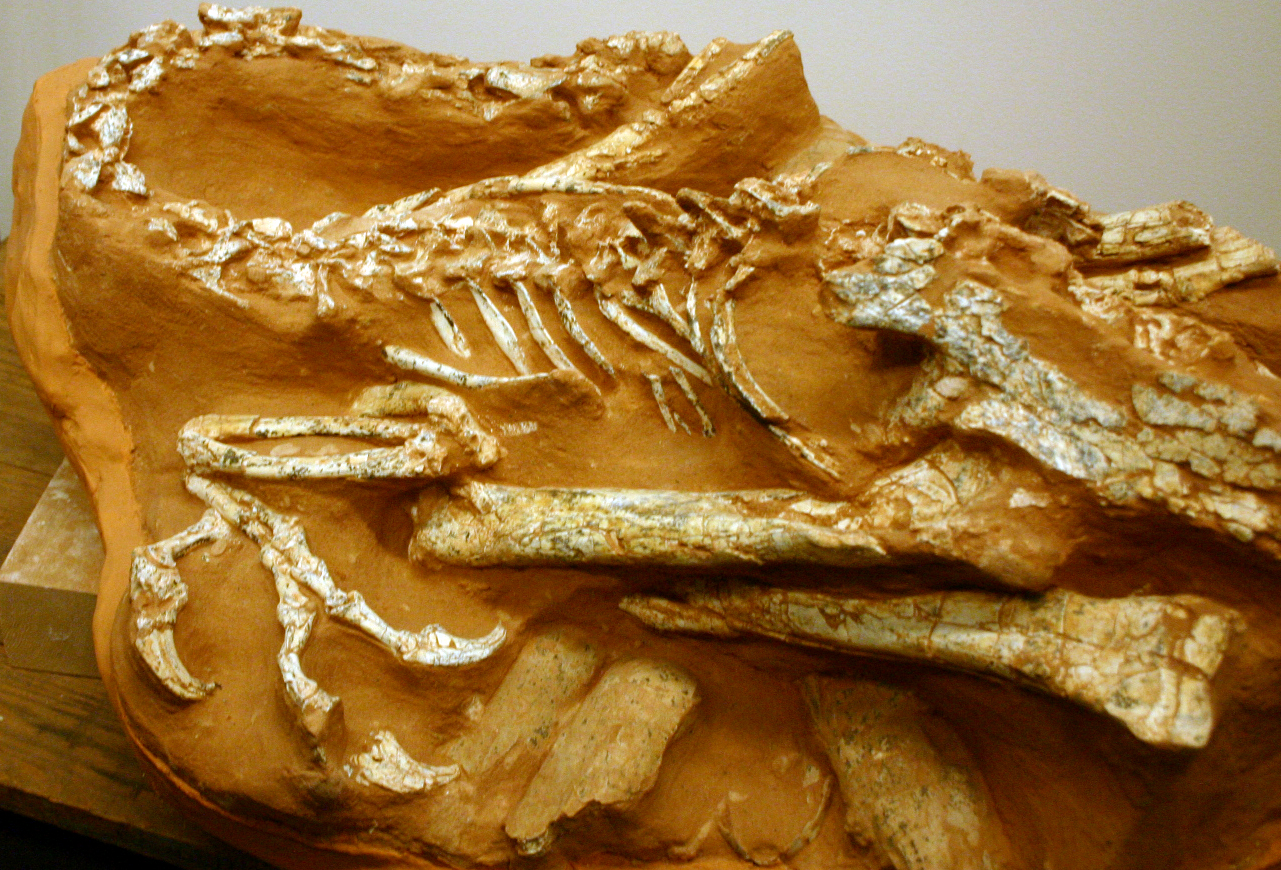
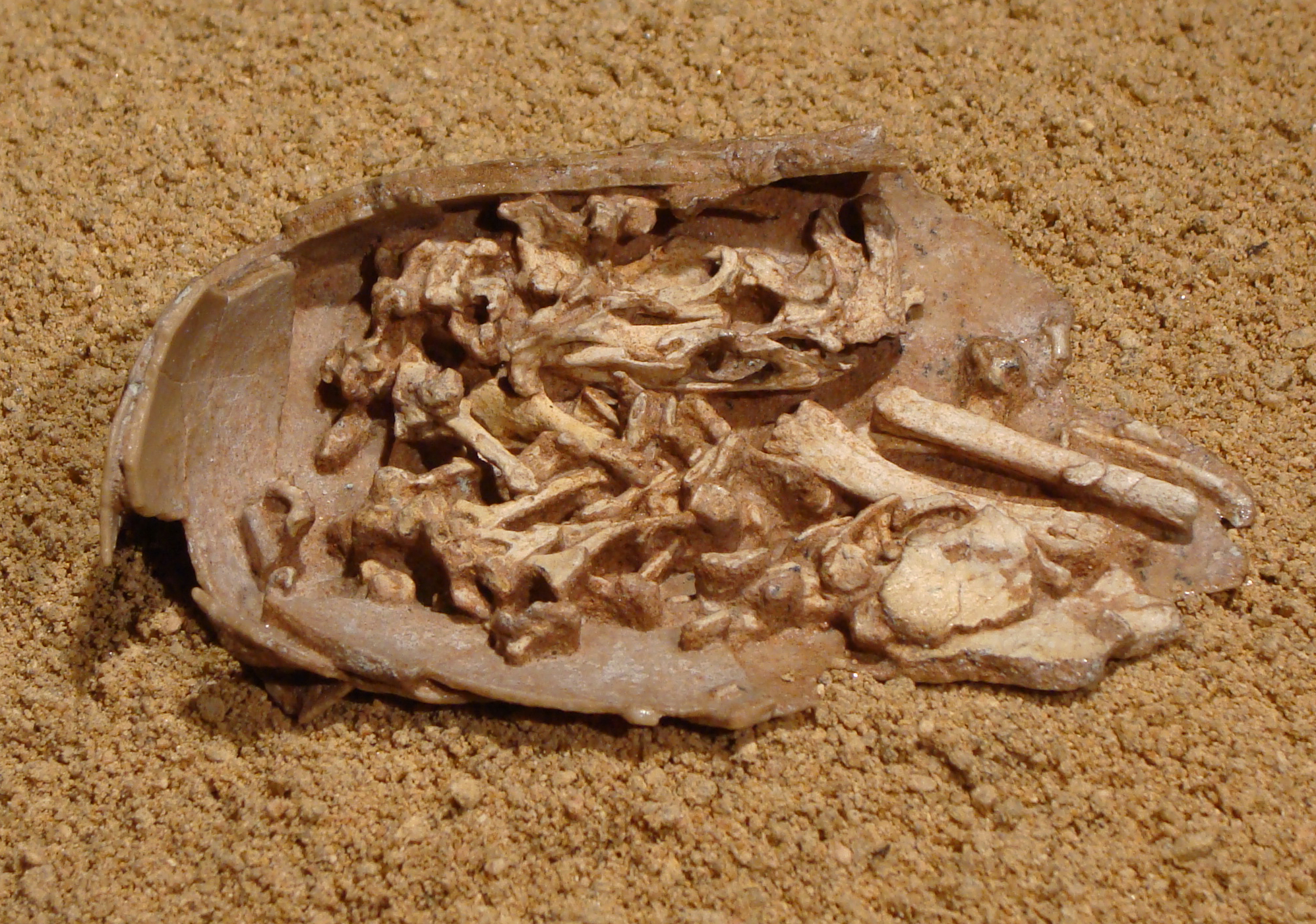
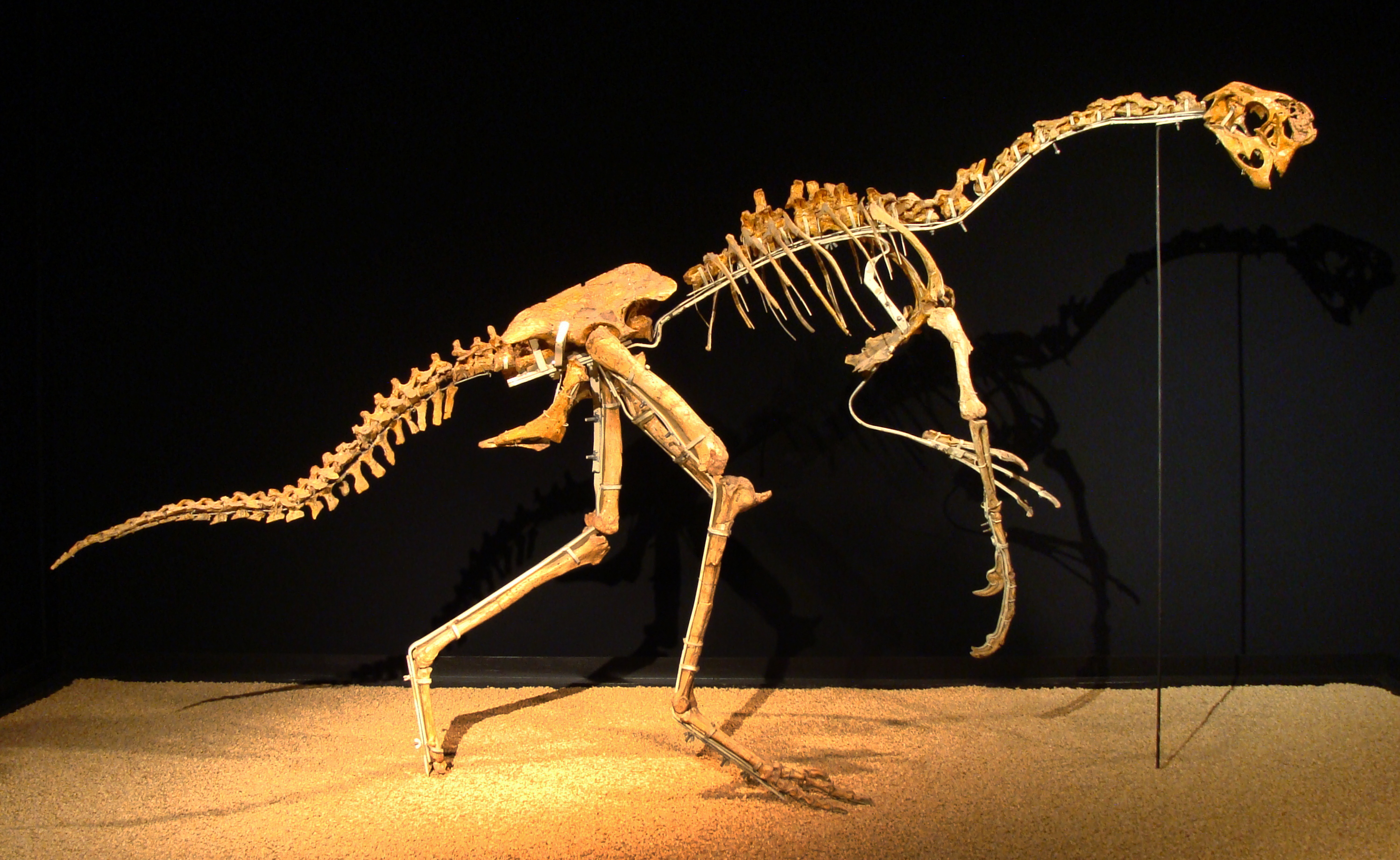

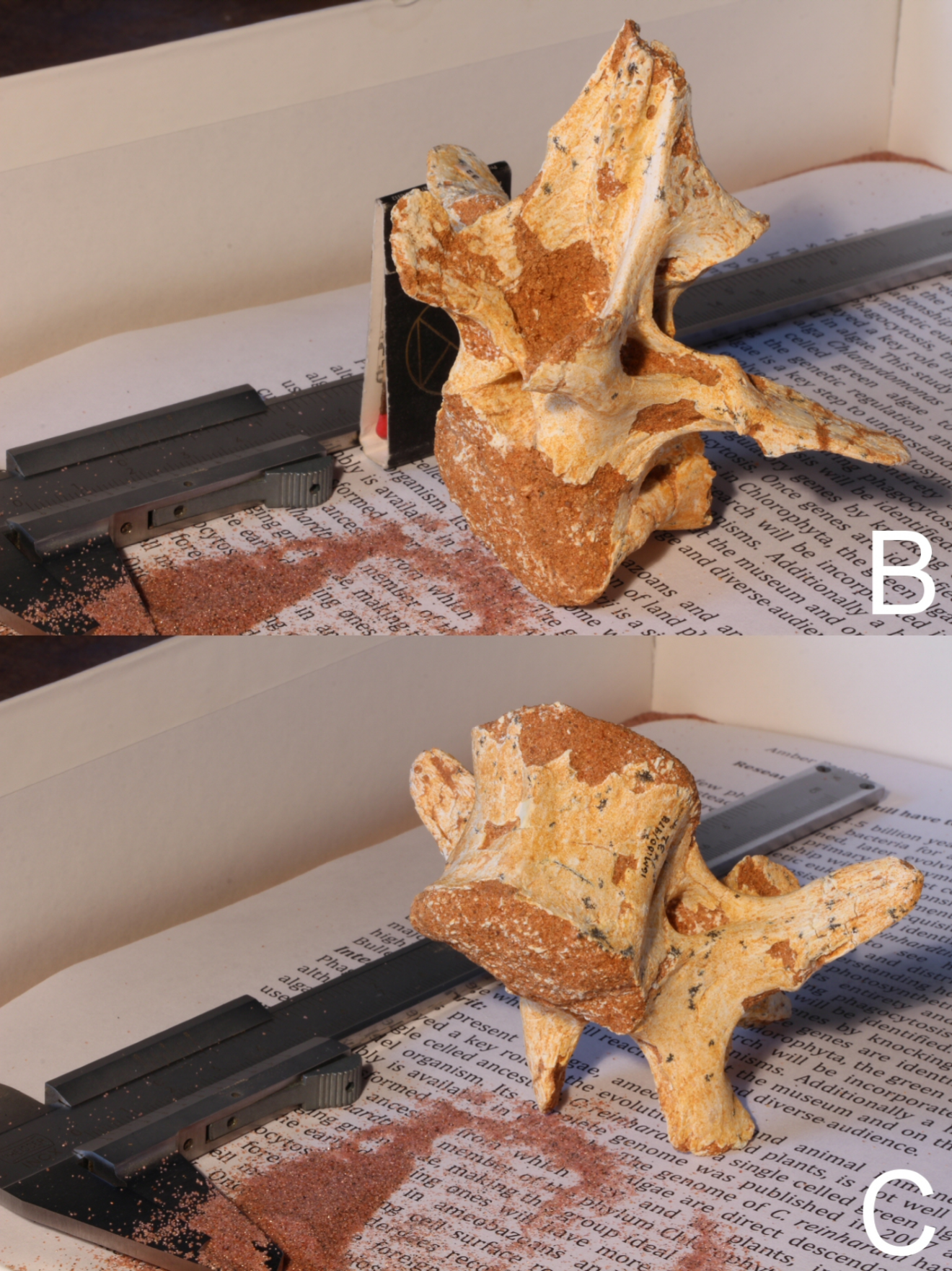




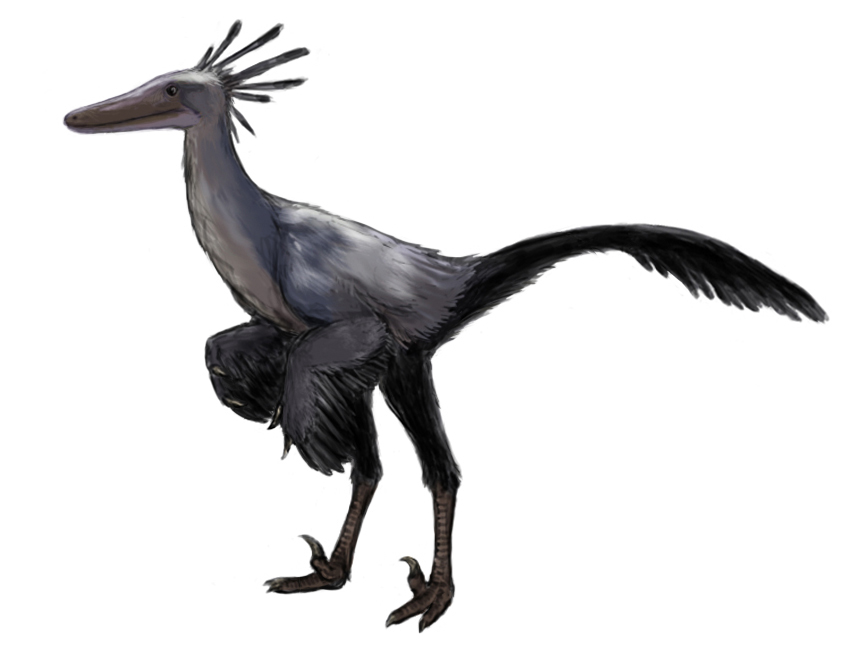


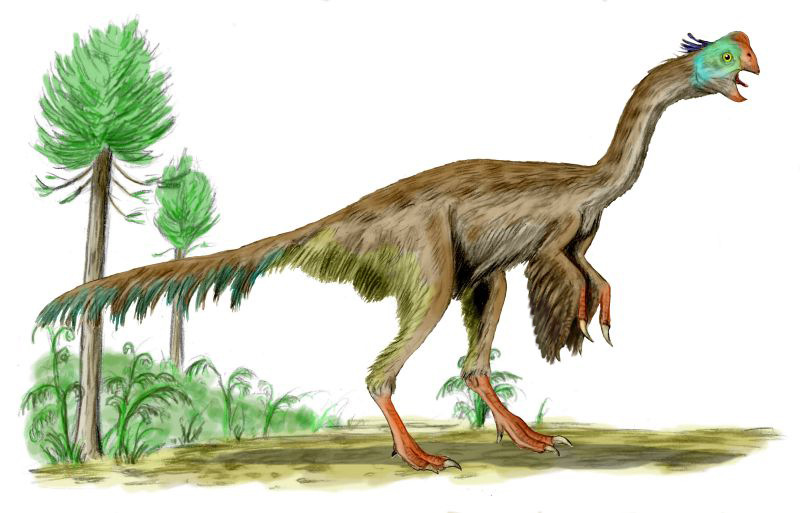

Dorsal view of the 'Big Mama' specimen (IGM 100/979) preserved atop a nest of elongatoolithid eggs, the key evidence of brooding in a non-avian dinosaur published in Norell et al. (1995, Nature).
Wikimedia Commons
Ecology and behavior
Habitat
The Djadokhta Formation represents a semi-arid Late Cretaceous (Campanian) environment dominated by aeolian dune fields, ephemeral oases and small watercourses fed by sporadic rainfall, comparable to the modern Kalahari Desert or arid parts of northern Africa. Reddish-orange sandstones and calcareous concretions preserved fossils in three dimensions, including nests, embryos and adults in life position. Ukhaa Tolgod, where most Citipati specimens come from, preserves sand traps (dune-collapse events) that rapidly buried entire animals.
Feeding
Controversial diet. The robust toothless beak and powerful jaw musculature suggest an omnivorous or even herbivorous diet, with the ability to crush hard seeds, fruits and tough vegetation. There is direct evidence of occasional consumption of small vertebrates: embryonic skulls of Byronosaurus (a troodontid) were found inside a Citipati nest, interpreted as possible prey or cases of nest parasitism. Despite the group name (Oviraptoridae, 'egg thieves'), the original idea that they stole Protoceratops eggs was refuted by the discovery of oviraptorid embryos inside those same eggs.
Behavior and senses
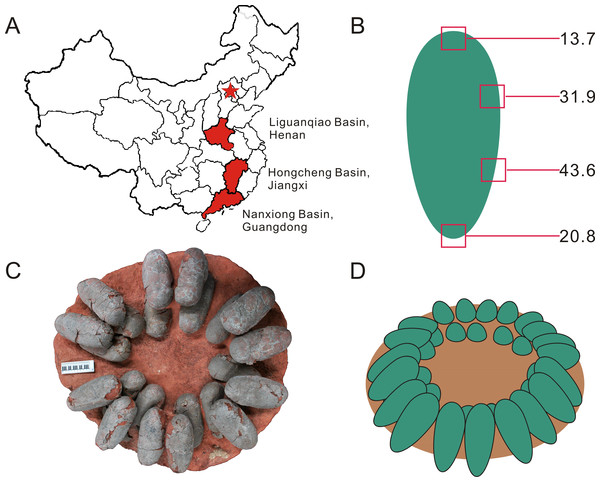
Reproductive behaviour similar to modern birds: adults brooded circular nests with up to 22 eggs arranged in concentric circles of two to three layers, with forelimbs folded over the nest like wings covering chicks. At least five adult oviraptorid specimens from Ukhaa Tolgod have been found in brooding pose. Likely prolonged parental care. Possible small-group organisation, although no direct evidence exists.
Physiology and growth
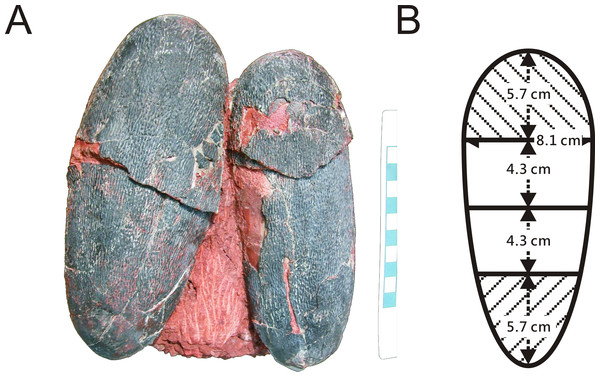
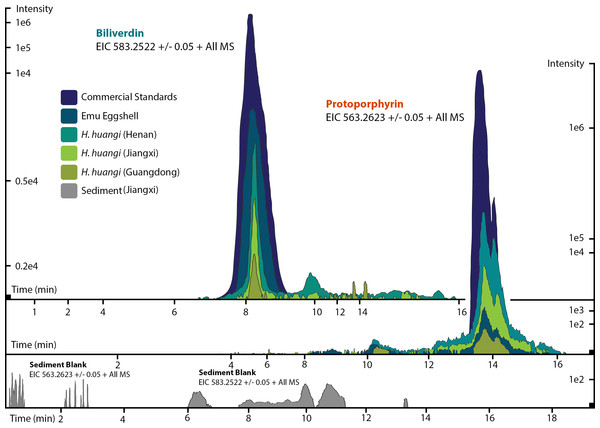
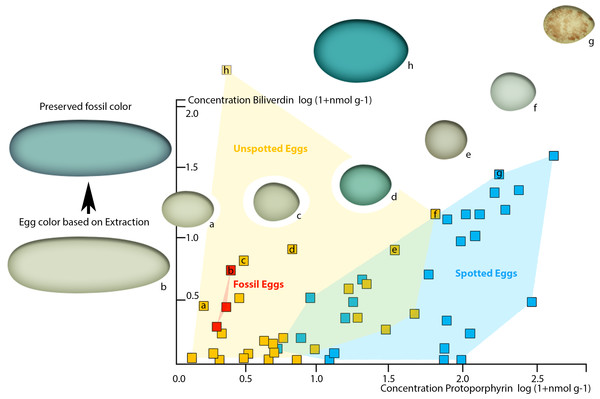
Likely possessed a feather covering, inferred from close relatives such as Caudipteryx and from bird-like parental care. The powerful jaw musculature and relatively expanded brain are consistent with high metabolic activity and fine motor coordination. Eggs pigmented with protoporphyrin and biliverdin (blue-green, Wiemann et al. 2017) indicate sun-exposed open nests rather than buried ones, reinforcing the 'active avian brooding' model.
Paleogeography
Continental configuration

Scotese & Vérard · CC BY 4.0 · Cretaceous, ~105 Ma
During the Campaniano (~75–71 Ma), Citipati osmolskae inhabited Laramidia, the western half of present-day North America, separated from the east by the Western Interior Seaway, a shallow sea dividing the continent. The continents were in very different positions: India was drifting toward Asia, Antarctica was still connected to Australia, and South America was an isolated island.
Bone Inventory
Holotype IGM 100/978 is one of the most complete oviraptorid skeletons known, with an exceptionally preserved skull. When combined with referred specimens 'Big Mama' (IGM 100/979), 'Big Auntie' (IGM 100/1004), the embryo IGM 100/971 and other brooding adults from Ukhaa Tolgod, Citipati is today one of the best-documented non-avian dinosaurs in terms of anatomy, ontogeny and reproductive behaviour.

Found elements
Inferred elements
Scientific Literature
15 papers in chronological order — from the original description to recent research.
A theropod dinosaur embryo and the affinities of the Flaming Cliffs dinosaur eggs
Norell, M.A., Clark, J.M., Dashzeveg, D., Barsbold, R., Chiappe, L.M., Davidson, A.R., McKenna, M.C., Altangerel, P. e Novacek, M.J. · Science
First theropod embryo identified inside an Elongatoolithus-type egg from the Flaming Cliffs, showing that eggs long attributed to Protoceratops actually belonged to oviraptorids. The specimen (IGM 100/971) is now attributed to Citipati.
A nesting dinosaur
Norell, M.A., Clark, J.M., Chiappe, L.M. e Dashzeveg, D. · Nature
Description of the 'Big Mama' specimen (IGM 100/979), an adult oviraptorid preserved in brooding posture atop a clutch of elongatoolithid eggs. This was the first unambiguous description of brooding behaviour in a non-avian dinosaur and reinforced the evolutionary link between maniraptoran theropods and modern birds.
An oviraptorid skeleton from the Late Cretaceous of Ukhaa Tolgod, Mongolia, preserved in an avianlike brooding position over an oviraptorid nest
Clark, J.M., Norell, M.A. e Chiappe, L.M. · American Museum Novitates, 3265
Detailed anatomical description of the brooding specimen (IGM 100/979), discussing for the first time the exact incubation posture, with forelimbs folded over the nest and hindlimbs crouched among eggs arranged in concentric circles, a pattern identical to that of modern birds.
Two new oviraptorids (Theropoda: Oviraptorosauria), upper Cretaceous Djadokhta Formation, Ukhaa Tolgod, Mongolia
Clark, J.M., Norell, M.A. e Barsbold, R. · Journal of Vertebrate Paleontology, 21(2): 209 a 213
Paper that formally names Citipati osmolskae (holotype IGM 100/978) and Khaan mckennai (IGM 100/973), two new oviraptorids from the Djadokhta Formation at Ukhaa Tolgod. Differentiates Citipati by its tall cranial crest and mandibular details, separating it from Oviraptor philoceratops.
Cranial anatomy of Citipati osmolskae (Theropoda, Oviraptorosauria), and a reinterpretation of the holotype of Oviraptor philoceratops
Clark, J.M., Norell, M.A. e Rowe, T. · American Museum Novitates, 3364: 1 a 24
Detailed osteological description of the holotype IGM 100/978 skull, one of the best preserved oviraptorid skulls ever found. Using CT scanning, the authors reinterpret the historical holotype of Oviraptor philoceratops (AMNH FARB 6517), showing that the skull was distorted post mortem and that features of the original 'crest' were amplified by that distortion.
An embryonic oviraptorid (Dinosauria: Theropoda) from the Upper Cretaceous of Mongolia
Norell, M.A., Clark, J.M. e Chiappe, L.M. · American Museum Novitates, 3315: 1 a 17
Detailed redescription of the IGM 100/971 embryo found at Ukhaa Tolgod inside an Elongatoolithus-type egg. The authors confirm the embryo's assignment to Oviraptoridae and discuss its developmental stage, comparable to that of modern birds near hatching.
A gigantic bird-like dinosaur from the Late Cretaceous of China
Xu, X., Tan, Q., Wang, J., Zhao, X. e Tan, L. · Nature, 447: 844 a 847
Naming of Gigantoraptor erlianensis from the Iren Dabasu Formation of Inner Mongolia, a gigantic oviraptorosaur about 8 metres long and 1,400 kg, much larger than typical oviraptorids like Citipati. It showed that the group was not restricted to small forms and that bird-like features such as crests, beaks and probable feather coverings evolved even at very large body sizes.
New insights into the brain, braincase, and ear region of tyrannosaurs (Dinosauria, Theropoda), with implications for sensory organization and behavior
Witmer, L.M. e Ridgely, R.C. · The Anatomical Record, 292: 1266 a 1296
Comparative study of neuroanatomy and sensory regions in theropods using CT scanning. Includes oviraptorid data such as Citipati, highlighting a relatively expanded brain and well developed vestibular organs, consistent with agile bipedal posture and probable dexterity for parental care.
A new oviraptorid (Dinosauria: Theropoda) from the Upper Cretaceous of Bayan Mandahu, Inner Mongolia
Longrich, N.R., Currie, P.J. e Dong, Z. · Palaeontology, 53: 945 a 960
Description of Machairasaurus leptonychus, a small oviraptorid with unusually slender claws, from the Bayan Mandahu Formation of Inner Mongolia. The phylogenetic analysis places Machairasaurus close to Ingeniinae (later renamed Heyuanninae), while Citipati clusters in a distinct lineage of tall-crested oviraptorids.

Osteology of Khaan mckennai (Oviraptorosauria: Theropoda)
Balanoff, A.M. e Norell, M.A. · Bulletin of the American Museum of Natural History, 372: 1 a 77
Complete osteological description of Khaan mckennai, a small crestless oviraptorid from Ukhaa Tolgod coeval with Citipati. The work serves as a comparative morphological reference for Citipati and for later phylogenetic analyses, focusing on cranial and postcranial characters.

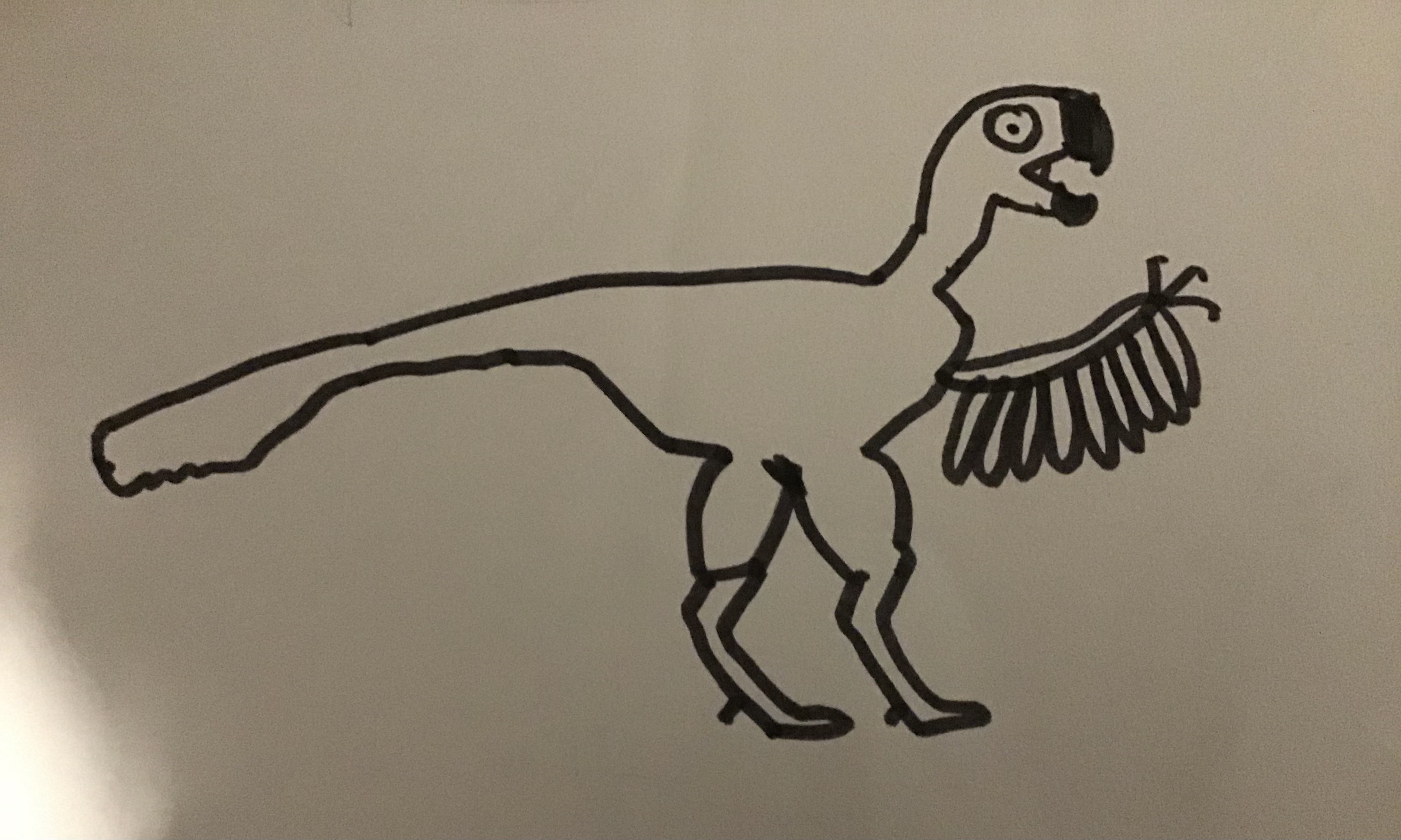
A new large-bodied oviraptorosaurian theropod dinosaur from the latest Cretaceous of western North America
Lamanna, M.C., Sues, H.-D., Schachner, E.R. e Lyson, T.R. · PLOS ONE, 9(3): e92022
Description of Anzu wyliei, a large caenagnathid from the Hell Creek Formation (Maastrichtian) of North America. It expands the oviraptorosaurian record outside Asia and provides context for Asian Oviraptoridae represented by Citipati, showing that the sister caenagnathid clade reached large size in Laurasia.

Reproduction in Mesozoic birds and evolution of the modern avian reproductive mode
Varricchio, D.J. e Jackson, F.D. · The Auk: Ornithological Advances, 133: 654 a 684
Comprehensive review of the evolution of reproduction in Mesozoic birds and non-avian theropods. Discusses in detail the brooding specimens of Citipati osmolskae (IGM 100/979, IGM 100/1004) as a key stage in the acquisition of the modern avian reproductive mode.
Dinosaur origin of egg color: oviraptors laid blue-green eggs
Wiemann, J., Yang, T.-R., Sander, P.N., Schneider, M., Engeser, M., Kath-Schorr, S., Müller, C.E. e Norell, M.A. · PeerJ, 5: e3706
Identification of protoporphyrin and biliverdin in oviraptorid eggshells by liquid chromatography mass spectrometry. Establishes that oviraptorids, like close relatives of Citipati, laid blue-green eggs, the first record of eggshell pigmentation in a non-avian dinosaur.
A second specimen of Citipati osmolskae associated with a nest of eggs from Ukhaa Tolgod, Omnogov Aimag, Mongolia
Norell, M.A., Balanoff, A.M., Barta, D.E. e Erickson, G.M. · American Museum Novitates, 3899: 1 a 44
Formal description of specimen IGM 100/1004 ('Big Auntie'), an adult Citipati in brooding pose atop a nest similar to IGM 100/979 but about 11% larger. The authors confirm identity with Citipati osmolskae and discuss individual variation, including osteohistological age analysis.


A new two-fingered dinosaur sheds light on the radiation of Oviraptorosauria
Funston, G.F., Tsogtbaatar, C., Tsogtbaatar, K., Kobayashi, Y., Sullivan, C. e Currie, P.J. · Royal Society Open Science, 7: 201184
Description of Oksoko avarsan, a didactylous oviraptorid (only two functional fingers) from the Nemegt Formation of Mongolia. The integrated phylogenetic analysis renames former 'Oviraptorinae' as Citipatiinae, with Citipati as the core taxon alongside Huanansaurus, Corythoraptor and Rinchenia, contrasting with Heyuanninae (Conchoraptor, Khaan, Nemegtomaia, Oksoko).


Famous museum specimens
IGM 100/978 (holótipo)
Institute of Geology / Mongolian Paleontological Center, Ulaanbaatar, Mongólia
Formal holotype described by Clark, Norell and Barsbold (2001) in the Journal of Vertebrate Paleontology and redescribed in detail by Clark, Norell and Rowe (2002) in AMNH Novitates 3364. It is one of the most complete oviraptorid skulls ever found and includes the stapes and epipterygoid, elements rarely preserved.
IGM 100/979 'Big Mama'
Mongolian Paleontological Center, Ulaanbaatar, Mongólia
First fossil to unambiguously demonstrate brooding behaviour in a non-avian dinosaur (Norell et al. 1995, Nature). Nicknamed 'Big Mama' by the American press. It was the basis for the AMNH 'brooding Citipati' mount in New York.
IGM 100/1004 'Big Auntie'
Mongolian Paleontological Center, Ulaanbaatar, Mongólia
Second Citipati adult preserved in brooding pose, formally published only in 2018. It confirms that brooding was typical for the species rather than an isolated event. Also nicknamed 'Big Auntie'.
IGM 100/971 (embrião)
Mongolian Paleontological Center, Ulaanbaatar, Mongólia
Described by Norell et al. (1994, Science) and redescribed by Norell, Clark and Chiappe (2001) in AMNH Novitates 3315. Now attributed to Citipati and one of the most complete Cretaceous theropod embryos known.
AMNH FR 3010 (montagem 'Citipati em choco')
American Museum of Natural History, Nova York, Estados Unidos
Today one of the AMNH's icon fossils and the most frequently reproduced image of 'a dinosaur brooding like a bird'. Museums in Barcelona, Washington DC and several others keep additional copies.
Classification

Discovery
Fun fact
Citipati is probably the non-avian dinosaur with the best direct evidence of bird-like behaviour ever found: at least five adults, including 'Big Mama' (IGM 100/979) and 'Big Auntie' (IGM 100/1004), were fossilised at Ukhaa Tolgod in the exact brooding posture, forelimbs folded over a nest of up to 22 elongatoolithid eggs arranged in concentric circles, identical to that of modern birds. These fossils definitively buried the idea that oviraptorids were 'egg thieves' (a name given in 1924 by Henry Fairfield Osborn after finding a skeleton atop what he thought were Protoceratops eggs) and showed they were in fact devoted parents caring for their own offspring.
Last reviewed: April 24, 2026