
Torosaurus
Torosaurus latus
"Broad perforated lizard"
About this species
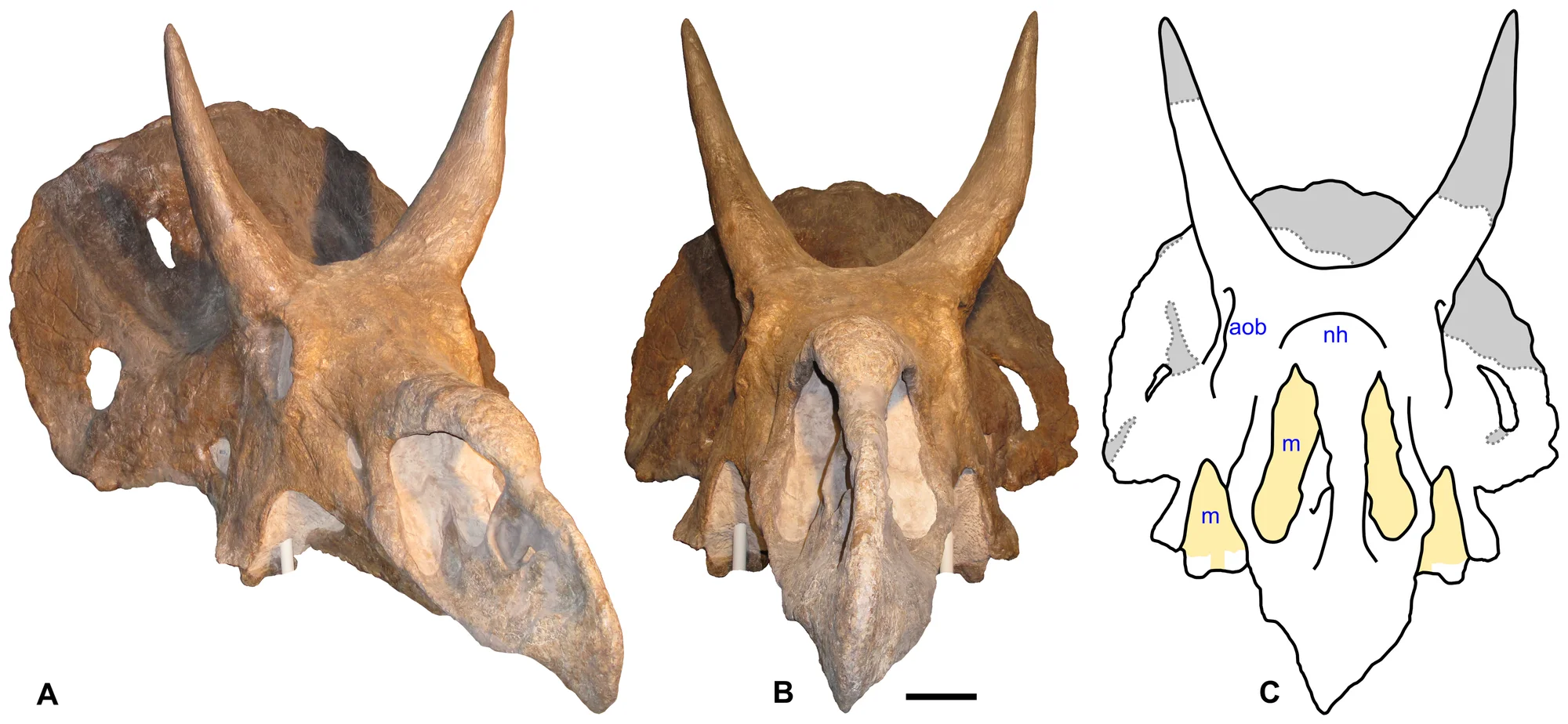
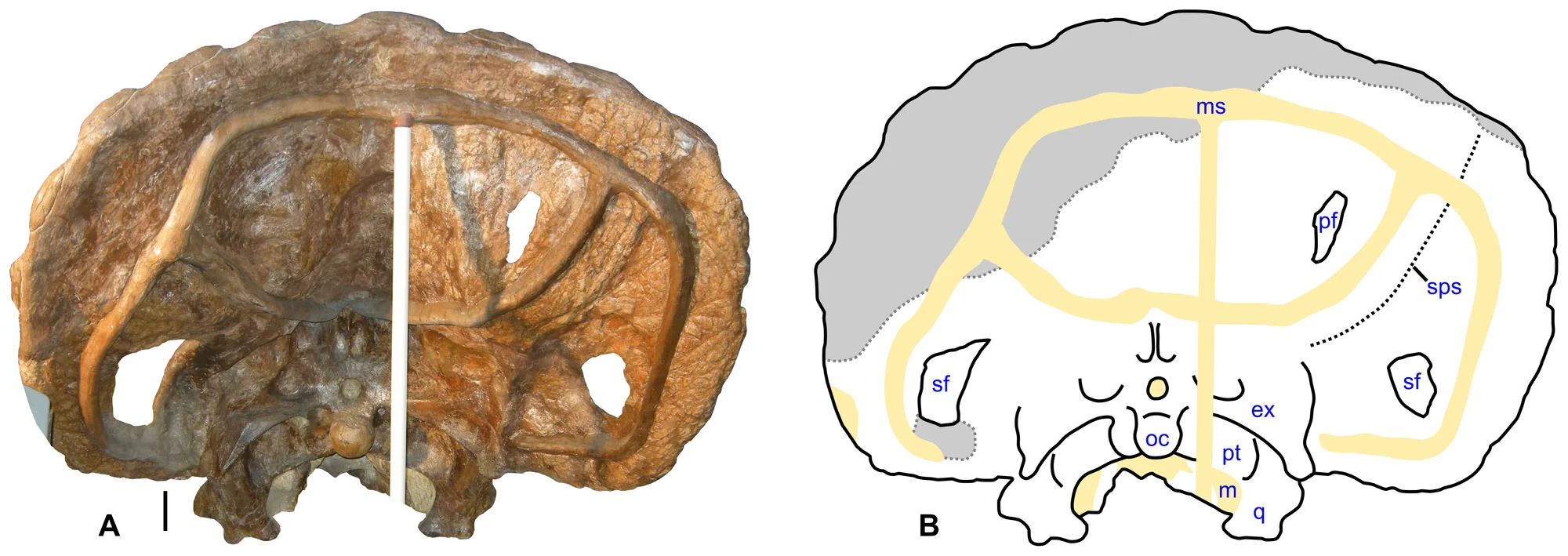
Torosaurus latus is one of the most imposing ceratopsids of the Late Cretaceous, notable for possessing the largest skull of any known land animal, reaching up to 2.77 meters in length. It lived between 68 and 66 million years ago in the Hell Creek and Lance Formations of western North America. Approximately 8 to 9 meters long and weighing up to 8 tonnes, it was a contemporary of Triceratops and Tyrannosaurus rex. Its extremely elongated frill bears two large bony openings (parietal fenestrae), a feature clearly distinguishing it from Triceratops. Described by Othniel Charles Marsh in 1891, Torosaurus sparked one of the most intense controversies in recent paleontology when Scannella and Horner (2010) proposed that its specimens were simply old Triceratops. Later studies, including bone histology analysis, refuted this hypothesis.
Geological formation & environment
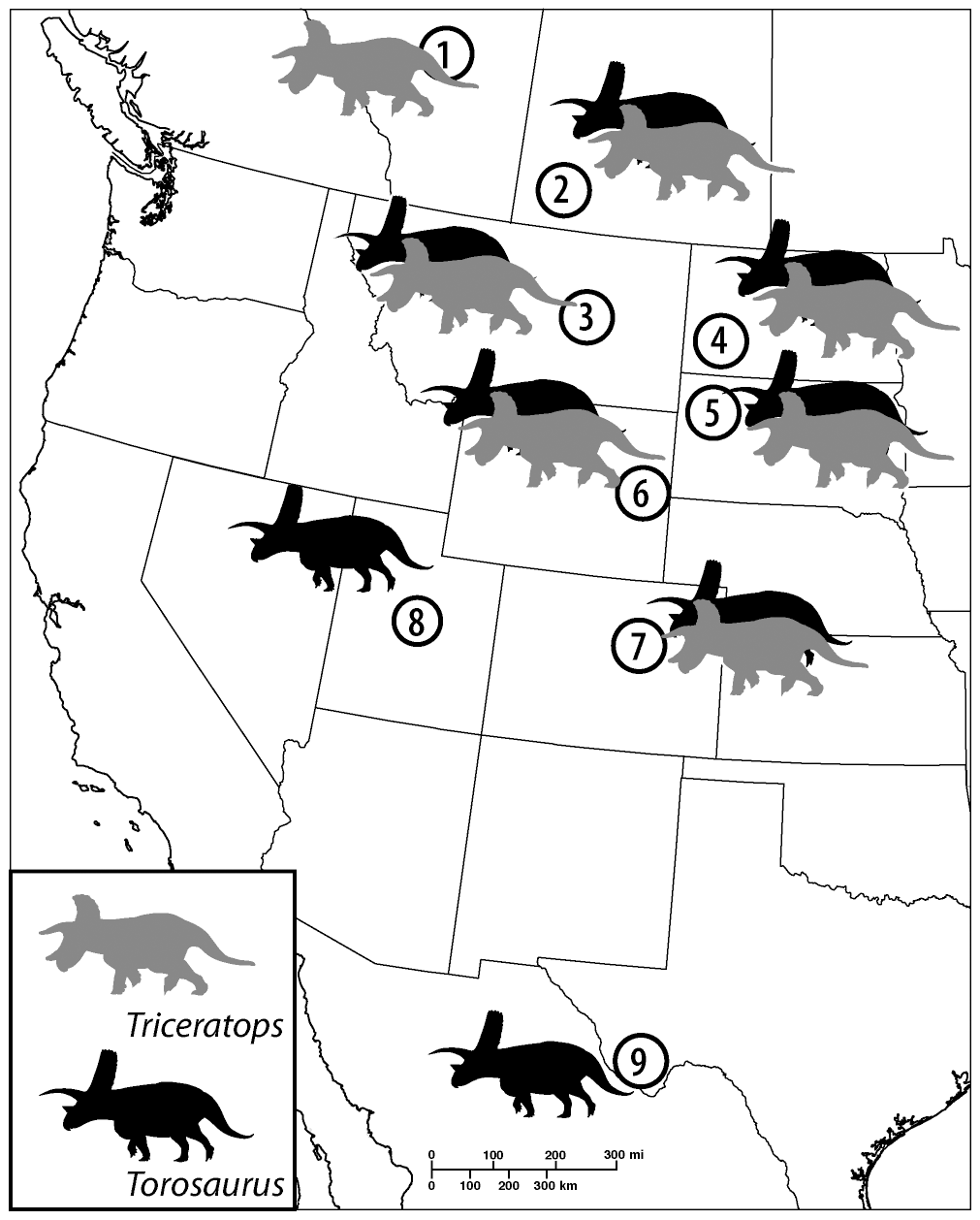
Torosaurus latus is known primarily from the Hell Creek Formation (Montana, North Dakota, South Dakota) and the Lance Formation (Wyoming), both dating from the late Maastrichtian (~68-66 Ma). These formations represent alluvial plain deposits with fluvial channels, swamps, and coastal ponds, deposited during the regression of the Western Interior Seaway. The Hell Creek Formation is one of the world's most important paleontological sites, having produced iconic specimens of Tyrannosaurus rex, Triceratops, and many other dinosaurs. Torosaurus also occurs in the Frenchman Formation of Saskatchewan, Canada (as reported by Mallon et al., 2022), extending its documented geographic range.
Image gallery


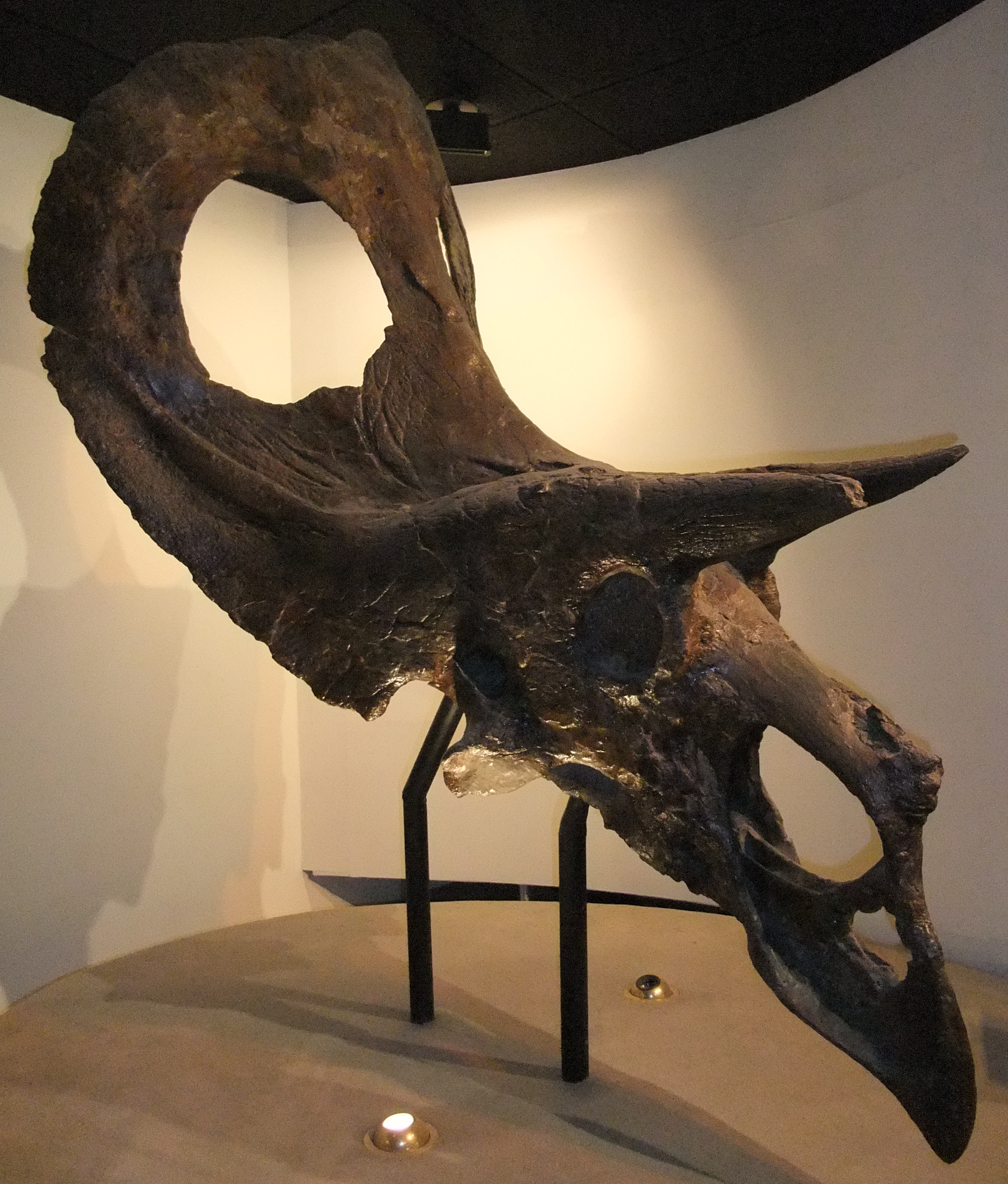




Black and white reconstruction of Torosaurus latus on white background by Nobu Tamura (2008). Detail of the immense frill with two large parietal fenestrae.
Nobu Tamura / CC BY-SA 3.0
Ecology and behavior
Habitat
Torosaurus latus inhabited subtropical to temperate alluvial plains of western North America during the late Maastrichtian, between 68 and 66 million years ago. The Hell Creek Formation ecosystem was a vast floodplain with dense riparian forests, coastal swamps, and shrub vegetation corridors, near the receding Western Interior Seaway. The climate was humid and seasonally variable, with higher average temperatures than the current region. Torosaurus coexisted with Triceratops, Tyrannosaurus rex, Edmontosaurus, Ankylosaurus, and Pachycephalosaurus.
Feeding
As a ceratopsid herbivore, Torosaurus fed mainly on low-growing vegetation: ferns, cycads, flowering plants, and possibly palms. The keratinous beak cut and tore vegetation, while the dental battery processed large volumes of fibrous plant material. Head position suggests ground-level feeding, although the robust neck allowed moderate reach. Body size indicates need for daily consumption of large quantities of plant biomass.
Behavior and senses
The function of Torosaurus's immense frill is debated, but convergent evidence suggests primary use in species recognition, sexual display, and intraspecific competition for dominance or access to females. The reduced horns (compared to Triceratops) and elaborate fenestrated frill reinforce interpretation as visual display. There is no direct evidence of gregarious behavior, but the rarity of Torosaurus in the fossil record contrasts with the abundance of Triceratops, possibly suggesting lower population density.
Physiology and growth
As an ornithischian dinosaur of the Late Cretaceous, Torosaurus likely had mesothermic to endothermic metabolism. Bone histological analysis of Canadian specimens (Mallon et al., 2022) revealed growth zones compatible with continuous growth, suggesting the species reached adult size gradually over many years. The gigantic skull, up to 2.77 meters long, is one of the largest of any land animal that ever lived and may have implied physiological adaptations to support the extraordinary head weight.
Paleogeography
Continental configuration

Scotese & Vérard · CC BY 4.0 · Cretaceous, ~105 Ma
Fossil sites
Conty · CC BY 3.0
During the Maastrichtiano (~68–66 Ma), Torosaurus latus inhabited Laramidia, the western half of present-day North America, separated from the east by the Western Interior Seaway, a shallow sea dividing the continent. The continents were in very different positions: India was drifting toward Asia, Antarctica was still connected to Australia, and South America was an isolated island.
Bone Inventory
Torosaurus is known from a very limited number of specimens, mainly partial skulls. Only about ten fragmentary specimens have been confirmed, most from the Hell Creek Formation (Montana, South Dakota) and the Lance Formation (Wyoming). Postcranial material is scarce. The rarity of Torosaurus compared to Triceratops, its contemporary, is itself considered relevant evidence in the taxonomic debate: if Torosaurus were simply an old Triceratops, its rarity would be difficult to explain.
Found elements
Inferred elements
Scientific Literature
15 papers in chronological order — from the original description to recent research.
Notice of new vertebrate fossils
Marsh, O.C. · American Journal of Science
Original description paper in which Marsh names Torosaurus based on two ceratopsian skulls with elongated, fenestrated frills collected by John Bell Hatcher in Wyoming. The generic name derives from the Greek 'toros', referring to perforation, alluding to the large openings in the frill. This founding paper establishes the diagnostic characters distinguishing Torosaurus from other Late Cretaceous ceratopsids, including the exceptional frill length and rounded parietal fenestrae.
The Ceratopsia
Hatcher, J.B., Marsh, O.C. & Lull, R.S. · United States Geological Survey Monographs
Fundamental 300-page monograph synthesizing all knowledge on ceratopsians through 1907, including Torosaurus anatomy. Hatcher, Marsh and Lull describe the type skulls of T. latus and T. gladius (later synonymized) with detailed plates, establishing the morphological framework that dominated ceratopsid paleontology for decades. The work remains an essential reference for comparative studies of Maastrichtian Chasmosaurinae cranial anatomy.


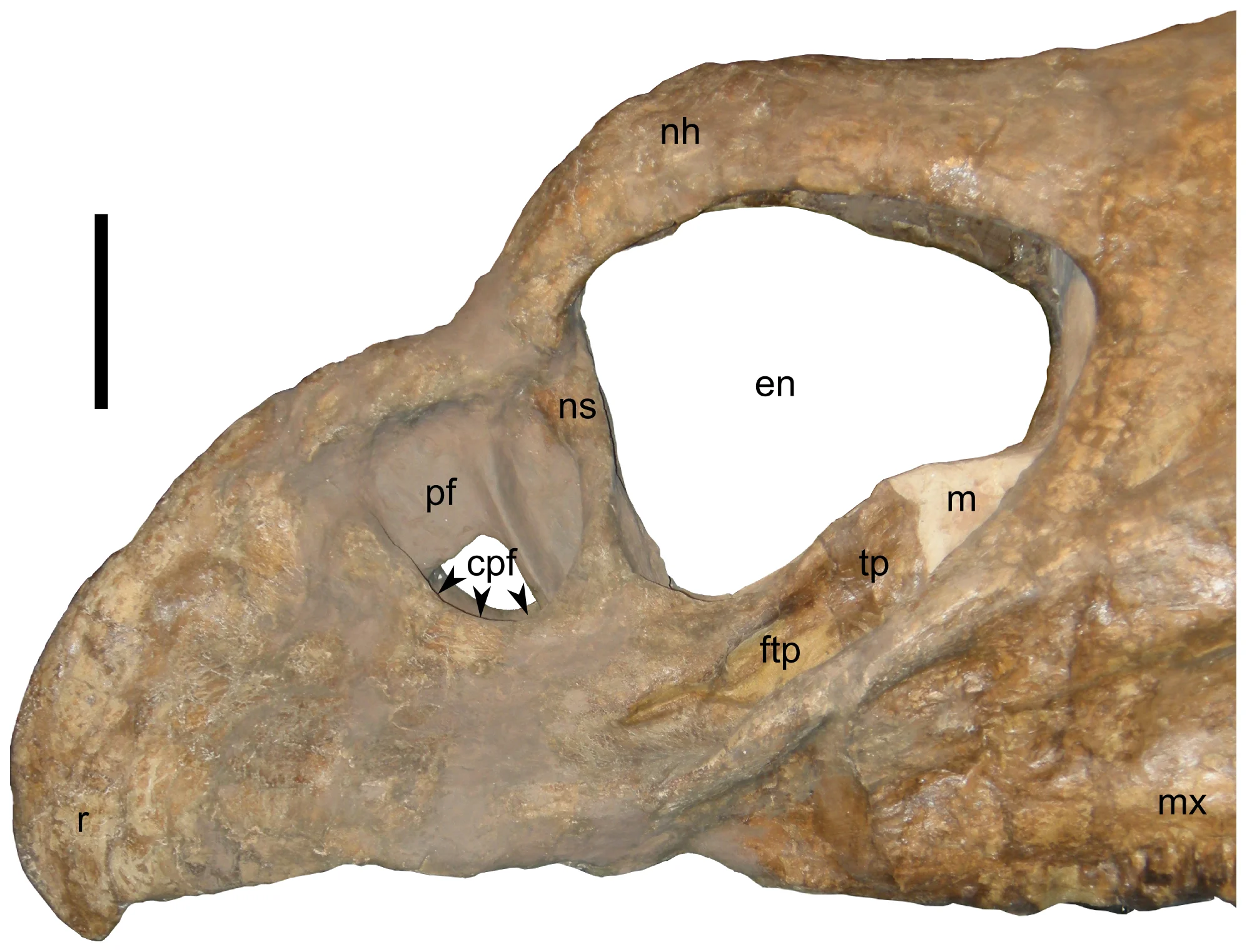
Cranial osteology and phylogenetic relationships of the chasmosaurine ceratopsid Torosaurus latus
Farke, A.A. · Horns and Beaks: Ceratopsian and Ornithopod Dinosaurs (Indiana University Press)
Farke provides the first comprehensive redescription of Torosaurus latus cranial anatomy, analyzing its phylogenetic placement among chasmosaurines. The study identifies diagnostic characters distinguishing T. latus from Triceratops and other ceratopsids, including the shape of the parietal fenestrae and parietal morphology. The work establishes that T. latus is more derived than Anchiceratops but its precise position within Chasmosaurinae remains equivocal in subsequent analyses.

Torosaurus Marsh, 1891, is Triceratops Marsh, 1889 (Ceratopsidae: Chasmosaurinae): synonymy through ontogeny
Scannella, J.B. & Horner, J.R. · Journal of Vertebrate Paleontology
Scannella and Horner propose that Torosaurus represents the mature adult morph of Triceratops, with parietal fenestrae developing late in ontogeny, based on bone surface texture analysis and the absence of small Torosaurus individuals. The hypothesis generated intense scientific controversy. The authors argue that bone remodeling of the frill in very old Triceratops individuals would result in the characteristic Torosaurus morphology, making the two genera synonymous.


Torosaurus is not Triceratops: ontogeny in chasmosaurine ceratopsids as a case study in dinosaur taxonomy
Longrich, N.R. & Field, D.J. · PLOS ONE
Longrich and Field directly rebut the Torosaurus-Triceratops synonymy hypothesis by analyzing 36 specimens using cranial maturity indicators. The study demonstrates that both genera contain individuals spanning juvenile to adult stages, with no consistent maturity difference supporting synonymy. The authors conclude that Torosaurus and Triceratops represent distinct genera with independent ontogenetic trajectories, one of the most robust arguments against Scannella and Horner's hypothesis.


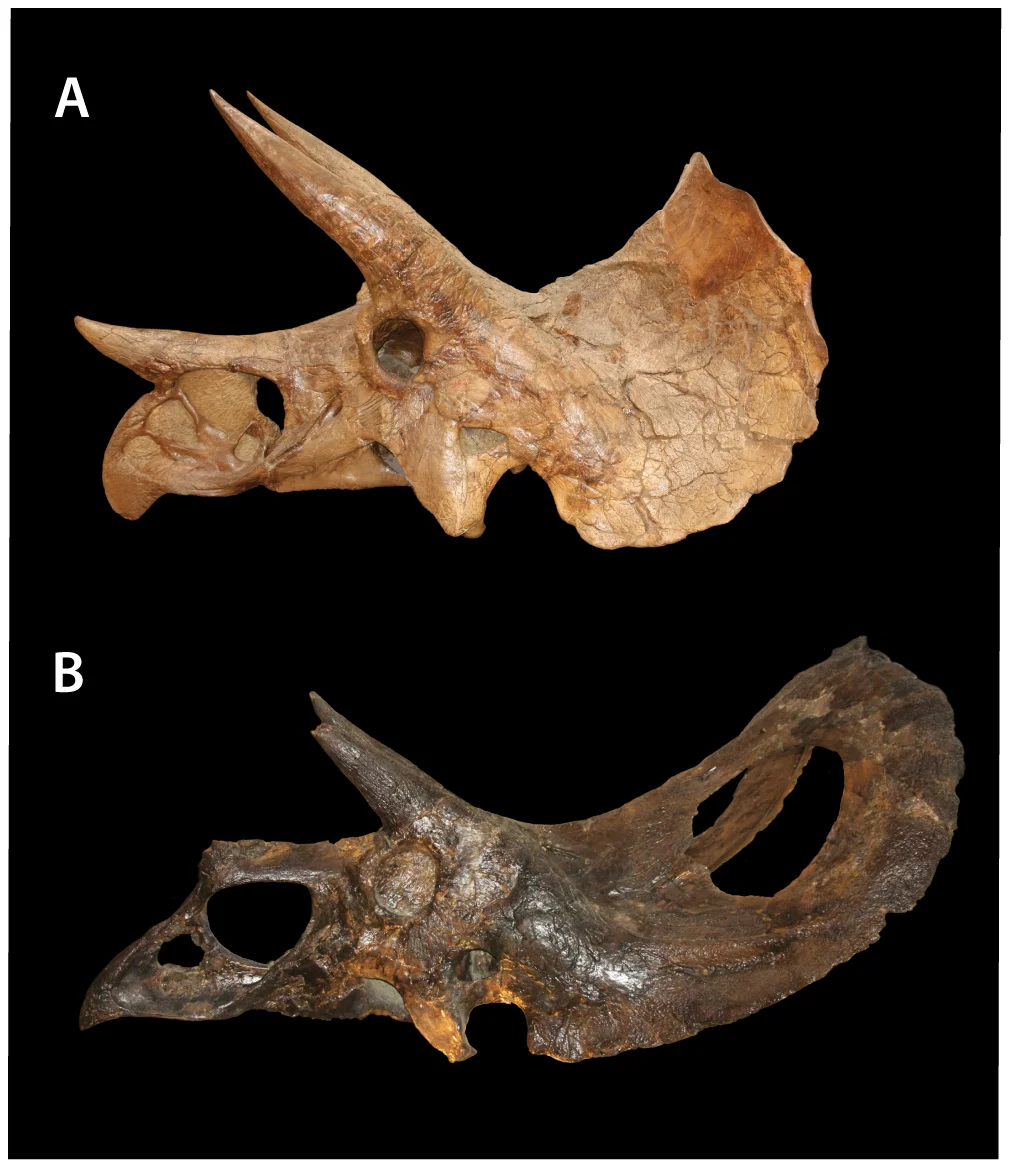
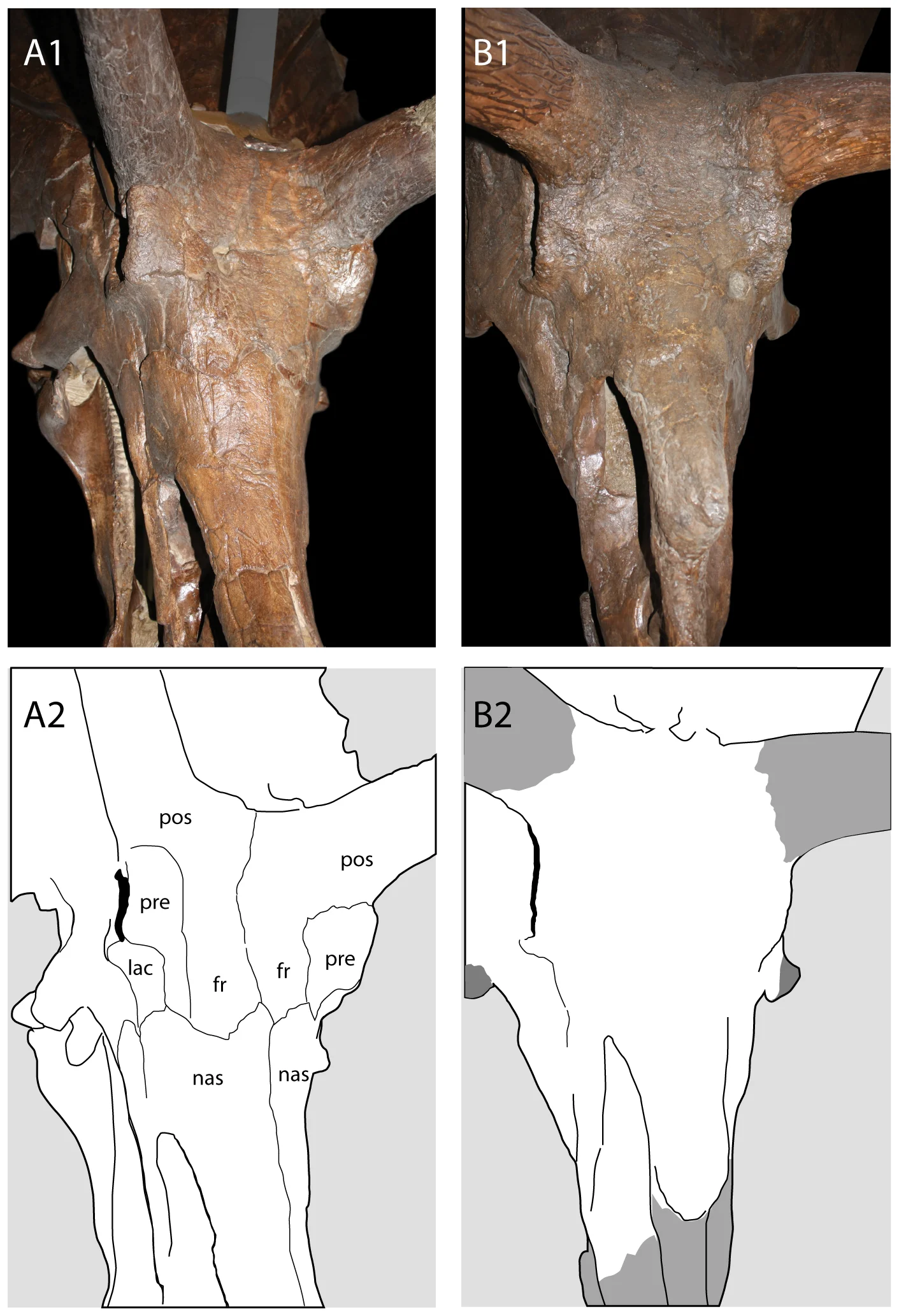
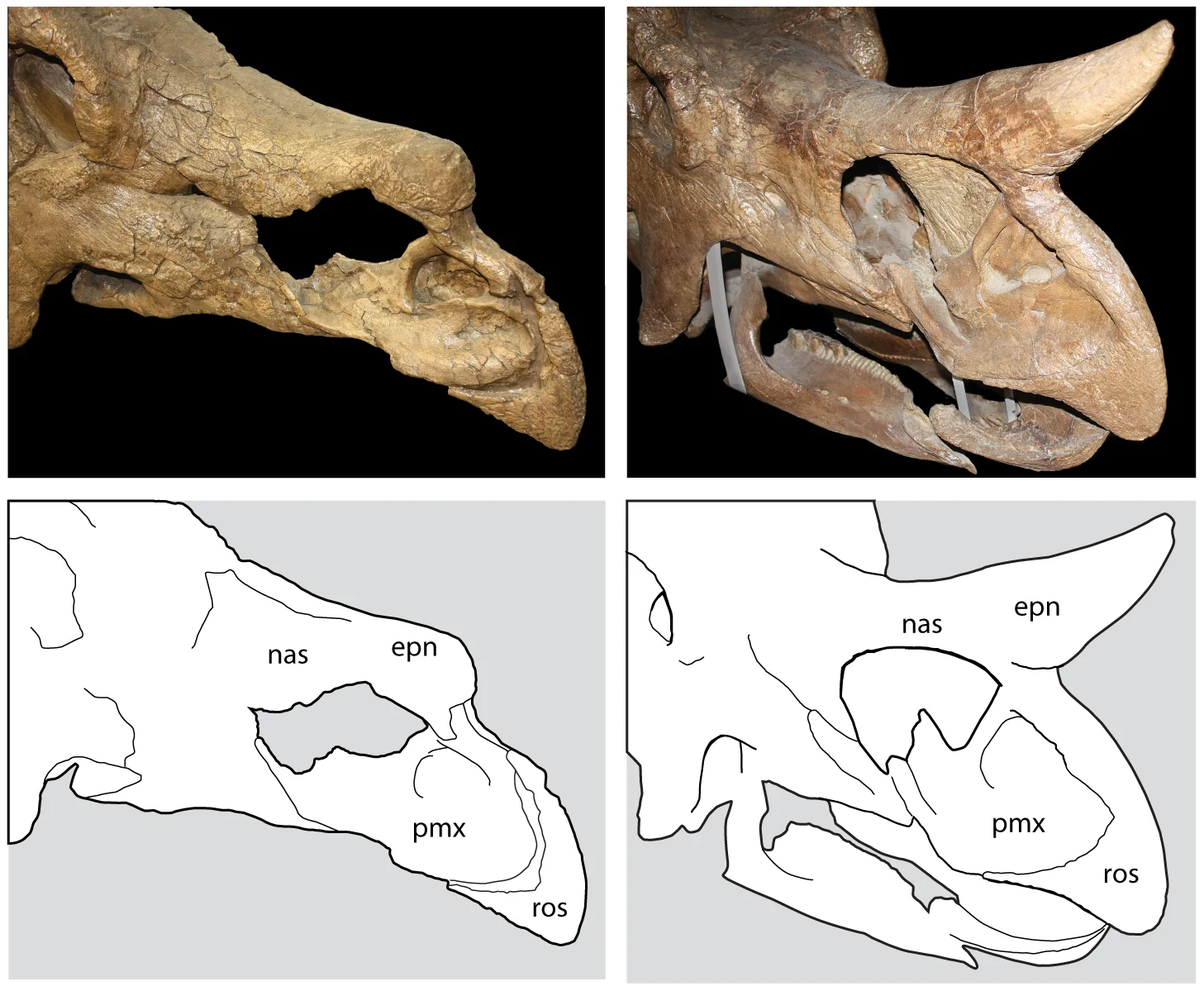
Is Torosaurus Triceratops? Geometric morphometric evidence of Late Maastrichtian ceratopsid dinosaurs
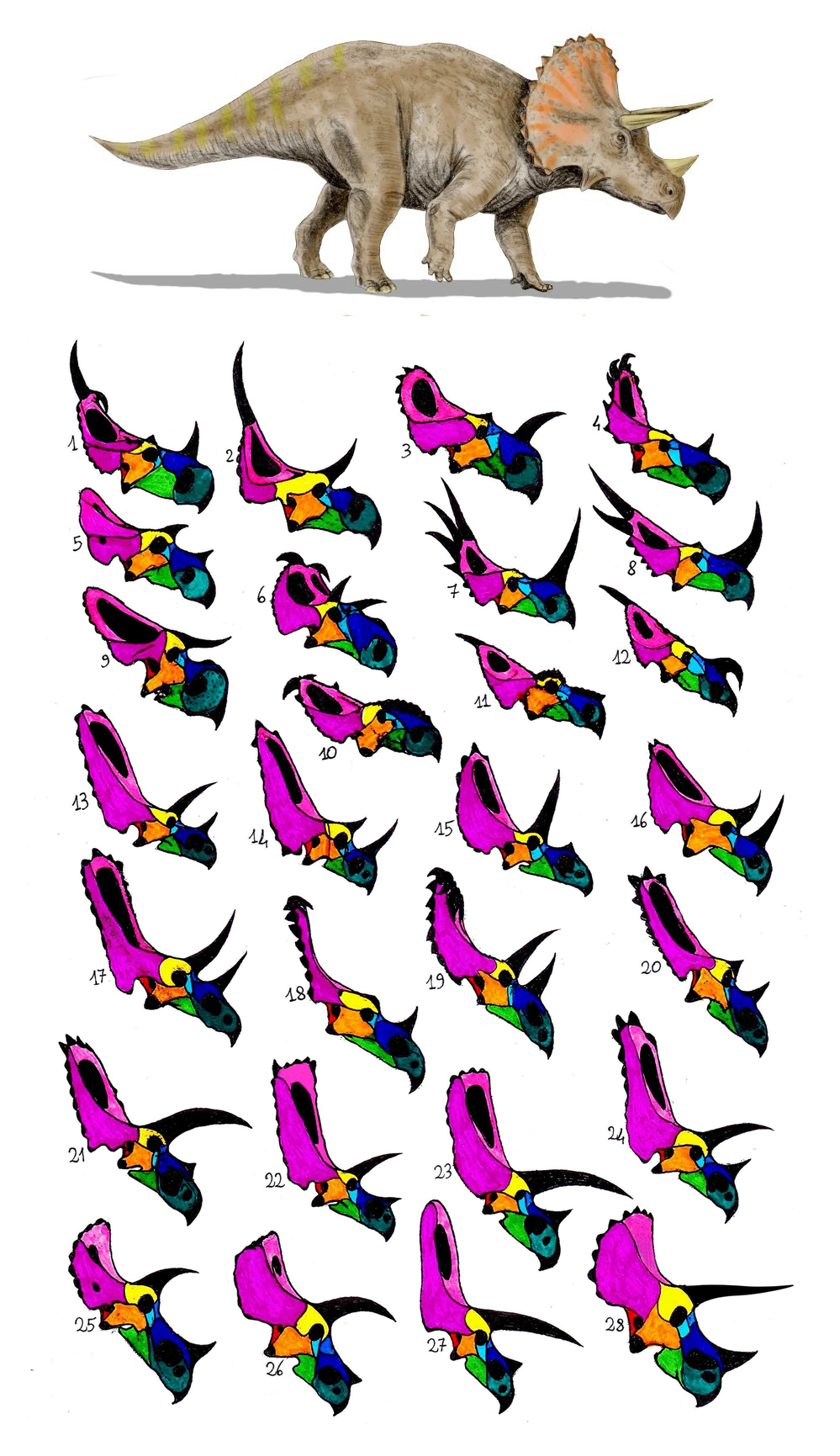
Maiorino, L., Farke, A.A., Kotsakis, T. & Piras, P. · PLOS ONE
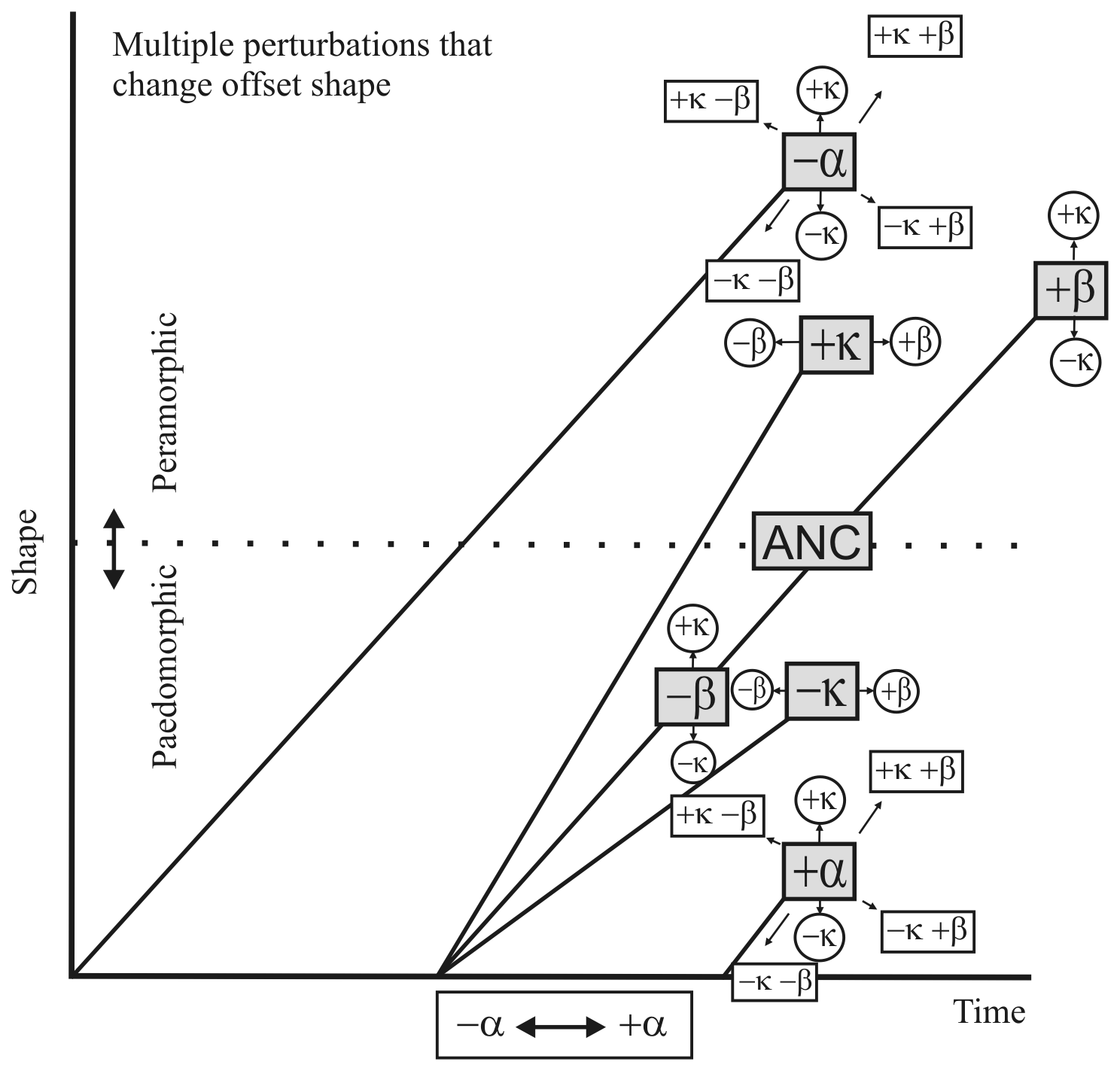
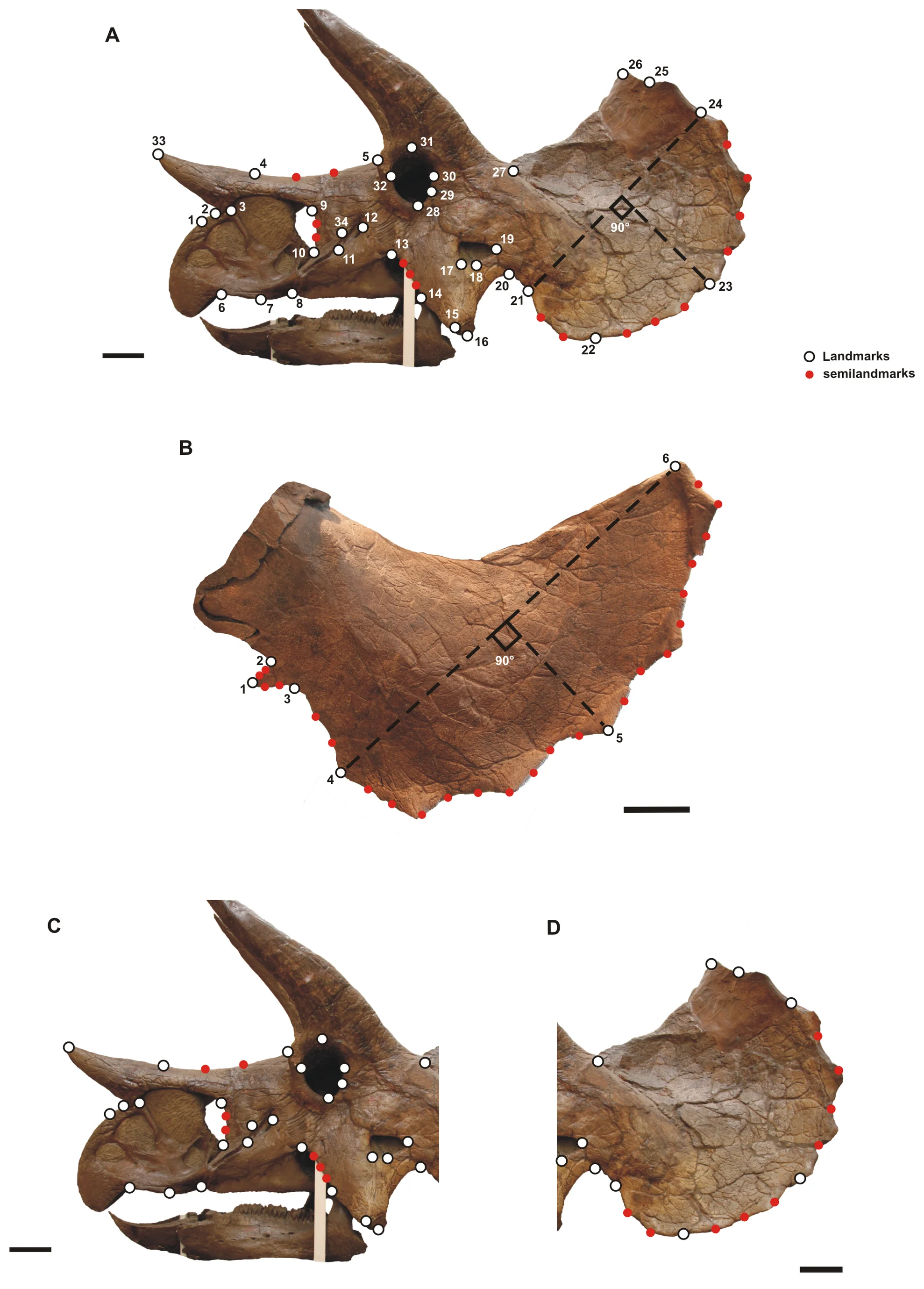
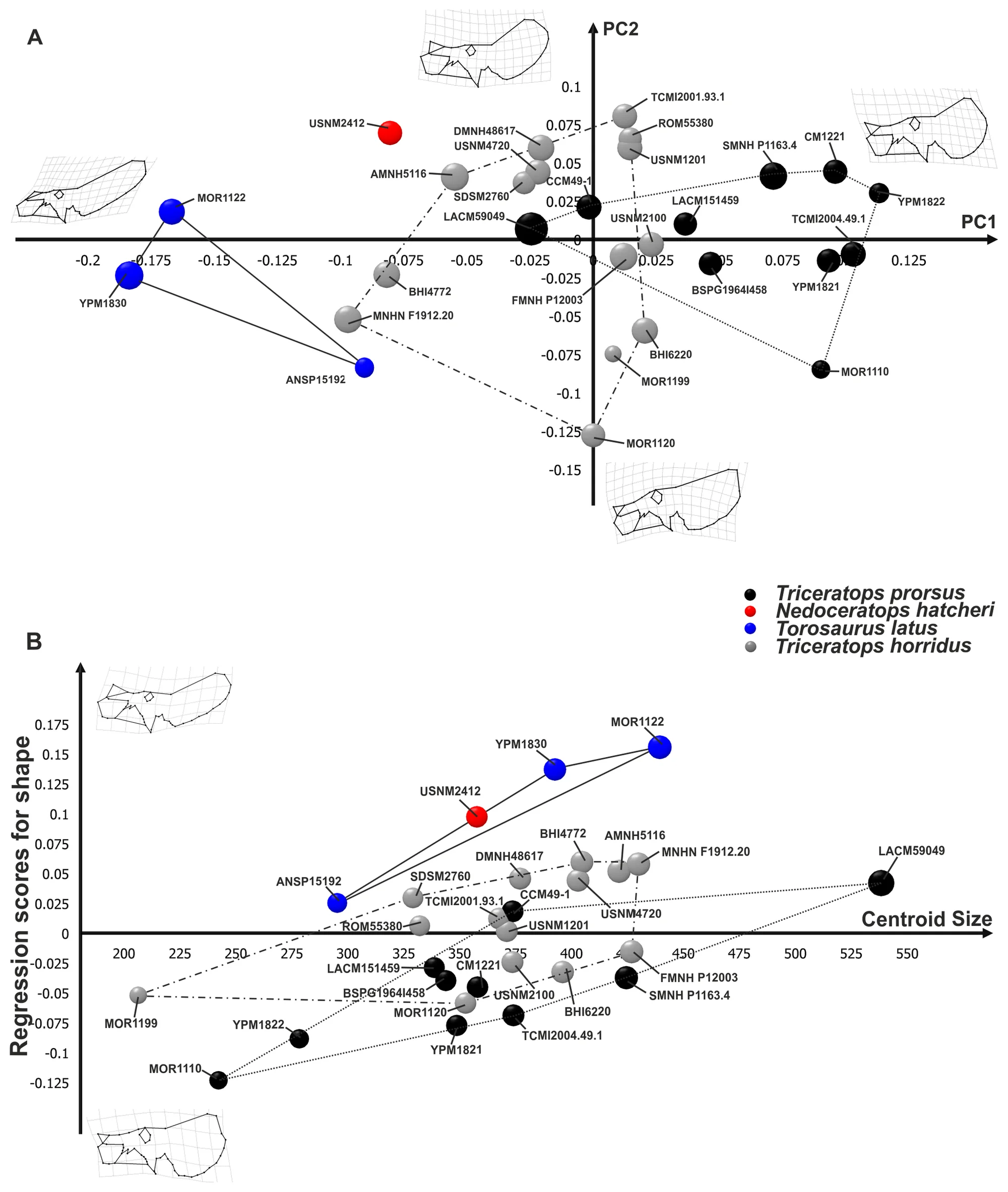
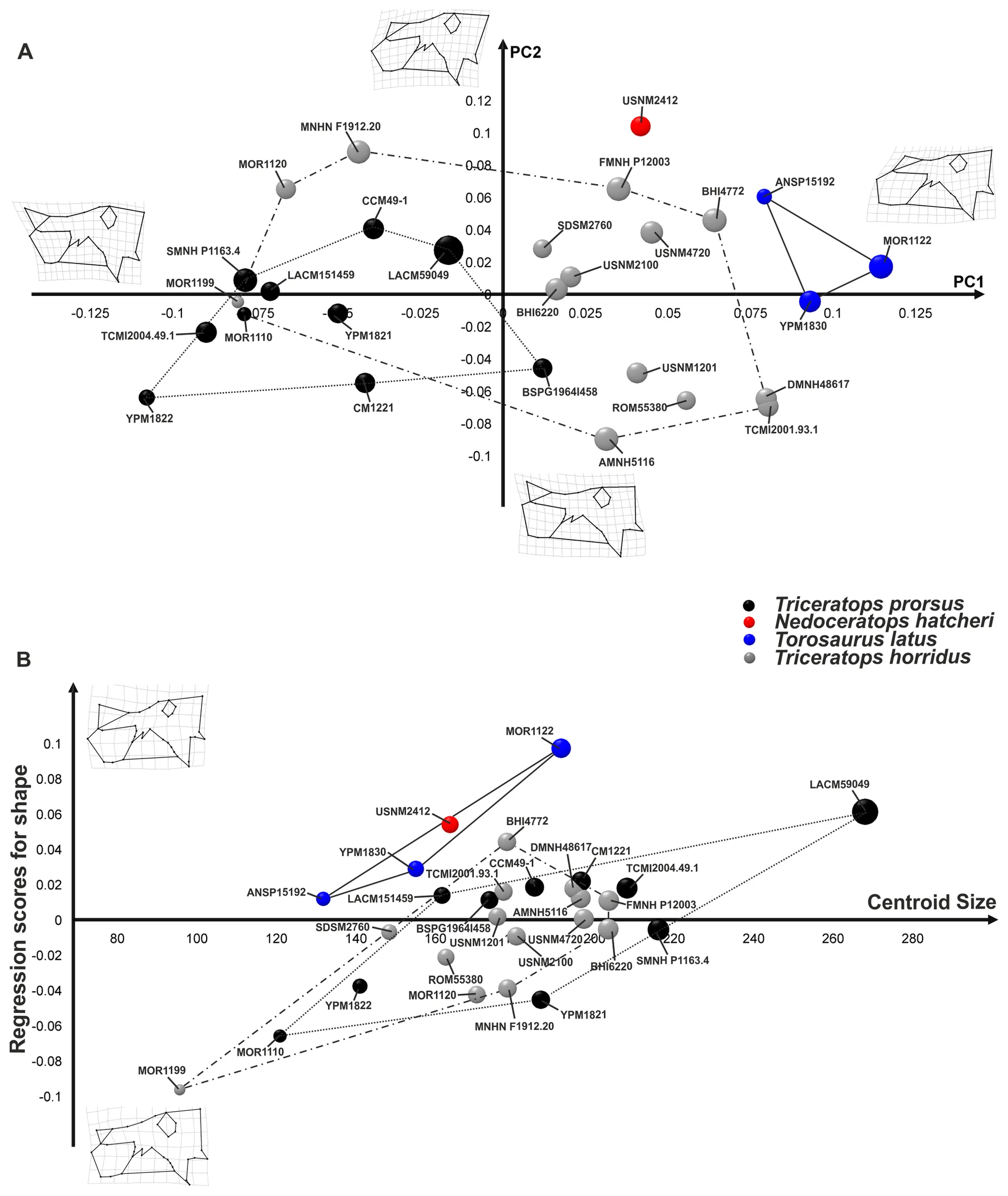
Maiorino and colleagues apply landmark-based geometric morphometrics to 28 skulls in lateral view and 36 squamosals of Nedoceratops, Triceratops, and Torosaurus. Principal Component Analysis and cluster analysis confirm distinct cranial morphologies, with Torosaurus morphospace well separated from Triceratops. Linear regressions between shape and size indicate different ontogenetic trajectories, confirming Torosaurus as a valid taxon and corroborating the low diversity of ceratopsids at the end of the Maastrichtian.
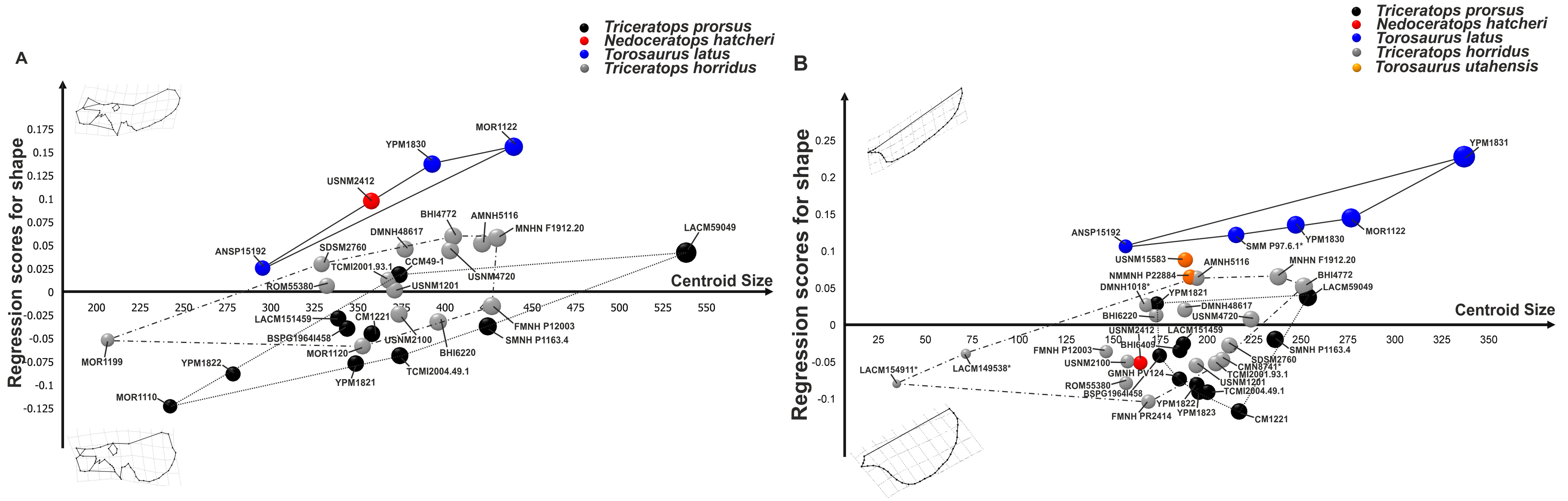
A new specimen of the controversial chasmosaurine Torosaurus latus (Dinosauria: Ceratopsidae) from the Upper Cretaceous Hell Creek Formation of Montana
McDonald, A.T., Campbell, C.E. & Thomas, B. · PLOS ONE
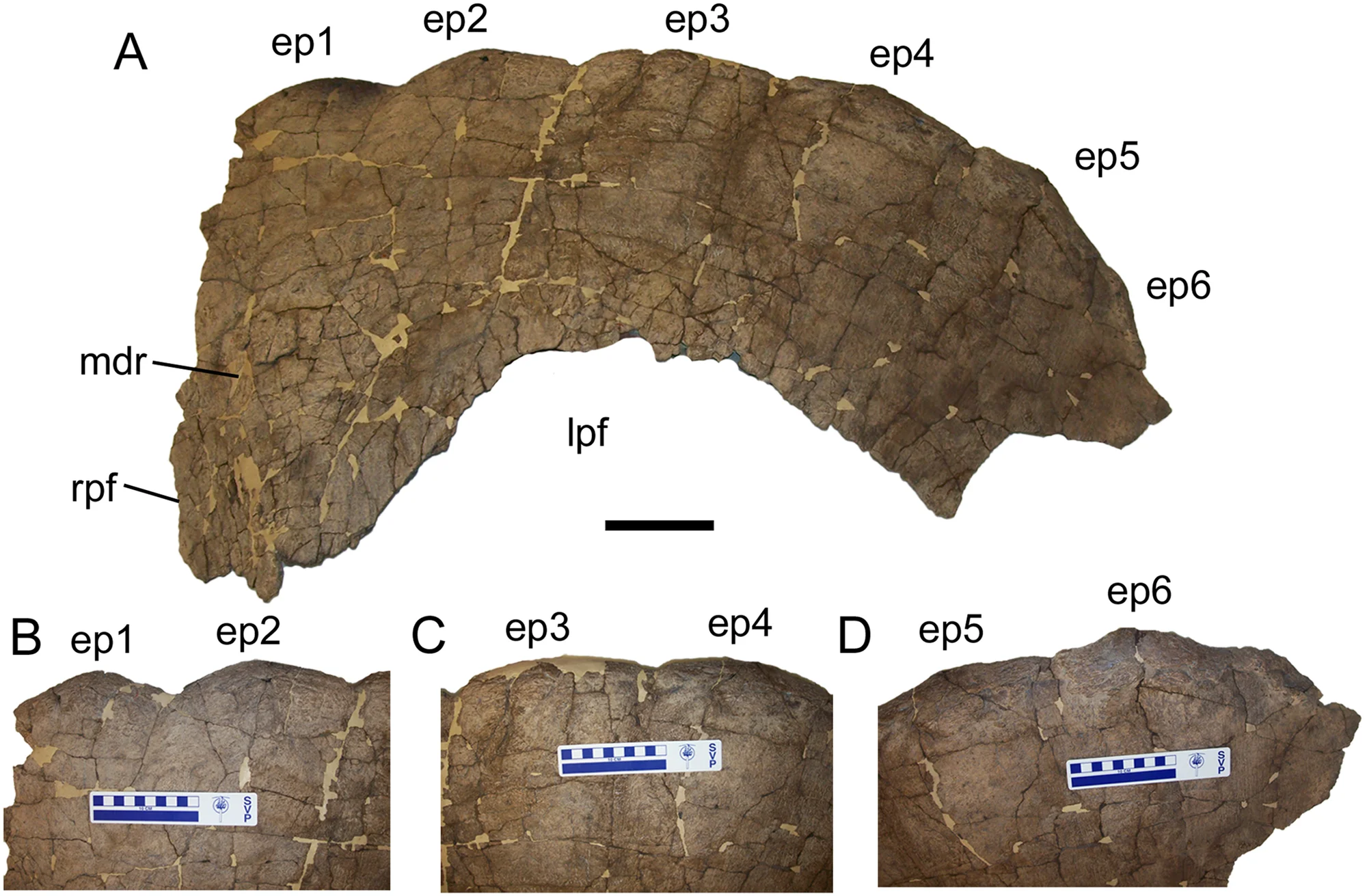
McDonald and colleagues describe a partial parietal bone (specimen ESU 2009-6) of Torosaurus latus from the Hell Creek Formation of Montana, providing new anatomical data on this rare ceratopsid. The advanced maturity of the specimen prevents direct resolution of the synonymy debate with Triceratops, but contributes information on intraspecific variation in T. latus and confirms occurrence of the taxon in the Hell Creek Formation of Montana.
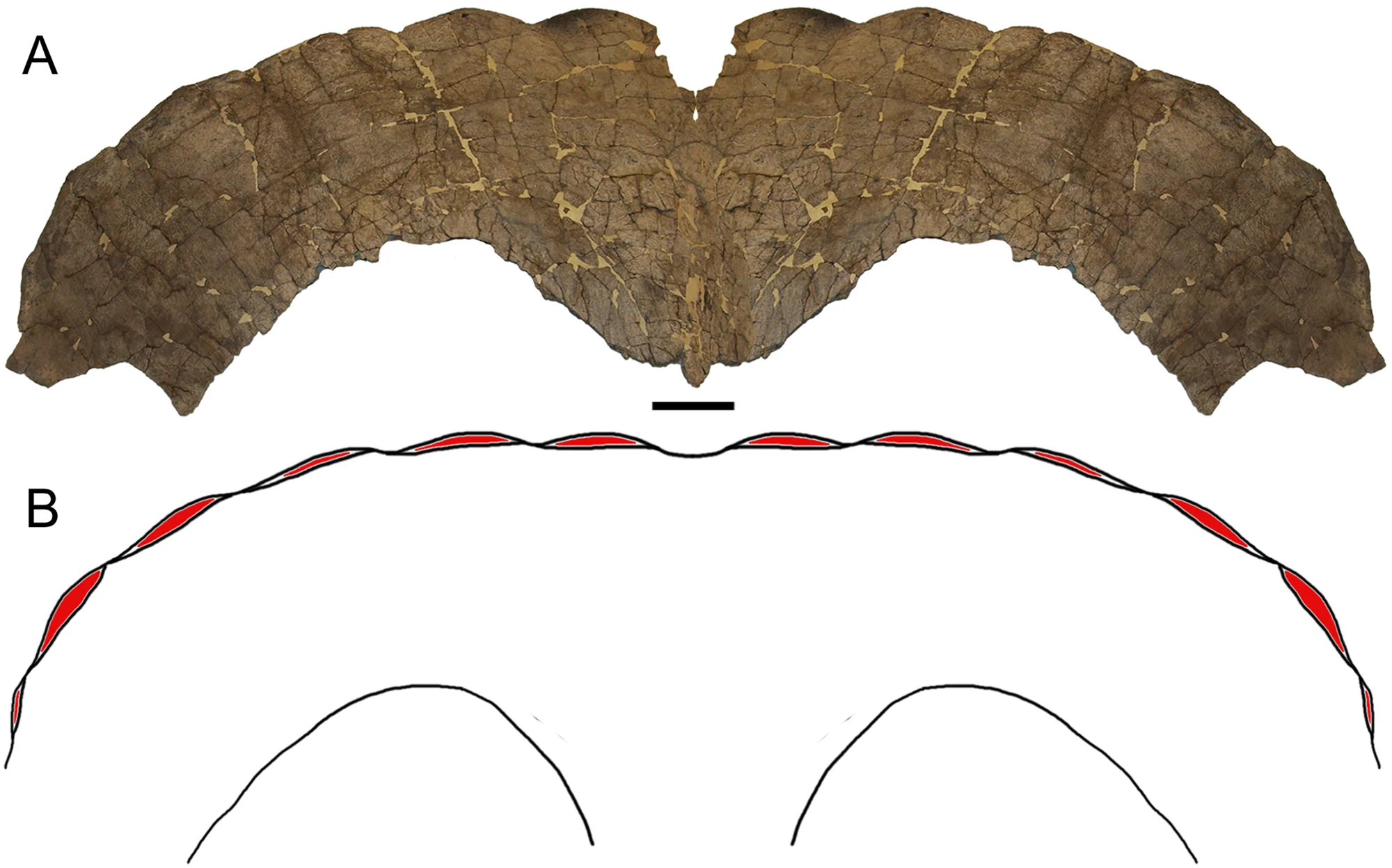
The record of Torosaurus (Ornithischia: Ceratopsidae) in Canada and its taxonomic implications
Mallon, J.C., Holmes, R.B., Bamforth, E.L. & Schumann, D. · Zoological Journal of the Linnean Society
Mallon and colleagues report two partial cranial frill fragments attributed to Torosaurus from the uppermost Maastrichtian Frenchman Formation of Saskatchewan, Canada, significantly extending the geographic range of the genus. Bone histological analysis reveals the individual was still growing at death, directly refuting the hypothesis that Torosaurus represents only mature Triceratops. This 2022 study is one of the most conclusive in supporting Torosaurus as a valid taxon.


Ontogeny of the parietal frill of Triceratops: a preliminary histological analysis
Horner, J.R. & Lamm, E.T. · Comptes Rendus Palevol
Horner and Lamm apply bone histology to Triceratops parietal frills across growth stages, finding evidence of rapid bone remodeling in mature individuals. The study was used by the authors as support for the hypothesis that the parietal fenestrae characteristic of Torosaurus could develop late in Triceratops ontogeny. Although the main hypothesis was subsequently contested, the work contributed significantly to understanding ceratopsid bone histology.
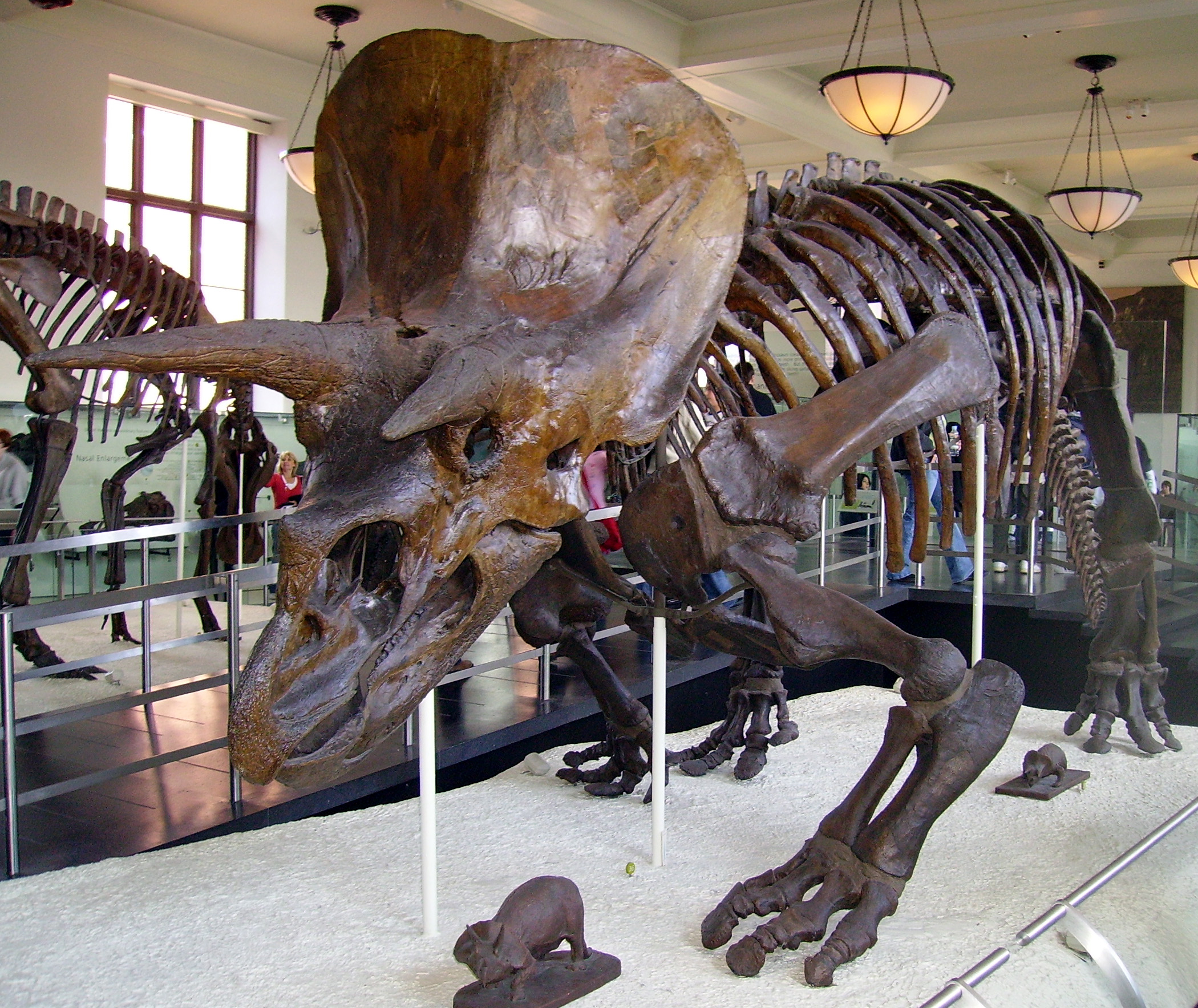

New horned dinosaurs from Utah provide evidence for intracontinental dinosaur endemism
Sampson, S.D., Loewen, M.A., Farke, A.A., Roberts, E.M., Forster, C.A., Smith, J.A. & Titus, A.A. · PLOS ONE
Sampson and colleagues describe four new chasmosaurine ceratopsids from the Campanian of Utah, including Kosmoceratops and Utahceratops, providing a phylogenetic framework contextualizing the biogeographic origin of derived Chasmosaurinae including Torosaurus. The study documents intracontinental dinosaur endemism and suggests that division of the North American continent by an internal seaway resulted in distinct ceratopsid faunas in northern and southern Laramidia.

Forelimb posture in neoceratopsian dinosaurs: implications for gait and locomotion
Paul, G.S. & Christiansen, P. · Paleobiology
Paul and Christiansen analyze forelimb bone morphology across neoceratopsians including Torosaurus, concluding they adopted an erect rather than sprawling forelimb posture. The study has implications for locomotion efficiency in large ceratopsids like Torosaurus, suggesting they could move with greater speed and agility than previously estimated. The erect posture is comparable to that of large modern mammals.
Anatomy and taxonomic status of the chasmosaurine ceratopsid Nedoceratops hatcheri from the Upper Cretaceous Lance Formation of Wyoming, U.S.A.
Farke, A.A. · PLOS ONE
Farke redescribes the unique specimen of Nedoceratops hatcheri (USNM 2412) from the Lance Formation of Wyoming and evaluates its taxonomic status relative to Triceratops and Torosaurus. Cladistic analysis positions Nedoceratops as a distinct taxon, not an ontogenetic form. The work is directly relevant to the Torosaurus debate, as Scannella and Horner (2010) proposed Nedoceratops was an intermediate form between juvenile Triceratops and adult Torosaurus, a hypothesis Farke refutes.
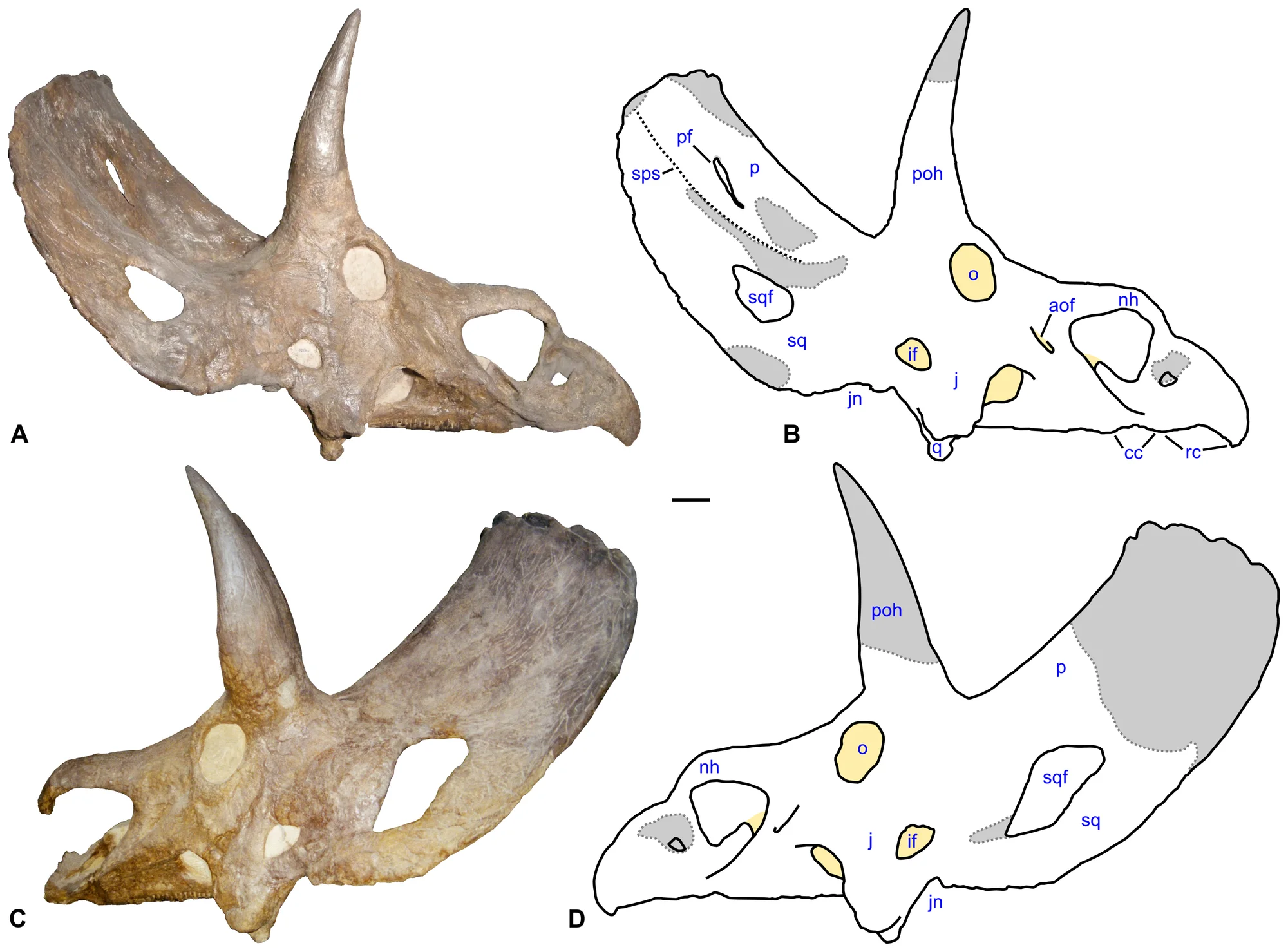
Redescription of the ceratopsid dinosaur Torosaurus utahensis (Gilmore, 1946) and a revision of the genus
Sullivan, R.M., Lucas, S.G. & Braman, D.R. · Journal of Paleontology
Sullivan and colleagues provide a comprehensive redescription of Torosaurus utahensis from the North Horn Formation of Utah and perform a systematic revision of the genus Torosaurus, recognizing two valid species: T. latus (Hell Creek/Lance) and T. utahensis (North Horn). The work establishes diagnostic criteria for separating the species and analyzes relevant morphological differences in the frill, horns, and skull structure between the two forms, providing necessary context for subsequent taxonomic revisions.
The ceratopsian dinosaur Pentaceratops sternbergii from the San Juan Basin, New Mexico
Lehman, T.M. · Journal of Paleontology
Lehman describes the chasmosaurine ceratopsid Pentaceratops from New Mexico and analyzes its phylogenetic relationships with Torosaurus and other Chasmosaurinae. Although focused on Pentaceratops, the work is relevant for Torosaurus as it establishes the biogeographic context for Late Cretaceous ceratopsid distribution in western North America. Comparative frill anatomy analyses across different Chasmosaurinae genera contribute to understanding evolutionary transformations leading to Torosaurus morphology.


The extinction of the dinosaurs in North America
Fastovsky, D.E. & Sheehan, P.M. · GSA Today
Fastovsky and Sheehan analyze patterns of dinosaur extinction at the end of the Cretaceous in North America, documenting the terminal fauna including Torosaurus and Triceratops in the Hell Creek Formation immediately before the Chicxulub impact. The study examines how large ceratopsid herbivores including Torosaurus latus were part of the last dinosaurian ecosystem before the mass extinction, providing paleoecological context for the species.


Famous museum specimens
YPM 1830 e YPM 1831 (espécimes tipo)
Peabody Museum of Natural History, Yale University, New Haven, Connecticut
Type specimens of Torosaurus latus collected by John Bell Hatcher in Wyoming in 1891 and deposited at Yale's Peabody Museum. YPM 1830 is the genus holotype. These parietal frill fragments were the first materials attributed to Torosaurus, serving as the basis for Marsh's original description.
ANSP 15192
Academy of Natural Sciences, Drexel University, Philadelphia, Pennsylvania
One of the most complete specimens of Torosaurus latus, consisting of a partial skull with plaster reconstruction. From the Dakotas, this specimen was used in multiple phylogenetic and anatomical studies of Torosaurus and is on permanent display at the Academy of Natural Sciences.
MPM VP6841
Milwaukee Public Museum, Milwaukee, Wisconsin
Specimen from the Hell Creek Formation of Montana, whose cast is displayed in the Third Planet exhibit at the Milwaukee Public Museum. It is one of the confirmed specimens of Torosaurus latus from this geological formation and contributed to the anatomical description of the genus.
'Tiny' (espécime não catalogado publicamente)
Denver Museum of Nature and Science, Denver, Colorado
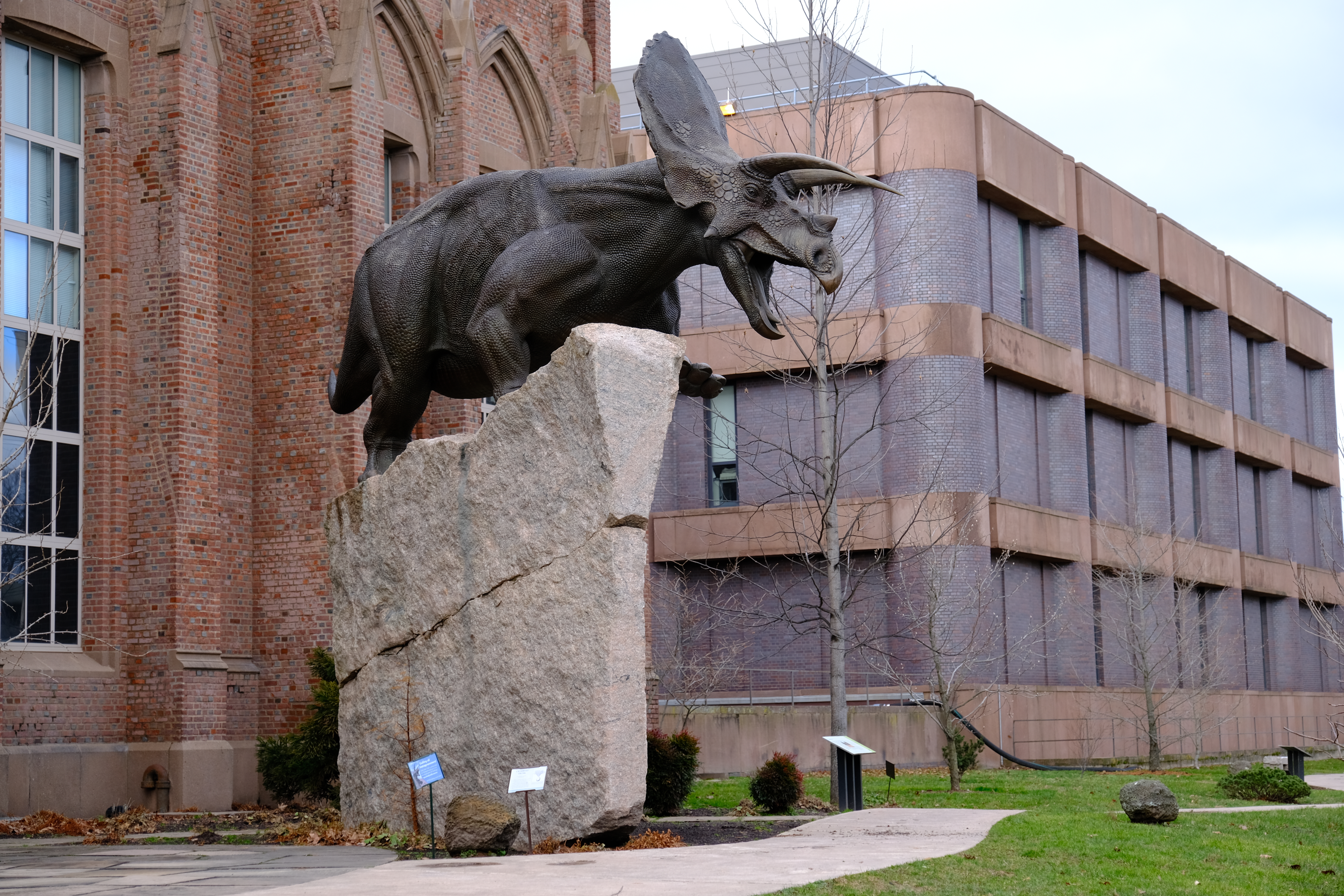
Specimen ironically nicknamed 'Tiny', whose name contrasts with the monumental dimensions of the animal. Displayed in an attack posture at the Denver Museum of Nature and Science, it is one of the most visited Torosaurus specimens in the United States and contributed to public outreach for the species.
In cinema and popular culture
Torosaurus had a discreet but consistent presence in popular culture, always living in the shadow of its more famous cousin, Triceratops. The most notable appearance was in the documentary series Walking with Dinosaurs (BBC, 1999), where it represented the large ceratopsians of the Late Cretaceous in the concluding episode 'Death of a Dynasty'. The choice of Torosaurus over Triceratops for this scene was controversial among fans, but reflected scientific recognition of the species as an important component of the Maastrichtian fauna. In the Jurassic Park franchise, Torosaurus appeared in expanded material, such as the video game Jurassic Park: The Game (2011). In children's series like Dino Dan and Dino Dana, the species received updated digital representations. The intense scientific controversy initiated by Scannella and Horner in 2010, proposing that Torosaurus was actually an adult Triceratops, generated unusual media attention for a paleontological debate, with headlines in outlets like BBC, National Geographic, and Scientific American, bringing the name Torosaurus to broader public awareness.
Classification

Discovery
Fun fact
Torosaurus latus has the largest skull of any land animal that ever lived: up to 2.77 meters long, including the frill. For comparison, this is larger than most current compact cars. The irony is that this absolute record-holder is so rare in the fossil record that it was once confused with a simple life stage of its more famous relative, Triceratops.
Last reviewed: April 24, 2026