
Aratasaurus
Aratasaurus museunacionali
"Fire-born lizard (Museu Nacional)"
About this species
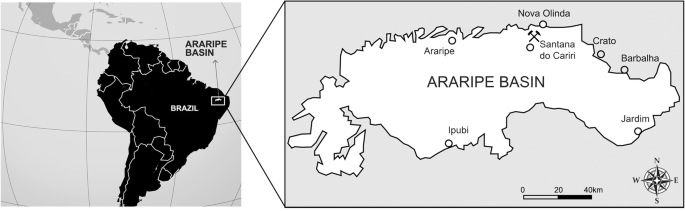
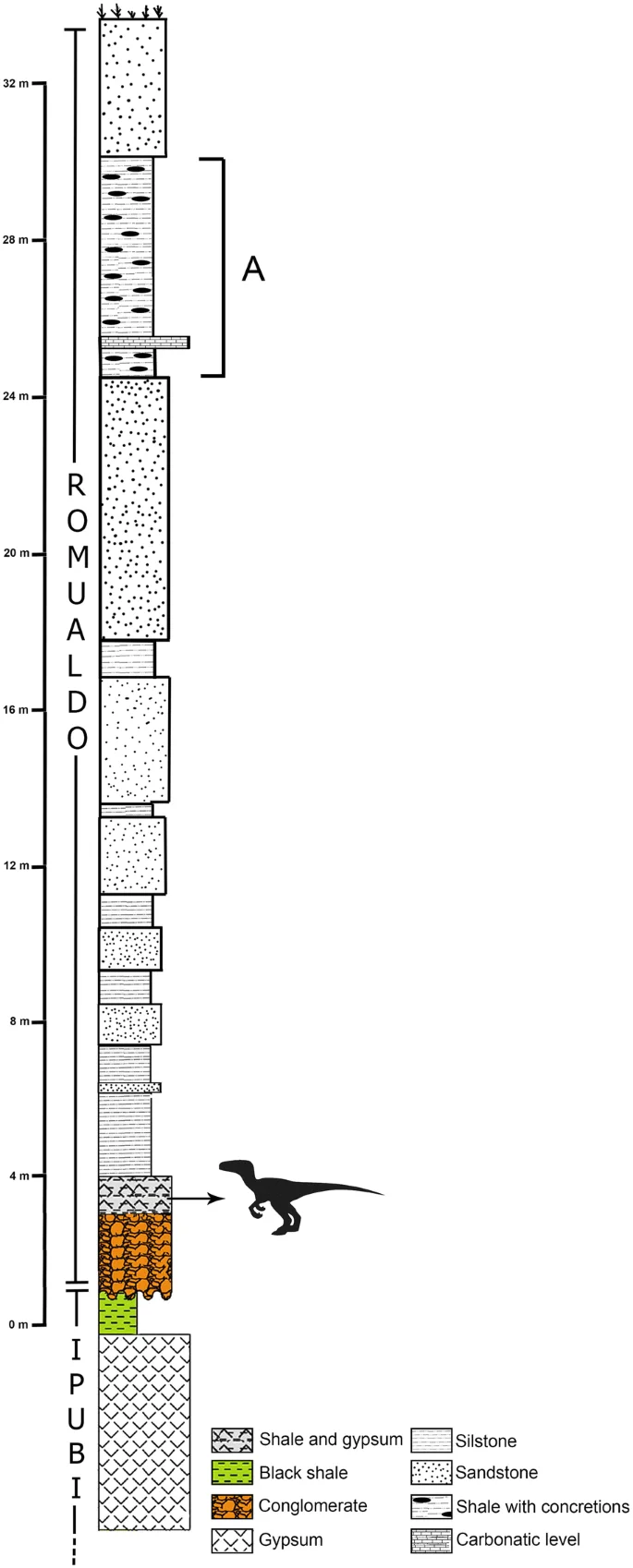
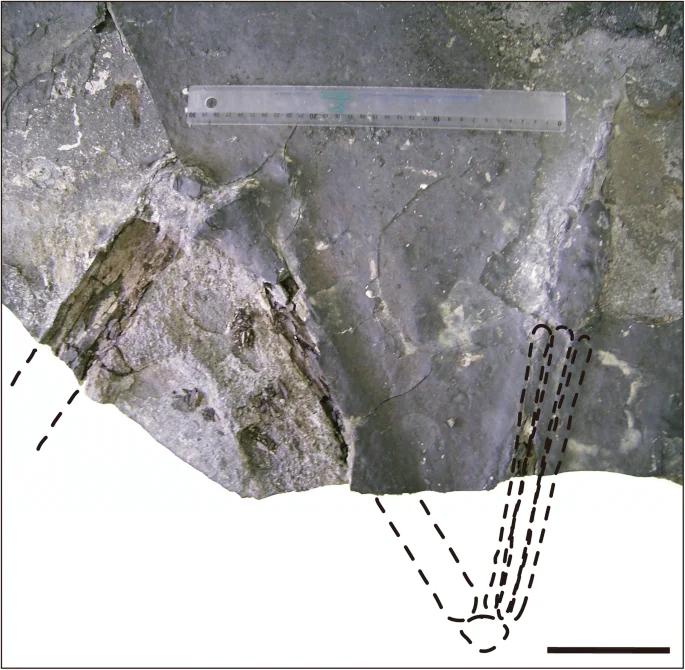
Aratasaurus museunacionali is a small basal coelurosaurian theropod from the Early Cretaceous (Albian, ~110 Ma) Romualdo Formation in the Araripe Basin, Santana do Cariri (Ceará, Brazil). Described by Juliana Sayão and colleagues in 2020, holotype MPSC R 2089 consists of an articulated right hindlimb (distal femur, proximal tibia, partial metatarsals, several phalanges and three unguals) of a juvenile individual aged around 4 years, estimated at 3.12 metres long and 34 kg. The name means 'lizard born from fire', referring to the fire at the Museu Nacional of Rio de Janeiro in September 2018, just before publication. Aratasaurus expands the known diversity of small theropods from the Araripe Basin, alongside Santanaraptor, Mirischia, Irritator and Angaturama, and is a rare basal coelurosaur from Gondwana.
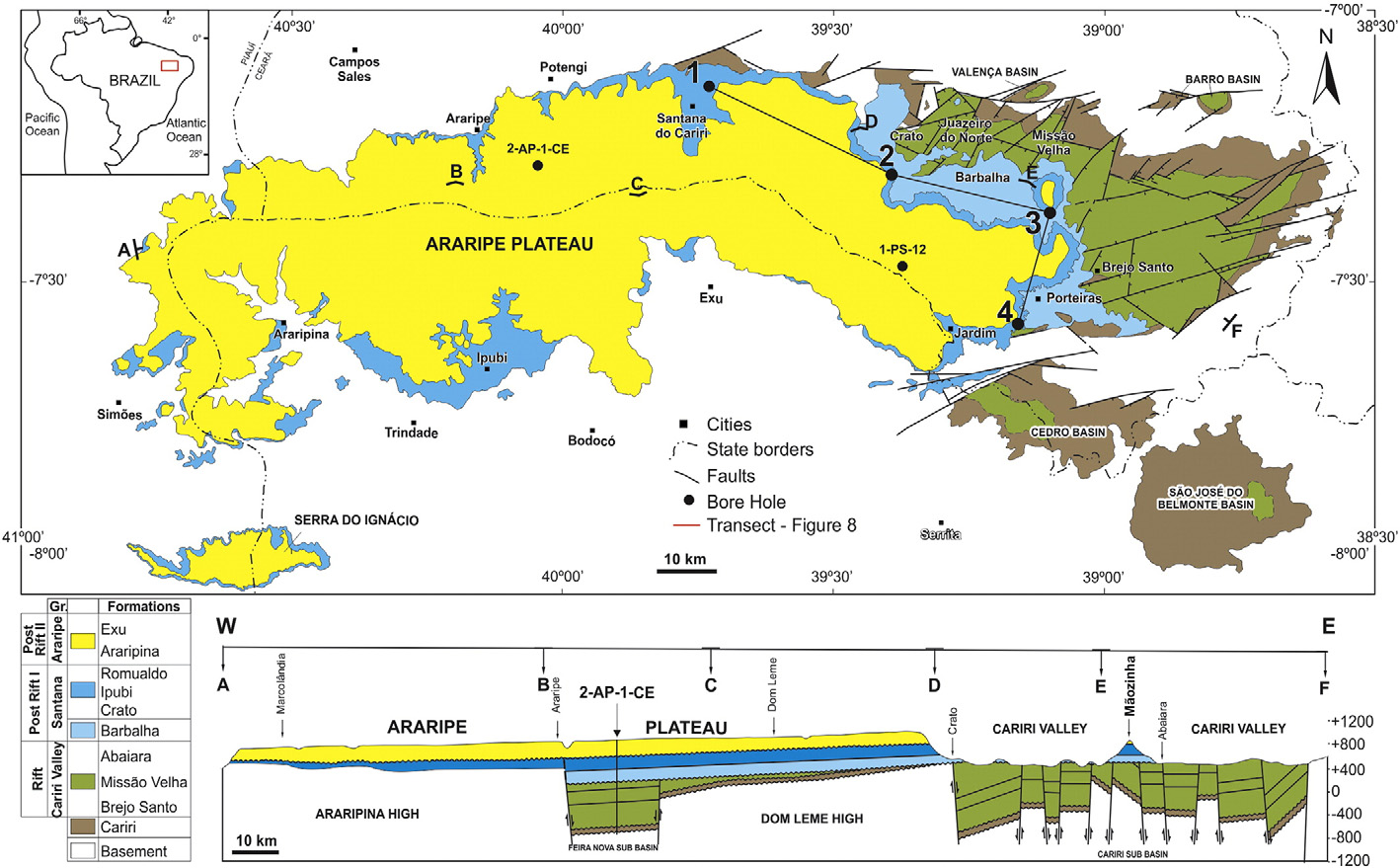
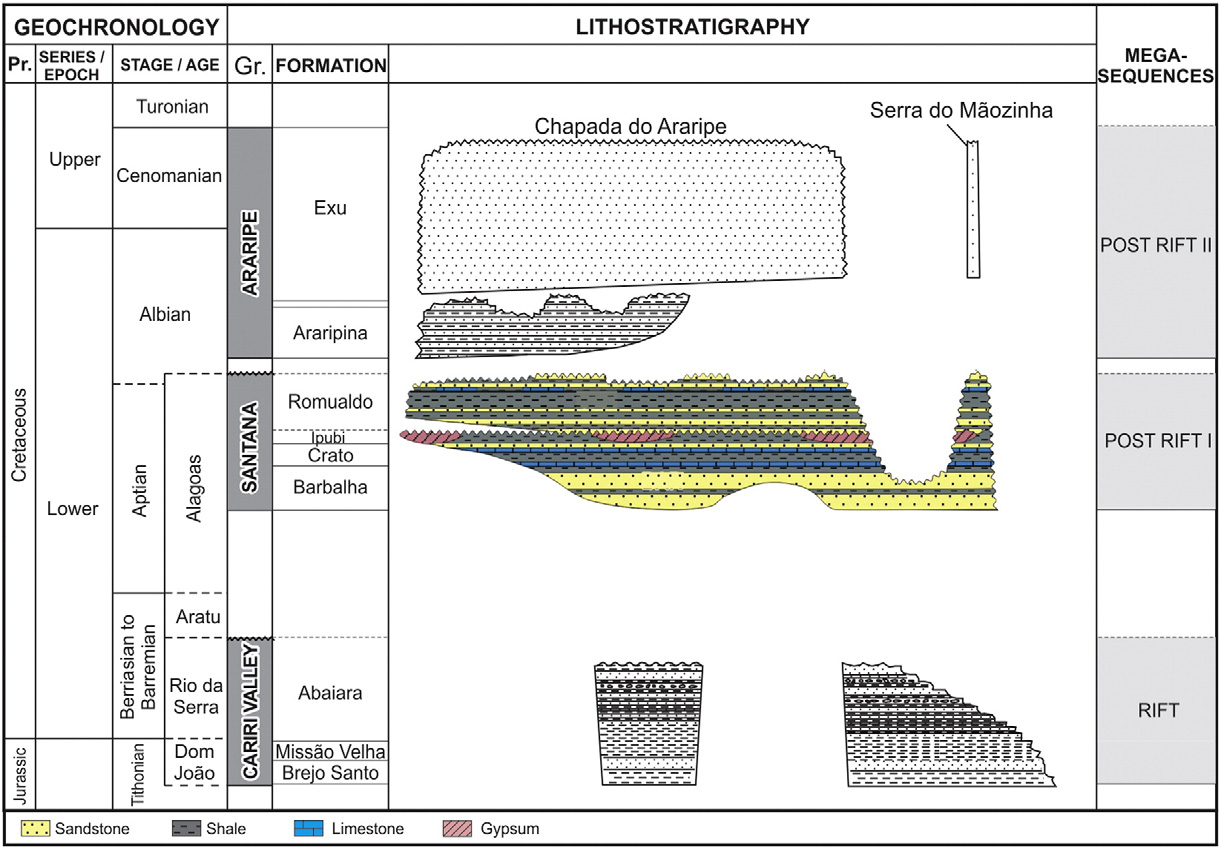
Geological formation & environment
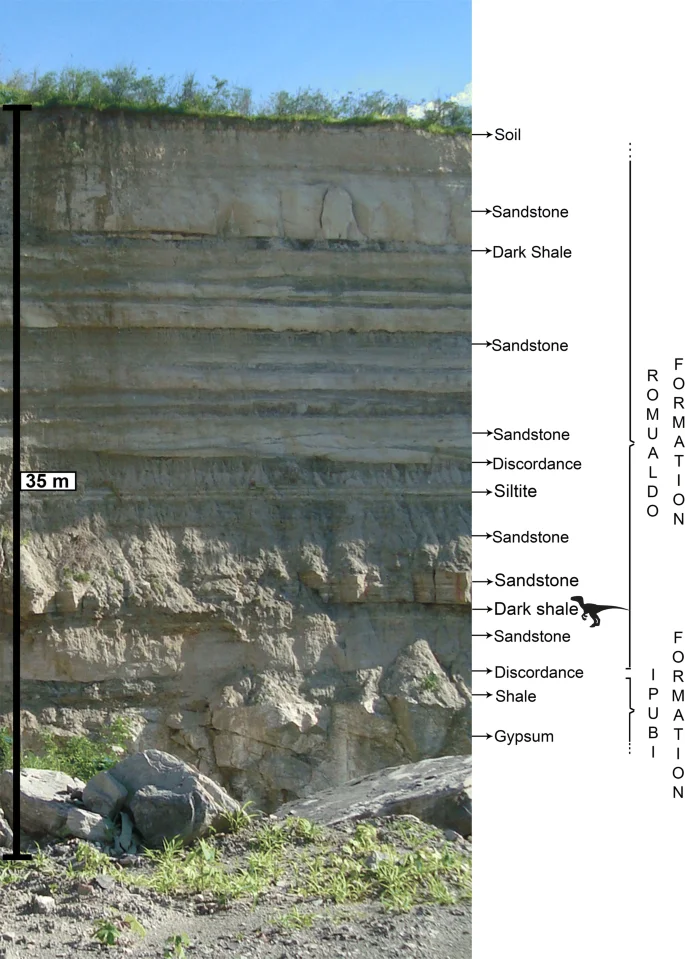
Romualdo Formation (formerly the 'Romualdo Member' of the Santana Formation), part of the Santana Group, Araripe Basin. Albian age (~110 Ma, base dated at 110.5 ± 7.4 Ma from fish teeth). Lithology dominated by mudstones, shales and calcareous concretions with exceptional three-dimensional preservation of vertebrates and invertebrates. World-class Konservat-Lagerstätte. The fauna includes theropods (Aratasaurus, Santanaraptor, Mirischia, Irritator, Angaturama), pterosaurs (Anhanguera, Tropeognathus, Tapejara, Thalassodromeus, Tupuxuara), around 25 fish species (Dastilbe, Vinctifer, Rhacolepis, Cladocyclus, Mawsonia), plus turtles, crocodyliforms and preserved vegetation. Aratasaurus comes specifically from the base of the formation, at a stratigraphic level about 2.5 metres above the contact with the Ipubi Formation.
Image gallery
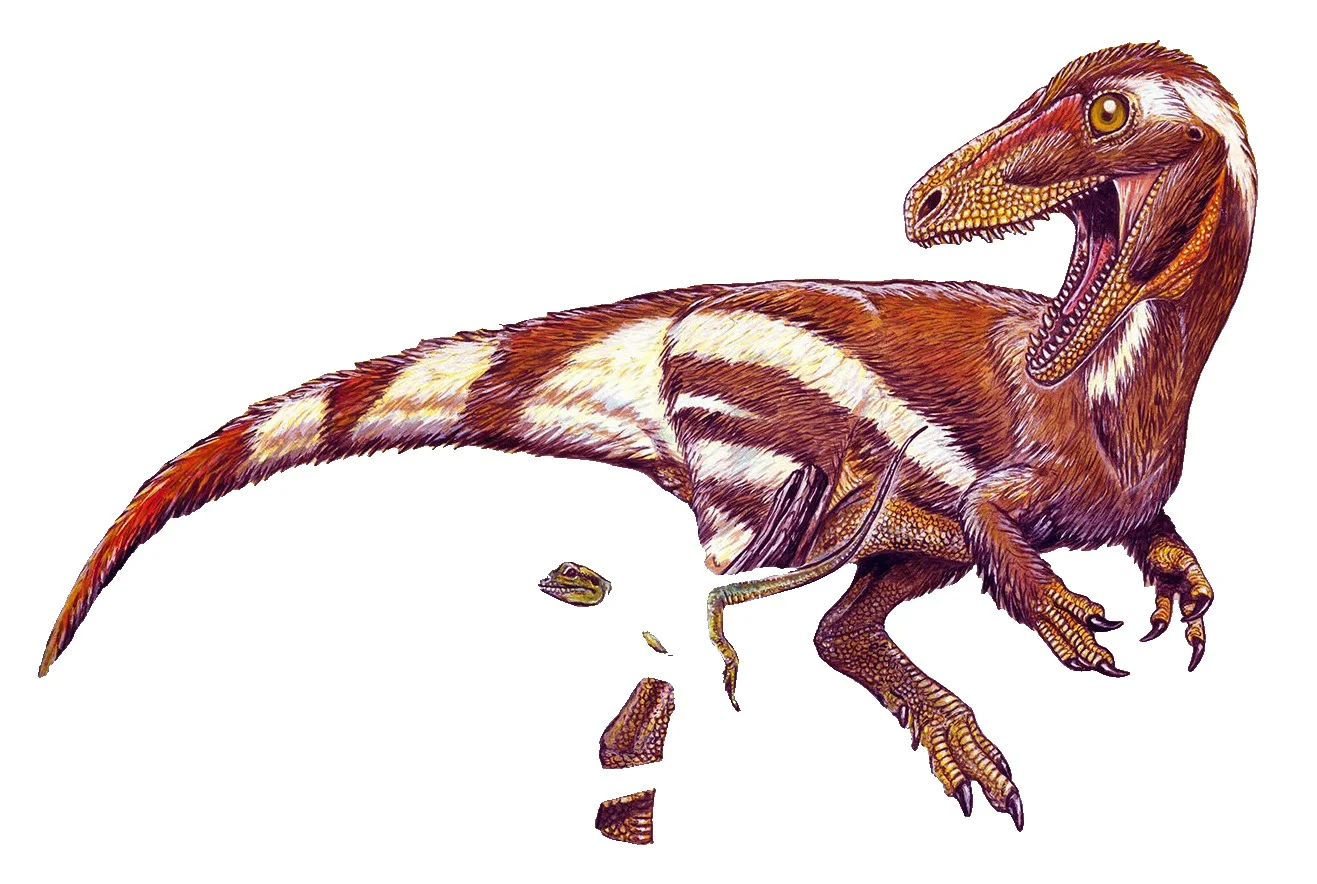




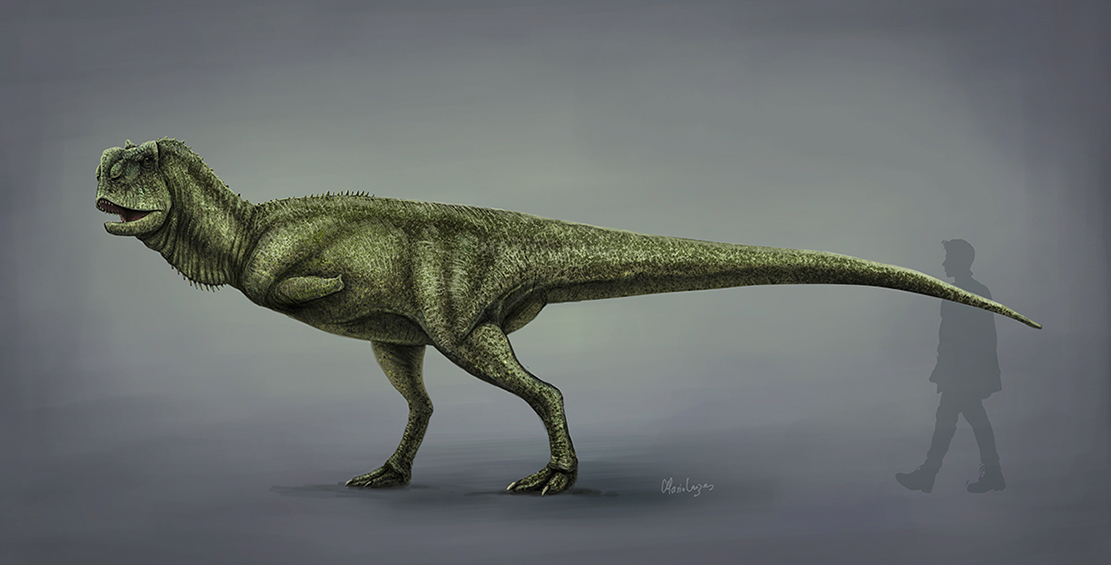
Life reconstruction of Aratasaurus museunacionali by Maurilio Oliveira, published as Figure 10 in Sayão et al. (2020). It depicts the small juvenile coelurosaur in an Araripe landscape.
Maurilio Oliveira (Wikimedia Commons, CC BY 4.0)
Ecology and behavior
Habitat
Semi-arid coastal plain around a shallow epicontinental sea in the interior of northeastern Brazil during the Albian (~110 Ma). The Romualdo Formation represents the transgressive phase of a rift basin, with hypersaline lagoons and calcareous concretions where exceptional fossil preservation occurred. Vegetation consisted of drought-tolerant conifers, cycads and gnetophytes, with wetter pulses during the transgression.
Feeding
Small carnivorous theropod with teeth and claws adapted to predation. As a juvenile, it probably fed on small vertebrates (lizards, mammaliaforms, stranded fish) and invertebrates. In adults, the diet would likely have included larger prey or carcasses. Its small size made it possible prey for the large spinosaurids (Irritator, Angaturama) of the same ecosystem.
Behavior and senses
Osteohistology indicates rapid growth typical of coelurosaurs, interrupted by death at ~4 years. There is no direct evidence of integument or social behaviour, but by analogy with other basal coelurosaurs Aratasaurus probably had feathers or protofeathers, was an active thermoregulator and led a cursorial lifestyle on the semi-open terrain of the Araripe.
Physiology and growth
The juvenile holotype allows one of the few detailed histological analyses of a Gondwanan coelurosaur, showing rapid growth and elevated metabolism consistent with the current picture of active endothermic small theropods. The long bones show successive lines of arrested growth, consistent with seasonal variation on the Araripe coastal plain.
Paleogeography
Continental configuration

Scotese & Vérard · CC BY 4.0 · Cretaceous, ~105 Ma
During the Albiano (~113–108 Ma), Aratasaurus museunacionali inhabited Laramidia, the western half of present-day North America, separated from the east by the Western Interior Seaway, a shallow sea dividing the continent. The continents were in very different positions: India was drifting toward Asia, Antarctica was still connected to Australia, and South America was an isolated island.
Bone Inventory
The holotype preserves only the articulated right hindlimb: distal femur, proximal tibia, partial metatarsals, several pedal phalanges and three pedal unguals. Despite low completeness, the articulation of the material and the presence of diagnostic features on the femur, tibia and metatarsals allowed assignment to a new genus of basal coelurosaur. Bone histology showed the specimen to be juvenile (~4 years old).
Found elements
Inferred elements
Scientific Literature
15 papers in chronological order — from the original description to recent research.
The first theropod dinosaur (Coelurosauria, Theropoda) from the base of the Romualdo Formation (Albian), Araripe Basin, Northeast Brazil
Sayão, J.M., Saraiva, A.Á.F., Brum, A.S., Bantim, R.A.M., Andrade, R.C.L.P., Cheng, X., Lima, F.J., Silva, H.P. e Kellner, A.W.A. · Scientific Reports
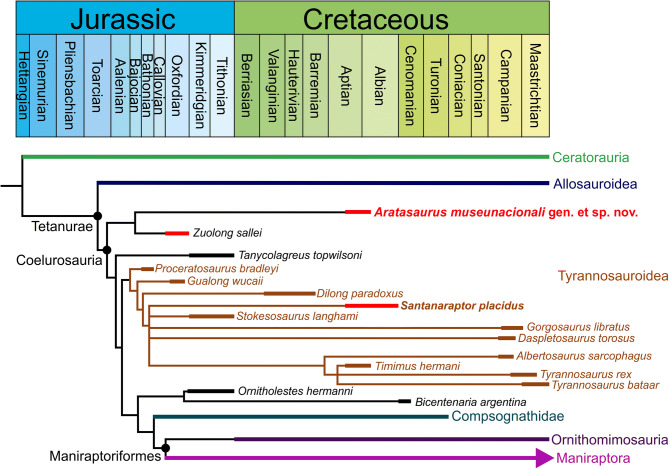
Original description of Aratasaurus museunacionali, the first coelurosaur reported from the base of the Romualdo Formation in the Araripe Basin. The material is an articulated right hindlimb, assigned to a juvenile aged around 4 years according to osteohistological analysis. Compares the fossil with Zuolong salleei (China) and with other Brazilian coelurosaurs and proposes a close systematic relationship with basal Gondwanan coelurosaurs.

Short note on a new dinosaur (Theropoda, Coelurosauria) from the Santana Formation (Romualdo Member, Albian), northeastern Brazil
Kellner, A.W.A. · Boletim do Museu Nacional, Nova Série, Geologia
Original description of Santanaraptor placidus, the first coelurosaur reported from the Araripe Basin, based on a partial skeleton with preserved soft tissue (MN 4802-V). A central reference for the systematics and paleobiogeography of basal Brazilian coelurosaurs, later contextualising the description of Aratasaurus.

First Early Cretaceous dinosaur from Brazil with comments on Spinosauridae
Kellner, A.W.A. e Campos, D.A. · Neues Jahrbuch für Geologie und Paläontologie, Abhandlungen
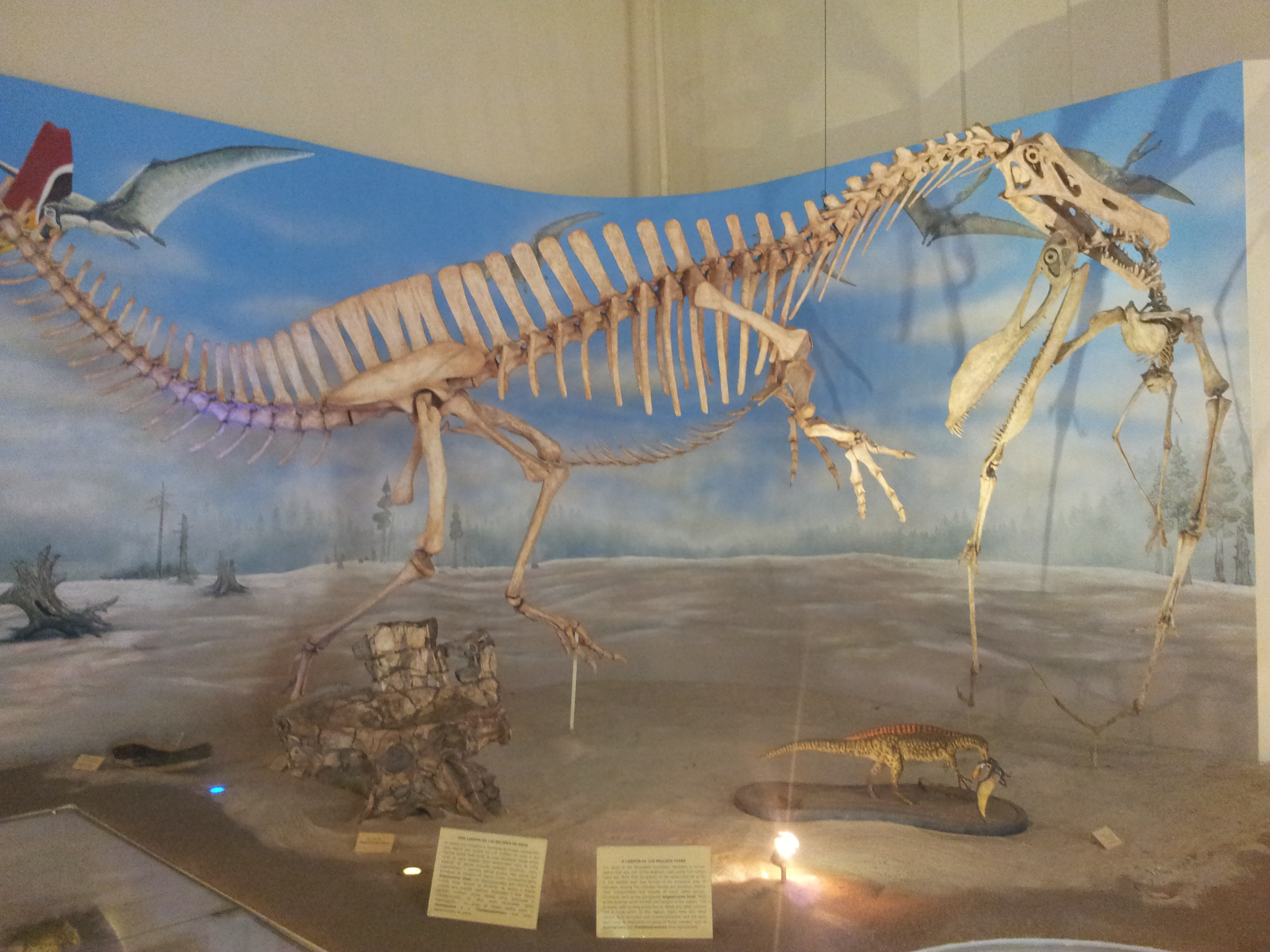
Describes Angaturama limai, a large spinosaurid from the Romualdo Formation, establishing the oldest record of Brazilian Cretaceous dinosaurs. Provides the faunal framework in which small theropods like Santanaraptor, Mirischia and Aratasaurus would later be described.

Skeletal remains of a small theropod dinosaur with associated soft structures from the Lower Cretaceous Santana Formation of northeastern Brazil
Martill, D.M., Frey, E., Sues, H.-D. e Cruickshank, A.R.I. · Canadian Journal of Earth Sciences
First description of the remains of Mirischia asymmetrica, another small coelurosaur from the Romualdo Formation with associated soft tissues. Establishes, together with Santanaraptor, the diversity of small theropods known in the Araripe Basin before Aratasaurus.

Ecology, systematics and biogeographical relationships of dinosaurs, including a new theropod, from the Santana Formation (?Albian, Early Cretaceous) of Brazil
Naish, D., Martill, D.M. e Frey, E. · Historical Biology
Formal naming of Mirischia asymmetrica and review of the ecology and biogeography of Santana (now Romualdo) Formation dinosaurs. Discusses the pelvic asymmetry of the genus and its systematic position among basal coelurosaurs, direct context for the later description of Aratasaurus.

Irritator challengeri, a spinosaurid (Dinosauria: Theropoda) from the Lower Cretaceous of Brazil
Sues, H.-D., Frey, E., Martill, D.M. e Scott, D.M. · Journal of Vertebrate Paleontology
Describes Irritator challengeri, a spinosaurid from the Romualdo Formation, based on a well-preserved skull. Provides context for the large theropods of the Araripe ecosystem that shared environments with small coelurosaurs such as Santanaraptor and, later, Aratasaurus.

A new crested maniraptoran dinosaur from the Santana Formation (Lower Cretaceous) of Brazil
Martill, D.M., Cruickshank, A.R.I., Frey, E., Small, P.G. e Clarke, M. · Journal of the Geological Society
Original description of Irritator challengeri (before Sues et al. 2002 redescribed the species in detail). One of the first descriptions of theropods in the Araripe Basin and a classic reference for the ecosystem where Aratasaurus lived.
The coelurosaur theropods of the Romualdo Formation, Early Cretaceous (Aptian) of Brazil: Santanaraptor placidus meets Mirischia asymmetrica
Delcourt, R., Grillo, O.N., Hendrickx, C., Kellermann, M. e Langer, M.C. · The Anatomical Record
Joint redescription of the two best-known coelurosaurs from the Romualdo Formation, Santanaraptor placidus and Mirischia asymmetrica. Establishes the most recent anatomical-phylogenetic framework for Brazilian Cretaceous coelurosaurs, essential to reassess the position of Aratasaurus within Coelurosauria.
A maned theropod dinosaur from Gondwana with elaborate integumentary structures
Smyth, R.S.H., Martill, D.M., Frey, E., Rivera-Sylva, H.E. e Lenz, N. · Cretaceous Research
Original description of Ubirajara jubatus, a small theropod with elaborate integumentary structures, from the Crato Formation (immediately underlying the Romualdo). The paper was retracted in 2022 (the name is now considered unavailable), but it is relevant for contextualising the debate about small Araripe theropods at the same time as the Aratasaurus description.


Paleoenvironmental evolution of the Aptian Romualdo Formation, Araripe Basin, Northeastern Brazil
Varejão, F.G., Warren, L.V., Perinotto, J.A.J., Neumann, V.H., Freitas, B.T., Assine, M.L. e Simões, M.G. · Palaeogeography, Palaeoclimatology, Palaeoecology
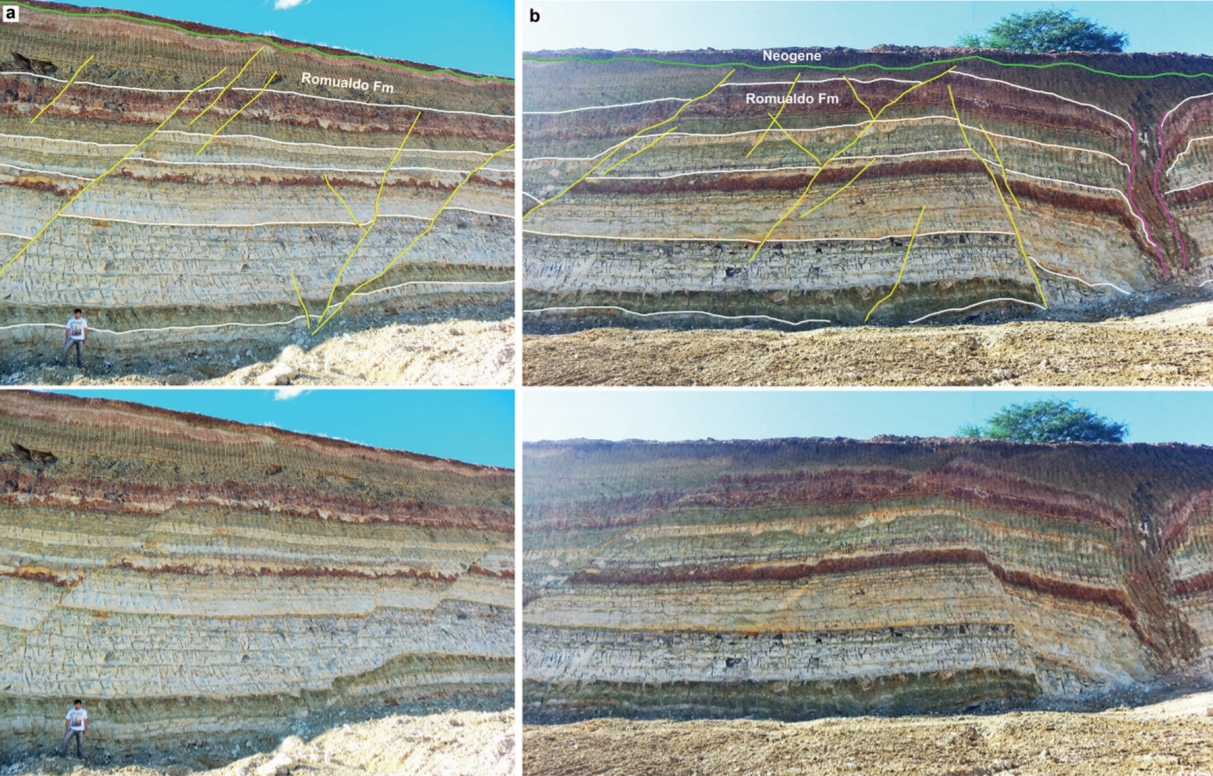
Paleoenvironmental review of the Romualdo Formation, with new datings and analysis of the marine transgressions that shaped the Araripe Basin during the Albian. Provides the stratigraphic and paleoecological context in which Aratasaurus was found, near the base of the formation.

The Crato Fossil Beds of Brazil: Window into an Ancient World
Martill, D.M., Bechly, G. e Loveridge, R.F. (editores) · Cambridge University Press
Reference volume on the paleobiota of the Crato Formation, directly underlying the Romualdo Formation in the Araripe Basin. Provides the geological, paleoenvironmental and systematic context essential to understanding the ecosystem in which Aratasaurus later lived.

Dolomite pipes in the Crato Formation fossil lagerstätte (Lower Cretaceous, Aptian), of northeastern Brazil
Martill, D.M., Loveridge, R.F. e Heimhofer, U. · Cretaceous Research
Sedimentological analysis of the Crato Formation dolomite pipes and their relation to exceptional fossil preservation in the Araripe Basin. Complements understanding of the depositional environment that favoured fossils of Aratasaurus, Santanaraptor and Mirischia.


The transgressive-regressive cycle of the Romualdo Formation (Araripe Basin): Sedimentary archive of the Early Cretaceous marine ingression in the interior of Northeast Brazil
Custódio, M.A., Quaglio, F., Warren, L.V., Simões, M.G., Fürsich, F.T., Perinotto, J.A.J. e Assine, M.L. · Sedimentary Geology
Reconstruction of the transgressive-regressive cycle of the Romualdo Formation, documenting the entry and exit of the sea into the interior of northeastern Brazil during the Early Cretaceous. Provides the paleogeographic baseline directly applicable to the environment in which Aratasaurus lived.

Mesozoic dinosaurs from Brazil and their biogeographic implications
Bittencourt, J.S. e Langer, M.C. · Anais da Academia Brasileira de Ciências
Comprehensive review of Brazilian Mesozoic dinosaurs and their biogeographic implications for Gondwana. A synthesis of reference for situating Aratasaurus within the set of previously known Brazilian theropods.
On a theropod dinosaur (Abelisauria) from the continental Cretaceous of Brazil
Kellner, A.W.A. e Campos, D.A. · Arquivos do Museu Nacional
Reports an abelisaurian theropod from the continental Cretaceous of Brazil (Bauru Basin), relevant as a paleobiogeographic comparison point between Gondwanan theropods and Aratasaurus. Offers a panorama of theropod diversity and distribution in the Brazilian Cretaceous.

Famous museum specimens
MPSC R 2089 (holótipo)
Museu de Paleontologia Plácido Cidade Nuvens, Universidade Regional do Cariri (URCA), Santana do Cariri, Ceará, Brasil
The museum was founded by Plácido Cidade Nuvens in 1985, donated to URCA in 1991 and houses about 7,000 fossils on display, including the Aratasaurus holotype. The osteohistological description by Sayão et al. (2020) showed the animal died young, aged about 4, still growing.
Classification
Discovery
Fun fact
Aratasaurus is the only Brazilian dinosaur whose name honours a tragedy: the fire at the Museu Nacional of Rio de Janeiro on 2 September 2018, which destroyed part of Brazil's palaeontological collection. Ara is 'born' in Tupi, atá is 'fire', and -sauros is 'lizard' in Greek, together forming 'lizard born from fire'. The epithet museunacionali completes the tribute to the destroyed institution, while the holotype, housed in Santana do Cariri (Ceará) and not in the Museu Nacional, survived the event. The description was published in 2020, just over a year and a half after the disaster.
Last reviewed: April 24, 2026