
Nanotyrannus
Nanotyrannus lancensis
"Dwarf tyrant of Lance"
About this species
Nanotyrannus lancensis is one of the most controversial dinosaurs in paleontology. Originally described by Charles Gilmore in 1946 as a species of Gorgosaurus, it was reclassified as its own genus by Bakker, Williams, and Currie in 1988. The central debate is whether the known specimens represent a distinct small-bodied tyrannosaurid species or juvenile Tyrannosaurus rex individuals. The 'Jane' specimen (BMRP 2002.4.1), found in Montana in 2001 and housed at the Burpee Museum of Natural History, is the most complete ever attributed to the genus. Recent studies by Longrich and Saitta (2024) and Zanno and Napoli (2025) support its taxonomic validity based on bone histology, skeletal proportions, and independent phylogenetic analysis, though the scientific debate remains active.
Geological formation & environment
The Hell Creek Formation is one of the most important for studying the end of the Cretaceous in North America, with exposures in Montana, North Dakota, South Dakota, and Wyoming. Deposited between 68 and 66 Ma, it consists of sandstones, siltstones, and mudstones from fluvial and coastal environments. It preserves the richest fauna of the North American latest Maastrichtian, including Tyrannosaurus rex, Triceratops, Edmontosaurus, and Ankylosaurus. The iridium-rich layer at the top of the formation marks the K-Pg boundary — the mass extinction event that ended the age of non-avian dinosaurs.
Image gallery
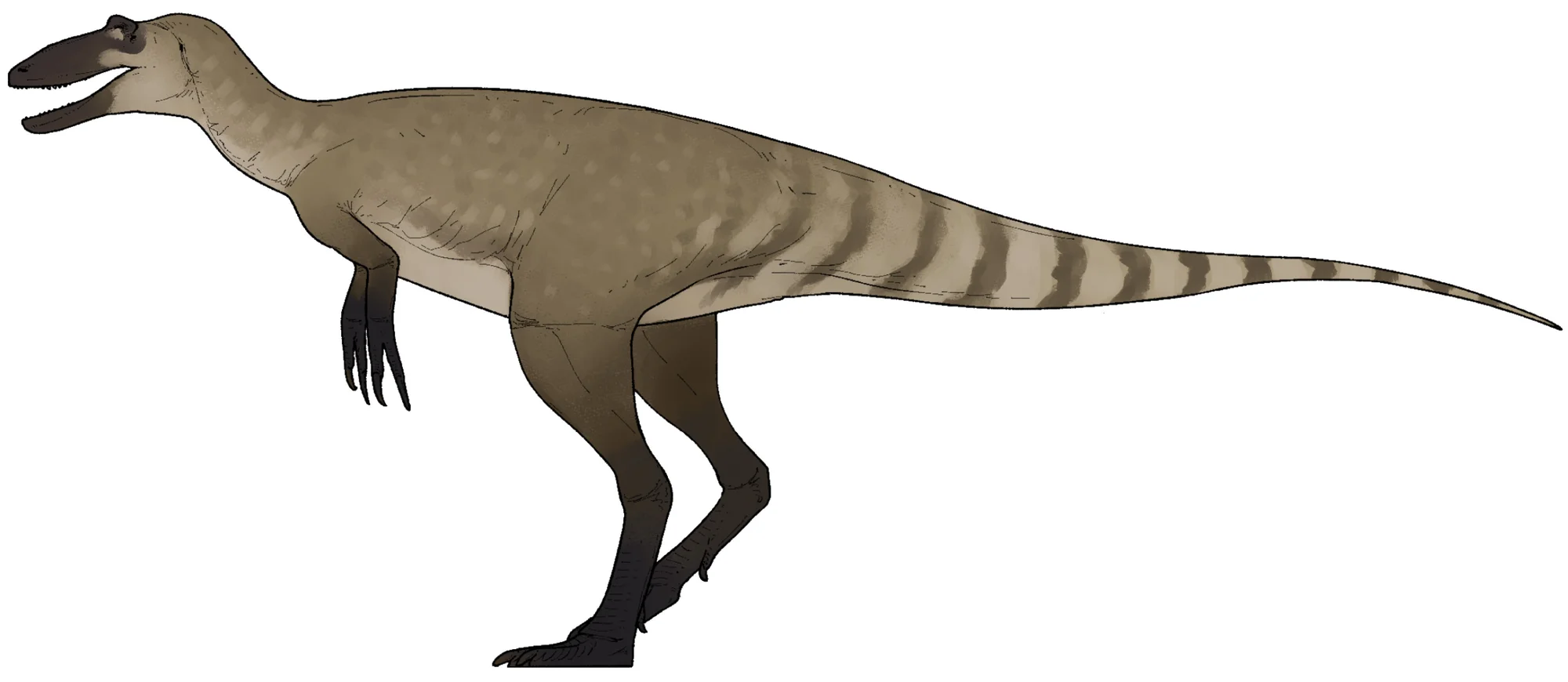
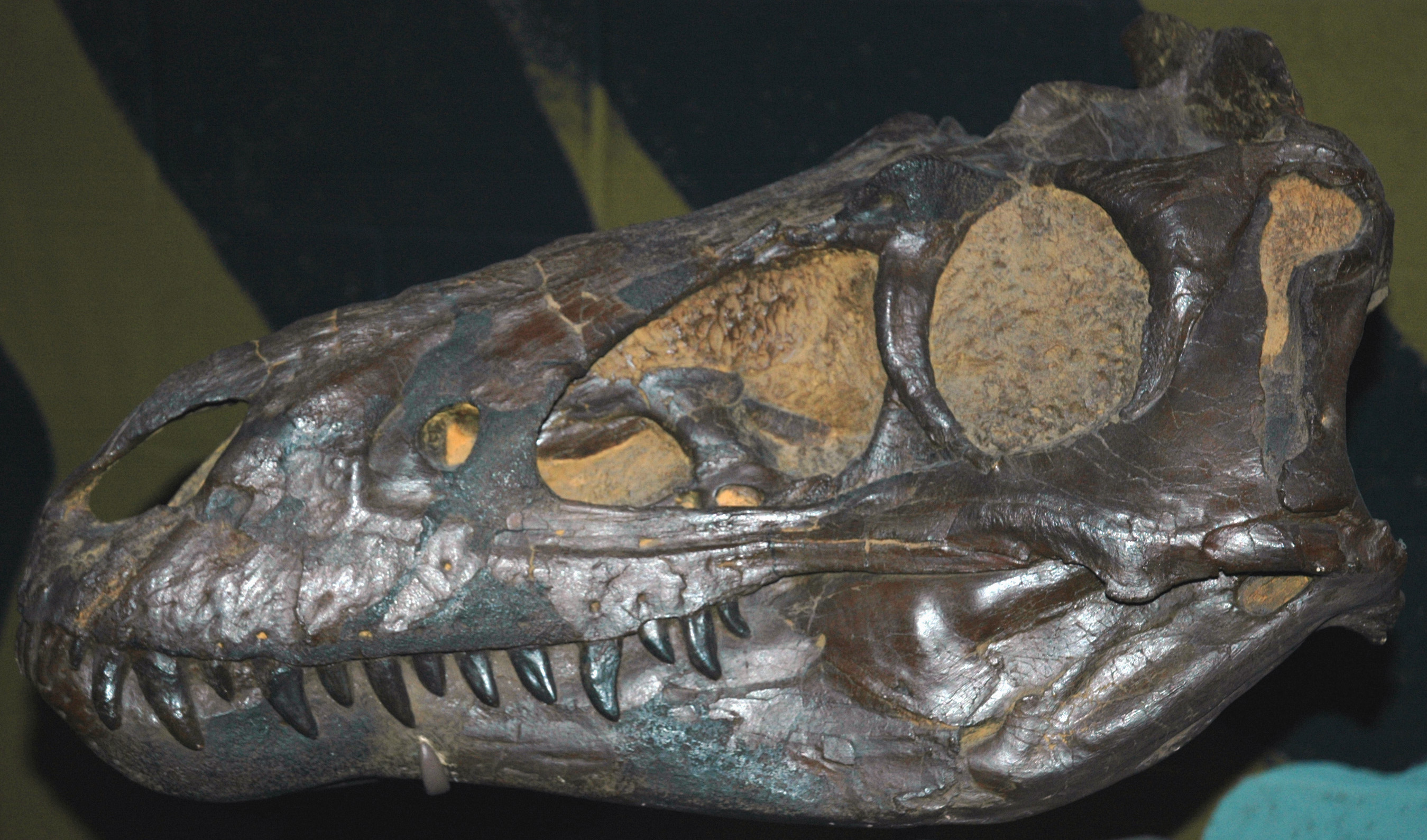

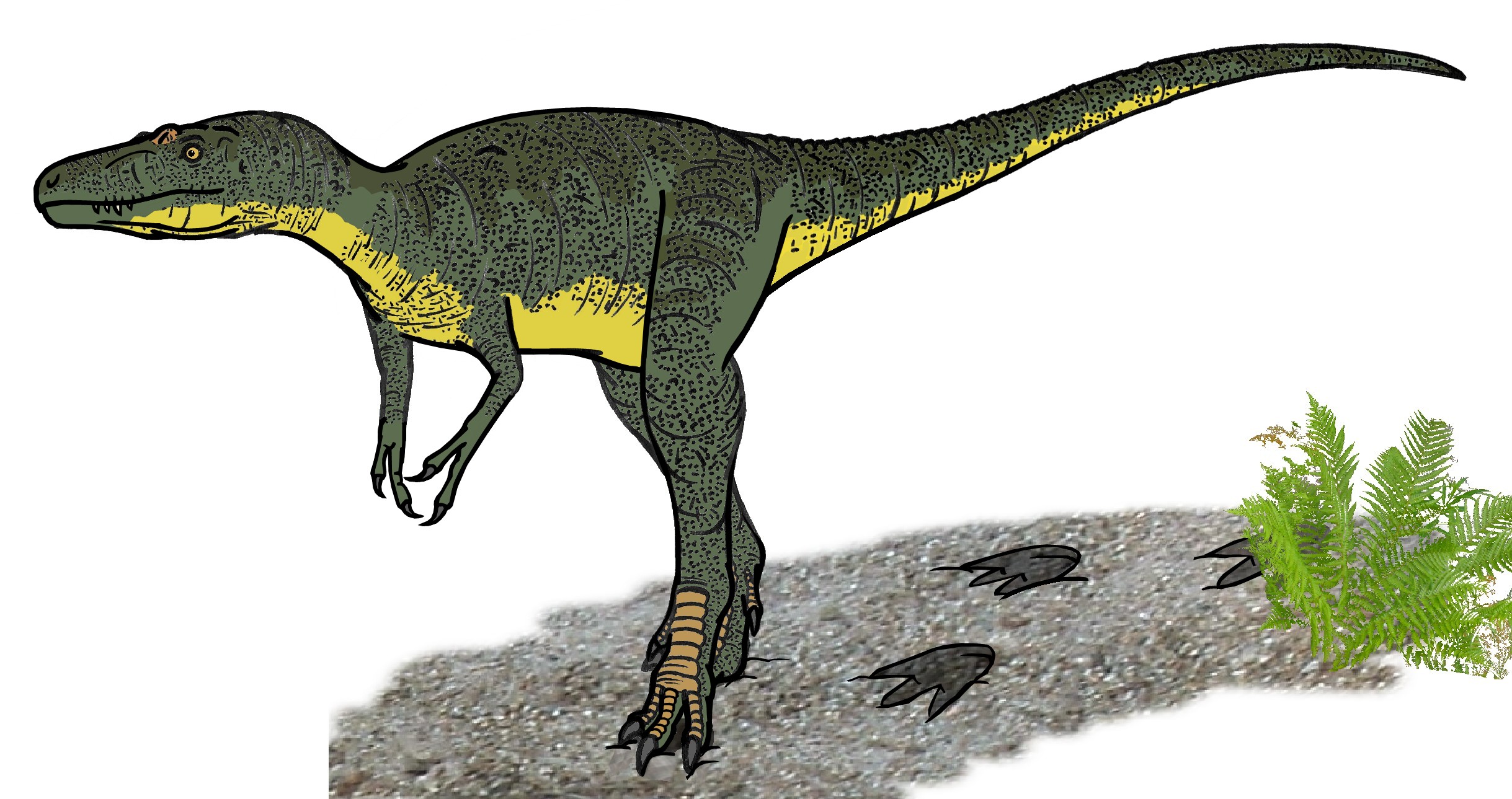


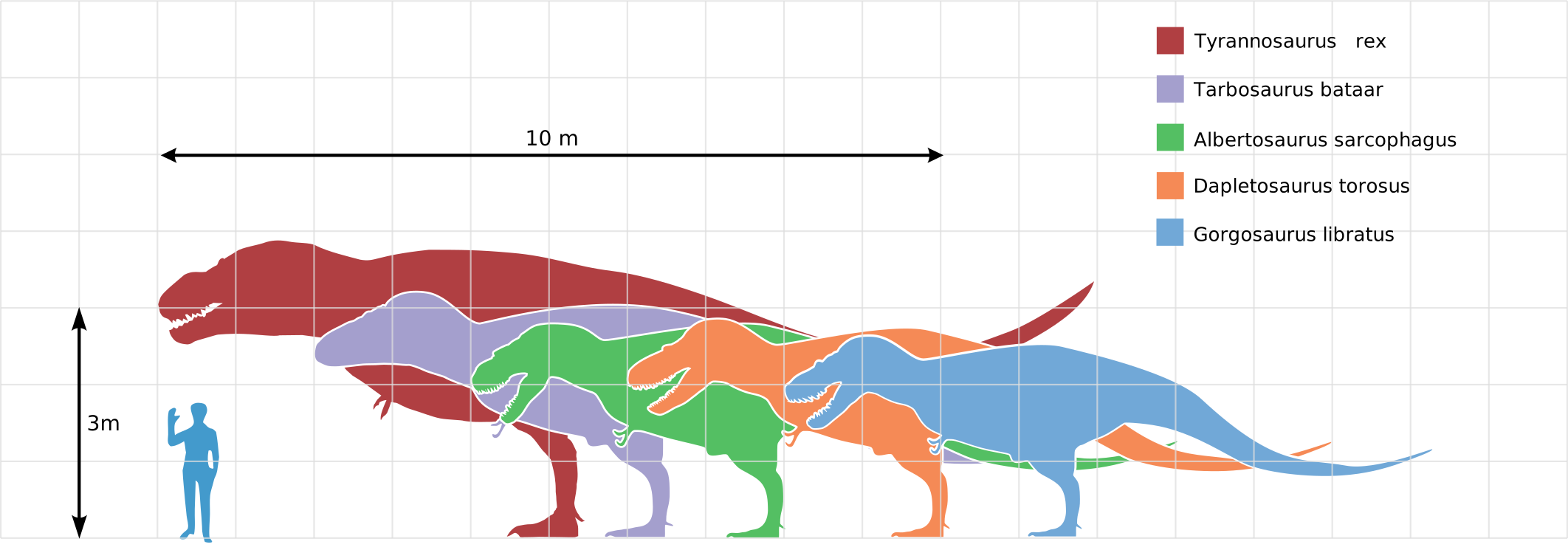


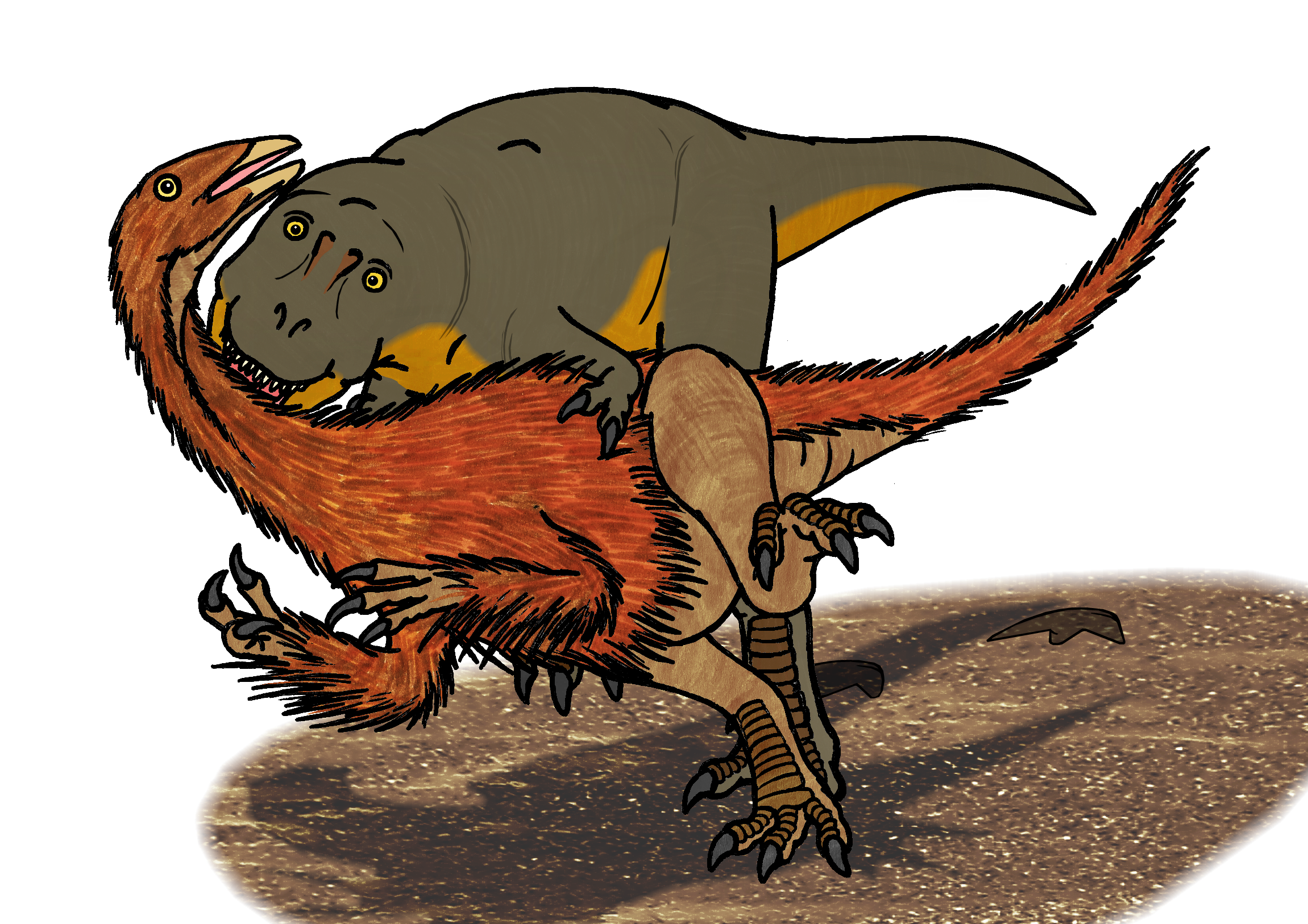
Life reconstruction of Nanotyrannus lancensis based on specimen NCSM 40000, a small tyrannosaurid from the Lance Formation.
Connor Ashbridge (Ddinodan), Wikimedia Commons, CC BY 4.0
Ecology and behavior
Habitat
Nanotyrannus inhabited the Hell Creek Formation ecosystem during the latest Maastrichtian, 68-66 Ma. The environment was a subtropical coastal plain with warm, humid climate, with average temperature of 11-12°C — warmer than the current North American Great Plains. Meandering rivers crossed dense angiosperm forests with fern understory, complemented by conifers (cypresses, redwoods) at higher elevations. The ecosystem was shared with Tyrannosaurus rex, Triceratops, Edmontosaurus, Ankylosaurus, and dozens of other vertebrate species.
Feeding
If Nanotyrannus is a valid species, it would have occupied an ecological niche distinct from adult T. rex — hunting smaller and softer prey, such as juvenile ornithopods, small ceratopsians, and other medium-sized vertebrates. Its teeth with ziphodonty (lateral compression of maxillary crowns) would be adapted for efficiently lacerating soft tissue. Bite force analysis by Rowe et al. (2022) estimates capacity of 2,400-3,850 N — sufficient for hunting smaller prey but far below the bone-crushing capability of adult T. rex.
Behavior and senses
Behavioral evidence comes primarily from the 'Jane' specimen, which exhibits healed intraspecific bite wounds on the snout and upper jaw — indicating Nanotyrannus engaged in intraspecific aggression, possibly linked to hierarchy establishment or reproductive behavior. Analysis by Persons and Currie (2016) suggests exceptional cursorial capacity, with estimated maximum speed of 45-50 km/h — greater than any other non-avian theropod studied. If valid, Nanotyrannus would have been an active, agile, and potentially solitary predator.
Physiology and growth
As a member of Tyrannosauridae, Nanotyrannus was likely endothermic (warm-blooded), with high metabolism similar to modern birds — a pattern confirmed for the entire family by Erickson et al. (2004). Bone histology, central to the taxonomic debate, reveals bone tissue with a growth pattern different from young T. rex, according to Longrich and Saitta (2024). The presence of five tubercles on the distal humerus — a unique feature among eutyrannosaurs — and hypercursorial hindlimbs suggest physiological adaptations for fast locomotion, ecologically distinct from those of adult T. rex.
Paleogeography
Continental configuration

Scotese & Vérard · CC BY 4.0 · Cretaceous, ~105 Ma
Fossil sites
Paleobiology Database, HFoxii · CC BY-SA 3.0
During the Maastrichtiano (~68–66 Ma), Nanotyrannus lancensis inhabited Laramidia, the western half of present-day North America, separated from the east by the Western Interior Seaway, a shallow sea dividing the continent. The continents were in very different positions: India was drifting toward Asia, Antarctica was still connected to Australia, and South America was an isolated island.
Bone Inventory
Based on multiple specimens. The holotype (CMNH 7541) is only a partial skull. The 'Jane' specimen (BMRP 2002.4.1) is the most complete, with approximately 50% of the skeleton preserved. The 'Bloody Mary' specimen (NCSM 40000), described by Zanno and Napoli (2025), is nearly complete and was crucial for confirming the genus's taxonomic validity.
Found elements
Inferred elements
Scientific Literature
15 papers in chronological order — from the original description to recent research.
A new carnivorous dinosaur from the Lance Formation of Montana
Gilmore, C.W. · Smithsonian Miscellaneous Collections
The founding paper of the Nanotyrannus debate. Charles Gilmore describes skull CMNH 7541, collected in 1942 by a Cleveland Museum of Natural History expedition from the Hell Creek Formation of Montana. Gilmore classifies the specimen as Gorgosaurus lancensis, distinguishing it from other known tyrannosaurids by unique cranial proportions: a relatively larger orbit, more gracile skull, and lower overall profile. The paper was published posthumously, as Gilmore died in September 1945 before completing the description. The holotype remains today at the Cleveland Museum of Natural History as CMNH 7541. This original description established the taxonomic foundation upon which all subsequent controversy developed, making it the mandatory reference for any study of the genus.
Nanotyrannus, a new genus of pygmy tyrannosaur, from the latest Cretaceous of Montana
Bakker, R.T., Williams, M. & Currie, P.J. · Hunteria
The seminal paper establishing the genus Nanotyrannus. Bakker, Williams, and Currie apply computed tomography (CT) scanning to skull CMNH 7541 and identify features that, in their interpretation, distinguish the specimen from any known tyrannosaurid: fused neurocrania bones (indicating skeletal maturity), morphologically differentiated premaxillary and maxillary teeth, and unique proportions of the nasal bones. Based on this evidence, the authors establish the new genus Nanotyrannus ('dwarf tyrant') and argue that two distinct tyrannosaurids coexisted in the latest North American Cretaceous. The paper launched decades of debate about the genus's validity and remains the central reference for researchers on both sides of the controversy.
Craniofacial ontogeny in Tyrannosauridae (Dinosauria, Coelurosauria)
Carr, T.D. · Journal of Vertebrate Paleontology
Thomas Carr conducts the first systematic ontogenetic study of tyrannosaurids, documenting how the skull changes during growth in Albertosaurus, Gorgosaurus, Daspletosaurus, and Tyrannosaurus. Applying these ontogenetic variation patterns to the Nanotyrannus holotype (CMNH 7541), Carr concludes that the supposedly diagnostic features of the genus — proportionally large orbit, low gracile skull, differentiated teeth — are consistent with a juvenile growth stage of a larger tyrannosaurid, possibly Tyrannosaurus rex. This work established the ontogenetic argument as an alternative to the Bakker et al. (1988) hypothesis and launched the modern debate about whether Nanotyrannus is a valid genus or simply a juvenile T. rex.


Reanalysis of 'Raptorex kriegsteini': a juvenile tyrannosaurid dinosaur from Mongolia
Fowler, D.W., Woodward, H.N., Freedman, E.A., Larson, P.L. & Horner, J.R. · PLOS ONE
Fowler et al. reanalyze Raptorex kriegsteini — presented as a small-bodied tyrannosaurid with derived features evolved at small body size — and demonstrate it is a juvenile Tarbosaurus bataar. The work has direct implications for the Nanotyrannus debate: the authors methodologically show how apparently diagnostic morphological features of 'small species' can be ontogenetic stages of larger species. The phylogenetic and histological analysis developed in this study provides tools for distinguishing valid species from misidentified juveniles, making this paper a central methodological reference for any investigation of Nanotyrannus validity.
The phylogeny and evolutionary history of tyrannosauroid dinosaurs
Brusatte, S.L. & Carr, T.D. · Scientific Reports
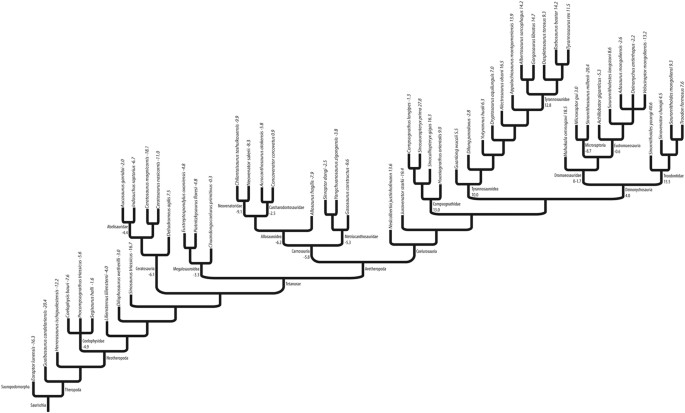
Brusatte and Carr publish the most comprehensive phylogenetic dataset on Tyrannosauroidea to date, combining data from earlier studies and incorporating newly discovered taxa. Parsimony and Bayesian analyses produce highly congruent topologies, revealing that the colossal body plan of derived tyrannosaurids evolved in stages over ~100 Ma of evolutionary history. The study suggests T. rex may be an Asian migrant to North America and that there was no clear division between northern and southern Laramidian species as previously argued. This robust phylogenetic framework provides the evolutionary context for evaluating Nanotyrannus's position within Tyrannosauridae.
An approach to scoring cursorial limb proportions in carnivorous dinosaurs and an attempt to account for allometry
Persons, W.S. & Currie, P.J. · Scientific Reports
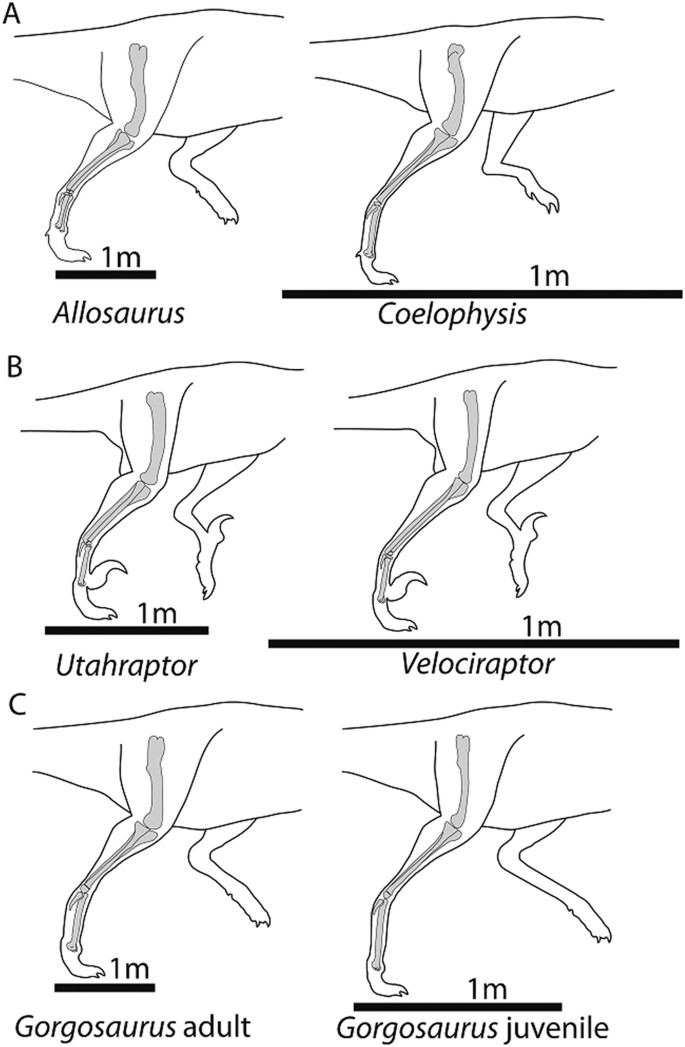
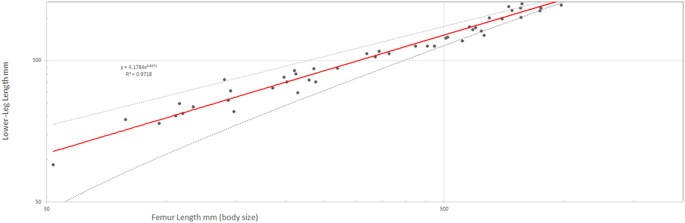
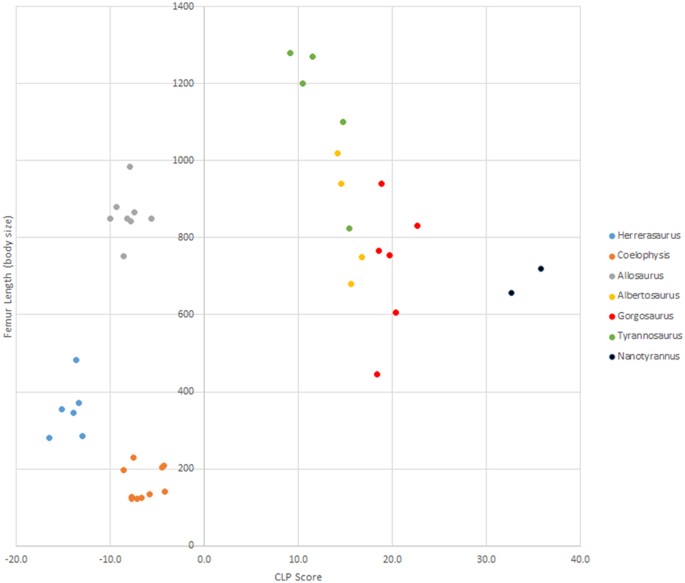
Persons and Currie develop a metric system (CLP — Cursorial Limb Proportion) to quantify locomotor adaptations in over 50 species of predatory dinosaurs. When applied to Nanotyrannus specimens, the results are striking: the CLP scores of Jane and other specimens attributed to Nanotyrannus exceed those of any other non-avian theropod in the database, including adult Tyrannosaurus rex. This implies Nanotyrannus was the most cursorially specialized non-avian theropod ever studied, with an estimated maximum speed of 45-50 km/h. The discrepancy between Nanotyrannus cursorial limb proportions and those of adult T. rex is so extreme that the authors argue it represents independent support for Nanotyrannus as a valid distinct genus.

Growing up Tyrannosaurus rex: Osteohistology refutes the pygmy Nanotyrannus and supports ontogenetic niche partitioning in juvenile Tyrannosaurus
Woodward, H.N., Tremaine, K., Williams, S.A., Zanno, L.E., Horner, J.R. & Myhrvold, N. · Science Advances
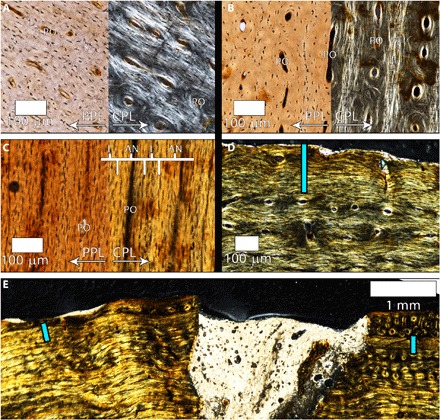
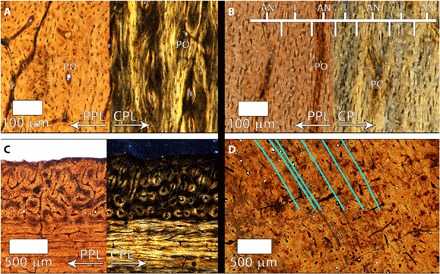
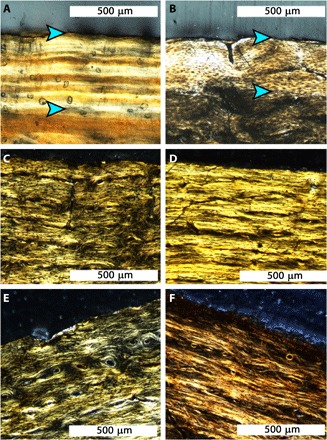
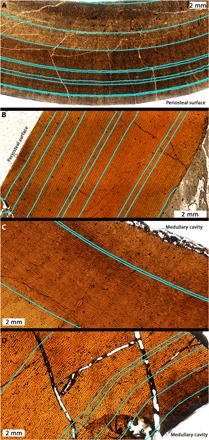
Woodward et al. conduct osteohistological analysis of femur and tibia from two small tyrannosaurid specimens: 'Jane' (BMRP 2002.4.1) and 'Petey' (BMRP 2006.4.4). The bone microstructure reveals rapidly growing and active tissue, with organization consistent with 13-15 year-old individuals still growing intensively. The calculated growth rates are comparable to those of endothermic birds and mammals, incompatible with animals near maturity. Based on this evidence, the authors conclude these specimens are juvenile T. rex, refuting the pygmy tyrannosaurid hypothesis and supporting ontogenetic niche partitioning between juvenile and adult T. rex, which would hunt distinct prey due to morphological differences between ontogenetic stages.

A high-resolution growth series of Tyrannosaurus rex obtained from multiple lines of evidence
Carr, T.D. · PeerJ
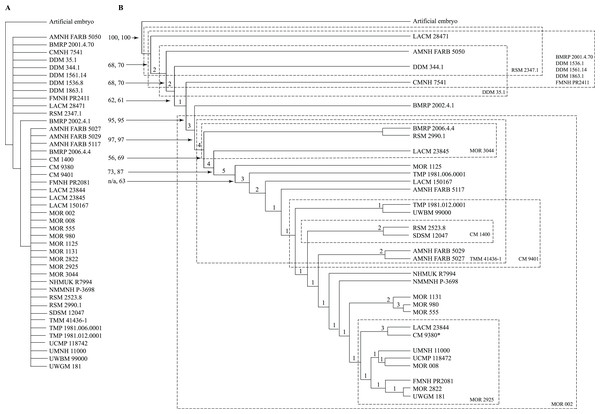
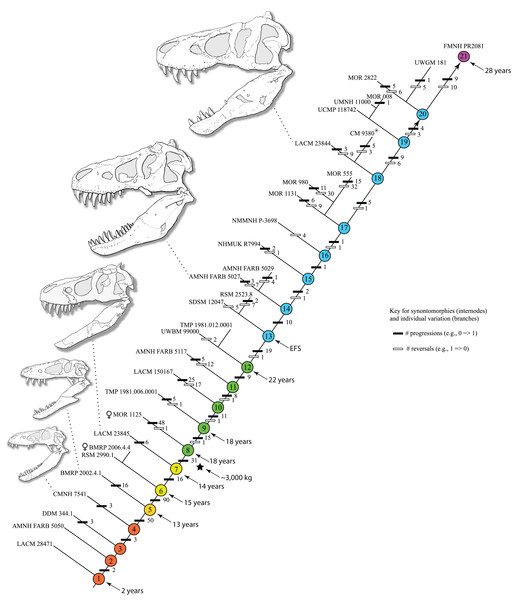
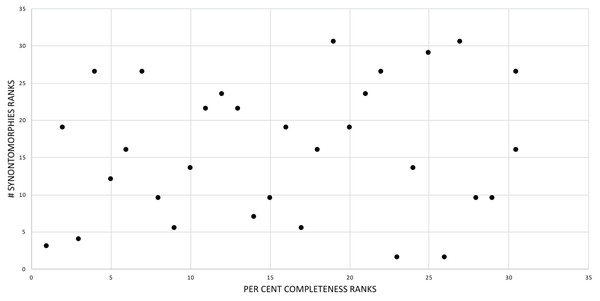
Carr presents the most comprehensive growth series ever published for Tyrannosaurus rex, combining cranial morphology, bone histology, and body size data from dozens of specimens. By mapping specimens previously attributed to Nanotyrannus onto this growth series, Carr concludes that all fit within the ontogenetic continuum of T. rex without presenting exclusive morphological features inconsistent with immature individuals. The study proposes that the apparent distinction of Nanotyrannus dissolves when considering the complete ontogenetic variation of T. rex, and that researchers defending Nanotyrannus are interpreting growth stages as distinct species.


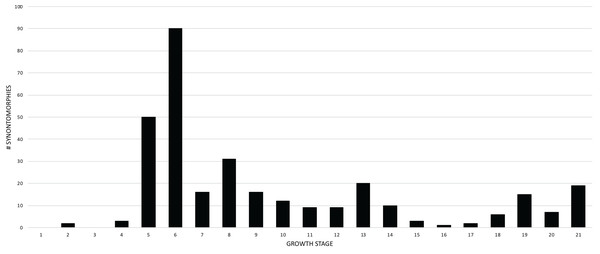
Taxonomic Status of Nanotyrannus lancensis (Dinosauria: Tyrannosauroidea): A Distinct Taxon of Small-Bodied Tyrannosaur
Longrich, N.R. & Saitta, E.T. · Fossil Studies
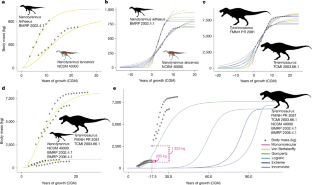
The most comprehensive study in favor of Nanotyrannus validity published through 2024. Longrich and Saitta analyze 158 morphological features distinguishing Nanotyrannus specimens from Tyrannosaurus rex, of which 44 are considered unlikely to change significantly through ontogenetic growth. Histological analysis reveals growth rings with progressively more compressed spacing in the outer bone layers, indicating slowing growth — a pattern incompatible with juvenile T. rex growing 700 kg per year. Growth models project a maximum adult size of 900-1,500 kg — about 15% of adult T. rex mass. The authors conclude Nanotyrannus was a small-bodied adult tyrannosaurid that ecologically coexisted with T. rex, not one of its juveniles.


Biomechanics of juvenile tyrannosaurid mandibles and their implications for bite force
Rowe, A.J., Snively, E. & Cotton, J. · The Anatomical Record
Rowe et al. apply three-dimensional finite element analysis (FEA) to model the mechanical properties of mandibles from tyrannosaurines of different sizes, including 'Jane' (BMRP 2002.4.1). Results quantify bite force in juvenile-sized animals at 2,400-3,850 N — substantially less than the 35,000-57,000 N estimated for adult T. rex. Juvenile mandibles show structural morphology adapted for soft tissue prey, without the bone-crushing capability of adults. The study supports ecological niche partitioning between juvenile and adult tyrannosaurids, regardless of whether the specimens represent young T. rex or adult Nanotyrannus.


Intraspecific facial bite marks in tyrannosaurids provide insight into sexual maturity and evolution of bird-like intersexual display
Peterson, J.E. & Daus, K.N. · Paleobiology
Peterson and Daus analyze 324 bite lesions across 202 tyrannosaurid specimens and document that intraspecific facial aggression marks are associated with the onset of sexual maturity: absent in small, immature specimens, they appear in individuals at ~50% of adult skull size and are present in ~60% of adults. The 'Jane' specimen exhibits healed intraspecific bite wounds inflicted by an attacker larger than Jane. The study provides a new maturity indicator based on behavioral pattern: the presence of facial fight scars suggests sexual maturity, while their absence suggests immaturity — an argument relevant to the debate about the age of specimens attributed to Nanotyrannus.

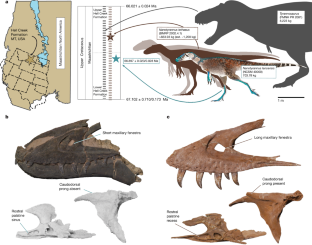
Nanotyrannus and Tyrannosaurus coexisted at the close of the Cretaceous
Zanno, L.E. & Napoli, J.G. · Nature
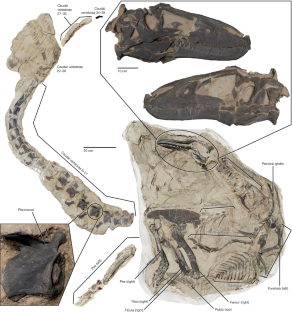
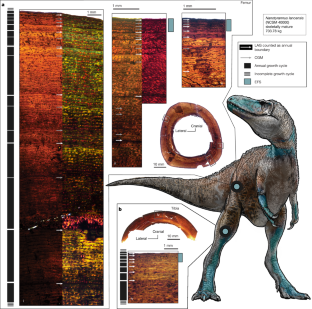
The most complete study ever published on Nanotyrannus, describing the 'Bloody Mary' specimen (NCSM 40000) — a nearly complete skeleton from the Hell Creek Formation of Montana that remained in private ownership from 2006 to 2020. Zanno and Napoli document 25 cyclical growth marks in the bones, indicating the animal died aged 17-22 at near-skeletal maturity. Comparative anatomy reveals autapomorphies shared with the N. lancensis holotype (CMNH 7541). Phylogenetic analysis places Nanotyrannus in a new family, Nanotyrannidae, as the sister group to Tyrannosauridae, with divergence estimated at ~103 Ma — when the Western Interior Seaway separated the Appalachia and Laramidia landmasses. This Nature paper represents the most recent consensus in favor of Nanotyrannus validity and launched a new phase in the paleontological debate.

Hell Creek paleoenvironmental study: stratigraphy, fauna, and end-Cretaceous mass extinction
DePalma, R.A. et al. · Geological Society of America Bulletin
DePalma et al. conduct detailed stratigraphic and paleontological analysis of the Hell Creek Formation in North Dakota, documenting the end-Cretaceous ecosystem where Nanotyrannus and T. rex coexisted. The fauna includes multiple tyrannosaurid specimens, hadrosaurs, ceratopsians, and diverse non-dinosaurian vertebrate fauna. Palynological data indicate subtropical to warm-temperate climate with seasonal wet-dry cycles. The formation is dominated by angiosperm forests along riverbanks, with conifers at higher elevations. The study provides the precise paleoenvironmental context for understanding Nanotyrannus ecology as an active predator in an ecosystem shared with the largest known terrestrial theropod.


Cannibalism in Tyrannosaurus rex
Longrich, N.R., Horner, J.R., Erickson, G.M. & Currie, P.J. · PLOS ONE
Longrich et al. document cannibalism in T. rex by identifying T. rex tooth marks on T. rex bones collected from the Hell Creek Formation. Modification patterns include scraping, perforation, and marrow extraction on metatarsals, tibias, and other long bones. The marks are inconsistent with combat injuries and most parsimonious as post-mortem alimentary cannibalism. This behavior illuminates the ecology of the Hell Creek ecosystem where Nanotyrannus also lived: a high-competition environment for food resources where even the largest predators fed on conspecific carcasses. The cannibalistic behavior of adult T. rex may have influenced the survival strategies of smaller tyrannosaurids like Nanotyrannus in the same ecosystem.
Gigantism and comparative life-history parameters of tyrannosaurid dinosaurs
Erickson, G.M., Makovicky, P.J., Currie, P.J., Norell, M.A., Yerby, S.A. & Brochu, C.A. · Nature
Erickson et al. cross-section bones of T. rex and other tyrannosaurids (Albertosaurus, Daspletosaurus, Gorgosaurus) and count annual growth rings to reconstruct growth curves. Adolescent T. rex grew over 700 kg per year between ages 14-18 — a rate comparable only to large whales and fast-growing birds. This explosive growth pattern is central to the Nanotyrannus debate: if a 900 kg specimen were a juvenile T. rex, it should show rapid-growth bone tissue, not slow-growth. Woodward et al. (2020) used the framework established in this paper to argue 'Jane' showed rapid growth, while Longrich and Saitta (2024) argued the opposite, making this paper the central technical reference in the histological debate.

Famous museum specimens
CMNH 7541 (holótipo)
Cleveland Museum of Natural History, Cleveland, Ohio
The holotype of Nanotyrannus lancensis, originally described as Gorgosaurus lancensis by Gilmore in 1946. It is a partial skull 57 cm long, collected from the Hell Creek Formation of Carter County, Montana. It is the central specimen of the entire taxonomic controversy.
BMRP 2002.4.1 ('Jane')
Burpee Museum of Natural History, Rockford, Illinois
The most complete specimen attributed to the genus, with skull and postcranial bones preserved. Discovered in 2001 from the Hell Creek Formation of Montana and prepared over four years, it became the centerpiece of the 'Jane: Diary of a Dinosaur' exhibit at the Burpee Museum. It is the specimen on which the most research has been conducted, including the histological studies of Woodward et al. (2020).
NCSM 40000 ('Bloody Mary' / 'Manteo')
North Carolina Museum of Natural Sciences, Raleigh, Carolina do Norte
A nearly complete skeleton discovered in 2006 and held in private ownership until 2020, when the Montana Supreme Court awarded the specimen to the landowners, who sold it to the North Carolina museum. It is the key specimen described by Zanno and Napoli (2025) in Nature as the holotype of Nanotyrannus lethaeus sp. nov., decisively reinforcing the validity of the genus.
In cinema and popular culture
Nanotyrannus lancensis was never in cinema with the same prominence as T. rex, Velociraptor, or Triceratops, but its presence in popular culture has grown proportionally to the scientific debate surrounding it. On television, it appeared in landmark episodes of Jurassic Fight Club (History Channel, 2008), Dinosaurs Decoded, and Dino Death Match (both National Geographic), always with the taxonomic debate as the narrative backdrop. The discovery of the 'Dueling Dinosaurs' — a Triceratops and a possibly Nanotyrannus tyrannosaurid preserved in combat — generated global media coverage. In 2025, when Zanno and Napoli published in Nature the confirmation of the genus as valid, Nanotyrannus moved from scientific pages to headlines in outlets like Scientific American and The Guardian. In toy culture, its debut in the Jurassic World Rebirth universe in 2025 as an attack figure and video game character marked its definitive entry into popular dinosaur iconography.
Classification

Discovery
Fun fact
The 'Jane' specimen, attributed to Nanotyrannus lancensis, has a healed scar on the upper jaw, left by a bite from another tyrannosaurid. If Nanotyrannus is a valid species, Jane survived an attack by a larger congeneric. If it is a young T. rex, it was attacked by a larger T. rex. In either case, latest Cretaceous tyrannosaurids bit each other in the face, and Jane carried that story written in its bones to the present day.
Last reviewed: April 24, 2026