
Europasaurus
Europasaurus holgeri
"Holger's European lizard"
About this species
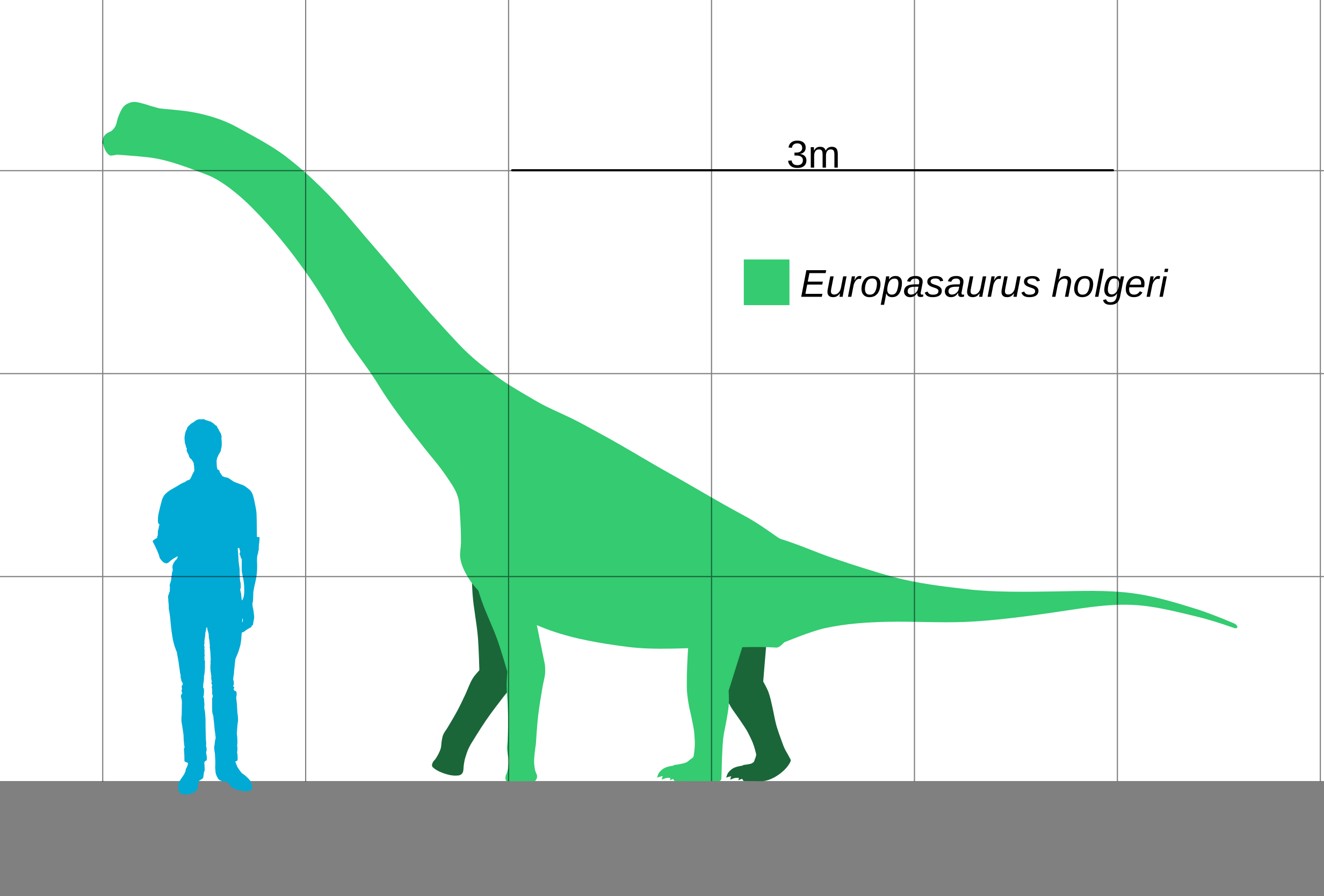
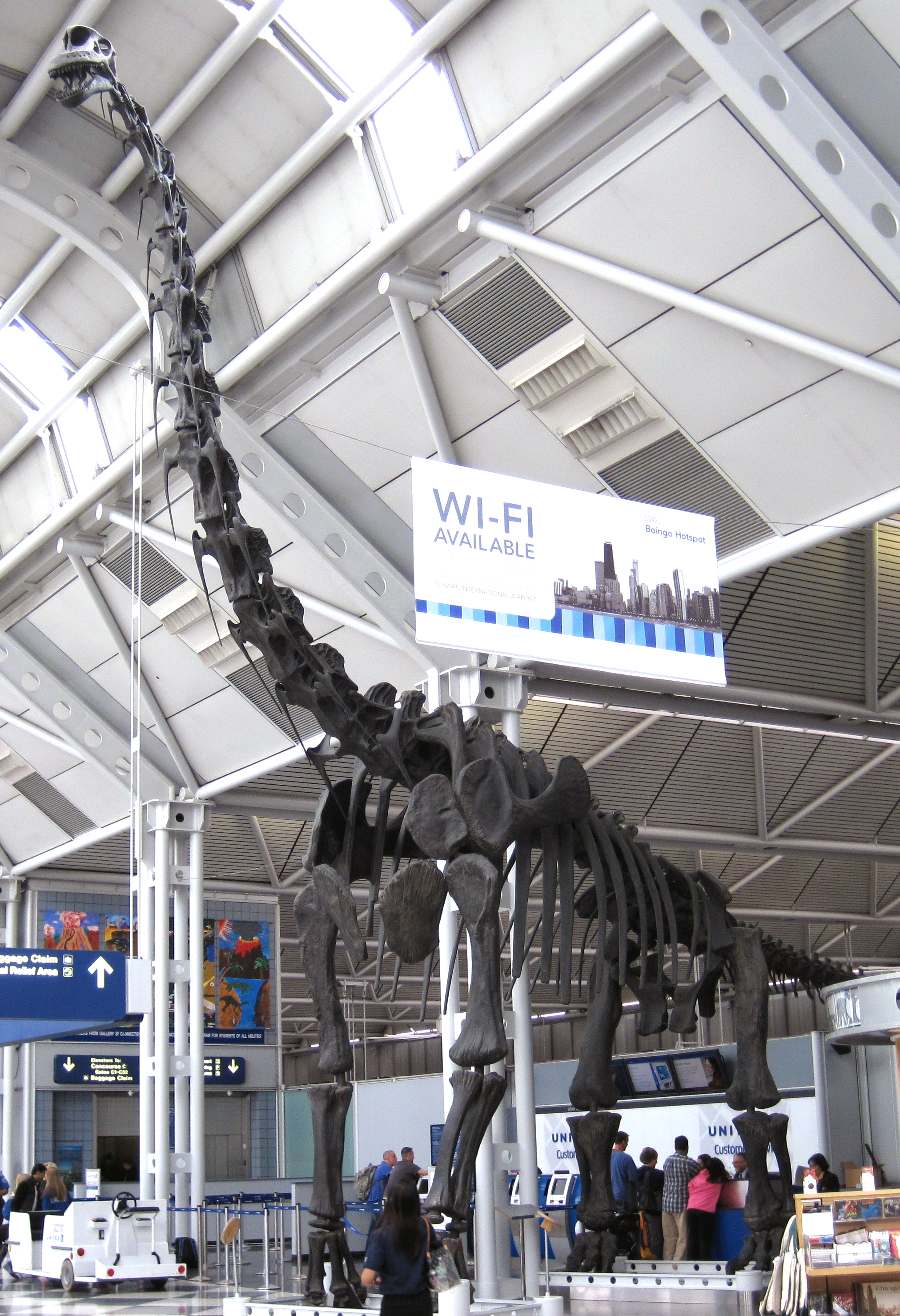
Europasaurus holgeri is a basal macronarian sauropod from the Late Jurassic (middle Kimmeridgian, about 154 to 151 million years ago) of the Langenberg Quarry in Oker, northern Germany. Described by Sander, Mateus, Laven and Knötschke in 2006 in Nature, it became famous as the first unequivocally documented case of insular dwarfism in dinosaurs. Fully grown adults measured only 5.7 to 6.2 metres in length and weighed between 750 and 2,100 kg, comparable to a large horse, while close relatives such as Brachiosaurus and Camarasaurus exceeded 20 metres. Bone histology of femora and tibiae, published in the original description, demonstrated that this small size was not a juvenile effect but corresponded to mature individuals with reduced growth rate, consistent with populations isolated on an island of the Lower Saxony Archipelago during the Kimmeridgian marine transgression. More than 450 bones have been collected at the site, representing at least 14 individuals in different ontogenetic stages, including partial skulls and complete dentitions, which makes Europasaurus one of the most abundant and three-dimensionally preserved sauropods from the European Jurassic.
Geological formation & environment
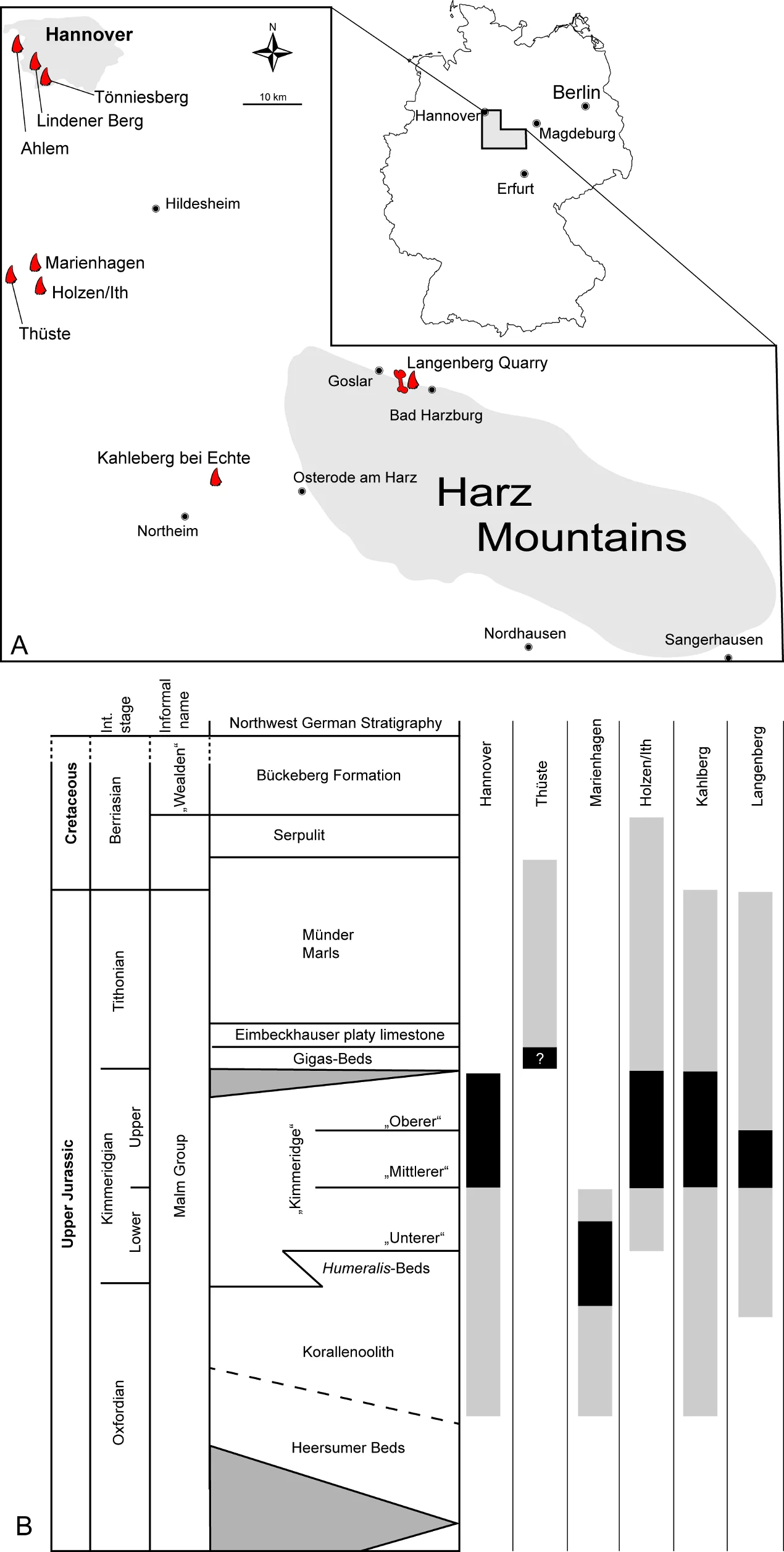
Langenberg Quarry (Süntel Formation / Kimmeridgian marginal marine limestones), middle to upper Kimmeridgian, about 154 to 151 Ma. The site, operated by Rohstoffbetriebe Oker GmbH, exposes a marginal marine limestone sequence recording lagoonal and reefal environments on the margins of palaeo-islands of the Lower Saxony Basin archipelago. Bed 83, where terrestrial finds are concentrated, is interpreted as storm-event deposits that transported carcasses and partial skeletons of terrestrial animals from a nearby palaeo-island into the shallow sea, where they were rapidly buried in carbonates. The terrestrial fauna includes Europasaurus (dwarf sauropod), at least three theropod lineages (Evers and Wings 2020), pterosaurs (rhamphorhynchid and pterodactyloid), atoposaurid crocodylomorphs, turtles, squamates (including a new paramacellodid) and a rich microfauna of mammals (morganucodontids, dryolestids, multituberculates). The concurrent marine fauna includes plesiosaurs, teleosaurs, ichthyosaurs, bony fishes and chondrichthyans.
Image gallery
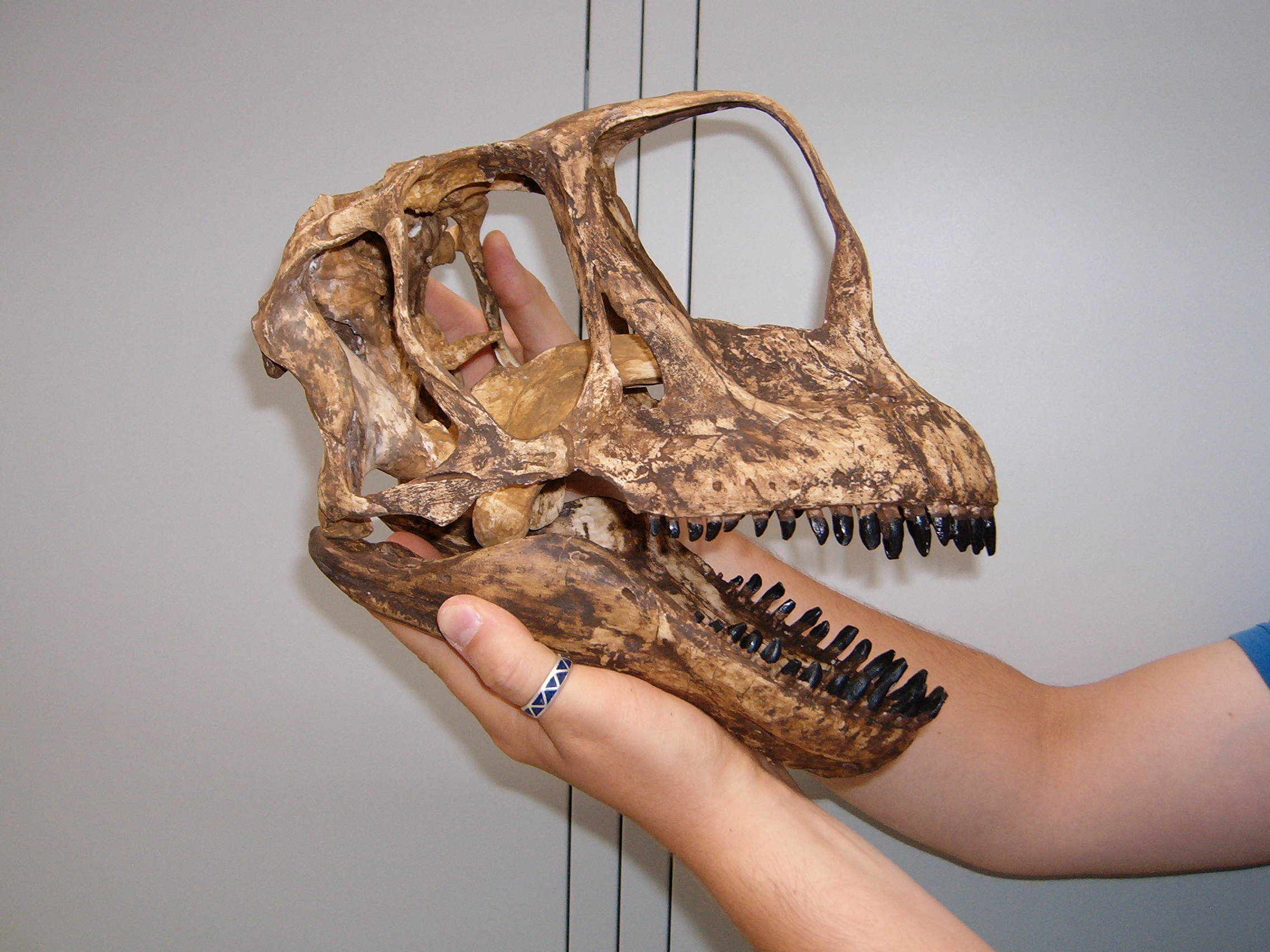



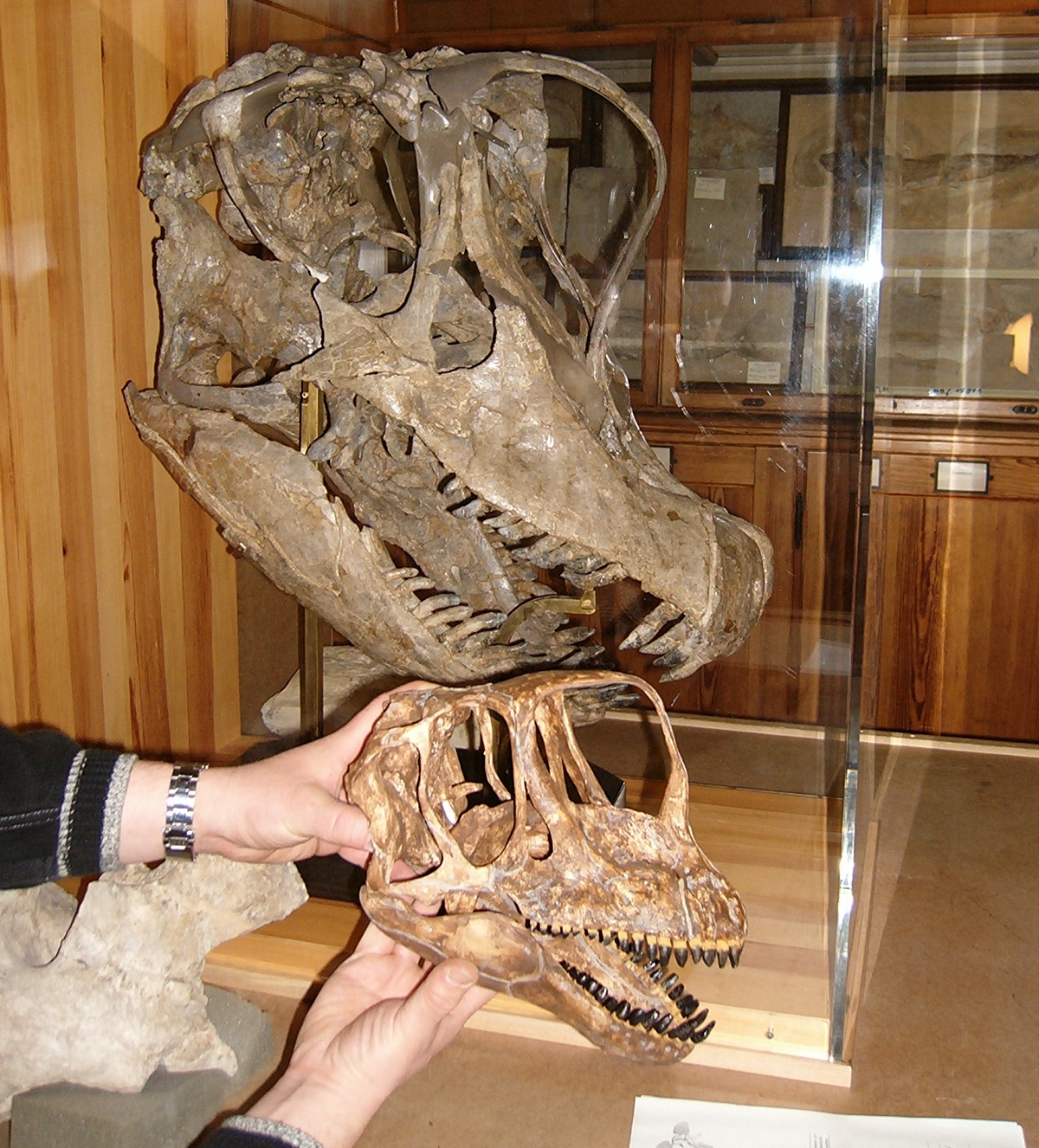



Partially articulated fossil skull of Europasaurus holgeri on display at the Dinosaurier-Freilichtmuseum Münchehagen. The small skull with proportionally large orbits is a paedomorphic marker of the taxon.
Wikimedia Commons
Ecology and behavior
Habitat
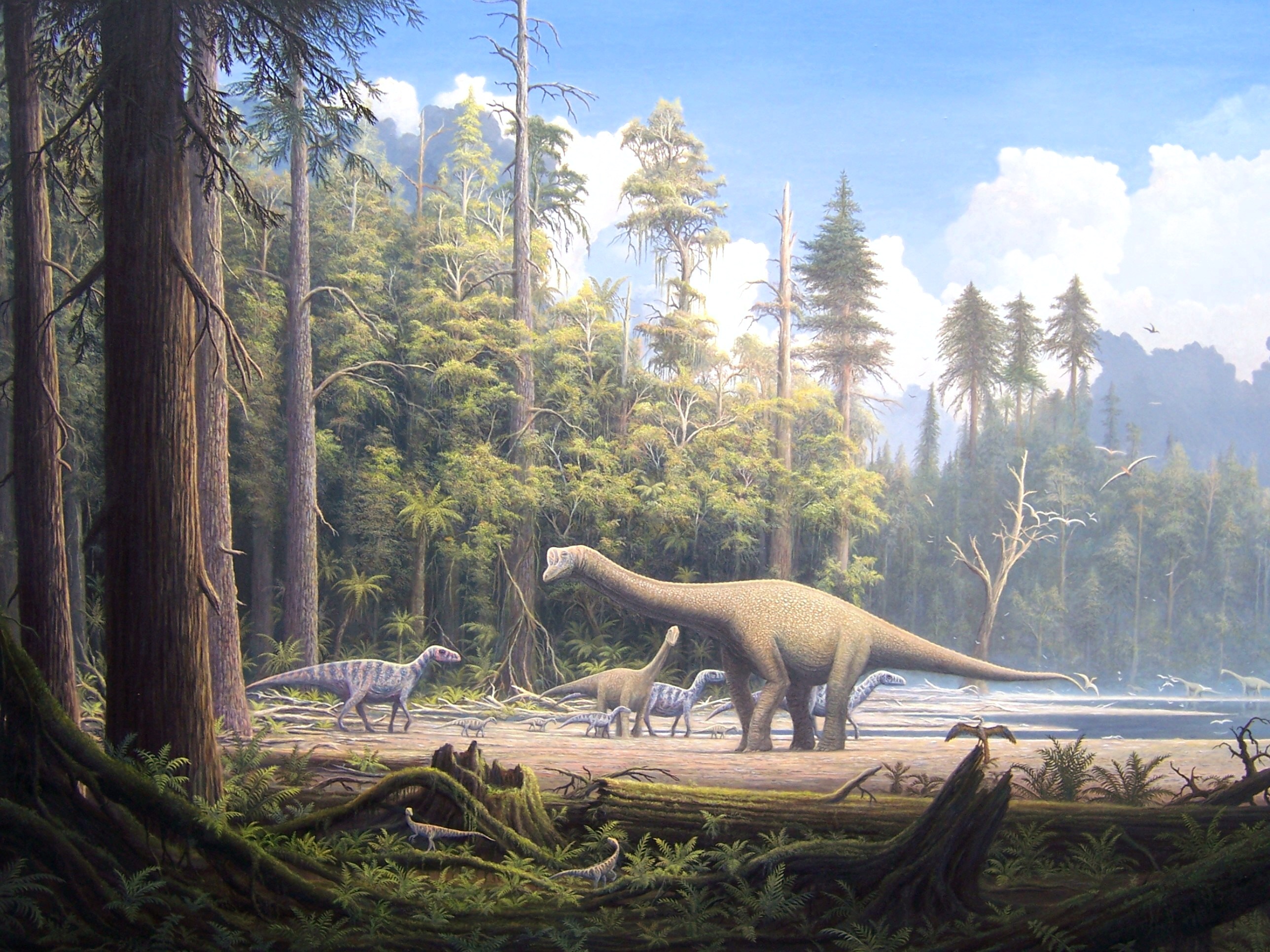
Palaeo-island of the Lower Saxony Basin Archipelago during the middle Kimmeridgian (about 154 to 151 Ma). The region formed an epicontinental sea dotted with limestone islands exposed in northern central Europe, resulting from the Jurassic marine transgression. The insular terrestrial environment hosted conifers (Cheirolepidiaceae, Araucariaceae), cycads, bennettitaleans, ginkgos and ferns; marginal marine lagoons and fluvial deltas transitioned into the shallow carbonate sea in which carcasses were rapidly buried, giving rise to the exceptional three-dimensional preservation at Langenberg.
Feeding
Strict herbivore. Low spoon-shaped (spatulate) teeth with reduced marginal denticles, and the wear patterns described by Régent et al. (2024), indicate low- to mid-height browsing and the likely presence of a rhamphotheca (beak-like keratinous sheath) covering the anterior extremities of the maxillae and dentaries, assisting the cutting of plant tissue. Likely diet included conifers, ferns and cycads, with no need for the high-canopy grazing of giant brachiosaurids.
Behavior and senses
The presence of multiple individuals at different ontogenetic stages in the same bed (bed 83) suggests social and gregarious behaviour, with mixed herds of juveniles and adults. Schade et al. (2022) demonstrated, from the inner ears of hatchlings showing adult size and morphology, that Europasaurus was precocial: hatchlings were born with mature balance and active locomotion from the start, consistent with an absence of prolonged parental care. The rich cochlear structure also suggests acoustic communication and group life.
Physiology and growth
One of the smallest known sauropods, with adults 5.7 to 6.2 m long and 750 to 2,100 kg (Sander et al. 2006; Marpmann et al. 2015 estimates). Insular dwarfism resulted from a secondary reduction in growth rate (Sander et al. 2006) and from paedomorphosis (Marpmann et al. 2015): Europasaurus retains cranial characters and proportions typical of juveniles of larger sauropods. Bone histology shows lines of arrested growth (LAGs) and cortical remodelling consistent with an animal that reached skeletal maturity at small size, not with a juvenile of a large sauropod.
Paleogeography
Continental configuration

Scotese & Vérard · CC BY 4.0 · Jurassic, ~155 Ma
During the Kimmeridgiano (~154–151 Ma), Europasaurus holgeri inhabited the fragmenting Pangea. North America and Europe were still close, and the North Atlantic was just beginning to open. Climate was warm and humid globally, with no polar ice caps.
Bone Inventory
Europasaurus is one of the best-sampled sauropods in the Jurassic worldwide. More than 450 bones, about one third bearing predator tooth marks, have been collected from bed 83 of the Langenberg. Marpmann et al. (2015) catalogued 123 skull bones representing at least 14 individuals in three ontogenetic stages (MOS 1 to MOS 3); Carballido and Sander (2014) described the postcranial axial skeleton, and Carballido, Scheil, Knötschke and Sander (2020) published the appendicular skeleton. Régent et al. (2024) described the complete dentition. Three-dimensional preservation is exceptional, resulting from short transport from a palaeo-island into a marginal marine lagoon where carcasses were rapidly buried in carbonates.

Found elements
Inferred elements
Scientific Literature
15 papers in chronological order — from the original description to recent research.
Bone histology indicates insular dwarfism in a new Late Jurassic sauropod dinosaur
Sander, P.M., Mateus, O., Laven, T. e Knötschke, N. · Nature, volume 441, páginas 739 a 741
Original description of the genus and species Europasaurus holgeri based on holotype DFMMh/FV 291 and more than 11 referred individuals from the Langenberg Quarry. Using cortical histology of femora and tibiae, the authors demonstrated that adult animals reached only 1.7 to 6.2 metres and attained peak size through a secondary reduction in growth rate relative to large-bodied ancestors. The first unequivocally documented case of insular dwarfism in dinosaurs, the paper links the small body size to isolation on a palaeo-island of the Lower Saxony Basin archipelago during the Kimmeridgian.
Developmental plasticity in the life history of a prosauropod dinosaur
Sander, P.M. e Klein, N. · Science, volume 310, páginas 1800 a 1802
Although focused on the prosauropod Plateosaurus, this paper introduces the skeletal histology methodology on which Sander et al. (2006) based the proof of dwarfism in Europasaurus. A foundational reference for the histological interpretation of basal sauropods and the recognition of ontogenetic plasticity in dinosaurs.
Small body size and extreme cortical bone remodeling indicate phyletic dwarfism in Magyarosaurus dacus (Sauropoda: Titanosauria)
Stein, K., Csiki, Z., Curry Rogers, K., Weishampel, D.B., Redelstorff, R., Carballido, J.L. e Sander, P.M. · Proceedings of the National Academy of Sciences (PNAS), volume 107, páginas 9258 a 9263
Comparative histological analysis between the titanosaur sauropod Magyarosaurus dacus (Upper Cretaceous of Hațeg Island, Romania) and Europasaurus holgeri. Uses Europasaurus as the comparative model of insular dwarf sauropod to confirm that Magyarosaurus is also a genuine case of phyletic dwarfism linked to geographic isolation, reinforcing the status of Europasaurus as the paradigmatic example of this condition in Sauropoda.
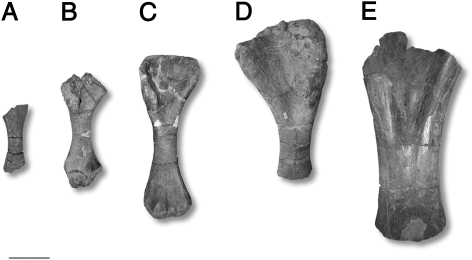
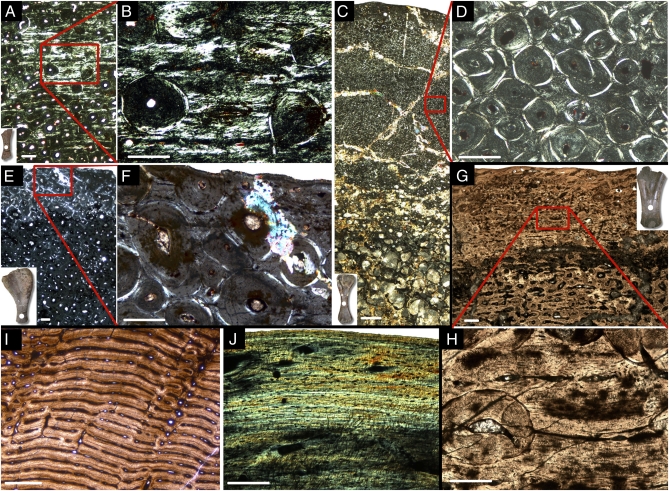
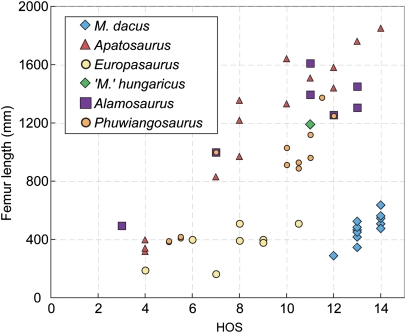
The Langenberg-Quarry in Oker, a special window into the terrestrial Late Jurassic of Northern Germany
Wings, O. e Sander, P.M. · Journal of Vertebrate Paleontology / SVP Meeting Abstracts
Overview of the Langenberg Quarry as a unique window into the terrestrial Late Jurassic of central Europe. Discusses stratigraphy (upper Oxfordian to upper Kimmeridgian), taphonomy (short transport from a palaeo-island into marginal marine lagoons), palaeofauna (Europasaurus, theropods, pterosaurs, crocodylomorphs, turtles, lizards, mammals) and the significance of the site for the understanding of Jurassic insular ecosystems.

Postcranial axial skeleton of Europasaurus holgeri (Dinosauria, Sauropoda) from the Upper Jurassic of Germany: implications for sauropod ontogeny and phylogenetic relationships of basal Macronaria
Carballido, J.L. e Sander, P.M. · Journal of Systematic Palaeontology, volume 12, número 3, páginas 335 a 387
First detailed description of the postcranial axial skeleton (cervical, dorsal, sacral and caudal vertebrae plus ribs) of Europasaurus, with dozens of elements from juveniles and adults. Defines three morphological ontogenetic stages (MOS 1 to MOS 3) and presents a TNT cladistic analysis that places Europasaurus as a basal camarasauromorph, near the base of Macronaria. Reference monograph for any phylogenetic and ontogenetic study of basal Macronaria.

Cranial anatomy of the Late Jurassic dwarf sauropod Europasaurus holgeri (Dinosauria, Camarasauromorpha): ontogenetic changes and size dimorphism
Marpmann, J.S., Carballido, J.L., Sander, P.M. e Knötschke, N. · Journal of Systematic Palaeontology, volume 13, número 3, páginas 221 a 263
Detailed description of 123 skull bones representing at least 14 individuals of Europasaurus in three ontogenetic stages (MOS 1 to MOS 3). Confirms the existence of two size morphotypes (elements 30 to 55 per cent larger than others, independent of ontogenetic stage), interpreted as size dimorphism (possibly sexual). Demonstrates that several skull autapomorphies are basal sauropodomorph plesiomorphies retained through paedomorphosis, supporting the hypothesis that insular dwarfism in Europasaurus arose by heterochrony.
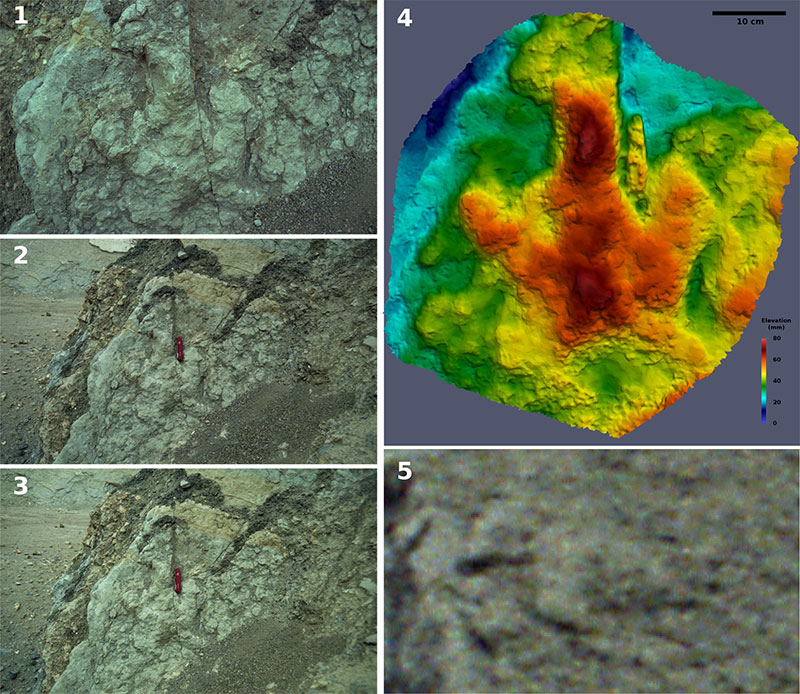
Dinosaur tracks from the Langenberg Quarry (Late Jurassic, Germany) reconstructed with historical photogrammetry: evidence for large theropods soon after insular dwarfism
Lallensack, J.N., Sander, P.M., Knötschke, N. e Wings, O. · Palaeontologia Electronica, volume 18.2.31A, páginas 1 a 34
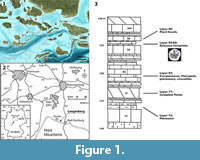
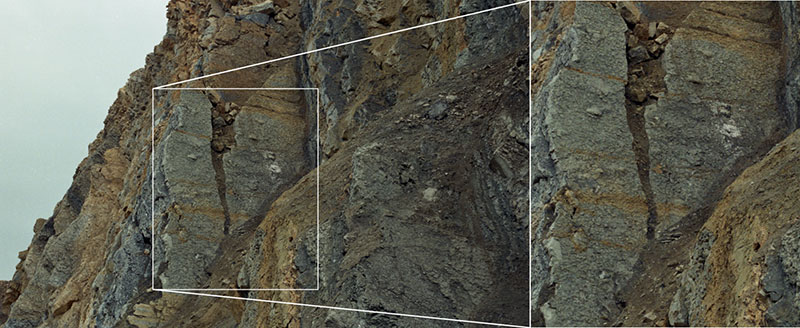
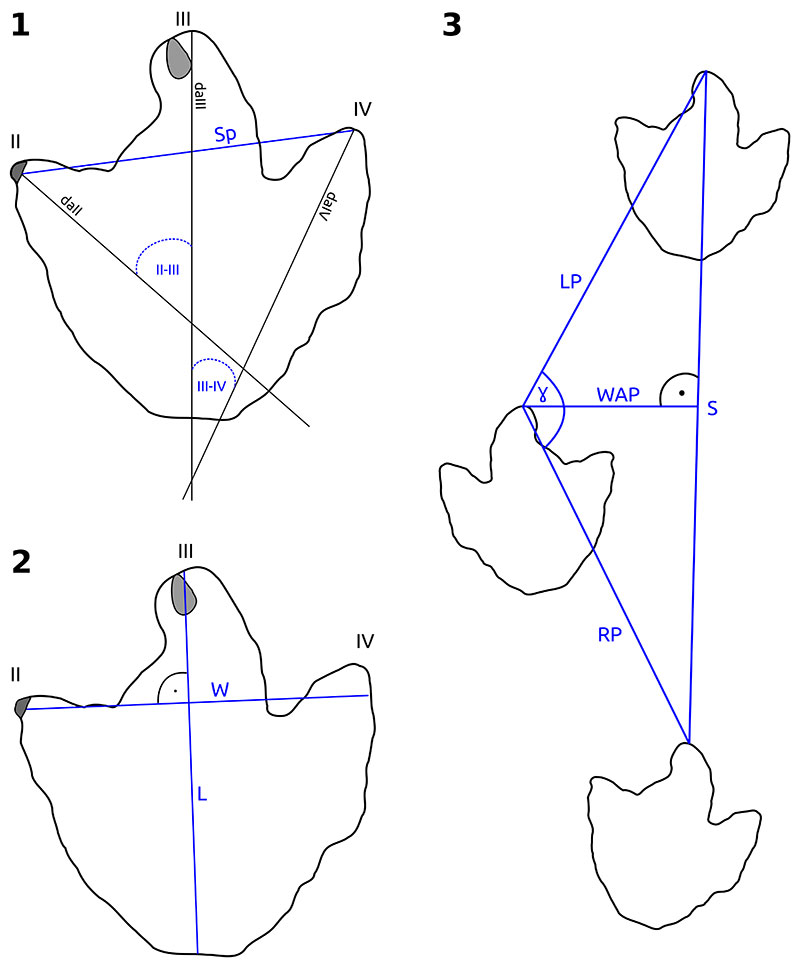
3D reconstruction via historical photogrammetry from 2003 analogue photographs of a theropod trackway (footprint length 36 to 47 cm) from the Langenberg Quarry, obliterated by quarrying shortly after discovery. The tracks are about 35 kyr younger than the Europasaurus-bearing beds and document the arrival of large theropods on the palaeo-island, possibly after a sea-level drop that restored connectivity with the mainland.
The terrestrial vertebrate assemblage of Langenberg Quarry (Lower Saxony, northern Germany): a glimpse of a Late Jurassic island ecosystem
Wings, O., Schellhorn, R., Mallison, H., Thuy, B., Wu, W. e Sun, G. · Palaeodiversity, volume 8, páginas 141 a 177
Synthesis of the Langenberg terrestrial fauna: Europasaurus, varied theropods (small and large, including possible ceratosaurs and tetanurans), pterosaurs (rhamphorhynchid and pterodactyloid), atoposaurid crocodylomorphs, turtles, squamates (new paramacellodid lizard), plus a rich microfauna of mammals (morganucodontids, dryolestids, multituberculates) and fishes. Provides the ecological context in which Europasaurus reached insular dwarfism.


Osteology of the Late Jurassic Portuguese sauropod dinosaur Lusotitan atalaiensis (Macronaria) and the evolutionary history of basal titanosauriforms
Mannion, P.D., Upchurch, P., Barnes, R.N. e Mateus, O. · Zoological Journal of the Linnean Society, volume 168, número 1, páginas 98 a 206
Comprehensive osteological and phylogenetic revision of Iberian and European basal macronarians, including Lusotitan, Brachiosaurus, Giraffatitan and Europasaurus. In every cladistic analysis presented, Europasaurus consistently appears as a basal macronarian close to the origin of Titanosauriformes, supporting the hypothesis of dwarfism derived from a large-bodied brachiosaurid or more basal ancestor.

Late Jurassic theropod dinosaur bones from the Langenberg Quarry (Lower Saxony, Germany) provide evidence for several theropod lineages in the central European archipelago
Evers, S.W. e Wings, O. · PeerJ, volume 8, artigo e8437
Description of isolated theropod bones from the Langenberg Quarry documenting at least three lineages (allosauroid, megalosauroid and a possible ceratosaur) coexisting in the Lower Saxony Basin archipelago. One third of the Europasaurus bones already show tooth marks, and this paper identifies the candidate makers of those marks.


The appendicular skeleton of the dwarf macronarian sauropod Europasaurus holgeri from the Late Jurassic of Germany and a re-evaluation of its systematic affinities
Carballido, J.L., Scheil, M., Knötschke, N. e Sander, P.M. · Journal of Systematic Palaeontology, volume 18, número 9, páginas 739 a 781
Monograph on the appendicular skeleton (pectoral, pelvic girdles, fore- and hindlimbs) of Europasaurus, including juvenile and adult elements. Reassesses the systematic position using three independent matrices (Carballido et al., Mannion et al., Upchurch et al.) and recovers Europasaurus as a basal camarasauromorph in all of them, while brachiosaurid affinities remain plausible given the paedomorphic heterochrony of the taxon.

Neurovascular anatomy of dwarf dinosaur implies precociality in sauropods
Schade, M., Knötschke, N., Hörnig, M.K., Paetzel, C. e Stumpf, S. · eLife, volume 11, artigo e82190
Micro-computed tomography (microCT) study of the adult braincase and inner ears of adults and juveniles of Europasaurus. The mature size and morphology of the inner ears even in very small individuals (possible hatchlings) indicate precociality: hatchlings were born with fully developed balance capacity and active locomotion. Also suggests gregarious behaviour in sauropods with acoustic communication.


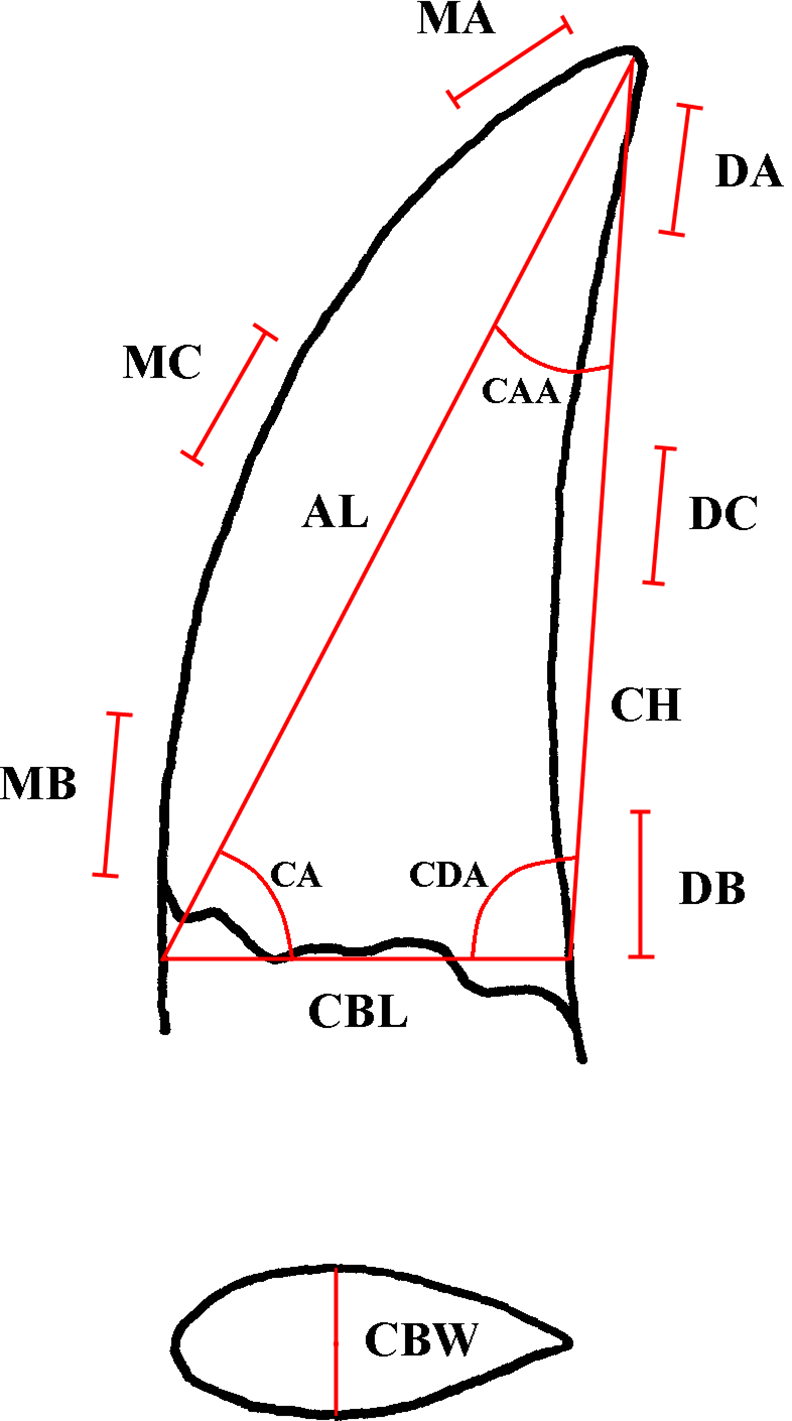
Multivariate and cladistic analyses of isolated teeth reveal sympatry of theropod dinosaurs in the Late Jurassic of northern Germany
Gerke, O. e Wings, O. · PLOS ONE, volume 11, artigo e0158334
Morphometric and cladistic analysis of isolated theropod teeth from the Langenberg. Documents at least three simultaneous tooth morphotypes in the same bed, reinforcing the predator guild (Evers and Wings 2020) that coexisted with Europasaurus on the palaeo-island. Confirms that the small sauropod was not the only terrestrial vertebrate at the site and sets the comparative baseline for local theropod diversity.
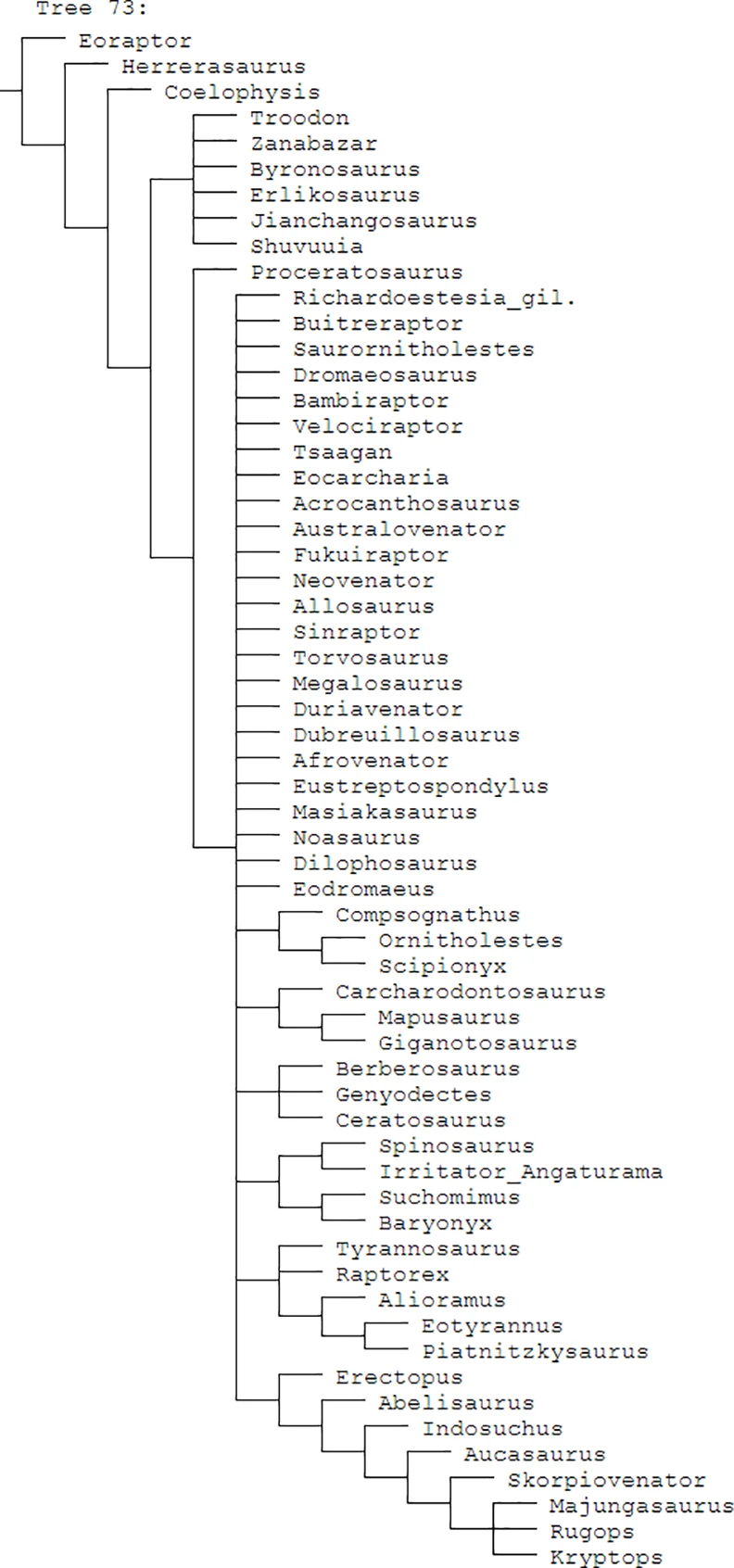
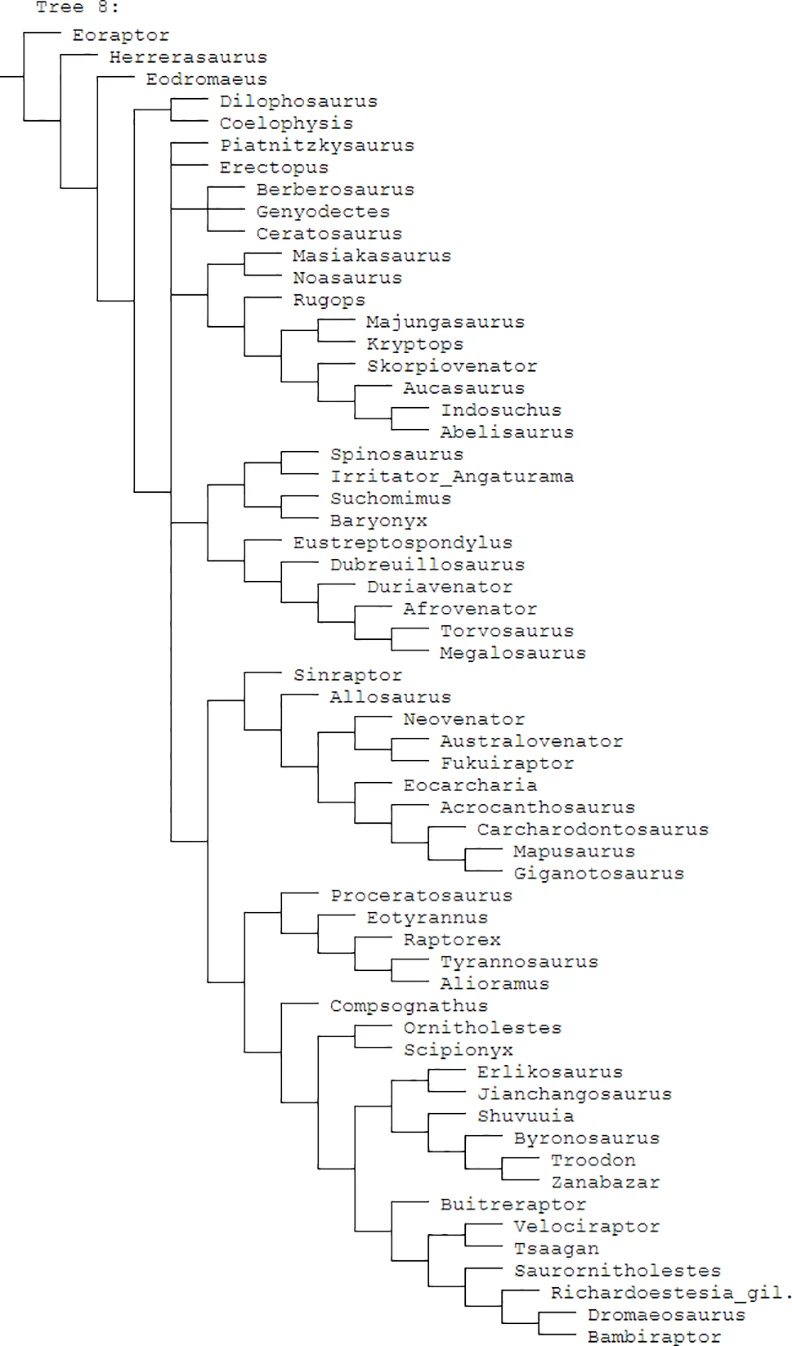
Second specimen of the Cretaceous Australian sauropod Diamantinasaurus matildae provides new anatomical information on the skull and neck of early titanosaurs
Poropat, S.F., Kundrát, M., Mannion, P.D., Upchurch, P., Tischler, T.R. e Elliott, D.A. · Zoological Journal of the Linnean Society, volume 192, páginas 610 a 674
Although centred on Diamantinasaurus, this paper presents the broadest Macronaria phylogenetic matrix to date and robustly recovers Europasaurus as a basal camarasauromorph near the base of Titanosauriformes. A modern reference for the internal structure of basal Macronaria.

The dentition of the Late Jurassic dwarf sauropod Europasaurus holgeri from northern Germany: ontogeny, function, and implications for a rhamphotheca-like structure in Sauropoda
Régent, V., Wiersma-Weyand, K., Wings, O., Knötschke, N. e Sander, P.M. · PeerJ, volume 12, artigo e17764
Detailed study of Europasaurus dentition, including wear, replacement, denticle morphology and attrition-facet patterns. The authors propose that Europasaurus bore a keratinous beak-like (rhamphotheca-like) structure covering the anterior parts of the maxillae and dentaries, with broad implications for the feeding ecology of basal sauropods. Reinforces Europasaurus as the reference taxon for ontogenetic studies in Sauropoda.


Famous museum specimens
DFMMh/FV 291 (holótipo)
Dinosaurier-Freilichtmuseum Münchehagen (DFMMh), Rehburg-Loccum, Baixa Saxônia, Alemanha
Holotype of Europasaurus holgeri housed at the Dinosaurier-Freilichtmuseum Münchehagen. Displayed alongside hundreds of other bones belonging to at least 14 individuals, including specimens at different ontogenetic stages (from individuals 1.7 m long to adults up to 6.2 m). Part of the collection was lost to an arson fire on 4/5 October 2003, which destroyed 106 already-prepared bones (about 15 per cent of the material prepared at that time).

DFMMh/FV 466 (caixa craniana adulta)
Dinosaurier-Freilichtmuseum Münchehagen
Central specimen of the microCT study by Schade et al. (2022, eLife), which digitally reconstructed the endocast and semicircular canals to infer precociality in Europasaurus.

SNHM-2207-R (crânio articulado)
Staatliches Naturhistorisches Museum (SNHM), Braunschweig, Alemanha
Articulated skull figured by Régent et al. (2024, PeerJ), illustrating dental occlusion and the inferred rhamphotheca-like keratinous structure. On display in Braunschweig.
Esqueleto montado do DFMMh
Dinosaurier-Freilichtmuseum Münchehagen
Central mount of the museum, the main public reference for Europasaurus. The site, in Rehburg-Loccum in Lower Saxony, also preserves in situ dinosaur trackways. Open to the public, with a visible excavation area.
In cinema and popular culture
Europasaurus holgeri has achieved significant visibility in science media but appearances in television documentaries are rare. It was featured as a representative species in National Geographic coverage and in science podcast episodes after the 2006 description, but has had no significant role in Planet Dinosaur (BBC, 2011), Walking with Dinosaurs (BBC, 1999) or Prehistoric Planet (Apple TV+, 2022 to 2025). Its first appearance in children's programming was in Dino Dana (season 3, 2019 onward) as a small sauropod role. The absence from major blockbuster franchises reinforces the profile of Europasaurus as an icon of European academic palaeontology, more present in scientific literature and German museums (Münchehagen, Braunschweig) than in global pop culture.
Classification
Discovery
Fun fact
In 2003, just five years after its discovery, an arson fire destroyed the preparation hall of the Dinosaurier-Freilichtmuseum Münchehagen, burning 106 Europasaurus bones, about 15 per cent of the material already prepared. Nils Knötschke's team rebuilt the lost work over the following years. In addition, Europasaurus is the official dinosaur of the town of Goslar and was celebrated on a German postage stamp in 2010, establishing itself as the most emblematic sauropod of European palaeontology.
Last reviewed: April 24, 2026