
Ubirajara
Ubirajara jubatus
"Lord of the spear, with mane"
About this species
Ubirajara jubatus is a small coelurosaurian theropod from the Lower Cretaceous of the Araripe Basin, Ceará, discovered around 1990 and illegally exported to Germany in the 1990s. Described in 2020 by Smyth and colleagues as the first non-avian dinosaur from Gondwana with elaborate integumentary structures (a filamentous mane along the neck and two elongate, ribbon-like shoulder structures likely used for display), the animal became the epicentre of an international campaign for the repatriation of Brazilian fossils. The original paper was withdrawn in September 2021, and the name 'Ubirajara jubatus' was formally declared unavailable under the International Code of Zoological Nomenclature by Caetano, Delcourt and Ponciano (2023). Even so, the holotype SMNK PAL 29241 was repatriated to Brazil in June 2023 and now resides at the Plácido Cidade Nuvens Paleontology Museum of the Regional University of Cariri (URCA), in Santana do Cariri.
Geological formation & environment
Crato Formation (Santana Group, Araripe Basin). Age: Aptian, Early Cretaceous (~115-113 Ma). Lithology: fine laminated limestone deposited in a hypersaline lagoon under equatorial semi-arid climate. Associated fauna: insects (dragonflies, cicadas, water bugs, spiders), fish (Dastilbe, Cladocyclus), plants, pterosaurs (Tupandactylus, Anhanguera) and rare dinosaurs (Ubirajara, Mirischia, Santanaraptor, Aratasaurus, Irritator in the underlying Romualdo Formation). The exceptional soft-tissue preservation makes the formation a globally important Konservat-Lagerstätte.
Image gallery
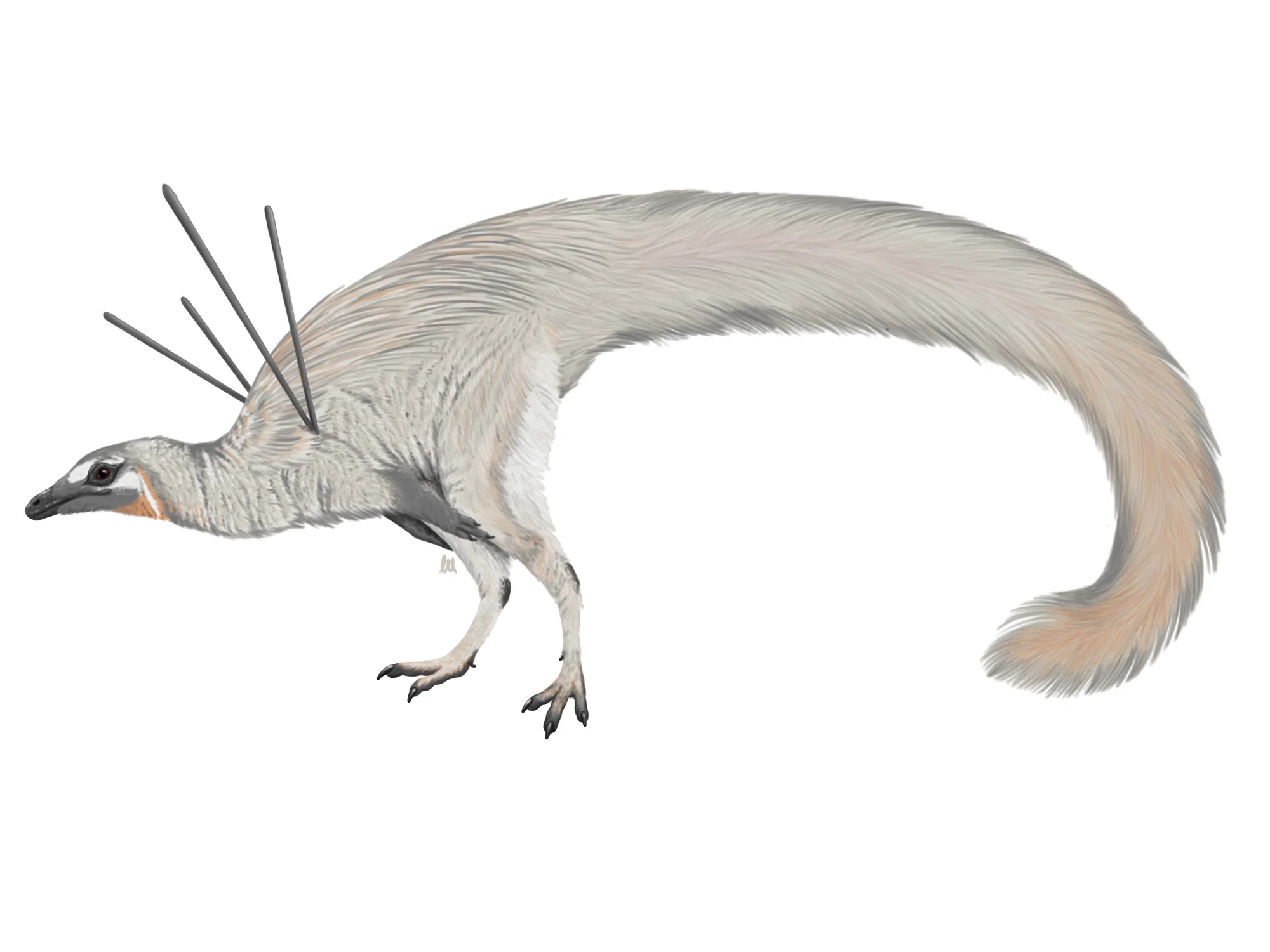


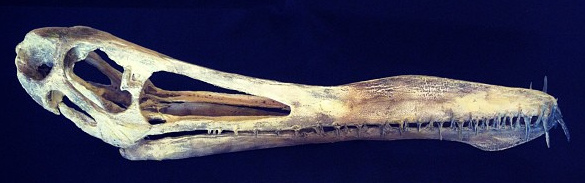


Life reconstruction of Ubirajara jubatus showing the filamentous mane and rigid shoulder ribbons. The animal was about 1 m long and likely used these structures for social display.
Luxquine / Wikimedia Commons, CC BY-SA 4.0
Ecology and behavior
Habitat
The Crato Formation was an Aptian (~113-115 Ma) equatorial semi-arid wetland with hypersaline lagoons in a lacustrine system of calm waters and anoxic bottom. The biota includes insects, fish, plants, pterosaurs and rare dinosaurs. Ubirajara likely frequented the vegetated margins of these lagoons, where insects and small vertebrates were abundant.
Feeding
As a small coelurosaur of compsognathid build, Ubirajara was likely an opportunistic carnivore. The probable diet included large insects (abundant in the formation), small fish, lizards and hatchlings of other vertebrates. No gastrointestinal content is preserved in the holotype for direct confirmation.
Behavior and senses
The presence of elaborate integumentary structures (mane and two rigid shoulder ribbons) strongly suggests display behavior, possibly for courtship or territorial threat. These structures are energetically costly and vulnerable to damage, therefore likely associated with social signaling, perhaps seasonal or dependent on sexual maturity. Detailed social behavior is speculative given the limited preservation.
Physiology and growth
As a small coelurosaur, Ubirajara was likely endothermic or mesothermic, with an elevated metabolism consistent with constant activity. The filamentous covering would have had multiple functions: thermal insulation in an environment experiencing seasonal variation, social display, and possibly camouflage. Pulmonary air sacs, documented in other Brazilian coelurosaurs like Mirischia, were probably also present.
Paleogeography
Continental configuration

Scotese & Vérard · CC BY 4.0 · Cretaceous, ~105 Ma
During the Aptiano (~115–113 Ma), Ubirajara jubatus inhabited Laramidia, the western half of present-day North America, separated from the east by the Western Interior Seaway, a shallow sea dividing the continent. The continents were in very different positions: India was drifting toward Asia, Antarctica was still connected to Australia, and South America was an isolated island.
Bone Inventory
Holotype preserves the anterior half of the skeleton (neck, shoulders, trunk and left arm), with exceptional preservation of soft tissues and integumentary structures. The absence of skull, tail and pelvis prevents a definitive phylogenetic resolution.
Found elements
Inferred elements
Scientific Literature
15 papers in chronological order — from the original description to recent research.
A maned theropod dinosaur from Gondwana with elaborate integumentary structures (WITHDRAWN)
Smyth, R.S.H., Martill, D.M., Frey, E., Rivera-Silva, H.E. e Lenz, N. · Cretaceous Research
Original description of SMNK PAL 29241 as a new compsognathid with a filamentous mane and ribbon-like shoulder structures. Withdrawn in September 2021 after an international campaign led by Brazilian researchers against the fossil's illegal export.

A taxon with no name: 'Ubirajara jubatus' (Saurischia: Compsognathidae) is an unavailable name and has no nomenclatural relevance
Caetano, J.M.V., Delcourt, R. e Ponciano, L.C.M.O. · Zootaxa
Brazilian paleontologists demonstrate that under the ICZN rules the name 'Ubirajara jubatus' is unavailable because the original publication was withdrawn before meeting validation requirements. They recommend referring to the specimen by collection number SMNK PAL 29241 until a potential redescription.
'Ubirajara' and Irritator Belong to Brazil: Achieving Fossil Returns Under German Private Law
Stewens, P.P. · International Journal of Cultural Property
Legal analysis of the German private-law mechanisms that enabled the repatriation of Ubirajara and Irritator to Brazil. Discusses how bilateral agreements and public pressure can complement ineffective international instruments.

#UbirajaraBelongstoBR: social media activism against (neo)colonial practices in palaeontology
Rahimi Fard Kashani, M.A., Raja, N.B. e Camargo, C.Q. · Geoscience Communication
Analysis of 39,728 tweets from the #UbirajaraBelongstoBR campaign between December 2020 and February 2023. Shows how the social media campaign influenced the political decision to repatriate the fossil.
The coelurosaur theropods of the Romualdo formation, early Cretaceous (Aptian) of Brazil: Santanaraptor placidus meets Mirischia asymmetrica
Delcourt, R. et al. · The Anatomical Record
Anatomical reassessment of Santanaraptor and Mirischia holotypes from the Araripe Basin; places both as basal maniraptoromorphs. Offers critical comparative context for evaluating whether Ubirajara truly represents a new Brazilian coelurosaur.

The first theropod dinosaur (Coelurosauria, Theropoda) from the base of the Romualdo Formation (Albian), Araripe Basin, Northeast Brazil
Sayão, J.M. et al. · Scientific Reports
Description of Aratasaurus museunacionali, a juvenile coelurosaur (~3.12 m) from the Romualdo Formation, Araripe Basin. The name honors the Museu Nacional in Rio de Janeiro destroyed by the 2018 fire.
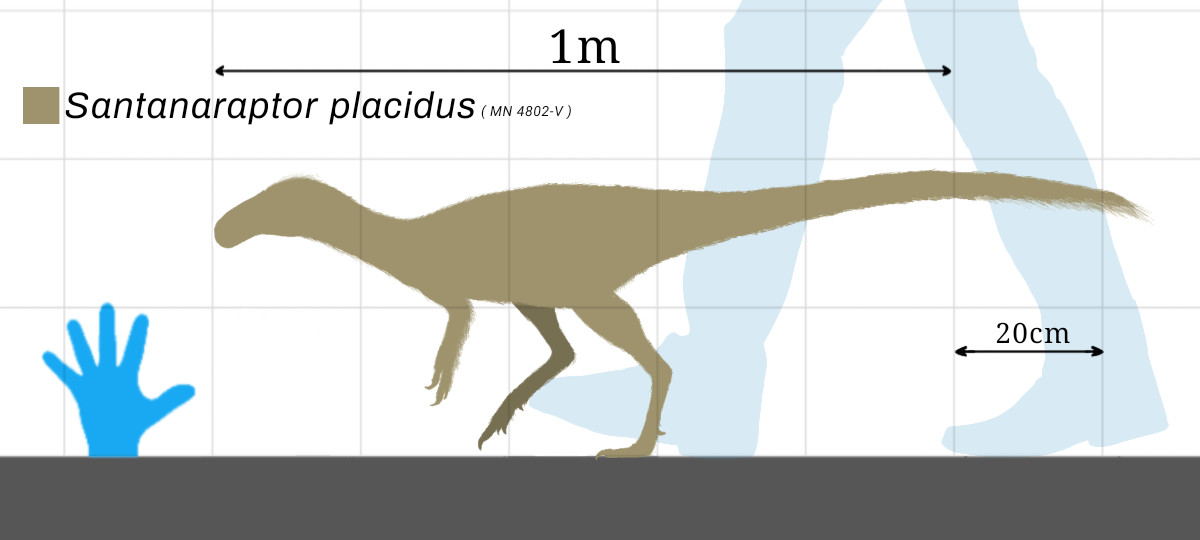
Skeletal remains of a small theropod dinosaur with associated soft structures from the Lower Cretaceous Santana Formation of northeastern Brazil
Martill, D.M., Frey, E., Sues, H.-D. e Cruickshank, A.R.I. · Canadian Journal of Earth Sciences
First description of a small Santana theropod preserving soft tissues (intestinal tract and air-sac evidence). Later named Mirischia asymmetrica by Naish et al. (2004).

Ecology, systematics and biogeographical relationships of dinosaurs, including a new theropod, from the Santana Formation (?Albian, Early Cretaceous) of Brazil
Naish, D., Martill, D.M. e Frey, E. · Historical Biology
Formal naming of Mirischia asymmetrica (SMNK 2349 PAL) and biogeographic synthesis of Santana Formation dinosaurs. Establishes the pattern of small theropods as integral components of the Araripe Basin fauna.
Short note on a new dinosaur (Theropoda, Coelurosauria) from the Santana Formation (Romualdo Member, Albian), northeastern Brazil
Kellner, A.W.A. · Boletim do Museu Nacional, Nova Série, Geologia
Original description of Santanaraptor placidus by Alexander Kellner. The holotype MN 4802-V was among the few to survive the 2018 Museu Nacional fire. Seminal work on Brazilian Cretaceous theropods.
The Crato Fossil Beds of Brazil: Window into an Ancient World
Martill, D.M., Bechly, G. e Loveridge, R.F. (eds.) · Cambridge University Press
Most comprehensive reference volume on the Crato Formation, with 33 contributors covering geology, biota taxonomy and taphonomy. Provides the essential paleoenvironmental context for understanding Ubirajara's habitat.
Towards an actualistic view of the Crato Konservat-Lagerstätte paleoenvironment: A new hypothesis as an Early Cretaceous (Aptian) equatorial and semi-arid wetland
Varejão, F.G. et al. · Earth-Science Reviews
Reinterpretation of the Crato Formation paleoenvironment as an Aptian equatorial semi-arid wetland with episodically connected hypersaline lagoons. This model explains the exemplary soft-tissue preservation in fossils such as Ubirajara.

Stromatolites from the Aptian Crato Formation, a hypersaline lake system in the Araripe Basin, northeastern Brazil
Catto, B. et al. · Facies
Documents Aptian stromatolites in the Crato Formation indicating a hypersaline lake system. The combination of high salinity and low bottom-water oxygen explains why Crato fossils preserve soft tissues so exceptionally.
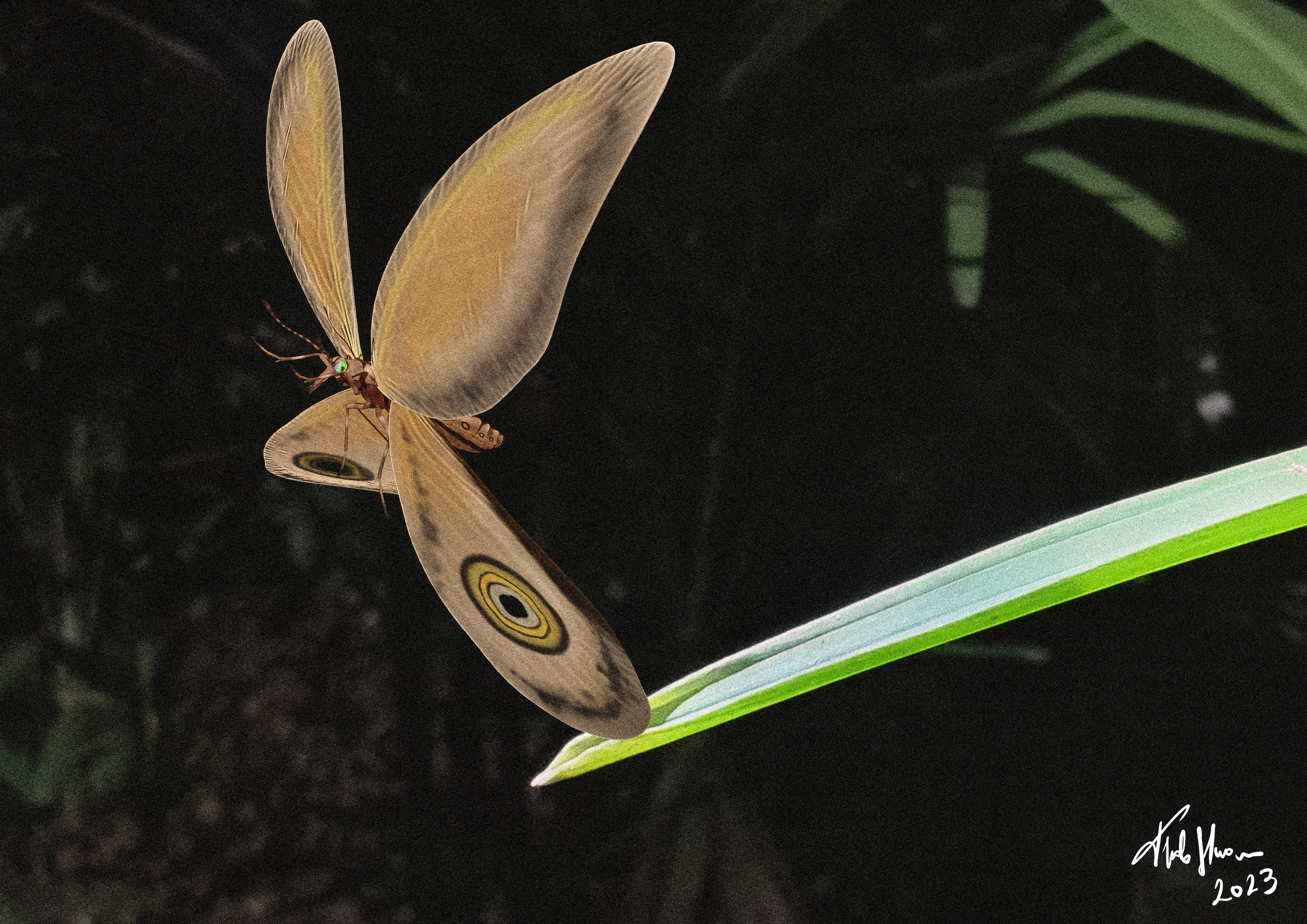
An exceptionally well-preserved theropod dinosaur from the Yixian Formation of China
Chen, P.-J., Dong, Z.-M. e Zhen, S.-N. · Nature
Description of Sinosauropteryx prima, the first non-avian dinosaur with integumentary filaments ('protofeathers'). Established the paradigm that small coelurosaurian theropods had filamentous coverings, a paradigm directly applied to Ubirajara by Smyth et al. (2020).
Two new compsognathid-like theropods show diversified predation strategies in theropod dinosaurs
Qiu, R. et al. · National Science Review
Recent phylogenetic analysis of compsognathids; proposes Sinosauropterygidae as a monophyletic clade within basal coelurosaurs. Provides an updated matrix relevant for evaluating Ubirajara's proposed placement.
Scipionyx samniticus (Theropoda: Compsognathidae) from the Lower Cretaceous of Italy. Osteology, ontogenetic assessment, phylogeny, soft tissue anatomy, taphonomy and paleobiology
Dal Sasso, C. e Maganuco, S. · Memorie della Società Italiana di Scienze Naturali e del Museo Civico di Storia Naturale di Milano
Reference monograph on Scipionyx samniticus, an Italian Cretaceous compsognathid with preserved soft tissues. Essential comparative baseline for evaluating compsognathid anatomy and interpreting Ubirajara's integumentary structures.
Famous museum specimens
SMNK PAL 29241
Museu de Paleontologia Plácido Cidade Nuvens (URCA), Santana do Cariri, Ceará, Brasil
Unique holotype. Remained at the Staatliches Museum für Naturkunde Karlsruhe (Germany) from 2009 to 2023. Repatriated to Brazil at an official ceremony on 12 June 2023. It is now at the Paleontology Museum of the Regional University of Cariri in Santana do Cariri, not far from the quarry where it was collected three decades earlier.
Cerimônia de devolução
Ministério das Relações Exteriores / URCA, Brasil
The official handover took place at a joint Brazil-Germany ceremony on 12 June 2023, with German Foreign Minister Annalena Baerbock in attendance. The case has become a reference in discussions about decolonization of paleontological collections.
Classification
Discovery
Fun fact
Ubirajara is the first non-avian dinosaur from Gondwana described with elaborate integumentary structures (primitive feathers and shoulder ornaments). The repatriation case, concluded in 2023 after an international campaign, changed the global discussion about fossil provenance and decolonization of paleontological collections. Even so, its scientific name ('Ubirajara jubatus') remains officially unavailable under the International Code of Zoological Nomenclature while a formal redescription is pending.
Last reviewed: April 24, 2026