
Maxakalisaurus
Maxakalisaurus topai
"Maxakali people's lizard, of Topá"
About this species
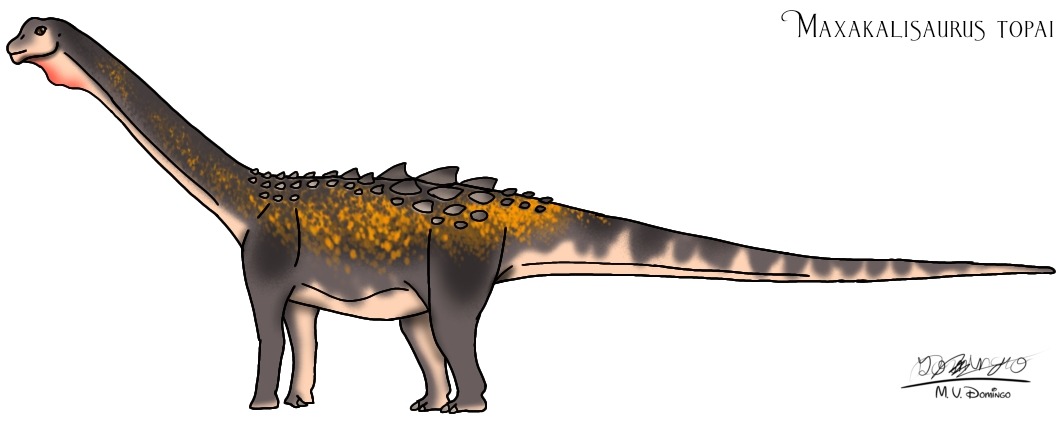
Maxakalisaurus topai is a Brazilian titanosaur discovered in the Adamantina Formation, in the Triângulo Mineiro region of Minas Gerais. Described by Kellner et al. in 2006, it is one of the best-documented sauropods from Brazil. About 13 meters long and estimated to weigh 5 tonnes, it had a long neck and tail, ridged teeth (unusual among sauropods), and osteoderms, bony dermal plates. Its name honors the Maxakali indigenous people from the region, and the deity Topá of the Maxakali pantheon. The holotype (MN 5013-V) was on display at the National Museum of Rio de Janeiro until the 2018 fire, which destroyed part of the material. A reconstruction campaign was subsequently launched to restore the skeleton.
Geological formation & environment
The Adamantina Formation is the largest unit of the Bauru Group in areal extent, covering parts of northwestern São Paulo state, the Triângulo Mineiro, and southern Mato Grosso. It is composed of fine to medium reddish sandstones interbedded with mudstones, siltstones, and muddy sandstones, deposited in a braided river system with subordinate lacustrine influence in a semi-arid climate. The formation's age is estimated as Turonian to Campanian (approximately 90–80 million years ago) based on biostratigraphic correlation. In addition to Maxakalisaurus topai, the formation preserves a diverse fauna including crocodilians, turtles, fish, abelisaurids, and other indeterminate titanosaurs. The Prata paleontological district, 45 km west of the town of Prata, is one of the richest fossil sites of the formation.
Image gallery
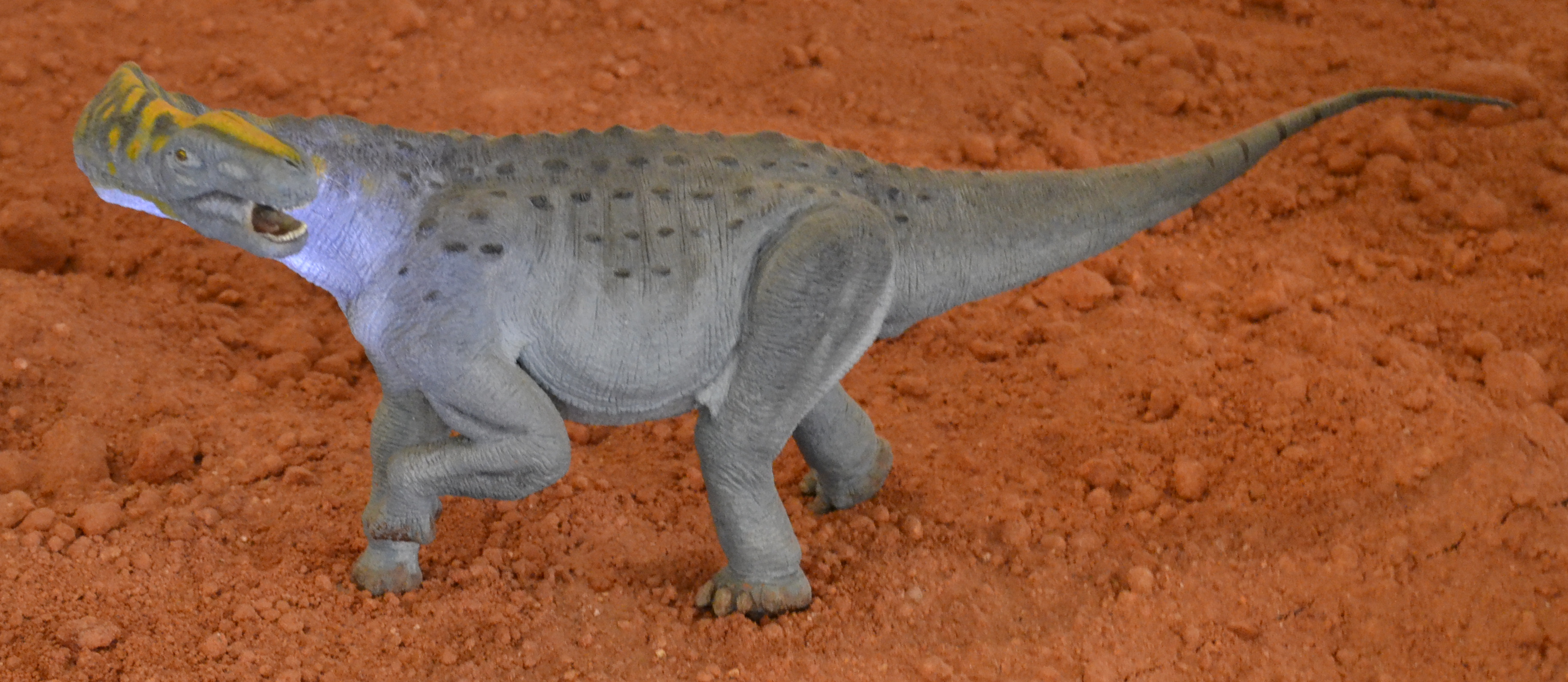


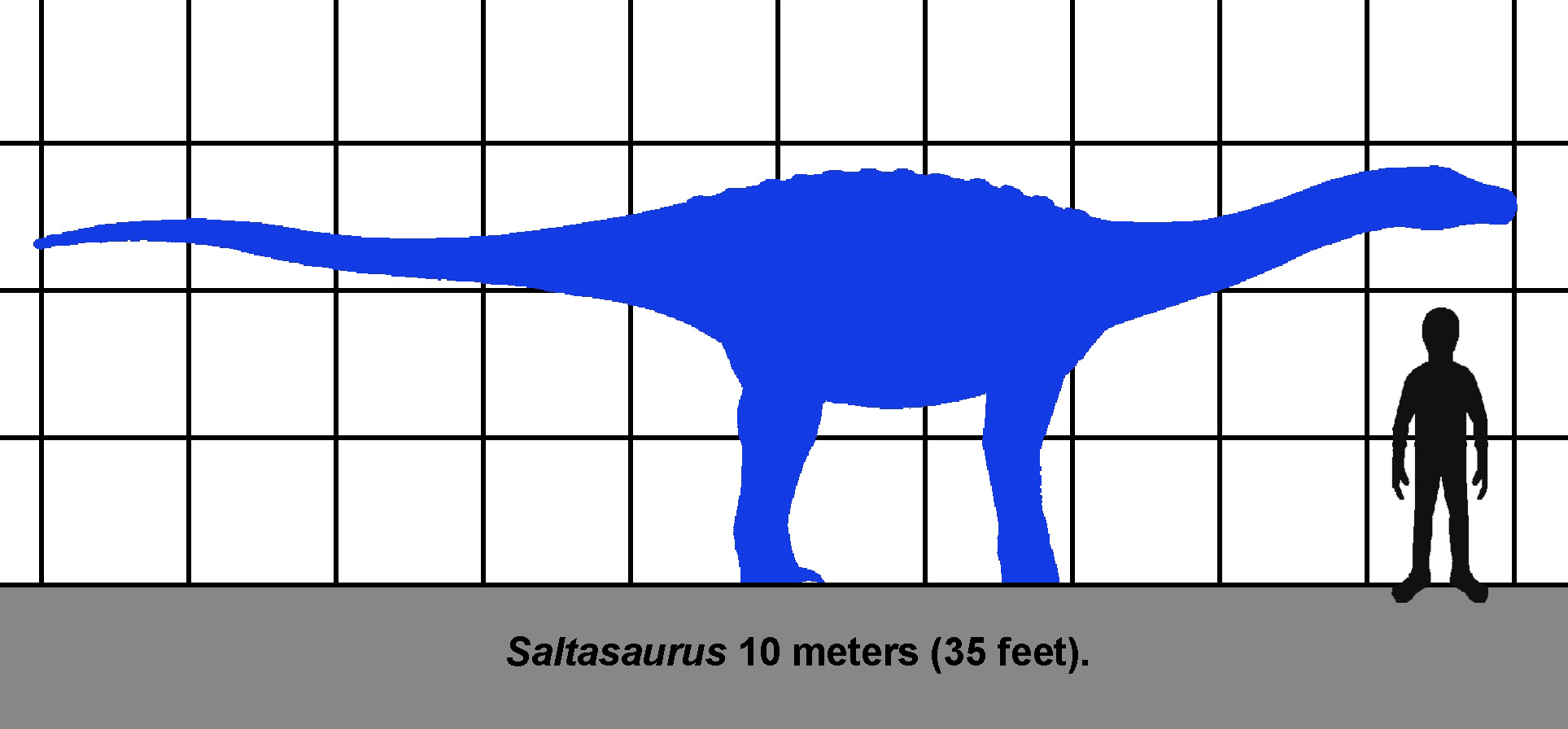
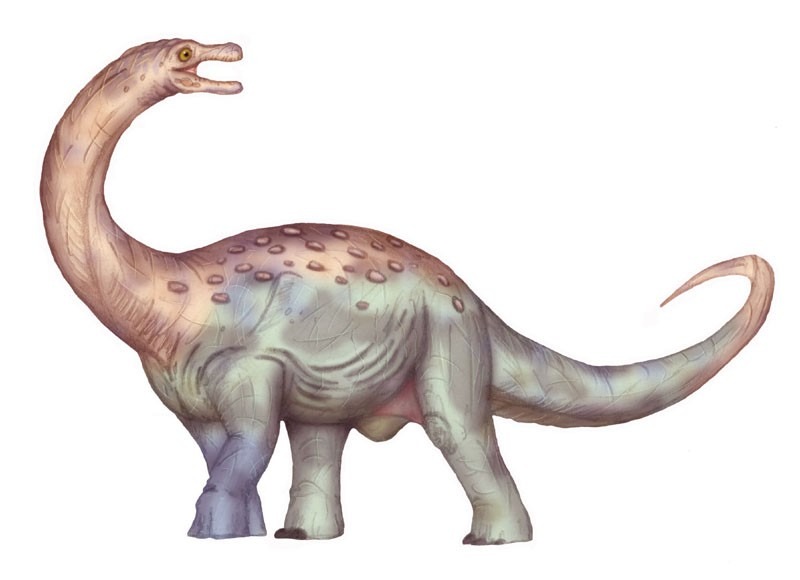
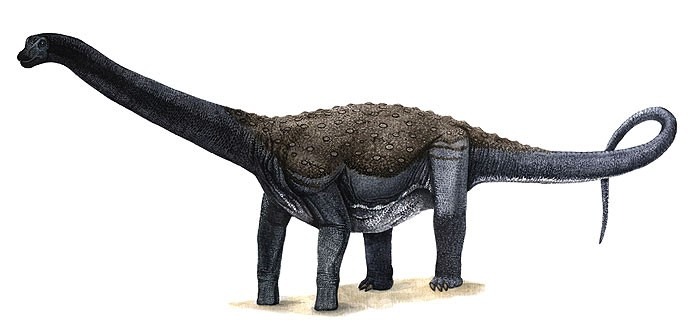
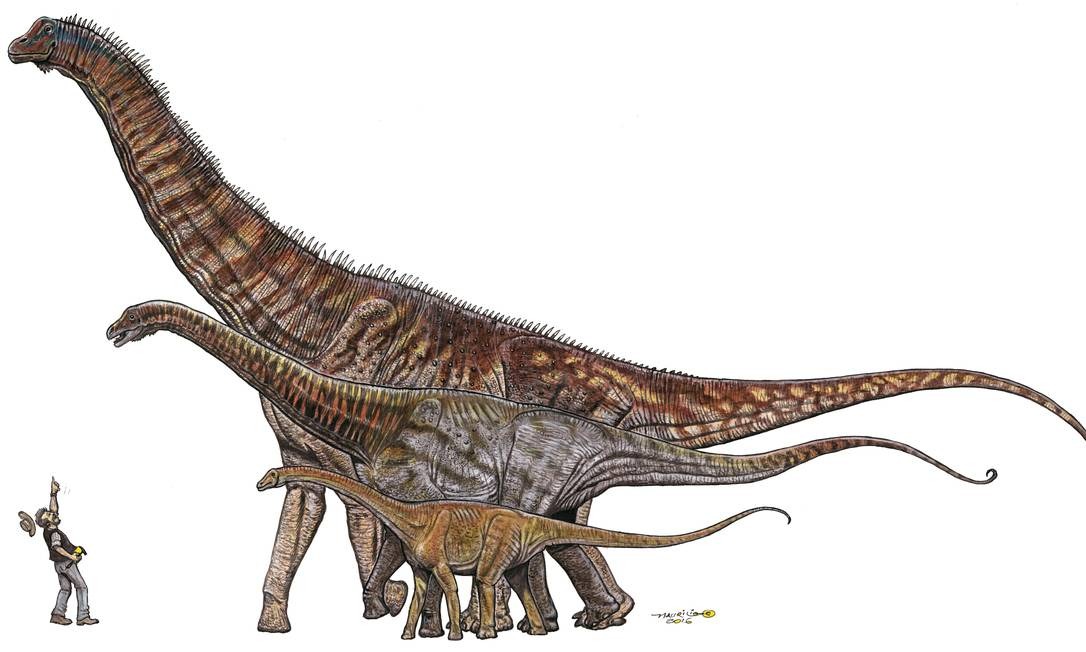
Scale model of Maxakalisaurus topai on display at the National Museum of UFRJ, Rio de Janeiro. The small replica accompanied the mounted skeleton of holotype MN 5013-V, partially destroyed in the 2018 fire.
GeoPotinga, CC BY-SA 3.0
Ecology and behavior
Habitat
Maxakalisaurus topai inhabited the semi-arid environment of the Adamantina Formation during the Late Cretaceous, approximately 80–85 million years ago. The paleoenvironment was characterized by a braided river system with seasonal floods, sparse vegetation, and alternation between intense dry seasons and rainy periods. The Triângulo Mineiro region, where the fossils were found, corresponded to a low plain near temporary bodies of water. The ecosystem included crocodilians, turtles, and fish, along with theropods such as abelisaurids and carcharodontosaurids.
Feeding
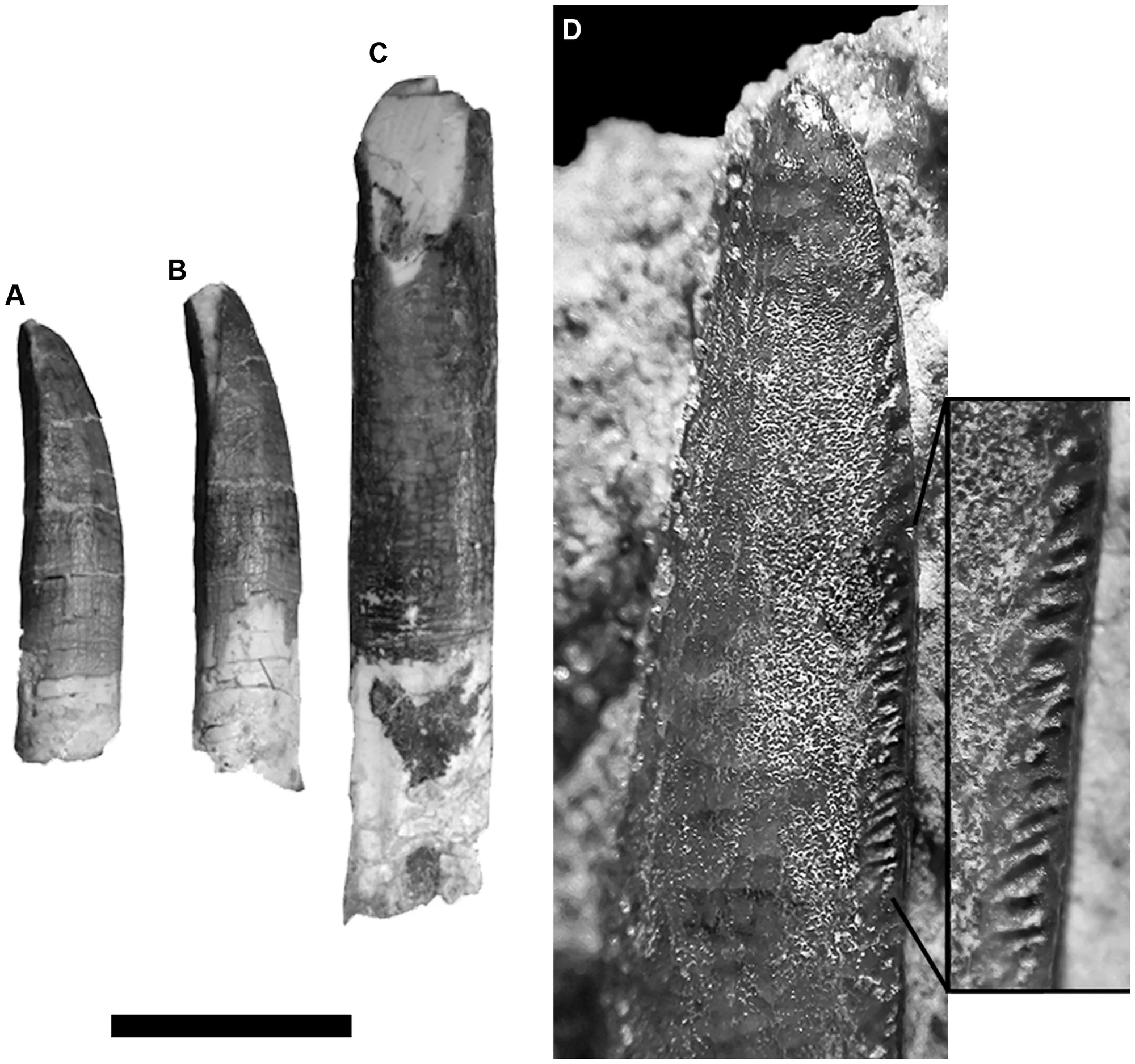
As a titanosaur sauropod, Maxakalisaurus topai was an obligate herbivore. Its ridged teeth, suboval in cross-section and described by França et al. (2016), are unusual among sauropods and suggest a specialized feeding strategy, possibly adapted to more fibrous or abrasive vegetation. The long neck allowed reaching vegetation both at ground level and at moderate heights. With a system of two replacement teeth per alveolus, the dentition was continuously renewed to compensate for wear caused by processing large amounts of plant material.
Behavior and senses
Direct fossil evidence about Maxakalisaurus topai behavior is limited. As an Aeolosaurini member, it plausibly exhibited gregarious behavior similar to that documented for other titanosaurs, with possible aggregations around water sources during dry seasons. The presence of osteoderms suggests a role in protection against predators or thermoregulation. Late Cretaceous South American titanosaurs coexisted with large theropods, implying predatory pressure on juveniles and possibly defensive group behavior.
Physiology and growth
As a derived titanosaur within Lithostrotia, Maxakalisaurus topai likely possessed endothermic or mesothermic metabolism, similar to that inferred for other titanosaurs based on bone histology. The osteoderms found in the holotype may have functioned as calcium reserves for egg production, a hypothesis raised for other titanosaurs with osteoderms. With an estimated weight of 5 tonnes and length of 13 meters, it was a mid-sized animal by titanosaur standards, but represented the largest herbivore in its ecosystem. The continuous dental replacement system indicates a high rate of tooth wear related to vegetation processing.
Paleogeography
Continental configuration

Scotese & Vérard · CC BY 4.0 · Cretaceous, ~105 Ma
Fossil sites
E. G. Nascimento, C. R. A. Candeiro et al. — CC BY 4.0
During the Santoniano-Campaniano (~85–80 Ma), Maxakalisaurus topai inhabited Laramidia, the western half of present-day North America, separated from the east by the Western Interior Seaway, a shallow sea dividing the continent. The continents were in very different positions: India was drifting toward Asia, Antarctica was still connected to Australia, and South America was an isolated island.
Bone Inventory
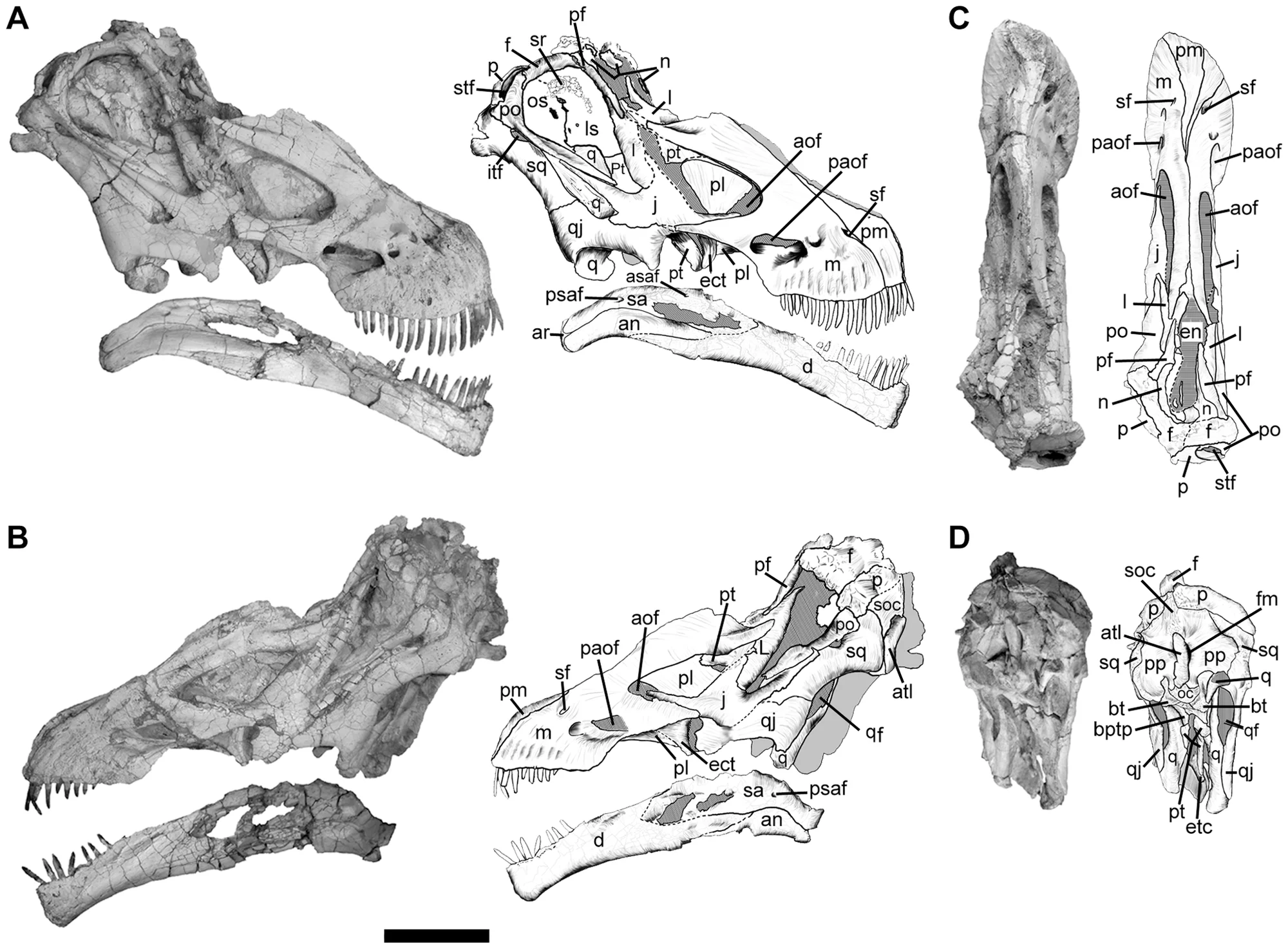
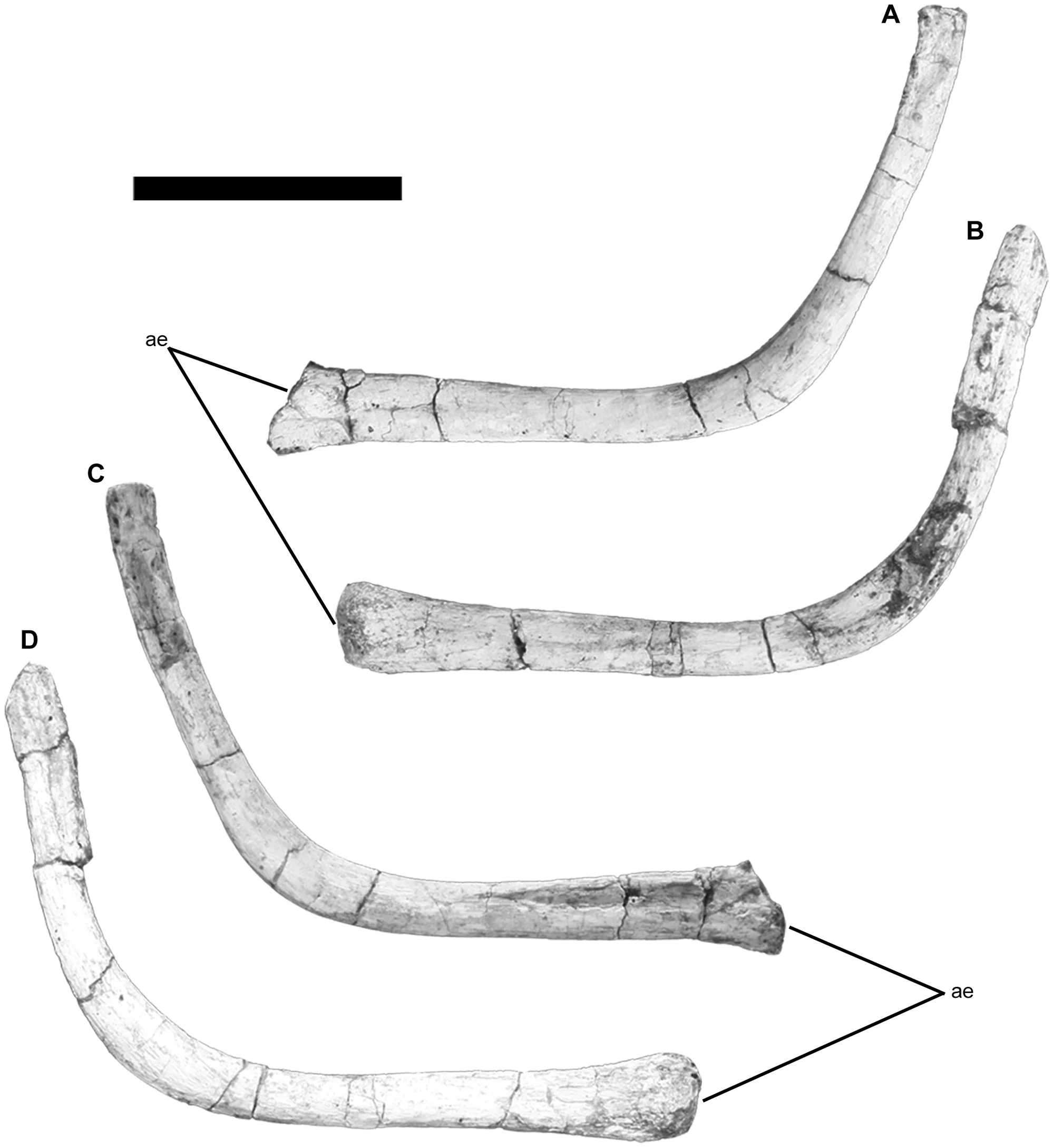
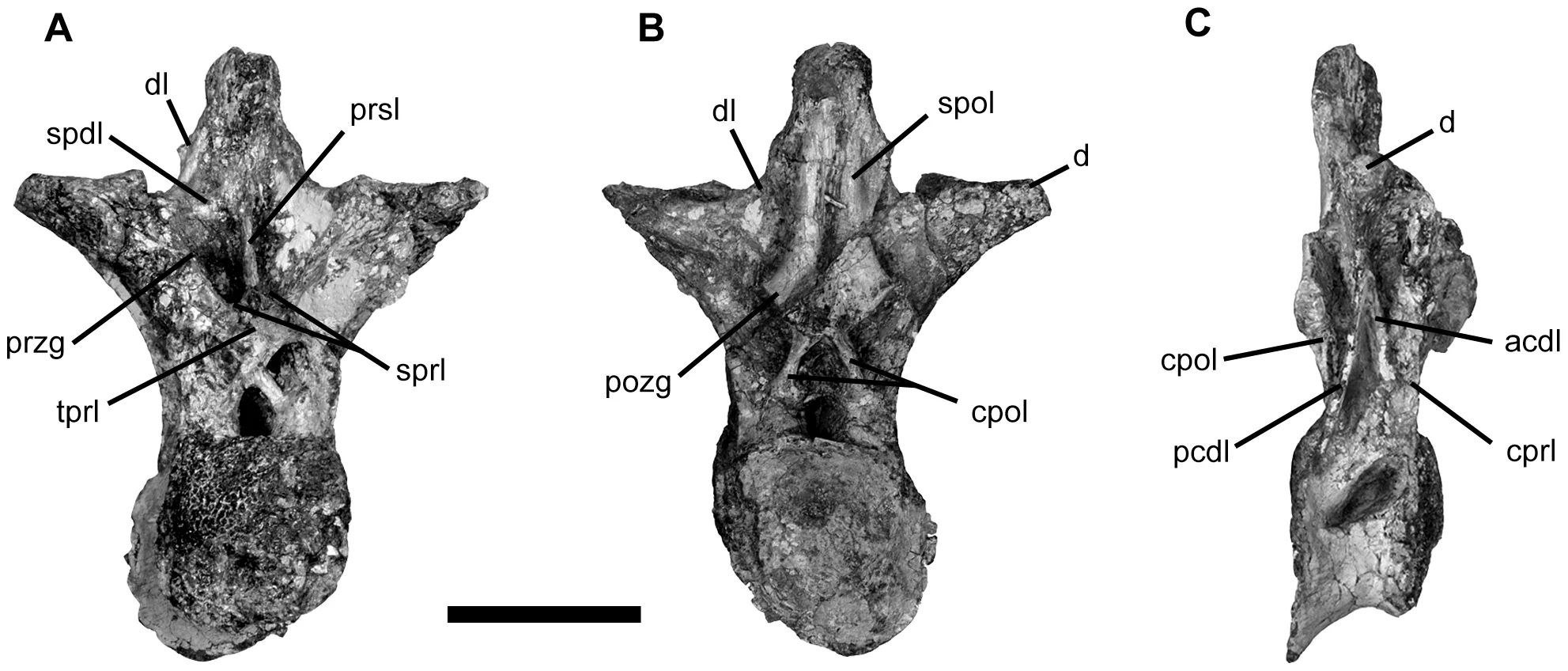
The holotype (MN 5013-V) is a partial, disarticulated skeleton that includes a fragmentary right maxilla with teeth, twelve cervical vertebrae, cervical ribs, seven dorsal vertebrae, dorsal ribs, sacral elements, six caudal vertebrae, haemal arches, scapular fragments, sternal plates, a portion of the left ischium, humeri, metacarpals, a fibula fragment, and osteoderms. A second occurrence referred to the species, including a dentary and teeth, was described by França et al. (2016). Part of the material was lost in the National Museum fire on September 2, 2018.
Found elements
Inferred elements
Scientific Literature
15 papers in chronological order — from the original description to recent research.
On a new titanosaur sauropod from the Bauru Group, Late Cretaceous of Brazil
Kellner, A.W.A., Campos, D.A., Azevedo, S.A.K., Trotta, M.N.F., Henriques, D.D.R., Craik, M.M.T. e Silva, H.P. · Boletim do Museu Nacional, Nova Série, Geologia
Founding paper naming and describing Maxakalisaurus topai based on holotype MN 5013-V, excavated over four field seasons between 1998 and 2002, 45 km west of Prata, Minas Gerais. Kellner and National Museum colleagues document a partial disarticulated skeleton including cranial elements, cervical and dorsal vertebrae, ribs, pectoral girdle elements, humeri, pelvic elements, caudal vertebrae, and osteoderms. The presence of ridged teeth is noted as unusual among sauropods. The authors position the taxon as a titanosaur and discuss its affinities with other South American titanosaurs, particularly Saltasaurinae and Aeolosaurini. The genus name honors the Maxakali indigenous people of the region, and the specific epithet refers to Topá, a deity of the Maxakali pantheon. This work established the taxonomic foundation for all subsequent studies on the species.
New lower jaw and teeth referred to Maxakalisaurus topai (Titanosauria: Aeolosaurini) and their implications for the phylogeny of titanosaurid sauropods
França, M.A.G., Marsola, J.C.A., Riff, D., Hsiou, A.S. e Langer, M.C. · PeerJ
França and colleagues describe a dentary and teeth referred to Maxakalisaurus topai, substantially expanding knowledge of the species' cranial morphology. The dentary measures 8.2 cm anteroposteriorly with ten alveoli. Teeth exhibit high-angled planar facets and are suboval in cross-section, with two replacement teeth per alveolus. The phylogenetic analysis uses 42 taxa and 253 characters, recovering the Aeolosaurini clade with Maxakalisaurus as a basal member. Results confirm Gondwanatitan and Aelosaurus as sister taxa, and identify nine newly scored dental characters. The work demonstrated that dental material is informative for Brazilian titanosaur systematics and provided the most robust phylogenetic analysis published specifically on M. topai.
A new sauropod (Macronaria, Titanosauria) from the Adamantina Formation, Bauru Group, Upper Cretaceous of Brazil and the phylogenetic relationships of Aeolosaurini
Santucci, R.M. e Arruda-Campos, A.C. · Zootaxa
Santucci and Arruda-Campos describe Aeolosaurus maximus, a new Aeolosaurini species from the Adamantina Formation of São Paulo state. The revised phylogenetic analysis, which includes Maxakalisaurus topai as a reference taxon, recovers Aeolosaurini as a South American endemic clade with members found only in Argentina and Brazil. The work discusses the group's synapomorphic characters, with emphasis on haemal processes, and repositions Maxakalisaurus relative to other clade members. The detailed description of A. maximus provided new comparative data for interpreting M. topai morphology, especially regarding caudal vertebrae and their haemal arches. This study consolidated Aeolosaurini's position as a coherent phylogenetic unit within Titanosauria.
Vertebrate fossils from the Adamantina Formation (Late Cretaceous), Prata paleontological district, Minas Gerais State, Brazil
Candeiro, C.R.A., Santos, A.R., Rich, T., Marinho, T.S. e Oliveira, E.C. · Geobios
Candeiro and colleagues provide a systematic inventory of fossil vertebrates from the Adamantina Formation at the Prata paleontological district, Minas Gerais, precisely the site where Maxakalisaurus topai was excavated. The work documents associated fauna including lepisosteids, amiids, abelisaurid and carcharodontosaurid dinosaurs, and indeterminate titanosaurs, along with crocodilians and turtles. The Adamantina Formation sediments in the region are described as reddish sandstones with fluvio-lacustrine sediments deposited in a semi-arid environment. The Prata paleontological district, 45 km west of the town of Prata, is one of Brazil's most important fossil sites. This study established the biostratigraphic and paleoenvironmental context for the discovery of Maxakalisaurus topai.
Uberabatitan ribeiroi, a new titanosaur from the Marília Formation (Bauru Group, Upper Cretaceous), Minas Gerais, Brazil
Salgado, L. e Carvalho, I.S. · Palaeontology
Salgado and Carvalho describe Uberabatitan ribeiroi, a new titanosaur from the Maastrichtian Bauru Group in Uberaba, Minas Gerais, the same state where Maxakalisaurus topai was found. The phylogenetic analysis places Uberabatitan within Titanosauria and discusses its relationships with other South American titanosaurs, including Adamantina Formation taxa. The material includes over sixty bones representing at least five individuals of varying ages and sizes, allowing discussion of ontogeny. Though distinct, Uberabatitan and Maxakalisaurus are contemporaneous Bauru Group titanosaurs from Minas Gerais, and this description offers valuable comparative anatomical context. The phylogenetic analysis, including Maxakalisaurus as a comparison taxon, helped clarify the internal relationships of Titanosauria.
A New Giant Titanosauria (Dinosauria: Sauropoda) from the Late Cretaceous Bauru Group, Brazil
Bandeira, K.L.N., Simbras, F.M., Machado, E.B., Campos, D.A., Oliveira, G.R. e Kellner, A.W.A. · PLOS ONE
Bandeira and colleagues, including Kellner, the same author who described Maxakalisaurus, describe Austroposeidon magnificus, the largest dinosaur found in Brazil at the time, from the Presidente Prudente Formation (Bauru Group) of São Paulo. The specimen, originally collected in 1953 by Llewelyn Ivor Price and stored for over 60 years at the Museum of Earth Sciences in Rio de Janeiro, consists of a partial vertebral column. The phylogenetic analysis reveals Austroposeidon as the sister group of Lognkosauria. CT scanning revealed previously undescribed internal bone structures in the cervical vertebrae. The work demonstrates the exceptional diversity of gigantic titanosaurs in the Bauru Group and provides a broader phylogenetic context within which Maxakalisaurus can be positioned as a mid-sized Aeolosaurini member.
New specimens of Baurutitan britoi and a taxonomic reassessment of the titanosaur dinosaur fauna (Sauropoda) from the Serra da Galga Formation (Late Cretaceous) of Brazil
Silva Junior, J.C.G., Marinho, T.S., Martinelli, A.G. e Langer, M.C. · PeerJ
Silva Junior and colleagues reassess Baurutitan britoi based on new specimens from the Serra da Galga Formation (Bauru Group) and present a revised phylogenetic analysis of Late Cretaceous South American titanosaurs. The analysis includes Maxakalisaurus topai as a comparison taxon and helps clarify relationships among Bauru Group titanosaurs. The authors identify Trigonosaurus pricei as a junior synonym of Baurutitan britoi. The taxonomic reassessment demonstrates that titanosaur diversity in the Serra da Galga Formation is greater than previously thought. The work provides updated comparative data on vertebrae and other skeletal elements that complement knowledge of Bauru Group titanosaur anatomy, a direct context for interpreting Maxakalisaurus topai bones from the overlying Adamantina Formation.

Titanosauria of the Bauru Group: a summary of records and their importance for understanding the diversity of the clade in Brazil
Nascimento, E.G., Candeiro, C.R.A., Vidal, L., Oliveira, E.F., Dias, T.C. e Brusatte, S. · Andean Geology
Nascimento and colleagues, including British paleontologist Steve Brusatte, publish a comprehensive review of all titanosaur records from the Bauru Group in the Late Cretaceous of Brazil. The work analyzes eight recognized species, including Maxakalisaurus topai, and discusses their importance for understanding clade diversity in South America. The authors identify the Late Cretaceous environmental and geographic factors that controlled the life cycles of these giant herbivores and possible migration routes. Lithological characteristics suggest a braided river paleoenvironment in an arid climate with sparse vegetation. The study also highlights that the Adamantina and Serra da Galga formations represent the areas with the highest number of records collected, where environmental conditions were most favorable for titanosaur flourishing and preservation.

Vertebrate faunas from the Adamantina and Marília formations (Upper Baurú Group, Late Cretaceous, Brazil) in their stratigraphic and paleobiogeographic context
Bertini, R.J., Marshall, L.G., Gayet, M. e Brito, P. · Neues Jahrbuch für Geologie und Paläontologie – Abhandlungen
Bertini and colleagues conduct a pioneering review of Late Cretaceous vertebrate faunas from the Adamantina and Marília formations (Upper Bauru Group) in their stratigraphic and paleobiogeographic context. The work establishes the reference framework for understanding Bauru Group faunal diversity, including the titanosaur sauropods that would be described in the following decades, such as Maxakalisaurus topai. The paleobiogeographic analysis demonstrates connections between the Bauru Group fauna and contemporaneous South American faunas, especially from Argentina. The study defines the Turonian-Maastrichtian interval for the Bauru Group formations based on faunal correlation. This founding review remains essential for contextualizing any new species described from the Bauru Group, including Maxakalisaurus.

A new sauropod dinosaur (Titanosauria) from the Late Cretaceous of Brazil
Kellner, A.W.A. e Azevedo, S.A.K. · National Science Museum Monographs
Kellner and Azevedo describe Gondwanatitan faustoi, a new titanosaurid sauropod from the Late Cretaceous (Bauru Group) of São Paulo, representing the most complete sauropod skeleton from Brazil at the time. The material (MN 4111-V) includes cranial elements, cervical, dorsal, sacral, and caudal vertebrae, pectoral and pelvic girdles, and limbs. Kellner is the same author who would describe Maxakalisaurus topai seven years later, and Gondwanatitan was identified as a sister or close taxon to Maxakalisaurus in subsequent phylogenetic analyses. This work established the anatomical comparison baseline among Bauru Group titanosaurs and positioned the Brazilian fauna within South American Aeolosaurini.
Distribution, paleoenvironments and palaeobiogeography of the Late Cretaceous titanossaur sauropods from western São Paulo and Minas Gerais, southeastern Brazil
Santucci, R.M. e Bertini, R.J. · Geológica Acta
Santucci and Bertini analyze the distribution of Late Cretaceous titanosaur sauropods from the Adamantina Formation and correlates of western São Paulo and Minas Gerais, with discussion of paleoenvironments and paleobiogeography. The work directly examines the geographic and stratigraphic context of Maxakalisaurus topai, describing the Adamantina Formation paleoenvironment as a braided river system in a semi-arid climate. The paleobiogeographic analysis points to relationships between Bauru Group titanosaurs and Argentine Aeolosaurini taxa, suggesting dispersal corridors along the Late Cretaceous of South America. This study helped establish the geographic distribution of Bauru Group titanosaurs and provided an occurrence map that contextualized the discovery of Maxakalisaurus.
Sauropoda
Upchurch, P., Barrett, P.M. e Dodson, P. · The Dinosauria (2nd edition), University of California Press
Upchurch, Barrett, and Dodson publish the most comprehensive systematic review of Sauropoda in the second edition of The Dinosauria, a fundamental reference work in dinosaur paleontology. The work formally defines the clade Lithostrotia (of which Maxakalisaurus is a member) as the most recent common ancestor of Malawisaurus and Saltasaurus and all their descendants. The monograph establishes standardized morphological terminology, diagnostic phylogenetic characters, and the classificatory framework within which Maxakalisaurus topai would be positioned by Kellner et al. in 2006 and subsequent analyses. The phylogenetic analysis of 309 taxa and over 200 characters remains the fundamental taxonomic reference for all work on titanosaurs, including Brazilian taxa.
A gigantic new dinosaur from Argentina and the evolution of the sauropod hind foot
González Riga, B.J., Lamanna, M.C., Ortiz David, L.D., Calvo, J.O. e Coria, J.P. · Scientific Reports
González Riga and colleagues describe Notocolossus gonzalezparejasi, one of the largest dinosaurs ever found, from the Cretaceous of Mendoza, Argentina. The work includes a comprehensive phylogenetic analysis of Titanosauria that positions Notocolossus within Lithostrotia and recovers the Aeolosaurini clade, with Maxakalisaurus topai as a reference taxon. The analysis of the hind foot of giant titanosaurs revealed unique functional adaptations related to supporting enormous body weight. The work discusses the biogeography of giant South American titanosaurs and provides an updated phylogenetic context for interpreting Maxakalisaurus topai's position within Aeolosaurini.
Evolution of the titanosaur metacarpus
Apesteguía, S. · Thunder-Lizards: The Sauropodomorph Dinosaurs, Indiana University Press
Apesteguía analyzes the evolution of the metacarpus in titanosaur sauropods, reviewing diagnostic characters distinguishing groups like Aeolosaurini from other titanosaurs. The work is relevant for interpreting the metacarpals of Maxakalisaurus topai, which are among the preserved elements in holotype MN 5013-V. Metacarpus morphology is discussed in evolutionary context, with comparisons between South American and African titanosaurs. The characteristics of the vertically arranged metacarpus, typical of derived titanosaurs, are analyzed in relation to the quadrupedal posture and locomotion of these giants. The work provides an anatomical framework for interpreting Maxakalisaurus hand elements within the morphological diversity of Aeolosaurini.
A complete skull of an Early Cretaceous sauropod and the evolution of advanced titanosaurians
Zaher, H., Pol, D., Carvalho, A.B., Nascimento, P.M., Riccomini, C., Larson, P., Juárez-Valieri, R., Pires-Domingues, R., Silva, N.J. e Campos, D.A. · PLOS ONE
Zaher and colleagues describe Tapuiasaurus macedoi, a Lower Cretaceous titanosaur from Minas Gerais with a nearly complete skull, the most complete among titanosaurs. The phylogenetic analysis, published in PLOS ONE, places Tapuiasaurus in a trichotomy with Trigonosaurus and Maxakalisaurus topai, revealing direct phylogenetic relationships between the two Brazilian dinosaurs. The skull reveals that advanced titanosaurs developed an elongated diplodocid-like cranial morphology much earlier than previously imagined, 30–40 million years before their radiation in the Late Cretaceous. The open-access work includes a phylogenetic analysis of 42 taxa that is a reference for positioning Bauru Group titanosaurs, including Maxakalisaurus.
Famous museum specimens
MN 5013-V (Holótipo)
Museu Nacional, Universidade Federal do Rio de Janeiro (UFRJ), Rio de Janeiro, Brasil
Holotype of Maxakalisaurus topai, excavated over four field seasons (1998–2002) 45 km west of Prata, Minas Gerais. Includes a fragmentary right maxilla with teeth, twelve cervical vertebrae, seven dorsal vertebrae, sacral elements, six caudal vertebrae, haemal arches, scapular fragments, humeri, metacarpals, a fibula fragment, and osteoderms. Part of the material was lost in the National Museum fire of September 2, 2018. A crowdfunding campaign was launched to reconstruct the skeleton.
Segundo espécime referido (dentário e dentes)
Museu Nacional, Universidade Federal do Rio de Janeiro (UFRJ), Rio de Janeiro, Brasil
Additional material referred to Maxakalisaurus topai including a dentary and teeth, described by França et al. (2016) in PeerJ. The dentary measures 8.2 cm anteroposteriorly with ten alveoli. Teeth exhibit high-angled planar facets and are suboval in cross-section, with two replacement teeth per alveolus. This material substantially expanded knowledge of the species' cranial morphology.
In cinema and popular culture
Maxakalisaurus topai never appeared in major dinosaur blockbusters like Jurassic Park, but its real story is more dramatic than any fiction. When it was described in 2006, the National Museum of Rio de Janeiro assembled a 13-meter replica for public display, making it the largest dinosaur exhibited in Brazil, with coverage from international outlets including NBC News and Al Jazeera. The news was treated as national pride. In 2018, when the fire devastated the National Museum, the Maxakalisaurus skeleton was partially destroyed, generating grief throughout Brazil. The titanosaur became a symbol of the irreplaceable losses from Brazil's scientific collection. Reconstruction campaigns were launched, including a crowdfunding effort, to return to the public the only large dinosaur that Brazil had managed to exhibit mounted. Scientific documentaries such as Prehistoric Planet (Apple TV+, 2022) and Planet Dinosaur (BBC, 2011) depict similar South American titanosaurs with high scientific fidelity, even if they do not mention Maxakalisaurus by name. The future of public display of this species depends on the reconstruction and reopening of the National Museum, one of the greatest heritage losses in Brazil's history.
Classification
Discovery
Fun fact
Maxakalisaurus topai was the largest Brazilian dinosaur and the only one with a mounted skeleton on public display in Brazil. In 2018, the fire that destroyed the National Museum of Rio de Janeiro partially damaged the skeleton, and a crowdfunding campaign was launched to rebuild it. The name honors the Maxakali, an indigenous people whose original territory is near the discovery site, and Topá, one of the main deities of their pantheon.
Last reviewed: April 24, 2026