
Lystrosaurus
Lystrosaurus murrayi
"Murray's shovel lizard"
About this species
Lystrosaurus murrayi is a dicynodont (non-mammalian synapsid) that survived the greatest mass extinction in the history of life, the end-Permian catastrophe approximately 252 million years ago. In the Early Triassic it constituted more than 90% of terrestrial vertebrates, a dominance unparalleled in tetrapod history. Its massive skull bore a horny beak for cutting vegetation and two small upper tusks. Roughly the size of a medium pig, Lystrosaurus murrayi has become a symbol of post-extinction resilience and continental drift, with fossils found in South Africa, Antarctica, India, China, and Russia.
Geological formation & environment
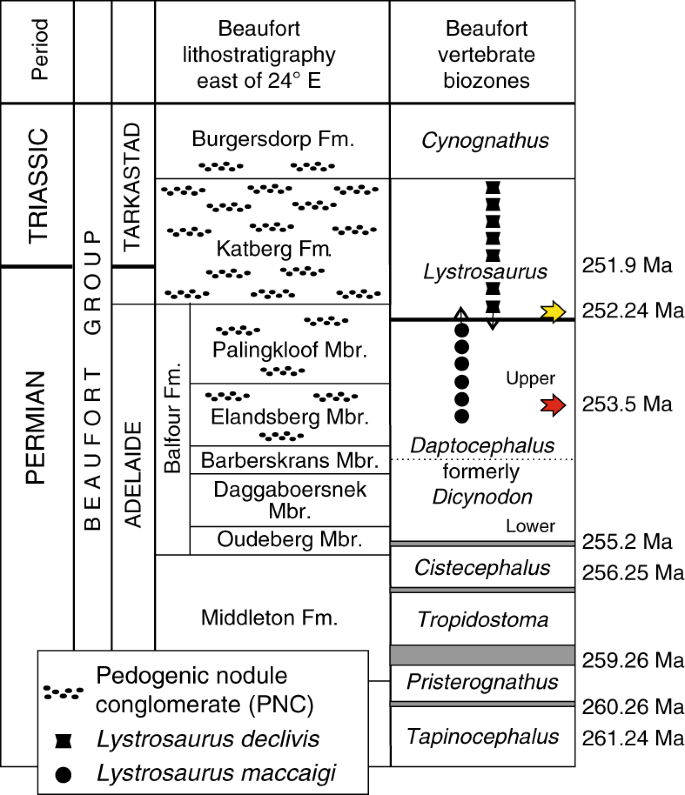
The Lystrosaurus Assemblage Zone is one of the eight biozones of the Beaufort Group, Karoo Supergroup, in South Africa. It occurs at the base of the Early Triassic and overlies the Late Permian Daptocephalus Zone. The sediments consist mainly of reddish sandstones and siltstones of fluvial and floodplain origin, deposited under semi-arid conditions. The zone is defined by the massive dominance of Lystrosaurus among terrestrial vertebrates. Equivalents of this zone are recognized in Antarctica (Fremouw Formation), India (Panchet Formation), and China (Jiucaiyuan and Guodikeng Formations).
Image gallery
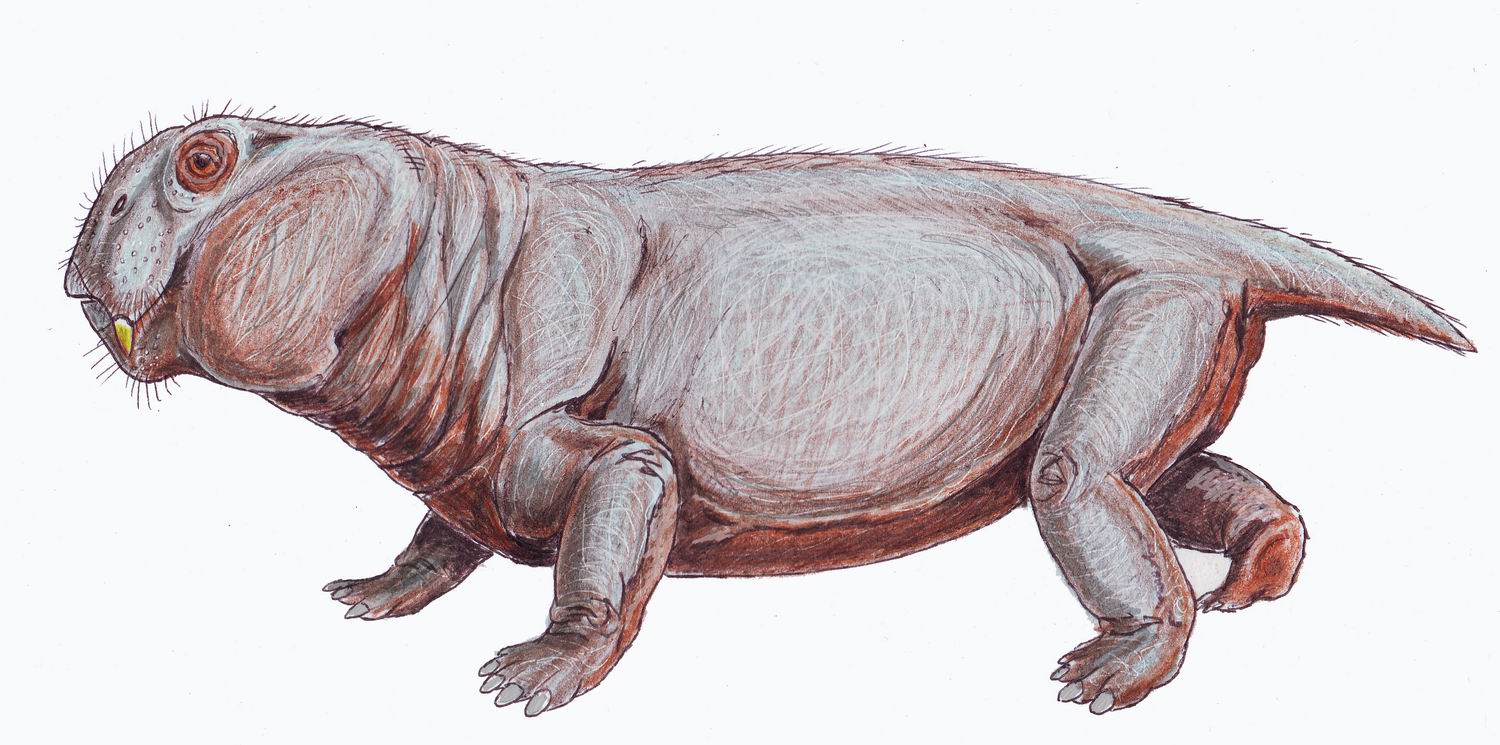


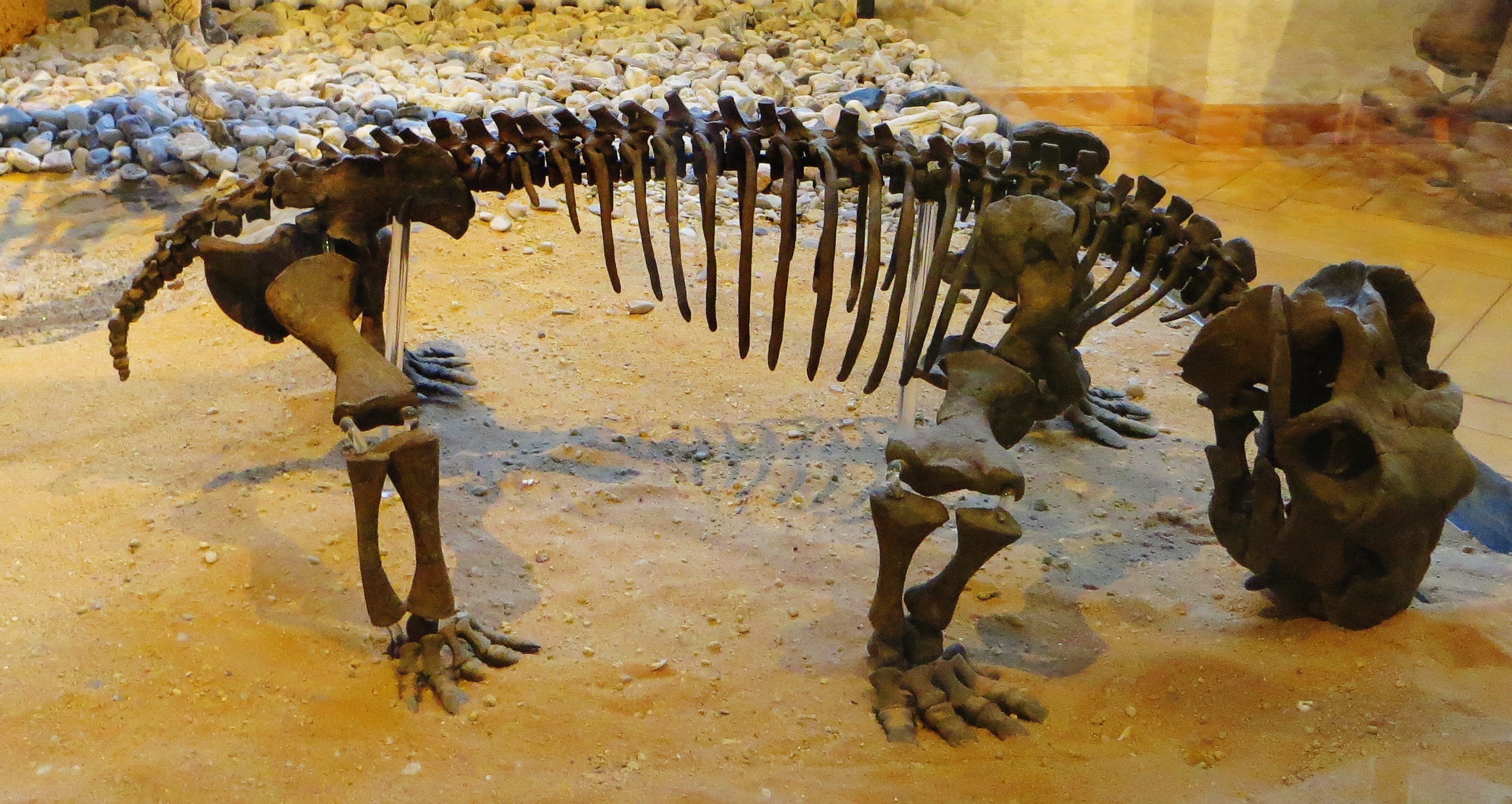


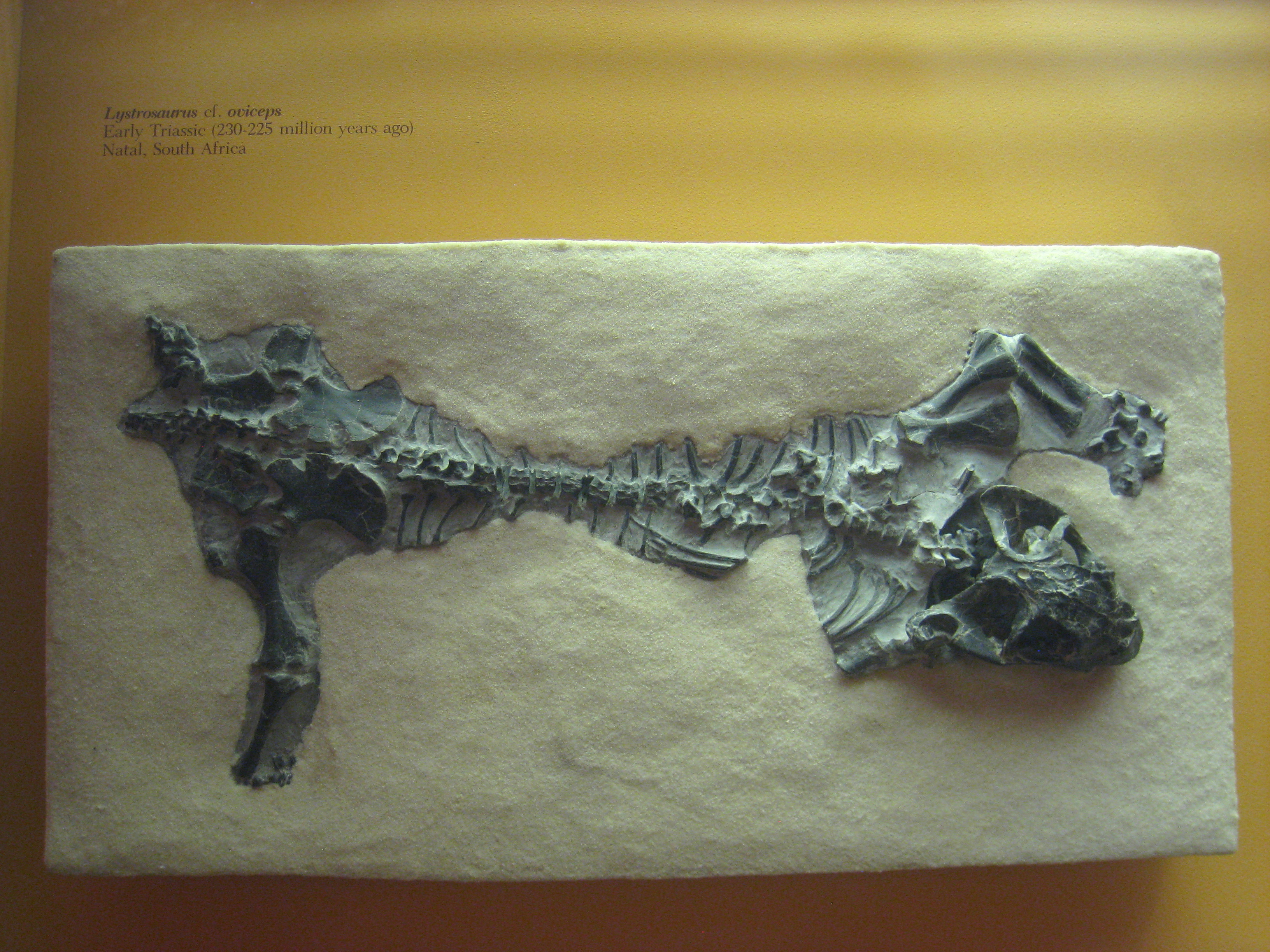


Artistic reconstruction of Lystrosaurus murrayi by Dmitry Bogdanov (2007). The animal is shown in its Early Triassic environment, with robust terrestrial posture and the characteristic massive head with horny beak.
Dmitry Bogdanov, CC BY-SA 3.0
Ecology and behavior
Habitat
Lystrosaurus murrayi inhabited the semi-arid floodplains and river corridors of the Karoo Basin (present-day South Africa) during the Induan (252-249 Ma), immediately after the end-Permian mass extinction. The environment was extremely stressful: severe droughts alternated with episodic floods, plant diversity was low, and temperatures were high. The species also occupied similar habitats in Antarctica, India, China, and Russia, demonstrating remarkable adaptability to different latitudes of the supercontinent Pangaea.
Feeding
Lystrosaurus murrayi was herbivorous, feeding on low vegetation available in the impoverished post-extinction environment. The horny beak allowed cutting lignified plants and roots; the two upper tusks were used to dig the soil for tubers and roots, or to tear tough stems. It had no functional lateral teeth (a diagnostic characteristic of dicynodonts). The reduced dentition and robust beak made Lystrosaurus a generalist feeder capable of exploiting diverse plant resources during an era of low biodiversity.
Behavior and senses
Bonebed evidence from the Karoo indicates that Lystrosaurus murrayi formed seasonal aggregations, possibly during severe drought periods when water and food resources concentrated at specific points. Taphonomic studies by Smith, Botha, and Viglietti (2022) interpret these concentrations as collective drought mortality. There is no direct evidence of parental or elaborate social behavior, but the occurrence of juveniles and adults together in bonebeds suggests that different age classes shared the same habitats.
Physiology and growth
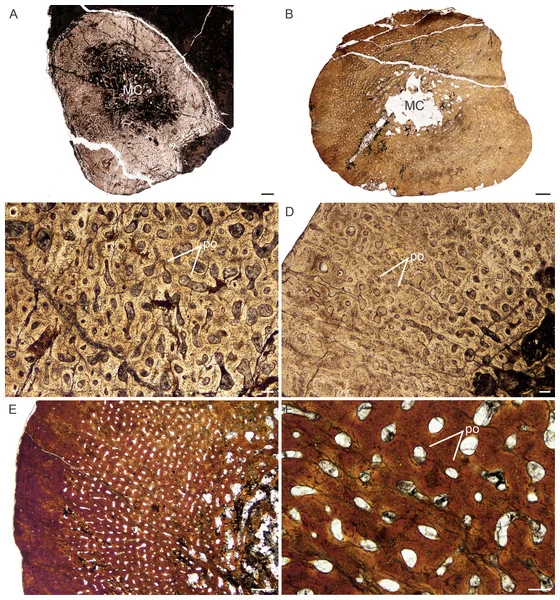
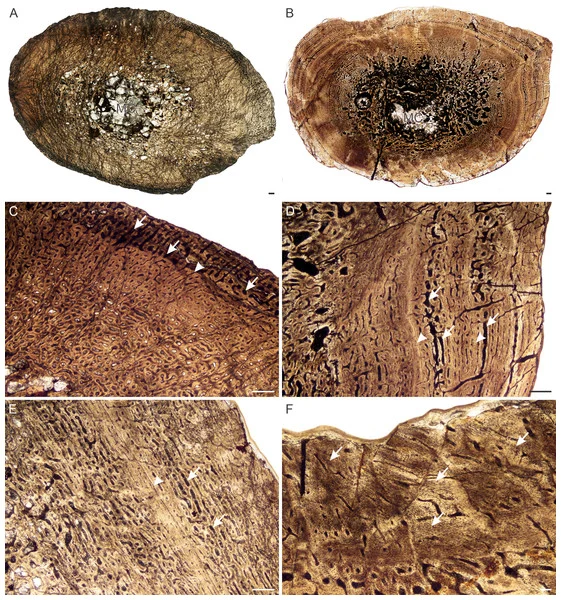
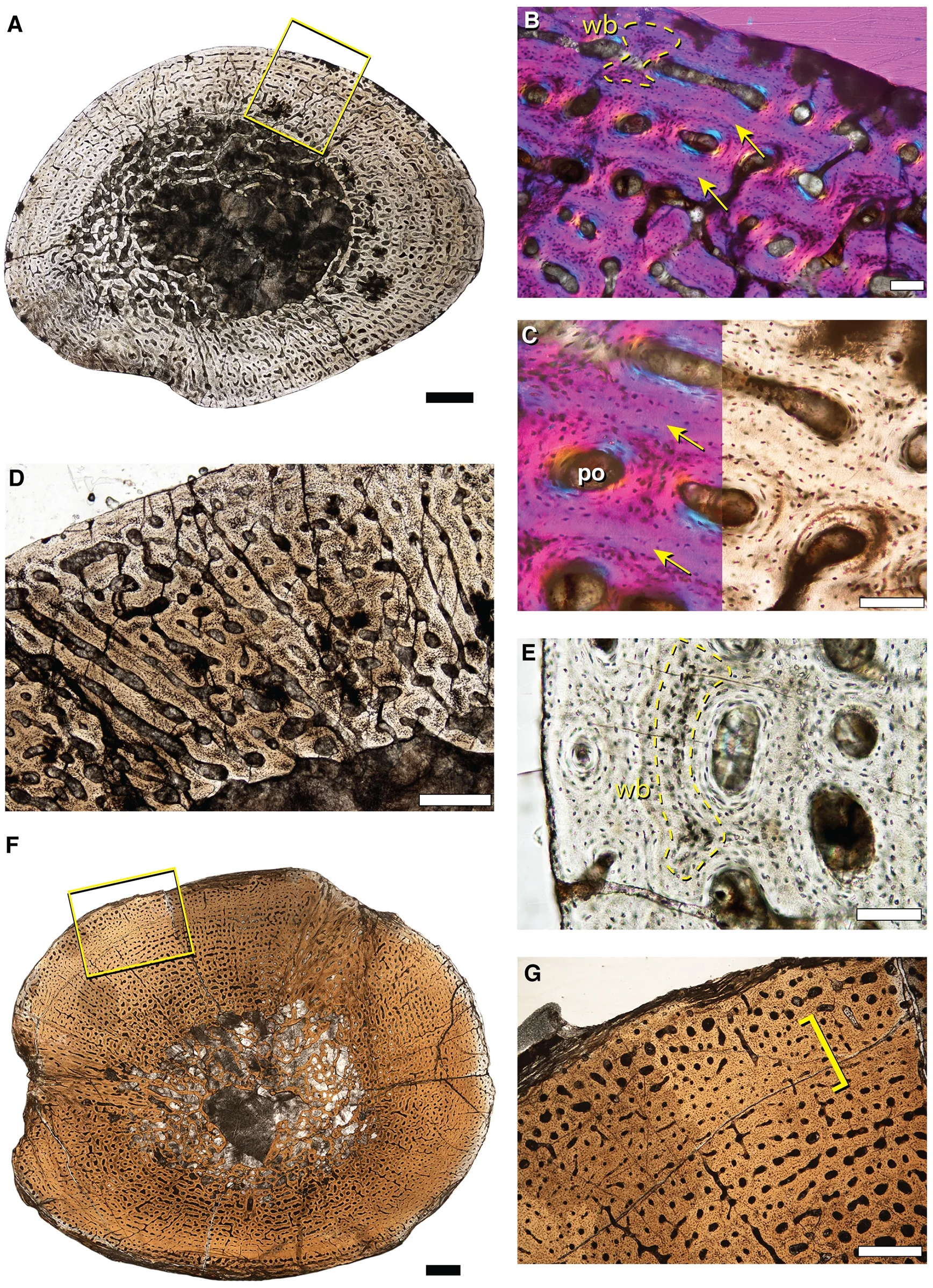
The fibrolamellar bone microstructure of Lystrosaurus murrayi indicates elevated metabolism and rapid growth during early ontogeny, characteristics closer to mammals than to modern ectothermic reptiles. Lines of arrested growth (LAGs) in specimens from different regions suggest seasonal periods of reduced growth. Recent studies of Antarctic mummies indicate leathery skin without hair. The ability to enter hypometabolic torpor during extreme conditions has been proposed as a survival mechanism but remains speculative.
Paleogeography
Continental configuration

Scotese & Vérard · CC BY 4.0 · Triassic, ~225 Ma
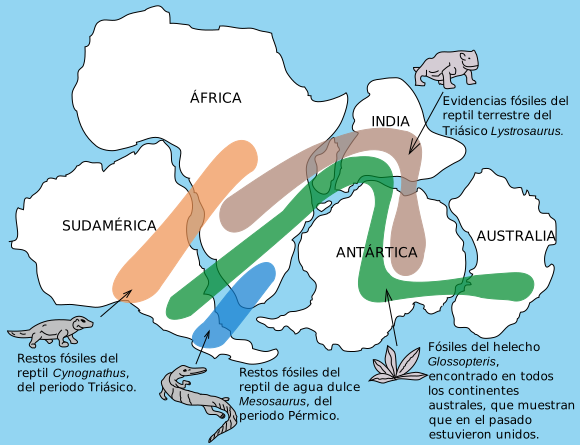
During the Induano (~252–249 Ma), Lystrosaurus murrayi inhabited Pangea, the single supercontinent joining all modern continents. Climate was dry and hot across much of the continental interior.
Bone Inventory
Hundreds of specimens known, including complete skulls and articulated skeletons from the Karoo Basin (South Africa), Panchet Formation (India), and Fremouw Formation (Antarctica). The fossil record is exceptionally rich for this species.
Found elements
Inferred elements
Scientific Literature
14 papers in chronological order — from the original description to recent research.
On a new species of Dicynodon from the Karoo Formation
Huxley, T.H. · Quarterly Journal of the Geological Society of London
This is the founding paper for the species, published by Thomas Henry Huxley in 1859 based on material from the Karoo Basin. Huxley described the massive skull, horny beak, and two upper tusks that characterize Lystrosaurus murrayi, distinguishing it from other Permian dicynodonts. The original description established characters still used to identify the species today and initiated decades of debate about its ecology and affinities.
Triassic tetrapods from Antarctica: evidence for continental drift
Colbert, E.H., Elliot, D.H., Breed, W.J., Jensen, J.A., Powell, J.S. · Science
This seminal paper by Colbert and colleagues reported the discovery of Lystrosaurus at Coalsack Bluff in the Transantarctic Mountains, confirming that the same animal had lived in Africa, India, and Antarctica during the Early Triassic. The presence of an identical terrestrial vertebrate on three continents now separated by oceans provided decisive paleontological evidence for continental drift theory. The work transformed Lystrosaurus into one of the most important fossils in the history of Earth sciences.
Lystrosaurus Zone (Triassic) fauna from Antarctica
Kitching, J.W., Collinson, J.W., Elliot, D.H., Colbert, E.H. · Science
A companion work to the 1970 paper, describing in detail the full fauna of the Lystrosaurus Zone in Antarctica. Beyond Lystrosaurus murrayi, the authors identified cynodonts and other tetrapods identical to those from the Karoo Basin, strengthening the hypothesis that the two continents were physically connected in the Early Triassic. This faunal inventory established the Antarctic Lystrosaurus Zone as one of the most relevant fossil testimonies of Gondwanan paleogeography.

Lystrosaurus murrayi (Therapsida, Dicynodontia): bone histology, growth and lifestyle adaptations
Ray, S., Chinsamy, A., Bandyopadhyay, S. · Palaeontology
This work conducted the first detailed histological analysis of Lystrosaurus murrayi bone tissue, identifying highly vascularized fibrolamellar bone indicative of rapid growth during early ontogeny. The authors showed that L. murrayi did not have indeterminate growth and that larger specimens had not yet reached maximum size. The analysis also challenged the semi-aquatic lifestyle hypothesis, concluding that bone microanatomy is more consistent with a terrestrial mode of life.
Lystrosaurus species composition across the Permo–Triassic boundary in the Karoo Basin of South Africa
Botha, J., Smith, R.M.H. · Lethaia
Botha and Smith analyzed 189 Lystrosaurus specimens from museum collections and recent fieldwork, arranging them stratigraphically to reconstruct species composition changes across the Permo-Triassic boundary. The study revealed that L. curvatus and L. maccaigi coexisted in the Late Permian, but only L. curvatus briefly survived the extinction event. L. murrayi and L. declivis are exclusively Triassic species that appeared after the extinction, challenging the idea that Lystrosaurus simply crossed the boundary without evolutionary change.

The Disaster Taxon Lystrosaurus: A Paleontological Myth
Modesto, S.P. · Frontiers in Earth Science
Modesto questions the widespread use of the term 'disaster taxon' for Lystrosaurus, examining formal definitions and confronting them with available biostratigraphic and phylogenetic data. The author concludes that Lystrosaurus does not satisfy established criteria: its stratigraphic range is comparable to other tetrapod genera, and there is no solid evidence that it was relegated to marginal environments during post-extinction recovery. At best, certain species in the lower Karoo may be described as opportunistic.

The paleobiology and paleoecology of South African Lystrosaurus
Botha, J. · PeerJ
Botha examined growth patterns and body size across four South African Lystrosaurus species to investigate whether a 'Lilliput effect' (size reduction during mass extinction) occurred. Analysis of cranial measurements and bone histology revealed that Triassic species appear smaller but their largest specimens had not reached growth asymptote, suggesting they died young. The work also definitively refutes the semi-aquatic hypothesis, supporting a fully terrestrial mode of life.

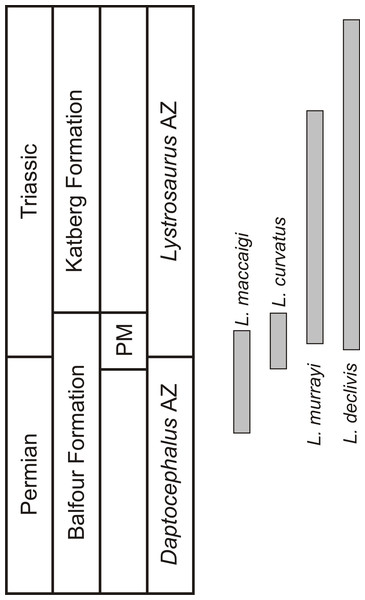
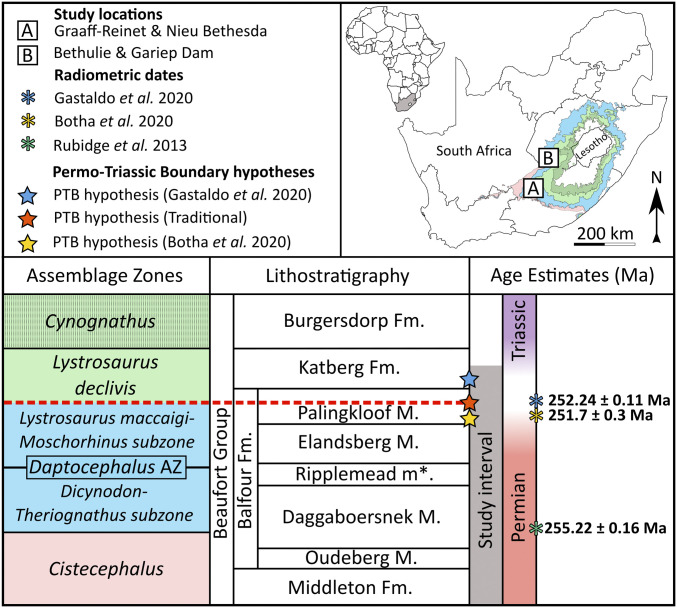
The base of the Lystrosaurus Assemblage Zone, Karoo Basin, predates the end-Permian marine extinction
Gastaldo, R.A., Kamo, S.L., Neveling, J., Geissman, J.W., Looy, C.V., Martini, A.M. · Nature Communications
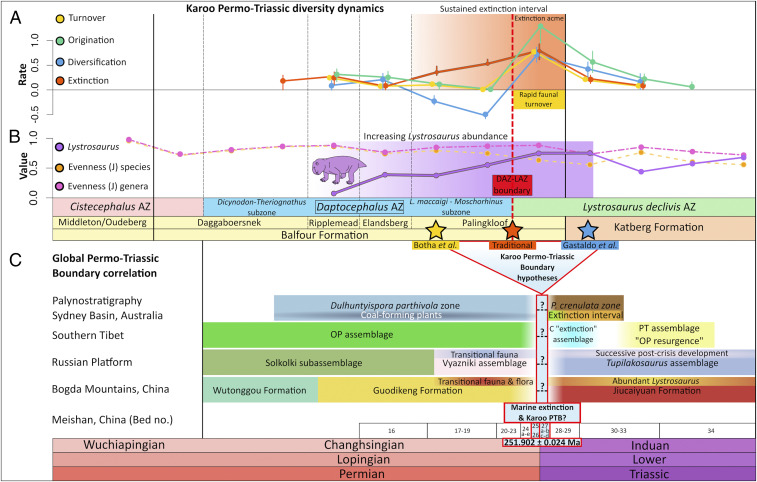
Using high-precision U-Pb dating, Gastaldo and colleagues determined that the lower exposures of the Lystrosaurus Zone in the Karoo are of latest Permian age, predating the end-Permian marine extinction by over 300,000 years. This indicates that the terrestrial faunal transition in the Karoo Basin preceded the global extinction event recorded in the oceans, suggesting that land extinction was more gradual than previously thought. The work reignited debate about the synchronicity of terrestrial and marine Permo-Triassic extinctions.

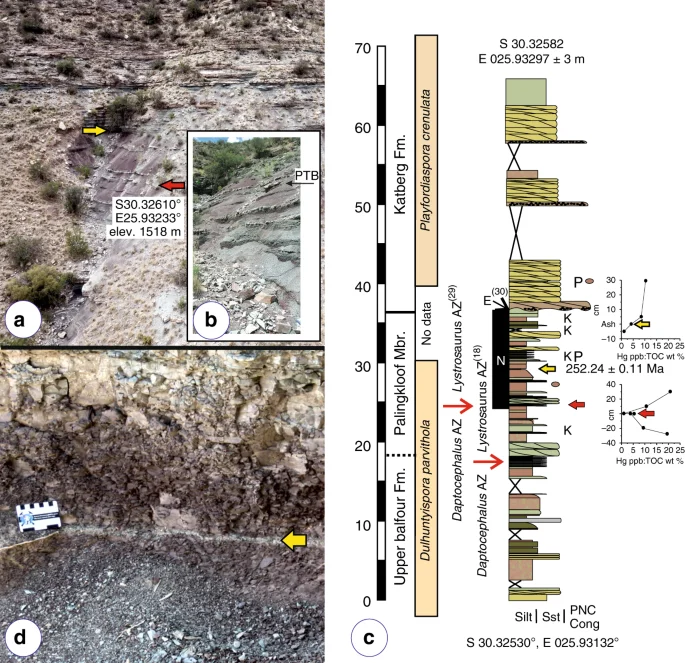
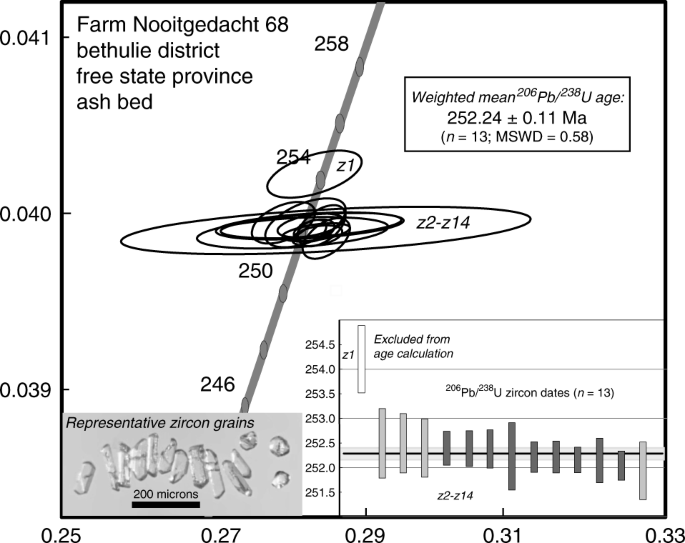
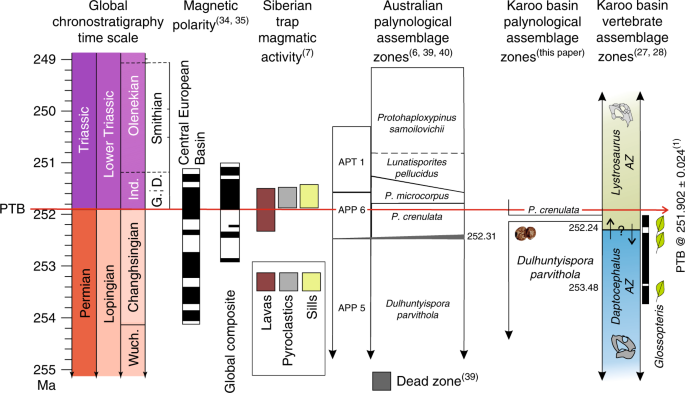
Preliminary bone histological analysis of Lystrosaurus (Therapsida: Dicynodontia) from the Lower Triassic of North China, and its implication for lifestyle and environments after the end-Permian extinction
Han, F., Zhao, Q., Liu, J. · PLoS ONE
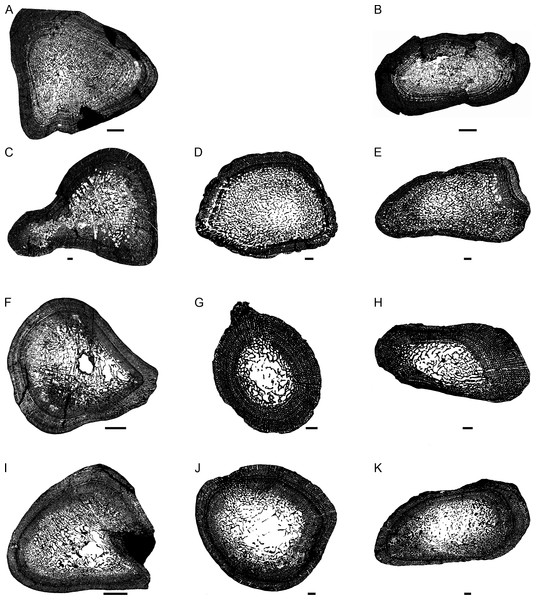
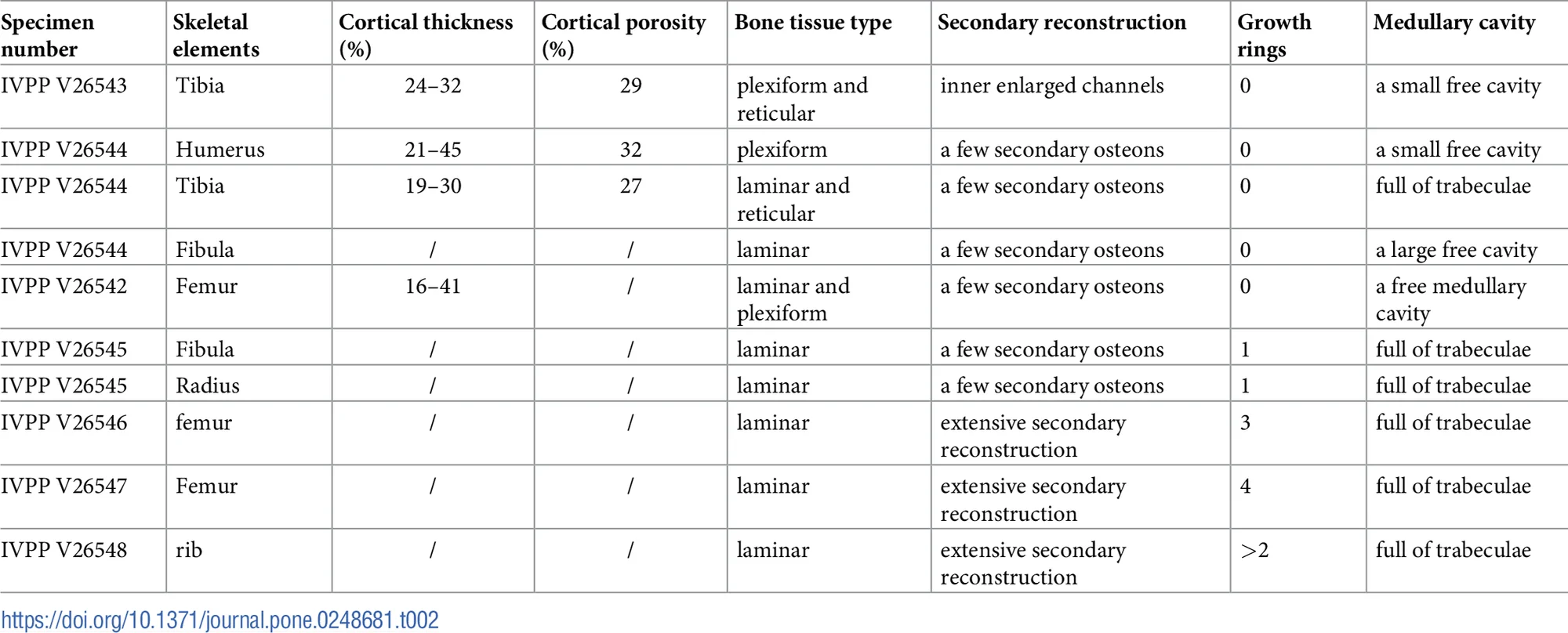
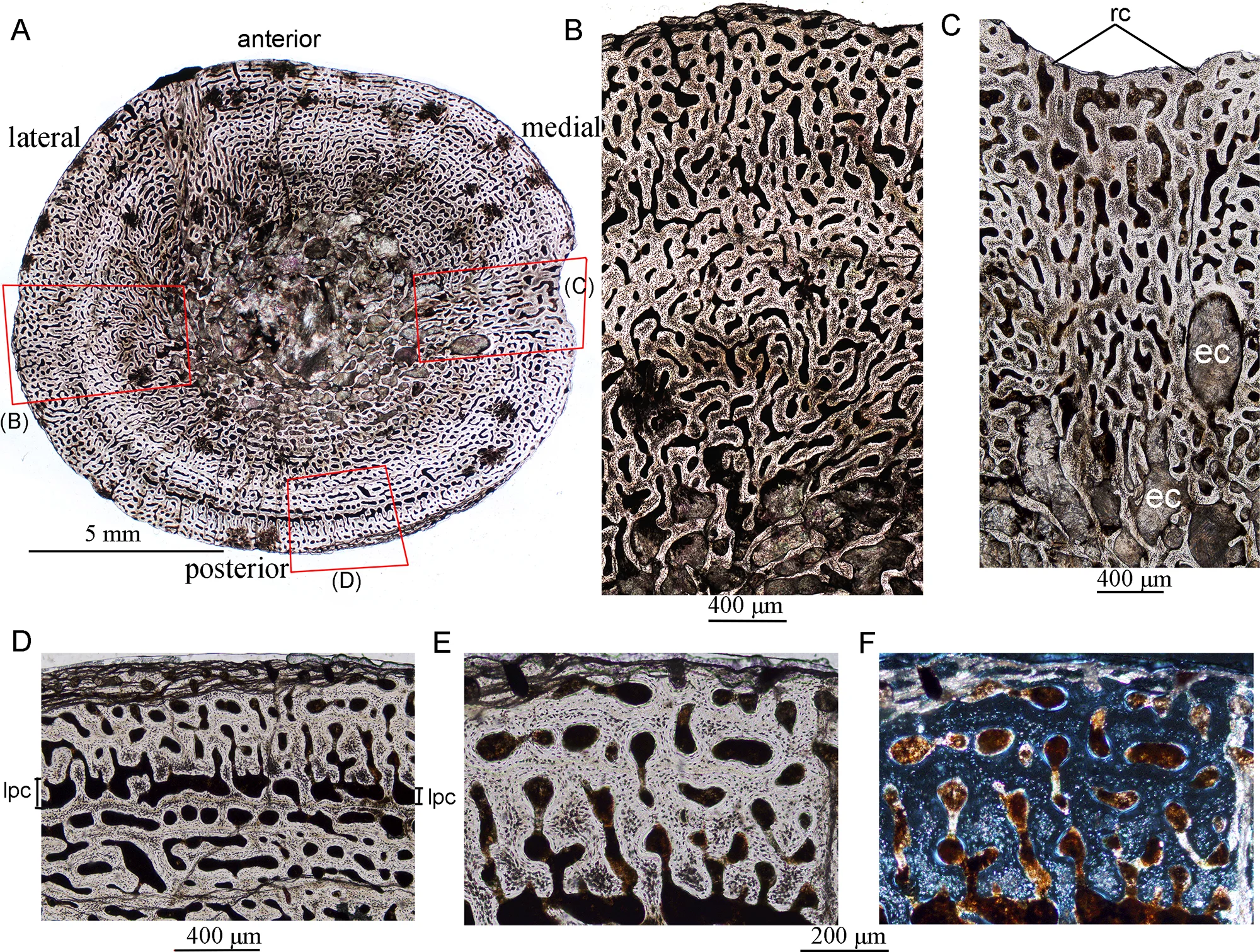
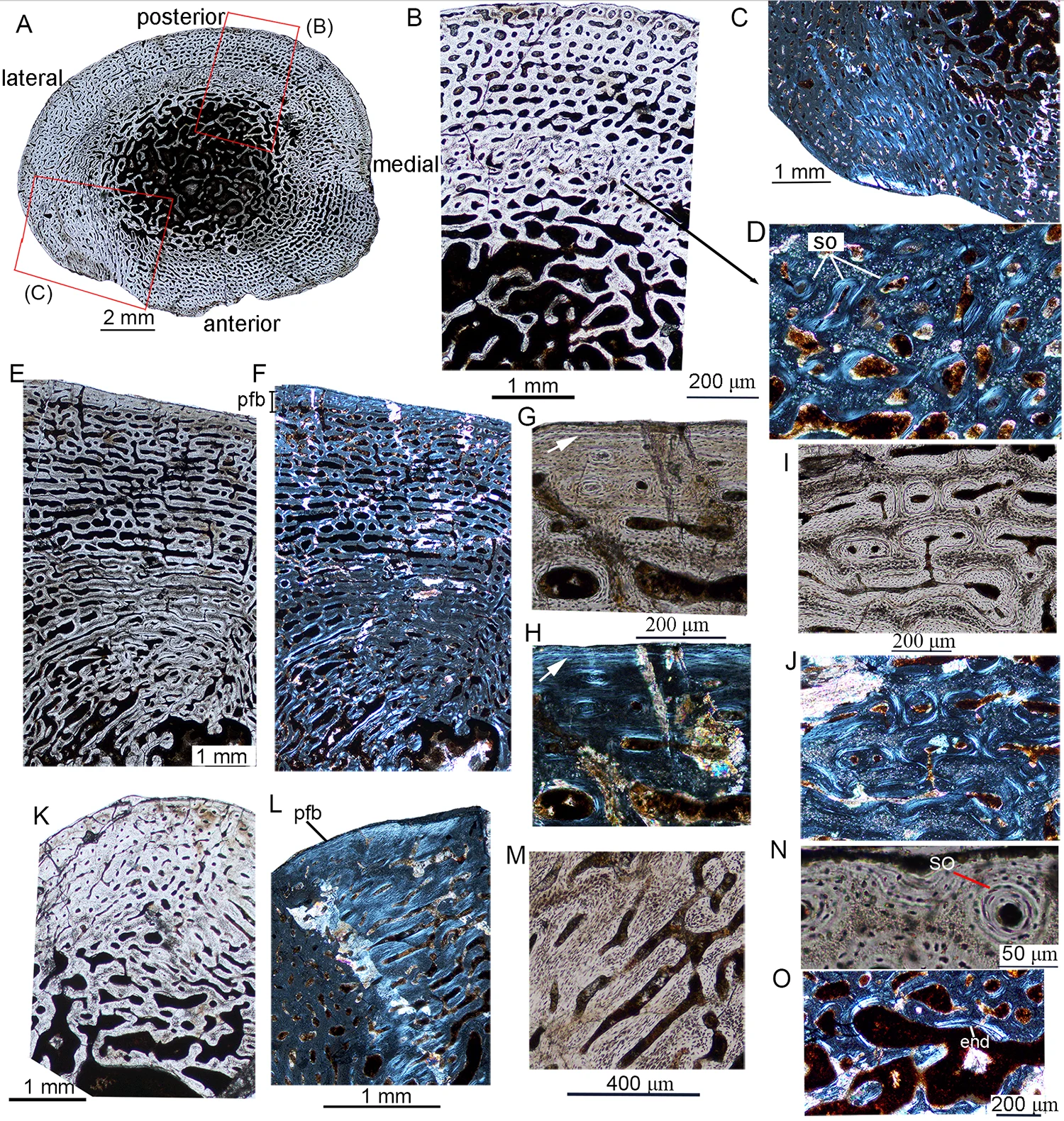
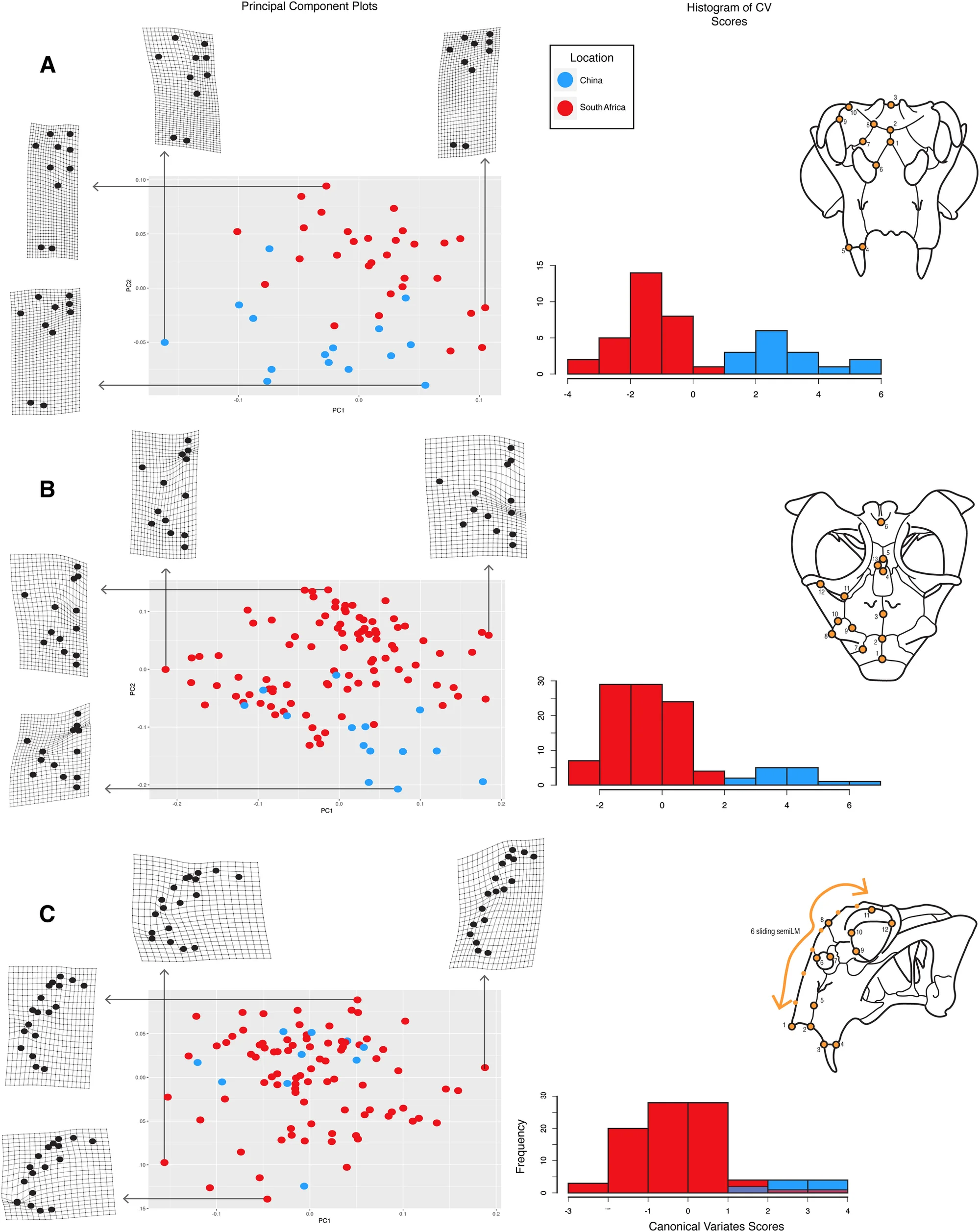
Han, Zhao, and Liu examined the bone microstructure of seven Lystrosaurus individuals from the Jiucaiyuan Formation in Xinjiang (China), identifying three ontogenetic stages. The fibrolamellar tissue observed is similar to South African and Indian specimens, indicating universal rapid growth in the species. Interrupted growth lines are more frequent in Chinese specimens than in African ones, possibly reflecting harsher environmental conditions in northern Pangaea shortly after the mass extinction.


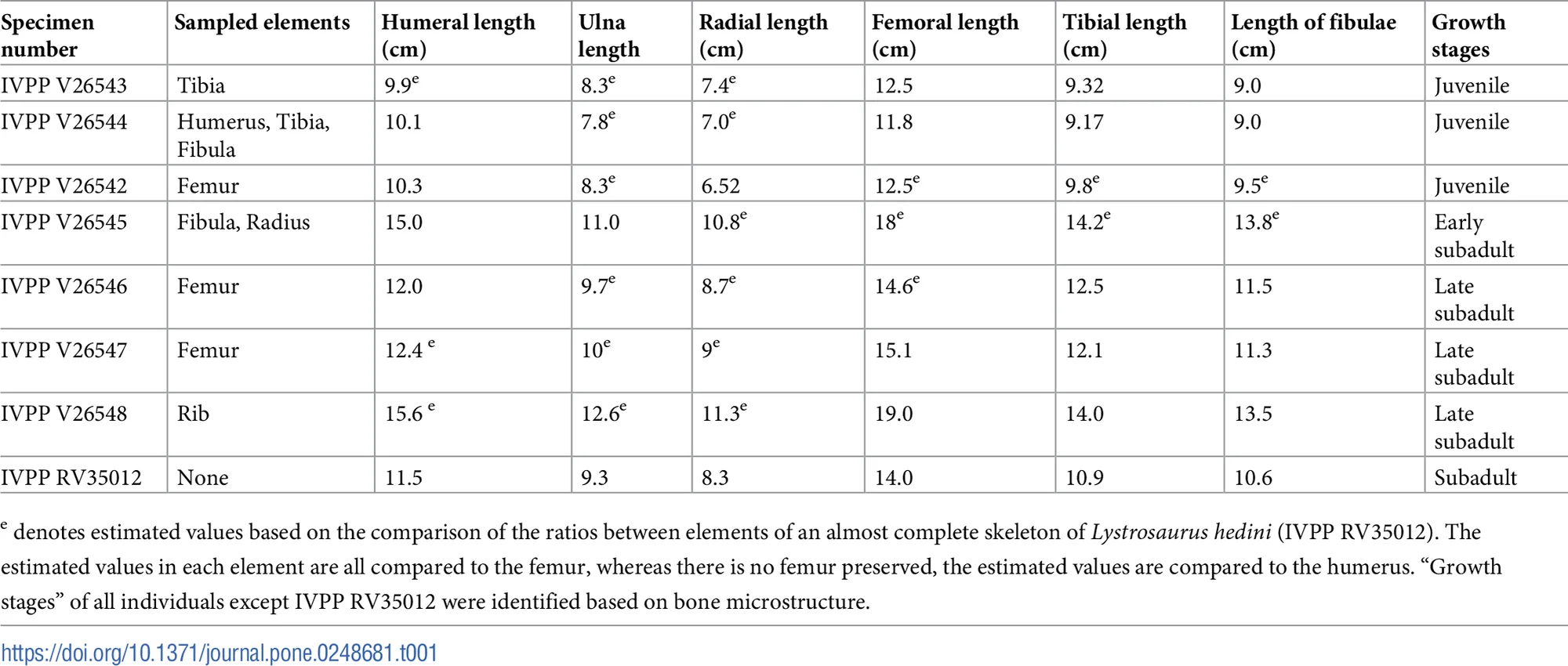
Living fast in the Triassic: New data on life history in Lystrosaurus (Therapsida: Dicynodontia) from northeastern Pangea
Kulik, Z.T., Lungmus, J.K., Angielczyk, K.D., Sidor, C.A. · PLoS ONE
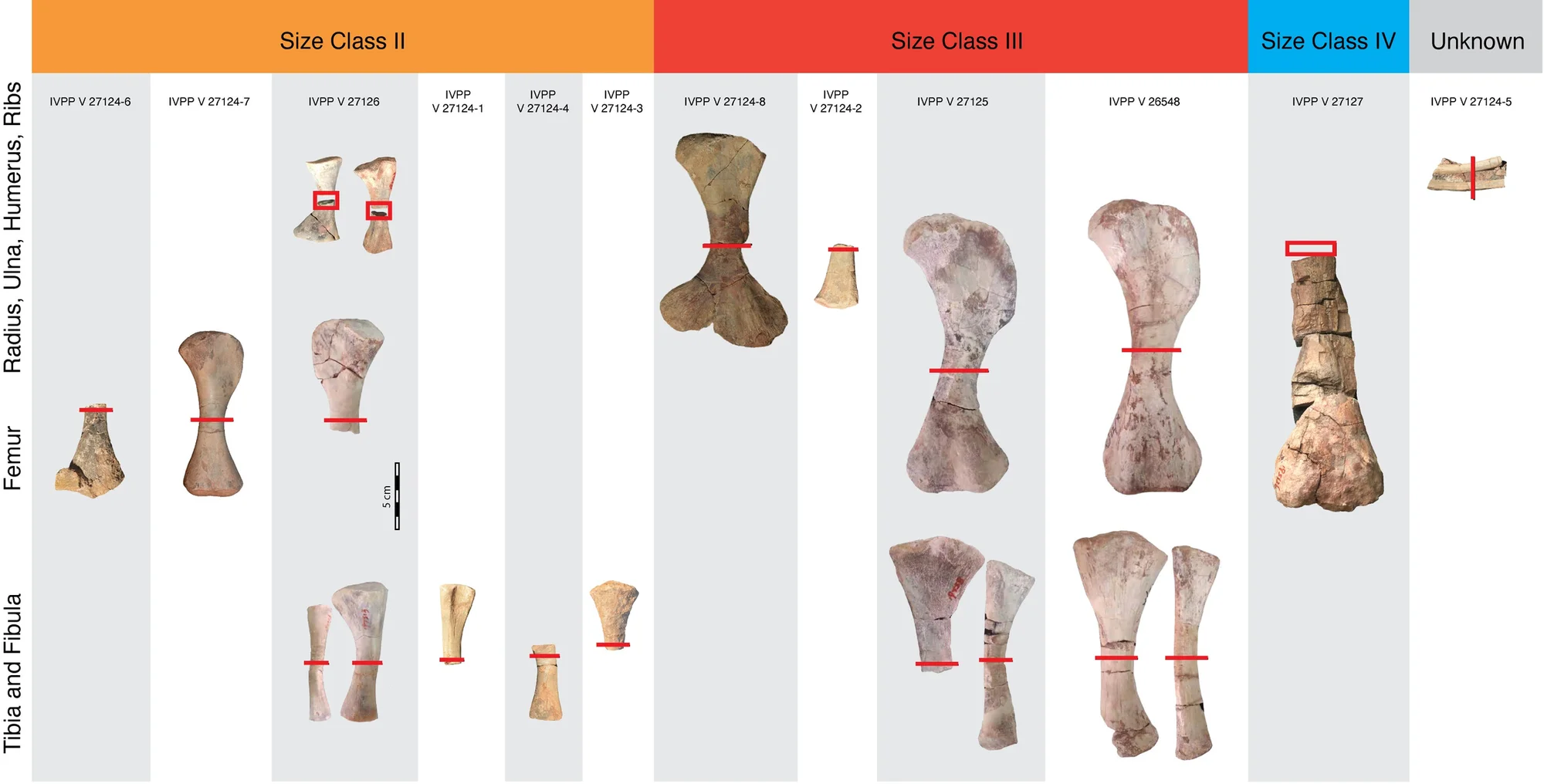
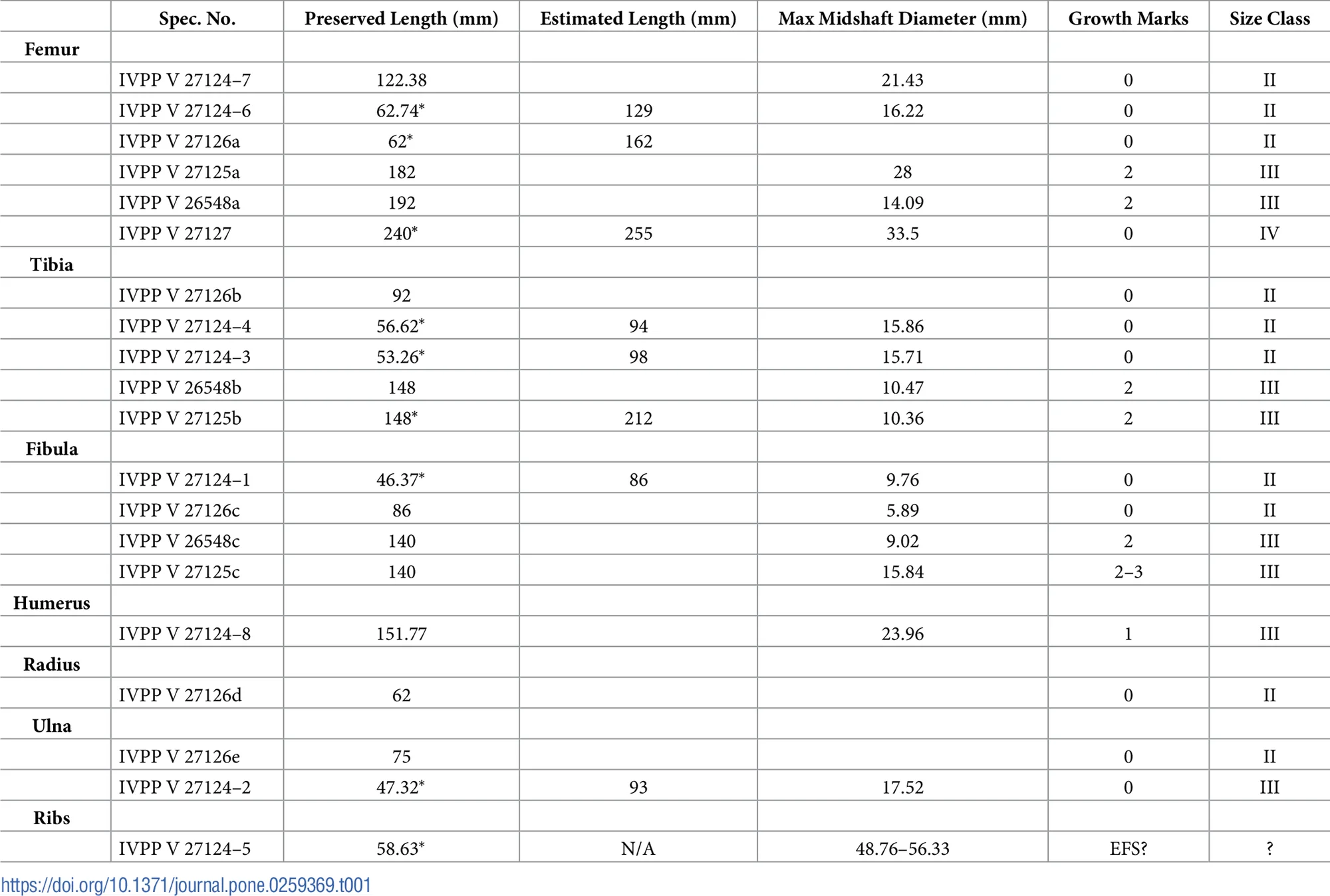
Kulik and colleagues analyzed 20 skeletal elements of Lystrosaurus from the Jiucaiyuan Formation in China, revealing that northern Pangaean populations had larger average body size than South African populations. Bone histology showed rapid, sustained osteogenesis interrupted by growth marks in some but not all immature individuals. Notably, no specimen reached maximum asymptotic size, suggesting that the upper size limit for these northern populations remains unknown.


Taphonomy of drought afflicted tetrapods in the Early Triassic Karoo Basin, South Africa
Smith, R.M.H., Botha, J., Viglietti, P.A. · Palaeogeography, Palaeoclimatology, Palaeoecology
Smith, Botha, and Viglietti analyzed the taphonomy of tetrapod bones in Early Triassic Karoo bonebeds, concluding that the massive concentrations of Lystrosaurus resulted from periodic drought mortality on floodplains. The study provides direct evidence of severe environmental stress during the Early Triassic and shows that, despite being the dominant vertebrate, Lystrosaurus murrayi faced difficult ecological conditions in a post-extinction recovery world.

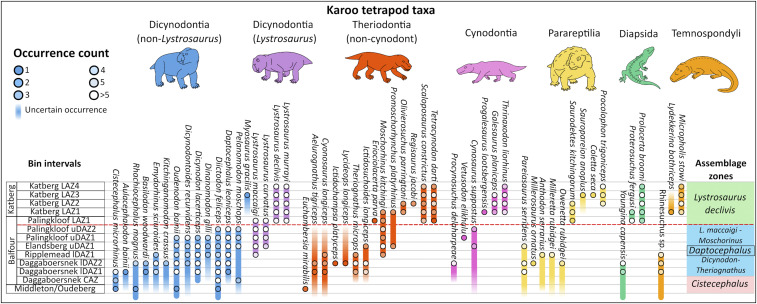
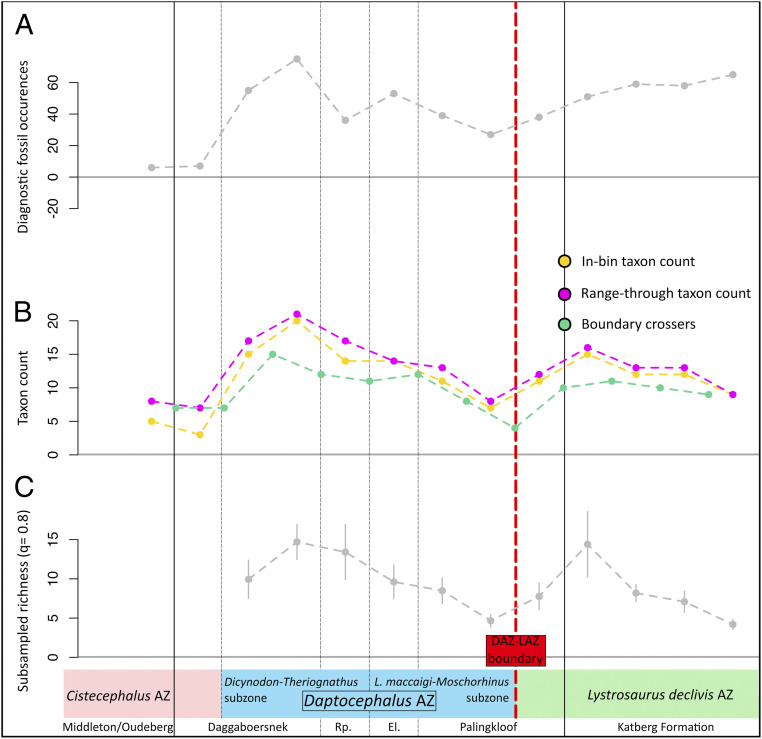
Evidence from South Africa for a protracted end-Permian extinction on land
Viglietti, P.A., Smith, R.M.H., Angielczyk, K.D., Kammerer, C.F., Fröbisch, J., Rubidge, B.S. · Proceedings of the National Academy of Sciences
Viglietti and colleagues compiled a database of 588 fossil tetrapod specimens from the Karoo Basin spanning approximately 4 million years, revealing that terrestrial extinction was protracted: regional extinction rates were high over a prolonged interval, with gradual diversity decline before the main extinction. The study redefined the ecological context in which Lystrosaurus murrayi emerged as the dominant species, showing that the transition was not catastrophic and abrupt, but gradual.


Non-Mammalian synapsids: the deep roots of the mammalian family tree
Angielczyk, K.D., Kammerer, C.F. · Handbook of Zoology: Mammalia
This reference chapter by Angielczyk and Kammerer provides a comprehensive review of the phylogeny and evolution of non-mammalian synapsids, placing Lystrosaurus and Lystrosauridae in broad phylogenetic context. The work discusses the diagnostic cranial anatomy of lystrosaurids, the relationships between Permian and Triassic dicynodonts, and the importance of Lystrosaurus murrayi as the representative of the lineage that nearly monopolized terrestrial fauna in the Early Triassic.


A global stratigraphic framework for the Triassic System
Schneider, J.W., Ezcurra, M.D., Ramezani, J., Schmitt, R., Lucas, S.G. · Earth-Science Reviews
Schneider and colleagues reviewed the global stratigraphic correlation of the Triassic System, establishing a chronostratigraphic framework that precisely positions the Karoo Lystrosaurus Zone relative to the Induan and Olenekian stages. The work is fundamental for comparing Lystrosaurus murrayi records across different regions (South Africa, India, China, Antarctica, Russia) and understanding the actual temporal range of the species' dominance in the Early Triassic.

Famous museum specimens
BMNH R1045 (Holótipo)
Natural History Museum, Londres, Reino Unido
The holotype specimen of Lystrosaurus murrayi, described by Huxley in 1859. Consists primarily of the skull and mandible with the characteristic tusks and horny beak preserved, along with some postcranial elements. It is the reference specimen for the species.
Espécimes IZIKO (Bonebed da Zona Lystrosaurus)
Iziko South African Museum, Cidade do Cabo, África do Sul
The Iziko Museum holds the largest collection of Lystrosaurus specimens in the world, including complete skulls, articulated skeletons, and bonebed concentrations. These materials were fundamental for the studies of Botha (2020) and Smith, Botha & Viglietti (2022) on the species' paleobiology and taphonomy.
AMNH (Coleção Colbert - Antártica)
American Museum of Natural History, Nova York, EUA
Specimens collected by Edwin Colbert at Coalsack Bluff (Antarctica) in 1969-1970 are deposited at the AMNH. They are the first Lystrosaurus discovered outside the traditional Gondwana (Africa/India/Russia), and their identification confirmed the physical connection between Antarctica and South Africa in the Early Triassic.
In cinema and popular culture
Lystrosaurus murrayi has a growing presence in scientific popular culture, especially in prestigious documentaries. In Walking with Monsters (BBC, 2005), the third episode dedicates a long sequence to the animal in a post-extinction Antarctic landscape, depicting its epic migration as a metaphor for survival. Although slightly larger than it would be in reality, the depiction captures the spirit of the period. In Life on Our Planet (Netflix, 2023), narrated by Morgan Freeman and produced by Steven Spielberg, Lystrosaurus is the absolute protagonist of Episode 4, presented as 'the most successful survivor in history', dominating the Earth in an era of extreme scarcity. Modern CGI and scientific accuracy elevated the animal's depiction to the level of a cultural symbol of post-extinction resilience. Outside the screen, the species is frequently cited in popular science books such as The Rise and Fall of the Dinosaurs (paleontologist Steve Brusatte) and appears in museum exhibitions worldwide as an emblem of continental drift.
Classification
Discovery
Fun fact
After the end-Permian mass extinction, which eliminated about 96% of marine species and 70% of terrestrial species, Lystrosaurus murrayi came to represent more than 90% of all terrestrial vertebrates on Earth. No other vertebrate, before or after, has ever dominated the planet in such an absolute way.
Last reviewed: April 24, 2026