
Confuciusornis
Confuciusornis sanctus
"Sacred Confucius bird"
About this species
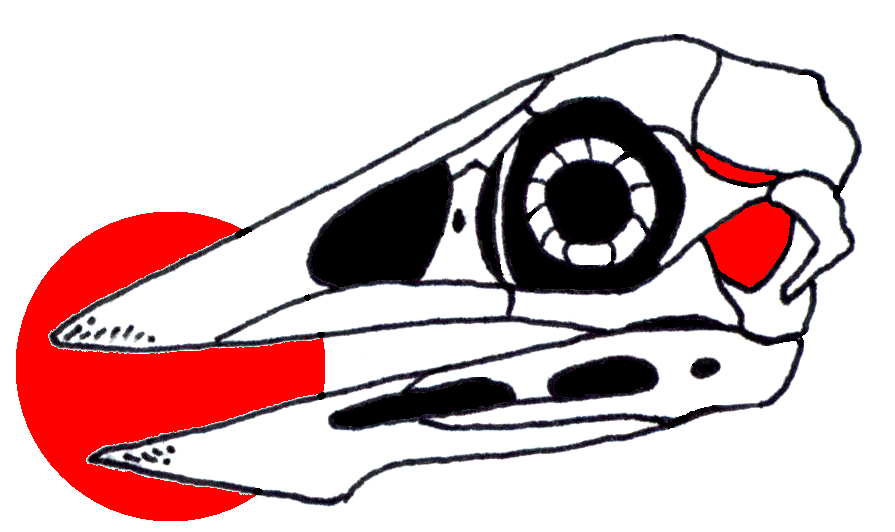
Confuciusornis sanctus is the most abundant Mesozoic bird in the world fossil record: hundreds of specimens, many exquisitely preserved with feathers, have been extracted from the Yixian and Jiufotang formations of Liaoning, northeastern China. This unparalleled abundance made Confuciusornis the most studied extinct bird taxon in the world, capable of providing data on morphology, ontogeny, coloration, paleoecology, and social behavior simply not accessible for rarer birds. It lived during the Barremian to Aptian of the Early Cretaceous, approximately 125 to 120 million years ago, and represents one of the most important morphological innovations in bird history: it was the first toothless Mesozoic bird with a true horny beak and a fused tail bone forming a pygostyle. Confuciusornis morphology combines primitive and derived features remarkably. On one hand, the forelimbs retain three functional clawed fingers, and the skull retains some primitive skeletal features relative to modern birds. On the other, the complete absence of teeth, the horny beak, and the pygostyle are innovations we know mainly from modern birds, making Confuciusornis much more externally similar to a modern bird than Archaeopteryx or other contemporaries. The tail, short due to the pygostyle, accommodated in long-tailed forms a pair of very long, narrow ribbon-like rectrices whose function was probably social display. The presence or absence of these tail feathers in different specimens has historically been interpreted as sexual dimorphism, but recent analyses with ontogenetically comparable specimens question this simple interpretation. Confuciusornis flight is considered truly active, not just gliding: the sternum morphology, with well-developed keel for flight muscle insertion, and wing proportions suggest sustained powered flight capability. However, biomechanical analyses indicate the flight pattern would differ from modern birds: the shoulder joint, clavicle position, and relative proportions of humerus and ulna suggest an aerodynamically less efficient flight style compared to neornithean birds. Bone histology studies show Confuciusornis had slower growth rates than modern birds of comparable size, reaching skeletal maturity in one or two years, closer to reptiles than to modern birds.
Geological formation & environment
The Yixian Formation and Jiufotang Formation are two Early Cretaceous stratigraphic units (Barremian-Aptian, ~130-120 Ma) outcropping mainly in Liaoning Province and adjacent regions of northeastern China. Together they form the Jehol Biota, recognized as the world's best-preserved soft-tissue Mesozoic ecosystem. Exceptional preservation is due to the anoxic conditions of the bottom of shallow volcanic lakes, where the absence of oxygen prevented decomposition by aerobic bacteria, allowing preservation of feathers, scales, skin, membranes, and even gastrointestinal contents for hundreds of millions of years. Mass mortality events caused by volcanic gas emissions (mainly carbon dioxide and hydrogen sulfide) from local volcanoes buried entire populations of animals living at lake margins, creating the extraordinary fossil concentrations that characterize the Jehol Biota. The Jehol Biota fauna is extraordinarily diverse and includes feathered dinosaurs from multiple lineages (Sinosauropteryx, Caudipteryx, Microraptor, Sinornithosaurus), Mesozoic birds from multiple families (Confuciusornis, Sapeornis, Hongshanornis, multiple enantiornithes), pterosaurs, crocodyliforms, mammals, lizards, snakes, fish, insects, and plants. This exceptional fauna transformed Mesozoic paleontology from the 1990s, when the first systematic collections were made. Most known feathered dinosaurs were discovered in the Yixian and Jiufotang formations, making the Jehol Biota the most important window into the dinosaur-bird transition.
Image gallery




Histological cross-section of Confuciusornis sanctus bone showing annual growth rings (LAGs) indicating slower growth than modern birds, evidence of intermediate metabolism.
Chinsamy et al. 1995 / Journal of Vertebrate Paleontology
Ecology and behavior
Habitat
Confuciusornis sanctus inhabited the margins and surroundings of large volcanic lakes in what is now northeastern China during the Early Cretaceous. The Yixian and Jiufotang formations preserve evidence of a paleoenvironment of shallow and deep lakes surrounded by conifer forests, with periodic volcanic events causing mass mortality in aquatic and terrestrial fauna. These mass mortality events are the primary reason for the extraordinary abundance of Confuciusornis fossils: entire populations were buried by volcanic ash or poisoned by volcanic gases and preserved in the anoxic layers of lake bottoms. Confuciusornis populations probably used the conifer forests adjacent to the lakes for nesting and resting, and the lakes as food sources (fish and aquatic invertebrates).
Feeding
Confuciusornis was an opportunistic omnivore with variable diet including fish (documented by preserved gut contents), plant seeds (documented by preserved crop contents), and probably insects and other invertebrates. The horny beak, robust but without the extreme specialization of modern granivorous or piscivorous birds, is consistent with generalist omnivory. Beak morphology varies among specimens, suggesting possible ontogenetic variation (juveniles and adults with different diets) or individual variation in food preference. The presence of functional crop, documented in some specimens, indicates Confuciusornis could temporarily store food, behavior especially useful for granivores.
Behavior and senses
The abundance of Confuciusornis specimens in single layers of lacustrine deposits, frequently representing dozens to hundreds of individuals at the same stratigraphic level, strongly suggests the animal lived in large flocks. This gregarious behavior would be advantageous for locating dispersed food resources around the large Liaoning lakes and for collective protection against predators. The hypothetical sexual dimorphism in rectricial feathers, with some individuals showing long display feathers and others not, is consistent with courtship behavior and sexual selection, analogous to that observed in modern birds where males use ornaments to attract females. Confuciusornis's active flight allowed movements between different parts of the lacustrine ecosystem, including local seasonal migrations.
Physiology and growth
Confuciusornis bone histology reveals intermediate metabolism between ectothermic reptiles and endothermic modern birds: the animal had annual growth rings in long bones, indicating cyclical seasonal growth more characteristic of reptiles. It reached skeletal maturity in one to two years, much slower than modern birds of comparable size (about six months). The presence of a pygostyle, keeled sternum, and wings with active flight morphology indicates metabolism high enough to sustain powered flight, though probably with lower efficiency than modern neornithean birds. Thermoregulation was facilitated by dense plumage, but probably did not reach the thermal efficiency of modern birds. Precocial development of hatchlings, with flight feathers already present at hatching, suggests parental investment was limited to the incubation period.
Paleogeography
Continental configuration

Scotese & Vérard · CC BY 4.0 · Cretaceous, ~105 Ma
Fossil sites

Institute of Vertebrate Paleontology and Paleoanthropology
During the Barremiano-Aptiano (~125–120 Ma), Confuciusornis sanctus inhabited Laramidia, the western half of present-day North America, separated from the east by the Western Interior Seaway, a shallow sea dividing the continent. The continents were in very different positions: India was drifting toward Asia, Antarctica was still connected to Australia, and South America was an isolated island.
Bone Inventory
Confuciusornis sanctus is represented by hundreds of specimens collected from the Yixian and Jiufotang formations of Liaoning. Many specimens are complete or nearly complete, articulated in laminated limestone slabs with feather impressions. The 90% completeness estimate reflects the total material available for the taxon, by far the best-represented of any Mesozoic bird. Multiple specimens from different ontogenetic stages allow detailed growth and variation studies. The horny beak and long rectricial feathers are frequently preserved.

Found elements
Inferred elements
Scientific Literature
7 papers in chronological order — from the original description to recent research.
A beaked bird from the Jurassic of China
Hou, L., Zhou, Z., Martin, L.D., Feduccia, A. · Nature
Founding paper describing Confuciusornis sanctus from material collected in the Yixian Formation of Liaoning by Hou Lianhai and collaborators. The paper's title, 'A beaked bird from the Jurassic of China', reflects the authors' astonishment at finding a Mesozoic bird with a true horny beak, a structure until then known only from Late Cretaceous birds and modern birds. The paper describes the beak morphology, the pygostyle (fused tail bone), the absence of teeth, and preserved feather impressions. The authors position Confuciusornis as one of the most derived Early Cretaceous birds known at the time, more advanced than Archaeopteryx in multiple features. The initial paper incorrectly classified the formation as Jurassic, a correction that would come in subsequent years with more precise radiometric dating establishing an Early Cretaceous age (Barremian-Aptian) for the Yixian and Jiufotang formations.
Anatomy and systematics of the Confuciusornithidae (Aves) from the Late Mesozoic of northeastern China
Chiappe, L.M., Ji, S., Ji, Q., Norell, M.A. · Bulletin of the American Museum of Natural History
Chiappe, Ji, Ji, and Norell publish the most detailed anatomical redescription of Confuciusornis and other confuciusornithids, providing complete osteological data and rigorous phylogenetic analysis. The study describes in detail the skull, beak, vertebrae, pectoral girdle, sternum, limbs, and pygostyle, comparing with Archaeopteryx and other Mesozoic birds. The authors identify 28 anatomical features differentiating Confuciusornis from more basal birds like Archaeopteryx, confirming Confuciusornis was more derived skeletally. Phylogenetic analysis positions Confuciusornithidae as sister clade to Ornithothoraces, the group including Enantiornithes and modern birds (Neornithes). The paper establishes the standard osteological diagnosis for the family Confuciusornithidae and is the most-cited anatomical reference for the genus.

Food remains in Confuciusornis sanctus suggest a fish diet
Dalsätt, J., Zhou, Z., Zhang, F., Ericson, P.G.P. · Naturwissenschaften
Dalsätt and collaborators analyze exceptionally preserved gut contents in Confuciusornis sanctus specimens, revealing fish scales and bones associated with the digestive tract. This is the most direct study on diet in Confuciusornis: rather than inferring diet from beak morphology, the authors document what the animal was actually eating before death. Results show that at least some Confuciusornis individuals were piscivorous, feeding on small fish in the Yixian Formation lakes. The authors discuss whether all individuals had the same diet or whether individual or ontogenetic variation existed. The work is fundamental because it demonstrates Confuciusornis was not necessarily granivorous (seed-eating) as suggested by beak morphology in some earlier studies: diet was probably opportunistic and variable, including fish, insects, and possibly seeds depending on resource availability.
Avian beak shape and diet: are there ecological correlates with beak shape in Mesozoic birds?
Wang, X., McGowan, A.J., Dyke, G.J. · Global Ecology and Biogeography
Wang, McGowan and Dyke analyze beak shape variation in Confuciusornis and other Mesozoic birds using geometric morphometric methods, revealing correlations with inferred diet. The study is fundamental for understanding Confuciusornis ecology because it documents that the enormous sample of available specimens shows significant beak shape variation, suggesting there may be multiple species or ecotypes within what is treated as C. sanctus. The authors conclude ecological diversification of Early Cretaceous Mesozoic birds from China was comparable in scope to modern radiations, with different species occupying granivory, insectivory, piscivory, and omnivory niches, even within a single genus like Confuciusornis. The work has implications for interpreting interspecific diversity in C. sanctus.
Bone microstructure of the diving Hesperornithiformes and the volant Ichthyornithiformes: evidence of growth rings and mycelial structure
Chinsamy, A., Martin, L.D., Dodson, P. · Journal of Vertebrate Paleontology
Chinsamy, Martin and Dodson analyze bone histology of Mesozoic birds, including specimens referred to Confuciusornis, revealing growth patterns intermediate between reptiles and modern birds. Results show Confuciusornis had annual growth rings (lines of arrested growth, LAGs) in long bones, indicating cyclical seasonal growth more characteristic of reptiles than modern birds, which grow continuously without growth rings. This discovery had profound implications for understanding Confuciusornis physiology: the animal reached skeletal maturity in one to two years, much more slowly than modern birds of comparable size (about six months). Confuciusornis growth pattern is now interpreted as evidence that full modern avian endothermy, associated with rapid continuous growth, was still evolving during the Early Cretaceous.
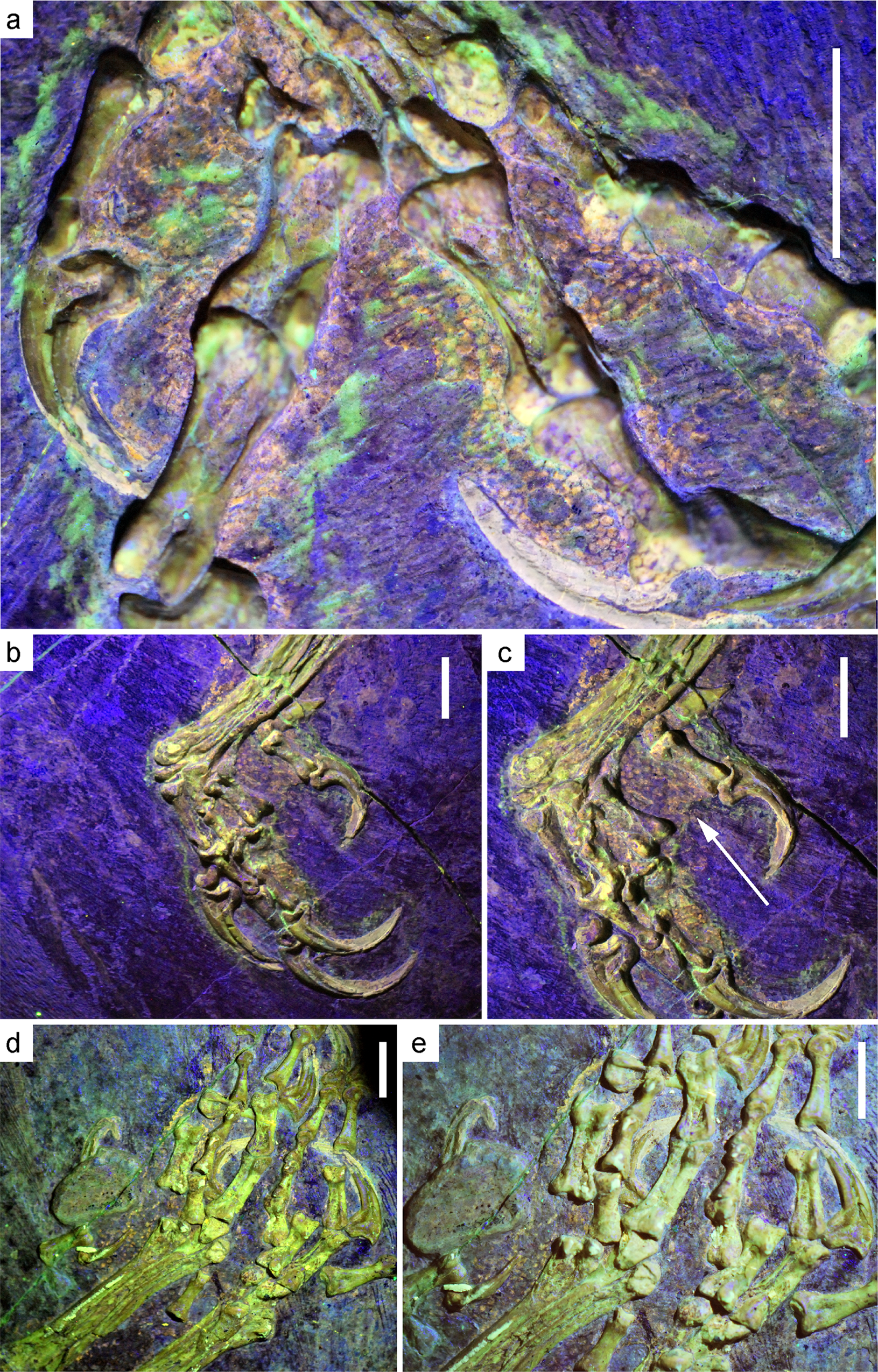
Fossil evidence of avian crops from the Early Cretaceous of China
Zheng, X., Martin, L.D., Zhou, Z., Burnham, D.A., Zhang, F., Miao, D. · Proceedings of the National Academy of Sciences
Zheng and collaborators describe exceptional Confuciusornis specimens with preserved crop contents, revealing plant seeds inside the food storage organ. This is the oldest evidence of functional crop in birds, demonstrating that this organ, present in modern granivorous birds like pigeons and chickens, evolved at least 120 million years ago. The work complements Dalsätt et al. (2006) on piscivory by demonstrating Confuciusornis also consumed seeds: the animal was an opportunistic omnivore, capable of exploiting different food resources depending on seasonal availability. The authors identify the seeds by morphology and preserved cellular structure, comparing with plant families known in the Early Cretaceous fossil record of China.


The smallest known non-avian theropod dinosaur
Xu, X., Zhou, Z., Wang, X. · Nature
Xu, Zhou and Wang describe Microraptor zhaoianus, the smallest known non-avian theropod, from the same Yixian Formation as Confuciusornis. The paper is relevant to Confuciusornis ecological context because it demonstrates the Yixian environment harbored a fauna of birds and proto-birds of extraordinary morphological and size diversity, with animals from less than 100 grams (Microraptor) to the few kilograms of some larger birds. This size diversity implies ecological niche diversity and reduces interspecific competition among the many taxa coexisting in the Early Cretaceous of Liaoning. For Confuciusornis specifically, the presence of Microraptor and other small theropods in the same paleoenvironment suggests Mesozoic birds were subject to predation pressure from small arboreal dromaeosaurids.


Famous museum specimens

IVPP V10918 (holótipo)
Institute of Vertebrate Paleontology and Paleoanthropology (IVPP), Pequim, China
Holotype of Confuciusornis sanctus, collected from the Yixian Formation of Liaoning by Hou Lianhai. Nearly complete adult specimen in laminated limestone slab, with feather impressions and preserved horny beak structures. It is the reference specimen for the genus and species diagnosis.
LACM 149488
Natural History Museum of Los Angeles County, Los Angeles, Estados Unidos
Exquisitely preserved specimen of Confuciusornis sanctus with long rectricial feathers and detailed flight feather impressions, acquired for study and exhibition. One of the best Confuciusornis specimens outside China, used in multiple studies of feather coloration and morphology.
AMNH FR 30447
American Museum of Natural History, Nova York, Estados Unidos
Confuciusornis sanctus specimen at the American Museum of Natural History, part of the Chinese Mesozoic bird collection acquired for comparative research. AMNH is one of the largest research centers for Mesozoic birds outside China, and its Confuciusornis specimens have been used in phylogenetic and biomechanical analyses.
STM coleção
Shandong Tianyu Museum of Nature, Pingyi, China
The Shandong Tianyu Museum of Nature holds the world's largest private collection of Confuciusornis fossils, with hundreds of specimens from different ontogenetic stages. The collection includes specimens with and without long rectricial feathers, representative of the sexual dimorphism debate in the genus.
PMC-BA-0015
Paleozoological Museum of China, Pequim, China
Confuciusornis sanctus specimen on permanent display at the Paleozoological Museum of China in Beijing, one of the best specimens available for public viewing. The museum holds several Confuciusornis specimens in its Liaoning Mesozoic bird exhibition.
In cinema and popular culture
Confuciusornis sanctus occupies a curious position in popular culture: it is the most scientifically important Mesozoic bird, but also one of the least known to the general public compared to Archaeopteryx. This occurs because Archaeopteryx was discovered in Europe in the 19th century, while Confuciusornis was described only in 1995, and because the name 'Archaeopteryx' is much more evocative than 'Confuciusornis' for Western audiences. However, since the early 21st century, Confuciusornis penetration into popular culture has grown steadily. The documentary series Prehistoric Planet (Apple TV+, 2022) brought Confuciusornis to a global audience, showing flocks of the bird in visually impressive sequences set in the Early Cretaceous of Asia. This is probably the most widely seen representation of Confuciusornis in audiovisual media and correctly captures the animal's gregarious behavior, toothless beak morphology, and long rectricial feathers. The iridescent dark wing coloration, based on melanosome data, made the depiction visually striking. In popular science literature and paleontology outreach books, Confuciusornis is frequently cited as the most convincing example that the dinosaur-bird transition was gradual and with multiple lineages experimenting with different morphological solutions. The enormous abundance of fossils of the genus has made it the ideal case study for discussions of reproductive biology, coloration, diet, and social behavior of Mesozoic birds, subjects that capture the imagination of an increasingly sophisticated paleontology audience.
Classification

Discovery
Fun fact
Confuciusornis sanctus is the most abundant extinct animal in the world fossil record in terms of complete individual specimens: hundreds of individuals have been recovered from Liaoning, many with feathers, beaks, and even preserved gastrointestinal contents. For comparison, T. rex is represented by fewer than 50 complete specimens and Archaeopteryx by only 13. This unusual abundance is due to mass mortalities caused by volcanic gas emissions in the Liaoning lakes, which instantaneously preserved entire populations.
Last reviewed: April 24, 2026