
Miragaia
Miragaia longicollum
"Miragaia (Portuguese village), long neck"
About this species
Miragaia longicollum was a Late Jurassic stegosaurid from Portugal, discovered in 1999 by Estevão Dias and the Museu da Lourinhã team during the excavation of a road cutting between the villages of Miragaia and Sobral da Lagoa, in the Lourinhã municipality, Leiria district. The holotype ML 433 was described in 2009 by Octávio Mateus, Susannah Maidment, and Nicolai Christiansen, and immediately drew scientific attention for an unparalleled feature among known stegosaurs: an extraordinarily long neck with at least 17 preserved cervical vertebrae. Most stegosaurids have between 12 and 13 cervicals, a count close to that of many theropods and ornithopods. Miragaia breaks this rule. With its 17 cervicals, it approaches the body plan of a basal sauropodomorph more than the archetypal short-necked, low-headed stegosaur. This independent, parallel convergent evolution with sauropods is one of the most frequently cited examples of convergence among Jurassic herbivores. The animal measured about 6 meters long and weighed roughly 2 tonnes. It belongs to the subfamily Dacentrurinae, which also groups European Dacentrurus and, in some analyses, African Kentrosaurus. The holotype includes a partial skull, lower jaw, a long cervical series, dorsal vertebrae, ribs, pectoral girdle, right humerus, and paired dermal plates along the back. The ecological context is equally remarkable: Miragaia lived in the Iberian archipelago of the Late Jurassic, a mosaic of islands and alluvial plains recorded by the Lourinhã Formation, where it coexisted with the stegosaur Dacentrurus armatus, the large theropods Torvosaurus gurneyi and Allosaurus europaeus, Lourinhanosaurus, and the giant sauropod Lusotitan. The elongated neck suggests exploration of a vegetative stratum distinct from the sympatric Dacentrurus, a niche partitioning hypothesis that helps explain how two stegosaurs of similar size coexisted in the same ecosystem. Miragaia is today one of the most emblematic Portuguese dinosaurs, a symbol of the rich Jurassic record of the Lusitanian Basin and a centerpiece of the Museu da Lourinhã collection.
Geological formation & environment
The Lourinhã Formation, on the central Portuguese coast, is one of the most important Upper Jurassic units of Europe. Deposited between the Kimmeridgian and Tithonian (~155-145 Ma), it records a continental and coastal environment with meandering rivers, floodplains, and deltaic systems, developed during the initial opening of the North Atlantic. The fauna is remarkably similar to the North American Morrison Formation and includes the theropods Torvosaurus gurneyi, Allosaurus europaeus, and Lourinhanosaurus, the sauropods Lusotitan and Zby, the stegosaur Dacentrurus armatus, and Miragaia longicollum. The Museu da Lourinhã is the central institution for research and display of the formation's fossils.
Image gallery




Modern life reconstruction of Miragaia longicollum by Connor Ashbridge (Ddinodan), transparent background. Notable for the extraordinarily elongated neck, a unique feature among known stegosaurs.
Connor Ashbridge (Ddinodan) / Wikimedia Commons — CC BY-SA 4.0
Ecology and behavior
Habitat
Miragaia lived in the Iberian archipelago of the Late Jurassic, a mosaic of islands and alluvial and coastal plains recorded by the Lourinhã Formation in present-day Lourinhã, Portugal. The environment had a subtropical seasonal climate, with meandering rivers, floodplains, and coastal systems. The flora was dominated by conifers, cycads, tree ferns, and ginkgoes. Miragaia coexisted with the stegosaur Dacentrurus armatus, the large theropods Torvosaurus gurneyi and Allosaurus europaeus, Lourinhanosaurus, and the giant sauropods Lusotitan and Zby.
Feeding
A long-necked herbivore able to reach foliage at varying heights, Miragaia used the small leaf-shaped teeth typical of Stegosauria to process soft plant material. Feeding was likely selective, focused on tender leaves and shoots of conifers, ferns, and cycads. The elongated neck opened a foraging window between the low stratum grazed by short-necked stegosaurids such as Dacentrurus and the high stratum dominated by sauropods.
Behavior and senses
The elongated neck suggests possible display behavior or exploration of a vegetative stratum distinct from the sympatric Dacentrurus, implying niche partitioning between two dacentrurines of the same ecosystem. This hypothesis helps explain the coexistence of two similarly sized forms in the Lourinhã Formation. There is no preserved evidence of gregarious behavior, but the presence of two morphotypes in other stegosaurids and the rarity of cooperative predation in the group suggest likely solitary animals or small groups.
Physiology and growth
Miragaia's 17 cervical vertebrae represent the highest count known in any ornithischian and constitute a clear case of convergence with the elongated neck of sauropods. The dorsal plates, preserved in pairs, indicate the ornamental pattern typical of Stegosauridae, possibly with thermoregulatory and display functions. The tail, not preserved in the holotype, is inferred from comparison with Dacentrurus and likely bore a thagomizer with defensive caudal spines, a universal pattern in stegosaurids.
Paleogeography
Continental configuration

Scotese & Vérard · CC BY 4.0 · Jurassic, ~155 Ma
During the Kimmeridgiano-Titoniano (~152–148 Ma), Miragaia longicollum inhabited the fragmenting Pangea. North America and Europe were still close, and the North Atlantic was just beginning to open. Climate was warm and humid globally, with no polar ice caps.
Bone Inventory
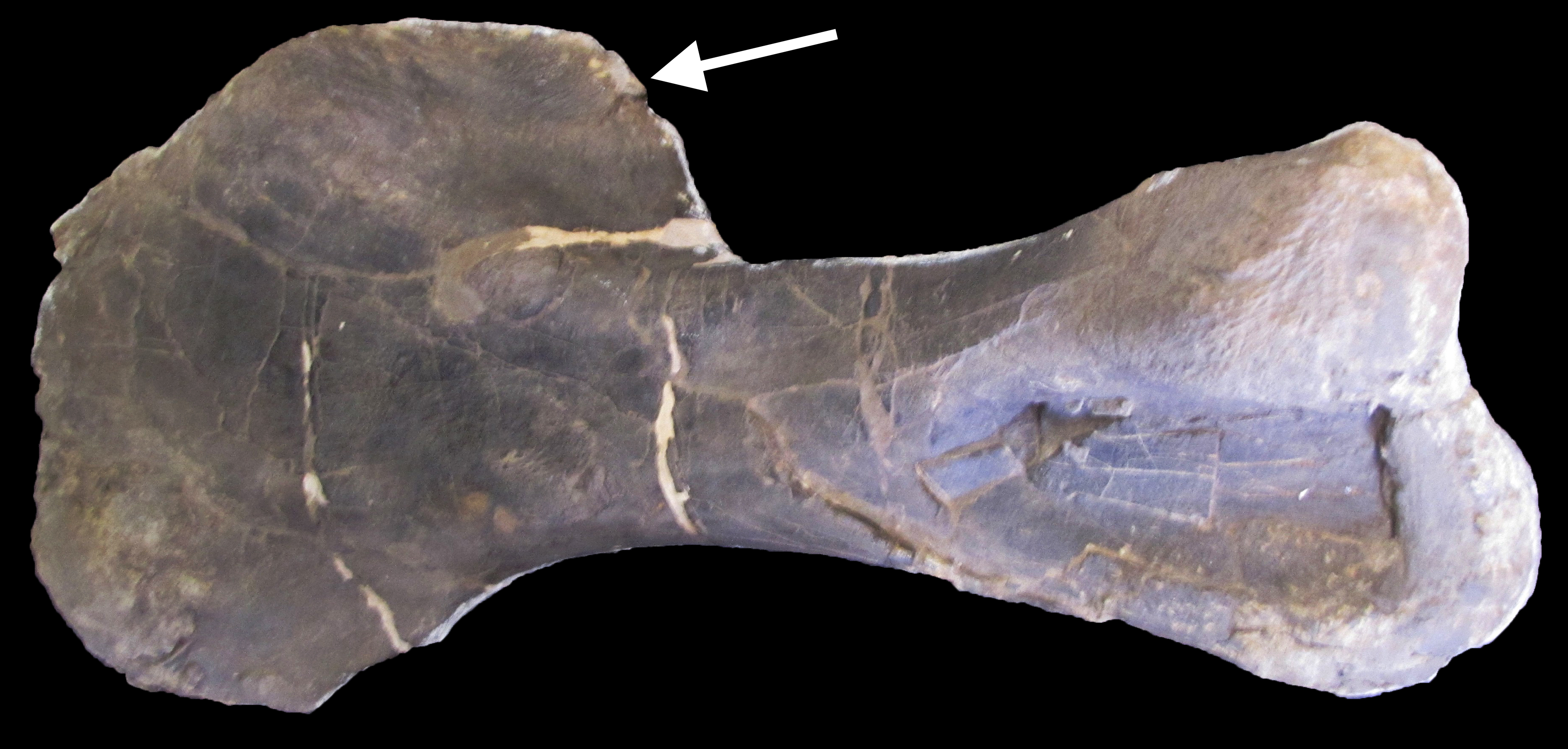
The holotype ML 433, at the Museu da Lourinhã, preserves a partial skull, lower jaw, at least 17 cervical vertebrae, dorsal vertebrae, ribs, scapula, coracoid, right humerus, and paired dermal plates. The cervical material is the most complete ever described for a stegosaur and is the primary basis for the 'long-necked' designation. Pelvis, hindlimbs, and tail are inferred from comparisons with Dacentrurus and other close stegosaurids.
Found elements
Inferred elements
Scientific Literature
15 papers in chronological order — from the original description to recent research.
A new long-necked 'sauropod-mimic' stegosaur and the evolution of the plated dinosaurs
Mateus, O., Maidment, S.C.R. & Christiansen, N.A. · Proceedings of the Royal Society B
The founding paper of Miragaia longicollum. Mateus, Maidment, and Christiansen formally describe the taxon from holotype ML 433 at the Museu da Lourinhã and show the animal has at least 17 cervical vertebrae, the highest count known in any stegosaur and comparable to that of basal sauropods. The study builds a phylogenetic matrix that positions Miragaia as sister group to Dacentrurus, formally defining the subfamily Dacentrurinae. The functional discussion proposes that the long neck allowed Miragaia to access higher vegetation than other stegosaurids, possibly in a niche convergent with that of short-necked sauropods. Published in Proceedings of the Royal Society B, it is a mandatory citation for any study of the taxon.
Systematics and phylogeny of Stegosauria (Dinosauria: Ornithischia)
Maidment, S.C.R., Norman, D.B., Barrett, P.M. & Upchurch, P. · Journal of Systematic Palaeontology
First comprehensive cladistic analysis of Stegosauria based on direct observation of relevant specimens. Maidment et al. define internal stegosaurid relationships and calibrate the characters that, one year later, would allow Mateus, Maidment, and Christiansen to position Miragaia as a long-necked dacentrurine. The paper is the methodological basis for the phylogeny used in the 2009 Miragaia description.
A review of the Late Jurassic stegosaurs (Dinosauria, Stegosauria) from the People's Republic of China
Maidment, S.C.R. & Wei, G. · Geological Magazine
Review of Chinese Late Jurassic stegosaurs with analysis of the genera Tuojiangosaurus, Chungkingosaurus, Chialingosaurus, and Gigantspinosaurus. Maidment and Wei provide the Asian comparative framework against which European forms such as Dacentrurus and, later, Miragaia would be evaluated. It is a mandatory reference for any discussion of global stegosaurid diversity in the Late Jurassic, including the role of Miragaia as a divergent European branch.

New evidence of shared dinosaur across Upper Jurassic Proto-North Atlantic: Stegosaurus from Portugal
Escaso, F., Ortega, F., Dantas, P., Malafaia, E., Pimentel, N.L., Pereda-Suberbiola, X., Sanz, J.L., Kullberg, J.C., Kullberg, M.C. & Barriga, F. · Naturwissenschaften
First record of material attributed to Stegosaurus in Portugal, presenting evidence of faunal exchange between North America and Europe across the Proto-Atlantic during the Late Jurassic. Escaso et al. establish the biogeographic setting in which, two years later, Mateus, Maidment, and Christiansen would identify Miragaia as an endemic Iberian stegosaur. The paper is fundamental for understanding Portugal's position as a faunal bridge between the two continents, a decisive context for the interpretation of Miragaia.
British plated dinosaurs (Ornithischia, Stegosauridae)
Galton, P.M. · Journal of Vertebrate Paleontology
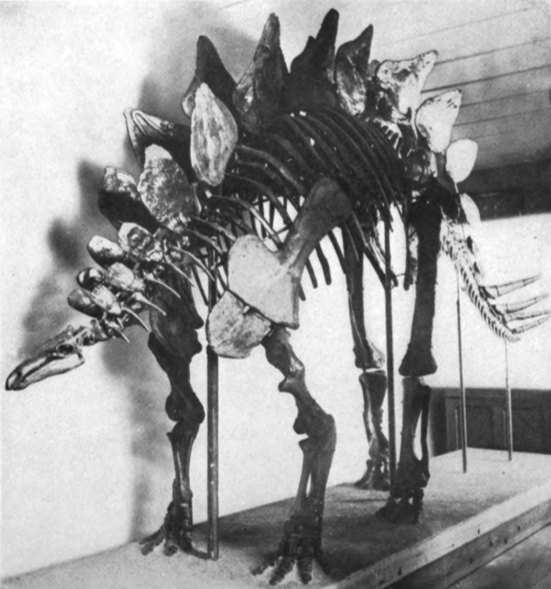
Revision of British plated dinosaurs, centered on Dacentrurus armatus. Galton provides the anatomical reference for European dacentrurines, a clade that would be formally expanded in 2009 with the description of Miragaia longicollum. The paper is an essential comparative basis for identifying the neck, shoulder, and dermal plate characters of Miragaia.

Stegosauria
Galton, P.M. & Upchurch, P. · The Dinosauria (2nd ed.), University of California Press
Book chapter synthesizing Stegosauria anatomy, taxonomy, and biogeography as of 2004. Galton and Upchurch provide the reference framework used by Mateus, Maidment, and Christiansen in 2009 to place Miragaia longicollum in the stegosaurid tree. Although earlier than the Miragaia description, it is mandatory reading to understand the state of the art of the group at the time of the discovery.
An Iberian stegosaurs paradise: The Villar del Arzobispo Formation (Tithonian-Berriasian) in Teruel (Spain)
Cobos, A., Royo-Torres, R., Luque, L., Alcalá, L. & Mampel, L. · Palaeogeography, Palaeoclimatology, Palaeoecology
Documents a rich stegosaurid fauna from the Villar del Arzobispo Formation of Teruel, Spain. The Iberian paleogeographic province producing this material is the same that records Miragaia and Dacentrurus in Portugal. Cobos et al. place Miragaia within an 'Iberian stegosaur paradise', with direct implications for understanding niche partitioning between the two sympatric Portuguese dacentrurines.

Galveosaurus herreroi, a new sauropod dinosaur from Villar del Arzobispo Formation (Tithonian-Berriasian) of Spain (with stegosaur remains from Teruel)
Sánchez-Hernández, B. · Zootaxa
Describes the sauropod Galveosaurus herreroi in the Villar del Arzobispo Formation and reports associated stegosaur remains from Teruel, Spain. The Iberian faunal province of this record is the same that, years later, would produce the Miragaia holotype in Portugal. The paper helps characterize the continental context in which Miragaia evolved and confirms the recurrence of dacentrurines across Jurassic Iberia.

First stegosaurian dinosaur remains from the Early Cretaceous of Burgos (Spain), with a review of Cretaceous stegosaurs
Pereda-Suberbiola, X., Galton, P.M., Ruiz-Omeñaca, J.I. & Canudo, J.I. · Revue de Paléobiologie
Reports the first Early Cretaceous stegosaur remains from Burgos, Spain, and reviews the Cretaceous record of the group. Pereda-Suberbiola et al. provide the Iberian Cretaceous context against which the Portuguese Upper Jurassic, with Miragaia and Dacentrurus, stands out as the main stegosaurid diversity hotspot of the region. Important for understanding why Miragaia represents the peak of the group's radiation on the Iberian Peninsula before the Cretaceous decline.
Stegosauria: a historical review of the body fossil record and phylogenetic relationships
Maidment, S.C.R. · Swiss Journal of Geosciences
Historical review of the Stegosauria fossil record and phylogenetic relationships, updating previous analyses with continuous data (morphometric measurements). Maidment confirms the placement of Miragaia within Dacentrurinae and refines its relationship as sister group to Dacentrurus. The paper is the most robust phylogenetic consolidation up to that time and is a central citation in any discussion of the Miragaia long neck as a derived character within Stegosauridae.


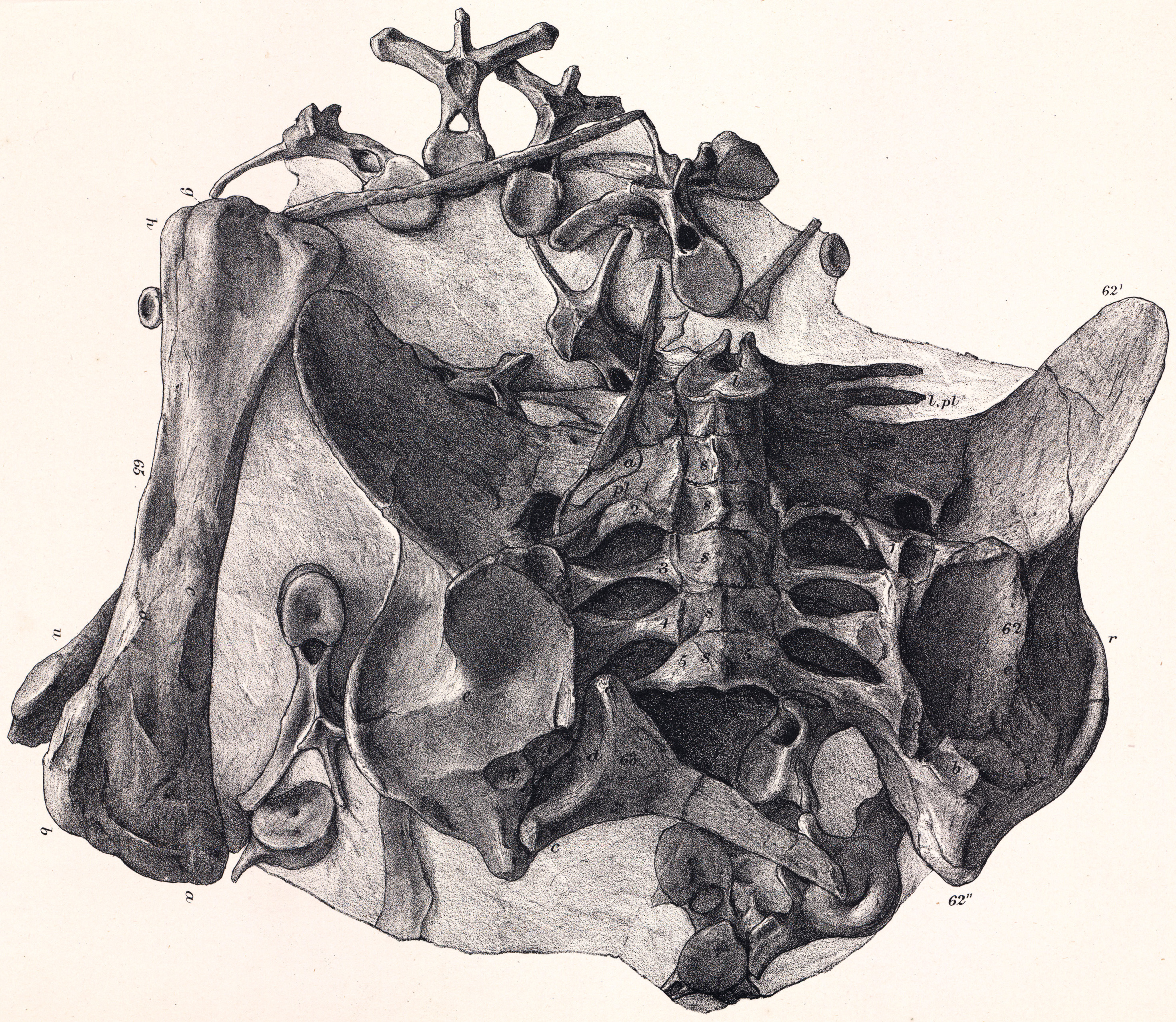
The postcranial anatomy of the stegosaurian dinosaur Kentrosaurus and a review of the phylogeny of Stegosauria (with reappraisal of Dacentrurus)
Galton, P.M. · Geologica et Palaeontologica
Describes the postcranial anatomy of Kentrosaurus and includes a reappraisal of Dacentrurus armatus. Galton establishes the anatomical references used decades later to identify the unique long-necked morphotype that would be named Miragaia. The work is a mandatory comparative reference for any study of cervical vertebrae, humerus, and pectoral girdle in Dacentrurinae, including the corresponding elements of holotype ML 433.

A new phylogeny of Stegosauria (Dinosauria, Ornithischia)
Raven, T.J. & Maidment, S.C.R. · Palaeontology
New phylogenetic analysis of Stegosauria recovering a single most parsimonious tree and applying continuous data inclusion. Raven and Maidment support the re-erection of Miragaia as a genus distinct from Dacentrurus, refuting previous synonymy proposals, and confirm Dacentrurinae as a coherent clade with the two Iberian taxa at its center. It is the most modern and comprehensive phylogenetic reference for positioning Miragaia in the stegosaurid tree.


New stegosaurs from the Middle Jurassic Lower Member of the Shaximiao Formation of Chongqing, China (Bashanosaurus primitivus)
Dai, H., Li, N., Maidment, S.C.R., Wei, G., Zhou, Y., Hu, X., Ma, Q., Wang, X., Hu, H. & Peng, G. · Journal of Vertebrate Paleontology
Description of Bashanosaurus primitivus from the Middle Jurassic of Chongqing, one of the oldest known stegosaurs. The updated phylogenetic analysis places Miragaia deep within Dacentrurinae, reinforcing the hypothesis of an endemic Iberian radiation of long-necked stegosaurids. Dai et al. expand the dataset with basal Chinese material, with indirect consequences for interpreting the origin and position of Miragaia.


Defense capabilities of Kentrosaurus aethiopicus Hennig, 1915
Mallison, H. · Palaeontologia Electronica
Open access biomechanical modeling of the Kentrosaurus spiked tail, showing the thagomizer reached velocities over 40 m/s and swept through a 180-degree arc. Mallison provides the mechanical framework later applied to reconstruct tail defense in other stegosaurids, including Miragaia, whose tail is not preserved but can be inferred by comparison. The paper is a central methodological reference for any study of active defense in Stegosauria.


The postcranial skeleton of an exceptionally complete individual of the plated dinosaur Stegosaurus stenops (Dinosauria: Thyreophora) from the Upper Jurassic Morrison Formation of Wyoming, U.S.A.
Maidment, S.C.R., Brassey, C. & Barrett, P.M. · PLoS ONE
Detailed description of 'Sophie', the most complete Stegosaurus stenops individual, including vertebral and dermal armor data. Maidment, Brassey, and Barrett provide the Morrison comparative baseline against which Miragaia's unusual 17-cervical count stands out as a genuinely derived character. The paper is essential for any discussion of cervical evolution in Stegosauridae and of the contrast between the Miragaia body plan and North American stegosaurids.

Famous museum specimens
ML 433 (Holótipo)
Museu da Lourinhã, Portugal
Holotype of Miragaia longicollum, discovered in 1999 during the opening of a road cutting between the villages of Miragaia and Sobral da Lagoa in the Lourinhã municipality. The specimen preserves at least 17 cervical vertebrae, the highest count known among all stegosaurs, and is the central record of the taxon's identity. It is housed at the Museu da Lourinhã, one of the most important paleontological institutions in Portugal. Referenced by Mateus, Maidment, and Christiansen (2009) and revised in subsequent works such as Raven and Maidment (2017).
Classification

Discovery
Fun fact
The only known long-necked stegosaur, Miragaia had 17 cervical vertebrae, more than many early sauropods. It is one of the most iconic dinosaurs discovered in Portugal.
Last reviewed: April 24, 2026