
Zuul
Zuul crurivastator
"Zuul, destroyer of shins"
About this species
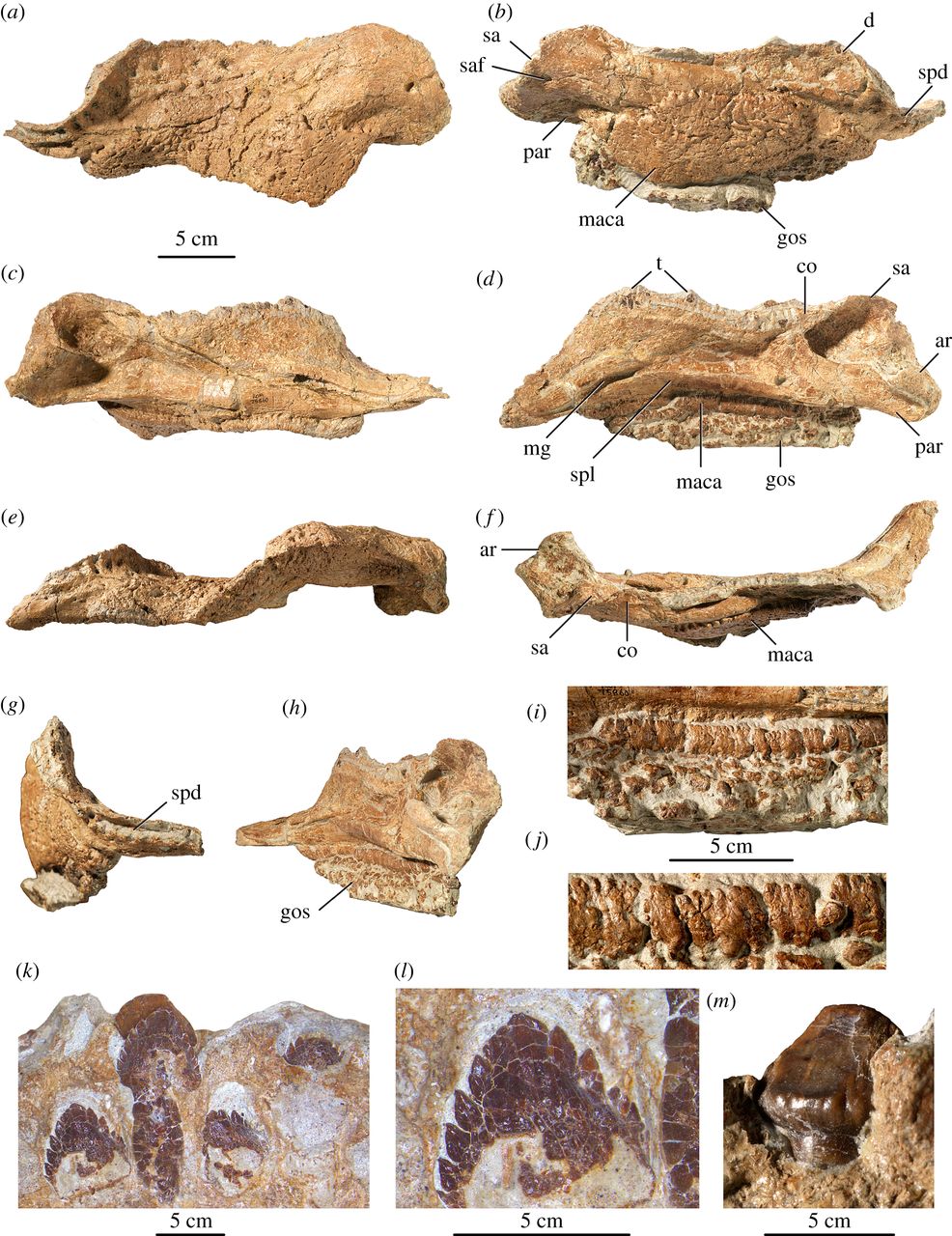
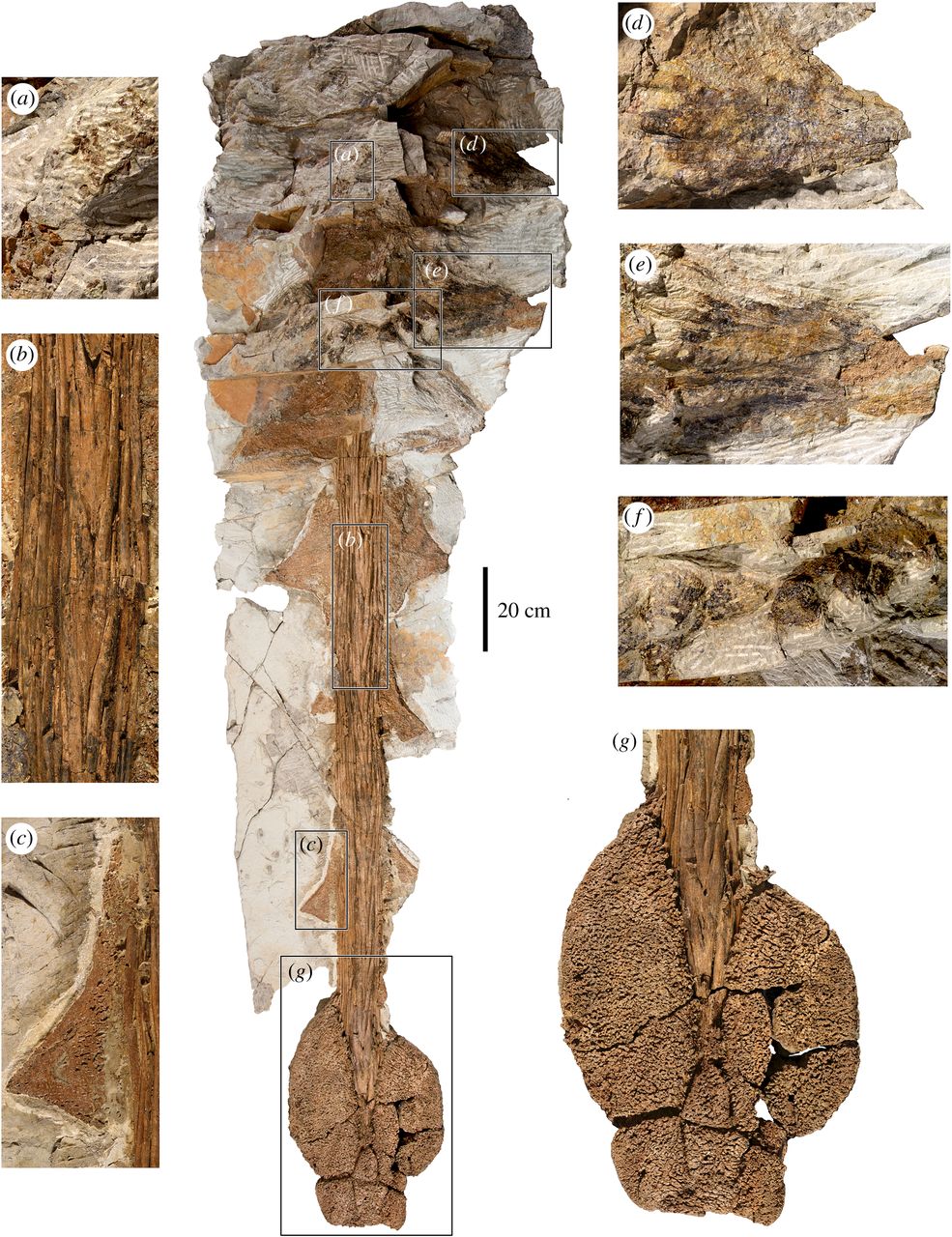
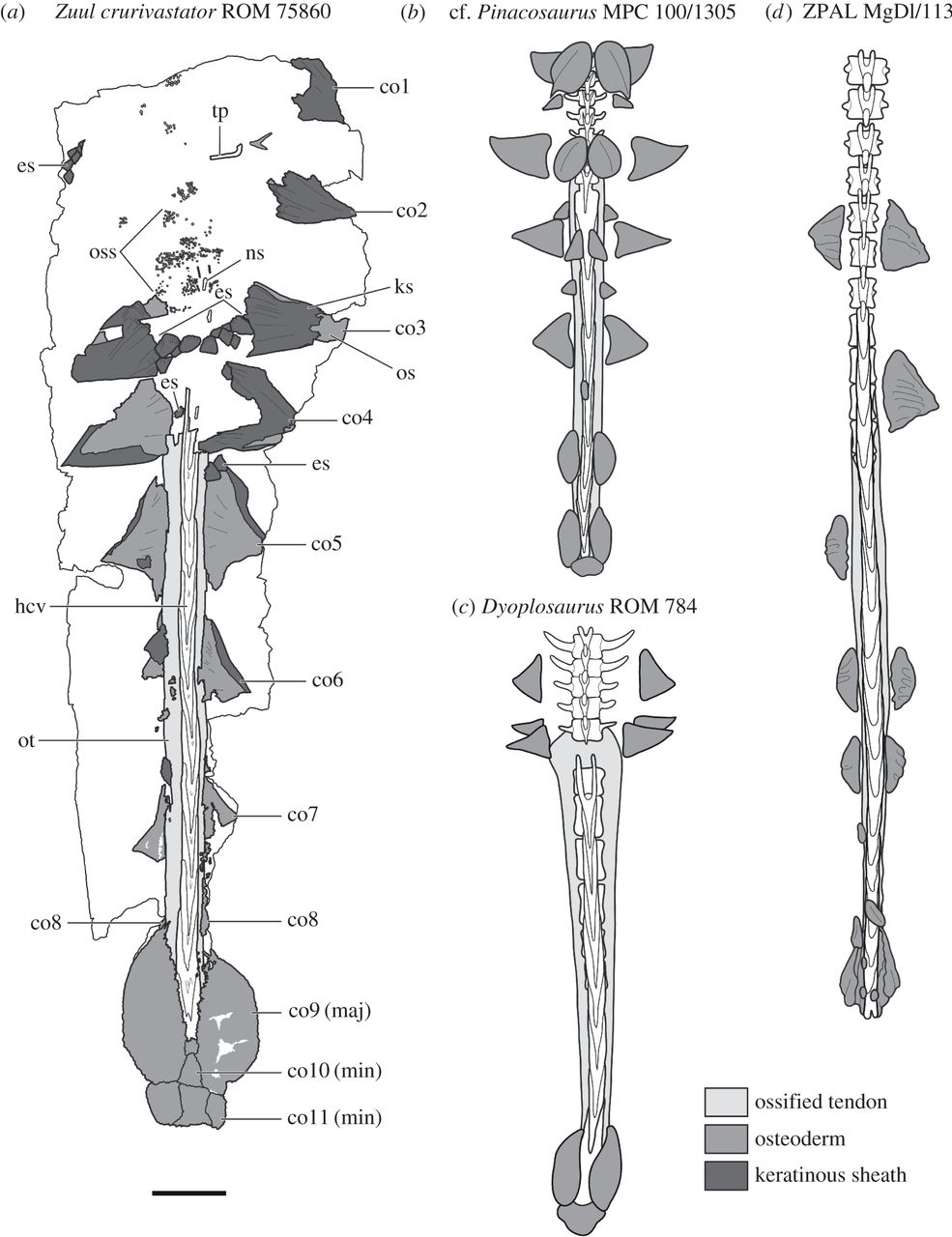
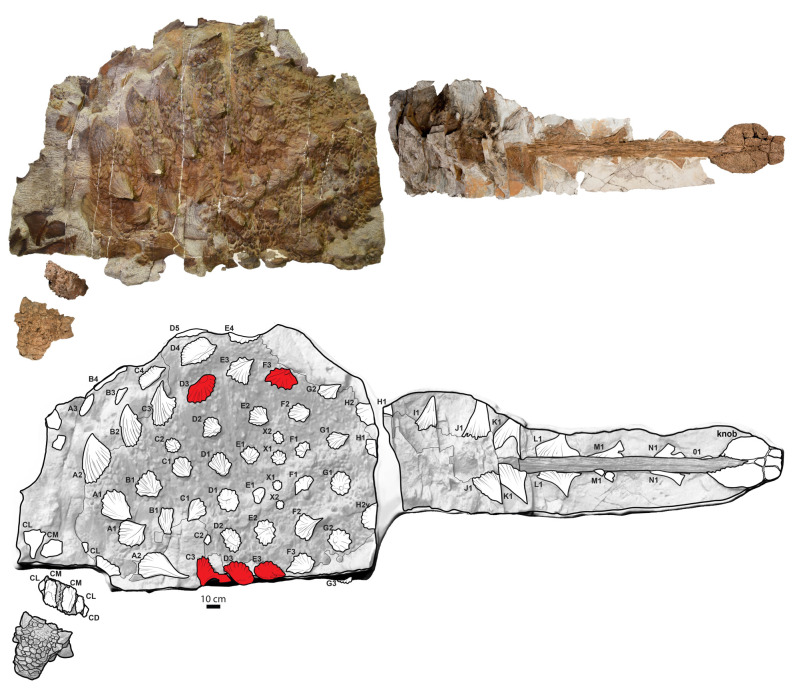
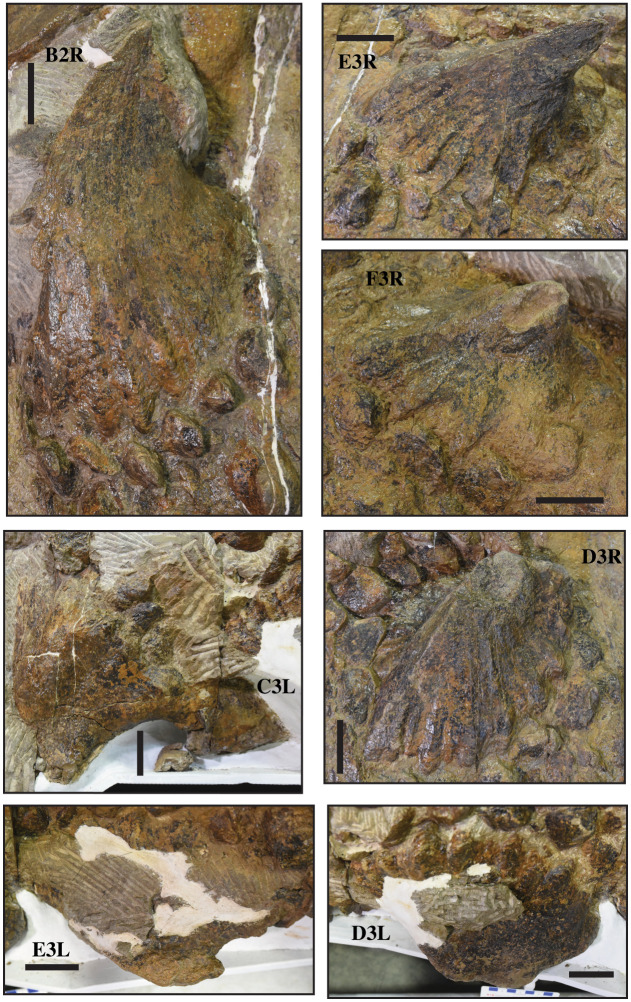
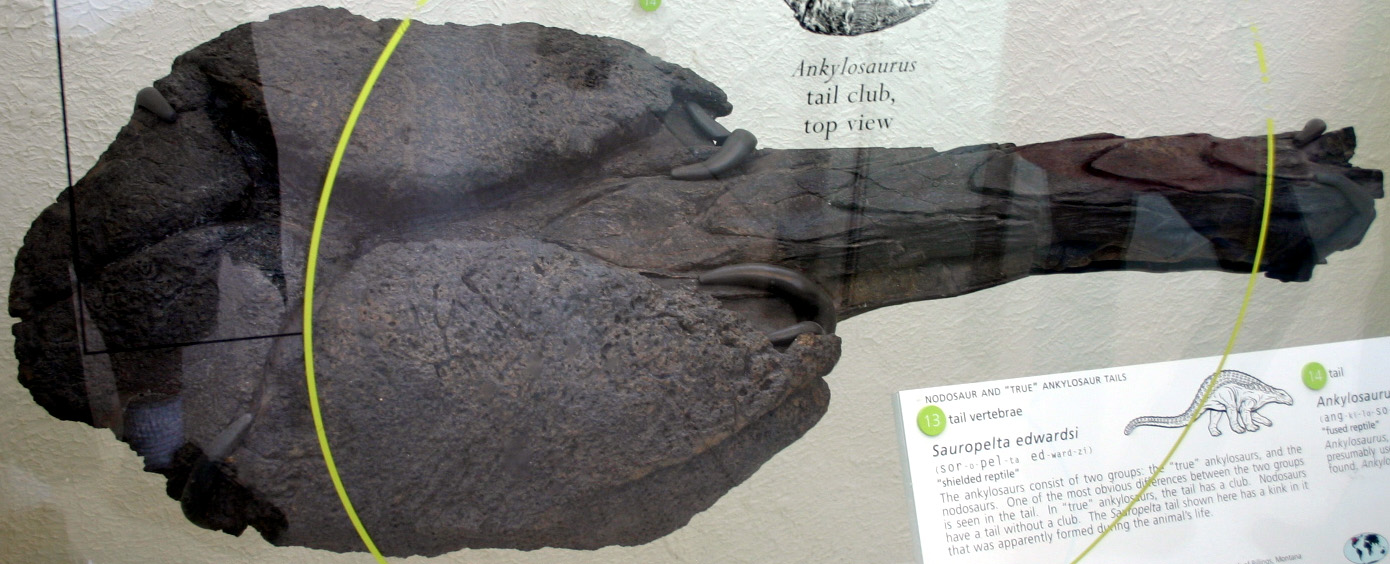
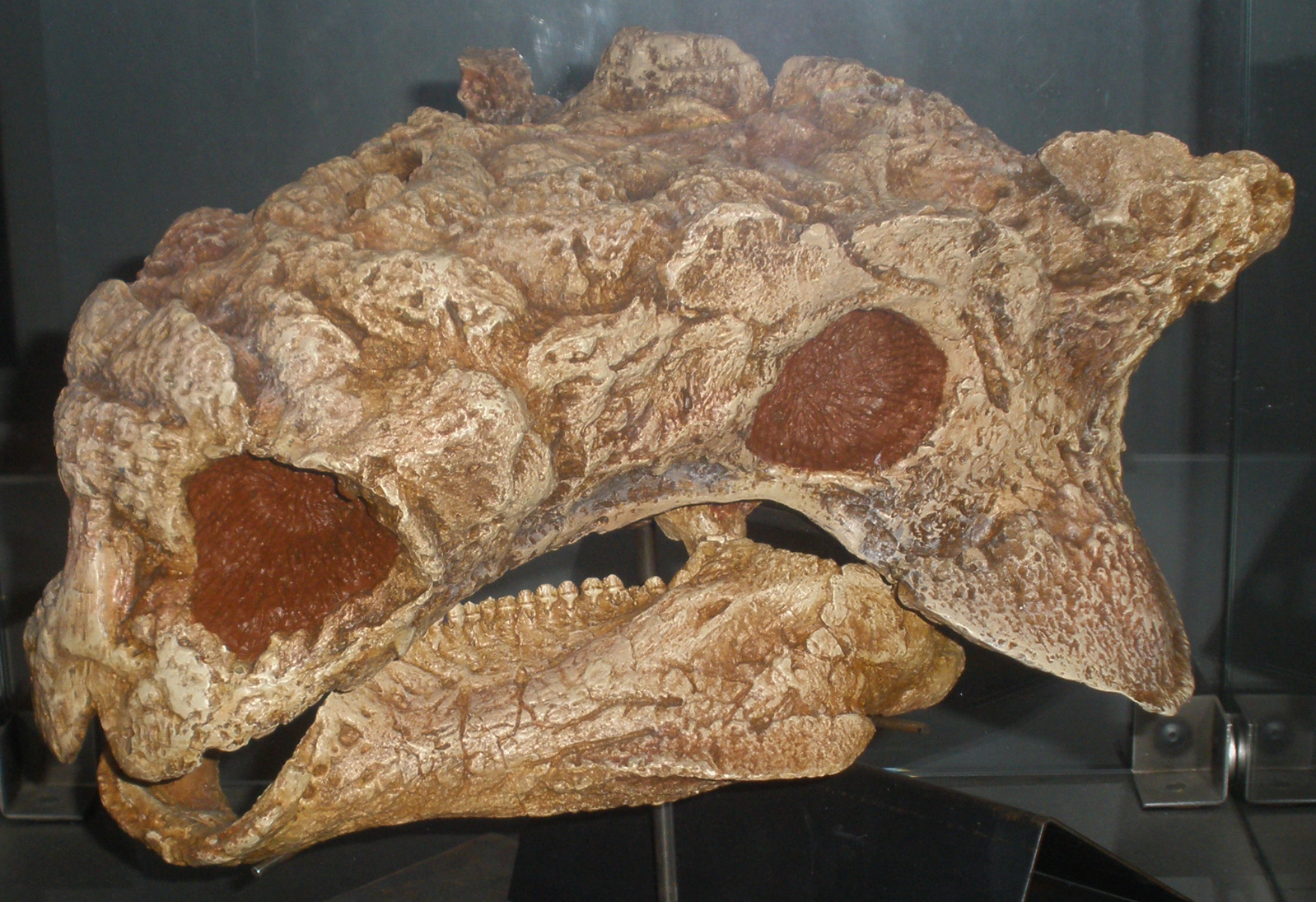
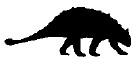
Zuul crurivastator is a large ankylosaurid from the Late Cretaceous (Campanian, about 76 million years ago) of the Coal Ridge Member of the Judith River Formation in Montana, United States. It was described in 2017 by Victoria M. Arbour and David C. Evans in Royal Society Open Science, based on holotype ROM 75860, housed at the Royal Ontario Museum in Toronto. The skeleton, initially exposed by chance in 2014 by a commercial team from Theropoda Expeditions LLC that was excavating a nearby tyrannosaur, turned out to be the most complete ankylosaurid ever found in North America: a whole skull, a complete tail with its terminal club, much of the postcranium, osteoderms preserved in situ, skin impressions, and even dark films interpreted as fossilised keratin sheaths of the spikes. The animal reached about six metres in length and weighed around 2.5 tonnes, with the typical low, broad ankylosaurid body, robust limbs, a neck guarded by cervical half rings of fused osteoderms, and a back covered by a complex carapace of polygonal plates, some forming pronounced lateral spikes over the flanks. The genus name Zuul, a nod to the Gatekeeper of Gozer in Ghostbusters (1984), was chosen because the short, rounded snout and two large backward-projecting squamosal horns immediately recall the film's demonic hound. The species epithet crurivastator, Latin for 'destroyer of shins', is a direct reference to the tail: the last seven caudal vertebrae are co-ossified into a rigid 'handle', and the tip ends in a huge bony club of fused osteoderms, heavy enough in theory to shatter the lower limbs of a large attacking theropod such as Daspletosaurus. Zuul also became a worldwide reference in a long-running debate in ankylosaur palaeontology: what was the tail club actually for? The holotype preserves, along its flanks near the pelvic girdle, osteoderms with pathologies (healed fractures, bone resorption) whose distribution is incompatible with predator bites but is consistent with lateral strikes delivered by another individual of the same species. In 2022, Arbour, Zanno and Evans presented this evidence in Biology Letters and concluded that the ankylosaurid tail club evolved largely as a weapon for intraspecific combat, probably tied to mate competition and sexual selection. Another extraordinary dimension of the holotype is the preservation of soft tissue: dark films over the osteoderms indicate keratin sheaths on the spikes, and there are scale impressions on the neck and tail. Together with Borealopelta markmitchelli (a nodosaurid preserved in three dimensions), Zuul is today the best material available to study what an ankylosaur's skin, armour and, in some cases, colouration may have looked like in life. It was also the first ankylosaurid described from the Judith River Formation, enriching the already famous portrait of Campanian Laramidia, which it shared with tyrannosaurids, ceratopsids and hadrosaurids on a warm, humid coastal plain on the western margin of the Western Interior Seaway.
Geological formation & environment
Judith River Formation (Coal Ridge Member), Campanian (about 76 Ma), Montana, United States. The unit crops out along the Missouri and Milk River drainages, mainly in the Upper Missouri Breaks National Monument and in the north of the state, near Havre. It represents meandering fluvial systems and floodplains on a humid coastal plain on the western margin of the Western Interior Seaway. Associated fauna includes tyrannosaurids such as Daspletosaurus horneri, ceratopsids such as Avaceratops lammersi, hadrosaurids such as Brachylophosaurus canadensis and a diversity of smaller theropods. The Coal Ridge Member is the upper stratigraphic package of the formation and is dated to about 76.2 to 75.2 million years, a placement that makes Zuul contemporaneous with the faunas of Dinosaur Park (Alberta) and Two Medicine (Montana).
Image gallery





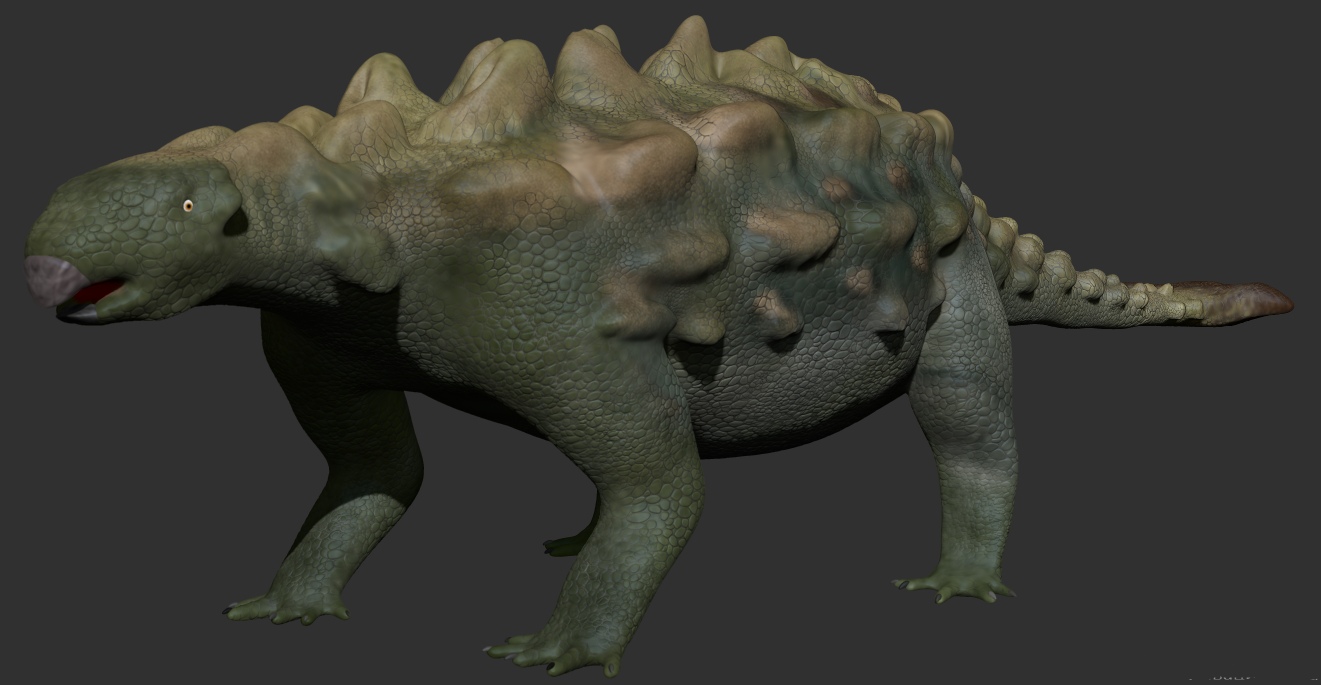
Life reconstruction of Zuul crurivastator showing dorsal armour, squamosal horns, and tail club.
Paleoart por Tom Parker, Wikimedia Commons, CC BY-SA 4.0
Ecology and behavior
Habitat
Warm, humid coastal plain on the western margin of the Western Interior Seaway, drained by meandering rivers. The Coal Ridge Member of the Judith River Formation records swampy to semi-forested environments with a marked wet season, shared with tyrannosaurids, ceratopsids and hadrosaurids. Vegetation included conifers, tree ferns and low-growing angiosperms typical of Campanian Laramidia.
Feeding
Strict low browser that fed on soft ground-level vegetation (ferns, cycads, low angiosperms). Small leaf-shaped teeth, a broad palate and a likely muscular tongue indicate selective crop-and-chop feeding rather than heavy grinding. The broad beak allowed it to clip mouthfuls of foliage, later sliced by the posterior teeth.
Behavior and senses
Slow, quadrupedal and heavily armoured, Zuul relied on passive defence (complete carapace, flank spikes, cervical half rings) and active defence (a tail club capable of delivering heavy blows). Against large Judith River theropods such as Daspletosaurus, the club would have been a last-resort weapon, potentially fracturing limbs. The holotype's pathological osteoderm pattern, concentrated on the pelvic flanks, also suggests routine use of the tail in intraspecific combat: lateral strikes between conspecifics, possibly in disputes over mates or territory.
Physiology and growth
An animal about 6 m long and 2.5 tonnes in mass. The extensive osteoderm armour (with keratin sheaths preserved in places), the fused caudal vertebrae forming a rigid 'handle' and the large distal knob indicate heavy investment in passive and active defence. A mesothermic metabolism, typical of large ornithischians, is the most plausible scenario, with rapid growth during youth and slowdown after skeletal maturity.
Paleogeography
Continental configuration

Scotese & Vérard · CC BY 4.0 · Cretaceous, ~105 Ma
During the Campaniano (~76–75 Ma), Zuul crurivastator inhabited Laramidia, the western half of present-day North America, separated from the east by the Western Interior Seaway, a shallow sea dividing the continent. The continents were in very different positions: India was drifting toward Asia, Antarctica was still connected to Australia, and South America was an isolated island.
Bone Inventory
The holotype ROM 75860 is the most complete ankylosaurid skeleton ever found in North America and the first ankylosaurine described with a complete skull and a complete tail with club preserved in the same individual. It also includes osteoderms in situ, skin impressions and fossilised keratinous sheaths, a dataset only matched by the nodosaurid Borealopelta markmitchelli. Anatomical completeness reaches about 90%, with gaps in the limbs and parts of the ribcage. The material was exposed in May 2014, excavated during the same year, acquired by the Royal Ontario Museum and described in 2017 by Arbour and Evans in Royal Society Open Science.
Found elements
Inferred elements
Scientific Literature
15 papers in chronological order — from the original description to recent research.
A new ankylosaurine dinosaur from the Judith River Formation of Montana, USA, based on an exceptional skeleton with soft tissue preservation
Arbour, V.M. e Evans, D.C. · Royal Society Open Science, 4: 161086
Original description of Zuul crurivastator, an ankylosaurid from the Judith River Formation (Coal Ridge Member, Montana, about 76 Ma), based on holotype ROM 75860, the most complete ankylosaurid skeleton known from North America. It preserves a whole skull, tail with club, in situ osteoderms, skin impressions and keratinous soft tissues. Phylogenetic analysis places Zuul within Ankylosaurini as a close relative of Dyoplosaurus and Scolosaurus.
Palaeopathological evidence for intraspecific combat in ankylosaurid dinosaurs
Arbour, V.M., Zanno, L.E. e Evans, D.C. · Biology Letters, 18(12): 20220404
Palaeopathological study of the osteoderms of the Zuul crurivastator holotype, concentrated on the flanks near the pelvic girdle. The injury distribution (healed fractures and resorption) is incompatible with predator bites but consistent with lateral strikes delivered by another individual of the same species. The authors conclude that the ankylosaurid tail club evolved largely as a weapon for intraspecific combat, probably tied to mate competition and sexual selection.
Systematics, phylogeny and palaeobiogeography of the ankylosaurid dinosaurs
Arbour, V.M. e Currie, P.J. · Journal of Systematic Palaeontology, 14(5): 385-444
Comprehensive systematic and phylogenetic review of the family Ankylosauridae based on all known species. It establishes the tribe Ankylosaurini within Ankylosaurinae and defines the framework into which Zuul was later placed. It discusses Asia-North America dispersals across the Cretaceous and proposes multiple migration events.
Ankylosaurid dinosaur tail clubs evolved through stepwise acquisition of key features
Arbour, V.M. e Currie, P.J. · Journal of Anatomy, 227(4): 514-523
Shows that the ankylosaurid tail club evolved in stages: the stiff 'handle' of distal caudal vertebrae appeared first, tens of millions of years before the terminal knob formed by fused osteoderms. This provides crucial evolutionary context for interpreting the highly derived tail of Zuul, which combines a long handle with a massive terminal club.

A redescription of the ankylosaurid dinosaur Dyoplosaurus acutosquameus Parks, 1924 (Ornithischia: Ankylosauria) and a revision of the genus
Arbour, V.M., Burns, M.E. e Sissons, R.L. · Journal of Vertebrate Paleontology, 29(4): 1117-1135
Redescription of the holotype of Dyoplosaurus acutosquameus and revalidation of the genus as distinct from Euoplocephalus, based on characters of the tail club, pelvis and armour. In later phylogenies, Dyoplosaurus is recovered as a close relative of Zuul within Ankylosaurini, making this work a baseline for placing the new genus in 2017.

A new ankylosaurid dinosaur from the Upper Cretaceous (Kirtlandian) of New Mexico with implications for ankylosaurid diversity in the Upper Cretaceous of western North America
Arbour, V.M., Burns, M.E., Sullivan, R.M., Lucas, S.G., Cantrell, A.K., Fry, J. e Suazo, T.L. · PLOS ONE, 9(9): e108804
Description of Ziapelta sanjuanensis (Kirtland Formation, New Mexico), based on a complete skull and partial cervical armour. Phylogenetic analysis allies Ziapelta with the northern North American ankylosaurids including Ankylosaurus, Anodontosaurus, Euoplocephalus, Dyoplosaurus and Scolosaurus, the same lineage to which Zuul was later assigned.


A new ankylosaurid from the late Cretaceous Two Medicine Formation of Montana, USA
Penkalski, P. · Acta Palaeontologica Polonica, 59(3): 617-634
Describes Oohkotokia horneri from the Two Medicine Formation (Montana), diagnosed by trihedral squamosal bosses and a distinct cranial ornamentation pattern. It is important as a geographic neighbour and contemporary of Zuul in the Campanian of Montana, allowing comparison between two nearby ankylosaur communities.

Scolosaurus cutleri (Ornithischia: Ankylosauria) from the Upper Cretaceous Dinosaur Park Formation of Alberta, Canada
Penkalski, P. e Blows, W.T. · Canadian Journal of Earth Sciences, 50(2): 171-182
Revalidates Scolosaurus cutleri as a genus distinct from Euoplocephalus, based on cervical armour, other osteoderms and forelimb structure. In Arbour and Evans (2017), Scolosaurus appears among the closest relatives of Zuul within Ankylosaurini, making this paper a direct part of the phylogenetic basis used to describe the new genus.


Euoplocephalus tutus and the diversity of ankylosaurid dinosaurs in the Late Cretaceous of Alberta, Canada, and Montana, USA
Arbour, V.M. e Currie, P.J. · PLOS ONE, 8(5): e62421
Reassesses specimens historically lumped under Euoplocephalus tutus and shows that Campanian North American ankylosaurid diversity was higher than previously recognised, revalidating Anodontosaurus, Scolosaurus and Dyoplosaurus. It sets the taxonomic stage into which Zuul was later added as a distinct new element of the fauna.


The ankylosaurid dinosaurs of the Upper Cretaceous Baruungoyot and Nemegt formations of Mongolia
Arbour, V.M., Currie, P.J. e Badamgarav, D. · Zoological Journal of the Linnean Society, 172(3): 631-652
Revises the ankylosaurid fauna of Mongolia's Baruungoyot and Nemegt formations, including Tarchia, Saichania and the new genus Zaraapelta nomadis. It provides the Asian sister-group context critical to the biogeographic scenario proposed for Zuul, whose North American lineage has roots in dispersals from Asia.

Redescription of Ankylosaurus magniventris Brown 1908 (Ankylosauridae) from the Upper Cretaceous of the Western Interior of North America
Carpenter, K. · Canadian Journal of Earth Sciences, 41(8): 961-986
Redescribes the type ankylosaurid Ankylosaurus magniventris from the Hell Creek, Lance and Scollard formations (latest Cretaceous). It provides the anatomical baseline used in virtually every later description of North American ankylosaurids, including Zuul, of which it is a phylogenetic relative within the northern clade.

A new southern Laramidian ankylosaurid, Akainacephalus johnsoni gen. et sp. nov., from the upper Campanian Kaiparowits Formation of southern Utah, USA
Wiersma, J.P. e Irmis, R.B. · PeerJ, 6: e5016
Describes Akainacephalus johnsoni (Utah), the most complete ankylosaurid known from southern Laramidia, with a preserved skull and tail club. Phylogenetic analysis places Akainacephalus closer to Mongolian ankylosaurids than to northern Laramidian taxa such as Zuul, implying multiple independent Asia-North America dispersals.

Nodocephalosaurus kirtlandensis, gen. et sp. nov., a new ankylosaurid dinosaur (Ornithischia: Ankylosauria) from the Upper Cretaceous Kirtland Formation (Upper Campanian), San Juan Basin, New Mexico
Sullivan, R.M. · Journal of Vertebrate Paleontology, 19(1): 126-139
Names Nodocephalosaurus kirtlandensis, based on a partial skull with bulbous cranial osteoderms reminiscent of Asian Saichania and Tarchia. A North American taxon whose relationships are directly relevant to the biogeographic context in which Zuul, of the northern lineage, sits.


Function and evolution of ankylosaur dermal armor
Hayashi, S., Carpenter, K., Scheyer, T.M., Watabe, M. e Suzuki, D. · Acta Palaeontologica Polonica, 55(2): 213-228
Histological study of ankylosaur osteoderms (spikes, plates, clubs). Identifies a distinct internal architecture of thin compact bone over cancellous bone with abundant collagen fibres, consistent with both defensive and display functions. It provides the histological background for interpreting Zuul's osteoderms in life, preserved even with their keratin sheaths.
An exceptionally preserved three-dimensional armored dinosaur reveals insights into coloration and Cretaceous predator-prey dynamics
Brown, C.M., Henderson, D.M., Vinther, J., Fletcher, I., Sistiaga, A., Herrera, J. e Summons, R.E. · Current Biology, 27(16): 2514-2521.e3
Description of the Borealopelta markmitchelli holotype, a nodosaurid preserved in three dimensions with skin, armour and melanosome-bearing tissue, providing direct evidence of countershading. Alongside Zuul, Borealopelta is the most important soft-tissue ankylosaur specimen and serves as the main comparative reference for interpreting the preserved integument of Zuul.
Famous museum specimens
ROM 75860 (holótipo)
Royal Ontario Museum (ROM), Toronto, Canadá
Holotype discovered in May 2014 in the Judith River Formation (Coal Ridge Member) near Havre, Montana, and acquired by the Royal Ontario Museum. Described in 2017 by Arbour and Evans in Royal Society Open Science. It is the most complete ankylosaurid known in North America and the first with a complete skull and tail with club preserved in the same individual. On display in the 'Zuul: Life of an Armoured Dinosaur' exhibition since 2018. Exact quarry coordinates are kept confidential by the ROM to protect the site.
Classification

Discovery
Fun fact
Zuul crurivastator was named after Zuul, the Gatekeeper of Gozer, the demonic dog from the film 'Ghostbusters' (1984), because the short rounded snout and projecting squamosal horns of the holotype immediately reminded the researchers of the movie monster. The species epithet crurivastator comes from Latin and means 'destroyer of shins', a direct reference to the massive tail club, in theory heavy enough to shatter the lower limbs of large attacking tyrannosaurids. The blend of pop culture and scholarly Latin turned the ankylosaur into one of the most widely reported palaeontological discoveries of 2017 in the global press.
Last reviewed: April 24, 2026