
Pteranodon
Pteranodon longiceps
"Toothless wing with long head"
About this species
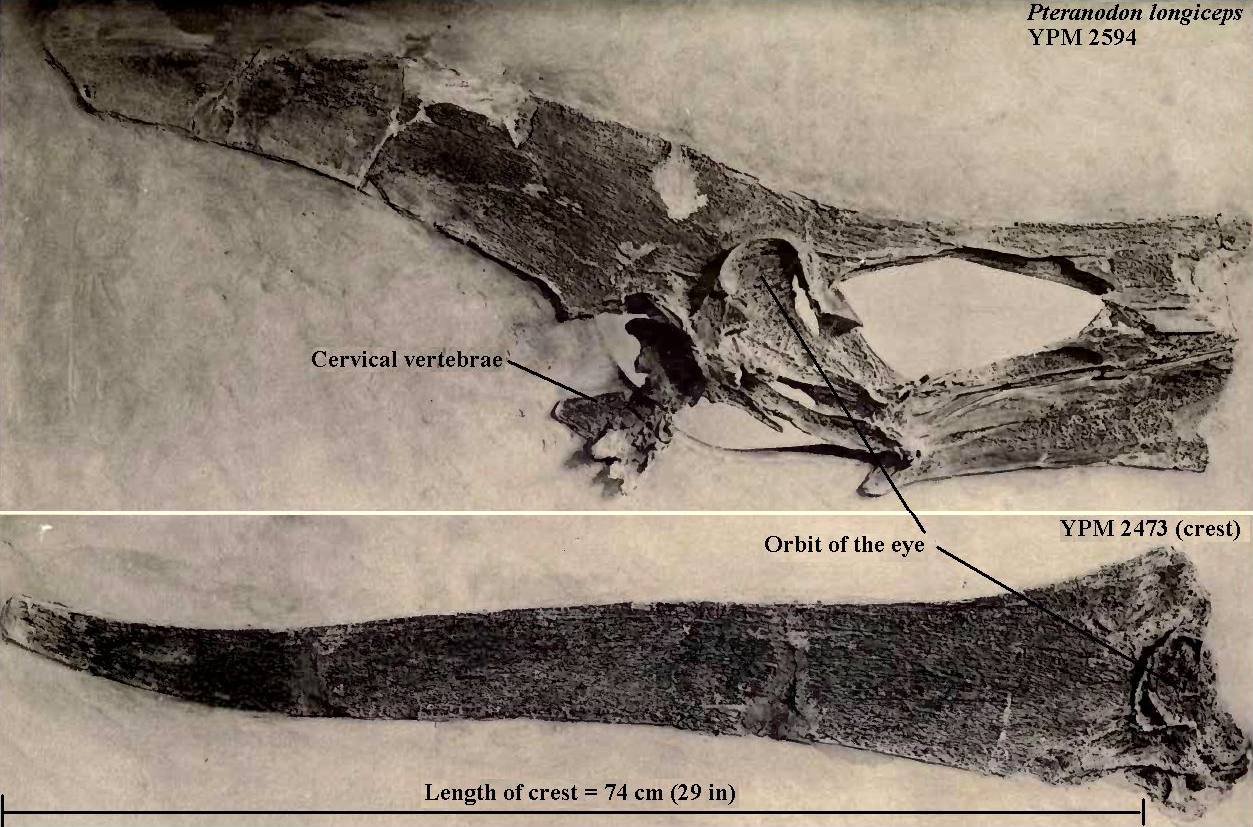
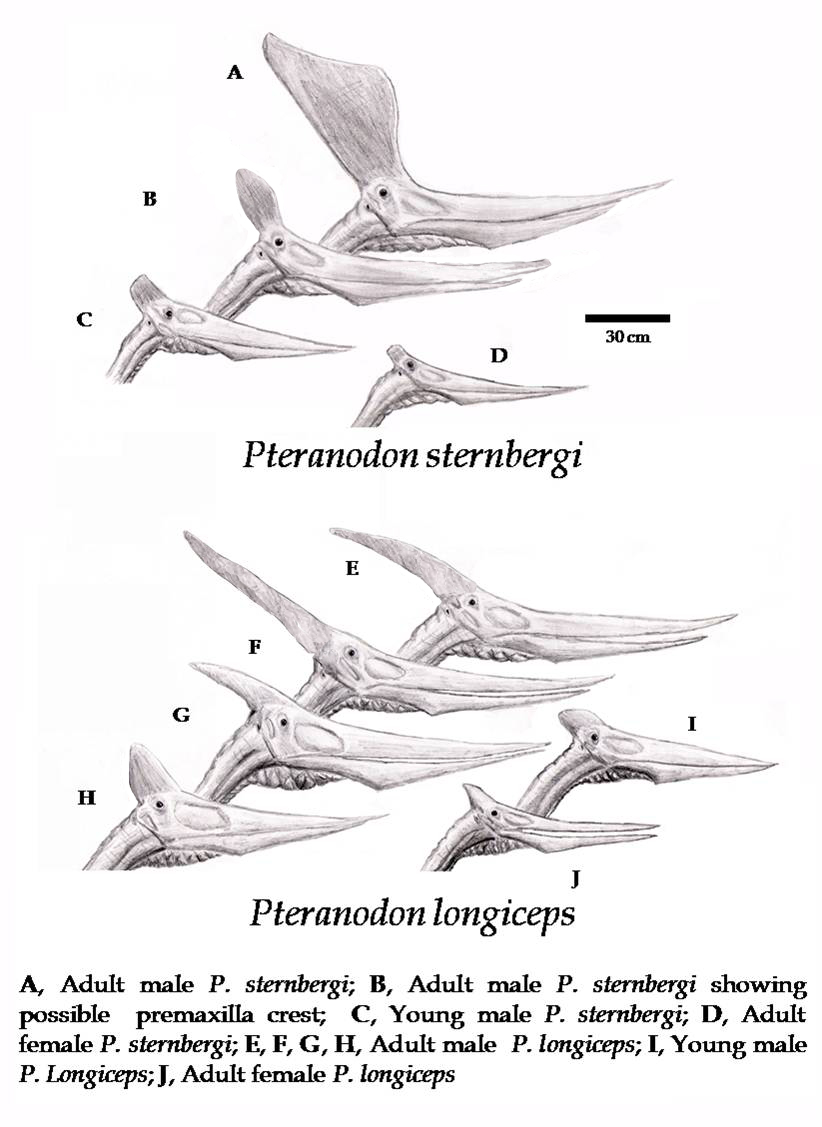
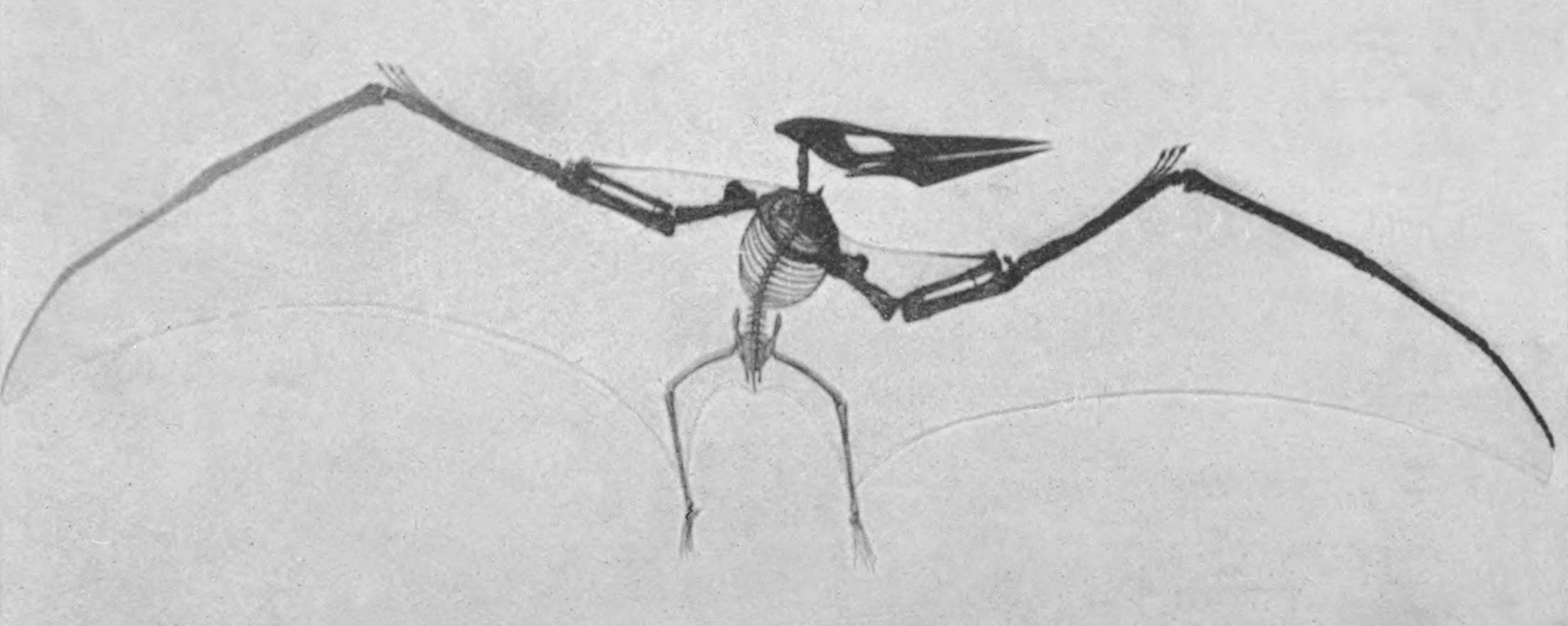
Pteranodon longiceps is the most studied pterosaur in the history of paleontology, with over 1,200 known specimens. It flew over the Western Interior Seaway, a shallow waterway that covered the center of North America in the Cretaceous. Adult males reached wingspans of 5.6 to 7.6 meters, while females were smaller, at approximately 3.8 meters. The long backward-pointing head crest was more prominent in males. Despite its imposing appearance, it was a specialized piscivore, capturing fish at the sea surface with its long, toothless beak.
Geological formation & environment
The Niobrara Formation, especially the Smoky Hill Chalk Member, is the main source of Pteranodon longiceps specimens. Deposited between 88 and 80 million years ago in the Santonian-Campanian, it represents the bottom sediments of the Western Interior Seaway. The formation consists of extremely chalk-rich limestones and white chalk rich in foraminifera, coccolithophores, and other microscopic marine organisms, interspersed with dark organic matter-rich shales. The exceptional preservation of fossils is due to the anoxic bottom conditions that prevented bacterial decomposition.
Image gallery





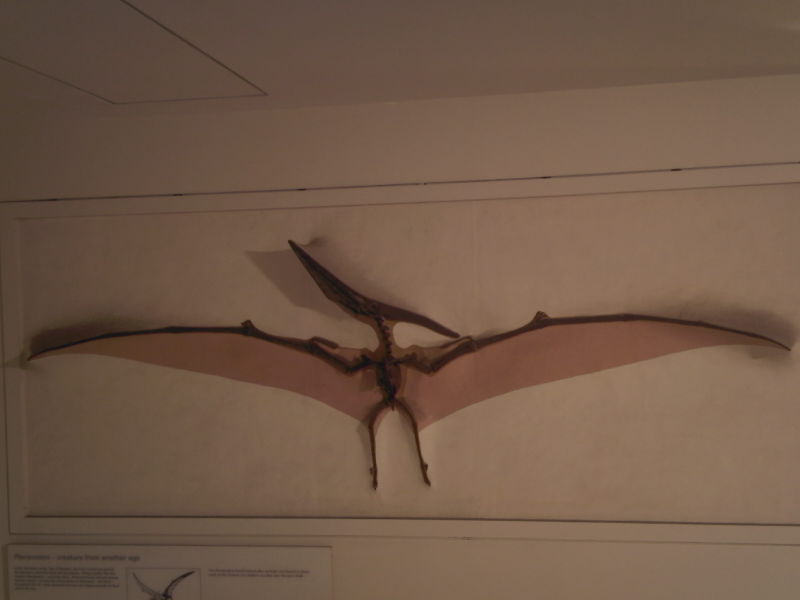
Male Pteranodon longiceps in flight based on specimen YPM 2437, by Matt Martyniuk. Shows the correct proportions of the long backward-pointing cranial crest, the toothless beak, and the narrow wing membrane.
Matt Martyniuk (Dinoguy2), CC BY 3.0
Ecology and behavior
Habitat
Pteranodon longiceps inhabited the coasts and open waters of the Western Interior Seaway, a shallow epicontinental waterway approximately 1,000 km wide that divided North America in the Late Cretaceous. The coasts were low and sandy, with islands and rocky promontories for colonial nesting. The climate was warm and subtropical, with regular coastal winds that favored gliding flight. The water was relatively shallow (up to 800 m deep), rich in fish and marine invertebrates.
Feeding
Pteranodon was a specialized piscivore, feeding primarily on fish captured at the surface of the Western Interior Seaway during flight. The long pointed toothless beak was adapted for catching slippery fish in a skim-diving action similar to modern pelicans. Stomach content studies and cranial morphology suggest it swallowed prey whole. The extensible throat pouch indicated by mandibular morphology allowed accommodating fish of considerable size.
Behavior and senses
Indirect evidence suggests colonial nesting on elevated terrain. The pronounced sexual dimorphism, with males up to twice the size of females, points to a mating system with intense male intrasexual competition. The larger cranial crests of males likely functioned as sexual signaling ornaments, similar to the behavior of modern seabirds such as frigatebirds. The ontogenetic niche segregation proposed by Bennett (2018) suggests that juveniles and adults occupied distinct habitats.
Physiology and growth
Pteranodon was likely endothermic or mesoendothermic, with elevated metabolism necessary for active flight and body mass support with pneumatized hollow bones. Wing muscle fibers and tendons indicate capacity for rhythmic wing-flapping, in addition to passive gliding. Takeoff likely occurred with a quadrupedal launch using powerful forelimbs, as proposed by Habib (2008). Estimated lifespan based on bone histology is 10 to 15 years in adults.
Paleogeography
Continental configuration

Scotese & Vérard · CC BY 4.0 · Cretaceous, ~105 Ma
Fossil sites
Matt Martyniuk · CC BY 3.0
During the Santoniano-Campaniano (~88–80 Ma), Pteranodon longiceps inhabited Laramidia, the western half of present-day North America, separated from the east by the Western Interior Seaway, a shallow sea dividing the continent. The continents were in very different positions: India was drifting toward Asia, Antarctica was still connected to Australia, and South America was an isolated island.
Bone Inventory
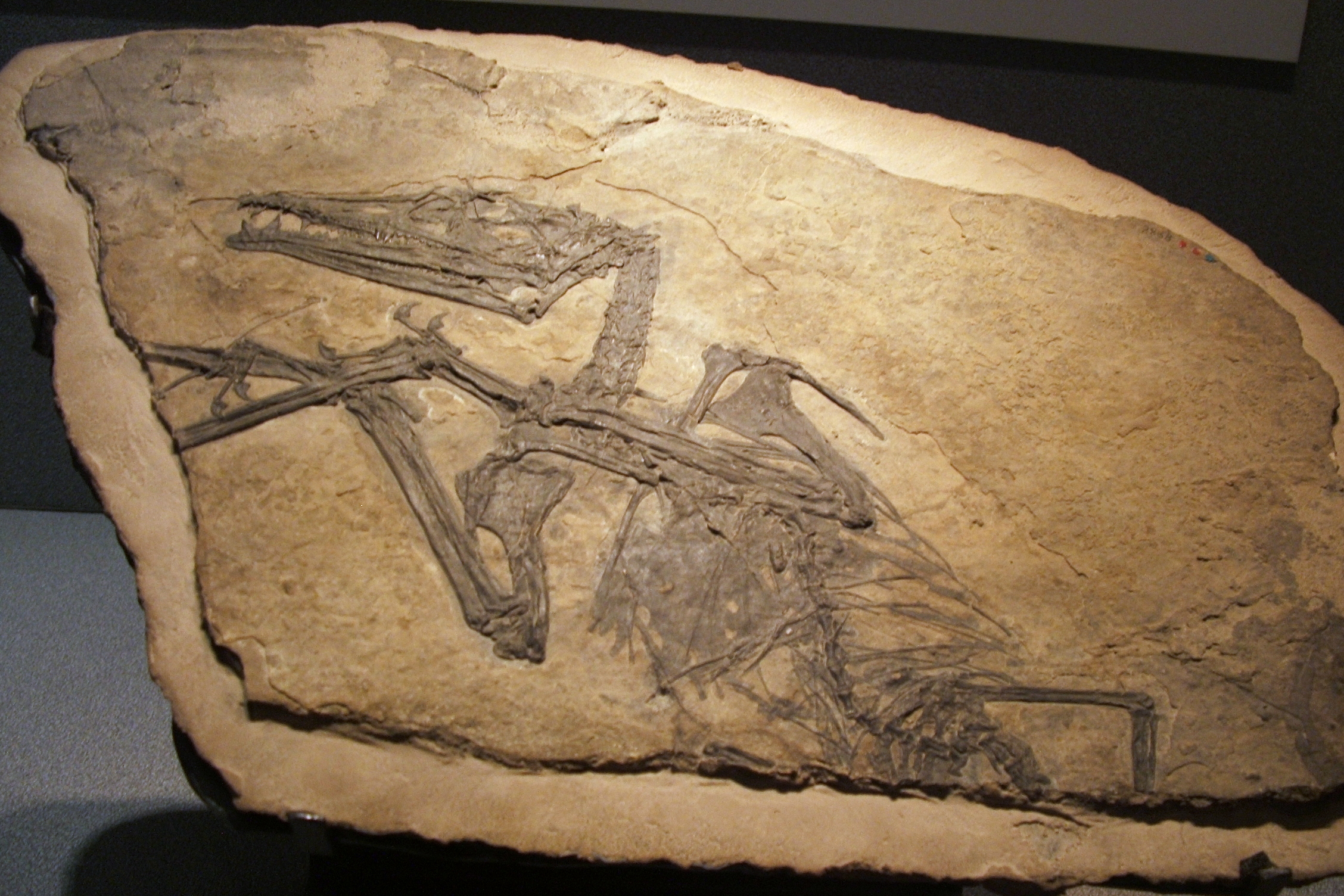
With over 1,200 known specimens, Pteranodon longiceps is exceptionally well documented. Many specimens preserve nearly complete skulls with intact crests and articulated skeletons. The type specimen YPM 1177 preserves the skull and parts of the axial skeleton. The fossil record includes juveniles with wingspans of 1.76 meters to large males exceeding 7 meters, allowing complete studies of ontogeny and sexual dimorphism.

Found elements
Inferred elements
Scientific Literature
15 papers in chronological order — from the original description to recent research.
Notice of a new sub-order of Pterosauria
Marsh, O.C. · American Journal of Science
Foundational paper establishing the genus Pteranodon, named in reference to the absence of teeth, at the time a unique characteristic among pterosaurs. Marsh described specimen YPM 1177, collected by S.W. Williston from the Smoky Hill Chalk, Kansas. The work established the generic diagnosis based primarily on cranial morphology and absence of teeth, positioning Pteranodon as a distinct suborder within Pterosauria. This is the primary taxonomic reference paper for the entire genus.
Osteology of Pteranodon
Eaton, G.F. · Memoirs of the Connecticut Academy of Arts and Sciences
Eaton produced the first comprehensive osteological monograph of Pteranodon, systematically describing the bones of the skull, mandible, vertebral column, pectoral girdle, limbs, and pelvis from Yale Collection specimens. Although many interpretations were later revised, the work established the descriptive foundation for all subsequent studies. The high-quality illustrative plates continue to be visual references used in modern studies of the genus.
Sexual dimorphism of Pteranodon and other pterosaurs, with comments on cranial crests
Bennett, S.C. · Journal of Vertebrate Paleontology
Bennett demonstrated through multivariate statistical analysis that the great size variation observed in Pteranodon reflects sexual dimorphism: males (morphotype A) with long backward-pointing crests, and females (morphotype B) with smaller or absent crests and smaller body size. The study analyzed over 1,000 specimens and became the fundamental reference for interpreting sexual dimorphism in pterosaurs. The distinction between males with wingspans of 5.6 to 7.6 m and females at approximately 3.8 m remains the consensus in the literature.

Taxonomy and systematics of the late Cretaceous pterosaur Pteranodon (Pterosauria, Pterodactyloidea)
Bennett, S.C. · Occasional Papers of the Natural History Museum, University of Kansas
Bennett reduced Miller's 13 Pteranodon species to just two: P. longiceps (type species, geologically more recent) and P. sternbergi (older, direct ancestor of P. longiceps). The revision used rigorous morphostratigraphic analysis and synonymized most species based on ontogenetic and sexual variation, rather than specific distinctions. This work is the modern taxonomic basis for the genus and defined the species currently recognized in most publications.
The osteology and functional morphology of the Late Cretaceous pterosaur Pteranodon. Part I: General description of osteology
Bennett, S.C. · Palaeontographica Abteilung A
Bennett published the most comprehensive osteological monograph ever produced on Pteranodon, systematically describing each skeletal element based on multiple specimens. The first volume covers general osteology with detailed plates of each bone, comparisons between specimens, and discussion of homologies. Together with the second volume (functional morphology), this work became the definitive anatomical reference for Pteranodon and the standard of comparison for studies of other large pterodactyloids.
The osteology and functional morphology of the Late Cretaceous pterosaur Pteranodon. Part II: Size and functional morphology
Bennett, S.C. · Palaeontographica Abteilung A
The second volume of Bennett's monograph addresses body size, allometry, and functional implications of Pteranodon morphology. The study analyzed flight, lift capacity, and implications of sexual dimorphism for behavior. Bennett calculated that large males needed wind to take off and flew in a more planar manner, while smaller females were more maneuverable. The long toothless beak was analyzed as an adaptation for capturing fish at the water surface, similar to modern pelicans.
Comments on the Pteranodontidae (Pterosauria, Pterodactyloidea) with the description of two new species
Kellner, A.W.A. · Anais da Academia Brasileira de Ciências
Kellner proposed transferring Pteranodon sternbergi to the new genus Geosternbergia, based on significant cranial differences. He also described Dawndraco kanzai as a new species separate from P. longiceps. Although controversial, this proposal had a significant impact on discussions about Pteranodontidae systematics. Most subsequent studies did not fully accept Kellner's proposals, but the generated debate stimulated a rigorous reassessment of taxonomic boundaries within the group.

A specimen of Pteranodon with an embedded Cretoxyrhina tooth: implications for the feeding ecology of large Cretaceous pterosaurs
Hone, D.W.E.; Henderson, D.M.; Therrien, F.; Habib, M.B. · PeerJ
Hone and colleagues described the remarkable specimen LACM 50926 of Pteranodon, preserving a tooth of the shark Cretoxyrhina mantelli embedded in the cervical vertebrae. The authors interpreted this as evidence that the shark attempted to feed on the already dead floating pterosaur, or possibly attacked it alive at the water surface. The study provides direct fossil evidence of Pteranodon's ecological interactions in the Western Interior Seaway, documenting its role not only as predator but also as potential prey.
Pterosaurs: Natural History, Evolution, Anatomy
Witton, M.P. · Princeton University Press
Witton produced the most accessible and scientifically rigorous synthesis on pterosaurs in decades, with a detailed chapter on Pteranodon. The book revised flight biomechanics, feeding ecology, and species distribution patterns, proposing that Pteranodon was primarily a pelagic glider that caught fish at the sea surface during flight. Witton discussed the role of cranial crests as sexual signaling structures and revised body mass estimates, proposing values lower than previous studies.


Inferring stratigraphic position of fossil vertebrates from the Niobrara Chalk of western Kansas
Bennett, S.C. · Postilla
Bennett developed a statistical methodology to infer the stratigraphic position of Pteranodon specimens whose original collection data are incomplete, using co-associated taxa as biostratigraphic indicators. The study is fundamental for correlating specimens with the two temporally segregated species, P. sternbergi (older) and P. longiceps (more recent), within the Smoky Hill Chalk. The work demonstrates how quantitative techniques can extract temporal information from old collection specimens without precise provenance.

Structural determinations of flight capability in giant pterosaurs
Habib, M.B. · Transactions of the Kansas Academy of Science
Habib analyzed the skeletal structure and bone strength of giant pterosaurs, including Pteranodon, to assess flight viability. The study argued that large pterosaurs used quadrupedalism to take off, with the forelimbs providing most of the launch energy. For Pteranodon, Habib calculated that large males could glide efficiently in coastal winds, while their mass limited sustained wing-flapping. The work revised body mass estimates downward, suggesting lighter animals than previous analyses proposed.

Vertebrate biostratigraphy of the Smoky Hill Chalk (Niobrara Formation) and the Sharon Springs Member of the Pierre Shale
Carpenter, K. · Western Interior Seaway Symposium Volume
Carpenter conducted a detailed biostratigraphic analysis of vertebrates preserved in the Smoky Hill Chalk, contextualizing Pteranodon specimens within temporal biozones. The study demonstrated that P. sternbergi occurs in older layers, followed by P. longiceps in more recent layers, corroborating Bennett's hypothesis that these are temporally segregated species in anagenetic sequence. The work also documented the faunal associations of Pteranodon with mosasaurs, sharks, and other Western Interior Seaway vertebrates.


A new species of Pteranodon (Pterosauria: Pteranodontidae) from the Upper Cretaceous of North America
Jiang, S.; Wang, X.; Meng, X.; Cheng, X. · Cretaceous Research
Jiang and colleagues described new Pteranodontidae materials, contributing to understanding the diversity of the group in the Late Cretaceous of North America. The study revised specific diagnoses using geometric morphometrics and phylogenetic analysis, clarifying the position of P. longiceps within the clade. The work used modern comparative analysis techniques unavailable in Bennett's classic studies, providing an updated view of the group's systematics and its evolution during the Campanian.


An ichthyorniform bird from the Campanian of Kansas
Martin, L.D.; Stewart, J.D. · Contributions to Geology, University of Wyoming
Martin and Stewart documented the avifauna and pterosaurs associated with the Smoky Hill Chalk during the Campanian, providing valuable ecological context for Pteranodon. The study described the coexistence of Pteranodon with toothed birds such as Ichthyornis and Hesperornis, along with mosasaurs and sharks, composing the marine ecosystem picture. This analysis of the flying and aquatic vertebrate community is fundamental for understanding Pteranodon's ecological position as a pelagic fisher in the Cretaceous interior sea.


New smallest specimen of the pterosaur Pteranodon and ontogenetic niches in pterosaurs
Bennett, S.C. · Journal of Paleontology
Bennett described FHSM 17956, the smallest known Pteranodon specimen with an estimated wingspan of 1.76 meters, collected from the Smoky Hill Chalk. The study proposed that juvenile Pteranodon occupied distinct ecological niches from adults, possibly feeding in shallower coastal environments while adults were pelagic. This hypothesis of ontogenetic niche segregation has important implications for understanding the ecology and reproductive biology of the pterosaur. The paper also discussed implications of allometric growth for flight biomechanics at different life stages.

Famous museum specimens
YPM 1177 (Holótipo de P. longiceps)
Yale Peabody Museum of Natural History, New Haven, Connecticut
Holotype of Pteranodon longiceps, collected on May 2, 1876 from the Smoky Hill Chalk, Kansas, by S.W. Williston under Marsh's supervision. Preserves a 73 cm skull (with partially broken crest), mandible, and parts of the axial skeleton. It is the primary reference specimen for the entire species.
LACM 50926
Natural History Museum of Los Angeles County, Los Angeles, California
Notable specimen of Pteranodon sp. that preserves a tooth of the shark Cretoxyrhina mantelli embedded in the cervical vertebra, documenting predator-prey interaction in the Western Interior Seaway. Described by Hone et al. (2019), it is direct fossil evidence of Pteranodon's ecological interactions.
AMNH 7515
American Museum of Natural History, New York
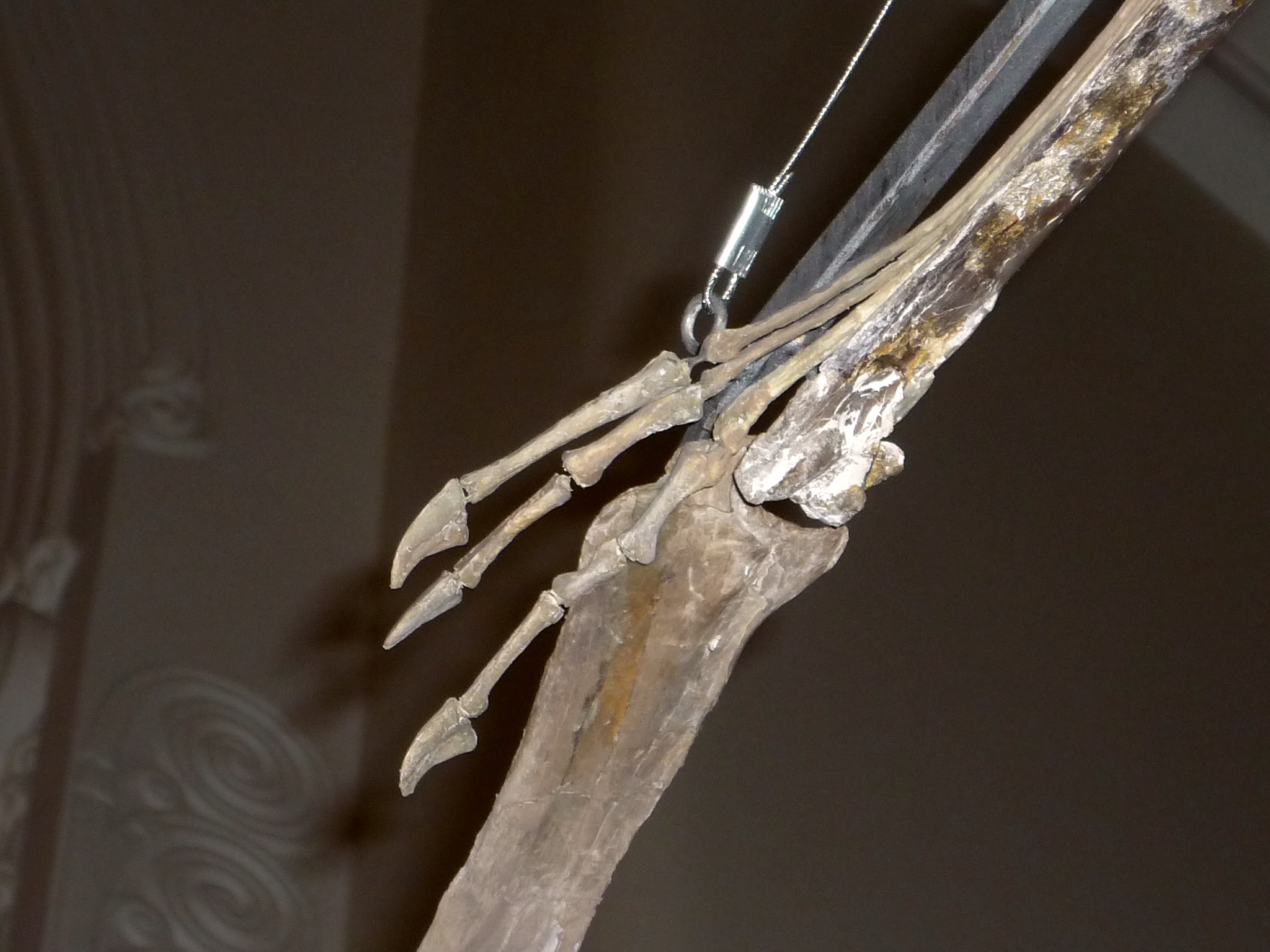
One of the most complete specimens of Pteranodon longiceps at AMNH, preserving an articulated skull with complete crest, mandible, and much of the postcranial skeleton. The specimen is mounted in flight position in the permanent exhibition and is one of the most photographed in the museum.
In cinema and popular culture
Pteranodon is arguably the most famous pterosaur in popular culture, often confused with the generic 'pterodactyl' of the collective imagination. Its cinematic debut dates to Disney's classic animation Fantasia (1940), where it appears gliding over prehistoric landscapes during the Rite of Spring sequence. Decades later, the Walking with Dinosaurs series (BBC, 1999) presented to the general public a more ecologically grounded view of the animal as a colonial pelagic fisher. The explosion in popularity came with Jurassic Park III (2001), where the aviary scene placed pteranodons as an active threat, establishing the most influential cinematic representation of the animal, though scientifically questionable for attributing aggressive predatory behaviors. Jurassic World (2015) and Jurassic World Dominion (2022) repeated the formula. The irony is that the real animal was a harmless toothless piscivore to mammals, whose impressive wingspan of up to 7.6 meters served to glide over the Cretaceous sea in search of fish, not to hunt humans.
Classification

Discovery
Fun fact
Despite being called a 'pterodactyl' in the popular imagination and appearing in all Jurassic Park franchise films as an aggressive hunter, Pteranodon longiceps was completely toothless and fed on fish like a giant flying pelican. With over 1,200 known specimens, it is the most studied pterosaur in the world, yet it was not a dinosaur: pterosaurs form a separate group within flying reptiles.
Last reviewed: April 24, 2026