Caudipteryx
Caudipteryx zoui
"Tail feather (of Zou)"
About this species
Caudipteryx zoui is a small oviraptorosaurian theropod from the Early Cretaceous (basal Aptian, around 125 to 124 million years ago) Yixian Formation of western Liaoning, northeastern China. It was among the first known non-avian dinosaurs with unambiguous pennaceous feathers, preserved on the reduced wings and as a fan at the tip of the short tail. It measured about 75 to 90 cm long and weighed roughly 5 kg. The skull was short with a beak and only a few conical teeth restricted to the front of the upper jaw. Gastroliths preserved in the holotype's abdomen indicate at least partial herbivory. The wing and tail feathers were symmetrical and therefore unsuited for flight; they likely served for visual display and thermoregulation. The original description by Ji Qiang, Philip Currie, Mark Norell and Ji Shu'an in 1998 in Nature was one of the finds that consolidated the dinosaurian origin of birds.
Geological formation & environment
The Yixian Formation belongs to the Jehol Group (Early Cretaceous, basal Aptian) of western Liaoning, northeastern China. High-precision 40Ar/39Ar dates place it between about 125.76 and 124.12 million years ago. It comprises volcanic tuffs interbedded with lacustrine mudstones, with exceptional preservation of animals and plants in Konservat-Lagerstätten, such as the Jianshangou Member (Caudipteryx-bearing) and the Dawangzhangzi and Jingangshan Members. The fauna includes feathered theropods (Caudipteryx, Protarchaeopteryx, Sinosauropteryx, Microraptor, Sinornithosaurus, Yutyrannus), birds (Confuciusornis, Eoenantiornis), ceratopsians (Psittacosaurus), ankylosaurs, mammals (Repenomamus, Eomaia), pterosaurs and pioneer plants such as Archaefructus. The biota was periodically buried by explosive volcanic eruptions, which produced the exceptional three-dimensional preservation of the fossils.
Image gallery
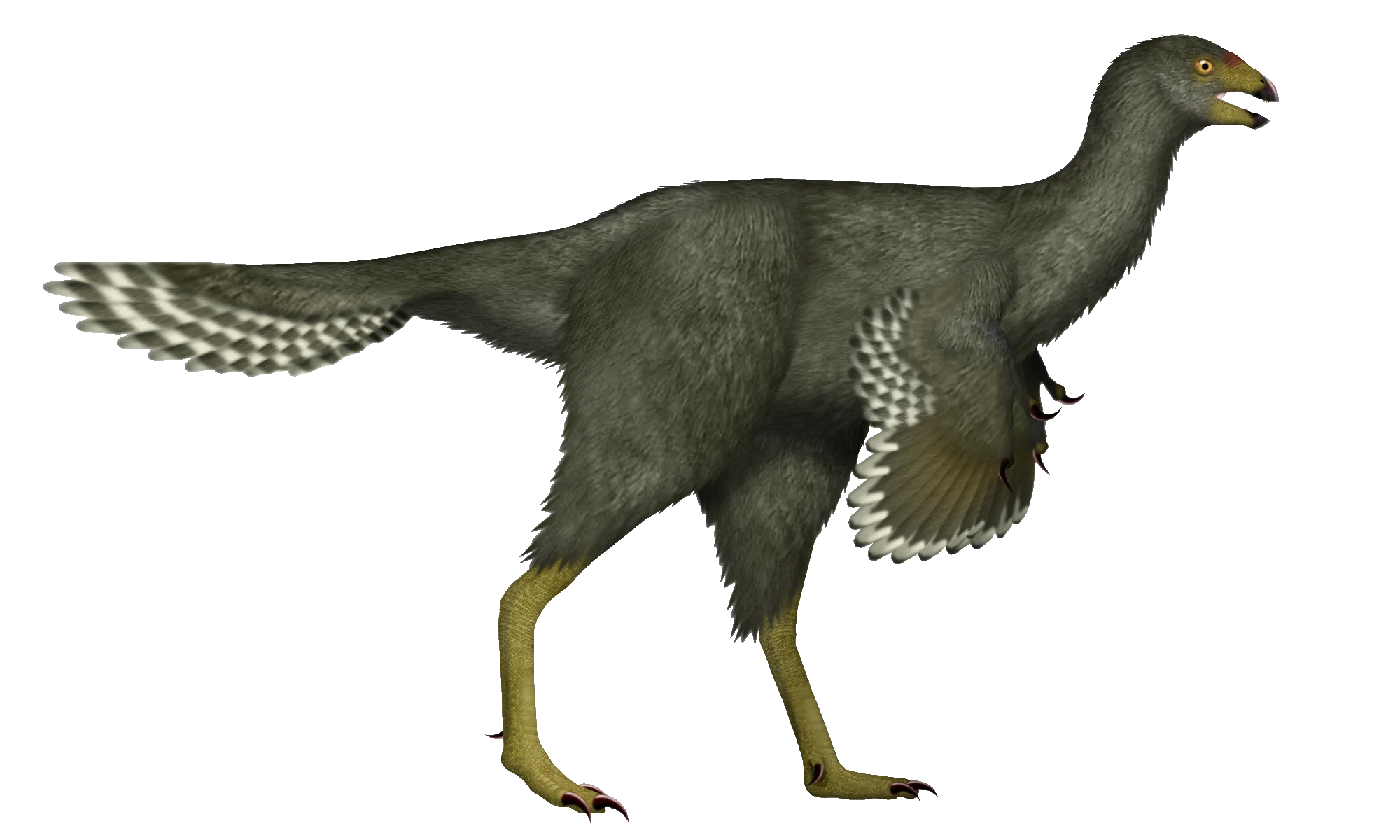
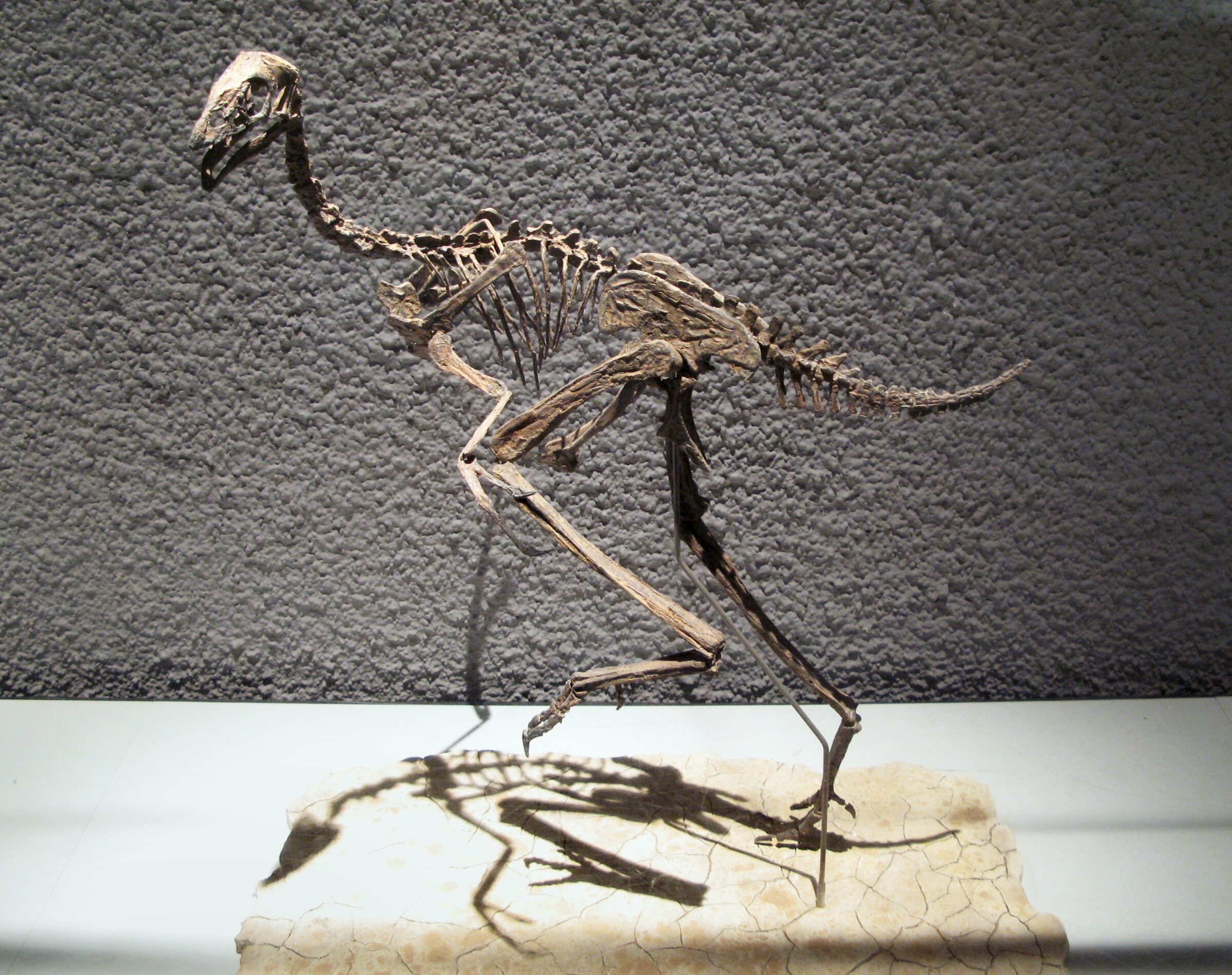
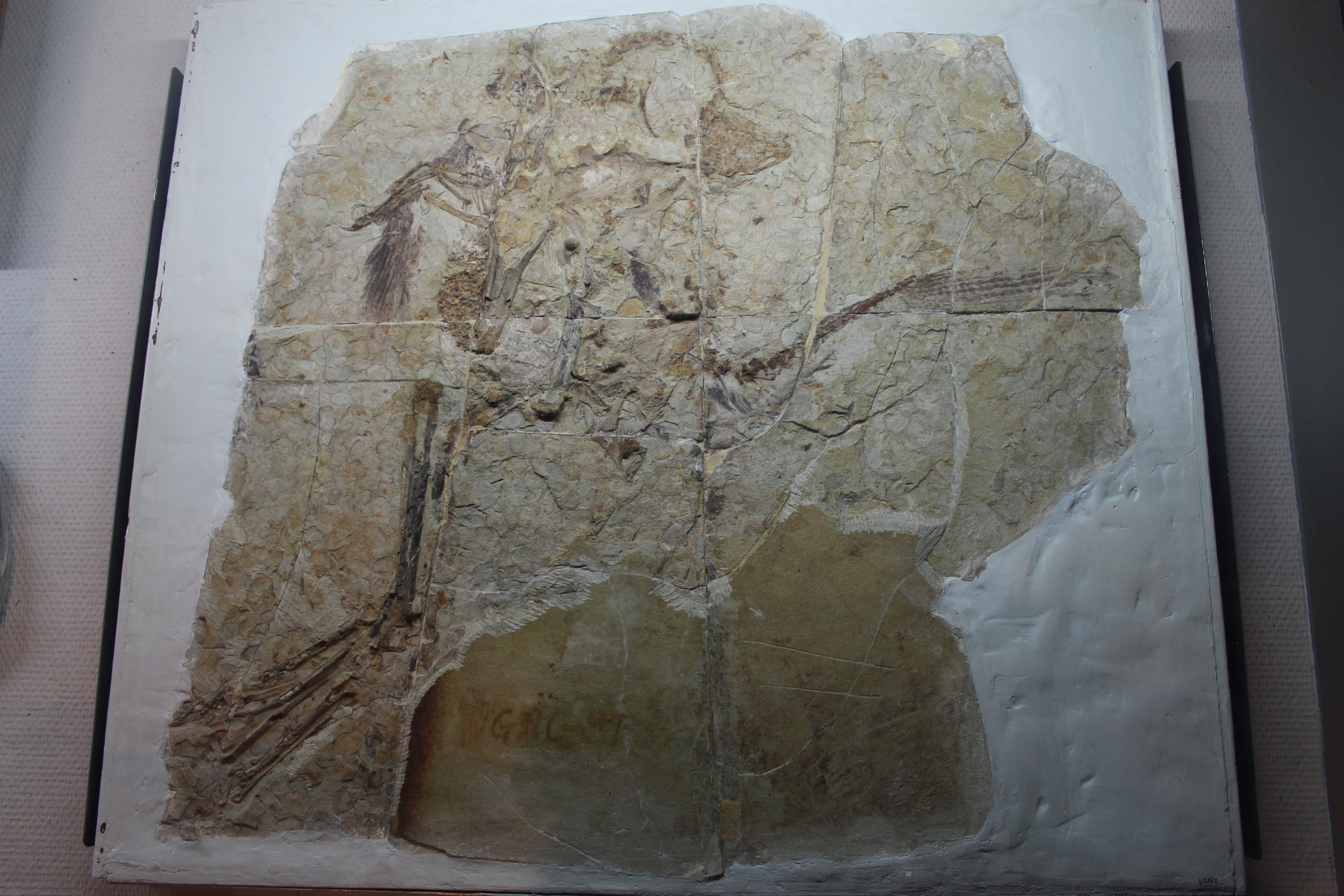


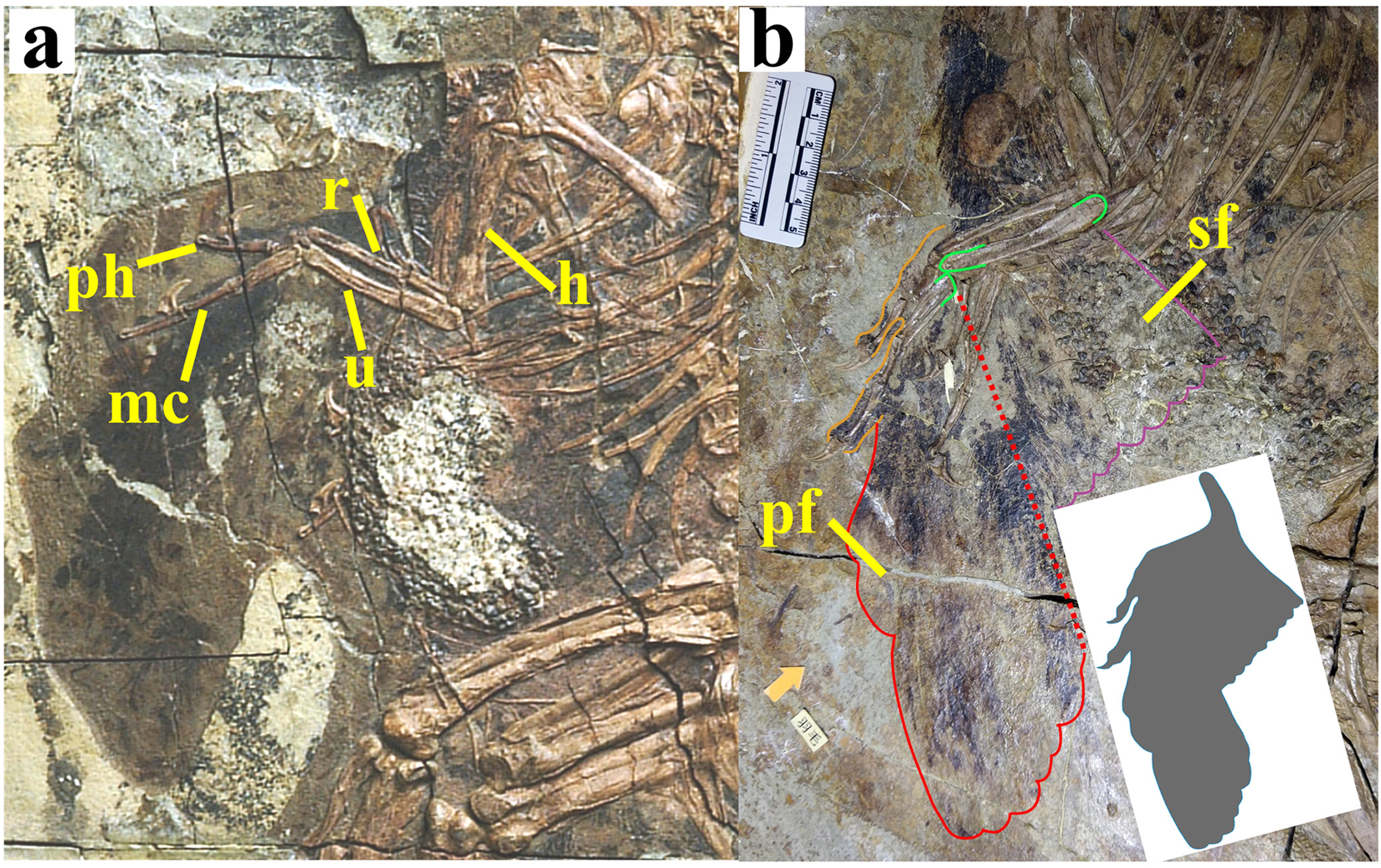
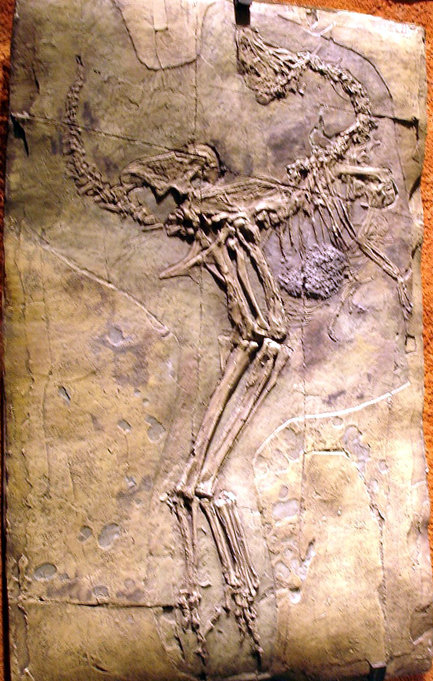
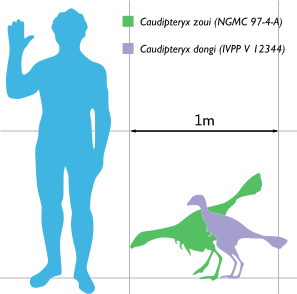


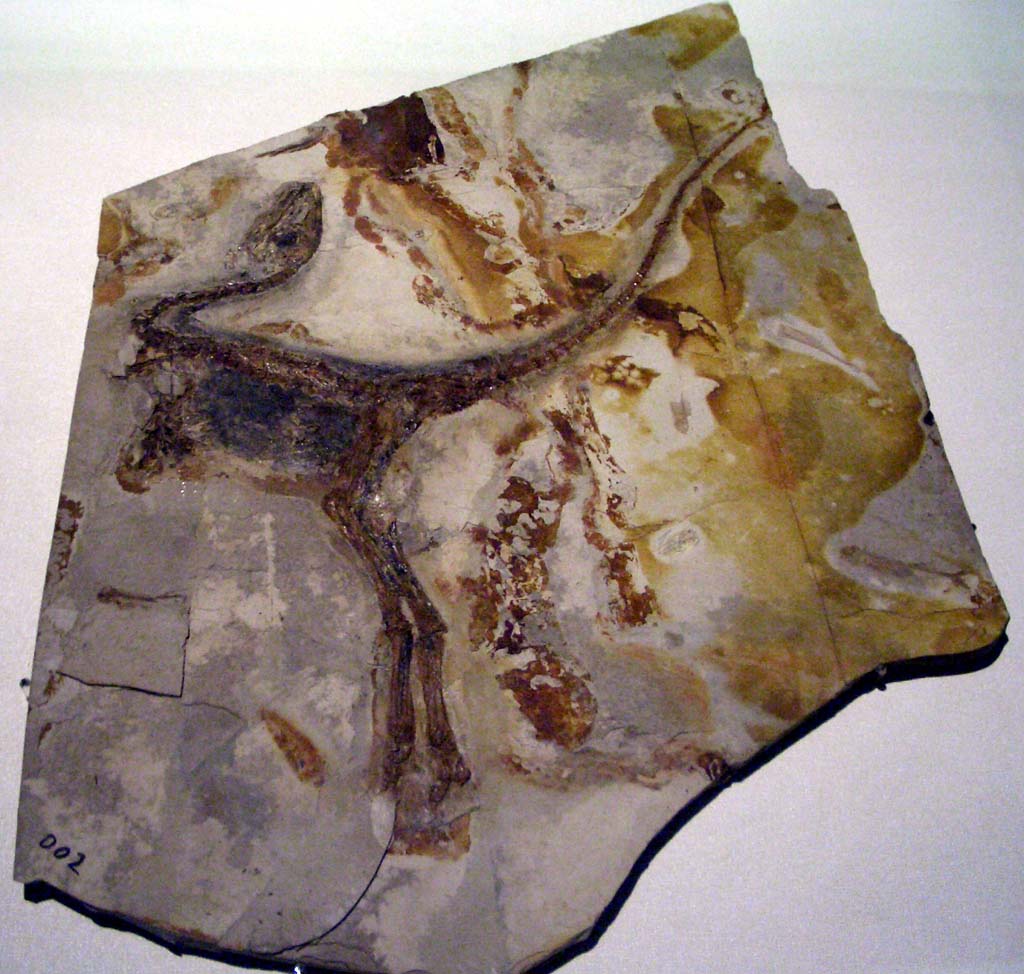


Life reconstruction of Caudipteryx zoui showing the fan of symmetrical pennaceous feathers at the tip of the short tail and the reduced wing feathers. Plumage inferred from melanosomes indicates dark grey and black tones dominated by eumelanin.
Wikimedia Commons
Ecology and behavior
Habitat
Large lake margins in a cool to temperate volcanic-sedimentary basin. The Yixian Formation was punctuated by pyroclastic eruptions that buried entire communities in ash, which explains the exceptional three-dimensional preservation. Vegetation was dominated by conifers (Araucariaceae, Pinaceae), bennettitaleans, cycads, ginkgoaleans and the earliest angiosperms (Archaefructus).
Feeding
Mixed diet, omnivore trending herbivore: a beak with a toothless major portion, a few conical teeth only at the front of the upper jaw, and gastroliths in the stomach to grind plant material. Likely supplemented with insects and small vertebrates opportunistically (Zanno and Makovicky 2011).
Behavior and senses
A small, agile cursor with a short, stiffened tail ending in a feather fan. The dominant interpretation (Persons, Currie and Norell 2014; Foth, Tischlinger and Rauhut 2014) is that the caudal fan and wing feathers functioned as a visual display structure in courtship or intraspecific signalling rather than for flight.
Physiology and growth
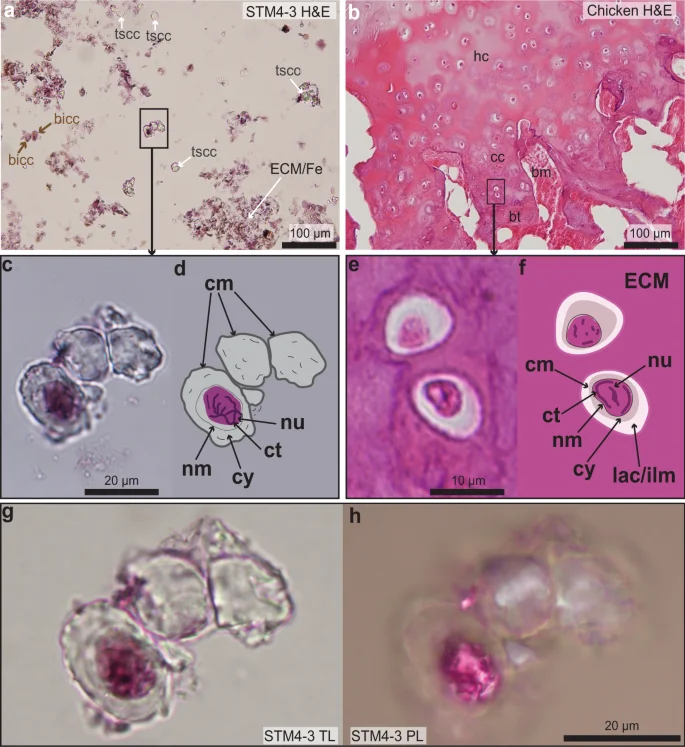
Body covered in filamentous feathers with symmetrical remiges on the hands and symmetrical rectrices on the tail. The plumage is dominated by eumelanin (dark grey to black tones) according to Zhang et al. (2010). Preserved cell nuclei and chromatin in femoral cartilage (Zheng et al. 2021) suggest physiology comparable to theropods of intermediate metabolism, consistent with the thermoregulation implied by the feather cover.
Paleogeography
Continental configuration

Scotese & Vérard · CC BY 4.0 · Cretaceous, ~105 Ma
During the Aptiano (~125–124 Ma), Caudipteryx zoui inhabited Laramidia, the western half of present-day North America, separated from the east by the Western Interior Seaway, a shallow sea dividing the continent. The continents were in very different positions: India was drifting toward Asia, Antarctica was still connected to Australia, and South America was an isolated island.
Bone Inventory
The genus is known from multiple articulated, exceptionally preserved specimens (holotype NGMC 97-4-A, BPM 0001, IVPP V12430 and others) that together preserve nearly the entire skeleton, plus feathers, filamentous integument, gastroliths and melanosomes. It is one of the most completely known Mesozoic theropods worldwide.

Found elements
Inferred elements
Scientific Literature
15 papers in chronological order — from the original description to recent research.
Three new Theropoda, Protoceratops zone, central Mongolia
Osborn, H.F. · American Museum Novitates 144, 1-12
Original description of Oviraptor philoceratops (AMNH 6517), the holotype of Oviraptoridae and the first named oviraptorosaur. Sets the historical context in which Caudipteryx would later be recognised as a basal oviraptorosaur, 74 years afterwards. Osborn mistakenly assumed the animal ate ceratopsian eggs, an interpretation overturned in the 1990s by the discovery of oviraptorid nests in Mongolia.


Two feathered dinosaurs from northeastern China
Ji, Q., Currie, P.J., Norell, M.A. e Ji, S. · Nature 393(6687), 753-761
Original description of Caudipteryx zoui (holotype NGMC 97-4-A) and Protarchaeopteryx robusta from Sihetun, Liaoning. The authors document symmetrical pennaceous feathers on the reduced wings and tail tip, demonstrating that modern-type feathers existed in non-avian theropods and consolidating the dinosaurian origin of birds.
Important features of Caudipteryx: evidence from two nearly complete new specimens
Zhou, Z., Wang, X., Zhang, F. e Xu, X. · Vertebrata PalAsiatica 38(4), 241-254
Description of two nearly complete new specimens referred to Caudipteryx (BPM 0001 and IVPP V12430), with complete skulls and feather impressions. Confirms the taxon's phylogenetic position as a basal oviraptorosaur and expands the cranial and manus anatomy, including the beak morphology with restricted anterior teeth.
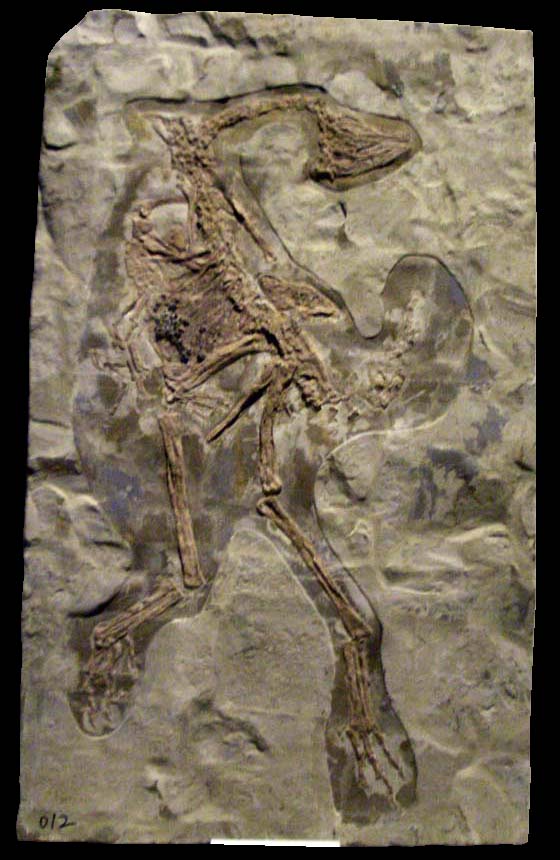
A new species of Caudipteryx from the Yixian Formation of Liaoning, northeast China
Zhou, Z. e Wang, X. · Vertebrata PalAsiatica 38(2), 113-130
Description of a second species of the genus, Caudipteryx dongi, also from the Yixian Formation. Discusses limb proportion differences and implications for intrageneric variation, establishing the genus as one of the best-sampled oviraptorosaurs of the Jehol Biota.

Bristle-like integumentary structures at the tail of the horned dinosaur Psittacosaurus
Mayr, G., Peters, D.S., Plodowski, G. e Vogel, O. · Naturwissenschaften 89(8), 361-365
Frames the diversity of integumentary structures across Jehol dinosaurs, comparing Psittacosaurus filaments with the feathers of Caudipteryx, Sinosauropteryx and Protarchaeopteryx. Demonstrates that feather-like and filamentous structures were broadly distributed in Dinosauria, not restricted to Theropoda.
Caudipteryx as a non-avian theropod rather than a flightless bird
Dyke, G.J. e Norell, M.A. · Acta Palaeontologica Polonica 50(1), 101-116
Mathematical reanalysis of body proportions arguing that Caudipteryx is a non-avian theropod, rejecting Jones et al.'s (2000) hypothesis that it was a flightless bird. Restores the taxon's consensus phylogenetic position within Oviraptorosauria.
New insights into the brain, braincase, and ear region of tyrannosaurs, with implications for sensory organization and behavior
Witmer, L.M. e Ridgely, R.C. · The Anatomical Record 292(9), 1266-1296
Reference study on comparative theropod neuroanatomy using CT scanning. Although focused on tyrannosauroids, it establishes the methodological framework later applied to oviraptorosaurs such as Caudipteryx and Conchoraptor, enabling 3D reconstruction of the brain and inner ear in feathered theropods.

Fossilized melanosomes and the colour of Cretaceous dinosaurs and birds
Zhang, F., Kearns, S.L., Orr, P.J., Benton, M.J., Zhou, Z., Johnson, D., Xu, X. e Wang, X. · Nature 463(7284), 1075-1078
Demonstrates that fossilised melanosomes allow colour inference in Cretaceous dinosaurs and birds. Includes analysis of Confuciusornis and Sinosauropteryx filaments; establishes the methodological protocol that later enabled Caudipteryx colour reconstruction (eumelanin in dark grey and black tones) and inaugurates the era of palaeocolour.
Plumage color patterns of an extinct dinosaur
Li, Q., Gao, K.-Q., Vinther, J., Shawkey, M.D., Clarke, J.A., D'Alba, L., Meng, Q., Briggs, D.E.G. e Prum, R.O. · Science 327(5971), 1369-1372
First full reconstruction of the plumage of a non-avian dinosaur, Anchiornis huxleyi, based on 29 melanosome samples. Contemporary with colour studies on Caudipteryx and Sinosauropteryx, it consolidates the Jehol fauna as a natural laboratory for palaeocolour in feathered oviraptorosaurs such as Caudipteryx.


Exceptional dinosaur fossils show ontogenetic development of early feathers
Xu, X., Zheng, X. e You, H. · Nature 464(7293), 1338-1341
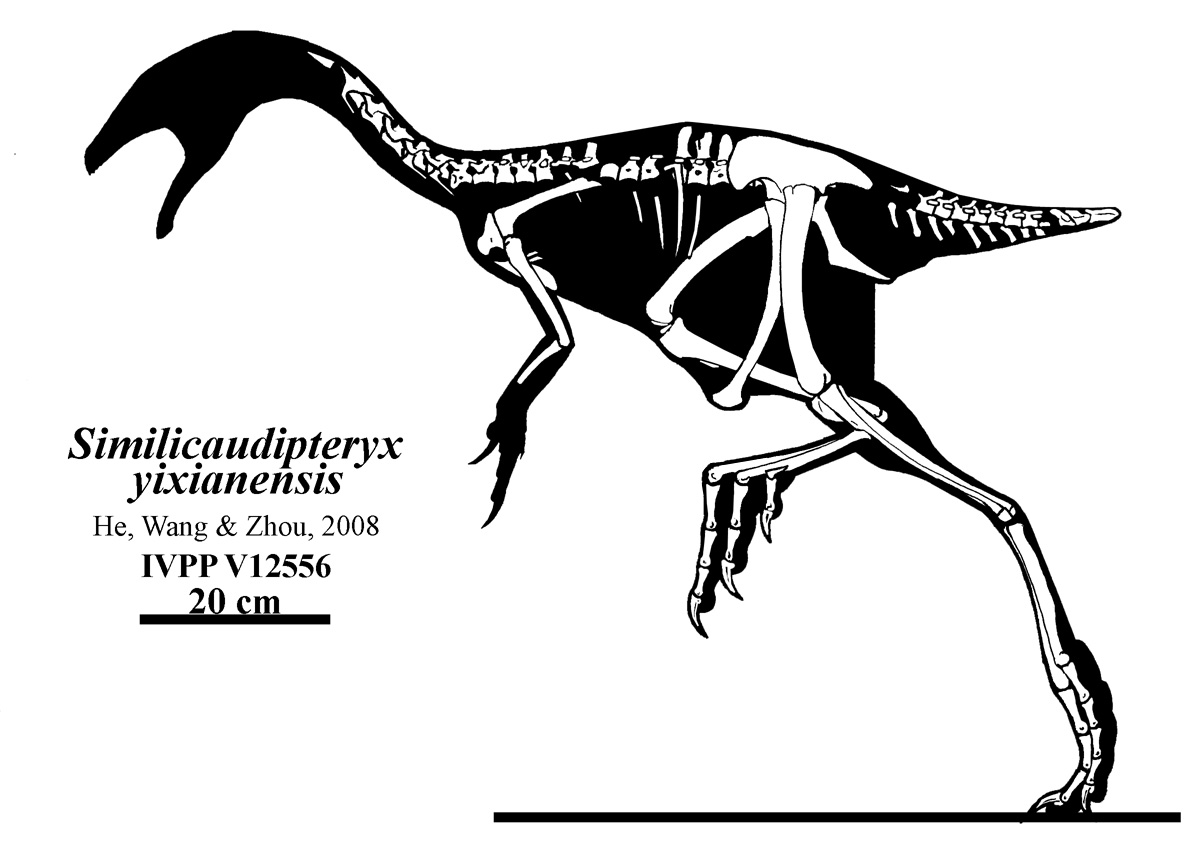
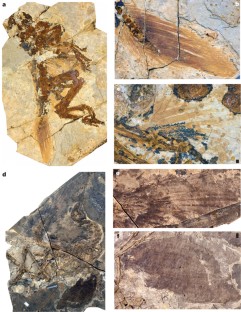
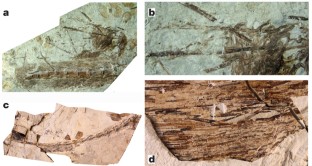
Study of two subadult specimens of Similicaudipteryx, a caudipterid close to Caudipteryx, showing tail feathers in moult. Discusses the evolution of symmetrical feathers in caudipterids and feather ontogeny in oviraptorosaurs, directly applicable to the interpretation of Caudipteryx feathers. Prum's (2010) reply interprets the proximally ribbon-like pennaceous feathers as developing pin feathers in active moult.

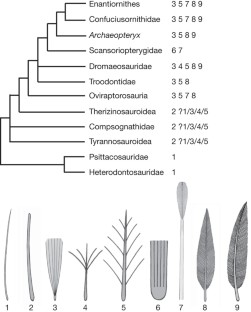
Herbivorous ecomorphology and specialization patterns in theropod dinosaur evolution
Zanno, L.E. e Makovicky, P.J. · PNAS 108(1), 232-237
Analysis of 21 morphological characters correlated with direct evidence of herbivory in coelurosaurian theropods. Identifies Oviraptorosauria, including Caudipteryx, as one of six clades with clear morphological evidence of herbivorous or omnivorous diet. Rebuts the classical view of theropods as hypercarnivores.
Oviraptorosaur tail forms and functions
Persons, W.S., Currie, P.J. e Norell, M.A. · Acta Palaeontologica Polonica 59(3), 553-567
3D reconstruction of oviraptorosaur tail musculature, including Caudipteryx, Khaan, Ingenia and Nomingia. Proposes that the shortened, stiffened tail with its retrice fan functioned as a dynamic intraspecific display structure, adapted to courtship and signalling rather than flight. Direct scientific basis for the reasoning popularised in documentaries about oviraptorosaur tails.

Evolutionary origins of the avian brain
Balanoff, A.M., Bever, G.S., Rowe, T.B. e Norell, M.A. · Nature 501(7465), 93-96
Comparative CT scans of brains in living birds, Archaeopteryx and non-avian maniraptorans, including oviraptorosaurs close to Caudipteryx. Concludes that bird-like encephalisation evolved multiple times in maniraptoran theropods before the origin of flight, placing Caudipteryx and other oviraptorosaurs on the same neuroanatomical continuum as basal birds.


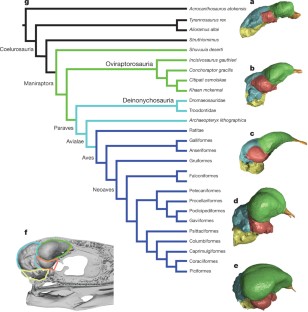
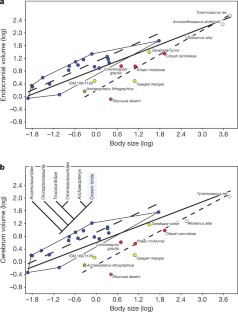
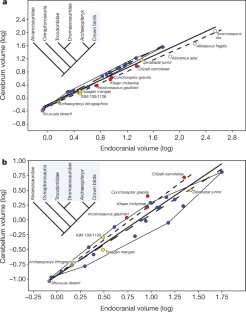
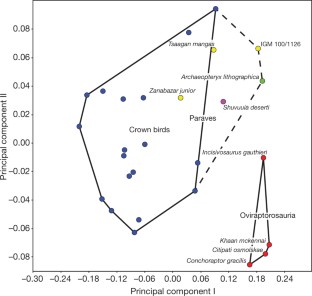
New specimen of Archaeopteryx provides insights into the evolution of pennaceous feathers
Foth, C., Tischlinger, H. e Rauhut, O.W.M. · Nature 511(7507), 79-82
Description of the eleventh Archaeopteryx specimen, with preserved body and hindlimb feathers. Proposes that pennaceous feathers evolved under display selection before serving flight, a hypothesis directly supported by the symmetrical tail and wing feathers of Caudipteryx, which were also ornamental rather than aerodynamic.


Nuclear preservation in the cartilage of the Jehol dinosaur Caudipteryx
Zheng, X., Bailleul, A.M., Li, Z., Wang, X. e Zhou, Z. · Communications Biology 4, 1125
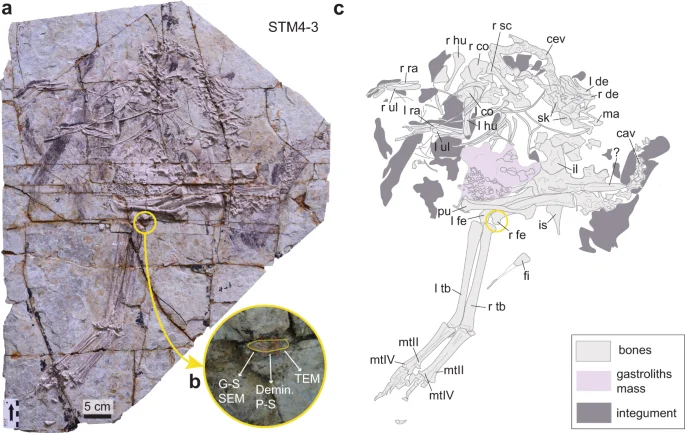
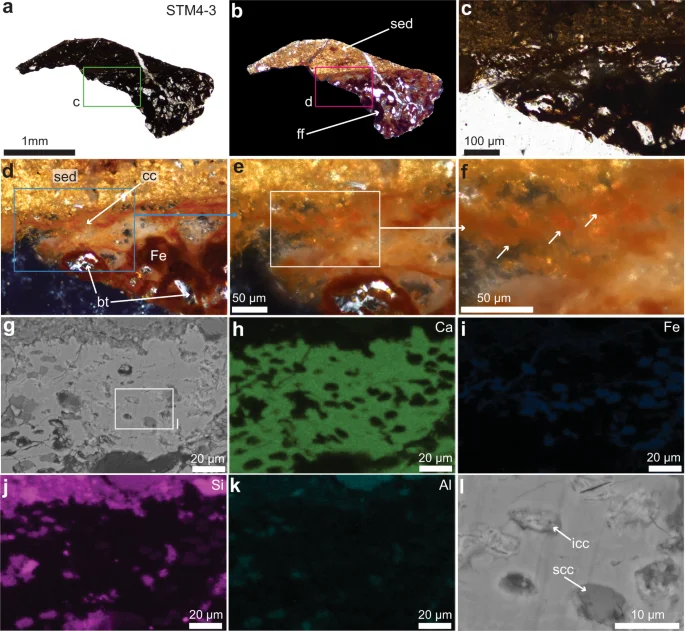
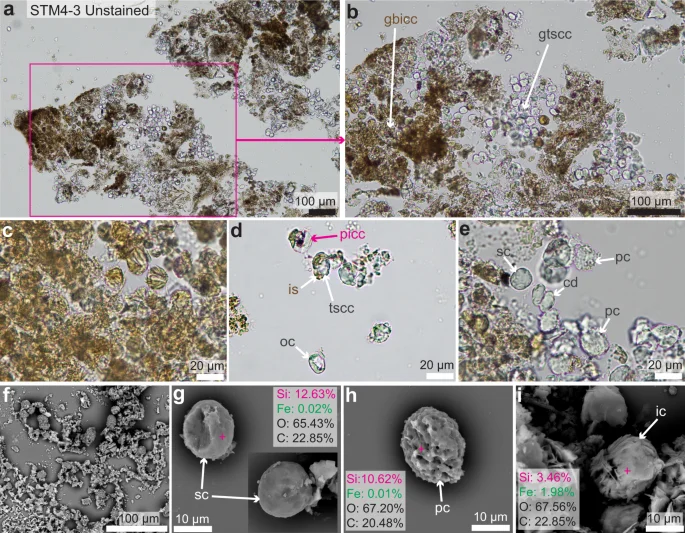
Report of chondrocytes preserved with nuclei and chromatin fragments in the femoral cartilage of a Caudipteryx STM4-3 from the Jehol Biota. Second-ever record of fossil chromatin in a vertebrate and a highlight of theropod molecular palaeontology, supporting the view that cartilage is a privileged tissue for nuclear preservation in deep time.


Famous museum specimens
NGMC 97-4-A (holótipo)
Geological Museum of China, Pequim
Holotype described by Ji, Currie, Norell and Ji in 1998 in Nature. One of the first non-avian dinosaurs with unambiguous pennaceous feathers, a milestone confirming that feathers predate the origin of birds.
IVPP V12430 (referido)
Institute of Vertebrate Paleontology and Paleoanthropology (IVPP), Pequim
Second specimen referred to Caudipteryx, described by Zhou and colleagues in 2000. Preserves a propatagium with feather impressions and supports the interpretation of Caudipteryx as a basal herbivorous oviraptorosaur.
STM4-3 (referido)
Shandong Tianyu Museum of Nature, Pingyi, China
Specimen that provided cartilage for Zheng et al.'s (2021, Communications Biology) molecular analysis, which identified preserved nuclei and chromatin, only the second such record in any vertebrate.
In cinema and popular culture
Caudipteryx has documented appearances in documentaries about feathered dinosaurs, owing to its central role in confirming the dinosaur-bird transition. It appears in Planet Dinosaur (BBC, 2011), specifically in the feathered-dinosaurs episode, alongside Sinosauropteryx and Gigantoraptor. It has no confirmed appearances in the original Walking with Dinosaurs (BBC, 1999), in Dinosaur Revolution (Discovery, 2011) or in Prehistoric Planet (Apple TV+, 2022 to 2025), which cover different faunas or periods. Despite its scientific fame, its presence in popular media is smaller than that of other Jehol dinosaurs such as Microraptor and Yutyrannus.
Classification
Discovery
Fun fact
The name Caudipteryx literally means 'tail feather' and describes the fan of symmetrical pennaceous feathers preserved at the tip of the animal's tail. Although these feathers could not serve flight, being symmetrical and short, they likely acted as a visual display billboard for courtship, a peacock fan from 125 million years ago. Caudipteryx is also one of the very few dinosaurs whose cell nuclei and chromatin fragments have been preserved (Zheng et al. 2021), making it one of the most promising targets of molecular palaeontology.
Last reviewed: April 24, 2026