
Corythosaurus
Corythosaurus casuarius
"Cassowary-helmeted lizard"
About this species
Corythosaurus casuarius was one of the most striking hadrosaurids of the Late Cretaceous, living 77 to 75 million years ago on the coastal plains of North America. Its name honors the cassowary, a modern bird with a prominent bony helmet, a direct reference to the large hollow helmet-shaped crest that dominated the top of the skull. That crest was no empty ornament: it contained S-shaped nasal passages that functioned as a resonating chamber, amplifying low-frequency vocalizations used in social communication. Measuring up to 9 meters and weighing around 3.8 metric tons, it is one of the best-documented dinosaurs from the Dinosaur Park Formation.
Geological formation & environment
The Dinosaur Park Formation, deposited 77 to 74 million years ago during the Campanian of the Late Cretaceous, is one of the world's richest dinosaur formations. Located in southern Alberta (Canada), it preserved the remains of more than 35 dinosaur species in fluvial and deltaic sediments deposited on tropical coastal plains bordering the Western Interior Seaway. Exceptional preservation conditions resulted from rapid burial by frequent floods and sea level fluctuations, producing fossils that are often articulated with bones still in anatomical position. Corythosaurus casuarius was one of the dominant herbivores of the lower portion of this formation.
Image gallery
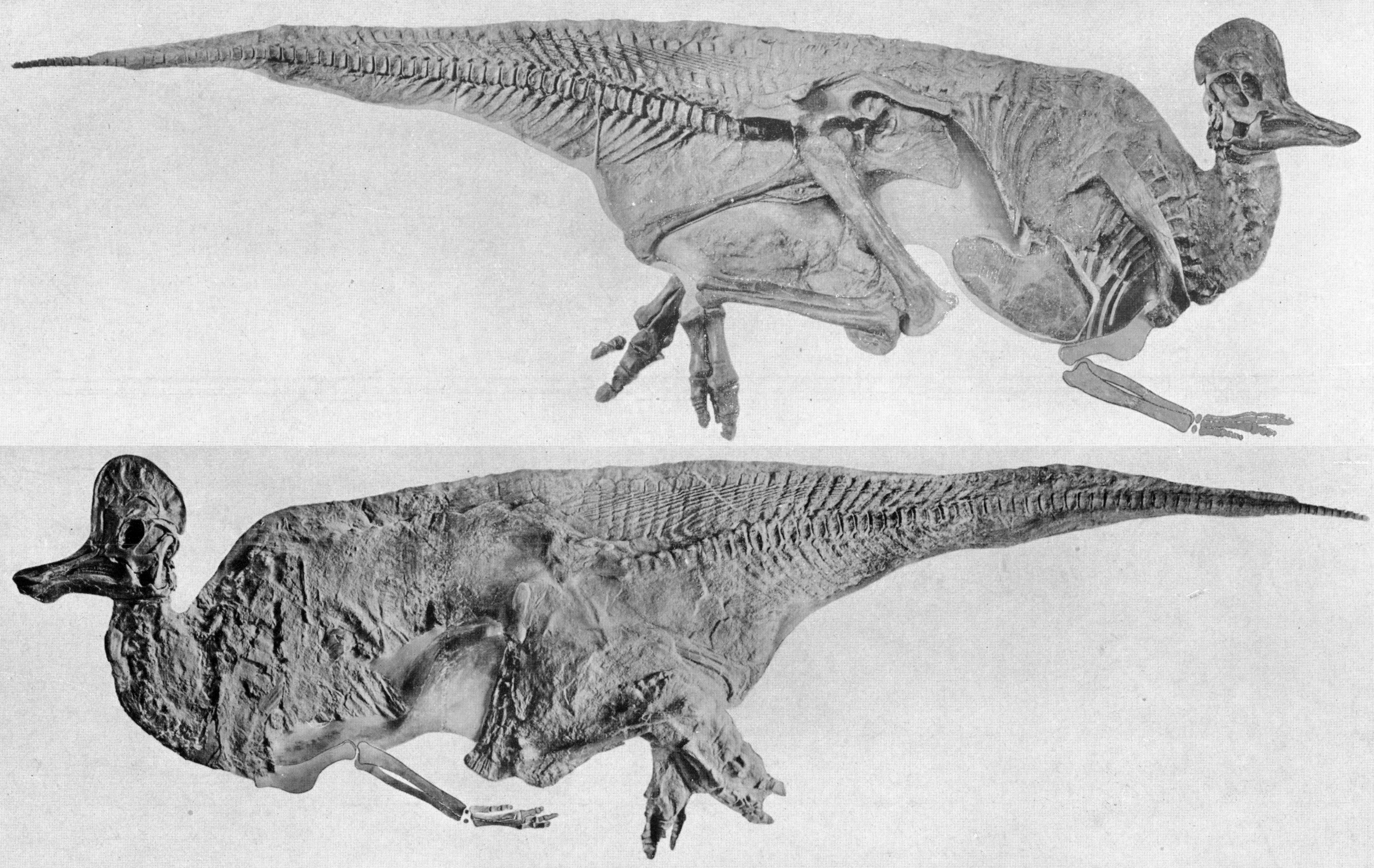


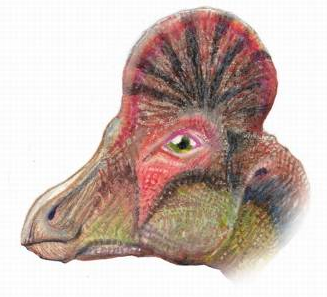
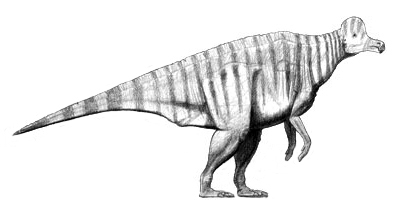


Holotype AMNH 5240 of Corythosaurus casuarius partially covered by skin impressions, photographed in 1916 by Barnum Brown at the American Museum of Natural History.
Barnum Brown, 1916 — American Museum of Natural History — Domínio Público
Ecology and behavior
Habitat
Corythosaurus casuarius inhabited the low coastal plains bordering the Western Interior Seaway during the Campanian, 77 to 75 million years ago. The environment was humid subtropical, with meandering rivers, swampy deltas, tidal flats, and dense coastal forests dominated by expanding angiosperms, conifers, and ferns. The Dinosaur Park Formation records one of the richest dinosaur ecosystems ever discovered, with over 35 species coexisting across approximately one million years of sedimentation.
Feeding
Corythosaurus was a herbivore feeding predominantly at low to medium height (0.5–4 meters), consuming ferns, horsetails, low-growing angiosperms, twigs, and foliage. Its sophisticated dental battery, composed of hundreds of teeth packed in vertical rows, could grind fibrous and tough vegetation with efficiency unparalleled among reptiles. The chewing motion was non-vertical, with the upper jaw flexing slightly outward during the bite, creating extremely effective lateral grinding action.
Behavior and senses
Fossil evidence suggests Corythosaurus was highly gregarious, moving in large seasonal herds to access food resources. The hollow crest functioned as a resonating chamber producing distinct low-frequency vocalizations, possibly used for herd coordination, predator alarm, and reproductive signaling. The variation in crest size and shape among specimens may indicate sexual dimorphism or ontogenetic variation. Gorgosaurus tooth marks on Corythosaurus bones confirm it was regular prey for the formation's large theropods.
Physiology and growth
Corythosaurus likely had an endothermic (warm-blooded) metabolism, as indicated by the fibrolamellar fast-growing bone microstructure and accelerated growth rates in young individuals. Like all hadrosaurids, it was capable of bipedal and quadrupedal locomotion, alternating posture according to speed and activity. The large hollow crest may have functioned secondarily as a thermoregulatory device, with superficial blood vessels dissipating excess body heat or warming inhaled air on cold nights. Moderate binocular vision and lateral eyes provided a broad visual field for detecting predators.
Paleogeography
Continental configuration

Scotese & Vérard · CC BY 4.0 · Cretaceous, ~105 Ma
Fossil sites
Slate Weasel — Domínio Público
During the Campaniano (~77–75 Ma), Corythosaurus casuarius inhabited Laramidia, the western half of present-day North America, separated from the east by the Western Interior Seaway, a shallow sea dividing the continent. The continents were in very different positions: India was drifting toward Asia, Antarctica was still connected to Australia, and South America was an isolated island.
Bone Inventory
Known from multiple specimens. The holotype AMNH 5240, collected by Barnum Brown in 1911 from the Red Deer River (Alberta), is nearly complete and preserves exceptional skin impressions on the abdomen and tail. A second specimen (AMNH 5338) reinforced anatomical knowledge. Two specimens collected by Charles Sternberg in 1912 were lost when the SS Mount Temple sank in 1916.
Found elements
Inferred elements
Scientific Literature
15 papers in chronological order — from the original description to recent research.
Corythosaurus casuarius, a new crested dinosaur from the Belly River Cretaceous, with provisional classification of the family Trachodontidae
Brown, B. · Bulletin of the American Museum of Natural History
Original description paper for Corythosaurus casuarius, published by Barnum Brown in 1914 in the American Museum of Natural History Bulletin. The holotype AMNH 5240, collected in 1911 from the Red Deer River (Alberta), is a nearly complete skeleton with skull bearing the characteristic hollow helmet-shaped crest. Brown describes in detail the skull morphology, the crest formed by premaxillary and nasal bones, and the dental battery typical of hadrosaurids. The genus name alludes to the Greek Corinthian helmet; the specific epithet honors the cassowary, a modern bird with a similar bony helmet. The work established the taxonomic and morphological foundations for all subsequent research on the species.
Corythosaurus casuarius: skeleton, musculature and epidermis
Brown, B. · Bulletin of the American Museum of Natural History
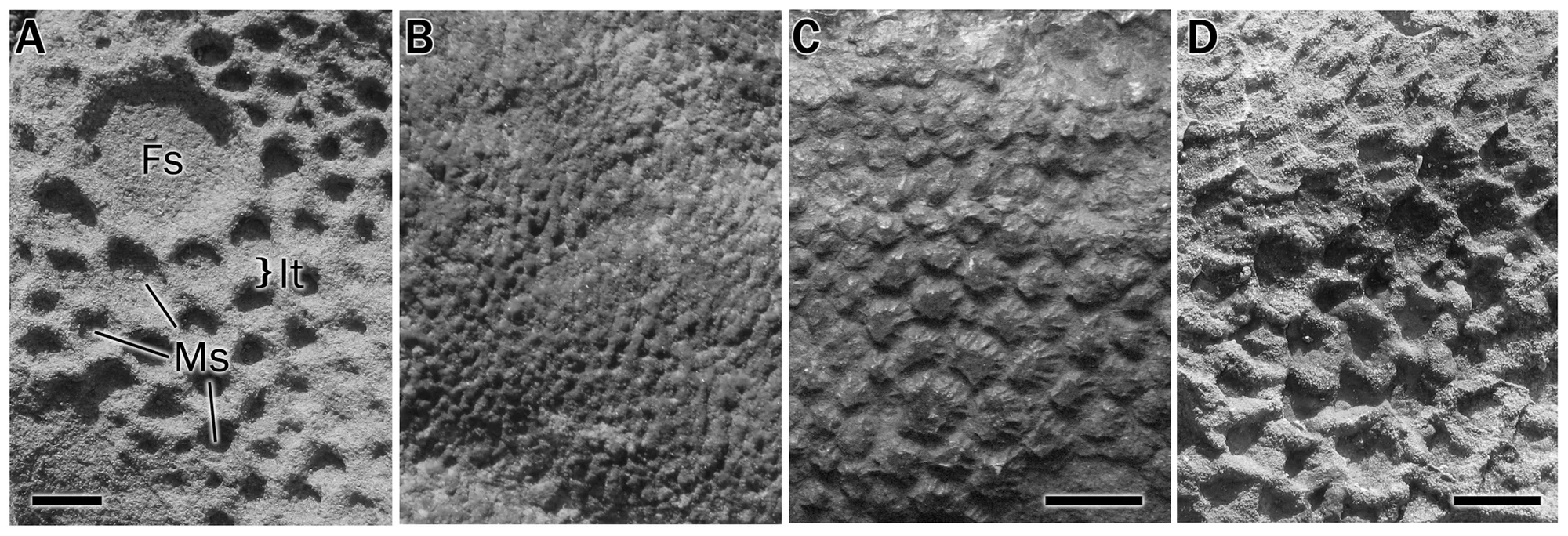
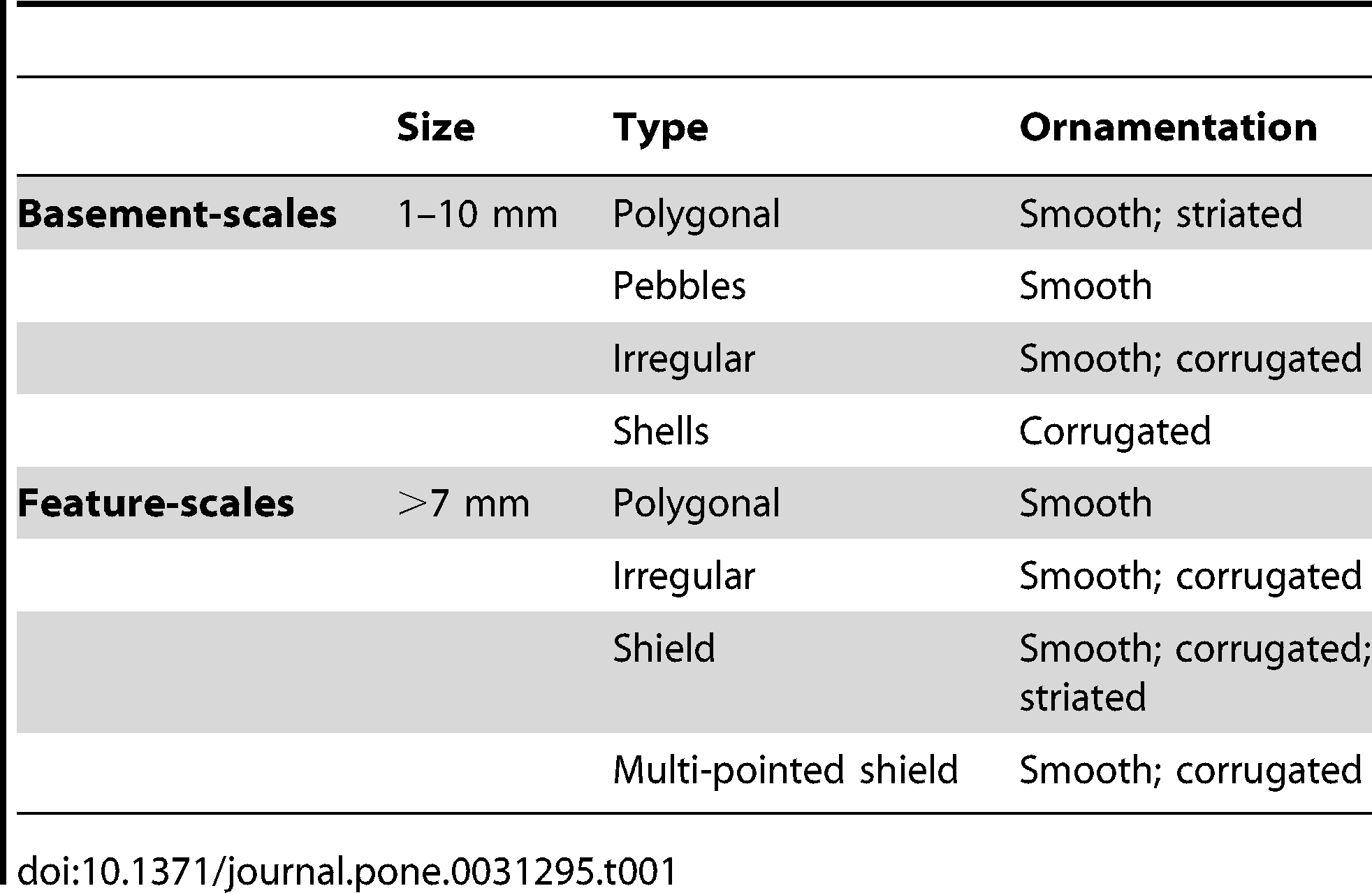
Complementary osteological monograph published by Brown in 1916, expanding the 1914 original description. The work focuses on the postcranial skeleton, musculature, and epidermis based on holotype AMNH 5240. Skin impressions covering the abdomen and tail are described and illustrated in detail, revealing polygonal scales of varying sizes. Musculature is reconstructed by analogy with modern iguanas and birds. The study includes the history of an inaccurate artistic restoration depicting the animal as aquatic, a posture Brown was already questioning. This is the second cornerstone of classical Corythosaurus anatomy.


Hadrosauridae
Horner, J.R., Weishampel, D.B. & Forster, C.A. · The Dinosauria, 2nd edition (University of California Press)
Definitive reference chapter on Hadrosauridae in the second edition of The Dinosauria, a collective work considered the bible of dinosaur paleontology. Horner, Weishampel, and Forster synthesize decades of research on hadrosaurid anatomy, systematics, and phylogeny, with detailed treatment of Corythosaurus casuarius within Lambeosaurinae. The phylogenetic analysis repositions the genus relative to Lambeosaurus, Hypacrosaurus, and other lambeosaurines. The chapter discusses crest function, fossil record, biogeography, and dental adaptations for herbivory. It became the primary reference for all subsequent research on hadrosaurid biology.

Cranial anatomy and systematics of Hypacrosaurus altispinus, and a comparative and phylogenetic review of cranial lambeosaurine hadrosaurids (Dinosauria: Ornithischia)
Evans, D.C. · Zoological Journal of the Linnean Society
Cranial monograph on Hypacrosaurus altispinus that includes the most comprehensive phylogenetic review of Lambeosaurinae up to 2010. Evans adds 36 new cranial characters to the cladistic data matrix and positions Corythosaurus casuarius as sister taxon to Hypacrosaurus within Lambeosaurini. The analysis demonstrates that the crests of Corythosaurus, Lambeosaurus, and Hypacrosaurus evolved independently in detail despite sharing the same basic structural plan formed by the nasal and premaxilla. The work is the mandatory reference for understanding lambeosaurine internal phylogeny and the convergent evolution of hollow crests in hadrosaurids.


Global phylogeny of Hadrosauridae (Dinosauria: Ornithopoda) using parsimony and Bayesian methods
Prieto-Márquez, A. · Zoological Journal of the Linnean Society
The most comprehensive global phylogenetic analysis of Hadrosauridae up to 2010, incorporating 195 operational taxonomic units and 247 anatomical characters. Prieto-Márquez applies maximum parsimony and Bayesian inference, both recovering Lambeosaurinae and Saurolophinae as monophyletic. Corythosaurus casuarius is positioned within Lambeosaurini as sister group to Hypacrosaurus. The work resolves several contested phylogenetic relationships within the family and establishes a taxonomic framework adopted in virtually all subsequent hadrosaurid studies.

Acoustic analyses of potential vocalization in lambeosaurine dinosaurs (Reptilia: Ornithischia)
Weishampel, D.B. · Paleobiology
Pioneering study by David Weishampel on the acoustic function of hollow lambeosaurine crests, including Corythosaurus casuarius. Using physical acoustic modeling, Weishampel demonstrates that the S-shaped nasal passages within the crests functioned as resonating chambers capable of producing low-frequency sounds similar to wind instruments. Different crest shapes in different genera would have produced distinct sound profiles, supporting species recognition and intraspecific communication functions. The work ended decades of speculation about crest function and established the vocal paradigm that still guides current research on hadrosaurids.

The evolution and function of the nasal crests of the hadrosaurs (Reptilia: Ornithischia)
Hopson, J.A. · Vertebrate Paleontology Symposium Memoir, University of Calgary
Classic review by James Hopson on the evolution and function of nasal crests in hadrosaurids, published two years before Weishampel's acoustic study. Hopson systematically evaluates competing hypotheses: snorkel device for underwater breathing, olfactory gland housing, voice resonating box, and visual display for species recognition. Using comparative morphological analysis and analogies with modern animals, Hopson concludes that species recognition and social display were the primary functions, with a secondary acoustic role. The work clearly distinguishes between solid crests (Saurolophinae) and hollow crests (Lambeosaurinae), establishing the functional taxonomy that would guide Weishampel and subsequent research.


Complex dental structure and wear biomechanics in hadrosaurid dinosaurs
Erickson, G.M., Krick, B.A., Hamilton, M., Bourne, G.R., Norell, M.A., Lilleodden, E. & Sawyer, W.G. · Science
Revolutionary discovery published in Science on hadrosaurid dental biomechanics, using data from Corythosaurus and Edmontosaurus. Using micro-CT and nanoscale mechanical property analysis, Erickson et al. demonstrate that hadrosaurid teeth were composed of up to six different tissues — more structural complexity than the teeth of any modern mammalian herbivore. This composite structure created self-sharpening cutting edges through differential wear, where harder tissues protected softer ones, maintaining functional edges indefinitely. The discovery explained how hadrosaurids processed tough Cretaceous vegetation and resolved the paradox of how such large animals could feed on fibrous plants without depleting their dental batteries within a few years.

Preparation of fossil bone for histological examination
Chinsamy, A. & Raath, M.A. · Palaeontologia Africana
Methodological paper by Chinsamy and Raath that established the basic bone histology protocols for fossil dinosaurs, with direct applications for hadrosaurids like Corythosaurus. The preparation and sectioning techniques developed here enabled subsequent histological studies that revealed accelerated growth rates, fibrolamellar bone microstructure indicative of endothermic metabolism, and skeletal maturity markers in hadrosaurids. Though methodological, this work is the technical foundation for all Corythosaurus bone histology studies published in subsequent decades.

Ornithischian dinosaurs
Ryan, M.J. & Evans, D.C. · Dinosaur Provincial Park: A Spectacular Ancient Ecosystem Revealed (Indiana University Press)
Reference chapter on ornithischian dinosaurs from the Dinosaur Park Formation (DPF), published in the collective volume on this exceptional Cretaceous ecosystem. Ryan and Evans document Corythosaurus casuarius as one of the dominant large herbivores of the lower DPF, with stratigraphic distribution and relative abundance in the fossil record analyzed in detail. The work provides the complete ecological and taphonomic context for interpreting Corythosaurus specimens: the tropical coastal environment, the expanding angiosperm flora, the contemporary predators (Gorgosaurus, Daspletosaurus), and contemporaneous herbivores (Centrosaurus, Chasmosaurus, Styracosaurus).
Feeding height stratification among the herbivorous dinosaurs from the Dinosaur Park Formation (upper Campanian) of Alberta, Canada
Mallon, J.C., Evans, D.C., Ryan, M.J. & Anderson, J.S. · BMC Ecology
Study on feeding height stratification among herbivorous dinosaurs from the Dinosaur Park Formation, published in BMC Ecology. Mallon et al. analyze neck posture, skull orientation, and snout morphology to estimate feeding heights for each group. Corythosaurus and other hadrosaurids fed predominantly at low to medium height (0.5–4 m), consuming ferns, horsetails, and low-growing angiosperms. Feeding height stratification reduced competition among the diverse herbivore community of the formation, explaining how so many large species could coexist in the same ecosystem. The work is fundamental for understanding Corythosaurus feeding ecology in the DPF context.
Cranial growth and variation in edmontosaurs (Dinosauria: Hadrosauridae): implications for the identification of growth stages in hadrosaurs
Campione, N.E. & Evans, D.C. · PLOS ONE
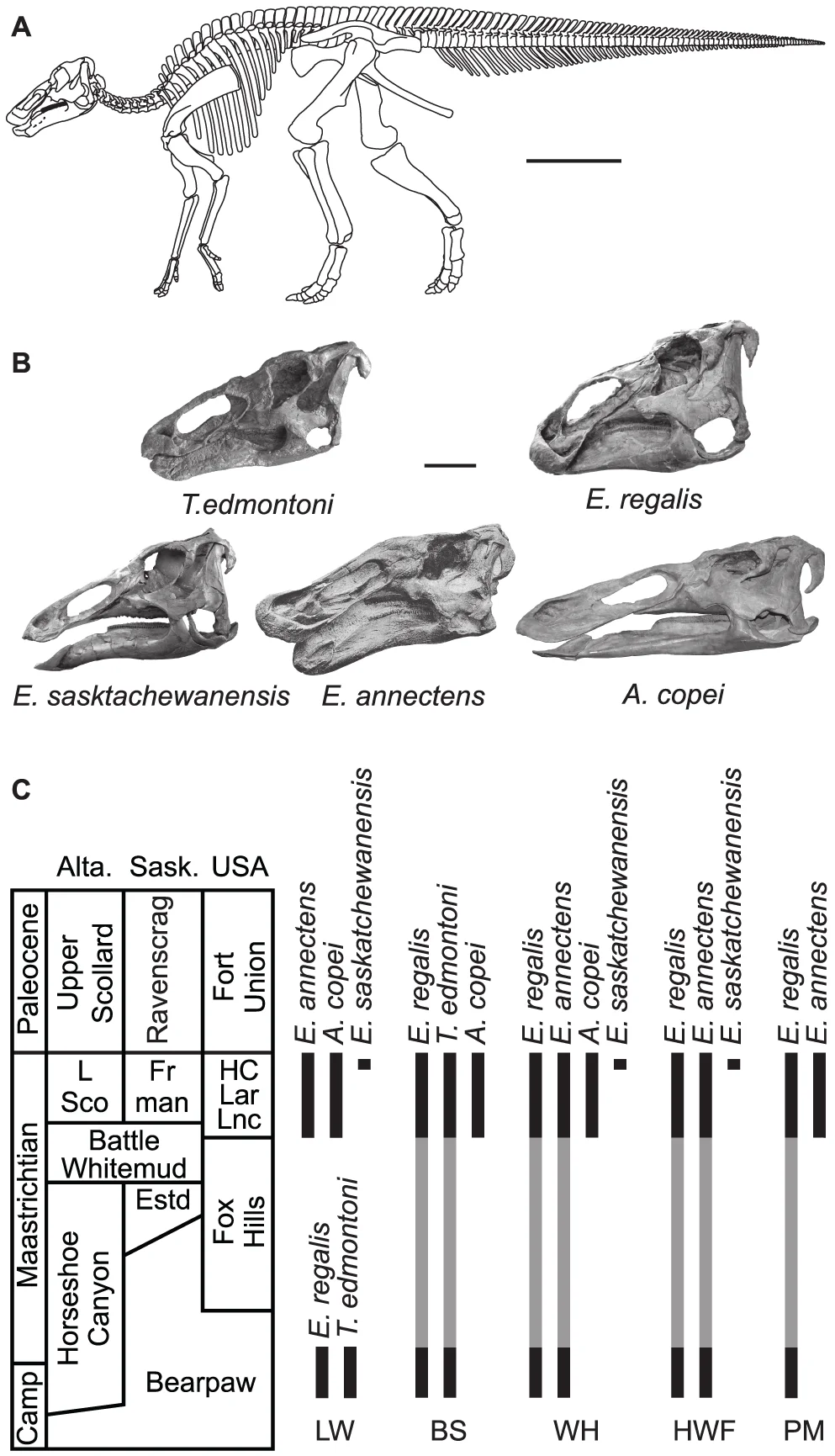
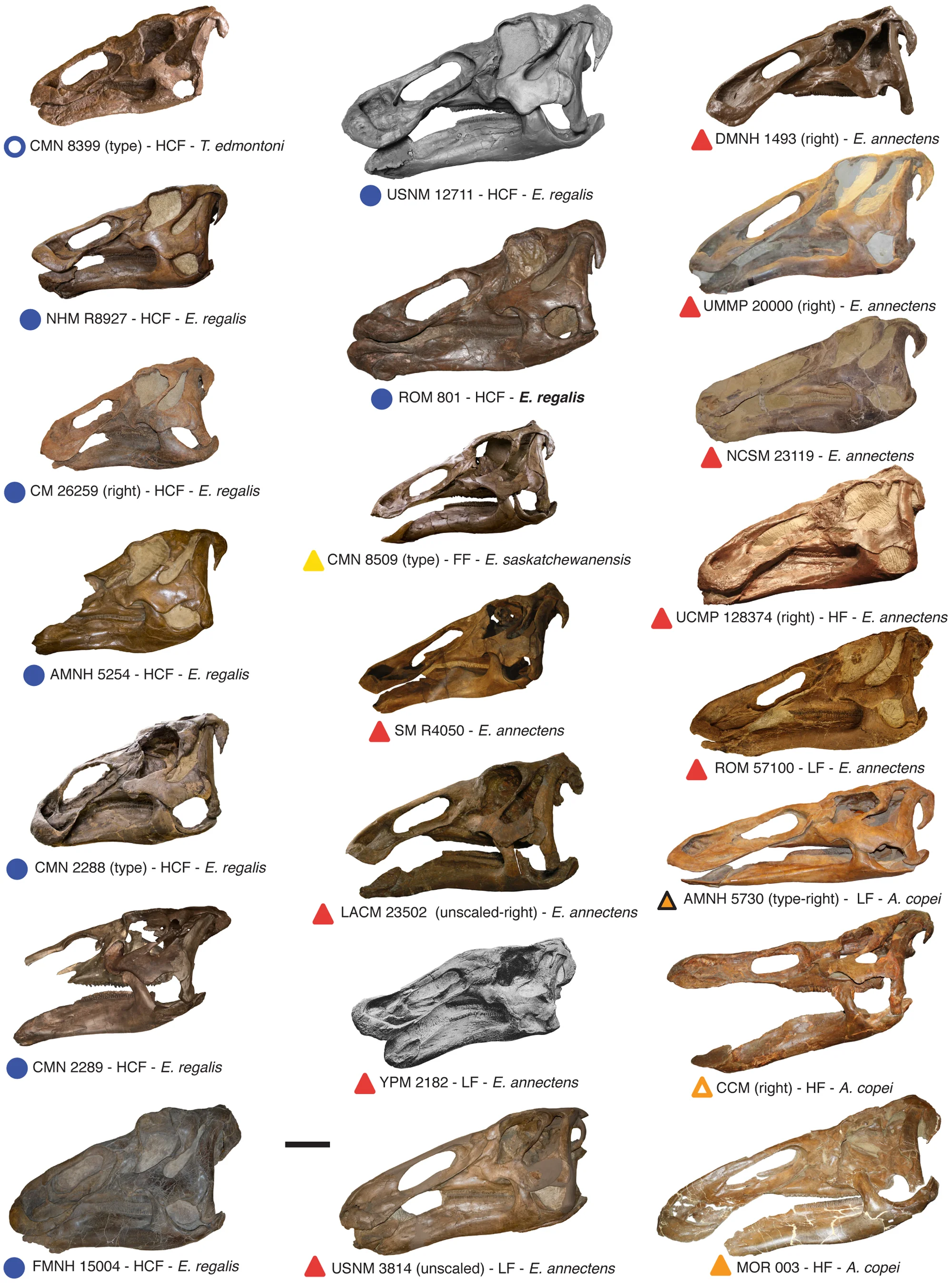
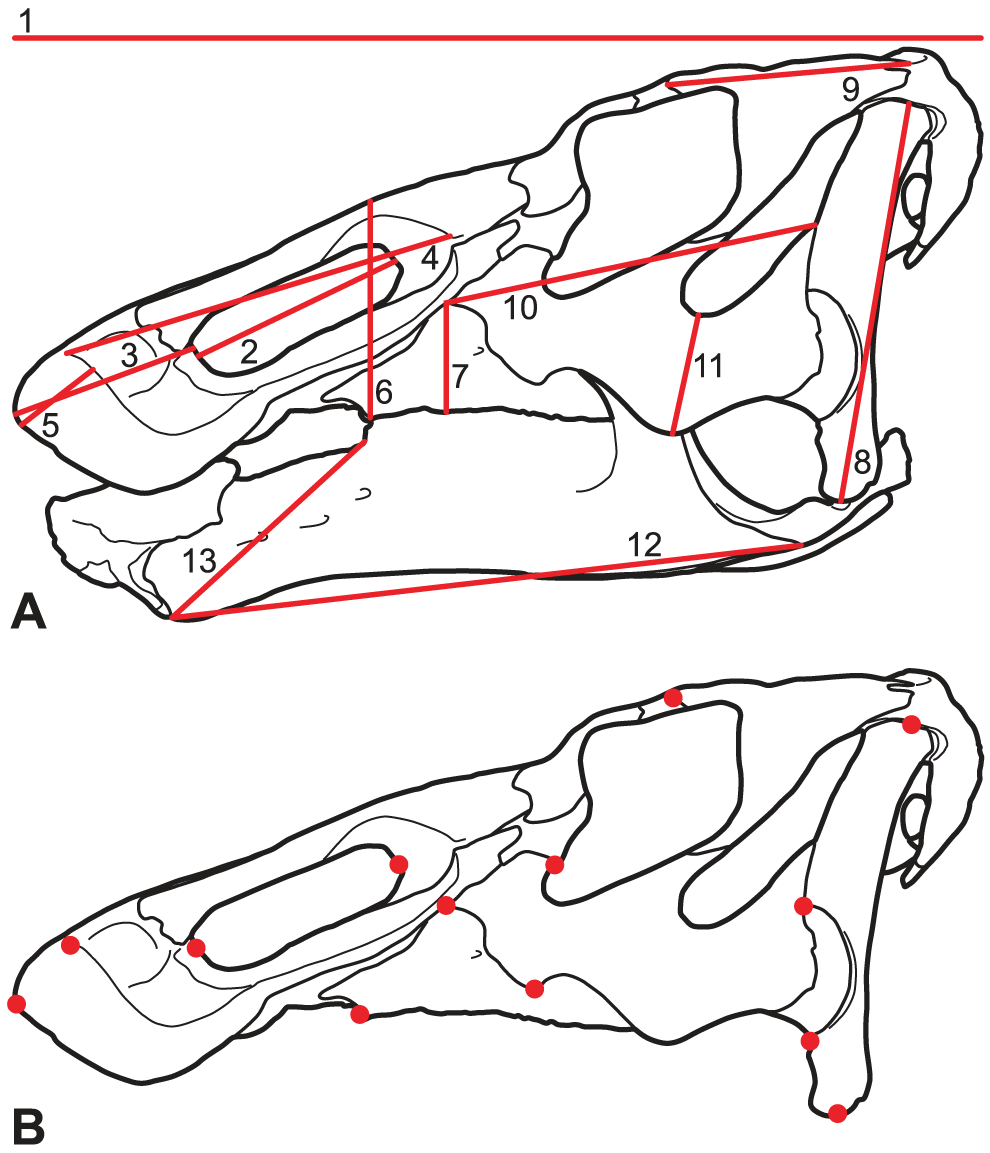
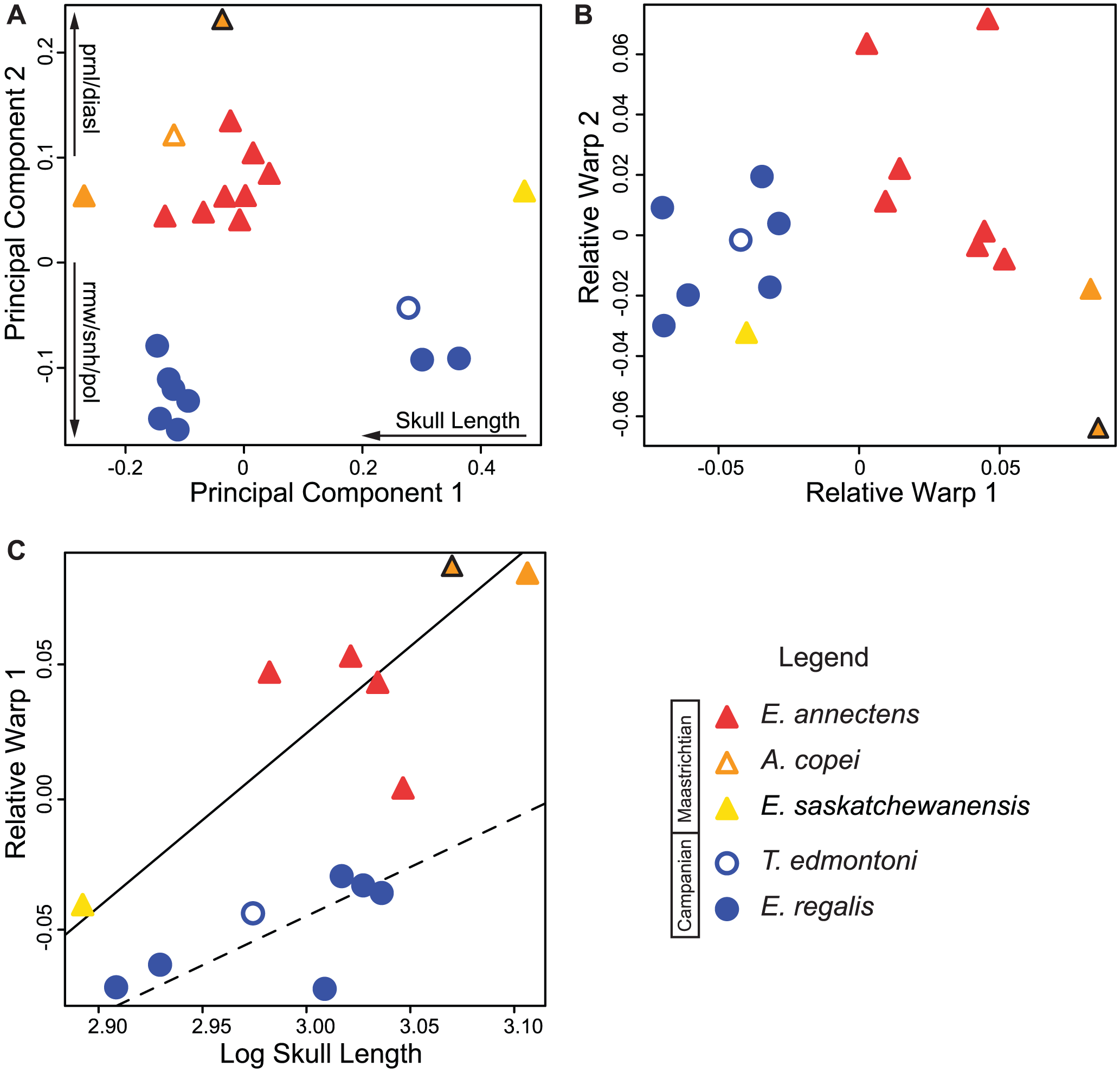
Study on cranial growth and ontogenetic variation in Edmontosaurus, with important implications for Corythosaurus and other lambeosaurines. Campione and Evans demonstrate that crest development in hadrosaurids follows a late-development pattern: juveniles and subadults show markedly different cranial proportions from adults, with crests only rudimentarily present. This would explain why juvenile Corythosaurus were historically confused with other species. The work establishes criteria for identifying growth stages in hadrosaurids from cranial morphology, fundamental for correct interpretation of the Corythosaurus fossil record.

Paleogeographic reconstruction of Cretaceous North American Interior Seaway: distribution and habitat of dinosaurs
Hebdon, N., Rasmussen, C., Thayn, J. & Chure, D. · Paleontologia Electronica
GIS-based paleogeographic reconstruction of the Western Interior Seaway during the Campanian, mapping the coastal habitats occupied by dinosaurs including Corythosaurus. The analysis shows that Dinosaur Park Formation dinosaurs occupied a narrow coastal strip between the seaway and the rising Rocky Mountains, with tidal flats, river deltas, and coastal forests as primary habitats. The study provides the paleogeographic context explaining the high diversity and density of dinosaurs in the DPF: the productive coastal environment supported abundant plant biomass, attracting large gregarious herbivores like Corythosaurus.
Standardized terminology and potential taxonomic utility for hadrosaurid skin impressions: a case study for Saurolophus from Canada and Mongolia
Bell, P.R. · PLOS ONE
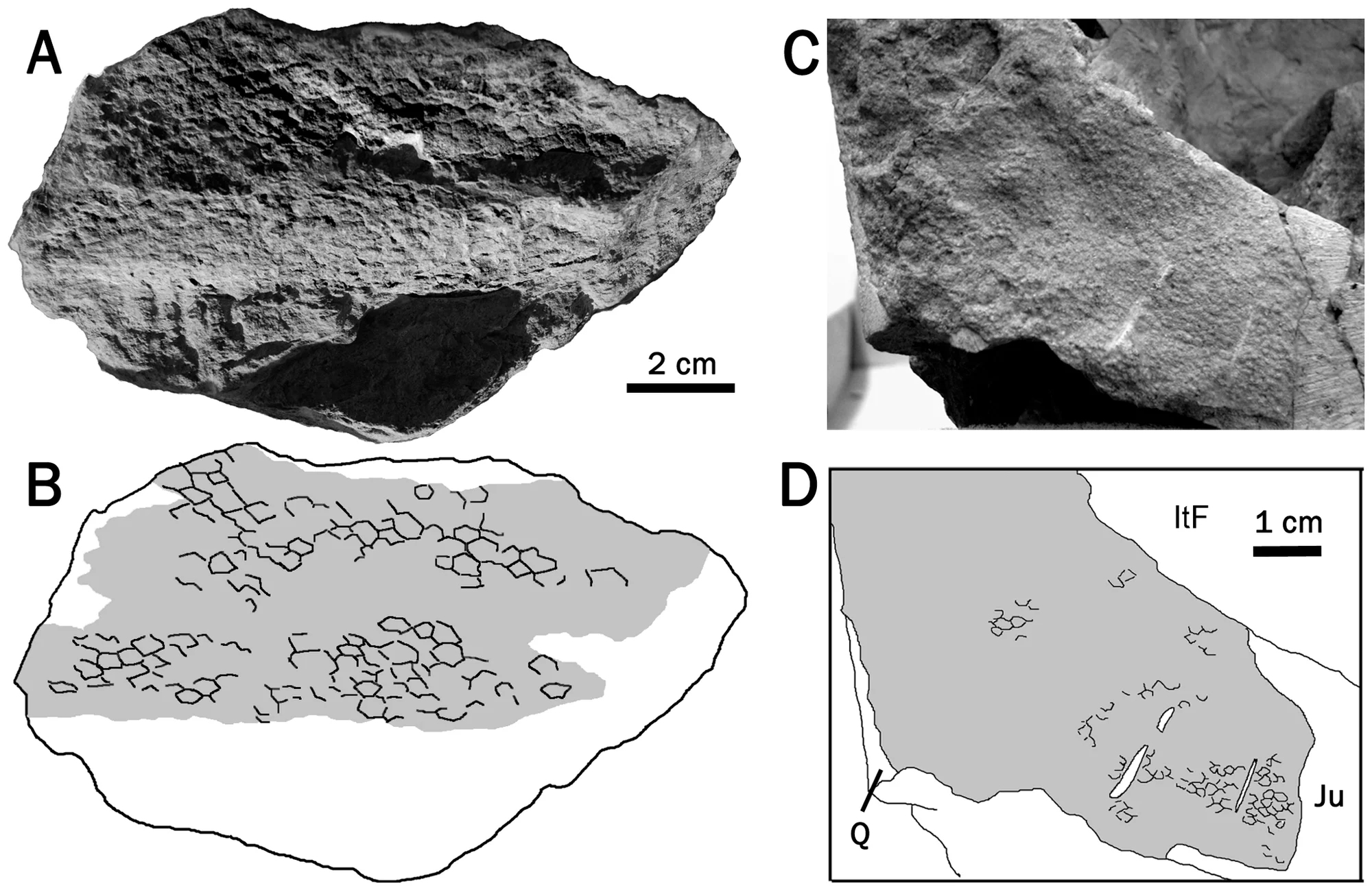
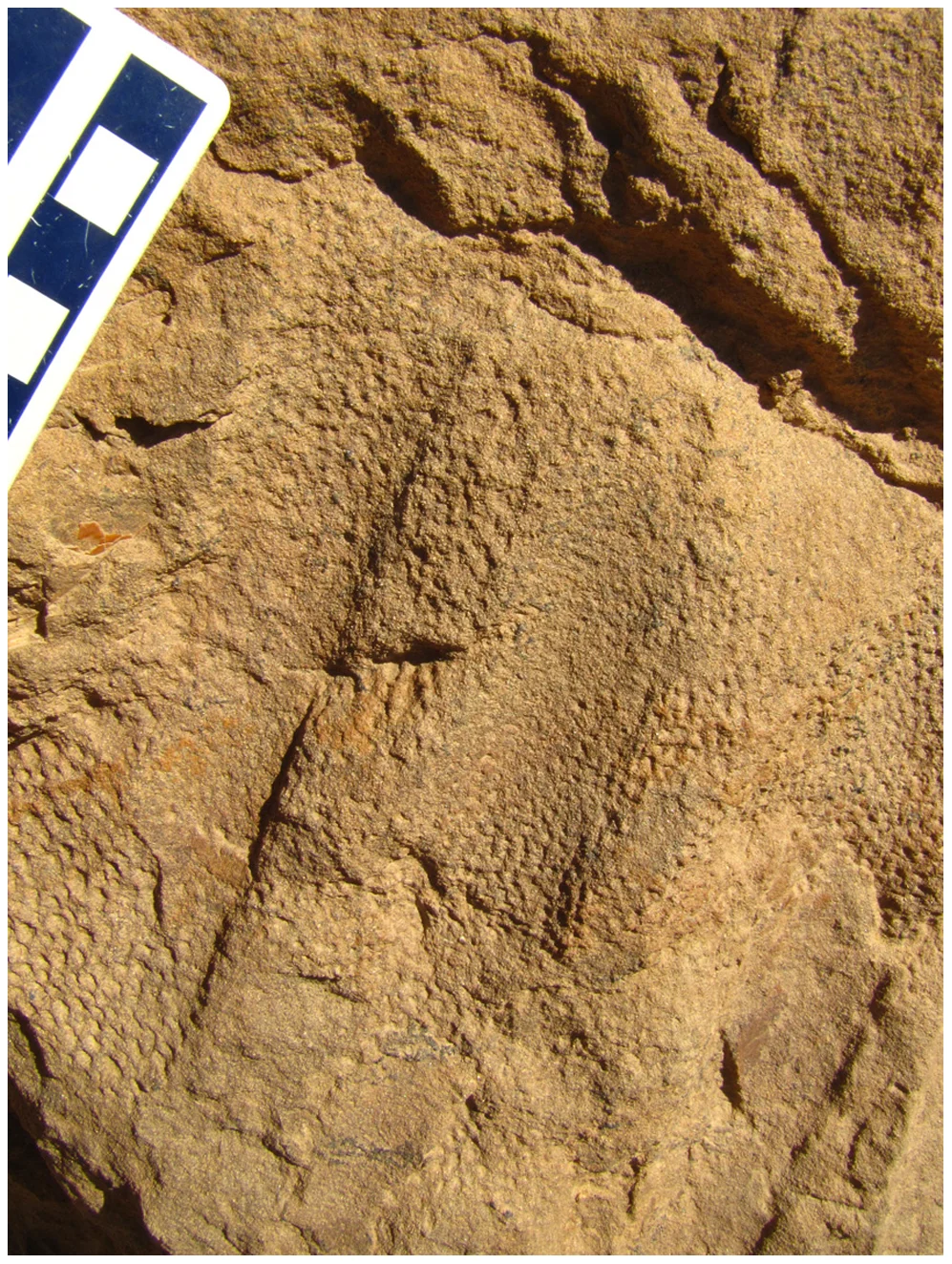
Proposed standardized terminology for hadrosaurid skin impressions, with Corythosaurus casuarius as the central comparative taxon. Bell uses holotype AMNH 5240 — which preserves some of the best-known hadrosaurid skin impressions — as a reference for describing polygonal scales of varying sizes and arrangements in different body regions. The work demonstrates that integumentary features have potential taxonomic utility, potentially aiding species identification when the skull is not preserved. Published in PLOS ONE, the study drove subsequent research on hadrosaurid appearance and dermal adaptations.


Morphological and functional diversity in hadrosaurid dinosaurs, with implications for diet and feeding mechanism evolution
Stubbs, T.L., Benton, M.J., Elsler, A. & Prieto-Márquez, A. · Palaeontology
Comprehensive analysis of morphological and functional diversity in hadrosaurid skulls and dentitions using geometric morphometrics and functional proxies. Stubbs et al. position Corythosaurus casuarius as one of the morphologically most distinctive lambeosaurines, with cranial shape strongly influenced by the elaborate crest. Functional analysis suggests lambeosaurines and saurolophines occupied overlapping but distinct feeding niches, reducing interspecific competition. Rates of evolution of cranial and postcranial characters are estimated and show that hadrosaurid skull evolved in rapid bursts linked to crest diversification and feeding niches.


Famous museum specimens
AMNH 5240 (Holótipo)
American Museum of Natural History, Nova York, EUA
Holotype of Corythosaurus casuarius, collected by Barnum Brown in 1911 from the Red Deer River (Alberta). Nearly complete, it preserves exceptional skin impressions on the abdomen and tail — the best known for the species. Described by Brown in 1914 and in an expanded 1916 monograph.
AMNH 5338 (Plesiotipo)
American Museum of Natural History, Nova York, EUA
Second reference specimen of Corythosaurus casuarius, collected by Brown and Kaisen in 1914. On permanent display at the AMNH, it is one of the most viewed hadrosaurid skeletons in the world. Its articulated mount allows study of the species' body proportions and natural posture.
ROM 845 (C. intermedius)
Royal Ontario Museum, Toronto, Canadá
Reference specimen of Corythosaurus intermedius, the second valid species of the genus, collected by Levi Sternberg in 1920. The ROM displays this skeleton accompanied by a Corythosaurus skull growth series, illustrating ontogenetic variation — juveniles have rudimentary crests that progressively develop until maturity.
In cinema and popular culture
Corythosaurus casuarius gained global visibility primarily through the Jurassic Park franchise, appearing among the crested hadrosaurids of Isla Sorna in Jurassic Park III (2001) and in the herbivore herds of Jurassic World (2015). The hollow helmet-shaped crest makes the animal visually unmistakable among hadrosaurids, facilitating identification on screen even in background scenes. Before cinema, the species had already been immortalized in the iconic paintings by Charles R. Knight for the American Museum of Natural History in the 1920s and 1930s, which depicted groups of Corythosaurus feeding in aquatic environments, a view that modern paleontology has completely revised. Documentaries such as Walking with Dinosaurs (BBC, 1999) and Planet Dinosaur (BBC, 2011) brought more accurate reconstructions incorporating the crest's acoustic function and gregarious terrestrial behavior. The species is regularly presented as an example of the sophisticated vocal communication system of dinosaurs, countering the popular image of silent, slow animals.
Classification
Discovery
Fun fact
The Corythosaurus crest was not simple solid bone: it contained S-shaped nasal passages that functioned as a natural wind instrument, producing deep, resonant sounds similar to a trombone. Different lambeosaurine species produced different notes — Corythosaurus sounded different from Parasaurolophus and Lambeosaurus, allowing herds to recognize each other and communicate by vocalization, like modern birds.
Last reviewed: April 24, 2026