← Back to catalog
Repenomamus robustus
Cretaceous Carnivore

Repenomamus

Repenomamus robustus

"Robust reptile mammal"

Period
Cretaceous · Aptiano
Lived
125–123 Ma
Length
up to 0.5 m
Estimated weight
4.5 kg
Country of origin
China
Described in
2001 by Li Jinling, Wang Yuanqing, Wang Yuanqing, Li Chuankui

Repenomamus robustus was one of the largest Mesozoic mammals and living proof that mammals of the Age of Dinosaurs were not all small and harmless. Belonging to the order Eutriconodonta and family Gobiconodontidae, it lived during the Aptian of the Early Cretaceous in Liaoning, China, in the same fauna as Microraptor gui. At approximately 50 cm in body length and an estimated weight of 4.5 kg, it was as large as a modern Virginia opossum. The most notable find is a specimen with bones of a juvenile Psittacosaurus fossilized in the stomach, the only direct evidence of a Mesozoic mammal preying on dinosaurs. The robust mandible and heterodont teeth confirm frankly carnivorous habits.

The Yixian Formation, part of the Jehol Group, is one of the world's most important lagerstätten for the Early Cretaceous. Deposited between 129 and 122 Ma (Barremian-Aptian) in a lacustrine environment interbedded with volcanic deposits, the formation preserves organisms in exceptionally complete form due to rapid burial by volcanic ashes and muds. The Lujiatun Member, from which Repenomamus specimens originate, is the oldest in the formation (~129-125 Ma) and preserves unique three-dimensional fauna. The formation is famous for the feathered dinosaurs that revolutionized our understanding of bird origins.

🌿

Habitat

Repenomamus robustus inhabited the terrestrial environments of the Aptian of Liaoning, China, within the Jehol Biota. The paleoenvironment was characterized by temperate to subtropical forests with large lakes, interspersed by periodic volcanic activity. The climate was temperate with moderate seasonality. The Yixian Formation preserves one of the most diverse faunas of the Early Cretaceous, including feathered dinosaurs such as Microraptor, Sinosauropteryx, and Psittacosaurus, early birds, pterosaurs, lizards, and numerous mammals. Repenomamus was the largest mammalian carnivore of this fauna.

🦷

Feeding

Repenomamus robustus was a specialized carnivore capable of preying on vertebrates significantly larger than expected for a mammal of its size. Direct evidence includes: (1) a specimen with juvenile Psittacosaurus bones in the stomach (Hu et al. 2005) and (2) a specimen in mortal combat with an adult Psittacosaurus three times its size (Han et al. 2023). The heterodont teeth with triconodont premolars and molars functioned as efficient cutting blades. The robust mandible generated strong bite force to subdue resistant prey.

🧠

Behavior and senses

Based on fossil evidence, Repenomamus robustus was an active, aggressive predator rather than a passive forager. The mortal combat fossil (WZSSM VF000011) shows the mammal attacking an adult dinosaur three times its size, behavior comparable to modern mustelids such as wolverines (Gulo gulo) that attack moose. Repenomamus was likely more diurnally active than expected for a Mesozoic mammal, given the relatively large body size. Epipubic bones suggest viviparity or marsupial-like reproduction, but the exact reproductive structure is uncertain.

Physiology and growth

Repenomamus robustus was likely endothermic, like all modern mammals. Fur (inferred by analogy with other Mesozoic mammals that preserve hair impressions) provided thermal insulation. The relatively large body size (4.5 kg) for a Mesozoic mammal suggests more efficient metabolism than the small contemporary insectivores. Bone histology of related eutriconodonts indicates relatively rapid and determinate growth, as in modern mammals. Epipubic bones, present in modern monotremes and marsupials, suggest a primitive phylogenetic position.

Continental configuration

Mapa paleogeográfico do Cretáceous (~90 Ma)

Ron Blakey · CC BY 3.0 · Cretáceous, ~90 Ma

During the Aptiano (~125–123 Ma), Repenomamus robustus inhabited Laramidia, the western half of present-day North America, separated from the east by the Western Interior Seaway, a shallow sea dividing the continent. The continents were in very different positions: India was drifting toward Asia, Antarctica was still connected to Australia, and South America was an isolated island.

Estimated completeness 70%

The holotype IVPP V12549 consists of a nearly complete skull, jaws, and partial postcranial skeleton. A second referred specimen (IVPP V13605) preserves the complete skeleton with stomach contents identified as bones of a juvenile Psittacosaurus. Multiple additional specimens are known from the same locality in the Yixian Formation of Liaoning, allowing good knowledge of the species' general anatomy.

Found (13)
Inferred (4)
Esqueleto de dinossauro — other
Nobu Tamura, CC BY 3.0 CC BY 3.0

Found elements

skulllower_jawvertebraeribshumerusradiusulnafemurtibiafibulapelvishandfoot

Inferred elements

complete_soft_tissuefur_coatinternal_organsear_ossicles_cartilage

15 papers in chronological order — from the original description to recent research.

2001

A new family of primitive mammal from the Mesozoic of western Liaoning, China

Li, J., Wang, Y., Wang, Y. & Li, C. · Chinese Science Bulletin

This foundational paper describes Repenomamus robustus as the type species of a new family of Mesozoic mammals from the Yixian Formation of Liaoning, China. The authors document the skull and partial postcranial skeleton of holotype IVPP V12549, with a cranial length of 10.6 cm, concluding that it represents the largest known Mesozoic mammal at the time. The robust mandibular morphology and heterodont teeth with sharp cusps suggested carnivorous habits from the outset. The work had immediate impact by challenging the view that Mesozoic mammals were always small and harmless.

Specimen IVPP V13605 of Repenomamus robustus at the Paleozoological Museum of China, Beijing, showing the nearly complete skeleton confirming the carnivorous diet described by Li et al. (2001).

Specimen IVPP V13605 of Repenomamus robustus at the Paleozoological Museum of China, Beijing, showing the nearly complete skeleton confirming the carnivorous diet described by Li et al. (2001).

Repenomamus robustus fossil with visible stomach contents: the juvenile Psittacosaurus bones in the abdominal region are the most notable product of the discoveries initiated by Li et al. (2001).

Repenomamus robustus fossil with visible stomach contents: the juvenile Psittacosaurus bones in the abdominal region are the most notable product of the discoveries initiated by Li et al. (2001).

2005

Large Mesozoic mammals fed on young dinosaurs

Hu, Y., Meng, J., Wang, Y. & Li, C. · Nature

One of the most impactful papers in Mesozoic mammal paleontology: Hu et al. (2005) describe specimen IVPP V13605 of Repenomamus robustus, preserving in its abdominal cavity bones of a juvenile Psittacosaurus sp., including teeth, vertebrae, and limbs. Preservation confirms the bones were in the stomach at death, not intruded by diagenesis. This is the only direct record of a Mesozoic mammal preying on a dinosaur. Published in Nature, the paper radically altered the paradigm that Mesozoic mammals were passive prey of dinosaurs.
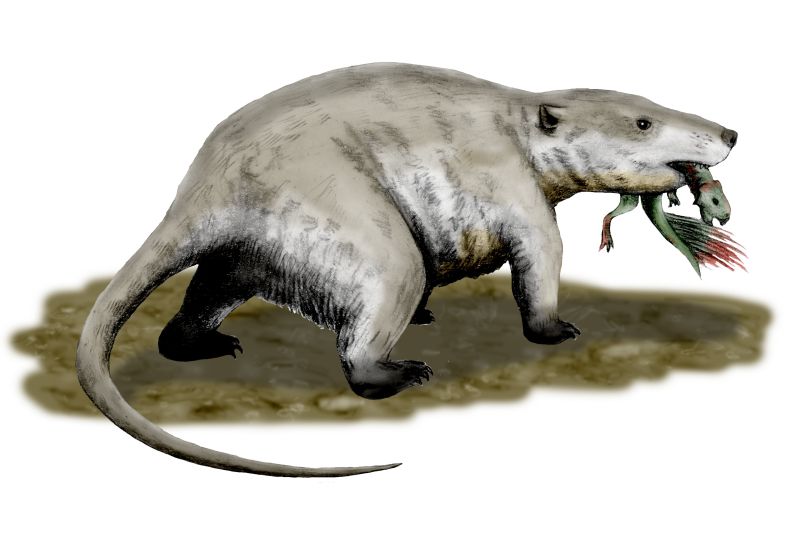
Reconstruction of Repenomamus robustus by PaleoEquii (2019), showing the active predator build confirmed by Hu et al. (2005)'s discovery of juvenile Psittacosaurus in the mammal's stomach.

Reconstruction of Repenomamus robustus by PaleoEquii (2019), showing the active predator build confirmed by Hu et al. (2005)'s discovery of juvenile Psittacosaurus in the mammal's stomach.

Repenomamus model at DinoPark Vyškov (Czech Republic), showing the robust body morphology that allowed this mammal to hunt juvenile dinosaurs as documented by Hu et al. (2005).

Repenomamus model at DinoPark Vyškov (Czech Republic), showing the robust body morphology that allowed this mammal to hunt juvenile dinosaurs as documented by Hu et al. (2005).

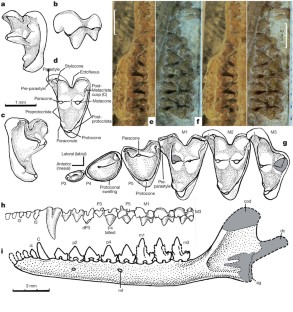
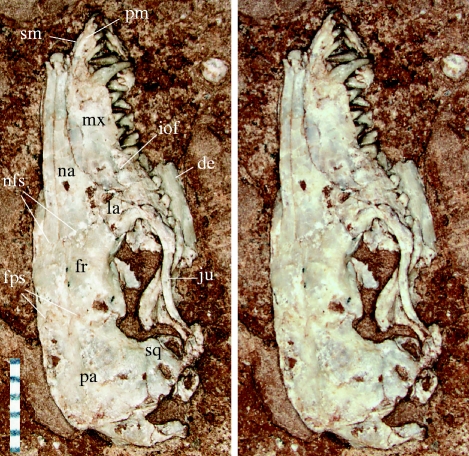
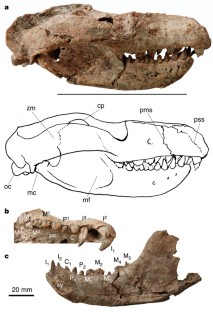
Figure 1: Holotype of Repenomamus giganticus (IVPP V14155).

Figure 1: Holotype of Repenomamus giganticus (IVPP V14155).

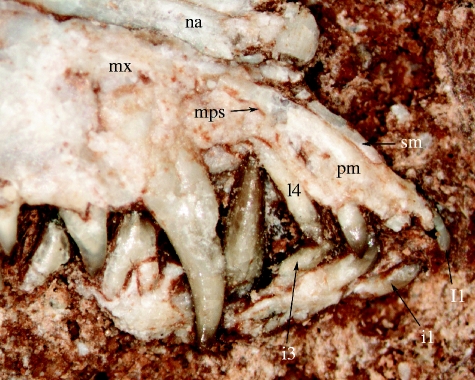
Figure 2

Figure 2

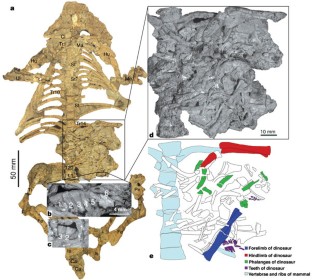
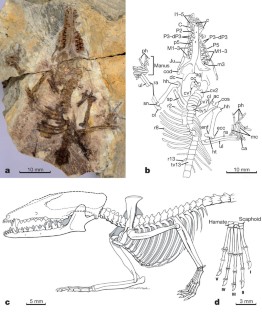
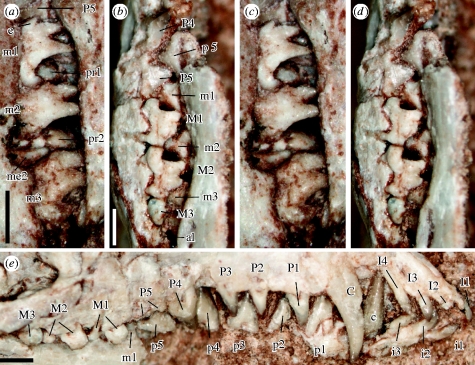
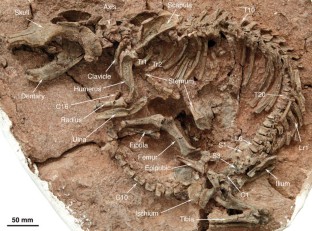
Figure 3: The postcranial skeleton of R. robustus (IVPP V13605).

Figure 3: The postcranial skeleton of R. robustus (IVPP V13605).

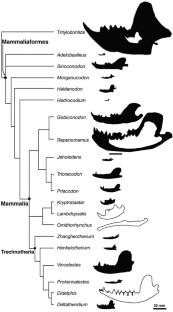
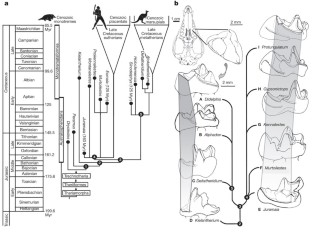
Figure 4: Relationship between basal mammals with attached lower jaws to show their relative sizes (adopted from ref. 7)

Figure 4: Relationship between basal mammals with attached lower jaws to show their relative sizes (adopted from ref. 7)

2002

In quest for a phylogeny of Mesozoic mammals

Luo, Z.-X., Kielan-Jaworowska, Z. & Cifelli, R.L. · Acta Palaeontologica Polonica

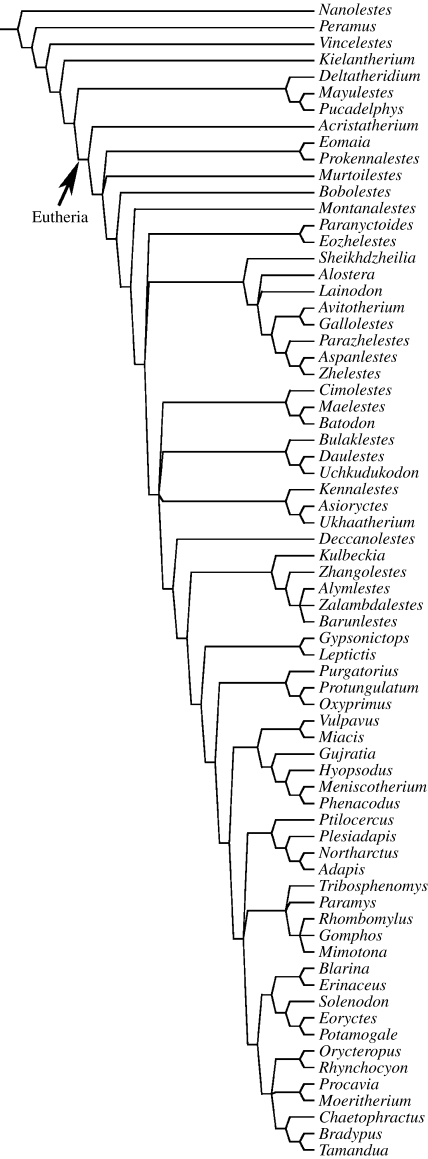
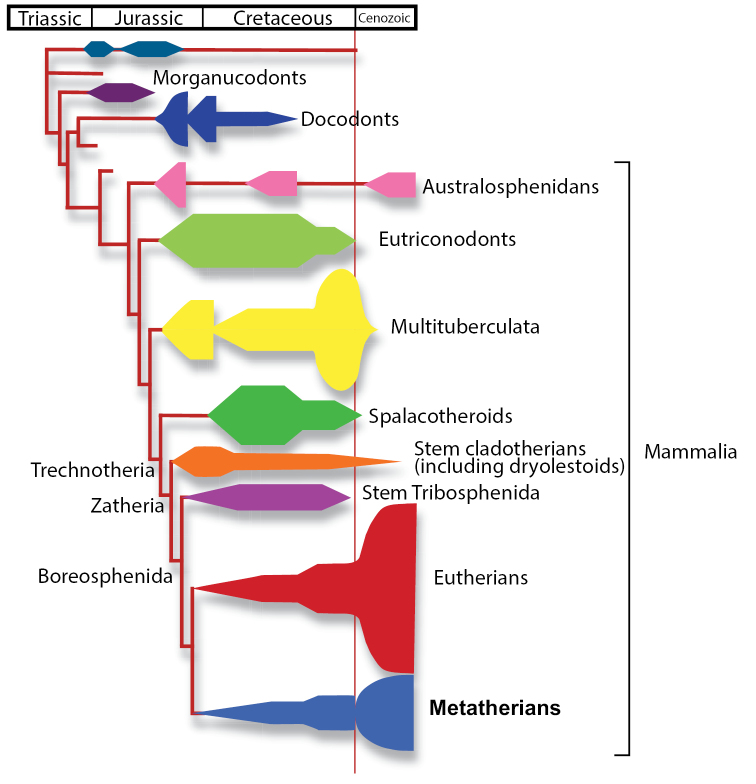
Luo, Kielan-Jaworowska, and Cifelli (2002) present a comprehensive phylogenetic analysis of Mesozoic mammals, establishing the evolutionary framework in which Repenomamus robustus and family Gobiconodontidae are positioned. The work places Eutriconodonta as a paraphyletic basal group, with Gobiconodontidae as a well-supported clade. For Repenomamus, the analysis confirms its position as a derived eutriconodont close to Gobiconodon. The paper is fundamental for Mesozoic mammal phylogeny and influenced all subsequent taxonomy of the group.

Size comparison of the two Repenomamus species with a human, illustrating size diversity within clade Gobiconodontidae, described by Luo et al. (2002) as one of the terminal groups of eutriconodonts.

Size comparison of the two Repenomamus species with a human, illustrating size diversity within clade Gobiconodontidae, described by Luo et al. (2002) as one of the terminal groups of eutriconodonts.

Reconstruction of Gobiconodon, close relative of Repenomamus and member of family Gobiconodontidae whose phylogenetic position was established by Luo et al. (2002) as a derived eutriconodont.

Reconstruction of Gobiconodon, close relative of Repenomamus and member of family Gobiconodontidae whose phylogenetic position was established by Luo et al. (2002) as a derived eutriconodont.

2014

The Jehol Biota, an Early Cretaceous terrestrial Lagerstätte: new discoveries and implications

Zhou, Z. · National Science Review

Zhou (2014) reviews the Jehol Biota of the Yixian Formation, the paleoecological context in which Repenomamus robustus lived. The Jehol Biota is one of the most diverse known Mesozoic ecosystems, including feathered dinosaurs like Microraptor and Sinosauropteryx, primitive birds like Confuciusornis, pterosaurs, and numerous mammals. The paper details exceptional preservation conditions in Early Cretaceous lacustrine and volcanic deposits and discusses the ecological role of mammals like Repenomamus as apex predators.

Outcrop of the Lujiatun Member of the Yixian Formation in Liaoning, China: the precise geological context from which Repenomamus robustus specimens originate, described by Zhou (2014) as one of the richest lagerstätten of the Early Cretaceous.

Outcrop of the Lujiatun Member of the Yixian Formation in Liaoning, China: the precise geological context from which Repenomamus robustus specimens originate, described by Zhou (2014) as one of the richest lagerstätten of the Early Cretaceous.

Location map of specimen WZSSM VF000011 in the Yixian Formation, showing the outcrop coordinates where the mortal combat fossil was found, in the geological context reviewed by Zhou (2014).

Location map of specimen WZSSM VF000011 in the Yixian Formation, showing the outcrop coordinates where the mortal combat fossil was found, in the geological context reviewed by Zhou (2014).

2007

Convergent dental adaptations in pseudo-tribosphenic and tribosphenic mammals

Luo, Z.-X., Ji, Q. & Yuan, C.-X. · Nature

Luo, Ji, and Yuan (2007) analyze convergent dental adaptations in Mesozoic mammals, focusing on the specialized dentition of gobiconodontids, including Repenomamus. The paper demonstrates that Repenomamus's dental morphology, with sharp cusps and developed heterodonty, is convergent with derived tribosphenic mammals but arose independently. This convergence confirms that Repenomamus developed carnivore dental specializations allowing its diet based on vertebrates, including juvenile and possibly adult dinosaurs, via a distinct evolutionary pathway.

Illustration of Repenomamus giganticus by Nobu Tamura (2008), showing the silhouette of the largest carnivorous eutriconodont. Luo et al. (2007) analyze the convergent dental adaptations that made R. robustus and R. giganticus the main mammalian predators of the Early Cretaceous.

Illustration of Repenomamus giganticus by Nobu Tamura (2008), showing the silhouette of the largest carnivorous eutriconodont. Luo et al. (2007) analyze the convergent dental adaptations that made R. robustus and R. giganticus the main mammalian predators of the Early Cretaceous.

One of the first reconstructions of Repenomamus by Mateus Zica (2005), showing the robust specialized carnivore morphology associated with the convergent dental adaptations analyzed by Luo et al. (2007).

One of the first reconstructions of Repenomamus by Mateus Zica (2005), showing the robust specialized carnivore morphology associated with the convergent dental adaptations analyzed by Luo et al. (2007).

2011

Transitional mammalian middle ear from a new Cretaceous Jehol eutriconodont

Meng, J., Wang, Y. & Li, C. · Nature

Meng, Wang, and Li (2011) describe a new eutriconodont from the Jehol Biota with a transitional middle ear, clarifying evolution of the auditory ossicle complex in the clade including Repenomamus. The new taxon preserves an intermediate condition between the reptile state and the derived mammal state with fully detached ossicles. The paper confirms that Jehol eutriconodonts, including Repenomamus, were at different evolutionary stages of middle ear morphology during the Early Cretaceous.

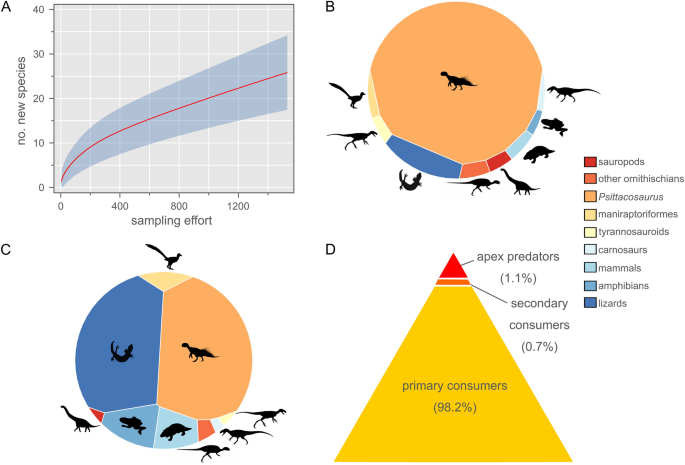
Species diversity statistics for the Lujiatun Member of the Yixian Formation, China: (A) rarefaction curve of species richness, (B) raw Voronoi diagram of relative abundance, (C) preservation-corrected Voronoi diagram, and (D) trophic biomass pyramid. Psittacosaurus lujiatunensis dominates primary consumer biomass at 85.9%, while eutriconodonts like those described by Meng et al. (2011) occupy insectivore and small-prey-predator niches.

Species diversity statistics for the Lujiatun Member of the Yixian Formation, China: (A) rarefaction curve of species richness, (B) raw Voronoi diagram of relative abundance, (C) preservation-corrected Voronoi diagram, and (D) trophic biomass pyramid. Psittacosaurus lujiatunensis dominates primary consumer biomass at 85.9%, while eutriconodonts like those described by Meng et al. (2011) occupy insectivore and small-prey-predator niches.

Life restoration of Eomaia scansoria, an early Cretaceous eutherian mammal from the Yixian Formation of China. The discovery of the transitional middle ear in the eutriconodont described by Meng et al. (2011) helps understand the stepwise acquisition of mammalian hearing anatomy, bridging forms like Eomaia and modern therians.

Life restoration of Eomaia scansoria, an early Cretaceous eutherian mammal from the Yixian Formation of China. The discovery of the transitional middle ear in the eutriconodont described by Meng et al. (2011) helps understand the stepwise acquisition of mammalian hearing anatomy, bridging forms like Eomaia and modern therians.

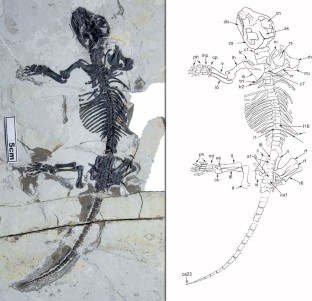
Figure 1: The skeleton of the new mammal Liaoconodon hui (dorsal view of the holotype, IVPP V16051, Institute of Vertebrate Paleontology and Paleoanthropology, Beijing).

Figure 1: The skeleton of the new mammal Liaoconodon hui (dorsal view of the holotype, IVPP V16051, Institute of Vertebrate Paleontology and Paleoanthropology, Beijing).

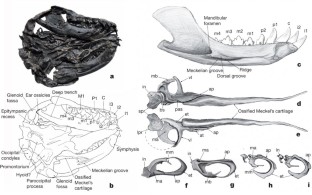
Figure 2: Skull and ear ossicles of Liaoconodon hui (IVPP V16051).

Figure 2: Skull and ear ossicles of Liaoconodon hui (IVPP V16051).

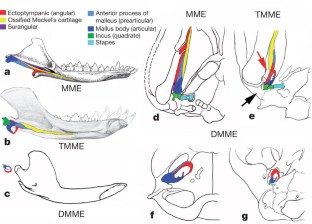
Figure 3: Morphological transference of mammalian middle ear.

Figure 3: Morphological transference of mammalian middle ear.

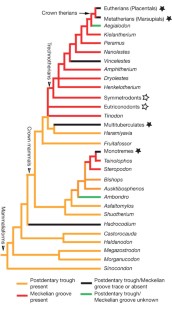
Figure 4: Phylogeny of mammaliaforms (simplified after ref. 18 ) mapping distributions of the post-dentary trough and the Meckelian groove.

Figure 4: Phylogeny of mammaliaforms (simplified after ref. 18 ) mapping distributions of the post-dentary trough and the Meckelian groove.

2021

Jaw shape and mechanical advantage are indicative of diet in Mesozoic mammals

Morales-García, N.M., Gill, P.G., Janis, C.M. & Rayfield, E.J. · Communications Biology

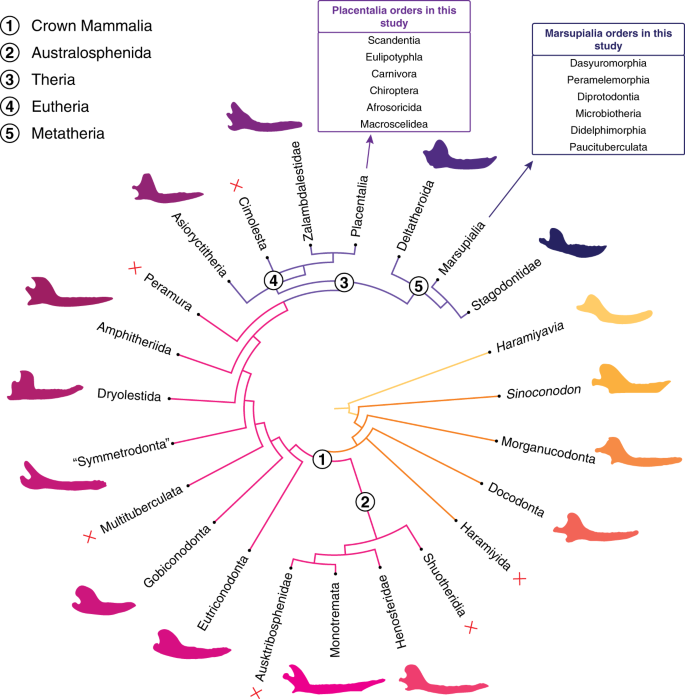
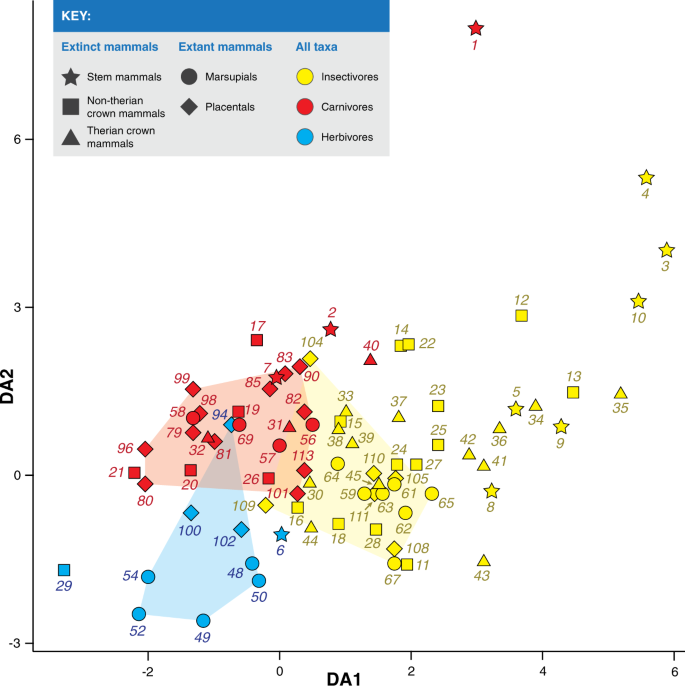
Morales-García et al. (2021) demonstrate that jaw shape and mechanical advantage in Mesozoic mammals correlate with diet, with gobiconodontids like Repenomamus showing mandibular morphology consistent with vertebrate prey. Using finite element analysis and geometric morphometrics on 98 taxa, the study quantitatively confirms that Repenomamus had a jaw adapted to generate large bite forces and handle bone, consistent with predation of vertebrates like Psittacosaurus. It is the first systematic biomechanical study quantitatively confirming Repenomamus's carnivorous diet.

Skull of Psittacosaurus lujiatunensis, the confirmed prey of Repenomamus robustus. Morales-García et al. (2021) include Psittacosaurus as a reference to calibrate the biomechanical bite force analysis of Repenomamus.

Skull of Psittacosaurus lujiatunensis, the confirmed prey of Repenomamus robustus. Morales-García et al. (2021) include Psittacosaurus as a reference to calibrate the biomechanical bite force analysis of Repenomamus.

Complete Psittacosaurus skeleton, illustrating the relative size of the prey in relation to the mammalian predator. Morales-García et al. (2021) analyze the bite forces required for Repenomamus to prey on vertebrates of this size.

Complete Psittacosaurus skeleton, illustrating the relative size of the prey in relation to the mammalian predator. Morales-García et al. (2021) analyze the bite forces required for Repenomamus to prey on vertebrates of this size.

Fig. 1: Summary of the phylogeny used in this study.

Fig. 1: Summary of the phylogeny used in this study.

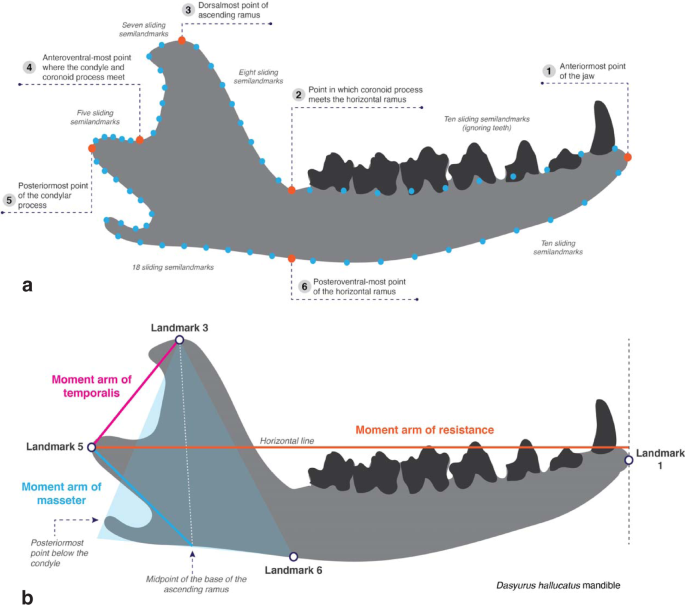
Fig. 2: Data acquired from the jaws of Mesozoic and extant small mammals.

Fig. 2: Data acquired from the jaws of Mesozoic and extant small mammals.

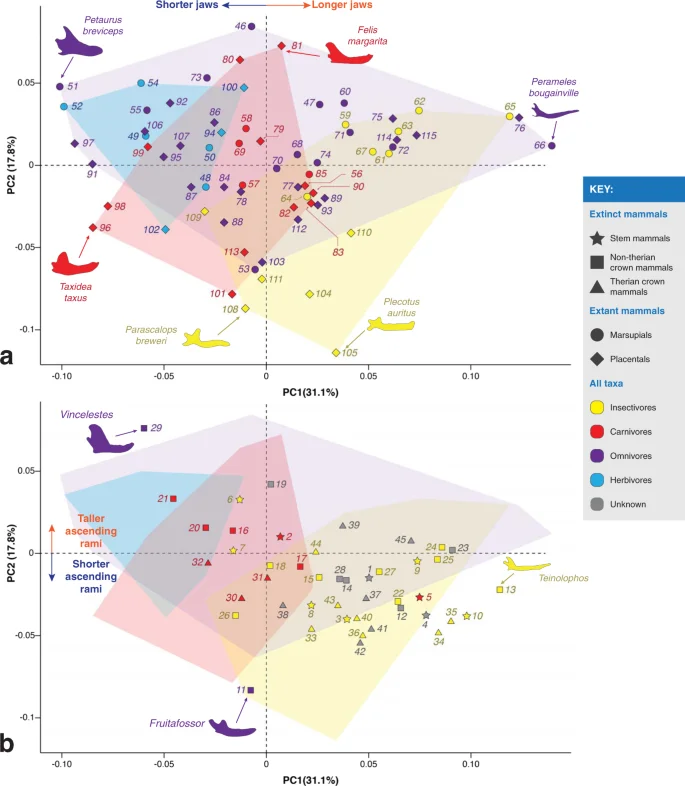
Fig. 3: Scatter plots of the principal component analysis (PCA) results (PC1 vs. PC2).

Fig. 3: Scatter plots of the principal component analysis (PCA) results (PC1 vs. PC2).

Fig. 4: Phylogenetic flexible discriminant analysis results, showing discriminant axis 1 (DA1) and two (DA2), of all taxa in this study.

Fig. 4: Phylogenetic flexible discriminant analysis results, showing discriminant axis 1 (DA1) and two (DA2), of all taxa in this study.

2023

An extraordinary fossil captures the struggle for existence during the Mesozoic

Han, G., Mallon, J.C., Lussier, A.J., Wu, X.-C., Yi, H. & Lü, J. · Scientific Reports

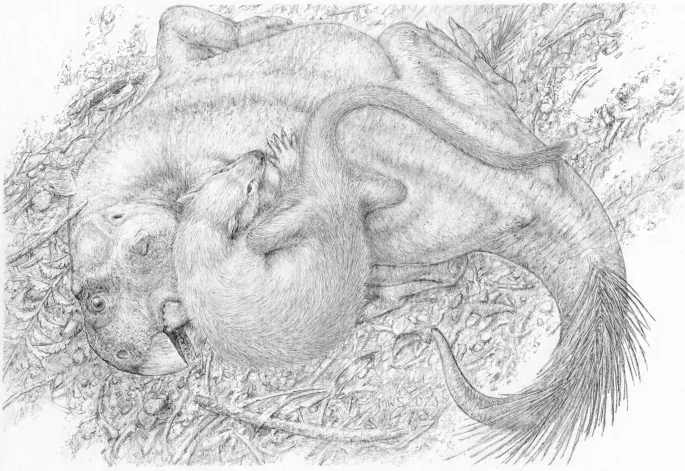
Han et al. (2023) describe the extraordinary specimen WZSSM VF000011 preserving Repenomamus robustus and an adult Psittacosaurus lujiatunensis in mortal combat. The mammal was biting the dinosaur's rib cage and gripping its jaw with its hind paw when both died simultaneously, buried by volcanic mudflow. It is the first direct evidence of a Mesozoic mammal attacking an adult dinosaur of similar or larger size, rewriting the narrative of Mesozoic ecological interactions.
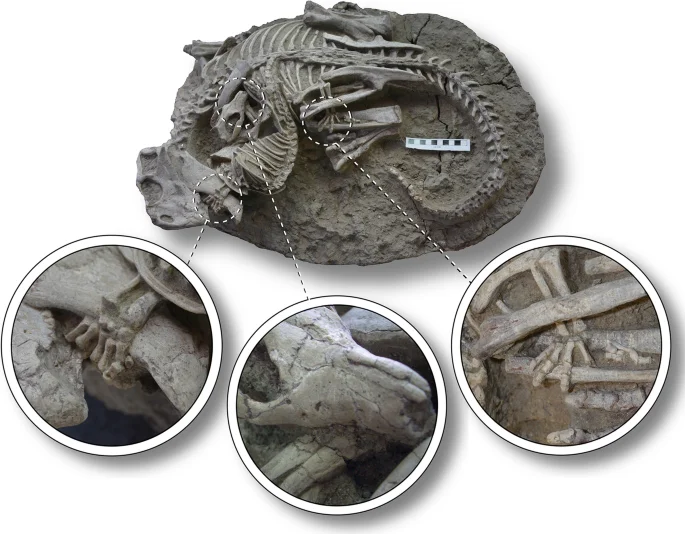
Fossil WZSSM VF000011 described by Han et al. (2023): Psittacosaurus lujiatunensis and Repenomamus robustus preserved in mortal combat in the Lujiatun Member, definitive proof that Mesozoic mammals attacked adult dinosaurs.

Fossil WZSSM VF000011 described by Han et al. (2023): Psittacosaurus lujiatunensis and Repenomamus robustus preserved in mortal combat in the Lujiatun Member, definitive proof that Mesozoic mammals attacked adult dinosaurs.

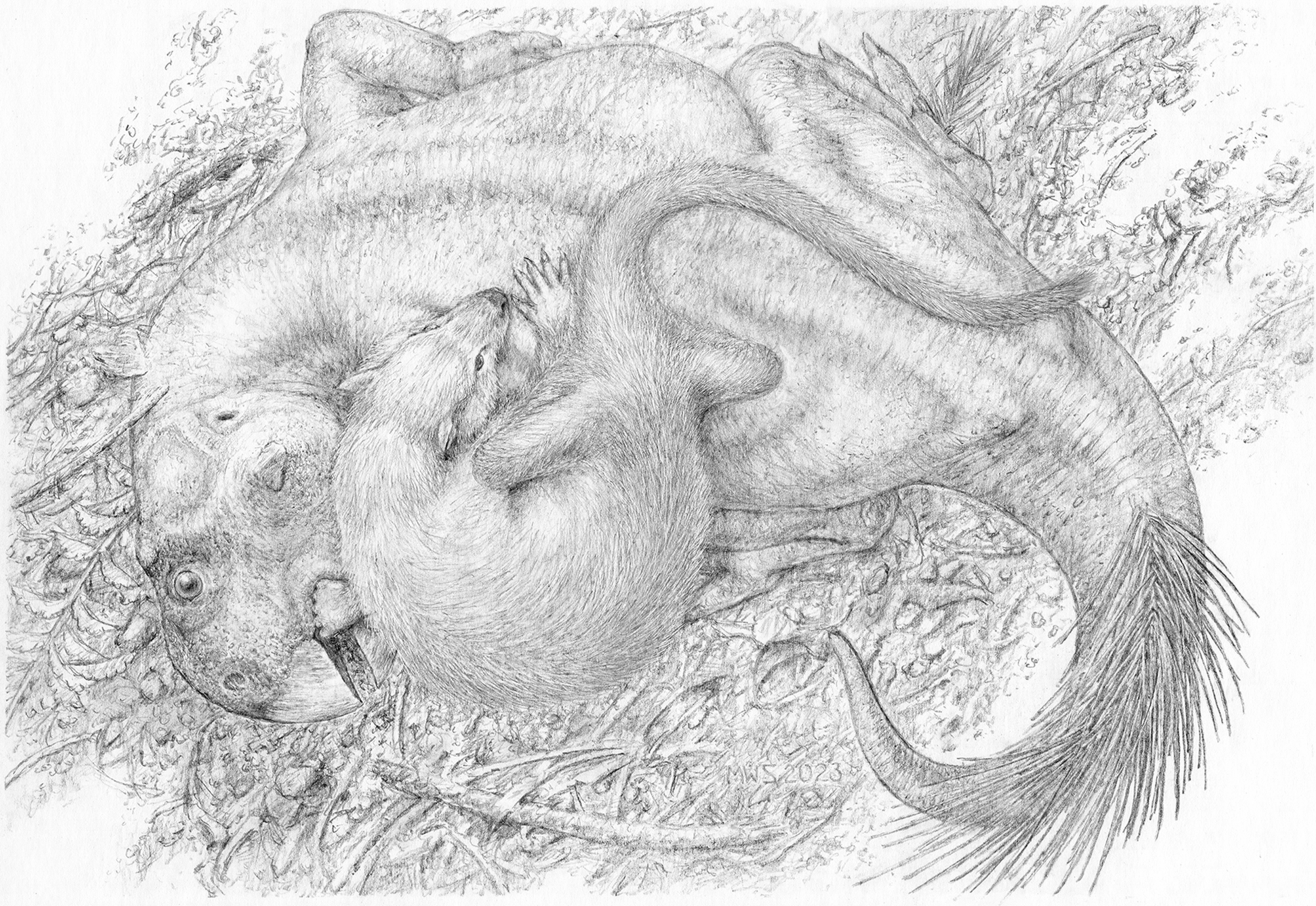
Life restoration of the mortal struggle between Repenomamus robustus and Psittacosaurus lujiatunensis by paleoartist Michael Skrepnick, published as the official illustration of Han et al. (2023) in Scientific Reports.

Life restoration of the mortal struggle between Repenomamus robustus and Psittacosaurus lujiatunensis by paleoartist Michael Skrepnick, published as the official illustration of Han et al. (2023) in Scientific Reports.

Figure 1

Figure 1

Figure 2

Figure 2

Figure 3

Figure 3

Figure 4

Figure 4

2015

An arboreal docodont from the Jurassic and mammalian diversification

Meng, Q.-J., Ji, Q., Zhang, Y.-G., Liu, D., Grossnickle, D.M. & Luo, Z.-X. · Science

Meng et al. (2015) describe a Jurassic docodontid mammal with arboreal adaptations, contextualizing the ecological diversification of Mesozoic mammals in lineages that led to Eutriconodonta. The paper demonstrates that Mesozoic mammals occupied far more varied ecological niches than the classic view of 'small nocturnal insectivores' suggested. This context is fundamental for understanding how Repenomamus robustus came to occupy the apex predator niche, following an ecological diversification trend predating the Cretaceous.

Skeleton of Psittacosaurus mongoliensis, a species close to Repenomamus's prey, illustrating the diversity of ceratopsids that coexisted with Mesozoic mammals like Repenomamus in the Early Cretaceous Jehol ecosystem.

Skeleton of Psittacosaurus mongoliensis, a species close to Repenomamus's prey, illustrating the diversity of ceratopsids that coexisted with Mesozoic mammals like Repenomamus in the Early Cretaceous Jehol ecosystem.

Multiple Psittacosaurus skeletons, the most abundant dinosaurs of the Jehol ecosystem, whose juveniles constituted the documented prey of Repenomamus robustus and whose adults were attacked as shown by Han et al. (2023).

Multiple Psittacosaurus skeletons, the most abundant dinosaurs of the Jehol ecosystem, whose juveniles constituted the documented prey of Repenomamus robustus and whose adults were attacked as shown by Han et al. (2023).

2013

Mammal disparity decreases during the Cretaceous angiosperm radiation

Grossnickle, D.M. & Polly, P.D. · Proceedings of the Royal Society B

Grossnickle and Polly (2013) analyze the morphological disparity of Mesozoic mammals during the Cretaceous, demonstrating that the angiosperm radiation affected mammal diversity and morphospace occupation. The study places Repenomamus in a broader evolutionary context: as one of the last large eutriconodont carnivores, R. robustus occupied morphologically an extreme of the Mesozoic mammal variation space that would be progressively reduced with the diversification of flowering plants.

Holotype skull of Psittacosaurus, the most abundant ceratopsid of Early Cretaceous Asia and main prey of Repenomamus. Grossnickle and Polly (2013) include ceratopsids as reference in their morphological disparity analysis of Mesozoic mammals.

Holotype skull of Psittacosaurus, the most abundant ceratopsid of Early Cretaceous Asia and main prey of Repenomamus. Grossnickle and Polly (2013) include ceratopsids as reference in their morphological disparity analysis of Mesozoic mammals.

Skull of Repenomamus giganticus, the sister species of R. robustus and the largest Mesozoic mammal. Grossnickle and Polly's (2013) analysis includes both species as outliers at the carnivore extreme of Mesozoic mammal morphospace.

Skull of Repenomamus giganticus, the sister species of R. robustus and the largest Mesozoic mammal. Grossnickle and Polly's (2013) analysis includes both species as outliers at the carnivore extreme of Mesozoic mammal morphospace.

2011

A Jurassic eutherian mammal and divergence of marsupials and placentals

Luo, Z.-X., Yuan, C.-X., Meng, Q.-J. & Ji, Q. · Nature

Luo et al. (2011) describe Juramaia sinensis, a Jurassic eutherian from China that pushes the eutherian record back by 35 Ma. For Repenomamus, this context is fundamental: eutriconodonts like R. robustus coexisted with the first eutherians in the Early Cretaceous, occupying distinct ecological niches as apex predators while the ancestors of placentals were still small and generalist.

Eomaia scansoria capturing an insect: a scientific illustration of one of the earliest known eutherian mammals from the Yixian Formation (Cretaceous, China). The Jurassic eutherian described by Luo et al. (2011) predates Eomaia and provides calibration points for the divergence of marsupials and placentals, placing the split much earlier than suggested by most molecular clocks.

Eomaia scansoria capturing an insect: a scientific illustration of one of the earliest known eutherian mammals from the Yixian Formation (Cretaceous, China). The Jurassic eutherian described by Luo et al. (2011) predates Eomaia and provides calibration points for the divergence of marsupials and placentals, placing the split much earlier than suggested by most molecular clocks.

Articulated Psittacosaurus skeleton in museum, illustrating the complete prey morphology of Repenomamus and the size difference between the mammalian predator and the ceratopsid dinosaurs of the Jehol ecosystem.

Articulated Psittacosaurus skeleton in museum, illustrating the complete prey morphology of Repenomamus and the size difference between the mammalian predator and the ceratopsid dinosaurs of the Jehol ecosystem.

Figure 1: Holotype specimen of Juramaia sinensis , Beijing Museum of Natural History (BMNH) PM1343B.

Figure 1: Holotype specimen of Juramaia sinensis , Beijing Museum of Natural History (BMNH) PM1343B.

Figure 2: Dental and mandibular features of Juramaia sinensis (BMNH PM1343B).

Figure 2: Dental and mandibular features of Juramaia sinensis (BMNH PM1343B).

Figure 3: Time-calibrated phylogeny of the eutherian Juramaia among other boreosphenidan mammals, and comparative morphology of some key molar features.

Figure 3: Time-calibrated phylogeny of the eutherian Juramaia among other boreosphenidan mammals, and comparative morphology of some key molar features.

2014

Mesozoic mammals of China: implications for phylogeny and early evolution of mammals

Meng, J. · National Science Review

Meng (2014) reviews Mesozoic mammal discoveries from China, including Repenomamus, with implications for phylogeny and early mammalian evolution. Repenomamus robustus and R. giganticus are highlighted as paradigmatic examples of the greater ecological potential of Mesozoic mammals: apex predators that hunted dinosaurs rather than fleeing from them, contradicting decades of traditional views on Mesozoic ecology.

Holotype of Psittacosaurus sinensis at IVPP, Beijing: the same institution that holds the Repenomamus robustus type specimens reviewed by Meng (2014) in his synthesis of Mesozoic mammals of China.

Holotype of Psittacosaurus sinensis at IVPP, Beijing: the same institution that holds the Repenomamus robustus type specimens reviewed by Meng (2014) in his synthesis of Mesozoic mammals of China.

Psittacosaurus skeleton in a historical 1958 publication, illustrating how knowledge about Early Cretaceous ceratopsids — prey of Repenomamus — developed throughout the 20th century up to the comprehensive reviews of Meng (2014).

Psittacosaurus skeleton in a historical 1958 publication, illustrating how knowledge about Early Cretaceous ceratopsids — prey of Repenomamus — developed throughout the 20th century up to the comprehensive reviews of Meng (2014).

2009

New basal eutherian mammal from the Early Cretaceous Jehol Biota, Liaoning, China

Hu, Y., Meng, J. & Clark, J.M. · Proceedings of the Royal Society B

Hu, Meng, and Clark (2009) describe a new basal eutherian from the Jehol Biota, from the same formation and time period as Repenomamus robustus, providing comparative data on Early Cretaceous mammalian diversity in China. The study demonstrates that the Yixian Formation harbored surprising diversity of mammals from distinct evolutionary lineages: carnivorous eutriconodonts like Repenomamus coexisted with the first eutherians ancestral to modern placentals in the same ecosystem.

Sinosauropteryx prima with preserved feathering, one of the most iconic dinosaurs of the Jehol Biota. This small theropod inhabited the same ecosystem as Repenomamus and the basal eutherians described by Hu et al. (2009).

Sinosauropteryx prima with preserved feathering, one of the most iconic dinosaurs of the Jehol Biota. This small theropod inhabited the same ecosystem as Repenomamus and the basal eutherians described by Hu et al. (2009).

Reconstruction of Microraptor gui, the small winged dromaeosaurid of the Yixian Formation that coexisted with Repenomamus robustus and the basal eutherians of the Lujiatun Member described by Hu et al. (2009).

Reconstruction of Microraptor gui, the small winged dromaeosaurid of the Yixian Formation that coexisted with Repenomamus robustus and the basal eutherians of the Lujiatun Member described by Hu et al. (2009).

2007

Transformation and diversification in early mammal evolution

Luo, Z.-X. · Nature

Luo (2007) synthesizes key transformations in early mammal evolution, with gobiconodontids like Repenomamus as fundamental examples. The paper covers evolution of auditory ossicles, mandible, teeth, and posture throughout the mammalian lineage. For Repenomamus, the work provides crucial evolutionary context: the genus represents a derived node within eutriconodonts where carnivore specializations reached their Mesozoic maximum, allowing hunting of larger vertebrates including dinosaurs.

Reconstruction of Beipiaosaurus inexpectus, a therizinosaurid from the Yixian Formation that coexisted with Repenomamus in the Early Cretaceous of Liaoning. The ecological diversity of this fauna is central to the evolutionary transformations analyzed by Luo (2007).

Reconstruction of Beipiaosaurus inexpectus, a therizinosaurid from the Yixian Formation that coexisted with Repenomamus in the Early Cretaceous of Liaoning. The ecological diversity of this fauna is central to the evolutionary transformations analyzed by Luo (2007).

Confuciusornis sanctus, the most abundant bird of the Jehol Biota, coexisted with Repenomamus robustus and potentially was also one of its prey. The vertebrate diversity of this fauna is the context of mammalian evolutionary transformations analyzed by Luo (2007).

Confuciusornis sanctus, the most abundant bird of the Jehol Biota, coexisted with Repenomamus robustus and potentially was also one of its prey. The vertebrate diversity of this fauna is the context of mammalian evolutionary transformations analyzed by Luo (2007).

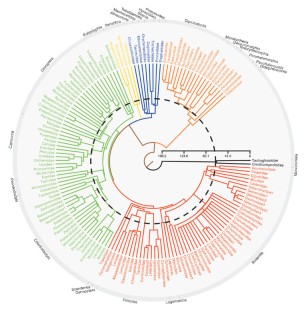
Figure 1: Partial representation of the mammalian supertree showing the relationships among the families (following ref. 23 ).

Figure 1: Partial representation of the mammalian supertree showing the relationships among the families (following ref. 23 ).

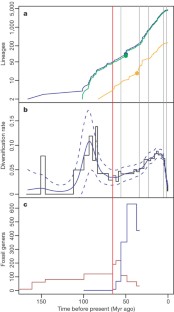
Figure 2: Temporal patterns of mammalian diversification.

Figure 2: Temporal patterns of mammalian diversification.

2009

A swimming mammaliaform from the Middle Jurassic and ecomorphological diversification of early mammals

Ji, Q., Luo, Z.-X., Yuan, C.-X. & Tabrum, A.R. · Science

Ji et al. (2009) describe Castorocauda lutrasimilis, a semi-aquatic mammaliaform from the Jurassic of China, demonstrating radical ecological diversification of early mammals long before the Cretaceous. The work shows that Mesozoic mammals occupied radically different ecological niches already in the Jurassic. For Repenomamus, this context confirms that the terrestrial apex carnivore specialization that R. robustus represents in the Jehol Biota is part of an ecological diversification trend with deep roots in mammalian evolution.

Liaoningornis longidigitris, one of the earliest modern birds from the Early Cretaceous of Liaoning, coexisted with Repenomamus in the Jehol ecosystem. The vertebrate diversity of this fauna illustrates the context of ecological diversifications discussed by Ji et al. (2009).

Liaoningornis longidigitris, one of the earliest modern birds from the Early Cretaceous of Liaoning, coexisted with Repenomamus in the Jehol ecosystem. The vertebrate diversity of this fauna illustrates the context of ecological diversifications discussed by Ji et al. (2009).

Yixianornis grabaui, an enantiornithine bird from the Yixian Formation, illustrating the diversity of primitive birds inhabiting the same ecosystem as Repenomamus robustus. The coexistence of predatory mammals with primitive birds is part of the ecological diversification studied by Ji et al. (2009).

Yixianornis grabaui, an enantiornithine bird from the Yixian Formation, illustrating the diversity of primitive birds inhabiting the same ecosystem as Repenomamus robustus. The coexistence of predatory mammals with primitive birds is part of the ecological diversification studied by Ji et al. (2009).

IVPP V13605 — Instituto de Paleontologia de Vertebrados e Paleoantropologia (IVPP), Pequim, China

Jonathan Chen / CC BY-SA 4.0

IVPP V13605

Instituto de Paleontologia de Vertebrados e Paleoantropologia (IVPP), Pequim, China

Completeness: ~75%
Found in: 2004
By: Equipe do IVPP

The most famous Repenomamus robustus specimen: nearly complete skeleton with bones of a juvenile Psittacosaurus sp. preserved in the abdominal cavity (teeth, jaw, and limb parts of the juvenile ceratopsid). Described by Hu et al. (2005) in Nature, it is the most famous direct evidence of Mesozoic mammal predation on a dinosaur. It is displayed at the Paleozoological Museum of China.

IVPP V12549 (Holótipo) — Instituto de Paleontologia de Vertebrados e Paleoantropologia (IVPP), Pequim, China

Kumiko / CC BY-SA 2.0

IVPP V12549 (Holótipo)

Instituto de Paleontologia de Vertebrados e Paleoantropologia (IVPP), Pequim, China

Completeness: ~60%
Found in: 1999
By: Li Jinling et al.

Holotype of Repenomamus robustus: nearly complete skull, jaws, and partial postcranial skeleton. Described by Li et al. (2001) as the type species, this specimen established the diagnostic characters of R. robustus including skull length of 10.6 cm and robust mandibular morphology with developed heterodonty.

WZSSM VF000011 — Museu de Ciências Naturais de Weifang, Shandong, China

Han et al. 2023 / Scientific Reports — CC BY 4.0

WZSSM VF000011

Museu de Ciências Naturais de Weifang, Shandong, China

Completeness: ~65%
Found in: 2012
By: Gang Han et al.

Extraordinary specimen described by Han et al. (2023) preserving Repenomamus robustus and an adult Psittacosaurus lujiatunensis in mortal combat. The anatomical position of the two animals is unequivocal: the mammal was biting the dinosaur and gripping its jaw with its paw when both died simultaneously, likely buried by a volcanic mudflow.

Espécime do Museu Canadense de Natureza — Museu Canadense de Natureza, Ottawa, Canadá

Morosaurus millenii — CC0 1.0

Espécime do Museu Canadense de Natureza

Museu Canadense de Natureza, Ottawa, Canadá

Completeness: ~50%
Found in: 2000
By: Expedições chinesas

Referred specimen of Repenomamus robustus displayed alongside a Psittacosaurus lujiatunensis skeleton to illustrate the predator-prey interaction documented by Hu et al. (2005) and Han et al. (2023). The exhibition is one of the few places outside China where these two animals can be seen side by side.

Repenomamus robustus became a scientific celebrity in 2005, when Nature published the discovery of the juvenile Psittacosaurus in the mammal's stomach, and again in 2023 with the mortal combat fossil. Despite being one of the most fascinating animals of the Mesozoic, its presence in cinema and fiction productions is limited: the animal did not appear in any major blockbuster through 2026. In science documentaries, Repenomamus is a frequent presence in productions about the Jehol Biota and Mesozoic mammals, generally as the ultimate example that the narrative of 'small, harmless mammals living under dinosaur feet' is an oversimplification. The 2023 fossil generated global media coverage, with comparisons to the wolverine and honey badger. Future film productions are likely to include Repenomamus as a central character in stories set in Early Cretaceous Asia.

Animatrônico do T-rex da franquia Jurassic Park com o Jeep característico da série

Full-size T-rex animatronic from the Jurassic Park franchise, with the iconic red Jeep — Amaury Laporte · CC BY 2.0

2003 📹 Walking with Dinosaurs: Sea of Giants — N/A Wikipedia →
2010 📹 Monsters Resurrected — N/A Wikipedia →
2022 📹 Prehistoric Planet — Jon Favreau Wikipedia →
Mammalia
Eutriconodonta
Gobiconodontidae
Repenomamus
First fossil
1999
Discoverer
Li Jinling, Wang Yuanqing, Wang Yuanqing, Li Chuankui
Formal description
2001
Described by
Li Jinling, Wang Yuanqing, Wang Yuanqing, Li Chuankui
Formation
Formação Yixian (Grupo Jehol)
Region
Liaoning
Country
China
📄 Original description paper

Fun fact

Repenomamus robustus is the only Mesozoic mammal proven capable of preying on adult dinosaurs: fossil WZSSM VF000011, described in 2023, shows the mammal biting the rib cage of an adult Psittacosaurus three times its size and gripping its jaw with its paw. This behavior is as aggressive as that of a honey badger attacking a large snake.