
Wuerhosaurus
Wuerhosaurus homheni
"Wuerho lizard"
About this species
Wuerhosaurus homheni was a large stegosaurid from the Early Cretaceous of northwestern China, collected in the Wuerho (Urho) region of the Junggar Basin in the Xinjiang Uygur Autonomous Region. Roughly 7 meters long and an estimated 4 tonnes in weight, it occupies an unusual spot in stegosaur history: it lived between about 132 and 125 million years ago, tens of millions of years after the group's Late Jurassic peak. Most well-known stegosaurs, such as Stegosaurus, Kentrosaurus, Dacentrurus, and Miragaia, had vanished before the end of the Jurassic, making Wuerhosaurus one of the last well-documented representatives of the clade. The genus name refers directly to the town of Wuerho in the prefecture of Karamay, where the type material was collected, combined with the Greek suffix sauros, meaning lizard. The specific epithet homheni was coined by Dong Zhiming in the original publication. The holotype, catalogued as IVPP V4006, was collected in 1964 by a team from the Institute of Vertebrate Paleontology and Paleoanthropology (IVPP) led by Dong Zhiming and described in 1973 in the volume Dinosaurs from Wuerho, published in the Memoirs of the IVPP. The material includes dorsal vertebrae, pelvic girdle, and fragments of dorsal plates; the skull was not preserved, which limits some fine anatomical comparisons. The specimen comes from the Tugulu Group, probably from the Lianmuqin Formation, a unit whose precise age is still debated but generally placed in the Early Cretaceous, somewhere between the Valanginian and Albian depending on the study. Wikipedia and regional surveys favor a Hauterivian to Barremian position, which we adopt here. The anatomy of Wuerhosaurus is marked by low, broad, rectangular dorsal plates, distinct from the famous tall triangular plates of Stegosaurus. This geometry changed the way paleontologists imagined the diversity of stegosaur armor and was one of the main reasons Dong erected a new genus. Robust femora, a wide pelvis, and vertebrae with low neural spines complete the profile of a heavy stegosaurid, adapted to slow quadrupedal locomotion. Like other stegosaurs, the animal likely carried a thagomizer, the set of terminal caudal spikes used in defense, though those elements were not recovered in the holotype. The systematic status of Wuerhosaurus has been debated. Maidment et al. (2008), in a broad cladistic review of Stegosauria, proposed that W. homheni was a junior synonym of Stegosaurus and should be renamed Stegosaurus homheni. The proposal was not universally accepted: most subsequent reviews, including Raven and Maidment (2017) and regional Chinese syntheses, continue to recognize Wuerhosaurus as a valid genus, given the distinctive combination of low rectangular plates and the survival of the clade into the Early Cretaceous. Dong also described, in 1993, a second species, Wuerhosaurus ordosensis, from the Ordos Basin in Inner Mongolia, which expanded the geographic range of the genus across Asia. Wuerhosaurus therefore remains a key piece for understanding how the stegosaur lineage survived beyond the Jurassic, before the clade's final extinction in the mid-Cretaceous.
Geological formation & environment
The Tugulu Group is a continental sedimentary unit of the Early Cretaceous cropping out in the Junggar Basin of northwestern China, particularly in the Wuerho district of Karamay prefecture, Xinjiang Uygur Autonomous Region. It includes formations such as Lianmuqin, Hutubei, and Shengjinkou, composed of reddish sandstones, siltstones, and mudstones deposited in braided fluvial systems, floodplains, and shallow inland lakes under a semiarid climate. The group preserves a characteristic interior Asian dinosaur community of the Early Cretaceous, including the stegosaur Wuerhosaurus homheni, the ceratopsian Psittacosaurus xinjiangensis, the theropods Kelmayisaurus and Phaedrolosaurus, and the pterosaur Dsungaripterus. The unit is an essential part of the global record of early Cretaceous dinosaurs outside the famous coastal faunas of Europe and North America.
Image gallery


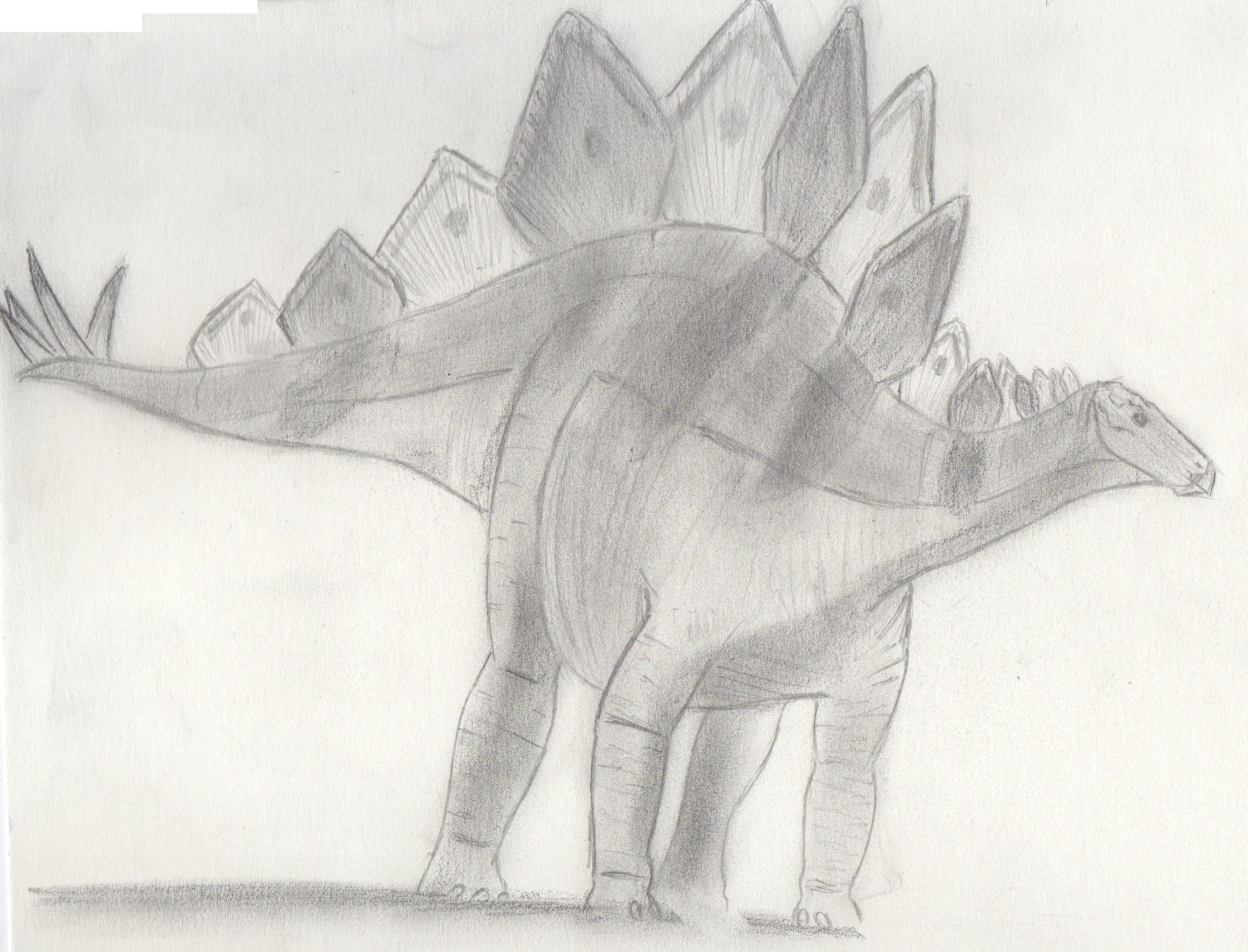


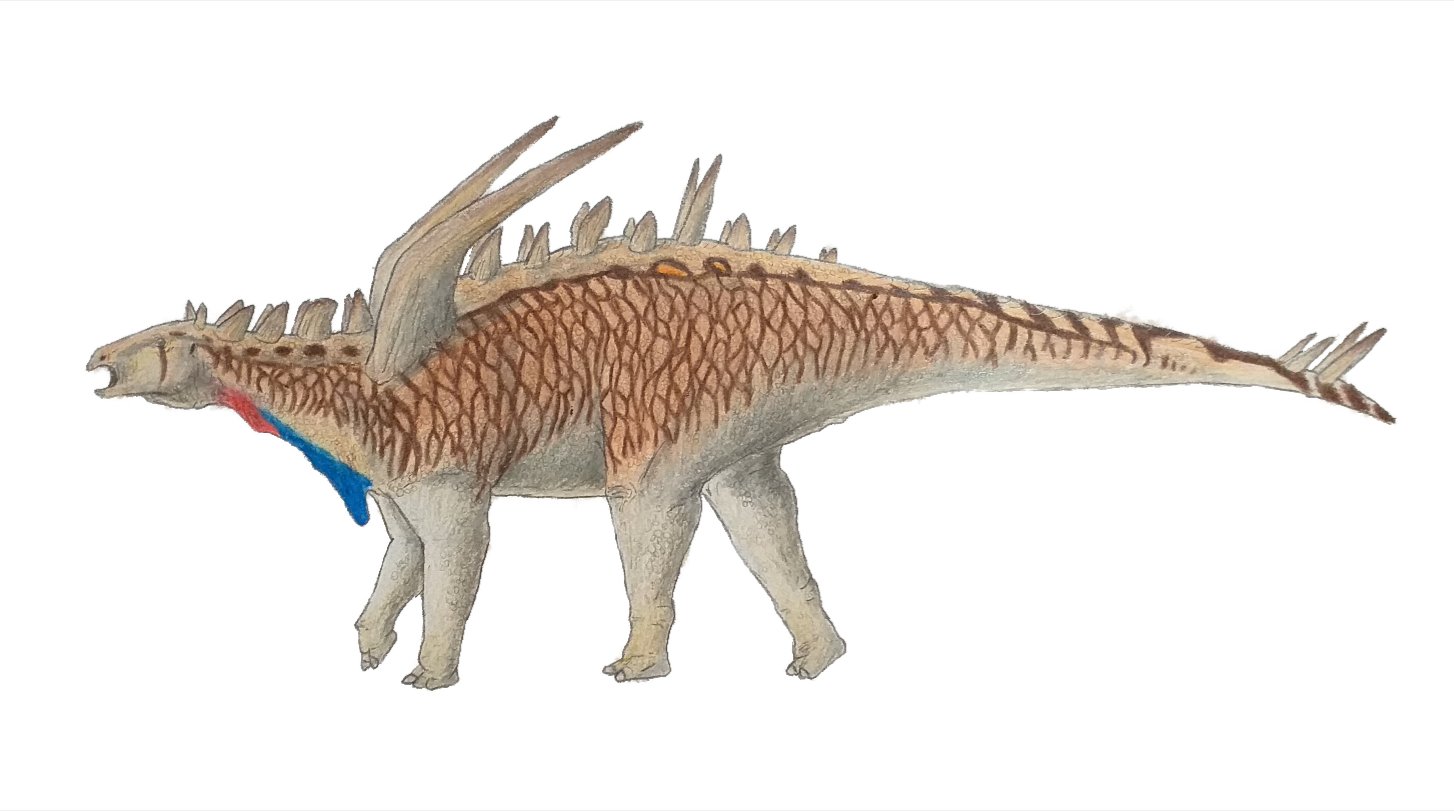


Life reconstruction of Wuerhosaurus homheni by Connor Ashbridge, highlighting the low, rectangular dorsal plates, different from the tall triangular plates of Stegosaurus.
Connor Ashbridge / Wikimedia Commons, CC BY-SA 4.0
Ecology and behavior
Habitat
Wuerhosaurus inhabited the Junggar Basin in what is now Xinjiang during the Early Cretaceous, approximately 132 to 125 million years ago. The Tugulu Group records a continental environment with seasonal rivers, plains with braided channels, shallow inland lakes, and drier alluvial plateaus under a semiarid climate. The vegetation combined conifers, arborescent ferns, ginkgos, and the earliest angiosperms, forming a mosaic of riparian forests along the watercourses and more open areas around the lakes. The animal shared this environment with the basal ceratopsian Psittacosaurus xinjiangensis, theropods such as Kelmayisaurus and Phaedrolosaurus, and pterosaurs such as Dsungaripterus, forming an Asian interior ecological community distinct from the coastal faunas of the Early Cretaceous.
Feeding
A low-browsing herbivore, Wuerhosaurus probably grazed on ground-level vegetation and low branches, at the height of a quadrupedal head. Although the skull is not preserved in the holotype, comparisons with close relatives suggest small, leaf-shaped teeth suited to fibrous foliage such as ferns, cycads, and low conifers, with processing supported by robust jaws. The low, rectangular dorsal plates, rather than tall and triangular, are one of the most distinctive traits of the animal's anatomy and set its silhouette apart from that of Stegosaurus.
Behavior and senses
The defense of Wuerhosaurus against Cretaceous predators of the Junggar Basin likely relied on the caudal thagomizer, typical of Stegosauridae, with two terminal pairs of long spikes used in powerful lateral strikes. The animal's imposing size, around 7 meters, added to this active defense. In environments subject to strong seasonality, alternating between wet and dry seasons, it is plausible that the animal undertook regional movements between more humid areas, with full rivers and lakes, and more open regions at the peak of the dry season.
Physiology and growth
The dorsal plates of Wuerhosaurus were low and broad, with a rectangular outline, different from the tall triangular plates of Stegosaurus. This geometry suggests a combined defense and display function, with a possible secondary role in thermal exchange, in line with the classic hypothesis for vascularized dermal plates of stegosaurs. Together with the genus's survival into the Early Cretaceous, the armor arrangement makes Wuerhosaurus one of the last known stegosaurs before the clade's extinction in the mid-Cretaceous, when the niche of armored herbivores came to be dominated by ankylosaurs, as had already been happening across much of the globe.
Paleogeography
Continental configuration

Scotese & Vérard · CC BY 4.0 · Cretaceous, ~105 Ma
During the Hauteriviano-Barremiano (~132–125 Ma), Wuerhosaurus homheni inhabited Laramidia, the western half of present-day North America, separated from the east by the Western Interior Seaway, a shallow sea dividing the continent. The continents were in very different positions: India was drifting toward Asia, Antarctica was still connected to Australia, and South America was an isolated island.
Bone Inventory
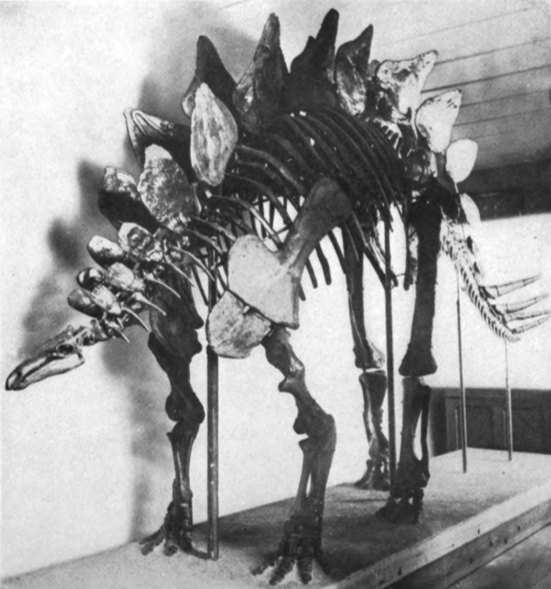
The holotype IVPP V4006 preserves part of the dorsal column, sacrum, pelvic girdle, and fragments of dorsal plates, without a skull or articulated hands and feet. Most of the reconstruction of Wuerhosaurus is done by comparison with other stegosaurids, especially Stegosaurus and Dacentrurus, which makes the record incomplete but informative. Additional material from the Tugulu Group referred to the taxon over the decades supplements the holotype, though some of it is still discussed taxonomically.
Found elements
Inferred elements
Scientific Literature
15 papers in chronological order — from the original description to recent research.
Dinosaurs from Wuerho
Dong, Z. · Memoirs of the Institute of Vertebrate Paleontology and Paleoanthropology, Academia Sinica
Original description of Wuerhosaurus homheni by Dong Zhiming, published in a monograph volume devoted to the dinosaurs collected by the IVPP team in the Wuerho region of the Junggar Basin, Xinjiang. The holotype IVPP V4006, collected in 1964, is a partial skeleton with dorsal vertebrae, pelvic girdle, and fragments of dorsal plates, without a skull. Dong erects the new genus based on the low, rectangular dorsal plates, clearly different from the tall triangular plates of Stegosaurus, and emphasizes the Cretaceous age of the material as one of the last reliable records of Stegosauria. The volume also documents other Tugulu Group taxa, such as Kelmayisaurus and Psittacosaurus xinjiangensis.
Stegosaurs of Asia
Dong, Z. · Dinosaur Systematics: Approaches and Perspectives (Cambridge University Press)
Dong synthesizes the Asian stegosaur record, bringing together the Chinese taxa described to that point, including Huayangosaurus, Tuojiangosaurus, Chungkingosaurus, Gigantspinosaurus, and Wuerhosaurus. The chapter places Wuerhosaurus as a late stegosaurid, from the Early Cretaceous of the Junggar Basin, and discusses the distinction between its low rectangular plates and the tall triangular plates typical of Stegosaurus. Dong also reinforces the hypothesis of the clade's survival into the Early Cretaceous in the Asian interior, though without proposing a formal phylogeny.
Systematics and phylogeny of Stegosauria (Dinosauria: Ornithischia)
Maidment, S.C.R., Norman, D.B., Barrett, P.M. & Upchurch, P. · Journal of Systematic Palaeontology
Broad cladistic review of Stegosauria based on an anatomical character matrix and reanalysis of holotypes. The authors propose that Wuerhosaurus homheni is a junior synonym of Stegosaurus and should be renamed Stegosaurus homheni, an argument supported by osteological similarities in the dorsal and pelvic material. The proposal, however, remains controversial, and later work has continued to treat Wuerhosaurus as a distinct genus, especially because of the peculiar geometry of the dorsal plates and the Cretaceous age of the record. The paper is a mandatory reference for any systematic discussion of the taxon.
A review of the Late Jurassic stegosaurs (Dinosauria, Stegosauria) from the People's Republic of China
Maidment, S.C.R. & Wei, G. · Geological Magazine
Detailed review of Jurassic stegosaurs from China, with extended comparative discussion of Cretaceous taxa such as Wuerhosaurus. Maidment and Wei evaluate historical material collected by Dong and colleagues, identify weaknesses in older diagnoses, and set the conceptual groundwork for the 2008 systematic review. The paper also discusses limitations of the Chinese fossil record and the need for new collections in the Junggar Basin to clarify the taxonomy of Wuerhosaurus.
Stegosauria
Galton, P.M. & Upchurch, P. · The Dinosauria, 2nd edition (University of California Press)
Reference chapter on Stegosauria in the classic volume The Dinosauria. Galton and Upchurch treat Wuerhosaurus homheni as a valid genus in the Early Cretaceous of China and place it within Stegosauridae alongside Stegosaurus, Kentrosaurus, Dacentrurus, and Lexovisaurus. The chapter also discusses the geographic distribution of the clade and the rarity of Cretaceous records outside Asia, highlighting the role of Wuerhosaurus as a marker of late survival.
A new phylogeny of Stegosauria (Dinosauria, Ornithischia)
Raven, T.J. & Maidment, S.C.R. · Palaeontology
New phylogenetic analysis of Stegosauria that proposes an updated topology, with Huayangosaurus as the most basal stegosaur and pronounced diversification in the Late Jurassic. Raven and Maidment retain Wuerhosaurus as a valid genus, recovering it within Stegosauridae as one of the most derived known Cretaceous stegosaurs. The study also expands the 2008 character matrix and integrates new taxa described since then, such as Adratiklit and Bashanosaurus.

New stegosaurs from the Middle Jurassic Lower Member of the Shaximiao Formation of Chongqing, China
Dai, H., Li, N., Maidment, S.C.R., Wei, G., Zhou, Y., Hu, X., Ma, Q., Wang, X., Hu, H. & Peng, G. · Journal of Vertebrate Paleontology
Description of Bashanosaurus primitivus, a very early stegosaur from the Lower Shaximiao Formation, which redefines the basal boundary of the clade and provides new comparative context for derived taxa such as Wuerhosaurus. The work includes a phylogenetic analysis that integrates the Raven and Maidment matrix, keeping Wuerhosaurus within Stegosauridae. The description reinforces the idea of a deep Asian diversification of the group, with forms ranging from the Middle Jurassic to the Early Cretaceous.

Stegosauria
Galton, P.M. · The Dinosauria, 1st edition (University of California Press)
First modern synthesis of Stegosauria in the inaugural volume of The Dinosauria. Galton recognizes Wuerhosaurus homheni as a distinct genus from the Early Cretaceous of China and treats the taxon as one of the last known stegosaurs. The chapter sets out much of the diagnostic vocabulary still in use, such as the distinction between Huayangosauridae and Stegosauridae, and serves as a basis for the 2004 and 2008 reviews.


Phylogeny of the bird-hipped dinosaurs (Order Ornithischia)
Sereno, P.C. · National Geographic Research
Sereno proposes the first broad cladistic analysis of Ornithischia, grouping thyreophorans, ornithopods, and marginocephalians in a modern topology. The work places Stegosauria as the sister clade to Ankylosauria within Eurypoda and establishes the phylogenetic framework in which Wuerhosaurus is treated as a derived stegosaurid. The paper is the root of virtually all later analyses of the group.

Dinosaur distribution
Upchurch, P., Barrett, P.M. & Dodson, P. · The Dinosauria, 2nd edition (University of California Press)
Chapter devoted to the geographic and temporal distribution of dinosaurs. Upchurch and colleagues treat the Junggar Basin as one of the poles of the Asian record, mentioning Wuerhosaurus homheni among the Early Cretaceous Chinese stegosaurids. The chapter contextualizes the taxon within the Tugulu Group fauna, which includes theropods such as Kelmayisaurus and Phaedrolosaurus and ornithopods such as Psittacosaurus.


A new long-necked 'sauropod-mimic' stegosaur and the evolution of the plated dinosaurs
Mateus, O., Maidment, S.C.R. & Christiansen, N.A. · Proceedings of the Royal Society B
Description of Miragaia longicollum, a Portuguese Late Jurassic stegosaurid with an extraordinarily long neck. The paper matters for Wuerhosaurus because it reinforces the morphological diversity of the Dacentrurinae clade and expands the cladistic matrix for Stegosauridae, within which Wuerhosaurus is evaluated. The idea that stegosaurids showed large variation in body plan helps to understand why the low plates of Wuerhosaurus are not an anomaly but further exploration of an anatomical space.

Dinosaurs from the Jurassic of Sichuan
Dong, Z., Zhou, S. & Zhang, Y. · Palaeontologia Sinica, New Series C
Classic monograph on Jurassic dinosaurs from Sichuan, which considerably expanded knowledge of Asian stegosaurs with detailed descriptions of Tuojiangosaurus and Chungkingosaurus. Although it does not deal directly with Wuerhosaurus, it provides the anatomical and ecological background needed to understand the genus as a Cretaceous peak of a lineage whose Jurassic heyday was concentrated precisely in the Sichuan Basin.

On a new material of stegosaurs from the Tugulu Group of the Junggar Basin, Xinjiang
Li, K., Cai, Z. & Wang, S. · Geological Bulletin of China
Chinese regional publication documenting additional stegosaur material from the Tugulu Group, collected in outcrops near the type area of Wuerhosaurus in the Junggar Basin. The authors compare osteology and dorsal plates of the new material with the IVPP V4006 holotype, reinforcing the persistence of stegosaurs in the Early Cretaceous of Xinjiang and providing a basis for future taxonomic revisions of the genus.

A new species of stegosaur (Dinosauria) from the Ordos Basin, Inner Mongolia, People's Republic of China
Dong, Z. · Canadian Journal of Earth Sciences
Dong describes Wuerhosaurus ordosensis, the second species of the genus, based on material from the Ordos Basin in Inner Mongolia. The holotype is a partial skeleton with vertebrae and low dorsal plates, similar to those of W. homheni. The description extends the geographic distribution of Wuerhosaurus in the Early Cretaceous of Asia and reinforces the validity of the genus as a systematic entity, though later work has questioned the specific distinction between the two species.

New evidence of shared dinosaur across Upper Jurassic Proto-North Atlantic: Stegosaurus from Portugal
Escaso, F., Ortega, F., Dantas, P., Malafaia, E., Pimentel, N.L., Pereda-Suberbiola, X., Sanz, J.L., Kullberg, J.C., Kullberg, M.C. & Barriga, F. · Naturwissenschaften
Report of Stegosaurus material in Portugal, demonstrating faunal sharing between North America and Europe in the Late Jurassic. The paper is useful in the context of Wuerhosaurus because it broadens the understanding of the global distribution of Stegosauridae in the millions of years preceding the Asian Cretaceous record. Together with Maidment's review, it helps place Wuerhosaurus as a possible derived survivor of cosmopolitan Stegosauridae lineages.

Famous museum specimens
IVPP V4006 (Holótipo)
Institute of Vertebrate Paleontology and Paleoanthropology (IVPP), Beijing
Official holotype of Wuerhosaurus homheni, designated by Dong in 1973. It was collected in 1964 in outcrops of the Tugulu Group near Wuerho in the Junggar Basin. The preserved material includes dorsal vertebrae, sacrum, pelvic girdle, and fragments of low rectangular dorsal plates, without a skull or limb extremities. It is the sole anatomical reference for the taxon and appears as a central piece in displays linked to the IVPP and the Paleozoological Museum of China in Beijing. Biologically, the specimen is especially relevant because it documents the survival of stegosaurs into the Early Cretaceous, at a time when the group had already been replaced by ankylosaurs across most of the globe, making Wuerhosaurus one of the last confirmed representatives of Stegosauria.
Classification

Discovery
Fun fact
Wuerhosaurus lived in the Early Cretaceous, long after most stegosaurs had disappeared. Its dorsal plates were low and rectangular, quite different from the famous triangular ones of Stegosaurus.
Last reviewed: April 24, 2026