
Caihong
Caihong juji
"rainbow with a big crest"
About this species
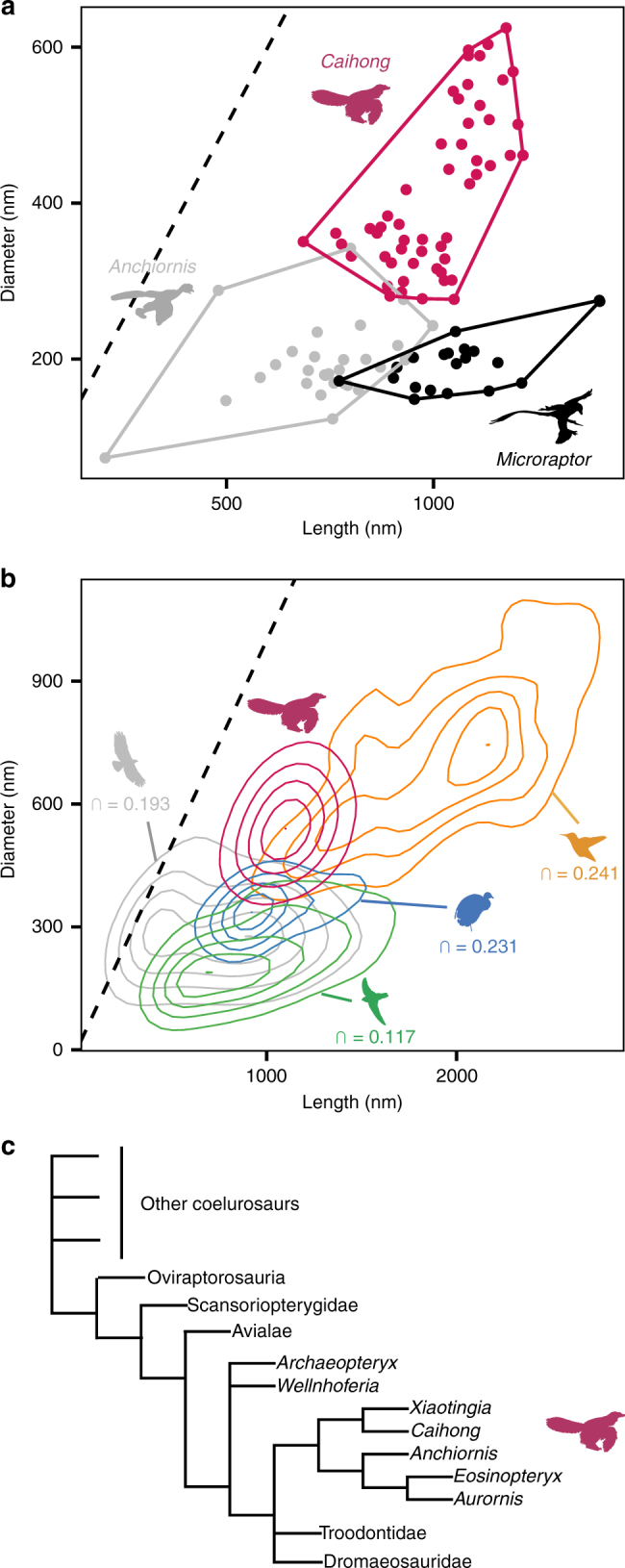
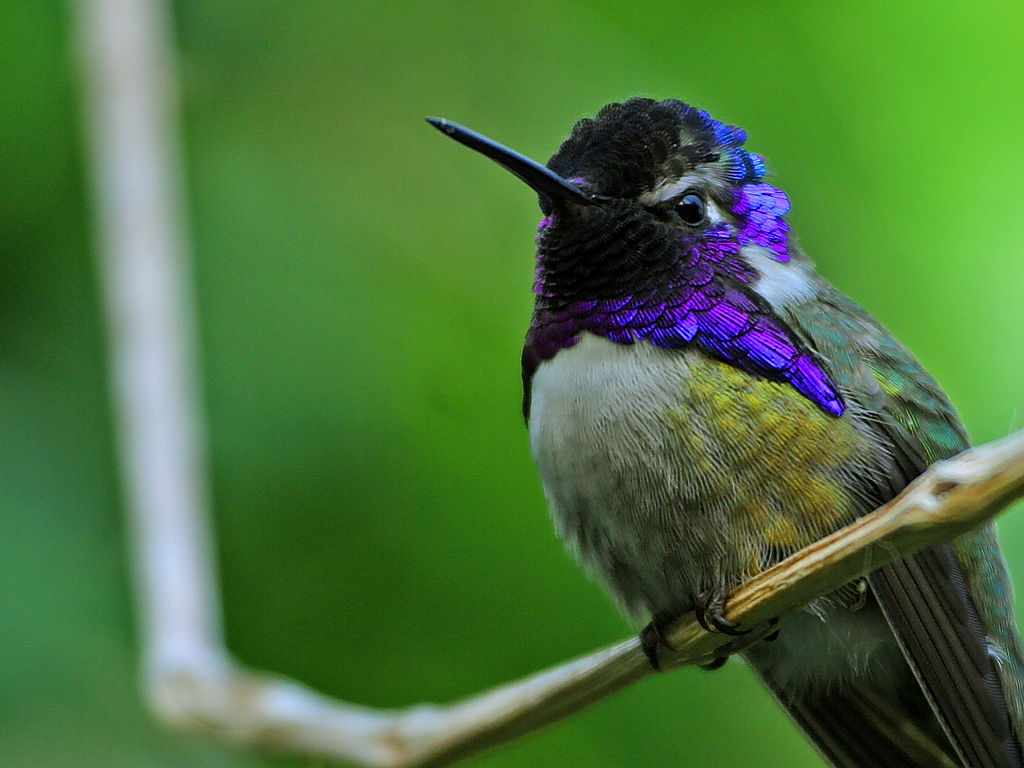
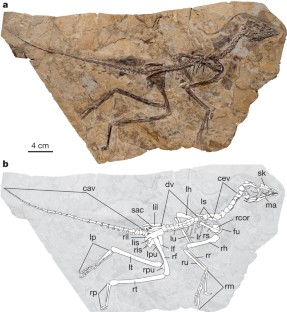
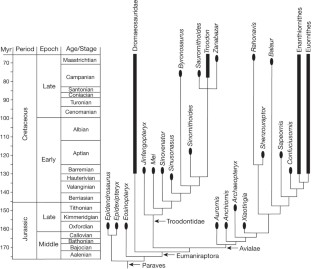
Caihong juji is a small paravian theropod from the Late Jurassic of China whose name comes from Mandarin and means rainbow with a big crest. It measures about 40 centimeters in length and weighs approximately 475 grams, placing it among the smallest known non-avian dinosaurs. The holotype PMoL-B00175, a nearly complete skeleton preserved on slab and counterslab, was found by a local farmer in 2014 in rocks of the Tiaojishan Formation, in the Qinglong Manchu Autonomous County, Hebei Province, and formally described in 2018 by an international team led by Dongyu Hu and Julia Clarke, with Xing Xu, Matthew Shawkey, and other Chinese, American, and European co-authors. Its surprising anatomy includes an elongated bony crest on the snout, formed by expanded lacrimal bones, combined with long asymmetrical pennaceous feathers on the forelimbs and along the entire tail, a morphological package without parallel in the Jurassic record. This geometry suggests Caihong already displayed elaborate ornamental surfaces long before it was capable of sustained powered flight. The most remarkable feature was revealed by scanning electron microscopy: thousands of fossilized melanosomes in feathers of the neck, chest, and base of the tail show a platelet shape, a nanostructure virtually identical to that found in living hummingbirds. In modern birds, this arrangement produces structural iridescence that shifts with the angle of incident light, so that the same individual may appear metallic green, blue, or red with subtle movements. Applying the same principle to the fossil, the authors concluded that parts of Caihong's body shimmered in metallic tones, likely in blue, green, and reddish bands, indeed recalling the rainbow that gives the genus its name. This is the first direct evidence of iridescent plumage in a non-avian dinosaur, pushing back the minimum record of this kind of coloration by roughly 40 million years, which had previously been known only in the Early Cretaceous Microraptor. The simultaneous presence of a bony crest and ornamental feathers indicates that complex visual signals, most likely linked to sexual display or species recognition, were already established at the base of Paraves. Positioned phylogenetically as an anchiornithid close to Anchiornis, Xiaotingia, and Aurornis, Caihong reinforces the idea that the origin of birds was not a linear sequence of aerodynamic innovations, but a parallel evolutionary experiment with multiple small, feathered, visually striking lineages across the Jurassic of Asia. The find also consolidates the Qinglong and Liaoning region as a global epicenter of soft-tissue paleobiology, thanks to exceptional preservation in the volcanic tuffs of the Yanliao Biota, where periodic ashfalls blanketed anoxic lakes and locked feathers, melanosomes, and even subcellular nanostructures into the sediment. For science, Caihong juji marks the moment when we stopped imagining dinosaurs in faded earth tones and began to recognize that some of them competed for mates and chased off rivals by flashing optical sparks very similar to those that today glint on the chests of hummingbirds.
Geological formation & environment
The Tiaojishan Formation is a volcaniclastic sequence from the Middle to Late Jurassic (Callovian to Oxfordian, roughly 165 to 156 million years ago), spanning Hebei, Liaoning, and Inner Mongolia in northeastern China. It is the core unit of the Yanliao Biota, a lacustrine ecosystem with exceptional soft-tissue preservation driven by periodic ashfalls over anoxic lakes. Its fauna is rich in small paravians, salamanders, insects, pterosaurs, and early modern mammals, and has produced some of the most relevant fossils for understanding the origin of birds, including Anchiornis, Xiaotingia, Eosinopteryx, Aurornis, and Caihong juji.
Image gallery


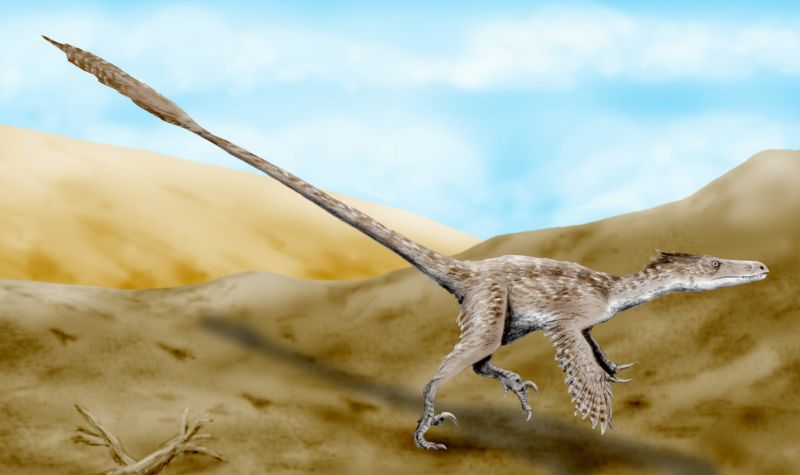


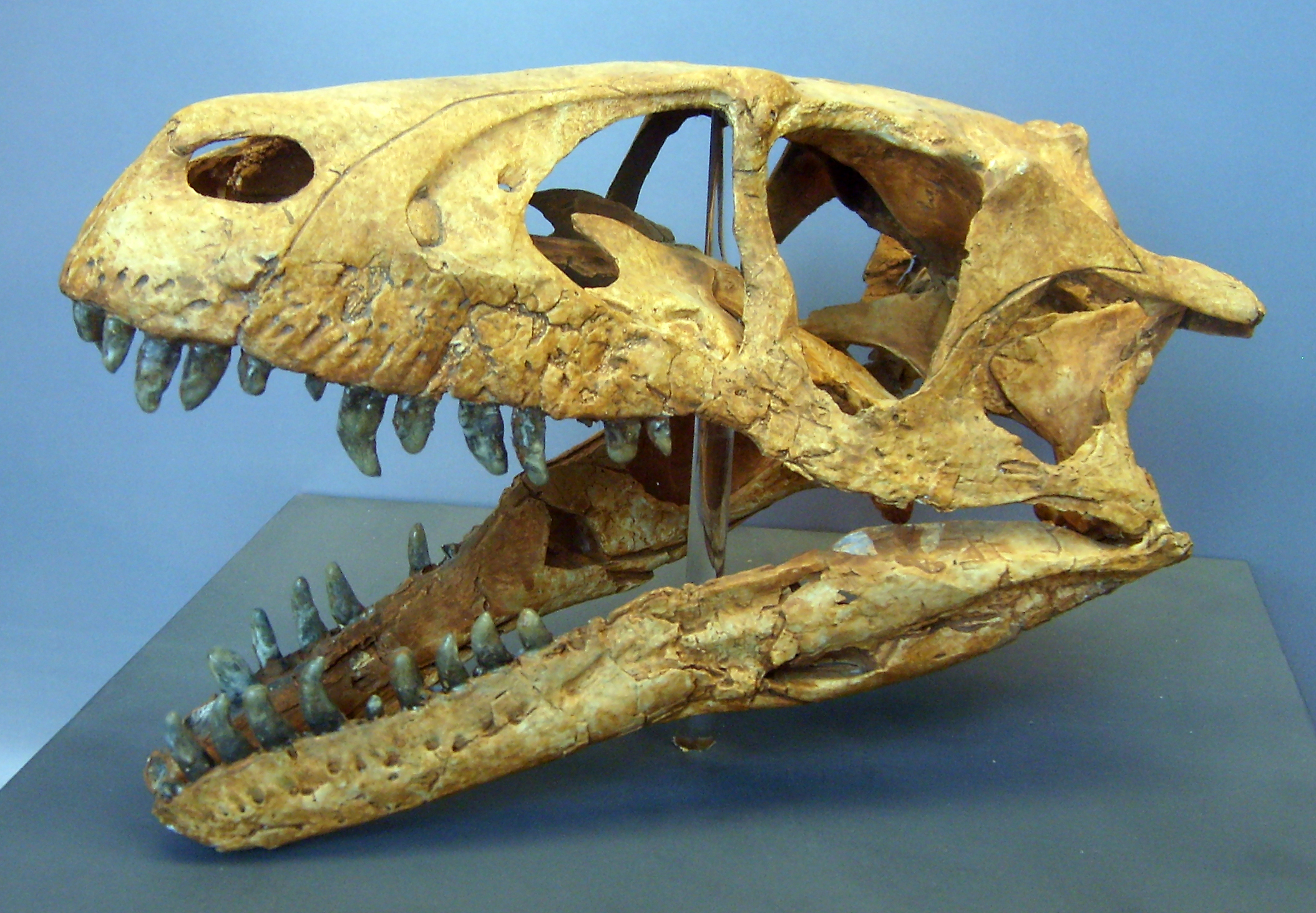


Life reconstruction of Caihong juji by Tom Parker, showing the bony crest on the snout and the iridescent plumage inferred from platelet-shaped melanosomes.
Tom Parker, Wikimedia Commons, CC BY-SA 4.0
Ecology and behavior
Habitat
Caihong juji inhabited temperate to subtropical forests along the margins of volcanic lakes in what is now northeastern China during the Oxfordian of the Late Jurassic, about 161 million years ago. The Tiaojishan Formation is part of the Yanliao Biota, a lacustrine ecosystem well preserved in volcanic tuffs and shales, with dense gymnosperm forests. The same context hosted other small paravians such as Anchiornis, Xiaotingia, and Eosinopteryx, pterosaurs like Darwinopterus, salamanders like Jeholotriton, diverse insects, and small basal mammals.
Feeding
Its small, numerous, serrated teeth, combined with a diminutive 40-centimeter body, indicate a diet composed mainly of insects and small vertebrates such as lizards, amphibians, and occasional nests of other paravians. Limb proportions suggest active hunting on the forest floor and among low vegetation, with probable climbing ability on trunks and branches.
Behavior and senses
The combination of an elongated bony snout crest, long asymmetrical feathers on wings and tail, and iridescent plumage on neck, chest, and base of tail suggests strongly developed visual display behavior, likely linked to sexual selection or species recognition. Despite aerodynamically sophisticated feathers, limb morphology and the lack of robust sternal adaptations indicate Caihong juji did not yet engage in sustained powered flight; at most it may have performed short glides or cushioned leaps between low branches.
Physiology and growth
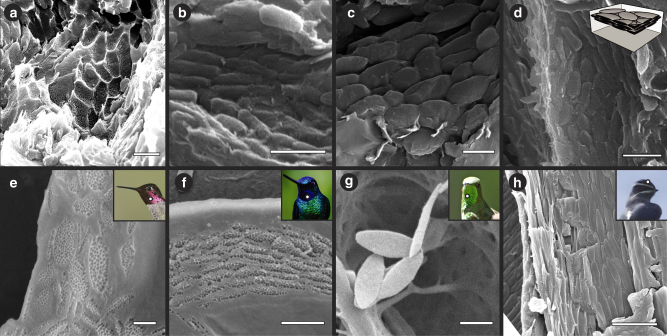
The density and quality of feathers throughout the body point to endothermic metabolism, typical of small paravians. The most extraordinary finding is structural: platelet-shaped melanosomes, statistically identical to those of modern hummingbirds, were identified in feathers of the neck, chest, and base of the tail. In living birds this geometry produces structural iridescence that shifts from green to blue to red depending on the angle of light. Caihong juji is therefore the oldest known record of this type of nanostructure, pushing the origin of iridescence in dinosaurs to at least 161 million years ago.
Paleogeography
Continental configuration

Scotese & Vérard · CC BY 4.0 · Jurassic, ~155 Ma
During the Oxfordiano (~161–160 Ma), Caihong juji inhabited the fragmenting Pangea. North America and Europe were still close, and the North Atlantic was just beginning to open. Climate was warm and humid globally, with no polar ice caps.
Bone Inventory
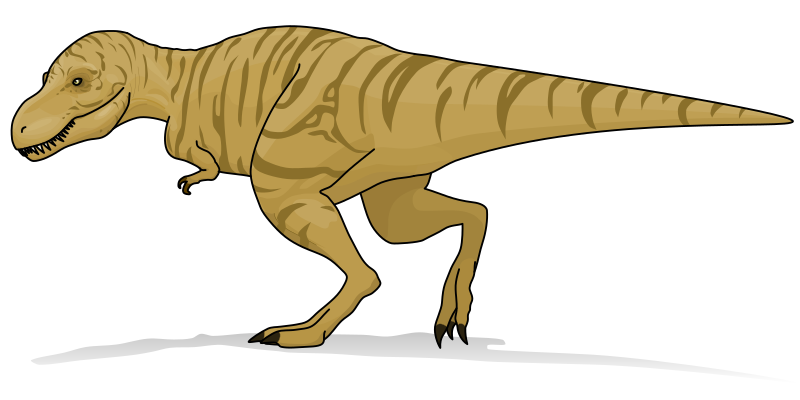
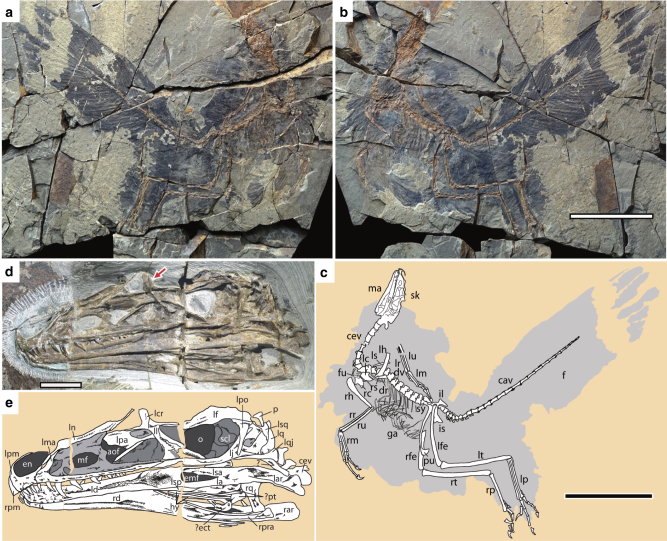
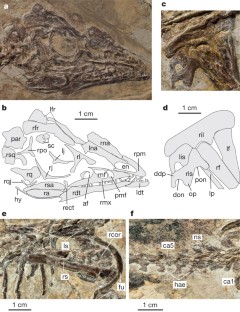
The holotype PMoL-B00175 is a nearly complete articulated skeleton preserved on slab and counterslab, with pennaceous feather impressions on the forelimbs, hindlimbs, and tail. The skull preserves the diagnostic lacrimal crest, and platelet-shaped melanosomes were identified in feathers of the neck, chest, and base of the tail. It is the only known specimen of the species.
Found elements
Inferred elements
Scientific Literature
15 papers in chronological order — from the original description to recent research.
A bony-crested Jurassic dinosaur with evidence of iridescent plumage highlights complexity in early paravian evolution (parte 1: osteologia e holótipo)
Hu, D., Clarke, J.A., Eliason, C.M., Qiu, R., Li, Q., Shawkey, M.D., Zhao, C., D'Alba, L., Jiang, J., Xu, X. · Nature Communications
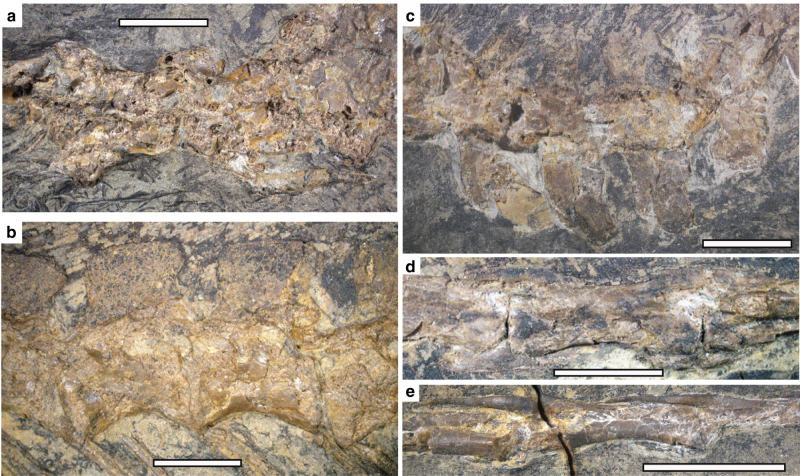
In this first part of the founding paper, Hu and colleagues present the holotype PMoL-B00175 and detail the overall anatomy of the new taxon. The skeleton is articulated, with the skull preserving the diagnostic lacrimal crest, long and tall, which gives the species its name. The authors describe vertebral morphology, pectoral girdle, and limbs, highlighting proportions typical of small paravians. The combination of bony crest, serrated teeth, and limb proportions justifies the erection of a new genus distinct from other anchiornithids known from the region.
A bony-crested Jurassic dinosaur with evidence of iridescent plumage highlights complexity in early paravian evolution (parte 2: cintura peitoral, membros e penas)
Hu, D., Clarke, J.A., Eliason, C.M., Qiu, R., Li, Q., Shawkey, M.D., Zhao, C., D'Alba, L., Jiang, J., Xu, X. · Nature Communications
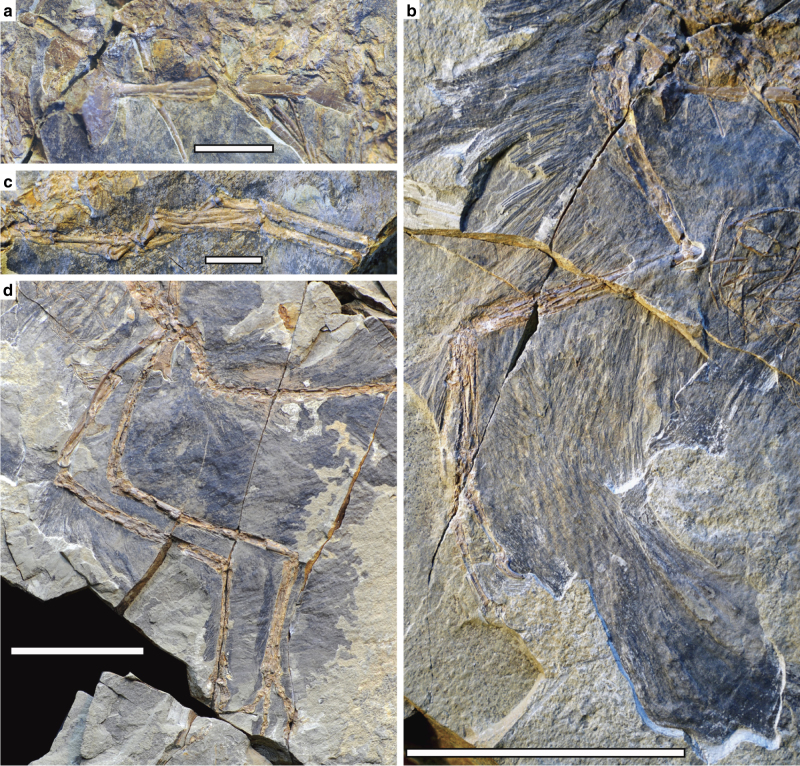
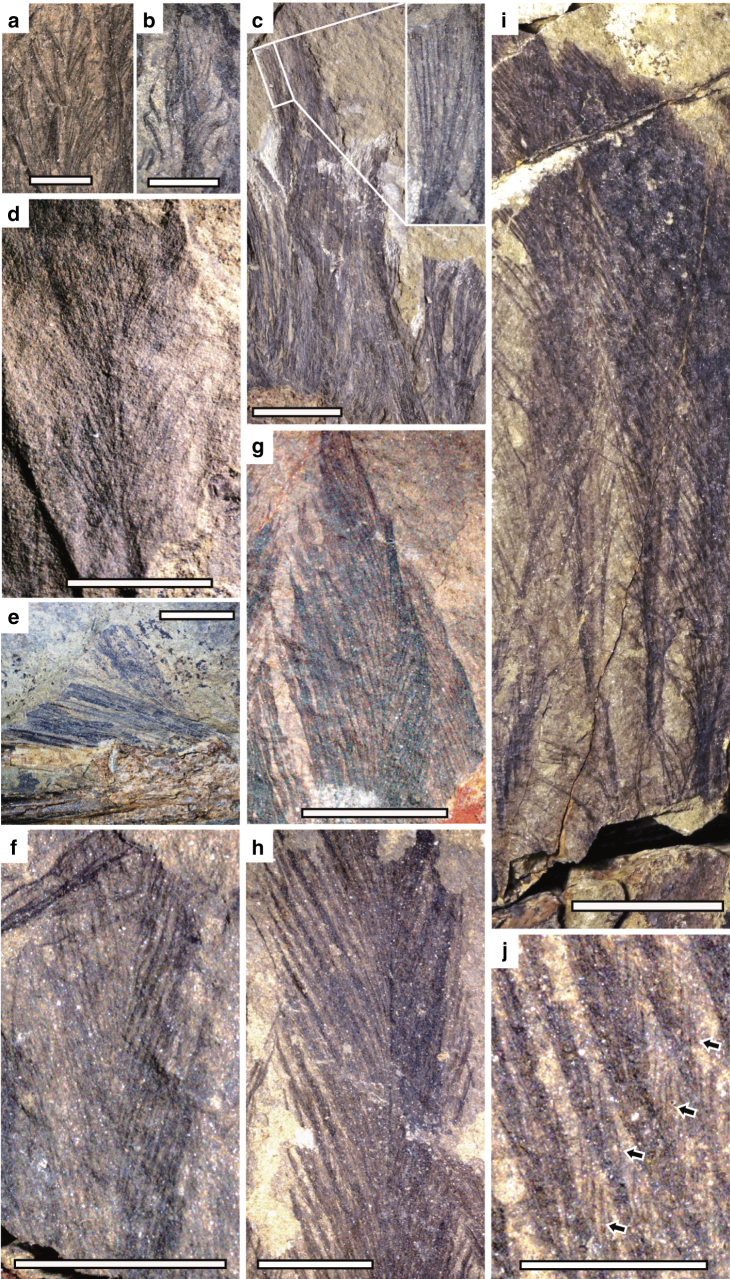
The second part of the paper describes in detail the pectoral girdle, the hand, and the distribution of feathers. Wing feathers are pennaceous and asymmetrical, with a curved rachis, and are aligned on both forelimbs and legs. The entire tail is covered by long rectrices. The presence of an alula-like structure, a small group of feathers on the first digit, indicates that aerodynamic elements appeared before the origin of powered flight. The contrast between ornamental crest, asymmetrical wings, and feathered tail suggests strong sexual selection pressure on visual surfaces.
A bony-crested Jurassic dinosaur with evidence of iridescent plumage highlights complexity in early paravian evolution (parte 3: iridescência e filogenia)
Hu, D., Clarke, J.A., Eliason, C.M., Qiu, R., Li, Q., Shawkey, M.D., Zhao, C., D'Alba, L., Jiang, J., Xu, X. · Nature Communications
The third part of the paper presents the central finding: highly organized platelet-shaped melanosomes were identified in feathers of the neck, chest, and base of the tail. These nanostructures are statistically comparable to those of modern hummingbirds, whose iridescent coloration ranges from metallic green to vivid red through shades of blue. This is the first evidence of iridescent plumage in a non-avian dinosaur, preceding earlier records in Microraptor by roughly 40 million years. The phylogenetic analysis, based on a strict consensus of 192 equally parsimonious trees, places Caihong juji close to other anchiornithids, near the base of Paraves, alongside lineages that would give rise to modern birds.
An Archaeopteryx-like theropod from China and the origin of Avialae
Xu, X., You, H., Du, K., Han, F. · Nature
Xu and colleagues describe Xiaotingia zhengi, a small paravian from the Tiaojishan Formation, and propose a reorganization of the phylogeny of early birds that places Archaeopteryx outside Avialae, grouped with dromaeosaurids. The analysis is relevant to Caihong juji because it shares the same geological context and the same debate about which taxa are the direct ancestors of birds. In the 2018 description of Caihong, Xiaotingia appears as one of its closest relatives within Anchiornithidae.


Plumage color patterns of an extinct dinosaur
Li, Q., Gao, K.Q., Vinther, J., Shawkey, M.D., Clarke, J.A., D'Alba, L., Meng, Q., Briggs, D.E.G., Prum, R.O. · Science
First study to reconstruct the complete coloration pattern of a Mesozoic dinosaur, Anchiornis huxleyi, using the shape and density of melanosomes preserved in the feathers. The authors show it is possible to infer color in fossils when nanostructure geometry is compared to a database of modern birds. This methodological framework paved the way for later iridescence studies in Microraptor and Caihong juji, both analyzed by the same team.


The colour of fossil feathers
Vinther, J., Briggs, D.E.G., Prum, R.O., Saranathan, V. · Biology Letters
Seminal paper that for the first time demonstrates structures previously interpreted as bacteria in fossil feathers are in fact preserved melanosomes. Vinther and colleagues opened the field of paleobiology of structural and pigmentary color. Without this foundational work, inferring iridescence in Caihong juji in 2018 would not have been possible.

Fossilized melanosomes and the colour of Cretaceous dinosaurs and birds
Zhang, F., Kearns, S.L., Orr, P.J., Benton, M.J., Zhou, Z., Johnson, D., Xu, X., Wang, X. · Nature
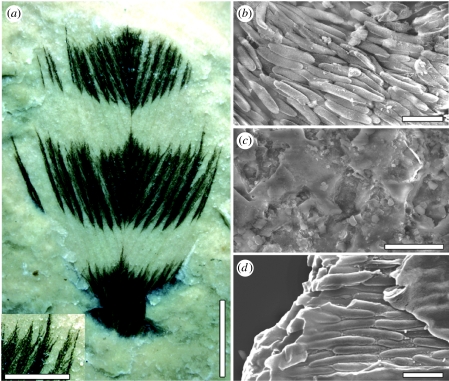
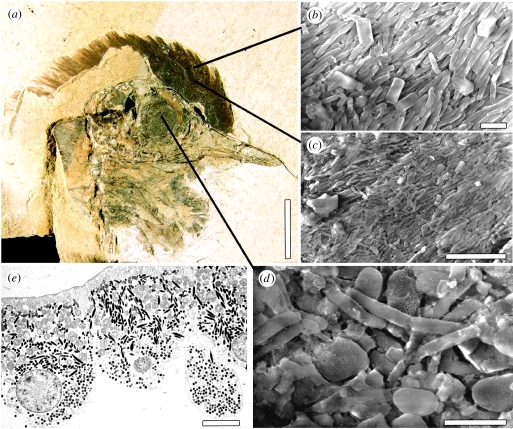
Zhang and colleagues infer, from Sinosauropteryx melanosomes, that this feathered dinosaur had a color pattern with reddish tail bands. The method applied to Sinosauropteryx is the same that, combined with the advance by Li et al. (2010) on Anchiornis, allowed the diagnosis of iridescence in Caihong juji in 2018.


Reconstruction of Microraptor and the evolution of iridescent plumage
Li, Q., Gao, K.Q., Meng, Q., Clarke, J.A., Shawkey, M.D., D'Alba, L., Pei, R., Ellison, M., Norell, M.A., Vinther, J. · Science
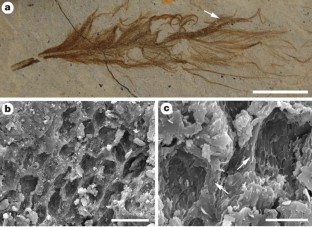
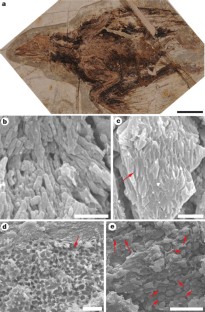
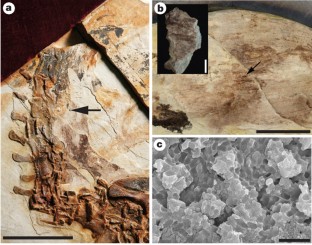
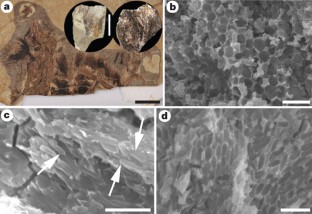
Before Caihong juji, Microraptor was the only non-avian dinosaur with evidence of iridescent plumage, identified by Li and colleagues in 2012. The authors showed that narrow, organized melanosomes revealed iridescent black coloration. The discovery in Caihong six years later pushes back the minimum record of dinosaur iridescence by roughly 40 million years, from the Early Cretaceous to the Late Jurassic.

Fossil evidence for evolution of the shape and color of penguin feathers
Clarke, J.A., Ksepka, D.T., Salas-Gismondi, R., Altamirano, A.J., Shawkey, M.D., D'Alba, L., Vinther, J., DeVries, T.J., Baby, P. · Science
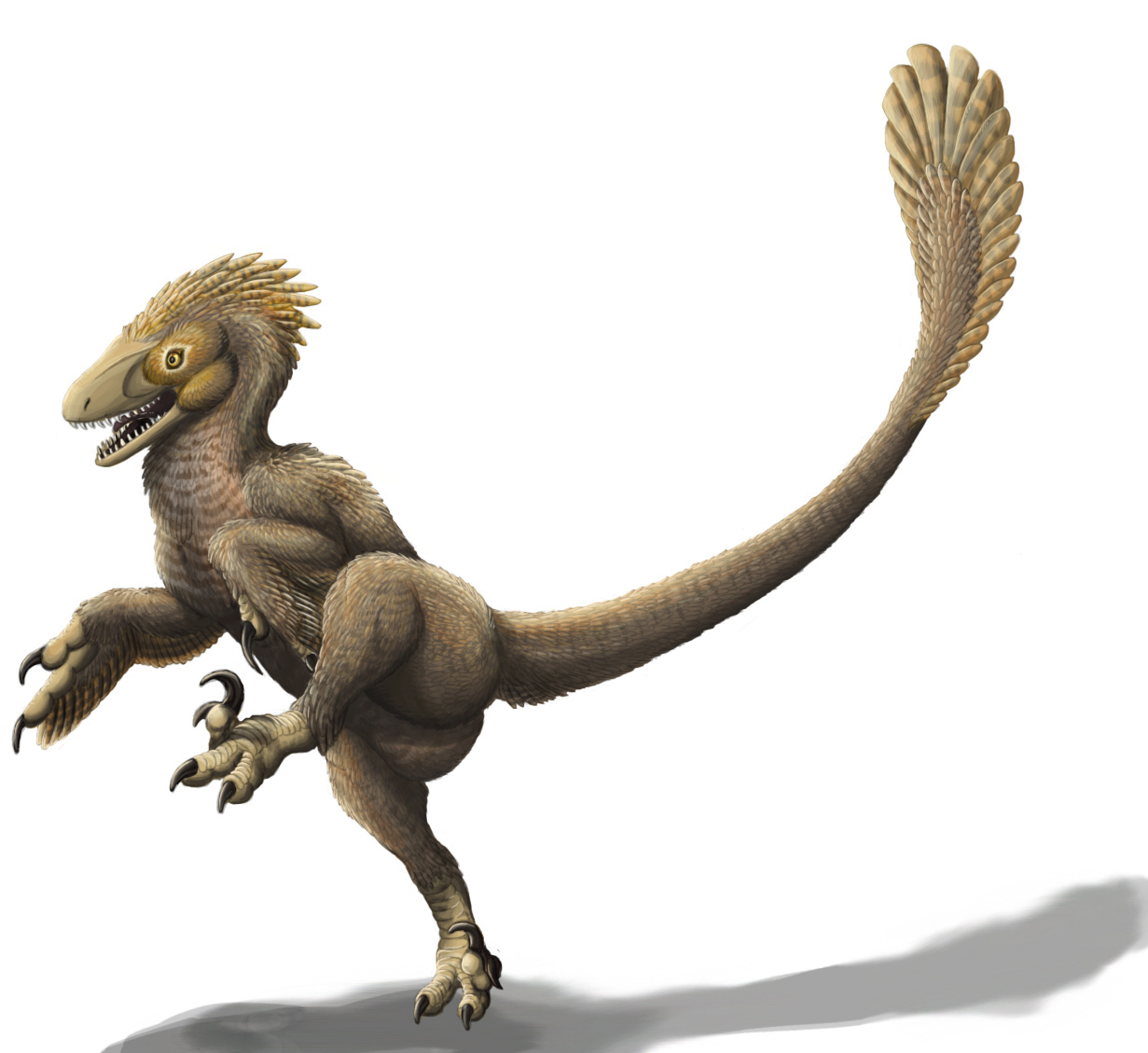
Clarke and colleagues describe Inkayacu paracasensis, a fossil penguin from the Eocene of Peru, and use preserved melanosomes to show that its plumage was gray and reddish-brown, in contrast to the black-and-white pattern of modern species. The work expands the use of melanosome signatures as a proxy for coloration and involves members of the same team that would later describe iridescence in Caihong juji.


Anatomy, physics, and evolution of structural colors
Prum, R.O. · Bird Coloration, volume 1 (Harvard University Press)
Classic chapter in which Richard Prum formalizes the physical theory behind structural coloration in birds, including angle dependence and the nanoscale organization of structures that produce iridescence. This is the theoretical framework used by Hu et al. (2018) to infer that the platelet-shaped melanosomes of Caihong juji produced iridescent coloration analogous to that of hummingbirds.

A new feathered maniraptoran dinosaur fossil that fills a morphological gap in avian origin
Xu, X., Zhao, Q., Norell, M.A., Sullivan, C., Hone, D., Erickson, G., Wang, X., Han, F., Guo, Y. · Chinese Science Bulletin
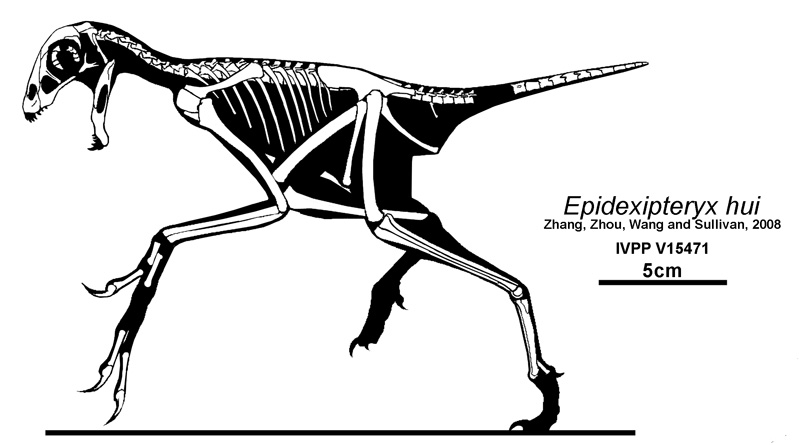
Redescription of Anchiornis huxleyi based on additional specimens from the Tiaojishan Formation, consolidating the genus as a central piece in the dinosaur-bird transition. The same geological context would later yield the holotype of Caihong juji, indicating that the Qinglong/Liaoning region preserved a genuine epicenter of paravian diversity during the Late Jurassic.


A review of dromaeosaurid systematics and paravian phylogeny
Turner, A.H., Makovicky, P.J., Norell, M.A. · Bulletin of the American Museum of Natural History
Comprehensive monograph on the systematics of Dromaeosauridae and the phylogeny of Paraves. The cladogram produced by Turner and colleagues provided much of the character matrix that Hu et al. (2018) used, with modifications, to place Caihong juji at the base of Paraves, within Anchiornithidae.

A new long-tailed basal bird from the Lower Cretaceous of north-eastern China
Lefèvre, U., Hu, D., Escuillié, F., Dyke, G., Godefroit, P. · Biological Journal of the Linnean Society
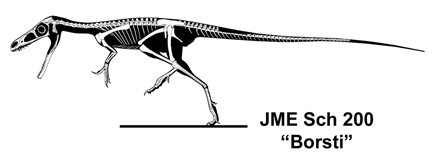
Work that describes Jianianhualong and revisits the phylogenetic position of Eosinopteryx and Aurornis, raising the hypothesis of synonymy with Anchiornis. This debate about the taxonomic integrity of Anchiornithidae is directly relevant to Caihong juji, which remains a distinct genus thanks to its bony crest, a unique character in the group.


New specimen of Archaeopteryx provides insights into the evolution of pennaceous feathers
Foth, C., Tischlinger, H., Rauhut, O.W.M. · Nature
Foth and colleagues describe the eleventh specimen of Archaeopteryx, preserving feathers all over the body. The authors argue that extensive pennaceous plumage evolved initially for visual display and was only later co-opted for flight. This hypothesis is reinforced by Caihong juji, which already shows long asymmetrical ornamental feathers associated with a bony crest, with no evidence of active flight capability.


A Jurassic avialan dinosaur from China resolves the early phylogenetic history of birds
Godefroit, P., Cau, A., Hu, D., Escuillié, F., Wu, W., Dyke, G. · Nature
Godefroit and colleagues describe Aurornis xui and include Eosinopteryx in their analysis, proposing a revised phylogeny in which Archaeopteryx returns to Avialae and anchiornithids occupy a nearby position. This phylogenetic matrix is one of the bases used by Hu et al. (2018) to place Caihong juji, consolidating Anchiornithidae as a critical group for understanding the base of birds.

Famous museum specimens
PMoL-B00175 (holótipo)
Paleontological Museum of Liaoning, Shenyang
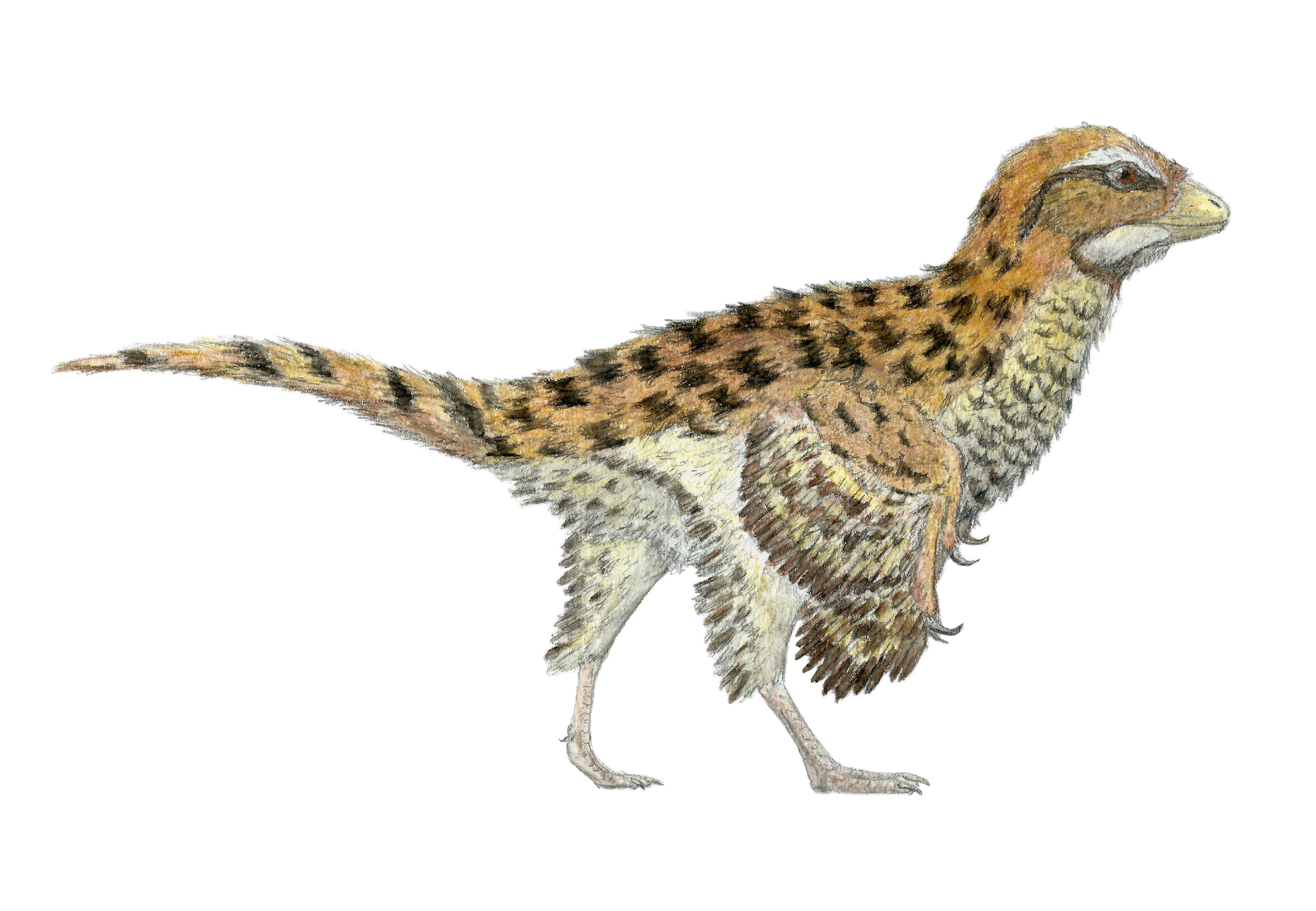
Slab and counterslab preserving the articulated skeleton, the diagnostic lacrimal bony crest, and pennaceous feather impressions on the forelimbs, hindlimbs, and tail. Platelet-shaped melanosomes were identified in feathers of the neck, chest, and base of the tail, supporting the inference of iridescent plumage. Only known specimen of the species.
Classification
Discovery
Fun fact
First evidence of iridescent plumage in a non-avian dinosaur, the preserved platelet-shaped melanosomes are analogous to those of modern hummingbirds, suggesting Caihong displayed vivid rainbow-like colors that inspired its name.
Last reviewed: April 24, 2026