
Irritator
Irritator challengeri
"Challenging irritator (named after Professor Challenger)"
About this species
Irritator challengeri is a Brazilian spinosaurid discovered in the Romualdo Formation, Araripe Basin, Ceará state. Its name reflects paleontologists' frustration upon finding the original skull had been fraudulently modified by fossil traffickers before reaching scientists. About 8 meters long with an elongated snout lined with conical teeth, it was likely piscivorous, hunting giant fish in the lagoonal environments of the Early Cretaceous of Brazil. The holotype (SMNS 58022), housed in Stuttgart, Germany, is the most complete spinosaurid skull ever found, making Irritator essential for understanding the biology of the entire Spinosauridae family.
Geological formation & environment
The Romualdo Formation is part of the Araripe Basin in northeastern Brazil, spanning parts of the states of Ceará, Pernambuco, and Piauí. Deposited during the Aptian-Albian of the Early Cretaceous, approximately 115 to 108 million years ago, it represents an exceptional conservation lagerstätte. The formation is famous for exceptionally preserved fish in calcareous nodules, complete pterosaurs, and other vertebrates. The environment was an epicontinental coastal lagoon with influence from marine incursions of the forming South Proto-Atlantic. The rich fauna included the giant fish Calamopleurus, pterosaurs like Anhanguera and Tupuxuara, turtles, and the spinosaurids Irritator and Angaturama.
Image gallery


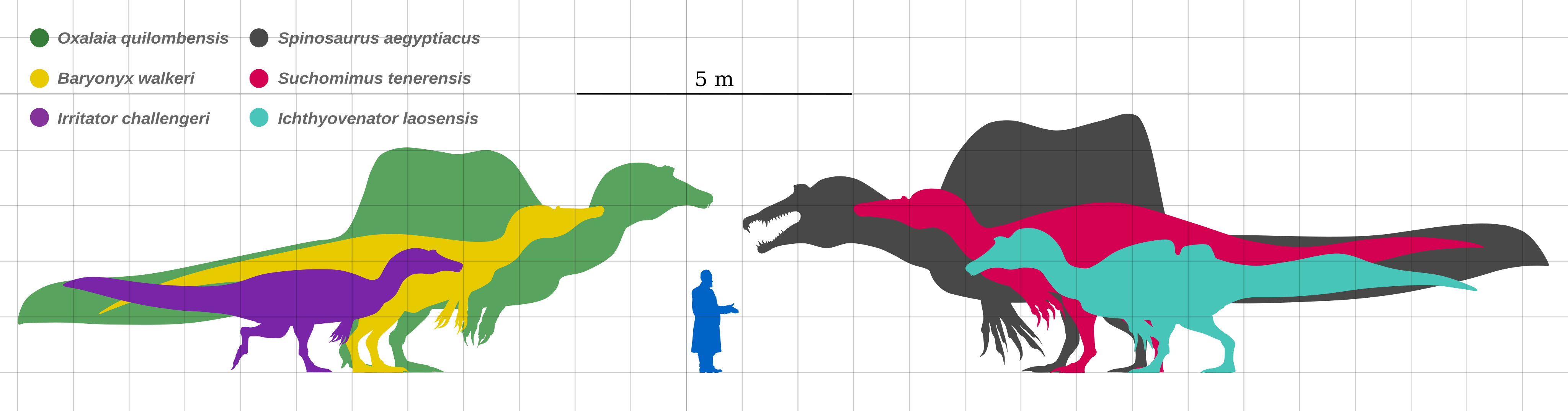


Artistic reconstruction of Irritator challengeri showing the complete animal with its characteristic elongated snout and nasal crest.
CC BY-SA 4.0
Ecology and behavior
Habitat
Irritator challengeri inhabited the lagoonal and coastal environments of the Araripe Basin in northeastern Brazil during the Albian, approximately 110 to 115 million years ago. The paleoenvironment was an epicontinental coastal lagoon influenced by marine incursions from the forming South Proto-Atlantic, with slightly brackish water. Vegetation included ferns, primitive conifers, and emergent flowering plants. The climate was warm and humid, with a rich fauna of pterosaurs (Anhanguera, Tupuxuara), turtles, crocodilians, and giant fish like Calamopleurus and Vinctifer.
Feeding
Multiple lines of evidence, including neuroanatomy (Schade et al. 2020), cranial morphology, and biomechanical analysis, point to Irritator as a specialized piscivorous predator. The extremely elongated snout with conical, unserrated teeth was perfectly adapted for catching agile fish. The expanded floccular recess and elongated anterior semicircular canal indicate adaptation for rapid, precise head movements when plunging the snout into water. The Romualdo Formation fauna included fish up to 2 meters long, potentially ideal prey.
Behavior and senses
Irritator's behavior is inferred primarily from neuroanatomy and morphology. The downward-tilted head posture and adapted semicircular canals suggest a predator that relied on rapid, coordinated movements to catch agile prey, similar to modern herons and spoonbills. No evidence of social behavior exists from available material. Bone histology indicates rapid growth in juvenile phases, suggesting young Irritators were vulnerable to larger predators.
Physiology and growth
Osteohistological analysis (Aureliano et al. 2018) revealed fibrolamellar bone tissue in the holotype, indicating elevated metabolism and rapid growth, characteristic of modern theropods with bird-like physiology. Holotype SMNS 58022 was a subadult, indicating fully grown adults were larger. Elevated metabolism was necessary to sustain active hunting behavior of agile fish. As a close relative of Spinosaurus, which had dense bones for buoyancy, Irritator may have had partial swimming adaptations.
Paleogeography
Continental configuration

Scotese & Vérard · CC BY 4.0 · Cretaceous, ~105 Ma
Fossil sites
Sales e Schultz (2017) / PLOS ONE / CC BY 4.0
During the Albiano (~115–108 Ma), Irritator challengeri inhabited Laramidia, the western half of present-day North America, separated from the east by the Western Interior Seaway, a shallow sea dividing the continent. The continents were in very different positions: India was drifting toward Asia, Antarctica was still connected to Australia, and South America was an isolated island.
Bone Inventory
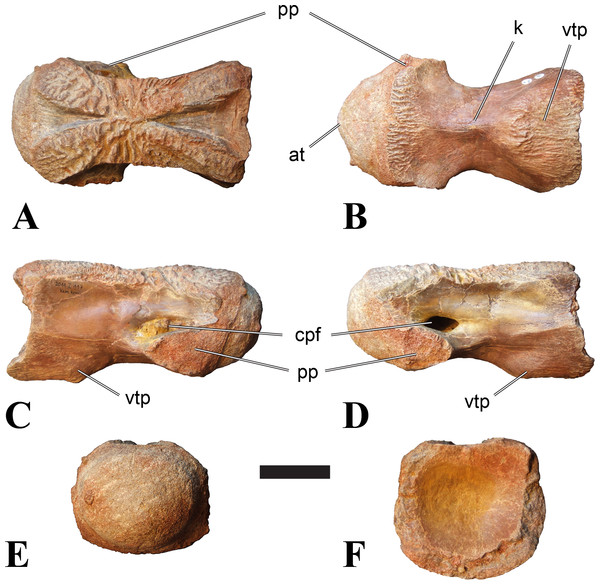
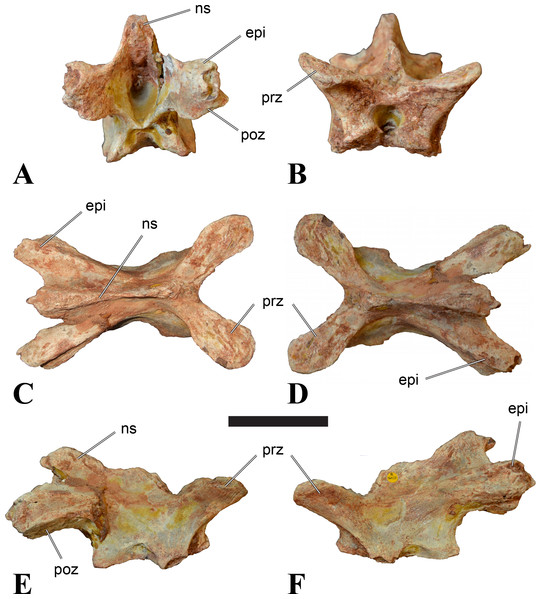
The holotype (SMNS 58022) consists primarily of a nearly complete skull, representing the best-preserved spinosaurid skull known. Additional postcranial material has been referred to the species (specimen MN 4819-V, National Museum of Rio de Janeiro), including vertebrae, pelvis, and limb bones, but most of the skeleton remains unknown.
Found elements
Inferred elements
Scientific Literature
15 papers in chronological order — from the original description to recent research.
A new crested maniraptoran dinosaur from the Santana Formation (Lower Cretaceous) of Brazil
Martill, D.M., Cruickshank, A.R.I., Frey, E., Small, P.G. e Clarke, M. · Journal of the Geological Society
Founding paper that names and describes Irritator challengeri for the first time, based on holotype skull (SMNS 58022) acquired by the Staatliches Museum für Naturkunde Stuttgart. Martill and colleagues recognize the skull's unusual morphology, with an extremely elongated snout and conical unserrated teeth, and provisionally classify it within Maniraptora. The genus name reflects the authors' irritation at finding parts of the skull had been filled with plaster by fossil traffickers. The specific epithet honors Professor Challenger, a fictional character from Arthur Conan Doyle. Though the original Maniraptora classification is now rejected, this work established the taxonomic foundation enabling all subsequent studies.
Irritator challengeri, a spinosaurid (Dinosauria: Theropoda) from the Lower Cretaceous of Brazil
Sues, H.-D., Frey, E., Martill, D.M. e Scott, D.M. · Journal of Vertebrate Paleontology
Definitive redescription of holotype SMNS 58022, carried out after complete extraction of the bones from rocky matrix by technician Diane M. Scott at the University of Toronto. With the skull fully prepared, Sues and colleagues identify definitive Spinosauridae characters: greatly elongated snout, subconical unserrated teeth, reduced cranial fenestrae, and characteristic orbital configuration. The work invalidates several details of the 1996 original description and repositions Irritator within Spinosaurinae. It is the most influential anatomical study on Irritator and the primary reference for all subsequent literature.
First Early Cretaceous theropod dinosaur from Brazil with comments on Spinosauridae
Kellner, A.W.A. e Campos, D.A. · Neues Jahrbuch für Geologie und Paläontologie Abhandlungen
Kellner and Campos describe Angaturama limai, a Brazilian spinosaurid based on a partial rostrum also from the Romualdo Formation. The paper proposes that both Irritator and Angaturama belong to Spinosauridae, contradicting Irritator's original Maniraptora classification. Later studies would demonstrate that the rostral regions of both holotypes anatomically overlap, raising a synonymy hypothesis. This paper is essential for understanding the paleogeography and diversity of South American spinosaurids, documenting for the first time two sympatric spinosaurids in northeastern Brazil.
Spinosaur taxonomy and evolution of craniodental features: Evidence from Brazil
Sales, M.A.F. e Schultz, C.L. · PLOS ONE
Sales and Schultz reexamine the skulls of Brazilian spinosaurids and identify that the preserved rostral regions of the Irritator and Angaturama holotypes anatomically overlap, suggesting both may represent the same individual. The paper also analyzes Oxalaia quilombensis from the Alcântara Formation and proposes that South American spinosaurids exhibit craniodental features intermediate between Baryonychinae and Spinosaurinae. Phylogenetic analysis recovers the Brazilian taxa in a basal position within Spinosaurinae. It is the most comprehensive taxonomic study of Brazilian spinosaurids.
Neuroanatomy of the spinosaurid Irritator challengeri (Dinosauria: Theropoda) indicates potential adaptations for piscivory
Schade, M., Rauhut, O.W.M. e Evers, S.W. · Scientific Reports
Schade, Rauhut, and Evers conduct the first detailed neuroanatomical study of a spinosaurid, using computed tomography to generate digital models of the endocast and inner ear of Irritator challengeri. Results reveal unique features: an expanded floccular recess (gaze stabilization during rapid head movements), an elongated anterior semicircular canal, and a head posture tilted approximately 45° downward. These adaptations are consistent with hunting agile prey, especially fish. The paper is the first to demonstrate with neuroanatomical evidence that spinosaurids were piscivorous.
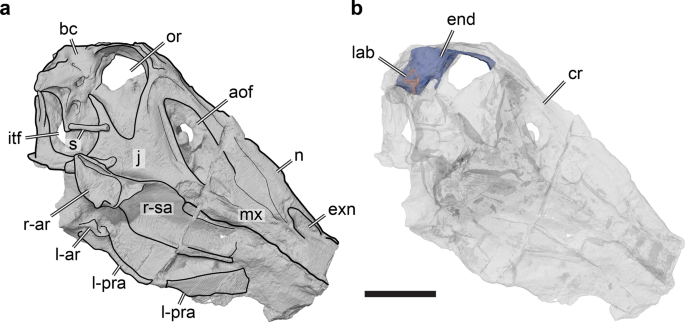
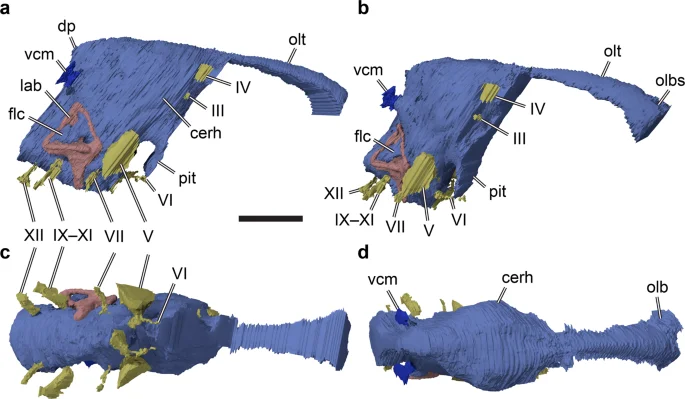
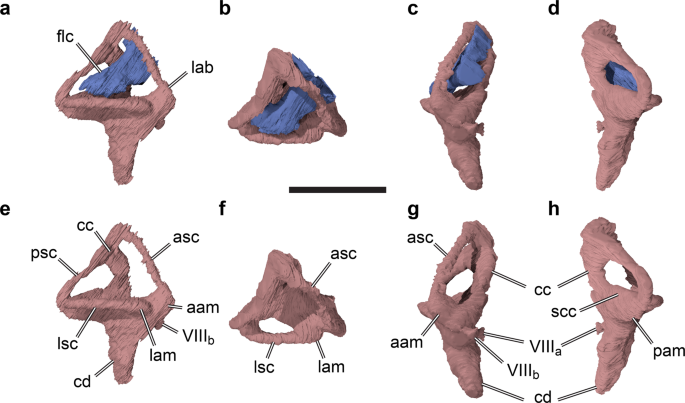
A reappraisal of the cranial and mandibular osteology of the spinosaurid Irritator challengeri (Dinosauria: Theropoda)
Schade, M., Rauhut, O.W.M., Foth, C., Moleman, O. e Evers, S.W. · Palaeontologia Electronica
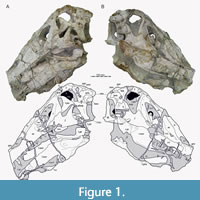
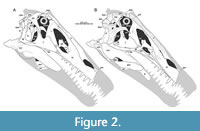
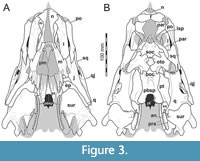
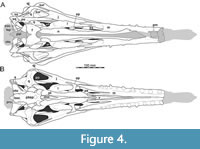
The most comprehensive and recent work on Irritator challengeri, based on digital reconstructions from medical CT and microtomography of holotype SMNS 58022. Schade and colleagues describe in detail all cranial and mandibular anatomy, correcting erroneous interpretations from previous studies resulting from preparation limitations. The study identifies new bone sutures, neurovascular canals, and previously undescribed diagnostic features. The authors conclude that Irritator had proportionally large nasal and antorbital fenestrae and that the nasal sagittal crest was a unique structure in this species. Published open-access in Palaeontologia Electronica.

A new specimen of Spinosaurus (Dinosauria, Theropoda) from the Lower Cretaceous of Tunisia, with remarks on the evolutionary history of the Spinosauridae
Buffetaut, E. e Ouaja, M. · Bulletin de la Société Géologique de France
Buffetaut and Ouaja describe new Spinosaurus material from the Chenini Formation of Tunisia and discuss the global evolutionary history of Spinosauridae. The paper includes comparative analysis with Irritator challengeri and other known spinosaurids, discussing phylogenetic relationships within the family and biogeographic patterns that led to spinosaurid presence in both Africa and South America. Direct comparison between the Tunisian material and the Irritator holotype provides important data on anatomical variation within Spinosaurinae.


Semiaquatic adaptations in a giant predatory dinosaur
Ibrahim, N., Sereno, P.C., Dal Sasso, C., Maganuco, S., Fabbri, M., Martill, D.M., Zouhri, S., Myhrvold, N. e Iurino, D.A. · Science
Ibrahim and colleagues redescribe Spinosaurus aegyptiacus based on new material from Morocco and propose it was a semiaquatic predator, with dense bones and reduced hind limbs adapted for swimming. The implications for the entire Spinosauridae family are discussed, including Irritator challengeri. The paper reignites the debate about spinosaurid lifestyles and provides the broader phylogenetic and ecological context within which Irritator must be interpreted. Published in Science with major impact, it revolutionized understanding of Spinosauridae.

Aquatic adaptation in the skull of carnivorous dinosaurs (Theropoda: Spinosauridae) and the evolution of aquatic habits in spinosaurids
Arden, T.M.S., Klein, C.G., Zouhri, S. e Longrich, N.R. · Cretaceous Research
Arden and colleagues perform comparative morphofunctional analysis of the skulls of several spinosaurids, including Irritator challengeri, to evaluate which anatomical features are adaptations for aquatic life and piscivorous diet. The paper examines degree of cranial robustness, patterns of biomechanical stress during fish capture, and the shape of nasal fossae in relation to functional position during hunting. Results confirm that Irritator had cranial adaptations for piscivory and that these adaptations evolved independently in different spinosaurid lineages.

Osteohistology of the giant predatory dinosaur Irritator challengeri (Spinosauridae) from the Early Cretaceous of Brazil: Skeletochronology and implications for life history
Aureliano, T., Ghilardi, A.M., Buck, P.V., Figueiredo, R.G., Lobaisly, M.A. e Bandeira, K.L.N. · Historical Biology
Aureliano and colleagues conduct the first osteohistological analysis of Irritator challengeri, examining bone cross-sections to determine the growth pattern and estimate the holotype's age. The study identifies fibrolamellar bone tissue, characteristic of elevated metabolism and rapid growth, similar to that found in other large-bodied theropods. Lines of arrested growth (LAGs) indicate holotype SMNS 58022 was a subadult, confirming that adults could reach greater lengths. This is the first and only published histological study on Irritator.

New information on the Toothed Pterosaurs from the Santana Formation (Lower Cretaceous), Araripe Basin, northeastern Brazil, with comments on the fauna of the Romualdo Member
Kellner, A.W.A. · Acta Geologica Leopoldensia
Kellner reviews the complete fauna of the Romualdo Member of the Santana Formation, which includes Irritator challengeri among its predators. The paper describes the lagoonal paleoenvironment, with shallow marine water influence and associated fauna of pterosaurs (Anhanguera, Tupuxuara), giant fish (Calamopleurus, Vinctifer), and turtles. Ecological analysis positions Irritator as apex predator of an extraordinarily rich ecosystem representing one of the greatest concentrations of Early Cretaceous fossils in the world.


A preliminary study of new dinosaur remains from the Santana Formation (Lower Cretaceous of Brazil)
Fara, E. e Saraiva, A.A.F. · Journal of Vertebrate Paleontology (Abstracts)
Fara and Saraiva describe new dinosaur remains from the Santana Formation (Romualdo Member), including postcranial material potentially attributable to Irritator challengeri or related spinosaurids. The study expands our knowledge of the Brazilian spinosaurid record beyond the cranial holotype and suggests at least part of the postcranial skeleton can be reconstructed from additional material. Important work for extending the species' fossil record beyond the skull.


Functional morphology of spinosaur 'crocodile-mimic' dinosaurs
Rayfield, E.J., Milner, A.C., Xuan, V.B. e Young, P.G. · Journal of Vertebrate Paleontology
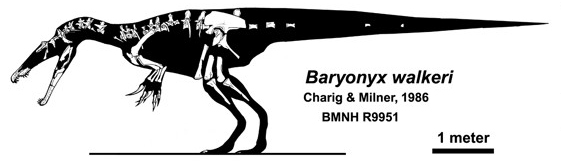
Rayfield and colleagues apply finite element analysis (FEA) to the skulls of Baryonyx walkeri and other spinosaurids to understand the biomechanical functionality of the elongated snout. The paper demonstrates that spinosaurid skull shape distributes bite forces similarly to modern piscivorous crocodilians, confirming that cranial morphology was suited for capturing agile fish. Results have direct implications for Irritator challengeri, whose skull is more complete than Baryonyx's.


On a sequence of sacrocaudal theropod dinosaur vertebrae from the Lower Cretaceous Santana Formation, northeastern Brazil
Bittencourt, J.S. e Kellner, A.W.A. · Arquivos do Museu Nacional
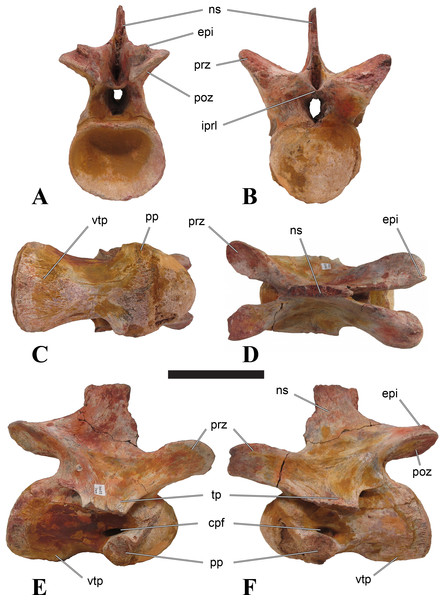
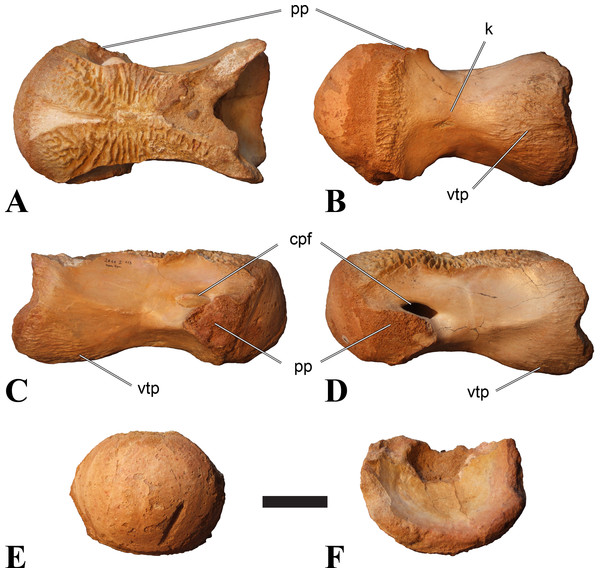
Bittencourt and Kellner describe a sequence of sacrocaudal theropod vertebrae from the Santana Formation of northeastern Brazil. The material, possibly attributable to Irritator challengeri or a related spinosaurid, expands knowledge of the postcranial record of Brazilian spinosaurids. The study documents unique vertebral features that help differentiate the material from other theropods of the same formation. Important work for contributing essential postcranial data for interpreting Irritator's body plan.


A reappraisal of the morphology and systematic position of the theropod dinosaur Sigilmassasaurus from the 'middle' Cretaceous of Morocco
Evers, S.W., Rauhut, O.W.M., Milner, A.C., McFeeters, B. e Allain, R. · PeerJ

Evers and colleagues redescribe Sigilmassasaurus brevicollis from Morocco and present a comprehensive phylogenetic analysis of Spinosauridae, including Irritator challengeri. The paper provides a detailed character matrix for the group and discusses relationships between African, European, and South American taxa. Results have direct implications for Irritator's position within Spinosaurinae and for the family's biogeography. Published open-access in PeerJ, it is an important reference for any spinosaurid phylogenetic analysis.


Famous museum specimens
SMNS 58022 (Holótipo)
Staatliches Museum für Naturkunde Stuttgart, Stuttgart, Alemanha
Nearly complete skull of a subadult, lacking only the snout tip and anteriormost parts of the mandible. It is the most complete and best-preserved spinosaurid skull known. The specimen was significantly altered by fossil traffickers before reaching scientists.
MN 4819-V
Museu Nacional, Universidade Federal do Rio de Janeiro, Rio de Janeiro, Brasil
Postcranial material including vertebrae, pelvic fragments, and limb bones, attributed to Irritator or a related spinosaurid. This material was used to construct the skeletal mount displayed at the National Museum. Part of this material may have been lost in the 2018 National Museum fire.
In cinema and popular culture
Irritator challengeri is one of Brazil's most fascinating dinosaurs, but its presence in film and television is more indirect than direct. As the most complete spinosaurid skull ever discovered, Irritator served as the scientific basis for spinosaurid reconstructions in high-quality documentaries like Planet Dinosaur (BBC, 2011) and Prehistoric Planet (Apple TV+, 2022). In these documentaries, spinosaurid posture and behavior were directly influenced by neuroanatomical data obtained from Irritator. In the Jurassic Park franchise, the family's protagonist is Spinosaurus, appearing in Jurassic Park III (2001) and the expanded universe. Irritator awaits its own starring role on screen, but its scientific influence on how all spinosaurids are depicted is considerable. With the growing popularity of Brazilian dinosaurs in media, Irritator may well appear in future productions dedicated to Brazilian paleontology.
Classification

Discovery
Fun fact
Irritator challengeri received its name because paleontologists were irritated to discover that the skull had been filled with plaster and manipulated by fossil traffickers to appear more complete and fetch a higher price. The species name, challengeri, honors Professor Challenger, a character from Arthur Conan Doyle's stories: the same author who created Sherlock Holmes!
Last reviewed: April 24, 2026