
Ankylosaurus
Ankylosaurus magniventris
"Fused lizard with great belly"
About this species
Ankylosaurus magniventris was the largest known ankylosaurid, living at the end of the Cretaceous 68 to 66 million years ago in North America. At about 8 meters long and 6 metric tons, it was a quadrupedal herbivore equipped with a complete body armor: osteoderms fused to the skull, bony plates along the back and flanks, and a massive tail club capable of shattering predator bones. Its sideways-facing nostrils are unique among ankylosaurs. Despite its imposing size, it was rare in its ecosystem, likely inhabiting upland areas distant from river margins where hadrosaurs and ceratopsians lived.
Geological formation & environment
The Hell Creek Formation is a late Maastrichtian geological unit (68 to 66 Ma) that outcrops in Montana, North Dakota, South Dakota, and Wyoming in the United States. Deposited in a fluvial and subtropical floodplain environment, it preserves one of the richest and most diverse Late Cretaceous dinosaur faunas. Besides Ankylosaurus magniventris, the formation hosts Tyrannosaurus rex, Triceratops horridus, Edmontosaurus annectens, and dozens of other species. The K-Pg boundary, marking the 66 Ma mass extinction, is preserved at the top of the formation.
Image gallery
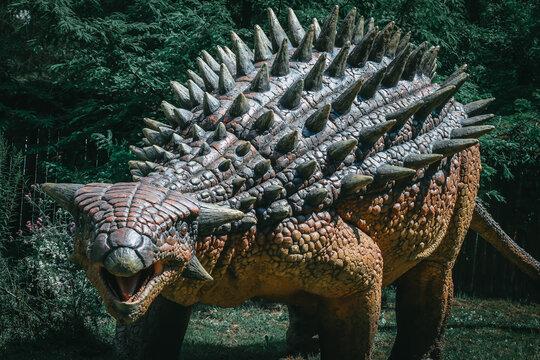
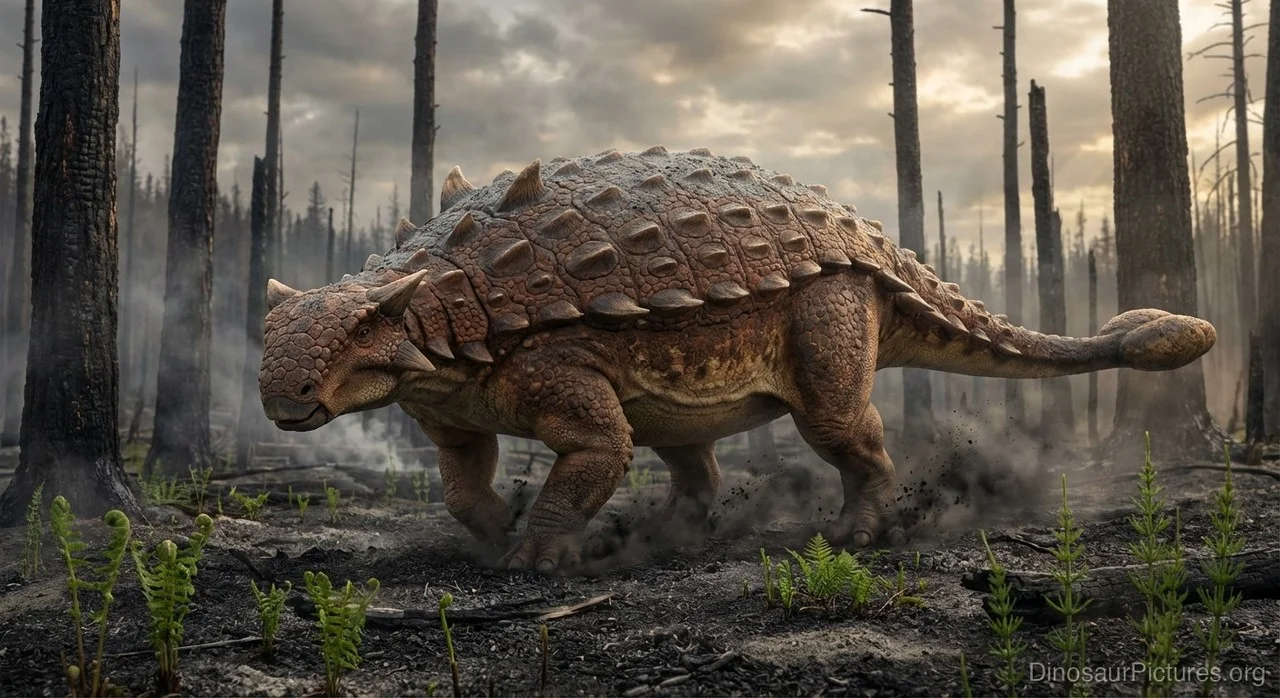
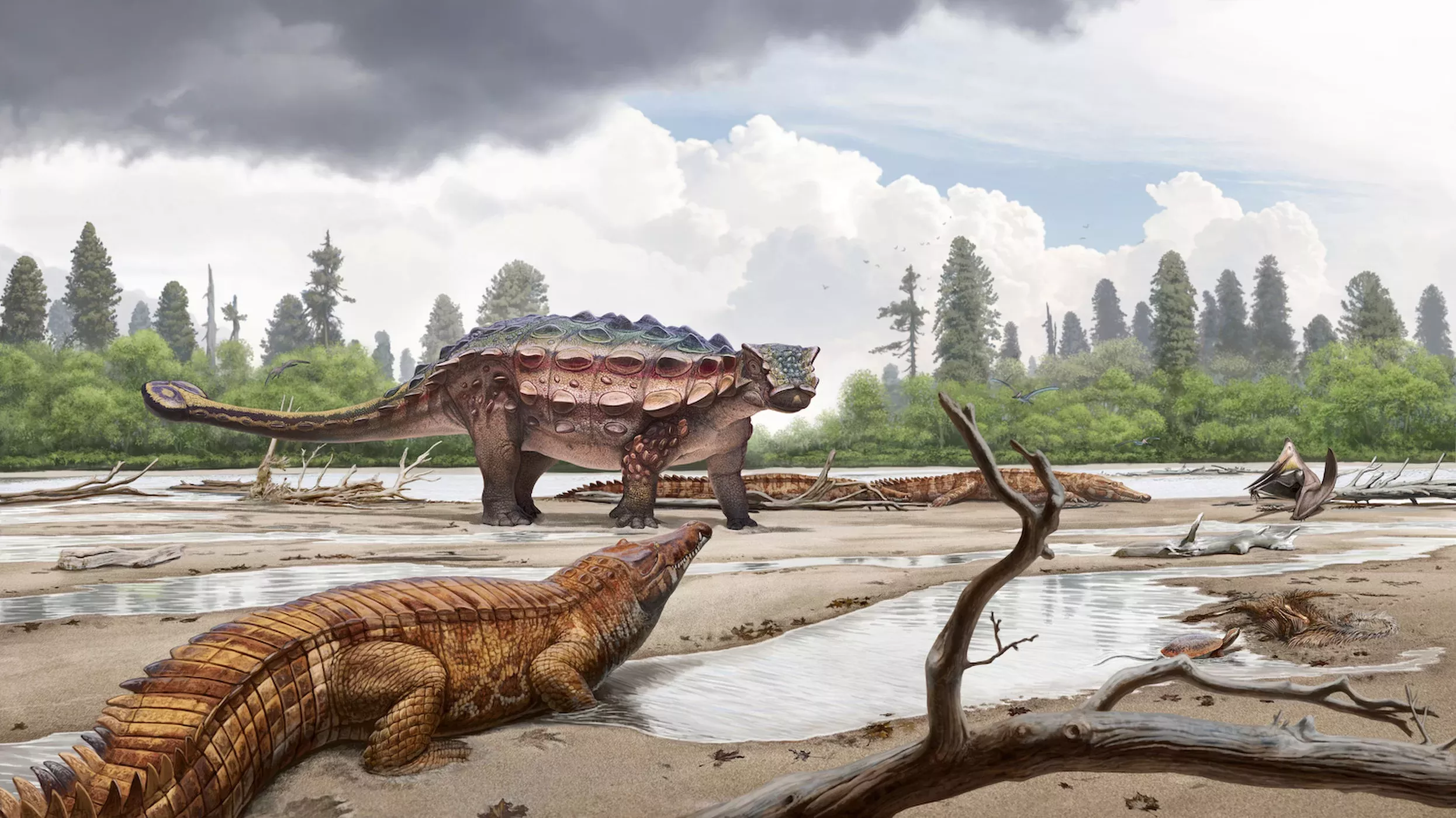
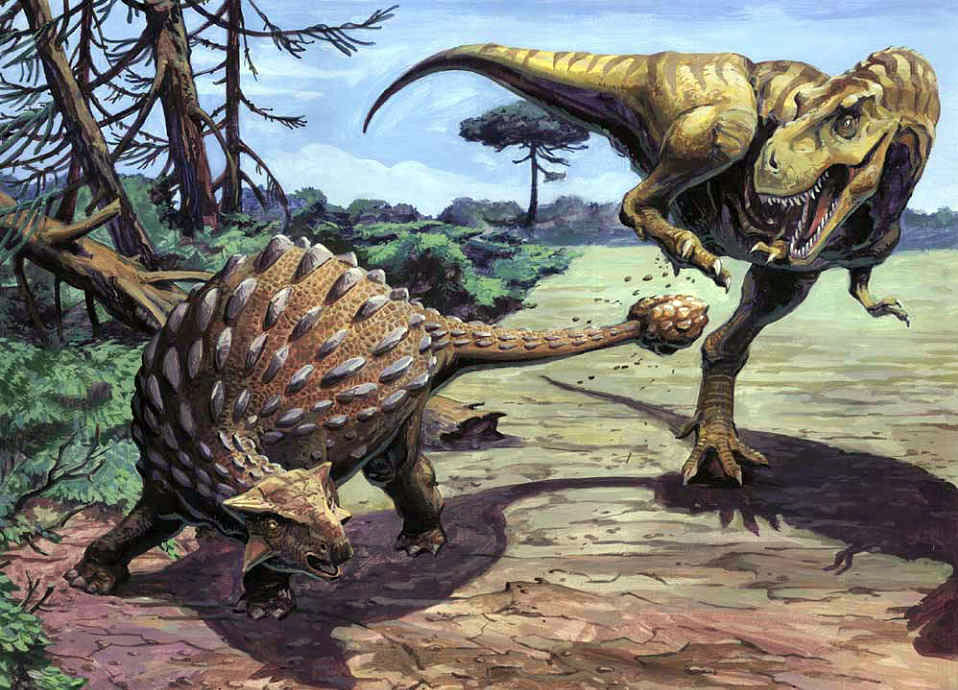
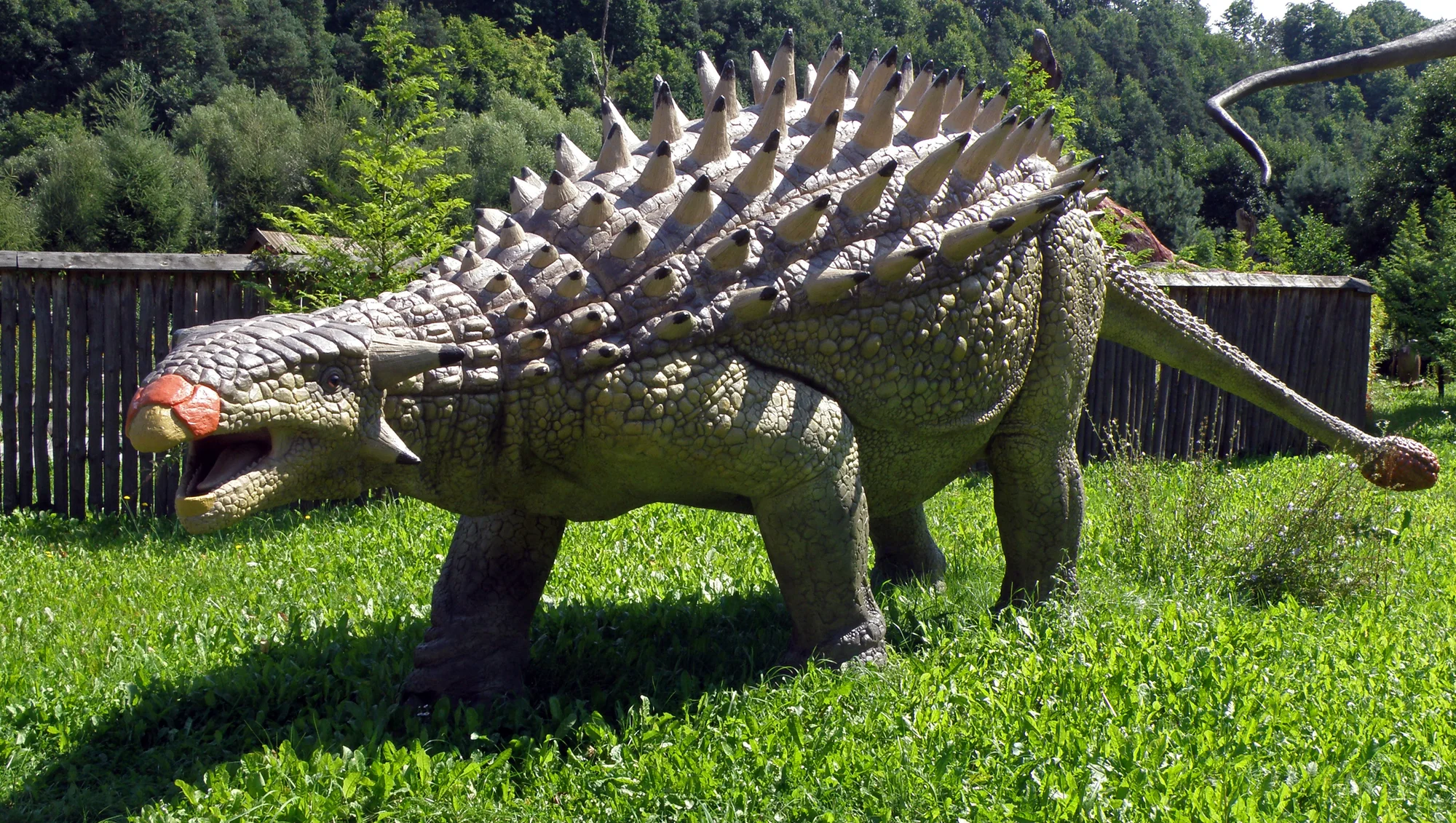
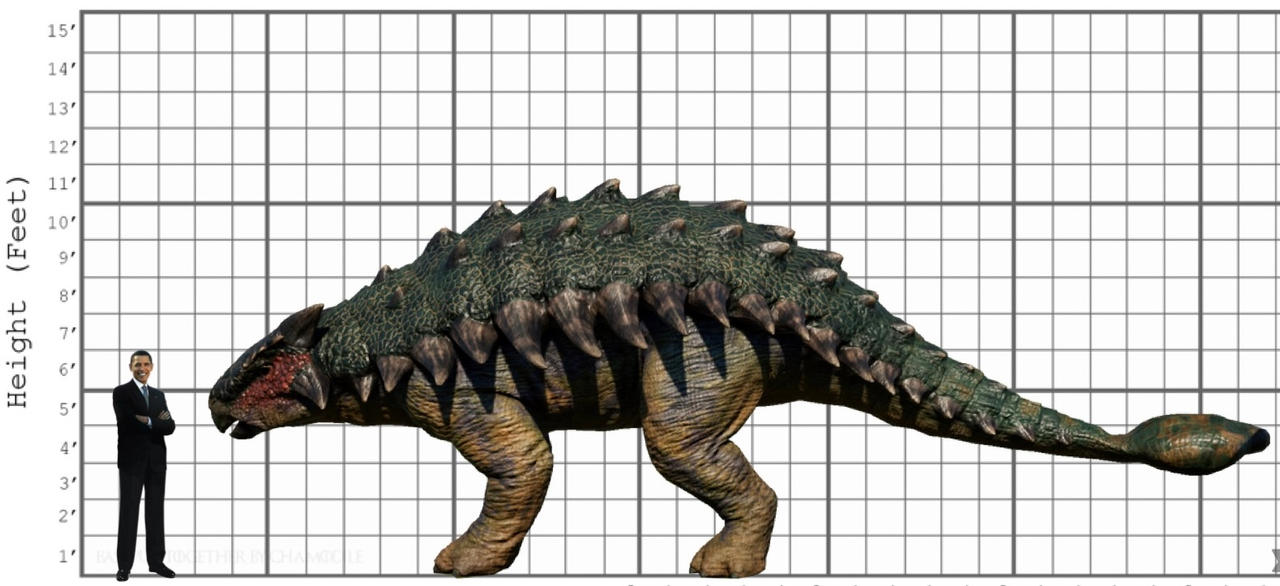
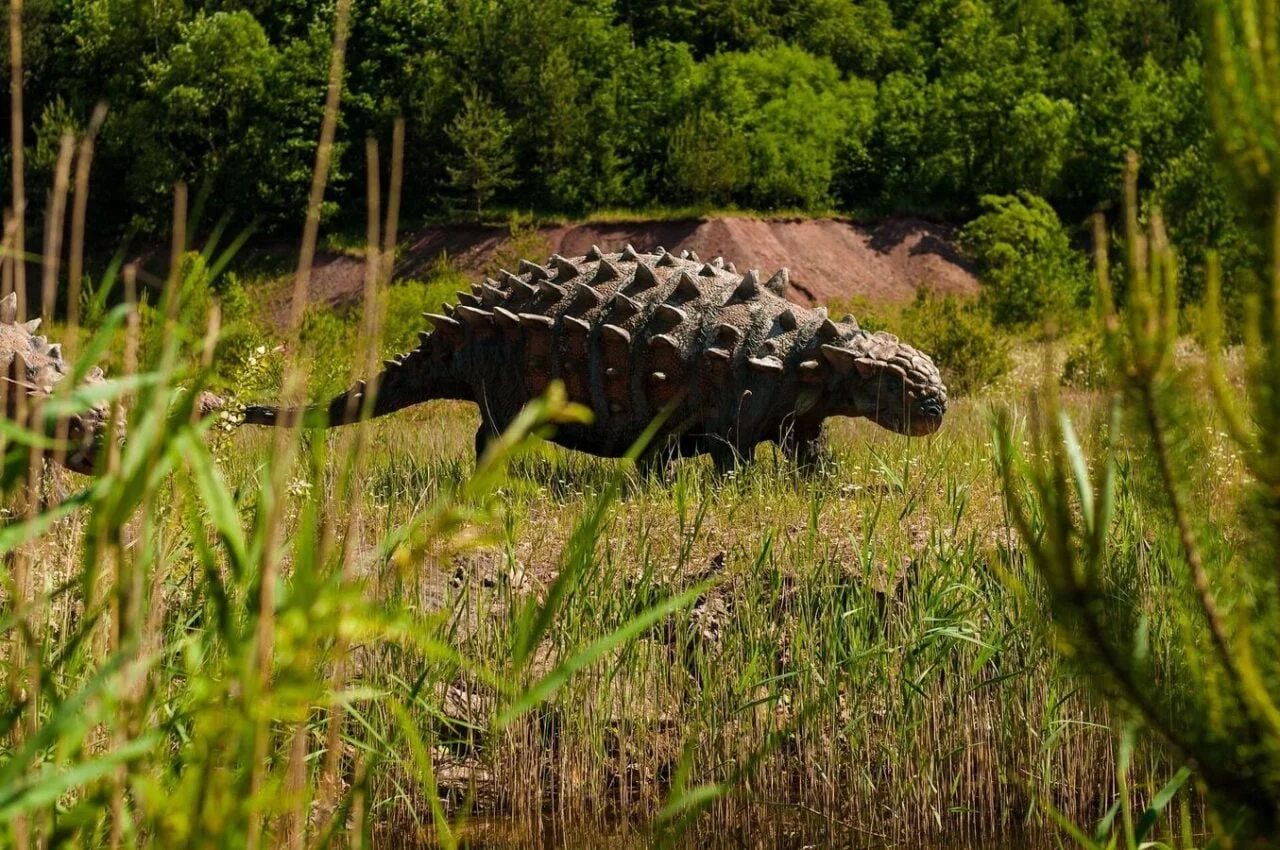
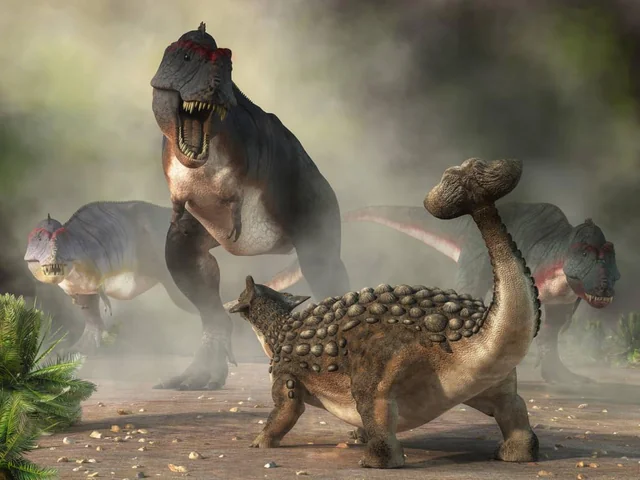
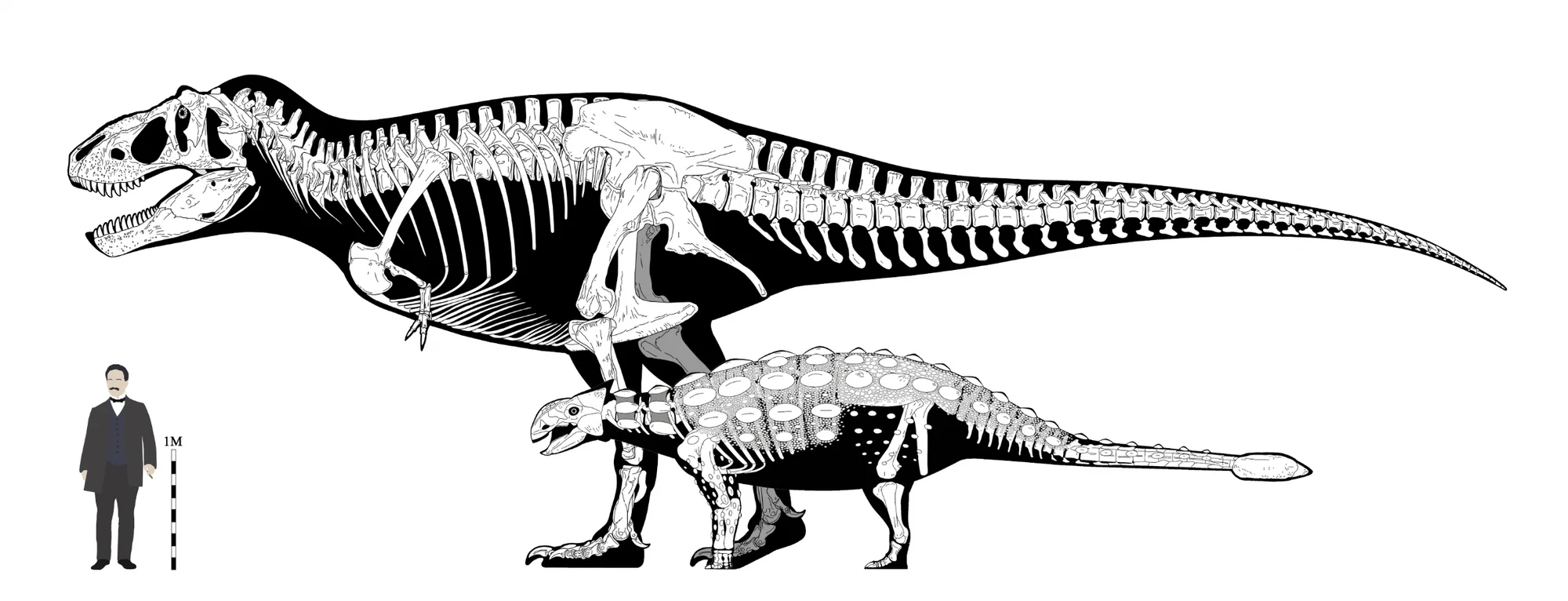
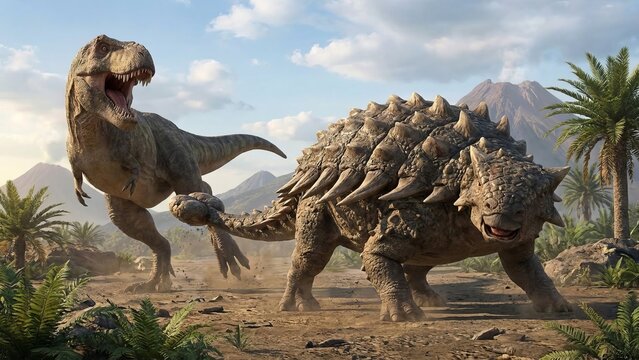
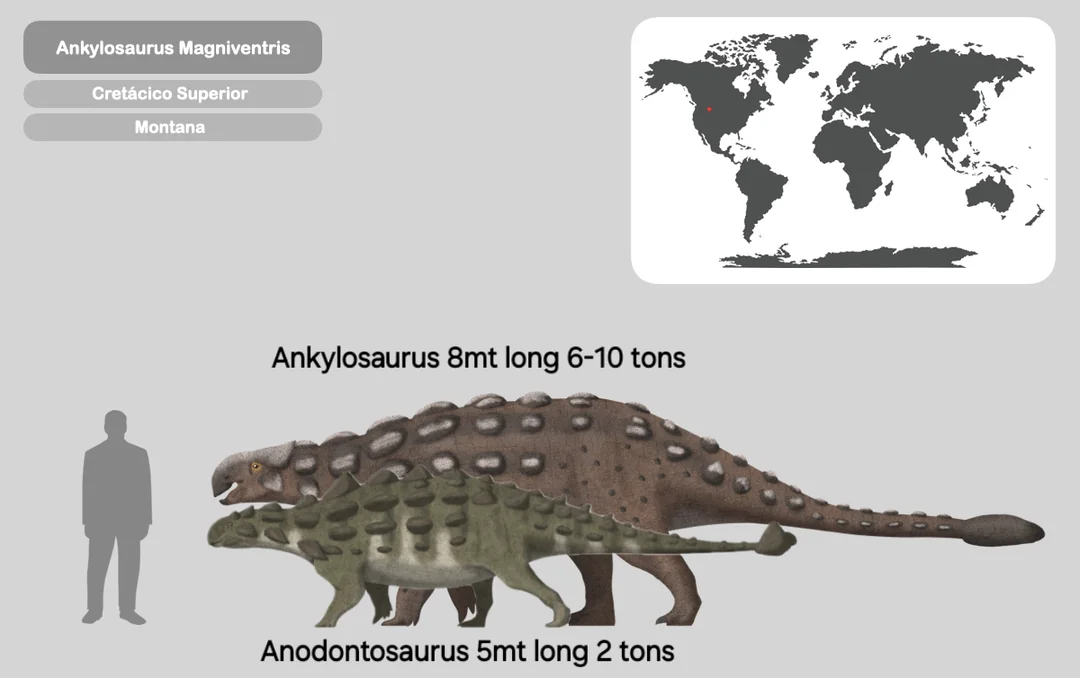


Artistic reconstruction of Ankylosaurus magniventris showing dermal armor and tail club.
Arte digital
Ecology and behavior
Habitat
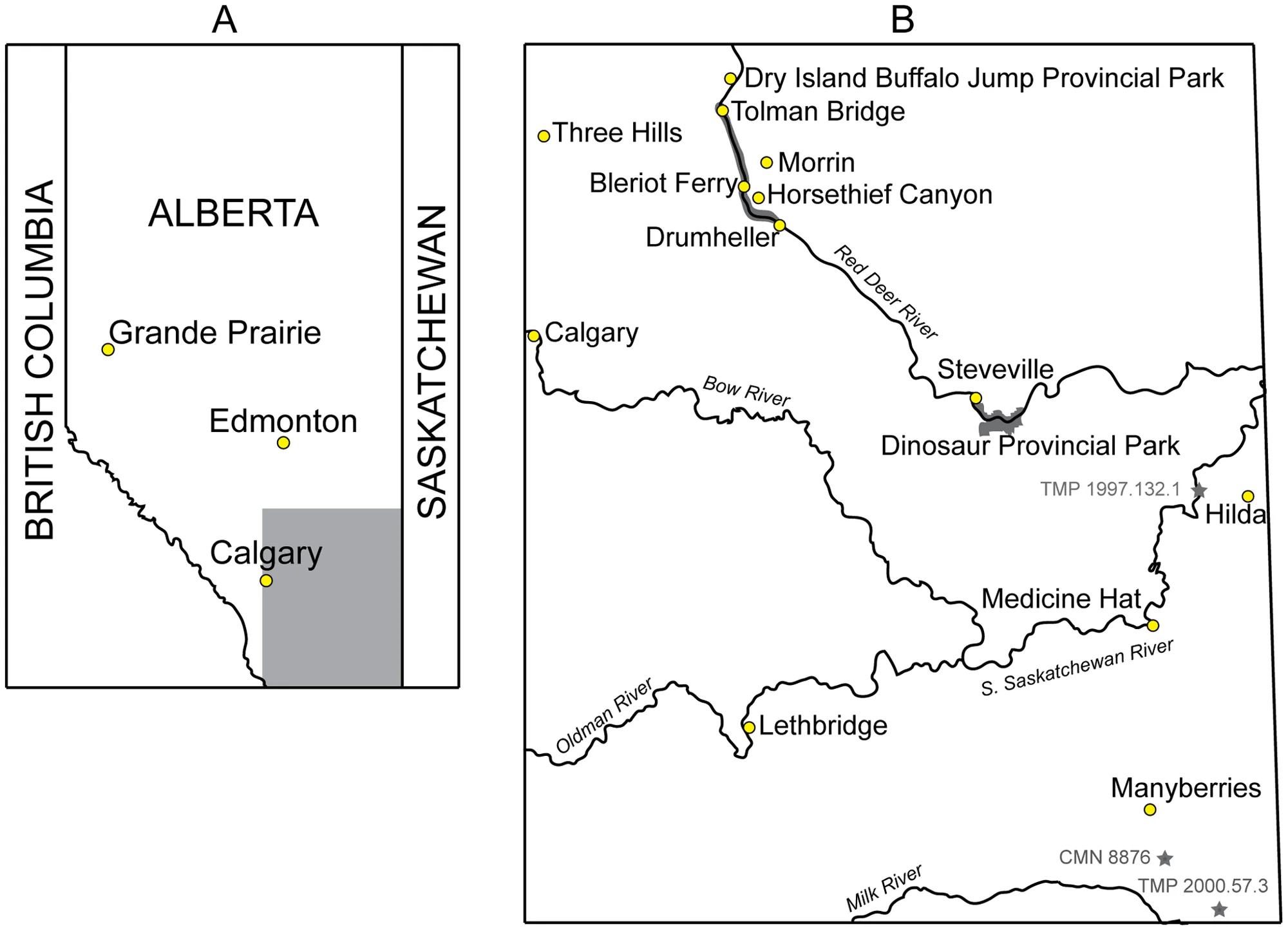
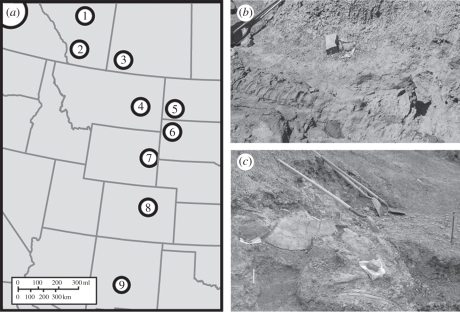
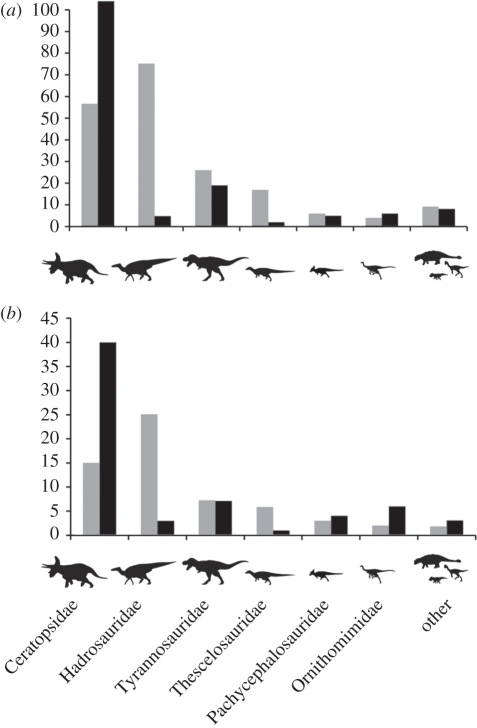
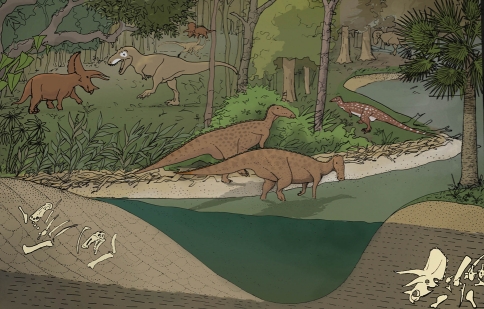
Ankylosaurus magniventris inhabited western North America during the Maastrichtian, 68 to 66 million years ago, in a warm subtropical climate dominated by angiosperm and conifer forests, with floodplains irrigated by rivers draining into the Western Interior Seaway. Spatial partitioning studies (Lyson & Longrich, 2010) suggest Ankylosaurus was rare in the river floodplains where Triceratops and Edmontosaurus lived, likely preferring drier upland areas. Its fossil record spans the Hell Creek, Lance, Scollard, Frenchman, and Ferris formations.
Feeding
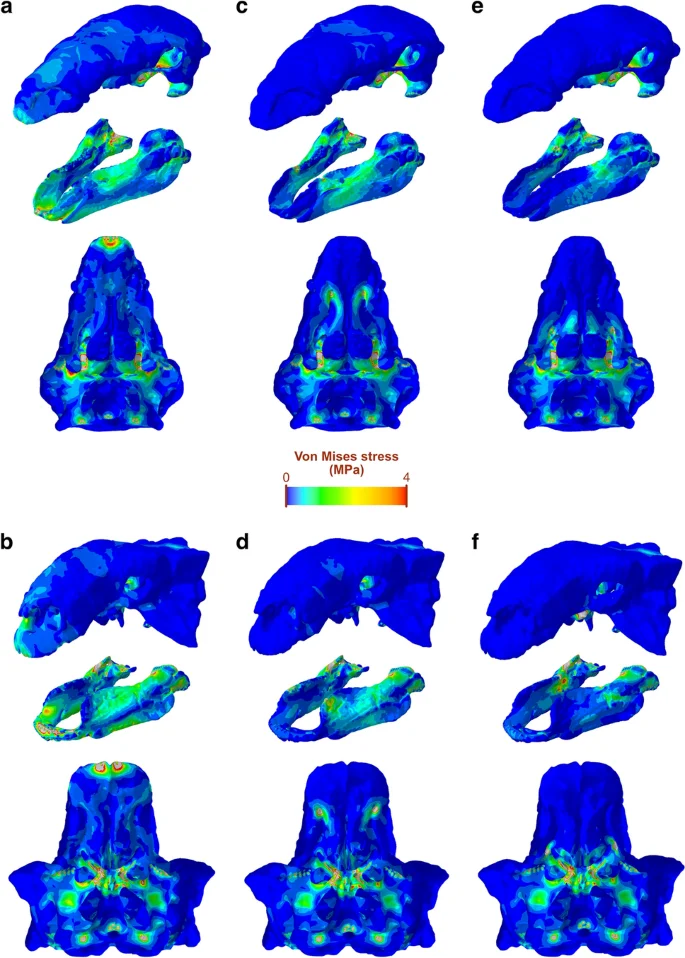
A low-browsing herbivore, Ankylosaurus fed on ground-level vegetation with its simple, low-crowned leaf-shaped teeth. Skull biomechanical analysis (Ballell et al., 2023) indicates moderate-force biting distributed broadly along the jaw, suited to mechanically low-resistance vegetation. Unlike hadrosaurs and ceratopsians, ankylosaurids did not grind food with multiple tooth rows: digestion likely depended on intensive intestinal fermentation, explaining the species name 'magniventris' (great belly).
Behavior and senses
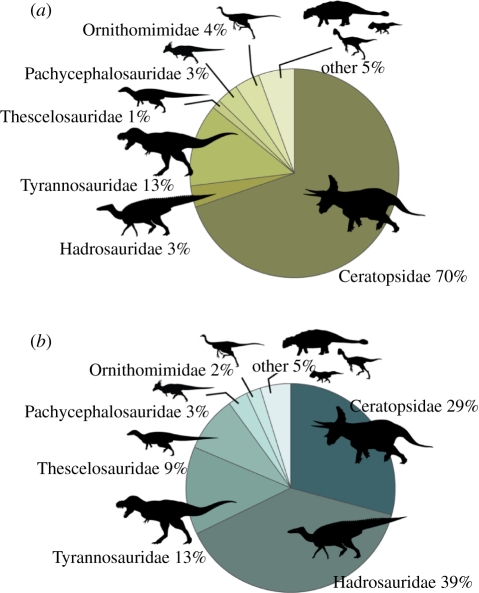
Ankylosaurus was likely a solitary or low-sociality animal, given its extremely sparse fossil record (only 1% of the Hell Creek fauna). Body armor and tail club suggest adults relied on passive (armor) and active (club) defense against predators like Tyrannosaurus rex. Soft-tissue evidence from Zuul crurivastator (a close relative) suggests flank osteoderms may have had a social display function beyond defense. There is no evidence of gregarious behavior.
Physiology and growth
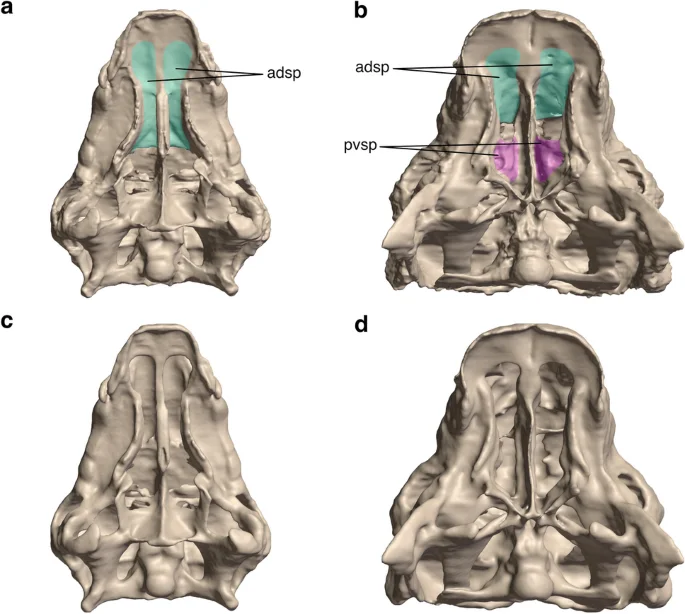
Ankylosaurus was an inertial endotherm: its enormous body volume (estimated at 6 metric tons) buffered ambient temperature variations, reducing the metabolic cost of maintaining body temperature. The convoluted nasal passages likely functioned as heat and moisture exchangers (Bourke et al., 2018), conserving energy and assisting brain thermoregulation. Growth was slow compared to similarly sized theropods, consistent with the moderate metabolism typical of large Ornithischia.
Paleogeography
Continental configuration

Scotese & Vérard · CC BY 4.0 · Cretaceous, ~105 Ma
Fossil sites

Wikimedia Commons — CC BY-SA
During the Maastrichtiano (~68–66 Ma), Ankylosaurus magniventris inhabited Laramidia, the western half of present-day North America, separated from the east by the Western Interior Seaway, a shallow sea dividing the continent. The continents were in very different positions: India was drifting toward Asia, Antarctica was still connected to Australia, and South America was an isolated island.
Bone Inventory
Known from few partial specimens. The holotype (AMNH 5895) includes a partial skull, shoulder and pelvic girdles, vertebrae, and over 30 osteoderms. Specimen AMNH 5214 provides a complete skull with mandibles and the only known tail club of the species. No complete skeleton has been found.

Found elements
Inferred elements
Scientific Literature
15 papers in chronological order — from the original description to recent research.
The Ankylosauridae, a new family of armored dinosaurs from the Upper Cretaceous
Brown, B. · Bulletin of the American Museum of Natural History
The founding paper establishing the genus and family Ankylosauridae. Barnum Brown describes the holotype specimen AMNH 5895, collected from the Hell Creek Formation of Montana in 1906. The work defines the diagnostic characters distinguishing ankylosaurids from all dinosaurs then known: osteoderms fused to the skull, dermal ossifications covering back and flanks, and tiny leaf-shaped teeth. Brown recognizes this as completely distinct from stegosaurs, with which some taxonomic confusion had existed. The description includes representations of the skull in dorsal view, shoulder girdle elements, and samples of dermal armor. This paper remains the primary reference for the original discovery and the starting point of all subsequent investigation into Ankylosaurus magniventris.

The Ankylosauridae, a new family of armored dinosaurs from the Upper Cretaceous — skeletal reconstruction
Brown, B. · Bulletin of the American Museum of Natural History
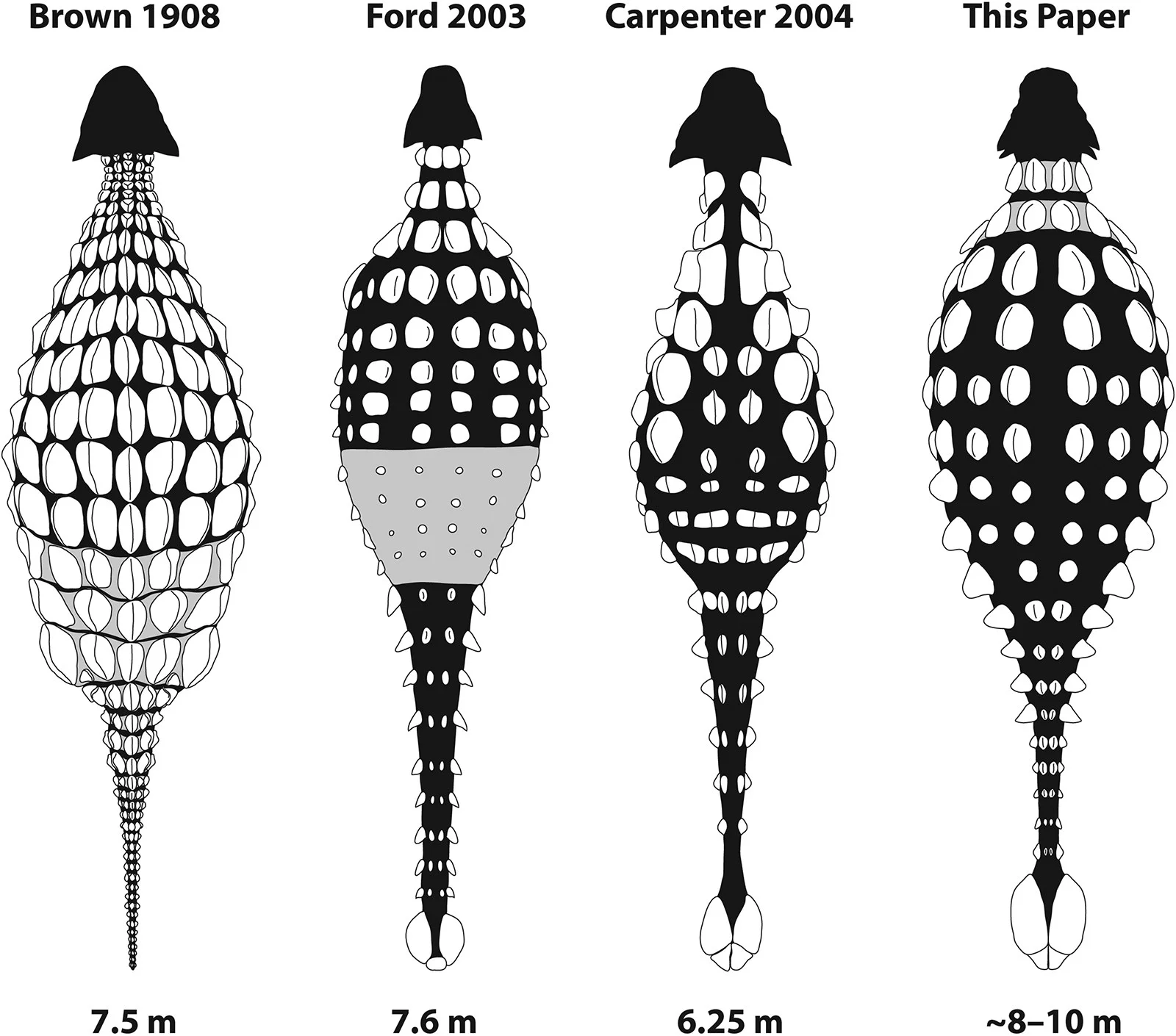
Supplementary skeletal figures from Brown's 1908 monograph representing the first attempt to reconstruct Ankylosaurus body plan. The work shows the arrangement of dermal armor and general proportions based on available material. Although the 1908 reconstruction lacks a tail club — then unknown — and shows a posture now considered incorrect, it establishes the initial iconography of the animal and serves as a fundamental historical reference. Brown incorrectly inferred a humpbacked posture similar to Stegosaurus, a position that persisted in artistic reconstructions for decades. The paper demonstrates how early 20th-century paleontology worked from fragmentary material, inferring morphology by analogy with known reptiles.

Teeth and taxonomy in ankylosaurs
Coombs, W.P. · Dinosaur Systematics: Approaches and Perspectives (Cambridge University Press)
Review of dental morphology across Ankylosauria demonstrating that tooth structure can serve as a reliable phylogenetic character for distinguishing major lineages. Ankylosaurids including Ankylosaurus show strongly reduced, simple leaf-shaped teeth consistent with low-fiber herbivory, distinct from nodosaurid dental patterns. The study systematically compares dental patterns between Ankylosauridae and Nodosauridae, revealing consistent diagnostic differences despite the apparent simplicity of teeth in both groups. Coombs also evaluates the role of teeth in species definition within ankylosaurs, concluding that individual and ontogenetic variation requires caution in taxonomic diagnosis based solely on dental material.


Redescription of Ankylosaurus magniventris Brown 1908 (Ankylosauridae) from the Upper Cretaceous of the Western Interior of North America
Carpenter, K. · Canadian Journal of Earth Sciences
Comprehensive redescription of all known Ankylosaurus magniventris specimens, correcting numerous errors in Brown's original 1908 description nearly a century later. Carpenter reexamines specimens AMNH 5895, AMNH 5214, and AMNH 5866, providing revised interpretations of armor arrangement, limb proportions, and tail club structure. The study demonstrates that the club of AMNH 5214 is indeed the only known tail club of the species, and that it is far more massive than earlier reconstructions suggested. Carpenter also revises Ankylosauridae phylogeny based on new anatomical data, positioning Ankylosaurus as a derived member of Ankylosaurinae with Euoplocephalus as its closest relative. This redescription remains for decades as the standard anatomical reference for the species.
Analyzing taphonomic deformation of ankylosaur skulls using retrodeformation and finite element analysis
Arbour, V.M.; Currie, P.J. · PLoS One
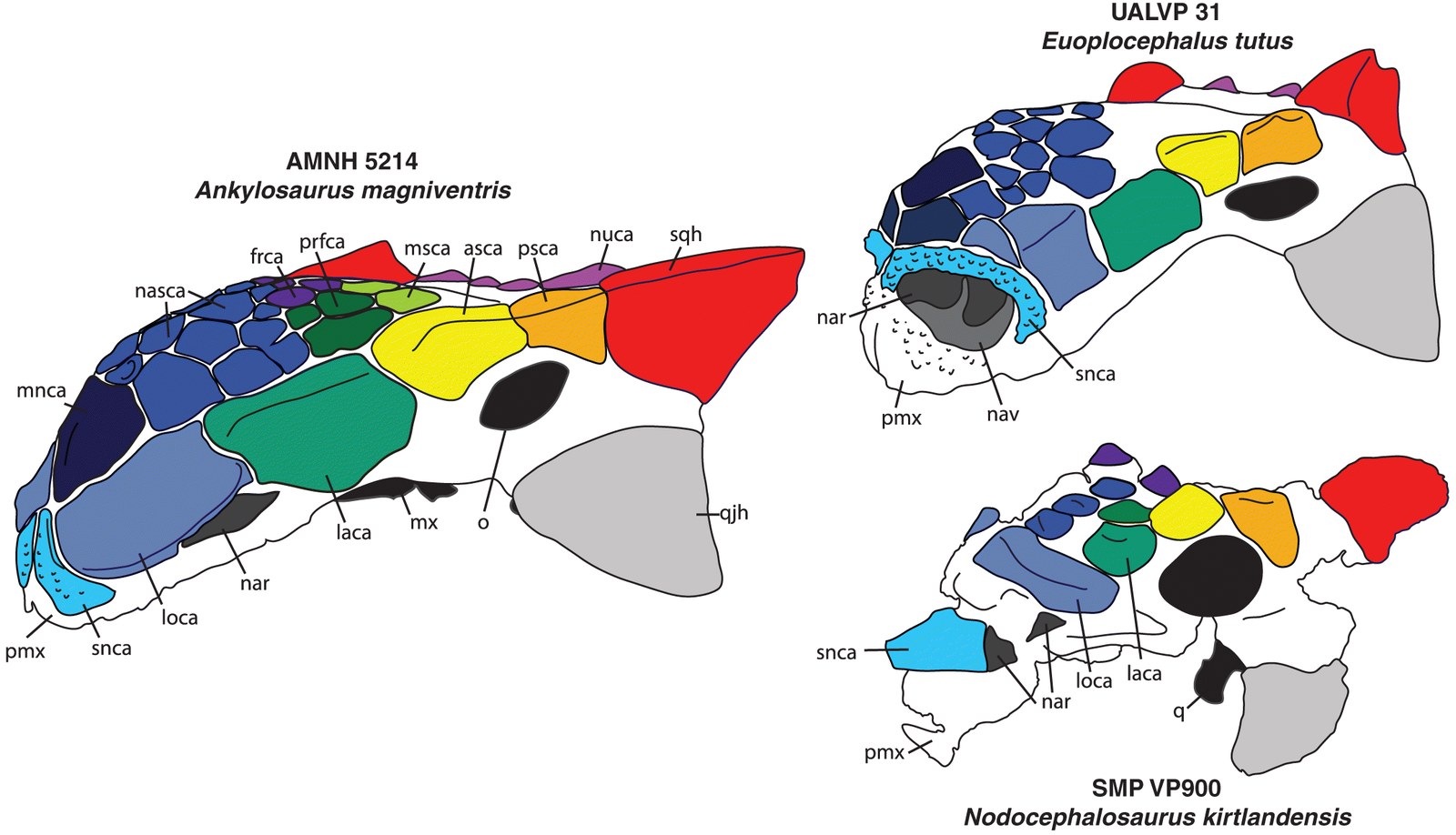
Analysis of taphonomic deformation of ankylosaur skulls using digital retrodeformation and finite element analysis. Study of Euoplocephalus tutus reveals that much of the intraspecific morphological variation observed in ankylosaur skulls can be attributed to distortion caused by the fossilization process, not real biological differences. The authors use orbital shape ratios as deformation indicators and apply computational modeling to estimate the mechanical forces that acted on skulls during burial. Results have direct implications for Ankylosauridae taxonomy: species diagnosed only by cranial characters may be synonymized once taphonomic deformation is corrected. The study is methodologically innovative, establishing a protocol for deformation analysis in fossil reptiles.


Euoplocephalus tutus and the diversity of ankylosaurid dinosaurs in the Late Cretaceous of Alberta, Canada, and Montana, USA
Arbour, V.M.; Currie, P.J. · PLoS One
Comprehensive review of material attributed to Euoplocephalus tutus supporting the resurrection of Anodontosaurus lambei and Scolosaurus cutleri as distinct taxa, based on stratigraphic position, cranial ornamentation patterns, and skeletal characters. The study clarifies ankylosaurid diversity in the late Campanian of Laramidia and provides comparative data directly relevant to understanding Ankylosaurus magniventris: although Ankylosaurus is Maastrichtian rather than Campanian, the patterns of morphological variation and species delimitation methodology developed in this study directly influence subsequent taxonomic revisions of Maastrichtian ankylosaurids. The paper includes phylogenetic analysis positioning Ankylosaurus as a derived member of Ankylosaurinae.


Ankylosaurid dinosaur tail clubs evolved through stepwise acquisition of key features
Arbour, V.M.; Currie, P.J. · Journal of Anatomy
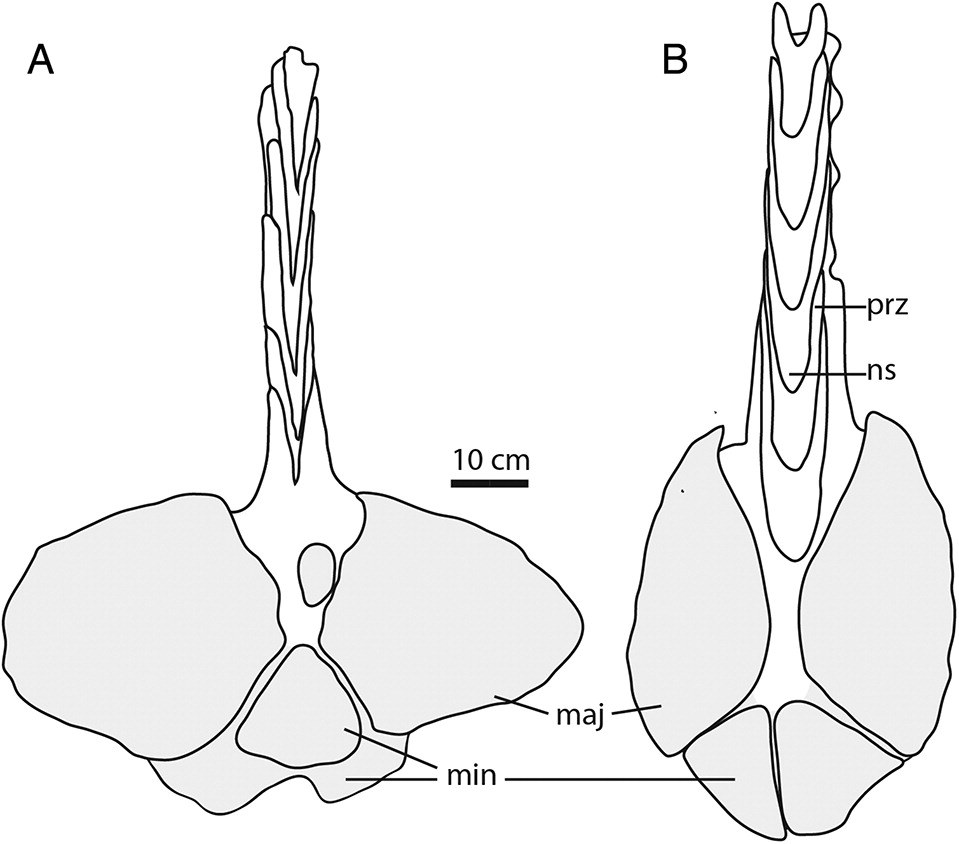
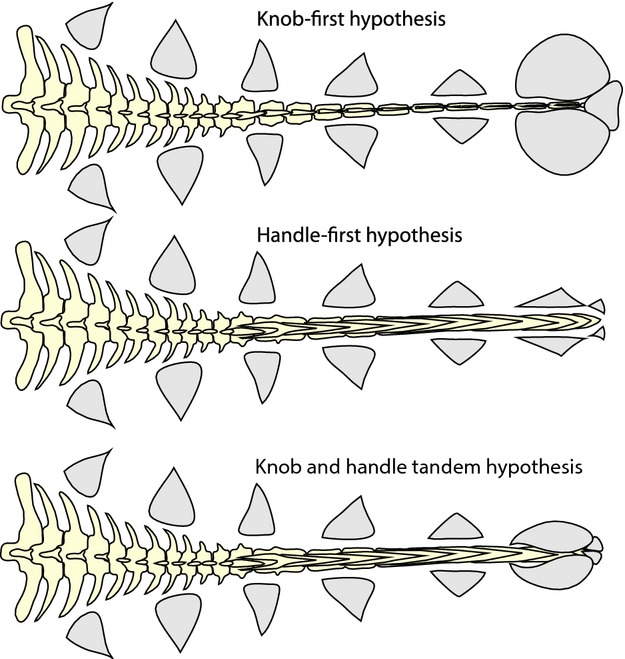
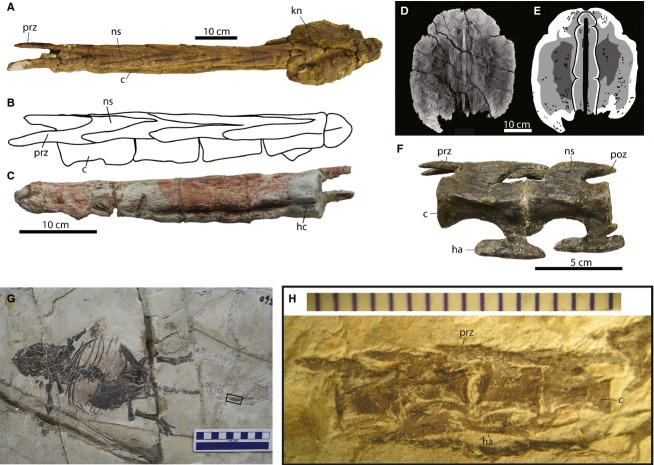
Phylogenetic analysis of tail club morphology in ankylosaurid dinosaurs demonstrates stepwise acquisition of the distinctive defensive structure: the handle (modified vertebrae) evolved before the knob (enlarged osteoderms). Mid-Cretaceous Chinese fossils reveal this process began approximately 40 million years earlier than previously known, with direct implications for understanding Ankylosaurus tail club evolution. The tail club of Ankylosaurus magniventris, the most massive and developed of all known ankylosaurids, represents the final stage of a long evolutionary trajectory. The study uses ancestral state analysis on a phylogenetic tree to reconstruct the sequence of morphological character acquisition.


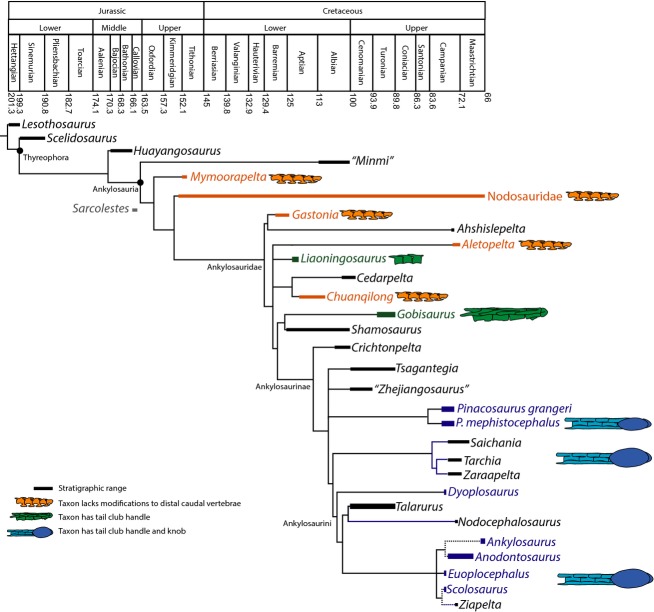
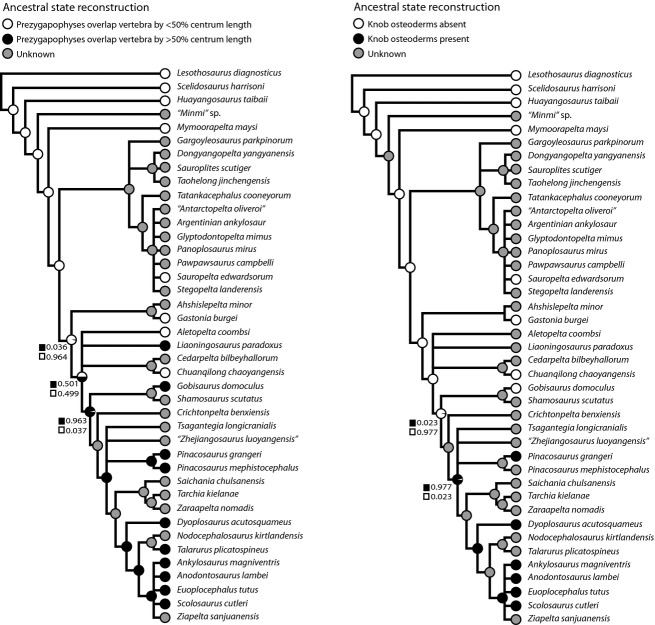
A new ankylosaurine dinosaur from the Judith River Formation of Montana, USA, based on an exceptional skeleton with soft tissue preservation
Arbour, V.M.; Evans, D.C. · Royal Society Open Science
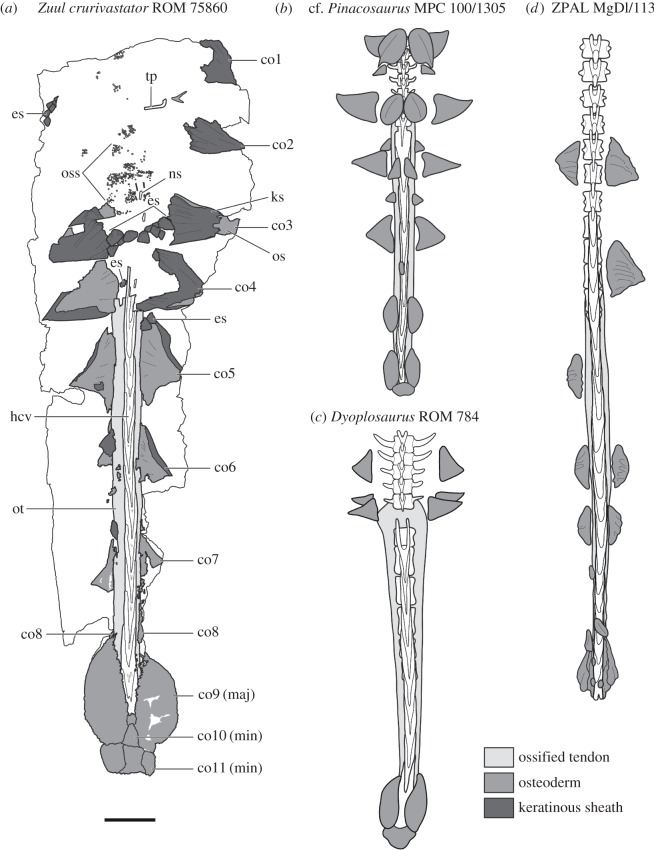
Describes Zuul crurivastator, a new genus and species from the Judith River Formation of Montana, as the most complete ankylosaurid specimen from North America: featuring both complete skull and tail club, and preserved soft tissues including osteoderms and a possible keratin sheath. Direct comparison with Ankylosaurus magniventris is central to the paper: Zuul is Campanian (~75 Ma) while Ankylosaurus is Maastrichtian (~68–66 Ma), and the authors show how Zuul's morphology illuminates what the Ankylosaurus club looked like in life before post-mortem erosion. The study also revises Ankylosaurinae phylogeny, confirming Ankylosaurus as a terminal member of the North American clade.


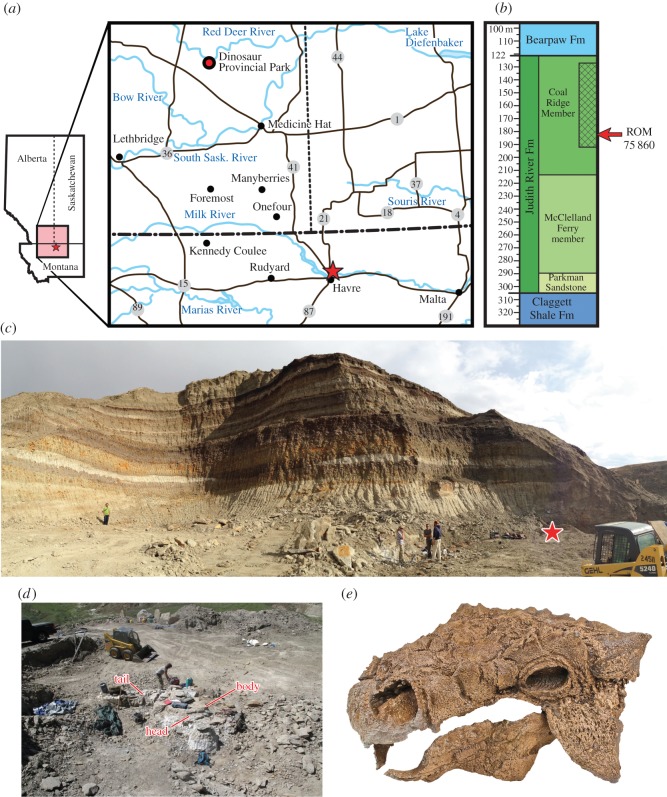
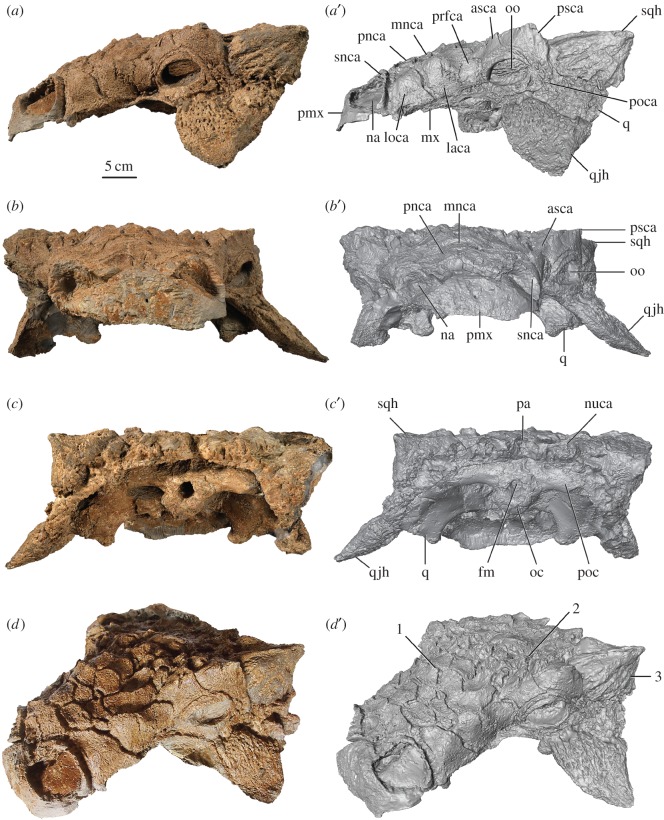
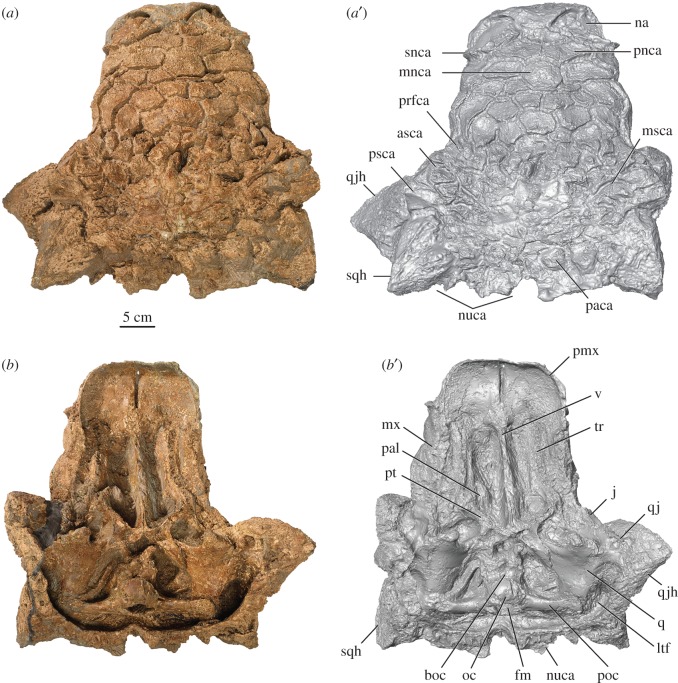
Unusual cranial and postcranial anatomy in the archetypal ankylosaur Ankylosaurus magniventris
Arbour, V.M.; Mallon, J.C. · FACETS
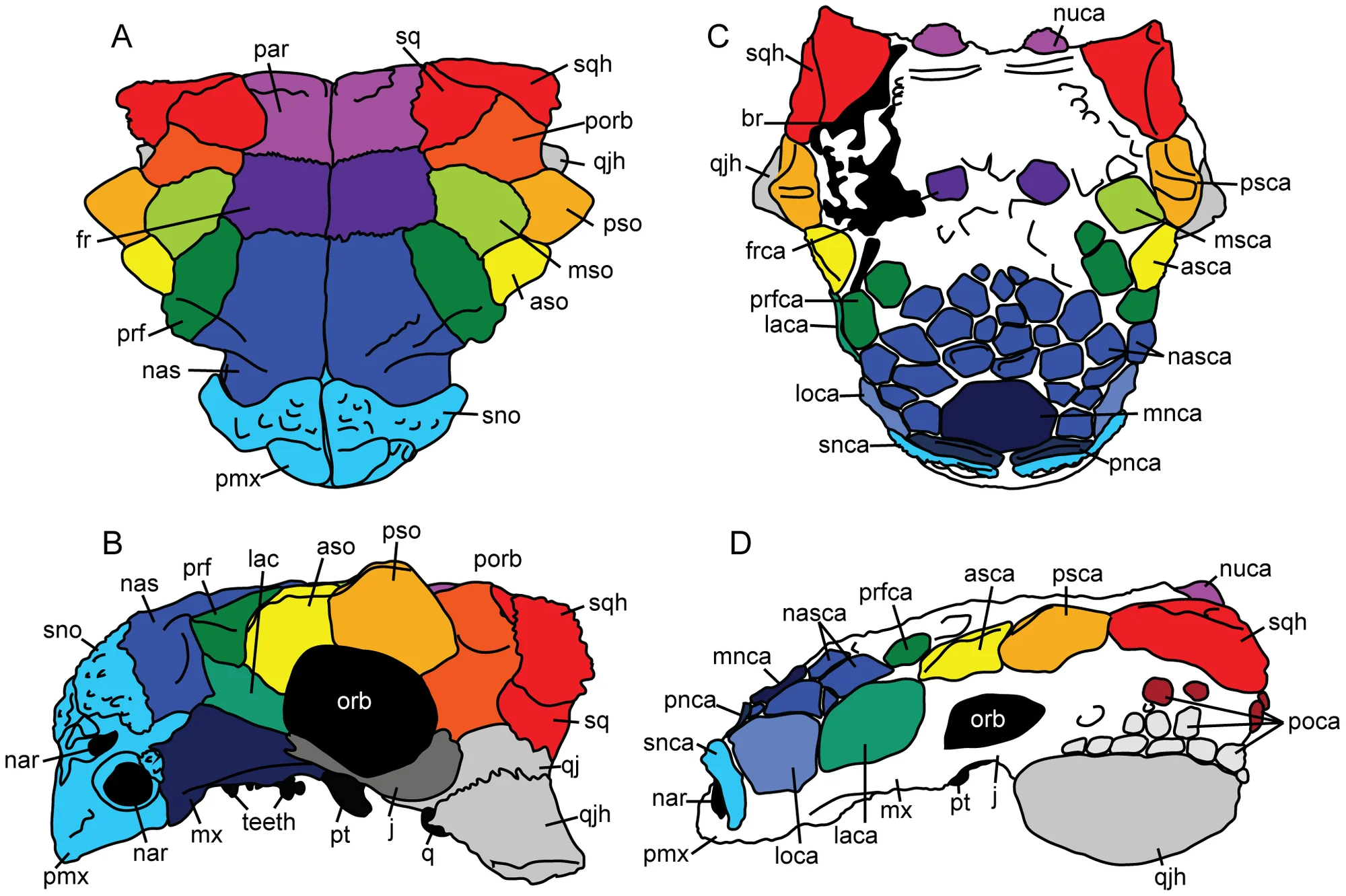
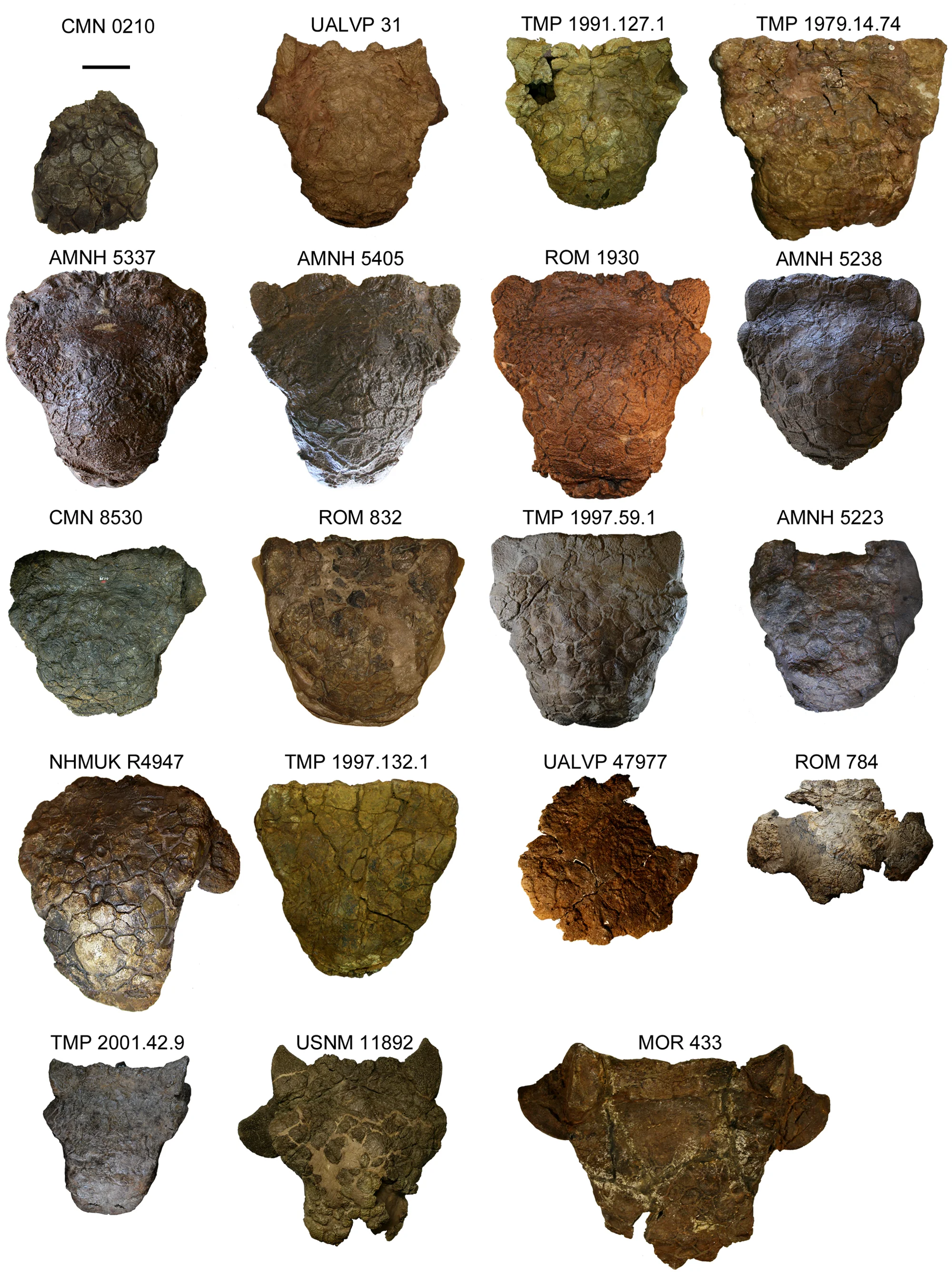
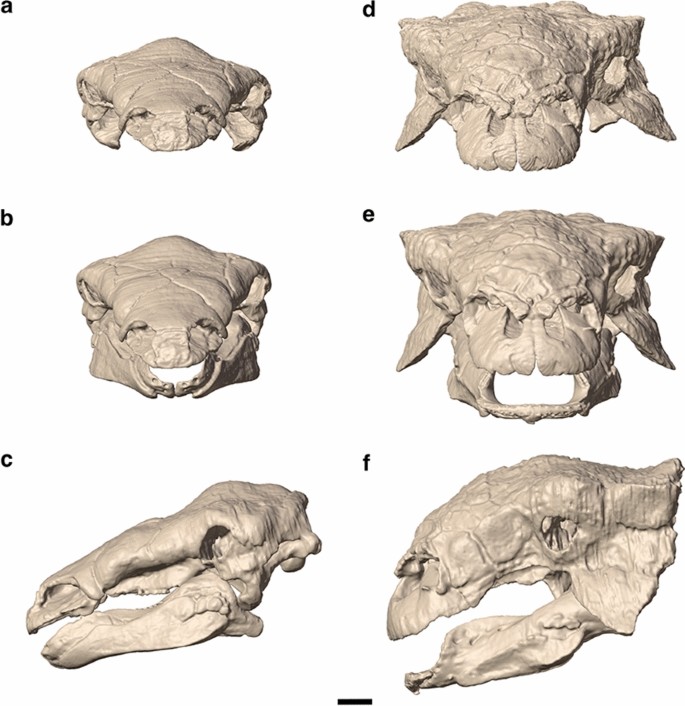
Detailed redescription of all known specimens of Ankylosaurus magniventris (AMNH 5214, AMNH 5895, AMNH 5866, and CMN 8880), revealing surprisingly divergent anatomy compared with more completely known relatives such as Euoplocephalus, Anodontosaurus, and Scolosaurus. The CMN 8880 skull, the largest ankylosaur skull ever described (64.5 cm long by 74.5 cm wide), is over one and a half times wider than Euoplocephalus skulls, establishing extreme cranial width as a diagnostic autapomorphy of the species. The external nares face laterally and are partially roofed by loreal osteoderms (caputegulae), creating a posterior nasal vestibule unique among ankylosaurs — a condition Arbour and Mallon compare with that of subterranean amphisbaenians and scolecophidian snakes. The authors speculate this morphology may reflect partial fossorial foraging for tubers, roots, and insects. The paper also presents a revised armor hypothesis, suggesting more robust, widely spaced osteoderms (rather than densely packed) gathered into cervical half rings as in other ornate ankylosaurs. Small teeth relative to skull size and a disproportionately small tail club (~60 cm, despite body size) indicate biomechanical constraints possibly tied to a low-fiber diet. The work serves as the definitive anatomical foundation for modern reconstructions of the species.
Spatial niche partitioning in dinosaurs from the latest Cretaceous (Maastrichtian) of North America
Lyson, T.R.; Longrich, N.R. · Proceedings of the Royal Society B: Biological Sciences
Analysis of 343 associated dinosaur specimens from the Hell Creek Formation reveals distinct habitat preferences among large herbivores: ceratopsians favored mudstone floodplain environments while hadrosaurs preferred sandstone river channel margins. Ankylosaurus showed extremely low abundance — only 1% of the large-bodied dinosaur census — consistent with upland habitat preference. This study provides the essential paleoecological context for understanding the rarity of Ankylosaurus magniventris in the fossil record and suggests the animal inhabited specific ecotopes rarely preserving fossils in the Hell Creek Formation geological record.

Convoluted nasal passages function as efficient heat exchangers in ankylosaurs (Dinosauria: Ornithischia: Thyreophora)
Bourke, J.M.; Porter, W.R.; Witmer, L.M. · PLoS One
Computational fluid dynamics analysis of ankylosaur nasal passages demonstrates that elaborate convoluted nasal vestibules functioned as efficient heat exchangers, recovering 65–84% of exhaled thermal energy. These results have direct implications for Ankylosaurus magniventris: the animal had even more elaborate nasal passages and unique lateralized nostrils. The study suggests that convoluted ankylosaur nasal passages may have replaced respiratory turbinates found in mammals as a heat and moisture conservation mechanism, possibly contributing to brain thermoregulation in large animals like Ankylosaurus.


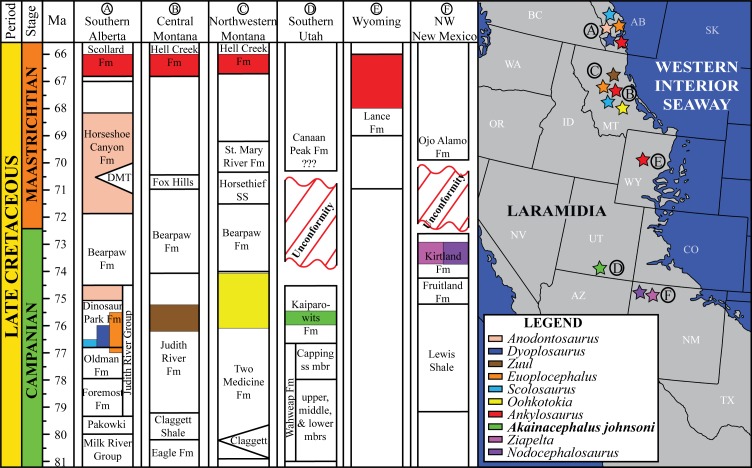
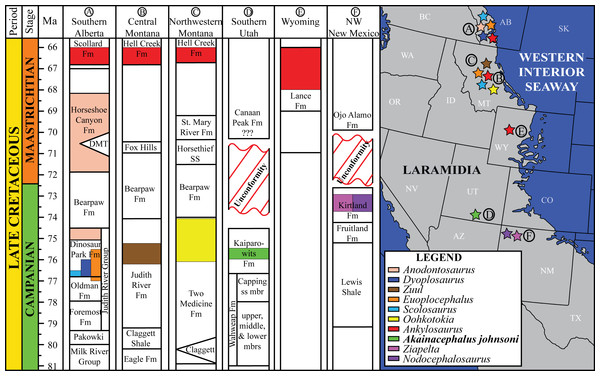
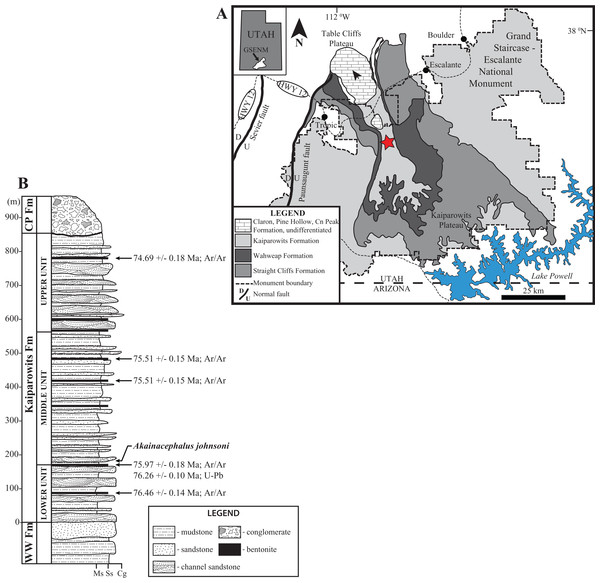
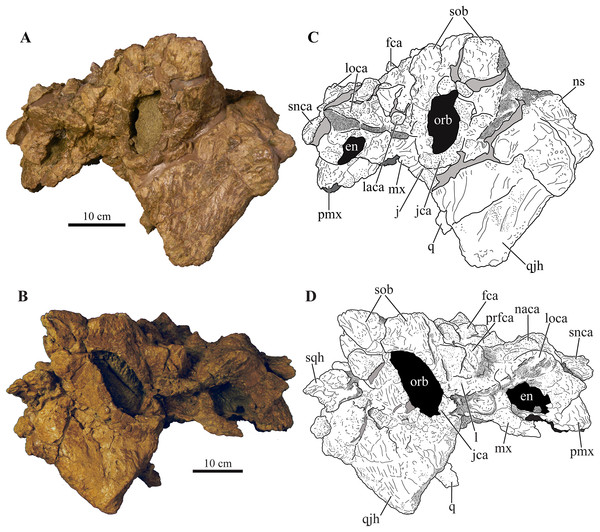
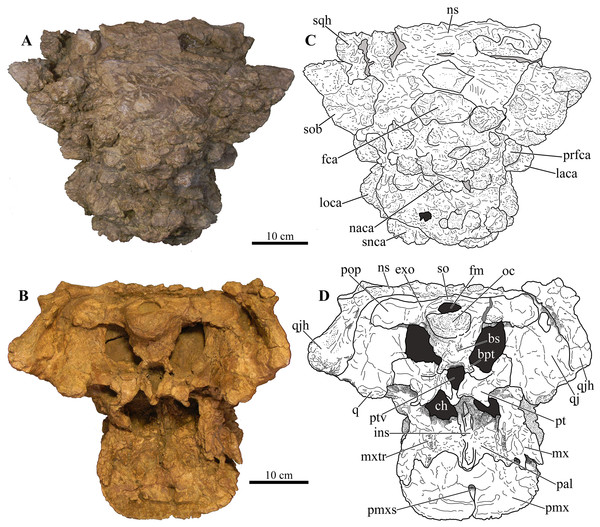
A new southern Laramidian ankylosaurid, Akainacephalus johnsoni gen. et sp. nov., from the upper Campanian Kaiparowits Formation of southern Utah, USA
Wiersma, J.P.; Irmis, R.B. · PeerJ
Describes Akainacephalus johnsoni, the most complete ankylosaurid from the Late Cretaceous of southern Laramidia. Phylogenetic analysis demonstrates close relationship with Asian ankylosaurids rather than northern North American ones, supporting multiple biogeographic dispersal events from Asia into Laramidia. The study clarifies the evolutionary context of Ankylosaurus magniventris by revealing that North American ankylosaurid faunas were more complex than assumed, with distinct biogeographic provinces — north (Ankylosaurus, Euoplocephalus) versus south (Akainacephalus, Nodocephalosaurus) — separated by ecological or physiographic barriers during the Campanian and Maastrichtian.

Competition structured a Late Cretaceous megaherbivorous dinosaur assemblage
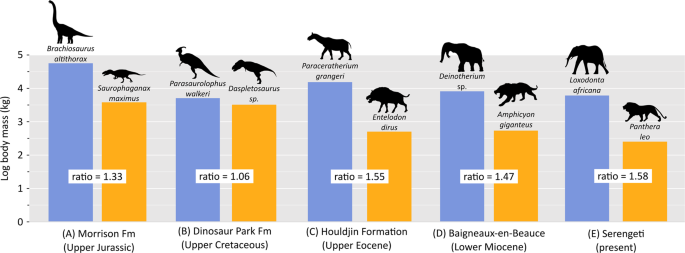
Mallon, J.C. · Scientific Reports
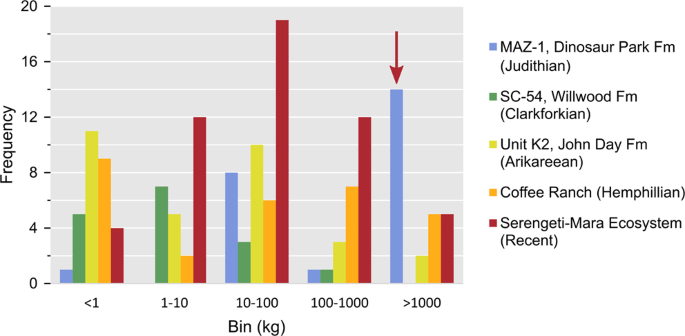
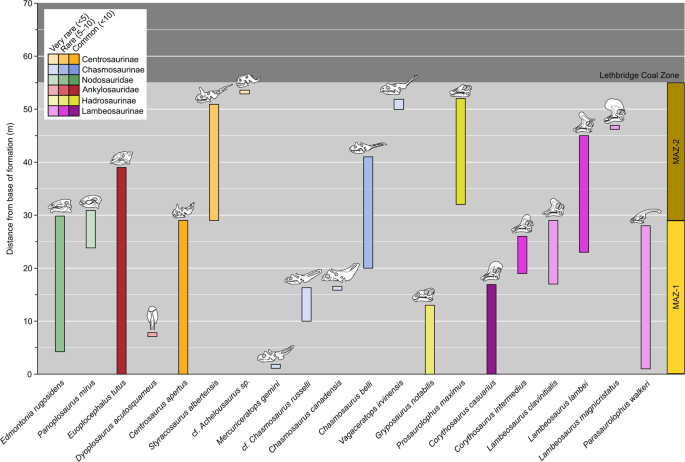
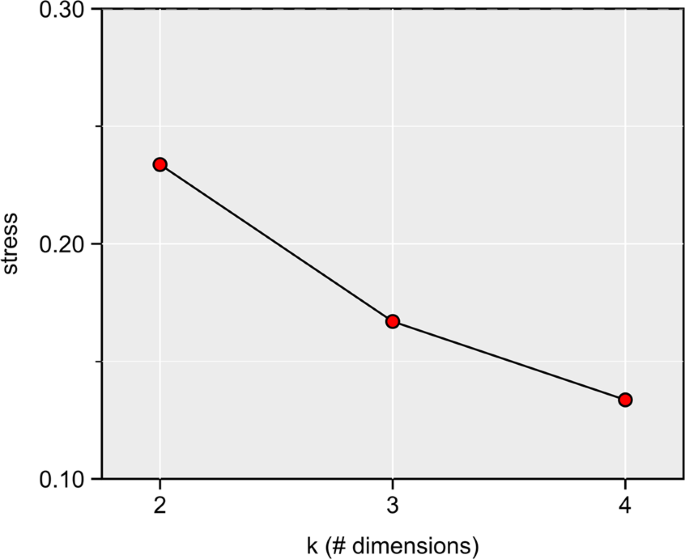
Ecomorphological analysis of 21 variables across 14 Late Cretaceous megaherbivore genera from the Dinosaur Park Formation demonstrates ecological separation in morphospace at family and subfamily levels, persisting for approximately 1.5 million years despite species turnover. Results indicate dietary competition structured herbivore assemblages. For Ankylosaurus magniventris, these data suggest ankylosaurids occupied an ecological niche distinct from hadrosaurs and ceratopsians in the same ecosystem: likely lower, more resistant vegetation in upland habitats, while hadrosaurs and ceratopsians dominated vegetation-rich river floodplains.


The phylogenetic nomenclature of ornithischian dinosaurs
Madzia, D.; Arbour, V.M.; Boyd, C.A.; Farke, A.A.; Cruzado-Caballero, P.; Evans, D.C. · PeerJ
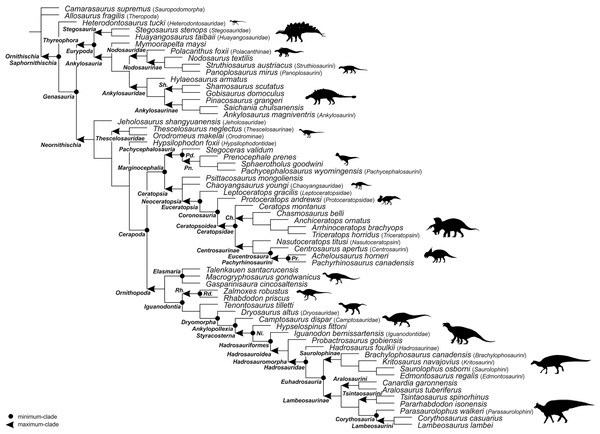
Formal phylogenetic definitions are established for 81 ornithischian dinosaur clade names under the International Code of Phylogenetic Nomenclature (PhyloCode). For ankylosaurs, the paper provides formal definitions for Ankylosauria, Ankylosauridae, Ankylosaurinae, and Ankylosaurini, clarifying the taxonomic placement and formal definition of the clade containing Ankylosaurus magniventris. The underlying phylogenetic analysis, based on a character matrix with hundreds of taxa, confirms Ankylosaurus as a member of Ankylosaurini within Ankylosaurinae. This paper is the normative reference for group nomenclature, establishing the formal phylogenetic foundations governing how Ankylosaurus and its relatives are named and defined in contemporary scientific literature.


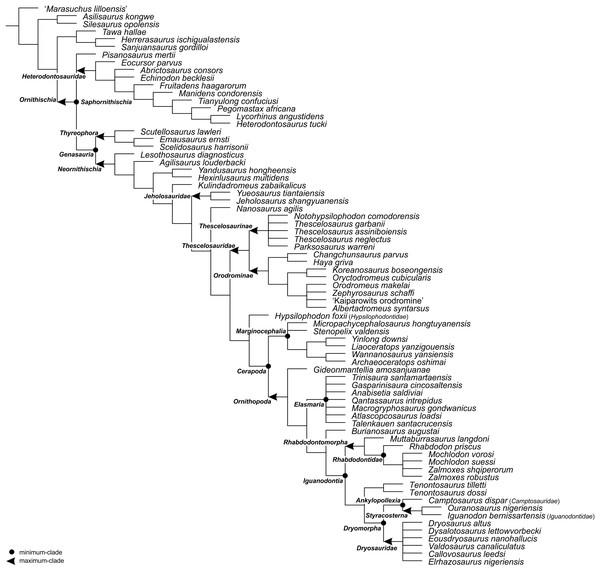
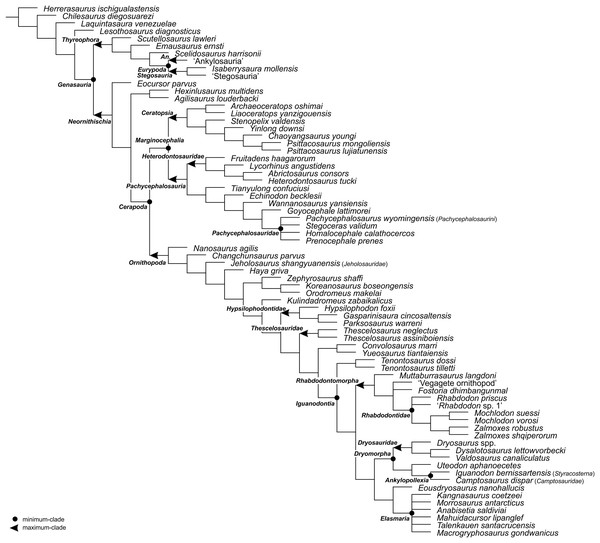
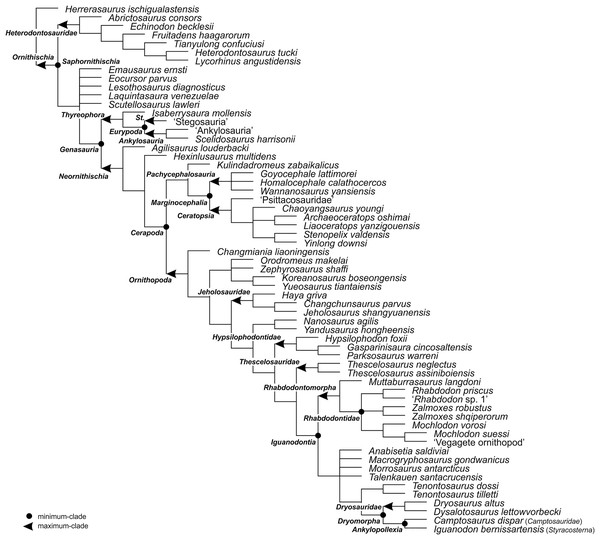
Divergent strategies in cranial biomechanics and feeding ecology of the ankylosaurian dinosaurs
Ballell, A.; Mai, B.; Benton, M.J. · Scientific Reports
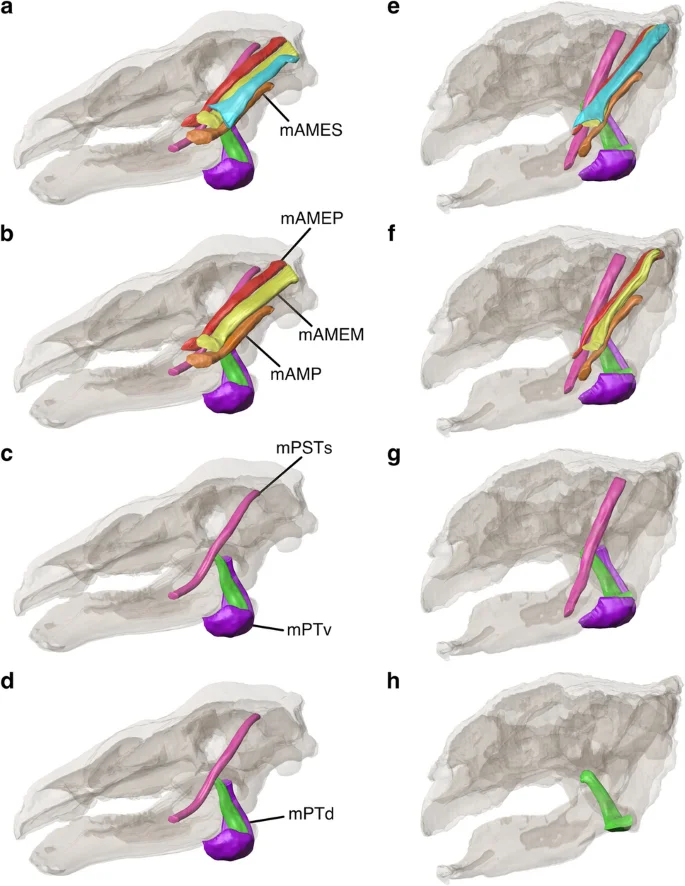
Finite element analysis and jaw adductor muscle reconstruction for ankylosaur skulls demonstrates that ankylosaurids and nodosaurids evolved divergent cranial biomechanical strategies and feeding ecologies despite similar herbivorous diets. Ankylosaurids like Ankylosaurus show broader, lower bite forces distributed across the jaw while nodosaurids show higher peak forces. Results indicate dietary niche partitioning between coexisting ankylosaur lineages. For Ankylosaurus magniventris specifically, the extremely wide skull implies a low-force bite distributed over a large area, adapted to mechanically low-resistance vegetation.


Famous museum specimens
AMNH 5214
American Museum of Natural History, Nova York, EUA
The most informative specimen of the species. Includes a complete skull with mandibles and the only known tail club of Ankylosaurus magniventris — a structure 60 cm long and 49 cm wide. Provided anatomical data for most modern reconstructions.

CMN 8880
Canadian Museum of Nature, Ottawa, Canadá
The largest known skull of Ankylosaurus magniventris: 64.5 cm long and 74.5 cm wide. This exceptionally wide cranial dimension was central to Arbour & Mallon (2017), who identified the unique lateralized nostrils as a diagnostic autapomorphy of the species.
In cinema and popular culture
Ankylosaurus magniventris is one of the most popular dinosaurs in pop culture, but it rarely occupies a central role in cinematic narratives: its appearance is almost always secondary, as a background species in the ecosystem of the Jurassic Park saga and its spinoffs. The first prominent appearance was in Jurassic Park III (2001), created entirely by CGI by ILM, where the animal appears briefly on the island. The Jurassic World franchise consolidated its modern visual design for the broad public, especially in Jurassic World: Fallen Kingdom (2018), where the animal appears in a dramatic scene during the volcanic eruption. In animation, Ice Age: Dawn of the Dinosaurs (2009) depicted it as a territorial animal with an active tail club. The scientific accuracy of these depictions improved progressively: from a mere background presence in 2001 to an animal with detailed armor and functional club in 2018. The main persisting inaccuracy is depicting the animal as aggressive and territorial: Ankylosaurus was likely rare and low-sociality, inhabiting uplands far from the riverine ecosystems where Tyrannosaurus lived.
Classification
Discovery
Fun fact
Ankylosaurus's tail club could generate enough force to fracture the bones of Tyrannosaurus rex: biomechanical studies estimate the impact could break the fibula or tibia of the largest land predator of the Cretaceous. It is one of the few documented cases where a Mesozoic prey species possessed a weapon capable of seriously injuring its main predator.
Last reviewed: April 24, 2026