
Chasmosaurus
Chasmosaurus belli
"Bell's opening lizard"
About this species
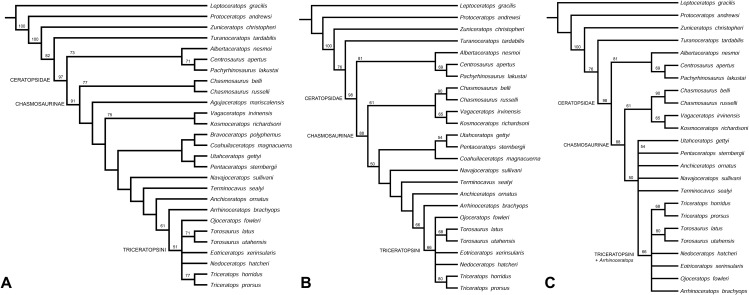
Chasmosaurus belli is the prototype ceratopsid of the subfamily Chasmosaurinae, which bears its name. It lived in the late Campanian of the Cretaceous, approximately 76.5 to 75 million years ago, in Alberta, Canada, and is one of the first large ceratopsids described by science. Its most distinctive feature is the parieto-squamosal frill that is extraordinarily large relative to the skull, with two large oval openings (the parietal fenestrae) that substantially reduced the weight of the structure. The genus name Chasmosaurus refers precisely to these openings: 'khasma' in Greek means opening or chasm. This long frill, which could exceed 60% of the total skull length, is the morphological signature of the entire subfamily. The animal was originally described by Lawrence Lambe in 1902 based on fragmentary material from the Dinosaur Park Formation, but the species was only definitively established by Lambe in 1914. Subsequent studies by Brown and Schlaikjer (1940) and Dodson (1990, 1996) substantially refined the anatomy and systematics of the taxon. Chasmosaurus belli is distinguished from other species in the genus (such as C. russelli and C. irvinensis, now reclassified as Vagaceratops) mainly by the dimensions and proportions of the frill and by the relatively short facial horns. The nasal horn is low and laterally compressed, while the supraorbital horns range from short to moderate. In 2010, a juvenile specimen of Chasmosaurus belli was discovered by Brian Campione at Dinosaur Provincial Park and studied by Phillip Bell and colleagues. The importance of this fossil goes beyond the rarity of juveniles in ceratopsids: it preserved mummified skin impressions in different regions of the body, including large hexagonal scales on the flanks, smaller scales on the neck and face, and scales organized in a differentiated pattern around the eye. Pigmentation analyses preserved through scanning electron microscopy revealed melanosomes suggesting contrasting pigmentation, possibly with a counter-shading pattern (dark dorsum, pale ventrum), which would be the first direct evidence of coloration in a ceratopsid. Chasmosaurus belli's position as the founding taxon of Chasmosaurinae makes it fundamental for understanding the evolution of the entire subfamily. Modern phylogenetic analyses consistently position C. belli as one of the most basal chasmosaurines, from which more derived forms with even more elaborate frills radiate, including Pentaceratops, Anchiceratops, Torosaurus, and Triceratops. The fossil record of Chasmosaurus belli in the Dinosaur Park Formation is one of the richest of any ceratopsid, with dozens of specimens collected over more than a century of systematic excavations.
Geological formation & environment
The Dinosaur Park Formation is a Late Campanian (~76.5-75 Ma) geological unit located in Alberta, Canada, outcropping mainly in Dinosaur Provincial Park (a UNESCO World Heritage Site since 1979). It represents a coastal and alluvial plain environment adjacent to the Western Interior Seaway, with a warm and humid subtropical climate. It is considered the most dinosaur-diverse formation of the Late Cretaceous in the world: more than 35 dinosaur species have been described from its material, including tyrannosaurids, hadrosaurids, ceratopsids, ankylosaurs, pachycephalosaurs, and smaller tetrapods. The sediments are fluvial and deltaic, with good preservation of articulated skeletons. The Dinosaur Park Formation is especially important for its detailed stratigraphic record that allows tracking faunal changes over ~1.5 Ma of deposition. Chasmosaurus belli occurs in the lower to middle horizons of the formation, coexisting with Centrosaurus apertus in the lower strata and being progressively replaced by other ceratopsids toward the top. This faunal succession is one of the best-documented examples of species turnover over a short geological timescale within a single ecosystem.
Image gallery
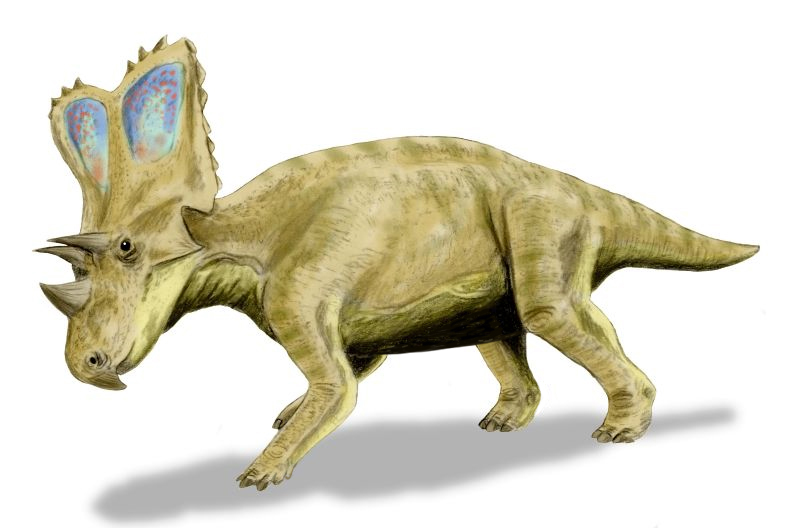

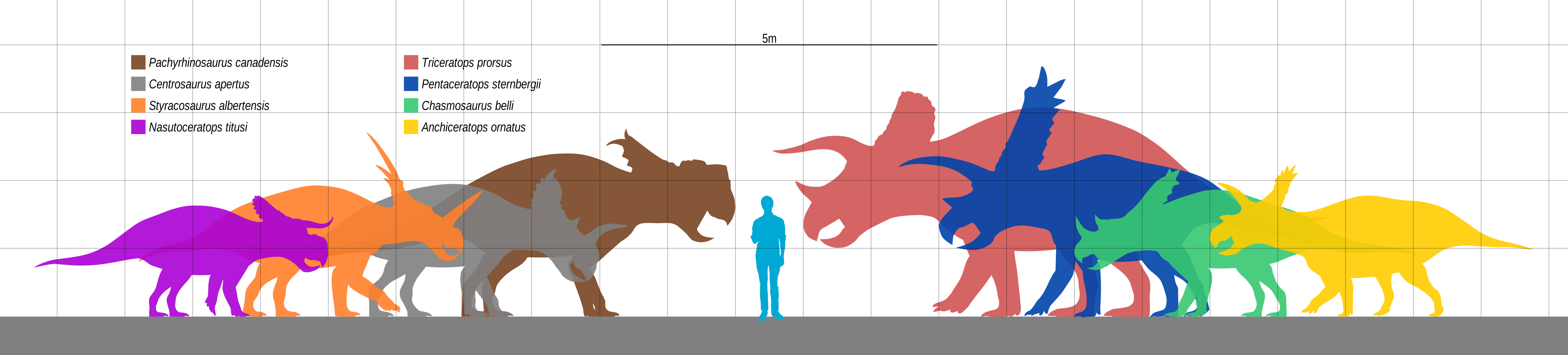


Black-and-white scientific reconstruction of Chasmosaurus belli by Nobu Tamura. Lateral view showing the characteristic expanded ceratopsian frill from the Dinosaur Park Formation.
CC BY-SA 3.0
Ecology and behavior
Habitat
Chasmosaurus belli inhabited the Dinosaur Park Formation of Alberta in the late Campanian (76.5-75 Ma), an environment of subtropical and coastal alluvial plains adjacent to the Western Interior Seaway. The climate was warm and humid, with an average annual temperature of ~17-20°C and strong influence from the nearby inland sea. Vegetation was dominated by angiosperms (including palms and primitive figs), conifers at higher elevations, and extensive areas of low coastal vegetation. Associated fauna included the tyrannosaurids Gorgosaurus libratus and Daspletosaurus torosus as apex predators, other ceratopsids (C. russelli, Styracosaurus, Centrosaurus), hadrosaurids (Edmontosaurus, Lambeosaurus), ankylosaurs (Euoplocephalus), saurolophines, and high diversity of small vertebrates.
Feeding
Chasmosaurus belli was an herbivore with tooth batteries adapted for efficient processing of fibrous vegetation. The wide horny beak was used to cut angiosperms, ferns, and pteridosperms from ground level to mid-height. Powerful temporal muscles generated high shearing force, suitable for fibrous and tough plants. Ecomorphological analyses suggest feeding niche partitioning among co-occurring ceratopsids in the Dinosaur Park Formation, with Chasmosaurus and Styracosaurus possibly specialized on different vegetation heights and types. The elevated metabolism of a ~1,500 kg herbivore would have required continuous ingestion of large volumes of vegetation.
Behavior and senses
The most direct behavioral evidence for Chasmosaurus belli comes from bone beds in the Dinosaur Park Formation, indicating gregarious behavior in groups or herds. Pathologies in frill bones documented by Bell et al. (2014) are consistent with ritualized intraspecific combat, analogous to that of modern horned ungulates. The large frill, with vascular grooves on the bones suggesting rich vascularization, likely served for intraspecific chromatic display. The 2010 mummified juvenile indicates C. belli had a differentiated scale pattern around the eye, possibly for visual communication. Coexistence with multiple species of ceratopsids and hadrosaurids in the same formation implies resource partitioning and ecological niche.
Physiology and growth
Like all Late Cretaceous ceratopsids, Chasmosaurus belli was likely mesothermic to endothermic, with elevated metabolism relative to modern ectothermic reptiles. Ceratopsid bone histology shows fibrolamellar tissue with relatively rapid juvenile growth. The large, richly vascularized frill may have had thermoregulatory function in addition to intraspecific display, dissipating or absorbing heat depending on environmental conditions. The mummified juvenile specimen preserved melanosomes in the skin, suggesting melanin-based pigmentation that may have functioned in UV protection or thermoregulation. The ~1,500 kg mass implied slow but stable quadrupedal locomotion, with center of mass positioned anteriorly by the large head and frill.
Paleogeography
Continental configuration

Scotese & Vérard · CC BY 4.0 · Cretaceous, ~105 Ma
Fossil sites

CC BY-SA 3.0
During the Campaniano (~76.5–75 Ma), Chasmosaurus belli inhabited Laramidia, the western half of present-day North America, separated from the east by the Western Interior Seaway, a shallow sea dividing the continent. The continents were in very different positions: India was drifting toward Asia, Antarctica was still connected to Australia, and South America was an isolated island.
Bone Inventory
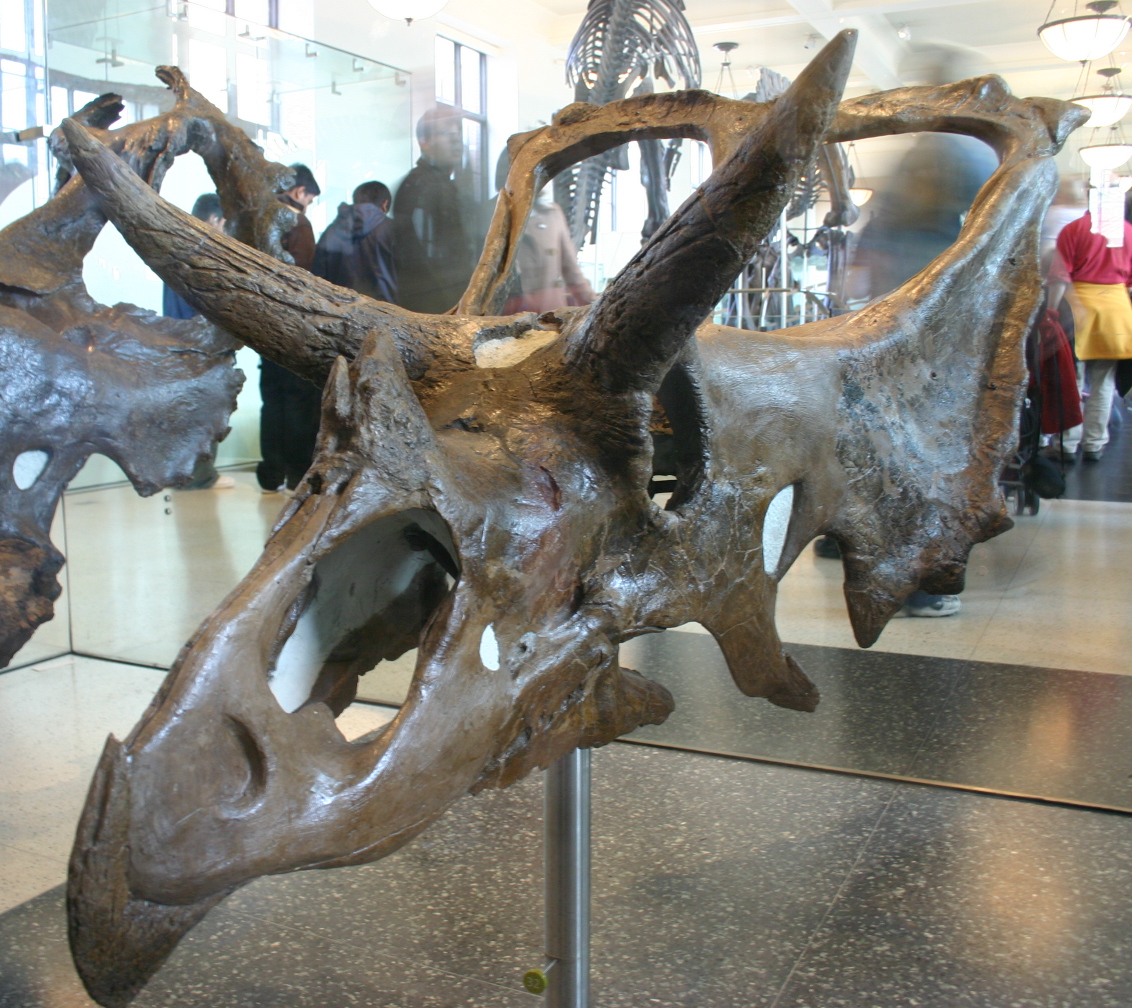
Based on multiple specimens from the Dinosaur Park Formation. Holotype CMN 491 consists of a partial skull. Subsequent specimens include near-complete skulls, mandibles, and extensive post-cranial elements. The juvenile specimen CMN 57081 discovered in 2010 preserves mummified skin impressions in several regions. The Sternberg specimen (AMNH 5401) includes a complete skull with frill. In total, more than 20 specimens referred to C. belli allow detailed morphological characterization, although completely articulated skeletons are rare.

Found elements
Inferred elements
Scientific Literature
7 papers in chronological order — from the original description to recent research.
New genera and species from the Belly River Series (mid-Cretaceous)
Lambe, L.M. · Contributions to Canadian Palaeontology
Lawrence Lambe describes fragmentary ceratopsian material from the Belly River Series (present-day Dinosaur Park Formation) of Alberta, collected by T.C. Weston for the Geological Survey of Canada in 1898. The material, initially referred to as Monoclonius belli (a name honoring collector William Bell, not the discoverer), includes cranial fragments and post-cranial bones. This is the founding paper establishing the Chasmosaurus belli record in the paleontological literature, although the genus name Chasmosaurus is not coined by Lambe until 1914. Published as Contributions to Canadian Palaeontology vol. 3, part 4, it is the starting point for more than a century of research on this taxon.
On the fore-limb of a carnivorous dinosaur from the Belly River Formation of Alberta, and a new genus of Ceratopsia from the same horizon, with remarks on the integument of some Cretaceous herbivorous dinosaurs
Lambe, L.M. · Ottawa Naturalist
Lawrence Lambe re-erects the genus Chasmosaurus for material from the Belly River Formation of Alberta previously referred to Monoclonius, establishing Chasmosaurus belli as the type species. The work is fundamental because it coins the generic name that becomes the reference for the entire subfamily Chasmosaurinae. Lambe characterizes Chasmosaurus by the extreme elongation of the parieto-squamosal frill with large parietal fenestrae, distinguishing it from short-frilled centrosaurines. The article also contains observations on the integument of Cretaceous herbivores, anticipating later studies on ceratopsid skin. Published in Ottawa Naturalist vol. 27(10).
The structure and relationships of Protoceratops
Brown, B. & Schlaikjer, E.M. · Annals of the New York Academy of Sciences
Brown and Schlaikjer examine in detail the anatomy and phylogenetic relationships of Protoceratops andrewsi, with extensive comparative analysis of ceratopsid anatomy including Chasmosaurus belli. The work establishes the framework for understanding ceratopsian interrelationships and provides detailed descriptions of chasmosaurine skull anatomy. The analysis of Chasmosaurus belli includes cranial characters that become the reference for distinguishing species within the genus and for positioning C. belli in the context of all Ceratopsia evolution. Published in Annals of the New York Academy of Sciences vol. 40: 133-296, it is one of the most influential comparative works on ceratopsids of the 20th century.
The ceratopsian subfamily Chasmosaurinae: sexual dimorphism and systematics
Lehman, T.M. · Dinosaur Systematics: Approaches and Perspectives (Carpenter & Currie, eds.) — Cambridge University Press
Lehman reviews the systematics of Chasmosaurinae with particular attention to variation within Chasmosaurus, proposing that C. belli and C. russelli represent dimorphic sexual morphs of the same species rather than distinct taxa. The work examines evidence for sexual dimorphism in frill and horn morphology in ceratopsids, using Chasmosaurus as a case study. Lehman's proposal was controversial and contested by Dodson (1990, 1996) and later works that re-established C. belli and C. russelli as distinct species. Regardless of this controversy, the work is important because it stimulated rigorous systematic analyses of intraspecific variation in Chasmosaurus and ceratopsids in general.
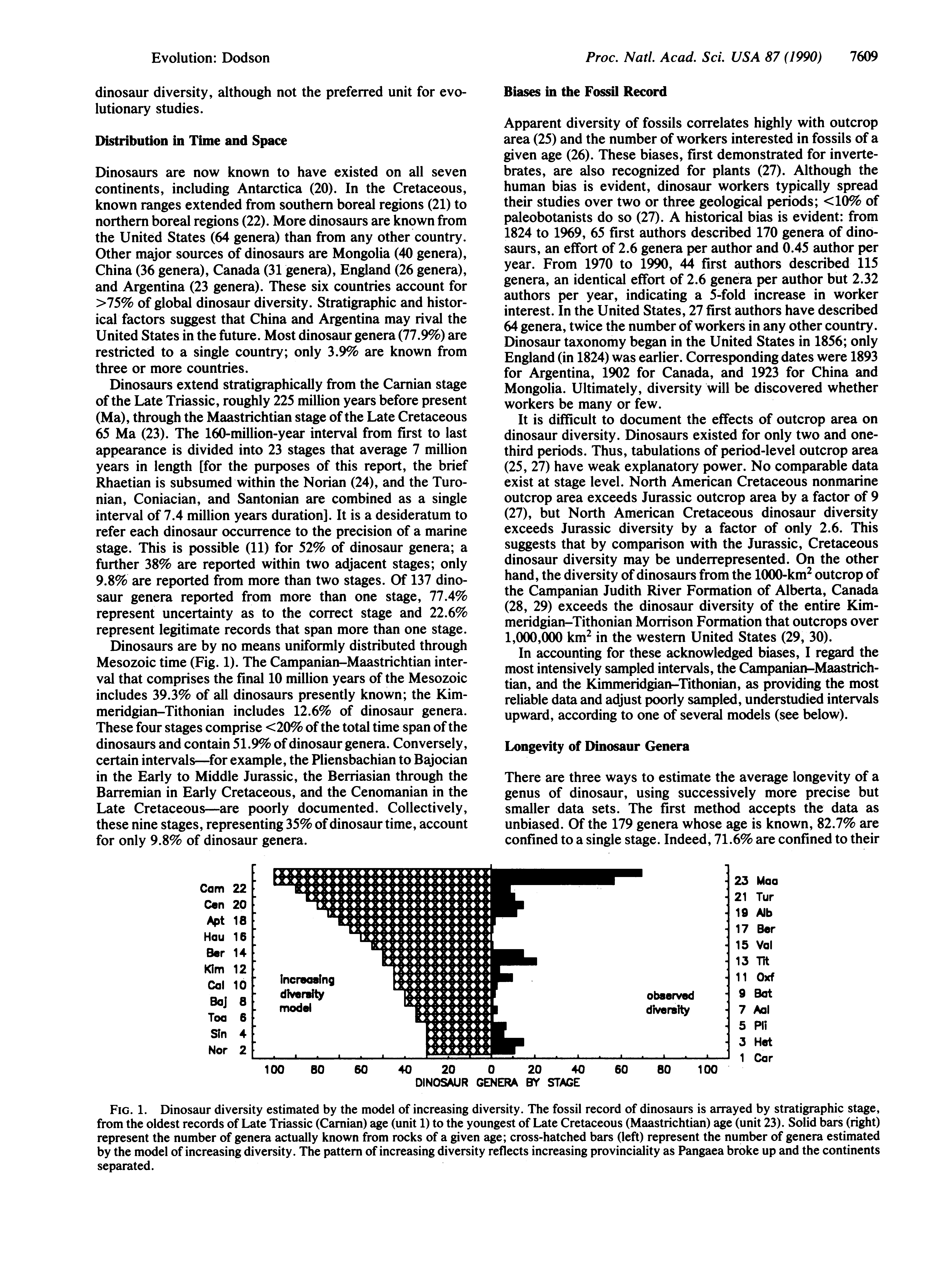
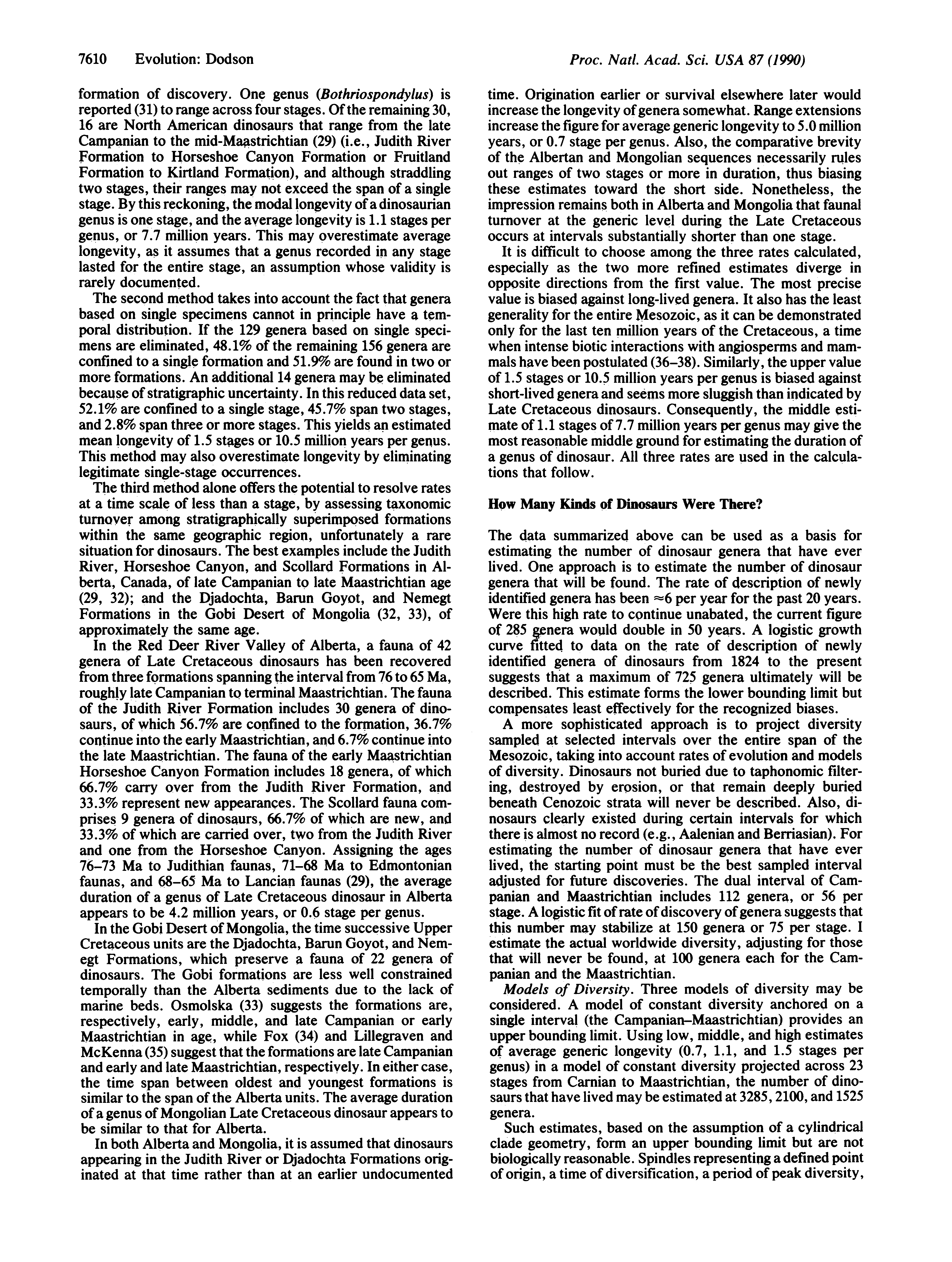
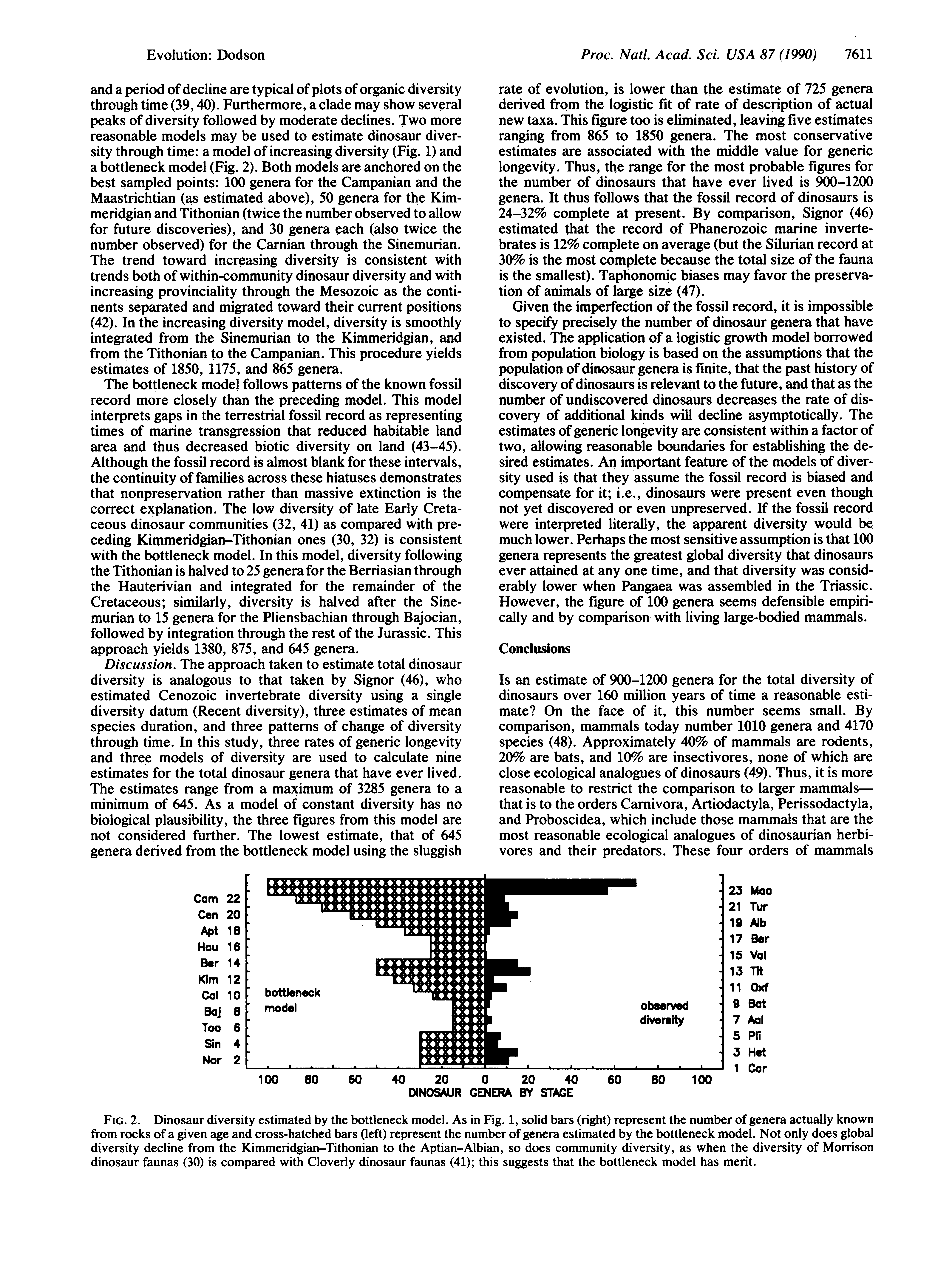
Counting dinosaurs: how many kinds were there?
Dodson, P. · Proceedings of the National Academy of Sciences
Dodson presents an assessment of dinosaur generic and species diversity and analyzes how taphonomic and preservation biases affect our understanding of diversity. The work includes discussion of ceratopsid species validity, specifically addressing the status of Chasmosaurus belli and related taxa, contesting Lehman's (1990) proposal that C. belli and C. russelli are dimorphic morphs. Dodson argues that consistent morphological differences between the two taxa justify maintaining them as separate species. The work is part of a series of Dodson contributions establishing objective criteria for assessing the taxonomic validity of ceratopsids.


The Horned Dinosaurs: A Natural History
Dodson, P. · Princeton University Press
Dodson presents a comprehensive synthesis of the biology, anatomy, systematics, and paleobiology of ceratopsian dinosaurs, with extensive treatment of Chasmosaurus belli as the foundational chasmosaurine taxon. The book gathers analyses of all known specimens, discusses frill function, and phylogenetic relationships within Ceratopsidae. The treatment of C. belli includes detailed comparison with C. russelli and other species of the genus, providing the diagnostic characters that allow distinguishing them. It is the most complete reference on ceratopsid biology published until the early 21st century and remains a foundational work in vertebrate paleontology.

Mass death of a herd of ceratopsian dinosaurs
Currie, P.J. & Dodson, P. · Third Symposium on Mesozoic Terrestrial Ecosystems — Short Papers
Currie and Dodson describe a bone bed in the Dinosaur Park Formation of Alberta containing remains of multiple ceratopsid individuals, including elements referable to Chasmosaurus, and interpret the deposition as evidence of gregarious herd behavior in chasmosaurine ceratopsids. The work is fundamental for inferring social behavior in Chasmosaurus belli: the co-occurrence of multiple individuals at the same depositional site suggests the animal lived in groups, analogous to herds of large modern herbivores. Ceratopsid bone beds have been consistently used since then as evidence of gregariousness in this group.

Famous museum specimens

CMN 491
Canadian Museum of Nature, Ottawa, Canadá
Holotype of Chasmosaurus belli. Consists of a partial skull collected by T.C. Weston in 1898 from the Dinosaur Park Formation of Alberta. It is the founding specimen that establishes the species and was described by Lawrence Lambe in 1902 (as Monoclonius belli) and again in 1914 (as Chasmosaurus belli).
AMNH 5401
American Museum of Natural History, Nova York, Estados Unidos
One of the most complete skulls of Chasmosaurus belli, collected by Charles H. Sternberg and sons. Includes complete skull with frill and mandibular elements. Reference specimen for the species' cranial morphology.
ROM 839
Royal Ontario Museum, Toronto, Canadá
Specimen displayed at the Royal Ontario Museum including near-complete skull with frill and significant portion of the post-cranial skeleton. On permanent display in the museum's dinosaur gallery. One of the most publicly viewed specimens at any Canadian museum.
CMN 57081
Canadian Museum of Nature, Ottawa, Canadá
Juvenile specimen discovered in 2010 by Brian Campione at Dinosaur Provincial Park. Notable for the exceptionally rare preservation of mummified skin impressions in multiple body regions, including hexagonal scales on the flanks and a differentiated pattern around the eye.
NHMUK R4948
Natural History Museum, Londres, Reino Unido
Chasmosaurus belli specimen at the Natural History Museum in London, including partial skull with frill. Part of the collection obtained from Dinosaur Provincial Park excavations in the early decades of the 20th century, when Alberta allowed fossil export.
In cinema and popular culture
Chasmosaurus belli never achieved the pop fame of Triceratops or Styracosaurus, but appears with increasing frequency in high-quality scientific productions. The Prehistoric Planet series (Apple TV+, 2022) with David Attenborough presented the animal to the general public with a rigorous reconstruction technically informed by data from the mummified juvenile specimen discovered in 2010. This appearance marked an inflection point: the general public began associating Chasmosaurus not merely as 'another horned ceratopsid', but as the evolutionary prototype of an entire subfamily that includes Triceratops. Over the decades, Chasmosaurus has appeared secondarily in documentaries like Walking with Dinosaurs (BBC, 1999) and science communication books. Its scientific importance as the founding taxon of Chasmosaurinae has been widely communicated in museums, where complete skulls at the Royal Ontario Museum and American Museum of Natural History are permanent display pieces. The 2010 mummified juvenile specimen, which preserves skin with a scale pattern and possible evidence of counter-shaded coloration, generated international media coverage and temporarily made Chasmosaurus belli one of the most discussed dinosaurs in scientific media.
Classification
Discovery
Fun fact
The juvenile Chasmosaurus belli specimen discovered in 2010 at Dinosaur Provincial Park is one of the most precious fossils in ceratopsid paleontology: it preserves mummified skin with a detailed scale pattern, including large hexagonal scales on the flanks and a differentiated pattern around the eye. Melanosome analyses inside the scales suggest the animal had counter-shaded pigmentation, like many modern mammals: darker dorsum, paler ventrum. It is the first direct evidence of coloration in any ceratopsid.
Last reviewed: April 24, 2026