
Torvosaurus
Torvosaurus tanneri
"Savage lizard of Tanner"
About this species
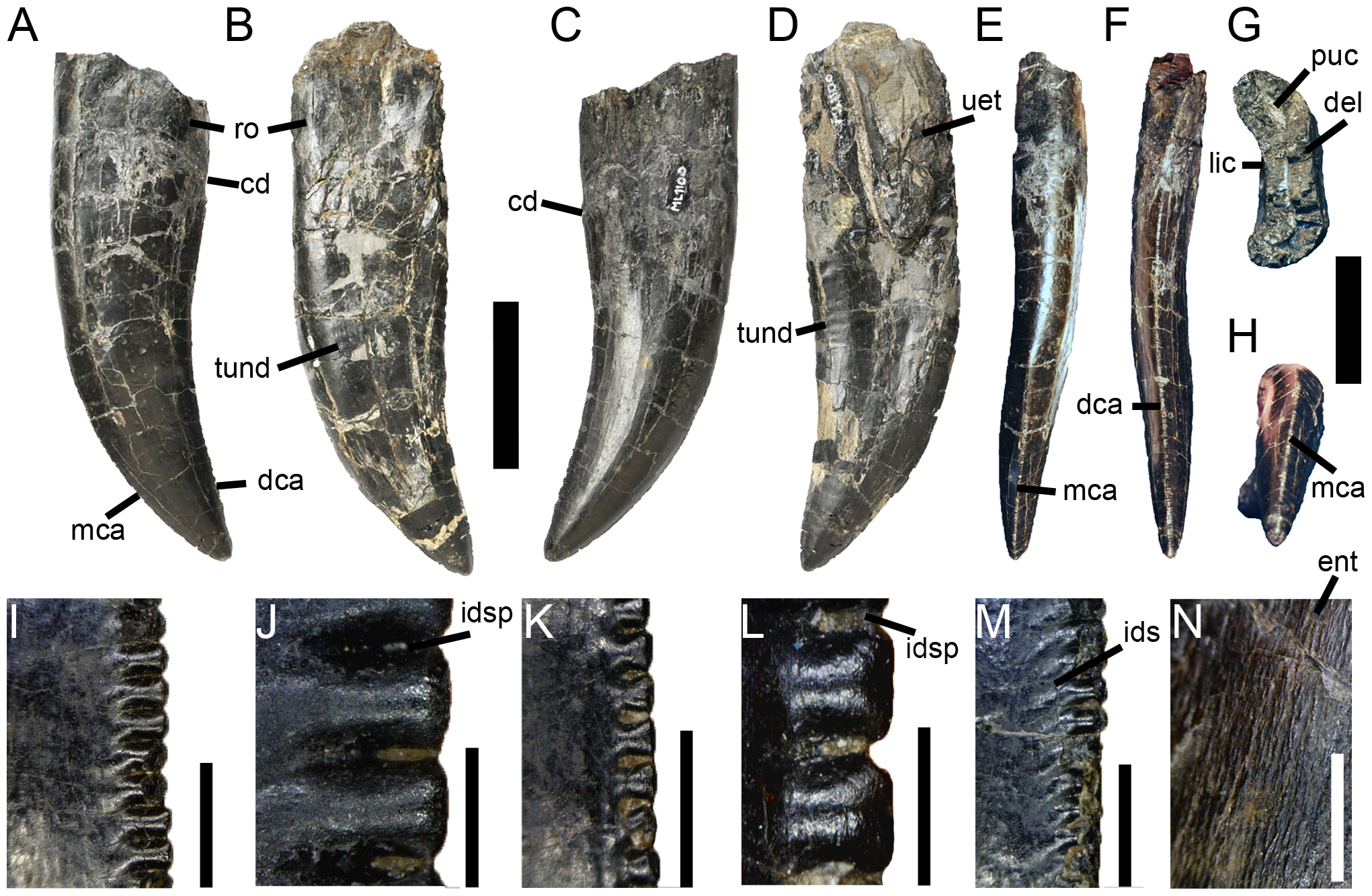
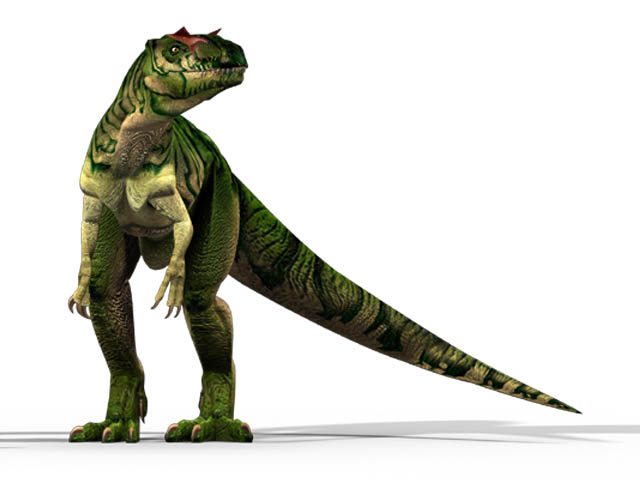
Torvosaurus tanneri is a large megalosaurid theropod from the Late Jurassic (late Kimmeridgian to basal Tithonian, about 153 to 148 million years ago) of the Morrison Formation of the western United States. Described by Peter Galton and James A. Jensen in 1979, it reached 9 to 10 metres in length, with some specimens estimated up to 11 metres, and 2 to 5 tonnes in body mass, ranking among the largest Jurassic carnivores worldwide. The skull was elongated, narrow and armed with ziphodont teeth up to 150 millimetres in crown height, among the largest ever recorded in non-avian theropods. Its forelimbs were short but extremely robust, with thick humerus and phalanges; the left humerus was designated lectotype by Britt in 1991. The animal occupied the apex predator role in the Morrison large-theropod guild alongside Allosaurus, Ceratosaurus and Saurophaganax. Later records extended the genus to Europe with the description of Torvosaurus gurneyi by Hendrickx and Mateus (2014) in the Lourinhã Formation of Portugal, and to embryos assigned to Torvosaurus sp. reported by Araújo and colleagues (2013), also from Portugal, among the oldest known dinosaur embryos.
Geological formation & environment
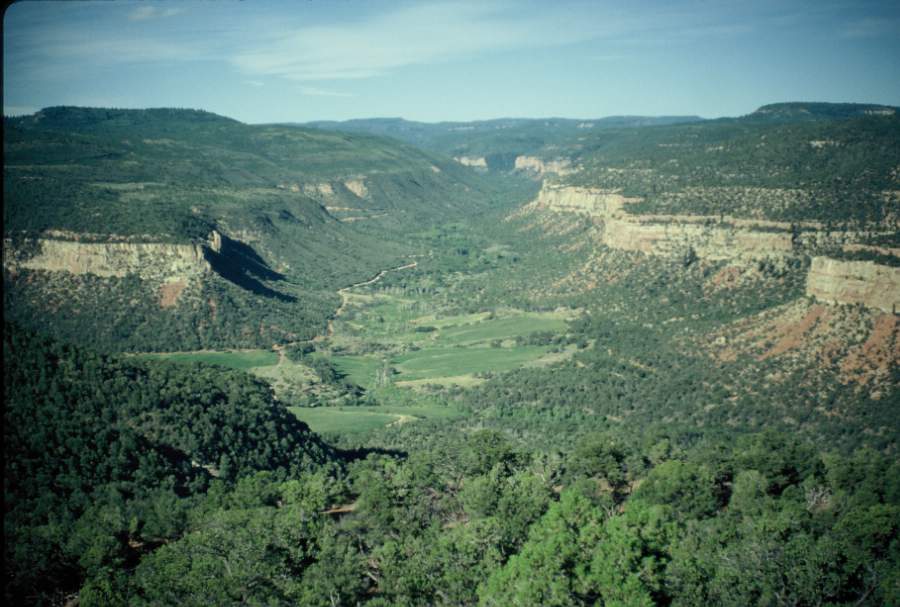
Morrison Formation, Brushy Basin Member, Upper Jurassic (Kimmeridgian to Tithonian, about 155 to 148 Ma). The Morrison crops out across roughly 1.5 million km² of the western interior United States, from Utah and Colorado to Wyoming and Montana, and records seasonal semi-arid to subhumid floodplains drained by meandering and braided rivers. Geographically, the Brushy Basin Member preserves the iconic multicoloured mudstones and volcaniclastic bentonites that date the unit precisely. The fauna includes sauropods (Apatosaurus, Brachiosaurus, Camarasaurus, Diplodocus, Supersaurus, Barosaurus), stegosaurs (Stegosaurus), ornithopods (Camptosaurus, Dryosaurus), large theropod predators (Torvosaurus, Allosaurus, Ceratosaurus, Saurophaganax) and small theropods (Ornitholestes, Koparion, Stokesosaurus), alongside crocodylomorphs, turtles, lizards, mammals and pterosaurs.
Image gallery
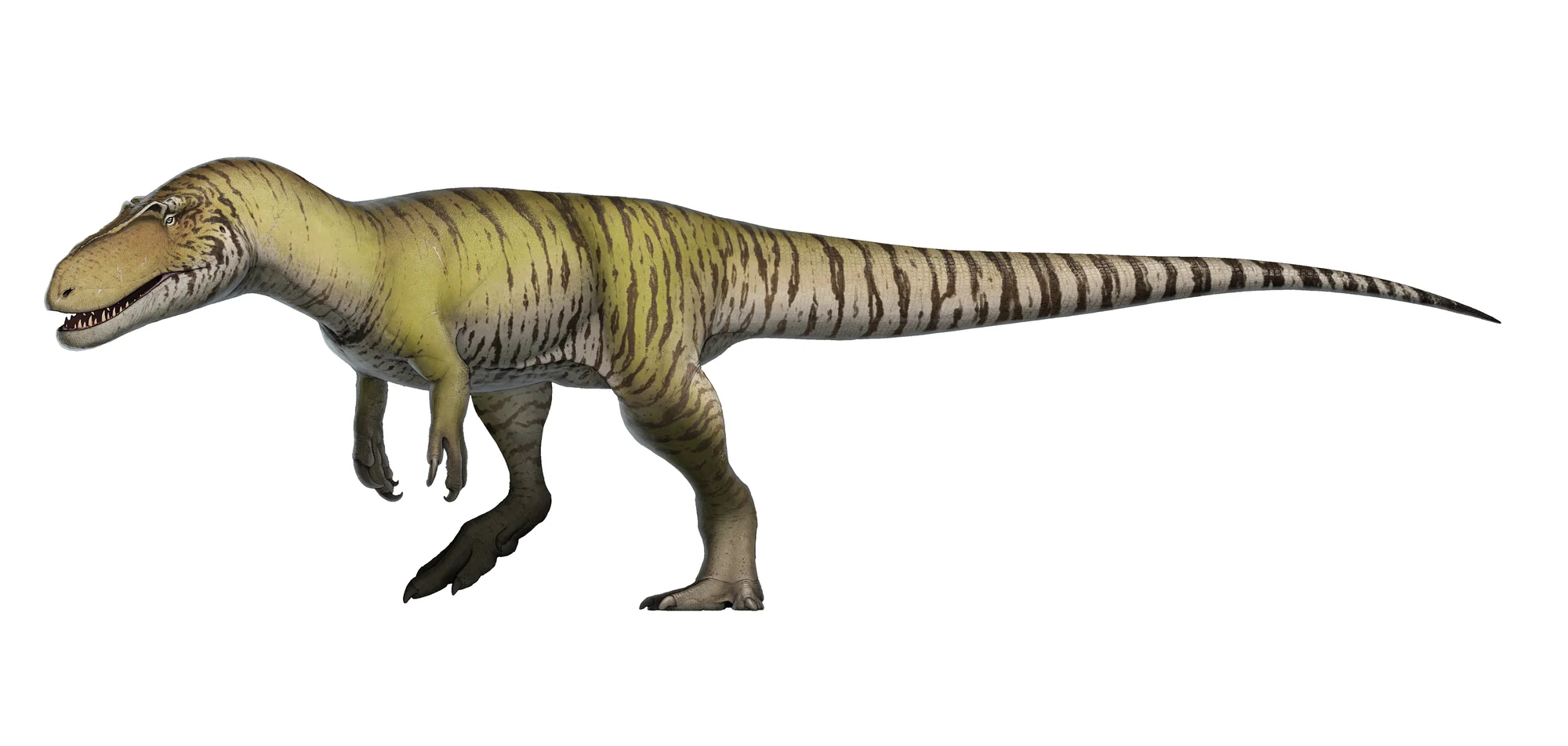


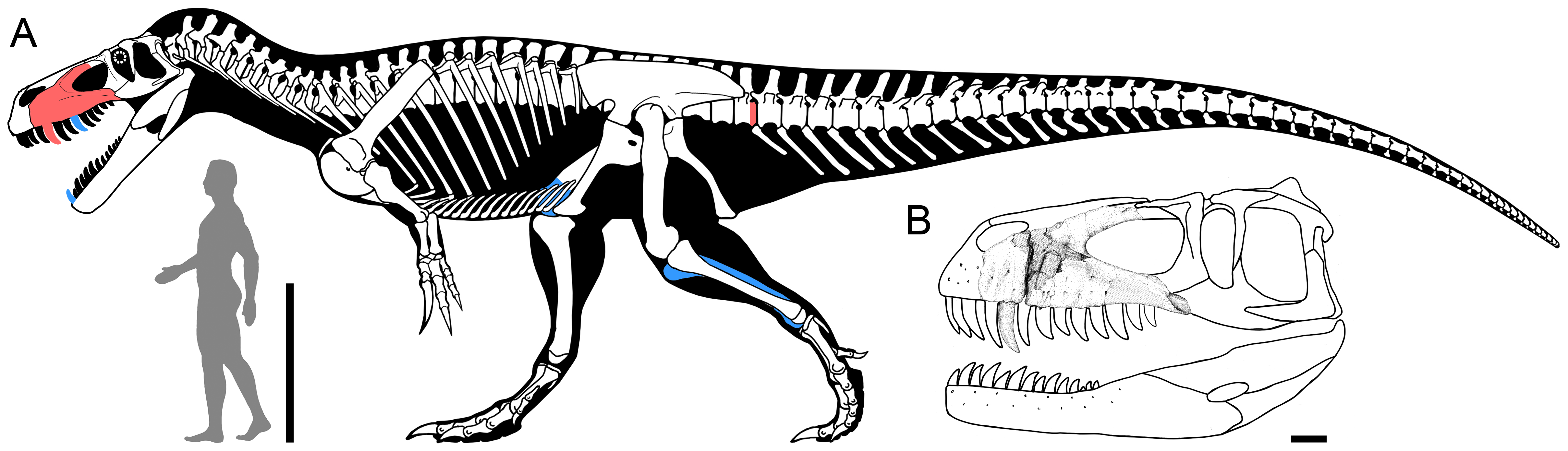


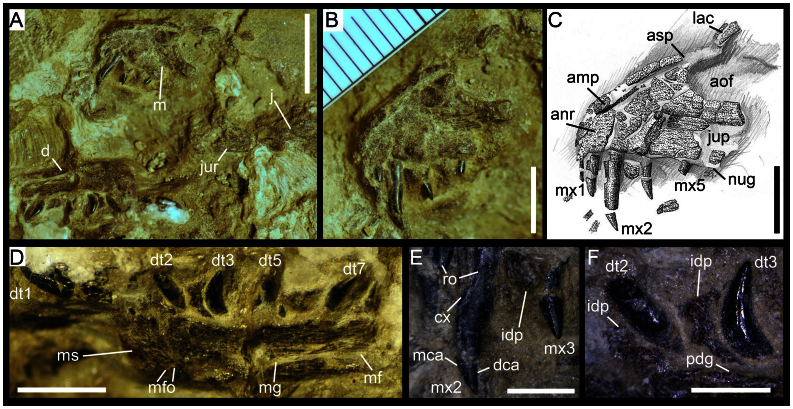


Skeletal mount of Torvosaurus tanneri at the North American Museum of Ancient Life (Lehi, Utah). The reconstruction combines holotype BYU 2002 material with casts from other Dry Mesa Quarry specimens.
Wikimedia Commons
Ecology and behavior
Habitat
Seasonal floodplains of the Morrison Formation, with marked alternation between wet and dry seasons. The environment combined fluvial watercourses, floodplains, ephemeral channels and shallow lakes interspersed with more arid caliche-bearing soils. Vegetation was dominated by conifers, cycads, bennettitaleans, ginkgos and tree ferns, with grasses absent (grasses only diversified in the Cretaceous).
Feeding
Apex predator, strict carnivore. The elongated bladed (ziphodont) teeth, robust forelimbs with large claws and powerful jaw were consistent with active predation on large prey. Likely prey included juvenile sauropods (Apatosaurus, Diplodocus, Camarasaurus, Brachiosaurus), stegosaurs (Stegosaurus) and medium-sized ornithopods (Camptosaurus, Dryosaurus). It may also have acted as an ambush hunter in riparian zones, where its size and strength were advantageous.
Behavior and senses
No tracks or associated sites have been unequivocally attributed to Torvosaurus tanneri, which limits direct inference. By analogy with other megalosaurids and with the Morrison guild ecology proposed by Bakker (1998), it was probably a solitary or occasional-pair hunter, with niche partitioning relative to Allosaurus (more abundant and possibly more generalist) and Ceratosaurus (preference for riparian environments). The discovery of embryos associated with Torvosaurus sp. in Portugal (Araújo et al. 2013) suggests nesting in floodplain areas.
Physiology and growth
One of the largest Northern Hemisphere terrestrial carnivores of the Jurassic, with estimates of 2 to 5 tonnes. The robust humeri structure together with elongated ziphodont teeth indicates a predator adapted to delivering deep lacerating bites. Bone histology has not been published in detail for the American species; the Portuguese embryos (ML 1188) have provided unprecedented data on megalosauroid histomorphogenesis.
Paleogeography
Continental configuration

Scotese & Vérard · CC BY 4.0 · Jurassic, ~155 Ma
During the Kimmeridgiano a Titoniano (~153–148 Ma), Torvosaurus tanneri inhabited the fragmenting Pangea. North America and Europe were still close, and the North Atlantic was just beginning to open. Climate was warm and humid globally, with no polar ice caps.
Bone Inventory
Holotype BYU 2002 consists mainly of humeri, radius, ulna and manual phalanges. Britt (1991) designated the left humerus as lectotype after concluding there was no proof of association between the original elements. Referred BYU material includes cranial (dentary), vertebral and pelvic elements from Dry Mesa, amounting to around 40% of the recognised skeleton. In 2012 the 'Elvis' specimen, 55% complete, was discovered at Skull Creek Quarry (Colorado), including pelvis, associated spine and cranial elements; it is exhibited at the Cincinnati Museum of Natural History & Science and remains formally undescribed.
Found elements
Inferred elements
Scientific Literature
15 papers in chronological order — from the original description to recent research.
A new large theropod dinosaur from the Upper Jurassic of Colorado
Galton, P.M. e Jensen, J.A. · Brigham Young University Geology Studies 26(2), 1-12
Original description of the genus and species Torvosaurus tanneri based on holotype BYU 2002, collected in 1972 at the Dry Mesa Quarry (Colorado). The authors interpreted the animal as a distinct theropod based on its robust forelimbs and humeral character combinations, establishing a new large Jurassic North American predator.
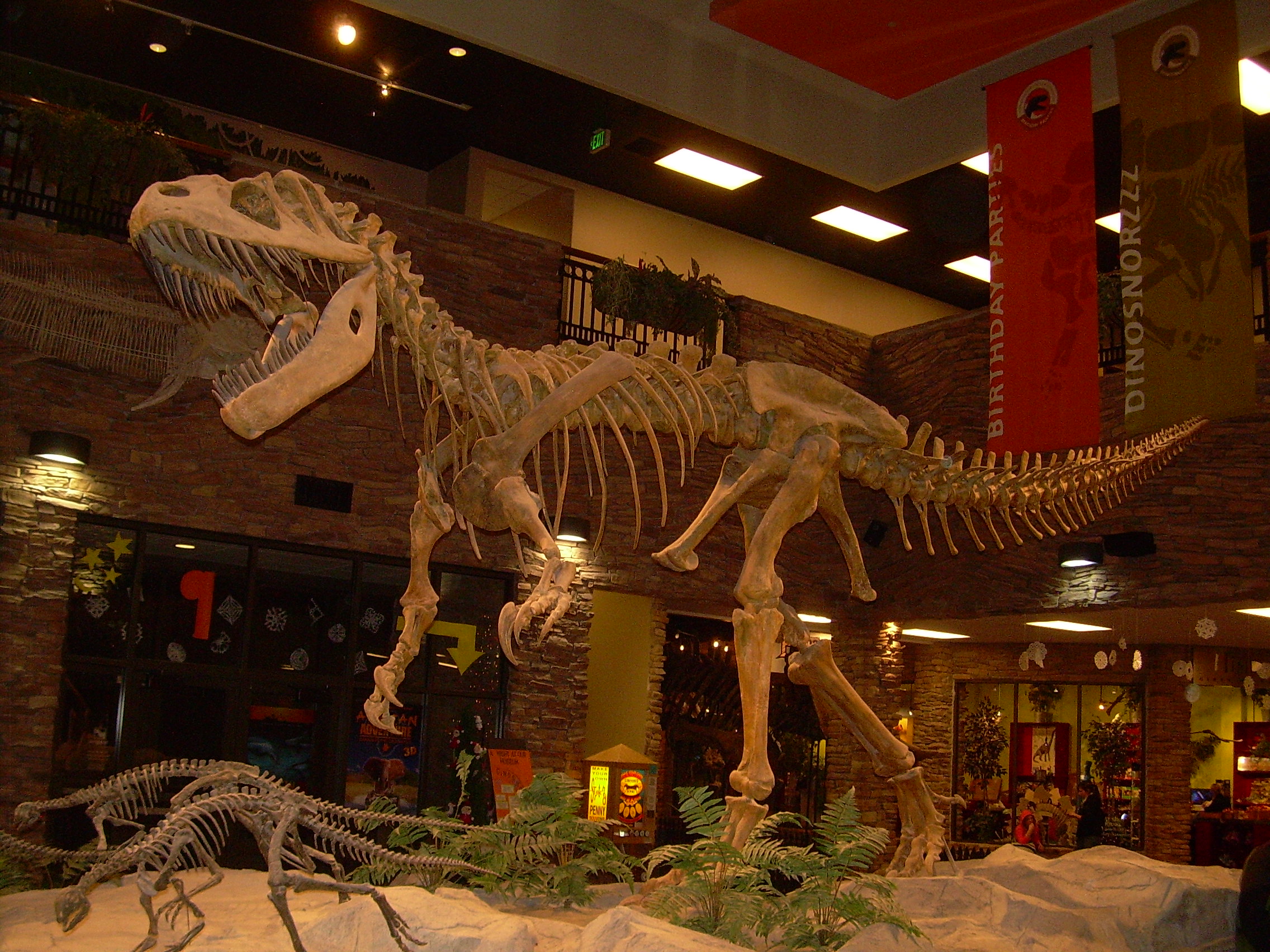
Theropods of Dry Mesa Quarry (Morrison Formation, Late Jurassic), Colorado, with emphasis on the osteology of Torvosaurus tanneri
Britt, B.B. · Brigham Young University Geology Studies 37, 1-72
Detailed osteological monograph on Torvosaurus tanneri material from Dry Mesa Quarry. Britt designated the left humerus as lectotype, concluded that the original forearm bones could not be reliably associated, and showed affinities with Megalosaurus, supporting the placement of Torvosaurus within Megalosauridae.

Edmarka rex, a new, gigantic theropod dinosaur from the middle Morrison Formation, Late Jurassic, of the Como Bluff outcrop area
Bakker, R.T., Kralis, D., Siegwarth, J. e Filla, J. · Hunteria 2(9), 1-24
Description of Edmarka rex based on a large theropod from Como Bluff (Wyoming). Most researchers today regard the taxon as a junior synonym of Torvosaurus tanneri, though a detailed formal analysis has yet to be published. The synonymy question is repeatedly cited in later Morrison megalosaurid literature.
Brontosaur killers: Late Jurassic allosaurids as sabre-tooth cat analogues
Bakker, R.T. · Gaia 15, 145-158
Bakker's ecological essay on the Morrison large-carnivore guild. Interprets Allosaurus, Ceratosaurus and Torvosaurus as occupying distinct niches, with Torvosaurus often near watercourses and its powerful forelimbs suggesting predation on large-bodied prey. The paper underpins recurrent later ecological interpretations of Torvosaurus.
Torvosaurus sp. (Dinosauria: Theropoda) in the Late Jurassic of Portugal
Mateus, O. e Antunes, M.T. · I Congresso Ibérico de Paleontologia / XVI Jornadas de la Sociedad Española de Paleontología (abstract volume)
First record of the genus Torvosaurus outside North America, based on a tibia (ML 430) from the Lourinhã Formation, Portugal. Establishes the biogeographic parallel between Iberian and Morrison faunas that would be consolidated with the description of Torvosaurus gurneyi in 2014.

The interrelationships and evolution of basal theropod dinosaurs
Rauhut, O.W.M. · Special Papers in Palaeontology 69, 1-213
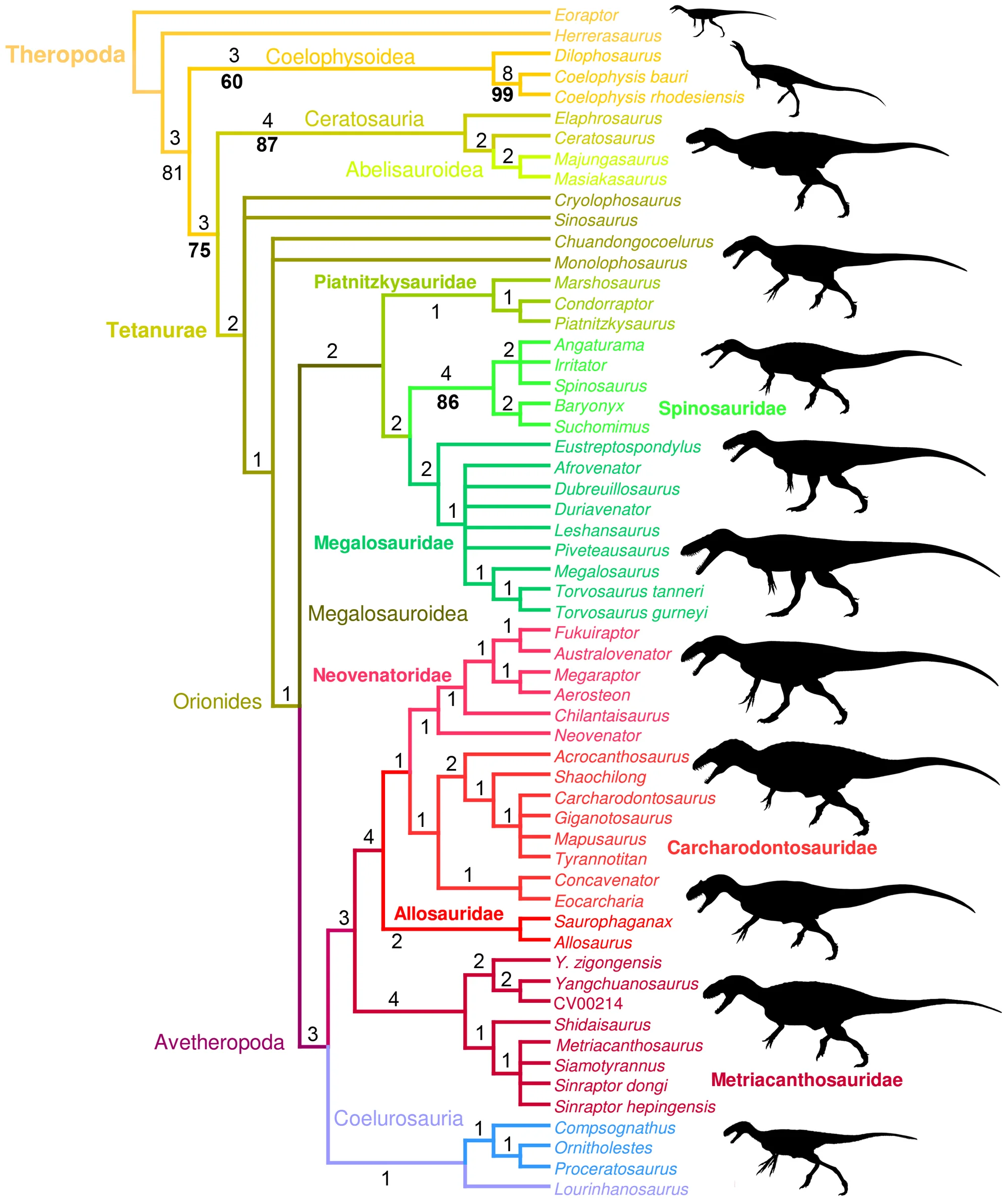
Broad phylogenetic analysis of basal theropods. Rauhut places Torvosaurus among derived megalosaurids, close to Megalosaurus and Afrovenator, and contributes to the modern structuring of Megalosauroidea, with Spinosauridae as sister group. It serves as foundation for later revisions (Benson 2010; Carrano et al. 2012).

Basal Tetanurae
Holtz, T.R., Molnar, R.E. e Currie, P.J. · The Dinosauria, 2nd edition (University of California Press)
Reference chapter on basal tetanurans in the second edition of The Dinosauria. Places Torvosaurus tanneri in Megalosauridae (Torvosaurinae) and synthesises the anatomical and biogeographic knowledge accumulated up to 2004, immediately before the explosion of Portuguese discoveries.
A description of Megalosaurus bucklandii (Dinosauria: Theropoda) from the Bathonian of the UK and the relationships of Middle Jurassic theropods
Benson, R.B.J. · Zoological Journal of the Linnean Society 158, 882-935
Osteological revision of Megalosaurus bucklandii and phylogenetic analysis that establishes Megalosauridae with the subfamilies Megalosaurinae (including Torvosaurus) and Afrovenatorinae. Modern foundation for the phylogenetic position of Torvosaurus tanneri.

The phylogeny of Tetanurae (Dinosauria: Theropoda)
Carrano, M.T., Benson, R.B.J. e Sampson, S.D. · Journal of Systematic Palaeontology 10(2), 211-300
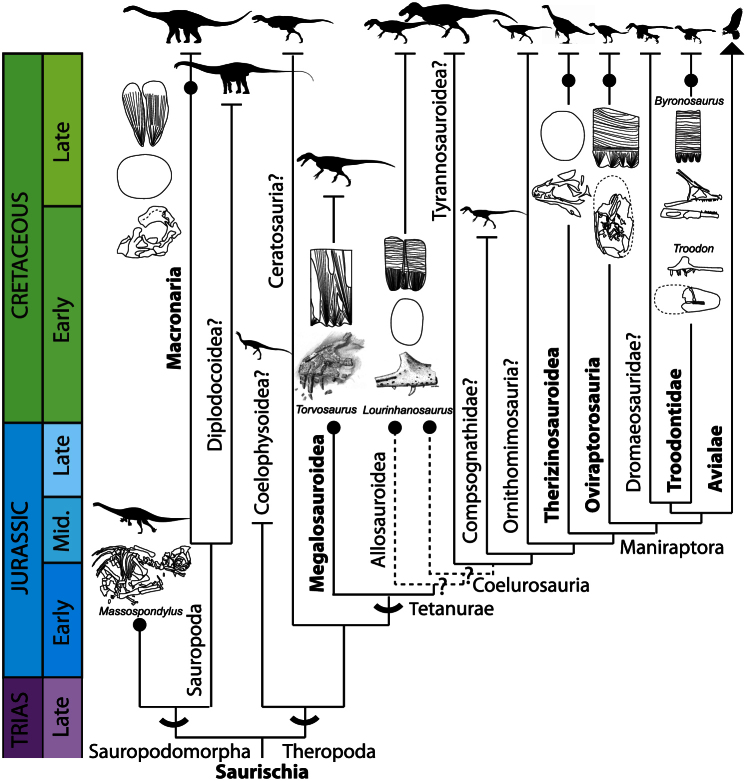
Comprehensive cladistic analysis of 61 basal tetanuran taxa. Formally defines Piatnitzkysauridae and places Torvosaurus tanneri as a derived megalosaurid within Megalosaurinae, sister to Torvosaurus sp. from Portugal, later formalised as T. gurneyi.

A Middle Jurassic abelisaurid from Patagonia and the early diversification of theropod dinosaurs
Pol, D. e Rauhut, O.W.M. · Proceedings of the Royal Society B 279, 3170-3175
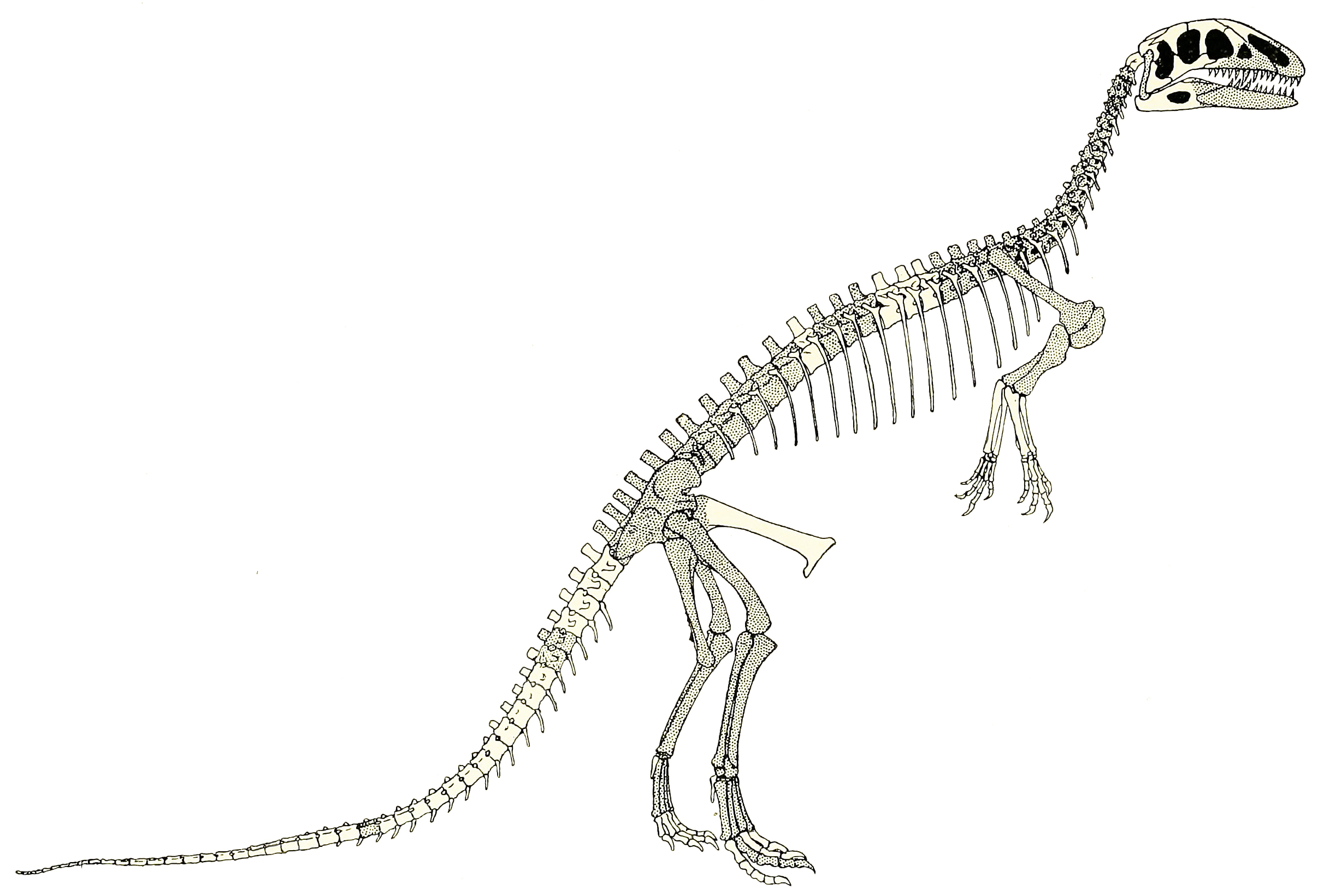
Although focused on the abelisauroid Eoabelisaurus, this paper presents a basal tetanuran phylogenetic tree that includes Torvosaurus within Megalosauridae, reinforcing the Carrano et al. (2012) topology. A frequent reference for the internal structure of Megalosauroidea.
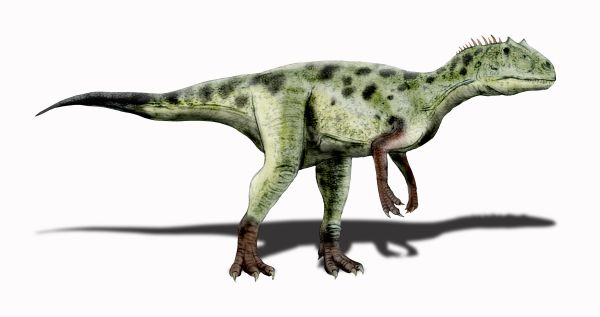
Filling the gaps of dinosaur eggshell phylogeny: Late Jurassic theropod clutch with embryos from Portugal
Araújo, R., Castanhinha, R., Martins, R.M.S., Mateus, O., Hendrickx, C., Beckmann, F., Schell, N. e Alves, L.C. · Scientific Reports 3, 1924
Description of an Early Tithonian clutch from the Lourinhã Formation (Portugal) with several crushed eggs and embryonic material (ML 1188) assigned to Torvosaurus sp. Represents the first associated eggs and embryos of megalosauroids and ranks among the oldest known dinosaur embryos.
Macroevolutionary and morphofunctional patterns in theropod skulls: a morphometric approach
Foth, C. e Rauhut, O.W.M. · Acta Palaeontologica Polonica 58(1), 1-16
Morphometric analysis of theropod skulls. Compares the narrow elongated skull of Torvosaurus with other large Morrison theropods (Allosaurus, Ceratosaurus, Saurophaganax) and with the carcharodontosaurid Acrocanthosaurus, discussing ecomorphological partitioning among these forms.


A new specimen of Torvosaurus tanneri originally collected by Elmer Riggs
Hanson, M. e Makovicky, P.J. · Historical Biology 26(6), 775-784
Description of a Torvosaurus tanneri specimen (Field Museum) collected by Elmer Riggs in 1899 in the Freezeout Hills (Wyoming) and recently rediscovered in collection. Includes phalanges and pedal elements previously unknown for the species, and briefly discusses possible synonymy with Edmarka rex.


Torvosaurus gurneyi n. sp., the largest terrestrial predator from Europe, and a proposed terminology of the maxilla anatomy in nonavian theropods
Hendrickx, C. e Mateus, O. · PLOS ONE 9(3), e88905
Formal description of Torvosaurus gurneyi based on maxilla ML 1100 from the Lourinhã Formation (Portugal) and reappraisal of the dimorphism previously suggested for T. tanneri. The authors distinguish the two species by maxillary alveoli count (T. gurneyi has fewer than 11, T. tanneri has more than 11) and interdental plate morphology. The paper also proposes a standardised terminology for the maxilla of non-avian theropods and includes a phylogenetic analysis that confirms the placement of Torvosaurus within Megalosauridae.
New data on the anatomy of Torvosaurus and other remains of megalosauroid (Dinosauria, Theropoda) from the Upper Jurassic of Portugal
Malafaia, E., Mocho, P., Escaso, F. e Ortega, F. · Journal of Iberian Geology 43(1), 33-59
Description of new cranial and postcranial megalosauroid material from the Lusitanian Basin (Portugal), including two partial maxillae, isolated teeth, vertebrae and appendicular elements assignable to Torvosaurus gurneyi. Confirms the relative abundance of the genus in the late Kimmeridgian to basal Tithonian of the Consolação sub-basin. The group updated the review in 2020 integrating new Portuguese finds.

Famous museum specimens
BYU 2002 (holótipo; lectótipo: úmero esquerdo)
BYU Museum of Paleontology, Provo, Utah, Estados Unidos
Holotype collected in 1972 at Dry Mesa Quarry (Montrose County, Colorado), in the Brushy Basin Member of the Morrison Formation. Housed at Brigham Young University. The 10 metre mounted skeleton at the BYU Museum of Paleontology incorporates holotype and referred material and was the first articulated Torvosaurus on museum display (2001). Britt (1991) redesignated the left humerus as lectotype after concluding that the association of the original elements was doubtful.
'Elvis' (espécime sem número oficial; ainda não descrito formalmente)
Museum of Natural History & Science, Cincinnati, Ohio, Estados Unidos
The most complete Torvosaurus known to date, still formally undescribed. The Cincinnati Museum mount complements preserved material with casts from other Torvosaurus specimens.
ML 1100 (holótipo de Torvosaurus gurneyi)
Museu da Lourinhã, Lourinhã, Portugal
Near complete left maxilla found in the Lourinhã Formation and designated holotype of Torvosaurus gurneyi by Hendrickx and Mateus (2014). Central to the distinction between the two Torvosaurus species, on display at the Museu da Lourinhã.
ML 1188 (embriões de Torvosaurus sp.)
Museu da Lourinhã, Lourinhã, Portugal
Early Tithonian clutch with eggs and embryos assigned to Torvosaurus sp., described by Araújo et al. (2013) in Scientific Reports. It is the first worldwide record of megalosauroid embryos and one of the oldest known dinosaur embryos.
In cinema and popular culture
Torvosaurus has documented appearances mostly in palaeontology documentaries, notably as antagonist in 'The Watering Hole', the second episode of the documentary series 'Dinosaur Revolution' (Discovery Channel, 2011), where the character 'Savage' interacts with an Allosaurus and a sauropod Dinheirosaurus in an Iberian setting. The British documentary series 'Planet Dinosaur' (BBC, 2011) did not feature the genus, despite popular rumours. Media attention resurged with the 2014 description of Torvosaurus gurneyi, covered by CNN and National Geographic, but no major blockbuster reconstruction has been produced so far. Its absence from massive fictional franchises (Jurassic Park and Jurassic World) reinforces its profile as a 'forgotten apex predator' in pop culture, in contrast with its scientific importance.
Classification
Discovery
Fun fact
Torvosaurus tanneri is considered the largest known terrestrial predator of the Jurassic Northern Hemisphere, with estimates of 9 to 11 metres in length. Its teeth could exceed 15 centimetres in crown height, among the largest ever recorded in non-avian theropods. And the Torvosaurus sp. embryos found in Portugal and described by Araújo et al. (2013) in Scientific Reports are among the oldest known dinosaur embryos worldwide, providing a rare window into the embryonic development of megalosauroids.
Last reviewed: April 24, 2026