
Supersaurus
Supersaurus vivianae
"Super lizard"
About this species
Supersaurus vivianae is one of the longest dinosaurs ever discovered, with estimates ranging between 33 and 40 meters in length. A diplodocid sauropod of the Late Jurassic, it lived in the ecosystems of the Morrison Formation in western North America approximately 153 to 150 million years ago. Its extremely long neck, supported by specialized cervical vertebrae, allowed it to reach vegetation over large areas without moving its body. The longest known cervical vertebra measures 1.38 meters. With an estimated mass of 35 to 44 tonnes, it combined colossal size with efficient ossification, thanks to an air sac system similar to that of birds.
Geological formation & environment
The Morrison Formation is a sequence of Upper Jurassic sedimentary rocks covering 1.5 million km² in the western United States — from Montana to New Mexico. Dated between 156 and 147 million years ago, it is the most prolific source of dinosaur fossils in North America. The climate was semi-arid with long dry seasons and short seasonal rains. Vegetation included conifers, tree ferns, and pteridophytes along rivers and alluvial plains. Supersaurus lived in the Brushy Basin Member, the formation's youngest division, sharing the ecosystem with Allosaurus, Stegosaurus, Diplodocus, Camarasaurus, and more than 70 other vertebrate taxa.
Image gallery


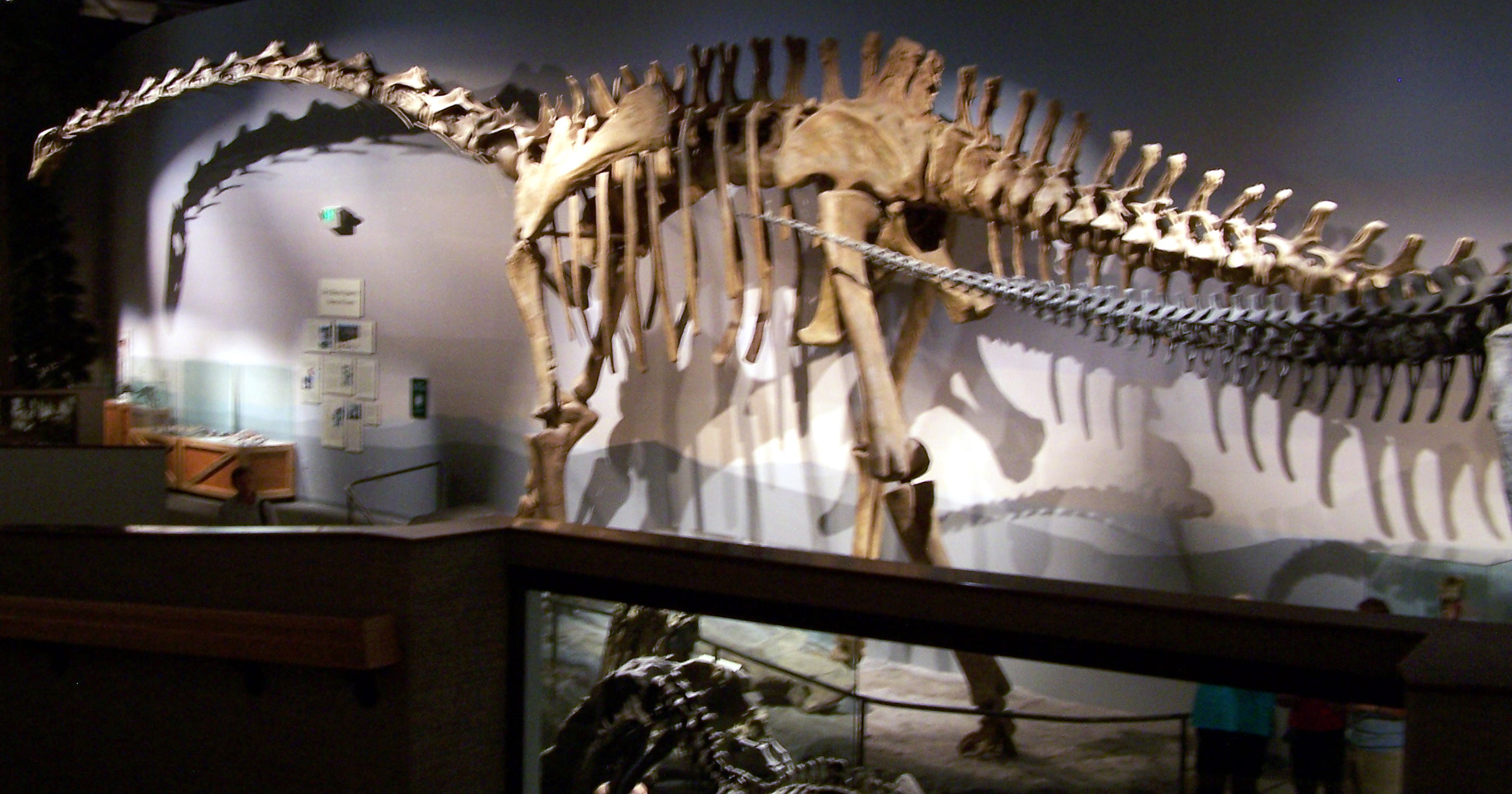
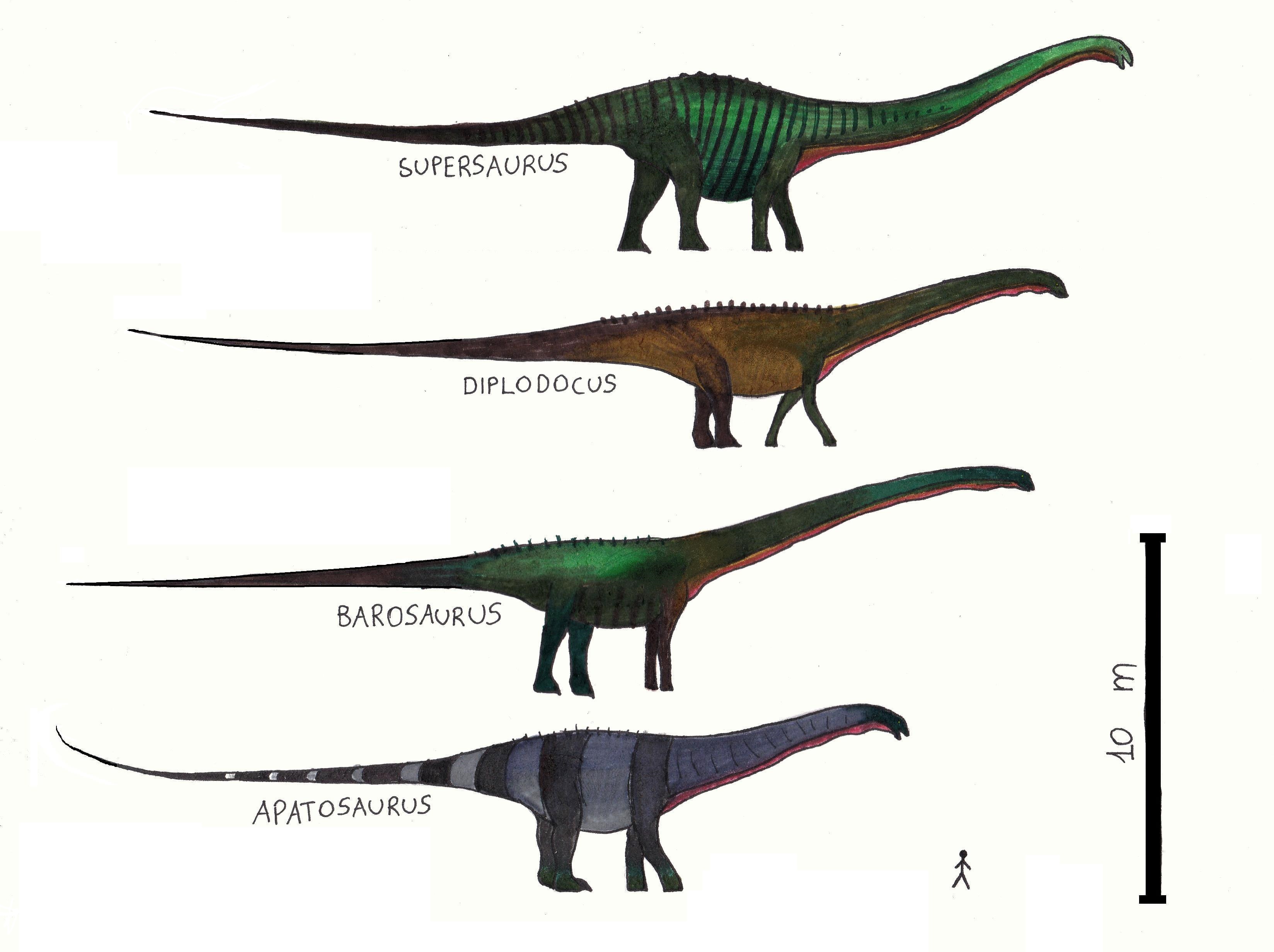


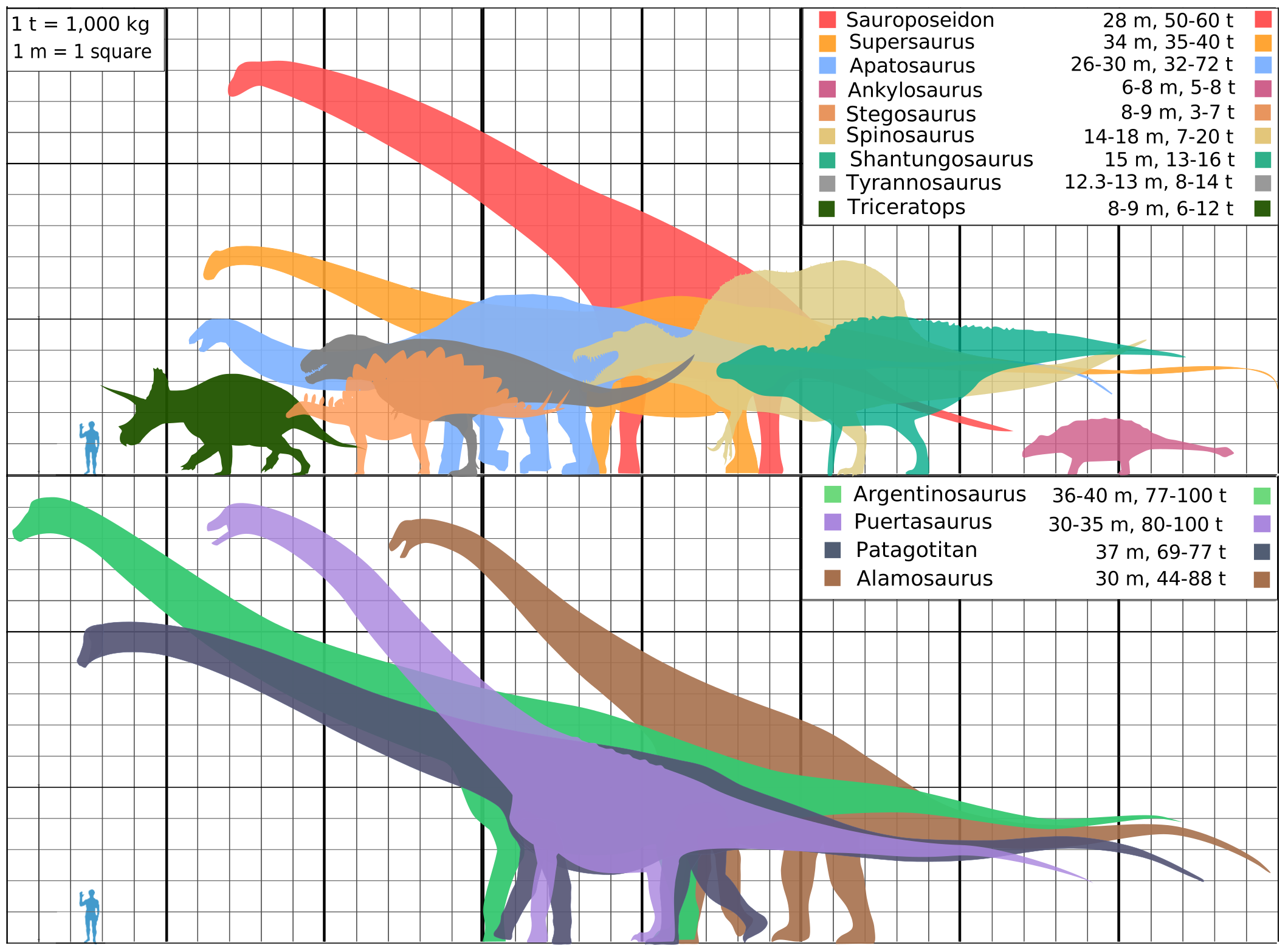
Life reconstruction of Supersaurus vivianae by Nobu Tamura (2017), showing the animal with neck in near-horizontal position close to the ground, consistent with the ground-level grazing hypothesis.
Nobu Tamura, CC BY-SA 4.0
Ecology and behavior
Habitat
Supersaurus vivianae inhabited the fluvial and floodplain ecosystems of the Morrison Formation in the Late Jurassic, between 153 and 150 million years ago. The climate was semi-arid with pronounced seasonality: short rainy seasons alternated with long dry periods. Vegetation consisted of conifers, tree ferns, and pteridophytes along waterways, with open fern savannas in the interior. Other ecosystem inhabitants included Allosaurus, Stegosaurus, Diplodocus, Camarasaurus, Brachiosaurus, and Apatosaurus.
Feeding
As a relatively wide-snouted diplodocid, Supersaurus was likely a non-selective ground-level grazer, sweeping large quantities of herbaceous and low shrub vegetation with its small head and peg-like teeth. The extremely long neck allowed foraging over a vast area without moving the body — a high energy-efficiency strategy. Dental microwear analyses in close relatives indicate preference for soft low-level vegetation, differentiating diplodocids from macronarians like Camarasaurus, which processed harder foods.
Behavior and senses
There is no direct evidence of social behavior in Supersaurus. Sauropods in general are inferred as gregarious animals based on collective trackways and multiple-individual localities in the Morrison Formation. The colossal size of adults probably made them invulnerable to predators like Allosaurus, but hatchlings and juveniles — dramatically smaller — were vulnerable. Woodruff et al.'s (2024) osteohistological study indicates Supersaurus grew slowly over decades, suggesting a long life cycle with minimal parental investment consistent with the sauropod pattern.
Physiology and growth
Supersaurus possessed the avian air sac system, which extended through cervical and dorsal vertebrae as pneumatization — drastically reducing bone mass without loss of structural strength. This system also increased respiratory efficiency, essential for oxygenating a neck exceeding 14 meters. Woodruff et al.'s (2024) osteohistological analysis revealed that the 'Jimbo' specimen had long passed skeletal maturity before death, indicating exceptional longevity — decades of continued slow growth. Metabolic rate was likely intermediate between ectothermic reptiles and endothermic mammals.
Paleogeography
Continental configuration

Scotese & Vérard · CC BY 4.0 · Jurassic, ~155 Ma
Fossil sites
Noto & Grossmann (2010), CC BY-SA 4.0
During the Kimmeridgiano-Titoniano (~153–150 Ma), Supersaurus vivianae inhabited the fragmenting Pangea. North America and Europe were still close, and the North Atlantic was just beginning to open. Climate was warm and humid globally, with no polar ice caps.
Bone Inventory
The holotype (BYU 9025) consists primarily of the scapulocoracoid and some post-cranial elements from the Dry Mesa Quarry, Colorado. The specimen WDC DMJ-021 'Jimbo', found in Wyoming in 1986 and described in 2008, represents approximately 30% of the skeleton and is the most complete known, including vertebrae, ribs, pelvic girdle, and limb bones.
Found elements
Inferred elements
Scientific Literature
15 papers in chronological order — from the original description to recent research.
Three new sauropod dinosaurs from the Upper Jurassic of Colorado
Jensen, J.A. · Great Basin Naturalist
The founding paper formally naming Supersaurus vivianae from material discovered at the Dry Mesa Quarry, Colorado. Jensen describes three new sauropods in the same work: Supersaurus vivianae, Ultrasaurus macintoshi, and Dystylosaurus edwini, all from the same locality. The Supersaurus holotype is the scapulocoracoid BYU 9025, measuring 2.4 meters tall when positioned vertically. Jensen estimates the animal could have exceeded 30 meters in length, making it one of the largest dinosaurs known at the time. The generic name reflects the animal's extraordinary size, while the specific epithet honors Vivian Jones, who discovered the site. Ultrasaurus and Dystylosaurus would later be synonymized with Supersaurus, making Jensen the nominal author of three names that would converge to a single taxon. This paper remains the primary nomenclatural reference for Supersaurus vivianae.
The demise of Dystylosaurus edwini and a revision of Supersaurus vivianae
Curtice, B.D. & Stadtman, K.L. · Western Association of Vertebrate Paleontologists and Mesa Southwest Museum, Bulletin
Curtice and Stadtman revise the Dry Mesa Quarry material and demonstrate that Dystylosaurus edwini is a junior synonym of Supersaurus vivianae. The revision analyzes the centroprezygapophyseal lamina, supposedly unique to Dystylosaurus, and shows this feature is present in nearly all diplodocids — therefore not diagnostic. The anatomical position of the Dystylosaurus vertebra between the two Supersaurus scapulae at the quarry indicates the materials belong to the same individual or, at minimum, the same species. The paper also consolidates the synonymization of Ultrasauros macintoshi with Supersaurus, previously demonstrated by other authors. The result is the reduction of Jensen's three 1985 genera to a single valid taxon: Supersaurus vivianae. This revision is fundamental to the current nomenclature of the species.

An Upper Jurassic Morrison Formation fire-induced debris flow: taphonomy and paleoenvironment of a sauropod (Sauropoda: Supersaurus vivianae) locality, east-central Wyoming
Lovelace, D.M. · Bulletin of the New Mexico Museum of Natural History and Science
Lovelace describes the taphonomic and paleoenvironmental context of the Wyoming site where the Supersaurus vivianae 'Jimbo' specimen (WDC DMJ-021) was found. Sedimentological analysis reveals the sauropod skeleton was incorporated into a high-viscosity debris flow triggered by wildfire on a floodplain. The animal's body was likely disarticulated before being swept by the debris flow, explaining the partial preservation (~30% of skeleton). The site also preserves remains of a semi-articulated small theropod, suggesting multiple animals died in the same area before the flow event. This study provides one of the rare windows into the exact environmental conditions in which Supersaurus lived and died.


Morphology of a specimen of Supersaurus (Dinosauria, Sauropoda) from the Morrison Formation of Wyoming, and a re-evaluation of diplodocid phylogeny
Lovelace, D.M., Hartman, S.A. & Wahl, W.R. · Arquivos do Museu Nacional, Rio de Janeiro
The most important paper on Supersaurus vivianae, describing in detail the 'Jimbo' specimen (WDC DMJ-021) from Wyoming — the most complete found, with approximately 30% of the skeleton preserved. Lovelace, Hartman, and Wahl document cervical and dorsal vertebrae, ribs, pelvic elements, and limb bones, providing the most complete anatomical description of the genus to date. Phylogenetic analysis places Supersaurus in Diplodocinae as the sister taxon of Dinheirosaurus lourinhanensis from Portugal, forming a new clade and suggesting biogeographic connections between North America and Europe in the Late Jurassic. The paper includes a skeletal reconstruction by Scott Hartman — now the standard visual reference for the genus. Based on this specimen, Supersaurus length is estimated at 33 to 34 meters.
Inferences of Diplodocoid (Sauropoda: Dinosauria) Feeding Behavior from Snout Shape and Microwear Analyses
Whitlock, J.A. · PLOS ONE
Whitlock analyzes snout morphology and dental microwear in diplodocoids to infer feeding strategies. Square-snouted diplodocids like Diplodocus and Apatosaurus — close relatives of Supersaurus — show wear patterns consistent with non-selective ground-level browsing, with high proportions of pits and fine subparallel scratches. Narrow-snouted diplodocids like Nigersaurus show selective browsing at mid height. The study demonstrates that Supersaurus, sharing the diplodocid body plan, was likely a low-level grazer sweeping herbaceous and shrub vegetation at ground level with its relatively small head. Microwear analysis provides evidence independent of craniofacial biomechanics for dietary inference.
An Evolutionary Cascade Model for Sauropod Dinosaur Gigantism - Overview, Update and Tests
Sander, P.M. · PLOS ONE
Sander proposes and tests an evolutionary cascade model (ECM) to explain how sauropods like Supersaurus reached sizes unparalleled among terrestrial vertebrates. The model identifies five interdependent cascades: Reproduction (oviparity with many small eggs eliminates the energetic cost of gestating large offspring), Feeding (simple teeth without mastication allow processing enormous volumes of vegetation), Long Neck (allows reaching large vegetation areas without moving the body), Avian Respiratory System (air sacs increase respiratory efficiency without increasing mass), and Metabolism (higher basal metabolic rate than ectothermic reptiles). For Supersaurus specifically, the exceptionally long neck represents the extreme expression of the 'Head and Neck' cascade, allowing foraging over a huge area without displacement.

The Articulation of Sauropod Necks: Methodology and Mythology
Stevens, K.A. · PLOS ONE
Stevens critically reviews methods used to reconstruct sauropod neck posture, with direct implications for Supersaurus — the sauropod with one of the longest known necks. The sauropod cervico-dorsal vertebral column was essentially straight in neutral pose, constraining reconstruction possibilities. Stevens argues that cervical vertebrae articulated to their maximum extension, a common method in earlier reconstructions, produces artificially exaggerated results. Modern vertebrates tend to assume postures close to the neck's intrinsic curvature when at rest. For diplodocids like Supersaurus, this suggests the head was maintained near ground level or slightly elevated in neutral posture — consistent with the ground-level grazing hypothesis.


Torsion and Bending in the Neck and Tail of Sauropod Dinosaurs and the Function of Cervical Ribs: Insights from Functional Morphology and Biomechanics
Preuschoft, H. & Klein, N. · PLOS ONE
Preuschoft and Klein investigate the biomechanics of sauropod necks and tails, focusing on torsional moments beyond bending — a perspective often neglected in earlier analyses. Cervical rib morphology varies functionally between groups: long ribs in brachiosaurids restrict lateral mobility, while short ribs of diplodocids like Supersaurus allowed greater mobility. Oblique muscles activated unilaterally counterbalance torsional moments generated during feeding. The study has implications for understanding how Supersaurus used its exceptionally long neck: diplodocid biomechanics favored broad lateral movement, allowing sweeping of large ground-level vegetation areas without vertical elevation. Tails, in turn, maintained horizontal posture — inconsistent with the classic dragging tail image.


March of the Titans: The Locomotor Capabilities of Sauropod Dinosaurs
Sellers, W.I., Margetts, L., Coria, R.A. & Manning, P.L. · PLOS ONE
Sellers et al. develop computational simulation of sauropod locomotion using musculoskeletal modeling, applied to the extreme case of Argentinosaurus (~83 tonnes). Results establish that giant sauropods were mechanically competent for low-speed locomotion but biologically incapable of running. Maximum sustainable speed is inversely proportional to size: larger animals are limited to slow walking. Although the study uses Argentinosaurus as a model, conclusions apply directly to Supersaurus, which has comparable mass. The simulation generates virtual trackway patterns consistent with real Morrison Formation sauropod ichnofossils. The work establishes that Supersaurus locomotion was similar to modern elephants: heavy, efficient, but necessarily slow — probably not exceeding 7-10 km/h.

Cranial biomechanics underpins high sauropod diversity in resource-poor environments
Button, D.J., Rayfield, E.J. & Barrett, P.M. · Proceedings of the Royal Society B: Biological Sciences
Button et al. apply finite-element analysis (FEA) to Morrison Formation sauropod skulls to resolve an ecological paradox: how could 10+ genera of giant herbivores coexist in a resource-limited environment? The result reveals deep functional specialization among sauropods: Camarasaurus, with a robust snout, could generate and sustain far higher bite forces than the gracile-snouted Diplodocus. This implies Camarasaurus processed harder foods (branches, tough ferns) while diplodocids like Supersaurus preferred softer ground-level vegetation. Dietary niche partitioning explains the coexistence of apparently similar giants in the Morrison. For Supersaurus, the study confirms its diet differed from the macronarians in the same ecosystem, reducing interspecific competition.
A specimen-level phylogenetic analysis and taxonomic revision of Diplodocidae (Dinosauria, Sauropoda)
Tschopp, E., Mateus, O. & Benson, R.B.J. · PeerJ
The most comprehensive phylogenetic study of Diplodocidae ever conducted, with 81 operational taxonomic units (individual specimens) coded for 477 morphological characters. The result of greatest impact for Supersaurus is the synonymization of Dinheirosaurus lourinhanensis from Portugal with Supersaurus, creating the species Supersaurus lourinhanensis and extending the genus geographic range to European Late Jurassic. The work reveals that Supersaurus and Dinheirosaurus form a diplodocine lineage with trans-Atlantic distribution, suggesting North American and European faunas were more interconnected than thought. The study is also notable for revalidating Brontosaurus as a genus distinct from Apatosaurus. For Supersaurus, this paper is the modern standard phylogenetic reference.
Osteology of Galeamopus pabsti sp. nov. (Sauropoda: Diplodocidae), with implications for neurocentral closure timing, and the cervico-dorsal transition in diplodocids
Tschopp, E. & Mateus, O. · PeerJ
Tschopp and Mateus describe Galeamopus pabsti, a new diplodocid species from Wyoming's Morrison Formation, and conduct comprehensive comparative analysis with other diplodocids including Supersaurus. The holotype specimen was sexually mature but had not completed neurocentral closure at death — an important datum for calibrating skeletal maturity in diplodocids. The study reveals significant anatomical variation in cervico-dorsal transition among Morrison diplodocids, with implications for neck posture reconstruction. Phylogenetic analysis places Galeamopus as a taxon close to Diplodocus within Diplodocinae, clarifying inter-generic relationships and providing new diagnostic characters that refine Supersaurus's phylogenetic position.


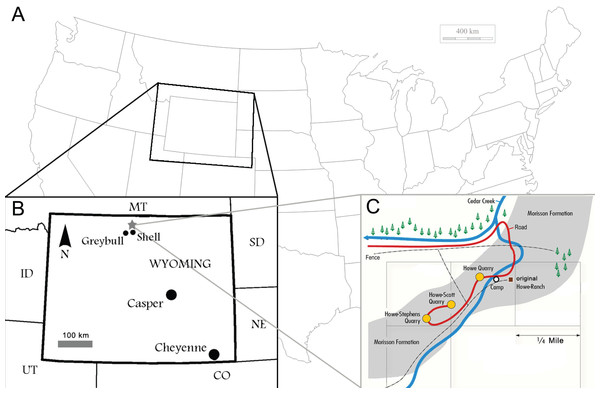
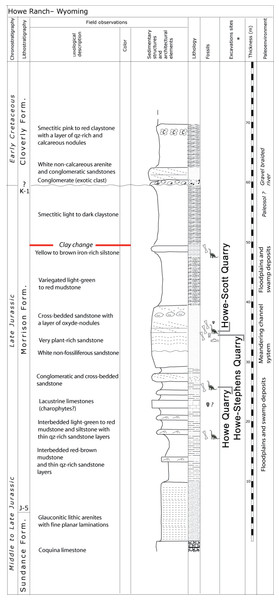
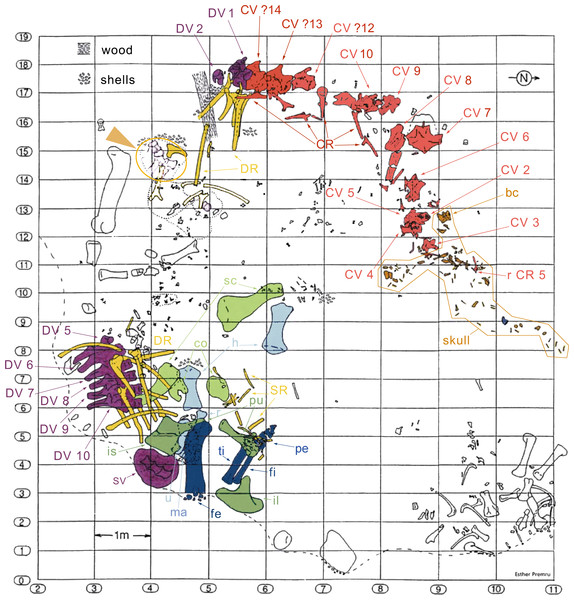
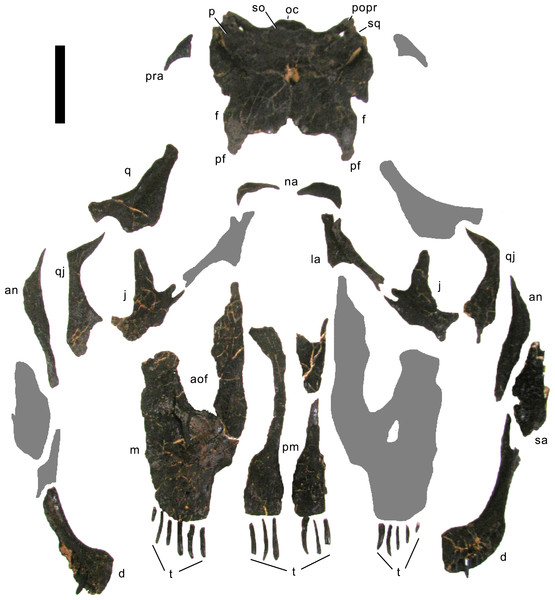
The Smallest Diplodocid Skull Reveals Cranial Ontogeny and Growth-Related Dietary Changes in the Largest Dinosaurs
Woodruff, D.C., Carr, T.D., Storrs, G.W., Waskow, K., Scannella, J.B., Norden, K.K. & Wilson, J.P. · Scientific Reports
Woodruff et al. describe the smallest diplodocid skull ever found (CMC VP14128, ~24 cm) from the Morrison Formation of Montana, revealing deep ontogenetic changes in diplodocid cranial morphology. The juvenile diplodocid shows a narrow snout with an extended tooth row bearing both peg-like and spatulate teeth — very different from adults. This suggests juvenile diplodocids like Supersaurus had a diet distinct from adults, reducing intraspecific competition. Adults focused on ground-level vegetation and juveniles potentially feeding on more selected plants at mid height would explain how individuals of different ages of the same genus coexisted in the same ecosystem.

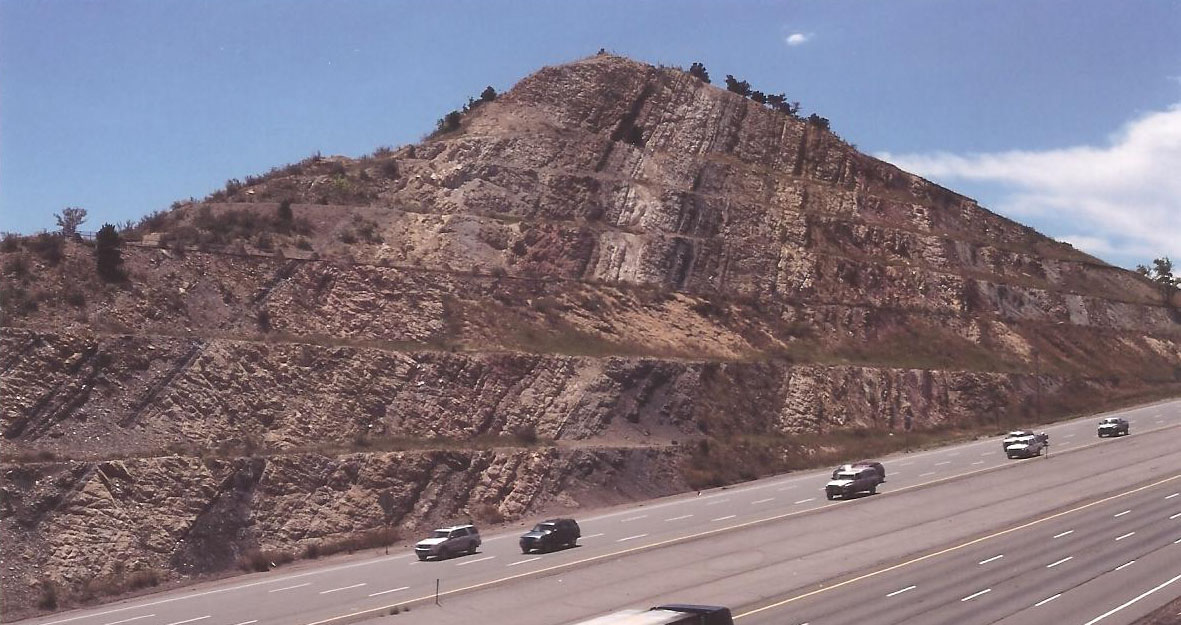
Bite and tooth marks on sauropod dinosaurs from the Morrison Formation
Lei, R., Tschopp, E., Hendrickx, C., Wedel, M.J., Norell, M. & Hone, D.W.E. · PeerJ
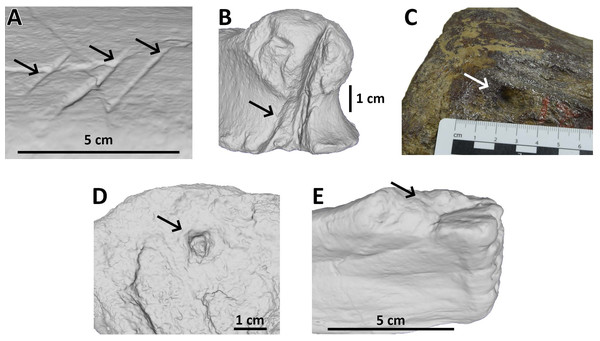
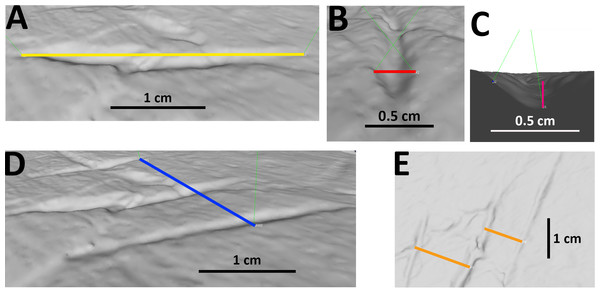
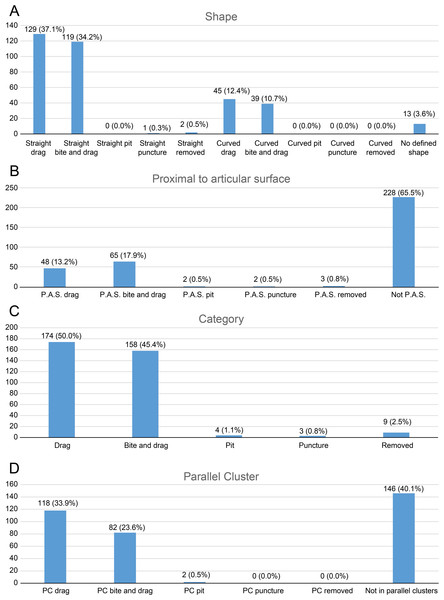
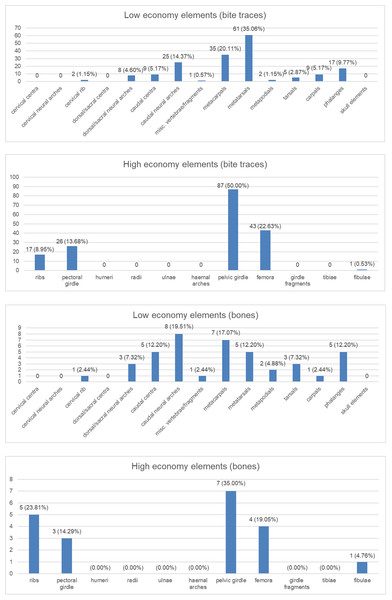
Lei et al. catalogue 68 Morrison Formation sauropod bones with theropod tooth marks, attributed to Allosaurus, Ceratosaurus, and Torvosaurus. No marked bone shows healing evidence, suggesting bites occurred post-mortem: theropods scavenged adult sauropod carcasses rather than actively hunting them. For Supersaurus specifically, the colossal adult size made them virtually invulnerable to direct predation by Allosaurus. The study documents the complex ecological dynamics of the Morrison: the largest terrestrial predator was incapable of killing the largest herbivore. Giants like Supersaurus died from non-predatory causes and their carcasses then fed opportunistic theropods. Juveniles, dramatically smaller, were the effective victims of active predation.


Seis-ing up the Super- Morrison formation sauropods
Woodruff, D.C., Curtice, B.D. & Foster, J.R. · Journal of Anatomy
Woodruff, Curtice, and Foster conduct the first dedicated osteohistological analysis of Supersaurus vivianae ('Jimbo' specimen, WDC DMJ-021) and Diplodocus hallorum. Sectional bone analysis reveals both specimens were skeletally mature at death. For Supersaurus, the animal had lived so far beyond skeletal maturity that retrocardicular age estimation from rings is impossible — unlike D. hallorum, whose maximum estimate is 60 years. The rarity of these colossal sauropods in the Morrison Formation likely reflects their advanced maturity rather than low population density: old, mature animals are naturally less common in any population. The study is the most recent reference on Supersaurus bone histology and provides the best available life history estimate, confirming these animals grew to extraordinary sizes over decades.


Famous museum specimens
WDC DMJ-021 'Jimbo'
Wyoming Dinosaur Center, Thermopolis, Wyoming, EUA
The most complete Supersaurus vivianae specimen known, discovered in Converse County, Wyoming. Includes cervical and dorsal vertebrae, ribs, pelvic girdle, and limb bones. Formally described by Lovelace, Hartman, and Wahl in 2008, 'Jimbo' is the basis of the standard skeletal reconstruction for the genus. The full mount extends 106 feet (32 meters).
BYU 9025 (Holótipo)
Brigham Young University Museum of Paleontology / North American Museum of Ancient Life (NAMAL), Lehi, Utah, EUA
The holotype of Supersaurus vivianae, consisting primarily of scapulocoracoid BYU 9025 from the Dry Mesa Quarry, Colorado. This element measures 2.4 meters tall when positioned vertically and was the first to reveal the animal's extraordinary dimensions. Additionally, BYU holds a Supersaurus femur and other large isolated bones.
In cinema and popular culture
Supersaurus vivianae never achieved the popular fame of Diplodocus or Brachiosaurus, but its presence in dinosaur visual culture grows as new discoveries confirm its status as one of the longest animals ever to have lived. In the 1990s and 2000s, Supersaurus appeared only in encyclopedias and specialized books, frequently confused with 'Ultrasaurus' — an informal name that generated nomenclatural confusion for decades. Tschopp et al.'s (2015) taxonomic revision, synonymizing Dinheirosaurus with Supersaurus, made the species even more geographically broad and biogeographically significant. In the gaming field, Jurassic World Evolution (2021) introduced Supersaurus to a global audience for the first time in interactive media. In animation, Dinosaur King used the creature in a specific storyline. With each new discovery reaffirming its status among the largest dinosaurs, Supersaurus has potential to gain increasing media prominence in the coming decades.
Classification


Discovery
Fun fact
Supersaurus's longest cervical vertebra measures 1.38 meters — taller than the average adult human. Yet this bone was largely hollow inside, thanks to air sacs that reduced its weight by up to 60%, allowing the animal to support a neck exceeding 14 meters.
Last reviewed: April 24, 2026