Dinosaurs from the United States

The United States hosts some of the most productive geological formations in the world, with records spanning from the Triassic to the end of the Cretaceous. The Chinle Formation (Late Triassic, Arizona) preserved Coelophysis bauri and the first North American theropods. The Kayenta Formation, in the Early Jurassic, recorded Dilophosaurus wetherilli. The Morrison Formation (Late Jurassic, Colorado, Wyoming, Utah) is the classic Jurassic ecosystem, with Allosaurus fragilis, Ceratosaurus nasicornis, Torvosaurus tanneri, Stegosaurus armatus, Diplodocus, Brachiosaurus altithorax, Apatosaurus ajax, and Brontosaurus excelsus. The Cedar Mountain Formation produced Utahraptor ostrommaysorum in the Early Cretaceous. The Judith River and Two Medicine Formations preserved hadrosaurs and ceratopsids. The Hell Creek Formation (end-Cretaceous, Montana and the Dakotas) is the stage of the dinosaurs' last act: Tyrannosaurus rex, Triceratops horridus, Edmontosaurus, Ankylosaurus magniventris, Pachycephalosaurus, and the Chicxulub impact that would end the Mesozoic 66 million years ago.

45 species in the catalog
4 Triassic
12 Jurassic
29 Cretaceous
Filter by: 45 species
Gargoyleosaurus parkpinorum

US · 152–148 Ma

Gargoyleosaurus

Gargoyleosaurus parkpinorum

"gargoyle lizard of the Parkpins (fossil-donating family)"

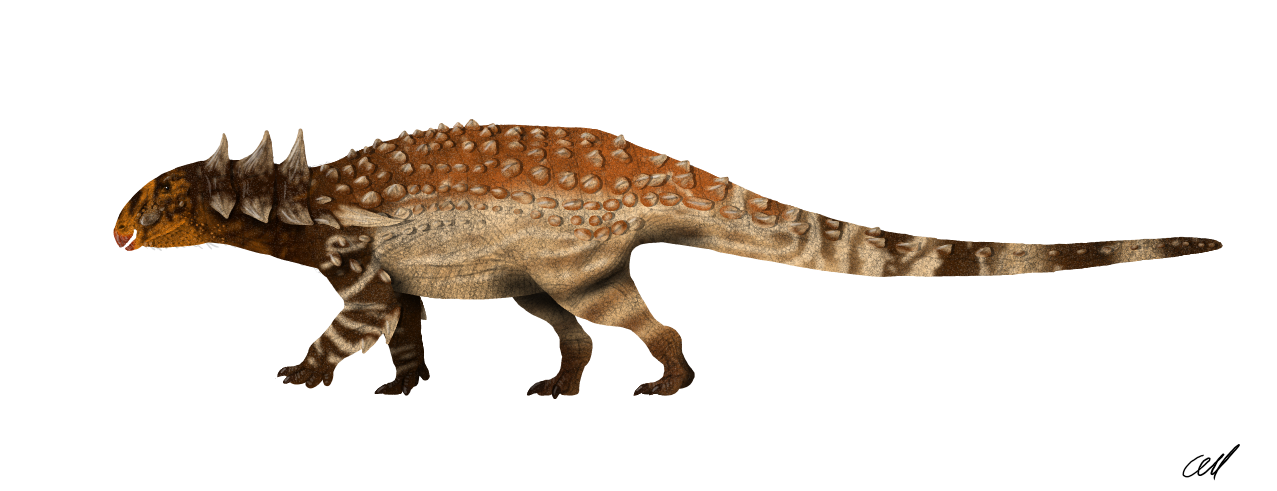
Gargoyleosaurus parkpinorum was one of the oldest and most primitive ankylosaurs ever described by science. It lived near the end of the Late Jurassic, approximately 152 to 148 million years ago, in interior Laurasia, in a region that today corresponds to the state of Wyoming, United States. Its partial skeleton, including an almost complete skull, was found in 1995 at Bone Cabin Quarry West, in Albany County, within rocks of the Morrison Formation. The fossil was prepared by the Western Paleontological Laboratories team and formally described in 1998 by Kenneth Carpenter, Clifford Miles and Karen Cloward, in the volume The Armored Dinosaurs, published by Indiana University Press. Under the plural rule of the International Code of Zoological Nomenclature (ICZN), the original specific epithet, parkpini, was emended to parkpinorum, honoring siblings Tyler and Jolene Parkpin, whose family donated the specimen to the Denver Museum of Nature and Science. About 3.5 meters long and roughly 600 kilograms in weight, it was a quadrupedal herbivore with a low-slung body, a back covered by conical osteoderms, and elongated lateral spines. It preserved ancestral traits that set it apart from later ankylosaurs, including an open antorbital fenestra, simple dentition with seven conical teeth per premaxilla, and dermal armor less elaborate than that of Cretaceous forms such as Ankylosaurus or Euoplocephalus. The rough skull shows pronounced deltoid bosses and moderate dermal ornamentation, and the broad premaxilla appears without the full fusion of cranial plates, an ancestral state that would only be abandoned in the Late Cretaceous. The shoulder region bore the insertion of two pairs of long conical spines, whose arrangement has inspired several paleoartistic reconstructions of the genus. Its phylogenetic position is debated: different analyses recover it either as a basal ankylosaur close to Mymoorapelta, or as a member of Nodosauridae, always outside the crown group, and the Wiersma and Irmis (2018) cladogram has become the modern reference for this discussion. It shared its world with gigantic sauropods such as Apatosaurus, Diplodocus, Camarasaurus and Brachiosaurus, with stegosaurs like Stegosaurus, with ornithopods like Camptosaurus and Dryosaurus, and with predatory theropods such as Allosaurus and Ceratosaurus, composing one of the best-documented dinosaur faunas on the planet. In that setting, Gargoyleosaurus occupied the niche of a low, well-protected herbivore, grazing on ferns, horsetails and ground-level foliage while relying on its armor to deter attacks. The name Gargoyleosaurus, gargoyle lizard, refers to the rough and angular appearance of the skull, which resembles the stone carvings on medieval European cathedrals.

Jurassic Herbivore 3.5m
Sauroposeidon proteles

US · 115–108 Ma

Sauroposeidon

Sauroposeidon proteles

"Poseidon lizard, before-complete"

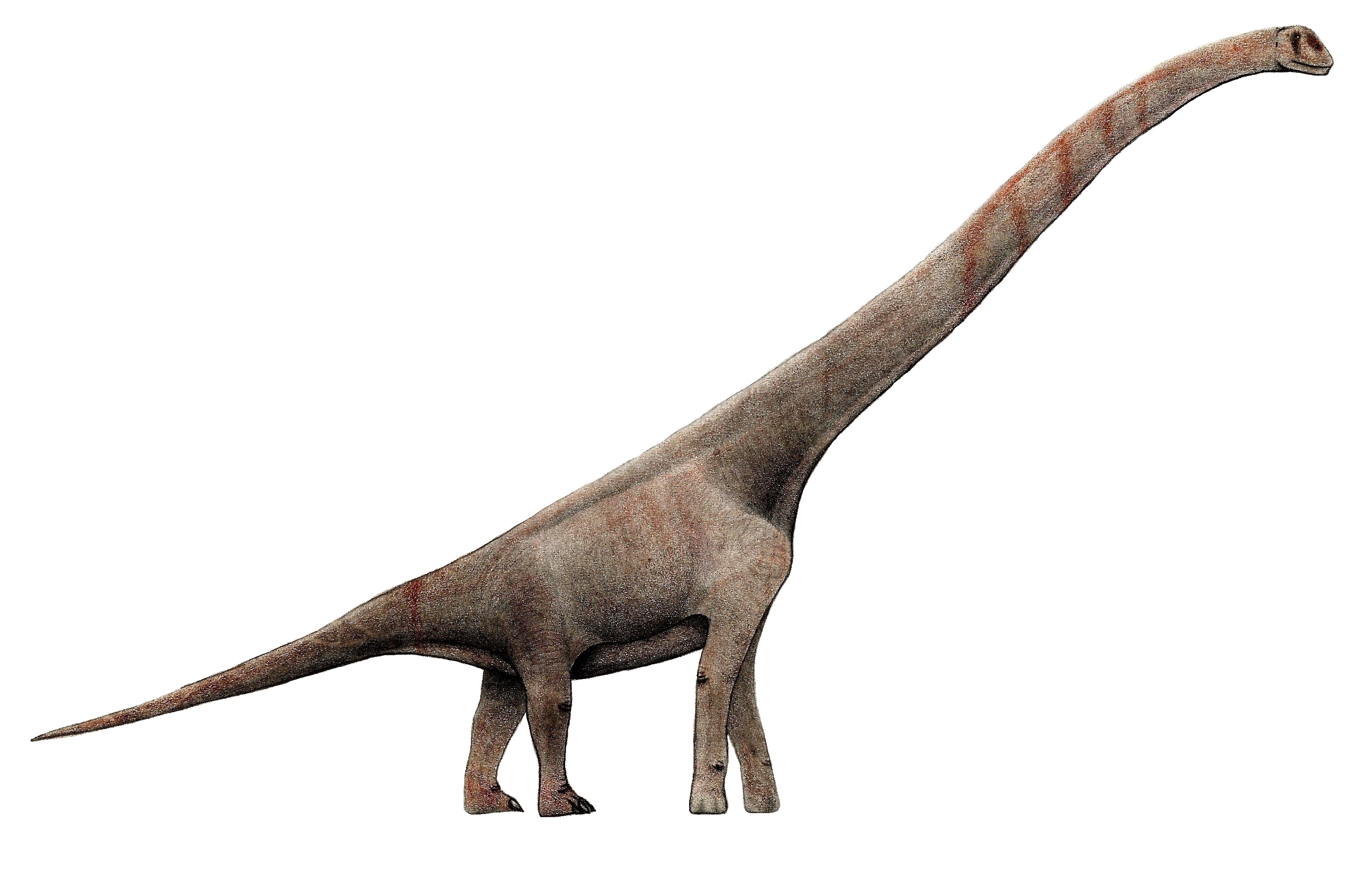
Sauroposeidon proteles was a giant titanosauriform sauropod that lived in the Early Cretaceous of North America, between approximately 115 and 108 million years ago, during the Aptian and Albian stages. The name, chosen by Mathew Wedel in 2000, combines the Greek sauros (lizard) with Poseidon, the Greek god of the seas and also known as the Earth-shaker, in reference to the seismic impact that an animal of this mass would produce while walking. The specific epithet proteles means complete before the end and was chosen because Sauroposeidon is the last large brachiosaur-grade sauropod known from North America before the sauropod hiatus that marks most of the mid-Early Cretaceous on the continent. Length estimates range between 27 and 34 meters, with typical values near 30 meters, while body mass is estimated between 40,000 and 60,000 kg, with 45,000 kg being the most frequently cited figure. All these estimates are extrapolated from a partial cervical series, as no complete skeleton of the taxon exists. The holotype OMNH 53062 consists of four articulated cervical vertebrae (C5 to C8), each approximately 1.25 to 1.4 meters long, the longest sauropod cervical vertebrae ever measured at the time of the original description. The vertebrae show extreme pneumaticity, with more than 89% of internal volume occupied by air chambers, an adaptation that drastically reduced neck mass and made an animal with cervical bones of this dimension biomechanically viable. Matthew Wedel, a graduate student at the University of Oklahoma when he recognized the material in 1999, used Sauroposeidon's pneumaticity as the basis for two decades of research on air sacs and respiratory physiology of sauropods, with implications for understanding the origin of bird airways. The taxon's phylogenetic position has been significantly revised since its original description. Wedel, Cifelli and Sanders initially classified Sauroposeidon as a derived brachiosaurid, the youngest of the group in North America. Later cladistic analyses by D'Emic (2012) and D'Emic and Foreman (2012), confirmed by Mannion et al. (2013), repositioned the genus within basal Somphospondyli, outside Brachiosauridae, as a taxon close to the base of Titanosauria. D'Emic and Foreman (2012) also synonymized Paluxysaurus jonesi Rose (2007), from the Twin Mountains Formation in Texas, with Sauroposeidon, substantially expanding the known material of the taxon. The Fort Worth Museum of Science and History mount, originally displayed as Paluxysaurus, is today the only substantially complete mounted skeleton attributed to Sauroposeidon. Sauroposeidon's paleoecology is associated with the Antlers Formation, in Oklahoma, and contemporary formations such as Twin Mountains (Texas) and Cloverly (Wyoming). The environment was one of humid subtropical coastal plains, with conifer and cycad forests near a shallow epicontinental sea. Contemporaries included the giant theropod Acrocanthosaurus atokensis, the main predator of the ecosystem, the dromaeosaurid Deinonychus antirrhopus and the ornithopod Tenontosaurus tilletti, its preferred prey. Another titanosauriform sauropod, Astrodon, occurred in nearby Early Cretaceous formations. Sauroposeidon's maximum foraging height, estimated at 17 to 18 meters with the neck raised, would position it among the tallest dinosaurs ever documented, possibly the tallest known.

Cretaceous Herbivore 30m
Tenontosaurus tilletti

US · 115–108 Ma

Tenontosaurus

Tenontosaurus tilletti

"Tillett's sinew lizard"

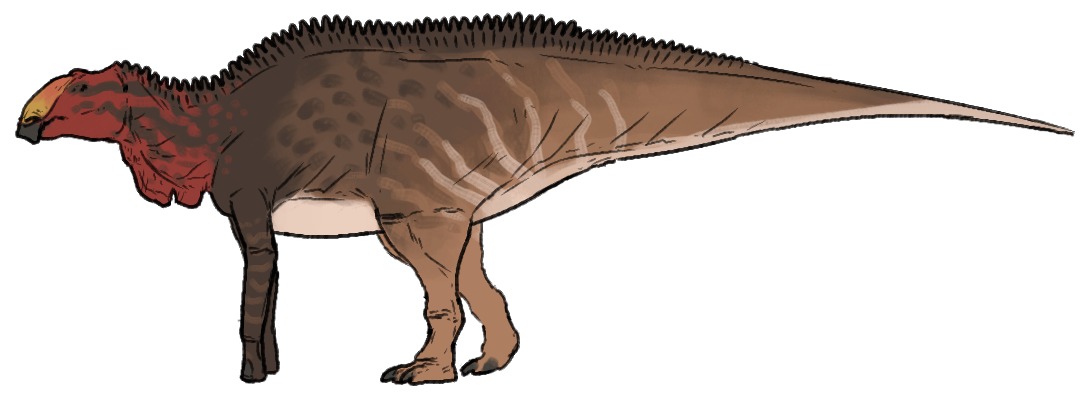
Tenontosaurus tilletti was a medium-sized iguanodontian ornithopod that lived during the Aptian-Albian of the Early Cretaceous, approximately 115 to 108 million years ago, in what is now the western United States. At 6 to 7.5 meters in length and estimated body mass of 700 to 1,000 kg, it was one of the most common and abundant herbivores of its time and region. The genus is morphologically distinct from other ornithopods by its extraordinarily long and robust tail, which in adults could represent more than half the total length of the animal. The caudal vertebrae are reinforced by ossified tendons, hence the name 'sinew lizard', which provided rigidity to the tail and possibly functioned as a counterweight to maintain balance during bipedal or quadrupedal locomotion. Tenontosaurus was capable of moving both on two and four legs depending on speed and terrain. The paleontological importance of Tenontosaurus extends far beyond its intrinsic morphology: the animal is the center of the longest and most influential debate in paleontology about cooperative predatory behavior in dinosaurs. When John Ostrom described Deinonychus antirrhopus in 1969 and 1970, he based much of his argument about pack hunting on the recurring spatial association of multiple Deinonychus teeth with Tenontosaurus carcasses in the Cloverly Formation. Ostrom inferred that groups of Deinonychus cooperatively attacked much larger Tenontosaurus individuals, similarly to the behavior of modern lions. This hypothesis became enormously influential and directly inspired the representation of Velociraptors as cooperative hunters in Jurassic Park (1993). However, subsequent analyses questioned the cooperative hunting interpretation. Roach and Brinkman (2007) argued that the association of Deinonychus with Tenontosaurus carcasses is more consistent with competitive scavenging behavior, like that observed in modern Komodo dragons feeding on the same carcass without true cooperation and frequently attacking each other during the feast. Evidence of multiple dead Deinonychus at the same localities as Tenontosaurus would suggest Tenontosaurus was capable of actively defending itself, killing some of its attackers. This debate about cooperative hunting versus competitive feeding in Deinonychus, centered on Tenontosaurus carcasses, remains without definitive resolution and continues to be one of the most stimulating problems in dinosaur behavior.

Cretaceous Herbivore 6.5m
Kosmoceratops richardsoni

US · 76.4–75.5 Ma

Kosmoceratops

Kosmoceratops richardsoni

"Richardson's ornate horned face"

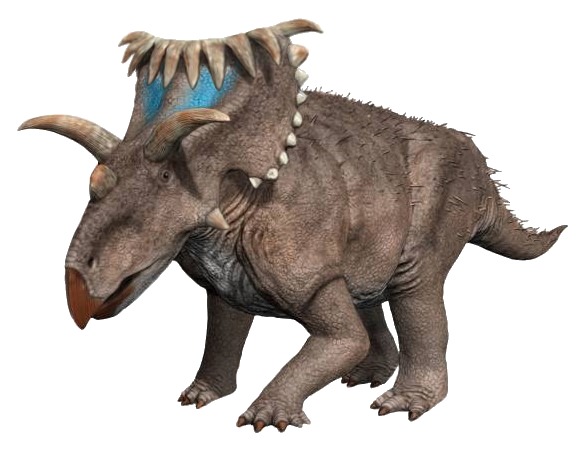
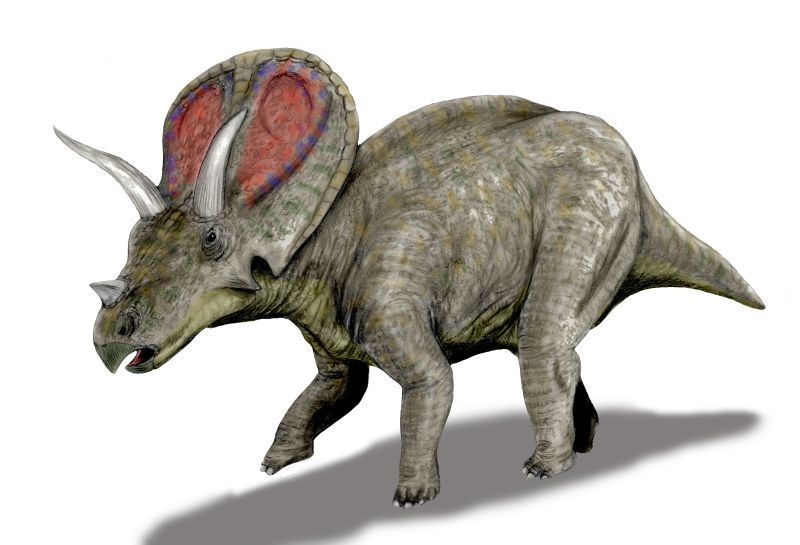
Kosmoceratops richardsoni is the ceratopsian with the most elaborate cranial ornamentation ever documented in dinosaur history: a total of 15 horns and bony structures on the skull, including a large downward-curved nasal horn, two supraorbital horns above the eyes, two jugal horns, two laterally-directed epijugal horns, and ten forward-curving apical processes on the parieto-squamosal frill. No other known dinosaur or fossil vertebrate has such dense and diversified cranial ornamentation. The animal lived approximately 76 to 75.5 million years ago during the late Campanian stage of the Cretaceous, in the region corresponding to the present-day state of Utah in the United States. Kosmoceratops belonged to the fauna of the southern portion of Laramidia Island, a large continental island that existed during the Late Cretaceous when the Western Interior Seaway divided North America into two landmasses. Notably, the southern and northern portions of Laramidia were separated by a shallow internal sea and presented completely distinct dinosaur faunas: while the south (where Kosmoceratops lived) had short-frilled ceratopsians with elaborate ornamentation, the north produced forms with longer frills. This geographic faunal difference was one of the central arguments presented by Sampson et al. (2010) in the paper describing the species. The holotype and referred specimens were collected from the Kaiparowits Formation in southern Utah, one of the most productive Late Cretaceous geological units in North America. The formation dates from the late Campanian (~76.6 to 74.5 Ma) and preserves a rich subtropical ecosystem with multiple species of dinosaurs, crocodilians, turtles, lizards, mammals, and amphibians. Kosmoceratops fossils were collected by the Utah Museum of Natural History between 2004 and 2006 at sites within the Grand Staircase-Escalante National Monument. The function of the extravagant cranial ornamentation is a subject of ongoing scientific debate. Sampson et al. (2010) argue that the structures were primarily for intraspecific display and species recognition, analogous to the horns of modern antelopes and cervids. The fact that the supraorbital horns and frill processes face laterally and forward rather than forward in combat position supports the display hypothesis over the defensive one. Later biomechanical analyses by Mallon and Anderson (2013) suggest that ceratopsids used their horns in ritualized intraspecific combat, not as defense against large predators.

Cretaceous Herbivore 4.5m
Nasutoceratops titusi

US · 76–75 Ma

Nasutoceratops

Nasutoceratops titusi

"Big-nosed horned face, honoring Alan Titus"

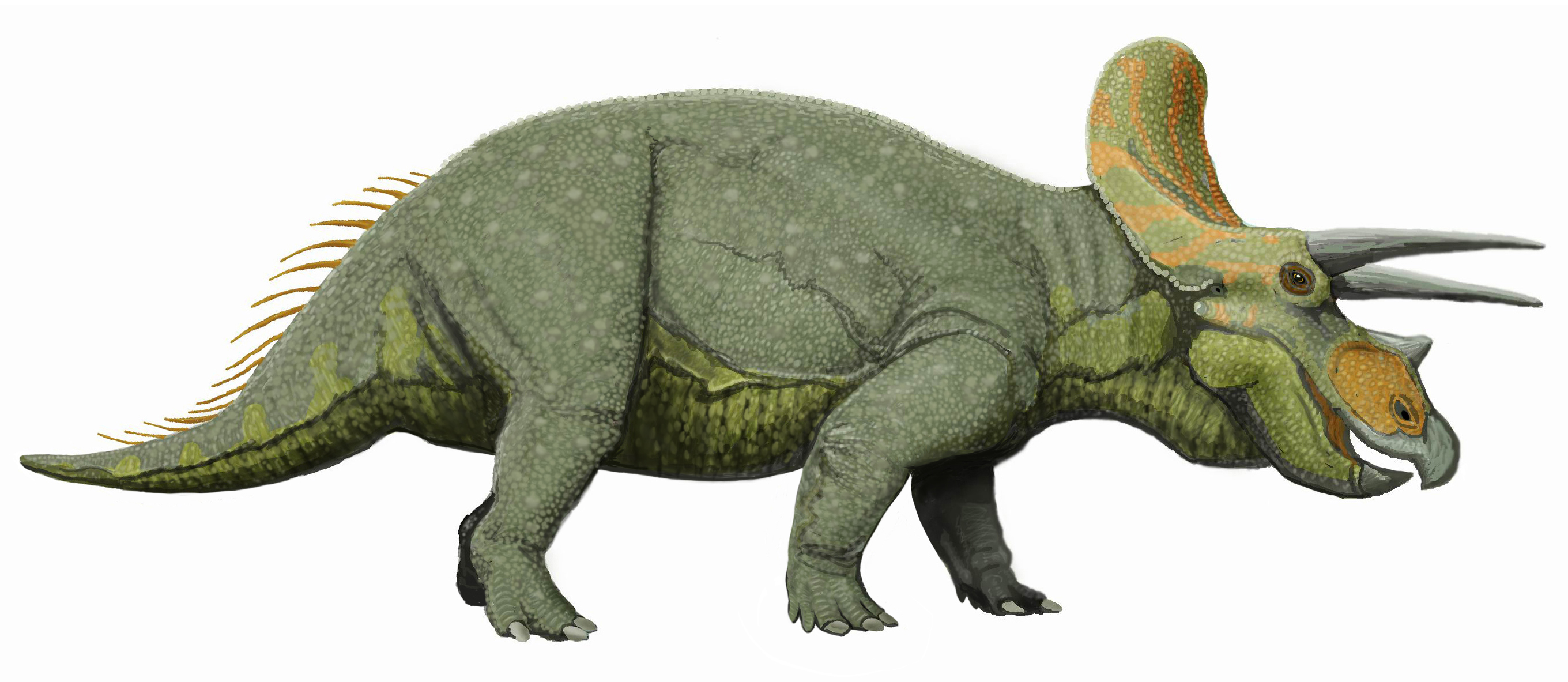
Nasutoceratops titusi is a centrosaurine ceratopsid dinosaur that lived approximately 76 to 75 million years ago, during the late Campanian of the Cretaceous, in what is now southern Utah in the United States. The animal is immediately recognizable by two extraordinary diagnostic features: supraorbital horns that are extremely long, oriented laterally and curved upward and forward over the eye sockets in a pattern that researchers frequently compare to Texas Longhorn cattle, and a hypertrophied nasal cavity that gives the skull a bulbous, short-snouted appearance. No other known ceratopsid combines these two traits so strikingly, and it was precisely this anatomy without parallel that led the describers to erect not only a new genus and species but a new tribe within Centrosaurinae, the tribe Nasutoceratopsini. The genus name comes from the Latin nasutus, meaning big-nosed, combined with the Greek keratops, horned face. The specific epithet titusi honors Alan L. Titus, the paleontologist at Grand Staircase-Escalante National Monument who supported the field expeditions that led to the discovery. The holotype, catalogued as UMNH VP 16800, was excavated in 2006 by then graduate student Eric K. Lund in the Kaiparowits Formation, within the national monument in Kane County, Utah. The specimen includes a sub-complete skull with mandible, with both supraorbital horns and the nasal region preserved, plus fused cervical vertebrae (syncervical) and associated post-cranial elements. The formal description was published on 10 July 2013 in Proceedings of the Royal Society B by Scott D. Sampson, Eric K. Lund, Mark A. Loewen, Andrew A. Farke, and Katherine E. Clayton. The evolutionary significance of Nasutoceratops extends far beyond its unusual appearance. The species occupies a basal position within Centrosaurinae, retaining the long supraorbital horns characteristic of the common ancestor of Ceratopsidae, while derived centrosaurines such as Centrosaurus, Styracosaurus, and Pachyrhinosaurus dramatically reduced those horns above the eyes and developed, in their place, prominent nasal horns or bosses. This reverses the traditional intuition that long eye horns would be exclusive to chasmosaurines like Triceratops and Kosmoceratops. The tribe Nasutoceratopsini, formalized by Ryan, Holmes, Mallon, and colleagues in 2017, groups Nasutoceratops titusi, Avaceratops lammersi, and Xenoceratops foremostensis, all sharing this combination of short centrosaurine frill with long supraorbital horns and reduced nasal horn. Nasutoceratops titusi is also a central piece in the debate over the intracontinental endemism of Laramidia, the island continent formed in the western portion of North America during the Late Cretaceous, when the Western Interior Seaway divided the continent into two landmasses. The fauna of the Kaiparowits Formation, in southern Utah, contains multiple endemic species that do not appear in contemporary northern formations in Alberta and Montana, and Nasutoceratops is, together with Kosmoceratops richardsoni and Utahceratops gettyi, one of the clearest markers of this pattern. The holotype and the mounted skeleton are on permanent display in the Past Worlds gallery of the Natural History Museum of Utah in Salt Lake City.

Cretaceous Herbivore 4.5m

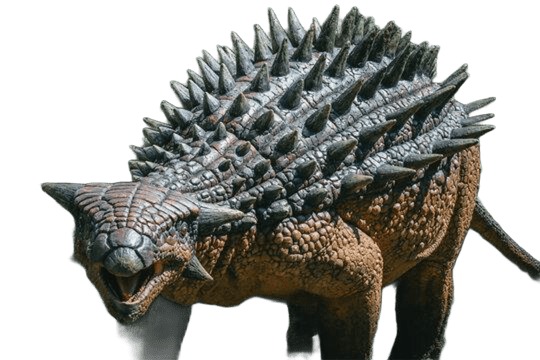
Zuul crurivastator

US · 76–75 Ma

Zuul

Zuul crurivastator

"Zuul, destroyer of shins"

Zuul crurivastator is a large ankylosaurid from the Late Cretaceous (Campanian, about 76 million years ago) of the Coal Ridge Member of the Judith River Formation in Montana, United States. It was described in 2017 by Victoria M. Arbour and David C. Evans in Royal Society Open Science, based on holotype ROM 75860, housed at the Royal Ontario Museum in Toronto. The skeleton, initially exposed by chance in 2014 by a commercial team from Theropoda Expeditions LLC that was excavating a nearby tyrannosaur, turned out to be the most complete ankylosaurid ever found in North America: a whole skull, a complete tail with its terminal club, much of the postcranium, osteoderms preserved in situ, skin impressions, and even dark films interpreted as fossilised keratin sheaths of the spikes. The animal reached about six metres in length and weighed around 2.5 tonnes, with the typical low, broad ankylosaurid body, robust limbs, a neck guarded by cervical half rings of fused osteoderms, and a back covered by a complex carapace of polygonal plates, some forming pronounced lateral spikes over the flanks. The genus name Zuul, a nod to the Gatekeeper of Gozer in Ghostbusters (1984), was chosen because the short, rounded snout and two large backward-projecting squamosal horns immediately recall the film's demonic hound. The species epithet crurivastator, Latin for 'destroyer of shins', is a direct reference to the tail: the last seven caudal vertebrae are co-ossified into a rigid 'handle', and the tip ends in a huge bony club of fused osteoderms, heavy enough in theory to shatter the lower limbs of a large attacking theropod such as Daspletosaurus. Zuul also became a worldwide reference in a long-running debate in ankylosaur palaeontology: what was the tail club actually for? The holotype preserves, along its flanks near the pelvic girdle, osteoderms with pathologies (healed fractures, bone resorption) whose distribution is incompatible with predator bites but is consistent with lateral strikes delivered by another individual of the same species. In 2022, Arbour, Zanno and Evans presented this evidence in Biology Letters and concluded that the ankylosaurid tail club evolved largely as a weapon for intraspecific combat, probably tied to mate competition and sexual selection. Another extraordinary dimension of the holotype is the preservation of soft tissue: dark films over the osteoderms indicate keratin sheaths on the spikes, and there are scale impressions on the neck and tail. Together with Borealopelta markmitchelli (a nodosaurid preserved in three dimensions), Zuul is today the best material available to study what an ankylosaur's skin, armour and, in some cases, colouration may have looked like in life. It was also the first ankylosaurid described from the Judith River Formation, enriching the already famous portrait of Campanian Laramidia, which it shared with tyrannosaurids, ceratopsids and hadrosaurids on a warm, humid coastal plain on the western margin of the Western Interior Seaway.

Cretaceous Herbivore 6m
Anzu wyliei

US · 67–66 Ma

Anzu

Anzu wyliei

"Wylie's winged demon"

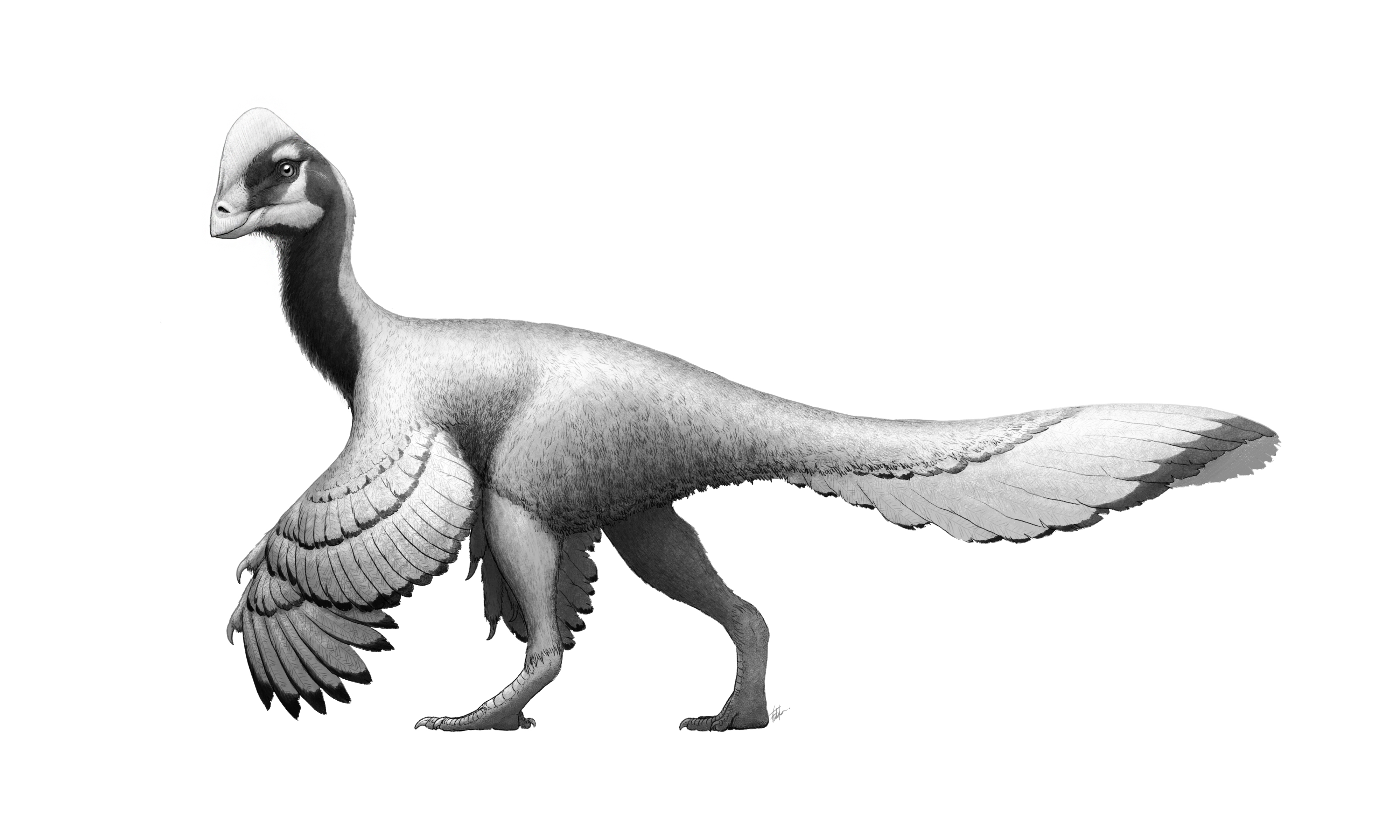
Anzu wyliei is a large caenagnathid oviraptorosaur from the Late Cretaceous, Maastrichtian (about 67.2 to 66.0 Ma), collected in the Hell Creek Formation of North Dakota and South Dakota, United States. Reaching roughly 3.5 to 3.75 metres in length, about 1.5 metres at the hips and 200 to 300 kg in body mass, Anzu is one of the largest known caenagnathids and one of the largest North American oviraptorosaurs, in size only behind the giant Gigantoraptor erlianensis of Cretaceous China. The animal combines a rather peculiar set of features: a tall, delicate skull, toothless jaws sheathed in a horny beak (rhamphotheca), a pronounced sagittal crest atop the head, a long flexible neck, elongated arms ending in three-clawed hands, long slender running-adapted legs and a proportionally short tail. By phylogenetic inference it was almost certainly covered in feathers and bore remiges on the forelimbs, in line with the pattern documented for close relatives such as Caudipteryx, Avimimus and Gigantoraptor. It was discovered in 1998 by Fred Nuss and team on private land in South Dakota, and formally described in 2014 by Matthew C. Lamanna, Hans-Dieter Sues, Emma R. Schachner and Tyler R. Lyson in the open access journal PLoS ONE. The type material comprises three complementary specimens (CM 78000, CM 78001 and MRF 319) that together offer the most complete documentation of a North American caenagnathid to date, allowing much of the group's anatomy to be reconstructed for the first time. Thanks to the nickname 'Chicken from Hell', coined by the discoverers in reference to the apocalyptic late-Cretaceous setting, Anzu quickly became one of the most popular images in recent North American palaeontology, sharing Hell Creek with Tyrannosaurus rex, Triceratops, Edmontosaurus, Pachycephalosaurus and Dakotaraptor until the K-Pg mass extinction.

Cretaceous Omnivore 3.5m
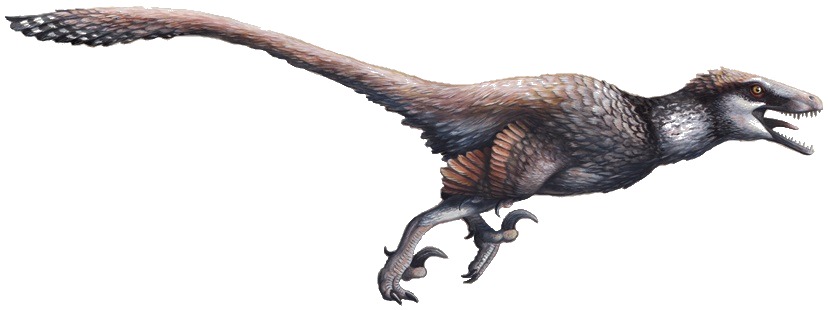
Dakotaraptor steini

US · 67–66 Ma

Dakotaraptor

Dakotaraptor steini

"Dakota raider, of Stein"

Dakotaraptor steini is a large dromaeosaurid from the Late Cretaceous (late Maastrichtian, about 66 to 67 million years ago) of the Hell Creek Formation, Harding County, South Dakota. Described by Robert DePalma, David Burnham, Larry Martin, Peter Larson and Robert Bakker in 2015, it reached 4.35 to 6 metres in length with an estimated body mass of 220 to 350 kilograms, making it the largest known Maastrichtian dromaeosaurid of North America and one of the largest of the family, alongside Utahraptor and Achillobator. The holotype PBMNH.P.10.113.T consists of a partial skeleton of a subadult to adult individual lacking a skull, discovered by Robert DePalma in 2005 in a Hell Creek fluvial channel no more than 20 metres below the Cretaceous-Palaeogene boundary. The ulna preserves about 15 ulnar papillae (quill knobs) of 8 to 10 millimetres in diameter, indicating attachment of large pennaceous feathers, and the second-toe 'sickle claws' typical of dromaeosaurids reach 24 centimetres along the outer curve. The tibia, 678 millimetres long, is the longest known in any dromaeosaurid, suggesting surprisingly gracile limb proportions for an animal of this size. In 2016, Arbour and colleagues demonstrated that the furculae originally described as part of the holotype were in fact entoplastra (parts of the shell) of the trionychid turtle Axestemys splendida, and DePalma et al. (2016) issued a corrigendum excluding those elements. The validity of the taxon remains debated: Cau (2023 and 2024) argued, in blog and phylogenetic analyses, that the remaining material may be a chimera combining ornithomimosaur, oviraptorosaur and therizinosaur elements, but this hypothesis has not yet been published in a peer-reviewed article.

Cretaceous Carnivore 5m
Dracorex hogwartsia

US · 66–66 Ma

Dracorex

Dracorex hogwartsia

"Dragon king of Hogwarts"

Dracorex hogwartsia is one of the dinosaurs with the most peculiar story in paleontology: it was named by children, in honor of a fictional school of witchcraft, and its status as a valid species is one of the most contentious taxonomic debates of the Late Cretaceous. Described in 2006 by Robert Bakker and collaborators based on a nearly complete skull discovered in the Hell Creek of South Dakota by a group of amateur fossil hunters, the animal presented a cranial morphology radically different from other known pachycephalosaurids: the skull was long, low, and flat, without any trace of a bony dome, but decorated with an impressive series of horns and nodules along the frontoparietal and temporal region. The visual result is, in fact, remarkably similar to medieval descriptions of dragons, which inspired the specimen's donors, children from the Children's Museum of Indianapolis, to propose the name to the paleontologist. The main scientific controversy surrounding Dracorex was raised in 2009, when Jack Horner and Mark Goodwin published a detailed histological analysis of the skull. Upon examining the microstructure of the frontoparietal bone, they found immature bone tissue (fibrolamellar, with abundant vasculature and without complete remodeling) characteristic of young individuals, not adults with completed bone growth. Horner and Goodwin's hypothesis is that Dracorex hogwartsia is not a distinct species, but rather a juvenile of Pachycephalosaurus wyomingensis: the flat skull with horns would be the initial state, and the dome would form progressively during growth, similar to the development of horns in sheep. This interpretation would also unify Stygimoloch spinifer as a teenager of Pachycephalosaurus, consolidating three names into a single taxon. The synonymy proposal, while widely accepted by many specialists, remains formally controversial. Other researchers, such as Robert Sullivan (2006) and David Evans and collaborators (2013), argue that the morphological differences between the skulls are too pronounced to be explained by ontogeny alone, and that Dracorex may represent a distinct lineage of flat-skulled pachycephalosaurids that lived in sympatry with Pachycephalosaurus. The question is complicated by the rarity of specimens: only one Dracorex skull is known with certainty, making it impossible to establish complete ontogenetic series. Regardless of taxonomic resolution, the Dracorex skull is one of the most extraordinary known among ornithischian dinosaurs. The tubercles, spines, and nodules covering the cranial surface have no parallel in any other pachycephalosaurid, and their function continues to be debated: they may have served for intraspecific recognition, surface thermoregulation, sexual display, or passive defense. The preservation of the specimen, with unusually well-conserved cranial surface details, has made Dracorex one of the most studied and artistically represented dinosaurs of the last twenty years.
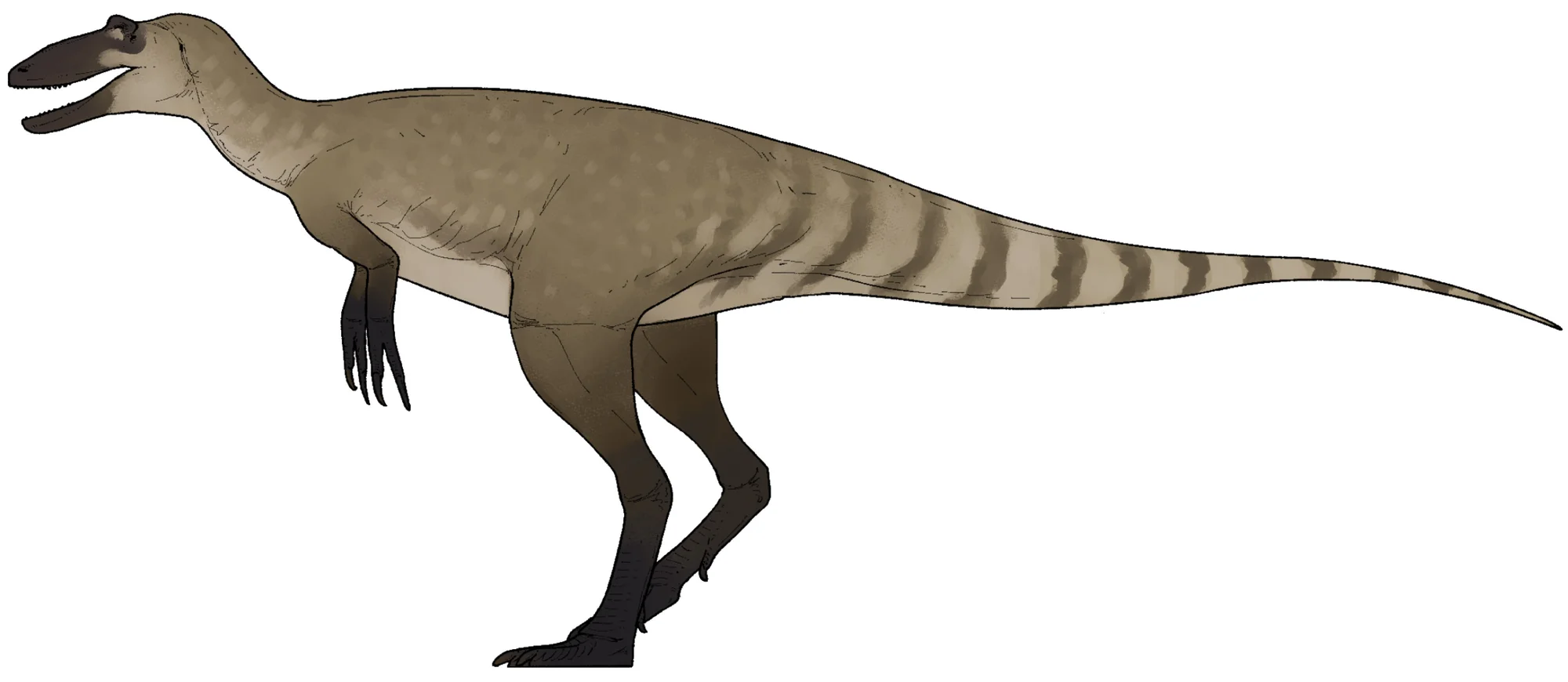
Cretaceous Herbivore 2.4m
0 selected Compare →