
Pliosaurus
Pliosaurus funkei
"Funke's lizard (honoring Bjørn Funke, discoverer of the holotype)"
About this species
Pliosaurus funkei, nicknamed Predator X before its formal scientific description, is one of the largest marine predatory reptiles ever discovered. It lived in the Tithonian (latest Jurassic, around 150 to 145 million years ago) in the shallow seas of the primitive Arctic, today the Svalbard archipelago, Norway. Initial estimates of 15 meters were revised downward, placing the animal at 10 to 12 meters and around 11 metric tons. Its mandible was among the largest of any marine predator ever found, and its especially elongated forelimbs suggest powerful propulsion. Discovered between 2004 and 2012 by the team of Jørn Hurum, Patrick Druckenmiller and Espen Knutsen, it was formally named in 2012 in honor of Bjørn Funke and May-Liss Knudsen Funke.
Geological formation & environment
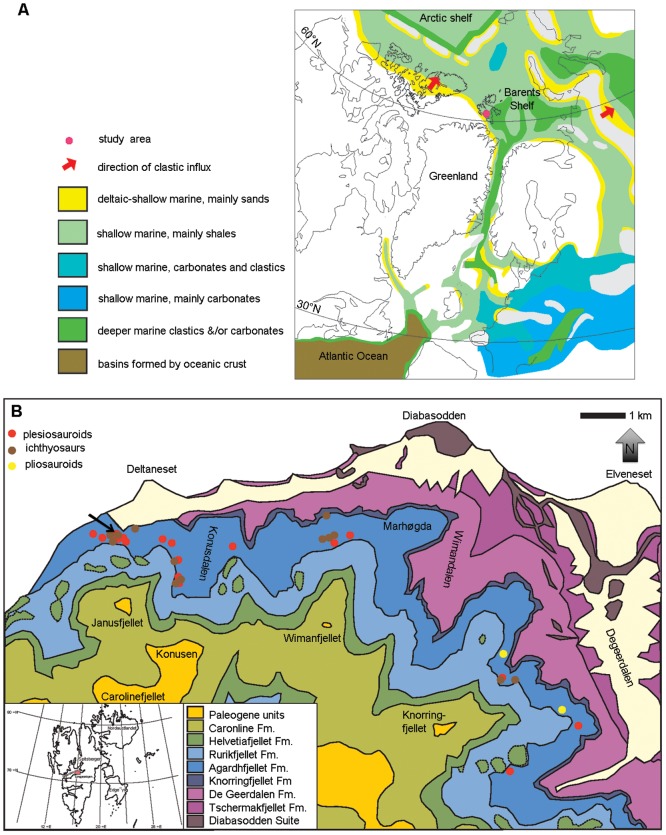
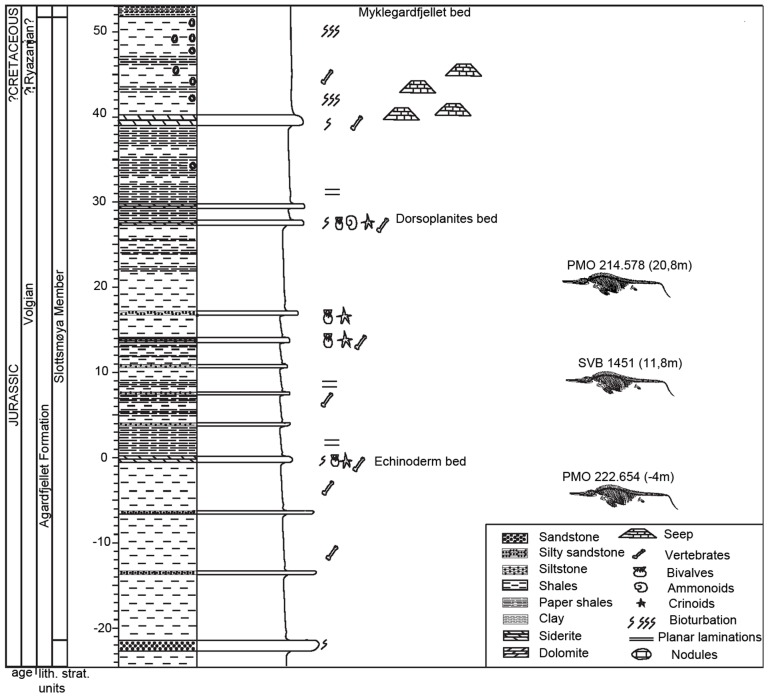
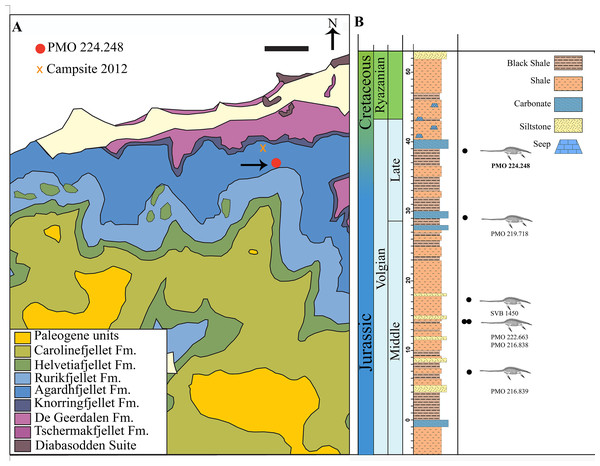
The Slottsmøya Member is an approximately 75-meter-thick organic-rich unit, part of the Agardhfjellet Formation exposed in central Spitsbergen, Svalbard, Norway. Dated to the Middle Volgian to Berriasian (Tithonian to earliest Cretaceous), it was deposited on a low-energy outer boreal continental shelf at estimated depths of 150 meters. The environment included cold seep carbonates (methane seepage) that created exceptional preservation conditions. The unit is internationally recognized as an Arctic Konservat-Lagerstätte, with more than 60 marine reptile specimens (plesiosaurs, ichthyosaurs and pliosaurids like P. funkei) documented between 2004 and 2012, plus invertebrates, fish and microfossils. It is one of the most important sites for understanding Upper Jurassic boreal marine ecosystems.
Image gallery


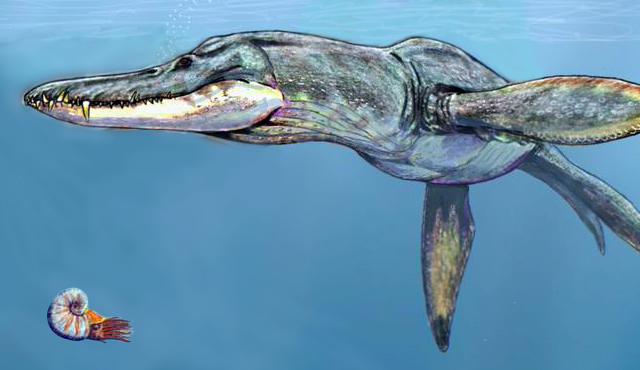


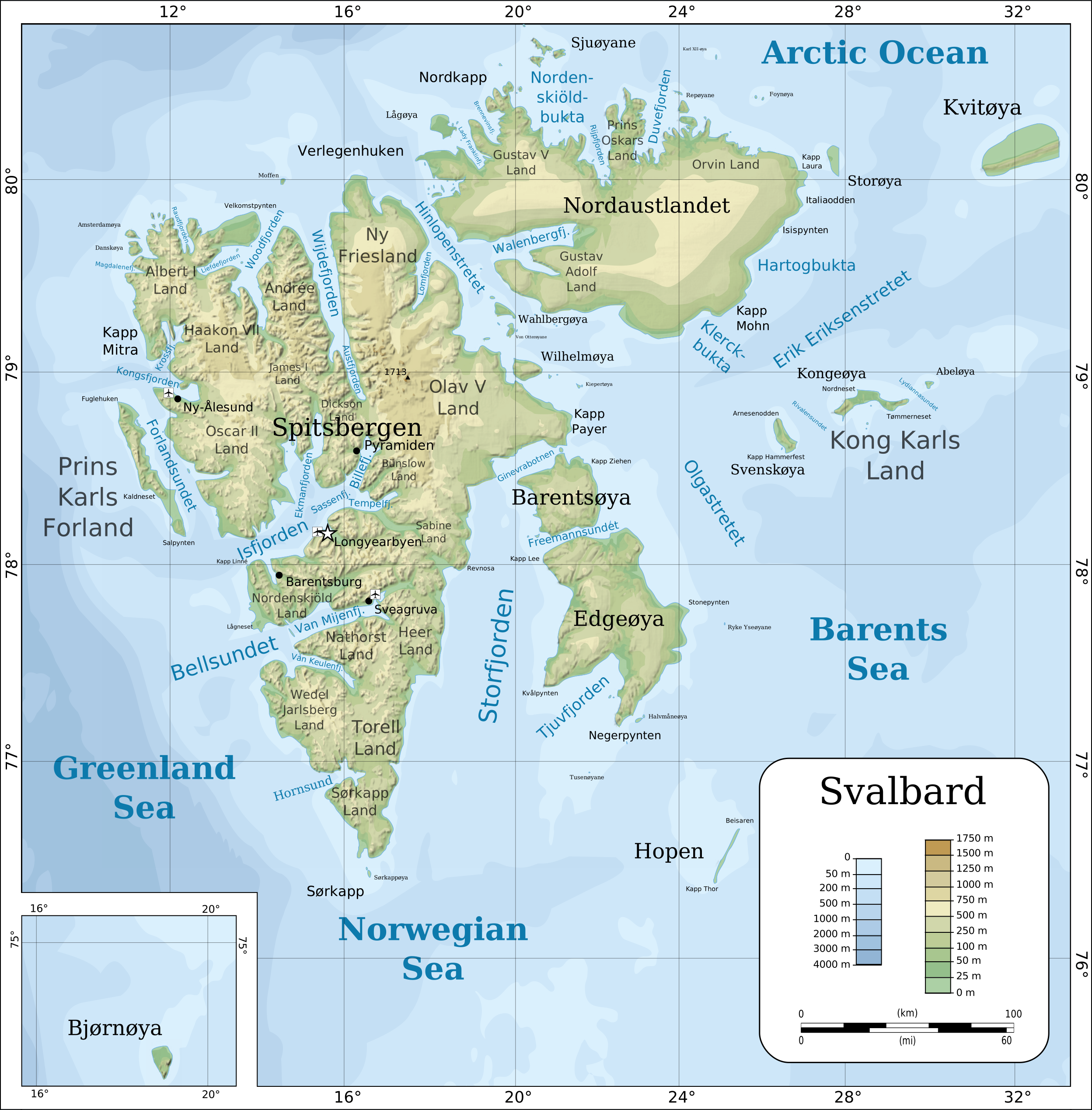
Life restoration of Pliosaurus funkei by Dmitry Bogdanov (2021), based on the formal description by Knutsen, Druckenmiller & Hurum (2012). A 10 to 12-meter animal with notably elongated forelimbs.
Dmitry Bogdanov, CC BY-SA 4.0
Ecology and behavior
Habitat
Pliosaurus funkei inhabited the boreal sea that covered the current Svalbard region in the Tithonian (~150 to 145 Ma). The Slottsmøya Member of the Agardhfjellet Formation records a low-energy outer continental shelf, with depths estimated around 150 meters, at paleolatitude between 45° and 65° north. Deposition was dominated by organic-rich shales and siltstones, with local cold seep carbonates (methane seepage) creating microenvironments of exceptional preservation (Hurum et al., 2012). Climate was relatively mild compared to the modern Arctic but already showed marked seasonality. Associated fauna included long-necked plesiosaurs (Colymbosaurus svalbardensis, Djupedalia, Ophthalmothule), ophthalmosaurid ichthyosaurs, teleost fish, cephalopods (belemnites, ammonoids) and diverse benthic invertebrates.
Feeding
P. funkei was the apex marine predator of its ecosystem. Its mandible, estimated at 2 to 2.5 meters in the referred specimen PMO 214.136, is one of the largest of any marine predator ever found. The teeth, trihedral in cross-section and up to 20 cm long, were adapted for powerful bites on large prey, not for specialized piscivory (Zverkov et al., 2018). Biomechanical analyses in related pliosaurids (Foffa et al., 2014) estimate bite force between 9,600 and 48,300 Newtons in Pliosaurus kevani, and P. funkei, being larger, would exert proportionally higher values. Feeding strategy did not involve twisting or shaking prey, but direct and precise application of the jaw for tissue severing. Probable prey included other plesiosaurs, large ichthyosaurs and Jurassic sharks.
Behavior and senses
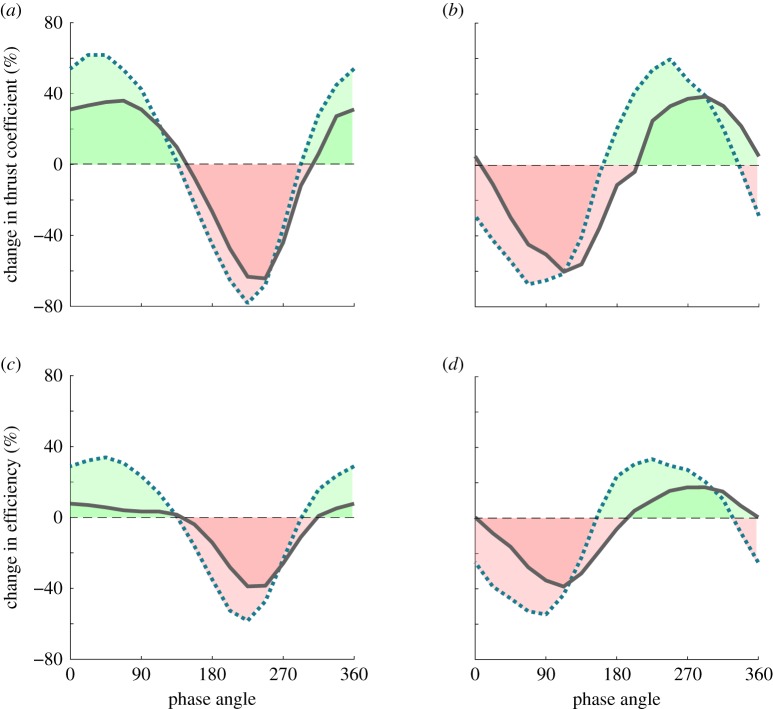
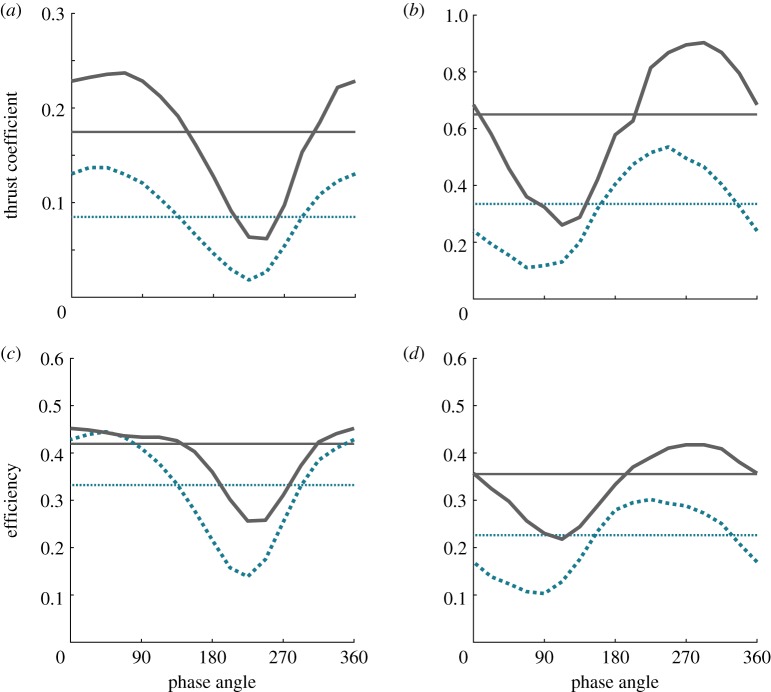
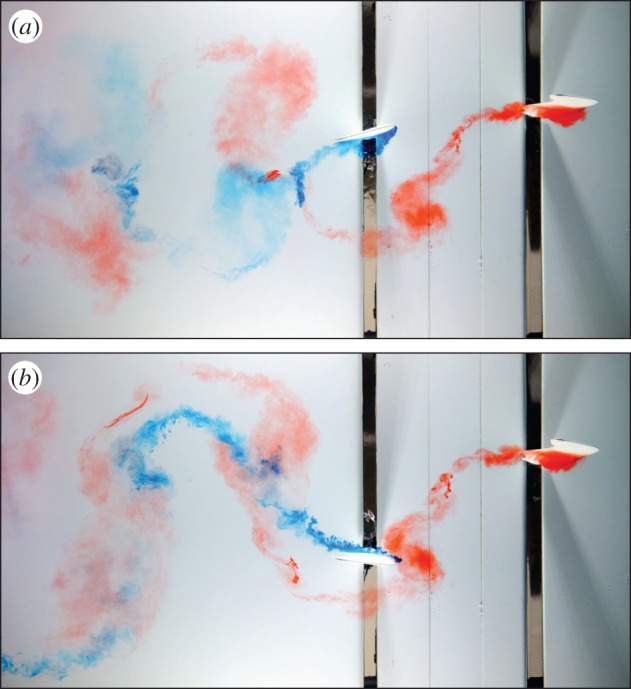
P. funkei behavior is inferred by anatomical comparison with other pliosaurids and by analogy with modern marine predators. Locomotion used a coordinated four-flipper system, with the rear flippers taking advantage of the vortex generated by the front ones to increase thrust by up to 60 percent and efficiency by 40 percent (Muscutt et al., 2017). In P. funkei, the forelimbs were proportionally longer, suggesting greater acceleration capacity in ambushes. Vision was probably lateral, suited for detecting prey at distance in relatively clear continental shelf waters. Reproductive behavior is not directly documented, but evidence from other plesiosaurs indicates viviparity, meaning live birth of large young, without return to land.
Physiology and growth
Large pliosaurids like P. funkei probably had elevated metabolism, near-endothermic, inferred from isotopic analyses of dental enamel in plesiosaurs (Zverkov et al., 2018). This physiology was necessary to sustain predatory activity in relatively cold boreal waters, though warmer than the modern Arctic. Body size (~11 tons estimated) implies high longevity, possibly decades of life, consistent with the slow dental formation pace identified in other pliosaurids (Kear et al., 2017). There is no direct evidence of explosive bone growth similar to T. rex, but slow dental replacement cycles suggest a K-selected reproductive strategy, with few large young and extended care.
Paleogeography
Continental configuration

Ron Blakey · CC BY 3.0 · Jurassic, ~90 Ma
During the Titoniano (~150–145 Ma), Pliosaurus funkei inhabited the fragmenting Pangea. North America and Europe were still close, and the North Atlantic was just beginning to open. Climate was warm and humid globally, with no polar ice caps.
Bone Inventory
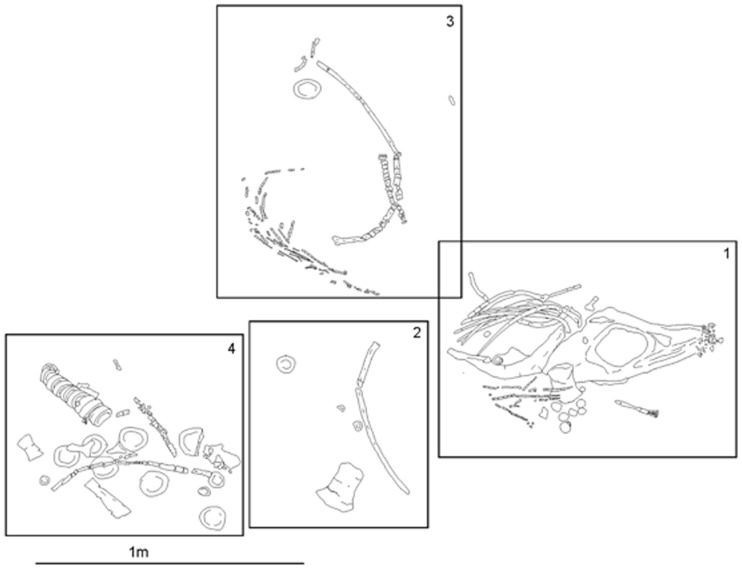
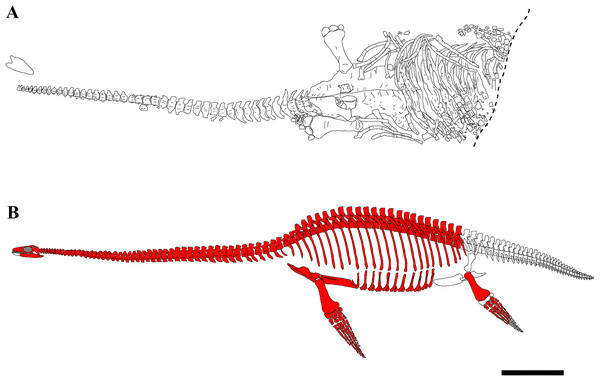
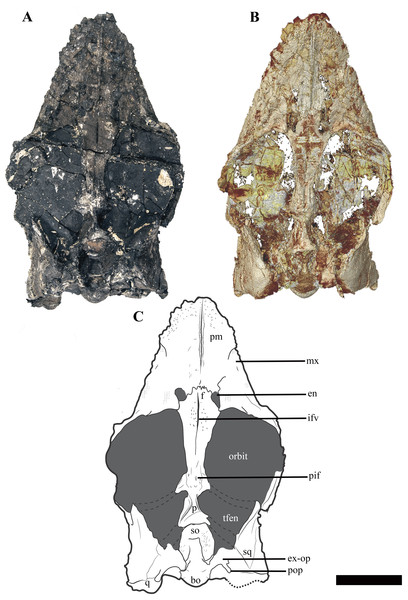
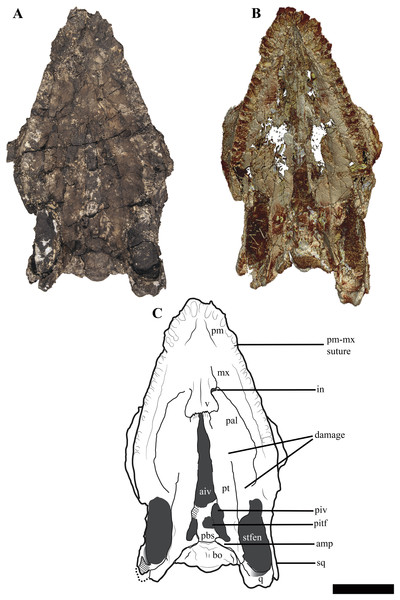
Based on two main specimens: the holotype PMO 214.135 (anterior jaws with teeth, vertebrae, complete right coracoid, and nearly complete right forelimb) and the referred specimen PMO 214.136 (partial skull and fragmentary bones). Both are housed at the University of Oslo Natural History Museum.
Found elements
Inferred elements
Scientific Literature
15 papers in chronological order — from the original description to recent research.
A new species of Pliosaurus (Sauropterygia: Plesiosauria) from the Middle Volgian of central Spitsbergen, Norway
Knutsen, E.M., Druckenmiller, P.S. & Hurum, J.H. · Norwegian Journal of Geology
Founding paper of Pliosaurus funkei paleontology. Knutsen, Druckenmiller and Hurum formally describe the species based on two partial specimens (PMO 214.135, holotype, and PMO 214.136, referred) collected over eight field seasons between 2004 and 2012 in southern Sassenfjorden, Svalbard. Dental and postcranial morphology support assignment to the genus Pliosaurus, previously known from Kimmeridgian and Tithonian strata of England, France and Russia. Skeletal dimensions indicate P. funkei was among the largest known pliosaurids, with proportionally longer forelimbs than in other species. Before this publication the material was known worldwide as Predator X, a nickname given by the media after the 2009 History Channel documentary. The specific epithet funkei honors Bjørn Funke, discoverer of the holotype, and his wife May-Liss Knudsen Funke, for years of voluntary service in the paleontological collections of the University of Oslo Natural History Museum.
Redescription and taxonomic clarification of 'Tricleidus' svalbardensis based on new material from the Agardhfjellet Formation (Middle Volgian)
Knutsen, E.M., Druckenmiller, P.S. & Hurum, J.H. · Norwegian Journal of Geology
Parallel study to the P. funkei description that redescribes another plesiosaur from the same formation, contextualizing the Svalbard fauna. Knutsen and colleagues show that the historical material described by Persson in 1962 as Tricleidus svalbardensis must be transferred to the genus Colymbosaurus, a group known from the United Kingdom. The contribution matters for understanding the ecosystem P. funkei lived in: Tithonian boreal seas inhabited by multiple long-necked plesiosaurs that served as prey for the large pliosaurid. The work is part of the multidisciplinary project led by Jørn Hurum on the Upper Jurassic marine reptiles of Spitsbergen, which between 2004 and 2012 documented dozens of specimens in the Slottsmøya Member of the Agardhfjellet Formation.
An Arctic Lagerstätte, the Slottsmøya Member of the Agardhfjellet Formation (Upper Jurassic, Lower Cretaceous) of Spitsbergen
Hurum, J.H., Nakrem, H.A., Hammer, Ø., Knutsen, E.M., Druckenmiller, P.S., Hryniewicz, K. & Novis, L.K. · Norwegian Journal of Geology
Work that characterizes the geological and paleontological context in which P. funkei was found. The authors document the Slottsmøya Member as an Arctic Lagerstätte, that is, a deposit of exceptional preservation. The formation accumulated shales and siltstones in a low-energy marine setting, with cold seep carbonates (methane seepage) that favored skeleton preservation. Between 2004 and 2011 the team documented dozens of plesiosaur, ichthyosaur, invertebrate and smaller vertebrate specimens. The paleoenvironment was an outer boreal continental shelf, about 150 meters deep, at latitudes corresponding at the time to 45 to 65 degrees north. The paper is a mandatory reference for understanding how and why P. funkei bones reached us in identifiable condition.

Cranial anatomy, taxonomic implications and palaeopathology of an Upper Jurassic pliosaur (Reptilia: Sauropterygia) from Westbury, Wiltshire, UK
Sassoon, J., Noè, L.F. & Benton, M.J. · Palaeontology
Study of a British pliosaurid contemporary with Pliosaurus funkei, revealing direct evidence of degenerative pathology similar to arthritis in the jaw joint. Sassoon and colleagues examined the Westbury specimen, an individual about 8 meters long, and identified erosion and displacement of the left mandible. This is the first documented case of degenerative pathology in a Jurassic marine reptile. The finding matters for P. funkei because it suggests that large pliosaurids could reach sufficient age to develop degenerative joint disease, and that the extreme bite force exerted on the joints took a toll on the musculoskeletal system. The paper also reviews the taxonomy of the genus Pliosaurus and reinforces that multiple species coexisted in the Tithonian.
A giant pliosaurid skull from the Late Jurassic of England
Benson, R.B.J., Evans, M., Smith, A.S., Sassoon, J., Moore-Faye, S., Ketchum, H.F. & Forrest, R. · PLOS ONE
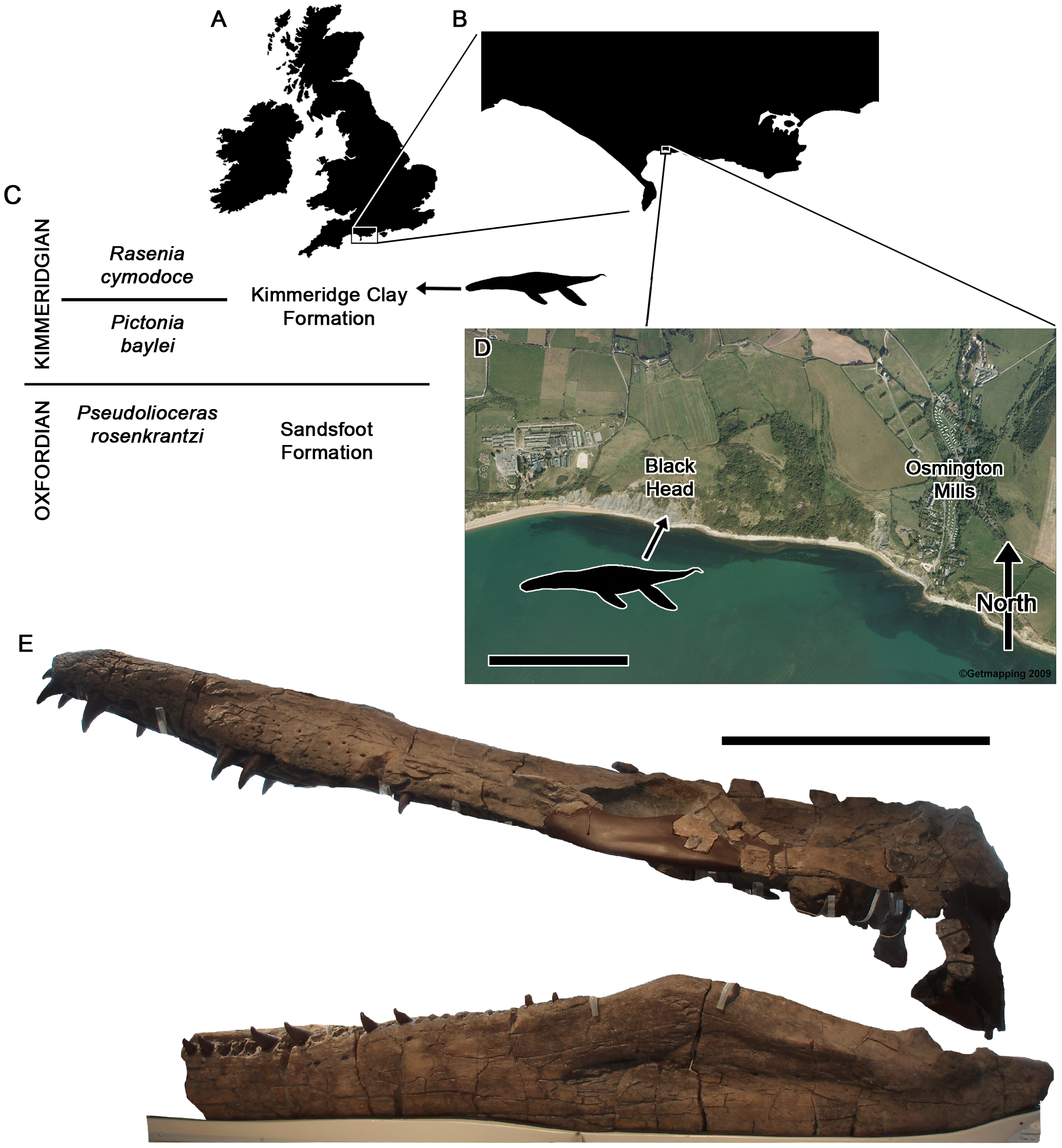
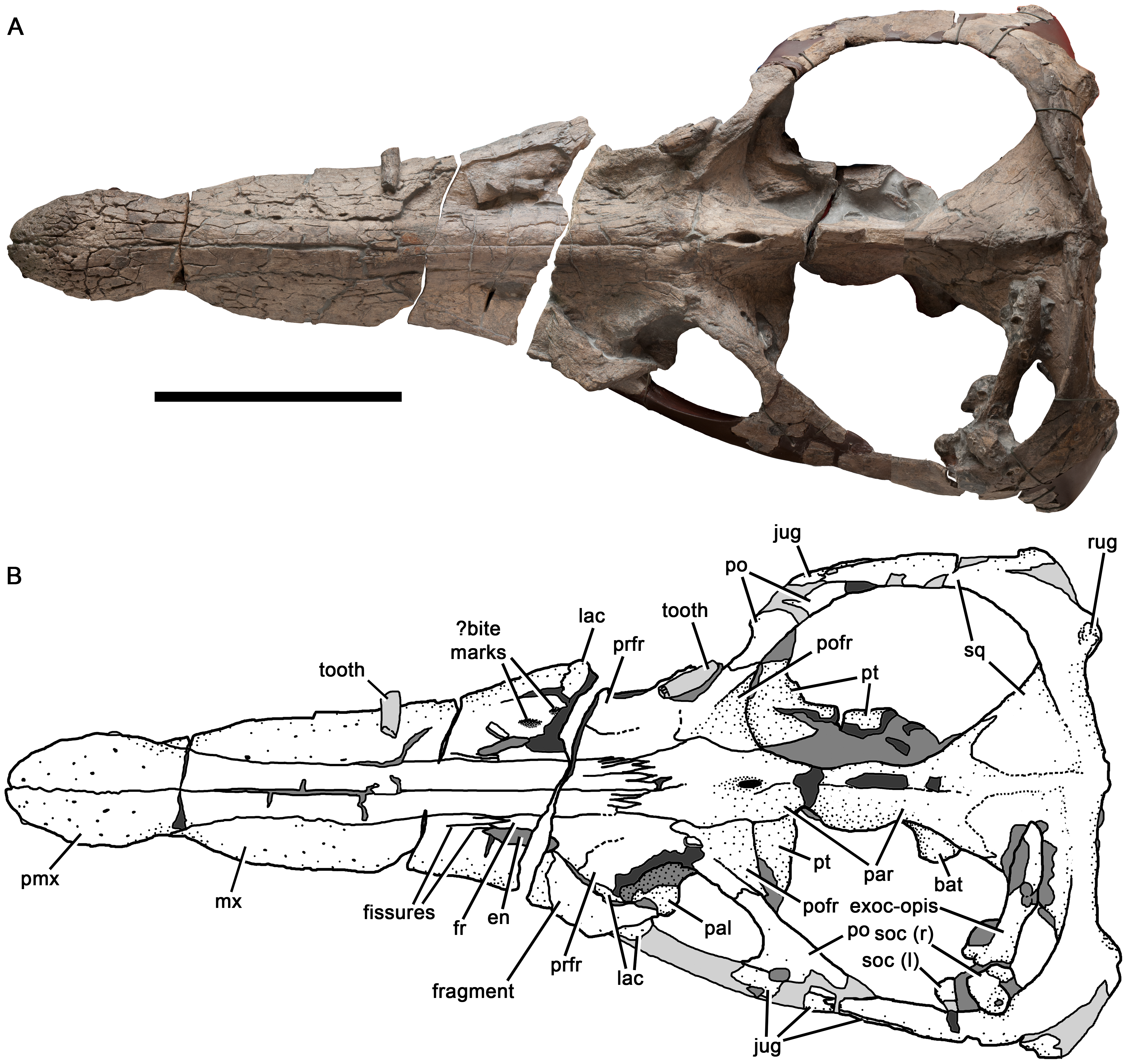
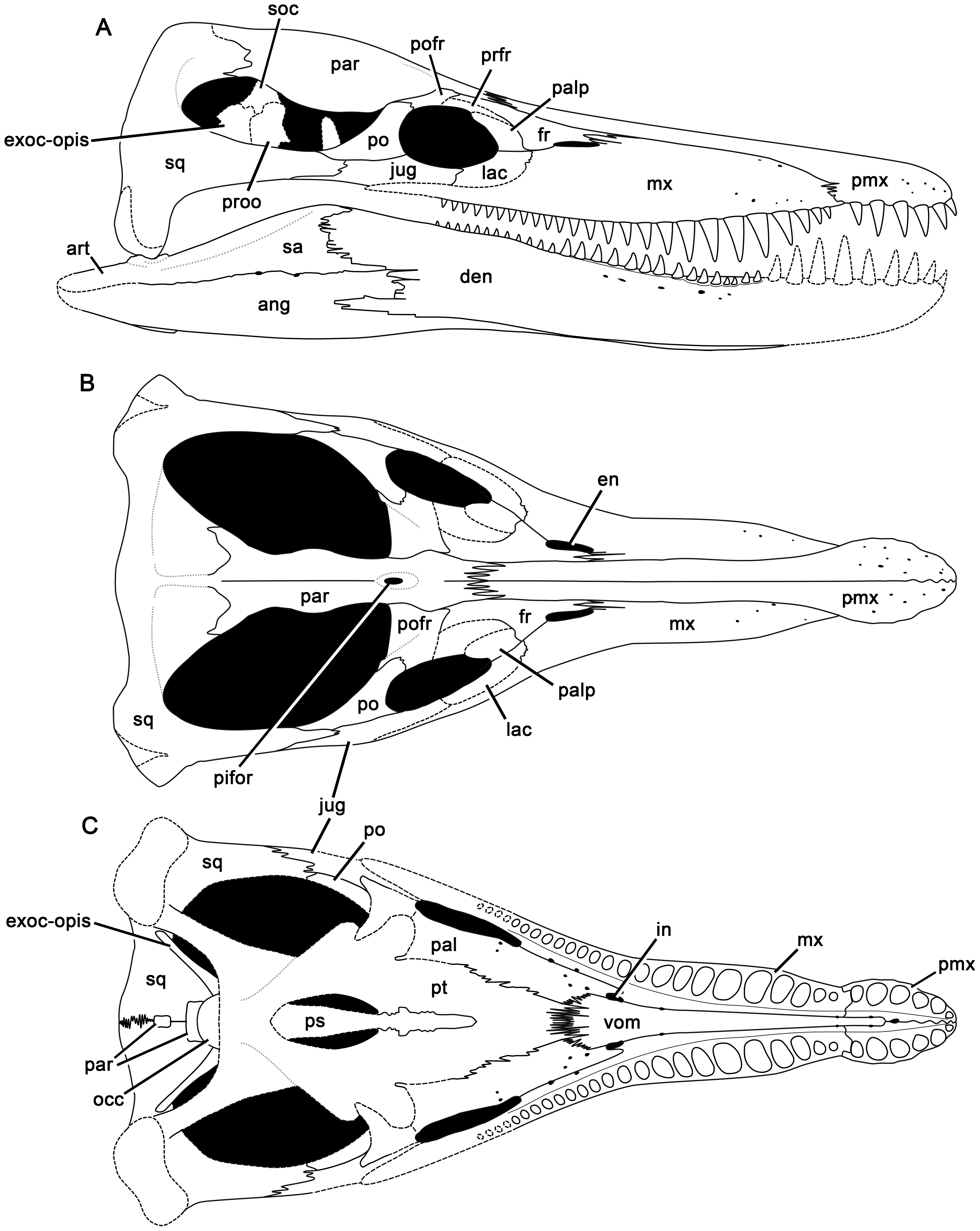
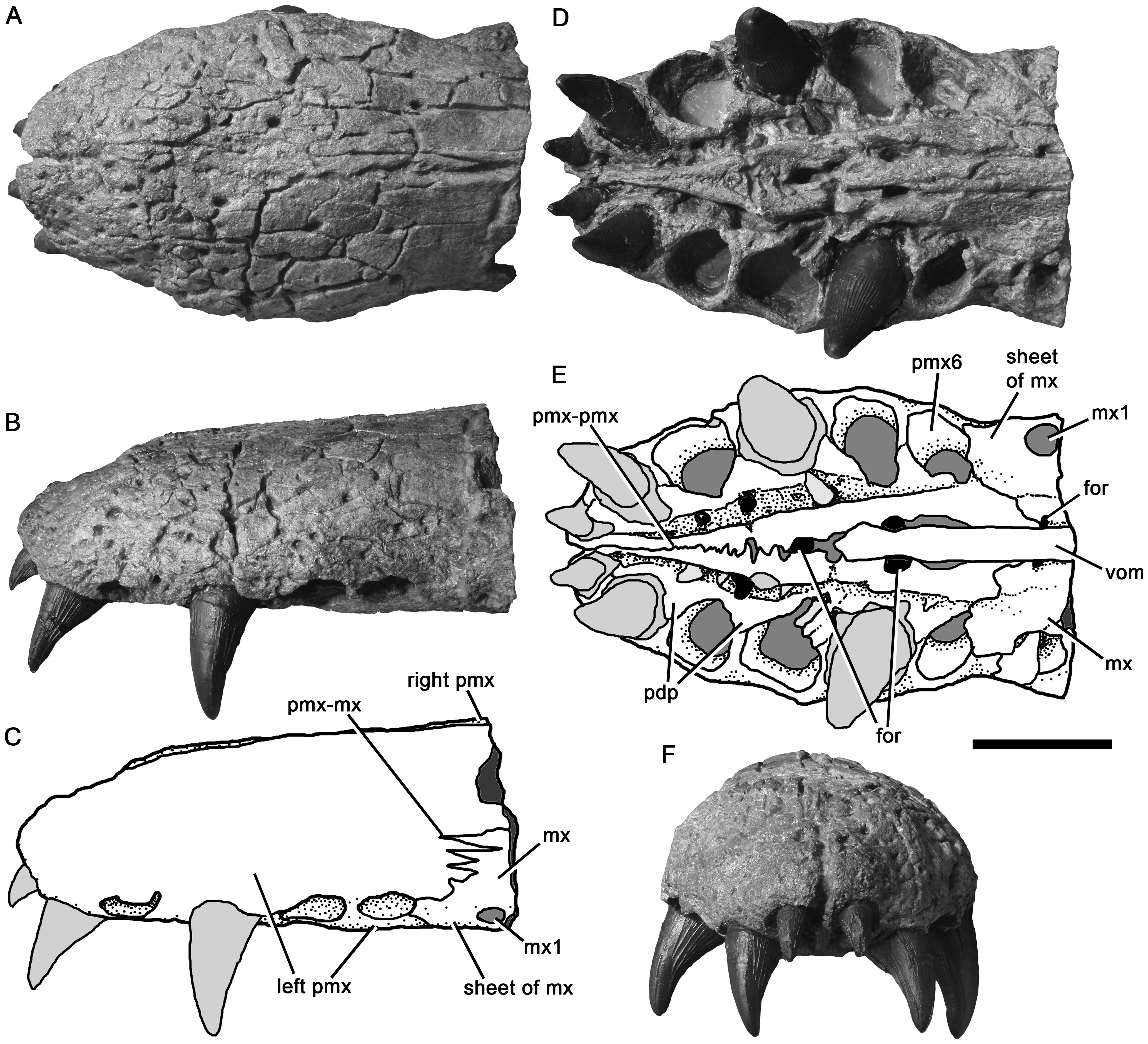
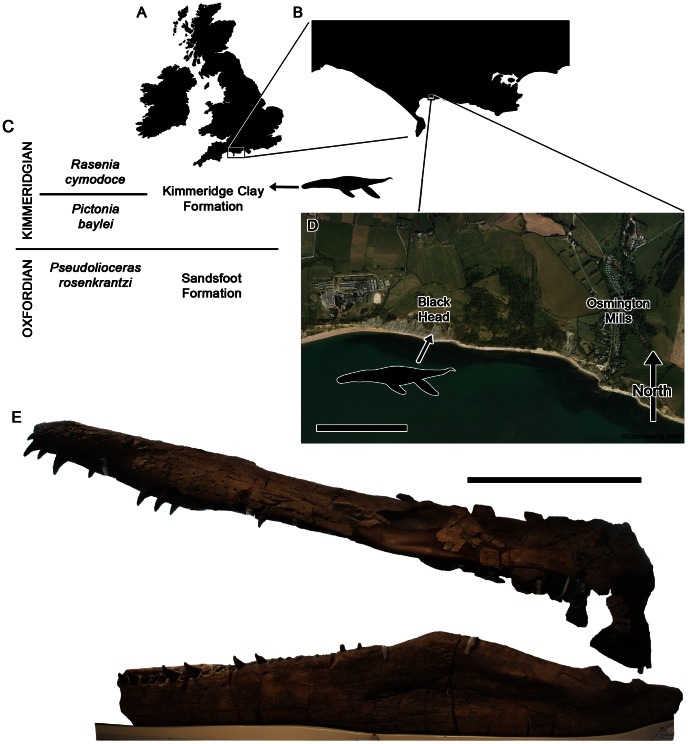
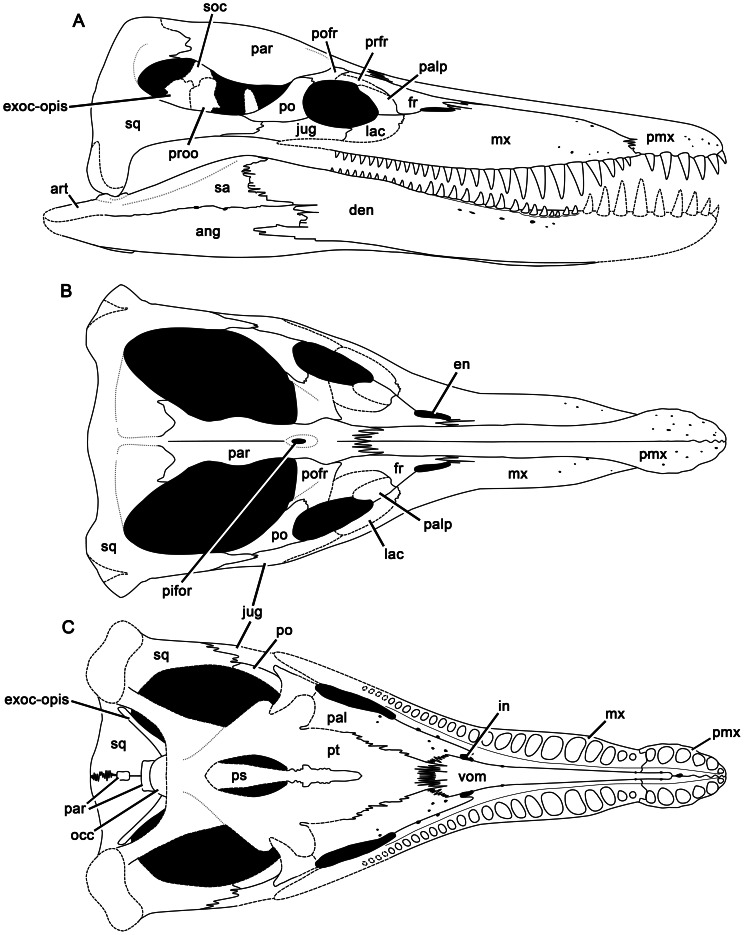
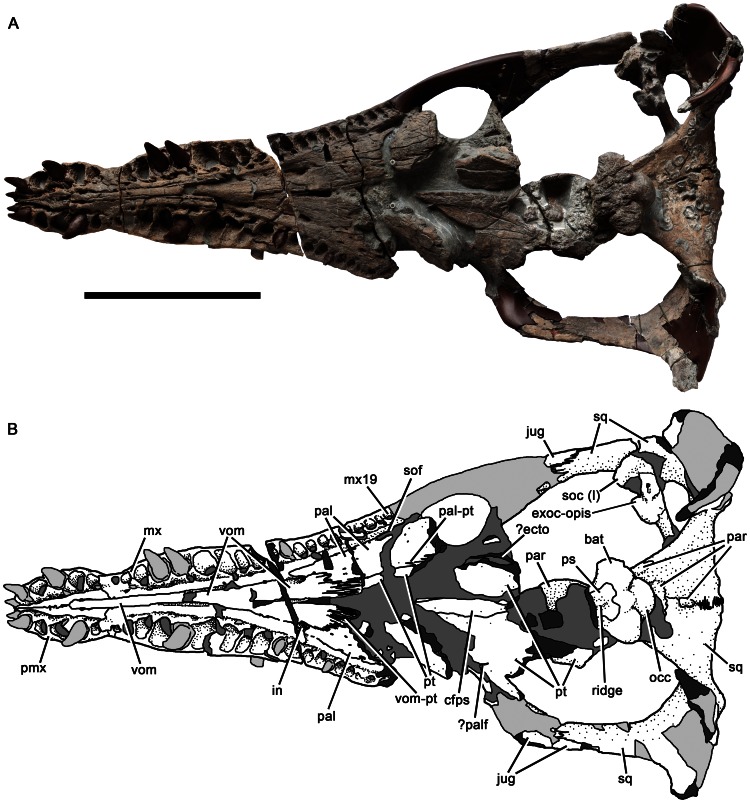
Fundamental taxonomic revision of the genus Pliosaurus, critical for correctly positioning P. funkei. Benson and colleagues describe P. kevani based on a 2-meter skull from the Kimmeridge Clay Formation of Dorset and name two additional species, P. carpenteri and P. westburyensis, recognizing at least five valid species of the genus in the European Upper Jurassic. Phylogenetic analysis confirms the monophyly of Pliosaurus (excluding P. andrewsi, transferred to another genus). The study also identifies an evolutionary trend of decreasing mandibular symphysis length through the Tithonian, possibly related to increased specialization for capturing large prey. The taxonomic framework of the paper is the standard reference used for comparison with P. funkei, which stands out in the group for its exceptional size and elongated forelimbs.
Faunal turnover of marine tetrapods during the Jurassic, Cretaceous transition
Benson, R.B.J. & Druckenmiller, P.S. · Biological Reviews
Macroevolutionary-scale study that positions P. funkei in the context of large pliosaurid extinction. Benson and Druckenmiller, the latter co-author of the original P. funkei description, analyze diversity and disparity of all known plesiosaurs at the Jurassic, Cretaceous boundary. The conclusion is that only three lineages clearly crossed the boundary, and Pliosauridae suffered substantial loss of diversity and body size. P. funkei, from the late Tithonian, is one of the last known occurrences of giant pliosaurids before collapse. The authors correlate extinction with climatic and oceanographic changes: the late Tithonian had arid climate, oligotrophic conditions and reduction of the marine food chain base, which would have disproportionately affected top predators like P. funkei. The study is a reference for discussing extinction, biogeography and paleoecology of large marine reptiles.
Functional anatomy and feeding biomechanics of a giant Upper Jurassic pliosaur (Reptilia: Sauropterygia) from Weymouth Bay, Dorset, UK
Foffa, D., Cuff, A.R., Sassoon, J., Rayfield, E.J., Mavrogordato, M.N. & Benton, M.J. · Journal of Anatomy
Reference biomechanical study for understanding how P. funkei fed. Foffa and colleagues use CT scans and finite element analysis on P. kevani, a sister species of P. funkei, to estimate bite forces between 9,600 and 48,300 Newtons depending on tooth position. Beam-theory analysis shows that the snout, while powerful, was relatively poorly optimized against torsional and bending stresses compared with crocodilians and terrestrial theropods. The implication matters: pliosaurids did not twist or shake their prey like modern crocodilians do with hippos. Instead, they used firm, precise bites to grasp and sever tissue. By scale comparison, P. funkei, being larger than P. kevani, would likely exert even higher bite forces, possibly exceeding those of an adult Tyrannosaurus rex in specific jaw regions.


Exceptionally prolonged tooth formation in elasmosaurid plesiosaurians
Kear, B.P., Larsson, D., Lindgren, J. & Kundrát, M. · PLOS ONE
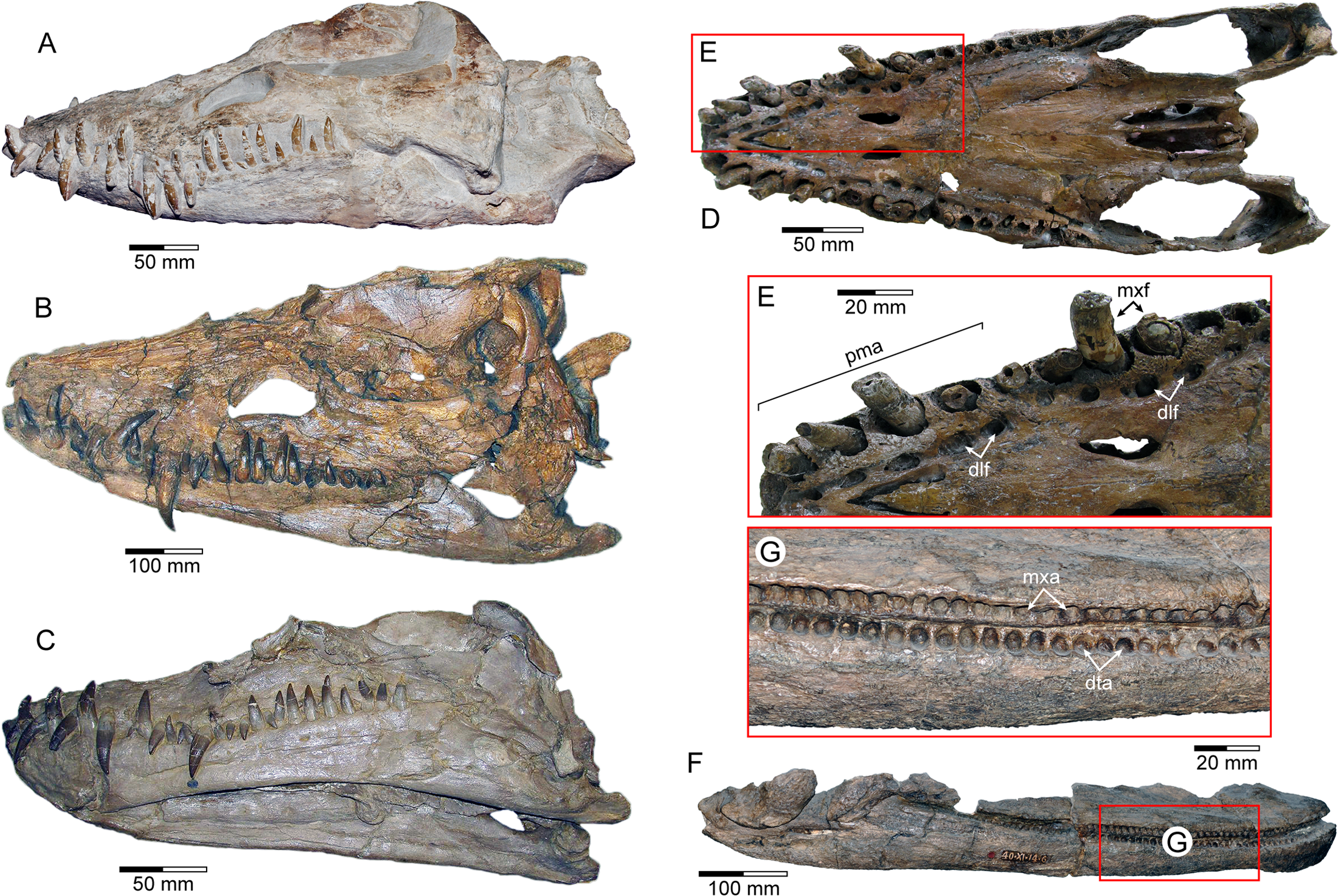
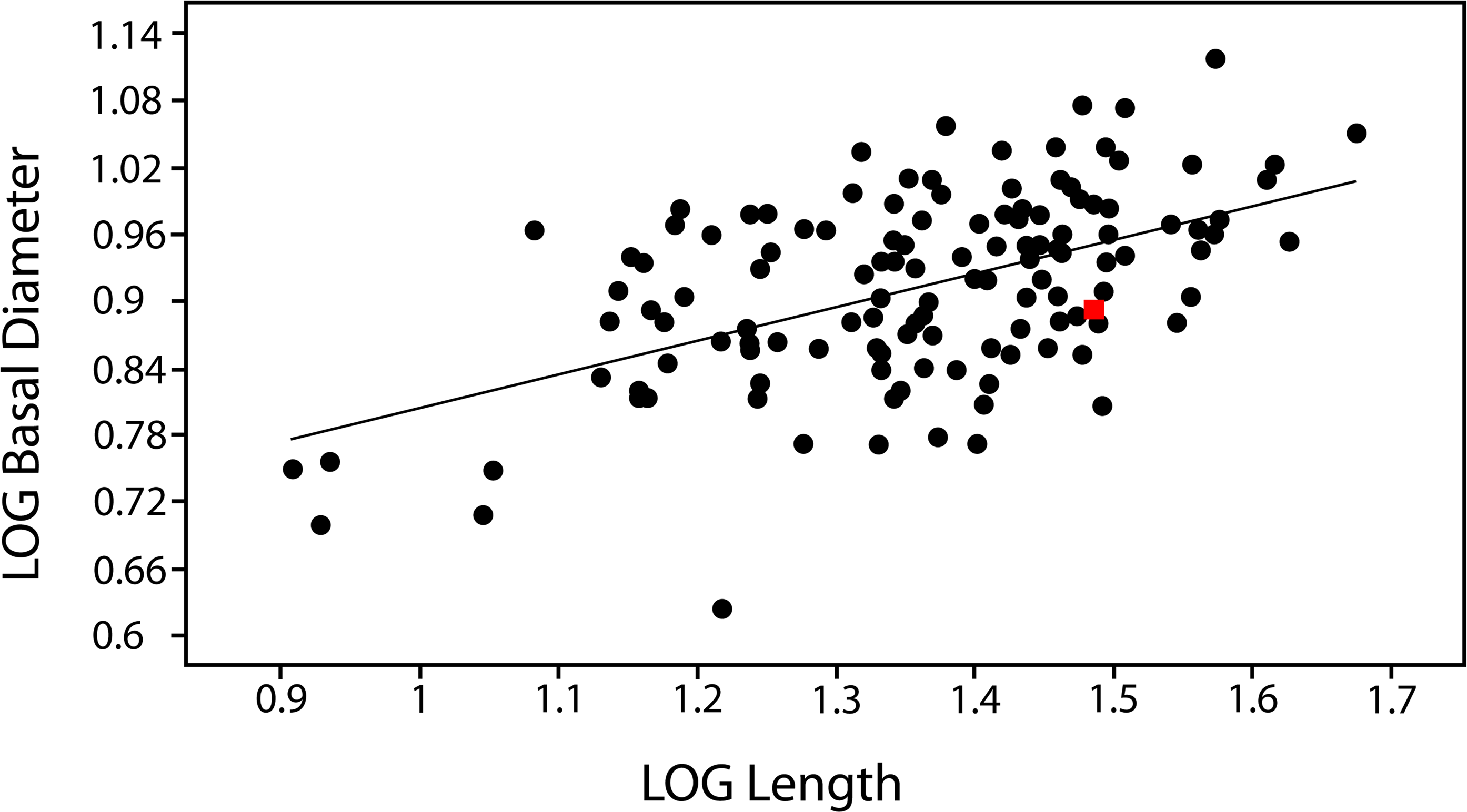
Dental histology study extrapolable to Pliosaurus funkei, providing context on the formation pace of the large caniniform teeth characteristic of the genus. Kear and colleagues analyze enamel and dentine microstructure in plesiosaurs and identify exceptionally long dental formation periods, with layers recording slow growth over multiple years per tooth. The implication for giant pliosaurids like P. funkei, whose larger teeth could exceed 20 centimeters, is that the complete tooth replacement cycle was slow, suggesting high individual longevity and a conservative feeding strategy. The study complements Kear et al. (2016) on dental ontogeny in Pliosauridae and helps fill gaps about life pace of the largest Jurassic marine reptiles.


![Fig 2. Simplified diagram of plesiosaurian tooth replacement (adapted from Sassoon et al.[ 18 ]).](/images/species/pliosaurus-funkei/papers/f2def3d4cb-01.png)
The four-flipper swimming method of plesiosaurs enabled efficient and effective locomotion
Muscutt, L.E., Dyke, G., Weymouth, G.D., Naish, D., Palmer, C. & Ganapathisubramani, B. · Proceedings of the Royal Society B
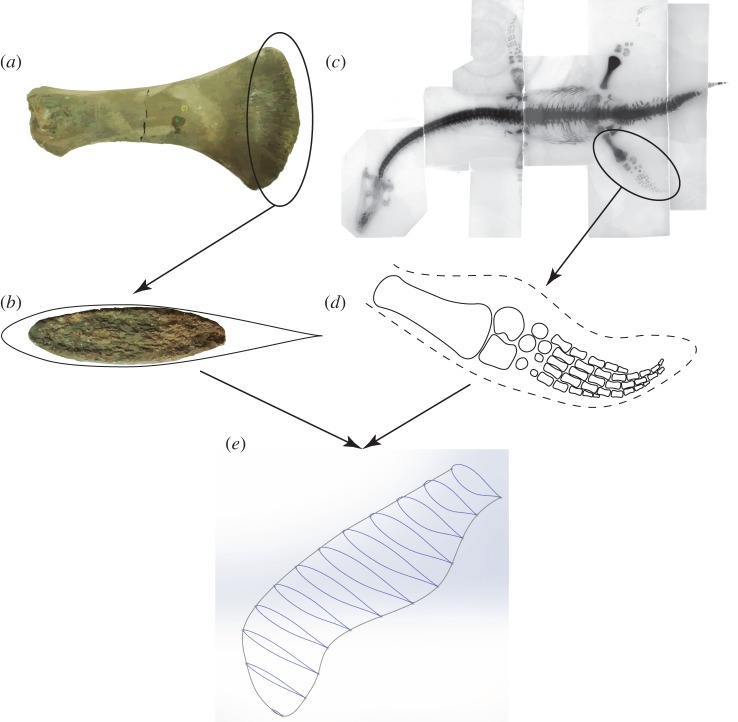
Experimental hydrodynamics study that clarifies how P. funkei moved in water. Muscutt and colleagues built scale models of plesiosaur flippers and tested in a water tank what decades of discussion had not resolved: the four-flipper system provided up to 60 percent more thrust and 40 percent higher efficiency when fore and hind flippers operated in synchrony, with the hind flippers taking advantage of the vortex left by the front ones. Applied to P. funkei, whose forelimb is notably elongated, this finding suggests the species was capable of powerful accelerations, comparable to those of modern great white sharks. Precise coordination between flipper pairs also implies high neuromotor control, probably indicating a relatively developed brain and cerebellum for a marine reptile.

A new plesiosaurian from the Jurassic, Cretaceous transitional interval of the Slottsmøya Member (Volgian)
Roberts, A.J., Druckenmiller, P.S., Sætre, G.-P. & Hurum, J.H. · Journal of Vertebrate Paleontology
Study directly about the fauna accompanying Pliosaurus funkei. Roberts, Druckenmiller, Sætre and Hurum analyze new material of Colymbosaurus svalbardensis, a long-necked plesiosaur with robust body that lived in the same seas as P. funkei in the Agardhfjellet Formation. Confirming the validity of the species reinforces that there was considerable plesiosaur diversity at high latitudes near the Jurassic, Cretaceous boundary, meaning P. funkei was not the only marine reptile in the ecosystem, sharing habitat with potential prey of varied sizes and morphologies. The authors also refine diagnostic characters of Colymbosaurus, one of the genera probably part of the giant pliosaurid's diet.
Increased pliosaurid dental disparity across the Jurassic, Cretaceous transition
Zverkov, N.G., Fischer, V., Madzia, D. & Benson, R.B.J. · Palaeontology
Dental morphometric study that ecologically contextualizes Pliosaurus funkei. Zverkov and colleagues analyze pliosaurid teeth across the Jurassic, Cretaceous boundary and identify increased morphological disparity in the latest Tithonian. Two morphotypes stand out: robust trihedral teeth with triangular cross-section, adapted for powerful bites typical of Pliosaurus; and slender, curved teeth adapted for piscivory. P. funkei falls into the first group and was a hunter of large prey such as other plesiosaurs and ichthyosaurs, not a specialized piscivore. The late Tithonian dental disparity suggests growing ecological specialization before the group's collapse, direct context to understand the niche occupied by P. funkei in Svalbard.

Osteology and phylogeny of Late Jurassic ichthyosaurs from the Slottsmøya Member Lagerstätte (Spitsbergen, Norway)
Delsett, L.L., Roberts, A.J., Druckenmiller, P.S. & Hurum, J.H. · Acta Palaeontologica Polonica
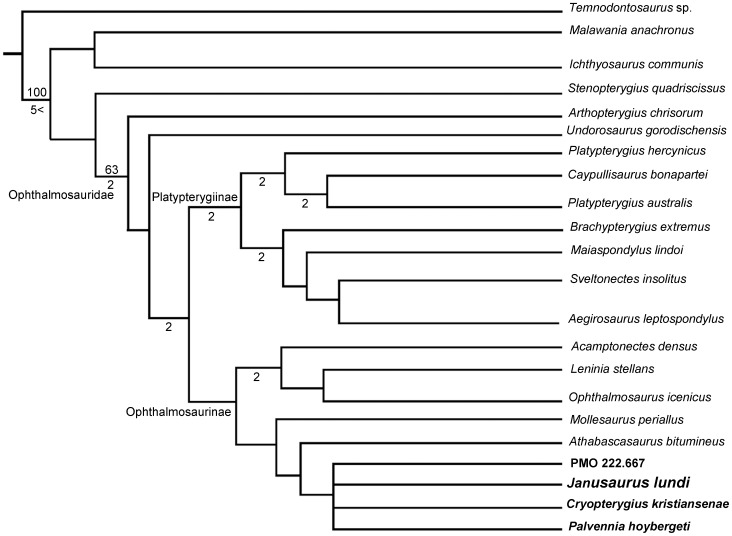
Study of the ichthyosaur fauna that shared the environment with Pliosaurus funkei. Delsett and colleagues describe in detail at least three ophthalmosaurid taxa from the Agardhfjellet Formation, documenting high diversity in Arctic paleolatitudes of the latest Jurassic. Ichthyosaurs, with fusiform bodies and powerful caudal fins, were active predators of fish and cephalopods; the largest were potential prey of P. funkei, evidence of the giant pliosaurid's apex predator role. The study also reinforces Svalbard's scientific importance as an Arctic Lagerstätte: nowhere else in the world are samples of the Jurassic boreal ecosystem so complete and abundant. This allows precise paleoecological reconstructions not possible with data from other localities.
A new plesiosaurian from the Jurassic, Cretaceous transitional interval of the Slottsmøya Member (Volgian), with insights into the cranial anatomy of cryptoclidids using computed tomography
Roberts, A.J., Druckenmiller, P.S., Cordonnier, B., Delsett, L.L. & Hurum, J.H. · PeerJ
Study revealing new dimensions of the fauna Pliosaurus funkei lived in. Roberts, Druckenmiller, Cordonnier, Delsett and Hurum describe Ophthalmothule cryostea, a long-necked plesiosaur, 5 to 5.5 meters body and tiny head with huge eyes, found in the same Agardhfjellet Formation. Exceptional preservation allowed the use of CT scanning to reconstruct internal cranial anatomy, generating unprecedented data on plesiosaur neuroanatomy. The presence of this and other long-necked species reinforces the hypothesis that P. funkei had a wide variety of prey available in the ecosystem, explaining its large size and ecological dominance. The name Ophthalmothule means eye of the north and emphasizes the primitive Arctic habitat shared with P. funkei.
Historical significance and taxonomic status of Ischyrodon meriani (Pliosauridae) from the Middle Jurassic of Switzerland
Madzia, D., Sachs, S. & Klug, C. · PeerJ
Taxonomic revision of Ischyrodon meriani, a Middle Jurassic Swiss pliosaurid, serving as a crucial comparator for Pliosaurus funkei. Madzia, Sachs and Klug redescribe the historical material and compare it with teeth of thalassophonean pliosaurids, the clade that includes large marine predators like P. funkei. The study clarifies the evolutionary sequence of Thalassophonea through the Jurassic, showing the lineage already achieved large size in the Bajocian and that P. funkei represents one of the last giants before the clade's extinction. The analysis reinforces that large size evolution in pliosaurids occurred in multiple independent events and that P. funkei is the culmination of a trend started 70 million years earlier.


The rise of macropredatory pliosaurids near the Early, Middle Jurassic transition
Sachs, S., Madzia, D., Thuy, B. & Kear, B.P. · Scientific Reports
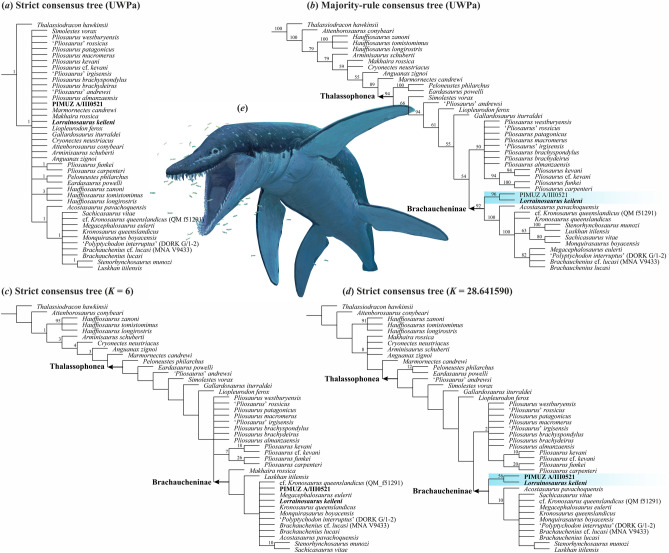
Recent paper that places Pliosaurus funkei at the final peak of a 70-million-year evolutionary lineage. Sachs, Madzia, Thuy and Kear describe Lorrainosaurus keileni, the oldest known macropredatory pliosaurid, dated to the Bajocian (~171 Ma). Phylogenetic analysis integrates Pliosaurus into a comprehensive Thalassophonea cladogram, showing that the large size and robust dentition characteristic of P. funkei were already an established trend in the Middle Jurassic. P. funkei, in the late Tithonian, is near the top of this evolutionary trajectory. The study is also one of few modern phylogenetic analyses including multiple Pliosaurus species in the same analysis, providing a reference phylogenetic tree for the genus.


Famous museum specimens
PMO 214.135 (holótipo, apelidado 'The Monster')
Museu de História Natural da Universidade de Oslo, Noruega
Holotype that provided the basis for formal description of the species. Preserves the anterior part of the jaws with teeth, several vertebrae, complete right coracoid and nearly complete right forelimb. Estimated skull length between 1.6 and 2 meters.
PMO 214.136 (espécime referido, o original 'Predator X')
Museu de História Natural da Universidade de Oslo, Noruega
Referred specimen excavated in 2008 and documented in the 2009 History Channel special Predator X. Includes partial skull and fragmentary bones, with estimated skull length between 2 and 2.5 meters, indicating an individual larger than the holotype.
In cinema and popular culture
Pliosaurus funkei has limited presence in cinematic pop culture, restricted mainly to the scientific documentary circuit. The species became worldwide known by the Predator X nickname thanks to the namesake History Channel special in 2009, produced by Atlantic Productions, which followed the excavation of the Svalbard specimens by Jørn Hurum's team. In 2011, the BBC included the animal (still under the nickname) in the documentary series Planet Dinosaur, in a hunting scene with elaborate CGI. The species does not appear in any Jurassic Park or Jurassic World blockbuster, which has historically ignored marine reptiles in favor of land dinosaurs, though Mosasaurus has appeared since Jurassic World (2015). P. funkei's absence from popular media reflects a pattern: scientifically important species described recently (2012) and with a remote geographical locality (Norwegian Arctic) rarely attract attention from major American or European producers. Public representation of the animal depends almost entirely on digital artistic reconstructions published online by paleoartists like Dmitry Bogdanov and Mario Lanzas, who translate scientific data into accessible images.
Classification

Discovery
Fun fact
Pliosaurus funkei was nicknamed Predator X by the media in 2009, three years before receiving its formal scientific name in 2012. Its mandible, estimated at up to 2.5 meters in the larger specimen, is among the largest of any marine predator ever discovered.
Last reviewed: April 24, 2026